This is how you reserve exclusive tables with Chase Sapphire Reserve.
This is your name on the list.
This is the chef sending you something he didn't put on the menu.
This is three times points on dining with Chase Sapphire Reserve
and a $300 dining credit that covered the Citrus Pavlova,
and drinks, and the thing you didn't think you liked until you tasted it.
Chase Sapphire Reserve, now even more rewarding.
Learn more at Chase.com slash Sapphire Reserve.
Cards issued by JPMorgan Chase Bank and a member of FDIC
subject to credit approval.
What are you reaching for?
If you're a smoker or dipper, you could be reaching for so much more
with ZIN nicotine pouches.
When you reach for ZIN, you're reaching for 10 satisfying varieties
and two strengths for a smoke-free and spit-free experience
that lets you lean in for chances to break free from your routine
and a unique nationwide community.
Whatever you're reaching for, reach for it
with America's number one nicotine pouch brand.
Find your ZIN wherever nicotine products are sold near you.
Warning, this product contains nicotine.
Nicotine is an addictive chemical.
Welcome to the Total Car Score podcast,
bringing you the world of cars from inside the car.
And now your hosts, Carl Brower, Lauren Fix and Javier Mota.
Well, here we are back in the computer
because we haven't been able to stay at the same place
or be at the same place at the same time.
How are you, Lauren?
I am great.
I hope to see you next week.
Exactly. Next week we'll see you.
I saw Carl briefly last week in Sonoma driving those three cars.
What cars? The GR cars, Carl?
Yeah, they gave us some fun things to do,
like drifting the thing on dirt and driving them off road,
both drifting them in a big dirt parking lot
and then having an actual rally-like course.
That was amazing.
You're the best part of drifting around corners.
Yeah, it was crazy.
Even though we drove on the actual Sonoma Raceway,
like I did like 15 laps or something like that,
but the rally part of it was amazing.
Yeah, I don't think people expected that.
I had to do it with that on your brain.
Yeah.
That's right, you were there, too, on this, you know,
we just didn't see each other.
Oh, yeah, I didn't see you.
You were before us.
Yeah.
So a lot of news always happening in the automotive industry.
But I want to ask you, both of you,
and maybe you want to go first, Lauren,
isn't it weird that like all the headlines we see
on the automotive news, it's not about actual cars,
it's about tariffs and other things and taxes and mandates
and all that.
I mean, the industry is like in a really weird situation.
Not many new cars.
I heard that in average we have like 55 cars a year.
This year we're having like only 40
because everybody's holding up.
It's kind of, we're in a weird place, no?
I think it was self-imposed torture,
to be honest with you, from my perspective.
And I'll tell you why I say that.
The car manufacturers have always built cars
that consumers wanted.
But over the last few administrations,
they've taken the pressure from the federal government
saying, listen, you build what we want you to build,
or we're going to find you so bad,
you're going to have billions of dollars in fines
through the EPA, through National Highway Traffic
Safety Administration, whatever they want.
DOT, they come up with like 100 different three
and four letter agencies to nail these car companies
because they're making billions of dollars.
Remember, it's not all profits.
So what ended up happening was the past few administrations
put pressure on car manufacturers,
you can build what we want,
or what the state of California wants,
or we're just going to find you.
So they did.
They bent over to the pressure
and they built those vehicles
and we the consumers said, I don't want them.
And Carol can definitely address them.
No, I was going to go with Carl
because you live in the capital of that, Carl, right?
I mean, you are the most mandated
state in the country, California,
in the world, actually.
Yeah, and it's been fascinating
because on the one hand,
I see like Teslas all over the place.
Like, I mean, I just had to drive across the whole industry,
a whole metro mess, I should say, LA yesterday.
And I had to drive both directions in the last 48 hours.
And these Teslas, they're everywhere.
So that would suggest that,
well, they're really popular, right?
But then I've had my own experiences with these things.
And I live in South Orange County.
It's like electric vehicle central.
And trying to use the infrastructure,
trying to charge the press cars that I get in
is the biggest pain.
And it just reiterated my experience last year
with a Hyundai Oniq 5N, it just reiterated.
It's like, yeah, I'm not even close to buying an electric car.
And I don't think I ever will because of that experience.
And I live right here in, you know,
EV Mecca as you're saying.
So, I mean, I keep saying this
and Lauren kind of touched on it and all.
You can find these wealthy homeowners
with level two chargers and multi-car fleets
and the EV gets to be this kind of toy car
that's like their expression and their car, maybe.
Yeah, yeah, that they can make sure
that they look like they're doing the right thing
when they drive around.
And as soon as something happens,
their level two charger breaks.
Grandma gets sick 400 miles away.
They want to take a family vacation.
Guess what car goes right into the garage
and which car rolls out of the garage
and they get into.
So I feel like even here
where everything is supposed to be super aligned,
the weather's perfect year round.
So it doesn't mess up the range and charging,
which is still a big issue for a lot of parts of the country
and why a lot of people don't want them in cold climates.
But even here, I've dealt personally
with the challenges of trying to use them.
And I know that most people who are driving them,
it's not their sole car.
And they're wealthy people who can have multiple cars.
And that's fine for them.
But I think it's pretty unrealistic.
By the way, how environmentally friendly is it
to have more cars than you need?
You know, like these guys,
if you're a couple or a entire couple
or even a family and you've got two cars,
one for each of the adults
and then a third one, that's an electric vehicle.
It doesn't negate that.
Yeah, that you wouldn't have had
if there were no electric vehicles to buy.
You created a whole nother car that you don't need.
How environmentally friendly was that?
Something similar.
Well, I shouldn't talk.
I know, I know, I know.
But let me say this.
Something similar happened in Mexico
years ago, 20 years ago,
before when the pollution was really, really bad.
So the government instead of a system
in which the last digits of your license plate,
so zero, one, two.
So the odd numbers will not drive one day
or like a pair of numbers, zero, one, one, Monday.
Oh my gosh, how can we do that?
And that and that and so on.
So like the five, the five combinations
for the five days of the week,
you couldn't drive your car.
So guess what people did?
They bought another car.
Right.
So they had both license plates.
Right. Exactly.
So it's more or less happening the same way here
with people who can afford it, obviously.
But it's a lot happening.
But now, like going to the news part of the week,
I guess, the federal credit is finally going away.
And that some people see it as a great thing.
It is. Some people see it as a bad thing.
But I think it's good because at the end,
I think the manufacturers are going to really have to like
calm down and say, OK, maybe the prices were inflated
a little bit and we were taking advantage
of that. I think that's part of it, right, Lauren?
Absolutely.
Part of the thing was that if you're taking a loss on something
and every single car you sell, for example, Ford said
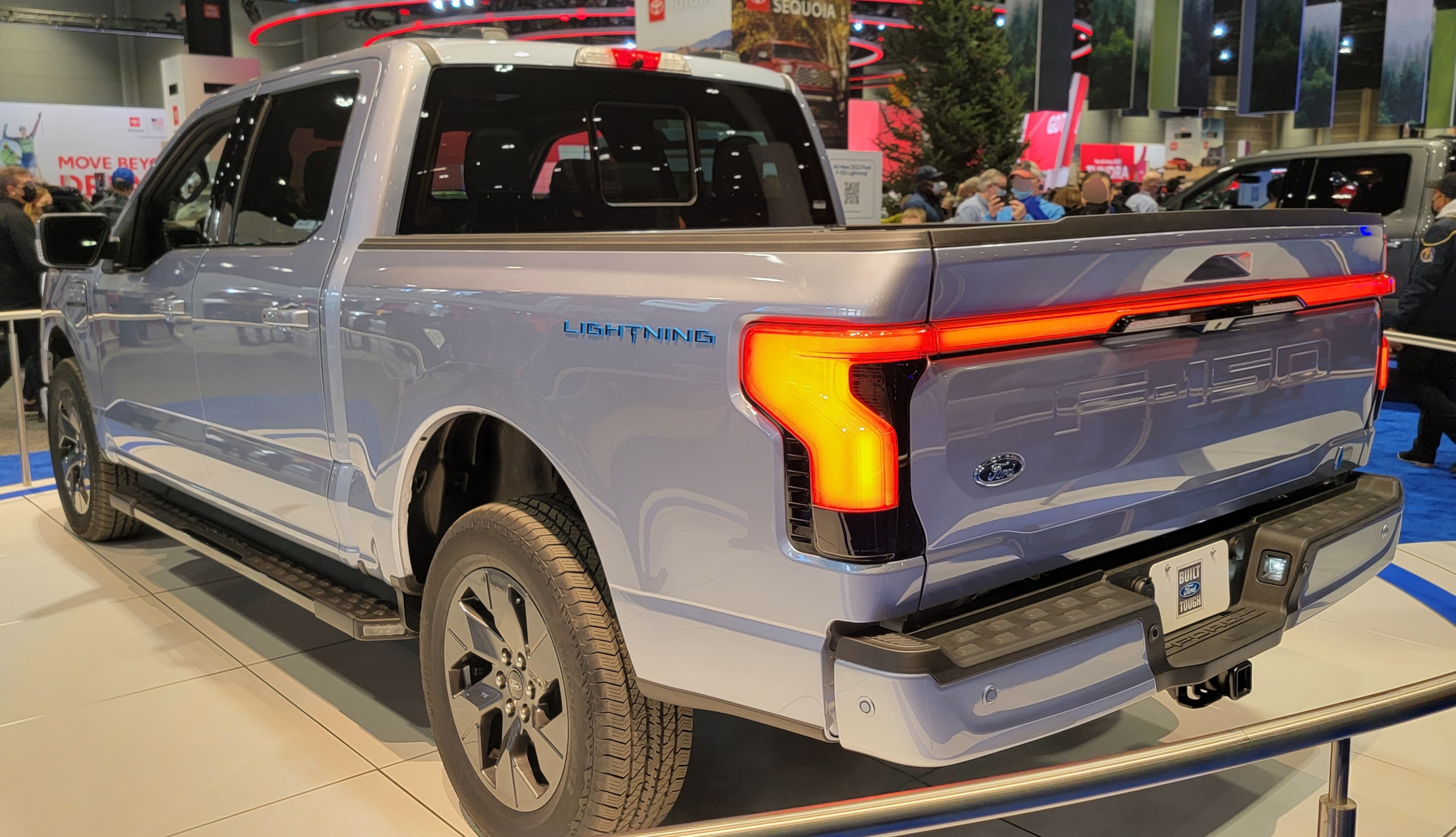
they were losing $40,000 in every single lightning truck.
So how do you make that up?
Well, you start increasing the price of every other vehicle.
So when you sell a regular gas truck,
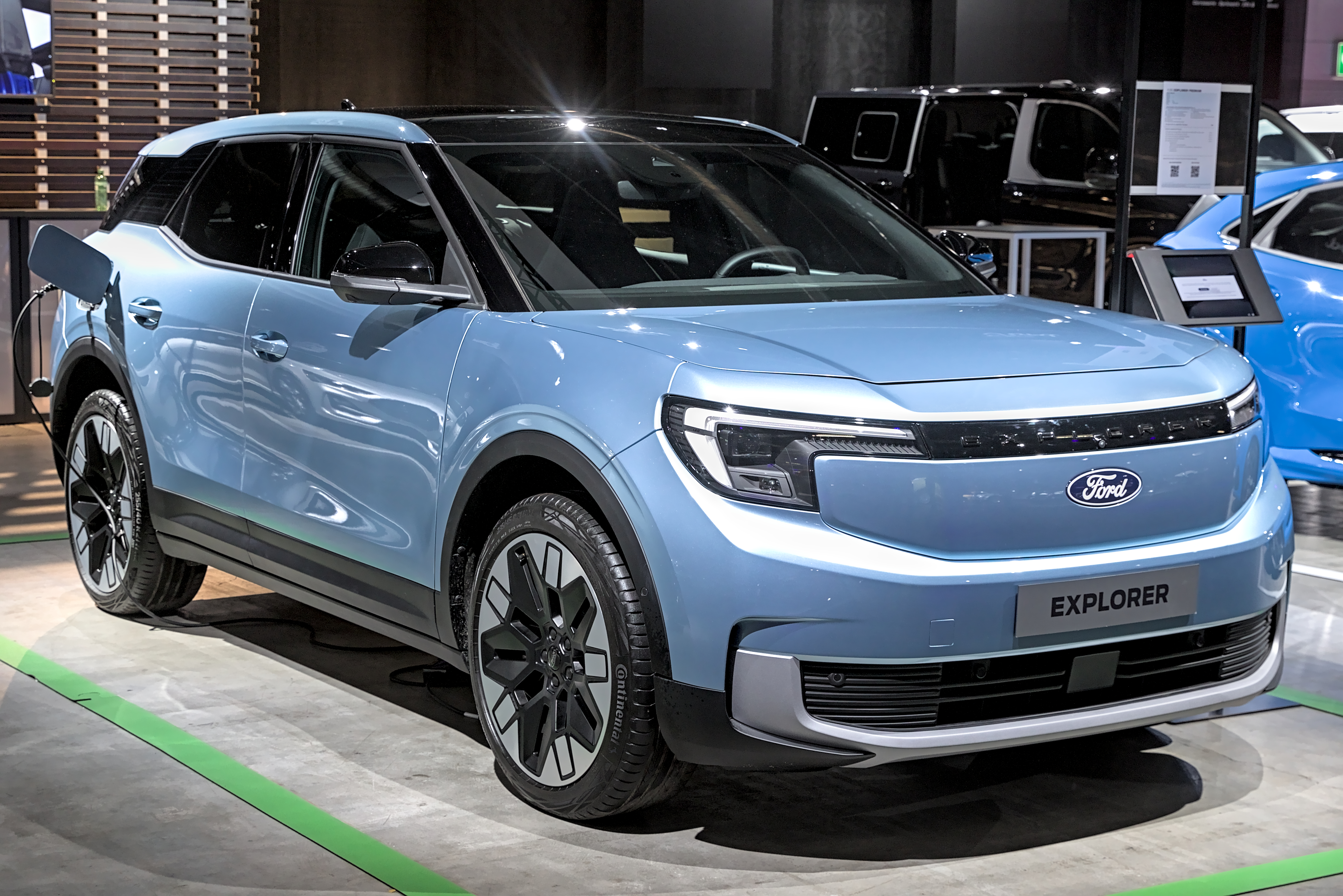
when you sell an Explorer and you sell a Mustang
and whatever else you sell, you can elevate those prices.
And that includes the super duty truck.
So everything got very expensive.
Then they eliminated the entry level cars.
If you wanted to strip down F-150 that was just, you know,
crank windows, you can't get it.
And so what they did is they took away all the entry level
trim levels, went to all mid and high level trim levels,
and then raised the prices to offset the loss, which it didn't.
It offset some of the loss.
But under the Trump administration,
removing this EV tax credit and taking away any fines
for 2025 and 2026 and anything that was past due owed.
So if you were Stellantis, you're like, oh my gosh,
we owe like $2 billion, we have to come with this money
to pay the EPA.
That's Kwan.
It's native.
Hey, girl, what's happening?
Is that your antiperspirant?
Yeah.
Let me see that can.
Aluminum butane.
I cannot pronounce that.
You have to switch to native deodorant.
Native Simple Formula has only clean ingredients.
It gives you effective 72 hour odor protection
with no hydrocarbon propellants.
Wow, this smells heavenly.
Clean effective 72 hour odor protection isn't a myth.
It's native.
Sabes, AT&T creeks escuchar la voz de una persona querida
puede cambiarlo todo.
Y tú que amas los podcasts, sabes que es así.
Escuchar la voz de alguien que amamos es único.
Por eso guardamos sus mensajes.
Significan mucho, verdad?
Para mí, si necesito ánimos en las fiestas,
sé a quién llamar.
Marisol.
Escuchar su voz se siente como estar en casa.
Y si necesito contarle algo a alguien, llamo Eric.
Es mi mejor amigo.
Escucharlo es como un alivio que no sabía que necesitaba.
AT&T sabe que estas fiestas son perfectas para compartir tu voz.
Si llevas tiempo sin llamar a alguien, es el momento.
Porque más que una conversación,
es tu oportunidad para decir algo que recordarán para siempre.
En estas fiestas, comparte amor con una llamada.
Felices fiestas, te desea AT&T.
Conectar lo cambia todo.
So what can they do with that money?
They can then reinvest into better product.
And we're seeing that already at Stalantis
bringing the hammy back in everything.
I mean, today, this week, I heard the score.
But also I heard, which is fantastic,
the Acura ADX and the Honda Prologue are going away.
That was a relationship with General Motors.
Oh yeah.
It was basically a Honda badge GM product.
And we all do.
Made in Mexico.
Made in Hermosillo, Mexico, by the way.
Yeah, well, not the ADX,
you said ADX, that's the ADX is their little HRV.
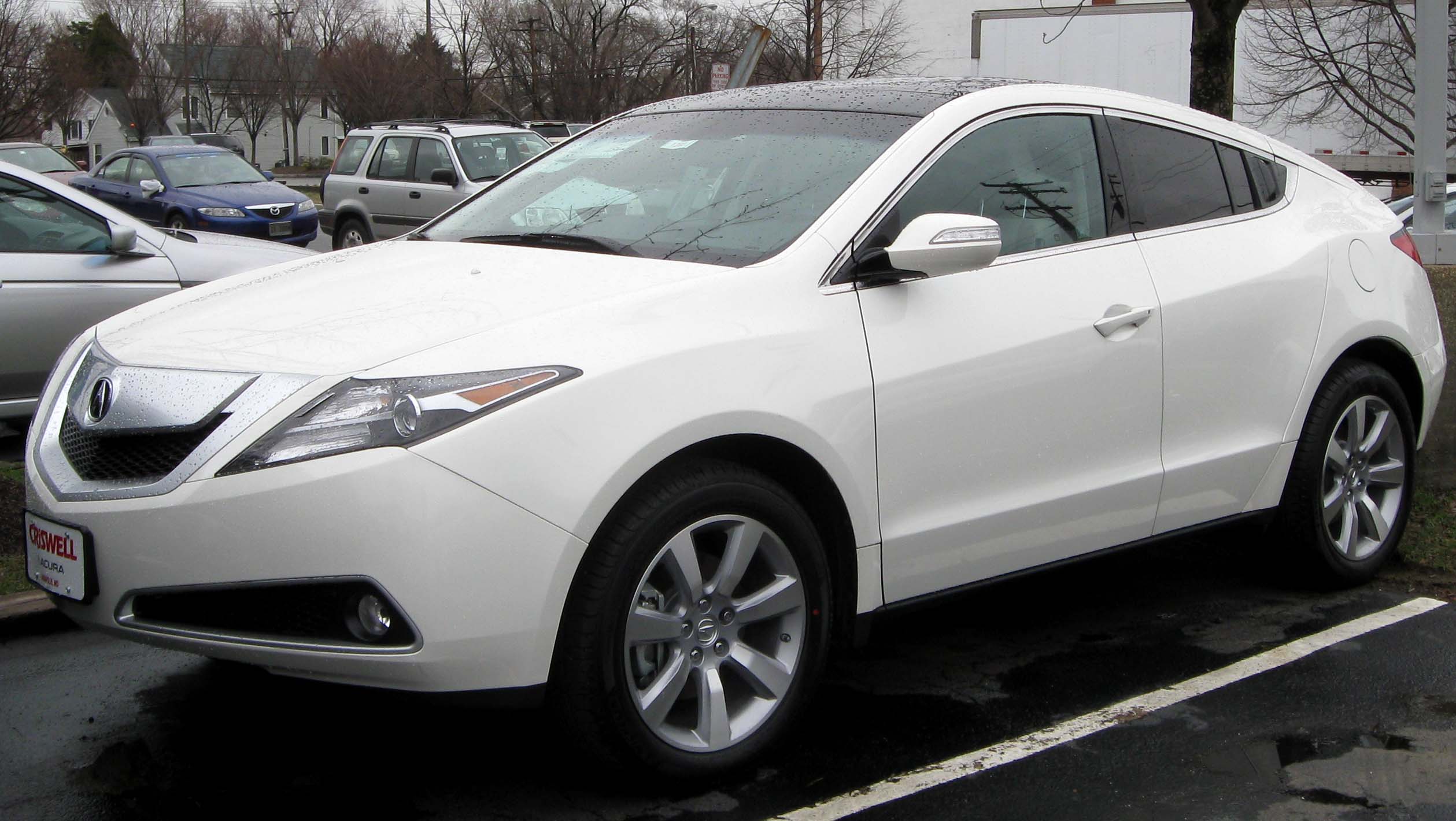
Right, the ZDX, yeah.
Right, the ZDX is their electric car
that they sure never made.
Yes, agreed.
Yeah, well, and that's right.
So when you think about it, what you're saying Lauren is,
A, we're all paying more for all the other cars
whether we want to or not
because they have to prop up the electric car
money losers with the higher prices on everything else
and everyone's wondering why cars have gotten so expensive.
And then we're also all paying through our taxes
to fund the $7,500 credit.
So it's so frustrating because it's like
people are always just like, well,
I don't know, there's just like this money floating around
and then we got to get electric cars.
And it's like, no, it's not money floating around.
It's you as Mr. John Q. Public
working and getting up every day and going to work
paying more money in every way.
Your tax money being siphoned off to that
and still having deficits
and making the dollar worth less money
which also makes the price of everything go up
because the dollar is not worth as much
and everyone thinks that we're going to go bankrupt
because we got a big deficit
because we're paying out more money
than we are taking in in taxes
for like $7,500 EV credits.
And you're paying more for every non EV you buy
because they got to prop up that.
So, people like don't want to hear
either don't want to hear about this
or just kind of try to act oblivious to it.
Or don't understand the complexity of the whole industry
and how many levels of spending there is
because for example, the past administration
gave like a lot of subsidies to a lot of companies
and now that money is going to be wasted
because I mean, obviously they were forcing something
that was not ready for the market
and consumers weren't ready for the market.
So it's a very complicated thing.
So the other question is
what's going to happen maybe in three more years
when there's a change of an administration
or something like that?
That's the problem that my customers are having, right?
They can't undo it.
This is a congressional review way.
This CRA, they cannot do the next administration coming.
Yeah, but Carl, how many times they put them
and they eat in California
and they change it like a few years later?
Yeah, well, they do it all the time.
You certainly don't want to use this state
as an example of how to run things.
I mean, we've got high speed rail
that's the biggest boondoggle
in the history of the state of California.
And that's saying something.
But we saw these EV sales peak
at around 8% of new car vehicles.
So about 8% market share was going for EVs.
And this was all before the election.
This was all before changes in policy.
Okay, we re-saturated and we saw this coming years ago.
IC cars saw this coming years ago
because we looked at each individual cities and states
and every time the same thing happened.
Below 5%, 6%, every year we looked
there was pretty good growth in EV market share.
Once she hit 8%, it almost stagnated.
It almost completely stopped growing
after you hit 8% in a given city or state.
And I was like, well, we're going to hit 8% nationally
probably in another year or two, three
this was like three, four years ago
when I was looking at this
when we hit 8% nationally, what's going to happen?
Exactly what I thought was going to happen
when we saw an IC cars on a local and state level.
So we've already hit peak EV
and that was with the incentives
that we just talked about
and with the regulations we just talked about.
Now regulations are going away,
now incentives are going away.
I know for a fact
that we're going to watch electric vehicle market share
after the big rush to take advantage of the incentive
that we're talking about that's about to go away.
It's going to crater.
It's going to vanish.
It's going to evaporate new car market share for EVs
at least for the rest of the 25,
the fourth quarter of 25, October through December.
Now there's always that whipsaw effect
when you have an incentive go away
and then the pull forward sales as they call it.
So all the people who would have bought
the next six months, they're buying in
like a six week period to try to take advantage
of the 700 dollar credit.
When we get into January and later of 26,
it'll probably settle in at what would be called
the organic level, not the antiseptic
or the propped up level of around 4% or maybe less,
but it's not going to be about 4% new car market share.
Cause again, the carrot and the stick are both gone.
You got consumers not getting a 700 dollar credit
and you got manufacturers who as we just confirmed
they make more profit.
They make more money on non EVs.
Are they going to keep making EVs
when they don't get fined and aren't being pushed to
by regulations?
No.
So if there's not EVs being produced
because they don't make as much money
from the manufacturer side
and you're not getting 7,500 off from the consumer side,
how many people are going to buy an EV?
Less than half who do it now.
That means from 8% to 4%.
So can we, another question for both of you,
is this part of Tesla's fault
because Tesla pushed the whole industry
to go electric, right?
Like 20 years ago when they started
and the other companies were,
look at that success of Tesla
and they said, oh, maybe we should do that.
And then started developing
and now they realize what you were saying.
Like they look at the numbers of what people are buying.
So is that, what do you think Lawrence?
Tesla fault for all this?
I don't know if they're at fault.
I have to say the guy is super, super smart.
Yeah.
And how to take the government to your advantage.
And he is one of those people that
every time he does something, it's like, wow.
That's what I'm saying.
Don't you agree that too?
Is it his fault?
No, he owns the bulk of the market.
So he's not a fool, he's super smart.
And I know that Carl's in the middle
of all of this where he is.
But I'll tell you, it makes a ton of sense
that he is there because as the market goes away,
Elon Musk has already said,
don't worry, we're going to become a robot business.
And instead of what some of our mutual friends have said,
like, oh, they're going out of business.
Well, I think the demise is not true.
I think, and I'm not the biggest fan of Tesla
or Elon Musk or any of that stuff.
But I will tell you, he was first to market.
He was smart to make the government work for him.
He sold the carbon credits.
And now on the backside,
he's going to walk away making this a robot business
because he's always written it as an electronics tech
company and not as a car company.
And all the other manufacturers
were unable to catch up with him, right, Carl?
Oh, yeah, I mean, everyone wants to forget
or tries to forget the fact that he had 10, 12 years
of no profitability, right?
So he had like a 12 or 15 year runway
before he had to make money
because as Lawrence said, A, he was well-funded
and he had a stock that his personality kept growing up
so they could fund the company for 12, 15 years
without making money.
And the government was helping pay for that.
And he was the only game in town.
Basically, you had a Nissan Leaf
and then about mid-teens, you got a Bolt
or you had the Teslas.
And the two, those three cars were not comparable.
The Bolt and the Leaf were these low-cost
and not particularly exciting EVs that were just functional.
And then you had this premium sporty
high-performance image from Tesla.
That obviously-
Better say, their technology.
Yeah, interior, everything.
You know, the big screens and stuff like that.
And as again, as I say, living out here,
they're everywhere.
So you appealed to a premium buyer
who wanted to feel like they were forward-thinking
a lot of the tech people,
a lot of the guys who worked at tech companies
were like, I'm gonna buy a Tesla
because that reflects me being Mr. Tech,
bleeding edge guy.
And there was no other game in town.
He had, so he had like a 12, 15-year period of A,
no competition and B, a lot of funding
that he got from the government
and from selling the stock
that he kept pumping the price up on
because he was such a charismatic,
high-personality in-your-face guy.
That's never gonna happen again.
Okay, we will never again have a world
where there's one electric premium car available
for a 10-plus-year period
and there's no competition.
So all automakers, including Tesla,
have a whole different world they got to exist in now.
And if he can pivot, as the term is,
to some other business model,
self-driving, robot taxis, robots in your house
that cook your food and clean your house
and serve your food.
Starlink is a fascinating business.
Starlink's really cool, actually.
I keep being tempted to get one
because everything I see and hear about it
sounds pretty neat, so.
Yeah, it is pretty cool.
It doesn't always work at the level
we're all spoiled with, you know, the fastest service.
But if you don't have, service is good.
I had it working really well
when I was skiing in Chile the whole month of July.
So maybe you can come and try it with me next time.
I haven't skied in years, but that would be fun.
Final question.
So what does this mean for consumers?
Because we, I mean, you guys know much more than me,
but I mean, we in general,
automotive journalists know a little more than the consumers.
What do these means for the consumer, Lauren,
that the tax, the incentive's going away?
At the end of September,
if you've not ordered or taken delivery
of an electric vehicle to get the tax credit,
again, you have to owe at least $7,500 in federal taxes
to take advantage of this, it goes away.
And now the state of California,
Governor Gavin Newsom, said that he was gonna support it
and come up with this whole new plan
and that's out the window now too.
He said they're not gonna do it,
they're gonna put in more infrastructure
for those people that have electric cars.
So what is your option?
If you're super smart, you purchased an electric car
that was built in the United States
and you were able to take advantage of the $10,000 deduction
on the one big beautiful bill.
So that would mean you would do a 1098 Q form
at the end of the year,
put in your vehicle identification number,
take that credit and the $7,500 tax credit.
If you owe a lot of money,
that'd be super advantageous.
However, that goes away on the,
the tax credit is now good from 2025 all the way through 2028.
There's a whole list of cars.
I'm sure Carl's done stories on it
as well as I have at Car Coach Reports
of everything that you can buy
that's built here from a Jeep to a Kia to a Rivian
to a Tesla Mazda.
There's even some heavy duty trucks.
Take advantage of that and don't leave money on the table.
And I think consumers will find that that'll be helpful.
After 2028, that'll go away.
Will it help?
Well, it's better than nothing
and it'll allow you to buy gas, hybrid or electric,
whatever works for you.
But I think we're hoping
is that car manufacturers will wake up
and they'll start building more entry-level cars
that are under $20,000 for the average person.
Yeah.
So this looks bad in the headline,
but actually at the end it looks like
it's going to be good for the consumers, right?
It is.
You're not going to,
your tax money isn't going to be going to fund,
still were a lot of semi-wealthy people
buying EVs.
The first one was that's all it was
because they didn't have restriction on income.
So a lot of people say that first $7,500 credit
throughout the late teens was helping fund
a lot of wealthy people buying Teslas and that's true.
They put some income caps on.
So this second round that we're about to end
was a little better about not just helping wealthy people
buy Teslas,
but it still was your tax money being used
for a small percentage of people to get EVs.
As I said, we topped it 8%.
So when you said, what's this mean for the consumer?
My first thought was, Javier,
well, for 92% of the consumers, it means nothing.
They didn't care about EVs.
They never wanted one in the first place.
So a nine out of 10 consumers plus didn't care at all.
And this means nothing to them.
But it does also mean that they should be able
to lower prices on all their non EVs
because they're not having to fund their money
losing EVs or face fines from the government
because those fines are going away too.
So it's really a win for everyone.
Unless, of course, you believe there's an existential
threat that we're all going to die if we keep making CO2.
And of course, my first response is...
That might happen.
Well, my first response to that is if you believe that,
whether you're right or wrong,
India and China are more than offsetting
whatever savings we're getting.
So by the way, China is pushing the EVs
and they set themselves up to be the benefactor
of any and all EV regulations throughout the globe
while they themselves put out more CO2 increasingly
than any other country.
So again, I just read a math and as is often the case.
Yeah, I just read a fascinating figure.
They have 109 car brands in China.
I mean, that's just like crazy.
They have a capacity in China.
And they have their capacity to build like 57 million cars.
They're building like 27 million now.
It's just insane that they're moving.
They're the US in 1928, you know, in 1928,
there were 400 automakers in the US.
And then something happened in 29.
And I can't remember.
What was it going on?
And what did I talk about?
Like a crash, maybe?
Something changed in 1929.
And all of a sudden there were 40 instead of 400 manufacturers.
So that's what we need in China.
And I honestly think it's going to happen.
Oh no, it's going to happen soon, yeah.
China isn't sustainable either.
I think that they're doing what a lot of monopoly,
people who have monopolies try to do, right?
They lower their costs to where they're losing money
and try to drive everyone else out of business.
And I bet even in China, if you got to look at the books,
the math ain't math and all that.
Oh no, no, no, no.
Even with the reduced, remember they got all the,
they cornered the market on rare earth metals
and all that stuff years ago because they set this all up.
I give the Asians credit, especially the Chinese
and Japanese and the Koreans, they think in, you know,
terms of decades instead of us thinking
in terms of weeks and quarters.
So they are much better at that.
But I think they're hoping
that they can get everyone hooked on the EV thing
and then they'll finally actually start making money.
And I'm betting they're printing money
really, really, really interesting times we're living.
And for now, Lauren, you and me,
you and me will be driving a gas car next week.
Yay. Yes, we're going to be doing some off-roading.
Exactly. That should be fun.
And Carl, you're just running, right?
I don't think that was electric either.
No, I was in the Aston Martin DBXS,
which is their highest horsepower version of one now.
It's got 717 horsepower to zero to 60
in like three seconds flat.
And it's a pretty amazing vehicle.
I technically can't talk about all the driving details
until the 30th.
But you can say that it was an electric, right?
You can say that it was not electric at all.
There wasn't a single a single battery in that car
except to start it.
OK, very cool. That's funny.
Thank you, Lauren.
In our case, we're driving the Honda Passport next week
for those asking.
So Javier will have content on his social media
as well as on his YouTube channel and I will as well.
So we're going to be doing some off-roading in
Virginia, Raleigh-Durham area.
Yeah, this could be interesting.
Who knows how muddy we'll get, but it'll be fine.
Well, thank you, Lauren. Thank you, Carl.
Very interesting. Thank you, Javier.
Yeah, everyone takes care.
That's a wrap for this episode
of the Total Car Score podcast.
Want more expert takes on the hottest cars,
industry trends and insider insights?
Join Javier Mota, Lauren Fix and Carl Brower
every week for the ultimate auto talk.
Hit subscribe, like and share with your friends
to stay informed and stay ahead.
See you next time.
What are you reaching for?
If you're a smoker or a dipper,
you could be reaching for so much more
with Zinn nicotine pouches.
When you reach for Zinn,
you're reaching for 10 satisfying varieties
and two strengths for a smoke-free
and spit-free experience that lets you lean in
for chances to break free from your routine
and a unique nationwide community.
Whatever you're reaching for, reach for it
with America's number one nicotine pouch brand.
Find yours in wherever nicotine products
are sold near you.
Warning, this product contains nicotine.
Nicotine is an addictive chemical.
Sabes, AT&T creeks escuchar la voz de una persona querida
puede cambiarlo todo.
Y tú que amas los podcasts, sabes que es así.
Escuchar la voz de alguien que amamos es único.
Por eso guardamos sus mensajes.
Significan mucho, ¿verdad?
Para mí, si necesito ánimos en las fiestas,
sé a quién llamar.
Marisol, escuchar su voz se siente como estar en casa.
Y si necesito contarle algo a alguien,
llamo Eric, es mi mejor amigo.
Escucharlo es como un alivio que no sabía que necesitaba.
AT&T sabe que estas fiestas son perfectas
para compartir tu voz.
Si llevas tiempo sin llamar a alguien,
es el momento, porque más que una conversación,
es tu oportunidad para decir algo
que recordarán para siempre.
En estas fiestas, comparte amor con una llamada.
Felices fiestas, te desea, AT&T.
Conectar lo cambia todo.
About this episode
The discussion centers on the recent end of federal EV tax credits and its implications for consumers and manufacturers. The hosts debate the impact of government mandates on car production, the rising costs of vehicles, and the challenges of EV infrastructure. They explore whether the removal of incentives will lead to lower prices for traditional vehicles and how it might affect the future of electric vehicle sales. The conversation also touches on the role of Tesla in shaping the EV market and the broader economic factors at play.
In this episode, we explore the impact of the expiration of the $7,500 federal tax credit for electric vehicles on September 30. While it may sound like bad news at first, the change could bring unexpected benefits for both the automotive industry and consumers.
Hosted by Simplecast, an AdsWizz company. See pcm.adswizz.com for information about our collection and use of personal data for advertising.