Tyres are the rubber parts of a car that touch the ground. In racing, they are made to help the car grip the road better and can change depending on the weather and track conditions.
Control electronics are the computer systems in a car that help manage how it works, like controlling the engine and safety features. They are very important for making sure the car runs well during a race.
The chassis is the main frame of a car that holds everything together, like the engine and wheels. In racing, it's designed to help the car move quickly and handle well.
The MGUK is a part that helps save energy when the car slows down and can give extra power when needed. It's important for making hybrid cars more efficient.
Engine modeling is like creating a computer version of an engine to see how it works. It helps engineers test ideas quickly without building real engines.
Simulation is like using a video game to test how a car would perform in different situations. It helps engineers figure things out without needing to build the actual car first.
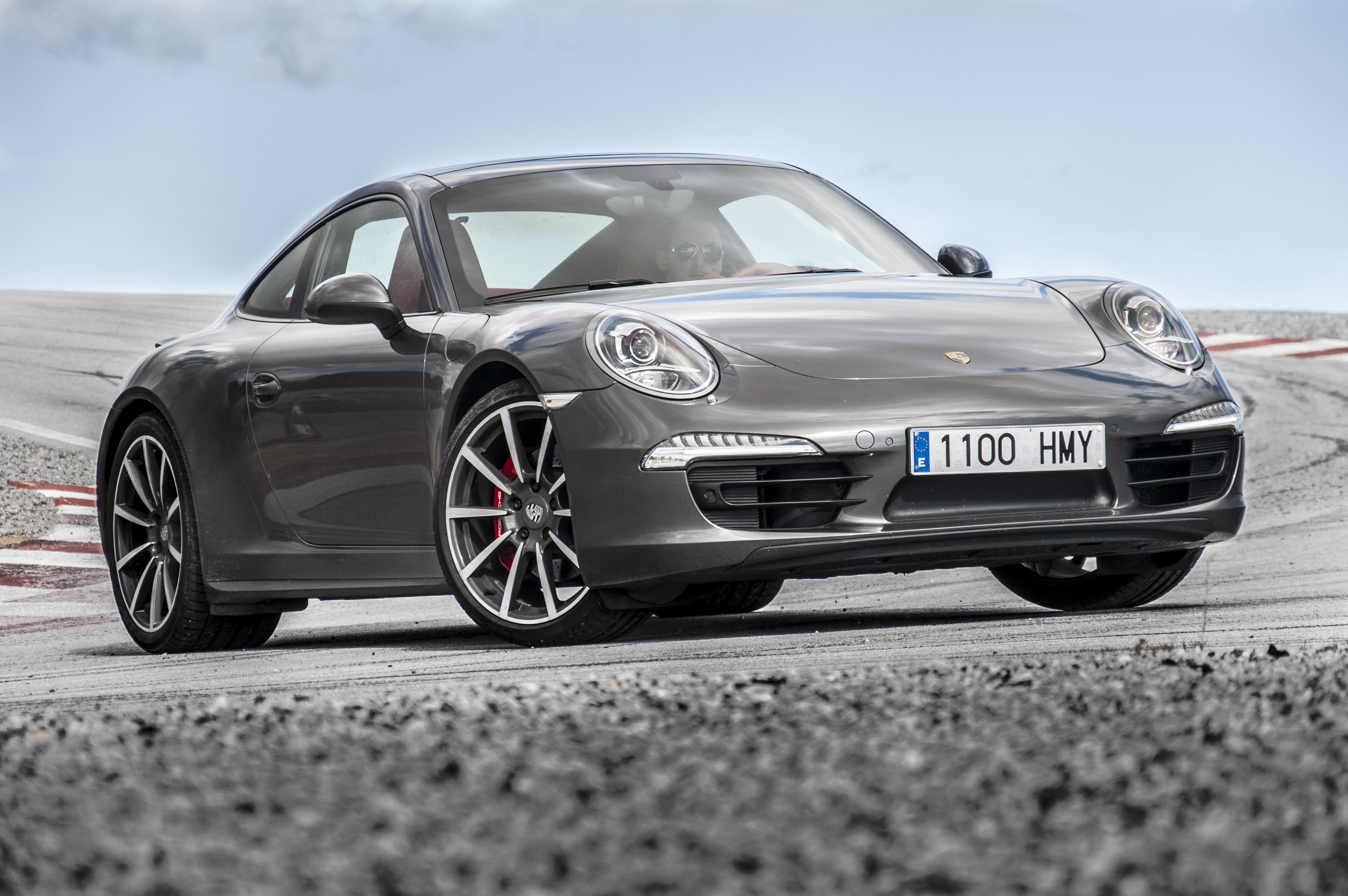
The Porsche 911 GT3 is a special version of the Porsche 911 sports car that is designed for racing and high performance. It's known for being very fast and fun to drive on a track.
A hypercar is an extremely fast and powerful car that is often very expensive and made in limited numbers. They use the latest technology to achieve high speeds and performance.
LIVE
Saving on your education should be a right, not a competition.
At University of Phoenix, you'll get the best scholarship or savings you qualify for.
Simple as that.
Explore Scholarship Options at University of Phoenix.
Hi, good morning. Thank you for joining us here at our new Ford World Headquarters.
I'm super excited to have you here today to learn more about our F1 initiatives and the Red Bull Ford partnership.
I really wanted to give you an opportunity to learn a little bit more about what we're doing with Red Bull Powertrains
and our partnership between Ford and Red Bull Powertrains.
I'm going to give you a little bit of a sneak peek behind some of the technologies we're using to work with them
to develop some of this and let you hear from the experts on how we're combining the legacy of Red Bull Racing,
Oracle Red Bull Racing, the legacy of success and Ford's expertise in manufacturing and engineering.
But to kick us off and get started, I wanted to introduce Red Bull Powertrains' technical operations director Phillip Prude to get us started.
Hello.
Well, thank you very much for the warm welcome on this wintry day.
Detroit hasn't disappointed coming over here in the snow.
But anyway, we're here to talk about something far more exciting and the launch of our powertrain.
I think it's important to start by setting the scene of what the 2026 regulations present to Formula One.
It is a massive change in regulation.
We will be talking about the power unit this morning, but the chassis, the control electronics, the tyres,
pretty much every aspect of the technology has changed and with that great opportunity to develop and move forward.
So the engineering challenge is immense.
What drove that transformation?
Well, Formula One were looking for a more sustainable, stay relevant and to improve their technology, their technological edge,
making sure that we keep relevant to the road car industries and the evolution of mobility.
So the goal was to create a power unit that was cleaner, more efficient and closer to the real world.
Key to that shift in the power unit was the rebalancing of power.
So the 50% performance, so half the power comes from the internal combustion engine and half of the power comes from the ERS unit.
A big shift from where we were previously where only around 20% of the power came from the electrical systems.
With that brings new challenges, making sure that you're deploying that electrical energy at absolutely the optimal location.
These are challenges that we relish, we tackle and ultimately looking for the ultimate lap time combining those two.
Sustainability is a driver for engineering across everything that we do.
From the fuel that we're using to power the internal combustion engine, efficiency of the engine and the power electronics and the batteries and also the cars themselves.
So sustainability, a core aspect of these new regulations.
And as we've already touched on this change to the hybrid system, three times the electrical power that we've had previously.
Big opportunities for redesign, rethinking of that packaging and then how you actually use it on the racetrack.
But as always within Formula One, there's plenty of constraints.
We have a complex set of technical regulations which in fairness have evolved and changed over the last four years of our development.
And both from the engine side but also from the chassis side.
To get the best performance, we really need to bring all of that together.
And part of the launch that we talk about today with the power unit is actually the bringing together of a chassis team or a full red ball racing and red ball for powertrain.
As one entity brought together on the same campus in Milton Keynes, which gives us great opportunity to really optimize everything around the chassis and the power unit.
So really it changes how we think about the car.
It gives us a great opportunity of how you optimize all of these different aspects.
The mechanical, electrical, digital, digital disciplines are more interdependable than ever.
All of it has to work together. That's where we're going to derive the lap time on the circuit.
And then it was against this backdrop that we created our new power unit from the ground up.
And it has been over the last four years a hugely complex and involved process.
But one that the end result is something that I personally are very proud of.
And I hope you all will be impressed in this room.
So the scale of the challenge.
When Red Bull made the decision to make their own power unit, that was announced in February 2021, we really had kind of a blank sheet.
We had absolutely nothing. We had no infrastructure. We had no factory. We had no team.
And certainly we had no design.
And when we opened the Seamus Cat Station for the first time, there was nothing on it.
We literally had to build every single component from scratch.
So that was a daunting prospect, but also an opportunity.
The reset of the regulations meant that it was an ideal time for a newcomer such as ourselves to become involved.
And from that decision, we built a factory. We built a team.
And indeed we built an engine with the first engine running on dinos just 15, 14 months after the initial announcement.
So a huge undertaking.
To understand the Red Bull forward partship, we need to start with how it all began and why it matters.
So going back to Red Bull itself, Red Bull became involved in Formula One all the way back in 1989.
Sponsoring Gerhard Berger, as it was, as a Formula One driver.
They created their own team in 2005 with David Courthard, the lead driver.
And then they won their championship just five years later, 2010, with Sebastian Vettel.
So the winning mindset and doing things differently is absolutely what led Red Bull to take on the challenge of...
What was a huge challenge, let's not forget, to make their own power unit.
It was born out with bold ambition, a brand new power unit from 2026.
And even with the pedigree that we speak about, it was a huge leap.
It meant creating a completely new capability, facilities as we've spoken about, in essence.
Despite their success on track, this was a newcomer's step. It was all new.
At the same time, this is where Ford come into the equation. Ford were looking to get back into Formula One.
And it's a good opportunity now for me to hand over to Christian Hettrips, Ford Padtrain Chief Engineer, joins me here.
How do you, Christian?
So, good morning everybody. So, as a native Michigander, I'll admit the weather's bad.
So, thank you for coming out. Hopefully it gets better tomorrow, but don't look promising.
So, we haven't been in the sport for over two decades, right?
So, I think everybody knows our history in the sport. More importantly, we do have success as a power unit manufacturer, right?
So, our partnership with Cosworth in the past 30, 40 years, we saw success.
So, the DFV, I think everybody's aware of DFV. As an engine person, I'm well aware of it.
We saw north of 150 winds. So, it's something we do hang our hats on. It was part of us.
So, that's what we bring to this table. Why now?
The 2026 regulations really opened up an opportunity to kind of level the playing field, right?
We're not coming in mid-cycle, but more importantly, we found a partner.
We found a partner who's successful, who's single-minded, who's driven, and it allows us to bring what we're good at to the table.
And what we're good at, manufacturing, and decades of process, engineering.
So, we can contribute where we could fill some holes that they had.
And so, the fit was immediate. I've been involved in the program, I think, almost from the beginning.
So, two and a half to three years ago, I don't know the time frame anymore.
The team's blended well. It was an immediate fit.
So, I went in, I was fully welcomed. My team is gone there, fully welcomed, and it's the same.
As they come to us, they're integrated. We operate as one.
So, what's the goal?
Speak and focus. So, why do we work together?
Red Bull, fast-paced. Everybody thinks of Red Bull as just go, go, go, go, go.
Ford, we're a big slow machine, right? Everybody's seeing Ford versus Ferrari, that's the mindset.
But just because maybe we're a big giant behemoth and we're slow, we have process.
We have quality standards. We have things that we can help them with while they are really pushing us
and making us speed up our ways.
So, why is the partnership so powerful?
We have completely different mindsets. We all have the same goal of winning.
But the way we approach that is a bit different. Again, I brought up, we're standardized, right?
We have global plants throughout the world, and we all have to operate the same to make sure the passenger cars
we're putting together are safe, are consistent, are reliable.
Red Bull brings speed. They bring focus. They bring innovation.
So, we're approaching this goal of putting a power unit out there from two different angles,
but all with the same mindset to win.
And the most important thing is, it's from scratch, right?
Red Bull has come from, Red Bull Ford powertrains has come from absolutely nothing.
So, there is no process there. It was a blank sheet of paper.
I know when I went there, it looks completely different than it does today.
The buildings were empty. The team size is drastically different.
It's an amazing place and the way that they've approached it and the speed at which they approached it is incredible.
So, what are we doing? What do we bring to the table?
So, one thing we bring to the table is advanced manufacturing.
So, again, I touched on manufacturing. We manufacture millions of vehicles every year.
So, one thing we focus on is additive manufacturing.
So, we've developed additive manufacturing. So, what you would know is 3D printing over the past 20 years.
We were one of the early adopters. So, we've had time to perfect it.
We have a lot of it of experience, a lot of different machines.
So, we've been able to apply that. What that does is it allows a lot of rapid iteration, right?
To win, you have to try lots of different things.
And by increasing our speed at which we manufacture, we can do that iteration and making sure we're optimizing.
Optimizing absolutely everything. We're not waiting to machine parts.
We're not waiting to tool parts. We can just print them.
So, in terms of what our delivery is right now, we have 12 parts, 12 individual part numbers on the PU.
So, that's across the turbo charge or the air charging system.
That's across the engine, multiple different parts.
The MGUK, which we'll touch on, there's a part that you guys will be able to see.
We're all over the place and we're able to tune what we're delivering based off of what the need is from the team.
So, beyond manufacturing, what are we doing?
We want to operate as one team.
And the only way to do that is to have the team co-located and working together.
So, we have a number of engineers sitting at the Milton Keynes facility, integrated the teams throughout the company.
What that does is allows us to operate as one, right?
It's not, hey, did you send forward an email? Hey, did you send Red Bull an email?
Hey, did you send Jim an email? Hey, did you send Cal an email?
There's no separation.
So, touching on what these individuals are doing.
So, I want to touch on about four of them.
So, the first one is engine modeling.
So, with the speed at which the team has to deliver and starting from nothing, there's no starting point, right?
We don't have an engine to go back from.
It's not like we're taking the hand of P.U. or something else and just starting from that.
It is legitimately from scratch.
So, we have to do this in simulation.
The only way to try to level the playing field with the current manufacturers.
We've done simulation for decades.
And so, within the four racing team, we've embedded one of our best.
And he is creating new models and new tools to be able to run a thousand times faster than real time.
So, it's not like you're running a combustion cycle, which is already fast.
He's able to do that a thousand times faster.
So, again, iterate really, really quickly.
So, his name is Kevin Rybal.
So, Kevin is embedded, again, with the simulation team.
So, he is part of the simulation team.
He's not forward. He's not Red Bull. He's Red Bull forward.
So, he's developed this new tool.
Again, that's running about a thousand times faster than real time.
But he's also applying AI, machine learning, because smart dude.
But he's only so smart, right?
So, let's use computing power to continue to improve his model.
And what that does is it allows it to be then used by multiple team members throughout.
But also, more selfishly, the learning he's doing there is coming back to us.
So, our GT3 program is improving from it.
And our GT3 launch hypercar program is using modeling and techniques that we developed with Red Bull,
to then form the basis of our hypercar program.
So, it's that cross-functional learning.
And again, we're looking for ways to apply that production as well.
Again, speed, accuracy, simulation, attached on it.
We don't have a place to start.
We didn't have an engine to throw on Dino to start learning from.
So, these models are allowing us to learn and learn quickly.
So, the next design we put out there is closer to what we think will be the final product,
rather than, again, lots of iteration.
And really, the coolest thing.
So, the way that this model operates, the driver's goal is to jump in the simulator
and make it feel like a real car, right?
If you've ever been in a simulator, sometimes it's a bit tricky.
The graphics are weird.
It doesn't feel like you're really driving it.
Our model is fast enough to actually drive the engine in the simulator.
So, when Max jumps in, when he goes to throttle, it will be the same response as the engine.
So, you try to make that transition from simulation to track seamless.
Okay, so, second area to touch on is just energy management.
So, we've got two engineers embedded focused on energy management.
So, the first is a guy by the name of Sam Mangeli.
So, he's supporting the battery testing.
So, the full pack, right?
It's really important.
The energy is going in and out constantly.
You all have cell phones.
So, when you charge and discharge, you're killing that battery over time.
So, it's really important to manage that energy coming in and out.
So, Sam is doing a lot of the testing with the team there.
So, he's embedded with the ESS team, the energy store team, to help with this testing.
So, he came from our labs, lots and lots of test experience.
So, we can put this pack through the rigors to make sure it will survive a race
and survive as long as we need it in the season.
And then, the second engineer I want to touch on is a guy by the name of Mike Wong.
So, Mike's focus is model predictive control.
So, again, energy optimization.
With 50% energy coming from combustion and from the hybrid,
it's really important to figure out how you're going to use your energy
when you're going to recover it.
So, what Mike is doing is he's looking at, when do I want to deploy?
When do I want to harvest?
And then, he's created code that basically figures out and optimizes.
So, when you go to the track, you go with this lesson, you know where you want to go.
But what he's created is it allows the controller to learn.
So, it improves track by lap to lap.
And then, the last person I want to touch on, again, still in the energy world
is a guy by the name of Mike Beeney.
So, Mike comes out of our research facility, spent decades in creating software for batteries.
Again, we've talked about the full pack, but individual cells are in that pack, right?
So, the health of that is critical.
So, what Mike does is he creates software called battery management software
that controls the energy in and out of each of the cells.
So, it looks at SOC, it looks at temperatures, it figures out how many electrons
can come in and out and out quickly, because that's your battery health.
So, again, we've touched on manufacturing, we've touched on a bit of the engineering we're doing.
But now, so you guys can see and stay engaged,
Philip is going to walk us through a bit of augmented reality
so you can actually see what the engine looks like.
This has become touch screen ordering, quick serving eateries,
and how hospitals become the patient scanning, data managing, health care facilities that we all depend on.
With leading networking and connectivity, advanced cybersecurity and expert partnership,
Comcast Business is powering the engine of modern business.
Powering possibilities. Restricts in supply.
Finding ways to be financially savvy is a smart move,
and knowing you could be saving money for the things you really want,
like that dream home or new ride is a great feeling.
That's why the State Farm Personal Price Plan can help you save when you choose to bundle home and auto.
Bundling. Just another way to save with the Personal Price Plan.
Prices are based on rating plans that vary by state.
Coverage options are selected by the customer.
Availability, amount of discounts and savings, and eligibility vary by state.
About this episode
Gain exclusive insights into the groundbreaking collaboration between Red Bull and Ford as they develop the new F1 power unit for 2026. Engineers discuss the significant regulatory changes, emphasizing sustainability and efficiency, with a shift to a hybrid system where 50% of power comes from internal combustion and 50% from electrical systems. The episode highlights the challenges and innovations in creating a power unit from scratch, the integration of advanced manufacturing techniques, and the unique partnership dynamics between the fast-paced Red Bull and the methodical Ford team.
In this special episode, we go behind the scenes of one of Formula 1's most ambitious projects: the Red Bull Ford Power Unit for the 2026 season.Join us for exclusive interviews with Ford Performance's Powertrain Chief Engineer Christian Hertrich and Red Bull Powertrains' Powertrain Operations Director Phil Prew.
Hosted by Simplecast, an AdsWizz company. See pcm.adswizz.com for information about our collection and use of personal data for advertising.