
S7E36: Top 10 Differences Between Traditional Automotive Media and New Media in 2026
About this episode
Automotive media in 2026 is portrayed as a shift from traditional journalists to influencer-style creators—complete with clickbait thumbnails, sponsored-car disclosure quirks, and faster-moving narratives. The hosts mock how “traditional journalists insist” on deep technical coverage while creators chase engagement through polls, live streams, and algorithm-driven metrics. They also describe how buyers now research across many platforms—long-form reviews, TikToks, shorts, and Reddit—before purchase, ending with a joke about linear brake modulation versus hype.
In this episode, we asked Grok to break down the third installment in our series on Automotive Media in 2026. The verdict? The industry has become a glorious, chaotic circus. On one side, traditional media still serves up 6,000-word suspension deep-dives they genuinely believe make for riveting reading. On the other hand, new media is yelling “THIS CHANGES EVERYTHING!!!” while launching cars with aggressive RGB lighting and theatrical launch-control fireworks.
Hosted by Simplecast, an AdsWizz company. See pcm.adswizz.com for information about our collection and use of personal data for advertising.
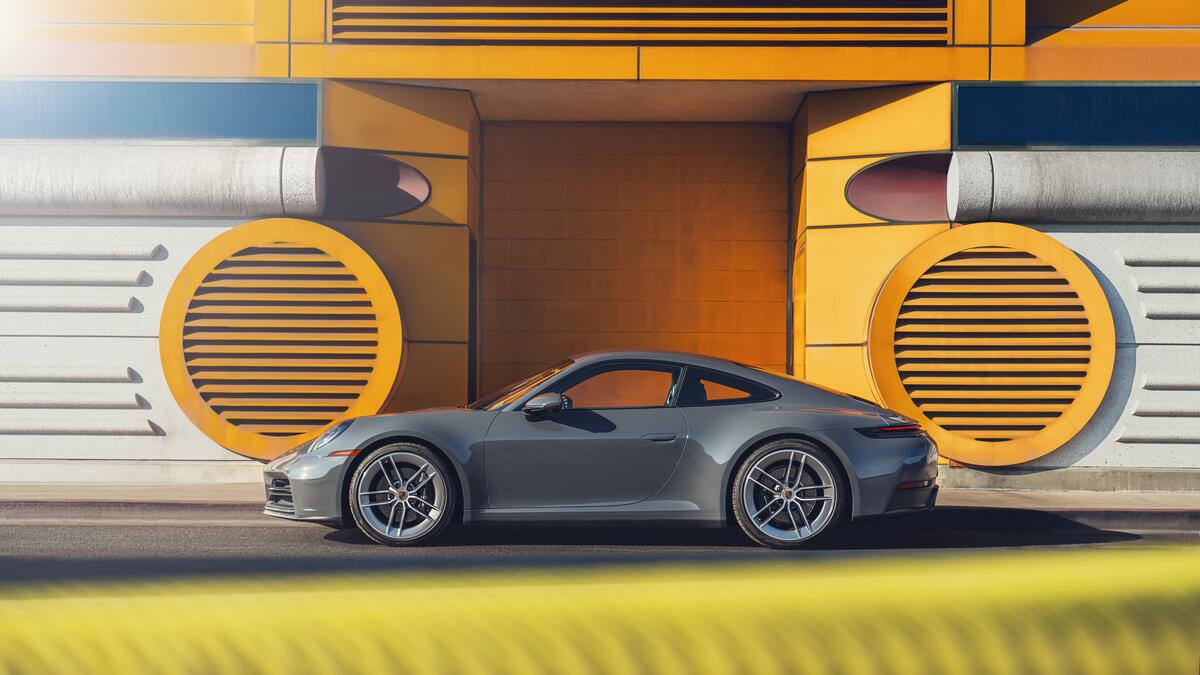
Porsche Ag911
"As the lines blur faster than a Porsche AG 911 Turbo zero to 60 run in the hotel parking lot."
The Porsche 911 Turbo is a fast, performance-focused version of the Porsche 911. Here it’s mentioned as a super-quick reference point for how fast the conversation is moving.
The Porsche 911 Turbo is a high-performance version of Porsche’s 911, built around a turbocharged flat-six engine and all-weather, high-speed capability. In this segment it’s used as a punchy benchmark for “zero to 60” acceleration, comparing how quickly the media conversation moves.
zero to 60
"As the lines blur faster than a Porsche AG 911 Turbo zero to 60 run in the hotel parking lot."
“Zero to 60” means how fast a car can accelerate from a stop to 60 mph. It’s a popular way to compare how quick different cars feel.
“Zero to 60” is shorthand for 0–60 mph acceleration time: how many seconds it takes a car to go from standing still to 60 miles per hour. It’s a common performance metric because it’s easy to compare across cars and reflects how quickly the drivetrain can put power to the wheels.
steering geometry
"Traditional journalists insist every review must discuss steering geometry, chassis rigidity, and whether the rear dampers feel slightly unsettled over mid corner imperfections."
Steering geometry is how the wheels and suspension are angled and connected so the car turns the way it does. It affects how responsive and stable the car feels when you’re driving hard.
Steering geometry refers to the suspension and steering setup angles and relationships that determine how the wheels turn and how the car responds as it moves. Details like alignment specs influence turn-in feel, stability, and how predictable the car is over bumps and mid-corner changes.
chassis rigidity
"Traditional journalists insist every review must discuss steering geometry, chassis rigidity, and whether the rear dampers feel slightly unsettled over mid corner imperfections."
Chassis rigidity is how resistant a car’s body and frame are to twisting and flexing under load. More rigidity generally helps keep suspension geometry consistent, which can improve steering precision and reduce vague or unsettled behavior when cornering.
rear dampers
"Traditional journalists insist every review must discuss steering geometry, chassis rigidity, and whether the rear dampers feel slightly unsettled over mid corner imperfections."
Rear dampers are the shocks at the back of the car that control how the suspension moves. If they’re tuned well, the car stays more stable when the road gets bumpy, especially while turning.
Rear dampers (shock absorbers) control how the suspension moves by resisting compression and rebound. Their tuning affects ride quality and, in performance driving, how the rear of the car stays settled over bumps and mid-corner imperfections.
mid corner imperfections
"Traditional journalists insist every review must discuss steering geometry, chassis rigidity, and whether the rear dampers feel slightly unsettled over mid corner imperfections."
“Mid-corner imperfections” are road bumps or rough spots you hit while you’re already in a turn. They’re a real test of whether the suspension keeps the car stable.
“Mid-corner imperfections” are bumps, dips, or surface irregularities that the car hits while it’s already turning. They test suspension control and damping because the car must manage grip and stability while the chassis is loaded laterally.
Request an Explanation
Heard something you'd like explained? We'll add it to this episode.
Sign in to request explanations for terms you heard.
Want to learn more?
Browse our glossary for plain-English explanations of automotive terms, jargon, and concepts.
Help improve this episode
See something that's not quite right? Our annotations are AI-generated and can sometimes miss the mark. Click the flag icon on any annotation to suggest a correction.