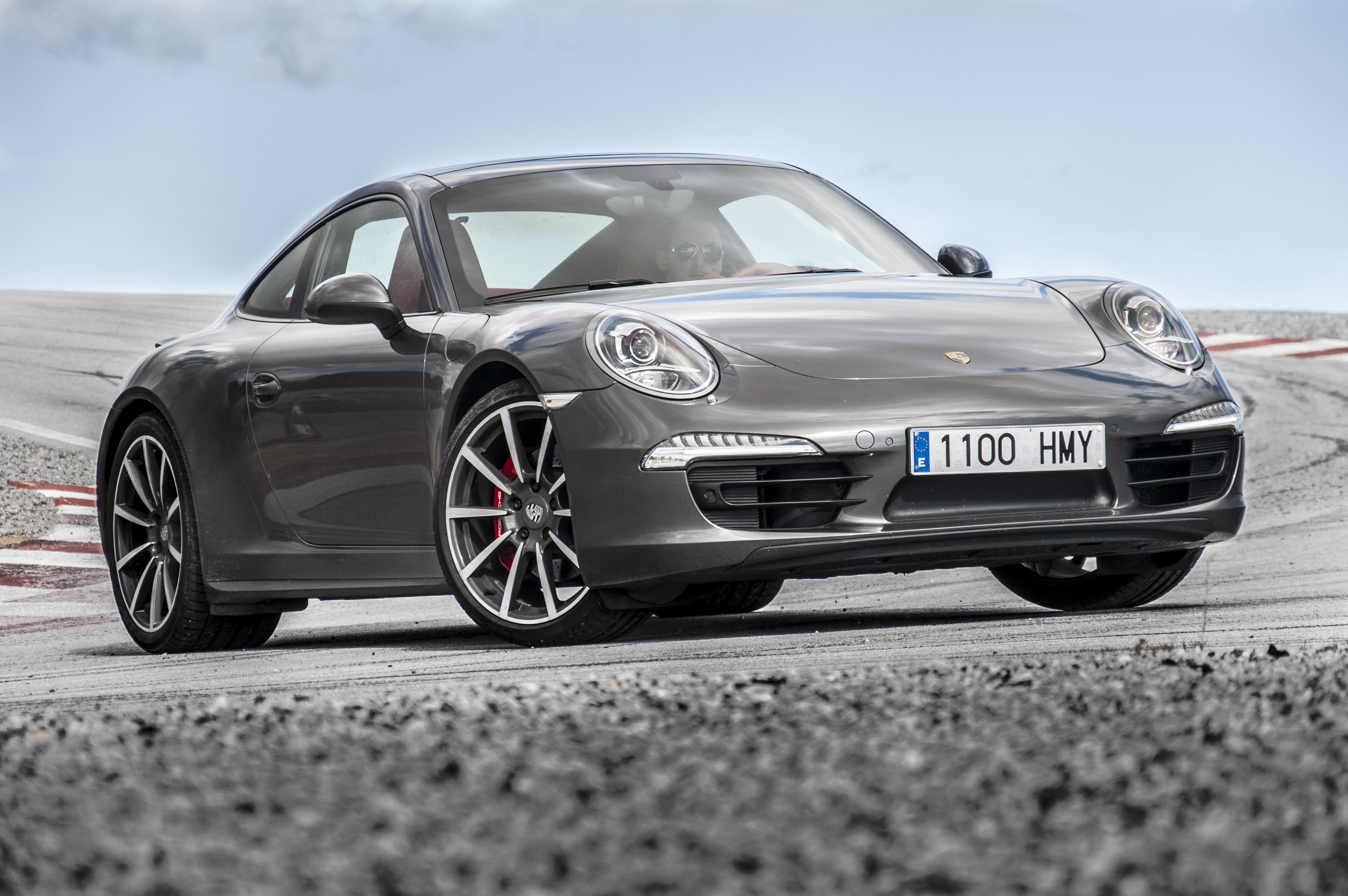
The Porsche Carrera RS is a special sports car made for racing and fast driving. It's lighter and more powerful than regular cars, which helps it go faster on race tracks. People who love racing often talk about it because it's very good at what it does.
Making cars in Australia used to be a big business in the 80s and 90s, with big factories where cars were built. Now, there are fewer of these factories.
Mark Webber is a famous race car driver from Australia who competed in top-level car races like Formula 1. Many people know him because he was very good at racing.
The Ford Excursion is a very big car that can carry lots of people and stuff. It's strong and can pull heavy trailers, which is why some people like it for big trips or work. Because it's so big, you don't see it as much in other countries.
Self-serve service stations are places where you fill your car with gas by yourself instead of having someone do it for you. This became popular because it saves time and money.
The Cobra is a famous fast car from America. It has a strong engine and is very light, which makes it go really fast. People love it because it was made a long time ago and raced a lot.
Phillip Island is a famous race track in Australia where many important motorcycle races happen.
LIVE
A Listener production.
I'm automotive commentator and journalist Greg Rust and this is Rusty's Garage.
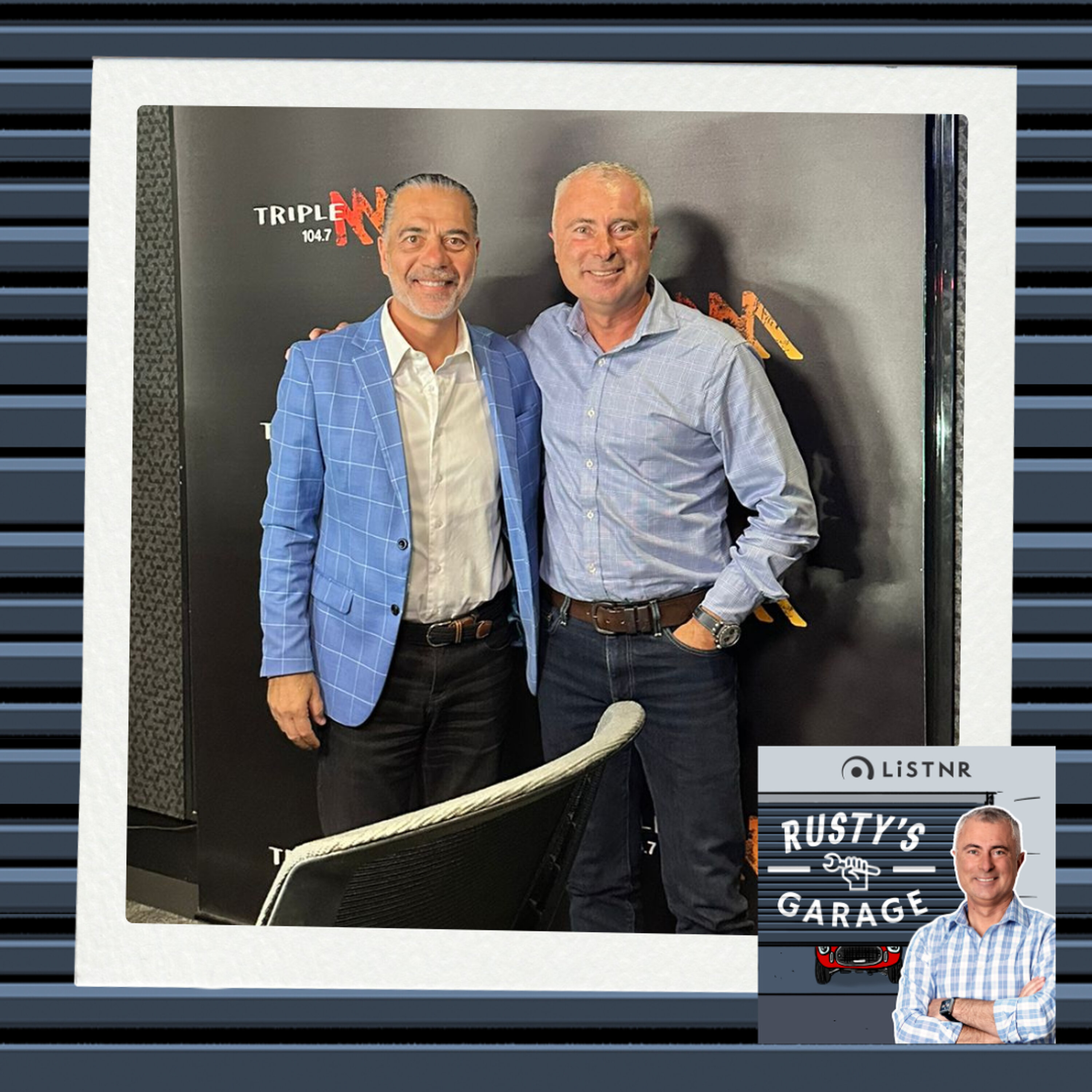
For this episode I'm in Adelaide with a man who played a key role in helping the state of South Australia secure a round of the MotoGP World Championship.
Huge news that broke here just last week. This will be the final year that the Australian motorcycle Grand Prix is staged at Phillip Island in Victoria
where it's been since the 1990s before heading to the city streets right near our studio here in fact in 2027.
A street race for MotoGP that is groundbreaking. More on that later.
The Shaheen family have quite a story of their own that goes beyond that MotoGP headline.
They moved here for a better, a safer life from the Middle East and ultimately bought a service station in the early 1980s.
It was the beginning of an empire that would become the largest privately owned company in South Australia and a chain of OTRs on the run servers
and all of the things that those fuel outlets now offer.
I've dealt with Sam and his brother Yasser who've competed for years in Porsche Carrera Cup and GT Racing respectively
and our listeners here on Rusty's Garage will of course know the incredible motorsport complex created about an hour from the Adelaide CBD, the Bend Motorsport Park.
Opened at first with a 7.7 case circuit that would run in lots of smaller configurations. There is a car track there.
A 100 room four star hotel. There's rally courses and now a world class American spec drag racing facility.
I attended a fundraising night for Todd Hazelwood about a decade ago and Sam Shaheen was a keynote speaker that night
and he very passionately outlined his dream for the Bend with all of the kind of supporting documents in this wonderful presentation.
And by the end of it, your mind was blown by the magnitude of this undertaking but you also knew this was no sales pitch.
It was happening. That introduction doesn't do the full story justice.
It is just a short summary of many respects even though we've done some TV interviews or functions together over time.
I have been looking forward to learning more about Sam Shaheen today.
Hello, mate. Thank you for coming in the studio and for joining us.
No pleasure.
Tell me, can you remember? I want to say it's a decade ago now that we did this fantastic night, Todd Hazelwood fundraiser.
You were kind of keynote speaker and you shared the vision. A lot has changed since that night.
Well, you have got a very good memory, Greg. That was a very memorable night for me because I had spent almost three to four years before that,
going around the country and around the world with a map, a plan and what I thought was a clear vision as to what I wanted to build here in South Australia.
And that was a memorable night because Todd Hazelwood was, well, that was a long time ago and he was finding his feet but he had talent and he was genuine.
He was just very authentic and I've always taken plenty of inspiration from those that are authentic in everything they do and how they conduct themselves.
So I clearly remember the night.
I mean, that probably taps into maybe a little of your approach to work, to whatever.
I mean, he's done the hard yards and continues to do so, doesn't he?
That's absolutely right and nothing beats that. Nothing beats the commitment to a vision and to a target and at the time I thought he was doing it very, very well and he still does.
People like that resonate and can be trusted and trust has a lot to do with where I am today and where I want to be tomorrow.
I do some media training for Mitsubishi Motors HQ just down the road here in Adelaide from time to time.
Am I right in saying the bend? That was the old proving ground for them.
How did it come about that you would take this vision and make it a reality in that area?
Yes, well, I mean, I grew up in Adelaide and the era through the 80s and 90s when car manufacturing was alive and thriving in Australia.
And, you know, we had the Holden plant and Mitsubishi had a quite an extensive manufacturing plant here at Tonsley.
And everybody almost in South Australia knew that Mitsubishi had a proving ground, had a testing facility at their Italian bend, but it was surrounded by a ring fence around it and nobody knew what was inside it.
And I've driven past it on many occasions, never knew what was inside.
You know, fast forward the story many years later and what was inside the fence was very underwhelming.
It was nothing. It was rock limestone with very little infrastructure.
But the circumstance how it all came about was a long story, but an interesting one one day.
So you basically start within almost like a blank canvas as they say.
What sort of challenges did you face with this massive undertaking, this massive project and what did you learn from that?
Yes, well Mitsubishi wrapped up manufacturing in Australia, some in the early 2000s, 2000 odd acres, 770 hectares of land.
They literally shut the gate and left, ultimately sold the land to Koron Council, the council.
The council knew that the land was valuable for something, but didn't quite know what it was valuable for.
And they sat on it for a few years, had some basic activities run on it, but nothing meaningful.
And they were waiting for something for somebody to come along.
And I'd been the notion of building a racetrack at the time was always in the back of my mind.
I'd been to several racetracks around Australia.
I'd been to Malala, of course, he many, many times and had many, many a conversation with the late Clem Smith, legendary Clem Smith,
who had single-handedly held up motorsport in South Australia for almost 40 years.
And I recall a few times going to Clem, who was in his 80s at the time, said,
Clem, what are your long-term thoughts for Malala and what do you consider at some point?
Giving me a go, I've got some ideas and I really think we can do something great here.
And it's probably not very polite to repeat what Clem had told me on several occasions, but it was advice, but robust advice.
And the idea just kept ruminating really in my brain and it was on a memorable trip once to Tasmania.
I was with a bunch of friends crossing on the spirit of Tasmania.
We've taken some cars over just to drive the beautiful Tasmanian roads.
And as you would, it was well past midnight and we're chewing the fat on motorsport and motoring and solving problems of the world at the same time.
And I started kicking around the thought of where would be the most ideal location for a racetrack in South Australia?
And South Australia is an interesting part of the world.
It is the most centralised state in Australia.
Of the two and a half million people in the state, over two million of them live in Adelaide.
So the advantage to that is that you don't have to go too far away from Adelaide to be away from the dense population centre.
And we're very fortunate with weather here and to cut a long story short, I'd walked away from that night early morning with a few interesting locations where an ideal racetrack might be located.
And then out of drawing a one hour radius outside of Adelaide, it hit tail and bend, which was right in that arc.
So I went to Courant Council and I put to them over a number of months a proposal to buy the land from them because I had more developed ideas about what I'd wanted to build on site.
And it progressed those conversations quite a number of times and I made several presentations to council and we were almost there.
And then on one morning I was surprised that we were almost close to signing a deal on the land.
Courant Council decided all of a sudden to go to Public Tender for the land.
And they put it out to the market and they weren't shy in showcasing the ideas and the proposals that I put forward as potential development on the site.
So it was an unusual process from there, but I again, I've learned in everything I've done to put my best foot forward and be authentic and be clear in what my plans were for the development.
And throughout that process I was quite surprised at the number of people and parties and businesses that were interested in the land, whether for motorsport or for other uses.
But September 2013 was when the land was put on for Public Tender.
We signed the contract in January 2014.
Amazing.
And that's when the journey started, 12 years ago now.
So did you kind of consult with racing people along the way and then a footnote to what you just opened up on there a moment ago?
Clearly you're subscribing to a build it and they will come and then Murray Bridge has gone through great growth in population and in property terms.
That's only just down the road really.
Did you see this as a corridor that will open up in the decades ahead kind of thing?
Undoubtedly.
I mean this country is built on the shoulders of those that have had a vision to build something and have had belief.
You have to have belief.
If you don't, I still don't know the recipe for success, but I certainly know.
That is amazing that you say that because...
I certainly know the recipe for failure though.
I certainly know that unless you have conviction in what you are proposing, unless you believe in a vision, you are definitely not going to be successful.
Now the counter argument, if you have belief, if you have conviction, that is still no guarantee of success, but at least you're halfway there.
And I believed that if I built something and to a standard that I'm going to give it every opportunity to be successful.
Nobody was going to outwork me.
Nobody was going to have more belief that this is going to work.
And that was the start.
That was the start.
And I went, started on a journey of exploration really.
I'd visited almost every facility in Australia.
But as a participant, not as with an eye of a developer or trying to learn not only how a Sydney Motorsport Park or a Phillip Island or a Sanddown or a Winton or one Roo race.
How, what they got right, but also what they didn't get right.
Just to try and understand and try and avoid some of the pitfalls that those facilities had gone through.
And again, I went with my A1 plan, approached every single venue.
A lot of the venues were kind enough, generous with their time, but a lot of venues were not.
A lot.
Close shop kind of thing there.
Very close shop.
A lot of venues saw a potential Motorsport venue as a competitor.
And it was a difficult, difficult thing to understand because I felt that anything that is good for the sport will in the long term benefit everybody involved in the sport.
Whether it were broadcasters or venues, whether they were in South Australia or anywhere in Australia.
And I thought that was a very short sighted view to welcoming or not a developer that came knocking on a door and say, I want to learn.
I haven't built one of those things before, but can you share with me at least some of the mistakes that you've absorbed so that I don't make them.
It was quite a surprising process.
And I quickly figured I need to travel.
I need to go abroad and see some of the great venues around the world to try and learn more.
And that was a journey.
That was a journey.
It was almost two and a bit years.
And I traveled to facilities all over the world again with a plan and a lot of questions.
And I lent on some of the great Australians that I was hoping would at least open a door for me.
And there were some great ones.
Mick Dorn and Mark Webber were absolute legends.
They still are legends, of course.
And the thing that just astounded me at the time, because my goosebumps were calling it, is that how they are so well known in Australia.
But they are even much more known overseas.
One particular excursion still till today, just so...
It's vivid in your mind, isn't it?
It left such a mark on me at the time.
I reached out to Mark and I told him what I wanted to do.
He was an Adelaide for an event.
And keep in mind, this is Mark Webber who was still at his peak.
He was driving.
And I said, I would love to go to A1.
I'd love to go to Red Bull Ring.
There are a lot of elements that I've seen observed on television that I would love to understand.
He said, I'll connect you with somebody.
No problem.
When can you go?
I said, you just name it.
The ticket will be booked tomorrow.
Cut another long story short.
I did make it to Red Bull Ring.
I gave him a date.
He said, you set the date and I headed over, drove over to Red Bull Ring and I was met by the general manager who met me literally at the gate.
And I turned up and I thought, geez, there's something going on here because the car parks were full.
There were people everywhere.
It was a DTM weekend, a big, big, big race weekend.
And I thought, oh, you know, this guy I'm sure is going to hand me to somebody within the business.
And I was perfectly okay with that.
I wanted to see engineering drawings.
I wanted to see how the bit building was built.
I wanted to see operationally how they ran events.
I wanted to see paddock and paddock management.
I wanted to see how they managed car parking, ingress and egress.
I just, I was a sponge and he, he had, he had two mobile phones with him.
He had two radios with him and he took me from, from place to place within Red Bull Ring, showed me everything and anything I asked for all day long procured plans for me, sent me and got me engineering plans,
layouts, took me into garages, introduced me to teams, to team principles and was with me until 4pm that day.
They'd not once, they'd not once pick up his phone while he was with me.
And I was just, it was overwhelming.
The generosity was just overwhelming.
And as we were leaving, he was driving me back to the, to the, to the, to leave that day.
I said, look, I don't know how I can thank you if you're ever in Australia.
I, I, I cannot repay your generosity.
Please look me up.
And I, you know, you must be very good friends with, with Mark Webber.
He said, I've never met him.
You know, this is Mark Webber.
Mark Webber just reached out, sent me a message and said, I have a good friend coming from Australia.
Look after him.
And that was it.
And I, it gives me chills again, recording it here.
This is how well the likes of Mark Webber are respected overseas.
And, and I've always, even in the last decade, I, I still believe we have some absolute icons and champions,
not champions on, on racetracks, but really champions, champion human beings that should be better acknowledged here in Australia.
I think it's really important to talk a little bit about what you alluded to before.
And that is your family background, your family story and stuff like that.
Firstly, I think your dad left family, came to Australia, left some pretty fraught, pretty difficult circumstances to make a life here.
Share with me what you can, how difficult that was and perhaps why or how he ultimately landed in South Australia.
We'll write the story one day.
I was born in a refugee camp.
I was born in a Palestinian refugee camp.
My parents are Palestinian and, you know, the Middle East is a, is a, is a tough place.
It's a tough neighborhood.
And I spent the first 16 years of my life running from one refugee camp to the other.
We're trying to survive civil war broke out in where I lived for most of my early years.
And we lived in a, in a, in a difficult circumstances.
My father was the eldest of nine siblings.
He had to become a man very early in his life.
His mother passed away at the age of 44.
His father passed away at, in his early 60s.
And as a 19, 20 year old, he had to look after eight siblings with, with very, with no education.
So he was a self-made man.
He, he put himself through a night school.
He got himself a diploma.
He started working with the United Nations Relief and Works Agency,
which is the United Nations agency that was charged with looking after Palestinian refugees in Lebanon at the time.
And that's where he met my mother later.
He taught himself some English and started running English courses at night.
And she was, she wanted to, she was learning a language in 1982.
There was a large scale war in Lebanon.
And we were living in, in Beirut and Beirut was pummeled.
Beirut was surrounded.
We lived in a, in a basement refuge for almost three and a half weeks.
No power.
You had to run out and dodge bullets and snipers to get water.
It was a, it was a tough existence.
And that was really the last straw.
We, we, life was becoming more and more difficult.
And like every parent, now I'm, I'm 57.
I, I, you know, I can think, I can only imagine what they were going through.
I was one of four kids and they decided to, to leave.
They were looking for a better life.
And they applied.
They applied all over the world.
They applied to Canada.
They applied to places in Europe.
They applied to Australia.
Every application was rejected.
Our application to migrate to Australia was rejected the first time and the second time.
We appealed and you know, back there, the appeal, you just turn up to the embassy and you say,
I'd like you to reconsider, please.
And on the second appeal, on the third application, our application was accepted.
So literally five days later, we packed whatever we had and we were on a plane to Australia,
landed in Sydney, landed in Sydney, you know, the land of promise.
And it took, it didn't take long for the entire family to work out that we were going to struggle big time in Sydney,
whatever little money my parents had saved over the preceding 25 years.
Is that an acceptance thing or an employment thing?
Both.
Both.
I had finished the equivalent of what is year 11 in Australia and not a single school would,
we didn't speak English, not a single school would accept my enrollment.
The best school the most I ever received was an offer to go back to Year 9 and learn the language and start all over again.
Language was compulsory, French was compulsory in the Middle East generally.
So I knew a few words in French and if you can speak a bit of French, you can kind of get by in English,
but not enough to go to school and communicate.
And my father couldn't find work and neither could my mother.
So in a very, very short time, it was very expensive to live in Sydney.
And, you know, he was a believer, he was a man of vision and he had conviction.
They say the apple falls fine up on the tree.
And he, he sat down and literally very agriculturally just looked at a map of the world with a piece of string,
turned it up Northern Hemisphere to Palestine, turned it around to the Southern Hemisphere and it landed on Adelaide.
And he said, we're going to Adelaide.
Wow.
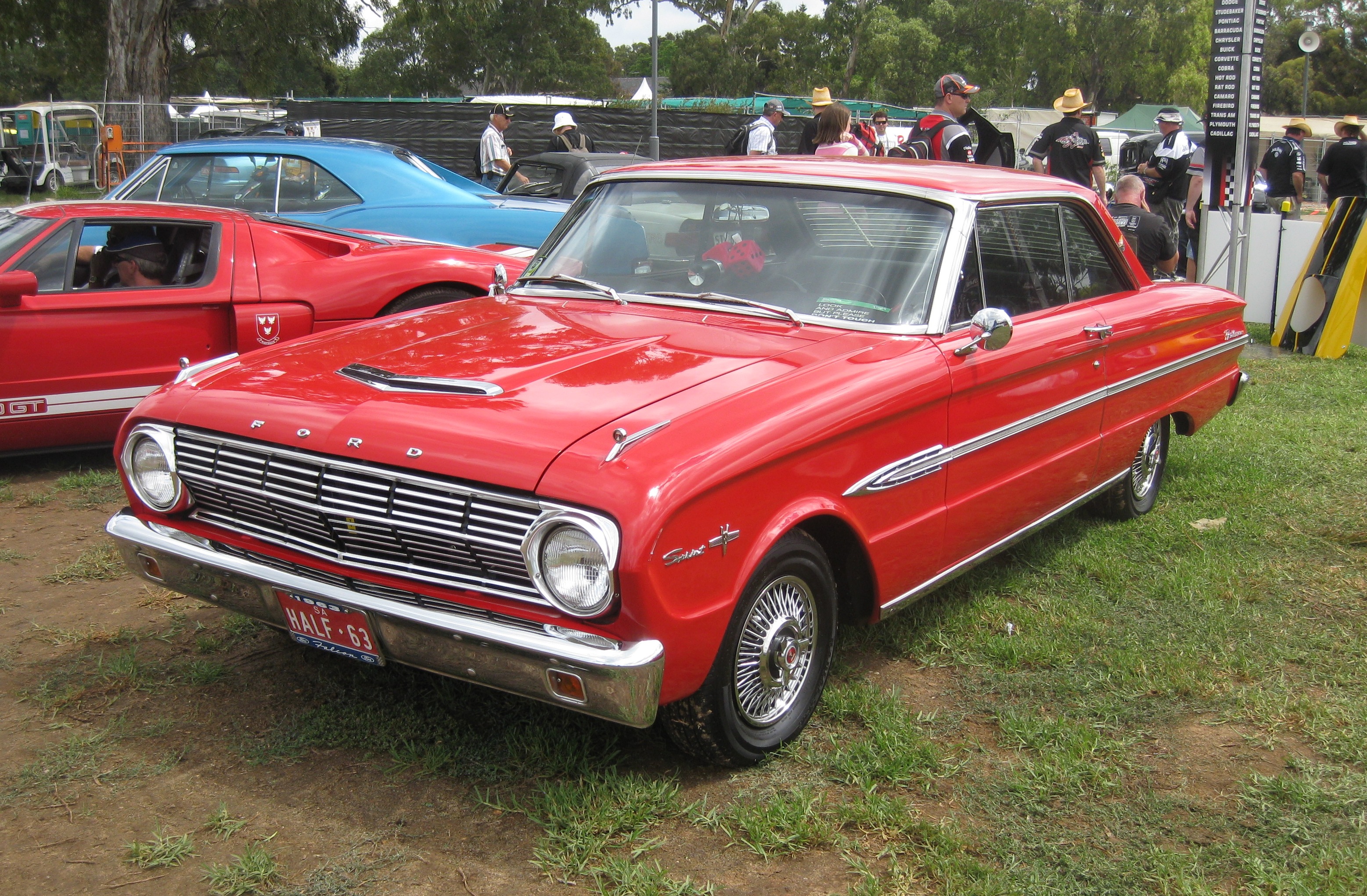
Got in a, we had a, he'd bought a car, a Ford Falcon.
We packed into the car and came to Adelaide.
The motor blew in Gawler about an hour out of Adelaide.
So it wasn't a very good introduction.
And eventually, eventually found an advert in the Adelaide advertiser,
a little advert that said, there's a service station for sale, suits, new family, good cash flow,
no skills required.
And he thought, well, never, don't understand how service stations work,
but we need something to do, we need to work.
And the critical thing about that service station on David Terrace here in metropolitan Kilkenny in Adelaide
was that it had a little detached house at the back, a little two-bedroomer.
And he thought, well, if we, if we can, if we can land something like this.
So anyway, we, we went to a gentleman by the name of Bob Montine.
He was the owner and he was the mechanic also there.
This is the days before self-serve, service stations and, and where there were real workshops that, you know,
that can open up a hood and actually, you know, take a car, be apart and do things with a car.
And, and literally every cent, every cent that saved and a very, very great local bank manager that
understood where we came from and shared, you know, took something from, he saw something.
You know, he's a family that was desperate to make a living and he put a lot of faith in us being able to
get a business running with very or no skills in doing what we're, what we're setting out to do.
The only condition my father had to, to the late Bob was, we just need you to stay on board for a month,
not to show us how to run the business, but to teach us English.
Okay.
And, and that was, and that was really my, that was really our playground because I, you know, everything in that month
were all absolute sponges to what Bob was saying.
So, you know, a car would pull up to, to a pump and he'd go, go on lad, just go on.
So you'd run to the, you'd run to the car, it could be, could be raining, could be 35 degrees or 40 degrees and,
you know, someone would roll the window down and just, you know, put $5 out and say,
you know, five bucks.
Thanks, mate.
And check the tires and, and all while you're at it, no problem.
So I remember a gentleman walking out of the car and says, fill her up, Cobra.
And I, and I, and I looked at him and I literally ran in for Bob.
I said, Bob, Bob, Bob.
He said, fill her up, Cobra.
What's Cobra?
He goes, that's Cobra's good.
Get out there and check his oil.
And, and, you know, that's how we learned how to, how to communicate.
It was, it was, you know, timing is everything.
And at the time that was exactly what, what we needed.
And, and that's how the, that's how the story started.
We all worked hard.
All of my mother, my father, all of us, the four kids, we'd go out to the service station first thing in the morning.
We started opening later hours and, and away we go.
School was very important.
Education was supremely important.
And I owe so much to Woodville High School, which was just around the corner.
We went to lots of schools and we, my father took me to a school and we pleaded our case to the school principal.
And he looked at us and said, the best I can do for you is put you in year 10 and you're going to have to prove yourself.
And, and I said, and I said to him, just give me a chance.
This was, we arrived in Australia on the 8th of August, 1984 by October.
We were in Australia by in Adelaide.
So there was still a six weeks or so left of the academic year.
And I said, can you allow me the opportunity in year 11, just six weeks?
Let me just test me out.
I might completely flunk it, but give me a chance.
And if I'm good enough, let me continue.
If not, I promise I'll go back to year 10 and the rest is history.
He allowed me the opportunity and I owe him much.
And I've stayed in touch with him up until only a couple of years ago.
He was living in a nursing home in Newcastle.
And, and he allowed me the opportunity and, and I owe a lot to Woodville High School.
You must have been quite good.
Maybe you haven't fully sold your, your academic skills there, if you like, because if I'm right,
you went into university for a while and you, you studied around medicine to begin with before
a full on commitment, if you will, to, to the business.
What could that potentially have led to?
Was it, was it an anesthesiology?
Were you going to be a doctor?
What, what could that have potentially made you?
1984.
So I did the year 11 thing.
I went into year 12 here.
I was ducks at the school in year 12 and I got into medicine at the University of Adelaide.
I studied medicine and I worked in medicine as a, as a full-time medical for many years.
I loved it.
I still, I'm still fascinated by the human body and I still absolutely love it.
I stay current.
I still read medical journals and, and I, I was committed to a career in pediatrics and
I did some years in, in pediatrics here in, in Adelaide and abroad.
I worked, I went and worked in Sydney for a little while and came back and eventually
went into general practice.
I did a diploma in child health.
I did a diploma in obstetrics.
I was fascinated by the human body.
I absolutely loved it.
Then I got a fellowship from the college of general practitioners and worked in general
practice here for a while and I was always, my clinic, my medical clinic wasn't too far
away from where my father used to work.
And every day, the thing I most looked forward to was just going, going down the road to
my father's work, just to have a cup of tea with him or a cup of coffee.
I just, he was a great man.
It was just a, and I genuinely loved his company.
It could have been 15, 20 minutes, just a quick cup of coffee.
And one day he just looked at me and said, you know, one day you should come and work
with me.
And I said that I am the last person that should be around a business.
I know nothing about business.
You know, I've spent 12 years at the time getting my credentials in medicine and I was, I was
forging a career in my chosen profession.
But it was interesting at the time I just started in medicine and every person that
walked through that door into the consulting room had a story.
And I was still am fascinated by people's journeys and people's stories.
And everybody was different.
Every human being had a different story, except they shared one thing.
I felt everybody shared a regret.
When they got to para retirement age, you know, you get into your 60s, could be early 60s,
could be 65, could be late 60s, either around or just after retirement.
And people often regretted, regretted what they always knew they wanted to do.
And it kind of, there are two types of regret.
You know, there's stuff you do and you regret.
You know, I've done that.
I went and raced the car.
I didn't do well.
I regret, but I did it.
And there's the regret that comes from not doing something.
I should have done that.
And that is the far bigger regret.
And people never, in my experience, I saw people never got over that regret.
The regret that if they had taken a different path, their lives could have been different.
And I was always fascinated by peeling layers of that discussion of that.
Why didn't you?
And people often would say, I didn't have enough time.
I didn't have enough money.
And I was always even more persistent in saying, look, let me peel a layer.
But you, you know, you still bought a car.
You still had a house.
You had money, but you chose not to do what you always wanted to do.
That's what you said your dream was.
And I'm not talking about regret about small things.
I'm talking about regretting big stuff.
And, and where I landed was, it was almost always an irrational reason why people came up with excuses, really.
Why they did not pursue something they wanted to do.
And I thought I never was going to become one of those people.
I was never going to regret not doing something.
So I, the idea kind of ruminated in my brain for quite, for quite some time.
And I thought, you know, I'm not going to die wondering.
So while, while practicing medicine, I was in my clinic and I'd just gotten married.
I thought, you know, I'm just going to just explore this business thing.
So I went and enrolled at university.
I did a diploma in business that I did.
I enjoyed that.
I did a diploma in management after that and I enjoyed that.
Then I enrolled in an MBA and I thought, I really would like to explore this business stuff a bit more.
It wasn't without its challenges running a full-time profession and, and recently gotten married.
But I was fascinated by, by the world of business and how things work and how things did not work.
It took me eight years to do my MBA part-time.
It was all night, night classes, evening classes.
And during that time, I just went and knocked on his door and said,
look, I'd really like to explore how this business thing works.
And he gave me an opportunity.
He said, there's a part of the business that, in our property business that we'd bought an asset and it is neglected.
It is, it needs development.
Do you want to have a go at it?
I thought, Jeepers, sure.
I'll have a go.
So I had to learn and I had to learn everything about property and property development firsthand.
And, and the timing with going to university at the time and learning the principles of property and property development and business and marketing was, was again, timing was, was pretty good.
And finished the MBA and I thought still I had a little gap in my, in my skills that I wanted to plug.
So I went back and did an accounting degree and became an accountant.
And I, and I, and I loved every minute of it.
But I guess I learned in my life, if you're going to do something, it's the same, it's the same narrative here.
Unless you're prepared to work hard for it, unless you have the conviction and the vision and you're convinced that you can make a difference,
you'll be run over by somebody who has more conviction, someone who's prepared to outwork you and out commit you.
And, and that has to be innate.
You can't make that stuff up.
You have to have it.
You either have it or you don't.
It's been infectious the way you talk, Sam.
I love that.
Can we fast track here a little in the, in the storytelling around, you know, what started as one service station for your dad ultimately becomes this unbelievable string of facilities.
What we now know as, as OTR crew, if I'm wrong, that stands for on the run.
Did you guys come up with that?
Yeah.
Did you?
Yeah, we did.
That's probably a story in itself, is it as to how you are?
Lots of stories.
Lots of stories.
So, I mean, you, you have an accounting degree.
You have, have some, some business acumen.
If you, if you will now you, you launch into this sometimes things, Sam can come out of left field, no matter how, how detailed the planning, no matter how committed you are to your vision.
No, a global financial crisis or something or other, something like that.
I mean, this became a massive thing over what sort of period of time and how, how big did it, did it get?
Well, OTR, you know, started off as a, as a simple service station and we, we grew because like we could see that unless you develop economies of scale, you are going to be run over.
Fuel margins were and still are.
Fuel margins are extremely small.
It's a, it's a high turnover low margin business.
So you just got to have your wits about you.
And it was very obvious.
Didn't have to be too smart to work out that a fuel station has to survive on what you sell to a customer inside the store, not at the fuel bowser.
So that's where the, the concept of convenience came from.
And we, we, we grappled for quite a long time in working out who we are, what, what function do we serve?
What problem are we trying to solve?
You know, the world is full of people that have come up for solution with solutions for problems that never existed.
We just wanted to solve a problem that existed.
And where we landed was, was very simple.
We are in the business of selling time.
If we were able to save somebody time, we had half a chance of making our business more relevant.
And that was the driver.
Everything we did was about whether it was store design, whether it was a four court design, selection, convenient.
It had to solve a problem.
And the, and the, and the expansion really just followed.
It was a very, very labor intensive business, a very capital intensive business.
Keep in mind, we're talking here late eighties.
Reminds me, I was, I was in a, in a taxi only two weeks ago in Sydney.
And this gentleman who's had a rough life, I, I, I gave him the address where I was heading to.
And I said, do you know where that is?
He goes, yeah, I know where it is, but he really looked like he didn't know where it is.
And from his side pocket, he pulls out a street directory.
And I thought, when was the last time you saw one of those?
Mate, I haven't seen one of those for a long time.
A Gregory.
And he says, oh, no, no, I still use it.
I still use it.
I said, no, I'm not, you know, I'm not arguing.
I remember, and this was the time when, you know, if you had the travel to Melbourne or Sydney or anywhere,
you, you, you drove to a, to a travel agent to book a ticket, you know, the perforated life.
Some people listening or watching this would not remember that.
And where you, you know, there were no mobile phones and, you know, going and finding a new location for a site,
a potential site was a process in its own.
And I'm talking here 1985, 1986, 1987.
In 1991, our business won fastest growing private company in Australia.
And, and that was, it's a, it's, it's a, you know, what an achievement.
We're, we're till today, 30 plus years later, I'm just immensely proud of, of, of, of, of what we did at the time.
This is, this is the culture and the mentality of, of migrants that come to this great country.
And, and, and are given, not given, take the opportunity,
which is relevant in our current political landscape with, with, with the way people talk about immigration and migrants.
In 1992, we followed that with being the second fastest growing private company in Australia.
So, so the growth was phenomenal at, but it was purely driven by just sheer hard work made a lot of mistakes,
but no growth comes with that mistakes and you learn a lot and we learned a lot from that.
And OTR became on the run at the time, became a, a, a, a business that was seen as innovative and quite progressive.
We built a drive-through on the run.
We thought, how far can we take this concept?
You know, not only do we want to be convenient, but to drive in and we were, we were astounded.
People would drive, go through a drive-through just to get an isopole.
At the time, isopoles were 30 cents, but they couldn't, didn't want to get out of the car to get, to get a, a, a, an isopole.
And we just, we just continued to listen to our customers and refined the, the offering accordingly.
There were lots of challenges.
Interest rates of 17% was challenging for a business that was very capital intensive and capital came from banking institutions.
Where else was it going to come from?
And, you know, 16 and 17% interest rates was a very, very, very challenging and nasty time.
The attitudes of banking institutions changed.
They were under pressure and they just really filtered that pressure through to a lot of consumers.
COVID, you know, wasn't that long ago, but you know, COVID was four or five years ago, you know, for a business that relies on somebody coming to you in masses
and using and buying your goods was extremely challenging.
But we, we saw some years earlier that we needed to reduce our reliance on fuel.
We needed to change the, the split between our fuel and non-fuel sales at a site.
And we set ourselves targets and went about hitting those targets.
And we were, we were incredibly proud that we, we still paid our bills.
It was, it was a very, very, very hard two years or so to, to continue to pay and service our commitments to banks during those years.
But it, it didn't happen by fluke.
It was, it was, we built a business that was resilient and remained parochial based in South Australia.
I have over time been always fascinated by the parallels that exist between motor racing and businesses generally sometimes.
So for all of the, the data, the, the learnings that you had around ways to grow the business and stuff.
One of the underpinnings at the end of the day is people, right?
So I think, I think at the height, correct me if I'm wrong here, the group had something in the order of three and a half thousand people or, or thereabouts.
Five and a half.
Five and a half.
Forgive me. Sorry. Sorry.
Sorry. So when you do that, you're knowing the, the wonderful work ethic your father had and things like that.
Are there some key principles you come to when you are looking to try and find the right people?
Look, it said culture eats strategy for breakfast and culture is good culture only comes about by having good people around you.
Surround yourselves by people that are better than you is, is, is no different in one's personal life as it is in, in business.
And we've always been obsessed about working with good people, good kind people because give me a good person and I guarantee you if they share the vision that you prescribed to,
they will learn the skills required to go with you the journey.
But the, the, the counter person doesn't, doesn't work.
You need somebody who is innately good, good kind people.
And it's something I've taken into my personal life.
All I wanted was from my kids was to be kind people where they went in their journeys is, is there, is there, is their journey, but good kind people.
And in business it's the same.
I see sometimes companies over complicate what they're looking for and we had to distill our requirement to that.
We kept looking for people that are, that are good people, that it's a meritocracy.
We always were very, very methodical, systematic in how we looked and where we looked for, for people to join our business.
And, and running a national business out of South Australia, this great state of South Australia, wasn't without its challenges.
We were not in the largest population centers in Australia and, you know, in, in lots of, in, in many other parts of the world, people are much more mobile than we are inclined here in Australia.
You know, if you, if you're born in Melbourne or born in Sydney or Brisbane, chances are you're going to see out of career in those cities.
You know, in Europe, North America, they're much more mobile. Opportunity comes somewhere, they pack a bag and they go.
So it was a little bit more difficult, certainly in the initial stages over the last few years, that it's become less difficult.
I wouldn't say easy, but certainly less difficult.
That is the end of part one of my podcast with the Ben Motorsport Parks, Sam Shahin. This is a terrific story.
And as I'm sure you can tell, we are not done yet. Head back to the garage library when you have time and fire up part two.
It's there now, all loaded up and ready to go. Future plans for the Ben Complex, when conversations with Dorna started about that MotoGP street race in South Australia,
calling the Premier when he thought the talk actually represented genuine opportunity and the big news that it will go from Phillip Island to the streets of Adelaide in 2027.
All that and more here on Rusty's Garage.
You
You
About this episode
Sam Shaheen shares his inspiring journey from a refugee background to becoming a major figure in South Australia's motorsport scene. He discusses the vision and challenges behind creating The Bend Motorsport Park on former Mitsubishi proving grounds, highlighting his persistence, extensive research, and global learning to build a world-class facility. The episode also touches on the Shaheen family's business empire, their motorsport involvement, and the upcoming MotoGP street race in Adelaide, marking a new era for Australian motorcycle racing.
You’ll know Sam & the Shahin name from the incredible complex they’ve created in South Australia - The Bend Motorsport Park.
This is an incredible story of a family leaving its war torn homeland for what they hoped would be a better life down under.
An ad for a service station & how it leapt out at Sam’s father - the beginning of a dynasty in this space built on the back of hard work, vision & drive.
How Sam left a promising career in medicine to work in the family business & the lengths he went to ‘tool up’ for the role.
Where the idea for The Bend came from, the process to get it over the line, and the journey of discovery that took him right round the world to understand the best way to build it.
From the moment Sam candidly begins speaking you’ll be drawn into this conversation and he kindly shares details of his life and how it lead to Motorsport (in his 40’s) that aren’t widely known.
Head to Rusty's Facebook, Twitter or Instagram and give us your feedback and let us know who you want to hear from on Rusty's Garage