The Corvette is a fast, sporty car made by Chevrolet that many people think looks really cool and goes very fast. It’s famous for being a great car to drive and for its special style.
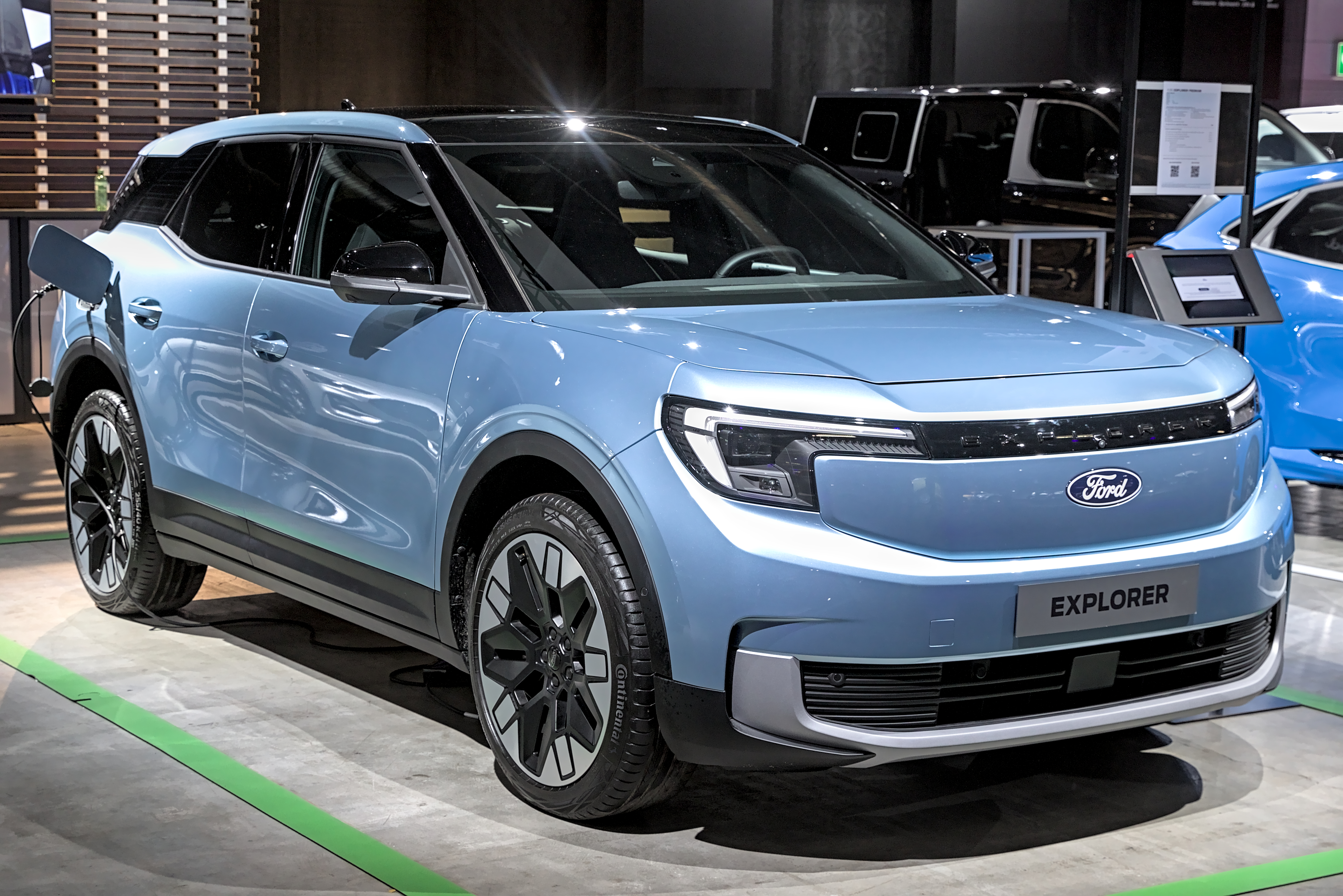
The Explorer is a bigger car that can carry more people and stuff, made by Ford. It’s good for families or anyone who needs extra room and likes to go on adventures.
The Range Rover is a fancy and comfortable big car that can drive on rough roads and looks very stylish. It’s popular with people who want a nice car that can also go off-road.
OBD-II is a system in cars that helps check if something is wrong with the engine or other parts. It gives information that helps fix the car when it has problems.
The Countach is a very fast and flashy car from Italy that looks like a spaceship. It was made a long time ago but is still loved for how cool it looks.
The Carrera GT is a very fast and special car made by Porsche that is built to be driven by people who really love cars. It’s known for being exciting and hard to drive well.
The Impala is a big car made by Chevrolet that’s comfortable and good for families. It has been around for a long time and many people have used it as a daily car.
The Lucid Air is a fancy electric car that can go very far on one charge and has lots of smart features. It’s made to be comfortable and fast without using gas.
The C10 is an old-style truck made by Chevrolet that many people fix up and make look new again. It’s popular because it’s easy to work on and looks cool.
The Bronco is a tough car made by Ford that can drive on rough paths and looks a bit like old cars from the past. People like it for going on trips where the roads are not smooth.
The El Camino is a car that also works like a small truck, so you can carry things in the back. It’s different from regular cars and trucks and was made a long time ago.
The Supra is a fast and sporty car made by Toyota that many people like because it drives well and can be made even faster with changes. It’s famous from movies and car shows.
The Firebird is a fast and sporty car made by Pontiac that looks cool and was in some famous movies. It’s similar to another car called the Camaro.
LIVE
Well, Honda was the first job.
I interned at Mazda twice and then Honda once.
Concept car at Honda and some production projects at Mazda.
I interviewed with Ford and then a few other companies
and then I settled on Honda.
We're gonna hire you through the PowerSports motorcycle side.
We'll see how it goes.
But I got thrown on CBR 1000 right off the line.
Yeah, CBR 1000 and CBR 600.
They're a cruiser line I got thrown on.
I mean, they were doing this new program
where they needed this like modern cruiser chopper type
things and they had this bike in there called Techno Cruiser.
But for me, I love cars.
What was the what was the funny story?
I wanted to hear the funny story about Ford.
I don't know about this.
OK, if you don't want to tell it, then don't.
I mean, so we've got to keep this interesting.
We don't want like the PG version of the podcast.
And so I haven't told this story in public.
No, no, you're listening to another episode of Oil and Whiskey.
This week we have Sean Smith, Sean Smith designs.
I don't know why it's taken us this long.
I do know why it's taken us the last six months
because you canceled on this.
But other than that, I don't know why it's a geographical location.
It is a geographical location situation.
I was moving that weekend.
Yeah, moving is moving.
It's more important than flying all the way out here for this podcast.
Is it? I mean, I'd rather not move.
But if you have to move, it's definitely more important.
This is quite an opportunity.
Yeah, it's quite an opportunity.
But you're out here for Roger's business development class,
right, Roger and Troy.
So yeah, sliding into the podcast, the timing worked out good.
Great. Yeah, we appreciate you making the track.
Yeah, I appreciate you guys having me.
We pretty much got the full rundown
when Roger was here yesterday or whatever.
So, I mean, honestly, I'd save your money.
Like it's really not that big of a deal.
I could give you the cliff notes after Roger's gone.
We're done promoting it.
No, I think it's going to be a cost you and just charge a little bit more.
Yeah, it's not going to be good, man.
It's going to be a good time going on there.
Yeah, but you've done you've done a fair amount of podcasts
and given the given the story so we won't go like
our traditional like start from the beginning.
We can run the when your parents gave you your first set of crayons,
or it's not going to start there, but it would be good to go through,
you know, a quicker version, a cliff notes version of, you know,
of of your start.
Most people have probably already heard it, but we can go through it.
OK, and then we'll get into the fun stuff.
OK, yeah.
So I don't know, where do I start?
When it also how did you decide that this is what you were going to do?
Where was this a was it a high school, a junior high?
Like I'm not reading books.
I'm not paying attention to class.
I'm drawing cars scenario, and then it just kept going.
Well, how did it start?
I've I've been drawing cars since I was four.
And then I knew I wanted to do something professionally with art
when I was a kid, probably eight, nine, ten.
You know, I don't know.
You know, you start thinking like, oh, I'm going to be.
I was always really good at drawing.
I've always been kind of fortunate to have a kind of skill in drawing.
And thank you from and actually it's weird.
I remember when when I was in kindergarten, this is a funny story.
When I was in kindergarten, since I was the best at drawing,
the like, I think it was like the Rotary Club or somebody came in
and they wanted a big drawing of a car for their office from, you know,
the teacher was like, oh, Sean, you know, you're the best drawer in class.
And they gave me a big piece of butcher paper and, you know, rolled it out.
And I drew this humongous.
I think it had to be like a city vehicle.
So I think it was like I drew like a police car and they all came in.
And, you know, they hung it on the office or something.
And that was like my first, you know, professional.
But I don't know for some ever ever since then, I've always been the kid
that was good at drawing in class and that kind of fueled the energy to be like,
I want to do this for a living.
You know, I didn't know really entirely how to get there, obviously.
I mean, I, you know, I would see articles and, you know, like any of us,
I'd started reading Rod and custom and I would see Tom Taylor
and Steve Stanford sketch pads, but I didn't know how to get there.
You born and raised in California.
Yeah, I'm from San Bernardino.
And so what'd your parents do?
Well, so my dad's he's a shop owner as well.
He's he's a general automotive repair shop.
My grandfather owned the shop for him in 1948.
They started it. Wow.
And then my dad bought it for my mom's dad in 1978, right there on Route 66.
Actually, Caddy Corner to Gabes. Oh, really?
That's that's how that connection is. That's cool.
Yep. So, and, you know, we grew up in a hot rod family.
Always had something going on. Project car.
But yeah, I didn't know, you know, I would see these sketches
in like Rod and custom and Tom Taylor and Steve Stanford.
And I didn't know how to get there.
And then I was like around 14.
I started drawing shoes and stuff like that, too.
I loved Nike's and wanted to be a shoe designer.
And my my art teacher took the sketches
and he like, I thought I got in trouble.
He's confiscated them, but he took them and actually sent them to Nike.
And I got a note back from Phil Knight saying that I should visit Art Center.
Well, that's cool.
So I visited Art Center to look at their product design program.
But then I saw their car design program and I was like, oh, my God, like my
my drawings got taken away, but I didn't end up.
They didn't get sent to anybody.
They got sent to my parents.
They got sent somewhere just as the principal was.
Yeah, I went to the principal's and the parents and it's like,
you should probably stop drawing. Yeah, that's cool as hell.
Yeah, I went there and then at the same time, too, like when I came back,
like Chip Fuss, this is when Chip was working at Boyd's.
He had just done a sponsored project with the school with
studying the future of the hot rod.
So they just did a futuristic hot rod project there, too.
So they were just wrapping up on that.
And it was just like, I was like, oh, my God, you could get paid to draw cars.
This is this is what I'm going to do.
So about a year later, I ended up going to continuation school
for reasons we won't talk about.
But we didn't have class on Friday and
we didn't have class on Friday and Art Center had these program called Saturday
High and it was car design classes for kids that it was like a
pre-course to the regular program.
And so they said on Friday and Saturday, so I started taking car design classes
at Art Center when I was in high school, Friday and Saturday.
We had Saturday High as well.
Yeah, it was different, though.
Hey, you're in you're in you're in good company on it.
When you talk about continuation school, we've had we've had this discussion.
I think that it has to do with creative money, creative nature of
yeah, we've all you'd be amazed at how many
many people on this podcast and maybe even a few in this room.
The alumni that have struggled through the primary school.
Two of us sitting right here at the table.
Yeah, Bill, on the other hand, is a big 10 business school, college graduate.
It's became quite a thing of us making fun of each other of how how much worse
the other one's secondary schooling or alternative schooling was.
Mine was internal within the school.
So I feel like I prevail.
I think that I really go to continuation school.
Well, it was like an inside regular school.
But what would you call it, though?
What was the name?
They had a name of this program and let them just tell you the name
and you'll draw your own conclusions at what type of program this was.
OK, the program was called geared up for learning.
All right.
And instead of like some of the regular classes,
I went over to geared up for learning.
It was a little more like one on one, like a little more for the challenge.
Do you? Yeah.
But I wasn't extracted from school like Josh was.
Josh went to an offsite facility.
I was I hung on by the skin of my teeth to stay within the walls of the high school.
Yeah. Well, here we are.
I think it has something.
It says something about your mind the way it works.
Yeah, because you're worried about the other things.
Yes, we're looking for an artist to help draw new logos for T-shirts
for geared up for learning and the answer center.
Josh was the answer center geared up for learning.
Well, how about you?
Was it what was the school called?
It was just summer school.
No, I mean, what was the real school?
It was continuation school, but it was Willow Park High School.
OK, yeah, so high school.
It was just. Yeah, yeah.
But it was it's definitely was continuation school.
OK, yeah. Got it.
Yeah, but but we didn't have school on Friday.
So, you know, I use that day in Saturday to start going art center.
And, you know, everybody's doing like the normal track of high school.
I'm like getting taught by people, real world professionals in the automotive industry
and actually graduated year early and kind of just set a track to go to art center.
Yeah, so that's a sweet story.
Yeah.
At that point, the goal was just go to art center.
Do you have any type of career path before going?
No, it's just I'm to be honest with you.
Once I found like since sophomore year, that was it.
It's just art center.
I just let me just get to art center.
That was it. Yeah. Yeah.
I mean, I was like, I'm going to be a car designer that there's no, you know,
to be honest with you, I wasn't really get anything else.
It was that or nothing. Right. Right. Yeah.
So, um, but yeah, that was that was the goal.
And then I graduate and then I graduated high school and then I applied
and they're like, your portfolio is great, but you're too young.
And I'm like, they're like most at the time,
most of the people that average age there was late 20s, 30s.
A lot of the people that were going there already had a degree
or came from another degree or school or practice or something.
And they're like, listen, we don't doubt your talent,
but it's the workload and the tenacity that you have to have.
You're not ready.
So I went to J.C.
for one year and I started freelancing and I started doing like magazine
work for Peterson and all in and started doing like renderings for magazines.
And then I reapplied just like, I'll just put my stuff in and reapply.
And I got in. So like seven months later, I got in.
That's awesome. So yeah.
So you're seven months older and then you had they said, OK, you're old enough.
Yeah. And then I think there was like a three months lap
that I really started in the following September.
But yeah, that that was it.
I mean, in a way, we go. So, you know, how long through Art Center
are you figuring out how to how to make a living at doing this?
Hmm. What do you mean? No, I'm sorry.
Well, how long into Art Center are you starting to think like,
well, school is going to wrap up eventually?
Like, how am I going to get paid to do this?
So Art Center at the time, the really good thing about Art Center
is the the connection and contact that they have with the OEM industry
and the design studios is always in sync.
From your very first term, you're always constantly being scouted, scrutinized
or overlooked by every top car designer in the world is walking through those halls.
So, you know, there's people,
there's there's there's design directors that will see a kid early on.
And they'll remember them.
They might not remember him, but they'll remember the sketch.
Right. Yeah.
So we're always taught, like, I mean, to put our name up on the wall whenever you present.
I mean, you actually some of the structures
would drop you a letter grade because it's like, well, it's an important
some design director comes through.
I remember first term I was, you know, we all put our work up.
And Dave Merrick, who's the vice president of Design Honda, he came through
and he looked at our work and he sat down and critiqued us.
And I ended up going to Honda.
So it's one of those situations.
So you're always in the eye of the OEM industry as soon as you start there.
Around fourth term, around midway through, you get you start getting scouted for internships.
And those internships are for an OEM company
and their Volkswagen, Audi, Bugatti, Nissan, Toyota, GM.
They start posting them on the bulletin board and so you apply for those.
And those are real internships.
Those aren't like, get coffee and go get this, go get that.
It's like, here's your desk, you're working on a concept car.
You got three to six months.
This is what we're doing.
So it's it's very hit the ground running type of project.
And most the kids that in order to get an OEM job, you have to have at least two or three internships.
So the school's two and a half years, but you want to do two or three internships.
So that's another year and a half.
Then you want to take a year off because it's a lot.
It's just financially, you're going to have to work on your academics.
So it's about four to five years to get through ArtCenter.
Yeah, it's a we had the oil stand lab.
Nikita was on. Yeah.
Kind of told the story about the gauntlet of running through, you know, doing.
Of course, they did it like 13.
Yeah, weird. Yeah.
Yeah, so Vance.
So Honda was the first job.
Honda was a well, Honda was the first job.
I interned at Mazda twice and then Honda once
and then worked on like a concept car at Honda and some production projects at Mazda.
And then, yeah, Honda was supposed to I interviewed with Ford,
which was an interesting story.
I interviewed with Ford and then a few other companies and then settled on Honda.
But at the time, I wanted to go on the car side and they were like,
well, we already hired somebody last term, who was my roommate.
But we're going to hire you through the power sports motorcycle side.
We'll see how it goes and then we'll go from there.
And so I went through on the motorcycle side,
which is very interesting because I don't ride motorcycles,
but somehow they thought it would be a good fit.
And then I went in there and it was they had some amazing projects in there.
But I got thrown on CBR 1000 right off.
Oh, yeah. What year was this?
2004. Oh, yeah.
CBR 1000 and CBR 600.
They're a cruiser line. I got thrown on.
I mean, they they were doing this new program or they need like modern cruiser
chopper type things and they had this bike in there called Techno Cruiser.
Jesse was actually doing some stuff with them that I don't know if anybody knows about.
I really did you ever see the Red Rocket? No.
Yeah, it was like a little cafe racer that did. Yeah, really.
Yeah, it was and it was around that time that like bikes were super hot,
like biker build off rolling sands was getting a lot of building a lot of prime time.
Yeah, bikes were super hot and but for me, I love cars.
And they were like, how can you don't ride?
Because I told him, I'm like, listen, all design motorcycles, I'm not riding.
And because either you like riding or you don't.
And if you don't like riding, don't get on a motorcycle.
But they were like, well, listen, you're going to have to get your license.
And I'm like, OK, I get that. So I got my license.
And we had this whole stable of bikes to pull from like for research.
And we had vintage Dakotis and we had some stuff that Jesse would loan us.
We had confederates.
Oh, yeah. Yeah, we had some amazing bikes in the state.
Like, so if you're a bike guy, you could check them out on the weekend
and you know, I'm going to take out this bike or that bike,
because we had to do like competitive analysis with the bikes.
And but I still wasn't digging it.
And so after about I think it was two years,
I hung it up.
But part of the reason why, you know, I met Mike and Jim that
at SEMA in 2004.
I was walking out of the North Hall, you know, how you go from North Hall
to Hilton back then. It was. Yeah.
Yeah. And Buddy, mine had stopped.
You know, it used to be like the Optima Alley.
Yeah. Yeah. Yeah.
And Mike was there with Silver Streak.
OK. You were that car?
Vaguely pre Kona.
Yeah, I'm trying to try to picture it.
It was a silver car, had Jeep headlights on it.
And that would have been like the first thing they did after that.
Where?
Lucky Camaro that it. Yeah.
OK, yeah.
That's when I first heard of them was that like yellow.
Yeah, those in super rod.
Yeah, like C6 tail lights or something, didn't it? Right.
And so I ended up striking a conversation with him.
You know, he'll talk to anybody.
And so he's worried from and I'm like, oh, you know, and he's a what do you do?
And I'm like, I'm a designer.
And he's a kind of designer.
I'm like, car designer.
He's like, oh, really?
He's like, who do you work for?
I'm like, well, I work for Honda, but I do bikes.
And he's, oh, this is my car.
So we started talking and developed a relationship.
And he's like, well, let me get your card.
You know, so gave my card.
And he's like, I'd love to talk to you when I get back.
When I called, you know, he left a message and I know I called him back.
And he's like, yeah, I want to do a car with you.
And so I was working at Honda and I wasn't really digging it at Honda
because they wanted you to stay so damn late or a traditional Japanese
company is like, stay till one or two in the morning, be here at seven in the morning.
You know, and so I still wanted to do car stuff.
So I did a Kona with them.
Do you guys remember that one?
Yeah, the all black one.
Yeah.
And then after that, we started doing reactor and the pay at Honda wasn't that good.
My old man was like, how much are you making there?
And I'm like, yeah, this much.
He's like, why are you making with these guys in Wisconsin?
How much?
And I'm like. Later, Honda.
You know, so I started working.
That was stateside.
They're working for all those Honda, Suzuki, Hyundai.
That's all.
It's all in California.
It's towards towards studio.
Yeah.
And so and then I started, I was flying back working with Mike and Jim all the time.
And especially so when the reactor started getting going, I mean, I was
they were keeping me busy.
And so that's when I was like, I'll just strike out on my own.
And do my own thing.
You said you back and backtracking just a bit.
You said you interviewed with Ford.
Do you remember who you interviewed with?
Pats you phone.
And did you have who you ran into him since then?
Yeah.
What was the what was the funny story?
I wanted to hear the funny story about Ford.
I don't know about this.
OK, if you don't want to tell it, then don't.
I mean, so we've got to keep this interesting.
We don't want like the PG.
It's so man.
So I haven't told this story in public.
No, it's not like the present.
There's not that many people that listen to this.
So you're like people here.
Yeah.
So when you graduate Art Center, like.
All the people come to interview you from all the car companies.
So Monday through Friday, it's all slotted through.
Like so you have Ford Nissan on Monday and GM and Cadillac on Tuesday
and Audi and Volkswagen on.
They're all interviewed.
So that's part of the good thing when you asked about how to plan for your
exit and how to go out in the world.
They kind of plug and play at least at that time.
I don't know if they still do, but you have a good amount of interviews lined up.
They they all fly out to see your graduating class.
So Ford came out and I hit it off pretty good with them.
And then if you get a call back later that day, that means that they want to
interview you and they're going to bring you out to their corporate headquarters.
So Jeannie Muzanaga, who is career resources, she calls me.
She goes, hey, Ford, really like your stuff.
They're going to fly out to Dearborn.
I'm like, great.
She goes, they're also going to fly out to other classmates that you graduated
with Tim Doyle and Rob Williams, which Timmy's at Chrysler and Rob.
He was a Nike, but he helped found Rivian.
Really, really talented.
Oh, sweet. Yeah, he's a really good guy.
So they flew us out together, you know, so we get we fly into Detroit.
Now, mind you, I've never been to Detroit and I've never been to the Midwest
really have only grown up in California.
And so we get there and Rob is like, listen, I'll get the bags.
You go get the car.
You get the rental car.
They had it all lined up for us to get a rental car.
So I'm like, OK, so Sean, go get the rental car.
We'll meet you back here in the front, you know.
So I go to the rental car place and I'm like,
OK, I'm here to pick up a rental car and a Ford Motor Company.
And she's like, OK, this here ID.
She's like, it's all taken care of.
I'm like, what do you got?
What do you got us in?
She's like Crown Vic.
That's the standard.
It's like what everybody gets.
And I'm like, I think we do a little better than that.
She's like, what do you mean?
And I'm like, I don't know.
Like she's like, we got an explorer.
I'm going to do a little better than that.
She's like, I don't know.
And I'm like, what else do you have this time?
They own Premier Auto Boat of Group.
This is when they owned Aston Martin and Range Rover, Jaguar,
and all that stuff.
She's like, we got a Range Rover.
I'm like, oh, OK.
She's like, you sure?
I'm like, she's like, that's usually for like executives.
And like, yeah, we're going to be percent.
Yeah, yeah, right.
Yeah, it blew us out here.
Yeah, I'm like, yeah, exactly.
I'm like, yeah, me and my colleagues, you know,
you know, right.
And so, yeah.
And so she's like, oh, OK.
And she's like, you know, that says right here from HR to like,
you know, I'm like, OK.
So they don't like the rest of the classmates
don't know this is happening, right?
They're getting the bags.
Remember that scene in the hangover
where they get the cop car from Valet?
Yes, yes.
And the other faces.
So they pull up the Range Rover and they're like, dude,
what did you do?
They're like, turn that back.
And I'm like, it's cool.
Don't worry about it.
It's all good.
So next thing, you know, we're like driving down eight miles
with the windows down and this thing.
And we're like, this is it, right?
So the next day, we have to go to the Ford Design Center.
Of course, I parked next to a silver HSE, which is just Jay Maze.
I didn't know. But yeah.
And so we walk in and they didn't see it.
They're like, oh, by the way, we've arranged transportation on the way back.
We're going to give you a ride in an aviator to show you really what we're all about.
The classmates are like, dude, like you have done it.
Yeah, because they didn't know we would.
Yeah, they're like, what did you do?
And I'm like, so we interviewed with, I think it was Pat Chavone
and I think Camilla was dropped in and then he dropped out or came in for a minute.
By the time and then like on the flight back by time we landed,
they called Timmy and said he got it.
You know, Timmy Doyle got the job.
But I got an email saying that, like, yeah, further.
That's it. Like whatever you did, like your future employment with Ford
and this is how much that car cost is like, so.
That's a good lesson for anybody listening.
Yeah, flown out for an interview.
Just take the car. They give you the base, the economy car.
Yeah, so it could have gone.
I mean, it worked out, worked out pretty good in the end.
Yeah. Yeah, I do as a sales position.
They've been like, you talk that lady into giving you this.
I know, right? Exactly.
So yeah. But at the time, I was like, like Rob and Timmy were like,
dude, we're not going to get hired.
You ruined it for us. What's going on?
Like, relax. It's fine.
Everything's going to know.
Yeah, that's how big that company is.
So it'll take them years before they figure it out.
So I got that email.
But then the next day Honda called and they were like,
yeah, we want to hire you or we want to interview you again.
So I took Honda.
I do. Didn't get a rental car.
Didn't get a rental. Well, I was in California, so yeah.
And I wasn't sure if I wanted to go to Detroit at that point or not.
But Detroit in that era was not so good.
You know what? Looking back, though, I really do wish
I would have made a push to go to Detroit.
I recommend anybody in the in the car industry,
like if you're going to be a real serious car designer, take it serious,
you know, go to the chocolate factory, see where it's made,
go to get all the experience, do all the things.
It's weird because going to Arts Center,
everybody that goes there wants to stay in California
and they want to have this California job and California studios.
But really, if you really, really want to be known,
you're going to go to Europe or you're going to go to Detroit and there was
big shit happening at the big three in Detroit in the early 2000s.
I mean, there was lots of game changing vehicles.
Oh, yeah. Coming through.
The JMA's era of car design was was amazing.
Yeah. I mean, that whole retro automotive
Americana thing they did when I interned at Mazda,
Ford owned Mazda at the time and they had a hidden studio in Ford
that they were doing all like the four twenty seven concepts
and Lincoln retro concepts and I used to go in.
I used to look.
I wasn't allowed technically to go over there, but you could see over in like
but from afar, like these full size Lincoln's they're working on and
stand on the roof of the Range Rover and kind of look through the windows.
Yeah, that's cool. Yeah.
They were doing some really cool stuff. They were pushing the envelope.
Yeah. So I think they're still doing a pretty good job.
I mean, I think all the OEMs are doing a really good job.
But yeah, I think we're in a weird transition right now at the automotive
industry with, you know, which is power plants or what?
What do you think it is styling power plants?
I think styling, I think, you know, I think the Dodge Chargers
like a pretty good example of that.
I think, you know, they had a good solid base and foundation, a customer base.
And they come out with the electric version of it.
I think we all know that the average Dodge Charger customer is not interested in that.
Not interested in that, especially at that price point, you know,
and now they're reversing that power plan.
They're going back now and re-releasing the Hellcat stuff.
Exactly. Like anything else with the world, like what I call volleyball politics.
Now we have volleyball back and forth, you know, this administration,
we're going to have, you know, V8s, which is great for us.
And the next administration, if somebody else gets in.
If it takes you four or five years to tool up, though,
you're already full blown pregnant by the time it swings back the other way.
It's really hard to make a conscious decision of what we want to do.
I mean, you know, for so long, I think the era of like, like 16, 17,
when Ford was like GT 350 and the Ford GT and the Raptor
and then everything else is going to inspire that.
That was really, you know what I mean, and all the SRT stuff.
And that's all great stuff.
And it's just everything's all over right now.
And then you have all these new companies and which I love that.
It's inspiring and I welcome that, you know, like the electronic Rivian stuff.
And like we were talking with Zinger stuff like that.
There's a lot of exciting small volume companies.
And then it affects us too, because I think you have got the hot rod industry.
But then you also have, I see a lot of builders wanting to do, you know,
I want to do a run of this, I want to do small volume that too.
And so, you know, I think I think you guys had a lot to do with that, too.
With, you know, with your survivor stuff, you know, I think that was a way of like,
you know, guys, some guys want show cars and that's what they want to do.
And some guys want to get them and they want to drive, you know,
and there's some really cool stuff with that.
Oh, I think it was a little bit of a display of like that a shop can turn out volume.
You know, everybody's building super high end stuff.
And it's just you're at the limitation of what you can do
and the talent you've got and the manpower you've got.
So, you know, most shops were accustomed to you might see one car a year.
And I think like in our prime on those survivors,
we were probably pumping out over a dozen of them, you know, a year, like turnkey,
sorted cars, delivered, going down the road.
And I think that that definitely changed things and changed the mentality of
it changed it drastically.
You could put cars on the road.
The biggest thing, though, was the acceptance of the paint body.
Because we were nervous as hell about that in the early years on that.
Like that's just being judged by your peers, really.
Yeah, like you sort of built a shit box, like was our concern, right?
Like everything beneath it was was all nice stuff.
There were guys doing it. It's not like we invented it, right?
There were guys doing patina trucks and stuff like that.
But mainstream at a higher level.
Yeah, there were people weren't doing like higher end, you know,
higher price point stuff.
So it was a big concern and luckily it was accepted.
But once you once you put it, once you put more of a name
and a thing behind it, you know, and you can
you can categorize it, then it it lowers that stigma of like, oh,
so, you know, Troy from BBT can do a survivor.
I'll just finish a survivor vehicle.
So it's instantly it's categorized, you know, then it's not like, well, man,
like, why doesn't like the door fit that quarter?
Like perfect, right? Oh, so this is original paint.
Yeah, it's original paint or yeah, it was actually he was repainted back,
you know, like 15 years ago or something like that.
It's pretty damn good quality, you know, bubble where it's not.
Now it's a stigma of like, well, you built it.
Why isn't it perfect? Oh, it's a survivor customer loves it.
You know, but look, check what we did on the hood and how we did this one,
this one, this one.
We hid these little trinkets and tick, you know, stuff like this were
that was the paint body thing was like the biggest deal because
we've talked about it a hundred times that that was the limiting factor
for so many customers on getting so many customers and so many shops
to get not only from a price point, but to your point on getting
that many vehicles done.
Imagine if you're doing all those survivors in your paint body on every
single one of them, you wouldn't be doing. We can't do it.
No, yeah. Yeah.
Yeah. And I think that's a that's kind of a struggle with what's some
of the bigger, small volume manufacturers do have is, you know,
they're trying to build 12 of the show cars that we do a month or whatever.
You know, that's hard, you know, it's the same car, essentially,
but it's still hard, quality control, production, everything.
I mean, it's it's it's really hard.
So yeah, a lot of guys are doing it.
You know, velocity sort of makes it look easy.
Yeah. Right. Because they're the they're the guys.
They're the guys are doing a lot of numbers.
The way they've got it going on.
I mean, it's a very impressive operation and the level of quality
that they put out the door. It's great, you know, and everybody
that think they see that they want to emulate that.
It's not easy to do.
You know, I think what yeah, that's a hell of a lift.
I think you have to have not so much an impressive build or design,
but you have to have an impressive impressive.
Build process. Yes.
Everything in the bill of materials has to be making sense for that to make sense.
What I mean by that is sometimes you have, OK, you have a preset colors,
preset options, preset this.
And then the one guy that goes about, wait a minute, I, you know,
my wife picked out this color that our chandeliers painted,
and we need to color match at that.
And that that guy is jacking up production for everybody else now.
Yep. So now it's like, OK, is this a custom car now?
Or is this, you know what I mean?
So are you going to do that?
Or are you going to offer those kind of things?
Because that's, I think, when things get very tricky.
And so, you know,
ever in our industry, that's like your go to, so that's what they always default to.
It's, oh, yeah, we can do that.
No, we can put those different wheels on there, right?
We build it with 18s.
We can do 20s by 12.
All you got to do is many tub it.
And all you got to do is redo the interior.
And then one thing leads to another.
And it, yeah.
And so it's, yeah, the process has to be the inspiration almost
and how you're going to build the car and how you're going to, you know,
brand it, market it, sell it, all that stuff.
Just it's a different deal, you know?
So, yeah, I think that's the most highly overlooked aspect of that.
That a lot of car builders, a lot of talented car builders out there
and everybody sort of thinks, wow, did this one like that?
We should just do like more of these, you know, you totally overlook the process.
You know, that like it's it's wild to see it.
I mean, I've spent some time at velocity and I've seen the way that machine works.
And it's it's fucking impressive.
Like you don't just you're not just a car builder that decides I want to do more of these.
Yeah.
And you're the mercy of your vendors.
Yes. Yeah, I guess you are.
You're only as good as the people that you're if they can keep up
and they have to have a good rapport.
And, you know, right?
Everything's got to be moving at that point, the amortization, everything.
So it's just, yeah, yeah.
And then it's always, you know, the always put like definitely throw a wrench
in that nowadays, because end of the day, you're still any of these guys
are relying on an OE crepe motor and that becomes like, you know,
GM hasn't been exactly the greatest vendor.
Their crepe motor program has been a little sketchy.
You never know what's going to drop.
You know, one day there's a LT four, then there's an LT five, and there's neither.
You know, and you tool up to like package this in a platform
and you've got accessories for it and then it's gone.
You know, it's it's tricky.
Yeah, I think those days are those days are over for GM performance parts.
I mean, everything that's going new.
I mean, you think they're going to do LT five or LT six, you know,
crepe motors, you know, flat plane, like that's.
It's just not not in there.
I don't know where we're you're talking about sort of backtrack too much,
but you talk about like the where the cars go.
What's the evolution of of cars with the OEs and stuff?
And like, really, where is it?
Where is it going?
Because it that's the trickle down is what we get.
You know, we we use the latest transmission.
We use the latest engine that becomes a crate engine.
But what happens next?
Like now you've got twelve hundred horsepower Corvette,
like turbo motors that are in the back, right?
So how like how much more fucking horsepower do they start building
and what realistically can even trickle down into this industry?
First, I got to start building cars again.
Like you look at how many besides just the Uber, the high end sports car,
there's no cars, right?
There's not even a Camaro anymore, right?
Yeah, it's there's no all SUVs and crossovers.
It's all SUVs and crossovers, which I mean,
it takes people to buy them to get them to build them again.
But because everybody goes, well, they don't want cars.
And it's like people like German cars.
I drive a German sedan, you know, Audi, you know, it's like
people love the five series.
They love, you know, I don't know how much sevens you see,
but like threes and fives and stuff like that.
You see a lot of that stuff and you don't see any, you know,
just a nice ladies built a shit ton of cars.
Yeah, you just don't see any nice real will drive American cars.
Yep. Yeah, they're all the small little two door hatchbacks.
That's why people love the Dodge Charger
because it was pretty much an affordable real will drive sedan.
Yeah, it had shit tons of horsepower, too.
Yeah, that could make shit tons of horsepower and, you know,
take it to side shows. Yeah.
So Audi's tough to do.
They can get the all wheel drive to break loose, huh?
Yeah, I know.
So and then I but I was looking at the new Audi's today
that they had the new new wagon that dropped today.
And I was five wagon.
Yeah, it's pretty interesting.
So they there are nice car.
I mean, it's a high price point that car.
It's a big tag car.
But like, I mean, you can do cool cars.
But yeah, everything is everything's trucks.
I mean, that's America in general.
Everything's trucks. So, yeah. So.
The. Yeah, I think that I mean, back to your question,
it's going to take the aftermarket.
Getting faster to figure it out, you know, there's going to be more.
Motex, more HP tuners, more because those motors are going to keep getting built.
Right. In, you know, American and other supercars, right?
But they're not just more and more complicated.
Yeah, gone to the days like GM with the LS three connecting cruise package.
Right. Yeah.
That that basic architecture of that motor was in seven different vehicles.
You know, they're building an absolute shit ton of them.
It was fairly easy to do a, you know,
harness an ECU and they sold a shit ton of them.
That's not the same.
You can't do that.
Like, like you said, say the new C eight, right?
You're just going to pull the crate motor and be like,
all right, this is the price point.
Yeah, figure the fuck out.
I don't know about a bell housing or a transmission or an ECU and harness.
It's going to take the aftermarket of figuring it out. Right.
It's going to, I mean, we're getting calls on the shit now, right?
Hey, can you make matter of motor mounts for it?
You know, it's like, well, what do you do about it?
I don't know. We're going to figure it out.
Right. I've already talked to, you know, Motec or I heard, you know,
tunes come in, you know, it's the same shit.
It's no different than back in the day.
I mean, think about Mark Campbell at street performance, right?
Yeah. Everyone's, what are we going to do? Right?
Small blocks over, you know, you get to import and you got LS and you got this.
OBD two came around and it was nobody could build a car anymore.
OBD two is out, you know, and it adapts, but it takes the aftermarket
to adapt the aftermarket adapts hard enough.
Then maybe the OE is like, oh, we could make a little money doing this.
I mean, that's just right. What do you think?
I don't know.
It's going to be interesting to see because it's like, think of this
that year gap from the current crate motor that we're using.
I mean, when was the last what was last year in LT four ran in a production car?
LT four. Yeah. Still in the black wing, right?
Yeah, I think so. Is it?
I think it's still in the black wing.
But it was like 2014 is when it came out, right?
Think about the last three, though.
Well, yeah, that's, you know, the last three was.
Twelve, 10.
Yeah, I mean, we're like 10.
We're using sort of like 10 year old tack.
Like at some point it's it's sort of like where the industry was.
Like you're talking about the street performance thing.
You know, it's sort of like, yeah, it was a little stagnant.
It doesn't feel stagnant because you got great parts.
You got huge power adders, you know, great
fucking Whipple superchargers and the turbo stuff and the ECUs
and the harnesses and stuff that are there.
It's just like, what's at some point, there's going to be the next thing.
And it comes back down to like the conversation we're having
with with Roger, too, on knowing what the customer wants.
You know, at the end of the day, customers like, I want to do X, Y and Z with the car.
You know, I'd like to have about X, Y and Z in the horsepower, right?
And this is the other things that I drive, right?
Well, it's cool to say, let's rip out the new ZR1X, you know, and throw
the hybrid front wheel drive and make it 1300 horsepower.
But if you could call, you know, Wegener and say, you know, hey, build
a little LSX, you know, with a with a single turbo or twins or something like that
and make 900, you know, on pump gas and it do it all day long every day.
Like it's not it's not like we don't have options.
It's not like the customers don't have options.
It's just, yeah, it's it's like.
How much faster can we get the brand new ship into these muscle cars?
Like that's the discussion.
But then there's the evolution of our industry and you're working on something
that's fucking crazy.
So you want to talk about like not using something like that exists.
I know you're designing a Camaro that's certainly not like a GM LS3.
You know, I saw bits and pieces that seem as shown at the drive train.
And yeah, I don't know if that's something you could talk about, but that little bit.
Yeah, that's a wild project.
That's a it's a wild project I'm doing with Blazing Rods, the BR07, which is.
The concept is to kind of blend a hypercar with a.
Pony car, muscle car, you know, yeah, and it's the dual motor, you know,
with electric motor, doing all your own chassis development, carbon fiber body.
It's going to be wild.
And so that's actually what I'm currently working on now.
That takes a lot of my time is is the production, a side data
and the full size data for that.
So we did a quarter scale model to show off half scale.
Actually, usually we do quarter scale, but it's a half scale model to show off
the initial concept and.
Just kind of refining and tweaking that, but yeah, it's probably in the next year.
So that will be the next one.
Ice, motor, rear and electric hybrid front.
You're saying, yeah, yeah.
Twin motor front, twin electric motor front and yeah, both front.
Yeah, and they're like, I'm doing this as a one off one only build or no,
they're going to do a run of them, small volume production.
And we're we're hashing and developing all that right now on the unit number
and all that. But yeah, it will be it will be a small volume run though.
Yeah. So this wild concept and the and the hardware
just seeing that is a lot of people talk about like I'm going to build a supercar.
Sure. And then you you kind of like peek in there
and it's like underneath the fancy covers, it's a LS seven or something.
Yeah, you know, and it's got just hot rod industry parts.
There's like a look in there and it's like I did it column and it's sure.
It's a beautiful street ride.
This is the first car shifter.
Yeah, low car mushroom shifter, which is nothing wrong with it.
But it's it's the first thing I've seen that's truly like, I mean,
the hardware looks super car level like things you don't see shit like that.
Like, I mean, it's somebody spent a tremendous amount of time, money.
There's a shit ton of talent behind it, obviously.
Yeah, they have a talented crew.
There's a lot of R&D being thrown at it right now.
You know, I got a little small team of guys work on the A side with me.
They got people developing the chassis, drive train stuff right now.
We're getting together to make everything together.
We got.
Um, yeah, not a lot I could talk about, but it's it's going to be good.
It says R07 V8.
Is that completely bespoke or is it starting with an existing
architecture of the engine of some sort?
Um, BRO seven.
Well, it just says 1600 horsepower hybrid drive train twin turbo R07 V8
with a front axle.
I just did the V8 designation.
Is it TBD or is it an idea?
And you just can't talk about it.
Well, I don't know who wrote that.
Not a problem.
No, um, I'm trying to stick here.
I just didn't know what engine that they're planning on using.
Ice engine.
It's GM based, but yeah, I don't know the exact.
They do know, but I'm yeah.
So I do the outside shiny parts.
Make it look pretty.
That's what looks cool.
And you say you've got like a team of guys, are you like surface modeling?
This is cars, obviously.
And is that, is that you or you're the concept guy, conceptual?
Are you doing the sketch work?
A little bit of both.
Yeah.
So my process is obviously doing the sketching and the rendering and stuff.
I used to do a little bit more of the digital modeling, but now I have a couple
of people working on it.
I got, I got one guy, really good guy, his name is Mike Tarver.
He's got a lot of OEM experience, but we're building the body in alias,
which is a CAD modeling program used to build the servicing.
It's a nervous based program.
So, but yes, it's me and him back and forth.
Like, you know, I'll give him sketches and then he'll mock things up.
And the next day, you know, we'll go over the revisions together.
And I use alias as well, not as extensively with him, but, you know, then we'll go over
stuff and just build a dialogue and a relationship.
Same as actually you wouldn't a studio, you know, you have a team of modelers,
whether it's clay or digital, yeah.
So how much contract work are you taking for other builders out there now on stuff?
A lot.
I'm more than I should.
This is, yeah, and actually I got some other projects that are in line with this
one, but I'm can't talk anything about that right now.
But a lot of my projects right now are starting to be this caliber of project
where it's it's small volume production thing.
I really see this being a trend in the industry right now as people, you know,
it's like the icon, you know, like the Jonathan Ward type of singer type of
model has really started coming to fruition with what we do.
It's exciting, you know, it's exciting because I do feel as stale as the
OEM industry is right now.
What we do is picking up some of the excitement.
You used to go to Detroit Auto Show and see all these concept cars and auto shows
are dead, auto shows are dead.
And now quail and car week is hot and it's littered with cars like this.
Yeah.
Yeah.
I mean, you know, Resto Mod Alpha is in $2 million this and $3 million nine six
fours and it's all that's, I think, where some of the most exciting things are
happening right now.
We talked a little bit about this on the last couple of podcasts.
What do you think the correct dollar figure to volume run meaning rarity could
be because we talked about the amount of super car guys that have the means right
to purchase within realm, just about anything vehicle wise that are that are
they either scratch their itch on their brand of choice or multiple brands of
choice of the Ferraris or the Porsches and some of these things.
And now they're looking to, you know, singer and select that because it is
smaller volume.
And they're they're trying to have the thing that maybe somebody else doesn't
have or this is a new piece of art.
Yeah.
But as a certain point, whatever that low volume thing is, if that volume
exceeds whatever that rarity is, doesn't it defeat the purpose?
Like what's how much money should the thing cost?
And what's the should there be two hundred five thousand at three two hundred
grand that you shouldn't say and should there be a dozen of them at, you know,
three million, right?
Whatever it is, there's not that anybody knows there's a business model behind
the scenes, but like, what's the magic number again?
That's where I think people need to sometimes not focus so much on building
the car, but building the business model, you know, focus on the unit numbers.
How much money are you going to make off of each one?
Focus on the bill of materials.
You know, I know at Selene, we used to do a lot of this, you know, Selene
Mustang and then and then that model addition would run out.
Then we do a special edition and then we do a 30th anniversary there.
Then we did, you know, like, you know, singers doing the classics.
And then they have evolved into the turbo.
And then after the turbo, I think that last week they just dropped the cabra
lay, you know, so there's always something that's like, OK, this is getting
a little ret the end of a run.
OK, and then you got to drop something.
You know, it's there's always going to be a next chapter.
So I mean, I know there's the there's as long as the demand is there now,
then you keep building.
But there's the if looking forward to the future of like, there's a certain
amount of Rolex model not saying you need to go that much.
But there's the, you know, there is a need to be a cap at production and
exclusive and exclusivity, which then creates continues that demand in
perpetuity, you know, and I'm wondering what that, you know, what that is.
If if it's a run of, you know, 10 at a at a four million dollars, you know,
what's the new Gordon Murray one, whatever the price probably sort of
dictates that right on its own.
You know, yeah, like the Singer car, which is fucking unbelievable.
We saw that car up close.
I got people lining up, though, which one, the DLS turbo or Zyger?
Oh, yeah, Zyger. And like, yeah, I mean,
I've never, so we were at what's the name of the place up outside in
Perump spring now spring spring.
Yeah. Yeah.
That's what you're talking about.
I don't care before like invite only very exclusive super car event with
the rings that they were running the S and out there.
And I mean, you're talking the most rare super cars in existence.
I mean, Bugatti's and Koenigsegg's and that Zyger.
I mean, it's like in a league of its own.
You probably like right next to those cars.
The quality and the innovation.
I mean, it's fucking wild, but that's obviously a big price point.
And I get maybe the price point.
I wonder if they're turning people like saying that there's only X amount
or the price points just sort of the price point, the marketing, the reach,
like, and maybe they can tool up to maybe it's a hundred.
I don't know, like, I think Bugatti only does.
How many do they do a year, like a 300?
Well, the Zyger guy was so as they sold like 30, 35 of those cars or something
like that. Yeah. One two to one five.
Is Bugatti in the three hundreds?
I think I've been looking at a lot of Bugatti's lately.
What's Koenigsegg that I don't know.
I don't pay as much attention to Koenigsegg.
I think 30 years.
But here's the answer to your question.
I think as long as you.
I think you got to make it limited to get the spice out of it.
You know what I mean, to give it some of the cat, you know, and as long as,
you know, 30, 40, this model,
molds are closed, destroyed.
But who's not to say you can't do something else in the in the brand or line up?
Oh, yeah. Yeah. The midnight edition, exactly.
Or another model, a car or something like that.
But the brand's got to be strong to do that, which means, you know,
you know, what's the wait time for that individual customer?
What's what's the.
Is six months OK, but two and a half years not like what's
and singer Porsches are several years.
I know. Yeah.
Yeah, I know.
Most of that stuff is multi, multi year.
Yeah, it's just waiting for it.
I think that's how you got to be.
I think you got to be so damn hot.
It's like Louis Vuitton or Birkebag or whatever or Rolex.
You got to be so hot that people are OK.
Well, I guess I'll get in line.
Yeah.
Well, I'm extra cool and I have extra money.
We don't care.
You know, and that makes you want it even more.
And that's kind of what I'm trying to tell people now, too.
Like you could build a car, but you have to make it so desirable
and you have to market it in such a sexy way that you're going to do
whatever you want you need to do to get in line to get it.
You don't want to be the guy at the cocktail party that doesn't have that car.
And that, yeah, OK, you can have a nice car.
Everybody builds a lot of nice cars.
And there's a lot of builders that build a lot of great cars.
But what is it about how you market yourself
that makes you desirable in the story you tell?
That's that's a different deal.
Like what makes I mean, it goes back to like handbags.
What makes like girls want a Louis Vuitton bag over a Michael Kors bag?
Or, you know, what?
Why does somebody run a Rolex over a mobile?
Yeah, sure, they're ones better than the other.
And it's great. But, you know, there's just a lot of I saw it
when the Ford GT, when the when the last edition for GT came out.
Everybody wanted one.
Everybody wanted to get one of those cases.
Yeah, they all wanted to be in on.
I know I know people that had the original and they didn't get picked.
You know, that was supposed to be one of the things
that was contingent on is if you had a last one, you were kind of first.
And now I see it with the GTD, you know, everybody wants GTD.
And so I think, you know, like I said, a lot of people build great cars.
A lot of people build amazing looking performance cars.
But it's it's how you sell your story and you make you.
You drive that emotional connection where people like I got to have that.
And that's what's going to make them wait in line.
And that's what's going to make the company come back and go,
yeah, we're only doing 30 and it's going to be four million.
And if you don't like it, kick rocks.
You know, it's got to it's got to be your desirable.
So do you think that customer is demanding more of the crazy
modern high tech supercar stuff or wanting more of the.
Vintage raw.
Motorsports enthusiasts.
I think the customer at that level, because I have a few customers
that are super like billionaire level, like I think at that level,
they can have whatever they want.
You know, the market to get to them.
They have the hypercar.
They got a couple of muscle cars, like in the case of BR07,
our concept is to blend two of those as one, you know, muscle car plus hypercar.
But I think that guy, I mean, he can he he he has both so he can have,
you know, whatever you know, I mean, at the end of the day, it's functional art.
So just like, you know, art.
If it's a in your different genres of art, you know, you could have
full blown modern, full blown, you know, or impressionist or landscape or whatever
it is, it's very difficult to be like, I'm going to give you a piece of art
that's got a little bit of hall of those things.
Right. Yeah, pick pick the lane.
And this is what we built and the reasoning behind it, market it behind it.
You know, no, it doesn't have a seat heaters.
This is not the car for you.
If you require, you know, heated seats, then you're not, you know,
whatever enough for this car, you know, or whatever, you know,
whatever the thing is, you know, I had a client the other day.
He was about ready to kick off a big restomod project.
And he calls me, I'm going to put it on nice a little bit.
OK, what he went to, you know, it's the auction season, obviously.
He went to auction and bought some Italian stuff and some Ferraris.
So in his like choice, he could choose whatever.
I mean, it's a nice being nice position to be into, you know,
but sometimes it's frustrating because we get those guys in our industry
that like they want to build, you know, one of the cars that we work on.
And it's like, yeah, I want this out of my Koenigsegg, you know,
I want the screen out of my seven series and I want the console out of my.
It's like, listen, if you're going to get a muscle car, great.
But get it because that's that you want the muscle car.
You want the virtual like
the analog aspect of the muscle car.
You know what I mean?
If you want your hypercar, drive the hypercar that day.
That's kind of where I was going like the volleyball side of things back and forth.
The supercars have gone so far that there's so many computers
and electric this and power adders and you open the hood or trunk
and you can't even tell what's what anymore.
Yeah. Do you think there's that much more demand now for more of a raw official?
Yes. So tactile touch everything.
Like so what the oil, oil stain lab guys and you guys know Sasha.
This I should know.
I went to school with them. Sasha Slupin.
I forget how to say his name.
He's building a used to be the designer.
Bugatti and Koenigsegg.
He's doing his own supercar and the inspiration is manual, minimal,
no electronics, very hardcore, very much like, you know, old school, 80s,
muscle car, Kuntash vibes.
I see that as a trend coming back in the supercar work.
Hypercars have gotten so much digital and they're not.
They kind of drive themselves, let's say, yeah, where I'm starting to see
a lot of supercars now going back to like the analog kind of hardcore route.
I like that. You see a lot of stuff on like the Carrera GT
and how it's like a driver's car and there's no computers.
There's no nannies. Right.
And it's gone up like, you know, three fold.
Yeah. Because it's like one of the last cars that's raw.
Problem is, you're going to have to bring the horsepower numbers way down
because you can't play in hypercar world and be like, oh, guess what?
We're doing 2,000 horsepower with no computer aided assistants and no nannies.
So you don't need it to make a more buildable vehicle at that point.
Yeah. I'm just like the chasing the number thing, whatever.
It's going to, you know, it makes 700 horsepower and absolutely no aids
and no trash control like the Stingman like, dude, this is going to be scary.
Yes, scare. Hold on. Right.
Because it's not going to be like you're not going to be like your 1800 horsepower
with, you know, your 17 different PTSD settings and stuff like that.
You know, yeah. Yeah. It's it's just
it's a wild time, you know, then I do like that trend of things
going back to a more mechanical approach, though.
Yep. Yeah. I think it is cool.
It just seems like it's always the anti like movement.
I mean, it's a pendulum swing.
Yes. Singer is so successful.
I mean, I think they've got Porsche is a very like it's such an enthusiast
back like brand people like people that have fucking Porsches.
Like we've got customers that have one of every color, you know, like one.
You have 13 and then that is just such an anti of what the new one is
because it's so raw and it's such a driver's experience and it's such a bitch
and car. The the one area that I get hung up, which is where we kind of veered
a little off that recipe on the Pantera.
The thing that technology has brought is the DCT and PDK transmissions
that it's a tough one to argue.
You realistically, you need both.
You need a car with the six speed manual and you need one of those
because that experience is so good, you know, can't shift it faster.
Right. Yeah.
And you watch like I mean, go out to the track and watch cars and for a guy
who's a fucking hell of a wheel man, you put a race car, a legit race car
driver in a car and like, you know, he'll put anything around the track.
But like put a novice driver, a more entry level driver, you're instantly
a race car driver when you're banging gear paddles on a DCT or a PDK transmission.
And that's where we pivoted on that because that this Pantera we're doing
everything's raw.
But the one thing that we sort of bowed down to technology was on the DCT transmission.
It's sort of the novelty of it because it's gotten so good.
I hate to say it's a crutch, but it's kind of a crutch like it makes you a hell
of a fucking driver, you know, and it's a cool experience.
The sound is so cool.
The rev matching, the flat shifting, it does a lot of cool shit.
That's that's the one area where I'm hung on it because I'm a very auxiliary guy.
I like raw.
I want to smell like fuel, like be fucking nasty, but that's the one area where
I'm always like, well, the speed, the rev matching is that if you could,
it's not the fact of having to manually shift a gear.
If you could manually shift a gear and I'm just saying, if you could manually
shift a gear full throttle and never have to hit a clutch and just jamming into
gear and that thing would just back back back then.
Then yes, but you can't.
So you can't do it in a civilized
manner for a long, yeah, yeah, sequential, but it's violent.
And it's you could do that as long as you get it from running.
It's the getting it up and moving in the first gear part that's difficult in that.
So that's it is kind of like the best of all worlds.
And it is, you know, tuned right, done right and everything work.
It's not exactly like it's a it's a slushbox.
It's it it can be the right amount of
drama with the DCT shifting, you know, under throttle to where it's not like,
you know, lazy. Yeah.
I mean, hell, your car, it's like.
Nuts, like it's
I know that there's the time you're like, man, it'd be nice to, you know,
I could like the only reason is your own baby.
There's there's there's the times of like, man, I mean, I'm doing this.
It would sure be nice to like
like hit the clutch, bring the RPMs up so I could kick the ass in to round,
right, or do this.
But that's the only time where it's like
other than that, it's it's a.
Yeah, they've gotten so good.
It's
it's a better driving experience or you're not losing anything.
I still want the manual just to feel that connection and feel like you're more in
tune, but I know.
But I don't know how I mean, again, back to yours, like
if you drive that on even at the 60 percent limit,
how would you ever shift?
Because there's there's so much stuff that's going on, like it's taking your
hand off, you know what I'm saying?
That's that's that's that's a lot, which I think, you know, to your point,
in the Pantera, like it's going to be a lot.
You should be I mean, Phil's obviously got it figured out because I see him leave
the shop here at like 11,000 RPM's full fucking lock to the right
on the back end of the car is all the way over this way and the tires are cold.
It sounds cool.
Looks cool.
It's probably a lot easier to smoke, too, if you just got a paddle.
You know, it's the trip.
The rapid one for second gear shift is tough when the car is loose.
Yeah, because you're fucking with the wheel and it's like it's awkward.
Only on like, yeah,
on a left or right turn from a red light or whatever.
And it's like mid thing and like I'm just going to rub that thing up.
On taking on clients, hot rod builder stuff, you know,
on the one offs of like, you know, you did, you know,
just did some stuff for Vinny on the Mustang that debuted.
Obviously, Troy,
Gudgel, BBT, I mean, that Impala was absolutely amazing.
It's going to it's already done big things and it's going to continue to do big things.
Kind of sick of seeing the car.
I mean, I've seen the car for three years now in bare metal.
OK, you painted it cool.
It's awesome. It was at SEMA.
Now is it Barrett Jackson?
Stop taking it.
Troy's just flying a little too high.
The cars look too much.
The cars are a little dated, honestly, at this point, right?
I mean, it's a good fucking car.
He debuted it last year.
He debuted it last year.
It's already been it's a year old getting his money worth.
Yeah, no, you know, so how
how selective are you on those types of projects as they come in?
And what what's the thing that blows your
skirt up where you will take on a?
I'm pretty open to a lot of things.
Right now, like I said, I'm very open to the kind of the smaller volume.
Right. Stuff like that.
But like the one off stuff and like the regular,
I don't want to say regular, but like the custom cars.
Yeah, it's weird because I like I like working with the bigger guys,
but I also like working with like new younger guys because you never know
when the next young guy is coming up.
At the end of the day, you still just like drawing cars.
So yeah, as long as you got the opportunity to draw cars, you're going to do it.
Yeah. Yeah.
For the most part, I think that's one of the things where I'm at.
I mean, I like working with new people in the history because they have new ideas
and it's it's nice to try to help them develop who they are or where they want to go.
I mean, I hate to be like this, but like, you know, like when I first met Mike and Jim,
I mean, they were this 2004, they weren't ring brothers, as we know, ring brothers now.
Right. And they're young guys.
I mean, when you say we as we know them now, they're just old fucking dudes.
I guess you can connect the dots.
I mean, like back in 2004, like
52. Yeah, I mean, yeah, I missed that layup.
No, but like, but when I met them,
fiberglass street rods were in Boyd, smoothie look, billet wheels, polished was in.
And I was working at Honda motorcycles at the time and I was getting taught
from the Japanese side of things that, like,
don't hide design and I'm like, what do you mean?
Like, if there's a fastener, design it.
If there's if there's a detail on something, embrace it.
Don't you know the whole smoothie thing of just yeah, yeah, yeah, I'm just as you're
saying that you talked about haunt, be careful.
Well, on the motorcycle, but you're talking about reactor.
That's I can see CBR 1000 and the guest.
Well, well, not we had a very mechanical approach to show it.
Yeah, to like, but also car design back in those days, like was, you know,
the Audi, if you look at Audi and what they were doing and like everything had
about, you know, Bauhaus, like form follows function, exposed fastener,
gas caps and all that stuff started to come down like ring brothers were really
early adopters of that.
And what I what I'm saying, though, is that they were they were young,
they were newer and it was really entertaining to work with them because we
were trying out new things and a first couple of I remember lateral G.
Yeah, how can I forget?
Yeah, right.
And then I mean, there was some battles on there about like these guys are cake
decorators and these are in.
But we were really disrupting the industry.
I mean, we were really trying some new things.
And then finally they it turned into kind of like the coming into their own
design style, really, and that's that's that's who they are.
And that was exciting.
My point is, is you never know when the next person's going to be that guy.
The term cake decorator, right?
It's it's gotten thrown around a lot by a bunch of not not on this podcast.
Jesse coined that term.
Yeah, I think Jesse's called a bit of an average eggs man.
A lot of a lot of people have been away with fucking words.
A lot of people have been have fallen victim, you know,
to that from the internet side of things, whatever cake decorator.
But I've always wondered like why that's it's probably a poor analogy, right?
On the cake decorator, because I understand where they're going with that.
However, have you ever eaten a cake that was undecorated?
Like, when have you ever gotten a cake that's just like, here's cake, eat it.
It's a cake there. Every cake out there is decorated.
It's part of the cake.
So though they're stylizing the car in the way they're building that car,
just like the baking a cake, it requires decorating the cake.
I think you're missing the point.
Yeah, the point is that, like, you can eat a highly decorated cake that tastes like shit.
You don't want to, you know, I'd rather have a cake that is not decorated.
It's good. That's delicious.
Then all frosting that tastes like shit.
I understand that.
But that's that that's basically saying that you could make a cake without
decorating it. All cakes are decorated just like all cars have to be stylized.
They're all stylized.
I understand that the negative stigma.
And I mean, there is.
You could just say, I don't like the cars you're building.
So I try to come up with something like, I don't remember the ring brothers
were getting any like flat.
I feel like everybody sort of admired them and looked up to them when they first
first couple cars were very edgy.
Yeah. The first couple cars on lateral G were, I mean,
I will tell you this, when we were doing
Reactor, I'm not going to say, but there was a lot of people like,
oh, let's see, baited breath.
What's going to happen here?
And when we brought that car to SEMA, we won four design awards.
It was a shine award.
I mean, yeah, it really it was pretty polarizing.
Yeah. You know, and it was.
I mean, I guess I could see like the maybe the argument that there were guys at
that point that everybody's built a race car then, you know, that the car like those
cars had like shock waves on them and they weren't they weren't building them
to go fucking set lap records into the good guys autocross cars were super well
built, super functional.
But maybe that was the only thing that the lateral G crowd could have an attitude
about, but that was my good name, but.
Well, I mean, everybody knows lateral G that was on lateral G and understood that
to your point, there was a lot of hardcore race stuff and it became the pro
touring, you know, scene.
It was the place where everybody hung out.
It was where you showed your builds and it became a thing.
Yeah, but nobody gave anybody shit for putting an air diffuser in the back of a
69 Camaro that had no belly pan or no aerodynamic study.
Because that was cool.
The exactly my point, the people that were giving the most shit to the pro
car builders, have you ever run across them in the last 15 years, but you run
across all of the people in this industry doing in the professional level that got
the shit, yeah, all the ones that got given the shit.
But you can I can I can show I can right now close my eyes and see the
handles and the little images for those.
Well, we're guys that tones to us to us.
We're talking about our head guy or whatever the
while we're talking about lateral G and I know the Camaro you did, you've got a
big old spoiler on the back of it.
I would assume that there's been some arrow,
like ideology behind that.
It's not just place there.
My point is that I need somebody to do an aerodynamic test and exercise on a
spoiler on the back of a pickup truck on a tailgate.
Does it do like does it work?
Does it do anything?
Why are we putting spoilers on pickup trucks?
Yeah, people putting the spoilers on pickup trucks.
Yeah, yeah, yeah, every fucking C10 is got like
yeah, you know, oh, but they're racing, though.
Right.
But that's is it doing anything is my point.
I don't think it comes into like over a hundred miles an hour.
It's 38 miles an hour in second gear.
I don't want to sound stupid.
I know the air in the back of a pickup bed does some weird things.
How is everybody going to know you got a race truck if you don't put a spoiler on it?
Yeah, I.
Would you know if it was a race truck and you didn't put a spoiler on it?
Stylistically, that is not the question with the carbon fiber function.
I'm looking at function over form on this.
Does it do anything?
Does it even touch air right there?
I don't know.
I don't know if a C10 would be able to touch the track if you didn't put it on.
I think it would just float off into space back in the day.
There was a lot of talk about like what a product was on the back.
It proved it was.
Busters did it.
They busted it for fuel mileage because people would put that on or lay their tailgate down.
If you have a tonneau and yeah, then you have the tonneau and the spoiler.
So that's another case.
There's a case to be made for that because now you're.
What if you pronounced it correctly and it was a tonneau?
That's what's even crazier.
Is that changing?
Fucking hats.
That that you know what we need.
Someone needs to do the late 80s, early 90s, crew cab, big, funny car roof spoiler.
Yeah, well, those are to push it over the trailer.
It right? Yeah, but not a pro touring car.
I feel like that would work.
Maybe there's probably more air there.
I'm aware, but if myth busters busted the fact that you lay your tailgate down or
take it off and it doesn't affect fuel mileage, did they actually do that?
Yeah, yeah, well, I think it was better with the tailgate up because it like
created a venturi and like a negative negative pressure in your tail.
You even notice like shit comes to the back and it links to the front.
Right. So the negative pressure was actually a positive instead of it.
Just the drag there.
I guess I don't want to disrespect anybody because I'm sure there's somebody who
is going to take this in a disrespectful manner.
I sort of like want to start a movement for no spoilers on pickup trucks.
But what are you going?
How are you going to get the air out when you have no wheel tubs on it and you're
showing off your collar together, cantilever rear suspension and you have no
bed floor as well? Right. How is that air going to come from under the truck and
then direct out without a spoiler?
If you have a like five by six opening, which is the bed, won't it come out?
Yeah, but it's got to be once it comes out, it's got to be directed.
OK. Yeah, that's the problem.
Now, if you have a full bed floor in it and wheel tubs, I think a spoiler is useless.
Now, if you have just sheet metal bed sides and no bed floor and you're showing
your chassis, I mean, obviously you've got to direct that.
Yeah, yeah. I mean, that's arrow one at least a gurney flap, right?
Like a little gurney flap on the on the gate.
You know what's also crazy is if you were going to build
something with aerodynamics in mind, like why start with a square?
Why start with a box anyway?
If aerodynamics is ever in the question.
For a race vehicle.
Yeah, that's a good point.
Point not making any friends. Let's move on.
You why start now?
Roll my start now.
Oh, old and cranky, you know, that's the way it is.
When you're dealing with a new builder, right?
It's got new ideas, crazy stuff.
How much in the build process do you try to lend advice, even if it starts to get
outside the scope of what you're hired to do on designing the vehicle, packaging
and whatnot, when it's like, no, you know, lower these size wheels and tires
tuck more in the front where you're like, hey, it's yeah, like it's not going to turn
or that you're packed.
You didn't you say you're running a Hellcat and like this is a CUDA and like
we're on the ground like but you don't want any hoods, you know, a hood scoop.
Like it's probably going to need a hood scoop right now.
So physics come into play and there's the Hellcats have ruined our industry.
Yeah, they're a challenge.
They're a challenge.
And how much do you are much pushback?
Are you trying to and you know, knowledge or explaining or?
Oh, it happens all the time.
I mean, physics or size.
Argue or.
No, not really.
But so that happens.
So I'll come in wherever you need me.
You know, some people are like, I need you to do some renderings, some renderings.
That's fine.
I think where I'm strongest suited is when they work with me on a regular
basis on the project from inception to finish.
I mean, the best projects I've had are the ones where I start from conversation
to when the cars, I mean, I coordinate transportation on the car getting the
central hall, you know, I've done that.
And so that involves me having the conversations you're having where, you know,
I mean, it's no different than work for a car company where the drive trains
sticking up to the hood, then I'm going to have to read is sometimes it's a good
opportunity to have some good design.
So, you know, if I didn't have those problems, I wouldn't be needed because I
wouldn't have to be called into aesthetically to solve this call.
Yeah, solve it, aesthetically pleasing.
But, you know, I do have those problems all the time.
And, you know, sometimes they'll handle it on their own.
And I don't know if that's sometimes it works out great.
Sometimes I'm like, I wouldn't have done it that way.
But, you know, I think that when the more communication there is and the more
I'm involved, I think the creative communication process is overall better,
I think, you know, versus, you know, like I said, I'll come in at any point.
But, you know, on that end of things, on the project management type of stuff,
it's usually better, you know, you know.
Will you get involved and do like individual component design?
Not just full rendering?
That's a big part of what I do, too.
What I do is, yeah, I, you know,
individual parts, wheel design, hood design, like I try not to do two mechanical
stuff like hinges and stuff like that.
But I design these AC vents and a dash cluster and a center council.
Yeah, I do all that stuff.
We're doing a big project with Lopez Jesus and and I'm designing all the
suspension parts and it's got one of your chassis on it, but it's it's got some
stuff we're doing around the gas tank that's crazy.
I mean, it's just it's going to be a full type, slonder car type car.
I like him a lot.
Yeah, he's a good dude, a great guy, all the good dude, incredibly good looking guy.
Yeah, he's striking all of us.
And he resembles you.
So weird.
It's so weird.
It's so funny.
It's a West Coast feel.
It's like 20 questions here, but we're just firing away speed around.
But when you're working with these young builders,
uh, very curious, like up and coming young builder who maybe this is his first,
maybe this is his second car, maybe this is his first big car.
Yeah, what's that experience like and what's his input like compared to Rewind?
Like 38, 40 years ago, when you when you started with Mike and Jim ring,
like young Jim ring, Mike Reign came to you today.
He wasn't around when Mike was young.
Yeah.
OK, middle-aged, middle-aged, 1937.
Yeah, that was he was designed fucking horse-drawn wagons.
Let me rephrase middle age Rome.
Middle-aged Mike and Jim ring come to you.
It was the ring brothers and the right brothers.
They were.
Fucking kill us.
Oh, my God.
Look at it.
It's so fucked.
We were blitzing that shit up.
Yeah, he wasn't part of it.
Oh, fuck.
Because there should be dates like BRB and ARB.
Oh, yeah, that was that was 04.
BRB, I need Chris to do a fucking right brothers inspired ring brothers fucking
render right now fucking kiddie hawker right there.
They're on but that was the experience.
Like, is there a stark contrast from this young dude that shows up today
that is he got like different ideas, different generations?
Yeah, or young youths.
Yeah, sometimes it's always nice when you see them.
It's always it's always nice when
somebody's trying to like
they notice everybody's going this way and they're like, no, I want to go that way.
You know what I mean?
So that right off the bat is is always exciting to to to be a part of,
which is one of the things they were doing, I feel like at the time.
Yeah.
You know, I get a lot of people that are like, I'm going to do this new thing.
And I'm like, OK, cool.
And then you start start rambling off the nardo gray and I'm like, yeah.
Yeah, it's probably like super modern.
Not going to move the needle with those.
I'm going to build the Camaro that GM would have built this time.
Exactly. Yeah.
That's every right now.
So young guy, don't ever say that again.
Any young guy that you can think of that's, I mean, just very impressive to you
or somebody you've worked with up in Cumber.
Doing some work at that dude in Canada, aren't you?
Fabricated talented fabricator, Chad, bad, bad Chad.
I think he's doing a lot.
I'm just trying to get fun.
He's trying to get me a beat up.
Bad Chad, I'm trying to think.
God, I got a lot of people right now in the
Bryson from from.
PRD. Yeah, yeah, Bryson.
Yeah, he's he's been around.
He's been around for a while.
Yeah, yeah, he's a seasoned skilled dude.
No, no, he's definitely not like, you know, but like working with him on truck stuff.
Mm hmm. Yeah, yeah, we're doing some cool shit.
We're doing some stuff together.
I'm trying to think.
And I'm working a lot of people right now.
But it's it's it's always nice to it's always nice to work with the young guys,
but it's always nice to work with with the older guys and kind of learn something
and, you know, embrace what they've done as well.
You know what I mean?
So.
Do you think some of the styles and the pendulum swing.
Street rods coming back.
Oh, man, that's an interesting one.
Like street rods, street rods, street rods, street rods, street rods.
No street rods.
Are we talking fiberglass billet specialties?
Well, I was going to say we got a couple sets of profile.
That wasn't going to be my next.
If if if the smoothie Boydster era was ever going to come back.
But I'm more Cougal Murak at
did you have a Cougal Murak's always been beautiful.
It's more it's more it's more race and performance inspired than a Boydster.
It's got a lot of nostalgic influence.
Yeah, it's a thirty two forward, right?
It's but we'll start with more of a coast to coast.
Thirty seven. Yes.
I mean, yeah, yeah.
Wilder or are I'm going to start with just the simpler are street rods themselves.
Coming back is people are going to start building not not traditional hot rod.
Right.
Not talking about fenderless or, you know, but just, you know,
anybody but West Rydell going to be building those types of cars.
I would like to see that, but I don't know.
I know what I would like to see for street rod and hot rod.
You know, I wonder about street rod and hot rod where it's headed.
You know, because I say I kind of see like the rest of the muscle car guy,
the guy that had a Camaro when he's getting a truck,
maybe he's going to get a nine six four.
It's kind of it's kind of the same guy, right?
But the street rod hot rod guy by by looking at building four and stuff like
that a couple of weeks ago, I don't know.
I don't know if it is eighty nine nineties going to come back.
Part of me thinks that would be fun, but part of me thinks I don't want that.
But I also think, you know, like what what what Rings did and and what was the one
car that from Summit Racing, the Quadra Juice Coupe?
Oh, yeah.
You cross country road trip in a,
you know, in a thirties Lincoln, you know, that would be a blast.
It would be an absolute at eighty five ninety.
That's not going to be a trend.
It's never going to be a trend.
It's just one of those things that's like a trend.
I'm saying that you just want experience.
You just want one. Yeah.
You know, I think that's one of the things I missed those back.
Remember when hot rod magazine was really like the dare to be different when Troy
was doing the mangas and yeah, and it was just like whatever out.
I remember when mean mean my dad, we one of the first things we did was a pro
street fifty six nomad back in eighty eighty eight or it was a long time ago.
I mean, that was really different back then.
You know what I mean?
And I think that I would love to see dare to be different come back as a style.
Yeah, you are seeing that.
I mean, we see it.
We have a lift over there that's used exclusively for scanning cars for
custom chassis and when you see the things that come through on that lift
because it's got to we do so many of them that it used to be that I knew
everything coming in and now like we do a lot of them.
So I'm not always in the loop.
So I just always I'll walk through the shop and then you'll see it and the shit
that comes through and you want to talk about dare to be different.
There's some wild shit.
I don't I think that's alive and well.
I think it's just two, three, four years.
Yeah, I think you're going to see it because they take some time to build.
But every time I see one, I'm like,
man, who who would do that's that's pretty damn cool.
You know, well, here's my question, though.
If there is going to be new genres and new things popping up.
What about the events that are going to embrace these?
Yeah, we're going to showcase that.
Yeah, we're going to showcase those because like the Porsche community is
doing an excellent job.
I mean, I don't know if you've ever been to Leuph to Colt.
No, you went to one here, didn't you?
No, there's a checked it out in Chicago.
It's a Porsche only thing.
Yeah, the one and only wanted to go to Aaron Water.
Aaron Water is in I think it's March or April.
It's coming up. I mean, they create like an experience that's like the music is you
just and I don't even think there's awards or anything like that.
It's just it's an art expo.
Yeah, it's curated in a way.
It's it's invite only and the music is great and the food's great.
So Beach Boys and no.
No, no, no, it's it's a little bit more on the hip or side of thing.
That's the thing.
It's no lion sleeps the night and compression socks.
That's a good good shows.
Have you been to know?
You know, it's nice.
Full comfortable.
They start leaving at 3 30 to get the early bird special.
Yeah, I mean, at some point, though, some of the some events.
Got to be created to open up this, I think, you know, these new cars.
I don't know.
That's just something that I wonder to myself when I go to some of these events.
I'm with you. Yeah, I do.
I will say you touched on something that I share that vision with compression socks.
Well, no, I mean, I do get a kick out of the pressure.
The race rods that's always since early on.
I mean, I've we've got a car that a customer bailed on probably in like 2000.
Seven something like that.
And it's sitting out in the trailer guy just disappeared.
And that was the concept like it was can only was a 32 Ford can levered front
suspension, can levered rear, long, you know, indie style looking arms.
And it was, you know, all dolled up.
It was going to be like full blown that fat tires on the front.
And I at the tight wouldn't have been executed to the level where it would be
like where it would really drive like a performance car.
But in today and with the chassis technology and the aftermarket parts,
you can really build some rad shit and what better than like a short wheelbase
wide track with open wheel, lightweight, fat, tired car.
Like there's so much cool shit to do.
And you don't have all like the packaging constraints.
You just let things like hang, hang out there wherever they are.
They are you have to cover with anything really dig that.
And I wish people would sort of get into that.
It's all about the driving experience.
Imagine getting in like a hundred and three inch wheelbase car that it's
basically a square was ninety five inch wide.
It's as wide as it is long with like and like, I mean,
a fucking turbo four cylinder with a sequential gearbox or something.
Maybe it's all wheel drive.
Like there's there's a lot of neat stuff you could do there.
And then the styling like for guys like you that opens up a whole new genre of
yeah, cool shit to design.
Absolutely.
Yeah. And I think just making the drivability there, too.
And that's another thing I see is maybe maybe it's not taking it to a vent.
Maybe it's just you're driving the hell out of it and you're doing YouTube videos
and you're doing, you know what I mean?
That seems to be the thing right now.
But talking about the event thing, like as you're talking the event, I'm 100% with you.
You know, we talked about this internally for a long time.
There's a lot of things that need to be
happened and influx and injection and all that.
And you're talking about these performance, you know,
hot rods in my mind is going to like the same thing.
It's like, well, that's cool.
You're going to be able to the driving experience is first and foremost.
But as we all know, like the
the trend has to be set and the event needs to be made.
And there's like needs to be a reason to like go do it short of just doing it by
yourself on the weekends, right?
Yeah, it would be interesting to see if you could do something state,
you know, stateside like a good wood, right?
That was going to be an event that had like a little
strong of more modern.
Exactly. It doesn't have to be a autocross.
It doesn't have to be, you know, but there's a hill climb.
There's a there's a thing like that that's like,
let's let's all just line up and hear it fucking run and see what it fucking does.
And then we're going to hang out the rest of the weekend and do some shit.
Like that's, you know what I'm saying?
Yeah, then you would have a thing to be like,
let's go show this at this that this event and no spoilers and pick up trucks.
Well, it depends on how fast they're going.
I mean, we already talked about that.
Like you can do a race.
Yeah, all the things you gotta get here on something there, man.
All the cool, isn't it?
All the good events that start.
Yeah, they start very grassroots type of thing.
You know, I mean,
is it a born, born free, right?
Yeah, locally.
I remember how small it was.
I used to go to the small ones in Orange County and Moon Eyes and stuff like that.
When they were just born free, had a hundred and like 50 people.
They're the first one.
Yeah. And now they're like,
but now it's funny how the pendulum swing
because born free, all the people that were like hardcore, born free and was doing
the builders, you know, stuff like that, you know, the first five, six, seven years.
Now it's it's all for fucking celebrities.
I don't do born free anymore, you know,
because it became such a big thing, became such a big thing.
Now you have like Brad Pitt's walking around and sponsoring it.
And skateboard, kind of Baker skateboard or whatever, you know, it's a Coachella of
motorcycles. Yeah, exactly.
It is. Yeah.
That's like, that's like King of the Hammers is what did I say the other day?
King of the Hammers is the burning man for burning man for off road.
It is. Yeah.
Do you see him out of fights and everything they're going?
I want to experience it because of just the spectacle.
I don't I just want to go and be a spectator.
And and and it's that's I know how I'm relating it to Talladega, NASCAR,
sure, infield, and I know how fun that spectacle could be.
And I just want to go and experience what's that.
He said come out there.
I know, we just need to do it.
We just need to do it.
But we got to get it.
It's like a lot.
We got to get it out there and we got to get 20 miles a year off.
Did you really do all that?
So I feel like my whole life.
So I don't know a lot about it.
Like we were just talking about this with Roger,
because Roger, Roger's into off road stuff.
And it's just a like a genre of vehicle that I'm not real in tune with.
Yeah, but I catch it obviously.
So I'm not literally is a burning man.
Is it really? It's it's crazy.
But the amount of engineering like so art.
You guys know Rob from RJ fab.
He built the Jeep.
Yeah, he built the Jeep and he's building something right now.
He does a lot of really extensive crazy, you know, luxury pre-runners.
Yeah, you would know, I grew up in the high desert with names.
And he's actually he lives down the street from my parents right now.
His shop and his house and everything.
We see him go on test drives and everything he does.
And it's just it's amazing.
Yeah. Oh, yeah, yeah.
Yeah, everybody knows that.
Yeah, yeah.
So yeah, things sick.
Yeah.
The that is going to this truck right here.
That truck.
It's actually eligible now.
We're
good guys and Roadster shop were announcing the big news.
Four by four of the year award now added to the top 12.
So now there's a four by four of the year.
That's awesome.
That's talking about events and giving a reason to go do things.
Yeah, I like that's what you call it.
That's what you call a circle back.
Nice. Yeah, that's what we call it in the industry.
You got any cool four wheel drive stuff?
You've been designed.
I haven't seen much from you for four wheel drive stuff.
He's working with Bryson right now on four wheel drive.
Yeah, doing some stuff with him.
Yeah, doing a lot of stuff with him, actually.
And doing a really crazy two door Bronco with Jason from Fat Fender for SEMA.
That's pretty wild.
What's your beef with Eric Black?
I thought.
You like that?
Yeah.
Because I mean, I like we've had.
I like that he's super cool.
We've pumped Eric Black so high up and we've also beaten him so far down on this.
Yeah, that's the cool part is when you get that talented, just
the accolades are soon followed with absolute just destroying.
Yeah, I mean, he was like he said something like he liked you,
but then you were talking about your shit or something.
He mumbled something under his breath.
Yeah, he was like, fuck that Sean Smith, dude, or whatever.
I don't know. I'll tell you, that line goes around the block.
He's just, yeah, take a ticket.
Oh, man, I'm just giving you shit.
It's funny to Eric's good guy.
It's amazing how we were talking about this downstairs.
Yeah. The.
Some of its maturity, right?
Some of it's just as you as you age, right?
You get at all of those different things.
Mm hmm.
Mature, we've aging.
We've aged.
We just have the maturity.
The maturity part just hasn't settled in yet.
Right. As as you age, you know,
you are maturing, right?
Some of it different at different levels.
But, you know, we talked about the lateral G days and, you know,
everybody puffed their chest out.
We were talking about previous days of, you know, egos and how much of stuff that
we see that run ramp it through, you know, the car builders and different stuff.
We were talking about it.
We've talked about it a lot.
You know, we're probably beating it to death, but we came back from SEMA this
last year and we did a couple of shows and we.
What we talked about was the feeling of like it's so nice to feel like everybody's
from the most part, like our who you talk to, the peers, the people you respect,
you know, the ego is like for the most part gone, at least in the circle, right?
It's so fun to be able to have.
It's not even competition anymore.
It's just enthusiasts and professionals, right?
To have and, you know, you have that in the designer world, right?
We have that in the car build world.
You know, it's it's like it's
there's enough out there for everybody.
We're all just happy to be doing what we're doing and be able to and be able to
have thick enough skin to give everybody fucking shit for yourself.
I play the keeps.
Fuck them all, fuck them all.
You get I'm saying.
No, I get you.
Yeah, I think the industry is actually evolving to a point where there's enough
meat on the on the bone for
everybody's talents to get kind of shared with these people, you know, with the world,
a custom car building, you know, and we got a lot of talented designers.
Eric's one of them.
Gary's Gary's amazing.
Yeah, Davis.
I'd actually like to see more of a collaboration between
us, us designers.
You know what I mean?
I was going to ask you that.
That's why I would love to do that.
Could that work?
One thing I've never seen.
I would. Yeah, I would love to like for Gary.
Do it like OE style and put them in the room and let's.
Well, Gary, to do an exterior and I work on the interior.
I mean, it kind of happened on Marshall's CUDA, you know, like Gary did the exterior.
I did the interior.
I mean, but I would like I would love to for the project to from the inception be
like that, you know what I mean?
Would you guys be able to be on the same page from design language and.
You think so?
Yeah, I mean, or does it matter?
Like the the the the I'm at the be doesn't the greatness also come from the
conversation through the disagreement and then working through the next.
Yeah, yeah, I think part of the communicating process, whether it's
communicating through the sketches or just, you know, kind of getting together
and verbally processing stuff with the client and the builder.
But I mean, that's the way it's done in the studios.
Very rarely, I mean, is it one designer that designs the whole thing and,
you know, it's it's, you know, yeah, he does exterior, but then this guy did
the interior, this guy did this, it's a whole team of people, digital modelers,
clay modelers, engineering, you know, you really have to share the creativity.
And so I don't think it's any any different.
I'm wondering if this doesn't happen more than what we all know, though,
because every every couple of years you see those cars that are that debut that
you're like, they probably have five different designers on that one.
Like what are you like?
There's just some cars that you see.
You're like, yeah, I look at the front and then look at the back and then also
look inside. You're saying that not in like a good way, right?
Is that what you're?
Well, yeah, you read through that.
I picked up what you're putting down.
It was a joke.
It was a funny.
We were just, yeah, we were talking about this just the other night about how
as builders, we've all sort of identified a lot of guys talents and everybody sort
of picked their lane and where years ago, it's like, you had to do it all yourself.
You're like, fuck that guy.
We're competing with that guy, not using him.
He's not using him.
There's this animosity.
Yeah.
And now it's like you identify the guys who are the best at like that aspect
of building the car.
And we've got cars that were outsourced in paint work to Dutch boys and Ghoulsby.
And it's like, dude, that's their that's their craft.
Like they're they've really excelled at it.
And I just want as you're talking through the design side and you sort of brought
it up, is there like who's the dude that you're like, man, that fucking Eric Black,
the way he can do it in here, like his view and vision for an interior and just like
general, just like wardrobe style, like leather, just stress leather jackets and
like, it's like, you know, tattoos and stuff.
Yeah, like cool borderline trying too hard.
But I'm saying it's like, as the builders, if the builders can identify that are
the it'd be interesting to see the designers because you don't see a lot of
collaboration with that.
Like I there would there be a situation where you'd be like, you know,
that'd be cool to like collab with Chris Gray on this deal.
And like, man, if you could get like that's a little more Eric style,
like, you know, on the wheels or like and sort of build this dream team.
The biggest thing that I'm focusing on right now for this year,
starting now, it's actually a reason why I'm trying to take in the class with
Troy and Roger. This is breaking news right here on the podcast.
Maybe no, I don't know.
I'm trying to figure out how to grow.
I only have two arms of getting older.
In car design, we have this saying saying, you know, as a designer,
you move off the boards, meaning if you work for a car company,
you're your designer, senior designer, chief designer.
And then eventually you're like design director level where you're project
manager. Exactly. And it's kind of,
I would like to share my experience with more people, more industries,
more projects, but there's only one of me and two arms.
And so now I'm getting to the point where I'm already working with several
different people. I'm actually already working with some other designers.
I'm already working with three.
I got three digital modelers that I work with.
I work with two color and trim designers that are helping me develop color
and materials. Brenda from Nissan, she lives in San Diego, too.
I mean, so I'm kind of building a little ecosystem of a team here where
I can stand back horizontally and kind of direct and not be behind.
It's hard giving up the drawing, but at some point I'm going to have to
ease off the throttle on the drawing and trust that to somebody make bigger
decisions, fly here, fly there.
It's hard because I've been, you know,
that's really hard for me right now is to not draw so much.
It's a ride shop owner started building.
Yeah, you got it.
But I think it would be absolutely amazing as we're talking through this.
And it makes so much more sense, especially with you and designers that have had
OE experience, because you're used to the collaboration process
and what's and what that kind of works like, you know, where it's,
you know, you've got this section to this section that's then also having to
work with this section.
So it's not, you know, traditionally in hot rod car design, it's kind of like
I drew it this fucking way.
It's your job to figure out how to make it.
Right.
And I'm not we're not don't come to me with a problem like collaboration.
So it'd be very interesting with with with
how how that collaboration process.
And probably I would have to imagine the end result would be that much better
because it would be it would be a collective of the talents.
It always is as much as like you said,
you got a guy that can that can handle a dash like nobody else.
Nobody can even touch him on that.
You know, other stuff and then textures and then finishes on.
I have a couple of projects right now where I didn't even design the car.
I'm just doing the CAD.
That's fine. I don't care.
People have you didn't draw it.
That's fine.
You know, we'll we'll we'll do the A site servicing for you, you know.
And like I said,
our job is to help
builders and companies, clients communicate ideas, get them out of the head,
make them so we can all make money, get it shipped and move on to the next one.
That's our job.
Is there times when, you know, ego comes into play, we get a little more passionate
in it, it's my idea and I don't want it's not supposed to be like that.
Sure.
But I think it's getting now less of that because where I would like to start
moving my business is less on being on the 2D work, but more on just really
streamlining like you need valve covers.
OK, boom, I'm going to do the sketches.
Here's a few sketches.
Then we get it straight in the CAD scan it's CAD and, you know, we'll even handle
the machining of it, you know, and project managing of that.
And, you know, like you told me you guys do some of the machining down here,
but sometimes you guys have other people help you like Sean or Eva or whatever.
And and I helped do that too.
Builder will call me.
Hey, can you go design the wheel work with Sean on it?
Because I'm really a bit out of problem.
A to Z. I'll do that.
You know, I didn't do the sketch, you know, but that's fine too.
Just who did the drawing so and so.
If I got a question, I'll talk to him.
I'll show I could even show him the drawing and he can approve it.
But our job is to make the client vision his dream and you guys.
Visualize, communicate the ideas.
If you're if we're if we're all getting finished vehicles in customers'
hands that are better and they're faster, then we're all doing what we're
supposed to be doing.
These guys are it's not that these deadlines are getting any.
They're getting pretty aggressive right now.
You know what I mean?
So as long as people do it my way, I'm fine.
Yes, exactly.
I can't wait to wrap it up.
The collaboration, it's beneficial ultimately for the finished product
and the customer, you know, it's like I was thinking through this as you're
talking, you know, I was thinking of all the derogatory things I could say about
you, but but what I would say is like you're thinking about him.
Yeah, you had him wrote down.
I was thinking about him as how I'm going to deliver this show.
Yeah, but but I would say like I can't tell you how many times there's been
something that I've been so deeply vested in and like very passionate about.
And then he'll walk over and be just looking at it like he's got a certain
way of delivering it, right?
That's not not a great I could probably be better.
I could probably be better.
The evolution of it, like what he brings that I overlooked like just from an
outsider's view from somebody that like isn't it hasn't been like I'm vested.
I'm like wrapped up in this thing, right?
The zoom lens.
Yeah, for somebody to walk in and then see something that I didn't see and lend
that idea or expertise, it's like 95% of the time it's beneficial, right?
And it moves it in a that's in a better direction.
Yeah, it's always nice to have another eye.
Yeah, it was something nice.
You said Mark, that one, yeah, right?
On the AC, I'm going to the shark one 45 into the Sean Smith episode.
One of the fucking tattooed on one of the downsides to being on my own and only
like is when you work in a car design studio, you walk in and you got 30 other
people that, you know, you have these critiques and design reviews and, you know,
they could bounce things off of you.
Like it's nice to see, you know, I saw Chris this today and walk in his studio
and it'd be nice to walk in every day and be like, what do you think?
Dude, that sucks.
Yeah, you're right.
OK, you know what I mean?
Yeah, I don't get that a lot.
It's, you know, I have my own studio, my home studio.
And I think a lot of us work similar in this industry.
And that's actually one thing I'm kind of thinking about doing is trying to like
actually bring in more people and getting a small brick and mortar and so I can have
an environment and build an ecosystem where we can communicate ideas every day.
That's actually we need to do like a three day summit here.
Summit of retreat, what you call a retreat.
I'm just saying like bring in a group of folks, you included,
and just have that back and forth on a few things and see what see what shakes out
at the end. Yeah, I think that'd be if nothing if nothing else, it would be a lot of fun.
I mean, there's a particular project that we're working on that I think I'm pretty
passionate about that I know Chris is pretty passionate about.
It would be interesting to see what some outside people like thought or could lend
a hand on, you know, that would like because you just even talking through
tunnel is part of the conversation.
Like that's where it's like, oh, yeah.
You know what I'm saying?
I think that would be very, very beneficial.
Yeah. Yeah.
Like, dude, here's like, imagine here I'm going to make up for what I just did.
But imagine if I was just like sitting on your sitting on your couch.
Don't do this.
I'm just telling you right now.
The other day, I'm telling you right now.
Had the ability to be over yet, so don't do this.
Just having a whiskey, watching something like I'm watching something on TV.
And I could have just like the proximity of word is to your bedroom.
I could have just been like and be like, dude, uh, take take those off.
Maybe just maybe throw the Chuck Taylor's back on.
And that's like, that's it.
The finished product, we would have a much better finished product than the moon boots.
Right. The what?
He's we have a moon boot situation that he showed up in the other day at my house
that it's I'm still struggling with it.
I'm still struggling with it.
Lindsay was fucking dying to me when I sent that message.
Absolutely dying.
Wait, what are moon boots?
Moon. Yeah, I know what moon boots are for my childhood.
Yeah, yeah. That's the same version.
They're fucking snow boots, right?
We're living in the Midwest.
We have snow boots on the moon.
No, I know. Yeah, that's my point.
They're snow boots.
But they're not they're like everybody else's snow boots.
But, dude, if I like think about that,
I work with joggers, it would have been because it's so it would have been so
simple for me to just be like, mm-mm, I'd throw the Chuck Taylor's on.
Really like the furry ones that dumb and dumber when he gets the land.
They're not furry, but they're like big, you know, they're just snow.
They're snow boots. Yeah, they're just standard snow boots.
I don't think they're standard snow.
Are they so they're the same size snow boot that anybody else would buy snow boots.
They're just snow boots.
Yeah, I agree to disagree.
But in Alabama, you don't know a lot about snow boots.
Right. It's understandable. It's understandable.
It's it's yeah, you don't know.
I remember when I showed up the first time in Wisconsin,
I was, you know, first time some cold weather and everything.
I showed up with a puffy jacket
and I still get teased about that puffy jacket.
My G.
Those are tough.
I don't get the puffy jackets.
Yeah, the puffy jackets don't fly around with the puffy jacket.
I don't get it. I just, yeah.
Yeah, so the Midwest is stuck in their fucking ways.
They have no idea what else.
We know how to handle the cold and the fact that I know how to handle the cold.
Axiomani inches of snow before you put any sort of a boot on.
You know, I don't know.
Moon boots, right, but never put those on.
But there's the best thing about this is you're never going to have to see them again.
That works.
And at the end of the day, if that's what comes out of this, then this is a success.
It will be an absolute raging success for you.
Raging success.
But you see what I mean?
How we apply that to like a design conference or the niceness, the niceness.
If everybody got together, work with your body, you rejected the niceness.
But now, your vialness had to cover up the niceness with being me.
Apply that to car design, right?
I don't really care to anymore.
Somebody's in their room, their studio,
to pretend the studio is like your bedroom, that they're in there by themselves,
doing this all alone with no outside influence.
And sometimes you just need somebody to come in to be like, ah, dude, I don't know.
And if you did that before that car got debuted,
it would make it a better finished product.
And it's but at the same time, I think you have to have the ability to stick to your guns.
No, take the ideas as the client or the business owner.
Sometimes I do say design is a dictatorship, not a democracy.
Because sometimes when you get too many ideas,
well, yeah, there's plenty of bad ones.
You know, you get committee.
Hey, what about?
Yeah, you know, and you're like, oh, we could also do or what if we did?
Yeah, you know, it would be cool.
Right.
And then some and especially when it's like, you know, those like
month before SEMA and you need to make a design call.
Sometimes it's just like, shut the fuck up and let's just get it done.
You know what I mean?
Yeah, we've all been there.
So, you know, there's a but overall,
that's kind of like for the future.
It's not like what what type of car I want to work on or who I don't work with.
I'm working with some great people.
I'm working on some amazing projects.
And I can't talk about much.
It's more about how I want to start working differently.
I think that's, you know, I just turned 48 Wednesday.
Yeah, happy birthday, man.
Thank you.
And so it's like you're right behind you.
I'm right behind you.
One year behind you.
Yeah.
And so it's like designs always been considered kind of like a young man's game.
Then you get to a point where you're getting older and like how can you share
what you've learned with other people?
You know, and I think that's kind of where I headed.
You know, not that my day.
I mean, I feel like I got a lot of good cars ahead of me and stuff like that.
But, you know, this time 10 years from now, I still want to be drawing cars.
I don't know.
Care to teach at all?
I used to teach.
I used to teach at Art Center and I do a lot of I do a lot of mentoring, too,
with with other people that are trying to be aspiring like car designers.
And I do a lot of that.
Yeah, I used to teach at Art Center and
man, I'm a I'm a jerk as a teacher, but actually most cars, most instructors at
Art Center are pretty hardcore.
I mean, you get your sketches ripped off the wall and you guys ever heard of Harry
Bentley Bradley? No.
Oh, he's an amazing car designer.
He taught chip.
OK. Yeah.
He's he's he used to he used to be at GM.
And then he was one of the early people at Hot Wheels that adopted like he did Twin
Mill and Diora and those big cars and amazing sketch or like he can sketch better.
Like he can he'll come up to you like if you were drawing,
he'll sketch upside down and fix your drawing and sketch it upside down better
than most people. He's just an amazing driver.
But he was I forget what he had, but he was mental.
And I think he had.
He had to walk with Keynes and he would take the Keynes and tear your sketches off the wall.
So yeah, it was pretty pretty bad.
So but a lot of instructors, yeah, they're pretty hardcore at Art Center.
I mean, I think there's time when kids start putting their work up.
But it's like, no, don't even bother but take it down.
Well, I mean, too, it's like there was an old model.
Like if if they assigned you 30 renderings and you did 27,
then you had to do
those three plus the next week's assignment.
And if you didn't finish those, you went down a letter grade.
So, you know, Art Center is like $20,000 a semester.
So, you know, if you have motivation,
yeah, exactly, it gets real expensive.
You don't do your homework.
So yeah, I mean, wow, they teach you right off the bat.
Like by the time the instructor walks in the room, you got to have everything up,
lined up and then you go through, you count everything.
And if it's not there, it's like, OK, where's the other three?
Well, I didn't get it done.
They're like, all right, next week I want six more plus the homework.
So it's pretty serious right off the bat.
Yeah, not a lot of social life.
None prepares you for a fucking career.
Yeah, it comes from the OEM world to meet deadlines.
Exactly. I mean, so you have class every day from eight to ten.
You take a break for lunch and then you take a break at five for dinner.
And then you do your studio classes during the daytime.
And then after five to ten, you do your academic classes.
And Sunday is the only day you have off.
And then you got to figure out how to do all your renderings,
your artwork, your clay modeling, everything.
It's it's brutal. It's really crazy brutal.
So I think you average about two to four hours of sleep going through Art Center.
Shit.
And there's been times where I like went a week and a half.
No sleep.
That's when you start seeing the crazy shit.
Oh, yeah. Yeah.
The Cigriers, cheese, all those.
Art Center, Art Center, the campus is on a hill.
And there's always some kid that runs to a fire hydrant in her.
I mean, it's it's wild.
But two covers come out then.
That's good for that long.
I mean, that's that's the chips that way.
I mean, I will say then it's no different than what we do now.
I mean, SEMA, it's like it's a cakewalk.
You know what I mean? I could breathe, you know,
deadlines or deadlines.
I think it's just the car industry in general is kind of like that.
I mean, they're all trying to like top.
You say like top the competitors, but you're really just trying to top yourself.
You know what I mean?
And so.
Or even just hold up to your word.
Yeah, you said you're going to debut it.
You told the customer, you told, you know, the show, you told this, you got it.
Like, yeah, that's what you said was going to happen.
Now it's like, there is no, you know what?
A little tired, hadn't had to sleep in a few days.
I don't think we're going to make it.
That's not an option.
Yeah, I mean, that's there's not sure you got to bring three plus what you're
going to bring. Exactly.
Yeah, there's there's two serious
car design schools in the United States for car design, Art Center.
And you guys know CCS Center for Creative Studies?
That's where Craig Metros.
OK, yeah, we talked about that.
Yeah, those are the two serious car design schools where
if you're graduating from those schools, you're getting to know.
No disrespect to all the other ones, but I mean, those are the ones that are like
pretty top tier. Yeah.
So with these two schools, we don't really see that much of it, but are there.
Is there another wave of younger car designers that's going to be hitting our
industry or currently is that we haven't seen yet?
I feel like there's been like that's the 10 staple guys
that have kind of 10, 15 years.
I mean, in hot rod design, yeah.
Yeah, so there is younger guys coming up.
I don't know if, like I said, I wouldn't say if they're younger, like, I mean,
they're definitely you were to the end.
Yeah, a lot of the digital guys are experiencing like a Kaiser.
Yeah. Yeah.
I mean, Kaiser is doing great things.
Andreas. His name.
Yeah, I've seen he does with Chris Ruffian.
Yes. Yeah.
Some cool stuff. Yeah, he's amazingly talented.
Yeah. And he started doing manual drawings and now he's switched over to 3D work.
And that stuff's really great.
And I don't know if you guys saw the Cadillac F1 car.
Yes. The debut at Super Bowl.
Yes. Which looks very.
So he did a he did a Cadillac.
It's like a 1974 sedan.
I saw it. It was I thought it was awesome.
Rad. Yeah.
I thought it was cool as shit.
It's black and white graphics with the Cadillac script.
It's like your cliche, just big Cadillac.
Done in a right car like a year ago.
Fucking awesome.
The Cadillac F1 car looks very similar to the graphics on that car.
Really? Yeah.
I mean, I'm not saying anything and I know he's not, but I will, you know, it's just
inspiration, inspiration. Exactly.
I mean, we're all looking at the Internet, you know, it all goes out there in the ether.
Yeah, exactly. Whether it's thought about or it's subconscious.
It's just what it is.
Yep.
But there's a lot of yeah, there's a lot of guys that are.
It's weird. I mean,
it now it's like it's an Instagram thing.
All these guys are looking to ask if that helps or hurts because it's almost now.
I don't know. Most of the cars don't get built.
It's just they're not even designing for a client.
Yeah, they're just it's like is it a social media thing?
Or is it a like a lot of the guys are doing serious cars that are out there in
the world that are on the road.
They don't have as big a following as the guys that, you know, have two,
300,000 followers, you know?
So I think there's a question like, do you want to become a social media guy or do
you want to be, you know, or can you do both?
I think Andreas does both, you know?
So there's a lot of new young guys coming up.
It's weird.
Going through the design schools, though, I don't see a lot of, I mean,
I don't just respect people in the car design school right now, but it's
and it's
the AI thing and I just see a lot of kids that are
a lot of things are looking the same, you know,
going through car design school.
A lot of cars are looking the same.
And it's like most OEM.
It's hard to even tell what's a similar Toyota Ford.
Exactly.
Egg on its side, four doors.
Yeah. Yeah.
And so where are you at with the AI situation?
Do you embrace it?
Use it.
I'm not one of these people that are like
hardcore, no, I think we have to monitor it and evaluate it ethically.
I think it's something to worry about a little bit.
I'm not going to lie.
I do use it sometimes.
I'm not going to lie.
I don't do I don't do it to just be like, oh,
69 Kamara rendering and then charge the clients.
Nothing like that.
Of course.
But is it a is it a way to kind of like
filter out different ideas and stuff?
A little bit, I've been but here's the thing.
I've I started out drawing old school
markers and paper and then Photoshop came around and I was like, I'm never doing
that and I'm going to be the last one to adopt that, which I was and that hurt me.
And then CAD came around and now I'm never going to do that.
I'm going to be the last one to adopt that.
I'm going to be the last guy.
Let everybody else figure that out and I was and it hurt me.
And now this is coming around.
You know, AI is coming around and I'm like, I don't want to I don't want to be behind it.
Yeah, I don't want to be in front of it.
But I also don't want to be the last adopter of it either.
So, you know, I mean, if you're a fabricator and you said no to machining in the 90s and
you see some guy like Boyd blow by you.
You know, I mean, that's that's technology kind of doing its thing, right?
So I don't know.
It's it's a little too early to tell.
Unfortunately, it's hard to have that attitude when it's
dramatically changing by the day.
Yeah, it's doing some crazy stuff.
But I'm almost like it's like alive.
Yeah, 100 percent.
But at the end of the day, I mean, I actually and I actually there's a there's a
large part of me, too, that thinks that it's kind of pulling back and people are
already getting tired of it a little bit.
That's why I'm trying to put more emphasis on the CAD in getting the part in your hand
versus is it OK?
Is it going to diminish the need to two
dimensionally do hot sketches a little bit, probably, but you're still going to
need somebody to take some form of sketch, whether it's AI or not, and get that done
in CAD, you get that in your hand.
And that part of it, I don't see, you know what I mean, at safety reasons and
ergonomics and and yeah, I don't see that going that way anytime soon.
And personally, I think you're going to need a human touch on it.
So I think it's going to change the way we do process.
Yeah, it's going to scale back to design.
Yeah, a little bit.
Is it going to speed up the process of getting that billet steering wheel one off
in your hand? Yeah. Yeah.
Yeah, so it does.
It seems like it's a really good tool to validate or dismiss ideas pretty quickly.
Like rather than spending all the time on something like if you're just curious
about it, like it'll pump out something that's a visual representation of that.
It's never, I don't know where the future will go with it, but I don't foresee it
being something that's going to deliver the car that you're going to build.
Yeah, you're set out to build a half million dollar vehicle and you're going to
punch that in, you know, you're going to prompt AI and you're literally going to
build the car that it pumps out like you can
prompt it to do a lot of cool things and it sort of gives you ideas and you
can say, I don't like that.
And I think it steers the direction of that because you can say, I didn't like that.
I like that. Let's go this direction and then design.
It's also lazy and doesn't listen.
Yeah, it's it's always just trying to cut a corner.
It's just right now.
What about this? I'm like, yeah, pay attention.
Yeah, I absolutely said, don't do that.
And you did it anyway.
Yeah, don't change this section.
This is what I'm asking for.
It's probably saved all designers a shitload of time of, can I see that in red?
Can I see that in green?
Yes, stuff like that.
I mean, I remember one time I was working on a trade show booth and I needed a back
wall image.
I can't say what it is, it's confidential, but the back image they wanted, I couldn't
find and and I threw it in AI and made it high res and it worked out perfect.
You know what I mean? So things like that.
I mean, it's just
but like, yeah, I think you got to watch it because I do have clients that come to
me and they're like, I did all these AI renderings.
What do you think? And I'm like, well, I think we know what not to do.
You know, and some of the things are like, there's something there.
OK, let's take that and I'll develop that a little bit more.
But, you know, I don't know.
It's just it's a weird thing.
Yeah, I've taken with it and it gives you like tiny little ideas and tiny little
profiles like you might take a little, you know, four by four square of something
that looks OK, and it just gives you the idea that like, yeah, OK, let's let's
sort of kind of use that when we design it.
But right.
I've never seen it deliver something that's just like.
That's it.
Yeah, because ultimately it's not designing.
It's just cobbling together images.
It's out there and putting in the stuff again.
So it's but it's handy to just like quickly validate things, like get it out
there and just prove because you got all these crazy ideas running through your
head and you instantly know that one sucks, that one might carry a little weight.
You know, let's pursue that.
Let's go that direction. Right.
I remember I was talking to Dave Merrick.
He's another designer.
One of the design directors at Honda.
He does a lot of freelance for
top fuel drag car like layouts and graphics design.
Yeah, amazing, amazing designer, amazing
tracks or stuff he does.
And he was doing some stuff for Napa and he was like,
yeah, he's like, you know, I was doing this flames and stuff and I needed a little
bit more, you know, and he threw an AI and got like 25 more, you know, so it just it
works, you know, and so I think in small doses and small and same thing with me.
Same type of thing.
It's how I use it.
But like, yeah, just sitting it down and going, OK, this is,
you know, thirty to four road, road race car.
And then that's what it is.
No, yeah, no, you don't think
we'll come to standard questions time.
I forgot about these.
Yeah, you came.
I don't like to come up prepared.
I mean, we're going to throw a wrench in the system then.
All right, first up standard questions.
We're going to mix it up a little bit.
Not we're going to mix up the order.
No budget.
Car that you would have built and who would build it?
And you can't say Troy.
Everybody's used up Troy this year.
This is an interesting one from a designer.
I know.
Could be anything.
Probably.
I know what I would do.
This is weird.
It's going to be real weird.
Cool.
65 Riviera.
OK.
Astro Supreme.
Oh, you're speaking my language.
Early lowrider, like maybe true spoke style.
Belflowers.
Ringbrothers.
Really?
Yeah.
Really weird because I feel like there's some weird.
Things with paint.
Like I would want to do it like I still feel like there's a style of like
pro touring and lowridering that can cross over like pro low.
I think all of us like pro low.
Yes.
Start a forum.
Yeah, no, I feel like that would be interesting.
Like, I mean, I think if you like European car, you know, no, there's too much.
I mean, that's hot right now.
But like I personally love 65 Riviera.
My friend, Daniel, showed up.
He's got one in San Diego.
It's like Silver, Blue on Astro Supremes bag.
It's sick.
I mean, I looked at it Wednesday night and it's just like I still love that car.
You don't really have to do anything.
But like if there's some way you can pull off like a 15 inch Astro Supreme,
but make it more modern, I don't know.
Honestly, Astro and Pinnerwights.
Yeah, you put them on anything, put them on Astro Van and it looks cool.
The timing on this is crazy because I'm I'm big into the training day car.
Seventy nine Monty Carlo.
Yeah, yeah.
But I want to do it like I always try to think about like how would I build it to
like I love low riders and I always love low riders.
But the reality of like enjoying driving a low rider, it's probably not a great
car to own and it's probably going to burn your garage down.
You know, so like what would you do with it?
And if you put like Dayton's on it, if you put Astro Supremes on it, like, man,
I don't know, they're little pizza cutters.
Is it really going to be fun with like a 430 horse LS three?
And then you start thinking would be.
Well, then I said, maybe put a little more power to it.
Man, I wonder if you could just put like a little tire on that.
You know, like a little more tire if that would work, you know, like Astro
Supreme, a little white line.
But if you had like a little contact patch,
maybe you build a rider with a little bit wider.
I don't know. See there.
That's the opportunity right now with design we're talking about.
Like that's a conversation that would be interesting.
Two forty five is plenty enough tire.
Yeah, just be careful.
Don't be fucking acting stupid.
Just let it be what it is.
Yeah. Yeah, but I think you don't have to do hydraulics, but it's the the tires.
Like tires make it.
You got to be able to do three wheel on it.
But then it's going to drive like shit.
Yeah.
I think something like that.
It definitely would be Riviera.
Rives cool.
Yeah.
But you know, it's weird with me as much as I do this and I help everybody else
with their projects, everybody is always like, oh, my God, like,
what kind of project car do you have?
And I'm like, I don't know.
Yeah, you see all see all the horror stories and what it actually takes to get
it done. No, I'm straight.
I just want to get in a normal car at the end of the day and like not saying.
I mean, I've had project cars.
I've had had a first car built was a 93 Caprice wagon that was airbag.
Yeah, it was all black.
And then my dad had a fifty six pro street nomad.
So we airbrushed the trim like a nomad on it and had 20 inch torque thrust.
It was I sold it to go to Art Center for my first two terms.
Hell yeah. Yeah.
And then I had a Magnum that I built for SEMA and I've had a couple of Mustangs
that have built for SEMA and your wagon, dude, huh?
Well, wagon guy, yeah, 100 percent.
Yeah, I would actually like the car I would actually have if I could have any
car right now is the the bigger Audi, the R six.
Yeah, yeah, that car is pretty sick.
Like I said, the new one came out today.
I don't know if I like the new one.
I don't know if I like anything that Audi's doing new recently.
But what about the Beamer wagon?
I'm fine. Yeah, I'm fine.
It's it's like I wouldn't say no to it.
It should have been better. Yeah.
Well, it's not like muscle.
I actually know what I actually wouldn't mind building another Caprice wagon.
Yeah, I do a roadmaster.
I was so actually mine was a roadmaster.
Roadmaster is where it's at.
Remember, so remember back in the day when those were those were hot?
Yeah, all the Japan was building.
They were buying up all the Chevy's so we couldn't find a Chevy.
Yeah.
And so we found a roadmaster.
Now, you know, LT one and it still had the LT one, but it had the glass roof.
Yeah. So actually, so I use it.
I put it on Paul SS friend and on it.
I made it a Chevy.
It's kind of nobody really knows that.
It's the best front seat and dash and center.
I mean, I mean, so so mine had gold.
Mine had gold of allure interior.
Oh, yeah.
And I wanted to remember tweet back in the day.
Yeah, you could wrap anything in between.
I was like, I was like, I couldn't afford it.
So my old man at Cross Street from our shop was a salvage yard.
My dad's like, hey, get your ass down here.
I'm like, well, OK.
And he's like, there's a Paul SS.
It's wrecked and they said you can have the interior out of it.
If you can pull it in a day.
And so he gave me a bucket full of tools.
He goes, go over there and see what you can do.
He didn't tell me this part.
The lady had a stroke and she was carrying a whole pallet of jam in the interior.
And it was like 120 degrees that day.
And so jam was all inside the interior.
That's why they didn't want to take them there.
They were like, it's no good.
So I was like, he's like, bring it back, see what we can do with it.
So I brought the whole took the whole interior out.
And then I took all the leather off and
hock tied and everything and let it sit out in the sun and got hot and then cleaned
it, conditioned it, took up to interior shop, had it redone.
And then, yeah, everything was from an Apollo SS, the dash, the seats.
But now the rear wasn't right.
But I had I dyed that.
So shit, I hadn't hold to like four or five hundred bucks.
It's pretty good.
Yeah. And then all the I painted the dash gloss black, the door panels all gloss black,
piano black. It was sick.
It's a nice daily.
Yeah, I'll never forget those guys, the road master, especially when I was a kid,
a young kid, probably eight, nine, 10, something like that.
Nikki Phillips's mom had one choked on my root beer in the back all the way to
back, threw up like projectile vomit.
Like every like all over the fucking car.
It's every time I see one of those, I think that I'll never forget it.
That's fine.
And new story every every episode.
The life and times, man.
Next up for standard questions, your most memorable law enforcement interaction
story.
Oh, well, nothing too crazy.
Oh, yeah.
Hold on here.
I don't know.
Never been arrested.
Never been arrested.
Never been chased by the cops.
Not that I can remember, but I don't know if I went out with my drinking days.
No, I don't know.
I think one time, like one of my my old best friend, Mike Seekmars used to be
a freestyle motocross dude.
OK, yeah.
So actually, I used to be best friends with him and his dad owned a really nice
street rock shop too at the time, but he had a rat OBS.
It was like it was done like the ZR one truck.
Oh, yeah.
ZR one clone.
And we got pulled over.
Yeah, we got tossed with them pretty bad and going on the sidewalk, stuff like that.
Oh, actually, I know one.
So my wagon,
we took it to Huntington Beach on Main Street on 4th July weekend, which I don't
know if you guys know, Huntington Beach, 4th July, don't go well together.
It's really crazy.
And so
so we took it down there.
I was like, I think it was 18 or 17.
And we go down Main Street.
We're all cool cars bagged all out.
It's all looking good and everything.
And I had like my buddies in there and the cop comes up to me and he goes,
what do you guys think you're doing?
And I was like, I called him, dude.
It's like, what, dude?
He goes, wait a minute, what did you call me?
And I was like, I don't know.
And he's like, did you call me, dude?
And I'm like, I.
Super churpers, 17.
Yeah, I'm like, except my old man.
He's like, why don't you do this, dude?
Why don't you pull over right there in front of Jack's
Board Shop and get out and we'll just have a look at your car.
Yeah, so he wrote me seven tickets that day.
Shave door handles.
The car was too low, exhaust.
Dick stereo system, the window tint.
One of my friends didn't have his ID.
I didn't get that.
But yeah, they almost took him away.
Yeah, so that's probably.
And actually, I got him all written off.
I actually took the window tin off and it looked better with clear windows.
Yeah, yeah, you know, wagons wagons wagons with clear windows.
I know, you see all the way through.
So the same thing back in the crew cab OBS days and doolies and stuff.
Clear windows are just so much better.
So law enforcement question.
I didn't notice I didn't throw it.
We throw one in there every now and then.
You feel anything for first car?
First car in California is just changes it up.
Oh, you'll never guess my first.
Sometimes we we guess we've left that one out for a long time.
I'm rusty now.
I know it's a good one, too.
Super Bratt.
I've got a close, actually.
I've got a super close.
I've got a V. What's the VW truck?
VW came to mind for me.
The truck one.
The Golceraka, the VW Soraka thing.
Oh, Soraka. That was a cool ass car.
Yeah, but that's Soraka.
Whatever sister.
What was the golf rabbit?
Golf, the golf, the Volkswagen truck, the golf pick up.
Didn't they do a Feraline El Camino?
Ranch here, like a ranch in jail.
Oh, yeah, but it was a smaller.
Yeah, you must have known.
No, swear.
Nobody knows anything.
What's El Camino?
Was it El Camino?
Truck. I just went.
I just went truck car Southern California.
I just felt truck like kind of like an El Camino truck car.
Yeah, nicely done, boys.
Every now and then every now and then I was off.
I told you I was rusty.
So, yeah, it was 86 El Camino, but yes,
I it was really nice car, exceptionally nice.
So I got her off my dad's accountant and he had it repainted by a guy that painted
Porsche's Don Duffy, he used to paint for Porsche.
So it has I forget what happened.
I don't know if he had it painted, repainted just to repaint it or got hit.
But he needed to get rid of it and we got into it cheap and it was just this
beautiful black paint job like most custom cars were not as good as this.
So, yeah, it was at a 305 in it, which everything else sucked.
But, um, yeah.
And then I worked two summers for my dad and saved up enough money to get.
That was my first lesson in wheels and tires.
So because I saved up enough money, I wanted boys.
Oh, yeah.
I was like, my dad had boys, but he's like, you want you want all that shit?
You have to do yourself.
OK, and so it's working for him.
And, uh, finally saved up enough money and he's like, all right,
we'll go down to super shops and fucking figure it out.
And so.
I picked the truck, picked him up and his yeah, I don't he didn't have 18s
because 18s weren't out yet, but he had 17s, which were crazy back then.
I thought, how come mine doesn't look like yours?
He's like, well, because you got 15s and I'm like, I didn't know.
You know, yeah, I'm on wheels.
He's like, yeah, the wheels got to be and I'm like, well, hold on.
Take these. He's like, first of all, you don't have enough money.
Second of all, no, you're not doing that.
Remember the whole like, you'll kill yourself.
You know, you're not a right.
That's the rubber's got this.
You'll blow the tires out.
You'll blow your tire.
Yeah, you'll shoot your eye out, kid.
Like, yeah, it's all that.
So but having said that, I had a nice little stance on it.
And then I took a few of the chrome things off and powder coated it because.
But a lot of monochromatic was really big back then.
And if you had chrome, it was like, oh, yeah.
But I wanted chrome and I did a few things to it, but it was super.
Like double when I sold it, it sold it again.
I sold it into Arts Center and doubled it.
What I got for it.
That's awesome. Yeah.
And then I went and sold it, made good money going into 7-Eleven.
Always just go to 7-Eleven to get trucking, right?
And go to get trucking.
It's on the cover of Auto Trader and that guy selling it for like 16 grand.
Like whatever. And he got it.
So. Wow. Yeah.
Do you ever try putting a keg behind the passenger seat? No.
They fit, don't they? Yeah.
Let's go for that.
Yeah. Old race car.
Race route is silly.
Oh, that was his thing.
Yeah. That's what he always had in El Camino, because you could fit a keg behind
the passenger seat. Yeah.
There's a seat back and nobody would know.
There's a shocking amount of space back then.
There is. Good for speaker boxes.
Human trafficking as well.
Yeah, man.
But yeah, that was my first car, El Camino, 86 El Camino.
So we were really, really fucking close.
We I take it as a 80 percent win.
It's too good.
All right.
Where are we at now?
You got car movie or if you want to go fucking Stallone and Bert Reynolds,
I don't know, you know, I'm getting a little burnt on Bert.
You're a little burnt on Bert.
Why are you burnt at me?
Not you, just people.
All right, we'll go.
We'll go favorite car movie.
It's smoking the bandit.
Well, I guess we could ask the next answer.
But dual is second close to a really we watch that in school.
Dual is what it was like a dart, right?
Or something. Yeah, some sort of.
I mean, it's not really a car.
It's kind of do you think that's car movie?
Well, it's all about the car, right?
But there's it's also about the truck.
It's just that is a slow.
That and vanishing point would be neck and neck.
I still like movies.
Have you seen dual? No.
You know, it's Stephen King's first movie.
I'm not Stephen King.
The director, the Stanley Cooper,
Steven Spielberg, Spielberg, Spielberg's first movie was dual.
Yeah, shit. What year was this?
It's like 70s, 1879, 79.
It's just a car like the car just follows him with Dennis Weaver.
It's just a weird and a lot of for some reason we watched it in school.
Really? I don't know why.
No, there's no why.
There was no there was hardly any talking in it.
Yeah, it's just like vanishing point.
Yeah, it was just like three words as good as a maximum overdrive.
No, fuck no maximum overdrive.
She got a lot of action.
It would be weird.
Vanishing points weird, too, though.
Yeah, overdrive is the one with the green.
Yeah, the monster truck.
What was the one with the 55 where they go
across state and try to street racing in black top?
That's another one that's quiet and all those
with an easy rider artsy.
Yeah, all of them have that was that same kind of vibe.
But the vehicle made to Tulane black top was fucking bad.
Ask as the car was sick.
Easy rider was fucking cool because you know, it's pretty damn cool.
The rider was Dennis Hopper was cool and the bike was cool.
You know, I think smoking the bandit, though,
why will say Ghana, 60 second as a special place?
Yeah, yeah, I don't know.
I think it's an Eleanor thing.
And when that car came out, it's kind of when the G machine
pro touring things started getting a little catching trend.
You know, I think they got it right.
The driving sequence with the four speed, the footwork.
And I always see that in movies, like, you know, that movie Drive with Ryan.
What's his face?
Gosling. Yeah, like he's it's manual, but it's 14 speed.
It's like a manual like so.
Yeah, it's it's just like.
What's the famous movie and diesel?
No, it's fucking Mustang.
But it's 60 seconds.
Pull it, pull it.
I think it's like a yeah, he's speed.
He just he's a lot of times he's shift.
He's just got to shift a lot.
Yeah, he's got to shift a lot.
You know, I just watched that the other day.
That pound for pound out, man.
There's a lot of good.
There's some good ones.
I mean, it's good movie.
It's just excessive on the shifting, I feel like.
Yeah, I just saw a video on Facebook last night.
Did you know that the Dukes of Hazard Hood slide was an accident?
How?
Showed the very first one.
They're running down a hill and he was supposed to run, jump, step on the car,
step on the hood and jump off.
He missed, slid and cut his arm open on the antenna.
And they played it back.
You could actually hear him.
He goes, oh, shit.
Ah, and then they like to turn into a thing.
And yeah, John Schneider.
Yeah, do no other guy.
John Schneider is blonde hair.
Yeah, it was.
I thought John Schneider was the one that Luke Duke.
John Schneider was primary dude.
He was he hood slid more.
Yeah, I feel like he did the hood Duke.
Yeah.
Do if you want to call if we if you want to mark it down right now,
we can call it on the bird and still undo.
I'm just I'm willing to call it.
I'm going to give you the victory.
But I'm not I'm not conceding myself.
No, I understand.
But we can just statistically we can just end it.
Yes, statistically.
I'll give you the only way to end the only way to end it and it to me not brought
out. I'm not just whatever you're going to say.
I'm not interested in it.
It's going to be something that's going to make me bow down to something stupid.
No, I was just I was just going to say that y'all too,
should find a Bert Reynolds memorabilia for the studio, right?
And we'll call will not be the commemorative win for Bert.
The thing something something unique in Bert Reynolds memorabilia.
And then we'll end it.
We won't ask the question again.
You can do that because you're a fan.
So bring in some of your like fanboy stuff.
OK, I can do that.
I've got a Stallone fucking autographed picture hanging in my office.
Yeah, but obvious, but obviously we're talking about here.
Obviously, the whole entire industry doesn't give a shit.
They don't want to see that.
Sorry, people do who's better two or three people, Bert Reynolds.
Oh, Stallone. Yes.
And we're back, baby.
How did that? Yeah, let's bring it back.
How did that happen?
Oh, now you're not ready. You're not ready.
Yeah, I mean,
only because Rocky won was like a great movie.
Yeah. And the and first blood.
Yes. Fuck, yes.
The thing that everybody forgets about that we touched on that didn't get any
traction is the fact that Stallone had the fucking trans am before Bert Reynolds did.
Oh, he did.
And wore it better.
Like with the seven seconds with the tiger jacket.
Fucking tiger jacket is the shit.
It just wasn't. He just didn't have good enough stories.
Well,
Cannonball run, though, it's OK.
Cannonball run is OK.
Cannonball runs neck and neck with with Smokey in the Bandit.
Cannonball runs an amazing movie.
If anybody would just watch it because the Coontosh outshines like any of the thing
with me with smoking the bandit is not Bert Reynolds or the Firebird.
What? No, it's snowman. No.
Lonnie. No.
Jackie Gleason and Jackie Gleason.
Yeah. Daddy, my hat fell off.
I wish you got your head was kind of shit like when he pulls those kids over.
Gleason is the fucking best.
I want to L.D. Alvolo sandwich and make it remember to go.
Like that's
thank you, kind lady.
It's a little known fact.
We almost bought a Coontosh today on bring a trailer.
Went for about six hundred thousand dollars more than
it was sitting at like a reasonable price point of like an hour.
Yeah, I think this thing can be bought.
You know, I showed it to you because it was the paint was all cracked up and shit.
But then it went it went crazy and it didn't sell any of the fucking reserve.
Junior, when I get home, I want to slap your mama.
Right. All that hilarious.
Oh, man, this has been absolute.
That's fun, dude. Yeah, really cool.
We got to do it again. We really have to do it again.
Hundred percent.
Yeah, it's been a fan of your work for a long time.
We've known each other for years and shit.
We started working together back in like 2010.
Yeah, it's cool to sit down and we're going to work on a collab.
We were one of the youngest guys going to the shows back in the day.
Yeah, look at us now.
Yeah, so not the youngest guys anymore.
No, not the oldest either.
Yeah, we'll see you again next week.
About this episode
Sean Smith shares his journey from a young car enthusiast and talented artist to a professional automotive designer. Raised in a hot rod family in California, Sean's passion for drawing cars began in kindergarten and led him to pursue formal education at Art Center College of Design after some initial setbacks. He discusses his early internships at Mazda and Honda, his experience working on motorcycle projects, and how his unique educational path, including continuation school, shaped his creative career. The conversation also touches on the challenges and realities of breaking into the automotive design industry.
This week on Oil & Whiskey, we’re joined by Sean Smith of Sean Smith Designs for a conversation that dives into the world of automotive design, custom cars, and the path from OEM design to the custom car industry.Sean shares how he got started working with major manufacturers including Honda, Mazda, and Hyundai, designing everything from motorcycles and concept vehicles to production projects, before carving out his own path in the custom car world. The conversation moves into how design thinking translates from OEM programs to custom builds, how the industry has evolved, and why collaboration between designers and builders could push the craft even further.Along the way the guys get into:Sean’s early career in automotive and motorcycle designThe differences between OEM design and custom car buildingCollaboration between designers in the industryCreativity, competition, and why the custom car world is evolvingAnd the usual Oil & Whiskey tangents and storiesIf you’re into car design or the creative side of automotive culture, this is a great episode to check out.Grab official Oil & Whiskey gear at oilandwhiskey.com. Good time, bad advice, great shirts.