With nearly 5,000 specialists dedicated to supporting dealer financial services, Ally has the expertise
to help you with your retail finance, F&I, and remarketing needs.
We're all better off with an Ally.
Contact your local Ally account executive to get started today.
Ally, do it right.
Hey, it's daily drive executive producer Jake Nier in Detroit.
On this week's bonus episode of the show, we'll hear from Suzanne Kazunis, Group Vice
President of Production Engineering at Toyota Motor North America, about how the automaker
is responding to tariff headwinds.
But first, on Wednesday's show, we brought you the first part of our own CJ Moore's conversation
with Selmy Ride president Dom Pope and the company's new chairman, Chip Perry.
If you haven't heard that part of the interview, go back and check it out.
Here's more from that conversation.
Just thinking about the way that the used vehicle market has been, there's such
a change since before COVID, during COVID and now after.
Used vehicles, I think dealers are certainly concerned about margins compressing or margins,
you know, they have been compressing in the time since kind of the peak of used vehicle
prices a few years ago.
Did that have any influence in bringing this to market now?
I mean, certainly I think high volume dealers are interested in acquiring used vehicle
inventory at lower prices.
They'll look anywhere they can at this point to find that.
Are you seeing some of that demand from dealers, we'll say, at this point?
Yeah, I think the demand for what we have is probably at an all time high.
As Chip mentioned, this is an always on problem and always has been.
But I think that the problem's getting worse because of the huge market players
that weren't really hitting the levels that they currently are.
Now, Cabana and Karl Marx have really
stole a march even more than the last few years in this space.
And I think dealers are sort of really left with less and less option.
And I think it was there's a white space for us to come into
to actually help the dealers defend themselves, defend their local
markets against these these sort of big players.
So I think the dealer need has never been greater.
And also, like you said, the different parts of the dealership when it comes
to margin that are getting tighter and tighter.
And I'm really dealers are acutely aware that this part of the dealership
is where they are able to drive significant revenue.
They have more control over what they do by and what they sell it for.
So ultimately, it's become a greater priority than it ever has been
for dealers that followed up the timing market wise is good.
I think maybe years gone by dealers weren't really willing to put much
resource into linked handlers or BDC in order to actually help them acquire cars.
Not like they are now the pair plans are improving the structure,
the amount of resource, the quality of the resource and dealerships when it
comes to use car acquisition is getting better and better, as well as their
understanding of how this part of the dealership can really drive the profits.
Yes, and many dealers face the problem if they want to acquire
more used cars, how can they do it?
They go to the auctions, put their hand up, be the last person standing.
They know what that produces.
The third parties are fairly capped in their ability to drive traffic
because they share leads across multiple dealerships and trade ins are a fairly
constant flow, but hard to grow.
So this represents a fresh new digital
channel that brings new opportunities that the dealer wouldn't see.
And it's done in the same way that those two big giant
acquisitive companies, CarMax and Carvana use, which is doing digital
marketing over the top and local markets.
So when I saw that dealers were able to protect their share, capture their fair
share of local local acquisition opportunities, I said, yes, I want to be part of that.
It certainly seems like there's just overall more competition for used vehicles.
And like the three-year-old used vehicles, the later model used inventory.
Is that what you're aiming to have on the platform available on the platform?
Is any specific model year range because you mentioned high quality?
Yeah, we just really want to look at the bi-plan that the dealer is looking for.
So the dealers really know their local markets and know what cars consumers
are looking for and they're very, very, very attuned to that.
So we just really want to provide them with the opportunities
to acquire the used cars that they know are going to sell in their market.
They know what turns quick, they know where they can find good gross.
And ultimately, if a dealer's got a great wholesale solution set up as well,
we can really help them with that.
And that can be a good profit drive before them.
Ultimately, we want to get them retail ready cars or retail available cars.
And ultimately, if they do have options to they would have options to wholesale.
But we look at the bi-plan, mile, age types of cars,
and we try to find them the opportunities that really fit into that.
It's not really where we want to be sending any old lead to their BDC or sales team.
It's really, you know, we don't want the sales team looking for gold.
Every single lead is a gold.
So that's our objective here is to establish what leads and what cars
the consumer and the dealers looking for and then really really send them through
to the sales team.
And we use Google and Meta to target these people very specifically.
Now, both of those platforms understand user intent.
They watch what we're doing.
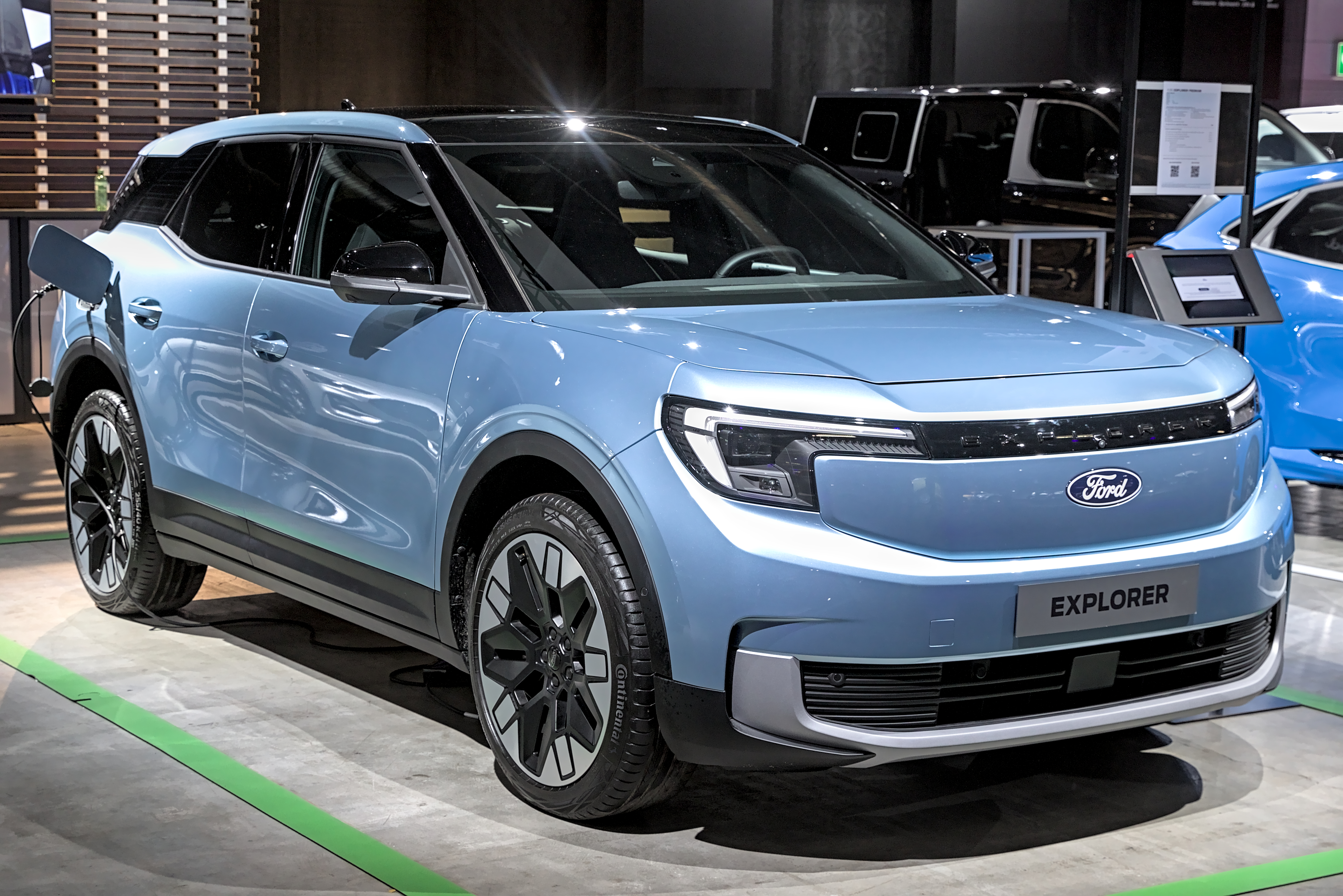
So that they know if you have a six year old Ford Explorer and you're
thinking about selling it, you've kind of done some things on the on the
internet that signal your intent.
So that's how the digital marketing finds the people with the cars that the dealers want.
Automotive News retail reporter C.J.
Moore spoke with Chip Perry and Dom Pope of Sell My Ride.
Coming up, Toyota Motor North America's
Suzanne Kazunis talks about the automakers strategy to mitigate tariff costs.
That's next on this bonus episode of Daily Drive.
On Monday, General Motors CEO,
Mary Barra joins Daily Drive for an exclusive interview with Automotive News
journalists, Lindsey Van Holley and Nick Bunkley.
In this two part interview, Barra talks about how EV headwinds are affecting
GM's electrification strategy and her conversations with President Trump
and his administration about tariffs.
I also think tariffs are here to stay.
We're working on how are we aligned with what the administration is trying
to accomplish and then make sure that they have the information to help
encourage that. And I think that's the productive way to move forward.
That's what we've been doing since day one.
Don't miss this opportunity to hear directly from GM's CEO, Mary Barra,
Monday and Tuesday, September 15th and 16th, right here on Daily Drive.
For over 100 years, Ally has helped dealers like you serve your customers
by providing the best in class products and services you need.
And by remaining true to the automotive passion, we share your dedicated
Ally account executive will work hand in hand with you to help you gain
efficiencies, increase your product offerings and work to improve per vehicle
revenue because we care about your business as much as you do.
We're all better off with an ally.
Contact your local Ally account executive to get started today.
Ally, do it right.
Welcome back. Automotive News Congress 2025 was jam-packed with industry
leaders and thinkers in downtown Detroit on Thursday.
In one session sponsored by Boston Consulting Group, managing director Brian
Colley spoke with Bridgestone America's CEO Scott Damon and Toyota Motor North
America Group Vice President of Production Engineering, Suzanne Kazunis,
about how companies are navigating several new challenges in 2025.
In this clip, Kazunis talks specifically about Toyota's efforts to mitigate tariffs.
Obviously, all of us in this room have been dealing with a incredibly turbulent,
rapidly changing tariff environment, where the rules of the game are changing
not by the year, not by the quarter, but in some cases it feels like by the day
or our latest Twitter feed.
Toyota has been like many OEMs, especially exposed to that.
And we just love to hear what are some of the steps that Toyota has taken
to really manage through that uncertainty, both from a terrorist standpoint,
from a broader geopolitical standpoint.
Yeah, I think that's the question on everybody's mind right now.
You know, Toyota's had a philosophy for
as long as I've been with the company that we will build where we sell and buy
where we build, and that has really streamlined much of our decision making
over the last couple of decades, even including our most recent
curl across, which we're building at a new facility in Huntsville, Alabama.
The decision to in 2024 before tariffs, you know, we announced a decision
to build rear axles for our truck business in our facility at San Antonio,
Texas, and invest there and what has turned out to be a very fortuitous
decision in regard to the new battery facility that we're building in North
Carolina.
You know, that was initially, you know, part of our strategy for electrification.
But the first product that we're starting to produce there is hybrid batteries.
And as we're seeing the shift in the market towards hybrid,
that's going to give us some real advantages.
We talk about being able to vertically integrate and to have more of those
high cost commodities being produced in the United States.
I think one of the things we've always done is that new model,
we evaluate what parts can be localized.
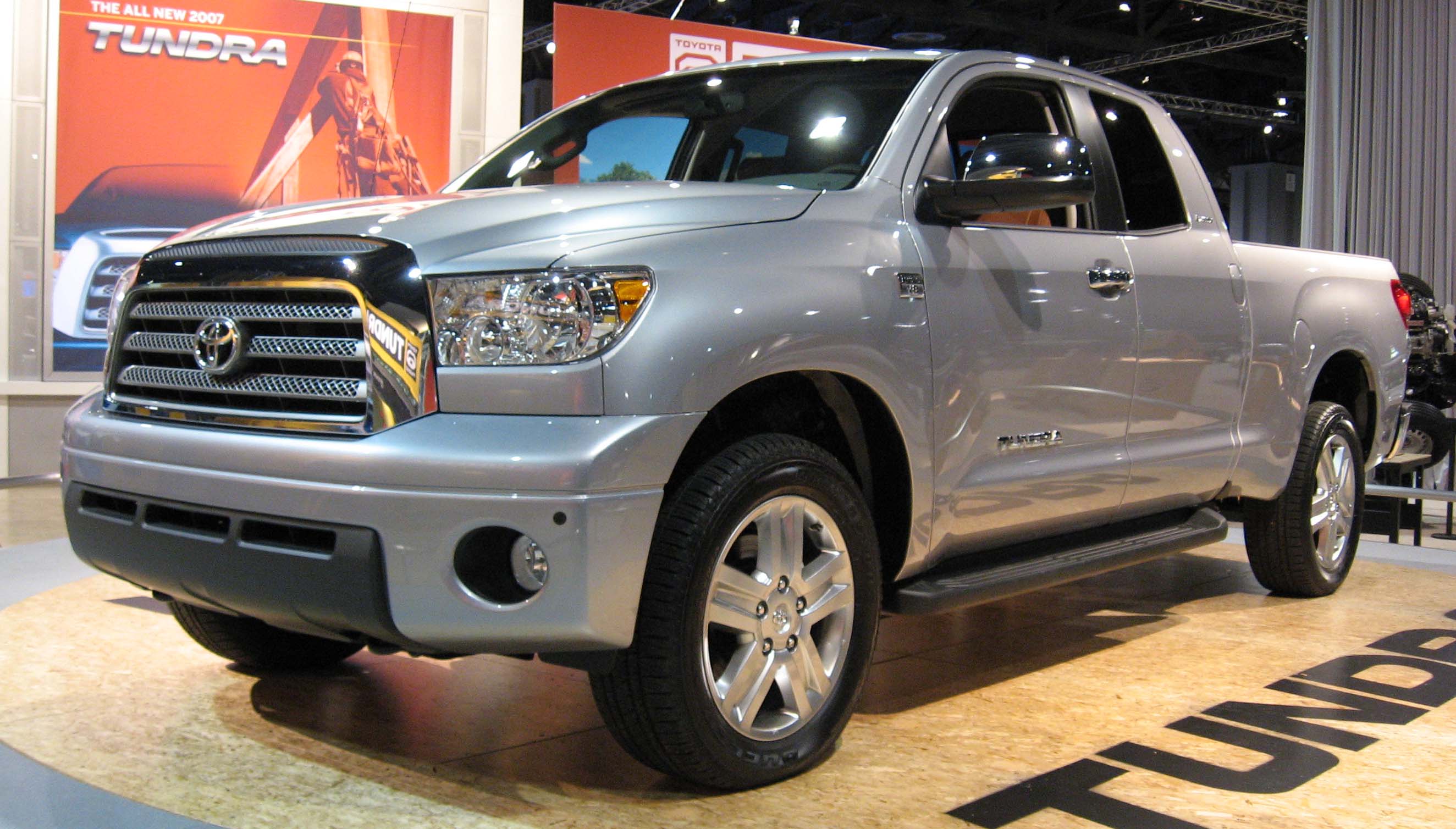
And an example that would be with our new Tundra and Sequoia,
we were able to work with our partners to actually localize transmission
production in Texas, nearby the manufacturing facility.
Also, resin deck bed was localized, just a couple of examples.
So how do we take the work that we've done in that space typically at a model
change, but now we're having to do those studies and look at how
we can make those decisions mid-cycle instead of waiting for the new model.
And we're having to make decisions much faster.
I think we are very proud of the relationship we have with our suppliers.
And, you know, in fact, I was here yesterday, we had an opportunity
to exchange in Detroit with our suppliers at 36th year that we've had that event,
which is really about how we're building relationships and trust.
And so being able to move quickly in the space, not just from the standpoint
of the OEM decisions, but with the supplier basis key.
That's all for this bonus episode of Daily Drive.
We'll be back on Monday with a brand new full episode of the show,
featuring the first part of our exclusive interview with General Motors
CEO, Mary Bara. We'll meet you back here on Monday.
About this episode
The episode features insights from Dom Pope and Chip Perry of SellMyRide, discussing the unprecedented demand for used vehicles and the challenges dealers face in acquiring inventory amidst tightening margins. They highlight the competitive landscape shaped by major players like CarMax and Carvana, and how SellMyRide aims to provide dealers with digital marketing tools to enhance local acquisition opportunities. Additionally, Toyota's Suzanne Kazunis shares the company's strategies to navigate tariff challenges and localize production, emphasizing the importance of adapting quickly to market changes.
In the second and final part of this interview, SellMyRide Chairman Chip Perry and President Dom Pope discuss dealer demand for used vehicles in 2025. Plus, Susann Kazunas, Toyota Motor North America group vice president of production engineering, talks about how the automaker is responding to tariff headwinds.