Experian Automotive delivers data-driven marketing solutions to find new customers and keep loyal ones,
drive measurable results with trusted data and expert support.
Learn more at Experian.com slash Automotive.
Welcome to Daily Drive for Thursday, September 25, 2025. I'm Kellan Walker in Las Vegas.
Today on the show, Bosch plans to cut 13,000 jobs to bring down cost.
Honda cancels a mid-size EV built by General Motors after just one model year.
And the UK works on two options to help JLR suppliers. Plus, GM's supply chain chief,
Jeff Morrison, talks about how the automaker is working through growing challenges related to
trade and tariffs. Automotive supply chains are very complex and I think we all know that we'll
talk about that. You can simplify them. You can shorten them. Let's run through all the news you
need to know to keep up in the auto industry. Bosch will cut 13,000 jobs or about 3% of its
global workforce. That's as the world's biggest automotive supplier battles a sluggish market,
high cost and pressure from rivals that have left it with an annual cost gap of $2.9 billion.
Bosch said in a statement today that it wants to reduce cost as quickly as possible. On top of the
job cuts, it wants to reduce material and operating costs, lower investments in facilities
and buildings, and streamline logistics and supply chains. American Honda has ended production
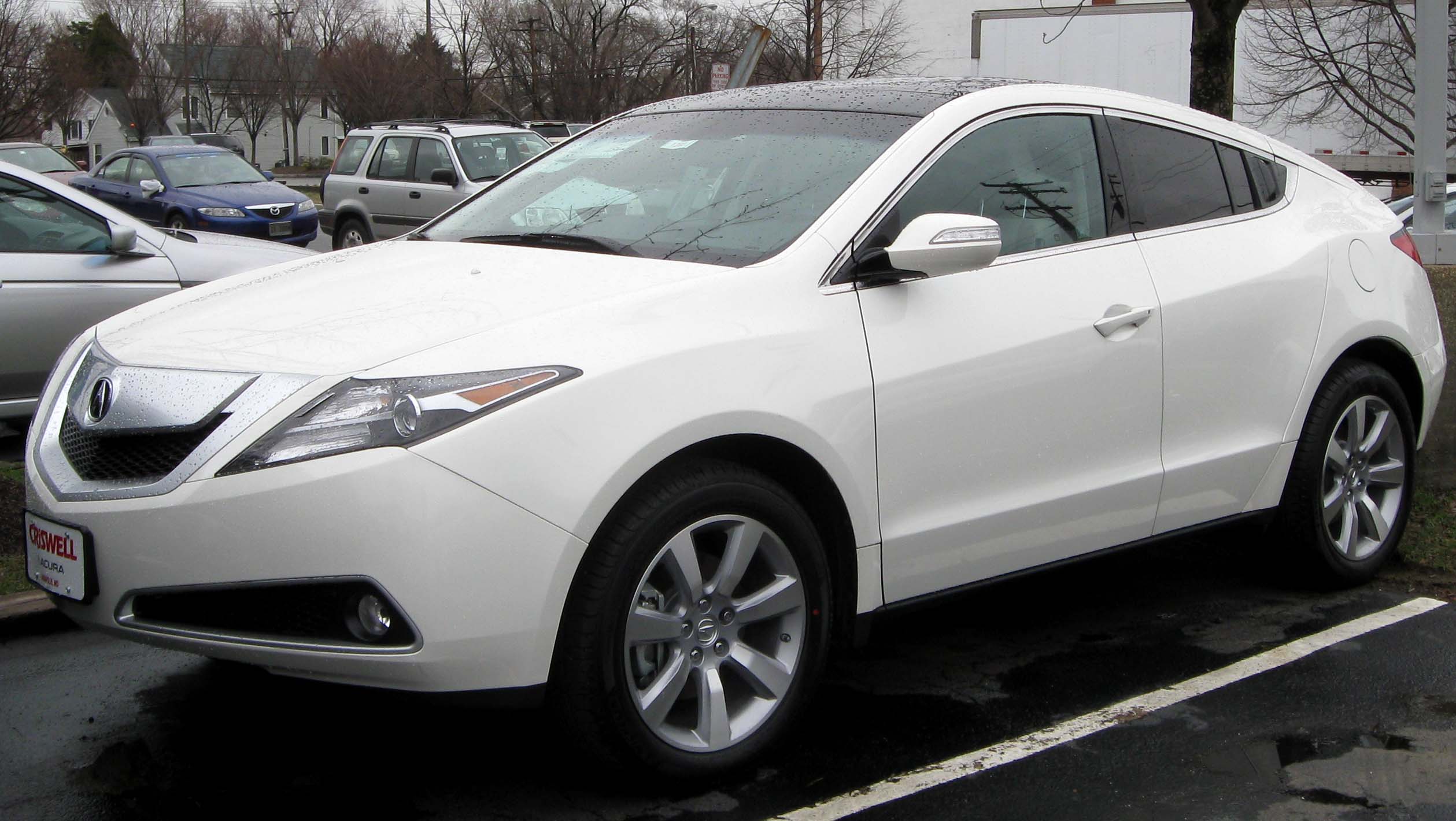
of the Acura ZDX, an electric mid-sized crossover built for the brand by General Motors. The
cancellation comes after just one model year and fewer than 20,000 sales in North America.
The ZDX is a product of Honda's collaboration with GM and it shares underpinnings with the
Cadillac Lyric. GM began assembling the vehicle in early 2024 at its plant in Spring Hill,
Tennessee. An Acura spokesperson confirmed the cancellation, citing the brand's need to quote,
better align our product portfolio with the needs of our customers and market conditions,
as well as our long-term strategic goals. And the UK is considering a financial lifeline
for Jaguar Land Rover's suppliers. That's after a shutdown caused by a cyberattack was extended
until October. According to the BBC, the government is considering a plan to purchase components
directly from suppliers. It's also considering another option, providing government-backed
loans to suppliers. However, the BBC says that idea is not popular with parts makers.
JLR has three factories in the UK, which together produce about 1,000 cars per day.
According to the BBC, the automaker is losing at least $68 million a week,
with many of its 33,000 staff members instructed to stay home.
And those are today's headlines. You can find more details on all those stories at AutoNews.com.
Joining me now to talk about Honda's decision to cancel the Acura ZDX is Carly Schoffner,
who covers Honda and other automakers for us at Automotive News.
Carly, welcome back to Daily Drive.
Thanks, Cal. It's good to see you.
Good to see you, friend. So why has Acura had such a tough time selling the ZDX?
It's a good question. And I don't think it's a matter of necessarily
them having a tough time selling it, because initially they were criticized for being late
to the game on EVs when there was a rush to market, especially in that compact crossover
segment. They actually had one of the first midsize, so they had a unique offering.
They were teaming up with GM, which essentially rushed them to market. And I think, especially
according to the dealers, they were losing a lot of customers to other brands that had EVs.
So it was a really good transitional product for them as they worked on
hybrids, because that has been their strategy all along.
However, while they were eligible for the $7,500 tax credit that came from the IRA,
the Inflation Reduction Act, they were throwing a lot of incentive dollars at it
to get people into the vehicles. And I know that they were targeting loyalists and Acura and
Honda both have good incentive programs for loyal owners. So they're moving them between
vehicles. However, it was expensive. So they were just under 20,000 sales in North America,
which I believe Lance Wolfer, who's their sales chief for both brands said it was
tracking and meeting their expectations. I just think that now their focus is on,
like I said, pivoting to hybrids and then the next in-house battery EV from Acura,
which is going to be the first from their own platform, the RSX. So their focus is just elsewhere
now, and it was time to stop. And what does this say about the health of Honda's partnership
with General Motors to build EVs? That's an interesting question. And while official word
from the company is that the relationship is great, and developing the products,
the Honda Prologue and the Acura ZDX, it took a lot of collaboration, we did see
some fracturing, if you will, in the partnership back in late 2023, when they stopped moving forward
with their project to develop affordable EVs. Now, at the time, obviously the EV market
has changed a lot in just that short amount of time. But at the time, affordable EVs was a
kind of North Star for all automakers to get there. And so them working together on that
phase made sense. But Honda pulled the plug on it. So it kind of signaled that there was some kind of
maybe like disagreement in the partnership. I don't want to speculate.
However, this is another sign that maybe the partnership isn't making that much sense for them.
Additionally, while Honda said that the Prologue will continue, which is the other GM
jointly developed EV based on the Chevrolet Blazer EV, an analyst that I spoke with said that he
predicts that it will stop production by the end of the first half next year. So it does look like
a sunsetting for both projects. But like I said before, they are focused on their own battery
electric platform. Marysville, which is the first of three existing factories that are being
upgraded for electrification is going to come online and start producing that Acura RSX.
And dealers will want a more Acura defined vehicle. The ZDX did have the Type S trim because they
wanted to maintain that kind of performance ethos of the brand. But they're going to be able to
pour more of that into their own product. Gotcha. Good stuff, Carly. Thank you so much for
joining me. Thanks, Kyle. Coming up, General Motors Purchasing Chief, Jeff Morrison, talks about
growing challenges in the automotive supply chain. That's next on Daily Drive.
Automotive News Shift podcast brings you the latest on automotive technology, trends,
and transformation. I'm Hannah Lutz. And I'm Molly Boygon. We're the new co-hosts of Shift
and we're excited to bring you new conversations with experts and industry insiders like this one
with Larry Dominique, president of LD Management Consultant. I do believe the legacy OEMs are
falling into a trap. They've got to find a way to, in some ways, build new aeroplane while
they're still in flight. Cut Shift, available every Sunday wherever you get your podcasts.
Are you an automotive marketer navigating today's rapidly evolving landscape,
finding new customers, and nurturing existing relationships can feel like a complex journey?
But what if you had a powerful engine fueled by trusted data to guide your way? That's where
Experian Automotive comes in. We understand the challenges you face. Today's personalized
consumer journeys demand intelligent planning and precise execution. That's why we offer the
Experian Marketing Engine, a coordinated suite of data-driven solutions designed to help you
develop, execute, and most importantly, measure effective marketing campaigns. At the heart of
our solutions is Experian's trusted data and a dedicated automotive team committed to your success.
We empower you to drive measurable results with unique data insights, including identity solutions
to help you better connect with your ideal customers with greater accuracy by cleaning
and enriching your first-party data. Consumer and market insights helps you gain a deeper
understanding of market trends and consumer behavior, enabling you to better target consumers.
Targeted audiences to help you pinpoint and target the right prospects at the right time with the
right message. Better data truly connects you to better results. Stop guessing and start driving
measurable impact with Experian Automotive. Ready to transform your automotive marketing?
Visit Experian.com slash Automotive to learn how our data-driven solutions can help you
find new customers, keep loyal ones, and navigate the road ahead with confidence.
That's Experian.com slash Automotive. Take control of your marketing journey today.
Welcome back to Daily Drive. I'm Kellen Walker. Supply chain risks, detection, resilience,
and flexibility have always been important and the COVID pandemic made that even more apparent.
But President Donald Trump's trade war has only made those efforts more critical
for automakers and large suppliers. Jeff Morrison is General Motors Senior Vice
President of Global Purchasing and Supply Chain. He spoke with Automotive News reporter Lindsey
Van Holy about how GM is navigating those challenges. That idea of long-term planning
and short-term flexibility definitely has been something we've heard about a lot in the
last year. But I know for GM, that's been something that the industry has really had to
grapple with over the last several years, whether it's the pandemic or
semi-conductors or other supply constraints. Is that something that you feel like now that
it's just part of a playbook? Is it at a point where things have just changed so much
or so quickly that that's kind of almost the status quo now?
Yeah, I think it is. And honestly, we've been very focused on partnerships and how do
we work together with our suppliers in a much better way? And I think that's been like a very
foundational element of it. I think that's really paid off when you look at what are the challenges
from a supply chain standpoint when you get into a situation like COVID,
semiconductor crisis, when you start looking at how do you start building out supply chains
for electric vehicles? And even now, just how do you address resilience and just kind of this
ongoing challenge that you have? And I think one of the common threads that we've seen
through that is just the need for us to really understand and map our supply chain better and
figure out where we need to engage deeper beyond the tier one level, but really,
in some cases, going all the way back to mines and processing and critical medicals.
You know, and it's interesting because that knowledge being able to map that has become
even more important. Had that been something that had always been kind of on the automakers
radar or is this something really that's over the last few years has just become kind of
mission critical almost? I think both. We've always had the desire to really have that level
of transparency and trust with our suppliers to, because as you can imagine, this is very,
in a lot of cases, very sensitive information to share and could be competitive and they want to
make sure that they don't like to share it in general. What we've really been focused on is
earning that trust and then figuring out a way to do that in the best possible way together
to be able to do that. And I think the proof points have been, we really can manage
those risks and build that out better together. And in a lot of cases, when we've got that level
of kind of supply map transparency, we can start to identify risks within their supply chain.
There may be a tier three supplier that is a supplier to 10 of our manufacturing
partners, 10 of our tier one suppliers. And they may not be aware that there's that
dependency risk. And so we can start to talk about that and start to manage it in a different
way. And then the other thing that we've seen, especially with just supply chains in general
that are just in time, any disruption can ripple and have an effect on all of our suppliers and
our ability to build vehicles. And so the earlier we can detect that, I think we've been able to
provide just a ton of value to our suppliers to be able to call them up in the middle of the
night and say, hey, we just got an alert that there was an incident and this may be one of
your sub tier suppliers. Let's take a look and start taking countermeasures pretty quickly.
You know, is that something that GM is now kind of requiring of its tier ones,
or is it something that you're encouraging them to do and you've got
tools that help them be able to do that? I think as we think going forward, our strategic partners
are going to be the ones that are fully transparent, do the supplier mapping that we need
and just work with us as partners to help mitigate those risks and just improve resilience
overall. And I think kind of going back to the first question, resilience has a high correlation
with the flexibility and agility that we need to have. And so that's much better to kind of do
that together. So it's not something that GM is saying, you know, tier ones, we need you to
map out your supply chain, but we're encouraging you to do it. And we have some tools that
can help you with that, or we can alert you to things that we're seeing from our data
that we're collecting from across the industry. So I would say we need you to map out your
supply chains. We need you to be transparent. We need you to use the tools that we can all kind of
depth to it. You know, I would say if you don't do that, it just makes it very difficult for us to
manage issues together. And I think that probably has, that probably limits some of the longer term
partnership opportunities. So in general, I would say we've got all of our suppliers that are
really kind of bought into this and working with us. And there's a toolkit, I think,
that I understand 20, I want to say 2022 is what I understand. It sort of came into being,
but I wondered if you could talk a little bit about what that looks like. It sounds like some
artificial intelligence and machine learning tools that you're using then to gather data and
be able to spot some of those trends. It is. So we're very focused on just improving capability
from a digital supply chain standpoint. Mapping is one piece of that. So the better that we
have that data aggregated, then we can match that with, we subscribe to a number of different
news event sites and we have AI tools that then go and look at those and help us to detect
basically and do an incident report in advance. And then we've got AI tools that help us put
all the critical information together and hand that to one of our, there's always to be a human
in the loop with what we do, but it helps us then be able to have a much more comprehensive view of
what that risk is and more actionable and easier to action. And I think that's an example of something
that when you look across the network to the number of tier nodes that we need to really
kind of monitor and manage, it's really hard to, AI provides a great capability for them to
be able to kind of go in and do that in a much broader scale and be able to get something that's
put together in a more actionable way. So we don't need to have an analyst
laid on a Saturday night. If there's an incident reliant on going and doing quality work,
the AI tool actually gives them that head start. And we, based on the venture we've
done, we think this suite of tools that we continue to kind of build on and get better
at, you know, we think this is like really leading edge and is just part of a number
of things that we're doing from an AI standpoint to manage.
You know, when you talk about benchmarking, is there an example of a real world case where
this is actually played out in real time? I wonder if tariffs might be one of them or
being able to just kind of see visibility, whether it's an incident at maybe a fire at a
plant or whether it's trying to figure out where steel and aluminum comes from. Are there
kind of a real world example of where this is giving you kind of that insight you need?
Yeah, I think all those examples are really good. I mean, we've had incidents where
we've been able to, if you have a tornado in the Midwest that looks like it's had some impact
and damage, we're able to kind of go do a heat map of that and say, there's 10
tier-n facilities that are located there and those are part of five of our tier-1
supplier supply chains. And so we can reach out proactively and say,
there's been an incident. We need to find out whether there's been an impact and
a risk of supply and start doing countermeasures immediately. And in supply chain, time matters.
So if you can get ahead of that even by hours, hours often matter.
So that's one example. I think when it comes to tariffs, the transparency of
really understanding what your supply chain looks like and is very helpful because it gives
you this great baseline for having any of these discussions to really understand
in the current environment what those risks are and how do we manage them together.
I think to your point earlier about trying to get visibility all the way down into the
mines, for instance, with this trying to figure out where components are sourced,
is that something that then becomes, that tool becomes helpful in trying to map out
those kind of sub-tier locations of all of those different elements that go into it?
It does because what it starts to then identify the deeper you map, at some point,
starts to identify things that we want to actually take action on and have a more resilient
kind of supply chain solution. That may mean changing the footprint. It may mean adding
multiple suppliers. So we only know what we know. So based on those things, we can go ahead and take
action on it. But the deeper you go and the more you get into this, what happens
is you identify new nodes and new risks that maybe you weren't aware of before that you
can actually go and do something about. I think the example you offered earlier about,
you have 10 suppliers that use the same sub-supplier. That sounds like an example of that kind of
resiliency question that you're talking about. If you notice then that 10 companies are using
the same supplier, if that one supplier has an incident, then that potentially creates risk.
What do you do in that kind of situation to try and quickly find an alternative or remedy?
So we work with our commodity teams and our suppliers and talk about the risk first of all.
And then there's a number of countermeasures you can take. You could cut second tools and have a
second supplier is one of the easier ones. But you could do strategic banking and just make
sure that you've got enough buffer in case there are incidents that happen. But at least we can
have that conversation with our suppliers and figure out what's the best way for us
to manage that risk together. That's also a key value to the suppliers, right? So those
tier ones may not know the tier and so that's kind of the value from the supply chain.
Sure. Yeah, absolutely. Well, and I think, you know, we talked about it earlier,
but it seems like until relatively recently, that wasn't something I think maybe that was
as top of mind as it is now just because of everything that's happened.
Yeah. I mean, I think I always go back to COVID. So then COVID is really one of the most
extreme kind of supply chain challenges that we had. And there you're dealing with entire
locations that are shut down and can't bring workers in and can't produce and can't
ship. And so we know all of our tier one suppliers are, but the more difficult risk for us to manage
were really understanding where the sub tiers were. And if you go back in time, that, you know,
that would normally happen where we would have a supplier call up and say,
guess what, I have a tier three, they're in this location and I, you know, they're not
able to produce and ship. And so at that point, there's some time lag that's occurred.
But we would then help them and jump into action. And I think in almost every case,
we're able to find a solution for it. Extraordinarily creative solutions a lot of times, right?
And the whole idea is if we can do that earlier, if we can identify that and
take countermeasures earlier, there's a huge advantage to that. And then secondly, we can just
work together to say is this really from a resilience standpoint and automotive supply
chains are very complex. And I think we all, we all know that when we all talk about that,
you can simplify them, you can shorten them. And, you know, the way you do that is by
really understanding where you're at today and where you want to be.
That's Daily Drive for today. I'm Kellan Walker. Thanks to Automotive News executive producer
Jake Nier, as well as our own Carly Schoffner for her reporting for today's podcast.
You can get the latest news on supply chains, product plans and everything happening in the
auto industry at AutoNews.com. Come back tomorrow for a conversation with TransUnion's
Sachin Merchant about what the Fed's recent rate cut means for dealership F&I offices.
Like you said, a step in the right direction, particularly coming from a consumer's mind,
as well as really a retailer and an OEM. We'd love to hear from you. Let us know what you
think of the show and the topics we cover today. Send us an email at dailydrive at
autonews.com or leave us a voicemail at 313-444-2774. And if you enjoy the podcast,
remember to like, leave a review and subscribe so you never miss an episode.
About this episode
Jeff Morrison, GM's supply chain chief, discusses the complexities of automotive supply chains and how GM is adapting to ongoing challenges like trade tariffs and the semiconductor crisis. The episode highlights Bosch's significant job cuts due to market pressures and Honda's cancellation of the Acura ZDX after disappointing sales. Morrison emphasizes the importance of transparency and collaboration with suppliers to enhance resilience and flexibility in supply chains, especially in light of recent disruptions. Insights into the evolving partnership dynamics between Honda and GM in EV production are also explored.
Jeff Morrison, General Motors’ senior vice president of global purchasing and supply chain, talks about how the automaker is working through growing challenges related to trade and tariffs. Bosch plans to cut 13,000 jobs to bring down costs. Plus, Honda cancels the Acura ZDX built by General Motors after just one model year.