This podcast is brought to you by AutoVision and its AI assistant, Avery.
Avery delivers data-driven appraisals, pricing, and detailed strategies for every vehicle.
Visit AutoVision.com to learn more about Avery, where precision meets profit.
Welcome to Daily Drive for Wednesday, September 3, 2025. I'm Kellan Walker in Las Vegas.
Today on the show, several brands see strong sales in August.
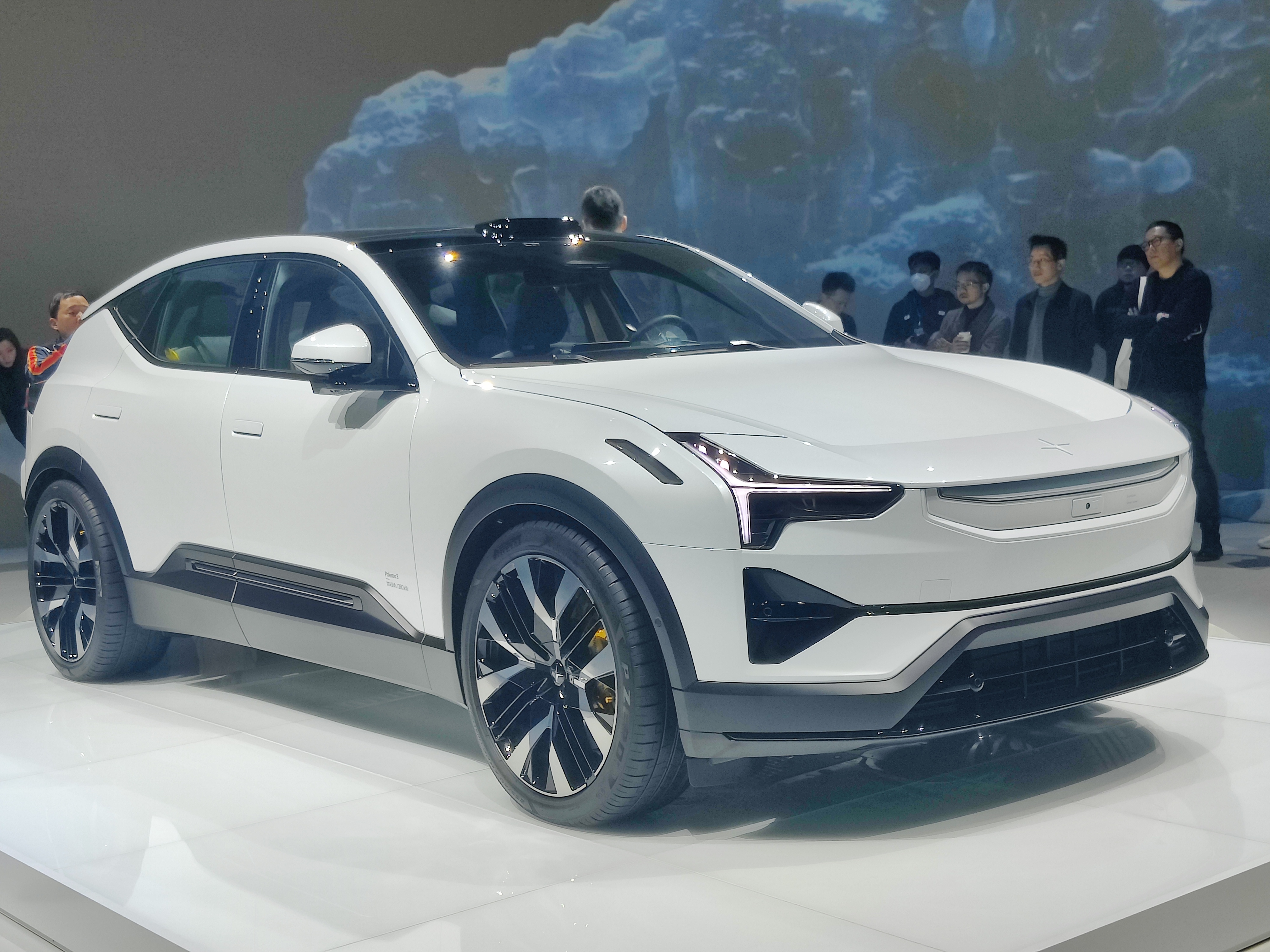
Pulse are post a billion-dollar net loss amid tariffs and EV headwinds.
And dealers and automakers get extra time to deliver EVs after tax credits expire. Plus,
we'll continue our series of interviews with candidates running for Michigan's
Open U.S. Senate seat in 2026. We'll hear from State Senator,
Mallory McMorrow, about her ideas to bolster the U.S. auto industry.
We should lean into the entire design and development and manufacturing pipeline,
which starts with invention R&D, because that's what we do better than anybody else in the world.
Let's run through all the news you need to know to keep up in the auto industry.
Several automakers have reported their sales results from August, and so far, it's good news.
Toyota sales jumped more than 13.5 percent year-over-year,
including both the namesake brand and Lexus. Ford said its U.S. light vehicle sales rose
more than 4 percent, although Lincoln slipped 15 percent in the month.
Hyundai volume was up 12 percent for its 11th straight monthly gain.
Sibling automaker Kia posted its best all-time month in the U.S. with deliveries up 10 percent
to 83,000 vehicles. As of recording time,
we're still waiting on sales results from Honda, Mazda, and Subaru on Wednesday.
We expect Volvo to report on Thursday.
Polestar is taking a big second-quarter hit due to higher U.S. tariffs and disappointing demand
for electric cars. It took a $739 million non-cash impairment charge for the Polestar 3,
related to higher tariffs on parts and broader electric vehicle price pressures.
That contributed to a wider second-quarter net loss of just over a billion dollars. That's compared
to a $268 million loss a year earlier. Revenue rose 37 percent year-over-year to $791 million.
And buyers will still be eligible to claim the electric vehicle tax credit
after September 30th, as long as they have signed a contract before the credit expires
on that date. That's according to new guidance from the Internal Revenue Service.
The information from the IRS clarifies a point of confusion for the auto industry.
The credit originally applied to vehicles quote,
placed in service. That implied delivery of the vehicle was required before September 30th
for buyers to claim the $7500 credit for new vehicles and $4,000 for used vehicles.
And those are today's headlines. You can find more details on all those stories at AutoNews.com.
Joining me now to talk more about that development related to EV tax credits is
automotive news reporter Mollie Boygon. Mollie, welcome back to Daily Drive.
Thanks for having me, Kel.
So describe the confusion over the original language of the law and that phrase placed in service.
The legislation that revises the tax credit is working with the Inflation Reduction Act.
And so Congress passed this legislation earlier this summer
that will end the tax credit on September 30th of this year.
Since the legislation is working with the language of the Inflation Reduction Act,
it relies on this turn of phrase that the credit is eligible for vehicles placed in service.
And the interpretation of that is that that applies when the vehicle is delivered.
So a lot of industry stakeholders were relying on the assumption that
a vehicle had to be delivered before September 30th in order for it to be eligible for the
tax credit. There is some language from the IRS that kind of supports that contention.
There's one regulation that says that an item is considered to be placed in service when it is
quote, first placed in a condition or state of readiness and availability for specifically assigned
functions. So a lot of people would think that that means that when the vehicle is delivered.
The IRS clarifies that actually that's not the case.
So how can buyers make sure they get their tax credit if they signed a contract before
the 30th but take delivery after the end of the month?
Yes. So that is the important part of the IRS's guidance.
Buyers can still claim the tax credit if they signed the contract for the vehicle before the 30th
even if the delivery happens after the 30th. The IRS advises that buyers basically need to
get documentation from the dealership that proves that they got the contract signed and
squared away payment before the 30th and that they got their vehicle delivered after the 30th.
Interesting. Slightly complicated but it makes sense.
You know IRS guidance is often complicated.
Yeah. Oh yeah. Molly, thank you so much for joining me.
Thanks, Kel.
Coming up, we'll hear more from Molly. She interviews US Senate candidate,
Mallory McMorrow as part of our series on that critical midterm race. That's next on Daily Drive.
Daily Drive listeners like you have access to the lowest price for Automotive News Congress
2025 on September 11th. The event is where the industry's biggest players tackle its toughest
challenges. Congress attendees don't just follow the industry, they lead it.
This year's featured speakers include Hyundai Motor Group Executive Chair Yusung Chung,
Asbury Automotive CEO David Holt and General Motors CEO Mary Bara.
We are investing in America. We're creating jobs. That's creating IP in this country and I think,
you know, the United States needs to lead in key technologies.
Join us to gain the insights and connections needed to steer your business through massive
change. To get the lowest price for the event, go to autonews.com slash events.
Select Auto News Congress and type in the discount code Daily Drive. That's one word,
all caps, Daily Drive. And we'll see you on September 11th in Detroit.
Just when you think you've priced a vehicle perfectly to sell fast, the market changes
and potential profit slips through your fingers. After all the work of scouring auction sites,
tracking competitor rates and analyzing market trends, the loss of time and money
leaves you frustrated. Meet Avery, your A.I. assistant from AutoVision. Avery revolutionizes
how you acquire, price and sell vehicles by analyzing every detail, from retail values
to market trends. And the best part? Avery doesn't just give you numbers. It explains
every recommendation so you know everything that was factored in. Picture this, faster appraisals,
smarter stocking decisions and more profitable sales, all without the exhausting legwork.
With Avery, you don't just stay competitive, you lead the pack.
Ready to see Avery in action? Visit autovision.com.
Welcome back to Daily Drive. I'm Kellen Walker. Over the past few weeks,
we've been hearing from candidates running for Michigan's open U.S. Senate seat
about their policy goals as they relate to the auto industry. It's a hugely important
race for the future of control of Congress. And it's one that features candidates
all with unique backgrounds and interest in the industry. Today, we'll hear from Michigan
State Senate Majority Whip, Mallory McMorrow, a Democrat whose district includes parts of
Detroit and the city's suburbs. In the first part of the interview, McMorrow talks with
our own Molly Boygon about the state of federal EV support and her goal to bolster R&D.
State Senate Majority Whip, Mallory McMorrow, thank you so much for joining us on Daily Drive.
Thanks, Molly. Happy to be here. So you are a proud EV driver. You drive a Chevy Bolt
and have said in the past that unreliable infrastructure inspired your four-bill package
from several years back that would have supported electric vehicle charging infrastructure.
Do you think that the federal, state, and local governments of this country have done
enough to encourage electric vehicle infrastructure growth? No, certainly not. I am now on my third
EV. I was leasing the original Bolt and bought the Bolt EUV. So I can't tell you how much of a
difference that one and a half feet make shockingly in a car now that I've got a four-year-old.
But when I got my first one, I remember thinking, I'm kind of a guinea pig for this
vehicle because I commute to Lansing every day. It's 86 miles there, 86 miles back. I'm maxing out
this range, but I'm willing to forgive not the flaws in the car. The car was great,
but the infrastructure. So I found myself kind of on the side of the road in the middle of the
rain trying to find a charger. The charger doesn't work. It's not where it says it was
marked on plug share. And that sort of test experience led to my legislation,
which unfortunately didn't pass back in 2019. And it feels like we've been caught in this
chicken versus egg situation in this country on whether the vehicle adoption is going to
lead to the infrastructure or vice versa. And we've gotten to a point where GM, I think,
shared a couple of months ago, maybe with you guys, that they're now at a place where
they are selling more EVs than the infrastructure can keep up with. So it's time that the
infrastructure does catch up. I think that a lot of people, if this is your primary vehicle,
you're not going to be forgiving when you can't find the charger and it doesn't work.
So I hope that we do a lot more. I'm encouraged to see that the Trump administration reversed
course on some of their cancellation of the EV infrastructure funding, but we have a lot more
work to do to make it as ubiquitous as gas stations are so that people don't have to
think twice. How big of a role do you think the politicization of EVs has played in terms of passing
legislation meant to encourage electric vehicle charging infrastructure and EV adoption?
I think it has played a major role. This is something that's really about our competitive
advantage as a state and as a country. We were leading the world in EV development,
infrastructure development, advanced mobility technologies, and then all of a sudden it became
this political football and we had Republicans suddenly attacking the auto industry. Let's
stop talking about just EVs and talk about our signature industry, particularly here in the
state of Michigan. We should be united on both sides of the aisle in doing what we can do
to make sure we are at the cutting edge of designing, building, innovating the best vehicles
in the world and making sure that we build a lived world around us that people can use because
cars on their own, whether they're gas or EV, they can't function without the fuel to power
them from moving. It's really unfortunate and I've sat through a lot of hand-wringing speeches
from some of my Republican colleagues about how there's an EV mandate and it's too woke.
It's just a car. I think when you get back to it, it's whatever people want to drive
and we are seeing, I'd see a ton of the new Chevy Equinox EV and the Blazer EV and now that
there are more vehicles of different types, I see a lot more of them because people have more choices
and I hope that we get to a place where this is not politicized anymore and we just get back
to treating vehicles as vehicles and it doesn't matter what the powertrain is and we should be
supporting our signature industry. What role do you think the government has in depoliticizing
EVs because I do think that part of the narrative has been about government overreach which is
historically sort of a, there's conservative objection to what's perceived as government
overreach. What can the government do to sort of depoliticize EVs as you say will be necessary?
There are two ways that you can encourage vehicle adoption or change in this industry and
it's either with sticks or carrots. The mandates are sticks by introducing a cutoff date and saying
the only vehicles that can be sold after a certain date are EVs. I think as Americans,
we have to recognize in government that we are fiercely independent back to the founding days
of our country. It is in our DNA to not want to be told what to do. It's the reason that
we broke away from the British and the alternative is the carrots. Where I think government can and
should play a much larger role is what I did try to do in my legislation. My legislation,
it was bipartisan legislation in 2019 that would have allowed for EV charging stations to be
installed at Michigan rest stops all across the state. Also encourage tax incentives,
tax breaks for small business owners who wanted to install EV charging stations at maybe their
restaurant knowing that it's not going to be an in and out gas station thing. You're going to spend
30, 45 minutes to get a fast charge. Why not support small businesses and restaurants and
shops from wanting to make that change off of a highway? I think leaning more into the carrots
and less on the sticks because that's where I think the visceral negative reaction has come
from is people feeling like I don't want the government to tell me what to do. But as we see
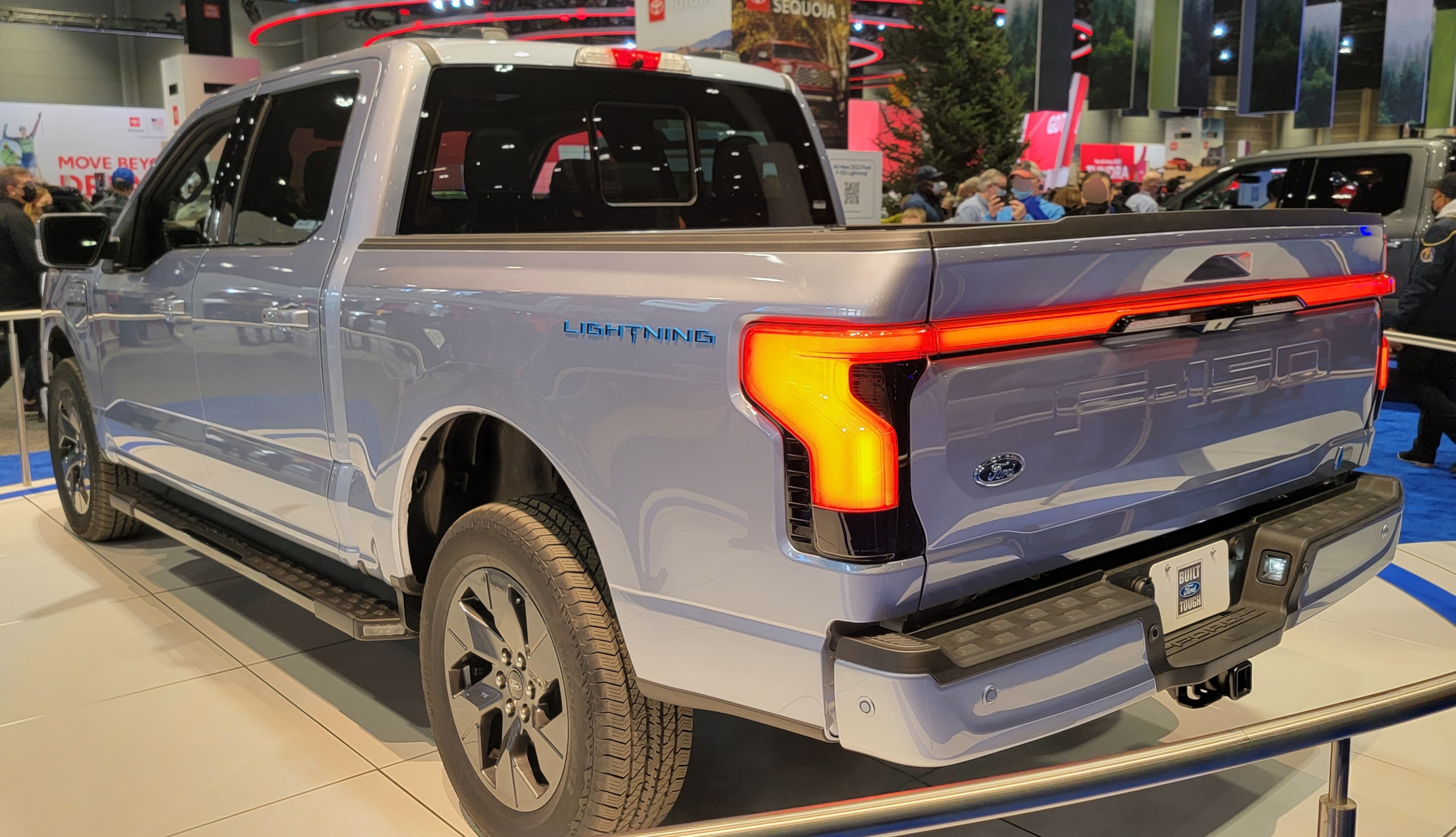
more Ford F-150s and like I said, more equinoxes and Cadillacs out on the road, people clearly like
these vehicles. So let's as a government make sure that we have the infrastructure in place to
support when people make the choice to change what type of vehicle they drive. I immediately
think when you talk of carrots about the $7,500 new EV tax credit and the $4,000 used EV tax credit
which are expiring at the end of September and even something like that, which is basically
all carrot for the consumer and for the dealer community, received pushback because the complaint
was this is artificially generating demand that's not sustainable and that ultimately will put
the industry or the dealers or fill in the blank at risk. How would you respond to concerns that
even the carrots artificially inflate consumer demand? So I think for the tax credit, it always
should have been viewed as a bridge. Anytime you are developing a new technology in any industry,
it's going to be expensive upfront. But as you get towards more mass production,
as you're producing more units, that cost is inevitably going to come down for consumers
and for dealers. So there always should have been a sunset and a window on the tax credit but
to rip it away suddenly when the purchase price that's advertised for these vehicles to consumers
for the last few years has been inclusive of the tax credit. So the fear is that you're
going to see what feels like a sudden uptick in price of these new vehicles, which is not
true. It's just because as of September of this year, all of the sudden, the tax credit is no
longer available. We are already seeing the price for used EVs on the use car sale market.
They're really affordable right now. And as we see more vehicles enter into that market,
we're going to see that. So for me, I think the credit should have remained in effect,
probably not for that much longer but maybe phased out gradually over the next couple
of years because we are reaching that tipping point where there are enough vehicles in the
market. The adoption rate is increasing and it always should have been viewed as a temporary
carrot knowing that over time, as more and more of these things are produced, that the cost was
going to come down for consumers. And especially when you consider the price of gas, the price
of electricity, especially for the vehicles that you can program to charge at off peak hours,
there's a massive amount of cost savings for people over the life of these vehicles.
Why do you think that the government and the industry appeared to have overshot the
rate of EV sales growth? You always want to be optimistic. And I think that sometimes what is
missed in, this is not a knock on our economist friends and our product planner friends, but
human nature is a bear. And I don't think they could have factored in the politicization
of a product. I really fundamentally believe that EVs suddenly becoming a hot button third rail
issue in our politics, which, let's be honest, in this country, politics is culture because
we are campaigning all the time. It is a year round exercise. We don't have campaign seasons
like some other countries do. It became a part of the culture in a very negative way or it
became kind of a symbol of which side you're on depending on which vehicle you buy. I see a
lot of Teslas driving around with stickers on them that say things like, I bought this before I knew
Elon was crazy. Or they've changed the badge. I saw one that has a Toyota Prius logo on it,
so it's not a Tesla. I don't think any product planner could have predicted how politics would
come into play on EV adoption. And I have to imagine that without that becoming kind of a
weapon and a cudgel for people to attack each other, depending on what side of the aisle you're
on, I bet those predictions would have been accurate. When you talk about the sticks and
carrots comparison, I am thinking about what you were also saying earlier about industry
competitiveness on the global scale and something that I hear a lot from analysts and
economists and other people kind of taking that 30,000 foot view is that there's concern
to that if the domestic industry kind of retrenches into internal combustion engine technology that
it will reduce competitiveness on the global scale. However, you're also looking at companies like
China which are playing under a completely different set of rules and for whom carrots and sticks
are almost understatements for the government sort of tools of leverage. So how would you
respond to that? And what role do you think that the American government can play
to encourage that competitive advantage when other governments are playing by other rules?
I can tell you from personal experience in the industry. So way before I was a legislator,
I wanted to be a car designer. I was an intern at Mazda when it was still under PAG,
under Ford. And I will never forget, this was 2007 and I'm sitting in the design studio
with my colleagues and we had either Autoblog or Jalopnik up and we were looking at photos
from the Beijing Auto Show. And back then, the Chinese auto industry was a joke. They would
quite literally take the back end of a Lexus and shove it on the front end of a Chevy, put a
BYD badge on it and call it a new vehicle. And we would just laugh at it because IP was just
not a thing that China cared about. They would rip off American vehicles all the time and try
to repackage them, but the technology wasn't even close to being competitive. And you get
to a place now where I was in Ireland a couple of years ago and it shocked me to see how many
BYD vehicles are driving around and that they look nice. They've got good fit and finish.
People are clearly buying them. They're popular. They come at an affordable price point. And
exactly to your point, you've got the Chinese government who they view it as
their competitive advantage in the world is to lap the United States on the auto industry,
no matter what it costs. They will invest as much money as it costs. There will be mandates,
there will be carrots. They will own all of the IP of these companies and push them out to as many
countries as they can in the world. And I think the biggest mistake that the United States has
made, and I think we will see the ramifications of this for decades, is exactly to your point
to retrench on what our unique competitive advantage has been, which is, yes, we can
manufacture, but we became the manufacturing epicenter, not because we could put the pieces
together, but because we invented it and we engineered it and we designed it. And the fact
that we are seeing, you know, slashing of research and development funding and slashing
of funding for universities and for grants, that's our competitive advantage. And we are
just throwing it away. And that's not to say that we shouldn't lean in on manufacturing,
but we should lean into the entire design and development and manufacturing pipeline,
which starts with invention R&D, because that's what we do better than anybody else in the world.
But we are fooling ourselves if we are not honest about how quickly China has caught up. I mean,
it is a very different time now than it was when I was sitting in that design studio in 2007.
They're making great vehicles. And if we don't reverse course to get back to
being the world leader in R&D, we're going to lose, you know, in the global marketplace.
Michigan State Senator Mallory McMorrow spoke with her own Molly Boygon. Come back over the weekend
for the second and final part of the interview on our bonus episode of the show. That will be
available Sunday morning. That's Daily Drive for today. I'm Kellan Walker. Thanks to Automotive
News Executive Producer Jake Nier, as well as our own David Phillips for his reporting for today's
podcast. You can get the latest news on public policy, sales results, and everything happening in
the auto industry at AutoNews.com. We'd love to hear from you. Let us know what you think of the
show and the topics we covered today. Send us an email at DailyDrive at AutoNews.com,
or leave us a voicemail at 313-444-2774. And if you enjoy the podcast,
remember to like, leave a review, and subscribe so you never miss an episode.
About this episode
Strong sales figures from several automakers in August highlight a positive trend in the auto industry, with Toyota and Hyundai reporting significant year-over-year increases. However, Polestar faces challenges with a billion-dollar net loss due to tariffs and EV market pressures. The episode features an insightful interview with Michigan State Senator Mallory McMorrow, who discusses the need for improved EV infrastructure and bipartisan support for the auto industry. She emphasizes the importance of R&D funding and the risks of politicizing electric vehicles, advocating for a focus on innovation and competitiveness.
Michigan State Sen. Mallory McMorrow talks about her ideas for bolstering federal support for electric vehicle infrastructure, R&D and more. Several brands see strong sales in August. Plus, dealers and automakers get extra time to deliver EVs after tax credits expire.