This is how many people are trying to get car loans. If fewer people apply, it can mean fewer buyers are confident they’ll be approved or can afford the payments.
This means people with car loans are missing payments. If more people are late, it usually signals financial stress and can affect the whole car market.
This is a car loan paid back over about 8 years. It can help monthly affordability, but it can also mean you’re paying interest for a long time and the car may be worth less than what you still owe.
This is a car loan that you pay back over about 10 years. It can make the monthly payment smaller, but you usually pay more interest overall, and the car can lose value faster than you’re paying it off.
Approval rate is the share of applications that get funded, while rejection rate is the share denied. When approval rates rise alongside low rejection rates during worsening delinquency, it suggests underwriting is getting looser—often increasing future default risk.
The idea is that aggressive lending to marginal borrowers can increase future defaults, which then damages borrowers’ credit profiles. That can reduce future eligibility for mainstream auto loans and raise borrowing costs over time.
They’re pointing out that going from $3 gas to $4 gas is a big jump in what you spend to fuel your car. So a deal that felt okay before can feel too expensive now.
Depreciation is the loss of a vehicle’s value over time. It affects real ownership cost and can matter for buyers considering trade-ins, negative equity, or whether a financed vehicle will hold value.
Your monthly payment is what you pay every month to pay off the car loan. If it gets too high, it can become hard to keep up.
Concept
what do you need vs what you want
The “need vs want” framing is about budgeting: choosing a car payment that fits your actual financial obligations rather than stretching for features or lifestyle upgrades. It’s especially important when loan terms and monthly payments are rising.
0% financing means you borrow the money without paying interest for a set time. It can make the monthly payment easier, but the car’s price or dealer add-ons can still make it cost more overall.
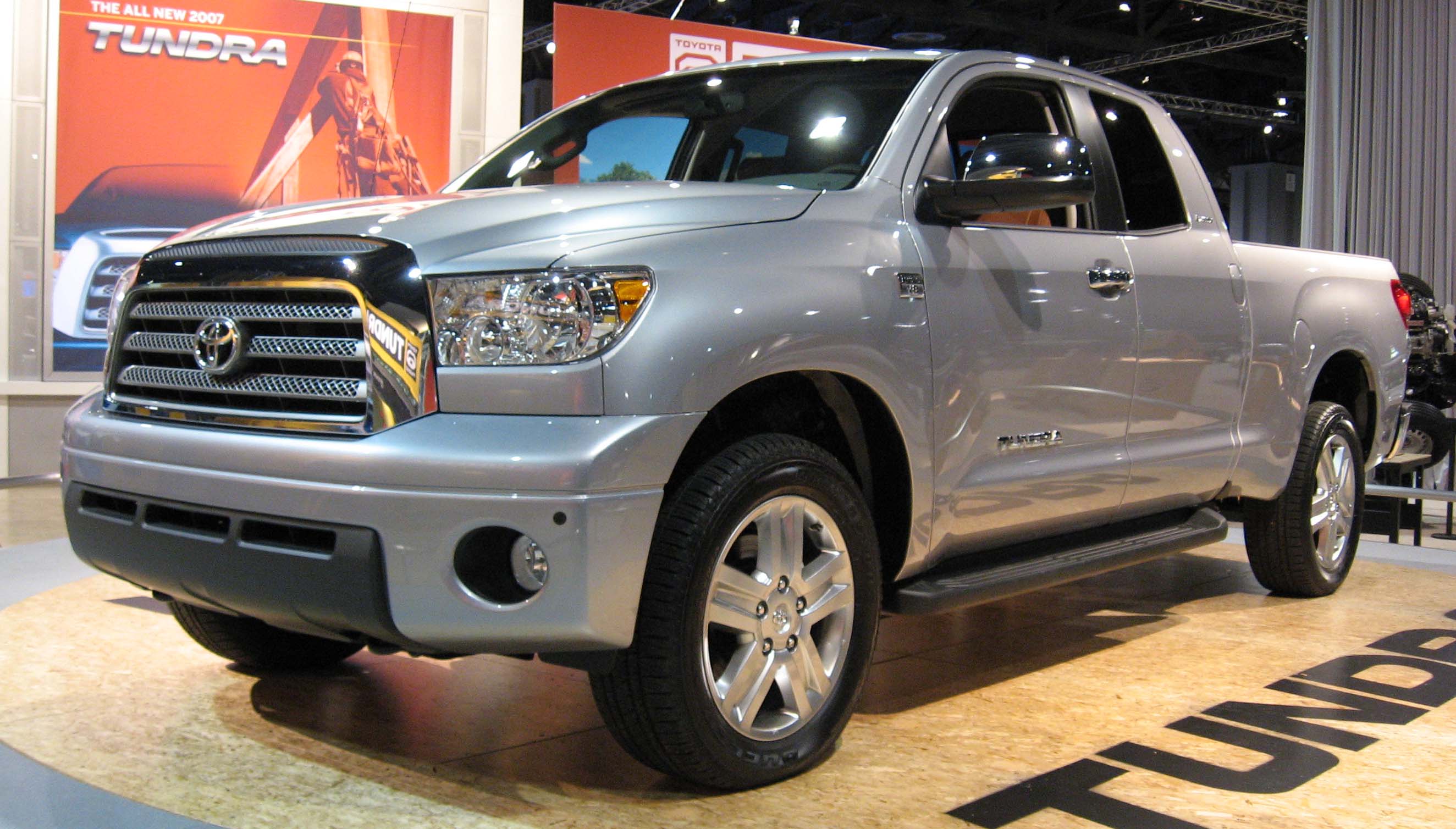
The Toyota Tundra is a full-size pickup truck. In this episode, they’re using the Tundra as an example of how Toyota is offering discounts to make the truck easier to afford.
Sticker price is the car’s listed price before discounts. When a dealer says “20% off the sticker,” it usually means off the MSRP, but your final cost can still change based on taxes and fees.
EV incentives are discounts or credits that make electric cars cheaper. If they end, some buyers will delay or stop buying because the deal is no longer as good.
The Wrangler is an SUV made for off-road driving, like dirt roads and trails. People choose it when they want a vehicle that can handle rough terrain. It may be mentioned in a conversation about gas prices because it’s the kind of car that many people use regularly and feel fuel-cost changes.
MSRP is the car’s official sticker price from the manufacturer. When someone says “below MSRP,” they mean the selling price is lower than that sticker.
General Motors is one of the big car companies in the U.S. The discussion is basically about how companies don’t like to joke about competitors’ problems, especially when they have issues too.
The speaker means there are topics companies avoid because it could make them look bad too. If a company has its own problems, it usually won’t start mocking someone else’s.
It’s a saying that means “don’t start trouble.” Here, it means car companies don’t want to tease each other about recalls because it could lead to a bigger argument.
A write down is basically lowering the price/value of the car so it becomes easier to sell. Dealers do this when cars sit too long.
LIVE
It's noon here on April Fool's Day, April 1st, and this is Courage Live with your hosts,
me, Ray, here in, where am I, VentureCity, and Zach, hanging out in Washington, D.C.
What's going on today, handsome?
Happy Wednesday, April 1st, everyone.
Thanks so much for tuning in.
Having a great day here.
Pops excited to spend half an hour with you.
We've got an update.
The US auto loan crisis continues the spiral out of control.
Interesting data that we're going to review today.
First things first, though, today's show is brought to you by CarEdge.com.
For those of you that are unfamiliar, it's been six years now of doing this YouTube thing,
this website thing, and most importantly, this car buying service thing.
Back at CarEdge.com, we have a car buying service.
We'll research vehicles, contact dealers on your behalf, and even negotiate.
We learn what matters to you, contact those dealers, get you offers, compare them,
negotiate them, and help you get the best deal without the stress.
We do have a promotion running right now, $200 off our car buying service and 20% off CarEdge.
Pro, please take advantage of that.
Back at CarEdge.com.
Where to start this morning, Dad?
Actually, we're going to start right here.
Fewer auto loans were actually applied for last month, which is interesting,
but the auto loan rejection rate actually decreased.
Keep this in mind.
The number of people that got denied for an auto loan actually decreased.
That means more people are getting access to auto loans.
This comes on the heels of, and we published this about a month ago now,
the auto loan crisis just hit a 32-year record that this is the latest data that we have from
literally everyone that tracks auto loan delinquencies.
We're at a 32-year high for auto loan delinquencies.
People 60-plus days behind on their auto loans.
Then the interesting article that popped up this morning that I thought furthered this conversation
was CNBC getting in on the fund.
Nearly one in three car buyers are underwater on trade ins.
Analyst calls the dollar amount troubling.
This is the landscape we're in, Dad.
More people are getting approved for auto loans than ever before, lower rejection rates,
record-setting delinquencies.
We have never seen auto loan delinquencies like we have right now,
and more people are underwater.
If they were trying to get out of their car loan, aka sell their vehicle,
they're going to have to come with cash to the table or else they're going to have a deficiency
balance.
That's the lay of the land here, man.
That's what's going on in the car market.
Some of the pundits are saying, this is troubling.
That's the word we use.
I've got a better word.
Unsustainable.
Unsustainable.
I like that word.
Stupid.
Well, but if I may, Dad, before we go to stupid,
one of the things that's supporting this right now,
one of the things that makes this even theoretically tenable and feasible is the
reality that someone can get approved for a 120-month car loan, a 96-month car loan.
That's part of what's keeping this game of charades in motion.
Why am I got charades?
I mean, look at this, Dad.
It's not that hard.
Go Google search 96-month car loan, 120-month car loan, and you can find it out there, folks.
There is one way to keep the merry-go-round running, and that would be,
you just keep approving people for longer and longer loan terms.
Well, listen, we've seen that since the beginning of time.
And when I refer to the beginning of time, I refer to when I first got the car business,
which was 1977.
And at that time, if somebody came in and they wanted to finance their car, I don't recall,
and I've literally hand wrote the bank contracts.
Wow.
And I don't ever recall doing a contract for more than 36 months.
And the ones at 36 months were rare.
Most car loans were for 24 months, okay?
And through inflation and everything else and technology advances and safety advances and
how all that stuff costs money, so it adds to the cost of the car, as prices went up,
loan terms increased, went from 24 to 36 to 48 to 60 months.
And I remember when I got back in the business after I took that brief hiatus with the Gulf
USA store that we had in Mesa, Arizona.
And oftentimes when I was a closer at the Mazda Volkswagen store and people, you know,
when we would present numbers, we would never present a loan term, just a payment.
And people would say, well, how long is that payment for?
And I would, you know, it could have been for 48 months or it could have been for 60 months.
And I would say, oh, I'm assuming this is a 60 months.
No, but if you need longer than that, if you need to extend the terms to 72,
I'm sure we could make that happen for you.
And so it just became this whole concept of everybody's kicking the can down the road,
okay, where the prices are going to go up more than people can afford.
And people, the vast majority of people can only afford things on a monthly basis, payment-wise.
So we'll just keep extending the number of payments that they have to make.
Well, that makes the cars even more expensive and makes it harder for people to trade out of them
when they might like to. So it's beyond troubling.
It truly is unsustainable. I mean, most of these cars today that are built,
that you get a 10-year note on, 120 months, those cars won't make it 120 months, okay?
They just won't because so much of what's built today is pure unadulterated crap
that isn't intended to last as long as cars used to last.
So you put people in failing mechanical means of transportation
for a term that's longer than the useful life of the vehicle.
Here's the confounding part. Actually, I get it. So maybe confounding is the wrong word.
Concerning part. The most recent New York Fed survey that goes that we have more credit
applications, and this is not just auto. This is across the whole credit spectrum.
Credit apps have hit a three-year high and banks are slashing rejection rates.
This is across all credit products. So think about that for a second. We have the proliferation
and the storytelling from my dad of his four-decade career in auto.
Look at this chart at this credit union, dad. The lowest number of months you can even choose
is 36 months nowadays. You just said a moment ago when you started in the business.
It was 24. The shortest load term you could even get today is 36 months.
We are seeing credit unions like this one and others, and we know because we've looked at the
data before in the past, those that are being most aggressive on approval rates right now are the
captive finance companies, not even the credit unions, but the captive finance companies, Ford
Motor Credit, for example. But they're accepting more auto loans than before, and they're willing
to go up to things like 120 months, or in the case of Ford Motor Credit and other captive lenders,
approve more people with lower credit scores for those 0% financing offers just to move the metal.
This is a crazy juxtaposition, dad, of on one end, we have the highest levels of delinquency
we've ever seen. On another end, we've got the most approval rates and lowest rejection rates,
and in between, we have negative equity unlike we've ever seen before.
But here's the real point is that we have the highest level of delinquency in 32 years.
Yeah. So, if you're a bank and you are seeing delinquencies increase dramatically, what are
you going to do to offset those potential losses? I've got a great idea. Let's make it easier for
more people to put themselves in the same type of position that those delinquent customers are in
already. At least on the short term, it could look profitable. In the long term, it is disastrous.
You are just going to create more people with bad credit moving forward,
shrinking yet again the number of people who can actually afford to qualify for a car loan.
At a certain point, it's like 12 and 13-year-olds are going to qualify for a car loan,
because people with jobs are already overextended and they won't be pushing those people for
another car loan. Get your kid in the car. Let's bring up another topic that relates to this now
more than ever before. This is in Bloomberg this morning, Dad. Gas prices at $4 a gallon
stir anxiety in already slowing car market. Does that not put even more emphasis on what's happening
here with the auto loan crisis? The banks are the ones that ultimately enable these transactions
to happen, because most people do not pay cash for their cars. You have gas prices spiking and
you have a slowing car market, and so what are the banks incentivized to do? Approve more auto
loans to keep the merry-go-round going around. This, to me, is such an interesting moment for
the car market and for the car edge community, because if the car market does tank, which the
new car market is showing signs that it is very weak right now, obviously the used car market
is showing a ton of signs of strength. For the new car market, this could be for those of you
that have been waiting on the sidelines, you can time up a great purchase this year, because the
market has a lot of anxiety. Dealers have a lot of anxiety. Manufacturers have a lot of anxiety.
Banks have a lot of anxiety. They need to move these cars.
Customers have the most anxiety. Sure.
Customers who are already in car loans and the new average monthly payment was $805 a
month on a new car. If you've already committed $805 a month for your new car,
when gas was $3 a gallon and now gas is $4 a gallon, that's a 23% increase in the cost of fuel
for you. Suddenly, what seemed to be affordable at $805 a month when gas was $3 a gallon doesn't
seem quite as affordable when gas is $4 a gallon. Can we actually pause for a second then?
Monthly finance payments, we just brushed over the fact that we're up to $805 is the
average car payment, just the car payment. Holy cow, $805 a month, that's before insurance,
that's before fuel, that's before repairs and maintenance and we're not obviously factoring
in depreciation. Yeah, no, it is. That's crazy, man. No wonder you use car prices or skyrocketing
because people are looking for alternatives to an $805 a month payment. What the hell? That is so
expensive. Yeah, it is, which is why... $800 did use to be rent. Yes, I think my first mortgage
payment was like $750 a month. The thought of having to pay nearly $1,000 a month so I can have
the freedom to drive around whenever I want is so ridiculous. That is such an absurdly high
cost so you can have the freedom to drive. Get an e-bike, get a horse. It's astounding to me
that we can normalize this and we think that it makes sense because I don't see how it makes
sense. It won't be long because when we started doing nonsense like this, the average new car
payment was $500 a month or $550. It's up to $805. So what? A year from now, two years from now,
we're going to be talking the average new car payment is $1,000 a month. That's not normal
and that's not sustainable and people's incomes aren't increasing at the same rate as the monthly
payment to have this freedom to drive whenever you want to drive. So no wonder we have an auto
loan crisis. Sorry, I had to grab it, Dad. You said horse. What about this one? Wow. Is that me
on a horse? Oh, yeah, that was me riding to the rescue. Yes, yes. Oh my God. But yeah, Dad,
I think you're right. I mean, when we started this, average new car payments around $500,
$550 and now we're up to and we just casually acknowledge their $805. And so it is interesting
because again, for those of you that are looking for value, it might sound asinine for us to say it,
but look in the new car market because there's an oversupply of inventory. You can negotiate the
prices down, but still the floor for where these prices have gotten is crazy and unfortunately,
a lot of you are going to get approved for auto loans that you really need to look in the mirror
before you take on that debt and that responsibility. Just because you get approved by the bank doesn't
mean it's a smart financial decision. Finance managers tell customers all the time.
What's the line they use? You don't think the bank would have approved you for this loan
if they didn't think you could pay it back? They approve you for the loan with the hope
that you're going to pay it back, okay? You have to, as an individual, you need to understand what
it is you really can afford and what it is that you really need. And I've said this before,
what do you need as opposed to what you want? Typically, what you want is a hell of a lot
more expensive than what you need. So somehow, some way, just because a bank will say yes,
doesn't mean you need it or want it, okay? Just because the bank might approve you for a 900
dollar a month car note doesn't mean you should enter into a 900 dollar a month car note.
We are past the time in this country, in my opinion, as consumers.
To where we just buy what we absolutely need and quit overspending for all the crap we don't need.
For sure. And so, that might mean, in a nice way, telling automobile manufacturers what we need
and what we want are plain-gain automobiles that get us from point A to point B in an
inexpensive manner as possible. I don't need to ride around on a 100,000 dollar car to get
from here to the Acme. I do it in my $33,000 car. And the reality is, it would be cheaper if I just
used Uber. If I may, dad, it is trying to show up in terms of the slowdown. But again, the thing that
keeps the merry-go-round going around is the fact that rejection rates for credit applications have
declined and approvals continue as well. Of course, we've approved there are people
to put themselves in this financial bind. But we did get data on incentives for the month of March,
the month that just passed. And I will share this here. Ahead of the key spring selling season,
automakers flooded the airwaves last month with generous 0% financing and deferred first payment
offers to counter elevated interest rates and borrowing costs. Toyota pitched $5,000 off
on 22 different trim packages of the 2025 Tundra, which has a starting price of $4,185.
GMC dangled 20% off the sticker price on certain 2026 CR 1500 elevation pickups Hyundai and Kia
offered 0% financing combined with deferred initial payments on select models. Overall, dad,
we did see incentives increase on average $165 last month. So now we're at $3,325
in incentives. Now EVs, obviously, get treated a little bit differently. EVs,
you get over $11,000 in incentives for the manufacturer. So we are starting to see
incentives increase a little bit, at least the 0% financing.
Okay, that's great. Those are great numbers. We also know, as a matter of fact, that the
average asking price, the advertised price on dealer websites, increased to $51,500 some dollars,
which was up $750 year over year. So the fact that incentives went up a whole $165,
the buying public is still $500 or $480 in the hole. So you know,
what's that old saying? Liars, figures and figures lie. You can make the case when you look at the
stats as dryly as you just did. Well, incentives went up, but not nearly as much as the price of
vehicles went up. One is not offsetting the other. And so we're just getting deeper and deeper into
this hole that there is no escape from. Okay, you can't dig yourself out of it, either as a consumer
or when you look at the national debt as a nation. I mean, because the national debt's at $39,
let me say that $39 trillion. Okay, so I get it when consumers say,
oh, it's good enough for the country. It's good enough for me. We can all go bankrupt together.
I get it. If I may, dad, let's turn our attention to the month of March. We did get,
and we've started to get the sales data from various automakers. And look at this. Toyota,
Honda, Nissan, Mazda, Slide, and Kia were the only two brands thus far that actually
have posted record sales for Q1. So let's just start here, dad. Toyota sales down, Honda sales
down, Nissan sales down, and Mazda sales down. That's an interesting group of four. You know,
some you might expect to have sales declines. Nissan, for example, but Toyota, Honda, and Mazda
all seeing sales declines. That's a little bit shocking to a degree. And again, indicative of
the broader challenges that the new car market is facing right now. And the truth of the matter
was Hyundai and Kia sales were down for the same month. But up for the quarter still. But up for
the quarter. And a lot of the manufacturers were going to be down through the first quarter of
this year, because in the first quarter of last year, there was a huge spike in sales in March,
in anticipation of the tariffs that were going into effect in April. There was this huge pull
ahead purchase from people that would have been buying in April, May, and June, that suddenly
bought in March, because they were afraid that there were going to be price increases on what
they were considering buying. That's a really good point. So naturally, because of that, because of
the artificial increase in sales that we had, and we'll see this again in September, because of at
the end of the year, because of the EV incentives going away. But even saying that, sales are down
significantly. And I believe significantly more than what pundits had been expecting.
And in my mind, it's a confluence of so many different things. A, that the average asking
price keeps going up dramatically. B, that the long term keeps getting extended. C, that the
average new car payments $805. D, that gasoline has crossed the Ford Hour Rubicon nationally.
And there's just so much uncertainty in the world that less people feel comfortable about
making major purchases. But Dad, I do think that will, I mean, you keep me honest here, that will
mean more inventory sits for longer. And as more inventory sits for longer, we will see even more.
0% financing offers, even more deferred first payment offers, even bigger dealer discounts.
Like this is not an ironic comment in the chat of, are any dealers selling new cars for 50% or
more discount? I mean, some Maserati dealers are what, at 30%, 40%? I mean, you're not going to
see Hyundai with a 40% or 50% discount, but I mean, seriously, Dad, we are seeing like Maserati
dealers offer online advertised prices, 40% below MSRP. We've got General Motors incentivizing one
of their trucks, that was supposed to be the big best new thing, 20% off just from the manufacturer,
not even including dealer discounts. So, the market has shifted for the new car side of things
significantly. And if we do see sales continue to slide, regardless of why they slid,
it's pressure on these manufacturers to figure out ways to sell those vehicles.
No, no, I agree with that. But there's just so many factors that nobody thought of at the
beginning of the year that are playing out right now. And I know people go, yeah, but we produce
so much oil in this country, we do. It's the oil that we need for the rest of the world,
where they're going to get it, which is why the price of gasoline has gone up.
Yeah, gas-climbing oil in this too. Yeah, of course.
Yeah. And so, we weren't confronted with that uncertainty eight weeks ago.
And so, I just think when there's this much uncertainty, it's hard for people to make a
commitment to spend big sums of money. It's just, you know, I don't spend a lot of money on watches,
but I buy a lot of watches, as you know. Yeah, you buy cheapo watches. You love them.
Well, you know, they're cheap to me. They could seem relatively expensive to others. But, you know,
in my world, you know, somewhere between four and a hundred, a thousand dollars is a relatively
inexpensive watch. Oh, I was thinking about the cheap ones you buy, like the $50,000 and $100
ones. But, okay, well, I have a few of those, but my point was going to be, I haven't bought a watch
in probably five or six months. Wow. Okay, I am trying to discipline myself when it comes to
buying things I don't really need. Okay, I have 48 watches. Do I really need another? No, I do not.
Okay, absolutely. So it's just like, yeah, but it looks good and I like it. I think I should
buy the damn thing. And then this guy on the other shoulder goes, no, you shouldn't. Okay,
it's going to cost you more just than batteries for these watches. So my point is that even somebody,
like myself, who they're not hugely expensive purchases, I have had second thoughts and
arguments with my, and I have, and I believe me, I have seen any number of watches that I go,
oh, that's interesting. Oh, that's a good looking watch. And I haven't pulled the trigger on any of
them. And because there's just too much uncertainty. So if I won't buy a watch,
well, there's got to be a few people out there going, I can't afford to buy a car
when things are like this. I think you're spot on, Dad. I think a lot of that is happening
in the market right now. Let's turn here, Dad. Let's go to the chat. Thank you, Jagannishi,
we appreciate it. Why haven't we seen General Motors ads poking fun at Solantis and Ford
recall numbers? Here's one I thought of, enjoy your vehicle, not your dealer. Good pops. Dad,
do you think we'll see some of these automakers start to take some shots at all the recalls?
No, because each one of these automakers has their own issues. Okay, General Motors has their
issues with their 6.2 liter engines. So no, no, it is, there are certain things that are off
limits. Okay, there's that old saying, you don't want to poke the bear. Yeah. Okay, so yeah, Ford
has had a poop ton of recalls. Well, we feel bad for Ford, and we're not going to poke fun at them,
because, you know, suddenly they'll poke fun about our engines just blowing up when you're
driving down the highway. So no, there are certain things in business that are off limits.
I believe that would be one of them. I think you're on to something there. I think they're not
going to touch that, because they know they've got their own problems in their own.
From Jim, Dad, this is a great question. Where do all the 2025 new vehicles go auctions, or do
dealers keep them in the back? We've been talking about unsold new cars for a while now, because
we've got leftovers, lots of leftovers. Some of them like yesterday we saw are being turned into
certified pre-owned used vehicles. Others, dealers are still trying to sell them. So help us all
understand that. What happens with all these leftovers? We saw about 300,000 leftovers out there.
Here's the deal, and I know there's people out there that believe that there's just
fields in the middle of the country where dealers send their unsold inventory and just let them
rot. Here's the deal. Once the vehicle is invoiced to the dealer, the dealer bought it, okay? And
the dealer has to turn that obligation into cash. It's their responsibility to do that.
How can they do that? Well, the hope is you'll sell it to a retail customer. If you can't find a
retail customer and you keep trying, trying, and trying, well then perhaps, like some dealers do,
you move stagnant aged new vehicles into your used car department, and you take what's known as a
write down, and you lower the cost of it so that you can now sell it as a used car. Or you might
take it to the auction and sell it there. Even though it has no miles on it or very few miles on
it and it's never been titled, you can take it to the auction and it gets sold as a used car.
And then whoever buys it, it's their responsibility to now figure out how to turn that into cash. Or
you just might deal or trade it to another dealer and you start fresh with their aged stuff and they
start fresh with your aged stuff. But eventually, every last one of these gets sold. They're not
going to a field somewhere to rot because that business model don't work. I mean, it does seem
to me for some of these dealers who've been sitting on cars for hundreds of days. But yeah,
eventually, all these vehicles get sold. Yes. Yes. Let's call it a show pops again if we can help
you out with anything, caredge.com. I'm actually even wearing my t-shirt today. If we can help you
buy a car or sell a car or all that fun stuff, please give us the chance. We've got the car
buying service. Yeah, please take a look. And Dad, enjoy your afternoon and let's come back here
and do it all again tomorrow. Yeah. You know, yesterday, we had sunshine and relatively warm
temperatures here at the shore. And so I actually sat out on the balcony yesterday in the sun a
little bit, but it was a tad bit breezy. Today, it's supposed to get up to about 66, 68. So I
don't know. I might have a little more color in my face tomorrow when you see me. Nice.
Today, yes. Wear your sunscreen even though I know you won't. I'd have to have sunscreen to wear it.
And Danke, 9340 Dancy wants to know, coughing update. It turns out that I had a mild case or I
have a mild case of bronchitis. And I am on various and assorted medications. And I am starting to
feel better and coughing less. So there you have it. Thank you, Dad. Thank you.
All right, folks, if we can help you out, CarEdge.com. Otherwise, we'll see you back here tomorrow.
Love you, Pops. Love you too, handsome. Thank you, everybody. See you at noon Eastern tomorrow.
About this episode
Ray and Zach break down a worsening US auto loan picture: delinquencies are at a 32-year high while loan rejection rates fall, meaning more buyers are getting approved even as negative equity and “underwater” trade-ins spread. They connect the dots to longer loan terms (up to 96–120 months), record average payments (~$805/month), and rising gas prices that add pressure to already-stretched budgets. The hosts also cover rising incentives (0% offers, deferred payments), weak new-car sales, and what happens to unsold inventory.
Today on CarEdge Live, Ray and Zach discuss the latest auto loan debt data. Tune in to learn more! Hosted by Simplecast, an AdsWizz company. See https://pcm.adswizz.com
for information about our collection and use of personal data for
advertising.