Used car acquisition strategies take center stage as industry experts discuss the evolving market dynamics. Dealer principal Scott Simons shares insights on reshaping dealership operations around smarter inventory management, emphasizing the importance of acquisition over retail sales. The episode features discussions on the impact of recent industry trends, including supply constraints from manufacturers like GM, and innovative approaches to sourcing vehicles. With insights from tech founders and successful dealers, listeners gain valuable perspectives on navigating the competitive used car landscape.
Today's show features:
- Scott Simons, Dealer Principal of Simons Chevrolet GMC
- John Ellis, CEO of Agile Auto
- JR Toothman, Owner of Toothman Ford
This episode is brought to you by:
Foureyes – Foureyes helps dealers turn data into action. Starting with a clean, connected data foundation across dealership systems, Foureyes empowers dealerships to use that data to drive consistent execution throughout their business. The data stays dealer-owned, vendor-neutral, and works with any tools or partners. More than a CDP, Foureyes is a reset for how dealer data gets put to work. Headquartered in Oregon, Foureyes employees live in 20+ states to be closer to the communities where dealers are. Visit https://www.foureyes.io/ to learn more
Agile Auto – The first of its kind intelligence platform purpose built for used car operations. Trusted by performance driven dealerships across the US and Canada, Agile Auto layers on top of your existing systems to deliver dealer and market specific acquisition guidance and daily operational direction that turns data into confident decisions, faster turn, and measurable profit. Learn more at https://www.agileauto.io/ and take a two week test drive to see how disciplined intelligence transforms used car results.
Check out Car Dealership Guy’s stuff:
CDG Circles ➤ https://cdgcircles.com/
CDG News ➤ https://news.dealershipguy.com/
CDG Jobs ➤ https://jobs.dealershipguy.com/
CDG Recruiting ➤ https://www.cdgrecruiting.com/
My Socials:
X ➤ https://www.twitter.com/GuyDealership
Instagram ➤ https://www.instagram.com/cardealershipguy/
TikTok ➤ https://www.tiktok.com/@guydealership
LinkedIn ➤ https://www.linkedin.com/company/cardealershipguy/
Threads ➤ https://www.threads.net/@cardealershipguy
Facebook ➤ https://www.facebook.com/profile.php?id=100077402857683
Everything else ➤ dealershipguy.com
"First up today, Chinese automaker BYD is suing the U.S. government over its tariff policy, even though the company doesn't even sell passenger cars in America."
BYD is a car company from China that makes electric cars and batteries. They are not selling their cars in the United States right now.
BYD is a Chinese automaker known for its electric vehicles and batteries. The company has expanded its presence globally but does not currently sell passenger cars in the U.S.
"Next up in the news today, new vehicle prices climbed again in January, hitting a record for the month as incentives..."
Incentives are special offers or discounts that car companies give to help sell more cars. They can make buying a car cheaper.
Incentives in the automotive context refer to discounts, rebates, or special financing offers provided by manufacturers or dealers to encourage the purchase of vehicles. These can significantly affect the average transaction price and consumer behavior.
"Next up in the news today, new vehicle prices climbed again in January, hitting a record for the month as incentives..."
The average transaction price is how much people usually pay for new cars. It includes any deals or discounts they might get.
The average transaction price refers to the average amount paid by consumers for new vehicles, including any discounts or incentives. It is a key indicator of market trends and consumer spending in the automotive industry.
"While the average MSRP rose to $51,288. At the same time, incentive spending slipped to 6.5% of ATP."
MSRP is the price that car makers suggest you should pay for a new car. It's like a starting point for how much a car costs.
MSRP stands for Manufacturer's Suggested Retail Price, which is the price that the manufacturer recommends for a vehicle. It's often used as a baseline for negotiations between buyers and dealerships.
"while full-size pickups topped $70,000 for the fifth straight month with more than $150,000 sold in January alone."
Full-size pickups are big trucks that can carry a lot of stuff and are often used for work or towing. They have more space than smaller trucks.
Full-size pickups are larger trucks designed for heavy-duty use, often featuring a spacious cabin and a larger cargo bed. They are popular for both work and personal use due to their versatility and towing capacity.
"Meanwhile, true entry-level vehicles remained scarce."
Entry-level vehicles are basic cars that are cheaper and good for people buying their first car. They usually have fewer fancy features.
Entry-level vehicles are typically more affordable cars aimed at first-time buyers or those looking for budget-friendly options. They often come with fewer features compared to higher-end models but are designed to be practical and economical.
"First up, Toyota is recalling 141,000 Prius and Prius Prime vehicles from model years 23 to 26 over rear doors that could unexpectedly pop open due to faulty seats."
The Toyota Prius is a car that uses both gasoline and electricity to run, making it very efficient on fuel. It's well-known for being good for the environment.
The Toyota Prius is a hybrid electric vehicle known for its fuel efficiency and eco-friendly design. It has been a popular choice for environmentally conscious drivers since its introduction in the late 1990s.
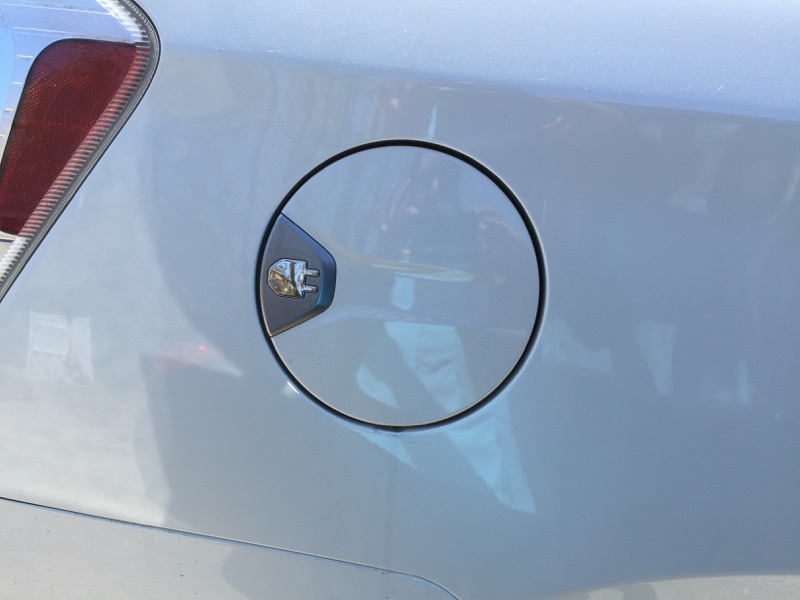
"First up, Toyota is recalling 141,000 Prius and Prius Prime vehicles from model years 23 to 26 over rear doors that could unexpectedly pop open due to faulty seats."
The Toyota Prius Prime is a special version of the Prius that can run on electricity alone for a while before using gasoline. This makes it even more efficient for short trips.
The Toyota Prius Prime is a plug-in hybrid version of the standard Prius, offering an electric-only driving range in addition to the hybrid capabilities. It combines the benefits of electric driving with the convenience of a gasoline engine.
"...equipped with starters made by supplier Valeo."
Valeo is a company that makes parts for cars, like starters that help the engine start. Many car brands use their parts in their vehicles.
Valeo is a global automotive supplier known for providing various components and systems to car manufacturers, including starters, electrical systems, and more. Their products are used in many vehicles worldwide.
"...the Toyota Supra, which shares the BMW's engine. And Stellantis, parent company to Jeep and Ram,..."
The Toyota Supra is a popular sports car known for being fast and fun to drive. It uses a similar engine to some BMW cars, which makes it even more exciting for car fans.
The Toyota Supra is a sports car that has gained a reputation for its performance and tuning potential. It shares a platform and engine with certain BMW models, which enhances its appeal among enthusiasts.
"The issue affects 10 BMW models, plus the Toyota Supra,..."
BMW is a famous car brand from Germany that makes luxury and sporty cars. They are known for their quality and performance.
BMW is a well-known German automotive brand that produces luxury vehicles and performance cars. The brand is recognized for its engineering excellence and sporty driving dynamics.
"And Stellantis, parent company to Jeep and Ram, is recalling over 450,000 pickup trucks..."
Stellantis is a big company that makes cars. It owns brands like Jeep and Ram, which are popular in the United States.
Stellantis is a multinational automotive manufacturer formed from the merger of Fiat Chrysler Automobiles and PSA Group. It owns several well-known brands, including Jeep, Ram, and Peugeot.
"...because of defective trailer tow modules. To see more recall alerts,..."
Trailer tow modules are parts in a vehicle that help manage the lights and brakes of a trailer when it's being towed. If they don't work right, it can be dangerous when towing something.
Trailer tow modules are electronic components that control the trailer's lighting and braking systems when connected to a vehicle. Defective modules can lead to safety issues when towing.
Nissan is a car company from Japan that makes many types of vehicles, including electric cars.
Nissan is a Japanese automotive manufacturer known for producing a wide range of vehicles, including sedans, SUVs, and electric cars like the Nissan Leaf.
CDJR is a group of car brands that includes Chrysler, Dodge, Jeep, and Ram, known for making different types of vehicles like cars and trucks.
CDJR stands for Chrysler, Dodge, Jeep, and Ram, which are automotive brands under the Stellantis umbrella. This group is known for producing a variety of vehicles, including sedans, SUVs, and trucks.
The Ford Escape is a small SUV made by Ford, designed for people who need a vehicle that can handle both city driving and some off-road conditions.
The Ford Escape is a compact SUV that has been in production since 2000. It is known for its practicality, fuel efficiency, and versatility, making it a popular choice among families and individuals.
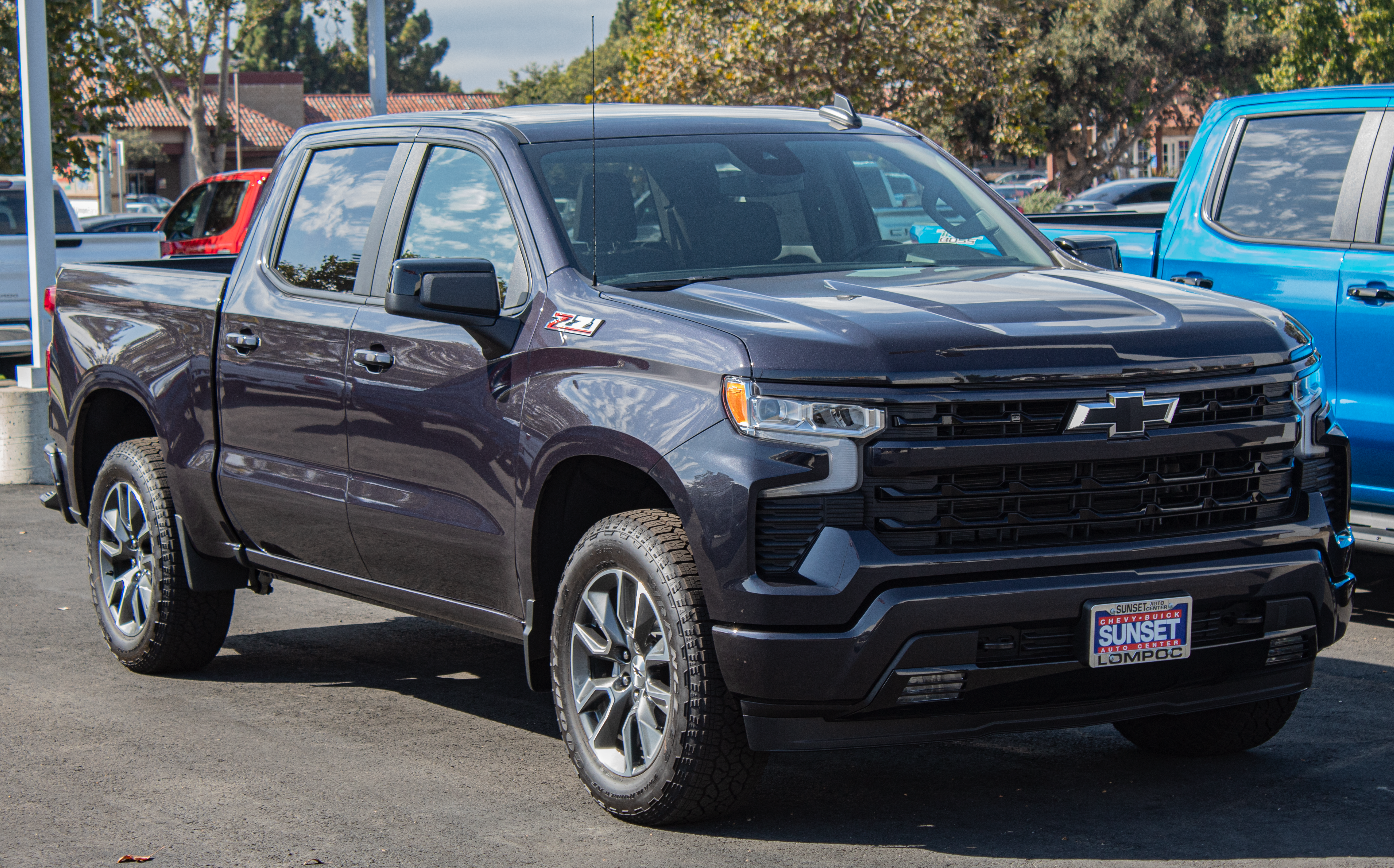
"... And then I was able to grab an allocation of 100 Silverados, which I'm getting a lot of messages like,"
The Chevrolet Silverado is a big truck that people use for carrying heavy loads and towing things like trailers. It's popular because it's tough and can be used for both work and everyday driving.
The Chevrolet Silverado is a full-size pickup truck known for its robust performance, versatility, and strong towing capabilities. It has been a popular choice among consumers for both work and personal use, making it a significant player in the truck market.
"with the upfitter and limited the amount of accessories... I committed to and then committed to a big pool of trucks."
An upfitter is someone who makes changes to a vehicle to add special features or equipment. This is often done for work trucks to make them more useful for specific jobs.
An upfitter is a company or individual that modifies vehicles to meet specific needs or requirements, often adding custom features or equipment. This is common in commercial vehicles where additional functionality is needed for various industries.
"That's a strategic smart decision by GM to control inventory production to help dealers be more profitable..."
Inventory production is about how many cars are made and kept for sale. Managing this well helps car dealers make more money by not having too many or too few cars.
Inventory production refers to the management and control of the number of vehicles produced and available for sale. Effective inventory management helps dealerships maintain profitability by ensuring they have the right amount of stock without overproducing.
"...when you traded in that 2014 CRV with 40,000 miles, I want you to imagine 40 people posting it on their feeds."
The Honda CR-V is a popular SUV that is known for being reliable and having a lot of space inside. The 2014 version is a good choice for families because it has many safety features and is easy to drive.
The Honda CR-V is a compact SUV known for its reliability, spacious interior, and fuel efficiency. The 2014 model features a comfortable ride and a variety of safety features, making it a popular choice among families.
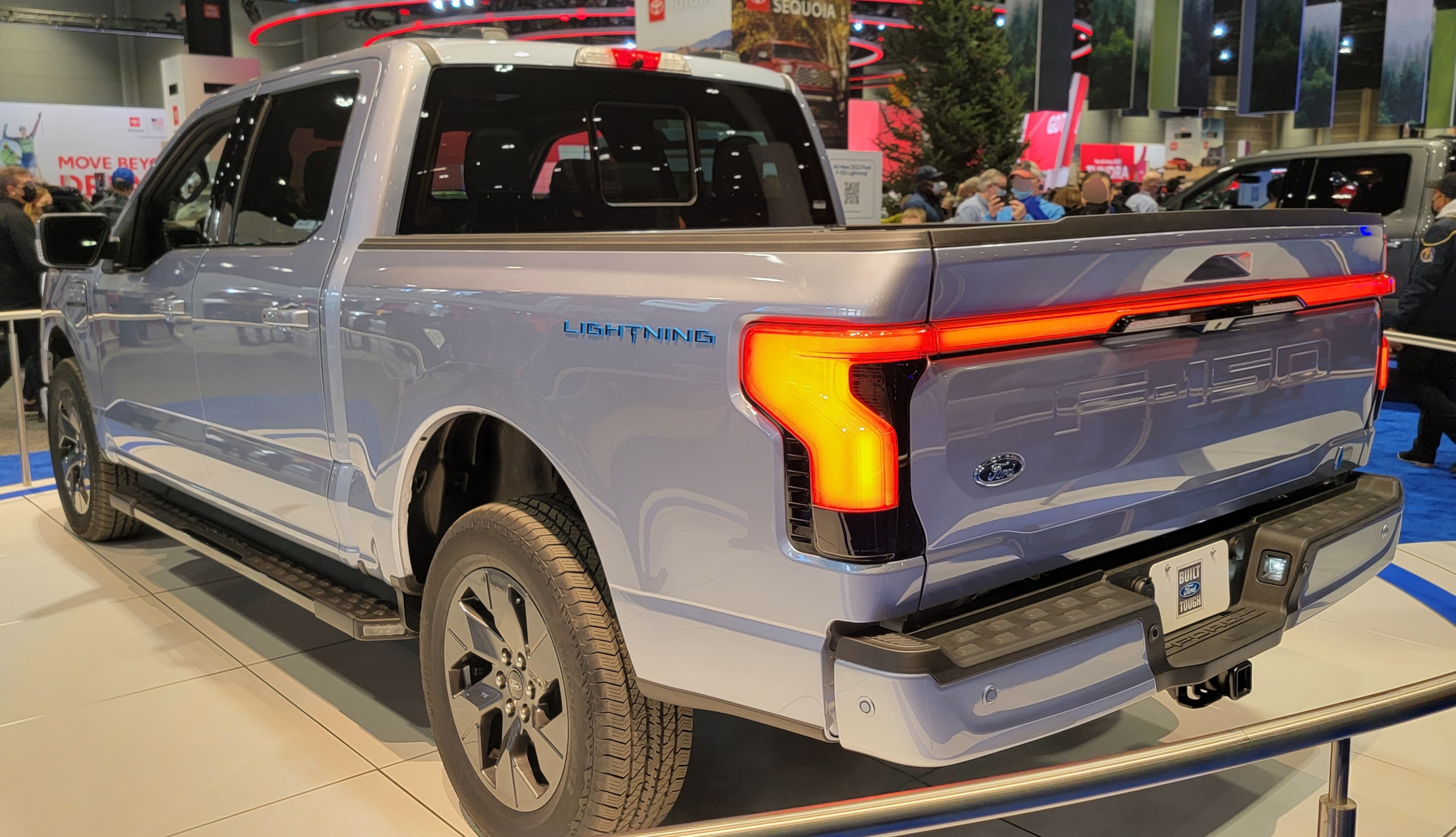
"...that 2021 F-150 sells really well in this market. So then we communicate that information with the buyers..."
The Ford F-150 is a large truck that many people use for work and everyday driving. The 2021 version has new features and different engine choices, which makes it a favorite for many buyers.
The Ford F-150 is a full-size pickup truck known for its durability and versatility. The 2021 model features advanced technology and a range of engine options, making it popular among both consumers and businesses.
"Well, you got to let us know if you got the semi truck. It'll be fascinating."
The Tesla Semi is a big electric truck that companies can use to transport goods. It's special because it doesn't use gas and is designed to save money on fuel and be better for the environment.
The Tesla Semi is an all-electric truck designed for freight transport, aiming to revolutionize the trucking industry with its impressive range and lower operating costs. It represents Tesla's expansion into commercial vehicles, showcasing their commitment to sustainable transport solutions.
"...Nissan, and Ferrari stores selling the same Honda Accord in your market. You're not going to get good repr..."
The Honda Accord is a family car that's known for being dependable and good on gas. It's roomy inside, which makes it comfortable for driving around town or on long trips.
The Honda Accord is a midsize sedan that has gained a reputation for its reliability, fuel efficiency, and spacious interior. It has consistently been one of the best-selling cars in the United States, making it a common choice for families and commuters.
"And when you put in the VIN and our agile vehicle analysis tool,..."
A VIN is like a car's ID number. It helps you find out important details about the car, like who made it and when.
VIN stands for Vehicle Identification Number, a unique code assigned to every vehicle. It serves as a fingerprint for the car, providing information about its make, model, year, and place of manufacture.
"...you will not get to your front gross average if you buy this car over and over again."
Front gross average is how much money a car dealership usually makes when they sell a car, before paying for things like rent and salaries. It's a way to measure how well they're doing.
Front gross average refers to the average profit a dealership makes on the sale of a vehicle before expenses. It's an important metric for dealerships to understand their profitability on car sales.
"...we can tell you the propensity to finance. You can count on 90% of the time..."
Propensity to finance means how likely people are to borrow money to buy a car instead of paying for it all at once. It's useful for dealerships to know this when selling cars.
Propensity to finance refers to the likelihood that a customer will choose to finance a vehicle rather than pay for it in full upfront. This metric helps dealerships understand customer behavior and tailor their sales strategies.
Select text to request an explanation
Hey, everybody, welcome back to another episode of The Daily Dealer Live.
I'm your host, Sam Dark.
Thanks for choosing to be here on this Wednesday, February 11th.
Hey, if you think used cars are just about pricing and retail execution,
today's episode might change your entire playbook in your dealership,
because the smartest operators right now aren't winning at retail,
they're winning at acquisition.
And this 2026 market, it's moving too fast,
capital is too expensive, an instinct alone doesn't cut it any more.
Or so goes the claim by some of our guests today.
Today, we've got a dealer principal reshaping a store around used car discipline,
a tech founder building the intelligence layer behind smarter inventory decisions,
and an owner already seeing results from that shift in real time.
If you're a dealer, a GM, or just trying to control turn, protect, gross,
and stop guessing today's episode is for you.
But, as usual, first up today's industry headlines.
First up today, Chinese automaker BYD is suing
the U.S. government over its tariff policy,
even though the company doesn't even sell passenger cars in America.
BYD filed the lawsuit in the U.S. court of international trade,
challenging President Trump's use of the International Emergency Economic Powers Act
to justify the levees' un-commercial vehicles,
batteries and energy storage systems and solar panels.
BYD argues the law was never written to authorize the tariffs in the first place.
Several small businesses and a dozen states have already challenged
the same authority in lower courts where judges ruled that the president overstepped.
For now, the issue is headed to the Supreme Court where justices from both sides of the aisle
have reportedly questioned whether IE EPA can legally support the broad tariff programs.
Depending on the rulings, tariff policy could swing in either direction,
either locking in higher landing costs or opening the door to cheaper components
and potentially more foreign brand competition.
Interesting news from BYD, particularly as we depart the NADA stage
where there was a lot of discussion about Chinese vehicles,
whether or not we'll see them and what the timing will be behind that.
We'll pull that thread during today's show.
Next up in the news today, new vehicle prices climbed again in January,
hitting a record for the month as incentives.
Well, they pulled back.
According to Cox Automotive, the average transaction price
for a new car reached 49,191 bucks.
That's up 1.9% year over year.
While the average MSRP rose to $51,288.
At the same time, incentive spending slipped to 6.5% of ATP.
That's down from 7.1% one year ago.
Cox says that product's mix continues to drive much of the story.
Compact SUVs averaged about $36,400, well below the industry overall,
while full-size pickups topped $70,000 for the fifth straight month
with more than $150,000 sold in January alone.
Meanwhile, true entry-level vehicles remained scarce,
fewer than 4,000 sub-camp packed cars were sold,
despite sticker prices under $26,000,
underscoring how little demand exists at the very bottom of the market.
What's the big picture here?
Well, affordability looks very different consumer to consumer,
while there are still options well below the average price.
Strong demand for large trucks and luxury SUVs
continues to pull overall pricing higher,
keeping the statistical floor elevated
even as budget-friendly models remain available.
And in news from the White House, the Environmental Protection Agency
under President Trump is on the verge of rolling back
one of the central pillars of federal climate regulation.
According to multiple reports, the EPA submitted a proposed rule
to rescind the Clean Air Act's endangerment finding,
which is essentially the scientific determination
that allows the government to regulate greenhouse gases.
The EPA initially called for cutting the measure in July of last year
as part of the President's efforts to expand oil,
natural gas and coal production.
In a statement, White House spokeswoman Caroline Levitt confirmed
that EPA Administrator Lee Zeldin
is expected to join President Trump at the White House
to formalize that decision on Thursday.
So far, the auto industry has been broadly,
but not entirely, enthusiastic about President Trump's plans.
The catch is that constant regulatory seesawing
makes vehicle development and product planning
a colossal ordeal to keep up with.
It's the question of what comes next
when you're trying to manufacture vehicles
a decade or at least five years down the road.
And last up today, we've got several recall alerts
from major OEMs affecting more than 670,000 vehicles.
First up, Toyota is recalling 141,000 Prius and Prius Prime vehicles
from model years 23 to 26 over rear doors
that could unexpectedly pop open due to faulty seats.
Next up, BMW is recalling more than 87,000 vehicles
from model years 21 to 24 equipped with starters
made by supplier Valeo.
The issue affects 10 BMW models, plus the Toyota Supra,
which shares the BMW's engine.
And Stellantis, parent company to Jeep and Ram,
is recalling over 450,000 pickup trucks
and SUVs from model 24 to 26, that's current year,
because of defective trailer tow modules.
To see more recall alerts, head over to the CDG Recall Tracker
powered by Busycar at cdgrecalls.com,
and that's our wrap on today's industry headlines.
And by the way, as always, we're streaming live
across all the CDG social media platforms.
Be sure to join us on those platforms, post your comments
into the comments section.
We love them.
They change the trajectory of the show.
They enrich in the conversations.
El Professor says, do you think CVNA has a unique data
advantage in acquiring vehicles at better prices
because of the Odessa business and because it buys 80%
of its vehicles from consumers?
That might be a pitch.
We'll see.
Might pull that thread through with a couple of our guests.
But coming up today first is a guest we've seen before
not on Daily Deal Alive, first appearance ever,
but on the pod and who we ran into at NADA,
Scott Simons dealer principal of Simon Chevrolet, GMC.
Scott, welcome to the show.
Hey, Sam.
Thank you so much for having me on.
It was great to see at NADA.
And yeah, I listened to the show.
Love what y'all guys are building.
You've got a fantastic team.
And yeah, man, what a NADA show.
It was wild, wasn't it?
NADA was amazing.
What's your take on like there were just more people there?
There was an intensity to engage particularly around AI
that was impressive.
What's something you took away from the week?
Well, Sam, I think it was pent up demand.
I think because remember last year,
a lot of people didn't get a chance to go
and a lot of vendors spent a lot of money
and about half the people showed up
is what they projected.
It was a great show for me.
I went there to go network and meet people in the GM world.
I got to meet with the president of General Motors North America,
the president of GM Financial,
got to go and meet people I never met before.
Spent a lot of time on the floor looking at different products.
Of course, buzzword, everybody talks about AI.
Even someone not doing AI says they're doing AI.
So you got to sort through all that.
But it was great to see everybody.
It was great to see you at the CDG party.
It was all.
It's interesting.
The head of GM, we had him on the show at NADA.
He talked about GM's discipline in production.
They said, hey, we're not going to oversupply
the market with vehicles.
And he said that has created a dealer environment
where dealers are more profitable
and General Motors itself is more profitable
than some of the other OEMs.
What's your take on that strategy
to constrain supply to meet demand
instead of oversupply,
which some of the other OEMs
have leaned into all too quickly after COVID?
I think we talked about that on the podcast that we did.
I was offered a Nissan CDJR Ford Volkswagen.
And I picked Chevrolet and I picked GMC.
And the reason why is some of the people
that say the values of new car franchise,
they'll say Toyota 1, Honda 2, Subaru 3, Kia 4.
Some people say Chevy GMC 4 and 5.
That goes back and forth.
Some people throw Hyundai up there.
But anyway, I chose Chevrolet GMC
because when I was CEO of the Weimar Automotive Group,
I got to see the financials of Ford.
I got to go into the stores and talk.
I got to see, you know, Ford's a great product.
You know, I would love to have a Ford store in the future.
But I got to see CDJR.
Ford's dealing with a lot of recall problems.
They just stopped the escape.
You know, that's that's the biggest market
out there, a sub-sport utility.
Then, you know, you go look at CDJR
and the issues that they're having.
So for me, based on the area, it was plain and simple to me.
I wanted to go after Chevrolet and GMC.
And I'm having to hustle to find inventory, both new and used.
I just bought 20 vehicles off of Chevrolet stores
because I'm trying to avoid brokers.
People say, Scott, how did you do that?
I did a LinkedIn post, did a Facebook post,
and then I used the power of my network.
And I would say, Sam, help a brother out, man.
You know, we've been friends for a long time.
Can you sell me five?
Well, five plus five plus five plus five is 20.
And then I was able to grab an allocation of 100 Silverados,
which I'm getting a lot of messages like,
how did you even do that?
So how did you do that?
That's kind of my little secret, Sam.
All right. That's fair.
Okay.
So it's it.
Go ahead. Share it.
You got it?
So because I know some of my competitors are listening,
but that's okay.
Okay.
I reached out to the upfitters and I negotiated a big deal
with the upfitter and limited the amount of accessories
I committed to and then committed to a big pool of trucks.
So they have a pool of trucks that they could sell
and I was able to negotiate a deal with the upfitter.
Very good. That's great.
And what a better place to be in to negotiate buying inventory
because you don't have enough than trying to get rid of stuff
that's been forced on you, right?
That's a strategic smart decision by GM to control inventory production
to help dealers be more profitable and with discipline inventory.
You know, I think they're building,
first of all, let's go back GM, you have a GM store.
Yeah. Oh yeah.
They're building a fantastic product.
They are.
The product that they're building Chevrolet, GMC,
top to bottom, they're building great product.
I truly believe in what they're wanting to accomplish.
So great product, great quality.
Yeah. Do we have to fight over inventory?
But I would rather have that than a Nissan store
that will shit me as many as I want to build
a Chrysler Dodge Jeep Ram store that I have so many
that everybody's cutting their throats.
So I'll dig a little bit harder to find inventory.
Like I just, before I got on, I did the locates myself.
I located two sold units and I'll look at the dealer's inventory.
This is a hack.
I'll look and see how much inventory they have
and say, Sam, if you got a lot of inventory,
I'll say, hey, Sam, I'm a new dealer.
Would you consider selling it to me?
If it's a small dealer, I know that I don't have
that much of a chance of getting you just to sell it to me
because you're in the same boat as I am.
Yeah.
And I just text them and say, hey, I'm a brand new dealer.
Look at my inventory.
This is my BAC.
Don't laugh at me and see if you'd help me.
So on the new, it's, you know,
and then same thing with used, you know, when we came here,
I knew nothing about this market.
Population of 5,000 people, county's got 50,000.
I came in and I really didn't even know,
I could assume, based on looking at the demographics,
that I needed to stock less expensive vehicles.
So, you know, how did I do that?
Not knowing a market.
So we want to, we want to come into that in just a second.
But before, before we go there,
because you have done something in the used market
that's truly extraordinary and we want to pull that thread
through as promised at the beginning of the show.
But a couple of questions leading up to it.
You're, this is your second time on the podcast,
first on Daily Dealer Live.
Before that, you were on our regular pod.
Your story, I think, connected with a lot of dealers out there.
Did you get any recognition feedback at any DA?
And why do you think that podcast,
it's one of my favorite to have recorded,
and I've gotten a lot of commentary on how vulnerable,
how authentic, how open you were and what you're trying to do
buying this dealership and creating a great team there.
Why do you think that connected so well
with the auto dealer community
and the audience watching this show?
Sam, I think sometimes me being speaking my mind
has got me in trouble.
Maybe in corporate places.
You're not alone, by the way.
Everybody gets in trouble every now and again.
Scott, it's not a bad thing.
Well, you know, and good thing about it is
right now I work for myself.
So I can't, you know, I can't, I can't fire myself.
You know, capital to one.
So I do believe it's kind of like paying it,
paying it forward.
I've been, I'm very fortunate.
I've got a fantastic team.
The auto industry has been amazing to me and my family.
I love the auto industry.
And I believe that when we've been favored
or that we've been blessed,
that we should be up front and honest.
And I said in there, Sam,
I couldn't walk around without people coming up
and saying, hey, I saw you on the podcast.
I don't know how many DMs I got,
which shows how popular your show
and what y'all guys are building is amazing.
Because I'm, you know, I try to respond
to every single one.
It was insane.
But I think people, sometimes they don't tell people
the harsh reality of opening up your first dealership,
buying a dealership, opening up a dealership in town
you don't know anybody.
It's very difficult.
And my point I wanted to get across to people is
if I could accomplish it, you can.
You can.
Secondly, watch what you wish for.
Yeah.
Because it's not all rainbows and unicorns, right?
I mean, there are challenges in this operation
that you're, this endeavor you're taking on.
And I think you inspired a lot of people.
You opened a frat house, right?
You lived with another bunch of guys for a period of time
as you got this thing up and running.
I think everybody was inspired by your story.
I still, I still, I still do.
You know, there's, there's, there's five guys
and we need some one, one cooks.
I don't really do anything.
I kind of eat the food when you're washing your clothes.
I'll throw my clothes in with you.
I was spoiled.
I'm a mama's boy and my wife spoiled me.
So it's, it's like, some people say
it's a seen-out land man,
but we don't have any women that live there.
No pretty women go run around and cook
and do stuff like that.
So anyway, it's, it's pretty good.
You guys are, you guys are struggling
to make it on your own.
And that is, I think a, it's an inspiration
to everybody that watches this.
So thanks for being on that pod.
I want to take you to a comment
that came up from Monday's show
and get your perspective on that.
Now let's dive into all things used cars.
Matt Bowers is a dealer that was on Monday's pod
and I asked him a question.
I said, hey, what set,
he talked about success he was having
in some of his stores.
He, and I said, what differentiates
the successful stores
from those that are struggling?
We'd love to get your perspective on this.
If the producers have it up,
I promise to text them
and I can't find out my text.
So Taylor, if you're ready on the clip,
would you show the clip now?
The operators I have that have
the most success, communicate the most.
When they struggle, they over communicate actually.
Ones that struggle, I have to go find them.
Like they disappear off the face of the earth.
True?
I've been thinking about this all night
and I can't think of anything more true
in life success between success and struggle, Scott.
Well, I think really good leaders communicate.
I think a lot of problems that we have
is a lack of communication.
I'm an over communicator.
I include people on emails
and they're like, why am I on here?
Because I want everybody to know
because I want people to not come up with the excuse
they didn't know.
No, you knew.
You just chose not to do it
and I'll go back and show you again.
But first of all, I think Matt's spot on
with a lot of things that he's obviously
been wildly successful.
I have a lot of respect for Matt.
Yes, the people when I have a day
where we just sold a couple of vehicles
and I've got one particular team member.
He'll come sit in my office
and he'll say, you know, I know we didn't sell
a whole lot of cars today,
but I want you to see all the hard work
you've put in and I want you to see
the appointments I'll put in tomorrow.
So he almost feels bad.
Now, there are people that I work with
that they won't even win it.
We've had a tough day.
They'll walk by my window
and not even make eye contact.
They won't look the other way,
hoping I don't see them, right?
So I do believe that one communication is key.
It's key to your success.
The lack of communication can ruin marriages,
businesses, it can let relationships
go south, go sour.
So I think that is,
I think Matt was spot on when it's times
or when it's a struggle right now.
And I think if you look at the industry,
I know for here, we have a good plan
for the second half of February,
but we got to dig.
We got to really, in February is a short month.
I mean, we got to have a big couple of weeks,
but we've got to.
And that's communication.
Those are conversations.
When we're talking about it,
we're thinking it through.
We're trying to figure out strategy.
We're overcoming problems real time.
For those that go into hiding,
you got to go find them.
And then you find out about the problem
at the end of the month
when you get the financial statement.
That's a big problem, Scott.
That is not a future leader of your company.
You want that person to come in and say,
hey, Sam, it's me and you talking.
Hey, Sam, take a look at what I'm doing.
What would you do differently?
I need some help.
I need some advice.
And that's when you may crank up some advertising.
You know what, Sam?
A good leader may look at you and say, Sam,
this is what all you're doing.
Continue to do what you're doing.
You're doing everything right.
It will turn.
It will turn.
Sometimes you just got to pick people up and say,
hey, you know what, Sam?
I believe in you.
And sometimes you got to kick them right in the rear end.
But the good ones are very...
I think what Matt was saying is,
the good ones are very self-aware
and they're looking for feedback
and they're not afraid of criticism.
Yeah.
And they work through it live and in real time.
So one last comment,
and then we'll transition into used cars.
What would you say?
Let's pretend your new car manager there, Scott,
is like, hey, you know what?
I have a problem.
I'm trying to work through it.
I know we're struggling a little bit,
but you know what?
Scott is so busy.
Like, he's busy cooking at the frat house.
I don't want to bother him with this problem.
How do you respond to the, you know,
he's too busy?
Yeah, I'm never too busy.
First customers have to come first.
Obviously, employees come before customers
because if your employees aren't taken care of,
they're not going to take care of your customers.
But nothing's more important
than that customer walks in the front of the door.
Yet another guest on that said,
customers should never open up the door.
Oh, I agree with that.
Yeah, that's so true.
Nothing's more important than the customer on the showroom,
the customer that's calling,
the customer that's emailing.
Now, I have an open door policy.
I'm literally sitting at Simon's Headquarters,
which is a joke.
It's only with some dealership,
in the showroom looking out.
And as before you got on,
we have a customer trying to trade a Kenworth.
Yeah, you're trying to buy a semi-drug.
What's up?
They're trying to trade it.
So I don't know, but we'll trade anything.
We'll trade goats, X-Wives,
we'll trade whatever you got.
We don't care if it's got value, we'll trade it.
But no, I think an effective leader
always should be approachable
and always should read the person.
Like right now, even my team's a little bit down.
We're not having the month.
We've got to really pick up our track.
Beating them up is not going to help anything.
It's not going to help anything.
I got to say, hey guys, we got a plan.
Like I'll give you an example.
We're doing a cap one mailer toward the third week
that will hit right during tax time.
I have two buyers out buying cars right now.
We have a plan.
And I guarantee you, we'll pull this month out.
So I've got to be the most positive person
whenever everybody else is a little bit down.
And when they're a little bit bragging a little bit,
say, wait a minute, look at this other dealer.
You know, we track where we are
and the other dealers are every single month,
every single day, actually, we know where they're at.
And say, you know, look at this dealer.
Look at this dealer.
Like our goal right now is to be the number one dealer
in tier three.
Once we do that, we're going to go up to tier two.
And then we're going to try to go out for tier one.
That's our goal.
I love it.
All right.
A lot of props online.
Ben, congratulations on the new store.
He says, Schwatt, team, Scott,
absolute legend in doing big things with his new store.
Lauren Klein, longtime listener who is also at NADA.
So much NADA this year.
Hard to keep it straight.
And then Paul Salisman chimes in and says,
a dealership is truly a team sport.
And that is true.
And that's why your housing situation is so much fun.
What a great way to bring everybody together
to kind of connect.
You're eating together.
You're working out together.
You're reminding each other it's time
to wake up in the morning.
Hopefully, you know, at the end of the day,
you guys are obviously continuing to crush it.
All right, Scott, you wrote in your intake form,
you said used cars are one of your biggest growth drivers
to February 2026.
What specifically changed in how you're running that used car
department that's turned it into this growth driver this year?
Well, you know, before saying when I was with a previous company,
I had five dealerships in one area.
And the dealerships could sell from each other.
You know, so if you were a salesperson at CDJR,
you could go sell at Honda.
So my plan there was new car volume, every new car.
I never looked at front gross really.
Just do the deal.
Do the deal.
Make it a customer long term vision for 14 years
and it worked really well.
We took every single deal we came with possibly good.
And then we would train all of our team
on how to post on social media.
So if you have 40 salespeople organically posting on social media,
when you traded in that 2014 CRV with 40,000 miles,
I want you to imagine 40 people posting it on their feeds.
It would sell before it ever made it to the lot.
It would sell before it got off of the service department.
So I was good at turning used cars,
but I've never really been good at acquisition.
Buy now fast forward buying a small store
that was losing money in an area I didn't know anybody.
You don't know the market.
Used cars market is important, right?
The way I'm going to be profitable used in service,
use the service, the engine that drives everything is new cars.
Nothing happens to a new car sold.
But if I got down to 16 Chevy's and seven GMC's
because I did 250% of my GMC number.
I have help coming, but it's not coming now.
That's why I had to call Mohawk Chevy and buy five.
I had to call Thornhill by five.
I had to call Bowman by five.
I had to call and you know, that takes a lot of work.
And so I can't fix that overnight.
So I have to.
I have to me as an operator.
I have to get better.
So then I started researching.
Of course, our tech stack is automate
because it was already here.
Then solutions, the auto.
So I said, well, you know, the auto is a great tool.
VQ is another one, but both great tools.
But I'm with the auto.
And I said, how do I get information on the market?
I don't know.
So I used agile auto where I was at before,
but I never really dove into the tool
because I had five traits.
I was the big dog in a,
I was a bigger fish in a smaller pond.
But now I'm in a small pond.
I'm a little fish right now.
So I really dove into what sells in this market?
What has sold?
What do I need to stock?
So then that's when I really dove into agile auto.
Like right now I've got two buyers out looking to buy cars
right now.
I don't have enough customer pay coming in
to buy through the lane.
And then I'm starting the process of creating a buying center.
Okay.
So that's our strategy.
And that's what I had to do.
I didn't have to do those things.
Now we worked a service lane before,
but right now I'm having to rely on auction purchases.
And we all know
That's the worst kind.
That is the last place you want to go
acquire a majority of your inventory.
So then what do I have to do?
Transit time.
Yeah.
So then I have to use,
which is the company that's really helped me
is agile auto.
Like today I could click one button,
one button right now,
and I could tell you
that I need to acquire,
to hit my number,
I need to acquire 12 used cars
and I need to sell three.
And it'll even tell me where I need to acquire them at.
So I need to buy so many at auction,
try to purchase on the service lane
and then acquire off the street.
So right now,
right now I'm having to rely on auction
and I'm trying to get off that.
I mean, I'm really trying to,
so that's what I'm focused on right now.
So this tool, this agile tool,
how does it bring,
like you're looking at a dashboard,
tell us the practical steps
that you engage with it
in that helps you understand
the locally used market,
how to buy, what to buy, when to buy.
It tells my two buyers that are out there,
it'll tell them,
these are the top 10
that sell in this market.
And then it also shows me my data also.
So it'll say that that 2021 F-150
sells really well in this market.
So then we communicate that information
with the buyers
and then they're out looking.
And then of course the team knows about it too.
So when we go to trade something,
but right now when you come on the sales floor,
we're going to do all we can just to do a deal.
I mean, regardless of front gross,
I'll go negative
to get a customer and to do that front deal.
If my back end gain
is equivalent to my front end loss,
roll the car.
Roll it.
Even if they're going to charge back products,
roll the car.
I'll go get more.
If I sell it on the asphalt, that'll be fine.
Now that's different than used.
So my strategy
right now is I had to rely on agile
and I still will,
but I need to get the buying center up,
which I'm working on,
you know, David Long
and there's some other people,
David's a good friend of mine,
you know, that I'm going to talk to.
He's been on the show.
And then we also just signed on with KBB
to be buying center.
So I'm reacting to it,
but I've had to rely on
the data that I get from agile
and then what sells in the market.
And then I have buyers out going
and taking a look at those.
But I know every day
what we need to acquire.
So you've talked about
what your growth in that used car department
from acquisition months ago, right?
You've been in business now what?
Six months, maybe?
No, no, no, no.
Last month was my second full month.
That's crazy.
That seems like so long ago.
Okay.
All right.
Trust me.
Some days it feels like it was years ago.
So you sold how many used cars
first month and then how many used cars?
The previous dealer was selling
only 16.
Then we went to 24
and then now we're at 38.
We're tracking.
We should do about 50, 55 this month.
So you've ramped it up.
I believe we can do 100
fairly soon.
I don't see why not.
But I've got to go and
there's some things that I need to do.
Like first I had to
just evaluate what I had
and kind of just, you know, get
things like I had to go from
four texts to now seven texts.
We've got a great team
and we're adding to the team.
So I had to basically,
Sam, I was basically starting
with a brand new store like brand new.
Yeah.
I remember from the interview
anybody that wants to go back
and watch it.
You can search for him.
It's interesting, you know,
what is as a new operator
in a new store,
what is your north star
for success right now?
Is it profitability?
Are you profitable?
Is it growing the right team?
Is it getting market pen?
What in this first, let's say,
six months, what is success to
Scott and Simon Chevrolet?
Well, right now, my wife looked
and said, you haven't made money
the first two months.
You don't get a paycheck.
What did you do?
Why did you do this?
Remind me again?
Just kidding, you know.
We didn't make money
the first two months.
We did the third month.
My goal is this,
build a team,
build a culture,
get everybody on the same page.
New car penetration is extremely
important to us.
CSI and then profitability
because our goal
is to take care of this community.
You know, we just sponsored
the baseball team.
We're doing the grassroots things
which GM does have
a lot of great programs for that.
So we're getting involved in the community.
We're training our team.
And then, you know, we'll start
putting on the KBB Buy Center
and we'll start growing.
And then our goal will be
start looking for another store.
I have a team here.
I've got four people that would
like to be GMs.
That, you know, I've got to expand
for that to happen.
But right now it's the tech.
Sam, it's the tackling and blocking.
Like it truly is just tackling and blocking.
So it's so it's
so the thing that went into my mind
when he said an additional store
so quickly.
I thought there's another frat house
going.
You're going to get another
living situation.
My room there.
Yeah.
So that could happen.
So so so growth is part of that north
star.
I think a lot of people watching
have just been inspired.
What is one thing as we wrap up
here?
And thank you so much for being
generous with your time.
You're super busy.
Well, you got to let us know
if you got the semi truck.
It'll be fascinating.
But we're going to train one.
What's one thing that could
is it?
Yeah, very good.
Live live live on the show floor.
There's Simon Chevrolet GMC.
What's one thing that concerns you
most about the next six months
in the business as we get started
here in 2026?
And how are you looking to overcome
that challenge?
Last question.
Yeah, I've got to make long term
decisions.
I'm a very impatient person.
I'm highly competitive.
And so is our team.
And I've just got to make.
I've just got to remind myself.
We just started.
And that this is a long term plan.
And I can't make a bad decision,
short term decision.
So no matter how bad I would like
to grow, I've got to make sure that
I take care of this team
and set the right foundation.
And that's a responsibility that
that's on me.
And, you know, when we win,
I have a great team.
And when we have a tough month,
it's on me.
You know, so it's been a lot of
fun if it, you know,
people have reached out to me
before I try to get back to as
many people as I humanly
possibly can.
This is like a dream come true
for me, Sam.
But it is hard work.
We leave before 30.
We don't get home till eight
o'clock at night.
Surround yourself with amazing
people.
And I tell you, props on the
journey.
I think all the auto industry
is is rooting for you.
I was like, I saw you at
NAD on the floor high five
when you said, Hey, we're
profitable.
It's like, it's exciting to
see someone that that is
having an impact on this
industry having success.
The Wymer one says can
confirm Scott is an elite
over a communicator.
By far the biggest takeaway I
gained from his time with our
group was the power of
constant, clear communication
and dance.
He says that's a lot of volume
coming out of Whiteville,
North Carolina.
So Scott Simons deal
principle.
Simon Chevrolet, thank you so
much for being on the show
and we need you back for
another touch point.
Thank you for being gracious
with your time today.
Thank you.
Thank you, Sam.
Appreciate y'all.
I tell you, it's conversations
like that with dealer operators
that just get you excited to be
in this industry.
The American dream and
automotive continues to be
alive and well.
Let's talk about today's
episode, which is brought to
you by Four Eyes.
Four Eyes helps dealers turn
data into action starting
with a clean, connected
data foundation across
dealerships systems.
Four Eyes empowers
dealerships to use that data
to drive consistent execution
throughout their business.
The data stays dealer-owned,
vendor-neutral and works with
any tool or partners.
More than a CDP,
Four Eyes is a reset for how
dealers data gets put to work.
Headquartered in Oregon,
Four Eyes employees live
in 20 plus states to be
closer to the communities
where dealers are.
Visit them at FourEyes.io
forward slash to learn more.
Props to Four Eyes for
supporting today's content,
including that incredible
conversation with Scott
about his success,
brand new dealer operator,
and it's fun to see him
winning in so many unique
and interesting ways,
particularly in used cars
in a tough, challenging
used car environment.
Props to Four Eyes,
thanks for supporting today's
show.
Let's, without further
due, transition to our next
guest, John Ellis,
CEO of Agile Auto.
Scott paid you guys props
at the opening of the show.
John, welcome to the
Card dealership guide,
Daily Dealer Live Show.
Thanks.
Just excited to be here.
Yeah, so you heard Scott
talk about the impact.
You know, he's in a brand new
marketplace,
not selling a ton of used cars.
He's got to understand
the vehicles to acquire
that make most sense
in his marketplace.
And given that huge increase
in used inventory,
or used car sales,
granted, it's a small quantity,
but huge for his store
and marketplace.
That's a big,
that's a big increase.
So what would you say
is driving that growth the
most at stores like his
from your perspective,
Agile Auto?
Yeah, thanks for the question.
It's a great one
because it's,
it's why we founded
Agile Auto,
focusing and prioritization
on acquisition before retail.
And so that was the key
to his success
from the beginning,
as we know,
Scott's been an amazing
number one in his market
and brand
new car seller,
but getting to that
used car volume
in a market like his
and, you know,
most markets in our country,
especially post COVID,
requires focused
attention on an acquisition
first, retail second.
Yeah, that's interesting.
You talk in your notes,
the intake notes,
you say, quote,
no more dashboards,
real decisions.
So what does that look like
actually at 730 AM
for that used car manager
looking to make those purchases,
right?
Yeah, that's a great question.
We try to simplify things.
You know, early on,
we had great strategic advisors
like Bob Hollinted
and a former Marine with his
myself.
He's been so kind to us.
Ed French,
I can name many that said
keep it simple, stupid.
You want to make sure
that the operators
can get going right away.
So our platform,
albeit at layers
on top of the IMS and DMS,
and bubbles up some really
gold nugget
intelligent pieces
to run the acquisition
to retail side of the
business and use cars.
We call it a use car
manager playbook.
We don't want it
to be a dashboard.
We don't want it
to be something
you have to look at every day.
It is literally just a score
card that's live.
So you can pace your success.
But what we deliver in the morning
at 7.30 a.m. is a playbook.
Do this and this and this
and you'll get back on track
and you'll be able to
get back to 100% pacing.
If you're at 100% pacing,
we're going to push you
to go over your goal.
But you have to look
at the acquisition first
and that's where we start.
And so this system
that provides this playbook,
what data points is it
pulling in to help create
this playbook
for an individual dealer point?
What's it?
What's it calculating?
So it's very unique.
So if you think about it
in how I'm going to explain it,
it's your IMS, your DMS
and our local market intelligence
smashed into one.
And we take all that data
and we run it
through our patented proprietary
algorithms and LLM models
built with 100 years of experience.
You've talked to Scott
and JR and many others
that their minds are in this.
How do we run these tight
productive use car operations?
What do we pay attention to?
And we've got NAD,
AKPI fundamentals
in there for the departments.
We measure against them.
So once we bring this data together,
we don't just report on the data,
what you did and where you are,
which most BI tools,
to data rails, many others.
Yeah, that's backward-looking, right?
Yeah.
You got to go fix something
you did in the past.
Our algorithms watch
a weighted sales forecast
and the market
looking at your inventory inflows
in the process
of how they're leaving the store
and profitability in turn
and determine what levers
need to be pulled
to maximize tomorrow.
And that's what the
virtual performance coach does.
It builds that daily action plan.
This is what you need to do,
use car operator
to get back on track
or to get tomorrow
even greater than today.
So give me an example,
February 2026, John,
of a plan
that a use car manager
might wake up to at 7 a.m.
If when they log into the system
using all these different data
points and then embedding AI into it.
Well, that's a great question.
So like I'll give you,
I don't think Scott will mind me
sharing because it's not
proprietary data.
Scott's 20% behind in his
inventory because he had such a
tremendous January
and he had a really good December.
So his plan is
he needs to acquire 12 cars today.
He needs to sell three cars today
and he needs to net $7,061 in revenue.
If he does those three things today,
he will be at 100% inventory balance.
He'll be at 100% unit pacing
and he'll be at 100% revenue outlook
pacing for the month.
Of course, he has to continue that
every day,
but it gets easier and easier
as you catch up.
The way we focus on that for an
operator is when I walk in the morning,
our operators no longer look at the
CRM first.
They look at Agile and they go,
okay, my look to book ratio is this.
My appointment to close ratio is this.
So Agile is telling me I need
35 appraisals today.
I need seven appointments
and I need to average a 2354 PBR.
They get that email at seven during
the morning and all of our
use car managers that are active
in the platform,
send this out to the team.
Guys, this is our plan for today.
Let's don't shut out the lights till we
meet this goal.
We call that aim small, miss small,
and our operators are performing at
over 100%
because what do the use car managers
tell me?
They say,
I didn't know what I was.
I just knew I was supposed to sell
everything I could
and make all the money I can.
And Agile Auto keeps me on track
every day
from what my owner,
my GM has said is my goal.
So, John, you talk about
intelligence over instinct.
Contrast that to what a
traditional use car manager
might do
or a traditional team might do
at 7 a.m. that could
unintentionally,
because they're well intentioned,
might cause the store harm
in their acquisition strategy,
not having that data.
Yeah, I think that's a great question
because when you're behind the eight
ball, we panic.
Yes.
So the virtual performance coach
measures your success by day.
It's the elephant at one bite at a time.
So nobody panics.
Without it, what do we do?
We need 20 cars today.
Well, that's what we fix with Agile.
Our patented optimal inventory monitor
that builds a dealer's buy plan every day
keeps you from selling 20
and then going to buy 20.
Yeah, what's wrong with that strategy though?
That's a common strategy.
Buy, sell 40, you go buy 40.
What's wrong with that?
You said it at the opening.
The post COVID hypersensitive market
based on levers that dealer
doesn't get to participate anymore.
Unemployment, interest rates,
all the things that have just changed
our supply side of COVID
and used cars
that in any moment
the price had dropped
and go like this.
We don't want to play that roller coaster game
in acquisitions.
So our buy plan allows the dealer
to buy like a tortoise, not a hare.
The tortoise always beats the hare.
If you'll follow this weighted sales forecast
optimal inventory monitor
that builds this plan
and continue to buy even to slow,
but we stop buying when it's slow.
That's a mistake.
We're buying to a weighted sales outcome.
We're not buying to today's outcome.
And if it gets too fast,
we know to pick up the pace a little bit.
I'm never bulk buying and bulk selling.
That's where the dealers have gotten hurt,
even in COVID.
I know dealers that made
inorganic profits
and then lost inorganic losses
because the COVID did this.
Well, guess what?
The roller coaster's still there.
And according to JD Power and Black Book,
it's going to be here past 2030.
It's going to take a while for us
to balance that inventory load
out in the youth car market.
So longtime listener
and poster in the show Yoga Cars
who we also saw at NADA, by the way,
Props Yoga Cars.
Thanks for being here.
Asking the question,
does Agile deliver leads to buy cars?
Or does Agile give you a plan?
What does that look like?
That's a great question.
So Agile Auto does three things.
We build an optimal inventory buy plan.
We build a dealer
and market specific intelligent vehicle buy list.
And then we build a channel productivity list
to know where to focus first.
So look,
new car trades are not the number one
profitable trade anymore.
At least they haven't been when people have traded
their 12 and 13 year old car in for that new.
So you have to measure
what your most profitable channel is
and then you have to measure
how much inventory you need
so you know how to focus.
And then finally,
our preferred vehicle buy list
looks at all of your historical sales
and then measures the last 120.
Then it looks at the market
and what it's selling
and it marries them together
to build a preferred buy list
for that specific name plate,
that specific market
and all the way down to the store.
We sell Subaru's better than we sell Mazda's, right?
So once you know what my most valuable
at commodity is in a used vehicle,
you can continue to rebuild that buy plan
and then we're going to bring the market in
and say, don't forget this,
this is selling it.
If you're interested by this
and it's a very digitally savvy buy list
that they export
and then they give it to their
service drive manager.
They give it to their desk manager.
Everybody's an army of acquisition specialist.
That has increased direct and consumer
acquisitions by 20%
because you are now comfortable as a salesperson
or as someone in the service drive to go,
oh, I know this is a good car for my store.
Oh, and it says it's great in the market.
So I'm comfortable bringing it to my manager
and saying, I've got one on the list.
You might want to take a look at this.
So I want to go to two questions.
Scott talked about building a buy center.
I do eventually want to ask
how this product differs
from a lot of other stuff in the market
because there are products
that will deliver vehicles sold
and how popular certain vehicles are in the market.
But before we go to that,
Scott talked about how
he's had enough success in used cars.
He sees the need for a buy center.
So he's going to start to do this.
Is the buy center a recommended strategy
with a tool like yours?
And how does building that buy center
look like with this sort of data?
Yeah, it's fantastic.
So we're integrated with BenQ.
We're vendor agnostic.
Every one of our dealers has a DMS and IMS.
We just give them the access to data
they don't have there using our proprietary algorithms.
But if you think about
how to use this with those vendor tools,
so with a KBBICO buy center,
for example, or BenQ's Virtual Buying Center,
their managers bubble up
this preferred vehicle buy list
to be the inventory they know they can step up on.
The one thing about our preferred vehicle buy list is
in a difference.
It's why the BenQ wanted it.
It's why other legacy tools miss it.
We don't look at the Toyota, Honda, Nissan, and Ferrari
stores selling the same Honda Accord in your market.
You're not going to get good representative data
because their front grocers are going to be different.
Their turns are going to be different.
What they pay for the car is going to be different.
So they're net to sales.
We look at what you do well
and does what you do well
in the next acquisition match that
and does it match the stores dynamic?
So you know your front gross, back gross turn,
they supply and the inventory volume
that you have on lot.
And when you put in the VIN
and our agile vehicle analysis tool,
it tells you, hey, this Honda Accord,
it does not match the store's goals.
You can still buy it,
but know that you will not get to your front gross average
if you buy this car over and over again.
Or we can tell you the propensity to finance.
You can count on 90% of the time
this vehicle finances in your store.
And those are indicators that no one else has
and all that's built in that preferred vehicle by list.
Online question, Robert Marchione says,
is agile built for used car managers at franchises
or can an independent dealer from profit
from a technology like that?
Yeah, we have a lot of independence on.
Look, independence go by gut more than franchise dealers
because they own their inventory.
They touch it every day.
It's personal and franchise dealers.
I'm not saying it's not personal,
but there's so much else going on.
We have found that even that's a more of Achilles
healed for independence.
So we really act as bumper guards on the bowling alley
to make sure they can step up on a car
or maybe this is a velocity car
that we need to price correctly right away.
So what do you say to a used car manager
listening to the show right now
who's of that been buying cars for a long time
is feeling a little bit of the pressure
because of the market.
It's changed so quickly.
All the reasons we listed at the top of the show
but says, you know, if I have all this data AI driven,
I'm just one step away
from being run out of the dealership altogether.
It takes away the art of me as a used car manager
making wise decisions, buying used cars.
That's what I'm paid for after all.
Is this a threat to my job
or is this type of data an enhancement
to things I already know?
Yeah, you know, I think it takes gut.
That's why we study your sales data
and the market data
but it's still your preferred vehicle by list.
I'll give you an example.
The market may be selling something very well
but it's just not traditionally a piece
that we want in our store.
So dealers do make that final decision
but it gives them that secondary,
that second opinion.
Think about our correlate
by an inventory like heart surgery.
It can be that detrimental
if you buy the wrong stuff
and so don't we want to have a second doctor's opinion
before we go in and have surgery?
Well, we can give you that second opinion
in less than five seconds
which enhances the legacy vehicle appraisal tool
that you use with different data
than they get supplied.
So I would say if anything,
it gives that used car manager
the confidence they need to sprint.
We're right now, we kind of jog,
we're worried about, oh, I'll make a mistake here,
I'll make a mistake here.
We're going to keep you in the guard rails
to allow you to sprint to your success model.
Interesting, very cool.
Well, John Ellis, CEO of Agile Auto.
I may have to reach out to you
to see you a little bit about a demo at some point.
So appreciate your perspectives
and sharing this technology on the show.
Thanks for being here.
Thank you, Sam.
Yeah, I appreciate it.
That's a fascinating technology,
being able to have kind of a game plan
as you go into the day about,
instead of just the old buy 20, replace 20
or sell 20, buy 20,
just a real detailed game plan.
Excited to see how that looks in practicality.
Next up today, JR Toothman, owner of Toothman Ford,
Toothman Ford and Sewers Ford.
Welcome on the show.
How are you, Sam?
How are you doing today?
JR, welcome.
You've been on before.
Thanks for coming back.
I'm a veteran.
Yes, you are.
Yes, you are.
Well, since we last talked to you a little bit,
tell our audience who you are, what you do,
and how the heck is biz in February 11th of 2026.
Yeah, my name is JR Toothman.
I own Toothman Ford in Grafton, West Virginia,
and Toothman and Sowers Ford in Fairmont, West Virginia.
February is off to a kind of a strange start.
January was very challenging at the end of the month,
based on the fact of challenging weather conditions.
Yeah, we saw that too.
But overall, a solid month.
We're starting to see a little bit of tax infusion
moving into the market this month,
which is encouraging.
But just regardless of the day, time of year,
that type of thing, we kind of roll forward
with moving a lot of used car metal.
Yeah, we want to get into used cars.
You're a member of CDG Circles.
Tell us a little bit about that.
What's your experience been there?
And any insights gleaned as a member
that's helped you in the business day to day?
I'm actually in one of the groups
that has some of the most powerful minds
in the automotive industry in that group.
So it is very humbling for me
because I sit back kind of like a wall flower
a lot of times and listen to high level issues
and just kind of pick people's brains
and try to throw in some insight every once in a while.
But sometimes I don't want to be
the person that opens my mouth
and exposes my ignorance
based on all the experience in that room.
You know, it can be intimidating,
but as you learn things,
I think one of the difference makers
in automotive to different industries
is our speed to execution.
And it does seem those conversation groups
rather than having to go to NADA
and talk once a year
or having to go monthly to a 20 group,
you can actually talk over issues real time
and then the elite operators execute quickly.
And then as Scott talked from Matt Bauer's comment
last show, we communicate a lot.
It's been fun for me to be a part of the group
that I'm in as well JR.
So let's talk used cars.
You heard, I know you use Agile as well.
You shared that in the intake form.
You heard Agile and both Scott talk about
today used car acquisition
isn't about selling 40 and buying 40.
You've had success with a different metric.
Talk to us a little bit
about your used car acquisition process
and this challenging February 2026 market.
Well, you have to be ahead of the market
for years.
We've been performing at a fairly high level
in a small market town of 3000.
Typically we'll sell 170 to 180 used.
My other location will sell another 100, 120.
So between the two locations
we're selling about 300 used a month.
So acquisition is the light blood of the organization.
And that's where it all starts.
And that's basically I had been going
through the roller coaster effect in the past
of having a great month
and then being depleted of inventory
and facing the challenges.
Yeah.
And that's where John and I kind of came together.
He's a trained economist.
And we were kind of looking at market insights
that type of thing.
And we quickly realized
you're never going to get off this train
as long as you're acquiring sporadically like that.
You need a plan to do it consistently,
daily, weekly, as opposed to just,
hey, we're in need of vehicles.
Let's go buy 40.
Because then you're asking for trouble
by doing that in bulk anyway.
So you have some ownership interest in agile.
Just full disclosure to everybody out there.
What the need for you to create this was roller coaster
and what advantage does that data delivered up via AI
give you in the marketplace
that allows you to more evenly
and more profitably acquire cars?
Because we've talked a lot on this show.
We've talked a lot about
where do you find that perfect used car,
service drive, customer trading.
That's obvious.
We go to the curb.
We've never really talked about
like the overall strategy and the acquisition,
the timing and the types of vehicles.
How does this allow you to do that differently?
Well, I think we're bringing,
it's truly called an intelligence platform
because we're taking your IMS and your DMS
and kind of layering on top of that
in addition to market data.
So a lot of times,
you can't just look at your past data
to see where you want to go in the future
because you might be missing some growth opportunities
if you don't inject that market data
because your competitor down the street
or even in a different part of the state
could be doing really well with something else
and you have a blind spot to that.
But now with our market data,
we can look at that and use those as growth opportunities.
But in the past, to use a sports analogy,
we can also watch our game film
and see where we have been very successful
and done well with
and where we've made missteps
and to avoid those missteps going forward.
And the thing is, when you're dealing with 300
used vehicles a month,
your mind and your gut might tell you certain things
but once you get into the hard data,
you realize a lot of times you can get lead astray.
So are we officially entering
this intelligence era of used cars
where the gut is just gone?
And obviously, I'd argue yes.
I asked John the question before,
if I'm a used car manager watching this
and all these different tools are coming at me,
does it depreciate my value as a good used car manager?
Is it just to enhance my ability
to go out and make the right acquisitions
right time profitably?
I think both.
I think if you're a sports guy,
you've seen how analytics
have been injected into the NFL
and to major like baseball.
And that doesn't take away a good manager
because their gut is still going to be
the other variety and factor to make those decisions.
But now they have a full encyclopedia of knowledge
to make those decisions off of.
And I think this is exactly the same thing.
Your gut is still always going to be very important
but I want to make that gut decision
with the best possible data available
to me at that particular time
to make the most educated choice
because basically the way I'm not a car person
that loves horsepower and loves different things.
To me, they're widgets and I'm an investor
and I am trying to move that investment
as quickly and as most profitably as possible.
All right.
Let's lightening around
because we've got just a couple minutes left.
One acquisition rule
every GM should adopt immediately in January, 2026.
Oh, that's a tough one.
You need to know your most profitable source
which seems elementary
but a lot of times people look at all of them the same
that you need to know what your most profitable source is
whether it be a trade
whether it be an acquisition
straight from the consumer that type of thing.
Everybody's pretty clear
that the auction is not going to be that
but you need to know that
that way you can make educated decisions on that as well.
Two more.
What's one inventory metric that you obsess over JR?
Not so much an inventory metric but a pricing metric.
I'm still old school with Dale Pollock
about tracking my VDPs obsessively
to see where I think something maybe need tweaked
if it's not getting enough engagement.
How often do you update pricing in January of 2026?
I do it every six to seven days.
Well, I keep an eye on them in between times
and based on changes in the market that type of thing
but I think that people that do it every day
a lot of time with a lag in syndication
sometimes you're teasing yourself.
And then finally, what's one sacred cow
and used cars that needs to die that has existed
that needs to go away?
A belief that we've all believed in automotive?
Excuse my French but every there's an ass for every seat because
there's not.
We need to look at these vehicles as investments
and to turn them quickly and as most
at the profitable point and to do that in the most efficient manner.
Quick data point as we exit out.
Toothman Ford's used inventory sells in 26 days
versus the market's 44.
This according to lot GPT props to lot GPT
and lot links for providing the data
but great accomplishment for you being so far under days.
Do you attribute part of that to your discipline
and acquisition and having a strategic plan?
Yeah, 100%.
I mean, we have a plan at the beginning of every day.
Every morning I wake up to my GM
and my sales manager sending out our agile report saying,
today we need to sell nine.
We need to acquire X amount of vehicles.
We need to produce X amount of gross.
I got an ass because I'd love to see it.
Will you Ford me yours?
I promise I won't share it to anybody.
I'd just be curious to see the actual format.
And maybe if somebody's comfortable,
maybe we could put in the show notes a link
to an actual example of a report
because that is an interesting way.
And then how does that differentiate?
Ask John this a little bit from some of the other data
that you can collect from other places
that will show, hey, popular vehicles in the market
and all that.
Why isn't that enough?
Why do you need this plan created by AI?
Well, the plan is what Ed French was telling us
is like, hey, we're talking at a really high level here
with a lot of things.
And he goes, you wouldn't realize how many dealers
I consult with or talk to on a daily basis.
If I go ask their used car manager,
what type of production do we need today?
And they're like, well, we need to sell cars.
But they don't have a structured plan.
They don't have a plan.
Yeah.
No.
And so they're just kind of working backwards.
So this gives a very structured, finite plan
of what we need to do.
Our team feels really good about it at the end of the day
if they hit that number
because they feel like we've done what we set out to do today.
If we surpass it, that's great too.
If we don't, we don't make a huge deal about it
because we know we get back to work tomorrow,
but we know we got to catch up.
JR, at some point, we need to have you back
because one of the areas you filled out in the intake
is F&I profitability.
That's a whole different area.
But as we wrap up, I lied.
I've got one.
Would you say now, thinking about the different roles
in the dealership, use car manager and use vehicle
acquisition, F&I, fixed ops.
What's the most important or critical key role
in February of 2026 for you and your dealer group?
Is it acquiring that used car?
Is it executing on F&I?
Is it service?
Everything with the way we build our operations starts with acquisition
because when we acquire a used car,
we've created a service and parts opportunity.
We've created a sales opportunity
and we've created an F&I opportunity.
So that is the most critical piece of our business.
Probably not just in February,
but March, April, May, June, July,
because everything, nothing occurs until a vehicle
is acquired and brought into the dealership.
JR Toothman, owner, Toothman Ford,
also part owner, Agile Auto.
Thanks to you so much for being on the show,
sharing your perspectives on all things used vehicle
acquisition and the success that you've had
in that space, utilizing data to make better decisions.
Thank you.
Thank you, Sam.
Appreciate it.
Props to JR on the entire team.
Paul Salisman says,
eventually there is a but for the seat,
but 200 days is an ideal.
A birthday also is not ideal in used automotive.
Paul, thanks for that comment.
And then Mark asks, does Agile pull in MMR data?
Maybe JR or John or one of the other teams
can quote that.
And then Corey McMillan says, use Agile every day.
So fun conversation today.
Props to Scott on his success, JR on his success
and the different dealers
that are willing to come on this show
be so vulnerable, transparent
with what they're challenged with
and where they're winning in this marketplace
in January of 2020, or February of 2026.
And to you, our daily dealer live listening audience,
thank you so much for being here today,
watching Daily Deal Live
where we break down the biggest moves
in the car business as they happen.
Don't forget, we are here every Monday,
Wednesday, Friday, 1 p.m. Eastern.
We'll be back Friday.
So if this is your world hit like,
hit subscribe, turn on those notifications
so you never ever miss a beat.
And we'll see you next episode.
Thanks for being here, everybody.
Request an explanation for:
9 cars
Scroll for more
9 cars featured
Request an Explanation
Heard something you'd like explained? We'll add it to this episode.
Sign in to request explanations for terms you heard.
Want to learn more?
Browse our glossary for plain-English explanations of automotive terms, jargon, and concepts.
See something that's not quite right? Our annotations are AI-generated and can sometimes miss the mark.
Click the flag icon on any annotation to suggest a correction.