Slate's $25,000 electric pickup, Polestar banned from US, Tesla FSD crash, and more
Electrek
Slate's $25,000 electric pickup, Polestar banned from US, Tesla FSD crash, and moreElectrek · Jun 26, 2026
Annotations will appear as you listen
0:00
44:43
Car
Slate pickup
A new, very cheap electric truck that costs $25,000. It is designed to be simple and basic, without fancy screens or power windows, focusing on getting the job done.
A basic electric car that a traditional car company builds only because the government forces them to sell a certain number of zero-emission vehicles, rather than because they actually want to make a great EV.
A premium software feature for Tesla cars that can steer, accelerate, and brake on city streets, but still requires the driver to pay attention and take over at any second.
A system that connects many home solar batteries together so they can act like one big power plant, sending electricity back to the main power grid when demand is high.
A type of electric car battery that is cheaper to make, lasts a very long time, and is less likely to catch fire, though it holds slightly less energy than other types.
The Aptera is a unique, three-wheeled electric vehicle shaped like a futuristic pod to help it slide through the air easily. It has solar panels on its body so it can charge itself using sunlight while parked outside.
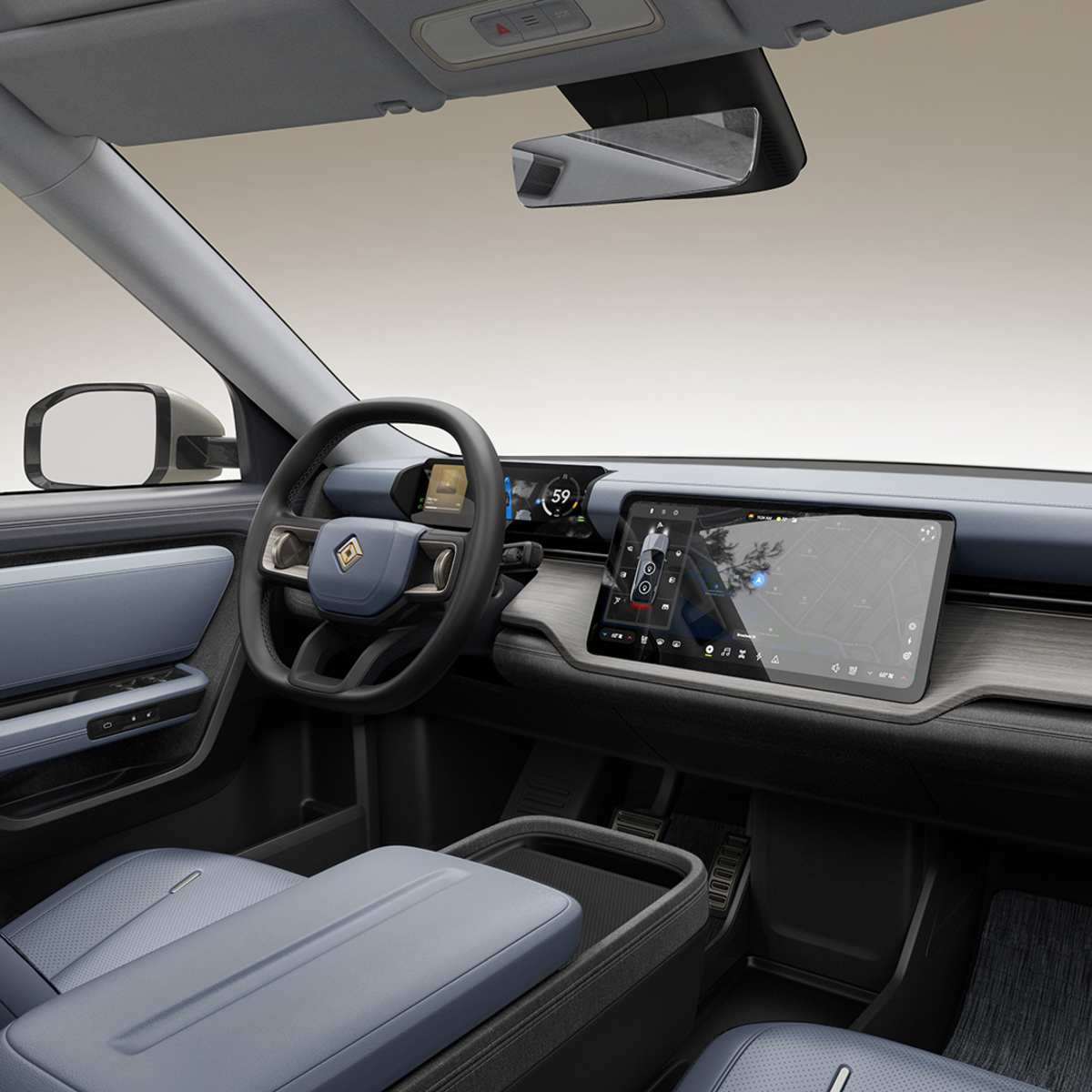
A new, smaller, and cheaper electric SUV being developed by Rivian to appeal to more everyday buyers.
LIVE
21 we are live for a new episode of Electric Podcasts.
I am Fred Lambert, your host.
And as usual, I'm joined by Seth Wintrom.
How are you doing, Seth?
I'm good.
All right.
We have a couple of interesting news this week that we're going to discuss on
Electric Podcasts.
So we're going to switch it up.
We're going to put this at the end this week, when we're going to discuss the,
the FSD crash that kind of occupied much of the Tessa News all week.
A bunch of different reports came out on this.
We're going to talk about the new virtual power plan to power data centers that they
put together with Sun Run that I found pretty interesting.
And a new product from Tessa, a Megapod, maybe Mega Vaporware 2, we're going to see.
But before that, we're going to talk about the slate pickup truck this week.
The full unveiling, mostly the price that was needed to be confirmed, the unveil.
We already saw quite a bit of the truck, but we're going to discuss it a little bit
more.
Pulse tar being banned from the US in the first one to bite the dust from the new
Chinese connected vehicle rules that the geniuses in the Trump administration put
together.
And then we can also talk about Lucid that the new CEO made his first move.
And it's unfortunately a big job cuts for employees.
All right.
The slate, very, very interesting product.
This slate, very, it's, you know, the price is the headline.
The price came in at $25,000.
And when it was on the bill last year, they talked about less than $20,000.
But that was prior to the big, beautiful bill and the end of the federal EV subsidy.
So the result is that now the base price is the real price.
Other than we're going to talk a little bit later about, you know, some people
are going to have the opportunity to buy this cheaper, depending on your
states, depending on your events, local and the incentive.
But yeah, the tubing news is like the sticker price.
So the price, though, although they go before destination fees, taxes and
everything is $24,950.
And the other piece of news that's interesting is that they updated the
battery pack.
So now that they have a base 65 kilowatt hour battery pack that is 63, 65 kilowatt
hour, 63 usable, and that's good enough for 205 miles a range.
So it's a higher range than the original rated one, what the original announced.
But yeah, it's a, you know, small rear wheel drive motor, you know, no paint,
no, you know, no powered windows.
It's, you get a car, a truck or a truck with five feet bed, steering wheel,
a huge frunk and 205 miles a range, you know, decent sized battery pack for $25,000.
It's the main criticism I've seen so far are from people saying like, oh, you
can get a used Maverick for basically the same price like a two years old Maverick,
which is, which is true and is, it is more truck than the slate.
True also, but it's not electric.
And I think, I think it's clear that they want to go for, for, for the electric
vehicle, the efficiency market.
And if, if you can get the truck for $25,000, you, the cost of ownership is
going to be pretty attractive over time with this.
Cause, you know, the Maverick is, is, is a fairly efficient fossil fuel powered
truck, but it's not, you know, it's not going to be as efficient as a slate that's
get 205 miles a range on, on a 65 kilowatt battery pack.
So I think, I think this is good news, but the, the, the, the question is like,
okay, a 100000 people reserve this, how many of them reserve them for
the Lord and $20,000 price with incentive?
Did he understood that he was with the incentive?
Did he understood that the incentive went away?
So, so it's, it's going to be interesting to see what's the actual demand behind,
behind this, this vehicle here.
But, but set, what I'm excited about is if, if it does, you know, get successful,
if, if, because I mean, the money is behind the, the raised 1.4 billion or
something like that, they have like massive backing, they're going to get
to production with this thing.
The, the, they're going to get now volume production is extremely hard to
achieve.
It's not easy, but, you know, they have a real shot.
So the question is like, can it, can they reach volume production and, and is
there enough demand once they get there, if they get there?
So those are the two main questions.
But if that happens, and there's no way for us to tell right now, I think it's
going to create a very interesting, like ecosystem of, and around this vehicle,
because the vehicle is extremely bare bone, but I mean, they call it in the
clean slate, like the, or the blanks, not sorry, the blank slate, they call it
the, this version of the truck, which has nothing on it.
Now you can order a bunch of different things to upgrade it, or you can order
it from the factory a little bit differently, like I would, uh, in this
UV configuration, where they literally just bolt a second row seat in the back
in a roll cage around it.
Then there's a bunch of accessories for to customize the exterior.
There's a wrap.
There's a, you know, different grill that you can put on it yourself, or you
can, you know, hire someone to do it.
So they might be an interesting aftermarket that develops around the
slate, if it's successful, obviously, just, just like what happened with Tesla.
Once Tesla started selling a hundreds, hundreds of thousands of
vehicle per year, other people saw a market for that and started developing
products for it.
I think Slate is already developing, you know, aftermarket products for its
own vehicle, but I think you could create a big market for that too.
What's, what's your feeling about it?
What do you think?
Well, I think it's, it's not just the fact that it's cheap.
It's also the fact that it's small.
It's all electric.
Um, you know, you don't have to worry about electronics.
Uh, I mean, obviously there's electronics.
It's electric people, but very minimal, right?
The doors, like, I think it's also just the minimalist idea that, Hey, you
know, all this crap in my car, I just really want the thing to go, like, I
get in, steer it, go, you know, so, I think there's a lot of excitement around
that and the fact that it's in an inexpensive EV is, you know, kind of a
bonus.
I mean, the battery pack is actually pretty big.
It's bigger than a, you know, it's like the size of a Chevy Bolt battery pack.
It's not like a compliance car.
Um, so I don't know, I, I love it.
I love the idea.
I, you know, but again, a Maverick is probably a two-year-old Maverick hybrid
is probably a better, you know, it's going to work better around town and
you get more out of it.
Yeah, you get, you get more other than, no, it's, it's not electric.
Right.
Yeah.
Yeah.
It's, it's, it's tough call, but I, I, you do have a good point.
Like people that just want like, you know, I think they are in a very small
minority these days, but you do get a lot of people.
I just don't want a computer in my car.
I don't want like, you know, I don't want to touch screen or without.
Well, you don't, you don't like that.
There's only one small screen and it's the instrument cluster and it's, it's
like a whole school instruments cluster with just your, your gauge and that's
it, your, your, your speedometer and, and that's pretty much it.
So, but, but you can also strap an iPad to it and, and you know, you get the
center touch screen experience without whole carplay.
Like you, you can do, you can do whatever you want with it.
So one of the things that I found somewhat interesting too is like, there
are still some states that do offer incentives.
Most of them now, and I think for good reasons are centered around lower
income people, but if, if you qualify for that, and then there's some like cash
for clanker too, like if you, you have to, you know, give back a car that's older
and more, and it's more emissions, but there is, you know, technically in
California, if people qualify for the clean cars for all, they do get $12,000
at discount and this is a $13,000 car.
Now it's for people that are all income, less than 300% of poverty line.
Now the poverty line is quite higher in California than it is elsewhere.
Is it still, doesn't make sense to buy a $14,000 cars?
I don't know.
I probably not, I would assume not.
But at the same time, like you could imagine a world where this, this car
like makes a ton of sense for like deliveries, like the, the, the, the
Uber eats Tordash kind of world.
It's, it's small.
It's efficient.
You still have a lot of room in the back.
Like I just thought that is there like some kind of like Uber eats for like cargo
for like small cargo stuff?
Like that would be perfect for that.
Like if you, you live in an apartment and you cannot go grab like a TV or
something that are couch, like you cannot, you cannot hire a guy and go, go grab
it with the, with the slate.
That would be great for that.
But then you have Maine, Maine also for lower income people up to $8,000,
making this a $17,000 car.
And then when you account after that, the savings that you get from the not
buying gas, the gas savings, like this, this, this is starting to get into like
a $10,000 vehicle range for, for those people.
Oregon and it's basically like equalized the loss of the $7,500 tax
credit in the, at the federal level, Massachusetts at a $5,000, same thing
for Vermont, Connecticut sets new home as $4,250, also income, income qualified.
New Jersey, 4,000, like, you know, any, any kind of small discount that you can
get from, from that on the slate as a big difference.
Obviously, if you're buying a, you know, $40,000 Molo Y, $2,000 doesn't go that
far, but if you're buying a $25,000 truck, $2,000 is almost 10% of the price.
Like it's a, as a big impact.
So I'm, I'm still getting my hopes up.
I'm not, I'm not saying it's a slam dunk.
I'm not saying that it's going to work out, but I, I, I want, you know,
a lot of people love trucks in the US.
Oh yeah.
And for the most parts it's going bigger and not everyone
wants that.
And this is the opportunity to see if they, if there's a market for smaller
trucks, if they happen to be electric, they happen to be electric.
Or maybe the electric part also compliments it.
So I'm, I'm curious to see where this goes.
So we're going to follow Slate and the delivery is supposed to start later
this year, start the end of the year, I think.
And, and, you know, ramp up into the next year.
So we're going to, I'm going to keep a close eye on them.
Yeah.
And, and if they're successful, maybe Ford and Chevy and everybody else start
building smaller pickups, electric ones.
Yeah.
That's, that's a good point, you know, cause a lot of people, so that we talk,
we're talking about the Maverick, but also a lot of people compare it to the
upcoming unnamed, you know, supposedly $30,000 truck that Ford is, is launching.
But this is again a $30,000 truck, so it's $5,000 more.
It's, it's going to be though a four door.
So it's going to be bigger too.
So it, you know, it's, it's different.
There are different vehicles also.
But yeah, probably for $5,000, you're going to get a lot more truck in the
Ford, most likely, but again, it's going to be a bigger vehicle.
All right, Paul fell to the new connected vehicle rule that was put in place recently,
where the government kind of give itself a lot more power to block the sell of new vehicles.
That are linked to our connected vehicles.
So I mean, but I mean, every kind of vehicles are connected vehicles these days.
They're all, you know, they all have cameras.
They all have except slate.
Yeah, yeah.
So I mean, yeah, if a Chinese competitor wanted to do a slate, they could potentially do it.
So yeah, it's basically, they gave themselves a lot more power to try to block Chinese,
not just Chinese vehicle, but vehicles that are connected to China, which,
which is confusing, but it's also a connecting, connected vehicle.
But Chinese ownership is the, is the main problem here.
But it's also vague because in this case, they blocked Polestar.
They said starting with their new model year, 2027, you cannot sell a new vehicle in the US.
You're banned.
You're basically banned.
And Polestar is obviously owned by Gili and Gili is,
owns a bunch of other companies, including Volvo.
You know, and Volvo and Polestar are themselves extremely linked because they're both,
you know, Swedish brand and the Polestar used to be part of Volvo and, and so on.
So they didn't ban Volvo, at least not yet.
And I'm not saying trying to give them ideas or anything like that.
It's just that it looks like it's very, you know,
subjective, like they just, you know, decide, oh, we'll just ban them.
Now for Polestar, it's not the end of the world.
Honestly, the US market was already pretty small.
The bigger concern is that now they have to like still service, you know,
the existing fleet that's there.
And, you know, that's harder to do if you don't have, you know, upcoming sales.
By the same time, maybe the, the, the, the hope to like,
just weather the storm in the US until, you know, the political winds change,
which happened to happen basically before years in the US.
So maybe they are only onto that.
But right now the message is pretty bad because obviously Gili and,
and Polestar specifically was amongst the many automakers that,
that responded to the Biden administration's
call to bring manufacturing in the US to make HIV goes to get access to the federal subsidy.
And now that already went away with Trump last year.
But, you know, you're already there.
The market for EVs obviously takes a, you know, a little, you know,
it takes a bath for a while.
But then after that, it's coming back already.
Obviously the gas prices help quite a bit.
But now the Trump administration is using this rule,
which to be fair was the Biden administration rule.
But, you know, it was, it's definitely being abused here by the Trump administration
to target Polestar particularly after they deployed their own
manufacturing capacity in, in, in, in South Carolina.
So it's, it sends a message to the rest of the auto industry,
specifically China, obviously, that you won't even get access to the US market
if you invest in manufacturing in the US market,
which, which is something that the US should want for obviously for job reasons,
but also just for, for knowledge reason, like,
definitely the US is losing the race to China when it comes to manufacturing in general,
auto manufacturing specifically nowadays.
And to bring Chinese auto manufacturing into the US
is generally a net positive for the overall manufacturing industry
and specifically auto industry in the US.
Just it's, it's basically the reverse playbook of what China did to invite
Western automakers into the market, manufacture there, learn from them,
and then, you know, launch their own brand.
So it's, it seems to be like shooting yourself on the foot
and then like burning your foot.
Like it just, it makes no sense to me.
And now you have to also think what happens set if China decides to do the same thing.
And I was like, all right, you're going to do that.
Well, we connected vehicles in, in China that are from American automakers,
even if they're built in China, Tesla, they, they're going to get banned.
To be fair, there was already some, you know, things towards that,
but they, it wasn't, it wasn't banned from selling in China.
Tesla was banned for like, you could not drive your Tesla into certain like restricted areas.
That was it.
But now if that happens, they might get some ideas that American automakers wouldn't like.
I don't think they're going to be that petty, but you never know.
Never know.
Yep.
All right, Lucid, Lucid at the bad news this week, they're laying off 18% of their staff.
So that's the second big cut in just four months.
There was a 12% staff reduction in earlier this year in Q1.
And now with the new, the new CEO coming in, Silvio Napoli, he just took over.
And obviously, you know, cost cutting is, is, is going to be a priority
because Lucid is still quite far from being profitable.
So I just assumed the role earlier this month, June 1st.
Now, one of the first big moves is to lay off 18% of the people, unfortunately.
So we feel, we feel for Lucid's employees right now.
They had about 9,000 of them at the end of last year.
So after 12,000 staff reduction earlier this year, now 18%, you know,
it's roughly 30% staff reduction.
So employees are going to get the sack, unfortunately.
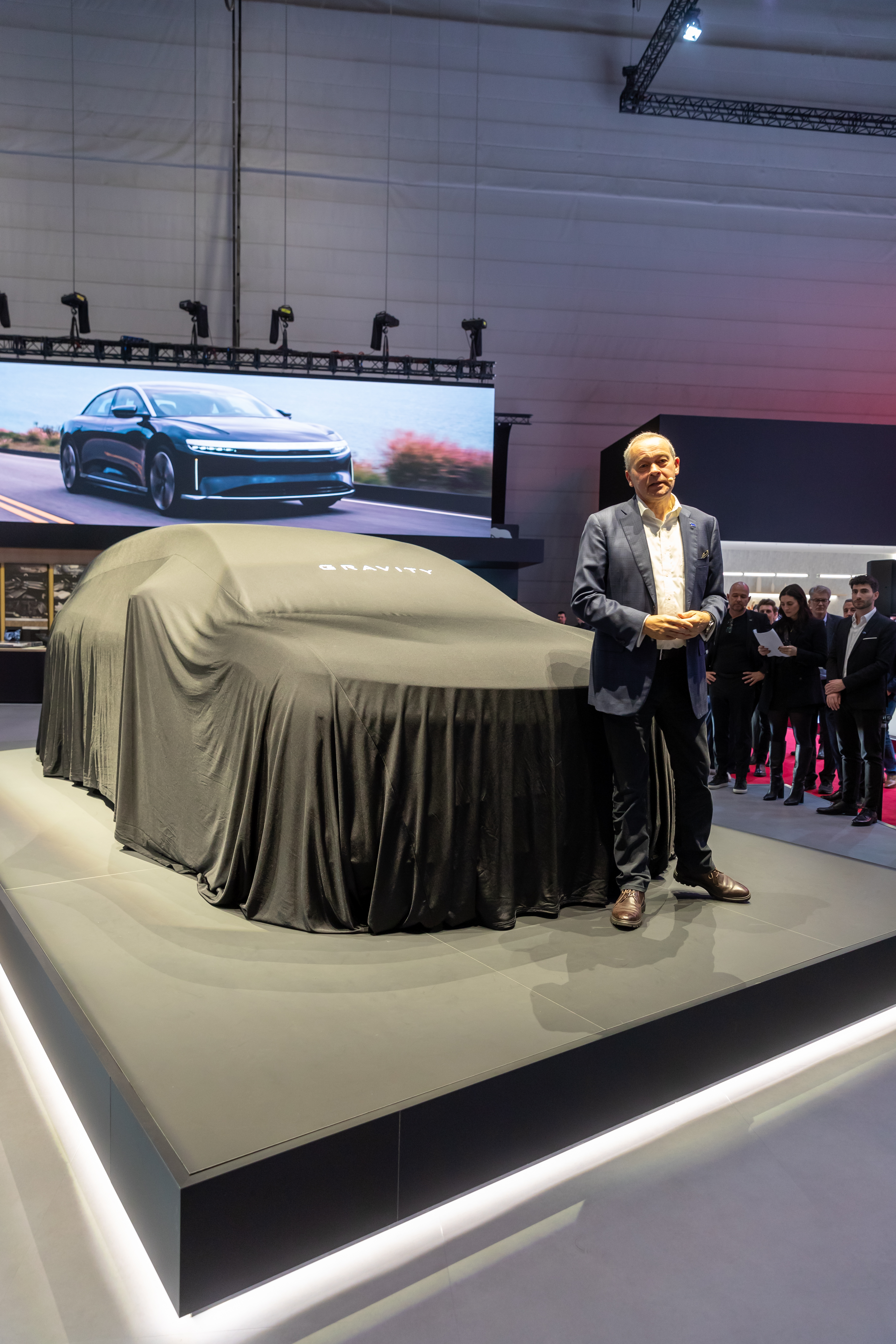
We, we review the gravity.
If, if you guys want to check out the gravity, Bastini posted his review.
It's the new, we have a new ranking model at Electric where we specifically rank on
their more like structured point system for our full review.
So the vehicles that we have for a week or more.
And it's, the gravity is now the highest scoring one.
Obviously there's only four yet.
So we're still working on building our whole review pipeline.
But out of the first four, it is the top scoring one with 86 out of 100.
So that's, that's very good.
And quite honestly, it's mainly a software issues that, that left it out of the, of the 90s.
So with a few software update, they could easily reach 90%.
It was, I mean, I got to drive it a little bit.
It's incredible vehicle.
It drives credibly well, super comfortable.
Pack with interesting features, Rousseau features.
The software is the main old back right now.
And I hope that stuff going to be the focus of the new CEO, obviously,
beyond these jump cuts, these cutting jobs.
All right, moving on to Tesla news.
We have four Tesla news to discuss.
And then we are jumping to the comment section.
I see already a lot of you guys are in there in the comments.
So if you have question for set or I about any of our coverage at the electric this week,
any other topic in the EV world that you would like set or I stake on,
you can put them in the comment section right now.
And we get to it in about 15 minutes or so.
All right, the big thing that was in Tesla news all week was a crash that happened last weekend.
And it's a very dramatic event, very sad event where a driver,
a Tesla Model 3 driver in Texas, in Katie, Texas,
was driving in a residential neighborhood, lost control of the vehicle,
crashed into a home, and a lady, a 76-year-old grandma was in the room
and she got pinned by the vehicle.
And unfortunately, she died.
There was another person in the house that was hurt, but not gravely.
And then when the driver came out of the car, told the police that the car was on autopilot,
was the word that he used based on the police report.
The police checked the guy and no signs of intoxication or anything like that.
So he didn't arrest him.
And now the crash is under investigation.
The news went quite viral last weekend and into Monday and Tuesday,
forcing Tesla to comment on it.
And of course, Elon and Ashok were quite mad at the media reporting around it,
that it was ridiculous to suggest that autopilot, the full self-driving,
had anything to do with it.
They actually confirmed that full self-driving was on, at least Ashok said self-driving.
So I assume it's full self-driving he's talking about.
You know, the language around this is so complicated for Tesla's own doing.
But he said that the car was on self-driving.
So self-driving was active at the time of the crash,
but he argued that the driver overrode it by pressing the accelerator pedal
up to 73 miles per hour and crashed into the house.
So he said, well, that's 100% the driver's fault moving on.
And the media is ridiculous to bring Tesla into the story.
Even though, first of all, they shared this on Tuesday.
And so there was already like the media didn't know.
And the media was reporting that it wasn't even reporting that autopilot or FSD was on,
ourself included, we reported that the driver was saying that he was on,
which is a fact that he said that.
And now they confirmed that it was actually on is just that the driver overrode it.
And for Tesla, that's end of the story.
But at electric and in courts, we've been arguing for a long time that it cannot be that.
First of all, this is just Tesla's own interpretation of the logs,
that the accelerator pedal was 100% pressed, reached 73 miles per hour.
That's Tesla didn't release the logs.
We don't know if they released it to the police.
And this is not me being like conspirational about this.
The trash in Florida that led to the $243 million verdict last year
proved that you cannot trust Tesla with the logs.
It's as simple as that.
Like I'm not exaggerating, Tesla lied and misled the police,
the family of the victims and independent investigators regarding accessing the logs,
seeing the logs raw and not Tesla's own interpretation of them,
and the entire event logs for the for the crash events.
So I don't understand anyone that's just taking Tesla's word for it.
There we cannot do that.
Secondly, to me, the crash itself and the Tesla's interpretation of the log that they released
point to a clear pedal misapplication situation.
So the driver thought he was going to press the brake, press the accelerator,
it didn't break, e-panicked.
People need to understand like, are you so dumb to think that?
Like it's completely your fault and everything is like, I agree that's the driver's fault.
You're not dumb.
If you're pressing the, you think you're pressing the brakes and the car keeps accelerating,
you're not necessarily thinking that you're pressing the accelerator.
You're thinking that your brake are not working because you think you're pressing the brake.
So it's, it's, it doesn't stop there.
And then obviously the big, the bigger question is like,
what led to the pedal misapplication?
If we know that he was using self-driving because, because as Chuck said,
he was using self-driving and overrode it.
So now you have to ask yourself, why did he want to press the brake in the first place
and then press the accelerator?
So most likely, and now that's when I'm getting into the speculative area here.
To me, it looks like he was driving on FSD in the residential neighborhood.
FSD started doing something stupid.
The driver panicked and tried to press the brake, didn't
pressed the accelerator, crashed into the house.
Now, Tesla is like, end of the story, the driver is responsible,
but we've seen time and time again that misuse of FSD doesn't mean that Tesla is not responsible
because you ask yourself, if FSD was not in this story at all,
if it was just a guy driving by himself, would the crash have happened?
Probably not because the guy would have pressed,
be pressing the accelerator himself anyway to drive around the neighborhood.
You're not on cruise control in the neighborhood.
You're driving around, pressing on the accelerator,
and then if you need to press the brake, you remove your foot from the accelerator,
press the brake.
Now, most likely, I think the guy was, his foot was in a resting position,
driving on FSD.
FSD is something we hear, he panics,
press the accelerator instead of the brake.
FSD has a clear role to play in that scenario.
Again, I'm speculating to a certain degree here,
but this needs to be investigated and all these Tesla sicko fans that are just,
trying to wash Tesla away from this,
those entire stories are completely misaligned with trying to find the truth here.
What happened and what led to this woman dying is extremely frustrating to hear otherwise.
This is not like,
this is I think the 53rd crash involving full self-driving autopilot now.
We're talking about, it's a lot of people, it's getting scary.
The family is already suing them, by the way,
that's another story that just happened yesterday.
They filed a lawsuit against both the driver,
which again, the driver should be, is partly responsible there.
Just like the case in Florida, the 243 million verdict,
if you guys remember, 66% of the blame was placed by the jury on the driver,
33% on Tesla.
I think a similar situation applies here in this case.
So they're suing both Tesla and the driver with a very similar approach to the Florida incident,
where they blame Tesla for having a defective product in the first place.
Again, probably if SD did something weird.
And then also the marketing around it,
the fact that they are building up too much confidence for the drivers,
thinking that this is actually self-driving.
I mean, even a shock said, the car was self-driving,
like everything was fine until he pressed the accelerator.
There's nothing pointing to the guy being suicidal or anything like that.
And if you want to kill yourself, that's definitely not the best approach to,
homes are, most of the homes of these days are not strong enough to,
if you put a 4,000-pound vehicle to them, you're going to get through the home.
You're not going to kill yourself, most likely, a stupid idea.
And there's nothing instigating that the guy was suicidal.
So something happened, leaving him to putting that while he was on a FSD.
So obviously, this whole thing needs to be investigated,
and you cannot trust just Tesla's interpretation of it,
because obviously, this interpretation has always been put all the blame on the driver.
All right, moving on.
There's this new consortium consisting of Sunrun, Tesla, and Renew Home,
that are claiming to have a solution to this energy bottleneck that we're seeing right now
regarding the data center. So the surge in data centers in the U.S. is increasing the
demand for electricity quite a bit, and it's putting a lot of pressure on rate payers.
We've seen a 10% increase in the U.S. average of electricity rates last year.
This is massive, like 10%. If this keeps going for a few years,
which everything points to it based on the increased demand from the data centers,
it's going to put a lot of people in there paying them in the corners where they're
going to have to decide between paying the electricity bill, paying their mortgages,
paying food. It's really happening. It's stressful for other people.
Tesla's idea, Tesla's Sunrun and Renew Home, is to create a giant virtual power plant of
distributed energy system, something that Tesla already does in California, in Texas, and in
Vermont. In New York, there's one two-set, right? There's a big one with, is it ConEd?
Yeah, I can't remember which one.
Which there's a big one in New York State too. But yeah, they want to create a,
the West Coast, the Central, they call it the West, Central and East. And between Sunrun, which,
you know, as virtual power plants, they install power walls, but they also install other product,
Renew Home, same thing. And Tesla obviously has power wall virtual power plants. They think that
they have around 6.8 gigawatts of potential load capacity that they can discharge into the grid.
6.2 in the West Coast, 4.6 in Central and 6 gigawatts on the East Coast. And the idea is that
they could create something specifically for the data centers to draw from and reduce the load on
the grid. Now, this is not a particularly novel idea in itself. Like, this is not new capacity.
This is capacity that already exists. It's also, I think, I would think a little bit inflated because
I think they are just, they are putting every energy system together that they have access to
that exists. Doesn't mean that everyone there is going to want to participate in the virtual power
plant. Also, not in any, every particular event itself as well. So it's, I think it's a little
bit ambitious, but it's, it is definitely part of the solution. Now, personally, if you want to ask
my opinion on this, I think that any new data centers that want to deploy should, should just
deploy its own energy capacity itself at the same time from renewable energy. I think that would be
this is a no-brainer. It just makes sense. You know, why would great payers have to,
to have any consequences from, from this? It makes no sense because it only benefits them anyway. So,
but at least this is part of the solution. But I think my, the bigger takeaway here is that if you
can, if you have the opportunity to have energy storage and energy production, you know, primarily
from solar, but some places I'll also have other solutions, you should do it because you should
control your own energy production and energy storage in order to have some control over your
costs. Because everything points right now to the US having a big energy crunch over the next few
years. If this data center craze and AI craze continue to happen, which seems like it so far.
All right. Last piece of news. Is there, this week, this week, we saw a new
trademark filing from Tesla for something called Megapod. So the Megapod based on the
trademark filing is for a complete self-contained computing AI workload.
What it sounds like, it sounds like a repackage dojo system, because obviously the dojo thing
has been around for quite a bit. It was supposed to be, you know, Tesla's new big line of,
new category of product for Tesla. The entire team left basically last year, or from 2024 to
2025, was not going well. Elon was not happy. He kind of reshuffle the entire project. More
recently, he said it's back. Now I assume it's back to this Megapod thing, where you basically
would have the entire rack system in one product kind of deployable, just like, just like a mega
pack is deployable, but instead of an energy, you have, you have compute modular data center
hardware system for intentional intelligence with computing, compromise of computer server,
computer hardware for artificial intelligence data processing, networking equipment, power
distribution unit and cooling system. So you also, the power distribution unit is in there.
Now it's under the power generation system. So you still need to deploy, you know,
energy storage and in solar, if you want to do it right, at least. But yeah, it's not a unique
product in video as a similar solution. And, you know, a few others too. Dell, Dell also has a
similar solution. So it's Tesla trying to get into, you know, revive dojo, rebrand dojo,
it sounds like to me. Are they really trying to get into it though, or is this kind of just a
marketing thing? I mean, we only have the trademark. I don't have any sources telling you anything,
anything else other than that. But I mean, there was real work done with dojo, dojo one, dojo two,
that are real things. So I guess it's not, it's not too far. I don't think it's
complete vaporware. But it's, it's mostly like a rebranding of this like Exapod. Now it's
Megapod. Like it's, it's, it's not entirely new. Let's just put it that way. Yeah. All right, we
can jump into the comments. All right. All right. Pete Polestar in the USA. Do we think
this is going to last or are they, is this one of the Trump like pulling back stuff?
I mean, like I said, it's so targeted that I would assume that there's things they could do,
but from, from the release that I read from Polestar from the finding that they did,
it's, it sounds like they are not there. They gave up on it pretty much. They're like, yeah,
we're going to refocus on other markets, specifically Europe, Canada, and things like that,
which, but I don't know if I said that during the, I wrote it in the story. I don't know if I said
that where there's before that, or at least in Q1, US was only 4% of Polestar's entire markets,
entire sale. So it's not, you know, not a big deal. Yeah. Maybe some deals out there on Polestar's.
Yeah. Well, yeah, they're still, they still have inventory for 2026. They can still sell that.
It's just the new 2027 model year they can sell. Question. I think technology is killing the EV.
Isker had a massive tech problems. RIP Lucid has some tech problems. Yeah, we've heard the,
we've heard about this tech problems. Polestar has tech problems. Doors, handles not unlocking.
Slate just has to go and stop. Yeah, I think we talked a little bit about, like, people getting
sick of the technology for technology sake and just getting back to basics. But it's not like
it's an unsolvable problem. Like, you know, Tesla has great software, Riven
like it's, there's, there's ways to do it. Yeah.
All right. I want to, Slate, it reminds me of my old two-door Explorer. Yeah. And I think there's a
lot of nostalgia. People have like nostalgia for like their old Toyota pickups and stuff.
But he says I want all wheel drive, Defender looking one with rear tire on the back,
Sandy leaked a four-door is coming and said updates will come later on. All right.
Yeah. I mean, all wheel drive would make sense. Like, if you're a few thousand bucks more, like,
you know, it's probably doable, like three or 4000 bucks, but then you dip under 200
miles in range, which is not ideal for other people. Yeah.
All right. What gets me excited about the Slate says ProtoKyle 6 is just saying the cheapest
pickup in the US is electric. Yeah. Good point. Yeah. Yes, Slate is already working on more
models and concept, but I would tell Slate to wait for better technology with batteries and get 300
miles. There are LFP that can achieve that high, but only China.
Sodium. But why wait? Like, I think 200 miles will work for a lot of people too.
And once the all wheel drive slate comes out, there'll be a discount on the 25k model. I don't
know that that's the case. They'll probably just have a much more expensive all wheel drive.
Slate's biggest impact may be killing the prospects of Aptera and Tello. Lots of overlap in their
fan bases and Slate is beating them to market on the cost. Yeah. Aptera is not the same thing at
all, but Tello, you know, similar. Yeah. But even Tello is different. Like, Tello is kind of like
a Swiss Army knife more than a truck. Like, it's a Swiss Army knife. It's much more expensive,
much more range too. So I think there's room for all three to be honest with you.
Slate is cool. You can customize extremely well. I think I would option to 335k with all wheel drive
and still wait to keep it in most SUVs. Bronco is starting at 45k or 45k. Slate all wheel drive,
35k. I mean, the all wheel drive is not an option right now. But so that would definitely increase
the price quite a bit. But from what I'm understanding right now, the option that they're
putting right now are not too expensive. So it's not like you're going to get like,
it started at 25, but then once you put wheels on it, it's 35. Like, it's not that.
From what I'm understanding so far, I don't think they release the prices yet of any of the options
other than the wraps, I think, which already look pretty good pricing-wise because wraps get
expensive. But I don't know if the prices are like for, do you have to apply them yourself?
You get a hairdryer. Yeah. All right. Mike Kharky says, by the way, I met him at the Electric
Formula E. That's sorry, Formula Sun. This year is going to be in Minnesota, July 20th to 25th.
You're out there. Mike and everybody else, come say hi. Configure Slate with accessories and
you realize that Chevy Bolt is a super value. Yeah. Yeah, it's good value. 130k for a while.
Similar size battery. Slate has a bigger market. Think of Redneck that won a truck or a side-by-side,
just needs all wheel drive. Think it will be massive success. Is it a truck,
SUV crossover and a Jeep on one? I don't know that that thing's going to go off road very well.
I have to say, like rear wheel drive, pickup. I don't know. You said with all wheel drive.
Everyone seems to be stick on the all wheel drive from the comments so far. Everyone wants the
all wheel drive. But a bolt is too small and well, it's not too cool looking. Yeah, everybody says
the bolt sucks. Appearance wise, Slate is cool and maybe, and people buy based on what makes them
feel a cool look at 50 to 120k trucks. Give me all wheel drive and I'll buy Slate square body.
Not a bad point, right? They nailed the design that sounds like. A lot of people
like it and I agree. I agree. So it's a fine looking vehicle. Yeah. Slate with tire on back,
no roof on back. Slate is 35k Jeep or Bronco. Just needs all wheel drive. Another all wheel drive
person. Why is Rivian stock not seen to go up even though the R2 rollout has gone so well?
I think some of that was baked in. What do you think? I think at this point,
like Rivian is mature enough that what really will make them go up is if they can prove that
they can sell vehicle profitably. I think that's the next thing for Rivian. The R2 needs...
What did we learn about the R2 since you had your test drive and everything like the
whole launch event? We didn't learn much from it. Other than it's as good as what we thought it was
going to be. It's a great vehicle. It's packaged extremely well. So what we need to learn now is
will the demand actually be there? Because we know that there was a lot of demand for it,
but that was a couple of years ago. Things change. Is it still there? And if it's there now,
can you meet that demand at a positive gross margin within the next 18 months?
All right. That's an advanced question. As FSD users, is there any way it would be
going that fast on the street without a foot on the accelerator?
I mean, it can do whatever. It has access to acceleration, so it can do it. So if there's a
bug, it can do it. But if you're asking for my experience driving on a FSD in residential area,
no. On the contrary, normally it's slower than faster, especially if you're in standard mode,
which I stay at most of the time. I don't go into hurry mode and mad max mode and all that stuff.
Oh, that makes more sense. He thought he was jamming on the brake. Sorry, did I lose it?
Yeah, I liked that for a second, looks like. All right. Carl and San Diego,
if people won't stop buying and using the Boogie Toyota that is FSD, Congress should pass a lot
of ban it. BC did. Is that true? British Columbia banned it? I don't think so. Nothing I know.
All right. Carl says Musk chooses to operate two XI data centers using unauthorized natural gas
generators, sublets the cycles to competitors, and then says everyone should buy Tesla power
peak hypocrisy. We had a couple of reports on that. Yeah, it's a bad look.
Mike, the car geek says, in my opinion, you can blame Trump, but Biden and other Democrats want
to be tough on China. We're talking about a full star, I guess. Yeah. Yeah, I mean, it was a Biden
administration legislation that was used there to implement that. And the slate does not include a
wrap install on the price. I think we knew that. skeptic says I volunteered to work at Formula
Sun, but got denied from they didn't need me. I can get you in. Yeah.
I'll take a couple quarters to know if the R2 will allow us going well or not. That's true.
Yeah, that's right. I might go check out the Formula Sun team from Montreal testing this weekend
if I have some time. I just moved into this apartment. I need quite a lot of work to do,
but if I finish early, they're testing this weekend in a secret location north of Montreal,
and I might go check it out just for fun, maybe an article or something. But we have Aaron that
did an article on them already, so you can check that out on the next track too. So it's really
a cool project. It's just something that's nice that has got us involved in with the next track.
But yeah, that's it for us this week. We have a quick show, but we're going to be there next week
with as much news as we can, and we're going to see you there. I hope you have a good weekend, and bye-bye.
About this episode
Hosts Fred Lambert and Seth Wintrom dive into the highly anticipated Slate electric pickup truck, now officially priced at $25,000. They debate whether this bare-bones, minimalist EV can compete with used Ford Mavericks and discuss how state incentives could slash its price even further. The duo also breaks down the implications of Polestar's impending US ban under new Chinese connected vehicle rules, Lucid's recent job cuts, and the latest Tesla news, including a Full Self-Driving crash and a new virtual power plant partnership with Sun Run.
In the Electrek Podcast, we discuss the most popular news in the world of sustainable transport and energy. In this week’s episode, we discuss Slate's $25,000 electric pickup, Polestar being banned from the US, Tesla FSD crashes coming into focus, and more.