These are cars that use computer programs to control many parts of the car, so they can get new features or fixes by updating the software without needing to visit a shop.
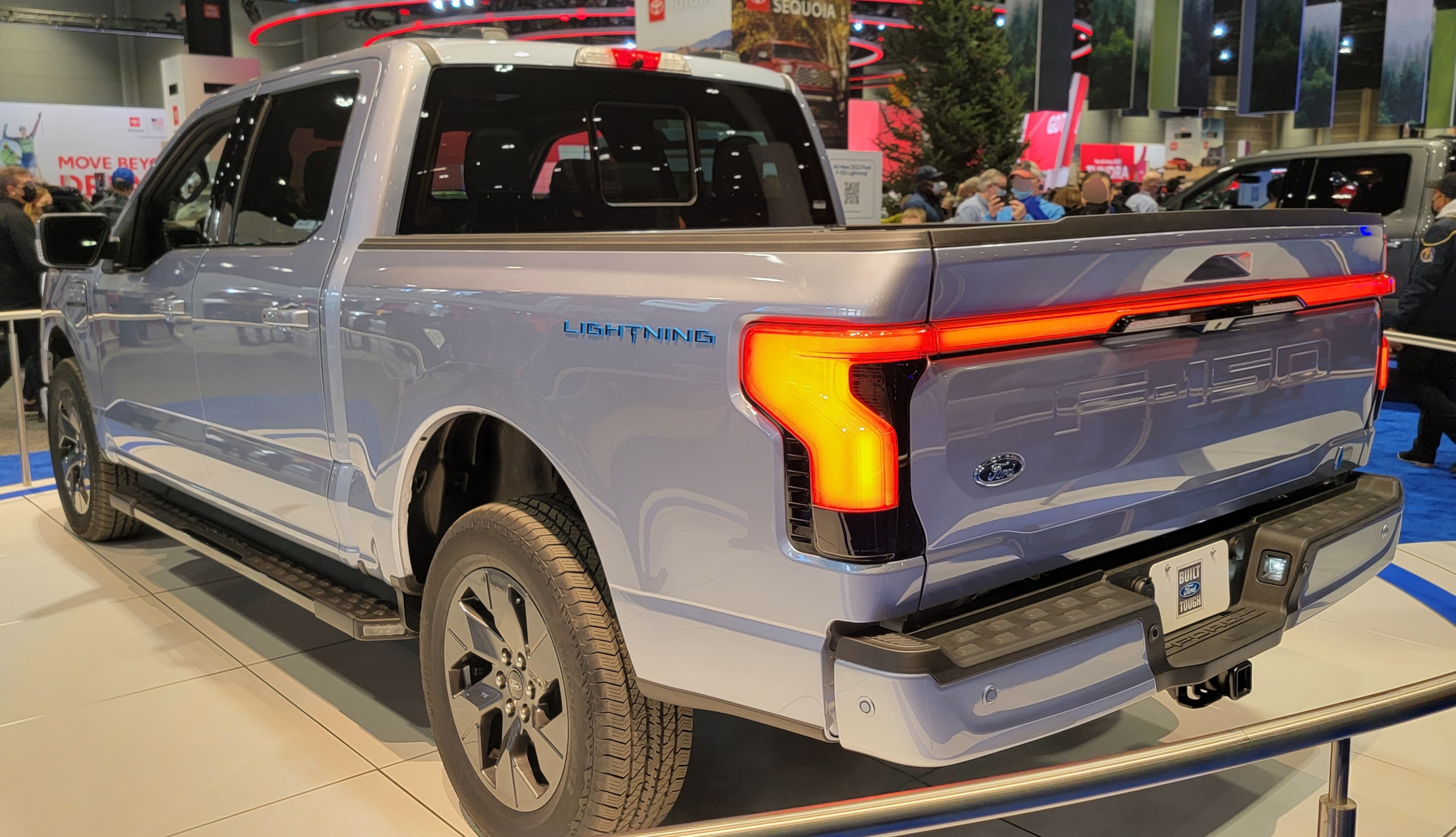
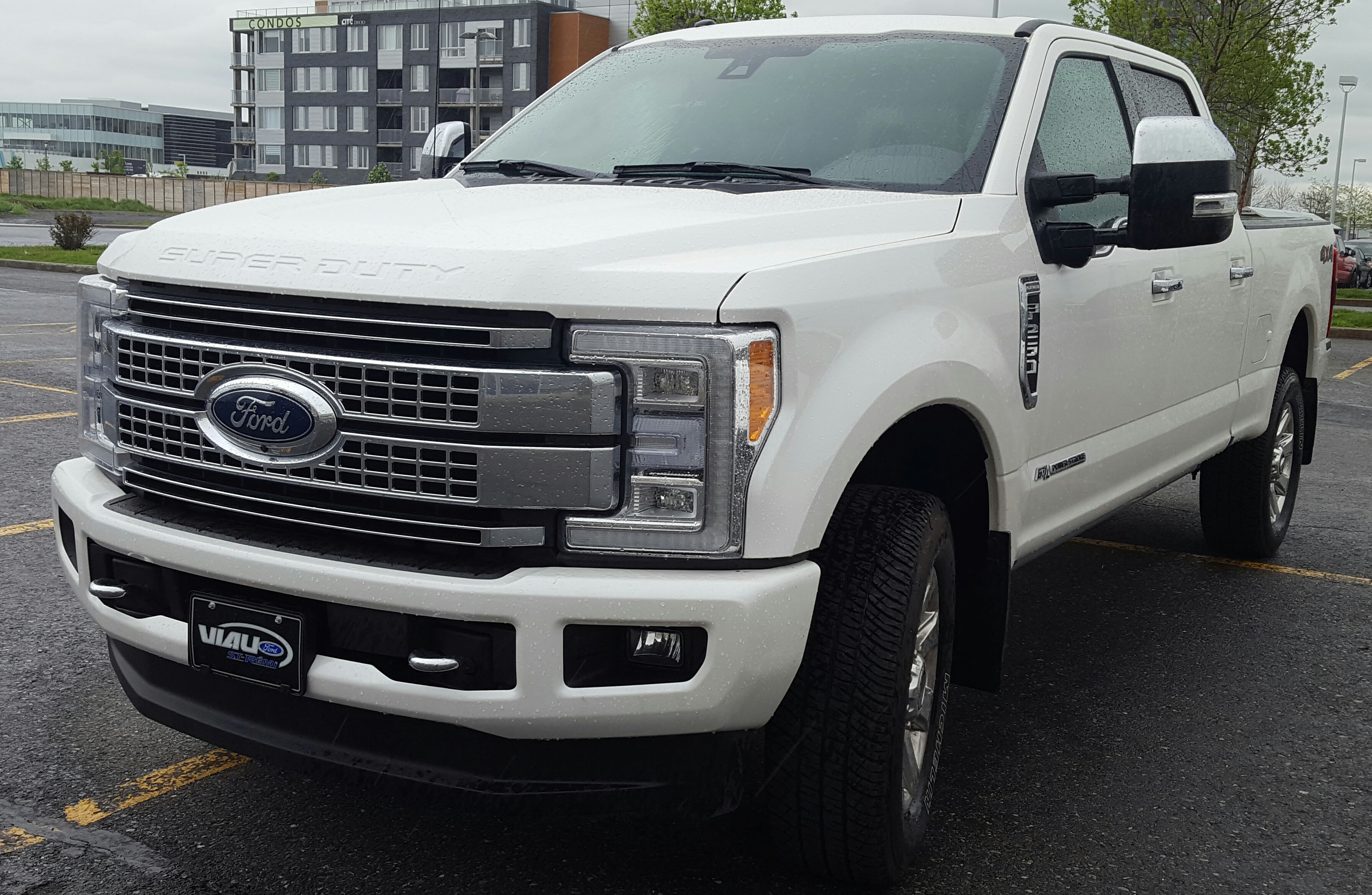
The Ford F-150 is a big truck that many people use for work and towing. The newer versions from 2021 to 2026 have lots of new features and can pull trailers.
The Ford E-Transit is a big electric van used by businesses to carry stuff without using gas. It’s important because it helps reduce pollution. Recently, some of these vans had a problem when pulling trailers, which is why there was a recall.
The integrated trailer module is a part of the truck that helps control the trailer's brakes and lights so everything works safely when you tow something.
Plant jobs are the kinds of work people do inside factories where cars or parts are made. These jobs can be steady but sometimes hard because they involve doing the same tasks many times.
Robots are machines that help people in factories by doing jobs that might be unsafe or boring. They can work next to people or behind fences to keep everyone safe.
The Commerce Department ban is a rule that stops some cars from other countries from being sold in the U.S. It can make it hard for those car companies to sell their cars here.
A loaner car is a car you can use for a short time when your own car is in the shop getting fixed. It helps you get around while your car is being worked on.
Sometimes people take their cars to other repair shops instead of the dealer because it might be cheaper or easier.
LIVE
Welcome to Daily Drive for Friday, February 27th, 2026.
I'm Jake Nier in Detroit, in for Kellan Walker.
Today on the show, software continues to be automaker's biggest headache, Ford issues
a massive pickup recall, and Stilantis discloses its new CEO's compensation last year, insert
Cha-ching sound effect.
Plus, Wide Whale CEO Kyler Owens joins the show to talk about the company's latest look
into customer satisfaction at franchise dealerships, what's working, and what's causing customers
to look elsewhere for service.
The universal truth across those that win and those that lose from the customer experience
perspective, communication is always a top driver as is the staff.
Let's run through all the news you need to know to keep up in the auto industry.
Software problems continue to plague automakers as they push toward software-defined vehicles.
According to JD Power's latest dependability study, infotainment remains the least reliable
part of vehicles with persistent issues connecting phones to cars.
Even more telling, 58% of owners who received over-the-air updates said they noticed no
difference in their vehicle.
Only 27% reported improved experience.
That's a problem, since automakers are betting OTA updates will become a key revenue source
through subscriptions.
Jason Norton of JD Power says automakers need to make updates more meaningful or at least
explain what's being changed.
Speaking of software woes, Ford is recalling 4.3 million pickups in SUVs over a software
error that could cause trailer brakes and exterior lights to fail.
The recall covers 2021-2026 F-150s along with newer F-250s, navigators, expeditions, mavericks
and some rangers in e-transits.
The problem happens when towing, the integrated trailer module, can lose communication with
the vehicle, cutting out brake and turn signal lights or brake function entirely.
Ford says it'll fix it with an over-the-air software update.
Anstelantis says CEO Antonio Filosa received almost $6.4 million in total compensation
last year after taking over in June 2025.
That's more than the company initially projected he'd earn in the first two years at least
$4 million annually.
His pay could climb to as much as $23 million a year starting in 2028 that includes bonuses.
For comparison, former CEO Carlos Tavares, who resigned in December of 2024, earned $14
million in 2025.
And those are today's headlines.
You can find more details on all of those stories at AutoNews.com.
BMW's Humanoid Robots are moving beyond the pilot phase after a successful trial in Spartanburg,
South Carolina.
Our own Doug Bolduck joins us from the road in Munich after attending an event showcasing
BMW's robot capabilities.
Doug, welcome to Daily Drive.
Thanks, Jake.
I appreciate being with you again.
So much to the chagrin of sci-fi fans and to the delight of manufacturing companies and
investors everywhere.
The Humanoid Robot saga continues here.
BMW says the figure robots at Spartanburg logged over 1,250 hours, moving more than 90,000
parts over 10 months.
What did BMW learn from that trial that makes them confident enough to expand this to Europe?
And what are some of the biggest technical hurdles that they still have to overcome?
What was really the light bulb moment for BMW was the fact that the machines learned
so quickly.
They were anticipating that it was going to take much longer to get to the level that
they got to.
But then all of a sudden they were like, oh, my gosh, it can do that.
Then let's have it do this.
And what it did was it was working in a very tedious job holding sheet metal pieces.
So it's a precision job, but also one that's very, very arduous and kind of a job that
you wouldn't really want to do as a human being for an entire day in, God forbid, an
entire career.
Very interesting.
Now, what about the challenges, the technical hurdles?
Are they confident that this is kind of plug and play now or what are the difficulties?
Well, it's funny you mentioned that because they let us use a simulator to try to use
some robot hands to do what would be a relatively easy task for you and I was basically connecting
an electronic control unit to a housing.
So what would probably take you or me or anyone with working hands, just a matter of a few
seconds was incredibly difficult because I tried it myself.
And so it's not a situation where this is going to just snap your fingers and it will
start working.
There's an incredible amount of work, but what's very interesting and one of the real
breakthroughs is that the robots are doing imitation, learning through imitation.
So if you stand next to the robot and show it a particular motion, it will learn.
And there's also now a move towards the robots watching a video of a particular movement
and then light bulb goes off, they can do it.
So it's very, very interesting at how quickly this is going to develop.
However, it's not a situation where it's like this will be happening tomorrow.
Sure.
Now, with Tesla, Mercedes and Hyundai all racing to deploy these humanoids and Morgan
Stanley projecting this could be a five trillion dollar market by 2050.
Again, that's five trillion with a T.
What do you think is driving the sudden push?
Is this about manufacturing flexibility?
Are automakers worried about being left behind in the next automation wave?
What's the what's the driving force here?
From what I could tell from BMW is the feeling was that we want to find a way to have jobs
that are dangerous or repetitive or ergonomically very, very uncomfortable done by a machine.
And the machines already do so much within the plant to do the heavy lifting of the entire
structure of the car, the welding and so on and so forth.
How can we expand that to other tasks within the plant?
And if you ask me, it's a very fine line because of the fact that plant jobs are usually good
career jobs.
However, a lot of those jobs are very, very difficult and they take a lot out of the
individuals.
So how do you balance that?
And they were talking today about, you know, again, using these robots to do the jobs that
are dangerous or repetitive or just boring or very, very much demanding,
as well as working side by side and or fencing off the robot.
So if they're only doing a particular task like doing something with a battery where
it's high voltage and high risk, then there'll be a situation where they'll be doing that
and letting other people do other jobs within the plant.
Fascinating stuff, Doug.
Thank you so much for joining us from the road in Munich coming back from that factory.
Really appreciate you joining us here on Daily Drive.
Thanks, Jake.
Take care and have a great weekend.
Coming up, it's Fixed Ops Friday.
Our own Dan Shine talks with Wide Whale CEO Kyler Owens about what dealerships need to
know about service communication and customer experience trends.
That's next on Daily Drive.
Chinese automakers want to enter the US market, but the path forward is anything but clear.
On this week's episode of the Automotive News Shift podcast,
Lei Xing, an independent analyst and co-host of the China EVs and More Podcast,
explains the real obstacles to Chinese vehicles reaching American driveways,
including the Commerce Department ban.
He also explains why the threat from Chinese automakers might be overblown.
Coming in and getting a foothold is only the beginning,
but from there until you establish yourself as a kind of an Americanized brand,
I think that will take decades.
I'm Molly Boygon.
Join me on Shift, available this Sunday wherever you get your podcasts.
Welcome back to Daily Drive.
I'm Jake Neer.
Reputation Management firm Wide Whale recently released its 2026 Voice of the Customer report,
detailing the top complaints from millions of Google reviews.
Wide Whale CEO Kyler Owens spoke with Automotive News Senior Retail Editor Dan Shine
about what customers like and don't like when dealing with the service department.
Kyler, welcome to the Fixed Ops Friday edition of Daily Drive.
Yeah, thanks for having me, Dan.
This is exciting.
Appreciate the time.
So they're there in Vermont and at Wide Whale HQ.
Tell us the folks again, remind us what Wide Whale is and what it does.
Yeah, so for the last eight plus years,
Wide Whale has been doing a good job of really trying to listen to customers,
helping dealers to send an invite for reviews across multiple different sites for every
transaction that happens at a dealership.
And then we have a full team in Vermont that actually responds to, on behalf of dealers,
their reviews to make sure that when they respond, it doesn't go into the ether,
it's actually somebody there that's responding to them and engaging with them in a conversation.
And recently, we've added some capabilities and we've been tracking the customer sentiment
across every franchise dealer in the US for the last three years.
And so with that data, we're able to really do some strong analysis and understanding of
customer sentiment trends benchmarking the industry.
And you've probably seen some of our scorecards that are out there where we're benchmarking
the industry and calling out things that we're seeing as customer trends or customer feedback
trends.
And really, Wide Whale is set up to be a strong operational partner to help you understand
how you can improve your business and how you can improve that customer experience that's
showing up using that data.
And we'll say when I first met with you folks at NADA a year or two ago,
it was just really blown away by the data that you collect and the voice of the customer reports
are, if people haven't seen them, they really ought to go check them out.
They're really thorough and just really gives some really keen insights into dealerships
and from the variable side and the fixed app side, it's pretty fascinating stuff.
That's it for the automotive nerds around.
There's so much great data to extract out of that and there's a bunch of information that
honestly has been sort of blind to a lot of dealers for a long time.
And so unlocking this information, unlocking the voice of the customer as a partner to help
you build a better and stronger business is really what we're all about.
So let's dive in.
I'm going to focus on the service side today, but when you look at some of the service scores
and highlights from the report and what stands out to you.
Yeah, so there's a few things.
The universal truth across those that win and those that lose from the customer experience
perspective, communication is always a top driver as is the staff, right?
So if you look at those two aspects, a lot of things bubble up into that.
And so some of the things that we're seeing across the service drive is when communication is high,
we see the rest of the scores.
There's sort of rising tide lifts all boats when it comes to communication.
And from a staffing perspective, certainly on the sales side, we've seen a lot of turnover.
There's a longer retention cycle that's associated with service staff, but turnover
really creates a problem with training and professionalism and understanding the process.
And so I've talked a lot about the no surprises approach.
We see that coming through in the data that when people are getting a different story from
different folks in the service drive or when they go to the cashier and check out after they've
been waiting and something is different than what they thought, that communication really drives
a lot of aspect.
The one trend that we've seen as we've tracked over the last few years is that pricing sensitivity
is definitely up on the service side.
And some of that is driven by rising parts expenses.
Some of that is driven by folks trying to extract some more revenue out of the service
side of the business because some of the sales have dwindled a little bit.
And I know sitting out on the JD Power event that they talked about there being flat sales
this year, so I see that persisting.
The interesting thing that we're seeing when I talk about communication and staff is
communication and expectation setting is something that we've seen come out in verbatims a lot,
which is they told me this and then this happened.
Those that have really high communication scores and satisfaction, even with some pricing
sensitivity or those that really heavily explain the process and heavily walk through what's
going on.
So we've been evaluating tools that may help dealers more effectively communicate.
We've been trying to discern some cadences that are like the right best practices and what we do
when we delve into the data is we identify the top performing stores and try to triangulate
exactly what they're doing to drive those high scores and customer sentiment.
And a lot of those are a lot of communication, but really consistent communication.
And you're talking about communication.
It's saying this, we should have you done by 3 p.m. and throughout the day, I may be
texting the customer, hey, your car is back in the bay.
Hey, your car is going to get this, that.
And that's when you talk about communication, that's people expect just to be kept in touch
with what's going on with their vehicle and when it may be ready and how much it's going to cost.
Yeah, Dan, the way I've described this because I have young kids is the blues clues approach,
which is say the same thing over and over again, lots of times to sort of get to that point.
And that is really an effective strategy of over communication is okay.
The correct channel for communication, you may get so much spam in your email that you're not
checking it, but a text message would be a better preference for you.
And there may be some consumers that really want a phone call.
And so getting to that point and figuring out what that communication channel is and how to
make sure that you're tapping into that, super important.
And then from a staffing perspective, making sure that you have really consistent talk tracks
and really consistent approaches to that, the wait time that you brought up a little bit
is always the hot topic.
Yeah, sure.
Some of the reviews that we've seen and some of the associations with negative wait time scores
is like, hey, my car was done and nobody told me it was done.
And I waited for 45 minutes before I could pick that car up and take off.
There's another aspect and we really track loaner car availability and variable transportation.
Shuttles, lift credits, things like that.
And that is also a big driver.
Like folks are okay waiting on their couch or at their office.
They're not huge fans of waiting in the dealership.
And so communication of that, if you are going to have a long wait time,
delivering that type of experience really helps to drive a higher customer sentiment
as a result of that.
And one thing interesting about staff you talked about is that on the server side,
compared to the variable or sales side, staffing is a little more steady on the server side,
which is typically not by the service advisor turnover is crazy high.
But it seems according to your report, it's steadying a little bit.
Yeah, you may look at it as it being stable in relation to sales.
When you think about some of the challenges that the sales side of the business has had and the
variable ops business has really shifted dramatically.
And the longevity of that staff, because it may not be units available,
may be not a desirable brand that they're working for,
may be a really tough environment to sell.
And you've got folks that are looking for alternatives.
When that happens, the service side has remained pretty consistent.
And if you look at some of the service volumes, they're actually up better than flat
because you've got a lot of people holding onto vehicles longer.
So there's more opportunity to make money on that side of the business than ever before.
And so it kind of makes sense when you think about that dynamic,
that the turnover has kind of shifted to new car sales because they're having a tough time of it.
Fixed operations because people are holding onto their cars a little bit longer.
You think about affordability and the cost of vehicles going up.
Folks are making that decision to carry it one years, two years, three years longer.
I think the opportunity on the service side and with fixed operations is really,
really guarding against defection to third-party shops, right?
So you have folks that are drifting out of warranty,
hanging onto them and driving loyalty is really important.
And that sort of further leans into the need to understand that customer experience
and make sure it's differentiated from those third-party shops.
Before we go last thing, talk about in the voice of the consumer,
what are some key takeaways on the service side that you want to leave us with?
Yeah, so for the voice of the consumer, I'll close it again like I was talking about,
which is consistent communication expectations setting and following through and delivering on
that. If you're going to miss on a timeline being really proactive about communicating
on that front, some of the other things that we're looking at is communications can be text
message, they can be emails, they can be phone calls, they can also be videos, right?
And so we're starting to do some studies right now and still early days for us to have this
around video MPI and how much that drives higher adoption, higher ticket values, higher RO dollar
amounts because people are feeling more comfortable about what they're purchasing.
So the one thing I would say is just a really strong communication cadence to help on the fixed
side and that rolls through all aspects of the data that we're pulling out.
And the more creative you can be, the more consistent you can be, the better off you're
going to be in driving. That good customer experience, which we all know leads to people
spending more money and feeling more comfortable with the service that they're getting and having
trust in what they're hearing and seeing because it's the same thing over and over again and that
consistency drives trust. Yeah, kind of the great stuff. Really enjoy the conversation.
Thanks for your time. Yeah, thank you, Dan. Great to see you. You too.
Our own Dan Shine spoke with Kyler Owens, CEO of Widewale. That's daily drive for today. I'm
Jake Nier in for Kellan Walker. Thanks to our own Doug Bolduck and Molly Boygon for their
reporting for today's podcast. You can get the latest news on software quality, humanoid robots
and everything happening in the auto industry at AutoNews.com. Come back over the weekend for our
weekend drive edition of the show. Our own Larry Veliquette and Michael Martinez talk about the
week's biggest news stories, including a big loss for Stellantis, leading to UAW workers getting
exactly zilch in profit sharing checks. Not everybody wanted EVs, not nearly to the extent
that Stellantis and Ford and GM and everybody else thought they would. And who was pushing
investment in electric vehicles, the Biden administration. You can't deny that. Just as
you can't deny that the Trump administration's tariffs have significantly hurt businesses by
adding a lot of extra costs. We'd love to hear from you. Let us know what you think of the show
and the topics we covered today. Send us an email at dailydrive at autonews.com or leave us a voicemail
at 313-444-2774. And if you enjoy the podcast, remember to like, leave a review and subscribe
so you never miss an episode.
About this episode
Software issues continue to challenge automakers, with Ford recalling millions of pickups due to a trailer brake software fault fixable via OTA updates. BMW is expanding its humanoid robot program after successful trials, focusing on automating repetitive and hazardous tasks in manufacturing. Wide Whale CEO Kyler Owens discusses customer satisfaction trends at dealerships, emphasizing communication and staff as key factors. The episode also touches on Chinese automakers' uncertain path to the US market and executive compensation at Stellantis, offering a broad view of current automotive industry dynamics.