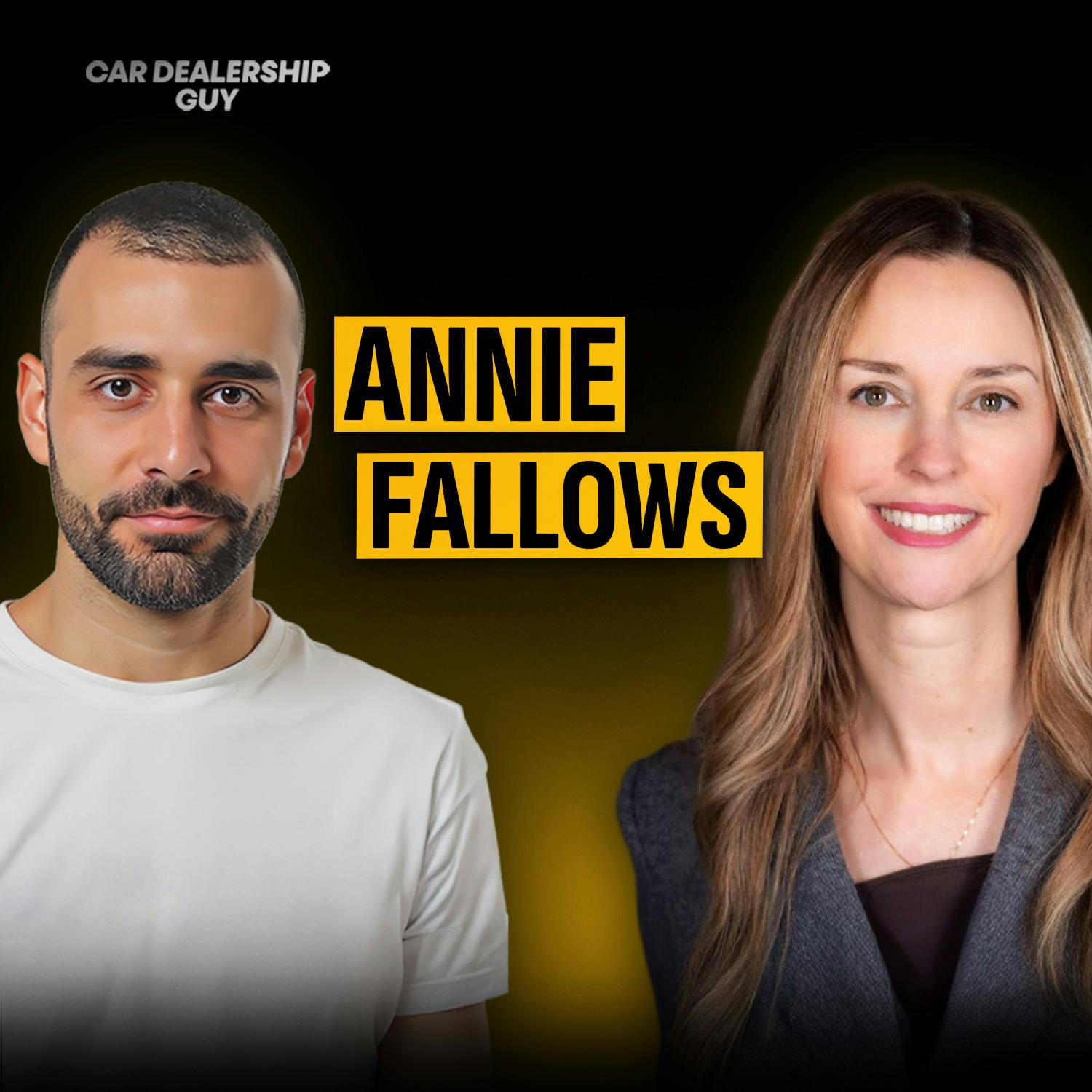
Solving the $182M Handoff Problem – Winning Back Customer Trust & Gen Z Buyers | Annie Fallows, Head of Navigator Platform at Capital One
Car Dealership Guy Podcast
Solving the $182M Handoff Problem – Winning Back Customer Trust & Gen Z Buyers | Annie Fallows, Head of Navigator Platform at Capital OneCar Dealership Guy Podcast · Jan 29, 2026
MSRP is the price that the car maker suggests you should pay for a car. It's like a starting point for buying a car, but you might end up paying more or less depending on negotiations.
Digital tools are online resources that help you buy a car, like websites where you can see cars, chat with dealers, or even get financing online. They make the car shopping process easier and more convenient.
Add-on products are extra items or services you can buy when you purchase a car. They might include things like warranties or special features that make the car more enjoyable or easier to maintain.
LIVE
You should let them do all of that in the order that they want and just be ready for
them. Because if you're not willing to do that, the dealer down the road is. And the
more that you can meet their expectations, you increase your conversion because they're
getting bought into your dealership, right? They're feeling like I've already done these
two, three, four steps with you. If I go down the street, I have to start over.
Today I'm joined by Annie Fallows, head of Navigator Platform at Capital One. As digital
adoption accelerates, the industry is seeing a massive surge in dealer trust. Yet the handoff
from online to in store remains the most critical point of failure for customers.
Annie breaks down how to capture the next generation of buyers by removing financial
anxiety and why your current tech stack might be locking you out of the AI revolution. A big
thank you to our sponsors for making this episode possible. Amazon autos, lot links,
and of course, Capital One. And now let's get into the show.
Annie Fallows on the CDG podcast. Annie, welcome. Awesome. Thanks for having me.
Good to have you on. First time chatting on the podcast. We did briefly chat when I was
at the corporate office not too long ago. So maybe you remember that. That was a fun experience.
It was about a year ago. I had a lot of big changes when I said for you.
Yeah, we're moving along. So we're having fun. Annie, I want to jump right in. So I took a look
through. I know you are knee deep at Capital One in dealership data, trying to understand,
you know, where is the puck going? What can you do to kind of help move that forward and
provide a better dealership experience? I want to start with a stat that jumped out of me. You
wrote that or one of your studies noted that dealer trust has risen from 44% to 70%. What is
that? Can you tell us about this? Like, what does this really mean? Like, who's trusting
dealers more? Why are they trusting dealers more? How did you measure this? Give us the
give us the full scoop. Yeah, this is a big win for both consumers and dealers. So we every year
do a really deep look across the landscape. We interview and survey tons and tons of consumers.
Of course, we're always talking to dealers. And we've long time had a real belief in the
core importance of trust and transparency. And so as you reference, we've seen trust over the
past two years go up really astronomically from in the 40s to the 70s. And so the question is,
how did we get here? And I think there's two really important things, one backwards looking,
one forwards looking to think about this. The first one is a couple of years ago, of course,
we were still knee deep in a lot of the inventory shortages. And that was not a feel good story
for consumers. They were trying to figure out, can I even get the car I want? Cars were going
above MSRP. So what price should I expect? And how do I feel about that value? So the first big
story is we've recovered from that. And that's awesome news for consumers and dealers. But I
think the even bigger story going forward is the way that dealers are stepping up to deliver on
consumers core expectations around what they want the shopping experience to look like. So we see
today that over 70% of consumers, they want to be able to interact with their dealer through
awesome digital tools. And that is a place that a lot of dealers have been leaning in on and that
that hard work is paying off. And so that's showing up in trust, in the ability to start the
conversation before they come in, get the information they want. And what I love about this
is, you know, it's not only good vibes. I mean, that's great too. But we see that when a consumer
trusts a dealer and has that positive shopping experience, they are too acts as likely to come
back and buy their next car from that same dealer. So it's, you know, both feel good story, but also
a really good bottom line story. Take me take it one layer deeper. How is this measured? Is it
broad based? Is it by geography by certain brands like to certain brands significantly
outperform others? What do you how do you think about that? Yeah, we look at it from all different
angles. I mentioned we've surveyed thousands of consumers to get to this. And you know,
on the one hand, a lot of it is hyper local, you can have a franchise with a winning dealer and
someone else who is struggling. And so no dealer should take this for granted. It's not like my
friends down the street have earned their trust. And now I have their trust, you got to think about
it within your own store. And that's where how you're engaging with your customer before they come
in, making sure that you are not surprising them to the negative once they are in the store. If
there's a change consumers understand that they're swapping out a vehicle, there's new information
about their trade, all of that is fine. But how you're connecting the dots, that's what matters
for your individual dealership. The one place where we did see a really interesting split and one
that I think a lot of folks would not have expected is we actually see that Gen Z way more trust
dealers than any other age cohort. And we're defining that as people in that 18 to 28 year old
spot. And so this is fantastic news because these are the people who have the most buying ahead of
them and we are starting off in a fantastic place. And not only do they trust generically, but they're
actually saying that they view dealers as among the top five information sources who they want to
go to to get great information about their car purchase. And so this is awesome. Dealers are
coming in from a place of strength with the newest set of buyers who have the most long term buying
ahead of them and have a great way to kick off that relationship. Of course, you earn business
every day. So it's then how do you deliver on that? How do you keep that up? And that's what
winning dealers are leaning into. So how do you think about this? You're EVP at Capital One,
but you're also ahead of the navigator platform, dealer navigator, auto navigator. I'm sure many
dealers listening use that. How do you reconcile that with when you mentioned this trust, Gen Z
buying habits, how does that actually translate into what you're doing to support dealers? Like
what do you build or how are you servicing that and working to power dealers so that they can
capitalize on this as best as possible? I really think about it in two ways that that we're hand
and glove together. So the first one is those high quality connections that dealers are making
with consumers. And so are you bringing in a consumer who's really interested in buying as
opposed to, you know, they're off just kind of looky loose, and then you're spending a ton of
time chasing them down. And then that just becomes a negative dynamic. So we focus a lot in auto
navigator on creating an incredible shopping experience for consumers that really pulls in
people who want to be engaging with dealers. And so we see that payoff in a big way. We have just
off the chart satisfaction from consumers, and then that plays through in terms of them being
excited to buy a car from the dealer who they've connected with. If you look overall at other
players, the average percentage of consumers who buy a car when you're, you know, out in the world
looking at these third party aggregators, that's like 6%. So a lot of junk out there. But when you
look at a really high quality experience like we have on auto navigator, that jumps to over 36%.
So it's just game changing, getting started with consumers in the right way. And then of course,
once you have them, it's how do you deliver on those expectations? And some of the core things
that we think about is continuing that journey so that the consumer has not gotten off to a great
start, isn't disappointed along the way. So having the information so that they're not repeating
themselves, if they've precalled once, don't ask them to do it twice. If they've already shared
their address with you, you've got that information. And the more that you're able to do that across
both your digital properties, and then of course, once you bring them in store, that's the winning
recipe. And we see dealers who lean into that with our tools, or something comparable, just
knock it out of the park. And we've been piloting this, and rolling it out across thousands of
dealers, and we are seeing them more than double, not only their leads, but also then their conversion
rates through that. And we've got fantastic dealers here, some of them in Dallas, we have
Nabila Ziz at Tradeline, and they've just had game changing results in terms of looking at
their sales, as well as the in-store experience. And when you said game changing results, what
specifically are they leaning into? Well, they're leaning into both those upfront,
high quality lead connections, and then they're leaning into using our tools end to end. And
what they're finding is the ability to connect the dots for dealers. And so when you think about
a lot of the tools historically, a consumer might submit information, and then it's just
sort of like drifts away. It's either not handed off from one system to the other,
or if it is, it's like in this dead zone of notes. And so, you know, how many times have you
been in a dealership and heard them say, read the lead? Well, that sounds really good, but in
reality, you're talking about this poor sales guy who's like trying to sift through a ton of
information while simultaneously engaging the consumer on the other side. That's just really
hard. And you either end up with a trade-off usually on the consumer experience or on asking
them to repeat information. And so we've partnered with folks like Nabil not only to streamline
that so all of the information is available in a really high quality way, but the experience is
as good for the dealer personnel with that simple interface as it is for consumers. And so that
enables dealers to really then focus on meeting their consumers and where they are, and of course
getting them in the test drive, which everyone likes, and signing them and having them out the
door. So tell me more about Gen Z. You briefly touched on this earlier. One thing I noted is
that they're a growing cohort of buyers within dealerships, of course. I noted that they report
the most anxiety with car buying. What is it? What is driving that? Like, how do we fix that?
Because that's obviously not good for customer experience or business. So what's driving their
shopping experience or feelings? Yeah. So the number one driver that we see of that anxiety,
it's ultimately financial. They're concerned about their pocketbook. How are they going to make car
payments? How are they making other payments? And this is bigger than something that dealers can
solve in terms of the source because ultimately they have to feel really good about the total
cost of ownership, the car payment, the insurance, the repairs. But where dealers can be a real force
for good here is helping those consumers to get comfortable with their budgeting, giving them
the opportunity to think about it at home before they kind of and having that foundational level
of trust so that Gen Z or any buyer is making the decision that makes sense for them. And once you've
removed that frustration point, then you're able to focus the consumer on the parts of car buying
that they're there for, right? Picking out the car, going on that test drive, figuring out is this
going to be a fit for them and their lifestyle. And so the more that you can just meet them where
they are, understand their budget concerns and help them feel that they're going to be successful
financially with this really big purchase, then you're able to delight them and of course
have those loyal customers that come back. This episode is brought to you by Amazon Autos.
Amazon Autos is your key to growing your dealer business. They connect dealerships like yours
with the millions of online shoppers who visit Amazon every day. And yes, they're shopping for
cars. The Amazon Autos marketplace makes it easy for dealers to list their new used and certified
pre-owned inventory for purchase ready local customers. Because having deals walk through
the doors of your dealership is better than chasing cold leads. Best of all, you maintain
complete control of your inventory pricing and customer relationships while leveraging Amazon's
highly trusted shopping experience. Sounds pretty good, right? Meet the Amazon Autos team at NADA
2026 to learn more. You'll find them at booth 6406 in the North Hall. Check out sell.amazon.com
slash program slash autos for all the details or click the link in the show notes below.
Okay, that makes sense. But let's now let's zoom out from Gen Z. Let's just think again,
all customers, where do you see from your research the customer-dealer interaction
relationship or experience falling short the most? Like, where's the, you know,
what's the most glaring to you right now, you know, January 2026? What is?
Yeah, I mean, I think that handoff from online to in-store is the place where, unfortunately,
so many expectations get broken. And this is because of the tooling at the end of the day.
You know, consumers are sharing all of this information upfront, and they're spending a ton
of time, you know, they're going on to third-party websites, they're on your dealership website,
they may have submitted information. And so they're feeling like, hey, I've done all this work up
front, I'm just going into the dealership to polish this off. And yet so often, when they do
that, they're starting over from scratch, you know, despite having spent hours and hours
in a lot of dealerships today, all that work might save you five minutes. So that's a frustrating
consumer experience. And then it's frustrating for dealers too, because rather than being able to
help that customer, you're starting off on your back foot where they feel like they've already
shared all of this information. So dealers that can solve that problem, it's a game changer for
them, and they're able to really delight their customers, but also move them through the sales
process. And you know, one thing that is... Yeah, please. Well, you know, one thing that I find
really interesting is a lot of dealers historically had parts of their process that they wanted to
hold back. So, you know, add on products, that's a great example. They'd say, hey, I really want to
be able to sell this in-store, so I'm going to wait to introduce that until my consumer is in-store.
And what we see is those sorts of surprises do not land well with consumers, but even more so,
they actually are not serving dealers. And so if you're able to introduce some of that up front,
you don't need to make the full sales pitch, but let them know these are some things that they
should expect and be prepared to have that conversation for. When they get into your dealership,
they're actually much more likely to make that purchase. So if you can solve that handoff,
that is a winner both from a CX perspective, but also from a bottom line perspective.
Do you have any data from your dealers on what is the best practice there? Like, is it, you know,
shared information down to the penny, down to the cent? Is it market-dependent on my little
competition, or is it just like, share what products are available? I'm curious, you know,
I agree with you. Like, every, you know, smart dealer I know has, or many I would say,
share up front or early in the process because it sets better expectations and it's less of a
abrupt kind of, you know, intro to the product later down the funnel. I think there's probably
historically been some reluctance because it's, you know, it's a date you typically are historically,
right? First land deal or the sale of the car, then get to the products and, you know, it's a kind
of not afterthought, but it, again, after you've already negotiated a price of the car. But what
do you see is, is there any best practice on specifics of how much to share up front and when
for these added products? Yeah, I mean, some of the things I would think about are, who is your
consumer? What does your product strategy look like? And depending on the complexity of that,
that may be too much to sort of put it all out there up front, just because it's daunting and
it needs to be explained. And so I think how much you share up front is going to depend a lot on
those sorts of factors. But the thing that I would say pretty universally is starting to set that
expectation for consumers that they're going to want to think about what those products look like,
that they might want to do some research before they come in, giving them some budget expectations.
Consumers like you typically end up adding on about this much for these types of things.
That's really what consumers need up front. That gives them the chance to
have a conversation with their significant other, take a look at what they can really afford,
form their own perspective, and also educate themselves on what the value of some of these
products are. And it actually really helps out the dealer, because then as opposed to the consumer
coming in on their back foot, they're coming in having gotten used to the idea of figuring out
where they have questions and it's a much better conversation and one that's also much more successful.
How do you think about removing some of that uncertainty from the process?
We can hone this in on Gen Z or broader to all customer bases. But do you see any specific
piece of the sales process early on or any specific uncertainty that would most just
disproportionately upgrade that car shopping experience from your research? Is it that information
gap that you just mentioned? Is that it? Is there something else that you think has a bigger impact
on the customer experience? Well, being able to let the consumer do as much as they want
from home, and that's going to vary. So some consumers are like, I've already know what I
want to do. I really just want to come in and do my test drive. Great. I love that for you.
Other people want to get really prepared. So they're going to want to pre-qualify. They're
going to want to send you photos on their trade-in, all the things. You should let them do all of that
in the order that they want and just be ready for them. Because if you're not willing to do that,
the dealer down the road is. And the more that you can meet their expectations,
you increase your conversion because they're getting bought into your dealership. They're
feeling like I've already done these two, three, four steps with you. If I go down the street,
I have to start over. So leaning in on that, I think is really important and a big part of
what dealers need to do to be successful. Annie, talk to me about, I saw this one term
on my notes that you had pointed out, like a personal concierge feeling. This is a point of,
I would say, some friction for many dealers out there, where how deep do I integrate
AI into my sales process? I think with service, it's been more of a, not obviously a quick win,
but service has very defined the linear path. Sales is a bit, it's just not as linear.
Customers might start one way, move to another thing, look at a picture, go to that, go to the
price, go back. What's this term of personal concierge for? How do you think about that,
offering that experience? And what are you seeing? Like the best dealers, how are they
balancing a personal concierge versus an automated bot? How are you seeing that?
Yeah. So I think the two big differences to me are one, the context, having whatever is available
to the consumer on the web or in your store available as context for that service, as well as
any information that the consumer has already shared. If you're starting over, A, that's
frustrating for the consumer, B, there's a real risk that they're going to get different answers
between time one and time two, and that undermines your trust. And then the second thing is, of course,
reducing friction. Don't repeat steps. Don't take the customer backwards. And so we see that as the
really big difference in a concierge tool versus historically what were a lot of chat bots that
were honestly glorified lead collection forms. And those were not really value added experiences
for consumers. And you see that, I think, in the performance where you may or may not end up
collecting the lead, but are you really getting the sale? And what we see with our chat experience,
which we've massively invested using generative AI, is that the chat experience is able to
meet the consumer where they are. So it can ask questions. And the chat experience is able to,
in a very human like way, consolidate all of that information in order to help the consumer
and have them move forward. And we see that as a big, big game changer for not only getting
that contact info, which of course, dealers want and need, but actually turning that into sales.
And one of our early dealers who we partnered with in a big way is in the Huffines group,
and got multiples of leads in sales, actually, interestingly, both on the sales side,
but also on service. Because even though consumers were on that portion of the experience,
then their attention went to other things. And so having a high quality chat concierge experience
that can work across those different customer problems just helps dealers win.
This episode is brought to you by Lotlings. Chat GPT can write emails, plan trips, even tell jokes,
but it can't tell you which vins are at risk of sitting too long, how your dealership performs
against your competition, or how to improve your VDPs. That's where Lot GPT comes in. It's the only
chatbot built exclusively for car dealers. It knows your market, dealership, and inventory.
Fueled by Lotlings' decades of vin and shopper data plus your live inventory, Google Analytics,
and CRM, it delivers relevant answers and guidance to help you sell cars faster and more profitably.
Lot GPT is free for dealers, but invite only. Join the waitlist now at lotlings.com slash Lot GPT,
or click the link in the show notes below. Do you think we have any risk here of over-automating?
Well, I think there's a big difference here between automating and standardizing,
and a lot of people use those two words interchangeably, but there's a really important
difference here. So standardization is trying to turn everything into the same,
and that can be awesome for your backend processes where you just want them to go,
you just want them to be seamless. What you don't want is to be trying to standardize the consumer,
right? Each consumer has their journey, and we all know if you're trying to force them to do
something different, you're going to lose a lot of them. And so I'm less concerned about smart uses
of automation upfront where they're personalized, where the dealer is staying in the loop so that
they can come in and help the consumer. But if you're thinking of this as just a pure standardization
play, I don't think that will help you on the upfront part of the consumer interaction. I would
save that for your backend processes. Okay. So as you're, we're talking a lot about, you know,
different technology and AI, and I think you are, as someone who's leading the charge on
lots of this, right, you're literally, you have teams building this. What do you think a dealer
that's either being pitched a product or maybe exploring a product such as, you know, a new
AI tool, what questions should they be asking? What do you think are the most important things
they should be looking into as they're vetting, you know, what is the right product for me and
should I integrate this in my dealership? Yeah. So I think there's a couple of context points just
broadly that I would encourage dealers to think about before getting into the specifics of an
evaluation. One is there is a lot of return investment to be had in this space, but it's
going to vary. So there's some recent research out from folks like Wharton and Google, it's finding
that businesses are getting a return on roughly 75% of their investment here, but not a hundred.
And so when you're going in and you're excited about an AI product or any product, right,
you have to make sure that it's going to deliver value and you know where that value is going to
come from. So I think that's the first thing. It's not, you know, it's not going to be a silver
bullet. It's going to depend on how you're using it. The second thing is we are early days still in
gen AI and, you know, almost by the week, who's in the lead, who's behind is changing. And so
one of the things that we think a lot about, and I would encourage dealers to think a lot about,
is don't get yourself overly locked in because the player that you could be totally right today
about, they could be the absolute best. They may not be the best in six or 12 months. And if they
have all of your data, if you've had to do a ton of customization into their stack, your hands
are going to be tied. Feedback. Yeah. And so feedback. That's something we think a lot about,
you know, long-term contracts, who's getting the data? Are you customizing into their stack or
are they coming into your ecosystem? So I would be as thoughtful about those things as you are
about, am I going to get that in your term benefit in the next few months? And then lastly, you know,
just ask yourself, does the technology really do something that's going to help me? And if it
does, I think you should go all in on learning about it and experimenting with it, because this
is where the world is going. And people who are using it early, they're going to get the chance
to learn and refine. But if it's just going to be window dressing for you, you know, you have a lot
of tools already, there's a lot of information to keep in sync, then I would probably let that one go.
Yeah. Yeah, you're definitely seeing the quality just shift so rapidly. And I'm, and
even like, just start with the LLMs, you know, like you hear, you know, Gemini, ChatGPT, like,
it's changing so, so quickly. And that obviously permeates through to all the companies serving
me and every dealer. So, so any, like, on a personal level, what's what's most exciting to you? You
mentioned we're early in Gen AI, which sounds crazy, because it feels like, you know, at the level that
we're using this stuff, it feels like we're, we're not early, but I agree with you in the big
picture, we are early, you know, call it internet early 2000s or late 90s or whatever you want to
call it. So what's the what's the kind of personal level? What's exciting to you now?
Well, as it relates to Gen AI, I mean, yeah, it does feel like we've been doing this forever. And I
think part of the reason is because it's gotten just crazy adoption. I was looking at a chart the
other day. And it's I think the fastest adopted technology out there. But it's changing day by
day. And I'm loving using it, you know, both at work, as well as in my personal life, I'm an avid
traveler, a bunch of these photos you see behind me, those are ones I've taken on different family
vacations. And just where have you been anywhere? Where have you been? What am I seeing back there?
What pictures? Oh, my gosh, so many places all across. But I will point out this one that I'm
kind of blocking there. That's probably one of my my faves. That's from Sequoia National Park in
California. Bit of a sidebar. But those those Sequoia trees, they are like 1000 plus year old,
some of them are 2000. And the one that I took a picture of there is actually a survivor of the
wildfires. And it's still growing and thriving. And so it just sort of when you're in all of the
day to day frenzy, and taking a step back and looking at that and thinking, wow, this tree
not only has been around forever, but it's survived fires, like, it's all going to be okay.
Yeah, I am. It is crazy. I actually I want to visit there one day. It looks beautiful. I've seen
those like super wide big trees. Amazing stuff. And before we wrap up, any da plans, I know Capital
One always does, you know, make a big splash. I've personally, you know, attended the events
with you know, Sanjeev and actually, I think it was last year, maybe two years ago was two years
ago was Tom Brady. You know, that was that was a fun experience. But what's what's your plans for
this year? Well, we are really excited about it. Sanjeev will once again be sharing some really
exciting product news as well as sharing the stage with Matthew McConaughey. Amazing. And Andy,
before we wrap up, is there anything I did not ask you that I should have anything lurking in the
back of your mind that you want to share? You know, I think it's just an exciting time in the
industry. I think the tools are there. I think we see a lot of dealers using them to win. And so
that is awesome to see. One of the things that inspires us at Capital One is to change
banking and car buying for good and the possibility for dealers to be connecting in such a high
quality way, whether that's on Auto Navigator, whether that's on their own website.
Andy follows Capital One. Andy, thanks so much for coming on and sharing your insights. Appreciate it.
Thank you, Yossi. Great to be here.
Hey, everyone. Thanks for listening. If you want to learn more about Capital One, you can visit
them at their NADA booth at 1-771 West. I'll be dropping by on Thursday to check it out as well.
See you there.
All right. Hope you enjoyed that episode. Please give the podcast a rating. Consider subscribing
to the show and check the show notes for links to what we talked about. Thanks for tuning in. I'll
About this episode
Annie Fallows from Capital One discusses the crucial transition from online to in-store car buying, highlighting the importance of building trust with consumers, especially Gen Z. With dealer trust rising significantly, she emphasizes the need for dealerships to enhance their digital tools and streamline the customer experience. Fallows shares insights on how to alleviate financial anxiety for buyers and the role of AI in improving dealership interactions. The conversation also touches on best practices for engaging customers and the evolving expectations of the next generation of car buyers.
Today I’m joined by Annie Fallows, Head of Navigator Platform at Capital One.
We dive into a massive shift in market sentiment, exploring how dealer trust skyrocketed from 44% to 70%. Annie breaks down why Gen Z is your most loyal—yet most anxious—customer and reveals the "spicy" truth that most digital processes only save five minutes of in-store time.
You’ll learn how to bridge the friction-filled gap between online research and the showroom floor to double your conversion rates
This episode is brought to you by:
1. Amazon Autos - Sell vehicles to online shoppers who can now buy or lease at Amazon Autos. Upload your inventory of new, used, and certified pre-owned vehicles to our online marketplace, where purchase-ready customers can browse, purchase online, then pick up at a local dealership. Learn more @ https://sell.amazon.com/programs/autos
2. Lotlinx - What if ChatGPT actually spoke dealer? Meet LotGPT — the first AI chatbot built just for car dealers. Fluent in your market, your dealership, and your inventory, LotGPT delivers instant insights to help you merchandise smarter, move inventory faster, and maximize profit. It pulls from your live inventory, CRM, and Google Analytics to give VIN-specific recommendations, helping dealers price vehicles accurately, spot wasted spend, and uncover the hottest opportunities — all in seconds. LotGPT is free for dealers, but invite-only. Join the waitlist now @ https://lotlinx.com/LotGPT
3. CapitalOne - Many dealers believe digital tools can help boost sales. But early findings from a recent Capital One Auto survey revealed operational challenges dealers are still navigating and how trust is shaped. Listen for insights as to what’s been uncovered and where the research is headed. Learn more @ https://www.capitalone.com/cars/auto-financing/dealer
Check out Car Dealership Guy’s stuff:
For dealers:
CDG Circles ➤ https://cdgcircles.com/
Industry job board ➤ http://jobs.dealershipguy.com
Dealership recruiting ➤ http://www.cdgrecruiting.com
Fix your dealership’s social media ➤ http://www.trynomad.co
Request to be a podcast guest ➤ http://www.cdgguest.com
For industry vendors:
Advertise with Car Dealership Guy ➤ http://www.cdgpartner.com
Industry job board ➤ http://jobs.dealershipguy.com
Request to be a podcast guest ➤ http://www.cdgguest.com
Topics:
00:27 Why is dealer trust important?
02:55 How do you measure dealer trust?
03:49 Do Gen Z trust dealers?
04:49 How can technology support dealers?
09:00 How can customer experience improve in today's world?
16:37 How to balance automation and personalization?
20:35 How should dealers evaluate AI tools?
Car Dealership Guy Socials:
X ➤ x.com/GuyDealership
Instagram ➤ instagram.com/cardealershipguy/
TikTok ➤ tiktok.com/@guydealership
LinkedIn ➤ linkedin.com/company/cardealershipguy
Threads ➤ threads.net/@cardealershipguy
Facebook ➤ facebook.com/profile.php?id=100077402857683
Everything else ➤ dealershipguy.com