China used to make very few cars, but now they make a lot and are selling them all over the world. People wonder if Chinese cars will start selling a lot in the U.S. too.
Franchise dealers are car dealerships that have permission from a car company to sell and fix their cars. They work closely with the car company to make sure everything is done the right way.
The Chinese auto industry means all the car companies and factories in China that make and sell cars. They have been getting better and making more electric cars.
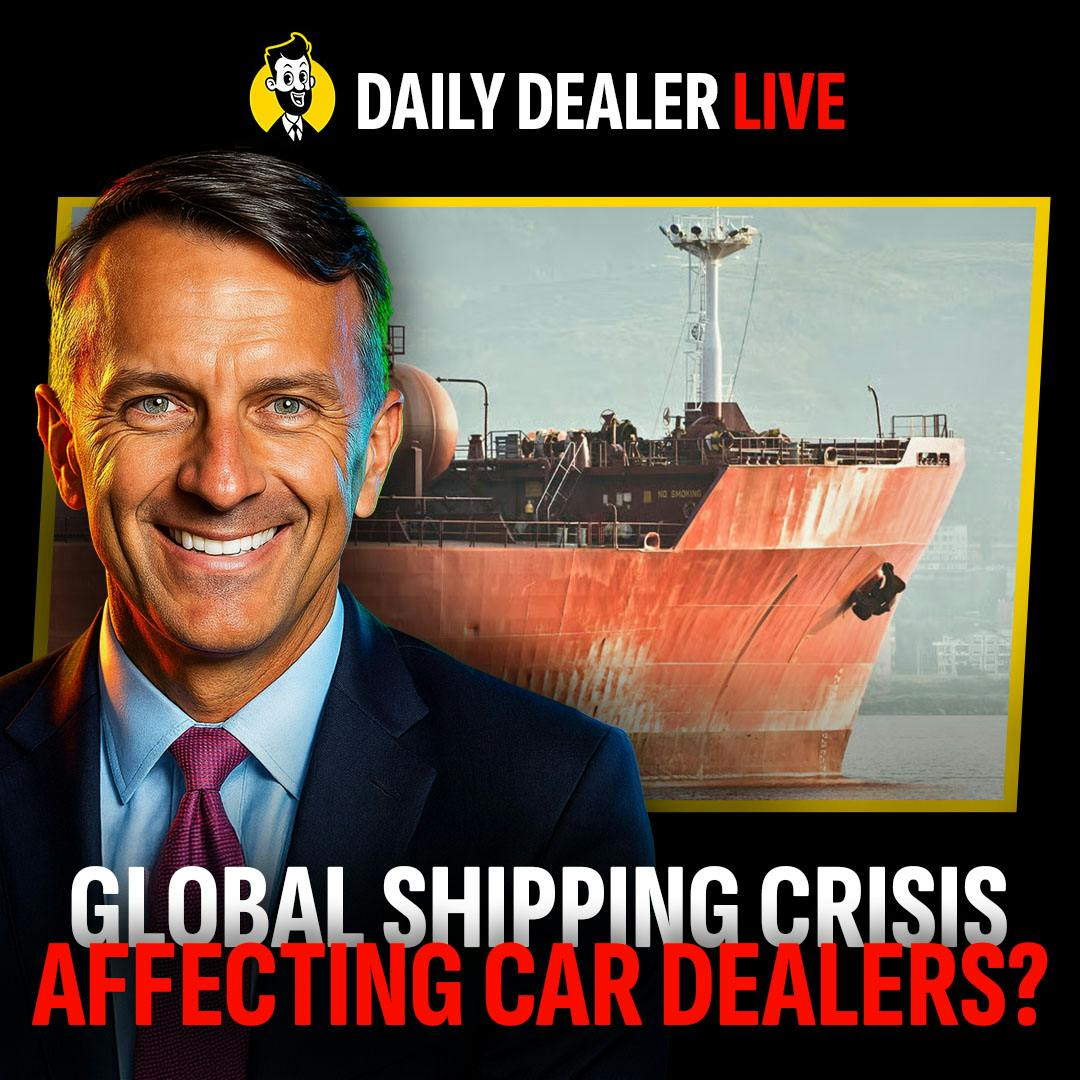
The Strait of Hormuz is a narrow sea path where a lot of the world's oil ships pass. If something blocks it, oil prices can go up and that can affect car dealers and gas prices.
The Dodge Ram is a big truck that can carry heavy loads and is very strong. It's popular for work and everyday use. People often talk about it when dealerships buy or sell places that sell these trucks.
BMW is a car company from Germany that makes fancy and sporty cars. They have a big factory in South Carolina where they build many of the cars sold in America.
Tariffs are extra taxes that a country charges on things brought in from other countries. This can make cars made in other places more expensive to buy.
A new car shortage means there aren't enough new cars available for people who want to buy them, so prices can go up and it can be harder to find the car you want.
General Motors is a big American car company that makes many different cars and trucks. They work with other companies around the world to sell cars in new places.
The Ford Bronco is a type of car that can drive well on rough roads and is good for outdoor adventures. It looks a bit like older models but has new technology inside. People talk about it because it helps Ford make money and stay popular.
Learn more by clicking the link in the show notes below.
And we at our auto group, I think,
had a little bit of a hand in developing that.
But in fact, it's interesting to me
as you think about that, 90% of dealers say
fraud is rising, 75% say it's already impacting operations.
It's either there or it's not.
And if it's not at you yet, it soon will be.
So props to Experian Automotive
for supporting today's content,
including this conversation with Charlie
on use car acquisition and F&I success
and the coming up conversation on China
and Chinese vehicles.
So props to Experian Automotive.
Thanks for supporting the content of today's show.
And let's go straight into this,
into a conversation with Yagesh Darje
founder and CEO of Agent Dynamics.
Yagesh, welcome to the show.
Hey, Sam, thanks for having me.
Yagesh, you're a first timer on this show.
Tell us a little bit about for our audience
that doesn't know you,
who you are and what you do in the world.
Sure, definitely.
So my background is in building
large scale communications infrastructure.
I spent years at Twilio and Amazon web services
processing billions of transactions per day.
And after that, I ran a venture backed AI startup
where we trained large language models.
And I saw firsthand how fast these models were improving.
That's when I saw the opportunity in automotive.
We are building agent dynamics.
It's an AI VDC that responds to every single lead
under 60 seconds across various channels, voice, SMS, email.
And we are live with dealerships,
zero turn and growing purely through world of mouth.
So Yagesh, you have said the biggest problem
in automotive today is speed to lead.
Why is speed to lead still broken
in this day of automation and technology, Yagesh?
Definitely, this was really an interesting experience
that I had when we started building this product is,
dealerships are losing sales
because they can't respond fast enough.
A customer submits an inquiry
to five to six dealerships at once
and a dealer who responds first
with the most accurate information is going to win.
We've seen that industry average is around over two hours
and what we do is we respond under 60 seconds
with actual inventory, a live pricing
and an appointment booked on the spot.
Yeah, the deeper issue.
Yeah, so go ahead.
What is preventing most dealers
from responding more quickly?
If you say the average is two hours,
I would argue that most people lose focus,
attention and interest at two hours.
Like if I'm researching something,
I think about like, I think about Amazon,
I think about Instacart,
I think about anything you wanna buy online.
If it's gonna take that long,
I'm done and moved on to the next thing two hours later.
Same for automotive.
Yeah, so that's exactly right.
So the deeper issue is that the fragmentation, right?
So dealerships, they use eight to 10 different systems
that don't talk to each other, right?
So they use different systems.
It's a mess, yeah.
Yes, they're opening like 10 different tabs
and trying to answer queries
and look up a vehicle, features and all of that, right?
So what we have seen is,
because these all this data,
which is living in all these different systems,
that doesn't communicate with each other,
customer communication falls through cracks, right?
So what you need to do is
you need to connect all the systems together
and build a seamless communications experience
to handle these conversations.
So think of it as in,
what we do is like an AI BDC that works alongside your team.
It handles all this repetitive, high volume work.
We make your team more productive
so they can spend more time on the floor
having real conversations with the customer
and delighting them.
Okay, so talk to us about this.
Your AI platform, you said in the intake,
it responds in under 60 seconds.
So you go from two hours to 60 seconds.
What does that interaction actually look like?
How does that work?
Exactly.
So, as soon as customer submits a lead instantly,
because the data hits the system as quickly as possible.
So there are different channels
with which you can interact with the customer, right?
So there is SMS email,
if we have their phone number,
we send them a text message asking about the vehicle
or if leaders have enabled our bond calling,
we also call the customer and tell them
that you inquired about this car
and how can we help you?
And answer any questions
and book an appointment on the spot, right?
So those are some of the things that we do.
And with respect to, let's say if they don't pick up the phone,
we leave them a voicemail and SMS and an email.
So the customers can pick up whatever channel
that they want to communicate with, right?
They can get back to you as quickly as within a minute
or one hour or two or whatever, right?
So the communication is never fallen through crack.
So Yagesh, we talked in the green room
how there's so many AI driven tools out there.
Everybody's got a tool
and everybody's trying to sell that tool into dealerships.
What are dealers to think about that?
And when you think about,
you've got a strong opinion about what makes great AI
that actually delivers on promises.
How should dealers think about buying the best AI tools
and finding the best AI tools in March of 2026?
Very, very great question, Sam.
So this is really important.
And I see this very often when we visit dealers.
One thing is education, right?
You need to do your due diligence really well
with the vendors that you're signing up with.
One thing I recommend.
So what does due diligence look like?
What am I looking for?
I'm talking to the CEO of an AI company.
What do I need to ask for?
Exactly, so basically,
so one thing is you want to ask them
what current customers,
how are they using their systems?
And then ask them how their system
will integrate with their dealership, right?
So tell them, we have these 10 different systems.
How are they going to communicate with each other?
What vendor certifications and partnerships
you have with these different integrations
that we need to do?
Secondly, don't sign up an annual contract.
I can't emphasize this a lot,
is like AI is only three,
like LLM concept of LLM is only three years old, right?
Like the chat GPT moment about three years ago, right?
The open AI and the anthropics of the world
are still innovating.
They are moving fast.
They still don't know what the AGI is going to look like.
So my point is you need to understand
that vendors who are claiming
that they are number one automotive AI companies,
I would be very skeptical of them.
You need to ask them the right questions,
look at their backgrounds of the founder,
the team, engineering team,
how their support is going to look like.
So I want to latch on to something you said.
So obviously check out their background,
check out how they interact and engage.
Do not, you said, sign a 12 month contract.
Why do AI companies in 2026 go for the 12 month contract?
And what should be the reply of every dealer
presented with the term contract like that, you guess?
Yeah, so what I would encourage is
when you're signing up on a new tool,
we encourage that you start with one rooftop,
one lead source and do a pilot or D-Day pilot.
Let them integrate with all your different systems,
see how they communicate, how they respond,
how they educate, right?
And how are they going to ask the right questions
to be able to get all the right information
so that you are successful, right?
But if all of that is falling through cracks,
then you know that you have a way to,
like because then you're not bound by the contract
and you know how it performs, how the AI performs, right?
So you look at all these metrics,
ask them for dashboards, metrics.
So we do this on weekly basis.
Every single week, we are looking at the dashboards
and metrics together.
We send them a report of what went well,
what is not working well with the AI,
what do we need to configure?
Because there are like 100 different configurations
that we have to do.
And that just, you know,
iteratively just becomes better over time.
So you need to ensure that they are proactive
and they don't make you create like a support ticket
which is sitting in a queue for like 15 days
and nobody responding.
Yeah, yeah.
So in support of what you're saying,
Allie Pinyin marketing comes on, says facts,
do not sign a 12 month contract.
So, you know, you're giving us great tips
on how to buy automotive AI in March of 2026.
What's your response to the AI tech company
that comes back and says,
we have to have a 12 month contracted.
That's how we allay all of our fixed expenses.
If we don't have that long of a commitment,
we can't make it work.
It's not gonna learn your systems and processes well enough.
What's your response to that as our last question today?
I think that I would be very skeptical people
who say that because unless you are one of the,
like, so my background,
I've done AI infrastructure startups before
and I've trained these large language models
and I know how they work,
how the models improve over time.
There is no perfect system out there.
So you would have to improve it over time
and that cannot just happen
by signing a 12 month contract.
You need to give it time.
You need to give 30 days, 60 days to do pilots
to see how the AI is improving for your store.
See what kind of models they are using.
I was talking to a dealer last week
and they said, you know, they are talking to a vendor
but they said that they only support these four APIs
even though there are like additional APIs available.
They wouldn't make them available.
They wouldn't add them
because most of the customers don't need it.
That's not the correct answer
because when you're dealing with a technology
that's so new,
you would have to support, you know,
as many different integrations and APIs as possible
so that your AI has richer context
to have better communications with your customers.
Yeah, Gash,
it's an absolutely fascinating argument and automotive today.
I love your conversation on speed to lead.
As an industry,
we've got to reduce that speed to lead time
from two hours to seconds and minutes.
Technology is a great way to do that.
It doesn't replace,
it enhances, I think,
the user experience in dealership
but also to the end user.
And your rally cry on the 12 month contracts,
I think is fascinating as well,
especially from ahead of an AI company.
So we appreciate you giving us some tips today
on buying and installing
and then using automotive AI in BDCs and elsewhere.
You guessed, Dari, founder and CEO, Agent Dynamics.
Thanks for being on the show today.
Thanks, Sam, for having me.
Couple of, well, of course,
Ally said, Ally, opinion marketing said facts,
don't sign that 12 month contract.
Just don't do it.
And just logically, when you think about it,
there may be some vendors
that have a different perspective than me.
I'd love to hear it in the comments.
When you think about it,
you've got the expense of developing the technology
and technology is developing so quickly.
How do I know six months down the road
you went from being a leader to the laggard, right?
We want the best in tech
and we want to be equally yoked together
in us implementing and using it
and then you upgrading, keeping it great
and keeping it relevant.
So when somebody comes to me
and looks for a long-term contract like that,
I'm kind of of the same opinion.
You know, a 12 month contract
doesn't show equal commitment.
So I don't know.
Anybody in the vendor world,
I'd love to hear your thoughts on that.
But we've got China to talk about.
We go from our first conversation, Charlie,
about, hey, would you like more discipline supply
coming out of COVID with GM?
Or do you want bigger supply?
Well, there's an automaker,
there's an OEM globally
that is producing a ton of vehicles.
And it is in China.
So next up today, we've got Michael Spiegel,
dealer principle, We Auto.
And Michael Dunn, CEO of Dunn Insights,
joining the show today to talk all things China.
Welcome gentlemen to the show
and just give us a little bit of background on you.
Yeah, my name is Michael Spiegel.
I'm the dealer principle of We Auto.
Appreciate you guys having us on.
Recently last year,
I got an opportunity to go
to the YPO Global Auto Summit,
which was in Guangzhou, China.
We get to visit the GAC headquarters,
DYD headquarters, X-Ping headquarters
and speak with a number of other executives
from Chinese OEMs
as well as dealers around the world
who are currently either representing Chinese OEMs
or competing with Chinese OEMs.
So it's just a tremendous learning experience
and appreciate you having me on.
And I'm even more excited to be with Michael Dunn,
who is the foremost expert on this subject
in the United States.
And so I'm excited to learn
just the same as you are saying.
You went overseas and saw the product.
We've had senators on the show.
We've had politicians.
We've had industry punts who've said,
hey, Chinese vehicles will never make it
to the U.S. marketplace.
It's a security, it's a privacy issue.
You went over and saw it.
First of all, why did you go over there?
And do you believe that they'll never come here
to the U.S.?
Yeah, well, I was really excited to go over there
as a person who looks to have a 30 or 40 year career
in the future in autos in the United States.
I see this as one of the biggest existential threats
that we're gonna face over the next decade or so.
And when somebody says they're never coming,
never is a long time.
And I'm certainly not in the camp
that they are never gonna come.
I think there would actually be certain pros
for them to come in a regulated orchestrated fashion.
However, I certainly see other countries
like France and Australia
who are suffering deeply from unregulated Chinese entrance
and what that's done to their auto-economy
and broader economy.
So certainly wanna be a part of the conversation.
I wanna be educated on what was happening over there.
And I think that the event really did that.
It was a great learning experience.
And I learned a ton.
So before we talk about facilities,
because I wanna get your sense of the quality
of the product, you mentioned Australia.
So I think the Australia experiment is fascinating.
They signed up a bunch of dealers
in Australia's franchise dealers,
much very similar to the franchise network here in the US.
They pumped a ton of vehicles in
and then they didn't really like
how the franchise dealers were operating.
So as I understand it,
some of those franchise dealers were turned direct.
They just went in and said, we're taking over these stores.
Is that your understanding?
And could that happen here in the US?
Yeah, Australia certainly has a lot of differences
between the United States,
one is scale and scope,
but also it's proximity to China.
It could not possibly create trade restrictions with China
because it relies on China for so many things
that are vital to that small little island.
Certainly, however, there's no doubt
that it had some adverse effects
based on the Australian dealers
who both compete against the Chinese OEMs,
but also Australian dealers
who represented some of the Chinese OEMs.
So the story that you spoke of,
I heard firsthand from dealers
and manufacturers in China
about going to Australia
and it was almost their speed to market
was almost a sense of pride for the Chinese OEMs.
Not necessarily that that was a con
that they would flip business models,
but it was a competitive advantage for them.
Now, could that happen in the United States?
Certainly we have really strong franchise laws.
I don't wanna compare us to Australia
and say that that would be day one
exactly how they would operate here.
However, I do think that this is a subject
that I don't think enough US dealers are educated
on some of the threats and possibilities
if we do let an unchecked Chinese auto industry
into the United States.
Whenever I'm in a pool of dealers
or I've even seen some polls where dealers are asked,
would you represent Chinese OEMs?
And everybody immediately goes to,
well, this must be just like doing business
with Toyota 60 years ago.
I missed it 60 years ago
and I don't wanna miss it now.
And I would caution dealers to get a little more educated.
I don't think that this is exactly
what that opportunity was then.
I'm not saying there's not an opportunity here,
but there's some major differences
that I think dealers need to be more educated on
before they just blankly raise their hand and say,
bring them in, I wanna sign up
and I wanna be a dealer representing
name the Chinese OEM.
And another one of those issues is
five years ago, there were 500 Chinese OEMs.
I don't know if you, United States OEMs,
you can count them on one hand,
maybe two hands if we're getting real creative.
But there were 500 Chinese OEMs five years ago.
Now there are 100.
Imagine if you were representing
one of the 400 Chinese OEMs
who were all the next latest greatest Chinese tech
that were coming to market
and then all of a sudden you weren't representing them.
Imagine if you were a customer who just spent money
and it might have been very affordable for you,
but a year later that OEM doesn't exist anymore
and there's no way to service it.
And as soon as one part goes bad,
you have to scrap the entire vehicle
and buy a whole another vehicle all over again.
So there's just a lot to think through
when we talk about our market that is very established
and what it would take for Chinese OEMs to make it safer
for them and be a great partnership
for whether it's the OEMs we already represent
and creating a joint venture with them
or just to service our customers and our constituents.
So I would, you brought up a bunch of different points.
The first point I wanna bring up is you talk about
how in the US we have franchise protection.
I think that's the interesting part about this attempt
by Scout to go direct to consumer.
So there's an established Volkswagen network.
I think there's a lot of dealers out there
that aren't taking the Scout attempt seriously enough
because it does test the franchise model
when you already have a dealer network,
Volkswagen in the market.
If Scouts allowed to go direct,
that does set up a troubling pattern
that China could eventually capitalize on, Michael.
Yeah, I would agree.
When you look at Polestar,
when you look at Honda Sony,
when you look at Scout,
there are a lot of people that are testing
the franchise laws that are already currently partners
with United States dealers
as sort of a canary in a coal mine.
And I think that we certainly need to get more educated.
And one thing that I took away from China,
my trip to China was that I believe
dealers need to do a better job of advocating
with their local government officials,
with the federal government officials
where we can go to Washington,
we can work with our OEMs
and we can represent and educate our local communities
and our broader state and national communities
on what these opportunities and threats are.
Because right now, I think that in Washington,
it's fast moving.
There are a lot of hurdles coming at them
and some are important or some seem important,
but this is a very, very large industry
and the protections that we offer
through the franchise system
are there not to degrade what customers are afforded
or what they could get from an affordability perspective,
they're there to protect the customer
and the customer experience,
not just in the three months,
but in the six months, the 12 months,
the five years, the 10 years.
And I think some of those protections
aren't really being paid attention to enough
by local, state and federal government agencies.
So Michael, you talk about the protections
in the comments, we're getting a lot of posts.
Paul Salisman's example says,
haven't we seen this abandonment with Daihatsu?
Someone else mentioned Hugo.
It's interesting because you talk about this being
a moment some dealers are comparing to Toyota
and Honda, maybe even Hyundai
where the U.S. franchise system
brought those brands to better quality
and they evolved together.
That's one of the arguments made by some
to keep China out is the quality is inferior.
Do you agree that the quality of the Chinese product
is inferior or is it a threat to the U.S. auto market
because it is good quality?
Yeah, I think that anybody who says
that the Chinese quality is inferior
when you're talking about overarching,
just as not educated or hasn't seen the product
or hasn't been around the product,
certainly there may be some OEMs
that are scraping to hang on
that maybe have quality.
And also there are U.S. regulations
that would prohibit current existing models
of Chinese produced cars
to make it into the United States.
So there would need to be some manufacturing changes
but their quality is certainly there.
And in some instances, their quality,
I would say is even a little bit better
than some of the quality we have in the United States.
So the quality to me is parody
and in certain instances,
even better than what we have in the United States.
So, and I wish we're having
a little bit of challenge with Michael Dunn.
It worked to get him back through the show
or we'll have him back.
He's an expert.
You were there.
I've actually heard, tell me this.
I've heard in many cases, the technology is better.
It's superior to what we have here in the U.S.
And one of the challenges with it
is because it's so heavily subsidized
by the Chinese government,
they can afford to bring it into the U.S.
and other markets, flood the market,
crush other competitors,
and then it's just the Chinese OEMs left.
Is that a threat to the U.S. auto market?
Yeah, I think that, you know,
there's a lot of differences
between China and the United States.
When you talk about EPA regulations,
when you talk about NHTSA concerns,
so for instance,
one of the cool things that I loved was
they have these big dashes
where you can watch movies in the center,
you can do social media over the right.
While you're driving.
Yeah.
While you're driving.
I don't think NHTSA's gonna sign up
for that anytime soon.
You know, call me a skeptic,
but I think that there are regulations
here in the United States that are just,
that's not gonna fly with.
And so some of the nice cool technology
that they have just isn't gonna work here.
You know, some of it's evolving as well.
You know, when they talk about
their electric battery infrastructure,
a lot of their brands went different ways.
So for instance, two years ago,
Neo was really, really complimented
for this revolutionary battery swapping technology
where you could pull up to almost like a gas station,
it ripped the battery out of your car
and load in a fresh battery in five to 10 minutes.
And you could have a brand new battery,
avoid the two hour charging and just roll on.
And that was revolutionary at the time.
Well, now you're seeing solid state batteries
are getting closer, you know,
BYD the news today or over the last week or two
or they're really close on the nine minute charge.
You know, Toyota has been rumored
to have some sort of lead on that as well.
And so when you get to a nine minute charge,
suddenly that battery swapping technology
is gonna go away as well.
So it's just such an evolving space
that you can't really tell where it's gonna land.
But I would just say that the current regulations we have
won't allow some of that technology.
You know, another point on that is
we met with X-Pang and the co-founder of X-Pang
was great and really hospitable.
And we asked, you know,
when are you guys coming to the United States?
And he said, the number one challenge we have
with coming to the United States are both tariffs,
but also Chinese technology bands.
And he used TikTok and Huawei as the best examples.
You know, we recently, you know,
had a lot of news around, you know,
Huawei and TikTok exiting the United States
due to Chinese technology.
And I think there would have to be some security changes
and technology changes that would get
the United States government more comfortable
with this technology coming to the United States
that I don't know that the Chinese OEMs
or the Chinese government is willing
to make those concessions.
Because that also drives
and makes some of the technology work.
So for instance, you know, the in China,
these Chinese vehicles have access
to Chinese infrastructure for stop signs,
stop lights, all of those sort of things.
Are we gonna give Chinese government agencies access
to all of the traffic infrastructure we have
in the United States?
I don't know the answer to that.
I'm probably not qualified, but you know,
my bet would be probably not today.
Probably not today, but it is an interesting argument
that people usually in the end get what they want here.
And it's a compelling argument
that if these are heavily subsidized
and less expensive from a cost standpoint,
if the technology is equal to and a little bit better,
and then if some of the tech pushes
the margin of what's allowed here in the US,
at the end of the day, will people get what they want?
Which you think about TikTok banned,
but still here and very successful, Michael.
So TikTok is a great example
of what I think it could look like
in a best case scenario, if you say.
You know, when the United States OEMs
went to China 20 years ago,
they were all forced government mandate to do a JV,
where a Chinese entity owned 51%.
And the United States entity,
whether it was General Motors or Ford
would own a minority position.
I think if that Chinese OEMs came to the United States,
say through Ford, through General Motors,
heck, even through Toyota or Honda or Hyundai or Nissan
or whatever franchise you want to talk about,
if they came through with a joint venture
where Ford owned 51% and China owned 49%,
I think there's a way or a future
we all could get comfortable with what that looks like.
And it could be a benefit to the United States consumer
both from a quality perspective,
from an affordability perspective,
covering a lot of the government regulations
that are important to us, privacy regulations,
NHTSA safety, et cetera.
I think that there is a future where that can happen.
That's gonna take some time
and it's gonna take some work for both our government
and China's government to see what that looks like
or at least these state owned and even private entities
to work with our government to make that happen.
So is there a future?
That's why I say never is a long time.
But to Senator Moreno's point,
I don't think it's happening in the next six months.
Even Gile, who was at CES talking about
we're gonna be there in the next two or three years,
that seems really aggressive.
And I don't know what it looks like for them
to get here in the next two or three years,
but there certainly are some hurdles for that to happen.
So your Ford thinking and going overseas
to look at other operations
and learn about those operations,
BYD in this case, Chinese automotive,
Brian Benstock was on the show,
he shared how he goes, travels,
tries to learn things to bring back here to the US.
Obviously, you're taking that knowledge
and you're trying to make decisions, business decisions today.
As you come back home, what is your takeaway?
What is your action today in March of 2026
to either prepare for Chinese vehicles
or to prevent it or to learn from it?
What are you doing today, Michael?
Well, a couple of things I'll say.
One is all of us dealers
need to be a part of the conversation.
Again, we need to get involved
with our state and federal regulators,
our congressmen and senators,
make sure they're educated
and make sure they're hearing our voice
because this could come really, really quickly.
Change of administration or if this administration
wouldn't have come on and the previous administration
or a different administration
would have different stance on China and regulations,
who knows where we'd be right now
and things can go really, really quickly.
So one, we need to be and do a better job
working with our OEMs
and working with our state
and federal congressmen and senators.
Secondly is none of us want to end up like blockbuster.
We all want to continue to evolve.
And I don't think we can take a closed mind stance
and say, well, we're just going to keep China out
and it's never going to be a thing
and we don't even need to know about it.
We need to evolve it.
And in a certain way,
that's why I've heard some people say,
let China in because it's just going to make us all better.
We're going to be forced to.
And I think there's some truth to that.
Competition is a good thing
and it does drive the best.
I love a free market
and certainly I love capitalism
and the way that that works and drives cost down.
And I do think that would help.
And you've heard Jim Farley talk about
how it's really helped Ford as a company
for their leadership team to go over
and see some of these Chinese vehicles
and to see some of the manufacturing
and it's helped them push them
and motivate them in ways
that they were not previously motivated.
That's the competition that can be good for all of us.
We just need to do it in a thoughtful way.
Yeah.
Yeah, it is.
So your takeaways from today,
it's to get involved with,
which by the way, you echo Paul Salisman saying online,
get involved with your state auto dealer association.
Here in Washington state,
we have a strong association,
strong association.
Eager K. Michael says, I was in China last year.
They already have EVs.
They get five to 600 miles in range
and charge in under 20 minutes.
And some EV brands got EV battery exchange stations,
no charge needed.
So that's to what you were talking about earlier
about this swap out concept,
which definitely sounds different
from what we have available here in the US.
And Michael, I agree with you.
Competition creates a better product for us,
but it does have to sort of be some sort of even competition.
Can tariffs level the playing field
in the US auto industry
so that cheaply made Chinese products
don't kill our existing OEMs,
who in some cases are struggling already, Michael?
I do believe that tariffs
are gonna play a portion in that.
And I think they should play a portion in that
to level the playing field.
But more importantly, I think forced joint ventures
would be an equalizer.
That's the better path, yeah.
And it's a path for us to work together,
truly work together.
When you go visit some of these factories in China,
they're just different than United States.
There are no labor unions in China.
There are no, the factories as we know them and exist,
that's not what is happening over there.
And so some of the things I applaud though,
when you look at BYD and their vertical integration,
they've done a great job of owning most of the supplier base.
And I think there are things that we could learn there as well
when we talk about manufacturing,
but certainly too many differences for us to really compare
and say it's apples for apples today
or what that future could look like.
Cause I just think there's so much work to be done
between where we are today
and what it would really look like
if it came through in a positive way.
And my fear is that we take the lazier, quick approach
and we don't come through in a thoughtful way
and we don't really plan the steps out and we just rush in
like has happened in some of these other countries.
And now both the consumers are harmed,
the industry is harmed and the country is harmed itself.
So there's a lot to think through and a lot at stake
in such a big auto industry in the United States.
Paul Salisman comes in says force joint ventures
is what built the Chinese auto industry
because it was required for outside brands
to be in their marketplace, right?
So they forced that Buick,
one of the biggest automakers
was required to do that.
I believe you could fact check me on that
but there's a similar deal there.
This is different from Toyota, Honda
and some of those other OEMs coming into the US
in the 90s because those were less developed brands,
less developed products.
This is, you were there
and you were sending into the CDG circles chat group,
Michael, pictures and videos while you were there live
and you were asking people for questions.
What was the conversation within circles
and what's the conversation been with other dealers
in response to the pictures and the videos
and your experience there?
What feedback have you gotten from other dealers?
Yes, so when you look at some of the pictures
that you're seeing scroll now,
they had everything from $150,000 sports cars
to $13,000 SUVs that you saw
and then you're seeing some of these personal aviation
and I would say that one of the things
that I also took away was
that the OEMs there are all focused on goals
much bigger than just producing a Ford Bronco
to produce a result or a net profit or a quarterly earnings.
They truly were working on mobility as a solution
for people to really open up and expand what life could be.
And when I left, I really felt in a different
in a positive way towards the Chinese OEMs thinking,
man, I hope that they accomplished some of those things.
I hope that they can really democratize personal mobility,
whether that is flying or what that looks like.
And so those were some of the conversations.
I also had a chance to go to the Guangzhou Automotive Show
which you saw some of the pictures there
and it was just amazing the size and scale
of the auto sector there.
One I mentioned there are so many
or hundreds of OEMs there,
but just the grandiose nature of the boost they have
and the whole setup there,
it was truly something to behold.
And I have not been to anything like that here.
Certainly we have the Detroit Auto Show,
the New York Auto Show, the LA Auto Show.
I would say that the scale of what I saw in China
was much more significant
than what we have here in the United States.
So thinking about the Chinese-American relationship,
the tension between the two countries
was part of what you saw.
Did you get a sense you were being sold
or it was propaganda
or do you think it was you were experiencing
something everyone else would experience who went there?
No, because there were very few people
from the United States in our group.
We probably only had 15 or so people from the United States.
Everybody else was from other parts of the world
and there were very few people
that spoke real English there.
So it felt very authentic.
In a way it was a little nerve-wracking
where it was hard for me
to get into the Guangzhou Automotive Show.
The security was so tight.
I probably had to walk about a mile
to three different entrances
before somebody could finally understand
what I was saying to let me in
because it was press day
and I couldn't show my credentials
or they couldn't understand the credentials I had
and I couldn't get in.
So it felt very authentic
and really, really fascinating, interesting to see.
Did you feel from a political
and kind of a social standpoint,
was there distrust of American automotive
or for you as an auto dealer in the US
what was their approach to you
as a franchise dealer seeing a BYD product there?
Yeah, when we went to the BYD headquarters
there were certainly things
that they were not willing to show us
and that makes sense.
It's probably for every OEM.
So I don't know that's unique to China.
But I would just say by and large
it wasn't really advertised that I was American
and so I don't know that that really came out
too many times.
I mean, clearly you could tell that I'm American
when I was in China
but it wasn't the show we were at
and a lot of the events were for people from Asia
and so I kind of just tried to blend in the best I could.
Yeah, very good.
We appreciate you sharing your perspectives.
I guess the big question is coming out of that experience
done in the right way
would you be a Chinese OEM retailer here in the US?
Again, never say never.
I certainly don't think
that we would want to be the very first,
you know, like look at what happened with VinFast
and they're not Chinese, they're Korean
but certainly, you know, the first always has a lot
to figure out and a lot to learn
and I don't know that we would want to be the first.
As that matured, would we entertain an opportunity?
Certainly through some joint ventures.
Heck, you know, we represent Toyota
and Ford and Subaru and other OEMs.
Maybe one of our OEMs would join one
of those joint ventures
and we automatically would have it.
So I don't know what that looks like
and I certainly cannot say never.
In its early form, if ex-Chinese manufacturer
came to the United States and approached us
I don't think we would have early interest.
Got it, very good.
Well, again, Michael, appreciate you being
on the show, sharing your perspectives.
Michael Spiegel, dealer principle of we auto
here in Michigan, we share a state in geography.
Thanks for being back on the show.
Thanks for sharing your perspectives.
Appreciate it.
Hey, Sam, I just want to encourage you
please get Michael Dunn back on
because whatever he gave you,
he's going to give you times 10.
He's just an incredibly insightful person.
His history is amazing.
You know, he grew up in the business
and kind of spent a ton of time in China
and he has insights that, you know,
I just scratched the surface,
but and I've seen him speak a few times
and he's just a fascinating speaker.
I encourage and look forward to him getting back on.
And Michael, you actually gave some context to him
maybe before as you wrap.
He right now, I think automotive
in the US OEMs here are super curious
about everything going on in China,
what they need to learn, how they can interact and engage.
There are OEMs here in the US
that are thinking about to your point, Farley,
what they need to learn, how they need to prepare
and he's sort of a conduit for that, right?
Yeah, he is.
He is a consultant that deals with OEMs
and tier one, tier two suppliers
to help facilitate those conversations
and educate our local OEMs and suppliers
on what it's like to do business with China.
And he's just well respected throughout the industry
and as China becomes a more important conversation
globally and in the United States,
Michael is only gonna grow, you know,
his presence as well.
So excited to learn from him
as he truly is the industry expert.
Michael Spiegel, we auto, thanks for being with us.
Thanks, Sam, appreciate it.
And as Michael mentioned, Michael Dunn,
he had some tech issues
and then he had an airplane ride.
There were a bunch of things going on.
We really tried to get him on
to have this crucial conversation today
because, you know, it is interesting
all these things that are culminating,
you know, economic pressures.
We see all the geopolitical global conflicts
that are coming along.
I actually believe from my own personal standpoint
we'll be encountering tough decisions
as it relates to Chinese EVs,
you know, probably sooner than later.
And, you know, I'm of the mind a little bit
that competition sooner than later is probably better.
It'll help our own auto industry compete
and develop more quickly, I think,
as we compete competition makes us all better.
But I agree with Michael Spiegel in that
it needs to be done in the right framework
with thoughtfulness for data protection
and also, you know, protection of copyright
and some of the other things that come into play
in that world.
So Michael Dunn, CEO of Dunn Insights,
we're gonna get him back on the show.
Thanks to our loyal listening audience
for all your comments.
Igor Kay says, Chinese EV market is huge.
Asia, Middle East, Eastern Europe,
they don't need America.
They'd like to have it but they don't need it.
I actually do get that sense.
Igor also says, China's a way ahead of the US
with tech innovation and EV technology.
I think this is one moment in time
where we benefit from trying to understand
it a little bit better and maybe competing
with it in super careful ways
because it is not going away.
But to all of our guests today
we appreciate you being here with us
and to you, our loyal listening audience.
Thanks for watching Daily Dealer Live
where we break down the biggest moves
in the car business as they happen.
To Michael Spiegel, thanks for being here.
Don't forget everybody, we're here live every Monday,
Wednesday, Friday, 1 p.m. Eastern.
Coming up next episode Wednesday,
we've got a broker counter perspective
to our franchise auto distribution
that we talked about a couple of weeks ago.
So if this is your world automotive,
hit like, hit subscribe, turn on those notifications.
And I'll see you never, ever miss a beat.
And we'll see you next episode.
Wednesday, 1 p.m, thanks for being here.
Rrrr.
Rrrr.
Rrrr.
Rrrr.
You
About this episode
The discussion covers the rapid rise of China's auto industry, focusing on BYD's global expansion and the potential impact on U.S. dealerships if Chinese vehicles enter the market. Guests share insights from firsthand experience touring Chinese factories and analyze the advanced manufacturing capabilities of Chinese brands. The episode also addresses current challenges in the U.S. market, including used car shortages, F&I performance improvements through mindset shifts, and adapting inventory strategies amid geopolitical tensions affecting supply chains. The evolving role of EVs in traditionally low-adoption areas like Michigan is also explored.
Today's show features:
- Charlie Spradlin, Sales Director, Art Moehn Auto Group
- Yogesh Darji, Founder & CEO of AgentDynamics
- Michael Speigl, Dealer Principal of We Auto
This episode is brought to you by:
Experian Automotive – Nearly 90% of dealers are concerned about rising fraud, with 75% reporting a measurable impact on their operations. In the past year, 85% have suspected or confirmed fraud cases. The fix? Experian Automotive's Fraud Protect. Trust Experian to help protect your dealership. Learn more at https://www.experian.com/automotive/fraud-protect
AgentDynamics – The AI-powered BDC platform helping dealerships win on speed-to-lead and long-term customer engagement. With full CRM and DMS integrations, it handles voice, SMS, and email communication in under 60 seconds. Visit http://agentdynamics.ai/cdg and use code CDGPOD to start your 30-day pilot.
Check out Car Dealership Guy’s stuff:
CDG Circles ➤ https://cdgcircles.com/
CDG News ➤ https://news.dealershipguy.com/
CDG Jobs ➤ https://jobs.dealershipguy.com/
CDG Recruiting ➤ https://www.cdgrecruiting.com/
My Socials:
X ➤ https://www.twitter.com/GuyDealership
Instagram ➤ https://www.instagram.com/cardealershipguy/
TikTok ➤ https://www.tiktok.com/@guydealership
LinkedIn ➤ https://www.linkedin.com/company/cardealershipguy/
Threads ➤ https://www.threads.net/@cardealershipguy
Facebook ➤ https://www.facebook.com/profile.php?id=100077402857683
Everything else ➤ dealershipguy.com