The Ford Mustang is a sports car made by Ford. People like it because it’s built to feel fun and energetic to drive. It often shows up in conversations when someone explains what kind of car they’ve always enjoyed.
“Terminator” is a nickname Mustang fans use for a specific fast Cobra Mustang from the early 2000s. It’s called that because it’s a supercharged, high-impact performance version.
The Ford Cougar is a car name used in the podcast in a way that suggests a smaller, more entry-level sports-car idea. The speaker connects it to learning or practicing the basics of driving. It’s brought up as part of their progression into sports cars.
LIVE
I quit hockey and I played a little bit of varsity baseball as a sophomore at De La Salle.
And I went back to my junior year to De La Salle thinking, okay, you know what,
this will be fun. I play at baseball only. And that coach got me so pissed because it was a good
baseball player. I loved baseball. He broke my notes. And the aforementioned judge used to sit
right next to the visitor's penalty box, first row. And I would come getting up and
collecting my teeth or whatever. And I'm skating past the judge. And the judge was just shaking
his head. It's like, welcome to De La Salle's office. We're your hosts. I'm Frank Zambo.
I'm Jake Burkle. And we are here to talk to you about De La Salle's interests outside of the office.
Now watch this drive.
What is up, everyone? Welcome back to De La Salle's office. As always, I'm your host,
Jake Burkle, alongside my good buddy, Frank Zambo. And today we have a very special guest,
friend of the program, company, first round draft pick, third overall with,
I believe it was New Jersey, if I remember correctly, Stanley Cup champion with the Colorado
Avalanche. Craig Willan and welcome to the show, brother. How are you?
I am well. Thank you, Jacob. Appreciate it. And it was New Jersey. It was Moons ago,
but it was New Jersey.
A resume. Whatever. I mean, I'm looking at the hockey DB right now, Craig. And it's a plethora
of cool teams that we want to get into, that we're going to talk a lot about Colorado being
Michigan-based. We're going to talk a lot about Colorado Detroit. But we always want to start
from the beginning. You're a Michigan kid. What started the love of hockey? What kind of brought
you in? Where'd you go? Juniors? There's so many different ranks. I'm kind of geeking out because
I'm a hockey guy, right? So you went to the OHL. You went junior route. That sort of thing was
college on your mind. Start kind of from the beginning, I guess. Well, the beginning really
is quite simple, really. It starts on ponds. For most of us, it did. I think today it's much more
formal in how kids are introduced to whatever hockey or sports. And in our case, growing up
in war, a typical 40-foot lots, our neighbors used to make a pond for us. And it was funny because
we had my mom's house, nuns, Catholic nuns, and then our neighbor's house. And thank God they
were nuns because their house took abuse at the time and be at their garage or us climbing their
fence with our skates on to retrieve pups and what have you. So inevitably, those are the best
memories. But it started in Warren, Fraser, Hockeyland, which is still there. It was really
just kind of grassroots. Again, today everybody is everywhere all the time. Back then, we were
pretty local, be it Fraser or St. Clair Shores. Warren did have a rink, but Fraser was the primary
area that we skated at. My parents were divorced when we were young, so my two brothers and I,
we weren't going to be traveling a whole lot when we were young. So that's where it started.
Four or five years old. I'm not sure the reason I started. I have an older brother that played
hockey, and I'm not sure why he started. But that's where the journey began and stayed for the longest
of times until as I started to progress a little bit, we had some pretty good teams in the St.
Clair Shores area. And then as I got into my midget years, like 14 or 15 years old, Compuware
joined the rinks. Was Compuware the original or was it Caesars that kind of started the whole
thing? Caesars has been there forever, right? And there were other teams like Paddock Pools,
for example. They were a major sponsor. They had other ones like SNA Industries,
Mr. Aldridge used to sponsor teams, but Caesars was the sponsor and continues to be the
sponsor throughout the years. So Compuware, Mr. Cumanus was just starting Compuware at the time
and starting to get into sponsorships and things like that. And after the St. Clair Shores years,
they were skating out of old park. Guys like myself and others, Ally Frey, the Hatcher Brothers,
Patty Lafontaine, Ally Frey, Jimmy Carson, Adam Bird, there was a bunch of us within a certain
amount of age group that ended up playing with Compuware. And from there, I was drafted into
juniors, probably at about 16 years old. I went to play in Kitchener, Ontario. That's about the
time I had to make a decision whether I was going to play juniors in Canada or pursue college.
Many of the guys like I afraidy and Carson and Kevin Hatcher and his brothers,
they were all kind of drifting toward major junior in Canada. The caveat back then was that if you
played major juniors, you were paid. I think I made $55 a week, Canadian, and I forfeited my
college eligibility for that $55 a week. So I did that and I was in Kitchener for a year,
drafted by New Jersey the following year and drafted as a 17-year-old into the NHL and played
as an 18-year-old. Incredible. Hey, Craig, I have young kids and you know, I've kind of,
at what point did you realize like being a first round pick, you're different? At what point did
you realize like, hey, I could go real far and hockey? What was your mindset during that time?
When did you realize like, I'm going to really work hard at this? Like when did you have that
realization? I would say my journey is a typical frame because I never thought, we never thought
about pros. Like we always dreamed and we are always playing like I said on the pond or in the
street, right? We were always whomever it was at that time. You know, a lot of the Red Wing alumni,
I know personally now through my experiences with them, but watching them growing up, you know,
we aspired to be them just in the streets, right? I quit playing hockey at 15 for a year
and I was just tired of it. I was worn out. You know, I had just some influences in my life
that kind of didn't make it fun anymore. And so I just had enough of it and I quit. I went to
De La Salle. I quit hockey and I played a little bit of varsity baseball as a sophomore at De La
Salle and I went back for my junior year to De La Salle thinking, okay, you know, this will be fun.
I'm playing baseball only and that coach cut me and I'm like, mother, you know, I was so pissed
because I was a good baseball player and I love baseball. And so I stopped playing. I got cut
from baseball. I kind of walked home, told my mom that I didn't, you know, I got cut and she says,
well, your grades got to go up because now I got time, right? I got no sports. I played all the
sports and she said your grades got to go up and so I started playing hockey again. And that was
probably at 16 years old, 15, 16 years old. And who would have thought two years later,
your first round draft pick and so, you know, and I wasn't that guy that worked hard,
Frank, I did not work hard and I had a poor attitude. I did, you know, and, you know,
back then I think it's better now, you know, my parents were divorced when we were young.
It wasn't as talked about as much then as it is now, but, you know, some way,
somehow it has an effect on you and, you know, we had great parents, don't get me wrong.
But, you know, I did have a bad attitude, right? I didn't work real hard, but I enjoyed playing
hockey. In spite of all that, Frank, like you said, when you go to play junior hockey and can,
you're on to something, right? Like, they feel like there's something there. So I guess to answer
your question in a roundabout way at about 16 or 17, I don't know if I thought I could make a living
out of it, but certainly I was going to give it a try and my parents had trusted me to do that and
it worked out. It worked out. That being said, if I could do it over again, I'd have gone to school.
Was there anybody, I know, was there anybody that maybe you didn't realize you wanted to play in
NHL or you had the talent to do it? Was there anybody along the way that was like Craig? And
again, maybe your parents were that support, but they were like, Hey, you got it. Like you should
pursue this or anyone that kind of was like a mentor along that way for you to take it more
serious or anything like that. Well, I think that's what I had was it. You know, I think that it was
in me meeting. I understood it. I understood what it took. At least I thought I understood what it
took meeting. I wasn't going to take shortcuts. You know, I had an understanding of how to play
hockey and meeting on that ice service. I could tell you any angle from anywhere on the ice,
you put me in a classroom and make a geometry, you're looking at dunce, right? So
I just understood how to play hockey and I had an aptitude and a willingness to sacrifice.
And so I think that for some reason, I was allowed enough time for that to flourish a little bit.
You know, in the group that drafted me in New Jersey was just top notch, you know,
just top notch people all the way around. And I was very fortunate to be drafted by them because
across the board, you know, they were well respected. The team necessarily wasn't because
it was really in its infant stages. In fact, a couple of years before I got drafted by New Jersey,
Wade Gretzky called him a Mickey Mouse organization. You know, and so it was just the start up. It was
just part of the process. So by the time I got there, it was great. And I had a,
in the hockey world, right, we call it billeting. I lived with a family for my first three years
because I was 18, 19 and 20, my first three years. So I stayed with this big Italian family in New
Jersey. And the judge and Lucille, they had a tremendous influence on me. Like, really,
really, the judge would have been the one, he would have been the one that encouraged me all the
time to, you know, what I was capable of and just the talks that we would have. We would have these,
these type of chats, you know, around the table after a game, you know, after a game,
I would go to his quarters and, you know, he would be in the courtroom and he'd see me walk
into the back of the courtroom. And then court would be adjourned. I'd join him in his quarters
and he would just robe and we'd jump in our cars and get home. And we, the pasta dinners I had with
him late at night, because I wasn't going out drinking then I made up for it, but I wasn't
going out drinking then. But the judge was like, probably that one that he kind of reinforced
everything that my parents or anybody else around me, but he spoke so, so softly that I heard him,
you know, like I just heard him, like he was, he was just terrific, you know. And so I guess if I
had anybody other than my close family, it would have been him. I want to, I want to bring it back
a little bit correct to what you said about getting burned out. And I think, you know, I got two boys
they're going to play hockey, I hope. Frankie's got four boys, you know, you have a son who,
I don't know where he's at right now. I know he's played, he's was with Ottawa, he was with
Vancouver, he's got a few different places right now, but he was always a special talent,
right, growing up and little known fact. Did he run the same age as you? Christian,
it, believe it's a year or two younger than me. Is he a 95?
Well, you know, he's probably, yeah, he's 95. So what are you, 94?
Yeah. Yeah. Yeah. So Christian was, Christian was good. Like we played on the pond on Lake
Orient, like Christian was a good hockey player, is a good hockey player. How do you, how did you
kind of combat that? Because I got burned out. I quit, you know, I quit hockey, you know, I think
a lot of people, there's just so much, especially with hockey culture, I know it's like you got to
have, you know, your skating coach, you have to have your hands coach, you have to have your
off ice. Like there's just so much going into kids who are 89 10 years old. And by the
time they get to a natural maturity, physically and mentally, they're like, I'm done with this.
So what's kind of your, what did you do with maybe differently from, from when you started to,
to your son, to, you know, where the game is now? Yeah, that's a good question.
Yeah. I kind of have a, I kind of summarized by saying, if I'd raised Christian to be a hockey
player, he'd have been a lot better than he is. And I say that because that was not our intent.
You know, our intent was to have dinner around the table. That was, my wife was adamant about that.
And I would say hockey in his case just got a way of things, you know, it was important to him
because he loves hockey and he loves to play hockey and incidentally he's, he finished this year in
in the Bruins organization in Providence. But our approach was very simple. And it's what I,
I still coach kids today, you know, and I always tell the parents, I said, if you do what's right
by your family first, you'll never regret it. You know, Frank's got what four boys, right?
Right? You've got Jacob, right in hockey in the world, man, the family comes, right? So whether
it's sisters or brothers or whomever, it's uncles, grandparents, like it's a really familial game.
And so my advice to parents is do what's right by your family, the entire family.
For example, we're in the off season now. You know, I coached Pat Peake, who was the first round pick
to Washington, who had his career ended prematurely, very prematurely. And he and I are approaches,
get away from the game, you know, be an athlete, play football, play flag football, play lacrosse.
And I think that's what's happening these days is that we're creating hockey players,
but we're losing athletes. And I think some of the best kids that I had growing up,
including Christian, were athletes, right? My football players had an understanding of space,
leverage, timing, all this stuff that I really enjoy. And I wasn't instilling that one of those
coaches that if they want, if it's football season and they're missing a practice to play
a football game, that's the way it should go. And so I think that's kind of how Christian was raised,
you know, when it was lacrosse season, he played lacrosse, hockey, hockey, and so on and so forth.
And I'm really proud of him, Jacob, because, you know, as a first round pick, I get nine lives,
right? Like, you know, everybody thinks they could do something with me,
because I was a first round pick, right? And sometimes it's timing, right? Sometimes,
you know, maturity wise, I was pretty wise at 17, 18 years old, you know, physically,
to catch up a little bit. And then, you know, I don't know, for me, the timing never really
seemed, you know, by the time I was really ready to be a pro, like 12, 13 years into it, my career
was over, right? And in Christian's case, everything that he has done, it's been either a late bloomer
or it's been an absolute grind. It's always been the hard way. And, you know, he's mashing out a
career of it. I'm really proud of him, because it's easy to quit, right? We all think we want it
until we got to go get it. And when you got to go get it, as Frank could attest to,
you're playing against men. And it's the same thing. And they've worked their whole lives
to get to the same point. And I did want to ask you, that Jay beat me to the question,
is that was one thing I want to talk to you about us? Because like, with my four boys right now,
I get so many people that ask me like, Oh, your son's going to be football players,
are they going to, to go pro like you? And it's like,
who knows, you know what I mean? Like, and it's like, almost needed advice of like,
how did you approach that? Like, I know my sons play everything. But I also want a lot of my
questions are related towards, because even if it's not my kids, but I am around a lot of youth.
And what, at what point do I really like, even I look at some kids and some kids have it,
sometimes kids, it might take a little longer for them to find it. Someone, you know, some of them
find it, and then they peak earlier, you know, whatever it is. But I kind of want to find,
I do look at my sons a certain way to find out like, how competitive are they? How much does it,
how much does it hurt? Are they able to get to a point of where they can't go any further?
And do they push through it? Or do they, they cower a little bit? And I try to relate it to
like, maybe how I grew up. And my upbringing of playing football was playing with the older kids
in my subdivision in the, in the front yard of, you know, whatever, whatever games we would play.
But that's how I played, you know, it wasn't as organized now they're in La Crosse football,
flag football, all this stuff and stuff. But I'm trying to figure out what traits
do the kids that have it? What is that? Or, you know,
yeah, I don't think it's a cookie cutter, you know, that's the thing. I don't think it's a
cookie cutter type of thing. Because as you mentioned, that, you know, that person that has
it type of thing, it manifests itself on their time, not my time as a coach, right, or your time
as a parent. And so I think that's the one thing I've learned through Christian and the one thing
I can relate to parents today, even though there's a lot of emotions that go into these decisions,
because a lot of parents think that, that it's got to happen today. And for example, our kids
are 15, the kids that I coach are 15 years old right now, you know, now juniors are starting to
look at it. But in reality, with NIL and transfer portal and COVID and all that junk, 15, I mean,
you could be eight years away from college, right? I don't know what the, you know, the average age
of, you know, some of these teams that are winning in college force now, like Indiana,
for example, on the football side of things, like, I don't know what their average age is,
but it's not 19. Right. They're grown asthma. Yeah.
Ferris State on the football side of things has done well. I think they're D2, right? Yep. They've
done really well over the years, but they've had an older group, Western Michigan, when they
once the NCAA is the other day, year, I think they were in their mid,
not mid, but early twenties on average, right? And so that the whole thing has been pushed back,
meaning you can take time to develop and the kids, as long as they're in an environment in which
they're learning and they're having fun, they'll have that time to, to allow for development.
But it's their time. It's not ours. It's not mine, right? I'm not going to, to
expedite that curve, right? And, you know, I've watched my son do it, you know, and he would
attest, I wish he could be here with us because I just love listening to him now and having this
kind of discourse with them. Now that he's a 30 year old, 31 year old, right? And a father, right?
It's all these things. Man, it's so much more fun for me now, with him being where he's at,
that because the information that I get now, it's real time to the kids I coach. And it's
not my words. It's now, it's now yours, Frank, or it's now yours, Jacobs, or Christians, or
whoever's, and I can impart that to the kids. They can do what they want with it. Some can process
it right now. Others, it may be a few years for them, but it will be there. It will be there,
whatever it is, it will, and they may be able to apply what they learned in this sport into what
you guys are doing, you know, and my guess would be at Auto Hall or there is that you see a kid,
an athlete, you know, on their resume, you're like, all right, man, this kid play football,
or this kid play lacrosse, right? So we have an intern here at our office right now.
I'm like, Trevor, you're the cross player, right? And I'm talking about doing the dishes up in the
kitchen. I said, if somebody else's dishes, we're in that, we're in that sink right there, would
you do them? You know, and now we're, I said, yeah, you do it because you're an athlete, right?
You know how to take care of your teammates. And that's the kind of exchange I love,
young people these days, right? I think there's a, there's a,
there's a higher expectation if you're an athlete, I just do. And hopefully coaches are coaching
that. Be a good athlete, but a better person. To kind of get back to your, I mean, I love that.
And I know, you know, I just think it's funny, you get the crazy hockey parents, it's like,
yeah, little Johnny might be really good at nine years old, but wait till he finds, you know,
booze and girls and see if he still loves hockey as much. So, but in any event, so
you're kind of getting back to your career, right? You're, you're 18 years old, you're playing in the
Ancho with some, with some heavy hitters, like back in your day, when you get in, there's,
there's clutching and grabbing the rules were still, you know, hockey, hockey is a tough game,
but it was a lot tougher when you got in there. So when, when you're 18, 19 years old, like,
what's going through your mind? Are you like, Oh shit, I'm about to get my eye pump shot. Like,
I don't want to go back and pick up this puck because I'm going to get smoked. Like kind of,
how do you adapt with all that? And kind of grow your game. Yeah, that's a good question.
You know, one of the reasons you stay with a family, you know, you bill it, like in my case,
is that the teams, once you focus, they're just playing hockey, right? And because they
understand that that's hard enough as it is, I think for me, you know, even at 18, I was,
I was the youngest player in the league that year. And then the next year I was the second
player, I see the youngest player in the league, I think next to Jimmy Carson. And I understood
what needed to take place on the ice Jacob. What I didn't understand is how fast it would take
place, right? And there is, that's just repetition, right? When I said to you earlier that, you know,
whatever 12, 10, 12 years into it, you finally feel like, okay, now, now I know what it's like
to be a pro, right? And what I meant by that is that year, it's all encompassing, right? You've
got everything, you've got the actual repetitions that you put in, and then you have experience
to couple that with, right? And knowledge, and you've got all these, this information from
everybody, but at 18 or 19, it's, it's really hard. And I think back then intimidation to your
point was a big part of the game. These kids, the kids today, they, everybody knows each other,
right? So, you know, if you're coming up in the league, like, and you could be in wherever,
you know, British Columbia, so many knows of you, right? And your age group. And back then,
we didn't have that sort of intimidation, not knowing about this particular guy or that guy.
It was a huge part of it. And that's part of the learning curve is who to stay away from,
right? So I learned that pretty quickly. Who was the guy that you quickly learned to stay
away from? What was the first like, okay, this is my welcome to the NHL movement?
Well, there were a few of them. There were a few. I think back then, like the New York Islanders
were just coming off, you know, they kind of handed the throne to the Edmonton Oilers who
won four in a row. Islanders won four in a row. But they still had, you know, guys left over from
those Stanley Cup teams, you know, really like Hall of Fame, Ring of Fame, if you will, Islanders.
And there was one guy named Clark Gillies, who was just a man, like he was like no helmet,
beard, handsome guy, right? Big, tough left winger. And I, yeah, I didn't know he had a left hand,
and I found out that he did. And he broke my nose. And the judge, the aforementioned judge,
he used to sit right next to the visitor's penalty box first row. And I would get an eye,
you know, I'm getting up and collecting my teeth or whatever. And, and I'm skating past the judge,
and he judge was just shaking his head. He's like, so I get done, we get done. It was an afternoon
game, I think. And, you know, we're out to dinner with the judge and I he's like, crazy, you know,
he's a man, you know, like, you got to stay away from those guys. I'm like, judge, man,
if he grabs you, I'm not going anywhere, right? Did he jump you? No, no, that's the thing. He was
just tough, right? And honest. And, you know, things happened in front of the net and whatever.
And, and then all of a sudden it's on, right? You didn't check the game notes to see he was a lefty?
Well, he was, yeah, he was just tough. Yeah, he was tough. But that was just, you know, there was
all kinds, right? Like Bobby Probert here and, you know, and Joey Kosher. Honestly, like, there's
it was just a great game back then, you know, it's a really good game now because it's so darn
fast. But back then, you know, guys like, you know, Mario Lemieux, right, and, and Jagger and Gretzky,
and all these guys like, to your point, we were just clutching and grabbing and hanging on them and
hooking them and, and they still did what they did, right? Right. And it just, and then go on
before that, right? Ted Lindsey's a local guy here and God rest his soul. But how they had it,
how tough it was for them. And so I really gained an appreciation of the eras of hockey,
including, you know, today's game, which I appreciate because these kids are good, man.
The skill is unreal. Skill is unreal. Let's talk about, so you get traded, right? So you create a,
you know, and, you know, Frank's been traded. I've never traded, but what is that? You know,
how did that go? You know, you're going in something unfamiliar. You're still a young kid,
right? You're still trying to cut your teeth in the NHL. You get traded to a completely new market.
What kind of goes through your head there? Yeah, that, that what your first trade
in hockey, they're more prevalent than they are in most sports. So your first trade is,
you know, your draft team. It shook me up, frankly, because there was a veteran that I used to drive
with to the games and it was the trade deadline and I had rumors of me being traded and whatever.
And Jim Corn was his name. He actually played a long time and he's a lawyer now, played with the
Red Wings, in fact. So I drove to the rink for the morning skate with Jim and we're just talking
back and forth. He says, well, if you're here after the morning skate, you know, you're not going
anywhere, right? So, okay, you know, you go home, you eat, take your nap, you're getting back to the
rink and I'm getting dressed ready for the game. And I look across the way and I don't see Jimmy
there. And somebody said, well, yeah, Jimmy got traded to Calgary at my house, you know, well,
okay, it happens, right? So I'm getting dressed and about to go on for warm-ups.
And Kirk Muller is our captain at the time. He comes over to me and says the coach wants to see
you. I said, all right. So I go in and I talk to the coach and he says, you're not playing tonight.
I said, well, why not? He says, well, you've been traded. I'm like, well, what are you talking about
been traded is four hours after the trade deadline. Deadline was like three o'clock. He says, yeah,
you've been traded, but there was a problem with the fax machine. So it hasn't been officially
promised yet. You weren't getting text messages back then, right? Yeah, it was a fax machine that
the doc-patrick type of thing. And so I got traded to Quebec. And that was the year before,
like two years, a year and a half before Lindros declined to come to Quebec.
And when I got traded to Quebec, nobody wanted to play hockey there, especially in Anglophone.
And for me, though, I just, I loved it from day one. And I got traded for a guy named Peter Stasney
who was an icon in Quebec City and still is, right? Just a great guy and a great player.
So anyway, I got traded to Quebec and finished off the season there.
I mean, it's a cultural difference there, needless to say, and it was one that I just loved.
How was it leaving the judge in that family? Because like, even when I was in Green Bay,
I had like a family that I was tight with that was outside of the Packers organization,
just somebody I'd met that had young kids that I'd hang out there. And then when I remember
leaving to go to Kansas City, I was like, it was kind of sad. At least I was able to call them and
text them all the time. But for you back then, like communications, probably whatever, but
you still stay in contact with him? Oh, yeah, great. That's really a great point, Frank. Actually,
I had two, I had the judges family, right? And they were, what were they, four or five kids,
four kids, right? And grandkids and all this stuff, right? So, and then I befriended another
big Italian family with nine kids, right? So it was devastating. And I'm such a mama's boy,
right? Like I'm crying. And it was, was hard because just because of that, right?
Probably the best advice I ever got in hockey. The FBI used to have retired agents come speak to us
now they got their own security teams. And I remember that guy who's from the East Coast,
and it was our first team meeting. And he said, you know what, make your friends outside of hockey.
And that was the best advice I ever got. I have wonderful friends inside the game.
But the ones that I'm in touch with still are people like the judges family and their grandkids,
right? And now our other, the Broncos, they were, were still in touch with water 40 years later,
right? And it's been unreal. But to that point, they all, I'm going to their weddings or grandkids
weddings, they're coming to ours. And it's been that way for, for all this time, Frank. And that was
that, that's the thing that, that I miss the most. And, you know, get back, it's such a beautiful
city that it's easy to get people there. It's easier in the summer when the weather's nice,
but it's just a great city. So we had a ton of visitors and I loved it there. And I loved
my five years there. I had a similar kind of story, correct? I was in, when I was in Kansas City,
2013, me and my wife, we basically, we moved to like a little downtown area, rented a place
until I wanted to figure out like where I wanted to be in Kansas City. Bruce actually had to make
the team because I, Jake said I was traded from the Packers in Kansas City. My contract ran out
there. I had nothing. Kansas City gave me a shot, right? So I was still in a way like, I don't know
if I'm going to be here or not, but trying to make the roster. No, fair enough. And I was driving
in a, I've always been like a Mustang guy being from Detroit, Lois LaFord, love Mustangs. And I
see a guy driving an O3 Mustang Cobra, Sonic Blue. And this is like one of the cooler Mustangs. If
you know Mustangs really, that's a sweet car, the Terminator or whatever. And some kids, people
joke, like, Hey, I'm Frank. You want to be my friend? Like I'm very outgoing when it comes to
just like talking to somebody or asking questions. And I like roll my window down like beautiful
car bro. Like, no, no, no, no. We're like talking at the light through the window. And he's like,
Oh, you want to pull over and just chat more? I'm like, sure. And I had a, you know, a Mustang
back at home in Detroit. And we start talking. He said, you want to just go for a ride? And I'm
like, sure. So he's like, drive around Kansas City. And he grew up there. And he was a cheese fan.
And I, you know, told him, oh, I saw, you know, you just came in from Green Bay. And we drive around
for maybe 10 minutes. And then he's like, you, as you know, it's just me and my wife here. He's
like, yeah, it's just me and my wife. Do you guys want to come over for a barbecue? And we're
like, sure, let me go over to Drew's house for a barbecue. They didn't have any kids. We didn't
have any kids. And then my six years in Kansas City, we seem to have kids all at the same time.
And then just last year, I played in his invitational at his country club. My buddy Drew,
and I talked to him, you know, a couple of times a month, just from a random, hey, nice car bro.
And now our families, you know, are cool. And, you know, those are friends you make forever.
And the same thing with my family that I met in Green Bay, the Sussex. Every time I go back there,
I meet up with them and their kids, you know, once were eight years old and I was throwing
little balls when now they got, you know, the other college graduates or, you know,
getting married, you know, things like that. So it's crazy to have the time kind of flies
and you know, you make those relationships. Well, you were lucky in that way. Like,
and I know enough football and actually Christian, my son played juniors in Green Bay.
I know that those are two football towns, right? Like they are rabid and in the communities are,
you know, they're built around football, it seems, right? And I would suggest that
Quebec is the same way. You watched Montreal, right? And now we're Carolina. I mean, they
call Detroit Hockey Town. It pales a comparison to Montreal, I mean, or Quebec or any of those
Canadian cities, for that matter, because it's in their blood, right? It is in their blood.
And, and Quebec was the same way, you know, disappointingly, right? We were not
disappointingly, but just the way it panned out, we were really starting to get good
when we moved to Colorado. And, you know, they had some lean years in Quebec and
and I was I was proud to be part of that literally from the ground floor to an
eventual Stanley Stanley Cup. Like that was a big deal. And I know the fans are still
disappointed that it happened a year after it was the year after. So you go, you go to Colorado.
Like, I mean, did they take everyone? So for people that don't know, you know, the
Quebec Nordies went to or turn into the Colorado. Yeah, and then the whole Carolina. Yeah.
The question is, I like that happened with Phoenix, you know, not too long ago, like,
does a lot of that staff go? What does that look like? Because, you know, it's not just
the players, it's, you know, the trainers, it's the chefs, it's like everything. So what did that?
How was that whole experience? And then, you know, you end up winning a Stanley Cup,
you know, your first year there, which is, you know, it is the greatest trophy in all
sports. I don't care what Martin says, but pretty massive trophy. Yeah. So yeah, take us kind of
through that. Like, how'd you guys learn about that? Are you guys kept in the dark? Do you know
what's going on? What did that look like? Yeah, that was leading up to that. Like, we were bad,
right? Like, when I got there, we were really bad. Like I said, a lot of guys didn't want to play
Quebec for whatever reason, the taxes, right, the French culture, you name it, there was every
excuse you can imagine. But, you know, there were guys that like Joe Sackett was there, right?
Matt Sundeen was coming, oh, and no, and like super talented guys, right? Big names. And once we,
once we kind of started getting rid of the people that didn't want to be there, and guys like Joey
started to mature as a player and individual, right? This thing, we started to get good to start
supplementing that. Lindros didn't want to play in Quebec, which I feel was a mistake. But in the end,
I mean, we, I think for the trade, we got five players and $35 million, right? And so that trade
included Peter Forsberg, right? So now we're starting to get traction and,
you know, the team started to get good. And to the point where I think we almost won the league
the year before we won the Stanley Cup, but the economics were starting to change, too. And the
Canadian dollar was similar to what it is today, maybe a little less. It used to be when I was
traded from a US team to a Canadian team, your salary trade exchange was, was involved as well.
So I went from being Canadian, US dollars to Canadian dollars when I got traded there. And it's,
you take quite a hit, you know? So anyway, that started to change. You know, we started to get
good. I think the last time Montreal won the Stanley Cup was 93. They won 11 overtime games,
I think that year and they beat us two or three times in overtime. And the first, I think it was
the second round, it was the first round. But it was just great. The feeling was great. The fans were
rabid. And then the next year, I think it was a lockout year, but there were rumors starting, right?
And I think the only players privy to those rumors would have been our best players like Joe
Sackack, you know? We darned there won the league that year. And then the Rangers are
coming off the Stanley Cup if I remember. They barely made the playoffs. They beat us
in the first round with Messier and that group, Adam Graves. And then the season was over and
literally we started moving almost the next day it seemed. And that was, that was quite the,
quite the challenge. But it helps when you're involved with a professional organization,
they can expedite a lot of processes. And yeah, much the same team that ended the season in Quebec
moved to Colorado. And that was pretty cool. So I remember that. I didn't follow, I didn't
really follow sports a whole lot growing up, but I followed the Red Wings during that. Maybe it's
around that period when there was like the Joe Sack at Peter Forest or Claude Lemieux. Like,
was that Craig around your time? Like, where were you? Like, I remember that. That was the octopus
getting thrown on the ice like that kind of. Well, like, where are we at with that? Is that around
that time? Well, Draper got hit that year. And then the next year you were gone. If I'm reading the
DB, right? That's right. Yeah. So that whole year. Yeah, that year kind of started the rivalry, if
you will. You know, with us, actually, we played Detroit the first game of the year. I didn't
score very many goals, but I remember scoring in that game. And that was cool. And we, I mean,
we just had a really good year. We had a really good team. Was that Joe Lewis Arena? No, I was in
So before our technical difficulties were talking, kind of like the biggest thing that kind of got
me into hockey was, was the brawl at Joe Lewis, right? So you're there the year you guys win the
cup, kind of the hit on Draper, a little from behind, a lot from behind, you know, into this face.
And then you guys go on to win the stand the cup. So right then and there, the rivalry was
getting heated, but that was like the tipping point, right?
Jerry, no question. Yeah. Yeah. So dreams got hit in the playoffs the year before the big brawl at
Joe Lewis, right? And you know, Claude hit him. I don't think it's, guys go out there
and hurt people. I really don't. I think, I think things happen. And I think the biggest thing
after all that was the fact that normally if something happens on the ice that, that, especially
when a guy gets hurt, there's ways to send words. You, somebody knows somebody on the other team,
you might know the trainer, right? And you just send word that, Hey, his drinks okay. You know what?
I didn't, you know, I didn't mean that, that kind of thing, right? And I feel like you still may
have to pay a price for it. There still may be some retribution, but the, it's minimized by the fact
that saying, you know what? Hey, listen, I didn't mean that I'm willing to accept the consequences,
but then that wasn't my intent. And I think it would have been extinguished a little bit had that
happened, but it didn't. And, you know, we did go on to win that series. And in the playoffs,
the stakes are too high. Oftentimes you won't see the retribution that immediately because,
you know, we're all after one thing, right? That year we happened to get it. But then the next year,
the way things play out, it's a long season. You're playing each other multiple times.
It's bound to happen. And this was just with the personalities involved in it all,
you know, from, from Claude to, to, to Mack, to Patty Roy, to others, right? It's just was kind
of kindling. It's constantly burning. Well, there's the code, right? Like, you know,
what happened? Okay. So you just get beat up. Like there's not like consequences. Like, you know,
you just, well, you got to take it, right? Craig? Like, I mean, you, you, you hit someone like that,
you know, you know, heads on a swivel. So everybody kind of knows, I mean, everybody knows.
And they answer the bell here too. Nowadays, you know, if there's something egregious that
happens on the ice, you know, you're going to have to account for it. Back then, you might have
to account for it multiple times during multiple games or multiple seasons. And that's what happened
with, with Detroit. I mean, you know, Darren, he's not going to let his teammates be done that way.
And call it code, call it whatever you want. We understood that, right? You know, fortunately,
Drapes was better. And it just, it's what Dino is on that team too, Cicerelli, right? That's a
whole nother thing. Dino's got a, you know, an igniting personality, I'll just say. And so there's
just a lot of, you know, the ashes would kind of be burned to, you know, burn it out a little bit.
It'd just be ash and all of a sudden a fire would start again. And it lasted a long time. And if
you talk to the Detroit people though, and both fans, they just love that rivalry.
Yeah. One of the greatest in sports now. So you, you win the cup as you're gone when that all
happened. So winning the cup. So going to the year prior, right? I mean, you beat Detroit,
that happens. I mean, what is that? You know, you said earlier, like you really didn't think
the pro hockey was, was it? And then now you're a Stanley Cup champion. So, you know, kind of take
us through that. I mean, it's hard as trophy to win seven game series of, of just battling and,
and you guys are finally, you know, coming out on top. Yeah. You know, for me, like I said,
I was whatever 10 or 11 years into it by that point. And I battled injuries all the time, you
know, and it was very frustrating for me because every time I gained traction, I feel like an injury
would happen. And that year I was playing from Christmas on. I was playing with the shoulder
that was separated. You know, I was having the best year of my career at Christmas time. I'm
thinking like, man, this is kind of fun this way, you know, you're on a good team, you're contributing,
and then I blow my shoulder out, it eventually needs to be reconstructed.
But I also knew that that was probably the best chance I was going to have to win a cup,
right? And so, you know, you kind of slide, in my case, I slid into a subordinate role. And
but I was smart enough to realize that I wasn't going to jeopardize that. I wasn't going to jeopardize,
you know, sure, you want to play more, all this stuff. But to your point, Jacob, it's a tough
trophy to win. And you can ask Connor McDavey with that right now, right? It's just hard. And
finally, you know, I was out in New Jersey. We weren't great. We made a long playoff run
one my fourth year there. One game away from the Stanley Cup. The next year we didn't make the
playoffs, right? Get back to get back. And we're just kind of like a back to ground floor. We
rebuild. Eventually we win. So I understood what the process was like. And I understood that
now 30 years later, that if I could just win one, as Frank knows, you're always a Super Bowl
champion. You're always a Stanley Cup champion. And you're always associated with guys
for that one year. And you know, if you're lucky in the Red Wing's case, you know, you win multiple
cups together. And that bond becomes even, even tighter. But that 30 year reunion that we had this
year, you remember Chris Simon, you know, Chris ended his own life, whatever year or two ago.
So he wasn't with us. But he had five kids and they were all with us. And it was so cool. And
they were so appreciative to be invited, you know, like it was a really, really, really special time.
The Russians probably with the classic move by 19 there. What's that? I'm assuming that was a
big move by 19 sack to bring them the kids in and have them share it all. Yeah, like first
classic, first class, the whole way, you know, all the crap that's going on between the Russians
and the Ukraine. And, you know, the guys that came over back then like Valerie Kamitsky, Alexei
Gusserov, not saying the socialists he was in Russian, but you know, these guys are all part
of the old Russian Red Army team, right? The team's office on those on that team as well.
Konstantinov, right? And now with all the stuff happening over there. And yet we get to meet again
in Colorado, like it was way cool. I would do that when we're getting into heartbeat. So
it's a roundabout way to answer your question, but that leaves an indelible impact. And that's
not even, I didn't even touch on what it does to your family and your friends, because that was
the year before the Red Wing was one of their first ones. So, you know, that Stanley Cup wasn't
as commonplace around here as it was, you know, in the years subsequent to that. In fact, at the
party that I had at Pink Creek Country Club, Sean Chambers, who was a Australian Heights guy,
he was, he won the year before with Dallas? Who won the year before us? Who ever won the year before?
He's never seen his name on the Stanley Cup. So they came to our party and got to see his name.
Isn't there one that, like, New Jersey, wasn't it now? Devils? Devils. Yeah, that's where, yeah,
he was drafted. All right. So, because I want to be respectful of time, but I am curious kind of how,
you know, you, you know, you get traded, I believe it was like Tampa and, you know,
a little cup of coffee in Toronto. And then, you know, one of the greatest jerseys in all sports is
the Detroit Vipers. At what point were you like, okay, I know you said you battled injury. You,
you know, you have kids at this time. Is it like, hey, I've, I've gotten to the top of the mountain
and, you know, this is, I'm happy with where my career is ending. How does that, you know,
it sounds pretty storybook forever. That way with me. Most guys are told when they leave.
They don't get to retire on their terms. And, you know, in my case, I would call it injuries.
Injuries was a cumulative thing. I blew my knee out in Toronto.
And I haven't had enough knee injuries to know that this one was really bad. It was the,
what, the terrible triad plus an OCD and osteocondrial defect, which is bone on bone.
So I knew this one was bad. And I don't know. I just, I wanted to go over to Europe to play,
but it's just a tough game. And my body had had enough. And
the game told me that it was time to go. And right now I'm going through it. I'm right now,
seven years removed from the NFL, but I'm not that I don't forget the drills I used to do,
but I'm almost struggling to like, I almost have to just see it. And it's,
and it's tough for me to like put it out in words. It's like, so how are you,
how do you coach these young kids? And you're a little bit further removed than I am from,
from playing, but do you take classes or do you, is it all just based on feel,
look what you've done in the past, how you would do it? That's another way I like to push it to
is like, this is how I would do it. I remember Kevin Green coaching me and he's like, thank you,
this is how I would do it. And he was a Hall of Fame linebacker. So I was like, all right,
I'm going to do it that same way too, right? Like, so what's your take there on just coaching
these young kids and the mentality you bring to it? Yeah, like, I feel fortunate the, the,
the guy that I coach with, he and I both played the same way, meaning we weren't supremely gifted
athletically, meaning we weren't the fastest, strongest or anything like that. We really
played with our minds. And I think the hard part, what I've learned through my son, Frank,
to answer your question is we teach basic fundamentals. And we try to teach, you alluded
to it early, we try to teach a little bit more will than skill. If football is like hockey now,
these kids get so much skill where they lack is what I feel like old time hockey players used
to bring. We all brought will, right? If you didn't bring will, you can be assured your parents
are going to let you know that, Hey, all I'm asking the poor is a great effort, right? They'll get
what they get on their time, as I said earlier, not on my time, right? So if we just plant seeds
and to your point, what I try to do is ask open-ended questions. Like we try to coach the kids,
we know the answers, but we want to know that they know the answers. So we always end it with
something like, well, you know, Jacob, what would you do in that situation? Or what were your options?
And have the patients to let them figure it out. And I'm hard off the glass.
Yeah. So, so it's, and that's the way I like it. And I, and the other thing I focus on again,
this is mostly through my son's experiences is, is basic fundamentals. What happens
every time you step on the ice, it could be, you know, retrievals, meaning going back for
pucks as a defenseman, it's hard to play with your back to the ice, you know, to the, to the ice.
So teaching a defense about how to play with his back to the ice is a critical skill, right?
In football, it could be tackling, running, whatever. It's just basic fundamentals.
The skill is there. These kids are all over skilled, in my opinion. And in many cases,
under willed, right? So if they put a real solid effort or a great effort into, into their game,
into their practices, everything else will just come. It'll come because they want it to come,
not because we want it to come, right? So that's kind of what we focus on. It's really simple,
basic stuff that happens every shift of every game of every practice.
I love it. Gives me a lot of thinking. As I start with my young ins, I got, so I'm the director
of football for the junior, right? 100 kids in the organization, 50 on the freshman 50 or 50 on
JV. So it's fourth and fifth and then, or third and fourth and then fifth and sixth graders.
And we start in July. And sometimes it's like, what do we do with the kids early for the first
two weeks? They can't be in pads. I know exactly what I'm going to do now. I'm going to make them
sit in about a quarter eagle, eagle stance with bending the knee, bending the ankles,
and they're going to have to sit there for about a minute and a half and just do straight,
like, because football, you talk about fun analysis, it's all about low man wins, right?
But you can't be the low man with straight knees when you're tired, you know what I mean? So it's
like the number one that also builds mental toughness, how long can you sit in that position?
You're going to want to quit. And then, you know, I would see the third and fourth graders,
so I've been taking a little easy on them a little different than it was when I was in
college and our coaches were making us go through up. But you're right. I'm going back
to the fundamentals for my new, my little junior Cougars before we, we go to, well,
and I use other sports, you know, for example, next year, I'm going to be coaching a kid.
That's 6767 225 pounds already. He's 15. And so I, I've already
formula, starting to formulate a game plan for him, Frank, in the sense that how am I going
to lower his center of gravity, right? Because right now he's like a newborn colt out there.
And so I'll, I'll think about, and I'm watching a lot of the basketball playoffs
and thinking about how somebody like the Joker out in Denver, when he rebounds a ball, right,
he passes like no other big man in basketball right now. But as he's rebounding the ball,
he's getting it and he's already looking for his outlet. And oftentimes his outlet pass
is four feet from him, but he makes that pass, right? And so,
you know, in the hockey world and Jacob would know this, right, Dat Souk, right?
He was known for his YouTube highlights, right? He fascinated people with his skill level.
But what people don't remember about him is that before he started to fascinate,
he facilitated, right? He was an unbelievable defensive player, including, I think,
winning a couple defensive player of the year awards, right? His passing skills are superlative,
right? So before you fascinate, I say you got to facilitate, right? And so in a defenseman's case,
in hockey, you got to get that puck and you got to move it to the puck carriers, right? You move it
to your forwards and that's, it's a basic skill, but it's a skill that translates to whatever level
you are playing at. It doesn't matter from seven-year-olds to 17-year-olds to 47-year-olds
playing in the pros. Well, there's no 47-year-olds, but you know what I mean.
Yeah, I love it. Well, Craig, we're coming up on time. Can't thank you enough. Again,
this is another one. I say this every time we end that we could have another hour of this.
We'll have to, you'll have to pop down for a beer. We'll have to come up. Maybe get Christian
on one of these days to, you know, and hear it from a young puck versus a guy who's a little
farther, farther removed, but nonetheless, man, we appreciate you. We thank you for coming on.
And yeah, we do really appreciate it. Thanks, Craig. Yeah, I enjoyed it. Thank you guys for
having me and Kelly. Thank you for your patience for these technical difficulties, but...
I think it's more on our end, buddy. Yeah, all right. Well, I appreciate you guys. Thanks for
thinking of me. Absolutely. Have a great day. You too, guys.
About this episode
Craig Wolanin, a Stanley Cup champion with the Colorado Avalanche, walks through his path from starting on ponds and playing local midget hockey to being drafted into juniors in Canada. He explains the tradeoffs of major junior ($55/week and forfeiting college eligibility), the intimidation of early NHL life, and how repetition shaped his learning curve. Wolanin also reflects on burnout, modern youth hockey specialization, coaching “will” over pure skill, and the grit required to win—plus the knee injury that ended his career.
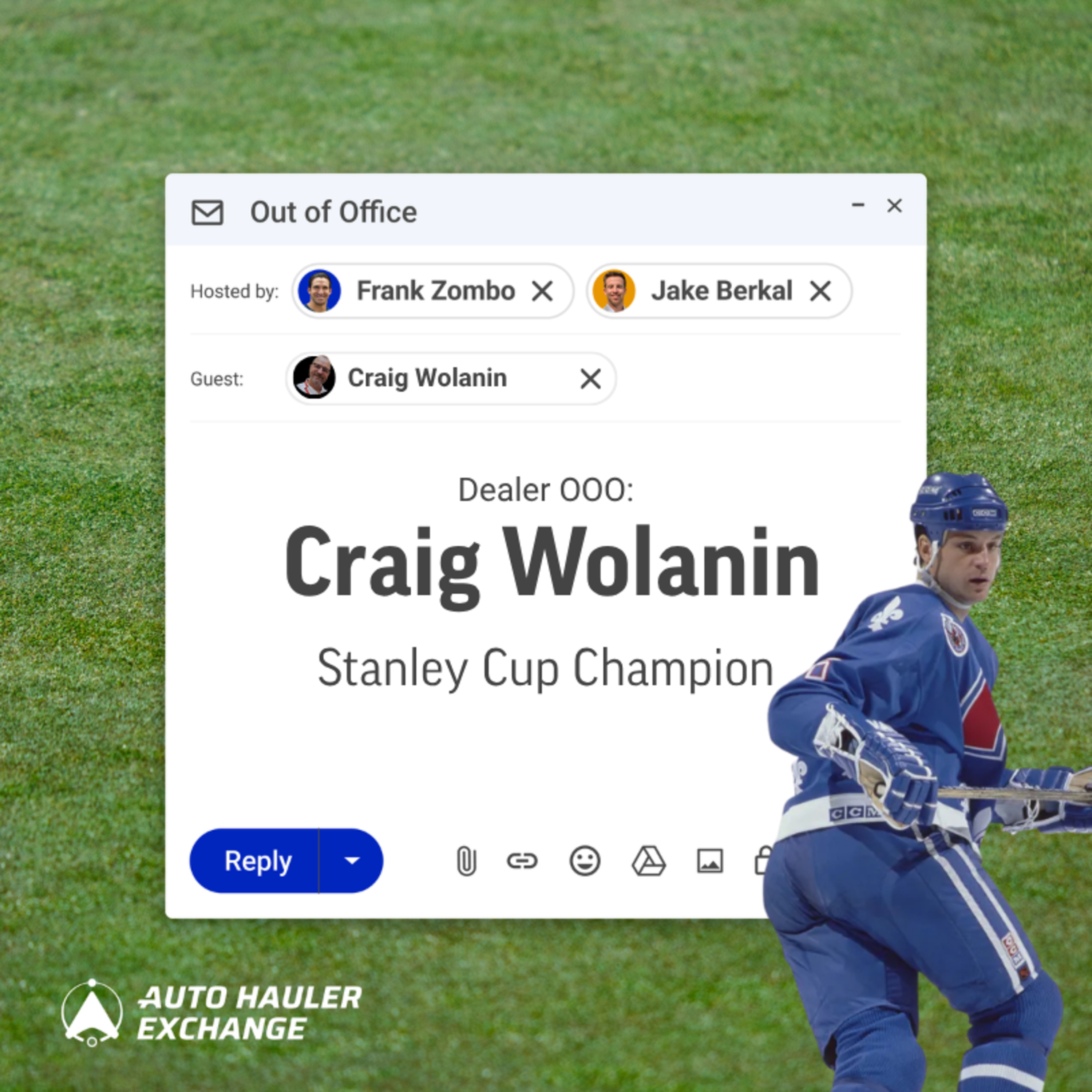
In this episode of Dealer Out of Office, hosts Jacob Berkal and Frank Zombo are joined by Stanley Cup Champion and former NHL defenseman Craig Wolanin. Drafted 3rd overall in 1985, Wolanin shares a candid look at his unconventional journey from the frozen ponds of Michigan to the height of professional hockey.
The conversation dives deep into the mental and physical grit required for a long-term career in the NHL, the impact of mentorship, and the evolution of the game. Now a youth hockey coach, Wolanin also shares his philosophy on player development, emphasizing the importance of being a multi-sport athlete and prioritizing "will over skill".
Key Topics Discussed:
The Unconventional Path: Why Wolanin quit hockey at age 15 to play baseball and how a high school coach's decision led him back to the ice.
Life as a Young Pro: Making the jump to the NHL at 18 and living with a billet family in New Jersey led by a local judge who became a lifelong mentor.
NHL’s Physical Era: Stories from the "clutching and grabbing" days, including a memorable (and nose-breaking) encounter with Clark Gillies.
The Move to Colorado: Transitioning with the Quebec Nordiques to Denver and the unique experience of winning the Stanley Cup in the Avalanche’s inaugural season.
Modern Coaching Wisdom: Advice for parents of young athletes on avoiding burnout, the value of the "late bloomer," and why character always beats talent.