Starting a 1963 Comet with a Paperclip & The NASCAR Trailer Woodshop 📎🚙🪵
To All The Cars I've Loved Before: Classic Car Restoration, JDM, and Automotive History
Starting a 1963 Comet with a Paperclip & The NASCAR Trailer Woodshop 📎🚙🪵To All The Cars I've Loved Before: Classic Car Restoration, JDM, and Automotive History · Jan 20, 2026
Rich Rebuilds is a YouTube channel where a guy named Rich works on cars, often changing them from using gas to using electricity. It's a fun channel to watch if you like cars and creative projects.
The Dodge Charger SRT is a fast car that has a strong engine, making it exciting to drive. It's part of the Charger lineup, which is known for its sporty design and performance.
Converting cars from gas to electric means changing a car that usually runs on gasoline to one that runs on electricity instead. This is done to help the environment and reduce pollution.
This phrase means that every type of car has its own group of fans and stories. People often feel a special connection to their cars, which can create a community around them.
The Honda Prologue is a new electric SUV that Honda is planning to release. It's important because it shows that Honda is moving towards making more electric cars, which are better for the environment.
A NASCAR auto hauler is a big trailer that carries race cars and all the gear needed for racing. It helps teams transport everything they need to the racetrack.
A Pinewood Derby is a fun race where kids make small wooden cars and see whose car goes the fastest down a track. It's a great way for kids to learn about building and racing.
'Three on the column' means the car has a manual gear shift that is located on the steering column instead of on the floor. It typically has three gears for driving forward.
The Mercury Comet is a small car that was made a long time ago, from 1960 to 1977. It's known for being stylish and fun to drive, especially models from the early years like the 1963 version, which many people remember fondly.
Edsel was a car brand created by Ford that didn't do well and is often remembered for its unusual designs. It was made in the late 1950s and early 1960s.
A tie rod is a part of the car that helps you steer it. It connects the steering wheel to the wheels, making it possible to turn the car in the direction you want.
The Buick Electra 225 is a large car known for its luxury features and spacious interior. It was made by Buick in 1964 and is famous for being very long, measuring 21.5 feet.
The 455 cubic inch V8 engine is a large engine that provides a lot of power. It was used in big cars like the Buick Electra to help them drive smoothly and quickly.
A luxury car is a type of vehicle that is designed to be very comfortable and stylish. They usually have better materials and more features than regular cars, making them more enjoyable to drive.
The Dodge Dart is a small car made by Dodge that was popular in the 1960s and 70s. Some versions had a unique way to change gears using buttons instead of a traditional gear stick.
The Volkswagen Beetle, often called the VW Bug, is a small, round car that was very popular in the 1960s. It has a unique design and was known for being reliable and fun to drive.
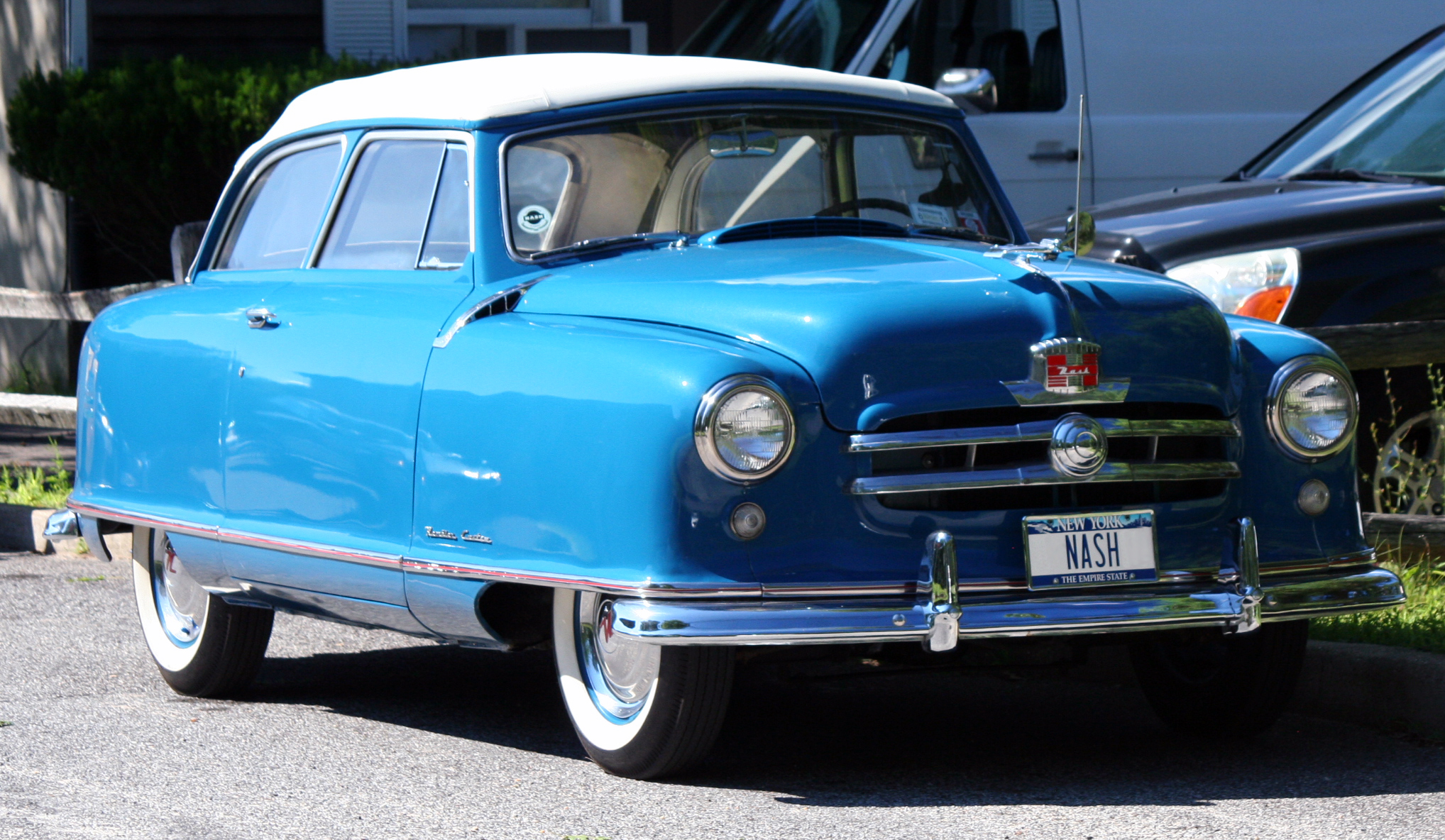
The Nash Rambler is a small car that was made in the 1950s. It had a distinctive look and was one of the first cars designed to be smaller and more efficient.
The Triumph TR3 is a small sports car from the 1950s that is fun to drive. It's known for its good handling and classic design, making it a favorite among car enthusiasts.
The Dodge 1974 van is a type of vehicle made by Dodge in 1974. It was popular for carrying families and goods, and many people have memories associated with them.
A carburetor is a part of an engine that helps mix air and fuel so the engine can run. Older cars often used carburetors instead of modern fuel injection systems.
LIVE
Welcome back, Listener Land. You have found to all the cars I've loved before your authoritative
podcast on automotive nostalgia, where every car tells a story and every car has a culture.
You know what time it is. It's time to plug in dust off a little grease under the nails
and slip on that favorite car theme t-shirt. Speaking of which, I'm wearing one. My partner
is always wearing one. Good afternoon. How you doing there, Doug? Doing great. Great to be back here.
All right. So what? I can't read the shirt. What you got? So it says Rich Rebuilds. Oh, yeah. Rich
has a YouTube channel. I think I saw that he wrote a book recently. He does the
craziest coolest kind of like speedy cop. Yeah. He took, I don't know, Dodge Charger SRT with a big V8
and took the body off and put a Crescer Minivan body on top, for example. Yeah. Okay. He's
converting cars from gas to electric. He's done about everything. And so the show is called Rich
Rebuilds on YouTube, hoping to have him on in a future episode. Reading my mind, I would just
ask. He's close to Pennsylvania. It's Roger Dodger. Okay. Good stuff. What else did we want to
chat through? Did we? All right. Okay. Oh, yeah. Yeah. Most recently, depending on when you're
listening to this, it's already out. We had a Guinevere Freshia from Freshia Brothers
in Greenwich, Greenwich, I got to say it the right way. Greenwich, Connecticut,
who has Freshia Brothers Garage, 100 year old family business, they've been working on
Voltwagens since the 50s, since they first came to town. Now, they do restorations on
all things air cooled. So whether it's Voltwag and Porsche or the American Corvair.
Yeah. Such an interesting, wonderful family, family legacy. And she's just a tremendous person.
Yep. Four generations.
To make her acquaintance. Yeah. We got a road trip up there too.
We do. I was... We got to buy a VW so that we have a reason to bring it up there. And then we
can just kind of like hang out and talk to her dad and everybody that works for her on.
Maybe we could have one of our past show guys, Aiden, who was on with his dad, who was a Voltwag
and guy. He said he was born in the wrong, wrong time period. Absolutely. He came up with the
Every Car Has a Culture. And we took that statement. And he recently got his own Voltwag in 1972
Super Beetle named Miss Maggie the Bug. Yep. Just a small matter of his being about 2000 miles away
from Greenwich, Connecticut. But you know what? Hey, it's just a problem to be solved. I did want to
say, let's see, thank the listener. Okay. So when we go into the analytics of the show,
it says here are the people. Here's where you have been heard around the world.
Over the past five days to a week, I think the filter was set for five days. So, hey,
if you're in Roanoke, Los Angeles, Philadelphia, Paris, Plano, Toronto, Fairfax, Virginia,
maybe that was my son Conrad or Brooklyn. Hey, we appreciate you listening. And if you
like what you hear, please help us grow by telling a friend, telling somebody. CarsLove.com
is where you can find all of our online presences, link tree, pictures, reviews, all this good stuff.
To all the cars I've loved before, check it out in your podcast platform, streaming platform,
choice, good deal. So, welcome back. We appreciate you listening. And did you want to get in here
real quick before we introduce today's guest? No. We can go right to our guest.
All right. And I think that's all of our prologues. So again, help us grow if you like what you're
hearing. But Doug, we got to introduce today's wonderful guest, really interesting guy. We seem
to have all hit it off. How did Mark cross your radar, so to speak? Well, there seems to be six
degrees of separation between me and everybody else on the Eastern Shore. Fewer in your case,
I think. Yeah. And it all seems to link back to our buddy Andrew Blackwood, what an awesome guy,
just happened to meet him at a car show. He was driving a Trabant, the list to know he had like
14 other cars. And he's paramedic on the Eastern Shore. He's introduced us to countless numbers
of people. And that's how we... Fascinating guy, Renaissance man. Yeah.
Good deal. Well, Mark, welcome to the show. How are you this afternoon?
I'm doing great. And a shout out to Andrew Blackwood as well. And thank you for facilitating the
introduction. You got it. Welcome aboard. And you, a lot of times we introduce our guests and they're
in a garage. They're in their basement. They're in... But Mark, you're broadcasting from a very
special location. And could you tell us a little bit about what you are inside right now?
It's cold in here. I'll say that. I know you're quasi outside. Well, yeah. The back door is open.
I am currently inside a 24 foot NASCAR auto hauler. And for those in the car biz,
they should be no strangers to this thing. I bought it in Delaware naked. It was just a box.
And then I tricked it out into a wood shop for children. And everything in it is shrunk down
to their size. And it's every bit a modern wood shop that an adult would use. But it's inside
a NASCAR auto hauler. And we got a pause right there. I'm telling everybody in the world,
I don't care if you're listening in Australia, Japan, the Philippines, Paris or Plano, you
want to put a smile on your face, drop what you're doing. Well, you can keep listening to the podcast.
But type in woodworksonwheels.com. And exactly what Mark just mentioned,
he has a wonderful little video of the time lapse of his building exactly that at the suggestion
of a neighbor of his that said, hey, you're doing something really neat and special here.
You're going to want a document. So there's just the neatest video. And I got to ask you, Mark,
what inspired you to do this? Are you a woodworker by trade? Did you race NASCAR automobiles?
How did it come to be? None of the above, actually. Woodworking is a hobby that was
in the basement of the home growing up. My father was a NASA engineer, an aerospace engineer.
And he tinkered in a woodshop as a hobby, and he let me use all of his tools. So woodworking is
a hobby. As a career, it's colorful. I've been in the travel business. I spent decades in the
pharmaceutical industry. And then when I decided to retire, I wanted to return to that hobby of
woodworking. And so they I learned it in high school. I did it at home. They've taken it out
of most of the schools woodworking. So I thought since I learned it as a kid, maybe I could bring
it back to the kids. And I didn't really want to do it in a building. I thought that was a little
boring. And I wasn't ready to tackle the school system and put it back in the school system.
So I thought, why not put it on wheels? And so I bought a NASCAR auto hauler and I
built it out. It took about three months, three or four months. And it's beautiful inside. You'll
have to come have a look. But I take six kids at once and we build anything they'd like to build.
It's just great in here. And it is on wheels. And I trailer it anywhere it needs to go.
And it's you got to go to his website and see the video. It shows him building this entire
project from the ground up. But the child each child has their own little on the workbench.
And so they're number five. Each kid gets their own station. And the toolbox is a little hard to
see because they're put away. But underneath there, there's five of them if you can see them.
Yeah, you've done real well shoehorn. How long did you say it was? Was it 20 or 25 feet?
This is 24. Yeah, ton of space. Ton of space. So long. Go ahead. All right. And the one thing
that you tease just a little bit perfect segue is the, you said there was a racetrack inside the
car. Not really a nod to the NASCAR theme has to do with the Pinewood Derby. And the Pinewood Derby
inspired event that Mark helped children build little cars to. And I have three sons. And so
they were in the scouts and we raced the Pinewood Derby. But could you tell us just a little bit
before we kind of go back in time and talk about the cars or your youth mark? Could you
speak a little bit about how that event inspired you to help the kids make cars and you made a
track? And could you walk us through that? Sure. I've been doing some work with a group in
Easton, Maryland called the Academy Art Museum. They have their own kids program. They asked me
to help them out conceiving of some activities for the kids. And I suggested that we bring the
racetrack, which I have for wooden cars. And we built wooden cars and we raced them and they loved
it. And they had an event for showcasing Bugatti cars in the museum. Oh, wow. Beautiful. And they
asked me, would I do something that would coincide with the Bugatti event? And I said, of course,
why don't we shrink the Bugatti's and race them down a Pinewood Derby track? Love it. Love it.
And they loved it. They weren't quite sure what it all meant. But we pulled it off and the kids loved
it. The parents loved it. And it was just great. So hope that gives you a summary of what happened.
And that that that is so wonderful. Thank you for sharing. I have I have the pictures of it. Do
you want to see the cars? Yeah. Yeah. Yeah. Real quick. Real quick. Yeah. Yeah. While you're
there you go. Now, there's all the cars. 3D printed now 3D printed Bugatti's. Yeah,
you're not able to do that. Now we were chatting with Mark a little bit before the show. And boy,
did these memories start flooding back because I built several Pinewood Derby cars myself. And if
you're not, and I had to run it in my son's bedroom, I have two boxes and I try and be organized.
They each they say Pinewood Derby, right? And that's how I know I was able to put my hands on
them quickly. And so what we do is not familiar little Cub Scouts before they become Boy Scouts,
which happens in middle school Cub Scouts. You get this wooden blank, and then you mill it into
a car. And there's a Mark was saying it's a race track. And it's this, you know, depending upon
how long it's a fort there, he's showing it right there. Doug, we're going to have perfect
wonderful video to share here. Look, so that's the blank. Exactly the slots are the slots on the
bottom, except the nails, which act as the axles and enough geeking out behind Wood Derby. And
we have to step in the time machine and take Mark way back. Yeah, let's talk about your first car,
Mark. What was it? How'd you get it? What happened to it? First car at the first car that I owned
or that my dad, you know, was kind enough to gift me. I would say the one your dad was kind enough
to gift you, right? Let's go with that. But my father went went to the dump and got a car from
the dump. And he took it to the the high school auto mechanics class and told them I believe he
bought the car for $35. And it was a 1963 Mercury Comet Capri with three on the column.
Three on the tree. Three on the tree. Yep. Yep. So do you know the car?
You know, I was looking it up beforehand and it is very closely related to an Ed Soul.
I don't know if you knew that. It's not the prettiest car, which might have been why I was in
the dump, but he bought it for 35 bucks, took it to the auto mechanics class. Now remember,
this is the mid 70s. And he told them to get it running and he would buy it back. And he did,
I don't know whether it was $100 or something like that. And that's the car he gave to me.
It was road rash, rusty, and you know, it wasn't the prettiest thing in the world.
Somebody's walking along. Here we go. And it didn't, they couldn't get the starter pin to work,
so it, it would take a paperclip to start the car.
I've never heard that. Speaking of startable.
Yeah. And the car, you know, the car was just fabulous. It didn't have power or anything,
big benches, and you had to turn the wheel 100 times to go left or right.
And it was just a great, great starting car, but it was, it was hitting.
And then a friend of mine crashed it and that was the end of it.
Oh man. That's what happens to a lot of these cars, you know, a friend of yours crashes it.
Never you. Yeah, first, first cars. Yep, absolutely. So was your dad trying to teach you
anything by buying the car from the junkyard? I mean, your dad was very smart to take it to the
auto shop, but was he trying to inspire something with you that you, that you can think of?
Maybe he knew we were going to crash it because he, he made us repair it
before we then sold it again. So we learned all about how to tie rods. I remember I'd never
heard of a tie rod before and we had to, we had to do quite a bit of repairs and crawling
underneath it. So maybe he knew it was an old junky car and we were going to learn how to
fix cars. Yeah, something was going to happen to it. Well, not something, something happened to it
every day. It was adventures. No, and then you like that. Yeah. What I do remember fondly about
it though is that when, when we had a little fender bender, literally, we couldn't find another
fender. And so we just drove around without it. And all through high,
and I drove around all through high school with it, you know, missing a right front fender.
Yeah. There's nothing wrong with that. It's actually, as long as it has the lights, it's legal.
I think. Is that, is that true today? Could I? I don't know. I've seen people driving around
without fenders and without hoods. I don't know. I think it just depends.
He was trying to teach me something, but he certainly did not go out and buy me a BMW for
my birthday. We, you know, we got a beater car from the dump. Yeah. And then he gave it back
to the high school class once you fixed it to a certain point, right? Well, he bought it. He, he
bought it from the high school, gave it to me, and then we crashed it a couple times and then
we sold it. So I don't think it ever made it back to the high. Okay. Gotcha. And so what, what was
the replacement for that car, Mark? The replacement for that car.
Oh, ours, because I was thinking about this podcast and, and
this car came in that I just had to have it. So I bought the car instead of selling it to the
public. And it was a 1964 Buick Electra 225. Yeah. That was a big car, right? It was 21 and a half
feet long. It had an eight, eight cylinder 455 in it. And that's, yeah, the deuce and a quarter,
right? That's the deuce and a quarter. Yeah. 225. Yeah. With
they were sort of fins, but yes, it was a really, really big car. Yep. Intended to be a luxury car,
right? It was a luxury car. It had, you know, beautifully embroidered bench seats and, you
know, a stunning dashboard and it was super quiet and probably smooth ride, right? Totally
a smooth ride. I loved it. And I bought it for 500 bucks and I drove it for a couple of years
and loved it. And we used to call it the mantis because it looked kind of like a praying mantis.
But, and then, oh, I know what it was. I moved into Washington, DC when I was going to school
and I just couldn't park it. And I sold it for 500 bucks. And so you said it was green. Was it kind
of that really light metallic green that they just, they just don't do anymore? Dark metallic.
Dark metallic, I see. Oh, I think that was beautiful. It was metallic.
And it definitely metallic had had a light green, kind of a seafoam green interior,
but a dark metallic exterior. That sounds so unique. That sounds beautiful. Sorry,
Doug, you were saying something. I just wanted to hop in. I loved it. I'm, I'm, I'm mad. Yeah.
Yeah, I can imagine. Yeah. You know, the, the, the other one, the Comet Capri, you know,
in a show today, because it was really, it was great. I never thought I'd miss a car,
but that, that one I missed. Yeah. And probably preparing for this podcast took you back to the
car, right? Thank you for saying that. I was going down memory lane. I mean, I'll, I'll rattle off
a few that I might have missed. I had a, I had a Dodge Dart that had a push button transmission.
Push button automatic. Yeah. That was kind of on the left hand side, like, look, elevator buttons
or something. Yeah. Let's see what else I had. My parents had a VW bug, which was in the 1960s,
and that they used until the floorboards rusted out completely. They had a Rambler station wagon
with the wooden, the wooden panels on the side. Oh yeah. Nash Rambler.
You don't see those much anymore. No, you don't. You don't. What I was going to say, I was, I wasn't
sure that I was a car person. And then when I thought about this podcast, as a little kid,
I raced HO scale cars. You're familiar with those. And then my older brother somehow
got to race slot cars. I loved those. I loved my set. I still have a car floating around here
somewhere from my slot racing set. Yeah. Little tiny HO set. It was like a darn oval that just
went around, around, around, around. But, you know, we were so hooked on the darn thing that we'd
save up every penny we had and be by straightaway pieces and keep connecting them until we could
send a drag strip across the whole basement floor with those one inch HO cars. And it's again,
like you say, the turn on in that video of the kids making a wooden car and racing it.
When you're that little and you're racing a car that's an inch long, it doesn't matter.
Your imagination. Well said, well said.
And when you're participating with those kids as an, as an adult, whether it's a wooden car or
an HO car, a slot car, or a Pinewood Derby car or a soapbox Derby car, anything but a real car,
if you meet those little kids where they are, which is to them, that car is real.
And they're, it's like the Wizard of Oz to them. And it's, if you get your head around that,
your experience of working with those kids in little cars will be fabulous.
That's, that's such a lovely point, such a good point. Nowadays, kids can be so obsessed with what,
what they see on a screen. It's like the world comes to them. And I get that. There's a time
and place for that. But yes, to make something with your hands and hold this thing in your hand.
That is always a good feeling. That's always been a good feeling. But with the kids of today,
there's something a little extra to that tactile. It's in my hands and not on a screen.
Go ahead, Doug, you were going to hop in. No, no, I'm totally with you.
Well, it's, it's more than beyond a feel good thing. I mean, there's a reason they use this
stuff for, for STEM science. And, you know, it's, it's got all, you know, it's gravity,
it's friction, it's physics, it's, it's team, there's team building. There's all kinds of
such a good metaphor in life. If you build a Pinewood Derby car with your kid.
Well said. Wow. Agreed. So what, what, we know you love that Buick, but what would be your
dream car besides that Buick, if you could have it back? One that I lost or one I never got.
How about one you, one you never got? I'm going to get it. It's that it's, it's,
I was going to say it's the Bugatti, but no thanks. I wouldn't turn it down, but as a,
as a dream car to tool around in, it's a Triumph TR3.
Okay. Yeah. I think James McCrae is restoring one of those in Easton for one of his customers.
I think I might have seen it. Is it like Hunter racing green?
I'm not sure what might be now. It might be now. It was primer last time I saw it.
Ah, okay. Well, the, the Triumph TR3s and TR4s, I like the threes with the little scoop
on the front. They're very small. They're, they're just, they're tiny, but I think they're just,
I just think they're cool looking and that would be my dream little, little toy sports car. I don't
own a sports car. Frankly, like I said, I never saw myself as a car, car guy. I got a 20 year old
pickup sitting in the driveway and you know, I'm not, I have no car collection. My car collection
are made of wood and they're three inches long on my desk. I don't, I don't have a garage full of,
full of cars, but I soon will. I am going to sponsor a team, a racing team for the real soap box
derbies and we're going to take some kids that are, that otherwise would never have a chance to do
something like this and we're going to train them to race and we're going to build the cars and we're
going to, we're going to win in Federalsburg on the Eastern shore and we're going to, and then it's
on to Akron where we'll win there. Can't wait to hear about it. We're going to have you heard,
you heard it here. You heard it here. You're on the record. So now you got to back it up.
That was my, have you back once it happens. Yeah. I don't love it. I'll call your shot.
Call that shot. Sounds like a winner. So all right, we're getting close to time here and as we
guide the podcast gently to the off ramp, got two last questions for you, Mark. Number one, why
is your least favorite car? A, the Brown Dodge 1974 van. I know you had some great times in it,
some not so great times. We don't have time to get into the legend of, and I'm sure you took
road trips in that car and it made me think of, you know, when I took my kids in, you know,
on road trips there, but what's, when I say a Brown Dodge 1974 van, just what,
what's first thing comes to mind? What strikes you as the, as the good in the van?
Yeah. Oh, okay. Sure. Yeah. No, there were, there were no, no bad times in that van.
Okay. It was there. Fabulous. And I'd take it back tomorrow, but I did share that van with,
with three siblings, all, you know, teenage young drivers and the van took a hit every couple of
weeks and it had a very colorful life, but, you know, eventually we had to start popping the
engine cover off of it and spraying ether down into the carburetor so it would start. And those
are, those are sort of fond memories to me that it finally, you know, gave it up and it was so
beat up and hit so many times and we hit so many things in it and, but we went on a lot of road
trips and skied in it and my friends to this day, you know, say, oh, remember the van? You know,
we just called it the van. The van. Yeah. Yeah. Got it. And, you know, to be a high school senior
and to be able to show up, you know, at your high school parking lot with your license,
you know, although I didn't own it, you were still in a van, you know, and that was just
I got 70s. Yeah, I got it. Well, a lot of people in that van. Yeah, I'm very popular and Doug says
all the time. Doug says all the time that the show is about family, you know, and a lot of times
these these metal machines are just vectors for the stories of our lives, the people that have
come and gone in them. So yeah, that's a great answer to that question on the way out. Last
question here for you. We asked, are there any causes that are important to you that we can
share? And you wrote something I thought really interesting. You wrote support the arts trades
and make them available to everyone. There's a little bit of a callback. What you were talking
about your mission to bring woodworking to the children. What else strikes you about that about
that statement? So it's supporting the arts and the trades and arts and trades arts.
You know, many trades are art and and and there you go. But I would say that
as a young kid, I was turned on to woodworking. And my dad, although he was a NASA engineer,
he enjoyed, you know, making marionette puppets and little wooden race cars. And so you know,
it's beyond your profession. It's it's a hobby, like anything. So and your your question again was.
No, I just how you I think it's very interesting how you how you brought them together like you
you as a young person were in high school and you know, you took the shop class, this woodworking
class and then but I thought you now I see where you're going. So yes. So as a little kid,
I loved I loved watching my father tinker in a woodshop. I signed up for woodshop classes
in high school. It was my favorite thing to do. And although I didn't do it as a profession later
on in life, I'm not a carpenter. You know, I consider myself a skilled woodworker, but I'm
self trained to some degree. And I just saw it as an art and certainly a trade that is
not necessarily gone, but it's all it's disappearing and it's more difficult to find.
And so woodworking as a class, you could either take, I guess, shop or you could take home economics
and learn how to bake or so or type. I took both, I think. But those those are gone. And
they're replaced for the most part with tech. And tech is not a bad thing. It's just replaced,
you know, the woodworking is gone. And so certain, I guess you'd say certain maybe
charter schools or private schools, they've put maker spaces back in, and they've done a really
good job of it. But for the large part, the public school system, it's gone. And when I retired from
my career in pharmaceuticals, to bring that hobby back, sure, and bring it the joy that I had.
And in the process, I learned I've learned that if you want to fix something in your house,
or you want to do an addition, or you want to build something or put something together,
it's something I don't even think twice about. I just go do it because it's second nature.
I watch other people struggle. And they kind of, you know, okay, who do I call kind of thing?
And or they look frustrated with it, they don't have the right tool or the skill or both. And
so when I see people that are really good at something, they might have learned it as a kid
like I did, they might have gone to a trade school and learned it. But they're not all in tech.
And they're not all working in whatever, you know, they're not all doctors and lawyers.
And and the truth is, they're the guy that fixes your sink. And, you know,
you call, yeah, you call in the middle of the night. Yeah, when something's leaking.
For sure.
This is my thing. And so I have a real appreciation for the trades, as you say,
and the arts, because I think a trade is an art done well.
A lot of intersections.
There's a lot of intersection. And frankly, we could use a lot of it. And if you can
spark it in a little kid through a Pinewood Derby car, it doesn't matter how it happens.
It certainly happens doing it through that process, as you know.
Great answer.
Yeah, bring it on.
Great answer. And, you know, that's couldn't say it any better with his mission right now.
Woodworksonwheels.com. Check it out. It's going to put a smile on your face.
Just a way to put a smile on my face. Mark, it's been wonderful to meet you.
We had there it is. Gliding across the screen. Another video moment for sure. Mark,
it was fantastic to meet you. Thank you for making the time today. Doug and I really enjoyed
a little bit of time in your schedule.
Thank you for having me both.
Fantastic. And we're going to have you back.
That was to all the cars I've loved before. You've just heard the high-rebbin,
low-mileage, late-model, heard around the world authoritative podcast on automotive nostalgia.
He's Doug. Reach him at Doug at CarsLove.com. I'm Christian. Reach me at Christian at CarsLove.com.
Hey, and he was Mark. What else can you say? Woodworksonwheels.com.
If you like the show, feel free to tell your friends forward. That helps us grow.
Please follow. Tell a friend. Check us out at CarsLove.com.
I'm sure we'll see you at the next local car show, showroom, racetrack, or concourse.
We appreciate you listening. We'll see you next time.
About this episode
A fascinating conversation unfolds as Mark shares his unique journey of transforming a NASCAR auto hauler into a mobile woodshop for kids. He discusses his early automotive experiences, including his first car, a 1963 Mercury Comet, and the lessons learned from working on it. The episode also touches on the importance of arts and trades in education, with Mark emphasizing the need to inspire children through hands-on woodworking projects. Listeners will enjoy the blend of nostalgia, creativity, and community engagement throughout the discussion.
What do you do when you retire from a corporate career but still want to build things? If you're Mark Freibaum, you buy a 24-foot NASCAR auto hauler and transform it into a mobile woodworking shop for kids. 🛠️🏁
In this episode, we sit down with Mark inside his incredible "Woodworks on Wheels" trailer to discuss his mission to bring the lost art of shop class back to a new generation. We also take a trip down memory lane to his first car—a 1963 Mercury Comet that his dad rescued from a junkyard for $35 (and required a paperclip to start).
We also cruise through his memories of owning a massive 1964 Buick Electra 225 (the legendary "Deuce and a Quarter"), racing slot cars in the basement, and his current project: creating 3D-printed Bugatti-inspired Pinewood Derby cars.
In this episode, you’ll hear:
🏁 The NASCAR Workshop: How Mark converted a bare auto hauler into a state-of-the-art mobile woodshop to teach kids trade skills.
🚙 The Junkyard Comet: The story of his first car, a 1963 Mercury Comet, which was bought for $35, fixed by a high school shop class, and started with a paperclip.
📏 The "Mantis": Why he misses his 1964 Buick Electra 225, a 21-foot-long luxury land yacht he bought for $500.
🏎️ Tiny Racers: From HO slot cars to a Bugatti-themed Pinewood Derby event, how model cars spark a lifelong love for engineering.
🛠️ Trades & Arts: Mark’s philosophy on why woodworking is both an art and a trade, and why it's vital to keep these skills alive.
Whether you're a maker, a classic car fan, or just love a story about giving back to the community, Mark's journey is sure to inspire you to build something great.
📢 Join the Conversation: Did you take shop class in school? Let us know on Instagram @toallthecarsivelovedbefore
*** Your Favorite Automotive Podcast - Now Arriving Weekly!!! ***
Listen on your favorite platform and visit https://carsloved.com for full episodes, our automotive blog, Guest Road Trip Playlist and our new CAR-ousel of Memories photo archive.
Don't Forget to Rate & Review to keep the engines of automotive storytelling—and personal restoration—running strong.