
Taking the Transportation Fight to Congress from NY-7
About this episode
E-bikes, bike lanes, and transit funding are framed as practical tools to replace car trips and reclaim street space. The conversation shifts from NYC street fights to federal strategy: Congress should normalize transit and active-transportation priorities, secure reliable funding, and use oversight. Guests connect policy to lived experience—bus bunching, subway delays, wheelchair access, and caregiving penalties—while debating congestion pricing, highway harm, and procurement rules that drive costs. The episode also highlights “daylighting” and protected infrastructure as concrete safety wins.
Antonio Reynoso, Claire Valdez, and Julie Won are all running in the June 23 Democratic primary for New York's 7th congressional district. That's the seat that opened up when veteran Democratic politician Nydia Velazquez announced she was retiring. It's a traditionally progressive district, covering neighborhoods in Brooklyn and Queens. This isn't just about New York, though. Federal funding is incredibly important to local transportation, and that money is in danger. But a new generation of candidates across the country is prioritizing the issues that matter to us at The War on Cars. What role can congressional representatives play in making our streets and transit systems better?
Join The War on Cars on Patreon and listen to exclusive ad-free versions of regular episodes, Patreon-only bonus content, Discord access, invitations to live events, merch discounts and free stickers!
Interested in learning more about the NY-7 candidates? Links to their campaigns here:
Order our book, Life After Cars: Freeing Ourselves from the Tyranny of the Automobile, out now from Thesis, an imprint of Penguin Random House. Get the book and find us on tour at LifeAfterCars.com.
Buy a certified, pre-owned e-bike from Upway and save $100 off any purchase of $800 or more with code TWOC100. Visit Upway.co to get rolling.
Thanks also to Cleverhood. Listen to this episode for the latest discount code and get 15% off the best rain gear for walking and cycling.
And check out the Lumos Ultra Smart bike helmet and the Firefly smart light system at RideLumos.com. Save 10% off your purchase with code TWOC10.
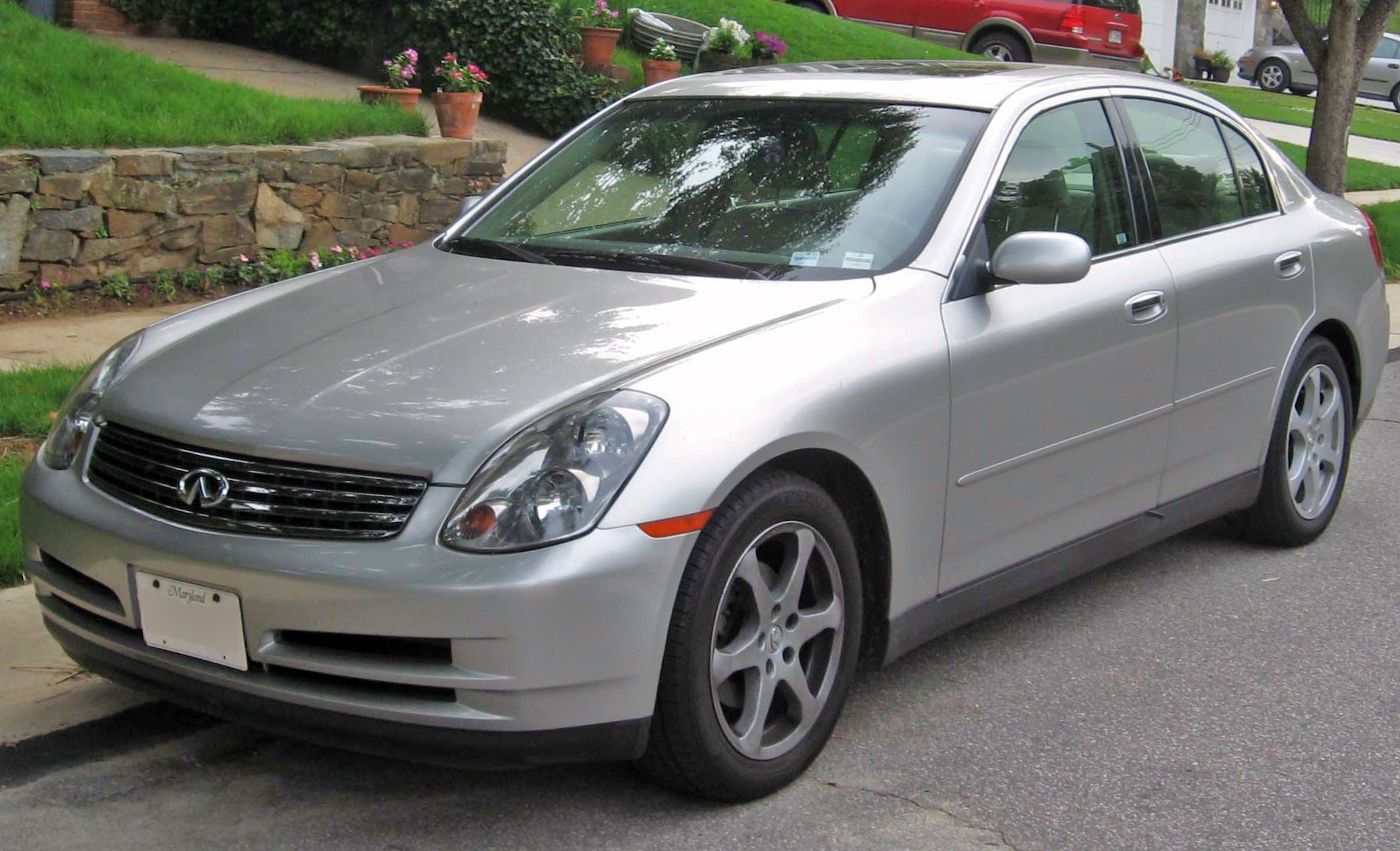
Infiniti G35
"... to say my story before I got elected. I drove an Infiniti G35 Coupe, 300 horsepower, loved my car. My goodness,..."
The Infiniti G35 is a sporty car made by Infiniti, and it’s designed to feel quick and fun to drive. The “G35 Coupe” is the two-door version. The podcast mention focuses on how much the speaker enjoyed driving it.
The Infiniti G35 is a performance-oriented coupe/sedan from Infiniti, known for its strong power output and engaging driving feel. In the podcast, it’s mentioned because the speaker describes personal enjoyment with a G35 Coupe rated around 300 horsepower. That makes it a natural example when discussing cars that feel exciting rather than purely practical.

Chrysler New Yorker
"...s the strategy that I used. So I am also a native New Yorker and I've seen a lot on these streets. But one thi..."
The Chrysler New Yorker is a large, older-style family sedan made for comfort. People bring it up because it was common on city roads and felt roomy and smooth to drive. It’s the kind of car you might remember from earlier decades.
The Chrysler New Yorker is a full-size American sedan that was built to deliver a comfortable, upscale ride and a traditional “big car” feel. It’s often discussed in stories about older city driving because it represents a past era of street cruising and long-distance comfort. In a podcast context, it may come up as a personal or local reference point—something a driver would recognize from New York streets.
congestion pricing
"we're still in the process of facing down the federal government over congestion pricing, which obviously took decades to even get there... on a federal level, we need to figure out a way to make it so that if and when we get approvals from the federal government and they're locked in"
Congestion pricing is a toll that’s meant to cut down traffic in crowded areas. When it’s busy, driving costs more, so some people change when or whether they drive.
Congestion pricing is a policy where drivers pay a fee to enter or travel in a busy area during peak times. The goal is to reduce traffic by discouraging some trips and shifting demand to less crowded times or modes like transit.
$9 toll
"But the $9 toll has made it so that we've just found we just found out that people wouldn't pay $9 for a toll to get into Manhattan, which is insane to me."
They’re talking about a specific toll price—$9—and whether people would actually pay it to drive into Manhattan. The point is that the cost changes driver behavior.
The $9 toll refers to the specific congestion-pricing charge level discussed as part of the policy’s effectiveness. The speaker claims that the price point affected whether drivers were willing to pay to enter Manhattan.
$15
"And I think to a lot of working class families, the $15 was the number. And that number wasn't"
They mention $15 as the toll number they think working families would be more willing to pay. It’s being used to argue about what price actually changes behavior.
The $15 figure is presented as the toll level the speaker believes would be more acceptable to working-class families. In this context, it’s used to argue that pricing needs to match what people can tolerate to influence traffic demand.

Space Chariot
"...office in Sunnyside, it's the Q39. It's our grand chariot of the 37th Assembly District, but I take the M v..."
“Space Wagon” sounds like a nickname for a wagon that looks futuristic or unusual. It may not refer to one exact car model with a clear manufacturer name. In the podcast, it’s probably being used as a reference point or a fun label.
“Space Wagon” isn’t a specific car model name in the way most manufacturers label vehicles; it’s commonly used as a nickname or reference to a futuristic-looking wagon. In the podcast context, it appears to be a playful or symbolic term rather than a clearly identified make and model. That’s why it may be discussed more as a concept or character than as a technical vehicle.

Transit City Transit
"...it systems. Explain how that would work. New York City transit ridership is a huge proportion of the public tran..."
“Transit City” sounds like a way of talking about public transportation in a city. It likely refers to how buses, trains, or other transit services are organized and used. It’s not a specific car model with a make and model you can shop for.
“Transit City” isn’t a standard vehicle model name; it reads like a term for a transit system or a planning concept rather than a specific car. In the podcast context, it’s likely being used to discuss how public transportation works and how ridership relates to city transit planning. So it’s more about mobility infrastructure than a particular car you’d buy or maintain.
Manual on Uniform Traffic Control Devices
"So you have a little bit in your platform about the manual on Uniform Traffic Control Devices, MUTCD, which basically is the guideline by which all traffic engineers, no matter where they live, what state, what city, have to follow."
MUTCD is the rulebook that tells cities how to design things like road signs, lane markings, and traffic signals. If a city has to follow it to get federal money, it can make it harder to quickly add safer features for bikes and pedestrians.
The Manual on Uniform Traffic Control Devices (MUTCD) is the federal standard that governs how traffic signs, signals, and road markings are designed and used in the U.S. Because many jurisdictions must follow it to qualify for certain federal funds, it can strongly influence how easily cities can implement safer street designs like protected bike lanes.
MUTCD
"And it has prevented us for many years of getting the safer streets we want. It sort of leaves us only with a highway-based toolkit for local streets, essentially... introducing legislation to end the requirement that state and local governments follow MUTCD in all of their street designs"
MUTCD (the traffic-sign and marking rulebook) is what cities often have to follow to get certain federal funding. The episode argues that this requirement can make it harder for cities to adopt safer street layouts quickly.
MUTCD is the acronym for the Manual on Uniform Traffic Control Devices, the U.S. guideline traffic engineers use for standardizing signs, signals, and markings. In this discussion, the key point is that requiring compliance can slow down or constrain local street redesigns, including bike-lane treatments.
federal funding
"introducing legislation to end the requirement that state and local governments follow MUTCD in all of their street designs, because they have to if they want to get federal funding."
Federal funding is money from the national government for transportation projects. The episode argues that the rules attached to that money can force cities to follow certain standards, even when locals want different designs for safety.
In U.S. transportation policy, federal funding often comes with conditions that affect how local streets are designed and what standards they must follow. Here, the discussion centers on how federal requirements tied to MUTCD compliance can limit local flexibility in street safety improvements.
bike lane symbols
"Because I feel like just changing it to the level that's been changed rather recently to update bike lane symbols and other pro-people street designs was very difficult."
Bike lane symbols are standardized road markings and iconography used to communicate where cyclists are expected to ride. Updating these symbols is part of how MUTCD changes can enable new or clearer bike-lane designs, but the process can be slow.
street safety
"But I think that's unacceptable. We need to be proactive in street safety and making sure that the bare minimum signage is there to help people way find"
Street safety means making roads safer so fewer people get hurt. The speaker is arguing that cities should act early—like putting up the right signs—rather than waiting until after crashes happen.
Street safety refers to engineering and policy choices that reduce crashes and injuries for all road users—drivers, cyclists, and pedestrians. The episode emphasizes a proactive approach (preventing hazards and ensuring signage) rather than waiting for crashes to occur.
unfunded mandate
"but that they believe it's an unfunded mandate that basically like they don't want to have to do it ... we don't support unfunded mandates"
An “unfunded mandate” is a requirement imposed by government that must be carried out, but without providing the money to do it. In this context, the speaker argues that officials are avoiding the work because they claim they lack resources to implement the policy.
daylighting
"for the listeners who aren't familiar daylighting is just it's very literal daylighting every intersection by prohibiting parking within 20 feet of a crosswalk citywide and mandate a thousand hardened intersections per year so we want to make sure that people can't park"
“Daylighting” is a safety rule that keeps cars from parking too close to crosswalks. That way drivers can actually see people walking, and people can see traffic coming.
In traffic safety, “daylighting” means improving visibility at intersections by banning parking close to crosswalks. The goal is to prevent parked cars from blocking drivers’ and pedestrians’ sightlines, reducing crashes involving people crossing the street.
crosswalk
"prohibiting parking within 20 feet of a crosswalk citywide and mandate a thousand hardened intersections per year so we want to make sure that people can't park because at those intersections where people are crossing"
A crosswalk is where people are supposed to cross the street on foot. It’s especially important that drivers can see pedestrians there.
A crosswalk is the marked (or designated) area where pedestrians are expected to cross the road. Intersection rules like daylighting focus on crosswalk zones because visibility and driver behavior there strongly affect pedestrian safety.
hardened intersections
"prohibiting parking within 20 feet of a crosswalk citywide and mandate a thousand hardened intersections per year so we want to make sure that people can't park"
“Hardened intersections” means making intersections safer with changes that protect pedestrians. Here, it’s connected to rules that stop cars from blocking crosswalks.
“Hardened intersections” are intersections improved with safety-focused design changes meant to reduce crashes—often by controlling vehicle behavior and improving visibility for pedestrians. In the transcript, it’s tied to implementing daylighting citywide on a set schedule.
active transportation
"so I'm going to just ask you for one example from your own career that you think shows best why voters who care about active transportation should vote for you in this race"
“Active transportation” means traveling by walking or biking instead of driving. The idea is to make streets safer for people who are out on foot or on bikes.
“Active transportation” refers to getting around using human-powered or non-car modes like walking and biking. The speaker frames it as a voting issue because policies like daylighting aim to make streets safer for people who aren’t driving.
Request an Explanation
Heard something you'd like explained? We'll add it to this episode.
Sign in to request explanations for terms you heard.
Want to learn more?
Browse our glossary for plain-English explanations of automotive terms, jargon, and concepts.
Help improve this episode
See something that's not quite right? Our annotations are AI-generated and can sometimes miss the mark. Click the flag icon on any annotation to suggest a correction.