The Dodge Journey is a family-oriented SUV/crossover meant for regular driving. It’s built to carry people and handle everyday trips. In the podcast, it’s mentioned as part of someone’s personal experience learning about cars.
A “twelve cylinder” engine means the car has 12 cylinders working together to make power. More cylinders can help the engine feel smoother and sound more dramatic—especially in supercars.
A manual transmission is the kind of car where you choose gears yourself with a clutch and shifter. It’s less common in today’s supercars, so it’s a big deal when a manufacturer offers it.
A dual-clutch gearbox uses two clutches to get ready for the next gear. That’s why it can shift quickly, and some versions let you control gears with paddles.
Paddle shifters are the little levers on the steering wheel that let you change gears. You’re telling the car what gear you want, usually without moving a stick.
A stall is when the engine shuts off. The car can still end up in a situation where the engine can’t keep running, even if the clutch is being controlled electronically.
It means the engine gets seriously damaged. The car’s control system can reduce the chance of you accidentally doing something that would stress the engine too much.
On many modern cars, the gas pedal isn’t directly linked to the throttle. Instead, sensors tell the computer how much you want, and the computer adjusts the throttle.
Clutch by wire means the pedal doesn’t mechanically move the clutch. Sensors tell the computer what you want, and the computer controls the clutch electronically.
They’re saying the experience doesn’t feel as “real” as a traditional mechanical setup. Even if it works well, it can feel less connected to what the car is physically doing.
The Ferrari Daytona is a legendary older Ferrari model name. The host is mentioning it to say they prefer the more traditional, analog feel of classic Ferraris.
The Ferrari 308 is a well-known classic Ferrari V8-era sports car name from the 1970s/1980s. In the segment, it’s used as another example of a Ferrari the host associates with a more traditional, analog driving feel.
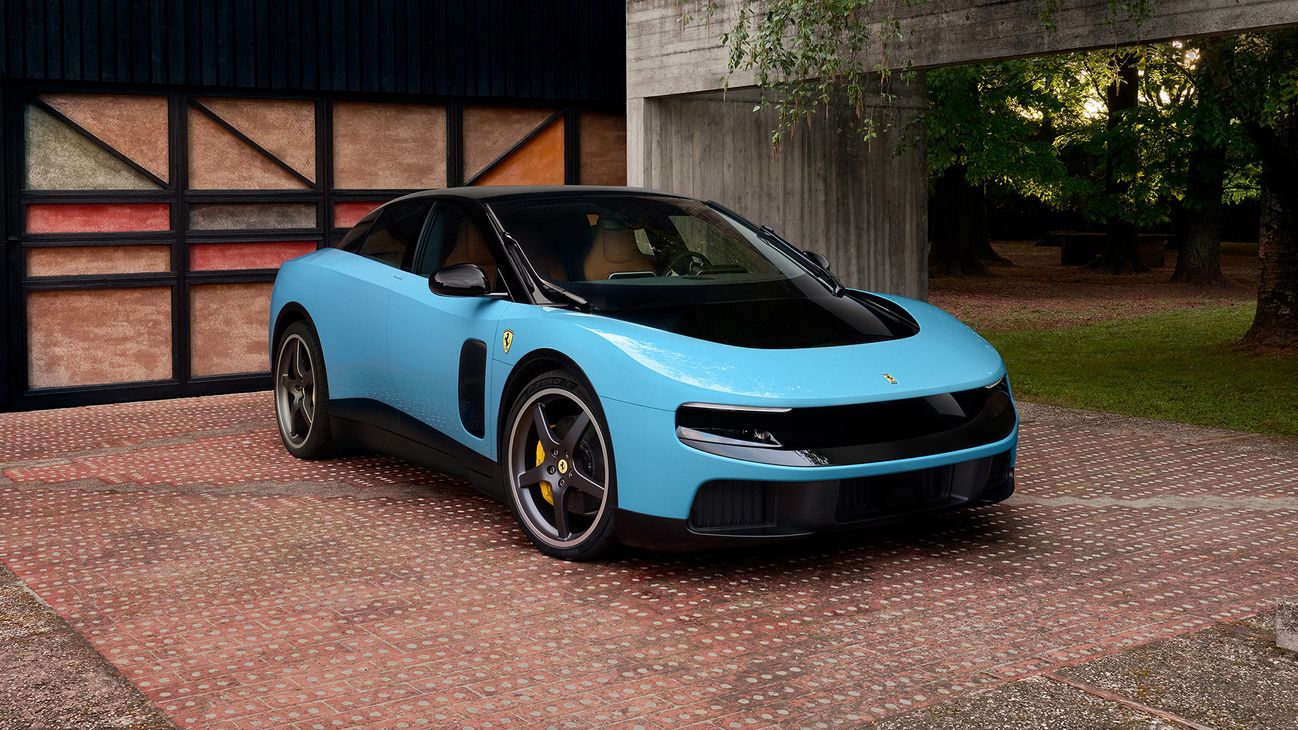
The Ferrari Luce is mentioned as a Ferrari model in the podcast. The conversation sounds like it’s comparing how it feels to drive depending on the transmission or setup. The exact details of which specific Ferrari it refers to aren’t clear from the snippet alone.
Here “supercomputer” means the car has very powerful computers inside it. The host is saying the SUV is packed with lots of computing power to run its systems.
Microchips are the small electronic parts that run the car’s computers. The host is pointing out the car seems to have a huge amount of electronics inside.
Clutch engagement is how the car “connects” the engine to the gearbox when you shift. The host is saying the option may imitate the feel, but it doesn’t replicate the real clutch feel of a traditional manual.
DCT means a dual-clutch automatic-style gearbox. It shifts gears fast by using two clutches, so it can feel more like a manual than a normal automatic.
The speaker uses “car culture” to describe what people are chasing emotionally when they buy and drive cars. Here, they argue that buyers want more sensation and engagement—especially in very expensive cars—because driving feels less “alive” than it used to.
Throttle bodies control how much air gets into the engine. More air generally means more power, and they’re a key part of how the engine responds to your pedal.
The New York Auto Show is a big car event where manufacturers bring cars to show the public. Here, it’s where the story’s Lamborghini purchase happens.
The Lamborghini Countach is a famous supercar from the 1970s and 1980s. People care about it because it has a very recognizable look. When collectors talk about it, they often focus on whether the car still has the correct original parts.
The Lancia Musa is a practical vehicle meant for everyday driving and carrying people. In the podcast snippet, it’s brought up as a model name connected to other people. The focus there doesn’t seem to be on performance details.
Nostalgia is the feeling you get when you think about the past and it brings up strong emotions. The speaker is saying certain cars remind him of childhood moments and make him feel instantly connected.
Jeordie Riquart is the person who worked with the speaker at the rental car company and later became his partner. The speaker says Riquart helped fund the early supercar-buying plan.
Curated is the name of the business the speaker says he co-founded. They’re describing how they moved into buying and selling supercars as a new direction.
Alan Lozowski is the mentor the speaker credits for helping him learn how to run the business better. The speaker says Lozowski taught him practical ways to treat customers and build the company.
They mean the Ferrari F40, a supercar from the 1980s that’s considered one of the most iconic Ferraris ever. People still talk about it because it was fast and exciting in a very old-school way.
The Chevrolet Corvette is a sports car made in the U.S. People talk about it a lot because it’s fast and has been modified by companies and enthusiasts for decades. Some special versions are especially remembered.
Gran Turismo is a popular racing video game series. The host is saying it can make younger people care about real cars by teaching them details through the game.
Monterey Car Week is a big yearly set of car events in California. The host talks about how lots of people (including kids) show up, and that can make spotting cars annoying or even risky in some situations.
The Pebble Beach Concours is a famous car show in California where people display high-end classic cars. The host is wondering if it should also feature newer cars to keep younger fans interested.
Vince Finaldi is referenced here in connection with leadership at the Pebble Beach Concours. The host uses his name to frame a discussion about how the event might evolve to stay relevant.
“Supercars” are the very high-end, very fast cars—usually built to be both quick and exciting to drive. Here, it means Pebble Beach should include a section for the newest, most impressive cars.
Term
GT one race cars
“GT1” is a type of race category for fast, performance-focused cars that are related to production models. The point here is that when events include that kind of racing, it draws in younger fans.
“Villadeste” is referring to Villa d’Este, a well-known high-end classic car event in Italy. The speaker is saying other major shows already include supercar categories, so Pebble Beach should too.
The Nissan GT-R is a sports car built for fast driving. People often collect and preserve original examples, and the podcast mentions road-registering a small set of them. That suggests they’re focusing on authenticity and keeping the cars in their original form.
The AC system is the air-conditioning in the car. Adding it is one of the ways older cars get made more comfortable to drive today.
Term
roll down windows
Roll-down windows are the classic style of window that lowers and raises by a mechanism, rather than fixed glass or modern power-window setups. The speaker includes them as part of the “restomod” direction—keeping some vintage feel while improving usability.
“Restomod” means taking an older classic car and updating it with newer parts or tech. “Restomod world” is the community of people who build and buy those updated classics.
The Bugatti Veyron is a very rare, very high-performance hypercar. The conversation about “recommissioning” usually means getting a stored or inactive car ready to drive again safely. People also worry that modifications can change how dependable the car is.
This is a Lamborghini model name people talk about when they want a modern version of a classic. The idea here is: keep the look, but make it easier to live with—like more comfort and reliability.
A “daily drive” means you use the car for normal errands and commuting. The host is saying that some classic supercars are fun, but not always practical for everyday traffic.
Older cars often didn’t have great climate control. Adding an air conditioner is a simple but huge upgrade that makes a classic car more comfortable to drive every day.
The Ferrari 360 is a famous Ferrari supercar from the 2000s. The point being made is that if you want the manual/three-pedal version, it can be much more expensive than other versions.
“Three pedals” means the car has a manual transmission: you use a clutch pedal along with the brake and gas. People often prefer it because it feels more connected to driving.
Car
Singer Turbo Study
Singer is a specialist brand known for highly engineered Porsche 911 restomods, and the “Turbo Study” refers to one of its modernized 911 concepts. The host is using it as an example of a restomod that aims to balance classic charm with modern usability.
A cam belt is a belt inside the engine that keeps the timing correct. Because it wears out, you have to replace it on schedule so the engine doesn’t get badly damaged.
A timing chain does a similar job to a timing belt by keeping the engine’s timing correct. It usually lasts longer than a belt, but it can still wear out over time.
A third-party inspection means having an independent expert check the car before you purchase it. It helps you catch problems you might not notice yourself, so you don’t get stuck with expensive repairs.
Due diligence is doing the homework before you buy—like checking the car’s condition and history. The point here is not to get rushed into a purchase without verifying what you’re really getting.
LIVE
Bloomberg Audio Studios, Podcasts, radio News.
I'm Hannah Elliott and I'm Matt Miller.
This is Hot Pursuit.
Coming up on today's podcast, We've got John Tamrion on with us live from Miami. He is the founder of
Curated Vintage Supercars. If you don't know now, you know,
but you probably already knew about John because if you've been around Kontasha's Diablos, whatever, something from that era, it's been I actually.
I actually didn't.
I didn't know until you told me that we were going to get him on the show. I tend to
be closer to sixties muscle cars and pickup trucks, but my first love was for these nineteen eighties, nineteen nineties, two thousand supercars, so it's been a great journey to learn more about him. I also want to talk about,
just quickly, a new supercar that you've driven, the Ferrari.
I'm not even gonna attempt to pronounce twelve cylinder, however they say it in Italian.
I feel like it's a test.
It's polarizing in its design. I like it because it's
clearly a callback to the date three Sex five Daytona, which is one of my favorite Ferraris. But I can
see why people think it's a little bit too tech.
Note I can't see. I can't see why anyone wouldn't
instantly fall in love. I actually cannot relate to that
at all. But go ahead, go ahead.
Well, now they've added an option that will take it over the top if you thought it was too maybe too high tech to begin with. And that is a
manual transmission. Oh wait, that sounds like a great idea.
That sounds like a throwback and nod to the Ferraris of old. The reason that we fell in love with
this brand. This is the first place.
Again they've always wanted sure exactly six speed with the gated With the gated six.
Speed, it's a two hundred thousand dollars option, by the way, so on top of the price of the car, it's next to two hundred thousand.
And it comes with the third pedals. They should also say,
sorry not to Yes, there is a third pedals, not just the shift right.
You have to depress the clutch in order to change.
Yes, And in this day and age, I don't think you can assume that.
That's the interesting thing.
They've put it on it's really a software solution on a dual clutch transmission, So it's an essentially an automatic gearbox or the kind that you can shift with paddles normally, but they've put a software solution on top of it that allows a clutch pedal with electronic sensors to you know, lift and close the clutch, and that allows a stick shift with electronic sensors to tell the car which gear
to go into, although I'm not one hundred percent clear that it will always go into the gear that you wanted to because it's a DCT, so it can't go from fourth to second, it has to go through third right.
Right now, My understanding is, first of all, like you say, this is not a mechanical thing at all, so you're not actually you're not actually doing anything mechanical. But it
is still possible to stall the car. It is still
possible when engaging this six speed transmission. You can't still
stall it, but it also will prevent you from blowing the engine. Basically interesting.
I knee jerk reaction initially was like, Oh, this is stupid, so much tech. Why I go to all that trouble
when they could have built such a beautiful mechanical thing.
But the truth is we all are already driving by wire, right.
You're accelerator on most new cars also not mechanically connected to the motor.
The steering isn't, you know on.
A portion nine to eleven uh, mechanically connected to the wheels.
So you know, why not clutch by wire?
That makes sense to me, And I also get why you would want to save some rich guy who probably hasn't driven a stick shift in a while from blowing his million dollar motor.
There clearly are.
Benefits to what they've done, and it makes sense in you know, the progression of technology.
But something about it just it's not authentic, right.
It's like, oh, why make real leather when we can do a plastic.
It is, yes, like leather.
No, it's yes, it's not a mechanical transmission. It's something different.
We should say. I feel like we should at least
give a nod to Koenigsegg, who has already been doing It's not the same technology, but it's the same idea, which is the combined automatic and optional manual kone exeg.
We got to give credit to Christian because he has done this and people seem to like it. Right in
the coney.
Or blame him right, Well, I mean the Coon exeg is a different kind of thing than a Ferrari, right.
That's a super high tech, turbo charged you know, on the edge of and I guess that's what Ferrari wants to be as well, on the avant garde edge of technology and performance.
But for me, Ferraris are the two point fifty, you know, or the Daytona or the threeh eight. So for me,
I would want an analog experience. But I guess if
they're going to be winning F one races again and they're going to be on the forefront of technology, they want to stay.
Moving forward rather than going back.
Do you feel that Ferrari coming out with this manual and we'll give give them, we'll give them credit, we'll give them the benefit of the doubt, will actually say to me, this feels like Ferrari saying, we understand this is what our customers want and we're doing our best to give it to you. It's not it's not the
old thing, but this is a new thing. But maybe
you'll like I'll take Ferrari with a grain of salt and give the for them that does this make up for the Luce, Like does a manual on the one side make up for Is this the token gift that makes up for the mistake.
Doesn't make up for the the Apple Car, I think, And and to me that the Luce, it makes me more skeptical of everything else, like I already was a little bit concerned when you know, Chris Harris pointed out they have a supercomputer on every corner of the what do they call their suv the.
Puro saying persong whatever.
Essentially it's like a bunch of giant like thousands of computers in that right, I mean, how many microchips do they need? Then they put out the Apple Car, which
I mean, I don't know that I want to be seen driving around in that, although I think the interior is beautiful and I'm sure it's an amazing car to drive around in.
And now they do this, which.
I want to I want to give them the benefit of the doubt because when I did interview, when I have interviewed the CEO, he's been on this podcast, he does he is passionate about cars and motorsport, and he does want to serve his clients, you know, and he has a clear mission to bring Ferrari forward. So I
understand all that, but then why mimic this old manual transmission.
I feel like either maybe on the one hand, either do it like bring us a mechanical manual transmission, or don't or move forward with your paddles right. On the
other hand, I think it's pretty cool to offer this option.
It's a little ridiculous that it costs two hundred thousand extra, but to offer this option to people so they can have the experience, and it's cool that they've gone to all this trouble. Apparently they make the clutch it actually
doesn't feel you feel the engagement. You know, the same
is true with a stick, So they make it feel like operating a six speed transmission. And at the same
time you can switch back. You know, if you're a
supercar manual transmission fan and you're driving it that way, but your husband only knows how to drive an autobox, when he gets in the driver's seat, you know can yeah, he can drive a normal DCT. It's kind of cool
that they offer you by the worlds.
I actually think maybe the bigger takeaway for me is that it is fascinating people are buying it. And we
have to assume they are indeed buying this. Probably we
should we meaning me, should do a little bit more stronger asking Yeah, I mean it's a bit early. But
the assumption is the implication is this is something Ferrari has identified in the market that it's buyers, its customers will buy. That is very interesting that in theory there
are enough people who will pay that much more to have this thing in their car, which actually makes it more complicated to drive. That is very interesting. And what
does that say about car culture right now? I think
what it says is people are more desperate than ever to feel something when they drive.
You know, it's I mean, just like a watch, right, you want complications.
So people who are spending six hundred seven hundred, eight hundred thousand dollars on a car, they want the complications.
And it is a uh.
An oddity, a curiosity. Certainly, if you have a collection,
you're like, oh, I want that to have. I want
the manuale or however they pronounce it, and I'll spend the extra two hundred thousand because money means nothing to me.
On the other hand, if you were a watch collector and someone said to you, listen I've got a court's watch, so it has the precision and the reliability that you expect from a court's movement, but I make it act like.
And automatic is a second on purpose.
Every year there's a course watch, but you have to wind it up.
Stop working.
It's a good one.
Actually, I mean, why what have we come to?
I know, well again, I think it's ridiculous. It's people
are desperate to feel anything. That's what we've come to
because so muchless people good.
Just I don't you know.
I think I understand wanting to serve the customer and also the business case. And at the end of the day,
as Kevin Tynan says, the CEO wants to make money.
Like, yes, they're not the Red CROSSBS doesn't matter, it's not the car Red Cross.
They're not making a brown station wagon with a manual transmission.
And but why wouldn't they Why wouldn't Ferrari say, look, instead of making fourteen hundred and ninety nine it'll be limited to fourteen hundred and ninety nine examples of the of the twelve cylinder with this option, why don't we just make fifteen hundred analog cars.
We go all the way.
Back like, uh, it's way more expensive, you know.
Yeah, but you can charge whatever you want.
We're in a world where everyone's a billionaire, right, so they can ask I mean, if they can already ask two hundred thousand extra for a fake manual option, I think they can charge whatever they want for a Ferrari analoga or however you say that in Italian.
Right, we're gonna call it that the analoga.
You can say, Hey, this has a hydraulic is his steering, It's got an actual wire connecting your gas pedal to the throttle bodies. We can make it with the carburetors,
you know, like why not go all the way back?
Yeah, it's a fair point. It's a fair point. Let's
ask him.
Let's ask him even even for six like make they should They should have put that out at the same time as the luch Like here, we know this is and horrendously ugly and you'll only buy it to get the million dollar supercar.
At the same time, here's the million dollar supercar.
Give us the yin and the yang. We should table
that for now because I do want to talk to John Tamaran about his thoughts on why these cars, and I have a feeling he's going to strongly agree with our take about why these these types of cars are so compelling. So, John, we're so happy to have you.
John Tamaran from We are Curated in Miami, Florida, the one, the only, and I think probably our listeners will know we are Curated and probably be familiar with your work.
But I want to hear more about how you got into this business because I know that you've been in Miami for a long time. You've been in the car
world for a long time. You were you had actually
a great rental car business, I believe before this, you know, and also your grandfather has been in cars, so you really have quite a long history. Can you just tell
us how you arrived at like what looks to all of us like the most fun job ever.
Thank you?
What an introduction, So thank you and thank you for the kind words. Yeah, I mean really, you know, and
I say this all the time. Curated is an extension
of my DNA. It's a labor of love.
You know.
My grandfather immigrated to the US from from France in nineteen fifty seven and he started, you know, working at a little gas station in Springfield, Massachusetts, and that job ended up. He saved, he saved a ton of money
and ended up buying this little warehouse and turned it into a place called Medical Center Garage. And in the
nineteen sixties he was buying and servicing and fixing and repairing a lot of the cars in that region, and just so happened. You know, the Ferrari distributor, Luigi Connetti
was not far away. So a lot of the great
old pictures show everything from a.
Two fifty gto to a two fifty.
Short wheelbase and Jaguar E types and rolls, Royces and then you know, like like many I would say, you know, immigrant parents, Uh, you know, my grandfather wanted my dad to be a doctor.
A stockbroker, something respectable, get out of car.
Exactly.
And my father, at thirteen or fourteen, rebuilt an E type engine and my grandfather was so impressed, but he still was pushing him into another direction. And then you
know they probably had some very tough words, and they fought for many years. But at eighteen years old, my
dad officially took over his service facility. And that's really
where my dad's love of Lamborghini began.
Imagine, his first car was a Mura. It was an
old act that he fixed up.
He drove it, he drove it to high school and and was.
He still in Massachusetts or was that Miami at that point?
Okay, now Springfield, Springfield, Massachusetts, and became you know, my father became obsessed with the Lamborghini brand from an early age and was buying and selling Miuras, fixing them up, and you know, and really that's sort of where I would say my story began in a way, because in nineteen seventy two, at the New York Auto Show, my dad took all of his savings, everything he had, everything, he worked for numerous cars, and traded everything for a
mir SV that was sitting on the New York Auto Show stand.
And yeah, and he still has that car today. Amazing.
He put it away.
And I grew up fast forward in the nineteen eighties, my dad had an incredible mechanic shop the same name, Medical Center Garage in Palm Beach, Florida.
So I grew up working weekends.
I grew up working summers sweeping the floor, cleaning cars.
And then eventually my dad taught me, you know, how to be a technician myself. So I had this really
incredible blessing of You know, my dad's a very tough guy.
I love him to death, but he's very OCD and he's a detailed guy. So imagine, you know, while other
kids were playing soccer or baseball, my dad was like showing me the details that you know, how i'm your sv is original, or how a kuntash you know, these are the bolts that are correct, or this is the correct zinc coding, and I, you know, it's it's funny because I didn't realize until much later on my life how much knowledge I had learned from let's call it eight years old to eighteen.
Wow.
And you know, at eighteen I moved out. I wanted
nothing to do with cars.
I was going to say, all of this education at that point.
I hated it. I hated it.
And there's there's a there's a there's a funny there's a funny twist. Because I wanted to go into you know,
the real estate world, marketing world.
I went off. I was promoting nightclubs.
And what was funny was that everyone I ran into and the only way I was able to relate to people was this weird knowledge of cars, and people were very, very impressed and what really the way my career then took off was I walked into Barkley's International real Estate for a job and they mentioned to me, you know, we weren't hiring, but you know, if you want to do marketing, you can learn from us.
And I was like, great, that's what I want to do.
And in the first meeting I was there, Robert Weiner, the founder of Barclay's Realty, which at the time was probably the largest real estate company upon Beach, told me, Hey, what's a great way give me an idea of how to pre qualify people to go see a thirty to fifty million dollar home. And I literally said, you know, here,
I am eighteen years old. I'm like, oh, supercar owners, Like,
if you just got together supercar owners like you, could, you know, bring them to a house, you organize a car event and toada and he was like, well, who do you know? And what's funny is I was I
had this incredible memory. I'm not the smartest guy in
the world. I'm not the most talented guy, but I
have a very good memory for real weird details.
Socially very smart too, Yes and.
And thank you, and he go I go, oh, yeah, I know Mark Musa and Ralph Mueller.
They live in Palm Beach.
Mark has an F fifty, Ralph has an F forty and F fifty, and he just goes you know them, I go, yeah, very well, my dad works on their cars.
So he ended up, you know, ended up giving me a house to use and I hosted a crazy car event and it ended up becoming you know, it put me on the map at eighteen in Palm Beach, and then and then for years I hosted car events. I
had a rental car company, but I kept falling into sort of failure. I honestly, I really struggled as a
young guy. You know, I might have had you know,
public succes, but I didn't have, you know, any real financial success. And I wasn't really happy. And there's a
you know, there's an interesting word. And when you think
about it, the word nostalgia, it's really hard to describe, you know, it's really hard to describe.
The feeling you get.
And I don't know if it's a feeling of warmth, you know, love, whatever it is. But every time I
encountered a kuntash An F forty or Diablo, there was this special feeling. I'd get goosebumps on my arm and
I would just felt like I was home again. And
it was probably because some of or most of my memories as a kid were in the passenger seat of these cars or working on these cars. And you know,
it was at that moment where I realized, Okay, there's something special here. No one really appreciated a generation of
cars twelve years ago, thirteen years ago, and it ran about like, man, I wish someone would, would, you know, really show how these cars are arc and I wish someone would really bring these.
Cars to another level.
And at the time, I mean listen, Lamborghini's were considered ostentatious, old playboy cars. They were considered you sucky, tacky, you know,
in so many ways. And I was very fortunate. I
I my rental car company was really struggling, and I met an incredible mentor, Alan Lozowski of Las Parking, who came in and just started mentoring me business acumen and you know, doing the right thing and taking care of people and and and at the time, my GM of the rental car business, Jeordie Riquart, who's now my business partner and uh A co founder of curated. We got
together and he's like, hey, listen, I'm gonna go out to friends and family and raise money and if you believe in this, you know, we'll buy one car at a time. And we started with you know, one black
Countash and sold that and then did another car in another car.
And it's been this insane dream.
Because I would tell you, like, you know, if you told me twelve years ago that I'd be standing in a showroom of you know, forty to fifty you know, super cars, and you know, to date, I think we've sold nine hundred and twenty seven cars and they're you know, their their f fifties, and en.
Zone aren't that many of these cars anyway, So that's correct, big percentage.
Of I would have never imagined it.
Yeah, And I think it's really been just this culmination of doing the right thing, believing in what you know, you know, finding a niche and just listen, I've put my heart into this business, and you know, we've we've always had this mentality of like, hey, let's do the right thing first, let's not think about money. You know,
people people told me I was crazy. I mean, they said,
you're these aren't classic cars you know, how how do you name a company called curated you know, you know, dealing in cuntashes?
What are you doing?
This is not art and it's listen, it's I've it's been this incredible journey and that's uh, that's where we are today.
Well, you really saw the future. You were you you
saw where it was going. And yeah, maybe they weren't
quote unquote classics fifteen years ago, but they certainly are now.
Had the right time completely. Yes, and the other thing too, Yes,
I mean it's such an it's you. You really you know,
I've known you and I have read interviews with you, and you really do consistently your message is focusing on being honest, doing the right thing, having ethics, which, especially in the world of rental cars, super cars, used cars in general, it sounds simple, but it is. That's how
you make a distinction.
I think, you know what I think, you know, I look at and thank you for saying that.
I look at you know, and I think I feel like I you know, we have this insight and we have our ear to a lot of clients from around the world, and I would say what makes this business special is we're truly delivering dreams. You know, these cars
were objects of aspiration and they still are today, you know, and some young kids somewhere today hopefully will say one day, I hope I own X car. And I can't tell
you how many of our clients first saw Kuntash, first saw Ferrari, they had the poster, and that's why they ended up becoming who they are today, whether it's starting a business, whether it's you know, going becoming a doctor, whether you know, there was this driving force from the automotive world, and now that they've you know, acquired wealth, they've.
Worked very hard. Man. That experience is really magical.
And I can't tell you how many times I've delivered a where someone broke out in tears and they're like, this is this is the you know, summary of forty years of work or twenty years of heart, you know, whatever it may be. And I think, I think if
we don't, we have such a big responsibility to deliver on that We're not just delivering a car. It's way
more than that. And and I listen, I take up.
I take it as a big responsibility.
Honestly I do.
It sounds a little crazy, but you know, like woo wooh, but we really do and and listen, I I you know, we have a dream counter, and we make sure the whole team is connected to that and they understand the importance of like, you know, every person coming in, even if it's a kid that's coming in is first time seeing a car. Let's make sure they feel special because
this is way more than just a car.
Okay, I mean, I say for those of us in my age group, right like I remember, uh when my when we got the road and track that had the Diablo on the cover, or I remember when we had when we were all excited about the F forty and somebody was like, dude, I heard there's an F fifty coming exactly.
That's that's when we were.
That's when I was like coming of age. I remember
like caring about the Callaway Corvette, like there.
Are we're not cars, you know.
Yes, And and right now is the time that I think people of my age who've been working, you know, hard and saving money for a long time can finally afford you know, these things. So I guess there'll be
another generation in ten years that likes something ten years old old or ten years newer.
I guess, right, yes, yes, And I think I call that the video game generation. I don't even think the
world realizes yet the impact that video games have had on a younger generation. You know, when I was a kid,
no no one knew what these cars were. And you know,
today we have hundreds of kids that come into our showroom and they're like, they're like telling me, oh, there's only eighty Diablo GT's in the world, because that's what it's said on Grand Turismo. You know, like wow, like
it's it's wild. And listen, there was eighty million users
of Grand Turismo. And you know, I think the connection
to cars, the passion in cars, is so important today.
You know, you have these events and I listen, I know everyone complains about the spotters during Monterey Car Week and that in the thousands of kids that arrive.
But yeah, it can be.
Annoying, Okay, it could be maybe dangerous in some cases, but like we also have to open our eyes and say, okay, we got to continue to support this because there is a massive audience that's in love with these cars, that's passionate and listen, maybe they make a living out of it, maybe it inspires them to dream bigger, But I think it's an exciting moment. And uh, but but yeah, I
think this next generation is the video game generation. You're
gonna see, you know, anything that was hot in a video game, you know, let's call it, you know, five to fifteen years ago.
I think that's the future.
You know, we're in July, we're all thinking already about Monterey and Pebble Beach concorp. And I know there's a
lot of talk about how does the concor stay relevant?
You know, the concourse known for old pre war cars and things from the fifties and forties and sixties. Maybe,
but really there is an implication that in order to stay relevant it may need to have some of this type of car on the field. Do you have any
ideas or opinions about that? You know, people say both things.
Yeahari do tell Yeah.
I mean I think literally, look, you know, to me, at the end of the day, the Pebble Beach Concourse is the most important automotive event in the world, I think obviously with the shift of now the new president, mister Vince Finaldi.
Yes, you know, he's he's a nice guy.
You know, he's an amazing guy. He loves cars. He's
a car nut, you know, he's got big shoes to fill. Obviously,
Martin and Sandra have done it in an amazing job.
But I think we're going to see a shift. And
I think, you know, I you know, I don't know all of Vince in the organization's plans, but I think they they understand and they get that there is a young generation that they've got to tap into. And I
think we are going to see the introduction of supercars at Pebble Beach.
I think we're going to see this shift.
And I listen, I know, you know, Vince has owned some incredible cars himself, and I know, like years ago he owned a Manuel LP six forty Lamborghini, you know, so like he's he's part of the next generation.
He's legit. So I think we will see it.
I think, you know, obviously, you have to give credit to what what has already been built, and you want to honor.
You still want to.
Honor the cars pre war cars, and the cars are the fifties and sixties. But I think, listen, if if,
if they want to see that event continue to grow and impact people, we've got to see a supercar class.
We've got to see more of these wedge shaped car classes, prototype classes, you know, even the racing class. There was
an incredible class of GT one race cars two years ago and listen, it brought out so many young people.
You had the McLaren F one LM you know, like and that, and that is the key. And I don't
think anyone's rejecting it today. I think they're all thinking, well,
how do we do this because it's it's.
Coming or it's here. So and listen, you.
Have to you have to look at Villadeste. They have
a supercar class. Now you have to look at everyone else.
I mean, everyone else is doing it and that is the focus. I mean even the Quail this year is
a Diablo and an F forty class, So yeah, I mean that tells you right there.
And I think we're going to have some miras for the sixty eighth anniversary of Mira. I think there's going
to be what like sixty mirrors.
Uh, that's the goal.
I've the rumor is they already have forty cars, which is amazing, insane that will be a world record, but but the goal is sixty mirrors.
So yeah, I mean, it's it's huge.
I want to go back and just ask quickly about the business part of your story.
Because we got.
An email, Hannah on the podcast from a kid who's a sixteen year old detailer in Utah and he like has visions of becoming you. You know, he wants to
get to a place where he can basically become a supercar dealer. Would you what would you tell that kid?
You know, I mean, what would you say? Because you
had many businesses that, as you said, were like public successes, like the wealthy people in the world coming over to your house, but they weren't financial successes.
So what what should he do?
I mean, listen, when I look back on my life now, I will say, you know, you know it's it has not been an overnight success.
I'm forty one, I started.
At eighteen, and I if you had to ask me for the best advice in the world, it would You've got to learn grit or you've got to have grit, because you know, life.
Is not easy.
It's not and anybody that you know, part of the thing that I hate about Instagram is we show everything that's great and everything that's wonderful, but life is going to throw curveballs and obstacles and it's not necessarily you know, what what is thrown at you. It's how you get
back up and put yourself in a mindset of always getting back up.
And that's the greatest gift that I've.
Learned, is that you know when you immediately are looking at every obstacle as Okay, this is this is supposed to happen, this is part of the journey, and I'm going to solve this as quick as possible. You're You're
immediately going to get into a state of just you know, constant, you know, moving forward in progression. There is no there
is no easy way, there is no you know, you know, and I don't care what background you come from. I
don't even believe in you know, there's no silver spoon either.
You know, if you want.
To build something that's that's special and worthy, it is going to take work. And you know, I would say
it's it's it's a combination of faith, believing in yourself, believing in your vision, hard work, and then listen, when the opportunity comes, you have to strike. I've seen, you know,
I can't tell you how many times or I've known there's an opportunity in front of me, and sometimes listen, it's.
Fear that holds you back, but you know.
It's it's faith and hard work, and when the right opportunity presents itself, you've.
You've got to go.
And I think, you know, people are so afraid sometimes of making phone calls asking for help, you know, And that's something that I was terrible at at a young age.
And now I've learned. Listen, if I want to do something,
I just pick up the phone. I asked, why not,
you know, like, don't be afraid to ask or say, hey, you know I need advice, or hey, would you do this?
Would you help me with this? Can we collaborate on this?
Because you never know? And I would say, also, I think, listen,
one of the things that I did years ago that really taught me, I mean the rental car business. You know,
looking back, everything had to happen.
You know.
I went to art school as a kid. I was
supposed to be a trained pianist. It didn't work out.
I wasn't you know, I wasn't that good. But it
I went into a communications class and in high school and it taught me, you know, so much about public speaking and all these different things.
Today I use that a lot.
Okay, I didn't know at nineteen years old if I would ever use public speaking, you know, and today I use it a lot. And I'm not saying I'm the
best at it, but I at least learned as much as I could at that age. Then with my rental
car business, I learned about the power of a brand and building a brand, you know, my personal brand and building that and you know, the use of social media.
So you know, the rental car business taught me the use of social media and how priceless it was, you know, and using that in the early days when we first started with Curated, you know, no classic car dealers were using Instagram or social media, so you know, that was something that I learned from the rental car business. So
it's I think it's a sum of your life and all of these things have to happen, uh and and and every day is growing and every day is learning.
And by the.
Way, what what what What I hear you saying though, is to be bold, to be I mean, to continue to get back up, and then also to take advantages of opportunities when you see them. And it make me
think of the word temerity, which is.
Kind of funny.
I don't know, I don't know what Ta Marian comes from.
I've been thinking they named the Lamborghini after you, but now maybe.
It's the deeper thing than that.
Yeah, it's so good.
Wow, I never even thought of that. It's so funny.
That's really smart.
Matt, dude, what do you think about the singerization of all of these cars? Like I think the Diablo is
the second one that I popped under my radar, the Eccentrica.
But now you have the Evoluto of the F three fifty five, and you have there's a five point fifty one as well, the low or whatever. Like every single
one of the cars that you have on your showroom floor is now somebody's trying to rest a mood them in a in a corporate kind of way.
I you know, So we have a small I don't even call her a restaurmant. We have a small restoration
project ourself. We're taking five original Diabolo GTRs so of
the thirty and we've road registered them. They will have
an AC system, they'll have roll down windows, and they will be restored at the highest levels in Italy with you know, Alcantara, beautiful Alcantara materials, whatever, color you want.
Part of the reason that we did that, honestly, was not to make money. It was maybe a little bit
of a statement in the resto mod world, and for me it was okay. The idea of a restaurmant is
taking something that that may not be usable or may not be comfortable, and then modifying it so it's more usable to a collector today that maybe loved a sixties nine to eleven, but you can't drive it every day.
And I think that's the beauty of what Singer's done is they've taken something that might not be the most usable or fast, and it made it fast and something.
You could daily drive.
My argument, I'm not trying to start a war, but my argument to some of the other restor mod brands is that listen, some of the cars are already intrinsically good, you know, like you know, I think there are you know, a five point fifty Marinello is already an incredible car.
I love what Porsche's doing with their recommission with the Career GTS. I love what Bugattia is doing with the
recommission of the Veyron. My concern always is when you're
modifying something that's rare, or you're modifying something you know, you know overdoing it.
Does it really need it and does it require it?
I think if someone and there are rumors that there will be a Lamborghini LM zero zero to resto mod.
That would make sense. That makes sense.
That is a not a great drive.
It's the coolest looking car ever made, and they're not that usable. So you know, if you take that and
make it usable, make it reliable, Okay, That to me embodies the idea of arrest of mind.
If you're gonna try and daily some old Lambeau or old Ferrari, it's thank god somebody has put an air conditioner in it, you know. Or yes, if I if
I was gonna go out and buy like a Ferrari three sixty, I'd have to pay one hundred grand more to get one with three pedals. I hope somebody just
put out an easy conversion kit for me.
I'll play Devil's advocate. Though, at what point do you
lose the magic of the original, Because I think that's you do end up losing the charm. Charm is not
about being flawless. Charm is about personality and a story
that is sort of unadulterated John, you nailed.
It, listen.
And that's why say, like a five point fifty Marinello is already as good.
Yes, it's not a it's not like driving a brand new Ferrari.
Listen.
It has all the charm of an old car and all the modern you know, accessories of a new car.
So like, I don't understand that as a restomod project, there are cars that you know, I don't understand. I
don't know today, and I'll tell you in Miami if I would want to be stuck in traffic in a you know, seventy nine to nine thirty Turbo in Miami. Now,
if I lived in northern California, it'd be a different animal.
But you know I could if I had the money.
I don't.
But if I had the money for a Singer Turbo study, that's what I would daily drive. Enough charm and enough style. Great,
But I agree with you one hundred percent. You don't
want to lose the essence of the car and the whole point of it. I just don't like when things
get too busy, and I think that's where to me visually, some of the restaurmands do bother me.
The cars already a lot, you know, intrinsically, any of these cars are already a lot. You don't, I agree.
I don't think you need to add add on. It's
already screaming.
There are things like you know, on the five point fifty that has a cam belt right that wears out of three to five years.
If you already could.
Figure it outw to replace that with a chain or something, you're good, that might be a good idea.
You know.
That's why I said, Okay, with Diablo gencr Let's put a c let's put roll down windows, Let's do all the things, you know, let's put a front lift, Let's do all the things to make it usable. You know,
it doesn't need an extra spoiler, it doesn't need more events, you know. You know, so I think it's it has
to be function is first, and I think that's that should be the goal of the rest of MOD, where let's respect the designers and engineers, and maybe the goal of the rest of MOD is just you know, bringing the timeline in terms of.
Technical a little forward. So if you know, somebody missed that, Okay,
we should have made a change driven or ah, wow, we should have done this this way. Well, we're applying
modern science and technology to the car, but I don't think we should lose its original form and identity. I
agree with you guys completely.
So let I want to hear your advice. And for
people who are listening, who want to potentially dip their toe in the water of this era of Italian supercar, what is your advice for what they should be looking for or avoiding as they evaluate examples.
I mean, I can't tell.
I mean I listen, even with clients that call us, I think it's so important to have a third party inspection. Okay, Now,
find someone that knows what they're looking at, find someone that's an expert of a specific car, and send them to go touch, feel and look at the car.
Know what you're buying.
I think at the age of the auction world today, there's such this impulse and and this you know rush in speed, and it's like, yeah, I understand the idea of you don't want to miss the car, and the idea of fomo, but don't make a mistake because you haven't properly done your due diligence.
And you know.
Again this this idea of transparency. I mean, listen, I
love when when a buyer you know, sends an inspector to inspect a car here because listen, I know their expectations are going to be met because they already know what they're getting.
And I think you you, you, you.
Don't want to ruin your experience, jump into it blind and have no idea what you're getting. And I think
as as car dealers, we should also be more responsible and let people know the good, bad and ugly of sure, you know, I tell guys, listen Friday and rush hour traffic trying.
To go get groceries. It's not a thing.
Well, so I think we also have to be responsible, as you know, purveyors and dealers that hey, you know, what are your goals? And I think people need to
really slow down and think about that. Are the goals
as something to drive? Is it, you know, a fun
asset that you can share with your family and pass down to the next generation. So I really think that's
what people need to be thinking that, you know, find someone that knows exactly what they're talking about, they know the details and and you know, an expert in whatever field, and send that person before you just wire money or just buy something like it.
And that that goes back to what you said earlier.
Don't be shy about asking people for help, for advice, pick up the phone. You know, there's there's no shame.
This is this is how you learn.
Well. I really appreciate your time, and I can't wait
to get down and check out your showroom.
Man, it is your house. Anytime you guys want to
come down.
Talk to you.
All things all right by That was John Tamaran.
I just learned about him and his business in the last couple of weeks, and now I want to be his best friend.
He's one of those people that when you first meet him, is really nice and you're kind of like, yeah, we'll see and then you realize, no, he's actually just a nice guy. He's present, he knows what he's talking about.
He's a hard worker. I learned something every time I
talk to him. He's so fun So far.
The F one race has been for me the only reason to go to Miami. Now have two reasons to
go to Miami.
You know totally. Well, yeah, you wouldn't go for the driving,
would you. There's not a lot.
I wouldn't go for the weather, no, yeah.
Same, No World Cup for us that does it for this week's show. Remember to follow and subscribe to Hot
Pursuit on Apple, Spotify, and anywhere else you listen. You
can also send us your comments. Email us at hot
Pursuit at Bloomberg dot net.
Oh, by the way, speaking of that, I'm so glad we had John Ta Maryan on after I got an email from that kid who said, Hey, I'm a sixteen year old detailer in like Phoenix and I want to build.
A supercar business. Dude, that was for you.
Also check out Hannah's columns and stories on Bloomberg dot com and on the Bloomberg Business app.
Go there for car reviews, events and stories that you won't find anywhere else. Find it all at Bloomberg dot com,
slash Pursuits, slash Autos.
I'm Matt Miller and I'm Hannah Elliott. We'll be back
in your podcast feed again next week
About this episode
John Temerian, founder of Curated Vintage Supercars, joins Bloomberg Hot Pursuit to talk Lamborghini-era collecting and the appeal of analog driving. The conversation pivots to Ferrari’s new “manual” option for its latest V12—really a clutch-by-wire, software-controlled DCT that can still be stalled but prevents engine damage. Hosts debate whether it’s clever tech or an inauthentic compromise, and why buyers will pay a huge premium. They connect it to broader car-culture hunger for “feel,” then shift to Temerian’s background building a supercar business in Miami.