Talking TVs with Hisense and giving to Margaret for her nursing home songs!
About this episode
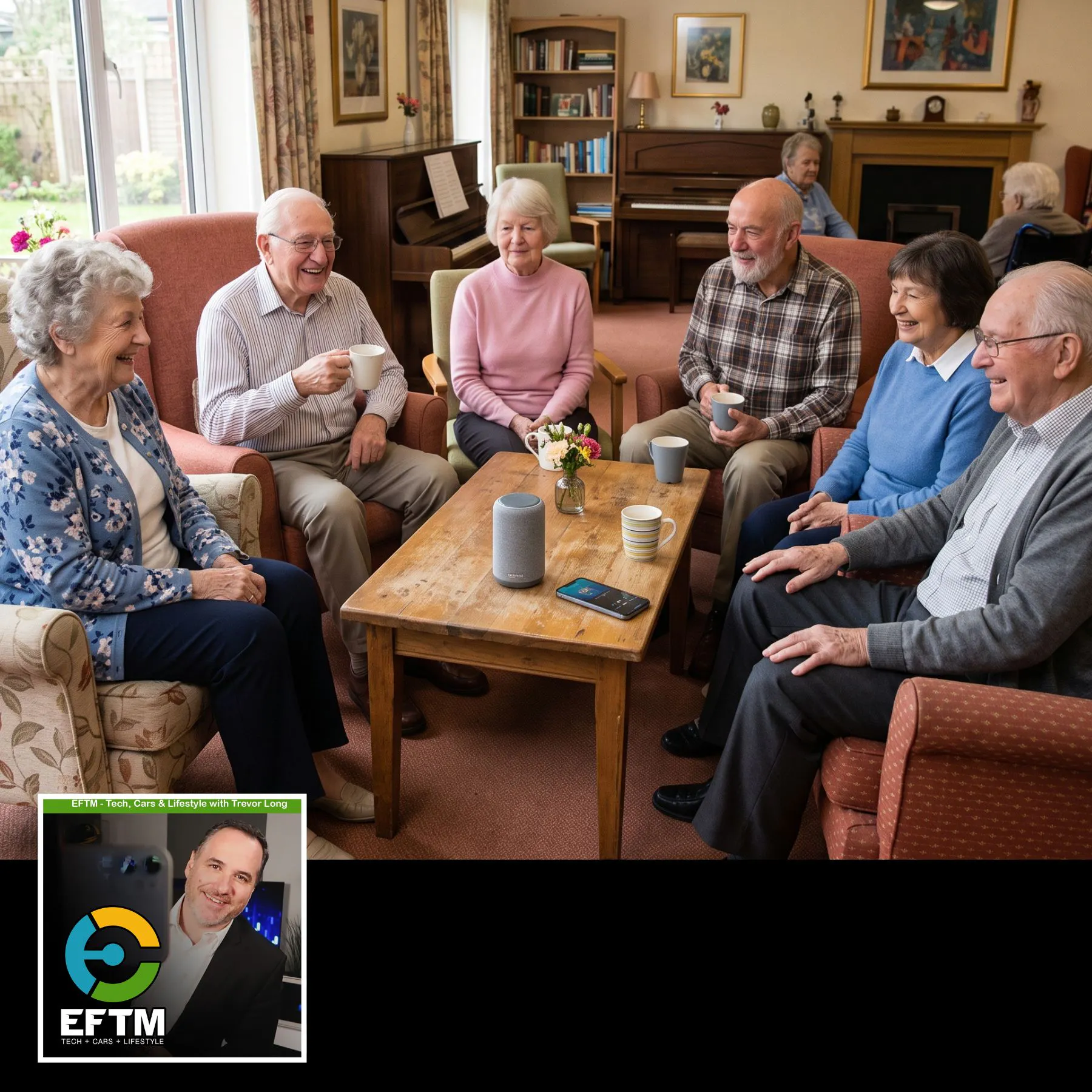
A busy week of EV and tech talk sets the stage for three main segments: a quick discussion about the fallout from Sony ending disc-based PlayStation games (and what it could mean for second-hand markets and retail), a heads-up on potential NBN switching “loopholes” and traps, and a deep dive into TV tech with Chris Mayer from Hisense—especially RGB and backlighting. The heart of the show is Margaret’s aged-care song project, where Trev helps source 50 USB-ready speakers so residents can hear AI-made personal tracks.

Kia EV9
"Luckily I've got a big care EV9 GT on loan so I will take that from Fennec and he'll take the van"
The Kia EV9 is an all-electric family SUV with three rows of seats. “GT” is the sportier, higher-trim version, and the host is borrowing one to do a longer drive.
The Kia EV9 is a three-row electric SUV, and the “GT” trim is the performance-focused version. In this segment, the host mentions borrowing an EV9 GT to drive to a remote area, which highlights how EVs are being used for real-world travel rather than just short errands.
electric cars
"talk to the MG Club of Canberra about electric cars because my uncle who passed away a few months ago was a longtime member of the MG Club and he asked me to come and talk to them about EV"
Electric cars run on electricity stored in a battery. Instead of using gasoline, they use an electric motor to move the car.
“Electric cars” refers to vehicles powered primarily by electric motors and rechargeable batteries, rather than gasoline engines. The host uses the phrase in the context of speaking to an MG Club about EVs, framing it as a topic for enthusiasts and owners.
MG Club of Canberra
"drive to Canberra where I'm going to talk to the MG Club of Canberra about electric cars"
MG is a car brand (often associated with British sports cars historically), and an “MG Club” is a fan/owner group organized around that marque. Here it’s a local club in Canberra that the host is speaking with about electric cars.

Ford Falcon
"...ing they're filthy they're not getting a cut of a falcon being sold on the second hand market today stupid..."
The Ford Falcon is a car model made by Ford that was sold for many years. People still talk about it today because you can find older Falcons used for sale. The discussion is probably about how money from selling used cars works.
The Ford Falcon is a long-running model line from Ford, best known as a mainstream passenger car that was widely sold and used for everyday driving. It often comes up in discussions about the used-car market because older Falcons can still be found for sale and can attract attention from buyers and sellers. In a podcast context, it’s likely mentioned to highlight how second-hand sales and ownership can affect who benefits from a car’s ongoing value.
filter rings
"previously you know we had to do all these extra filter rings and these extra things because the color we were starting with just wasn't accurate enough"
They’re talking about extra parts that help adjust colors on a TV. The idea is that older setups needed more of these extra pieces to get accurate color.
“Filter rings” are described as extra optical components used in earlier color-correction methods. In the segment, the speaker says the starting color wasn’t accurate enough, so additional filtering hardware was required.
isense
"and so companies like isense have done such an amazing job of creating these you know color master filters and these amazing systems that kind of trick the light into getting to the color it needs to be"
They’re talking about a TV brand and its technology for making colors look right. The point is that the brand uses special methods to get accurate colors on screen.
The speaker mentions “isense” in the context of display technology, specifically color-accuracy solutions. In this segment it functions like a brand name tied to TV color-filtering and light-management systems.
color master filters
"companies like isense have done such an amazing job of creating these you know color master filters and these amazing systems that kind of trick the light into getting to the color it needs to be"
These are special filters inside a display that help the TV get the right colors. The speaker says newer tech can reduce how much filtering is needed.
“Color master filters” are specialized optical filters used to shape or correct the light so the display reaches the intended colors. The speaker contrasts earlier approaches that needed extra filtering with a newer approach that reduces or eliminates that filtering.
rgb
"there's a lot of rgb and that's great it means that it must be the good thing because everyone's gone hang on a minute we've got to get into this right"
RGB is how a screen makes colors using red, green, and blue light. Better RGB handling usually means more accurate and vivid colors on the TV.
RGB refers to the red, green, and blue color channels used to create the full range of colors on a display. In this segment, the speaker links RGB to “color accuracy” and the overall TV picture quality.
hysense
"and i don't want you to talk about another brand because you're here to talk about hysense but in the sense that you are aware that there's a bigger market out there how do you pitch that people choose hysense rgb"
They’re talking about Hisense (the TV brand) and how its TVs handle color and picture quality. The discussion is about why you’d choose that brand for a better overall TV experience.
The speaker repeatedly refers to “hysense” as the brand whose TV technology they’re discussing. Here it’s tied to RGB color performance and the idea that the TV experience is improved beyond just color accuracy.
100 color accuracy
"okay rgb is fantastic you're getting 100 color accuracy you're getting a certain brighten list level you're getting all these things right"
This is a claim that the TV’s colors match what they’re supposed to look like very closely. The speaker uses it to argue that RGB is a strong starting point.
“100 color accuracy” is a marketing/technical claim that the display can reproduce colors extremely closely to a target standard. The speaker treats it as a key benefit of RGB-based TV technology.
brighten list level
"you're getting 100 color accuracy you're getting a certain brighten list level you're getting all these things right"
They’re talking about how bright the TV can get. Higher brightness usually helps the picture look more vivid, especially in well-lit rooms.
“Brighten list level” appears to refer to a brightness-related performance metric for the TV panel. The speaker groups it with color accuracy and other picture-quality factors, implying it affects how vivid the image looks.
Request an Explanation
Heard something you'd like explained? We'll add it to this episode.
Sign in to request explanations for terms you heard.
Want to learn more?
Browse our glossary for plain-English explanations of automotive terms, jargon, and concepts.
Help improve this episode
See something that's not quite right? Our annotations are AI-generated and can sometimes miss the mark. Click the flag icon on any annotation to suggest a correction.