A specially shaped panel at the very back bottom of the car that helps pull air out from underneath, sucking the car down onto the road for better grip.
Wings and body parts on a car that can move automatically while driving to help the car go faster on straights and grip better in corners.
LIVE
On today's episode, Gary delves into Red Bull's transformative upgrade package and
looks at Cadillac's break over heating troubles. We hear from F1 test driver Joe Guan Yu and
also take your questions on the limits of the power unit, straight line mode and gear
ratios.
Welcome to the race F1 tech show, I'm Ed Straw and of course the main man is with me, Gary
Anderson, former F1 technical director with half a century experience in and around Formula
1, which means he's definitely forgotten more than probably most of us will ever know about
racing cars. Gary, we've got Silverstone coming up. It's not a huge distance away from where
you live either. No, it's 20 minutes up the road really, but yeah, it's a good race. It's
an interesting race because it's a real circuit, I suppose you might call it. It's got good
fast corners through the beckett's complex, the cops. Yeah, it's one of those circuits
where a driver can contribute towards the performance of the car. And there's many different ways
if you take that complex, as I say, beckett's complex, you go into there flat out and at
each corner you go through there, you sort of come down a gear or you slow down a little
bit. So it's an interesting complex. It'll be an area where I think you could do quite
a bit of harvesting through there because you are slowing as you go through it. We haven't
really pinpointed a great harvesting or deployment strategy difference from other cars. We saw
a bit of it in Austria, I think, but where you get somebody overtaken and they turn three
and then being overtaken again and they turn four. But I think we'll see more of a discrepancy
at Silverstone for sure because it's not going to be easy to have the power. You've got too
many straights there basically for it and not really enough time, enough braking time
to get the battery up to spec. So it could be one of those situations where it's going to be
down to a bit of passing and re- overtaken again. Yeah, an interesting test for these new cars,
particularly the power units for Silverstone. Max Verstappen was certainly quite disparaging
about the energy regime though. He said he was basically laughing when he drove it in the simulator.
So it's going to be something to look out for during Friday practice in particular.
Talking Max Verstappen, should we talk about the Red Bull Upgrades, a major upgrade package that
allowed Max Verstappen to challenge for victory in the Austrian Grand Prix? I think if he'd
been able to get track position, probably he would have won it. You did an interesting piece
that ran on the race website on Saturday morning that was picking out while going through the changes
and there were several bits where it was very clear, based on your analysis, of quite different
objectives in terms of what they were trying to achieve with the airflow on it. So this one does
come under the heading of significant upgrade in so far as not only were they just putting load
on making it better, they were trying to achieve slightly different things. Yeah, I mean, it's
always difficult because as I always say you, whenever you come up with the concept of a car,
you don't start with a rectangular block or a cube of modelling foam. You start with a concept
and you follow that concept and you optimise that concept, you develop that concept and you
get the best out of it. But was it the right sort of package to start with or is there a better
solution to manage the airflow through the car? And before you can really realise that, you need to
probably see what a few others have done, I suppose is the right way to put it, because the people
coming up with the concept, you've probably got 200 people optimising it, but you've probably got
three or four people that are actually sitting down and trying to sort of get the picture in their
head where they're trying to get to, what they're trying to achieve. So before you can change your
mind, you've really got to see some reason for doing it. Now, we don't know all the reasons,
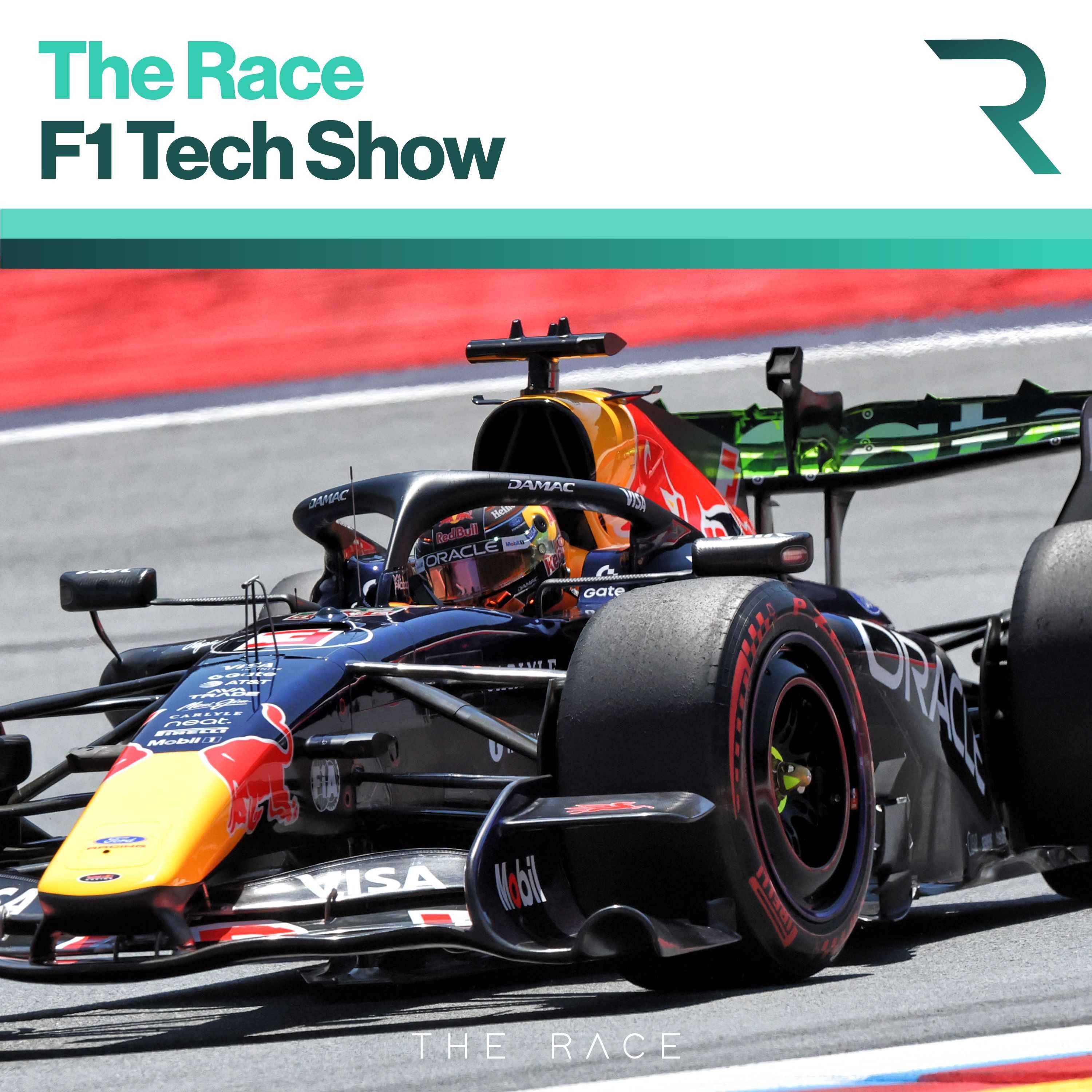
obviously there was side pod changes, let's say, as one of the biggest things, the shape of the
side pod and how they were changing the airflow, as opposed to letting the airflow comes in between
the front wheels and the chassis slide go through there and into the undercut and the side pod,
which they had an undercut from front to back, I suppose you might call it. So basically they were
allowing that airflow to get through the car and come out the back end of the car helping the diffuser.
They then put a more bulbous side pod on it, which meant that that airflow was being separated,
it was being moved out and behind the front wheel, helping making that front corner of the
floor work harder. And then that means that your cook bottle has to get flow from somewhere, so
the undercut on the top of the side pod, the undercut on the top of the side pod, that ski ramp
sort of thing that we have in most cars now, is working harder to fill up or to help the
flow into the top surface of the diffuser, which getting better flow there helps the
under surface of the diffuser work harder. So yes, they changed the sort of flow structure of the
car, I think you might call it, to not make it as well connected front to back to separate the
front of the car and the back of the car a bit more, which gives you, in turn, makes it allows you
to work the front part of the floor harder, which means the diffuser can work harder because it's
better airflow characteristics going into the leading edge of it, and the diffuser can accelerate
that flow underneath the car. So it's all a package, but what we don't know is, did they
change the radiator cooling package and need to do that, or is it because it was driven aerodynamically
from the outer surfaces, or is it the inner surfaces? We don't know in detail all of that stuff,
so there's lots and lots of things that you do because underneath the bodywork that we see
on these cars is another set of bodywork, the internal flow on the car, because the internal
flow is something that's just as important as the external flow, managing that all correctly,
so you don't get airflow separation, etc. So we don't know all the detail, all we can do is write
about what we see visually, which is what the public see visually, and what they want their
interest in. So that's all we can do, but it's a big change, step. Did it make the car
better? I think it probably did. Now this is me being looking past it a little bit. I think in
qualifying he would have been right up there with the front row probably, if it hadn't been for his
problem he had into the turn nine, whenever he had it end up in the barrier, and that looked
like it was something to do with the rear wing not closing quickly enough, or not reattaching
quickly enough, or whether or not you can go in there without using the brakes at some point in
time too far, and just the rear gets away from you just before you hit the brake pedal and the rear
wing then shuts. So yeah, we don't know the final details of it, but it was pretty adamant that
something happened in the rear of the car they didn't like. You know that crash was interesting
because the team emphatically took responsibility and apologized for it, and they weren't entirely
well they weren't they were initially not entirely sure exactly what caused it, they did see that
reduction in load, but I think my understanding is that it was either related to the kind of
locking mechanism, which is when the the wing goes back to its high downforce, its kind of default
position, something wrong with that, or something else in it was flexing, and they changed that whole
rear wing assembly for the race, but I guess that's a good example is it, because you can be in a
situation as a team with all the load sensors and that kind of thing, you can you can see
conclusively, oh yeah, there's something that's gone wrong there, in that something was not working,
it wasn't what happened, I'm sure it did lead to the the airflow not attaching properly, but
beyond the the amount of time you have to leave for that to happen, because it never
reattaches instantly when you when you go go to shut, but that's just a good example of how
small things could make a difference, and a team can know that something was wrong, but
it's not immediately obvious the exact failure or partial failure that has led to it.
Yeah, I mean it's always difficult to get airflow to reattach, I mean the two objectives of the
rear wing are front wing and rear wing to be honest, but the rear wing let's say is you know to produce
maximum downforce possible when it's shut, and minimum drag when it's open, and the rear wing is
the big contributor towards that, the thing that confuses me a little bit I suppose with these cars
is the front wing, because the opening of the front wing or reducing the downforce from the
front wing does change the flow structure to the rest of the car, the complete car, so really you're
looking at the flow structure for off the front wing closed to make sure the rest of the car works
well, the underfloor etc, with the with the downforce level produced by the front wing,
but you also want to make sure that the when it's open the drag level of the rest of the car
is reduced, now the the underfloor of the car is the most efficient part of the car, it works like
a venturi to the to the ground, so it's the most efficient part of the car, the rear wing is probably
the other than the wheels and tires, the rear wing is the least efficient aerodynamic surface on the
car, so the rear wing is the thing you want to concentrate on to get rid of the drag, so obviously
we're seeing different opening mechanisms coming into vogue now, McLaren has their
up and over job, but they haven't actually tried to well run it on the circuit yet, I don't think,
so we'll see that probably, well we might see it at Silverstone, but it's one of those sort of
situations where I say you're trying to get two different things out of the rear wing completely,
maximum downforce, so that means you're working the air flow really hard, so reattachment is quite
difficult and minimum drag when it's open, which is not so difficult, it's that chains between
the minimum drag and maximum downforce, it's a critical one, when you shut the wing as you say
the re-engagement of the air flow or the reattachment of the air flow is not really
instantaneous, it's like hysteresis, so you want to really monitor that in some way and look at it,
because it would be very very easy to have a wing that worked really well as far as when it's shut
and when it's open, but it's that last two or three millimeter transition or two or three degrees
of transition from it being open to it being closed, how that is affected, because you might,
you know, the mechanism on the rear wing, let's say for example, has to go from closed to open
in 400 milliseconds, 0.4 second, and it has to go from open to shut in 400 milliseconds,
but that last little bit, you might want the geometry of your mechanism to make sure that
last little bit, it doesn't actually close quite as abruptly as that, you know, you want it to
accelerate around fairly fast and then just that last little bit, just allow more air flow through
the slot gap to get the reattachment before you actually get it shut that last little bit to make
it work harder, so it could be that something happened in the rear wing as far as that was
concerned, you just, if they can just slow down that last little better response to the flap,
just to allow more air flow through the slot gap to get the flow attached to the flap section,
then you probably end up being in a better position, but I've always thought with the
upside down rear wing, the one thing for me is that when it's on the way, when it's closing again,
it acts a bit like a parachute, you know, it's a vertical sort of, well, barred and doors,
which you might call it, which at that point in time, that's what you really want as far as when
you're breaking, you want something at the back of the car that feels like a parachute and on
that rear wing, on the way to closing, it does do that for you, it's not efficient aerodynamically
or anything like that, but you don't care about that, so the geometry of the mechanical mechanism
is something that I would be working very hard on to make sure that whatever you've got it open,
it does the first, I don't know what you might call it, the first 40 degrees of rotation
as fast as possible, the next 10, 15 degrees slower, the next bit as fast as possible,
down to the last five degrees or something, then you want to slow it down there, so you,
but your whole travel has to be within that for 0.4 second, but the mechanical geometry,
you might be able to do something there to make it have some rate change as you're operating it,
so there's a lot of detail you can go into with these things, but as I say, I'm sure there was
a mechanical problem there that meant max fun because it didn't look like it was, it was just
down to pure speed going to the corner of the car, it came around, it's wrong to say this,
it came around too slowly, it just didn't have rear grip at all, it just came around, it didn't
snap or anything like that, it just came around and that surprises the driver as much as anything,
he would look at that and feel like it was just a failure of some sort.
So looking at Red Bull as a whole with this upgrade, does that up your confidence in where
that team is in terms of its air development path because they've had problems with the car on and
off this season and in fact the past few years have been quite a battle for that team and they
kind of falling back and getting back into it and so on, so does it look like they're at least
on the right track insofar as they're doing the right sort of things, it's working, therefore
they should be on quite a fruitful development path? I think I'd like to reserve judgment on that
until the next two races because to be honest, if the car is in the right ballpark, Silverstone
and Spa are Max Verstappen style circuits, he's going to be there, so if it's in the right ballpark
I'm not saying it should be on pole and win in the races but he should be challenging
and if that happens then I can see them definitely having their focused and development path
fairly well defined, so I think we need that to happen because again, Austria is a bit of a
bit of a one-sided, it was very hot, the tires were very hot, it's a strange little track with
just straight connected by a few corners or corners connected by a few straights,
so it's a little bit of an outlier in its own little way, so Silverstone and Spa will tell me
or will tell everybody whether or not Red Bull are in for the fight, there's eight races gone,
so by the end of that will be 10 races gone, not quite half season but pretty close,
so I think Mercedes will be looking at a couple of teams in the rearview mirror,
I think it will be mainly Ferrari and Red Bull as to where they're going because
I think McLaren, McLaren a little bit behind, I think the North summed up pretty well saying
that they focused on last year right to the end because it was the competition and to try to
win the championships which they succeeded in doing but then a team that operates well,
a team that operates efficiently and uses its manpower correctly can win a championship one
year and challenge for a championship the next year, even with a regulation change, we've seen
it in the past and it can happen and I think if McLaren have learned anything so far they'll
have learned that their structure isn't quite right to achieve that because you're always going
to be wanting to do that, that's your objective is to win a championship one year and continue into
the next year and it can be done but that's it's not down to ideas or manpower or any of that sort
of stuff it's about just better planning I think a little bit, I think McLaren will have learned
a lesson from that this year but anyway doesn't really matter, Ferrari dropped the ball in Austria
in my book from their performance in Barcelona to Austria, it was like two different teams
completely, both in strategy and in the race performance but I think Mercedes will need to
keep an eye on that rearview mirror for Ferrari and Red Bull coming at them. Jumping from the
second quickest car probably overall in Austria to the second slowest, the Cadillac,
very very striking brake cooking, I was going to say break over heating but it's just brake
cooking problems isn't it with both Sergio Perez and Valtteri Bottas basically immediately retiring
from the race and these brake problems have been going on for a few races now what do you make of
that whole situation how does it go that badly wrong? Yeah well the management of the brakes I
mean we've got to assume the brake material they've got on the car stops the car
it's capable of stopping the car within its temperature working window which is you know
let's say for any of the brake materials that's available is 300 degrees centigrade above that
works pretty well up to about a thousand degrees centigrade once you get up there you want to
start worrying about it a little bit so if you've got brake material on there that doesn't allow
that to happen then you know that's the thing you can change and they should have reacted to that
earlier so I have to assume it's in the car cooling system basically I see how they work
these cars now the brake dock itself is a very complicated piece of kit it's mainly got more
more complicated because of this effect it has on tires but the front is much much easier than the
rear in its own little way the front really you're you're not you're you're fighting to get the
consistent tire temperature in the front tire whenever you put on new tires for qualifying so you
really want heat to get into your rim and try to heat that heat from the brakes get into your
rim to try and heat up that tire a bit heat up the volume inside the tire but in the race you
want to try and keep it down but you're not so worried about it on the front because you know
the the front it does a lot of work cornering loads and braking load but the rears are the one
that really picks up temperature quite quickly just one little bit of wheel spin and you know your
tire temperature can increase 25 30 degrees so it's the rear that you want to really maintain
temperature and they use the brake cooling flow to make sure the rear tires are kept
at the minimum so on the front the objective of the brake duct is take air in the front of it
obviously the high pressure at the front of it so it's an inlet so it needs to be a high pressure
and then somewhere on the back of that duct or the back side of that duct you'll have an outlet
which will be in a low pressure area so you get you pass air through the front of it and out the
back of it and during that period some of that air will go to cool the caliper some of it will go
up through the the cooling holes in the in the disc a little bit of it will go up the the inner
and outer surface of the disc just to keep the surface temperature at bay so it's just a mass
flow basically the the more flow you put through there the more detrimental that is for the for
the front wing of the car because it's just being blocked off by a brake duct having looked at the
brake ducts on the on the Cadillac they're they're a bit stingy I suppose you might call it for
for some circuits like Montreal and for potentially Austria because they're all big braking big
braking circuits sometimes it's better not to be stingy sometimes it's better to over cool
to a certain extent I don't think you'd have a problem over cooling for Monza or for Montreal
or for for Austria but you need to make sure you're open you're covered and I think that's
maybe what Cadillac meant wrong they've sort of pushed the performance a little bit too much
when they don't need to their objective right now is to beat finished races because they learn a lot
more about finishing races and the second part of that is if others don't finish races for some
strange reason you need to pick up at a point if it comes at you so I don't think there's anything
really dramatically wrong but as far as the the front's concerned you know getting better wheels to
manage that temperature better it's a spoke design it's about making the wheel work like a
a bit of a farm just making sure it moves there the right direction but we've seen in the past
brake ducts that where the the inlet the pressure on the inlet a isn't as pressurized as it needs to
be or b the negative pressure on the outlet isn't as negative as it needs to be and you can get
reverse flow very easily going through the duct and once you once that starts happening
it's very difficult to get rid of it because you know that just it just starts and then suddenly
the flow doesn't want to change direction anymore I was surprised when bodice you know stopped more
less the first lap with the brakes on fire because you know going into the race the drivers should
know I got this problem I got full fuel tanks now the brakes are critical you know and they're at
the back those first few laps you should be braking 10 meters earlier than anybody else
just to make sure you get yourself to a point where you can get the brakes stabilized um
get rid of a little bit of fuel just get to know where you are but for it to happen in the first
lap seems like maybe something went wrong you know with the brake system and the brakes got
locked on or he had no rear brakes it just was all front brakes but something was very strange
there but it's happened as you say more than once so I don't think it was just an incident in Austria
I think it was maybe you know bigger than that yeah certainly it's it's strange because they're
their finishing rate has sort of the flaws fallen out of it recently they've finished twice in the
last six starts taking each individual driver starter as one start and yeah brake problems
have been heavily in the midst bodice hasn't finished the last three races so uh yeah slightly
trickier time but inevitably steep learning curve for Cadillacs I'm sure they'll get on top of that
very soon they're absolutely going to have to recently we asked some people about sharing
their New York Times accounts I'm Nero Scrum Madison, Wisconsin I would like to share my
subscription with my family members I should be able to share recipes from inviting cooking
wire cutter articles for athletic articles we are a family of four I would like them to have
access to the subscription too thank you Neroj we heard you it's why we created the
New York Times family subscription one subscription up to four separate logins for anyone in your
life find out more at nytimes.com slash family
unusually we're going to hear from a driver on the race f1 tech show we don't normally let them
near the podcast because they get to talk plenty but this is a slightly different one because we're
not going to hear from a race driver or at least not a current f1 race driver instead we're going
Cadillac reserve Joe Guan Yu. Joe recently drove the 2026 Cadillac for the first time in a post
Barcelona Grand Prix tire test he completed two days of running and I caught up with him to hear
about the process of tire testing his impressions of the Cadillac team also what it's like to drive
the controversial 2026 car power unit package in reality so it's over to Joe Guan Yu and me
so you recently did the Pirelli tire test in Barcelona a great opportunity for you to drive
the car which I presume was the the main appeal but obviously you are there to serve Pirelli
effectively so how does it work in that regard in terms of being blind to what the tires are what
feedback you're expected to do honestly it was a pretty pretty efficient test I was really obviously
grateful opportunity I had because obviously with this new regulation if you would be a team you
would definitely have your official two drivers to be there but everything was really decided
beginning of the season because the team wanted to have my input they won't give me opportunity
to show what I can do for the entire team and yeah I was I really enjoyed that day because
firstly I think with the Pirelli test you there's only like one runs you can really
have a little like a feeling of what's happening and then you get into this rhythm of keep testing
different blind programs of tire compounds and yeah I was straight away after two push laps I was there
up to speed so that was actually quite good and then I was really pushing pushing the car so I
wasn't really hesitating much I would try to give it you know everything the controller pushed on
the limit so I actually really enjoyed this new regulation of course besides I think with all
this change we did throughout throughout the year with better energy management on your all
outlaps everything became a bit more natural and then with the lighter car with the car the
visibility is better how to control the snap oversteer is better and then the rest of course
you have a lot of acceleration which is fun you have to control the traction so yeah I really
enjoyed it actually 180 laps or more over the two days so yeah it's been a while since I was
able to drive again and like last time was like last year the TPCs and yeah just love them
and in terms of the kind of runs you'll be doing obviously there's various different things they
look at there's the normal short run versus long run there'll be the looking at the warm up strategies
and that kind of thing how varied is it in terms of what you're doing and will it often be go out
set of tyres on do whatever an eight lap run come back in do the same eight lap run on a different
set of tyres does it get quite procedural like that or does it move around quite a lot the
procedure is very similar like if like for six rounds so they would have like quite a lot of
baseline so they will have their option they want and then you have a baseline and there's
a dozen two options back to the baseline and then over the afternoon they will do an even higher run
so like for the more days they're aiming for 10 laps conservative so like consistently pushing for
10 laps just to see how the tyre and in the afternoon while the track is a little bit harder
while it's a bit more replicating to the actual race weekend for the Grand Prix
they will aim for 15 laps 16 laps so because the sting obviously of the roughness of
bus loader the tyre doesn't last that long so that's their end and then you're pushing
pretty flat out especially when you do a 10 laps run and the tyre they don't they do go up five
65 laps I mean if you keep pushing with the same amount for 34 laps you will hit the
day so that's what they were trying to replicate it's a hard day in the cockpit
because you're just always in the car you don't really have a break you know you jump out once
during the morning session for five minutes that's it you're always in the car for the entire day
how easy do you find it to kind of I guess there must be an element where you're going to kind of
guess almost what the tyres you're running on and whether there's because you'll get different
constructions so you might get slightly stiffer sidewall slightly softer are those things that
quite easy to pick up and do you do you feel even though it's it's blinded you've got a reasonable
idea of a of a the kind of things you're working through and be the kind of direction for the for
the 27 tyre as well yeah to be honest it's for us that today's it was C2 tyres so which was the
hard compound for the weekend and then it's pretty straightforward you're in a C2 tyre but then
it's very different each compound and that for me it's quite easy because it depends on drivers
you know how well you are to fill your car with minimal adjustment or construction changes but
for me at least it was pretty straightforward even though they were blind tests you can feel the
difference between the tyre deck how quick to get them warm up to temperature front axles rear
axles getting stronger or weaker so all these things you're testing there was a few positive
options you know I think the whole test is trying to give better operational wise on the tyre
working window because I think you know the rules this year we're running pretty high
let's say with the tyre pressures to be on the safe side for the whole entire paddock and I think
that ideal is bringing a stronger compound that we can be a bit more on the limit with the pressures
so it gives better long runs and let's talk now a little bit about this team because you've got some
interesting comparison points you had the three years racing with with Salba you had last year
with Ferrari so two very different teams you you know inside out and then coming into Cadillac
which is this fascinating story of a team that's still building up it's still really in the early
stages performing remarkably well yeah I think so what are you seeing in terms of the
background of facilities the way it's all working because from the outside it doesn't feel like a
team that's in its first year that yeah it feels very established right away yeah let's see I was
let's say I wasn't surprised at the very beginning so because that's how difficult it would be
studying a company a team a new team you know getting all the stuff coming alongside from each
for different teams or different scenario and to put it into 11 team together but obviously
the way how they progressed I was very surprisingly positive about it because you know and I think
you really say about my previous team with Ferrari you know they didn't know what they're doing you
they've been always super on their fighting for for victories championship over the past years so
the whole construct of the team was built in a very smooth but also organized way but they're
coming far of course my old story seasons that was a big difference I really find with the Cadillac
team how well they was really to to improve as a whole team like the facility wise I think we
still have a lot of things to go to be get better because we're getting new buildings new factories
around Silverstone around different Indianapolis all these places which is always going to be
quite difficult I think because you're going to be passing different areas different countries
but the Silverstone one is always the main one that we try to build a race team and but then
besides from that I think the operation the team side is being super on it because the way how
you know they set up the whole weekend the way they improved the pit stop from beginning of the
year I mean while I was in Silverstone I mean it took us half a half year to get the pit stop for
absolute nightmares to four seconds so to see that starting 45 seconds and then quickly
get to 2.2 2.5 quite consistently between 2.5 and the four seconds I think that's
amazing job for the for the whole team because everything's new you know and we don't really
had a two cars ready at the very beginning so that's really surprisingly good but also it shows
how frustrated I had that that last year I had a steak you know that was a pretty terrible but I
cannot forget that year already at least I had a good point at the end of the season so but I'm
just great I think how professional most of the the stuff is able to build up the team from where
we you know started from and then to see the car running to have a such a big upgrade here for
for two cars like we have new floors for both drivers for this weekend having introduced a new
upgrade I never had that when I was back in the in the Silver family I mean they always had one
it was going to box his car and I will have a three races after I mean I can say enough because
I left the team but I think they are completely different now without the
say how quickly they're getting this stuff and I just feel so good when you keep the fairness
keep the transparent between two drivers even doesn't matter if you and your front-runner team
or if you're midfield team as even so in midfield you have to feel equal in the team and it gives
the driver the comfort to trust in the team which I think is very important here that's what we have
you know I was surprised how they got you know two sets and even spare one are getting ready
trying to arrive in the weekend that just shows how you know good organised they want to make
sure the team are starting from a very high baseline I would say the driver and loot simulators
interesting question because that is an area where the team is limited from what I know the
GM simulator it's good but it's not kind of F1 spec it's not optimized for F1 you've got the new one
coming from from Dynisma in terms of the hardware the technology how big a step do you think that
will be in terms of just giving you something that's just higher fidelity lower latency it's just
gonna make everything work that little bit better isn't it yeah I think obviously it's exciting to
see that there's a new spec coming but I do think it's going to take a few years to be up to I would
say the simulation or the similar representative of the actual real car we're going to be running
because you know we're getting a new sim and then it goes exactly the same as your car every single
team I've been to there's so much development you're going through the years of experience and of
input is a whole you know whole crew engineering mechanics I tried to have as much well replicated
as possible and for me like the best thing I ever drove it's still like 80 percent of the real car
you still get at least 20 percent away from actual the real thing and that's could be a long
project I think before we all say it's going to be amazing but it's definitely going to be a very
good step compared to where we are now because obviously yeah where we are now with more data
we're still improving but there's a certain things we could or we cannot do to that simulator
actually right now and I do look forward to the new one but I still think it takes a long time
because every individual simulator are customized or also adjusted by each team so you need to have a
four simulator supporting team there which we already have but then it's going to be the
difficult part for us I think being based in US with that simulator having the time for the driver's
to go there all the time it's definitely going to be very difficult because you come with the schedule
but then also you have to engineer always there looking to fix things try to try things that's
always going to be a tricky part but I think we're in the right direction but it's going to take some
time when you mentioned the best simulator you've given us only 80 percent I'm assuming the best
simulator formula one is the Ferrari one would be my guess is that correct I mean it depends the
Ferrari was pretty good at the time like last year it was sure sound good weakness we was having
at the track I mean the car last year was the brakes yeah but that was one see the simulator
didn't show on the Ferrari so the brakes I mean you can't because the brakes if they're going
bad travel long you can't but it was a good kind of a representative depends on the drivers you
know everyone knows Lewis doesn't like it because depends on like which generation you are like
we as a newer generation drivers we've always been driving simulator for since my f4 days
where they you know they started no simulator so for us it was a good replication and I really
actually say LPW was really good back in my days because one did a simulator preparation I drove
their real cars back in the two generation before it was a very good replica of the simulator because
it felt real you know but then the sellable one it was like it was was getting there but
there were certain things we have to ignore the simulator to set up because there's a lot of races
it it drive into the wrong direction so it was not the not the best experience but uh you know we
always try to improve the simulator that's what they all do I mean people every team they're walking
their heart of the similar they're trying to run every day but you know it's uh it's a tricky one
get it right but it helps a lot of team if you can get it right from a driver's perspective how
difficult is it to connect what the driver's doing or what you're doing when you're driving in
Barcelona to the deployment because I know from the outside I spend a lot of time looking at this
I can see where deployment varies between drivers say on say qualifying that that should ideally be
the same sometimes I can see the cause because there's some things we know can alter deployment
but other times it's completely opaque it's really hard to tell yeah is that is that something
that's not right in the system is that something the the driver's done has there been a a slightly
off throttle moment where they shouldn't have been and this from the outside is is quite puzzling
but how about on the inside I mean it's uh you get used to actually but like with help right now
like the the whole energy system works but uh honestly there's a lot of work you have to do
before the before the race weekend and also join the race weekend you are understanding where you
should deploy the energy better because you know the way how obviously for example Barcelona how
like if you're in a Cadillac car you're going to turn three compared to Mercedes we don't need to
we don't need that much deployment for that corner because we simply don't have as much
downforce as they have which we could have it on some of other straight where we overcar felt a bit
better uh or we have at the downforce to use the power to do so so I think every single team
especially from the top team to the midfielder there's a big separating of how you use energy
and that's how this regulation is very complicated for engineers but you get used to that and then
especially you understand better where you are but then it takes a bit bit time so I think to
not miss a session is very important just to have a bit of track time and then to see the data of
yourself or teammate choose to see where is the benefit official way to use the energy and it does
seem to be still it's not quite as pronounced as it was earlier in the season but it's such a big
thing in terms of the performance swings if the deployment says it should be say on a qualifying
lap that can be worth more time than getting absolutely every braking zone precise and every
corner precise although also there's that thing of sometimes if you carry more speed that can
actually compromise deployment it's a very complicated puzzle to put together yeah it's
it's definitely more complicated and or level what we wanted just because I mean we don't mind
to be complicating I mean the car is already very complicating I think as a general like
with this new regulation there's a lot of issues people are not running where they
people should be running with several surprising issues from different parts of the car but now
on the other side I think the most things is that it doesn't matter how much deployment you have
before the end of straight we're going to de-rate so actually to brake is much easier because you
you don't have as much like like power feeling as the is the past so the g force before braking
you're already kind of starting clip or losing losing the power before braking so in that side
is a bit more like smooth but then we would like to have the power just switching top before we
braking where f1 used to be but there's certainly you can deal with this new way of
let's say sustainable with all this backtracing so it's you lose something but I just hope for
the next one seems to be a bit more better get a bit more like a racy from the very beginning
well as always we're going to finish off with listener questions as always fire your questions
through to podcasts at therace.com that's podcasts at the-race.com if you've got something to ask
Gary anything about f1 past present or future as long as it's at least tangentially related to the
world of technology and the technical questions of f1 so the first question comes from Tim from
Slovenia where does the power unit end what I mean is what is actually provided by the pu
supplier and it's not developed by each team and what needs to be developed by teams are parts like
air intake or exhaust part of the pu or not what kind of information would teams get from a pu
supplier about the pu do they get all the necessary information to run simulations for exhaust systems
like ice dimensions pressure conditions in the engine or are they left to discover these when
they actually get the engine well that's a long question I mean how long's the piece of string
I suppose you might call it it depends on the team and we'll take I think best to take two teams
as an example we've got Haas which uses everything that I believe they use everything that Ferrari
can supply them and we've got the other side of it probably looking at McLaren who use the Mercedes
power unit they're both very different as far as I'm aware that can put me right here if I'm wrong
from the from the inlet not the bit you see on the roll over bar because that's the that's the team
part but from behind that part where the plenum starts through to the rear driveline
well otherwise the rear wheel not you can get that from the pu supplier you can get the the
engine the cooling package for it the plenum turbo the the rear the driveshaft the gearbox
the hydraulics the whole bit that takes you right through to the rear axle I suppose you might call
it as well and the battery and the control system so that that's what's called the the power unit
it's the power unit on driveline I think I'm correct in saying that eh don't they
the handily there is a thing called the power unit supply perimeter yeah which does
put a perimeter around it so yeah it's all of that sort of thing and and yeah the exhaust was
mentioned in the question quite a big chunk of that now is part of the power unit I think
basically apart from the tailpipe I think isn't it yeah the tailpipe itself and how you how you
make it not a tailpipe is is down to the team a bit as well but yeah the exhaust system um whereas
on the other hand McLaren uh the other side of the coin McLaren take the the the engine I suppose
you might call the engine in the turbo and they plunk it into their car with their own gearbox
their own I'm not sure about the battery pack but I think that is as Mercedes unit as well
but they will do the rest of it they'll do the exhaust pipes radiate as the plenum the
you know the cooling systems etc etc themselves so those are the two extremes but what you you
know what you get and what you used to get um would be um you know from a from a supplier would be a
package of drones of the engine um its dimensions etc etc um models now not a package of drones
it'll be a 3d model of all the stuff but the regulations themselves over the years of change
for the the engine pickups are defined in the regulation to the engine pickup to the chassis
and the engine pickup to the gearbox the position to fat are defined crankshaft heights defined etc
so you know you get a comprehensive understanding of the power unit you're going to use you will
always get that from a team no matter what team you are from a supplier no matter what team you
are the next thing then is what you get the the power unit manufacturer to supply you as I say
take everything you can get and McLaren who's supplied with a power unit make everything else
himself except for the the power unit really so yeah it's it varies from the front of the grid to
the back of the grid yeah if you want to find out more about that you could spend uh well probably
several days going through the the technical regulations and you can find the power unit
supply perimeter which does literally put a boundary on what the power unit is which is
kind of at the heart of the of the question but yeah it's it's changed a lot certainly over the
years and of course obviously there's certain questions when it comes to the cost cap and the
cost of power unit supplies and all those sorts of things that this is a necessary mechanism for
as well right a question from Steve and James Ward for straight line mode is there a rule which
means that the front and rear wing must open and close simultaneously or could teams play with
timing to affect aerobalance and initial rotation well there's only one rule that says that the
straight line mode against the cornering mode has to happen within 0.4 of a second
has to start at the point where the driver presses the button or when they hit the brake
paddle they've got 0.4 of a second now one of them could rotate faster than the other one within
that 0.4 of a second which is what we really talked about a bit earlier about the rear wing
when I was talking about Max's problem in the Austria about maximising the rotation positioning
of the rear wing flap to get the best out of at any point in time but all again within that 0.4
of a second so you can't do much with it I mean 0.4 of a second is not a lot of time you can't do
much with it but you could as I say have a geometrical difference and the mechanical linkage
to alter the rotational speed at various points through it not easy to achieve but that's why
I sent them a bit of a challenge to say right okay I want to bring this wing from here to here
and I want to speed up here and I want to slow down there and I want to speed back up here and
can you sort out a mechanical mechanism for me that will allow us to look at that and then you
sort of look at it and do about CFD work on it and see if it does do what you think it does
i.e gives you more drag when it's sitting vertical on the way to closing and so on so forth so
there is there is room for a little bit of manoeuvre but from the button press to the
brake pedal closure it needs to all happen within that 0.4 of a second both front and rear
simultaneously and the final question comes from P Schneider we know that the McLaren gear ratios
are a little shorter than that of Mercedes what drives decisions on gear ratios and could that
be putting McLaren at a disadvantage yeah gear ratios are a very strange thing I think you're
allowed one change during the year if you want to to if you've got it wrong yeah there's a
joker change for for the first year of the regulations you can change the
ratios and the final drive one time if you want to just to match the requirements um this year I
think it's it's probably the year where there's the most head scratching done on it because it can
make a bit of a difference um it's one of those things if you're if you're using shorter gears
you know you're you're using higher theoretically higher rpm um so it's it's always difficult to
know the the two circuits I suppose you look at is is Monaco to to Monza Monza's the longest gear
you want you want your eighth gear to be correct for the low drag position of the wings and give
you enough window and rpm with the good power characteristics to allow you to overtake somebody
so it's a sort of very long gear for that and then you might use only six or seven for some of the
other tracks but that's that's that's life I mean we used to have gear ratios that would give 50 rpm
difference we used to have just trot lids of them um and it's a good thing that the FIA does bring
in this defined set of gear ratios at the beginning of the year but it can make a difference um is it
significant probably not because on the way up through there to the to the final gear I suppose
to the eighth gear you've got you know you've got at your fingertips um what gear you want to be in
and we'll see some drivers using you know second gear through a corner whereas other ones are down
first gear does that mean it's because they're breaking the rear of the car is better or is it
just mean that they they want that peak torque quicker because they go into first gear they get
that initial acceleration better they get drivers that want to change up earlier just because they
like to use that to sort of settle the torque down a little bit as they're coming off the corner
other drivers will live with it and lift the throttle a little bit so the driver characteristics
and gear ratios sort of go hand in hand to a certain extent I don't think you get two drivers
just doing exactly the same thing through a lap because some drivers like this different characteristics
from that initial acceleration or that initial that last minute braking where they select a lower
gear just right where they're turning the car and to get the rear to rotate a little bit so it's
what a driver wants really what a driver lives with but as I say the the the gear ratio that
Mark is really is eighth gear you've got a big selection of gears between those two another
seven of them you can use anywhere you want so I don't think it's that detrimental it could be
when you get to Monza but you know only time will tell obviously that opportunity to change the gear
ratios it doesn't seem for example McLaren's going to change anything I asked Andreas tell
her about this a few races ago and he said they're comfortable they've got they don't intend to but
I've seen that would that be a relatively straightforward thing to do under under these
regulations to to make a readjustment or is it one of those things that has hidden complexities
in terms of making a change well I think I think the team knows more about it I mean it's all down
to I suppose really what they've got with with where you can use the active arrow the the straight
line mode you know you've got to really package that in because if there's certain places where you
want to have the right gear for a certain corner and let's say through El Rouge you know you you're
not going to have active arrow I don't believe you're going to have active arrow through El Rouge
I would be fun but I don't think so um so you know you've got to package it to suit the gear you're
going to run through those corners I would say if you're fairly confident in what you've got or
fairly happy with what you got I wouldn't worry about it being different for another team I think
if I took if I looked at Mercedes and say that their their ratios are a bit longer than what
McLaren have got Mercedes have probably gone on the safe side because that is the safe side
to go on you know if you've got a longer gear and it's a little bit too long you're still going to
be okay if you've got a shorter fifth eighth gear sorry um then you could run into trouble so I think
that if I was to sort of pick a team that's maybe took the safe route it would be Mercedes
um maybe they were expecting more at the drag reduction than what they they're back to the
end up getting but I wouldn't say it's detrimental to to to either team as far as performance is
concerned because of the electrical part of these these cars have got you know it's they're not really
peaky horsepower cars because it's not you know it's not the horsepower you're talking about at that
point in time it all adds up with the with the electrical torque and the horsepower of the engine
obviously but it's it's just about trying to make sure you get the best out of everything so
I think you would if it was me I would have gone the Mercedes route a little bit longer to be safe
and know that if I got a lower drag rear wing assembly suddenly out of the blue because I was
you know a boffin then I could cope with it as far as the engine rpm would be concerned but you
know as I say I don't I don't see it being a big drama either way to to have what you've got or to
change if you if you really need to well thanks very much to everybody who sent in those questions
great answers always from Gary remember it's podcasts at therace.com that's podcasts at the
hyphen race.com if you've got a question to ask Gary and Gary the next time I'll see you will be
at Silverstone so we'll be watching some some F1 cars together which is always good to do and
who knows maybe we'll have a repeat of the classic moment when one of your past creations
drove past us on a flatbed truck having having expired and I think that was more down to the
french bit of metal in the back of it than any of your handiwork yeah connecting the chassis to
the gearbox has always been a tricky one but yeah it's it's good Silverstone so it's always been a
fun circuit for for for Jordan it's a team that was based there I want to see a race where the
driver the drivers contribute a little more than what we've seen during some of the races this year
because Silverstone and Spa are two of those circuits where you want the driver to be the
man that's that's doing the job and not dictated by by deployment and harvesting characteristics
of the car so let's see what comes out of it but I'm looking forward to it and smelling the castrol
hour as they say yeah well it's always a good weekend and yeah I'm we good to catch up and
see what you think of these new new cars when you can have a very close look at them in person
so we'll have a another episode when will it be it'll be before Spa so between Silverstone and
Spa we will next reconvene so thanks very much Gary thanks for everybody listening
and join us after Silverstone for more from Gary
the athletic
About this episode
Former F1 technical director Gary Anderson joins Ed Straw to dissect Red Bull’s transformative aerodynamic upgrade package and its impact on airflow and diffuser performance. The duo explores the mechanics of DRS reattachment following Max Verstappen's qualifying mishap, previews the unique energy harvesting challenges of Silverstone, and investigates Cadillac's brake overheating issues. Featuring insights from F1 test driver Zhou Guanyu, this technical deep dive also answers listener questions regarding power unit limits, gear ratios, and straight-line deployment modes.
On the latest episode of The Race F1 Tech Show, Edd Straw and former F1 technical director Gary Anderson take a close look at the upgrade package introduced by Red Bull in Austria, and try to diagnose the reason behind Cadillac's race-wrecking brake issues.
We also hear from Cadillac's reserve driver Zhou Guanyu, who tells Edd all about his recent outing testing tyres for Pirelli and provides an update on the team's 2026 progress and developments behind the scenes.
And finally, Gary tackles questions from listeners on what elements constitute a power unit and whether McLaren have an underlying gear ratio issue.
If you'd like to ask Gary a tech question, send it to [email protected].
Get bonus F1 podcasts, extra content and ad-free listening, sign-up to The Race Members' Club on Patreon today.