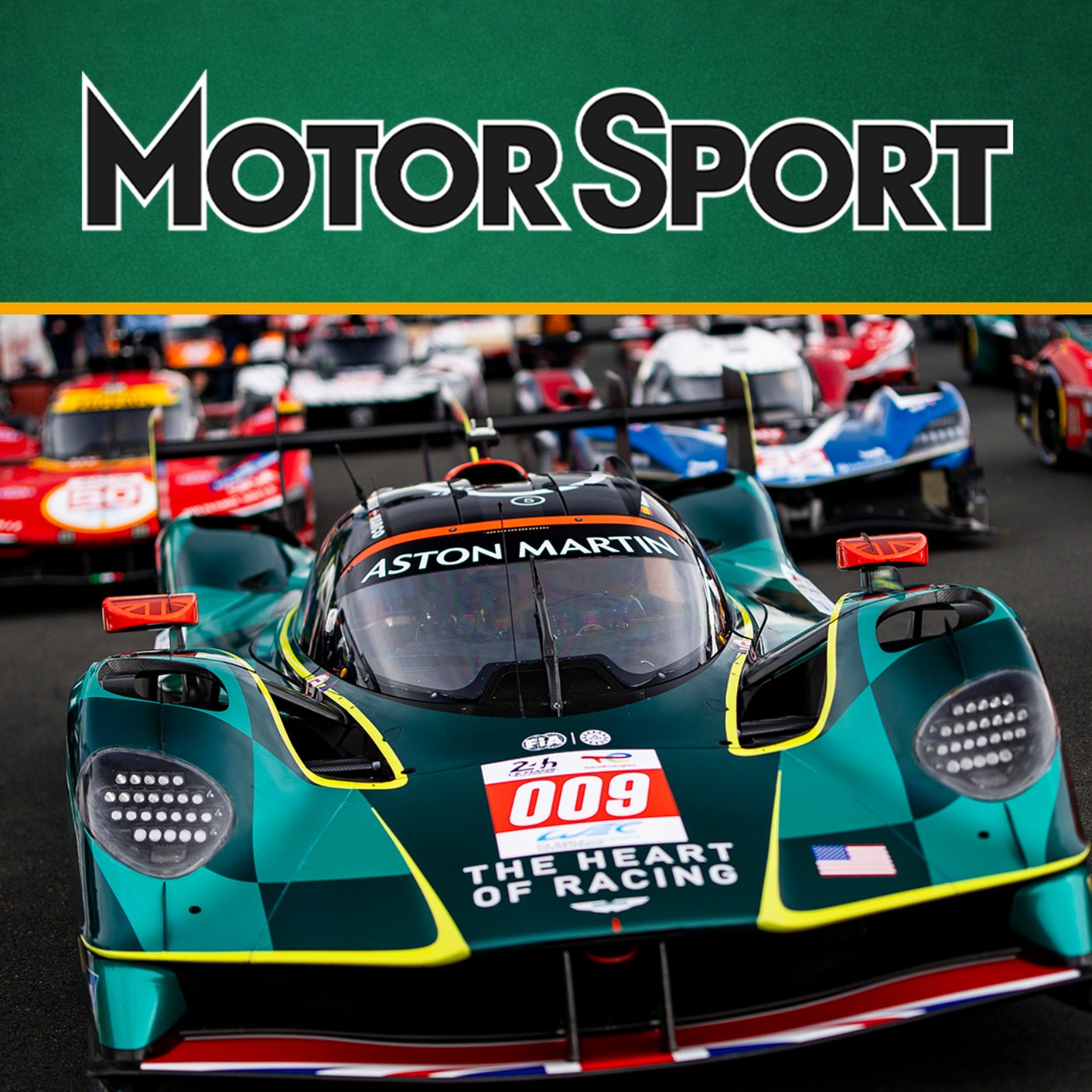
Ferrari 499P is Ferrari’s purpose-built race car for the 24 Hours of Le Mans. In this segment, they’re saying it’s the key reason Ferrari has been winning recently.
A “satellite entry” is when a manufacturer helps a team, but the car is run by a different team than the main factory squad. The host is saying that’s why the yellow car isn’t counted the same way for points.
A “works entry” means the car is backed and run by the manufacturer (the factory team). The host is saying one of the Ferraris is similar in spirit, but it’s not officially treated as a factory works entry for points.
Robert Kubitsa is one of the drivers in the car’s lineup. In races like Le Mans, who drives the car is a big deal because the car has to stay fast and reliable for a whole day.
Car
Audi R18
Audi R18 is a race car Audi used at Le Mans. The host is saying that the name “R18” got used for more than one different version of the car.
Car
Porsche 956
The Porsche 956 is a famous Le Mans race car from the early 1980s. The host is using it as an example of Porsche winning multiple years in a row with a consistent winning approach.
A privateer is a racing team that enters cars without being a full factory (manufacturer) team. At Le Mans, privateers may run cars that are related to factory machinery, but they typically operate with less direct manufacturer support.
In racing, a “proven concept” means the idea has already worked before. The host is saying the team is using something they know can compete, not a brand-new gamble.
Alessandro Pierguidi is an endurance-focused racing driver the hosts discuss in the context of GT racing. They’re highlighting his experience and how his performance may be improving with age.
Place
Alamon
They’re talking about a famous part of the Le Mans track. There’s a bridge landmark that’s been renamed, so the TV view and photos at the start of a lap will look different.
It’s a named bridge at Le Mans that you’ll see in TV coverage. The point here is that the bridge has been renamed, so the branding you see on it has changed.
This is the same bridge location at Le Mans, but it’s now branded as Goodyear instead of Dunlop. So the TV view and photos will show different signage.
“New Ss” refers to an added S-shaped section of track (“S” corners) placed after the Dunlop Bridge. The hosts are contrasting older lap photography with the current layout, implying the added chicane/sequence changes how cars appear coming down the hill.
A chicane is a sequence of turns that slows cars down. The Dunlop Chicane is a famous spot at Le Mans that many fans remember because it’s been part of the track’s identity for years.
The “hypercar grid” just means the lineup of the fastest, top-level cars racing in the Hypercar class. It’s basically who shows up to compete in that top category.
The “hypercar era” means the current rules period for the top Le Mans class. The host is saying Toyota arrived early in that rules era, then more teams joined later.
An aero upgrade is when engineers change the car’s shape and wings to make it grip the road better. The goal is usually to help it go faster and stay stable at speed.
Car
TR 010
The TR 010 is Toyota’s Le Mans hypercar entry. In this episode, they say it’s not a brand-new car—mainly the aerodynamic parts are updated, and the name changes to reflect Toyota Racing.
Gazoo Racing is Toyota’s racing brand. Here, the episode says the car’s name changes because the branding moves from Gazoo Racing to Toyota Racing for this update.
An EVO is an official permission to update a race car during its life. The rules limit what you can change and how much, so teams can’t just keep improving everything freely.
Genesis is Hyundai’s luxury car brand. Instead of being one specific car, it includes multiple models meant to feel more upscale. The podcast is likely bringing it up because not everyone is familiar with it yet.
LMDH is a set of racing rules for top prototype cars at Le Mans. It’s designed so teams don’t have to invent everything from scratch—parts of the car are standardized, and teams add their own design and engine choices within limits.
LMH is a different set of rules for the fastest Le Mans prototype cars. Compared with LMDH, it tends to require more custom development, which can be harder if you’re racing on a tight schedule.
The “spine” is the main built-in foundation of the race car. It includes key structural and suspension parts, and then the team adds its own outer body and powertrain details.
“Off the shelf” means the hybrid parts come from a common supplier instead of being designed from scratch by every team. That makes it faster and cheaper to build a competitive car.
A twin-turbo V8 is a V8 engine that uses two turbochargers to make more power. The turbochargers force extra air into the engine so it can burn more fuel and produce stronger output.
This describes a small engine: four cylinders in a straight line, with a total size of 1.6 liters. It’s mentioned to show the rally experience that the endurance program built on.
A V8 3.2 is an engine with eight cylinders arranged in a V shape, with a total displacement of 3.2 liters. The host is using it to explain how the new engine concept scales up from their smaller rally engine.
In this racing context, “bespoke” means custom-built specifically for the project rather than using existing approved components or a standardized platform. The host says Genesis couldn’t do a fully custom approach because the program was signed off late and had to move quickly.
The hypercar class is the top category of the newest, fastest endurance race cars. The host is using it to talk about which big-name brands are (or aren’t) showing up at the front.
WEC is the World Endurance Championship, the main series for long-distance race cars. The host is saying Porsche stopped competing in that series, which affects what cars show up at Le Mans.

The Porsche 911 is Porsche’s famous sports car. In racing, “GT” versions are modified for competition, and the host is saying only two of those 911 GT entries are running in the LMGT3 class.
LMGT3 is a class at Le Mans for race cars based on production GT models. The host is using it to explain what kind of cars are (and aren’t) showing up this year.
The Porsche 356 SL Coupe is an early Porsche from the 1950s. The host is pointing out that Porsche once won a class at Le Mans with this model, and now the current entry situation is the lowest since that era.
Manthey is a racing team that competes in endurance events like Le Mans. The host is saying Manthey has been very strong in Porsche GT racing and hopes for another win.
The Nürburgring 24 is a 24-hour endurance race at the Nürburgring in Germany, often used as a proving ground for teams before major events. A poor result there can signal reliability or setup issues that teams try to fix for the next race.
They’re describing how the class entries are organized: a manufacturer gets a slot, and then picks the team to run the car. Because of that system, it’s hard for one manufacturer to field lots of cars in the same class.
The Le Mans Museum is a museum at the Le Mans venue. It’s where the event’s history and cars are displayed, and it’s been expanded in this update.
Term
M24
M24 is the name given to the expanded Le Mans Museum display, described here as holding 120 cars. The segment frames it as a new partnership-driven collection rather than just a static museum.
Richard Mille is known for luxury watches, and he also collects cars. In this segment, he’s described as having a role in FIA endurance governance and as contributing cars to the museum.
Car
Mazda 787B
The Mazda 787B is a race prototype that won the 1991 Le Mans 24 Hours. It’s special because it uses Mazda’s rotary engine, which is different from the normal piston engines most cars use.
Group C was a racing class for special prototype race cars. The rules pushed teams to go fast but also last a long time, which is exactly what endurance races like Le Mans demand.
LMP2 is a type of race car used in long-distance endurance racing. It’s a step below the very top prototype/hypercar category, but it’s still a serious class that races at Le Mans.
Term
LMGT-free
This is a way of describing how the Le Mans organizers group the race classes. “LMGT-free” means that particular grouping doesn’t include the GT class, so the schedule and class mix shift around it.
The European Le Mans Series is a regional endurance racing championship in Europe. It includes LMP2 cars, and it’s one of the main places LMP2 teams race when they aren’t on the full Le Mans schedule.
The “pyramid of endurance” is a way of describing how endurance racing is organized like a ladder. LMP2 is positioned as an important step in that ladder, not just a side class.
Jota is a racing team. In this segment, they’re used as an example of a team that got its start in LMP2 and then moved up to bigger endurance programs.
A “Cadillac program” means Cadillac’s official racing effort in endurance events. The point here is that LMP2 teams can grow into the kind of top-level manufacturer racing Cadillac does.
United Autosports is a racing team. They’re mentioned here as an LMP2 team now, and as a team that will also run a top-level McLaren endurance car later.
Person
Kevin Estra
Kevin Estra is a professional endurance racer associated with Porsche. In this segment, he’s mentioned as a factory driver who’s racing a Porsche prototype at Le Mans-related events.
Car
Porsche 963
The Porsche 963 is a purpose-built race car Porsche uses for long-distance endurance racing. It’s the kind of prototype you’d see at Le Mans, and here it’s the car Kevin Estra drives in the LMDH category.
Roman Dumas is a well-known endurance driver who has won Le Mans twice. Here, he’s also described as coming back with his own team, not just as a driver.
Jack Dutton is a driver associated with Formula One and also doing endurance racing. In this segment, he’s described as a Haas reserve driver who’s taking part in Le Mans with a British team called Nielsen.
Scrutineering is the race officials’ inspection of the cars. They check that each car follows the rules and is safe to race. It’s one of the steps that happens before the event starts.
Term
NMP2
NMP2 is shorthand for the LMP2 prototype class at endurance races like Le Mans. It’s a specific group of race cars that compete against each other. The idea is to keep the racing close and the cars comparable.
A one-make formula means the race is designed so most teams are using very similar cars or components. That makes the competition closer because nobody can “buy” a huge advantage with a different car. It shifts the focus to tuning, strategy, and driving.
The Gibson V8 is the engine that many LMP2 cars are required to use. If everyone uses the same engine, then teams can’t win just by having a better motor. Instead, they focus on how they set up the car and how well it’s driven.
“Set up” refers to how teams tune the car’s settings—like suspension, aerodynamics, and tire pressures—to match the track and conditions. In spec-like categories such as LMP2, setup becomes especially important because cars are more similar. The host suggests the outcome depends heavily on setup choices.
A “non development formula” means the rules limit how much teams can keep changing and improving their cars. That helps keep costs down and makes races more about driving and setup than constant engineering upgrades.
The McLaren F1 is a famous McLaren supercar known for its unusual three-seat design and a big V12 engine. Here it’s mentioned as one of the historic Le Mans win choices in their audience poll.
BOP (Balance of Performance) is a way race organizers try to make different cars compete more evenly. They can change things like how heavy a car must be or how much power it’s allowed to run. The point here is that for this year, they’re not sharing those numbers publicly.
“Hypercar formula” is the name for the top class of race cars in this kind of endurance racing. Since the cars can be very different from each other, organizers use rules to keep them from being too uneven. That’s why BOP matters so much in this class.
This phrase means the organizers are trying to influence how people think about the race. If they don’t share key numbers, it’s harder for fans and journalists to predict who has the advantage. The host thinks that’s intentional.
Balance of performance is a rule system that tries to make different race cars compete more evenly. Race organizers can tweak limits so one car doesn’t automatically have a big speed advantage.
Speed traps are measurement zones on a race circuit where cars’ speeds are recorded, often to verify top speed and compliance with performance targets. In sports car racing coverage, they’re commonly referenced when discussing where advantages come from (or where they’ve been limited).
Michelin is a major tire company, and in this context they’re the only tire maker supplying the top hypercar class. New tire designs can change how much grip the cars have and how teams plan their race.
A tire compound is the type of rubber in the tire. Softer rubber usually grips better but wears out faster; harder rubber lasts longer but may not grip as strongly.
A hard tire is made to last longer. It usually doesn’t grip as aggressively as a soft tire, but it can be better when you need the tire to survive for more laps.
A medium tire is the compromise option between softer and harder tires. It’s meant to give decent grip without wearing out as quickly as the softest option.
“Soft” means the tire rubber is designed for maximum grip. The downside is it tends to wear out quicker, so teams use it when they can get the most benefit.
Toyota is one of the major endurance racing manufacturers, and the segment describes how Toyota used a specific tire-compound sequence after lunch. The point is to show how driver performance can reveal which compound strategy is working best under real conditions.
Kamui Kobayashi is a pro race car driver. In this story, he drove Toyota’s car while they tested different tire types back-to-back, and his lap times showed which tire was performing best.
The operating window is the temperature range where a tire works best. If that range is wider, the tire stays “good” for more of the race as conditions change.
Strategic variation means teams make different choices during the race, like using different tires at different times. The idea is that those choices can lead to different outcomes rather than everyone doing the same thing.
This describes the key endurance-racing condition shift: night-time cooling changes tire temperature and grip. Teams often respond by switching compounds (e.g., medium to soft) to stay within the tire’s effective temperature range.
A test day is when teams use extra track time to try things out and collect data. They’re usually not racing for the fastest lap—more like checking tyres, car setup, and performance.
Term
88 and a half mile circuit
This refers to the length of the Le Mans circuit used for the race weekend. Circuit length matters because it changes how meaningful a time gap is—on a long lap, being within a second can still represent a very tight overall field.
Qualifying is when teams try to set their best lap times to decide where they start the race. It’s usually the moment when cars are pushed hardest for speed.
The paddock is the busy area at a race where teams work on the cars and talk to each other. It’s where you’d go before and after sessions to see what’s happening.
In this context, “track” means the actual race course where the cars drive. The guest is saying they sometimes go out to see the cars, but often they stay inside watching data.
Sector times are lap times broken into chunks. By looking at which section is fast or slow, teams can tell where the car is working well or struggling.
LIVE
Hello, and welcome to Motorsports Le Mans preview where we bring you all the stories
that matter ahead of the great race this weekend, the 94th running of the Le Mans 24 hours.
I'm joined, delighted to be joined by Motorsports sports car correspondent and Le Mans expert
Gary Watkins, but we also have a competition coming your way where you could win an amazing
price.
So stay tuned, I'll give you more details as we go.
So Gary, top 10, where do we begin?
You're in your hotel, you're heading off to Le Mans, I know in a few moments of time,
but where do we begin?
No particular order, but let's start at number one.
Well, it's got to be Ferrari, hasn't it?
You know, it's the big story over the past few years.
Ferrari absence from the top of sports car racing for 50 years, they come back with their new
car, the 499P.
They win it the first time, they come back, they win it again.
Last year, they won it for a third time in a different colour, of course, the yellow
car won last year, which is a kind of satellite entry.
They don't call it a works entry because it doesn't score points, but it's the same basically.
Robert Kubitsa, part of the driving line up there.
So you know, they're now bidding for a fourth in a row, which is not unprecedented, but
it's unprecedented in modern times.
People are going to say, hang on, what about Toyota doing five in a row from 18 through
to 22?
Yes, but with two different cars.
Audi, before that, 2010 to 2014, actually with three different cars.
Two of them happened to be called the Audi R18, but they were actually different cars.
Now Ferrari is bidding to do it with the same car four years in the row, and you have to
go all the way back to the 80s, and Porsche doing it with the 956, 82 through 85.
Two of those victories with the factory team, Roffmann's cars, two of them with the privateer
years team, with the famous Newman car, which was actually the same chassis, both years
in the 84 and 85.
So it's not unprecedented for a manufacturer to win so many in a row, but it is with the
same car.
You've got to, you know, we're going back 40 years to find an example of that, which
I think is really quite interesting.
Yeah, and what a driver lineup as well.
They've got such a solid and experienced driver lineup, haven't they, now that goes along
with a car that's a proven concept.
And unchanged.
That's quite interesting to say that the driver lineup across all three cars is unchanged.
Now, the driver lineup in the two red cars, the full factory cars is unchanged since they
came back in 23.
In the yellow car that arrived in year two, it actually changed for last year.
But now the winning lineup of Kubitsa, Yifei and Phil Hansen is unchanged, which I think
that's quite significant actually there for that crew, because, you know, Yay and Hansen
are sort of, you know, not old timers like Kubitsa, who've seen it and done it.
So I think, you know, that will give them some confidence.
James Collider, who's somehow an old hat as well.
I mean, James Collider seems to be around for years, doesn't he?
Well, yeah, he's ending his mid-30s, isn't he, I count that as young and isn't that,
he's potentially in his prime as a sports car driver, potentially.
And look at Alessandro Pierguidi, who's a little bit older.
You know, they've been teamed together for so long in GT cars before.
Sometimes I think Pierguidi is just getting better and better with age.
Yeah, I totally agree.
So number one then, Ferrari.
That's what you have to look out for this weekend of the great race, Alamon.
What about number two then?
Where's this going, Kerry?
Well, this is an off-beat one.
And it's, if you're here, you know, if you're on your way down
or you're listening to this when you arrive tonight or whatever,
you're going to have a new vista at the beginning of the lap.
And if you're watching on TV, obviously, you'll notice the difference.
The Dunlop Bridge that has been part of Alamon since the very first race in 1923,
wasn't not the same bridge.
That is now the Goodyear Bridge.
So it's changed colour and it's still in the same place,
but it's now called the Goodyear Bridge.
And just think of all those famous photographs.
You know, for me, one of the eternal Alamon photographs in the days
before they changed the track, before they added the new Ss after the Dunlop Bridge,
you know, coming down the hill, that sort of first-door, second-lap shot
was just one of the great Alamon shots for me.
And now it's not going to say Dunlop.
It's going to say Goodyear.
Now that reflects the rather complicated ownership history
of the Dunlop brand in different markets.
And I'm not going to go into it in detail because it's far too boring.
But we now have the Dunlop Bridge rather than...
That's right.
We now have the Goodyear Bridge rather than the Dunlop Bridge.
And yeah, so this is in the same place.
It's been refaced.
You know, the structure is the same.
But yeah, we had a Dunlop Bridge from the very first race.
There were even two Dunlop Bridges for a short period.
One in its present location.
So that was in the 1930s.
And then one up towards Tert Rouge.
Now the thing I'm wondering, you know, the corner underneath...
I was going to say, I think this is going to be what I'm wondering as well.
Naming rights.
So go for it.
Go on.
The implications.
The corner underneath is called the Dunlop Chicane.
It was called the Dunlop Chicane.
Is it now the Dunlop Chicane or is it the Goodyear Chicane?
Well, I keep asking people and no one seems to want to give me an answer.
For me, it will always be the Dunlop Chicane.
But it would be a bit strange saying that, wouldn't it?
When you've got a big...
The big Goodyear...
Goodyear, sorry.
But above it.
Do you know, it's motorsport.
It's likely that they're going to do everything comes in one fell swoop.
It has to be renamed.
But us lot, it will always be the Dunlop Chicane.
It will just be that, you know.
The Dunlop Chicane brought to you by Goodyear or something like that.
That's right, yes.
Yeah.
Okay.
So the now Goodyear bridge slash perhaps Goodyear chicane,
no longer the Dunlop Bridge, no longer the Dunlop Chicane.
Big question mark over that one.
Number three.
Well, something else that has changed colour and changed its look.
And that's the Toyota.
Now, the Toyota is actually the oldest car on the hypercar grid.
So it came in at the start of the hypercar era in 2021 before the sort of big influx in
23 when Ferrari turned up and the first of the LMDH is turned up.
So it's a bit of an old lady and it's undergone a big aero upgrade for this year.
And it looks different.
It's a different colour.
They've gone for red.
One car you might remember was red last year in a bit of a sort of retro livery that tipped
its hat to the very first Toyota built by the present operation, the Cologne operation that's
now called Toyota racing used to be has been called any number of things over the years.
But anyway, so so they felt it was time for an upgrade.
And that was to improve the car, but also to sort of reflect the sort of marketing styling
trends at Toyota.
You know, the car was designed, you know, a cup of year at the end of the last decade.
So the way Toyota styles their cars has changed and it incorporates styling cues that we're
going to see on road cars in the future.
But yeah, it's also it's also about performance.
They saw themselves lacking in certain areas.
The big thing they've been striving for is consistency, consistency and raceability.
And they and the drivers are making complimentary noises about the car.
And of course, it's already won a World Endurance Championship race this year.
It won first time out at Imela in Ferrari's backyard where it beat Ferrari.
I wouldn't say it was the fastest car.
Toyota insists they weren't the fastest car.
But they they they got it right tactically that day.
They made some very strong tactical decisions with regard to tyres and that won them the race.
And yeah, it's been quick so far in the test day here, which took place on Sunday,
six hours of track running on the full Le Mans circuit.
So yeah, it's yeah, I think it's everyone saying it's a step forward.
It's also got a new name.
It's called it's called the TR 010 rather than the GR 010.
Now GR stood for Gazoo Racing.
TR stands for Toyota Racing, but it's not a new car.
It's just the aero.
The way you're allowed to upgrade cars in hypercar is you have to apply for what's known as an EVO
Joker, and you're allowed a set number of those over the life cycle of the car.
But they only cover one sort of chapter of the rulebook if you like.
So this one chat covers the aerodynamics and that's all.
So there's been no other performance upgrades to the car for this year,
even though it's got a new name.
It's not a new car, but it's got a new name.
Out goes GR Gazoo Racing incomes.
TR 010 Racing and a whole new logo and a headed note paper, I'm sure has come their way.
Now a quick reminder that Motorsport will be posting from across the entire weekend,
and you can keep up to date by checking out our socials.
So Gary, that's three.
What about number four?
Well, we've got a new a new name, a new brand, a new manufacturer at Le Mans this year.
But it's more than that.
Genesis, that a lot of people probably wouldn't have heard of a couple of years ago,
because it's a very new brand.
It's the prestige brand of Hyundai.
It's come not just into sports car racing, but this is its first Motorsport venture.
They actually, they admitted that they looked at Formula One, they looked at Formula E,
but they chose to come to sports cars.
Thankfully, they've gone the LMDH route, which was very much based on the timeline of the program.
They basically said to do an LMH like Toyota would have been impossible in the time frame
that they have.
And I'll just elaborate on that a little bit.
An LMDH is based on what is known as the spine of an existing car.
There are four suppliers who are allowed to build these spines, which is in fear it was going to be
the basis of an LMP2 car, but that sort of never happened.
But for example, the Porsche that has been so successful won the WEC championship two years ago.
That was based on a multi-matic spine.
So the spine is the chassis, the suspension, and then you put your own bodywork on it
and your own internal combustion engine.
And then the hybrid system is off the shelf.
Now, they, Genesis had to do their own engine, obviously, and they have come up with a twin turbo V8
that builds on the technology of Hyundai's rally program.
So they had an inline four cylinder 1.6 engine for their world rally contender.
This engine is a V8 3.2, so the maths is fairly self-evident there.
To say it's two fours bolted together would be a bit simplistic,
but it's very much based on the technology of their rally program.
And they basically said, well, when we decided to do this program, which was it was only signed off
in the September of 2024, and they were racing earlier this year,
the timeline just didn't allow them to do something bespoke.
So they had to sort of pull everything together that they had.
And it's been a, you know, it's been a really tough ask for them,
because not only have they had to develop a car and an engine,
but they put a team together rather than sort of going with an existing team.
You know, they could, you know, like Ferrari use AF Corsa Cadillac,
now use Joe to previously used Ganassi.
They decided to establish their own team, which is based at Paul Ricard.
And so, yeah, it's very new.
There's some familiar faces there as well.
Andre Lotra, of course, a bit of a Le Mans legend from his time with Audi,
and then Porsche is part of the driving crew.
But yeah, it is very much new.
And that very nicely brings me, Gary, from a point of a new team,
a new name on the grid from Genesis to a name not on the grid
when it comes down to the hypercar class, and that's to point number five.
Well, yeah, no Porsche, which, you know, Porsche second last year,
chasing down the Ferrari at the end, 14 seconds, the difference.
But Porsche decided to axe their WEC program.
Basically, they, you know, the company's not in the best of health.
It needed, savings needed to be made, and the axe fell on WEC
rather than the sort of parallel program also run by Penske
in the Insta Sportscar Championship in North America.
So we had no prototypes this year, but and we only have two 911 GTs
run by the Manthey team in LMGT3.
Now, which actually puts us at an all-time low since the very first year
that Porsche came here in 1951 and won their class with the 356 SL Coupe.
Now, which is slightly ironic and perhaps a little bit sad
is that Porsche is celebrating its 75th anniversary here,
yet it's only doing it with two cars.
And now someone's going to say, well, you know, over the years,
there's been some years where there've been scores and scores of Porsches on the grid.
Now, I've actually worked it out and I'm going to have to just refer to my notes here.
I'm pretty sure that the most Porsches ever to start them on
was 1971 when there were 33 cars on the grid, which is amazing, isn't it?
It's great that Porsche is celebrating their anniversary
and they've got a special livery, you know, and all that,
but it's sort of sad that there's only two cars here.
Yeah, it's a real shame.
Let's hope the Manthey have a bit of better fortune than they had at the Nürburgring 24
just a few weeks ago as well.
Ah, yes, but, you know, Manthey in the LMGT-3 era,
which we're only in Union-free now, they are unbeaten at Le Mans.
So the Omens are good for them to sort of get another class victory,
you know, and Porsche has scored, you know, class victories here,
as well as its 19 overall victories, it's notched up
class victories by the dozen over the last 75 years.
They just have to hope that running less cars works for them
and they get good results from the two cars that are running.
I was just going to point out that it's, you know, in LMGT-3,
it's a sort of two by two format.
So a manufacturer gets an entry, then it nominates the team to run them.
So it would be very difficult for them to run more than two cars.
Last year, actually, Manthey ran free
because they had a guaranteed entry from success in another series.
So they were actually free Manthey Porsche's last year, but not this year.
So unless Porsche makes comeback in hypercar,
we are pretty much going to be stuck at two or three Porsche's every year.
Well, that's a shame.
That's a bit of a shame, I think, because such an amazing mark when it comes to Le Mans.
Point number six, then.
And I know what this is going to be because I've seen your numbering,
I've seen your order and I've been to the museum and what a museum it is.
But point number six, Gary, is?
It's an even better museum now.
What?
So it was a great museum a few years ago.
So the Le Mans Museum, based at what I call the main gate,
but they call the north gate, it's still there.
It sort of looked different because it's been significantly extended.
It now has 120 cars in it and it's called the M24.
That's the name it's been given.
And it reflects a new partnership between the ACO who run Le Mans and co-run the WEC
and Richard Mille, the watchmaker, car collector,
and also president of the FIA Sports Car Commission.
And some of his cars will be in there.
And the emphasis has shifted slightly as well as sports cars.
There's a lot of other cars.
For example, there's a Lewis Hamilton Mercedes 009, which is his 2019 championship winning car.
Now, how many times that particular chassis he raced that year, I don't know.
But yeah, so that car's there.
There's just going back to the Porsche theme.
There's a 959 Paridac car winning car on sports cars.
There is a 787B Mazda.
Of course, that was the car that shot the world at Le Mans in 1991 when it won the race,
when no one really sort of gave it a chance.
Yeah, so there's a lot of interesting cars there.
And I was reading some bumps about this.
There is a model of every car that has ever raced at Le Mans in the museum.
And I'm told there are a total of 4,667 models.
So that's every car that's ever started Le Mans, which is amazing, isn't it?
That they've got a model of every car.
I love that.
And I went there.
I don't know how many hours I spent walking around that museum, but it was quite a few.
And that was probably five years ago, something like that, maybe six, I dare say.
So I guess you could lose a day or so in that museum if you wanted to.
Yes, absolutely.
Amazing stuff.
Now, quick reminder, there's full dedicated Le Mans coverage on the Motorsport website,
including the 60th anniversary of that famous Le Mans 1966.
So go and check it out for yourselves.
Where are we up to then, Gary?
Have we done six?
Are we on seven now?
I think we are.
What's number seven?
Now, we've got to talk about LMP2.
That's the secondary prototype class.
Now, if you were watching either of the two wet races earlier in the year,
you wouldn't have seen any LMP2 cars.
LMP2 cars were banished from the full schedule a couple of years ago
when there was sort of the realignment with more manufacturers coming into hypercar
and LMGT-free and also more manufacturers coming in there.
And then the organizers sort of going to this two by two format that I talked about earlier.
So basically, LMP2 was sort of pushed into what you might call the regional series.
So that's the European Le Mans series, the Asian Le Mans series,
and also the Infsa Sports Car Championship in North America.
But it remains a very important component of the Le Mans grid.
There are actually 19 cars in LMP2 this year,
which is one more than the number of hypercars.
And the ACO stress the significance of LMP2
in what they like to call the pyramid of endurance.
And let's not forget that teams like Jota,
now running the Cadillac program, came up.
You know, they built their reputation in LMP2,
also United Autosports, who are there in LMP2 this year,
but will of course be running the new McLaren LMDH in hypercar from next year.
So actually, it's not rubbish what the ACO was saying.
It is a very important sort of building block,
not only for teams, of course, but for drivers,
of many drivers who have come through.
But I actually, I don't want to talk about young drivers in LMP2.
I want to talk about some of the big names we've got there,
who, yeah, who, well, some of them just doing sort of a one off,
well, one of them doing a one off,
but some of them sort of using LMP2 as a bit of a platform.
Now, Kevin Estra, who was in the second place Porsche last year,
and remains a Porsche factory driver,
and is racing for Porsche in IMPSA this year, racing an LMDH the 963.
He's found himself a drive with the French TDS team.
We have Roman Dumas, a two time Le Mans winner,
you know, a bit of a veteran coming back to the race as a team owner,
and also also driving with his own team, which is called RD Limited.
And he's actually back after a bit of an absence.
So it's great to see Roman back as a sort of, you know,
as a stalwart of the Le Mans grid.
And we have a guy who's just out of Formula One,
or actually still in Formula One, Jack Dutton,
who this year is, as well as being Haas reserve driver,
is doing a program in the LMS,
and he's doing Le Mans this year with a British team called the Nielsen team.
And yeah, so he's sort of, you know, he's sort of got two strings to his bow,
you know, who knows where his career is going to go.
But yeah, because he had his F1 duties,
when scrutineering was happening last weekend, he was in Monaco.
So for the famous sort of scrutineering photos
that they always do of every car with the two,
well, if it's a two car or one car,
the lineup of the cars and the team and drivers,
he wasn't present.
But the team made a nice carboard cutout,
so he could still be there in spirit.
And of course, you know, NMP2 has just created some great racing at Le Mans over the years.
We were just talking about Phil Hansen winning Le Mans overall last year.
But of course, he also had a class win with United back in 2020.
And that was an amazing, an amazing finish.
So, you know, it's a one make formula by, what is it?
The facto one make formula.
In theory, there are four cars that are eligible for LMP2.
But the way the world is that basically everyone runs the Orica 07 chassis now.
And it comes with everyone has to run the same engine, the Gibson V8.
So it's a one make formula.
So that obviously that makes things tight.
So yeah, I think we can say we're going to have some good racing in LMP2
because we always do.
Yeah, I was going to say that the fact that they all essentially down to set up,
isn't it? It comes down to set up and it's a real straight race for the flag after 24 hours.
So how's that extra element, doesn't it,
where the development side of things isn't quite at the four?
No, well, there's no developments at all in LMP2.
And that sort of actually, it became years ago, the previous generation of LMP2 was
sort of where the sort of the idea of a non development formula came in.
And then obviously that transferred to hard car with LMH and LMDH.
So it's sort of, as well as being a training ground for teams and drivers,
it also sort of set the tone for the future rules of the top class.
Certainly did.
Now, listen, we've got three more points to get through, Gary.
But before we do, I said at the very beginning that we have a competition for our lovely
audience and what a competition it is.
All you have to do is go to motorsportmagazine.com,
vote on your favourite Le Mans triumph.
Okay, there are eight for you to choose from.
The prize, and Gary, I'm sure you'll be entering the competition,
not sure you'll be allowed to though, is to win VIP Le Mans classic experience for
two. So tickets for two people to the Le Mans classic,
which is happening every time now, isn't it?
They've announced that one.
It includes, it includes, this is only for one year, by the way.
This includes paddock access, hospitality, exclusive viewing, and a whole lot more.
So there are eight to choose from, including Ford versus Ferrari in 1966.
There's the Jag from 1988, the McLaren F1 from 1995, and a few others as well as well.
So go to motorsportmagazine.com and give it a vote.
But do it at the end of listening to this episode.
Gary, we've got through 73 more to go.
So top tip, things to look out for number eight.
Well, it's something that I used to look out for every year,
and actually before every wet race, not just before Le Mans,
and that was the publication of the BOP.
You just, I'd always be clicking on the FIA site.
Is it up yet?
Occasionally I'll send messages saying,
when are you putting it up, when are you putting it up?
Because of course the BOP is so central in the formula, in the hypercar formula.
Well, for this year, I didn't need to do that because the FIA and the ACO have decided
that they're not going to publish the BOP.
So we do not know the weight and the power that the cars are running at this year,
which I think is wrong, and I've written that,
and I think most journalists agree with me,
and I would believe most fans would agree with me.
It's part of the story, but of course the organizers want to control the narrative,
and they've sort of justified it on saying,
well, you wouldn't understand, you don't really understand it anyway.
It's just a load of figures that you publish,
and you don't understand the nuances of it,
and how it's sort of specific to each track.
I would say, well, that's rubbish, because if we can see trends over the years,
that a car does very well at one race, and it weighs x kilos,
but the next race it's x plus 15 kilos, and it doesn't do very well.
Well, for me, that's part of the story,
and my job as a journalist is not only to say what happened,
it's to say why it happened, and one of the bits of information I need
to explain that has been taken from my grasp, and I think it's wrong,
and I think maybe some of your more casual fans don't really care,
but I think you're a die-hard sports car fan, and let's face it,
I think sports car racing has a lot of die-hard fans,
and it attracts that kind of fan.
I always make a comparison between sports car racing and cricket,
I think the fans are quite similar in this sort of detail
that they go into when they're following a race or a match.
So I think it's totally wrong, and I'm not happy about it,
and I don't think most of my colleagues within the media aren't happy with it,
and I would think a lot of fans are saying,
this is rubbish, how can this be?
Yeah, it also means when the drivers start moaning about the balance of performance,
the BOP constraints have put on them, there's no context for you.
Well, they're not allowed to.
The drivers, and they do it in most sports car racing,
don't mention BOP, it's a curse word, isn't it?
You're not allowed to bring it up, and yet you think it's so important
when it comes down to understanding why a team has been successful
or not been successful, speed traps, et cetera,
where the advantages are and things like that,
that to remove it does seem somewhat overzealous,
I don't know, maybe that's not the case.
Yeah, actually, I think that's a good term, actually.
So something to look out for is something that you can't look out for,
and that's the balance of performance.
So thank you very much for bringing something to our attention, Gary,
that we can't see, which is frustrating.
One thing we can see, though, is your next point, the penultimate one.
Point number nine, Gary, is?
Tires.
Now, the BOP will remain an unknown.
Tires is an unknown at the moment, but as the week unfolds
through practice and qualifying on Wednesday and Thursday,
and then through the early stages of the race,
we'll understand what effect tires are going to play on this race,
and that's important because for this year, Michelin,
the sole supplier of hypercar tires, it's a control tire,
has introduced a new range of slicks, so there are three new tires,
and part of the reason for the introduction
is that it's to increase the level of sustainable materials in them.
So it's now above 50%, so it's part of the ecological drive, if you like.
Now, obviously, teams with the old range of tires, which introduced in 2023,
had a lot of knowledge over a lot of races and a lot of testing, Le Mans.
Now they're coming with these new tires, and they've got to learn about them very quickly,
and let's not forget that we lost quite a lot of running
in the WEC with the postponement of the first race at Qatar that was due in March
because of the geopolitical situation in the Middle East.
So that was 10 hours of running, plus all the pre-prologue testing,
and then practice and qualifying.
So a lot of running and time to understand the tires was lost,
so they're coming into this week grappling with understanding how the tires work.
And it was interesting that over the weekend, all the manufacturers ran each different
compound of tires.
I think the temperatures would have meant that had it been a competitive situation,
that the medium tire would have been the optimal tire,
but it was interesting that they all tried to soft and they all tried to hard as well.
And the most interesting thing is that Toyota, straight after lunch,
back-to-backed the three types of three compounds of tires with Kamui Kobayashi driving,
and he was actually quickest on the hard tire, but each he was within six temps on each of them.
And that was quite interesting because Michelin have said that they've aimed to broaden
the operator, widen the operating window of each tire in terms of sort of track temperatures.
Now they say that they wanted to do that to create more strategic variation.
A lot of the manufacturers are saying it's had the opposite effect,
that it's now, it's less crucial to be on the right tire at the right time,
because you've got a sort of broad, the tire will work in a broader range of temperatures.
And I think what Kobayashi did, straight after lunch on Sunday, actually proves that,
that yeah, it's, you have to be slightly less precise than you did in the old days
on being on the right tire. So many times we've seen someone stealing an advantage at Le Mans,
as the temperatures drop at night, they go from the medium say to the soft,
and they gain something because they're the first to go that way. And then
at the end of the night, as the temperatures are going up, who can stay on the soft longer
to gain an advantage or who can gain an advantage by going to the medium first.
Those are intriguing things and races have turned on that kind of call.
And I'm slightly disappointed that it looks like we've sort of lost that strategic element, I think.
Yeah, a race that requires so many elements to work on your favor, but strategy being one of them,
that does seem a bit of a disappointment, but you know, maybe we can park that and just enjoy
the race without getting too, too worried. But it's going to be, it's hard, like you say,
it's an extra, it's an extra layer, isn't it, that adds to the spice is Le Mans. Absolutely, yeah.
Which brings us then to our final number, number 10, Gary. I mentioned spice,
could be tight, this one. What's number 10? Well, I've talked about a lot of the unknowns,
but, and obviously we don't know a lot because, you know, practice doesn't start until Wednesday,
but we have, we have the results of the test day. And what we can say, and a test day is just as it,
as it says on the tin, it's a day of testing. So people aren't going for times. People have just
head down going through their, through their workload of, you know, testing the new tyres,
for example, and, you know, validating the new aero that we were talking about on the Toyota,
for example. But at the end of that test day, or each of the eight manufacturers in hypercar
was within one second. And that's, you know, a second, you think, I know a second is a lot,
but don't forget we are on an 88 and a half mile circuit here. And it was 13 cars
in total. Now, if you go, if you go back a year at the test day, there are only three cars within
a second and two of them were Ferraris. And I'm going to say that the BOP, as much as I was
criticising the decision not to tell us what the figures are, I do think genuine progress
has been made. And I would say last year was a bit of a nadir for the BOP in WEC. I think
the organisers, the ACO and the FIA got it seriously wrong multiple times. And, you know,
this race last year, okay, the margin was 14 seconds at the end, but Ferrari had the fastest car.
And, you know, on another day, they would have walked it and potentially finished 123. Okay,
one car was excluded. But yeah, you know, Ferrari were in the pound seats all the way through last
year. Whereas this year, it looks close. And we had an Aston Martin at the top of the timesheets.
You know, I'm not going to turn around and say I think Aston Martin was one of the favourites
for the race, because I don't think they are. But it shows, it shows that lots of people are in
close race. I don't know, I'm hoping for a close race. And on the evidence that we've got, which
is limited after the test day, you'd probably say, yeah, it's looking good. But, you know, obviously
times decrease through the week as people get a handle on everything. And obviously,
then we go into qualifying and people are going for it. So it would be interesting to see how the
times evolve through race week and into the sort of new hypercar, sorry, new hyperpol,
well, not so new, it's been subtly tweaked. But the hyperpol qualifying procedures,
which finishes with two rounds of qualifying on Thursday evening.
So, Gary, we've got through our 10. Just to finish this off, can you give us a very quick
idea of what your race week looks like from your role? Just gives us a very quick sweeping
idea of just so we understand what it's like, because it's so glamorous, isn't it, the hotel
you're in right now? Well, I run around the paddock a lot. If I'm lucky, I'll get out on
track to have a look at the cars. And then during the race, I'll, you know, I will go,
probably won't get out to watch the cars, I'll be stuck watching the screens and looking at,
you know, the sector times and what, you know, looking at what tires people are on and trying to
work out patterns. That's why I do during the race. And then when the race finishes,
I run around the paddock again talking to people, because I've seen what's happened.
And then my job after the race is to find out why it happened.
You can keep across all that coverage at motorsportmagazine.com and on the socials as well.
Gary, get those steps in, get the pedometer fired up and make sure it's got its charge.
But have a fantastic week. Thank you so much for stopping by and giving us this amazing insight.
Thank you very much for inviting me. And yeah, I'm going to shut my laptop and
check out my hotel because I'm actually staying somewhere else
in a farmhouse near Arnard corner. So that's quite, quite cool for the rest of the week.
So yeah, I'll be off to the track and then, and then to the farmhouse this evening.
Great stuff. Thank you very much there to Gary and a quick reminder as well that you can
stay up to date with everything that's happening from Le Mans by checking out the motorsport
social media and by going to motorsportmagazine.com where you'll find that look back to the 60th
anniversary. In fact, for the fantastic race, the great race in 1966, the Ford versus Ferrari one.
Also, while you're on the website, motorsportmagazine.com, you can vote on your favorite Le Mans triumph.
And by doing that, you enter yourselves into a competition where you could win a VIP experience
at the Le Mans Classic for two people. It includes tickets, pass access, hospitality,
and a whole lot more. So go and do that. And if you're heading to Le Mans, you need some
reading material, of course. So why not get your hands on the latest copy of motorsport magazine.
It's available in the shops. It celebrates 75 years since Ferrari's first F1 championship
win at Silverstone. Mary Andretti, Jackie X, Nigel Mansell, Rubens Barrichello and more
offer 75 reasons why we love the prancing horse.
Jean Lacey talks about driving for the Scuderia and the best job perk in history.
And Mark, who somehow manages to bring the talking heads into his analysis of the F1
regulation mess, as I say, that's available in the shops, but you can also get at motorsportmagazine.com
and on the app. As always, thanks so much for watching. We'll see you next time.
About this episode
Ferrari’s return and the 499P’s bid to repeat, plus Toyota’s Hypercar-era timing and aero upgrades, set the competitive tone. The hosts zoom out to Le Mans tradition—Dunlop becoming the Goodyear Bridge, and even the chicane naming confusion—then look at modern uncertainty: BoP transparency is gone, Michelin has new control slicks, and tire windows may widen. Porsche’s reduced presence, Genesis’s LMDH “spine” approach, and LMP2’s role in the endurance pyramid round out the preview.
This year's Le Mans 24 Hours really is one to watch and sports car correspondent Gary Watkins is on hand to explain why.
Get up to speed ahead of this weekend's race with his guide on the ten things to watch out for in what could be an epic 94th running of the endurance classic.
And don't miss your chance to win a VIP package at this year's Le Mans Classic. Vote on the best Le Mans victory in the race's history and you'll be entered into the draw: https://go.motorsportmagazine.com/4vm1asl