Autonomous driving means the car can steer, accelerate, and brake on its own. Depending on the system, it may still need a human to supervise or it may drive without one.
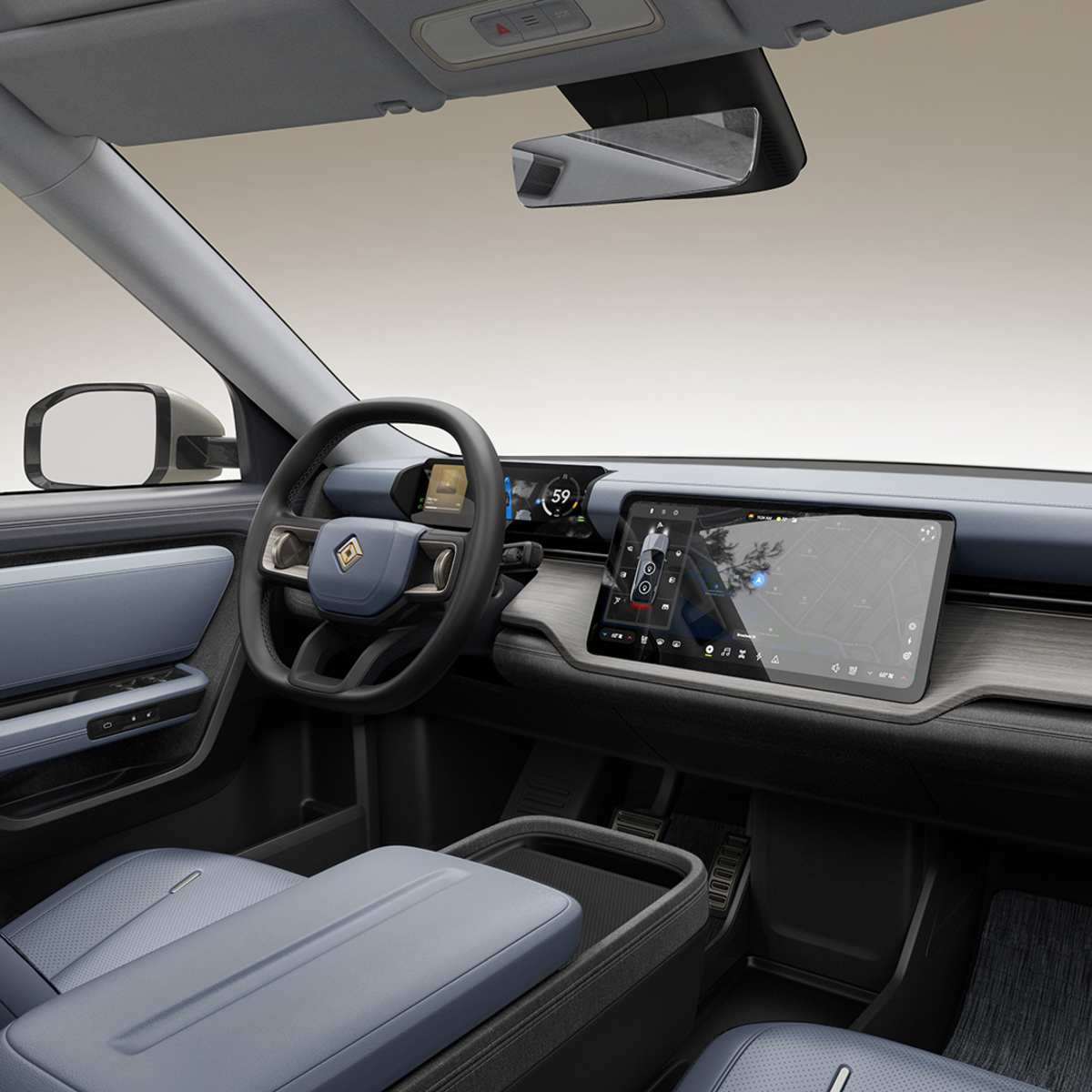
The Rivian R2 is an electric SUV from Rivian. It’s a smaller, more “normal-sized” EV than their bigger models, and it’s meant to be easier to buy and live with.
A Robo Taxi is like a rideshare, but the car drives itself. The idea is that you get picked up and dropped off by an autonomous vehicle instead of a human driver.
Mobileye is a tech company that makes parts and software that help cars drive more automatically. Here, they’re talking about using that tech to run their own robotaxi service.
Moveit (MOVIT) is Mobileye’s platform for running robotaxi-style self-driving operations. Think of it as the system that helps the vehicles understand routes and drive safely.
Body-on-frame means the truck has a separate “skeleton” (frame) and the body bolts on top. That usually helps with towing and off-road work because the frame is built to take stress.
All-wheel drive (AWD) sends power to both the front and rear axles to improve traction. On an EV truck, AWD can help with off-roading and slippery conditions because it reduces wheelspin compared with driving only one axle.
Wading through water means driving through a deep puddle or shallow stream. The host is quoting a spec for how deep the truck can go without getting damaged.
The battery size is measured in kilowatt-hours (kWh). A 59.2 kWh battery means the truck can store a lot of electricity, which usually helps it drive farther on a charge.
That phrase is a charging-time estimate: how long it takes to go from 10% battery to 80% battery. It’s a useful number because charging usually slows down as the battery gets fuller.
A Mini Cooper is a small car. The host is using it like a measuring stick to say this truck is also pretty small.
Car
Tello MT1
The Tello MT1 is a small electric pickup truck that’s still moving toward production. The episode mentions it has a 5-seat layout, a 60-inch bed, and different versions with different driving ranges and prices.
Schwab International is the company helping build part of the truck’s structure. They’re making the bare body shell first, before the rest of the parts get added.
“Body and white” refers to the vehicle body in its early manufacturing stage—assembled as bare metal (often welded and ready for painting). The host uses it to explain that this skeleton is what later gets attached to things like glass, seats, suspension, and other systems.
A “dual motor” electric vehicle uses two electric motors instead of one. The host ties this to higher range (around 350 miles) and a higher price, implying the second motor changes performance/efficiency characteristics versus the single-motor setup.
The “bed” is the open cargo area in the back of a pickup. A “60 inch bed” is basically the length of that cargo space, which helps determine how much you can carry.
This is just another way of saying the pickup’s cargo area is about five feet long. The host is comparing bed sizes to judge which truck would be more useful.
GM refers to General Motors, a major automaker that reports business results and market updates through earnings calls. Here, the host uses GM’s earnings call to discuss EV sales ranking in the US.
Tesla is the EV company the host says is selling way more electric cars than anyone else in the US. They’re using sales numbers to show Tesla is still the clear leader.
Subaru is one of the brands the host lists in their EV sales ranking. They mention Subaru sold 1,959 electric vehicles in the period they’re discussing.
The Ford F-150 Lightning is a full-size pickup truck that runs on electricity. It’s meant to give people the normal truck capability of the F-150, but with an EV powertrain. The podcast is mentioning it in terms of how many are left or still being sold.
Tesla Semi is an all-electric big truck made by Tesla for hauling goods. The host is saying they saw one at a Costco location, which shows these trucks are already being used in real deliveries.
They’re talking about a Costco warehouse in Arizona, which is basically a big shipping and storage hub. The point is that the electric truck was seen in a real place where deliveries happen.
A distribution center is a big warehouse that organizes shipments. Goods come in, get sorted, and then go out to stores—so it’s a key part of how retail deliveries work.
Apple CarPlay is a way to show your iPhone’s navigation and apps on your car’s screen. This segment is saying Apple might be improving how that navigation works with Tesla.
Route sharing means your phone’s navigation can send its directions to your car’s built-in navigation. So you can see the route on the car screen instead of relying on a separate phone-to-car app experience.
Gigafactory Texas is Tesla’s big factory near Austin. The segment says people flew drones over it and saw lots of Cybercabs lined up, which hints Tesla may be preparing for robotaxi rollouts.
The Tesla Cybertruck is an electric pickup truck made by Tesla. It runs on electricity instead of gasoline and is built to be a rugged, truck-style vehicle. The podcast mentions it in the context of Tesla vehicle activity and sightings.
The Tesla Cybercab is Tesla’s idea for an autonomous ride-hailing car (a robotaxi). The host is talking about the specs Tesla reported to the EPA, like battery size, motor power, weight, and how far it’s claimed to go on a charge.
An EPA filing is official paperwork submitted to a U.S. government agency. When it’s about EVs, it can include the battery and efficiency details used to estimate range.
A kilowatt-hour (kWh) rating tells you how much energy is stored in the battery. In general, a bigger number can mean more range, but it’s not the only factor.
Front-wheel drive means the power goes to the front wheels. It can change how the car grips the road and how it feels compared with cars where the rear wheels drive.
An electric motor is what turns battery electricity into movement. The segment mentions its power rating to describe how strong the car’s drive system is.
Operating voltage is the battery/electrical system’s voltage that the car uses to power the motor. It influences how the electronics deliver power and can affect efficiency.
Curb weight is basically the car’s weight when it’s ready to drive, but not loaded with people or stuff. Heavier cars usually take more energy, which can hurt range.
The Tesla Model Y is Tesla’s compact crossover, and the host specifically compares the Cybercab to the Model Y in rear-wheel-drive form. They use the Model Y’s curb weight as a reference point for how heavy the Cybercab is claimed to be.
Range is the estimated distance an EV can travel on a full charge under a specified test procedure. In EV discussions, claimed range is often compared across battery sizes and vehicle weights to judge efficiency.
The Tesla Model 3 is an electric car (a sedan) made by Tesla. It comes in different versions, including one that drives the rear wheels. The podcast is focusing on a mid-to-higher trim level rather than the cheapest one.
Trenton is where New Jersey’s state government is based. Saying the bill is moving through Trenton means it’s working its way through the state lawmaking process.
It’s a government trial where self-driving cars are allowed to operate, but only under strict rules. The idea is to test safety and performance before letting them spread more widely.
A robot taxi service is like a rideshare, but the car drives itself. The point being made is that New Jersey’s proposed rules might stop Tesla from running that kind of service there.
A technology stack is the whole set of tools—software and hardware—that work together to make a system function. In this case, it means Tesla’s complete self-driving setup, not just one feature.
New Jersey is the U.S. state being discussed. The host is talking about a proposed law there that could affect whether self-driving taxi services can operate.
Autonomous vehicle technology is the system that helps a car drive by itself. The segment is saying some laws could stop that technology from being used in certain places.
Human error means mistakes drivers make that can lead to crashes. The host points to things like being impaired, distracted, or too tired, and argues self-driving systems can avoid those.
Impairment means a driver’s ability is reduced—like from alcohol or drugs. The point here is that self-driving cars wouldn’t be impaired the way people can be.
Distraction is when someone isn’t paying full attention to driving—like looking at a phone or something else. The host is saying self-driving cars don’t get distracted the way people do.
Autonomous vehicles are cars that can drive themselves using sensors and computer software. Instead of a person doing all the driving, the car handles steering, speed, and braking.
Concept
economic boom, unrealized
The speaker is saying that people may be promising big economic benefits from self-driving cars, but those benefits might not actually happen. They’re questioning whether the hype matches reality.
“Net zero” means the number of jobs gained and jobs lost ends up balancing out. The speaker thinks self-driving cars won’t be perfectly neutral for jobs.
State legislators are the politicians who make laws for a specific state. If they pass rules about self-driving cars, that can change whether services like robotaxis can operate there.
Driverless taxis are self-driving cars that are supposed to pick people up and drive them without a human behind the wheel. But in many places, there’s still a person there to take over if needed.
Here, “saturation” means the service becomes widely available and there aren’t many new customers left to win. The speaker thinks that’s when prices could go up.
LIVE
Hello everyone and welcome to Kilowata podcast about electric vehicles, renewable energy,
autonomous driving, and a much, much more. My name is Bode and I am your host and on today's
episode we are going to talk about news. So we had two earnings calls in a row and now we're
on to news. So let's go ahead and dive in. Last week Rivian rolled out the R2, their midsize
electric SUV and it looks great. I have not seen one in person, but I'm looking forward to seeing
one in person. But last week, great, wonderful week for Rivian rolling out the R2. This week
they're not so great. They're laying off 300 people which is just shy of 2% of their 15,232
workforce if you spread that across North America and Europe. This is in addition to
nearly 600 people that they laid off in October. So around 800 people which on the whole isn't a
lot but it's still 800 people and if you're one of those people it's definitely a painful experience
for sure. The one thing that I just hope is a lot of times automotive companies will be like,
one of the first to get our new car. You're an employee, you're the first in line. I hope that
some of these people or any of these people, I hope that they didn't buy and take delivery of an R2
only to find out now that they have a vehicle loan, they just lost their job on top of that.
Like if that happens, I think Rivian should just cover the entire car for them because that sucks
because an $58,000 car loan, that's not a cheap monthly payment. So anyway,
that was where my head went. Moving on though, Mobileye is planning on launching a Robo Taxi
service. So Mobileye builds, they build hardware and software for autonomous driving. They were
actually the first partner that Tesla had for autonomous driving and then there was a really
bad accident, I think it was in Florida and I'm sure Tesla was already working on hardware too
by that point, but Elon was very critical of Mobileye. Mobileye blamed Tesla, the partnership
went awry and then not that long after that Intel bought them and I think they were spun
back out and bought by somebody else. I think it's an Israeli company that owns them now,
but Mobileye will be launching their own Robo Taxi service in 2027. They're going to utilize
their Moveit MOVIT mobility platform and they're expecting to launch with 100 Robo Taxis.
That sounds like a lot and not only does that sound like a lot just to start with,
like even if they launched in early 2027 and by the end of 2027, I think that would be
a lot of Robo Taxis, but we'll keep an eye on it and let you know how it's going.
Their initial launch is supposed to be somewhere here in the United States,
so hopefully fingers crossed it'll be Tempe and I get to see them.
Oh, and in my neighborhood, I saw one of the new Waymo Ohay fans and I immediately went to
the Waymo app to request it and I had a bunch of other things going and I couldn't justify
taking the ride, especially since there was only one and there's a bunch of
jaguar eyepaces rolling around, so I had to be like, you know what, I got to do the
responsible thing and be an adult and cancel this and maybe at some point in time when I have more
time, I can play the Summon the Ohay Waymo vehicle and hopefully someday I'll get one
because really there's still way more jaguar eyepaces running around than the Zooks vehicles
at the moment in my neighborhood or my area. The all electric version of the Toyota Helix
now has a price, so first the specs. This is going to be a body on frame truck,
which makes it great. A little bit more heavy duty. It's good for towing, good for off-roading.
All-wheel drive, 278 horsepower. It'll tow about 3,700 pounds. There's an option to select, make
changes based on the terrain that you're driving on, which is beneficial, especially when you're
off-roading. It'll be able to wade through 27 inches of water. It's going to come with a 59.2
kilowatt hour battery, which is right around 160 miles of range. Toyota says that it's capable
of 236 miles of range in the city, which if we convert that to kilometers, we're looking at 257
miles versus 380 miles in the city. Not huge, not a lot of miles. 125 kilowatt DC fast-charting
capability, 10 to 80 percent in 30 minutes. It'll have a 12.3 central infotainment screen
and another 12.3 driver display, so nice and big, similar to what he is using.
The price in the UK, it's going to start around 42,000 pounds, which is about 56,000 US. In Australia,
it's 75,000 Australian dollars, which again is 51,000 US. New Zealand, we're looking at 82,000
New Zealand dollars, which is about 48,000 US. As this truck is packed, I mean, obviously,
this isn't going to succeed in the US, but as this truck is packed, it seems overpriced for what
it's delivering, but every country has different needs, so maybe this will do very well in Australia,
New Zealand. It might do well in the UK as well, but I mean, I don't know, this seems like a work
truck and not a go out and not like a Rivian, not an adventure truck like Rivians. This seems more
this is the area that you have to do work, and sometimes you are going to be driving on
something that looks like a road, but really isn't a road. This is a good vehicle for you,
but I mean, again, not a lot of range, so I don't know. A lot of people, a lot of my friends talking
about the Helix truck though, for whatever reason, because they're Toyota fans, that's why.
And that's all I'll say about that because you all know my thoughts on Toyota.
Tello, Tello Trucks took a big step forward recently. So if you aren't aware of Tello,
I actually interviewed Tello co-founders Jason Marks and Forest North. Jason's the CEO and
Forest is the CTO. Anyway, Tello is building an adorable little pickup truck. It's very roomy.
It's about the size of a Mini Cooper, but it's got five seats, a 60 inch bed. For reference,
the Rivian has a 55 inch bed right around there. So yeah, just a very tiny efficient truck.
This Tello has signed with Schwab International to build the MT1, which is Tello's version of
this pickup truck, or that's the name of it, the MT1, Mary Tom 1. Schwab International is building
the body and white structure for the vehicle. This is the skeleton. This is what everything's
going to attach to glass, seats, suspension, and so on. So I mean, does it mean that this
truck is going in for production? No, but it's closer. And I think they have a lot of
really good momentum in terms of what Tello's doing. So yes, I'm looking forward to
seeing this company progress. And hopefully they are able to put something out. The MT1 will start
at $41,520, which gets you a pickup truck with a range of 260 miles. And then there'll be a dual
motor version that will get you around 350 miles, but that's going to cost about $56,000,
which honestly for a truck's not bad. We're at a point where prices are pretty expensive. However,
you're also looking at Slate and the new Ford pickup truck. That's going to be less than $30,000.
So what is Tello going to bring that is more valuable to most people, right, than
to justify paying $28,000 more for a vehicle? And I think or $26,000 more for a vehicle. And I
think some of that might actually be that they have a, you know, the way that they design this
truck, it's going to be roomy inside. That's going to have a 60 inch bed, which the five foot bed
is pretty decent. Whereas the Slate and the, whatever Ford's going to call their electric truck,
probably won't. I mean, is that super important to you? Then you'll probably spend the extra $28,000
if this truck actually comes out. If it's not super important to you, why would you? You know,
you could probably get a really nice decked out Ford, whatever they're calling their affordable
truck for less money. So I mean, I'm excited to see what Ford does. I don't want a super small,
tiny truck. I think for me, the Maverick's a little too small. The Rivian R1T is perfect for me.
I think for what I would use a truck for. Anything bigger than that is me just being silly.
Which is, I don't know, I still want the Scout, Tara, and that I don't need a truck that big.
That's just me being silly, but I really like that truck the way that it looked when I saw it in real
life. So I mean, I don't know, we'll see. And best of luck to the Tello folks, because I really did
like Jason and Forrest when I chatted with them. They're real nice people. All right. Oh, and we
did the interview. Unfortunately, at this time, I didn't have, I wasn't doing video, but they did
the interview facing their little shop. And when I say little, it's not wasn't very big, but you
could see in the background, you know, different things that they were doing, working on and stuff
like that. It was just a, it was a neat, neat chat. All right, we are on to our last
EV story, not our last story, just the last one that just has to do with general EVs.
Recently, we listened to GM's earnings call and they made a big deal that Chevy was number two
in sales when it comes to EVs in the US. But it looks like Hyundai is moving in on that number
two spot. So Chevy delivered, I believe this was for April 2026. Chevy delivered 5,890 vehicles,
whereas Hyundai delivered 4,936. Now, does that mean that they are close? You know, they're kind
of close. They're not super close. But if you, if you add in like Toyota's, not Toyota cheese,
if you add in Cadillacs EV sales, that's another 4,000. So GM is the company's around 9,000.
Oh, dropped my phone. If you look at Hyundai and Kia, you know, you're looking at just a little
over 7,000. So at the moment, right, Chevy's probably or GM and all the GM products,
they're probably safe and Hyundai Motor Group, however, will probably catch up and become number
two before too long, if I had to guess. But I thought I would go through the top 10 selling EV
companies in the United States in April of 2026. So we're starting with Subaru and they sold 1,959.
Right. Kia, I already said, sold 2,456. Toyota 3,524. Rivian sold 3,537. It'd be interesting to see
how many vehicles they sold, you know, in on their next earnings call. I know they're ramping up the
R2. So I don't expect it to be a lot more than what they typically would sell in a quarter,
but I do expect it to be higher. Cadillac sold 4,020. Ford sold 4,033. I'm going to guess,
you know, the last remaining lightnings. And then I don't think they sell their transit van
anymore. And then they have the Maki, which a friend of ours has a Maki and he's got a gray one.
And man, does it look good. And then Hyundai, like we said, sold 4,936. And Chevy is number
two at 5,890. Now, that's number, you know, we went through number two through number 10,
Chevy to Subaru. That's a total of 32,872 EVs sold amongst those nine companies. Tesla is,
of course, number one, they sold 45,800. So Tesla is still far and beyond the winner when it comes
to selling EVs in the US. And that's not to be unexpected. We all kind of know that that's the
case. But man, when you look at how many they sell versus how many all the other companies in the
10 cell, you know, if you added up all of the EV sales in the US, based on that,
you know, all the companies that are selling EVs, Polestar and all this stuff,
Lucid, you're probably still less than what Tesla sells. So pretty impressive Tesla.
All right. So before we move on to our EV news, our Tesla news, excuse me, we're done with our
EV news. I just want to say if you want to support the show, you can go to support kilowatt.com.
All the money goes to support the show. None of the money goes back into my own pocket.
You know, last week on Saturday, I was not feeling very well at all. Friday, I kind of felt off,
but Saturday, I definitely did not feel good. And I spent most of my day in bed,
recorded on my laptop, no microphone, no nothing, no fancy studio or anything like that,
just recorded straight on my laptop and had my headphones in for monitoring purposes.
And then I finished a little bit of it on Sunday outside of a Costco parking lot when I was getting
my tire fixed. And a lot of you said that that sounded good, that the episode actually sounded
pretty good. And I agree, it did, it did sound pretty good. So, but yeah, anyway, the point is,
no matter, yeah, I am sometimes late, but I always have an episode for you. I very,
very rarely, if ever, I think I did it once in 2025, will miss an episode. And that I don't think
has happened other than the 2025 episode. I don't think that's happened since my dad died in like
2018. I just had to take a little two episode, three episode break. So, yeah, I mean, I am here
to provide EV news and autonomous driving and renewable energy. So, if you want to support the
show, go to supportkelloa.com. You can support for as little as a dollar. And yeah, that is
my pitch. And you can support on Patreon or Supercast, whichever one you're most comfortable
supporting with. Some people have asked, do you ever buy me a coffee? And I don't. Or I don't have
like a PayPal link or anything like that. Because I would, the benefit of supporting the show is
you get an ad free experience. I don't know how to give you an ad free experience on those platforms.
So, I just don't offer them. Because I believe if you give money, you should get something for
your money. So, all right, let's see here. Tesla news. There was a sighting of a Tesla
semi. This was spotted at a Costco warehouse in Arizona. And the Tesla semi said Costco on the
little sliding door looked really cool. It says the article said that the Tesla was at a Costco
warehouse. Well, every retail location is called Costco warehouse. This looks like it was at a
distribution center, which I might have lived close by to this distribution center when I first
moved to Arizona. So, I think I know where it is, is what I'm saying. But yeah, it looks cool. And if
I happened to, I live in a completely different part of the city or, you know, metropolitan area
now, but if I happen to see one driving around, I'll try and snap a picture. A new report is claiming
that Apple is working on the missing link, or may have solved the missing link to get Apple CarPlay
on Tesla. So, Apple held a developer worldwide developer conference last week. And nine to five
Macs spotted a new feature in CarPlay that could bridge the gap between Tesla and CarPlay.
And it is called route sharing. And what it does is it gives the navigation app on your car. It
allows the ability to share data from Apple Maps, or it could even be, you know, Google or any other
navigation app that's out there and blinking on the other one. That's big that Google also owns.
But anyway, they can share that information with your car's own personal or not personal,
but it's the car's built-in navigation system. So, it wouldn't technically be like Apple CarPlay.
However, you would get all of the Apple Maps or whatever car navigation system you're using,
you'd get all of that on native, would look natively on your actual car. So, this would be
awesome. I don't really care that much about CarPlay. My wife's car has it, and it is nice.
But I don't necessarily need it. However, the one area that I don't think Tesla did a very good
job on with my car is the navigation system. It's not bad, but it's not great. It is squarely okay.
So, if this actually works, and this was the only feature that came over, I would be thrilled.
So, fingers crossed, hopefully that will actually be the case.
All right, moving on. X user Air Wave Dynamics flew their drone over Gigafactory, Texas,
and found over 100 cybercabs, not cybertrucks, excuse me, cybercabs lined up in a staging area
just outside the factory. Now, this is in Austin. In Dallas, X user ScotsRule08 discovered that
there are around 50 cybercabs lined up, and I've had similar sightings in places like Pittsburgh.
So, it sounds like Tesla's getting ready to roll out, you know, RoboTaxi to more places. I'm sure
there's a few in Arizona roaming around. They're just not testing them quite yet. And these are
the cars without steering wheel. So, pretty cool. And again, we'll see what happens over the next
couple of weeks, or next couple months here in Arizona. When I went to that Tesla training,
I think it was in February, it sounded like it was imminent based on some of the folks that
I was talking to, and not just Tesla, but some of the folks that were working with Tesla on city
sides. And it's still not here yet. So, I would imagine there's probably a lot that has to go on
for this to actually work and take off and be successful. So, you know, I'm not in a hurry,
but I'm looking forward to trying a cyber cab out. I think it would be neat. Speaking of neat,
we also have some specs for the cyber cab. And this is based off of an EPA filing that Tesla
filed with the US government. The cyber cab is going to be front wheel drive, 48 kilowatt hour
battery pack, 326 volt operating voltage, 163 kilowatt electric motor, which will deliver 219
horsepower. The curb weight on this vehicle is 3113 pounds. And just for reference,
the Model Y rear wheel drive is 3880 pounds right around there, depending on what year you're
talking about, it could be, you know, it could be a little bit different. The range is 418 miles,
which if true is fantastic. The cyber cab is, you know, according to Tesla, super efficient.
But just to kind of give you a little bit of perspective, the premium rear wheel drive,
a Model 3, it's not, it's not the lowest trim, it's the second to lowest trim.
But the premium rear wheel drive Model 3 has a range of 363 miles, and that's running off of a 77,
between a 77 and 80 kilowatt hour battery. So, I mean, if true, if Tesla's actually accomplished
this much efficiency out of a 50 kilowatt hour battery or less than 50 kilowatt hour battery,
pretty impressive. And Tesla engineers are smart. So, I don't doubt Tesla engineers. However, we
all know that our, the Tesla leadership can sometimes exaggerate numbers a little bit.
So, yeah, just keep that in the back of your head.
All right, our final Tesla story. And this is in, this is coming out of New Jersey.
Tesla is sending New Jersey Tesla owners an email about a bill that it's working through the state's
lawmakers, legislation, that would block robo taxis in the state of New Jersey. Now,
I have not read this bill, so I have no idea if it will or will not block legislation of
robo taxis. It might just make it a little bit harder to operate a robo taxi in New Jersey.
I don't know. But here, here's the thing. Tesla sent this email, and I'm going to read it to you
because Tesla put it on their website. And, you know, you judge. So, it says what you need to know.
Legislation moving through Trenton right now, S1677 slash A3968 would create
New Jersey's first autonomous vehicle pilot program. That sounds like progress. It isn't.
As written, the legislation imposes restrictions so severely that Tesla's autonomous vehicle
technology couldn't operate in the state of New Jersey. Rather than prioritize real safety
outcomes and performance, the bill specifically bans, banned Tesla from
the New Jersey market. Now, again, I have not read this bill. I don't know if it really does
specifically ban Tesla or if they just crafted it in such a way that Tesla falls outside of
where their parameters are. But I do find that wording interesting. I don't, I highly doubt
there would be a lawsuit if immediately, and there's going to be a lawsuit anyway,
but there would be a lawsuit immediately if it said, if you're Tesla, you can't do this.
I would imagine that the way that the bill is written, that it makes it so that however Tesla
has set up their, their robot taxi service and, you know, their, their technology stack and all
that stuff, it just doesn't, it just doesn't work for what New Jersey's got. And is it misguided?
I don't know. It very well could be, but when it says, this is, I'm reading it exactly as a
certain, the bill specifically bans Tesla from the New Jersey market. Now, had I done, I mean,
it's already Wednesday on a five when I'm recording this. So I'll look it up. I'll look up the bill
and see if it specifically bans Tesla, but I doubt that it specifically bans Tesla. I highly doubt
that Tesla is named in this bill. Anyway, it goes on. Tesla's little email here goes on to say,
the effect, this affects real people, parents who want their children to be safe on commute to
school, on the commute to school, aging populations that want to maintain their independence. First,
parents who want their children to be safe on the commute to school.
There's multiple ways for kids to get to school and one of them happens to be a school bus.
The other in one, I mean, I don't know if this was
technically okay, but when I was driving Uber, like early on when I was doing this podcast and
trying to afford the equipment that it takes to do a podcast and sound decent at it,
I drove Uber for a little while or Lyft. And a lot of times people would call,
would order an Uber and there would be a kid there and the kid would be like, oh,
I slept in, my mom ordered me this Uber so I can get to school. So it's not as if it's a,
it's not as if kids aren't using Ubers. Is it the safest way? Probably not. I don't know if I would
do that for my kids. But you know, there are other programs like Uber has a service specifically
for kids where the drivers are vetted and Waymo, I think is 14 years old, you have to be to ride
in a Waymo and there's no driver, but you have to be at least 14 to be able to be on a parents
account. So, you know, parents that want their children to be safe on the commute to school,
to me sounds like I would not put my kid in a, especially young kid in a driverless car
and then just let them go to school. Like I, my kids can take a bus. Most kids can take a bus. And
if you for some reason live so far out that you can't take a bus in New Jersey, you probably
aren't in the robot taxi service anyway. You're not in that service area. So anyway,
aging populations that want to maintain their independence, I'm 100% more on board with this.
Like I am 51, not that far away from 52. And when it comes time for me to have to give up my ability
to drive 100%, I would like to have the ability to still get places. When I think of my grandparents,
my grandma and grandpa on one side were like hardcore smoking and drinking and gambling.
And for whatever reason, I never associated getting old with them. However, my grandparents on the
other side, the grim side, they were old. Like my grandpa was 48 when I was born. So he wasn't
much older than I am now when I actually have my memories forming of him. And he was always like
this little old man, like my other grandpa on the other side, not in the least, my other grandma on
the other side, not in the least, my grandma, Graham, she had diabetes and a bunch of health issues.
And she always seemed old and they did old people things like watch black and white movies, which
other grandpa did do, but he had a glass of whiskey and a cigar, and I would sit on his lap
and we'd watch black and white movies together. And it wasn't just, I don't know, it was a different
experience. So my thing is, is I've always kind of been afraid of getting old like my grandparents
on the grim side of things. And having the ability to have that independence and still be able to
go places, even though you can't drive anymore, I think is so critical. And, you know, you can
fortunately that that exists in some places right now through Waymo and, you know,
the RoboTaxi in Austin for that. And then there's some other companies out there doing it. But I
think that's that's a valid thing that Tesla's saying there, people with disabilities who hope
for mobility options, not for more mobility options, not few agree with that.
Rural communities that lack access to public transportation. Again, I doubt that Tesla is
going to be in the rural communities operating in a way that these folks need them to operate,
maybe someday, but not right away. Every arbitrary roadblock is a delay for the people who need
this life-changing technology. Most legislation that bans Tesla's proven
of autonomous vehicle technology from the market is not caution. It's anti-competitive
favoritism that will cause New Jersey to fall behind while other states move forward.
Here's what that means for you. And then it has safer roads, delayed. Last year,
578 people were killed in traffic accidents in New Jersey. This is unacceptable. More than 94%
of serious crashes are attributed to factors caused by human error, including impairment,
distraction, and fatigue. Autonomous vehicles cannot drive drunk, distracted, or drowsy.
They can't, but they're not immune to mistakes. I do think they're probably less likely to have
them, but they're not perfect. It goes on to say that states that have embraced this technology
are already seeing improved safety performance. I would like to see the stats on that. New Jersey
residents deserve to experience the safety benefits that autonomous vehicles offer.
If past currently, as written, the bill, which has a lot of numbers, would deprive you of those
significant benefits. Again, it sounds like this bill is to put safeguards in place for autonomous
vehicles, robotaxi type services. So I don't see New Jersey not wanting to have robotaxis.
It sounds like New Jersey is like we want to have safeguards. And again, it sounds like those
safeguards do not line up with how Tesla is currently doing business, which is interesting,
because I don't see a state writing a bill. Well, it doesn't make sense to me why a state
would write a bill that would completely ban robotaxi type services while not just coming
outright and banning it. And I don't think, again, that this is specifically targeted
to Tesla in the bill. Maybe it's, you know, maybe some lawmaker did get mad at Tesla and targeted
them. But it doesn't say that specifically in the bill, or I don't think it does. And again,
I'll look it up. Anyway, and if I, if I'm wrong, I will come back on and let you know I'm wrong.
Freedom of movement, denied, wait, denied for older and disabled residents who cannot drive
autonomous vehicles aren't merely a convenience there. They represent independence. And the
bill excludes a pathway for commercial autonomous vehicle deployment, effectively denying New Jersey
residents access to reliable independent transportation option that will significantly
improve their mobility and quality of life. The other US states recognize these mobility benefits
and are clearing hurdles. New Jersey should do the same rather than create barriers for more
barriers to mobility independence. Again, I go back to that's if you're in the area that these
folks live in, like this is written as if Tesla just snaps their fingers and there's, you know,
robotaxis everywhere. And Uber still exists. And when I drove for Uber, I drove plenty of people
with who are elderly or had mobility issues. Like there were plenty of times that I was helping
folks from my car to get into their office, doctor office visits, because they had such
bad mobility issues and I didn't feel right just leaving them there. So that's what I did. Like,
and I wouldn't imagine that I mean, there might be some Uber drivers that just drop you off on
the curb and they're like, good luck. But if you could really truly see somebody struggling,
taking their bag and helping them get to the into the office and stuff, the cyber cab is not
going to do that. You know, I did that I have seen other Uber drivers do that I can't say that
everybody does that maybe there's some that don't but if you have a conscience and a soul,
I can't imagine that you're not at least helping somebody out a little bit or at least offering
to help cybercap can do that. Smarter cheaper travel blocked, I'm sorry, blocked autonomous
vehicles reduce congestion, cut emissions and offer more affordable transportation option.
New Jersey should be leading on this not legislating against it. Do you know what it cost me
to take an Uber, not an Uber, excuse me, a Waymo from my house to Trader Joe's.
It's about $11. Okay, it's about $9 without the tip. It's about $9 without the tip for me to go
from my house to Trader Joe's in a lift. I can certainly drive from my house to Trader Joe's
much more affordably. And it's about maybe 1.2 miles from my house. It's not far.
So is it affordable? No, I don't think so. I don't know what Tesla will be charging,
but I do know whatever they were charging in Austin, it's gone up since they first announced,
which you know is to be expected. But you know, the smarter cheaper travel thing that that remains
to be seen economic boom, unrealized, I don't know how to make that different than an economic boom
unrealized widespread adoption of autonomous vehicles is expected to create hundreds of
thousands of new jobs naturally, many of which do not require college degrees
and pay above median wages, which accounts for around 93 billion in additional federal
tax revenue, combined with annual reductions, annual reductions in accident related costs,
autonomous vehicles will create jobs free of consumer spending, stimulate growth in logistics,
retail technology and beyond. If passed in current state, these bills will
disincentivize autonomous vehicle companies from entering the New Jersey market instead
and instead forced investment in other states. I'm not a good reader.
All right. I mean, I'm sure autonomous
uh Robo taxis will create some jobs. It's also going to take some jobs. I don't think it'll be a
net zero. I think it'll be probably a net positive. But what do they say here?
Hundreds of thousands of new jobs naturally. I do not think that that's the case. That seems
like nonsense. Hundreds of thousands, not hundreds or thousands, hundreds of thousands
of new jobs nationally. Do they say naturally nationally? Now, it's not to say that they're
wouldn't, I don't know. I don't, I don't think it's going to create that many jobs
autonomous driving. Honestly, it'll create some for sure. I don't think it'll be that many,
especially when you offset how many people will be out of work because, you know, as much as I like
to support folks, I prefer to take a Waymo because not always it's sometimes cheaper.
To be fair, taking a Waymo from my house to the airport was way cheaper than taking a Uber or
Lyft. But sometimes taking a Waymo, sometimes I just want to be by myself basically. Like when I
go to work, I work with nine other people, you know, eight to nine other people. And then if it's
during the weekday, there could be even more people here on top of that. Sometimes I just
don't want to talk to somebody and just want to work on my stuff and taking a Waymo feels better
to me. So I'm saying this as a proponent of autonomous vehicles. But yes, I think that's a
little, little much on Tesla side here. So anyway, it goes on to say you can change this, but only
if you speak up now contact your state legislators today to using the tools above, tell them that
you want New Jersey to access safe proven autonomous vehicle technology, blah, blah, blah, blah. So
yeah, I think Tesla has a right and a shareholder responsibility to
fight this law if it doesn't or not fight maybe influenced the law to be a little more
friendly towards them. Or maybe not specifically, I don't know, this is sounding very much like
government corruption as I'm saying this. I do think Tesla has a right to protect its business.
And within the law influence things that will help them protect their business.
As long as it's not illegal. Now, we can argue that some of the things that these companies do
and some of the access that just a few thousand dollar donation to a politician gives them way
more access and an outsized voice than what you and I have as as just regular citizens. And I
will agree with that. But Tesla does have the right to be upset about it and encourage people
to make changes. Now, I did find the bill. There's about the 30 ish pages if you include
all the different things that they have. And I'm not going to do that now, but maybe I'll
do a special episode specifically on this bill. If you're interested in that kind of thing. And
yeah, as far as I can tell, there are no driverless taxis operating in New Jersey. It does sound like
way most is is practicing or testing in Trenton, but they have to have a driver. So it's not even
keeping Tesla from it's not even keeping Tesla from testing there as far as I can tell. Oh,
and I searched all there's three little sections and I searched all three sections and Tesla does
not show up oddly enough in in any of those sections. So yeah, anyway, that's all I got. I
just thought it was kind of a I thought that the information that they provided was overly slanted
towards their own. It felt like they were having a tantrum. If I'm just going to be honest with
you, I was like, this is if Tesla doesn't operate in New Jersey, are people going to survive? And
the answer is yes. Will people still be able to get places? The answer is yes. Is it going to cost
them a little bit more money? The answer is maybe we don't know what Tesla is going to charge.
And when I say maybe it might be cheaper in years one through three. And once they're embedded,
it might be way more expensive. So it's not it's not as simple. It's just going to be cheaper for
people to get around because the bus is going to ultimately be way cheaper. And I don't care what
Elon says, you're not going to get a cyber cab or a robot taxi ride for less than the bus. Again,
in the beginning maybe, but in overtime, Tesla is going to hit saturation. They're like, okay,
now we just turned that lever up and raise the prices. It's just what companies do.
And this isn't an altruistic thing for Tesla. This is them actually wanting to make money. And who
can blame them for me wanting to make money? I just didn't like their note. Anyway, all right,
that is it for me. I went way longer than I thought I would. So hope you all have a wonderful week.
And if you want to email me, you can do so. It's bodibodeie at 911digital.com. You can find me
on X at 911digital. And then if you want to, which I don't, I'm not on X. I mean, I'm on there,
but I don't remember really go on there. If you want to interact with me on LinkedIn, I'm Bodigrim
and yeah, that's it everybody. Thank you so much for listening and I will talk to you soon.
And subscribe. It really does help the show to grow. Thank you for listening.
About this episode
Rivian’s R2 launch and layoffs set the stage before the show pivots to autonomy: Mobileye plans a Robo Taxi service using its Moveit platform, starting with 100 taxis. Tesla’s robotaxi push is tied to Cybercab sightings near Gigafactory Texas and EPA-based spec talk, while Apple’s CarPlay “route sharing” adds another layer to navigation data sharing. The episode’s center of gravity is New Jersey legislation, with hosts arguing it could effectively block driverless services and delay mobility benefits.
In this episode, we dive deep into the latest shifting tides of the electric vehicle market, starting with Tesla's political push in New Jersey to safeguard its upcoming Robotaxi fleet against restrictive new legislation. We also examine the regulatory scene down at Giga Texas, where brand-new EPA filings have finally peeled back the curtain on the highly anticipated Cybercab's official battery size, weight, power, and range specs. Meanwhile, Rivian continues its grueling march toward profitability, navigating another tough round of corporate layoffs just a week after their major R2 launch event. On the legacy automotive front, Hyundai is officially breathing down Chevrolet's neck as it closes in on the coveted number-two spot for EV sales in the United States. Plus, we look at unexpected sightings of Costco-branded Tesla Semis right here in Arizona and unpack a surprising report detailing Apple’s sneaky new development that could finally bring CarPlay to Tesla vehicles.