We got some great data on Tesla's supercharger at the cost of deploying them, at least
what Tesla is charging for it, so obviously there's some profit on top of it, but it's very
interesting data into the cost of deploying DC fast charger, which we think we're pretty
confident that Tesla is still by far the cheapest.
We got some Riven R2 EPA numbers, no big surprise there, so nothing good crazy about.
We're going to talk to you about Volkswagen making big moves in the US, not in the
right direction, as per usual these days when it comes to, like, Toyota makers
in the US, ID4 is going away, Honda as a cute little funky EV that they are bringing
overseas now, which we're looking forward to, and we saw two new Ioniq concept from
Hyundai, we're not super hype about concept here, but in the case of Hyundai, they
have been pretty consistent in bringing something relatively close to production
to what they show in their concepts of, so it's worth taking a look, and yeah, and as
usual, we are a show that is 100% live, and we take questions from the audience at the
end of the show, so if you guys have any question for us about any of the topics
we're discussing today that I just listed, or anything that you want or take, might
or set stake on in the EV world, as self-declared experts at this point, I think we've
put in our 10,000 hours and more. You're welcome to put your question in the
comment section, we're live on YouTube, Facebook, wherever you get your live video podcast.
All right, I'm going to remind you of that as more people trickle into the show,
but yeah, the big test and use this week was coming from our friends at Roaders
who came out with a report in China, so they have all the reporters in China,
and they put a report together. Let me just put that in the frame, all right.
And the report was based on four anonymous sources, anonymous to us, not to
writers, basically, obviously, and it's about a new vehicle program in the early
stages developed specifically by Tesla in China to be produced first as the Gigash factory
Shanghai, but then also adopted by Tesla's other factories in Europe and in the US.
And this new vehicle program was referred to as an SUV, but a smaller SUV than the Molo Y,
4.28 meters, about 14 feet, which is a good feet smaller, shorter than the Molo Y.
Molo Y is already a small SUV, some people call it the crossover, and a lot of people just don't
even think the Molo Y is an SUV either, so it's probably an hatch more than anything else,
so it gets less in translation. And yeah, it's a smaller battery pack, but still
306 to 30, no, that's the Molo Y, sorry, so less than a 306 to 327 miles of the Molo Y,
but in cheaper than the Molo 3, so a hatchback cheaper than the Molo 3, so basically a Molo 2,
that was one of the renders that we put together when the Molo 2 was first talked about,
which was always like a place older names, just something smaller, cheaper than the Molo 3,
but probably closer to the hatchback than the Molo 3 is obviously sedan.
So, you know, the Molo 2 for people who would not remember was a very real vehicle
program at Tesla, pretty advanced by the late 2023, something that Elon Musk himself announced
back in 2020, saying that the new 4880 cells, 4680 cells would enable a $25,000 vehicle program,
and they were working on it, but by late 2024, the program was canceled because Elon was quite
certain that autonomy was around the corner, and that Tesla didn't really need cheaper vehicles,
because everything's going to go out with cost per mile, and then Tesla focused all their effort
on the cyber cab, which is now in tiering production, but with a lot of issues, mainly that
supposedly it's supposed to come without a steering wheel, and Tesla hasn't solved on
supervised autonomy, so it's basically a giant paperweight or something limited to
geofence, low-scale, robotaxi program like what Tesla is running in Austin right now.
And funny enough, Roder's was actually the first media to announce that Tesla was canceling the
program. We had their own reporting after that that confirmed it and had a bunch of details and
all that, but Elon denied that the vehicle was canceled. I think that his denial was always pretty
sketchy, I think because Rivian Roder's was talking about Tesla cancelling his cheaper vehicle
program, and Elon was like, his denial was based on like, we're still bringing cheaper cars,
and he was probably talking about the standard version of the Model 3, the Model Y,
Tesla launched a year later, but we were specifically, and so was Roder's at the time,
talking about the NV9 program, and it was the NV91 and NV92 and NV93. Now I don't remember
exactly which one was which, but one of them was a cyber cab, which is still alive, and the
order two was kind of a smaller crossover hatchback in a smaller sedan that were built on this
new on-box vehicle program that the cyber cab is on, but with a steering wheel and with pills.
So it looks like this would be kind of a salvaging of that program after two years of pause,
due to Elon thinking that the autonomy was around the corner, but the thing is, is that
a day after this report came out this morning, Tesla China, because again this report went
global, but it was based on Chinese reporting. Tesla China denied it. Specifically, let me find
the comment that they said exactly, because you always have to kind of read between the line a
little bit. Tesla China told the Chinese outlet Kaili'an, market information claiming that Tesla
is developing a new smaller and cheaper electric SUV is inaccurate. So no more than that.
That always leaves some room to interpretation. Even the report itself always said that it was
very early stage, so maybe it's hasn't been really, it's not widespread within the company.
So Tesla is like, yeah, even if maybe some things are inaccurate about the program. I don't,
I'm not the biggest fan of routers. I've caught them do some really weird things when it comes
to the reporting, famously the one about Tesla importing Chinese made cars in the US,
which the back edited one of their article to prove them right, modifying US and Canada to just
North America, so that the fact when they started importing to Canada, they could just say, oh,
we were right. We said North America, but originally they said US and Canada. So that's
one of the like this shittiest thing you can do as a media, just back edit your reporting.
After you proven wrong to back edit it to make it right. It's like, obviously a big no no. So I
know I don't trust them entirely, obviously, because of things like that. However, if you have
four sources on this, there's there's definitely something going on, I think I would think
if it's exactly what they reported, I don't know. But I also don't trust entirely this
as PR, but they're in China or not.
But Susan, they're in the weird places. Sometimes it's like, it's like the, you know,
the Iran war right now between, would you Trump trust more Trump, what Trump is saying,
or what the Iranian government is saying? We're like, Oh, what would you trust like media
that you don't trust or Tesla's PR? Which one is more trustworthy?
Can I win?
All right. The other big piece of news regarding Tesla this week was regarding FSD. So there was
v14.3 that Elon said last week was going to come out by the end of the weekend
through these late, but it came out. So we cannot complain too much about that.
There was we published the false, the false, sorry, release notes on that
track so you can look that up. But the biggest thing that I thought was most
interesting here and that led that the whole thing is the rewriting of a particular compiler
within the Tesla neural net FSD stack, which the so the AI compiler and runtime was written
from scratch on MLIR. A lot of that is going over my head. So I won't bore you with my,
you know, subpar explanation of it. But Chris Latner, who you might remember as set as the
writer, the originator of the Swift programming language used, adopted by Apple.
And also briefly, Tesla autopilot lead, I think for like six months or so. So it wasn't there
for long. But now he's running a bunch of different things, including an AI startup,
but also like a foundation that opensource a lot of useful tools, including MLIR,
which Tesla claims they were able to use to basically
improve the reaction time by 20% for this particular model. So V14.3.
So obviously, this is Chris Latner at very positive comment, which Chris is not like,
you know, a lot of people, especially regarding their former employers, they're kind of like
very political and they try to say the right thing all the time. Chris is not exactly
like that. He'll tell you all it is, but he was he was very upbeat about this, obviously,
not completely unbiased because this is still his technology. Cool to see that Tesla for
sub driving has adopted the is foundation MLIR IR stack and is seeing 20% factor reactions time as
a result. It is quite likely the modern compiler and runtime implementation, the breakthrough that
Robotech CNFSD have been waiting for. So that's those are very strong words.
Is it a actual breakthrough? You know, I don't think that
faster reaction time is the silver bullet here. It's super useful for everything. If you have
a faster reaction time, you have, you know, a big advantage throughout the entire stack, but
your decision making is still I think one of the biggest issue with this. I just used it.
I just came back from showing again to Montreal. I was at least this, you know,
I don't have the V 14.3. So I'm still on doc two. And I think it's pretty phenomenal.
Like it's it's doing extremely well, but it's still doing some some very dumb mistake like
like this one. I just had one intervention over these two hours, two hours of driving,
you know, about 180 kilometers or so. But it was one that like if I was nothing
attention, I would have been like would have had it like 30 minutes to my trip or
even potentially get me an accident where it decided to shift to pass people on the left
line just as the left lane was becoming an exit on the highway. And it was and
it thought I could pass the car in front of me because of the speed, but it couldn't detect.
And again, that's one of the issue with the vision only system. It couldn't detect that
it was like tons of traffic in front of that car that I couldn't go back into the right
lane, which I needed to based on the navigation system to get to my destination. So I had to
basically send the break as it turned into the left line to go back into the right lane behind
the car that the stem was trying to pass. Otherwise I would have had to continue through
the exit, which you know, far from ideal, obviously. But you know, it's still I'm
still overall extremely impressed with FSD. Just I between that and unsupervised system
is such a gap that people can sense people, including Tesla, including Elon Musk,
keep underestimating in my opinion. But I'm hopeful. I'm, you know, I look forward to
testing v14.3 and check out this this reaction time because maybe with this with v14.3,
the car would have seen its mistake right away and go back into the right lane
before I could even intervene. So that would have been nice. That's, you know, reaction time
gives you some leeway, the faster reaction time. There's a few things coming to listed at Tesla.
So portal avoidance. So I thought I was already there. Honestly, I thought that there was
some portal avoidance, maybe more, but the way that they talk about it, it's like it's going to be
added. Expanded reasoning to all behavior beyond destination handling.
Not sure what that means. So reason, the neural nets only reasons for
regarding the destination right now and not all of their driving behavior.
There's a lot, you know, I mean, there's a lot more to driving than, you know, your destination,
I think I might be misinterpreting the common and improve driver motoring systems,
sensitivity and better eye gaze, striking, eyewear, handling, higher accuracy in
a variable lightning condition. You know, that's funny. Said, I actually test that sometimes
just, you know, it is a good system. I think it has a lot of advantages. I think everyone
should pay attention at all time, but I do think it elevates some of the
fatigue with driving, some of the stress with driving, and you're able to concentrate on
some other things. So I concentrate for myself in testing the system sometimes.
It's something testing the driver motoring system with the eyewear and like fatigue where
I like I pretend to like fall asleep. I put it like it to just go like that and see how much
time it actually takes. And I have to say it's, I'm not impressed by that so far on the V14.2.
Like sometimes I'm like nodding and like it looks like I'm falling asleep for like minutes and
minutes and minutes and it's just not waking up at all. Not giving me alerts.
Version 12 was usually pretty quick when I'm like genuinely falling asleep.
Yes, I honestly think that they reduce that with the V14 where, you know,
they're more confident. This is, you know, V14 is also when Elon said like,
now you can use your phone a little bit. I'm not big on using my phone while driving.
I think I think it's a horrible habit. Yeah. So I don't do it. I don't test that.
You know, sometimes I will just, I'll just do a quick glance or something,
but I don't take it in my hands or anything like that. But I know other people would do
we have V14 and they have all told me that yes, with V14.2, there's more leeway into
using your phone. Like you can use it for like a full minute sometimes before it actually tells you
something, which is far from ideal, obviously. Yeah. And speaking of that, because there's this
high wear detection, not high wear, but like falling asleep detection.
Because we know that people are trying to beat the system with high wear with sunglasses and
all that. We reported this week on someone being arrested for DUI using autopilot and
getting drunk on autopilot literally falling asleep in the car with wine on the passenger seat.
And, you know, the police had to bring the car to a stop and wake up the driver.
And that's how you're supposed to detect that. Now, again, if they were, if it was
shortly after you had fallen asleep, it's believable based on my experience with the V14 so far.
But what we learned this week too, and I did a report on this. I don't think I put in the
podcast. I just remember it. I skipped it when I, yeah, I didn't put in. This is right now
cracking down on the NAG defeat device that people are using. And I followed this whole trend
only marginally. I followed a little bit more closely when there was the defeat device that
you would put on the steering wheel, which were basically weights to simulate the weight on the
steering wheel, which are now completely useless because this allows hand-free deriving right
now. And it's more about high tracking. But apparently there's another generation of those
devices now that are plugged into the system, basically hacking the system. A lot of people
call it like the Elon mode that Elon talked about before, where it would basically disable
driver monitoring. And we saw people like Holmar's blog, Omar Quasi, one of the biggest Tesla
propagandists who for years and years and years had one of those devices removing the NAG and producing
videos of not touching the steering wheel before the technology was available, which Tesla also
promoted, which was very misleading. Now Tesla is cracking down on those, and they were also
used, sorry, I should have had that. Now, more lately, they were used also in countries where
Tesla has not released FSD so that people can use FSD in those countries without Tesla making it
available for regulatory reasons. So I think that's probably because obviously Tesla didn't care about
you hacking the Elon mode for, they were promoting Omar's video, which were clearly using such a
device. But I think that probably Tesla, especially now that Tesla is looking to launch
in Europe, actually was supposed to launch today in Europe. I don't think it happened unless it happened
in the last 10 minutes or so. They are working with the regulators there, and they don't want to upset
them by, you know, enabling such a thing. So people are now, people that are using those
devices are now reporting that they are getting in-car notification and email notification from
Tesla telling them that they are disabling FSD in their car completely. They have detected
such devices. And yeah, so be aware if you're one of those people that are trying to game the system on
this. And then just as Tesla released V14.3, Elon started talking about V15, which he says will
far exceed human safety, and will be the version that will be unsupervised. I think that's
what he said. Do I have a full comment here? Right here. V14 will far exceed human levels of safety,
even in completely unsupervised and complex situation. The goalpost moved to the next version
number once more. Well, that's me that had that comment. So now unsupervised was supposed to
come in 2020 and then 2021 and then 2022 and then 2023. It was supposed to come with V12. Elon said
the exact same thing with V12. Didn't happen. He said the same thing about V14. Didn't happen.
And now he's saying the same thing about V15, which didn't release a timeline on it, but
this generally doesn't go too high with these point release. So V14 is on obviously three.
And let me see. Let's see. V13 went to what? 13.2.9. So it didn't even go to three. So V14 is already
ahead of V13. But V13 was short lived too. So V12 went to 12.5. That's six. So yeah, I don't know.
Maybe it's the next one. Maybe they stop at V13 and go to V14. Sorry, V14 and go to
V15. I'm more curious if they're going to do new hardware. New hardware. Apparently
hardware five is pushed to 2027. So I would, and Elon has been clear that he thinks that
unsupervised achievable on all where four, even though we're very skeptical about that.
But yeah, I mean, my thing has always been the same. It's like just release the data.
And I know like the entire story around Tesla FSD is so hard to follow for the wider public. Like
if you're not like spending your entire day on this, like I am all the time, it's hard to follow,
especially it's being muddied by Tesla itself, by Elon Musk, and by his minion of propaganda.
And this, but the data that Tesla released is extremely limited in Tesla. Even though Elon
Musk keep claiming that, you know, we have data that shows that FSD is 10 times safer than
humans. It's not true. It's not what the data show. Tesla does not publish any disengagement data,
crash severity breakdowns or anything like that. The only thing that Tesla has released is data,
heavily massage data that showed that humans driving with FSD is safer than the average human
driver in the US. That's the only data that they've shown. And that data itself is heavily
massaged. We've talked about it. There's the mileage location issues. There's the crash reporting
issues using that says, which is based on police report rather than Tesla, which is based on
harnesses, airbags and whatnot. There's a lot of problems with the data. So it's a
heavily massaged data, but it's also a data that is human plus FSD versus human and not FSD
versus human. Which if you were to do that, you would have to publish disengagement data,
the intervention data, which Tesla has never done in, you know, we're coming up in over a decade
of this technology now. I don't know what's that, why that's not like the biggest red flag
in the world. Like if they had the data, if they have the data, we know that they have it.
So if it was good, they would publish it and they don't. So I think this word should end.
All right. This good news regarding Tesla this week, the Supercharger for Business
Tool has been released. Very interesting tool here where you can basically enter any address in
the US and they will tell you how much it's going to cost you to buy and operate your own Supercharger
there and how much money you could make. So I think this is very interesting tool. It's the first
time that we get like open public data on how much it costs to buy a Supercharger network,
but a lot of people don't know for the last few years now Tesla has opened up the Supercharger
network so that you can actually buy and operate your own station. It's not the vast
majority of Tesla's Supercharger station are still operated by Tesla. There's a deal with the
property owner obviously, but Tesla owns and operate them, but you can also now buy your own,
deploy them, buy the electricity from the utility, sell it back through the Supercharger. It's an
interesting business, but now we have how much it cost. So I use four different
addresses and I didn't know exactly what addresses to use. I use specifically gas stations because
I think that's where it makes the most sense to deploy those. So I'm going to focus more on the
actual cost that Tesla gives you rather than the return on investment because the return
investment is, I'm sure Tesla is using average and whatnot for the regions and everything,
but the actual specific location you're going to build this as is obviously super critical for the
usage of it. I think that's obvious. So the estimated hardware purchase price is half a million
dollars, five hundred thousand dollars for eight V4 posts. So that's the latest V4 Supercharger
station with the long charging cable. Then the installation costs per post is 55,000 dollars.
So that adds up to just short of a million dollars for eight V4 posts and these eight V4 posts come,
I think, with just one V4 cabinet, I think, right? Yeah. So you have it also, but
especially I should specify that, because it is a V4 cabinet because a lot of the V4
station that you see these days are actually V3 cabinet with V4 posts and those are very limited
in their charging capacity, but those you can go to 500 kilowatts.
And then after that, so basically a million dollars, give or take, and you can get a eight
stalled Supercharger station, whatever you want, interesting. But then after that,
yeah, Tesla charges you a revenue share fee of 10 cents per kilowatt hour.
And that includes, where did I put that?
It includes software payment processing, so that's good. So that's already like a 2%
right there of fees that normally cost you the process. The billing, mapping,
I'm not sure what that is, being shown on the maps, I think, customer support and
network operations. I feel like some of those are duplicate software and network operation,
probably the same thing. Then so yeah, these four addresses that I put in here, I was like,
Texas, San Francisco, Texas was New Braunfels, Miami Beach, Florida, and then I put it one
straight up in Manhattan, New York. And you see here, Tesla like pulls the what's probably
going to cost you per kilowatt hour before their fees, obviously. So what did it cost you at the
utility? And then what you can sell them at, which for the most case, like Texas is the one with
the biggest gap, like it costs you basically 11 cents of electricity, and then you can charge
51 cents. It's the biggest gap. California is the smallest one. Actually, New York is the
smallest one. When I guess that. Yeah, and you have a big gap too in Florida, just basically
14 cents a kilowatt hour, you can sell 46. And then they give you like expected utilization
per post per day, which ranges between Texas having the lowest one at 302 kilowatt hour,
which is still decent. That's like, probably at least six cars charging, depending on the
size of the session, the how much energy you get per session to San Francisco being the
biggest one at 450 kilowatt hour per day. So they think and this is quite surprising. I would
assume this is pretty optimistic, but it ranges between $656,000 per year in revenue for Texas
to $1.1 million in San Francisco. That's just pretty, pretty wild. Over 15 years of revenue,
basically $10 million in Texas and $17 million in San Francisco. Payback period ranges between
four and five years. Again, I think some of these, especially like the expected utilization rate
are quite optimistic, but it does show like there's this is this is viable business like
four year return four or five years. Let's say let's say take you six years to get a return
on investment. It's not bad. No, because then you know, everything goes well, you get like
a 10 years of pure profit, which, you know, should be a half a million dollar a year.
Pretty cool. All right, we're going to jump to none Tesla news in a second. If you guys have
question for us, I see we have some of the usual suspects are here. We have Carl, we have Dean.
If you have a question for us, you can come in the comment section right now and just
put question and then whenever your question is about any of the topics that we're
discussing today or any of the topics in the EV world, I want to get to it in just
a few minutes. If you do enjoy the podcast too, we would appreciate if you can give us a like,
a thumbs up, a subscribe, wherever it is on the app you're watching right now. A five star rating,
if you're listening to the podcast, audio podcast on Spotify and Apple, only if you think we
deserve it, of course. And when you do it, it takes a second to do and we appreciate it.
It helps to show more than you think. All right, Rivian, Rivian R2 at the official
EPA. So we're getting real much closer to deliveries right now, the official deliveries with
starting with employees and then moving to customers should happen in the coming weeks and months.
So nothing surprising here. I remember just looking at it when it came out a few days ago.
So I don't do it by heart, but we have 328 miles of range. So this is for the lunch,
performance edition with 21 inch wheels. Those are all season wheels and tires so that the tires
actually make a big difference because you get, you get actually a shorter range of 210 miles on
the 20 inch wheels because the 20 inch wheels are all Terran tires, come with all Terran tires.
I don't know why they're not offering the option of the 20 inch wheels with all season.
20 inch wheels with all season tires because that would enable them to have a much higher range,
I think, but that's all they're doing it. So what else we are learning from this?
It makes it a pretty efficient vehicle, but not crazy efficient, really. Yeah.
Think about the form factor. It is a boxy car. Right. You have big tires.
Oh, we have Jamie live on the show and he's telling us that we expect the 20 inch all season to be
available in later configuration. So this is obviously the very first model available on the
EPA page, which is the lunch performance edition. And after that, there's going to be
the other version, I would assume, of the lunch edition. And then after that,
the regular all wheel drive version, which I think is more for like the end of the year, if I remember
correctly. All right. Bad news from Volkswagen. So the company confirmed this week that they're
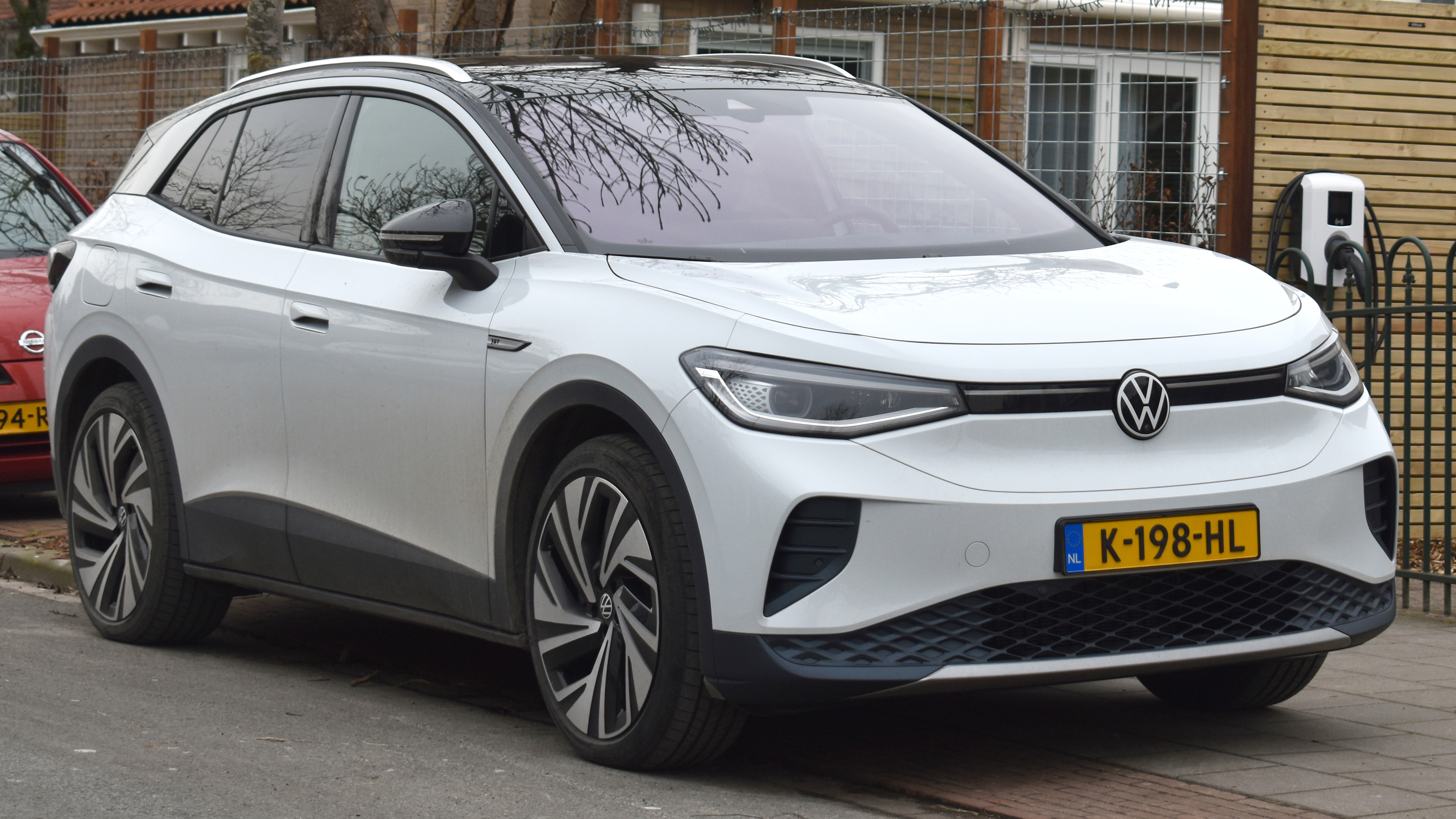
going to shut down production of the ID for electric SUV, which is a decent fan base.
A lot of people love this SUV. Not a bad price point either. It was produced in Chattanooga, Tennessee.
And it's being replaced now, you know, because a lot of these legacy makers just go with the
political wind in the US, which shifts every four years or so.
You know, some would call it pretty short sighted. And they're going to replace that with the
Atlas. With the Atlas. The Atlas, I think it's not actually even the same exact class of the ID for
now. It's bigger. Yeah, it's bigger. So it's an even bigger. Yeah, even Jamie put like the 18 miles
per gallon, which is not great. Yeah, because the Tiguan, I think the Tiguan is the one that's
like on the same frame as the. Yeah, man, it's not it's not a good look. It's
especially now with like the, I think Jamie, if I remember, yeah, he mentions that too. It's like
with the gas prices in the US, we know it's maybe the gas prices come down, but
maybe maybe maybe they come down and then maybe there's another crisis within the next
the next two years or so, like they seem to be coming faster and faster as those gas
prices. Like it's it just doesn't seem like the right time to do this is just because
there's a law in demand right now because of of the tax credit going away. And you know,
it's still fresh in people's mind. And they're like, if I bought this car six months ago,
I would have had, you know, a $7,500 discount. It's more psychological than anything because
if you do the actual math with the current gas prices, it might be cheaper for you to
guide the car right now than it was six months ago. So sure, I mean, it clearly is. And you know,
like cheaper gas, like that's artificially low. We, we, you know, like gas should cost more.
And, and, you know, we talked it in the slack room about how, you know, that blocking the
straight up or moves is effectively putting a carbon tax on gasoline. And yeah, that's
what I saw. But this, you know, this is like the future, like gas is not going to be cheaper.
It shouldn't be really just filling up the air with carbon. So yeah, we're not calculating the
cost of that when we sell gas, at least not not enough. Right.
All right, Honda has this Honda and super and excuse me, it's not and it's super and which
looks almost like a K car, maybe maybe this K car, but it's a K car that's going overseas. Now,
the announced that it will go on sale in the UK, the UK is going to be able to buy this.
And it's starting under 20,000 pounds, which is $27,000.
What are the specs on this thing? So I don't know if I called it a hot hatch,
hot hatch supposed to be powerful, right? But at the same time, yeah, what's the
weight on this thing? So 2800 pounds. It's not the lightest either. I mean, it's compared to other EVs,
sure, but 63 horsepower, 47 kilowatts. There's a boost mode increase it to 93 horsepower, 700
kilowatts. Yeah, I guess it can be a little bit peppy at that. But I keep hot hatch. I don't know
about hot hatch on this. What else? What's the battery on this thing?
128 miles on the WLTP. In the city, it's going to get 199 miles. That makes sense.
It's more of a city car anyway. Yeah, I mean, I didn't see the price. I was looking at the
pictures earlier. I thought it looks pretty good. At that price though, I don't know.
I'm sure it's going to get like kind of a cult following because it's kind of a little
K car in the UK. It's not super popular outside of Japan.
But still, it's still expensive for a car that I mean, like three of my buddies can lift together.
All right, moving on one more news item before we jump into the comments section
and it's coming from Hyundai that unveiled two new Ioniq EV concept, a sedan and an electric SUV.
So it follows a lot. It follows up the one that we saw in New York just last week,
the Balder concept, which is underpinning a production EV. Well, the production vehicle
that's going to have three powertrain, including an electric one coming in 2030.
Now we have the Earth and Venus concepts. And we're going to see them fully at the Beijing Auto Show
next week. Yeah, in two weeks. I'm going there by the way. If we have some people going to the
Beijing Auto Show, get me up. I'm going to be strolling around there. I'm going to be excited
to see what. Have you been to Beijing before? Yeah, was there last year to check out the
launch of the YU7 from Xiaomi? Okay. Now I'm going to, I'm going with X-Peng. I'm going to stop by Guangzhou
to check out the latest full self-driving competitor that they have there. And then
the Beijing Auto Show to see, I don't think they said that they have a new car on wheeling,
I think, but I'm sure all the big automakers have something for the Beijing Auto Show.
Obviously, very aggressive concept. The extreme concept to me, but they assure us that
that's the way they're going. This one is almost cyber truck like from the windshield merging into
the hood in an almost straight line. Yeah, I see more like a Lamborghini kind of.
Yeah, the front end with the front end. I can see that.
Very, very concept-y still, but they assured us that's the way that they're going forward.
They talked a little bit about the Android base infotainment system inside.
A lot of people are going that way. I don't know. I'll take a closer look. I'll keep my
adjustment for when I see them in person in two weeks.
All right, should we jump into the comments section? Let's do it.
All right, we had a question before the show. Question, does the end of S and X mean the
end of the 18650 cell in EVs? I mean, doesn't mean... Yeah, maybe it does.
It means that Tesla is not sexy anymore. Even more important question.
Yeah, what happened with the screen? I removed the screen and just it's still there.
It's weird. Oh, yeah, we're not. Now we're big. Yeah, that works.
Yeah, I think I would assume so. I don't see any other vehicle program getting in.
I reported to this week that I thought was interesting is that
Tesla is adding a fifth battery supplier now to its lineup.
It's actually an Apple supplier too. They were mostly known for the personal electronics,
making batch of personal electronics. But they saw all their competitor like CTL,
BYD, LG, Samsung doing batteries are like, wait a minute, there's like 10,000 phone
batteries and that thing. So probably a good business. So they've been doing that now.
And they've been getting in some car. I think XPEN is actually the first one to adopt them in EVs
a few years ago. And now Tesla is also doing the same in vehicles produced at Gigafit Shanghai.
But funny enough, according to the 36R report in China, they're not being sold in China.
So they're being exported to other market and they're still evaluating selling them in China.
Interesting. They do a bunch of different cells, but I think for Tesla it's going to be prismatic
LFP cells. All right. And yeah, Tesla can't really do the sexy acronym anymore.
They can just do the EY, cyber, whatever. Sebastian says, I wonder how well Rivian's
bike company that's called also is doing in terms of sales. They haven't released anything.
We talk about that on the Wheelie podcast a little bit. Very compelling bike. But at that price,
you know, with a proprietary everything, there's a lot of hesitation. And frankly,
they haven't started giving them out to people yet. So don't they have like a big deal with
someone with a big logistic company? Yeah. Well, Amazon, Amazon is already,
yeah, they're already partners with Amazon, but that's for their four wheel version.
Yeah, they have like a Corgo bike. Yeah. So they have, they have some opportunities,
but I just don't know that they've gotten their ideas into the public mindset quite yet.
So I think it's going to be like a marketing thing that you have to do because it's also
like a strange looking bike too. And so they're going to have to really push their advantages,
if any. Yeah. Yeah, we look forward to that. I think the bike is incredibly innovative. It's
just, you know, for a third the price you can get 90% of the bike from anyone else using
off the shelf parts. All right. A smaller Tesla EV was a long time plan, matching needs of the Asian
and European market, must still pushes the idea that Tesla is a tech company and not just an EV
automaker. I hope that it is built. Yep, definitely. I mean, the funny thing is like
in my first article when this report came out from Rodders on yesterday, I was like,
yeah, this is great. I mean, it's sad that Tesla is two years behind on this vehicle program now.
If they kept going with the Model 2, whatever placeholder you want to use,
it would probably already be in production because a cyber cab is now, you know, is entering
production right now. So it would have been probably at the same time. So that's a bummer,
but it's the right move. I think is obviously autonomy is not around the corner at scale
for foreseeable future. I think maybe the deny of the program, maybe it's a real deny. I don't,
like I said, this is the Rodders report. I don't know. But if it is a real fake denial,
it would make sense too, because the report kind of invalidate Elon's approach that you don't need.
If you don't need that vehicle is because autonomy is there. If you need it, that's
because autonomy is not there. And that would kind of screw with his marketing right now.
It's stock marketing more than stock marketing. All right. Elon's BS fix for hardware three owners
who can't go unsupervised will be to tell them to buy an Optimus chauffeur. So much lying. Tesla
is useless. What's the over and around SpaceX absorbing Tesla? That would be hilarious. Optimus
chauffeur. Yeah, but it's a more like a real problem. Like it was more like it's a year
and three months now since Elon said that, that, you know, we're going to make it right or
worth your owners. We're going to upgrade it. And then they changed their tune. And now it's like
V14 light that's coming. And we don't, I don't even know if that's going to come. Even if it
does, it's like V14 is not unsupervised right now. So a light version of it is sure as hell
won't be. So it's, I think Tesla needs to do the right thing. And I just don't see them
doing it outside of the court order. What's the over on there on SpaceX absorbing Tesla? I mean,
I think this is extremely complicated to do for a bunch of reason, especially with Tesla's
operation. This is the half of Tesla's vehicle or built in China right now. And that's,
if you listen to Elon, that won't be the case going forward because Sabercab is going to be
built in millions of units in the US. But you know, that's, that's a pipe dream at best.
So, you know, realistically speaking, a lot of Tesla's businesses in China right now,
and it would be hard for, for SpaceX to absorb all of that. And, you know, there's ways to go
around it to, you know, structure the company in a way that you have like Chinese walls, excuse
no pun intended. But yeah, I think I'm, I'm honestly, you know, I'm, I'm passionate
about the financial markets. I'm no expert. So this is not a financial advice or anything like
that. But I follow that closely. And I really scared that SpaceX is going to crash the entire
market later this year, or maybe next early next year, because the first official finance of the S1
is not available yet, but should be relatively soon, because I think we are aiming from June
for, for the IPO. But it's starting to leak because they have to, you know, you have to
give the information to the investors and the banks as they go through the process to,
to try and convince people to buy into the IPO. And what we learn right now is that SpaceX lost
$5 billion last year on $18 billion of revenue. And they are aiming for $75 billion IPO at a
$2 trillion valuation. There's been a bunch of different rumors, but right now it looks like
it's going to be between $1.75 to $2 trillion. That makes zero sense on any kind of, you know,
valuation metrics ever used in the, it's like Tesla looks stupid right now at the 300 price
earning ratio. And that eclipsate, you know, obviously cannot do a price to earning ratio,
because there's no earnings, they're still losing money. Now, specifically that is because
they absorb XAI. So XAI is losing a ton of money. Now, I'm not sure that we know for a fact, if
without XAI last year, SpaceX would have made money, but even if they would have made money,
would probably have been marginal within the context of a $2 trillion valuation.
And the scary part in all that is that the Elon is, wants to SpaceX to be listed on NASDAQ,
and he had the NASDAQ change its rules to allow to be included in the NASDAQ 100 within, I think,
I think seven trading days. It used to be a full year. It used to be you couldn't be introduced
until a year in it. And good reasons for that, you know, it's an IPO and IPO are
volatile. It's the first time the company's financial is introduced to the public.
You have a bunch of insiders. It usually is an exit option for a lot of them. It's the first big one.
But you know, there's, there's holding periods and all that. But in this case here, the index funds
for a large company, so you have a large company going public. And if it's a large enough,
you know, eventually it's gonna, within the waiting period is going to be included in the
index fund, in the index, and then the index funds have that are tracking this index as to buy
into it. They have to if they are tracking the index now. So that creates a big inflow of orders
for, for, for, for a company and exposes your parents, it exposes everyone to this company,
because the, you know, the pension funds invested to it and they get invested in that.
So it's, it's a big influence positive for the stock, but it exposes also everyone to the,
to, to the valuation of the company. And normally within a year, that makes sense because you have
the, the market has time to understand the company a little better and the price adjusts to
closer to its real value. Hopefully if the markets work with, they don't always work,
obviously. But now within seven days, they are included in the NASDAQ, if they just maintain
the two trillion dollar valuation, which you know, even, even if they don't maintain it, if it goes
down 50%, I think they will still be included in NASDAQ. There's not that many trillion dollar
company in the NASDAQ. So there will be the NASDAQ 100 forcing all the index funds to buy the
company, exposing everyone to that, to, to SpaceX at, you know, roughly two trillion
dollar valuation at that point. And then, you know, what happened next after that,
that's the biggest exit opportunity for all this insider at an insane valuation
while, you know, you and me and everyone that has the NASDAQ index fund become bag holders for,
for Elon Musk. So I don't, I don't like that scenario at all. No good.
All right. We talked about the 20 inch tires on the R2. I'm already planning a road trip to
Chicago in a couple of weeks when the R2 will be on display there. Yeah. That's right.
They're doing a tour right now to bring into much places. All right. Originally, I thought the
efficiency numbers were overly optimistic, but that's because I misinterpreted the corrected numbers,
put it close to 100, 109 miles per gallon E, which is about the line with what I'd expect.
It's still pretty good to me. Yes. Still very good for a, I mean,
you know, I have a Mercedes SUV wagon kind of thing and that's like 75 miles per gallon
E. So yeah, that has 108 kilowatt hour battery pack in it. Yeah. Usable. All right. Skeptic says
the ID4 never really appealed to most people. Hopefully the Atlas is more exciting. Certainly
has a better name. It's not more exciting. It's a third row SUV gas guzzler. Yeah.
The Honda Super N weighs 700 pounds more than the Aptera has half the horsepower and has a
fraction of the range. It's an apples to oranges, but it shows the difference in Honda's offerings
and what is possible. Yeah. Yeah. I don't, I don't know why there's not like kind of a K car
industry that's electric right now. I think in China, I've seen a few, but it's not very popular,
but also China is kind of Americanized when it comes to their car buying habits a little bit.
All right. Ideas 316 says off the top of your head are their alternatives to the Nissan Leaf,
BMW i3 and Bolt under 10 K used looking for a city driver for a teenager.
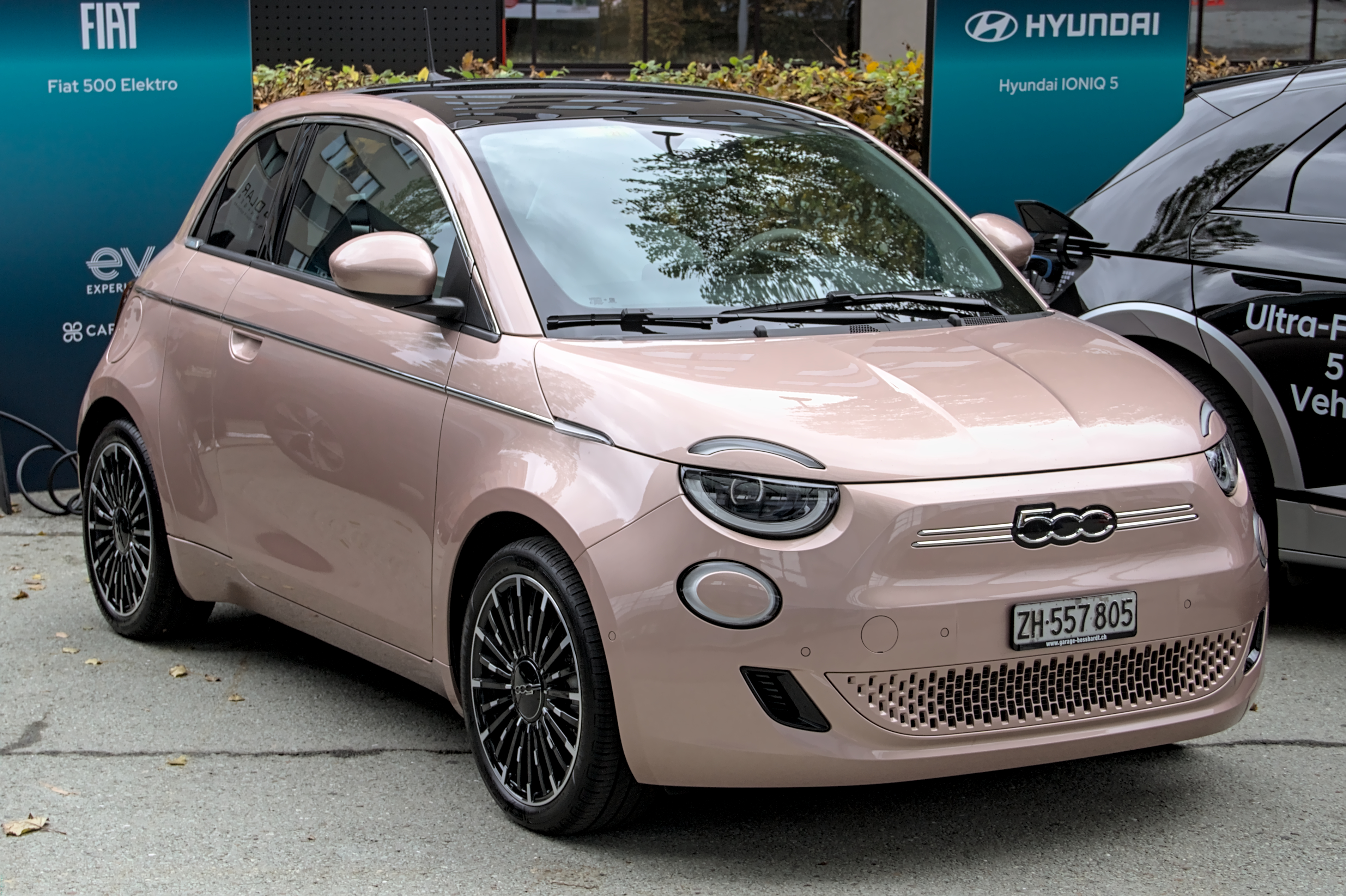
Fiat 500e. Yeah. Fiat 500e is the first thing that came to mind. I mean, basically any
of the compliancy, you know, like the Volkswagen e-golf would fit in that. I think
for range though, nothing's going to beat a Bolt like a 2017 Chevy Bolt.
Pricing wise too. I'm just throwing this on there. I've not looked at it. Have you seen the
prices of Mini E's? Yeah. They're under 10 K. That could be interesting. I mean, you can find
original Model 3's. Yeah. Model 3, you know, with high mileage,
under 10 K is not a bad deal too. Yeah.
All right. Instead of, could you act like NOT? I don't know. Tesla can now be Nazi
instead of sexy. What's the NOT? Yeah. I don't know what the NOT is, but you know,
the CY could be the Cybertruck. A little bit of a stretch going to work on that joke.
Skeptic says Starship is the FSD of SpaceX. Okay. Elon is betting the entire company on it,
and it looks like it'll never work. I don't know if it'll never work. I don't think it's
been going as well as they hope. You know, I'm still a big fan of SpaceX. By the way,
I think you can appreciate SpaceX and what it's trying to do while still admit that $2,
$3 valuation is just crazy, and that Elon forced the XAI deal on SpaceX and the investor,
and it's a bad deal for everyone involved, except people are invested in XAI.
And Starship has failed to achieve orbit, to go into orbit, but they reached orbit,
but they haven't accelerated into it. But yeah, I think one of the things that I really lost a
lot of respect for Elon Musk in the last two weeks, and there was not a lot of respect to
start with in the last two weeks anyway, was the Artemis II mission, which has been absolutely
insane. By the way, right now, if you have time and you're listening to this and you have
time after the podcast, go check out Ann Green's new video on the pictures coming from Artemis,
the incredible videos and all the best pictures coming out of it, where he explained to you in
details everything we see and how significant it is. It's a beautiful video. We're looking into
it. And Elon was, you know, used to be pretty encouraging of any kind of space program before,
whether they involved SpaceX or not, didn't mention a thing about Artemis until they
reached the moon, I think, like for the first week of the program, he didn't say like a thing at all
when they launched anything like that, which is kind of sad because obviously it's clearly because
SpaceX is not involved in it, or it's the Artemis program, it's not SpaceX's launcher or
spacecraft. So I think I lost a lot of respect for him because I thought it was a real
space nerd. And I mean, he might still be, but I think now it's more like AI too, like he's really
passionate about AI. He's really passionate about controlling AI. Maybe he's really passionate
about like being the one that, you know, bring humanity to space rather than just humanity
going to space. So you're starting to see the little chink in his armors when it comes to that.
Yeah, I fully agree. All right, moving on. I agree with you on stock market concerns. Yeah,
it's really like kind of scary like what can happen, the volatility it introduces.
Yeah, I think there are reasonable concerns because like there was no reason to change
those rules. Those rules were perfectly reasonable. You'd change them because you
want the listing of SpaceX, you want all the fees that come with it and all that.
I mean, apparently Elon, and I haven't seen any denial of that story, is making the banks that
are getting in on the deal, signed deals on using Grox, like millions of dollar deals to use Grox.
And you know, I mean, I'm a huge user of AI and I use, I compare the frontier model all the time
if you include Grox in the frontier models. And it is by far the worst model to use and
everyone that sees the eyes knows it. So you know that these banks are like, all right,
Elon really wants us to buy, you know, in Grox, so we will buy like, you know,
$5 million worth of Grox seats for two years and not use it and keep using Claude.
And, you know, it's worth it because we made $100 million in fees on that deal.
It's literally what's happening. And so dumb.
I miss that Atlas is ice. Yeah, ouch.
Oh, yeah, that's what I think was saying. X-Pang has just been launched. No, Mexico.
Yeah, I saw that a few weeks ago.
Agree, Starship is a white elephant. Another point, the use Chevy bolts that is
the earlier models all had their battery packs replaced. So they have a new battery
and relatively better range than they can find TVs. They didn't all have that.
They didn't all have that. Yeah, we don't know that they're for a fact, right?
Yeah, and some of them were actually just like limited. So be careful on picking a bolt.
But even at a lowered rate, you're still, you know, an Nissan Leaf is barely over 100 miles.
So, you know, a bolt at 200, whatever is going to be much better.
Magnificent seven are nitroglycerin seven. That's the top tech stock companies are dangerous.
Which Tesla is still in, by the way, still a mag seven, even though, you know, no growth
whatsoever in the last two years. Crazy, crazy valuation on the earnings. But, you know,
it's kind of a bummer because we always, you know, promoted the idea of like this
stock is important because it's one of the only all that you could make her and we need to show that
it is, you know, viable, a viable business model to sell at your cars. And it was for you for
years and years and years. But now it's like, oh, it's the other way around. Regardless.
All right, I hope that everyone has a nice weekend. If you did enjoy the
energy podcast, please give us a like a thumbs up and subscribe what it is on the app. And
yeah, we're going to see you same time, same place next week. Have a good one.
About this episode
Tesla’s rumored cheaper China-built SUV program sparks debate after a report from Roaders claims a smaller Model Y–sized EV is in the works, only for Tesla China to deny it. The hosts then dig into FSD progress: v14.3 arrives, with discussion of a rewritten MLIR-based compiler/runtime and claims of ~20% faster reaction time, plus remaining vision-only edge cases and Tesla’s tightening driver-monitoring “NAG defeat” crackdown. Other coverage includes Rivian R2 EPA range figures, Volkswagen ending the ID.4, and Hyundai’s new Ioniq concept pair. The show also reviews Tesla’s new Supercharger business tool and its projected economics.
In the Electrek Podcast, we discuss the most popular news in the world of sustainable transport and energy. In this week’s episode, we discuss Tesla's cheaper EV model coming and going in the same week, FSD v15, Rivian R2 EPA numbers, and more.
As a reminder, we’ll have an accompanying post, like this one, on the site with an embedded link to the live stream. Head to the YouTube channel to get your questions and comments in.
After the show ends at around 5 p.m. ET, the video will be archived on YouTube and the audio on all your favorite podcast apps:
We now have a Patreon if you want to help us avoid more ads and invest more in our content. We have some awesome gifts for our Patreons and more coming.
Here are a few of the articles that we will discuss during the podcast: