The Tesla Model 3 is a type of electric car that runs on batteries instead of gasoline. It's popular because it's affordable compared to other electric cars and has a lot of cool technology, like being able to drive itself in some situations. People talk about it because it's changing how we think about cars and the environment.
The Lexus LFA is a fast and powerful sports car made by Lexus. It has a unique engine and is known for its sleek look and high performance, making it very special and rare.
An EV incentive is a way for the government to help people buy electric cars by giving them money back or reducing their taxes. This makes electric cars cheaper for buyers.
EVs are cars that run on electricity instead of gas. They are better for the environment because they don't produce exhaust fumes like regular cars do.
The Tesla Model Y is an electric SUV made by Tesla. It's known for being roomy and having a lot of cool tech features, making it a popular choice for those looking for an electric vehicle.
The Volkswagen ID.3 is a smaller electric car designed for city driving. It's meant to be affordable and practical for daily use.
Car
BYD ATO
The BYD ATO is an electric car made by a Chinese company called BYD. It's aimed at being an affordable choice for people looking to buy an electric vehicle.
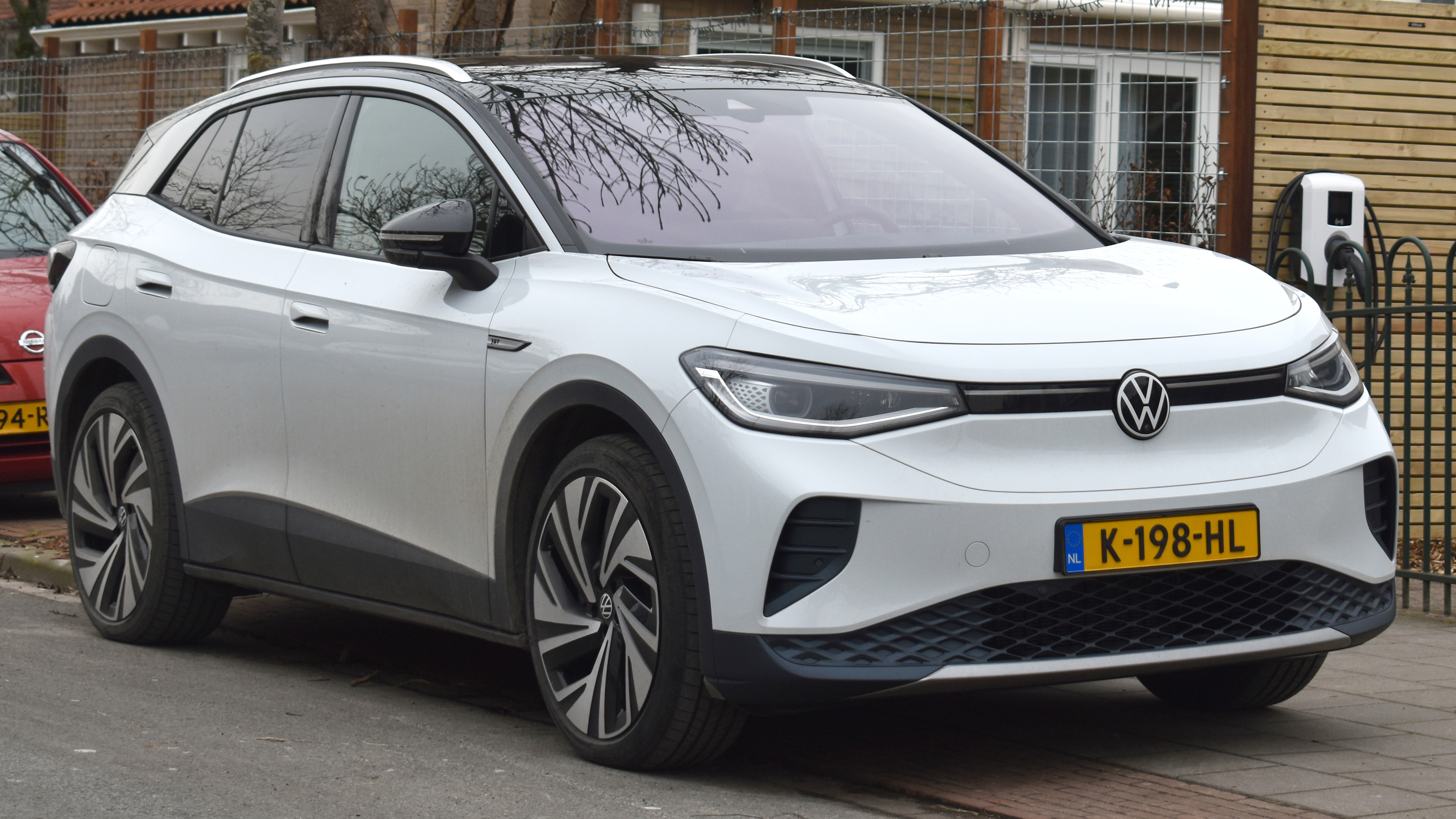
The Volkswagen ID.4 is an electric SUV that provides a lot of space and modern technology. It's designed to be a family-friendly vehicle while being environmentally friendly.
WLTP range is a way to measure how far a car can go on a single charge, especially for electric cars. It helps people understand how efficient the car is in real driving situations.
A level two system means the car can help with driving, like steering and speeding up or slowing down, but the driver still has to pay attention and be ready to take over.
FSD means Full Self-Driving, which is a feature in Tesla cars that lets them drive on their own in some situations, making driving easier for the owner.
An electric vehicle is a type of car that runs on electricity instead of gas. They are often better for the environment because they produce less pollution.
A tax credit is money that can reduce the amount of tax you have to pay. For electric cars, it means you can get some money back when you buy one, making them cheaper.
The CAFE standard is a rule that makes car companies ensure their vehicles use less fuel. It helps to save energy and reduce pollution by requiring cars to be more fuel-efficient.
Corporate average fuel economy is a rule that makes car companies create vehicles that use less fuel. It helps ensure that cars are more efficient and better for the environment.
BYD is a car company from China that makes a lot of electric cars and batteries. They are doing well in the market and are known for making affordable electric vehicles.
The Hyundai Genesis is a fancy car made by Hyundai that aims to compete with other luxury brands. It has lots of nice features and is usually less expensive than other luxury cars. People talk about it to see how well it does compared to other electric cars and if it's making money for the company.
The Toyota LFA is a special sports car made by Toyota that is very fast and has a unique engine sound. It's a rare car that many car enthusiasts admire.
Solid state batteries are a new kind of battery that could be safer and more efficient than the batteries we use today. They use solid materials instead of liquids, which can make them lighter and better for electric cars.
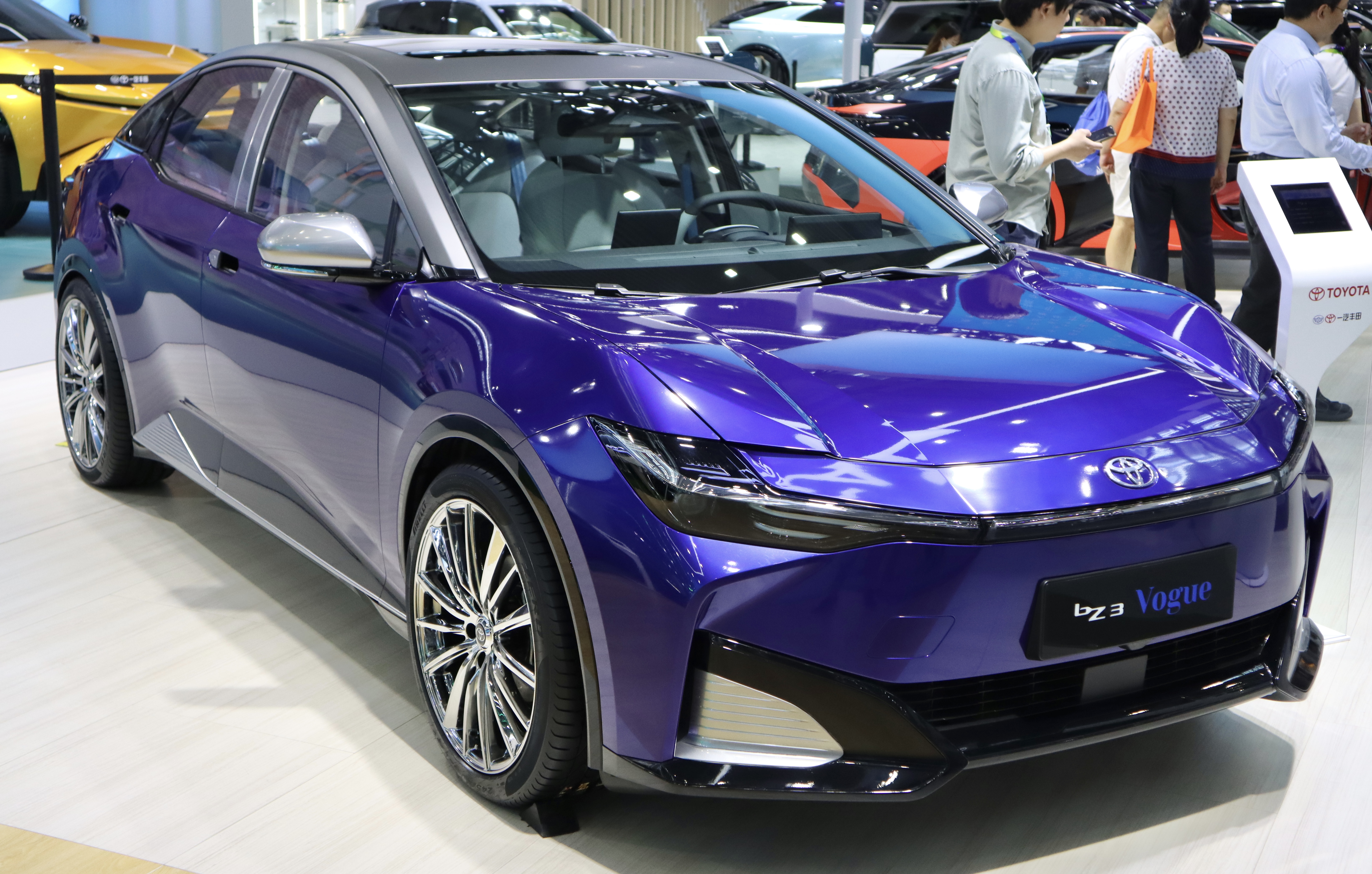
The Toyota BZ3 is an electric car from Toyota. It's part of a new line of cars that the company is making to be more environmentally friendly and to help reduce pollution.
The Tesla Model X is a big electric SUV that has cool doors that open up like wings. It's designed to be spacious and comfortable for families while still being fast and high-tech. People mention it because it's different from regular SUVs and is part of the growing trend of electric vehicles.
The Tesla Model S is a fancy electric car that can go really fast and has a long battery life. It's one of the first cars Tesla made and is known for having lots of high-tech features. People mention it because it's a big deal in the world of electric cars, but it's not selling as much now that there are newer models.
The Mazda Miata is a small, two-seat car that's really fun to drive. It's known for being light and sporty, making it a great choice for people who want a car that's enjoyable for everyday use. People talk about it because it's a classic choice for those who love driving.
LIVE
And three, two, one, we are live by Newcastle of the Electric Podcast.
I am Fred Lambert, your host, and as usual, I'm joined by Seth Wintra.
How are you doing today, Seth?
I'm good.
All right.
Another big news week again this week, it was kind of slow, but still a few interesting
things that we want to talk about.
When it comes to Tesla, we got some numbers from European sales and we got the new launch
of the Model 3 standard in Europe.
So we're going to discuss a little bit of like, how's the European market looking?
Can Tesla see the bottom of it?
What's going to happen?
So we're going to discuss that a little bit.
Then we're going to discuss a big update to FSDV14.2 for the people who have it.
It's supposed to be sentient, I don't know about that, but what I do know is that now
Tesla is slowly starting to actually allow texting and driving, but not in the way that
we would hope for, but basically in the way that we predicted.
Then we're going to talk a little bit about the White House, Trump's administration, officially
killing the Milesburg Island standard, the cafe standard for automakers and the automakers
that celebrated that, which we're going to try not to forget about going forward because
some of these people, they say things one way and then the other way with their lobbyists,
they say other things.
We're going to talk a little bit about Toyota, they unveiled a new Lexus LFA concept that's
now electric, but they also unveiled a new ICE brand, new luxury ICE brand that they want
to launch.
So we're going to talk about the contradiction there and one of the EVs from Toyota is actually
doing very well in China.
We're going to take a look at that just to, you know, a little monthly reminder of what
they get in China that we don't get in North America.
And we're going to end, well, we're not going to end the show, we're going to end the news
portion of the show with a little talk, a little update about that terror.
There have been a few updates this week that we're going to discuss and then we're going
to end the show as usual with questions from you guys.
So if you're watching live, I'm going to remind you of that later on as more people jump into
the chat, but we're going to talk to the chat about whatever you want to talk about
in the EV world, our renewable energy world.
All right, let's start about some numbers coming out from Europe for Tesla this week.
So we've been tracking this, this, this summation that sells in Europe over the last year.
Well, over the last two years, really, that accelerated in 2025.
So that's the thing that they keep reminding people when we talk about the digital numbers.
These are compared to 2024 numbers, which were already down compared to 2023, which was
the peak for Tesla in Europe.
And it's also amid a surge in EV sales in Europe.
So let's take a look here because the numbers are interesting this quarter because Norway
is saving face for Tesla, saving Tesla's face in Europe because Norway was up 175% in November,
which is huge.
Even with that, even with its biggest market being up, 35%, Tesla was down 12% in Europe.
In fact, it was down in every market except Norway and Italy.
And we're going to discuss why, because that's the concerning part about this is that there's
good reason why it's up in those markets and then it's down everywhere else.
If you remove Norway from the equation and you keep Italy, the sales still down 36.8%.
So the decline is still ongoing.
Tesla has been down between 30% and 40% year over year for each month of the year, basically.
So it's not even slowing down at this point other than the Norway situation and the Italy situation.
So what's happening in Norway?
We discussed it last month.
Norway basically declared victory on their goal of going all electric.
And they were like, so we're going to start a phase out of the EV incentive because of that.
So it starts next year.
And as usual, when you remove an incentive, it pulls them in forward much what happened in the US and Q3, for example.
So a lot of people are rushing to buy their EVs before the basically tax exemption is going away.
So the tax exemption is going away for more expensive EVs.
I think the threshold, I want to say 30,000.
I think I linked it in there somewhere.
No.
Yeah, here.
I think it's for 30,000 euros, EVs, 300,000, of course, they're not on euros.
They are in Kroners, Norwegian Kroners, so 30,000 Norwegian Kroners, which is about 30,000 USD.
So yeah, for vehicles that are more than $30,000, which right now it was 500,000 Kroners, which is closer to 50,000 USD.
So it's a big drop, it's a 20,000% drop.
And as you would imagine, all of Tesla's EVs are within that new range.
So Tesla is the biggest beneficiary of the Dementpol, but temporary beneficiary, obviously, because Q1, 2026, probably going to be very tough for Tesla in Europe because of that.
Just that's the only good sign.
Italy, similar things.
It's an incentive thing, so it's the other way around.
So there's a new incentive has been put in place, so that's boosting sales right now.
But even then, you can see that Tesla is still lagging quite a bit, because even though it's up 58% in November, thanks to those new incentives, the rest of the market is up 150% in EVs.
So Tesla is still lagging behind.
But yeah, everything else is down, including big markets like Germany, a little boost in Germany to just down 20%, which is good for Tesla in Germany.
Because they've been down like 60% at times.
Netherlands, another big market for Tesla down 43%, France starting down 58%.
Yeah, it's just not a good look.
Almost 60% in Sweden.
It's just not a great situation for Tesla.
Now, there's the new Model Y, Standard Model Y and Standard Model 3.
So Model Y launched last month, Standard Model Y in Europe.
I'm back.
Still doing the same.
But now the new Model 3 Standard has been launching Europe, and the price is interesting.
So much like what happened in North America, or like not a big fan of the Model Y standard, the content, the stripped down version, in terms of a value proposition, it just doesn't make that much sense compared to the price of the now premium Model Y.
But the standard one is interesting.
So in Europe, much like in the US, you have this like $40,000 price range that, well, now it's getting closer to like $45,000 and $50,000 with inflation and everything.
But there's this sticker prize that's kind of a cyclical buyer for people.
In Europe, it's closer to like 37,000 euros.
You go over that, it starts to get pretty expensive.
So Tesla got right there at 37,000 euros for the Standard Range Model Y, which is a big drop from the 45,000 euros premium Model 3 rear-wheel drive.
So that's a big difference.
So you go 8,000 euros difference between the two models.
So it's a big drop in price.
You open up the market quite a bit.
But you see it in Norway, it comes in at 30,000, 330,000 Norwegian kronor.
So it's still going to be off of the limit for the tax exemption.
So Tesla's not going to be able to benefit from that.
But with the different price, with the specs and everything, it's still a good offering.
You can compare them to, we pulled up some comparison.
So the ID4, ID3, you can compare it to like the BYD ATO, for example, is 38,000 euros in Germany.
So the Model 3 is cheaper.
Now it's more like a crossover SUV, so closer to the Model Y, but then the Model Y is a lot better, let's say, than the ATO.
So you're going to pay quite a bit more.
The IX3, 36,000 to 39,000 dollars, so it's within the price range of the Standard Model 3.
It's a crossover, so you can also compare it to the Model Y, but the Model Y is quite a bit bigger.
Is it quite a bit bigger than the IX3?
I think it's a little bit.
Yeah, a little bit.
And, you know, but the Model 3, the Model Y standard, like I said, just at 40,000 euros, just not as attractive, because then you compared it to the base version of the previous Model Y, and it was 45, basically.
So you have 5,000 euros difference versus 8,000 euros difference between the two cheaper trims of Model 3 or the Model Y.
And for that, you lose 100 kilometers of WLTP range and a lot of features.
We talked about, like, you know, the textile versus vegan leather, you lose the rear screen, you lose the heated seat in the back, you lose the audio system is quite a bit drunk-graded, you lose the glass roof.
I mean, though you don't actually lose the glass roof, you lose the panoramic view because the glass roof is still there, it's just covered.
It's not the same glass also, so it's not exactly the same, it's not like you can just open it up and you remove the headliner and be like, hey, I have a glass roof, I think it doesn't have the same anti-UV property.
But yeah, so the way I see it is like, this could help Tesla for sure, it could sort of revive a little bit the Model 3 specifically in Europe, because if you look at the cells now, it's so heavy for the Model Y, and Model Y will help, like, stop the bleeding.
I would assume the standard Model Y, the standard Model 3 could open up a little bit, and like, room to grow the program, I think, in Europe, and there's plenty of room to grow there, because like I said, Tesla is down basically 30% each month for the year, down 30% on the year, basically, versus the market being up 50% for the years.
There's a lot of room to catch up here for Tesla, and obviously competition is still growing quite a bit, but at those price range, Tesla is still attractive, I think, in Europe, and the 37,000 euros price range, it's not bad.
The way I see it, best case scenario, Tesla forms a bottom in Europe in Q1, 2026, so after all the demanding pull forward in Norway, Norway is going to need probably a few quarter to stabilize after the new, the changes in the tax exemption, and it's still a big market, and then, you know, some good signs in Germany right now, and just being down 20% versus 60% sometimes.
So yeah, I can see Tesla forming a bottom soon in Europe.
All right, still on Tesla, last piece of news on Tesla, it's the FSD.
So we talked about this comment from Elon during the shareholder meeting in early November, so just a month ago at this point, he said on stage that the killer app, the thing that's going to propel FSD to the next level,
it's not delivering on what we promised, which is unsurprisingly driving, it is texting and driving, everyone wants to text and driving, he does have a point on that, you can go on traffic and you look around you, and you're going to see quite a few people texting and driving.
And Elon had this argument that he was seeing in the data that people were deactivating FSD to be able to text and drive because FSD will detect your use of phone and will warn you to pay attention to the road and even deactivate if you don't comply.
So he was like, within a month or two, we're going to allow you to text and drive.
That's all he said, that's all we said, which opened up a lot of questions, way more questions and answers, whereas how is that going to work?
Because Tesla is a level two system, Tesla is not taking any responsibility for you while you drive.
If you want to allow using quote, air quotes, it would imply legally, so it would imply certifying FSD as a level three minimum system, and then taking over the responsibility for the vehicle while it's active for a certain period of time, much like Mercedes-Benz has done in some markets.
But we suspected that that would not be the case.
What we said at the time, like what I wrote and what I think we discussed on the podcast too, is that the only possible scenario I see, which is like the worst case scenario really, is that Tesla doesn't move to legally allow you to text and drive, but instead we'll play the game of like, we don't see it.
We don't see it. So basically, downgrading the driver motoring system, so that it doesn't, if you do, if it does that take you using your phone, it won't stop you from using FSD will allow it.
That's how it will allow it.
But that still leaves the full responsibility on to you, because let's be honest, if you get caught driving and texting at the same time, the police won't care what version of FSD you're on, they will just give you a ticket.
That's how it works.
But now what we learned, so we didn't know exactly how that would be implemented, but an FSD user on X noted that he was using his phone while trying FSD, which is a mission of a traffic violation, and that he was allowed to use it.
And Elon responded to that saying, so at the end of the statement, the driver was like, is Tesla allowing us to test and drive now?
And then Elon responded, depending on context of surrounding traffic, yes.
So this is the actual real first step of Tesla, allowing you to text and drive, depending on context or I think traffic, I assume like in like heavy traffic area at slower speed, they're going to allow you to do it, something like that.
What do you think, Seth?
So Tesla is going to allow you to do it or the local authorities are going to allow you to do it?
Tesla is enabling you to use FSD while texting and driving.
And on paper, Elon is agreeing with this meaning that Tesla is allowing it now.
You know, what is that?
There's a CEO of your car company saying you can text and drive.
I don't think that makes it legal.
You know, you cannot be stopped by the police and said, hey, Elon said that was okay.
Here's the tweet officer, like take that ticket and shove it up your ass.
Yeah, friend of electric Earl on Twitter said that he was going to print out the tweet and keep it in his glovebox.
So if he can stop, he just pulls out the tweet, you know.
Elon, which I think can be your boss to some degree considering his involvement in the government, is telling me that I can do it.
It's nonsense, obviously.
Now, the argument that I've heard from, you know, the Tesla community, which, you know, I always try to justify everything Tesla does, is that people were doing it anyway.
And now it's just, and you have to agree that it is safer to text and drive on FSD than it is without FSD.
So I'm thinking I can agree with, you know, it makes sense.
Yeah, if someone is going to text and drive anyway, I would prefer them to be on FSD than not on FSD.
However, the problem, there's two different problems.
A pure safety problems you have to consider now are there going to be more people that are going to text and drive because they have FSD and they think it's okay because Elon says it's okay.
That's a real safety concern that could, you know, decrease overall safety rather than increase it.
We have to consider that. So that's crazy.
Then on a more business-related problem is the liability issue.
I mean, there are a lot of, how many lawyers just got so excited when Elon texted that, like tweeted that publicly.
They all screenshotted it.
All the lawyers that are working on autopilot cases right now screenshotted that thing, put it in a nice file and now going forward, you can tell you, like, obviously it's going to only affect accidents going forward.
But the very accident that Tesla lost the $240 million case on was related to someone using their phone on autopilot.
That's how it started.
And they lost the case at trial because the guy made the argument that Tesla sold me the car in a way that, and Elon himself sold the car in a way that I thought this was okay.
And now he made it explicitly okay. So now going forward, so that was a day, that was less a day yet.
Yeah, I think it was, yeah, December 4th.
So December 4th onward, all you need to prove is that you saw that tweet.
And if you get into an accident that while using your phone on FSD, you can actually at least partially blame Tesla on it easily.
If you use the last trial as a, I'm blanking on the world when you use a previous trial as an example as a precedent, precedent as precedent, exactly.
Tesla can at least be partially found responsible for that for that crash. It's, it's crazy.
Yep.
We have Dano here says using voice texting while driving is still dangerous because you have to read the text before sending it to make sure your voice recognition hasn't typed something embarrassing.
There's, there's some mention I can read the text out for you.
Yeah, CarPlay and Android Auto, read the, read the text.
Yeah, yeah, yeah, that makes sense.
Actually, does it Tesla? No, anyway.
I haven't used the Tesla texting thing for a long time.
All right, that's it for the Tesla news for the day.
If you guys want to ask us any questions like Dano one or have a comment to add to the situation, you can put them in the chat right now.
We're live on YouTube, Facebook, X everywhere.
If you could put the question in there, we're going to answer it in like 10, 15 minutes.
Next piece of news is coming from Trump.
So it's something that we know is going to happen.
Trump has been promising that all of the regulatory standards that are plaguing the auto industry is the reason why pricing and keep going up, including electric vehicle, forcing people to make vehicles.
And he had attacked this on several fronts, starting with the APA, which he has gutted.
And then there's the California standard that the car states, they call it, because other states have adopted it.
He attacked that too.
Then he attacked the incentives for electric vehicles at this incentive level for at the purchase level.
So the tax credit, the $7,500 tax credit.
Now it's the CAFE standard.
So the standard, the corporate average fuel economy, which basically forces automakers to keep improving year after year on the overall miles per gallon that they deliver.
And obviously, with the MPGE, the miles per gallon equivalent that we calculate for electric vehicles, delivering an electric vehicle will greatly help with your average.
They are just released a new proposal that they're going to try to pass that will basically scrap the 50 miles per gallon's goal for 2031 and reduce it to 34.5 miles per gallon.
So as you can imagine, that changes basically enables automakers to throttle down their EV efforts quite a bit because 34.5 is a lot more achievable without all electric powertrain than 50.
Like to get to 50, you need the bunch of vehicles in the in the 80s and 70s and miles per gallon equivalent, which is only achievable with plug-in, you know, very efficient plug-in or electric powertrain.
So yeah, at the, Jamie has a very good post on this, by the way, if you want to read it, it's called White House and they'll plan to raise your fuel cost that despite a phobality crisis, because yes, this will automatically will not reduce your costs.
Like it's not, if this actually result in a sharp decline in average cost of new car sales, I'll be very impressed because there was a lot of things in the announcement like saying like, oh, the reason we don't have K cars is this is like how a K car would actually like boost your miles per gallon efficiency.
They will not, they will not reduce it.
Yeah, so who was actually happy about this.
So at the announcement, you have some, some disappointing faces, including Jim Farley, you know, we really like Jim Farley's push for electric vehicle, but the guy was pretty happy about that.
Because obviously his gasoline, his ICE vehicles are still the profit makers for Ford.
Stalentes CEO Antonio Filosa was also there and cheering them on and obviously Mary Barra, who's, you know, flip flopper as much as anybody else.
A true politician of the car industry is I wouldn't be surprised if we see Barra do a political run after her tenure as a CEO of GMC.
She really has that the politician mindset.
I feel like she's also was there cheering on said today I'm always going to advocate for one national standard and making sure regulatory requirement don't get in front of the consumers.
Great job on that.
As Jamie point out, she says that at the same time she lobbied against the single national standard that had been agreeing between Obama and California during Obama's administration.
So not a great look.
I agree on one national standard.
That's her priority.
As long as the one national standard doesn't force me to make too many electric vehicles.
You know, GM has been doing better too with EVs.
So it's yeah, it's just that they find it hard to see a clear path to replacing their profit centers with EVs.
I think that's what these tears care about.
But it can be done.
Like before, you know, going all wacko and all in autonomy, Tesla was extremely profitable for a little while.
It's not a lot of the case anymore because they let their lineup just go through it.
But it seems feasible.
It seems completely feasible.
BYD making good money.
Yep.
Selling mostly all electric vehicles now.
You know, 40-45% are so plug-in hybrids still.
All right, let's talk Toyota a little bit.
Do we know if Kia, Hyundai, Genesis, how profitable their EVs are?
Do we have any like breakout numbers?
I don't think they provide those, right?
No.
So yeah, Ford is the best one out front with like these split it very well.
So we're in turbo legacy to makers.
But no, I don't think Kia.
I think they did say though that Hyundai did say that some of their programs are being profitable now.
I think I remember them saying that like a year or two ago.
All right, let's talk about Toyota a little bit.
Toyota had a big week.
They announced a new brand that they want to launch.
That's going to be an ICE brand.
So there was that.
That was like, okay, launching an ICE brand in 2025.
It just doesn't sound like the most forward-thinking idea.
But they also unveiled this thing, the new LFA concept.
An all-electric car that's supposed to embody the technology that an engineer of its time should preserve.
I think it's not bound to vehicle powered by an internal combustion engine, you know, anything electric.
I don't think there's many specs though.
There's just some dimensions, so 185 inches long, 80 inches wide, 47 inches tall.
So you can see it's a shorty build.
The exterior looks really good.
You know, classic LFA with a little bit of futuristic look, but still not to concept.
Unlike the inside, the inside is a lot more concept.
And you like that the clicky thing works now.
We can see the full-screen images.
They did say that there was some hint that this might be like the first vehicle that launched with their solid state batteries in 2027.
So that we could see a possible production version of this concept.
It's really nice, especially with solid state batteries.
You could keep the weight relatively light.
Could be a fun little sporty car.
Yep.
So on the other side of the spectrum of electric Toyota vehicle, one side you have this crazy supercar.
It's still not working.
Sometimes it works, sometimes it doesn't work.
On the other side of the spectrum, you have the BZ, is it the BZ3?
It's only available in China, the BZ3X.
And it's getting some momentum.
It's actually getting more EVs than Toyota has ever sold before, or more EVs at least.
So it starts at 100,000 yen, which is basically $15,000.
But look at what car you get for $15,000.
This doesn't look bad at all.
You know, a little bit boxy, but look at the interior.
$15,000 vehicle.
You can have a life flat front seat.
Yeah, it's pretty dope.
There's a lot of life flat.
Take the dash.
Kind of like a Rivian intern, like from afar.
Yeah, less frills, less luxury for sure.
But yeah, the design language looks amazing and very minimalist.
Obviously, you would expect that from a cheaper vehicle.
But this is a $15,000 car.
I don't know if this is a $15,000 interior, though.
I'm sure there's some upgrades, but still.
But the Creaser, so okay.
Yeah, so you have the full version.
But even then, the top of the line version with the LiDAR and everything is $20,000.
It's $150,000.
So the base version started with a 50 kilowatt-hour battery pack.
You can upgrade it to a 68 kilowatt-hour battery pack for 430 kilometers, turning 67 miles
up to 610 kilometers, turning 79 miles.
And it's starting to sell pretty well.
There are two months in a row now with over 10,000 units.
So 62,000 units to date.
It's picking up.
You know, you just produce that in North America, probably sell it.
You know, it's going to cost more.
But even if it's like $25,000, $30,000, it would sell like very well.
All right, we're going to finish on a quick update on Abterra, and then we're going to
jump into the comment section.
I see you guys are already in there with some questions.
We have James here.
We have Kwame.
We have Dano.
Thanks, you guys, for joining the show.
Abterra, we've been updating on Abterra since they went public.
And through going public, they managed to secure an option to sell up to $75 million
worth of share to finance their ramp up, to gain the capital for ramping up to production.
And we've been, you know, cautiously optimistic about it.
Like it's, you know, making an electric vehicle is a capital intensive endeavor.
$75 million might sound like a lot, but for something like that, it's peanuts.
It's really not, it's really not enough.
But it could be feasible.
So we've been tracking every little bit of information Abterra has been doing to see
if they are still, you know, shrugging along towards that goal.
And this week they had an update where they shared the video of their production line,
their assembly line.
And there's some parts that are hidden that they don't show.
You have the full video on YouTube here.
I can have a better look of the production line.
So they have now a lot of more production intent vehicles.
So they have a fleet of, I think, one, two, three, one, two, three, four, five, six.
They have six new production intent vehicles that they're building for their validation
fleet.
They showed us a few of their staff too that they're hiring because they've been
doing a big boost on the headcount since going public.
They've been able to hire more people, which is good.
But yeah, the actual, let's see the production line that they show here.
So production line looks, as you can see a lot of empty shelves and everything, very
much a work in progress.
So it is progress, but it's like this does look like I've seen a lot of vehicle
assembly lines in my days.
And this is not normally what it looks like when you're about to start even low volume
production.
So they showed some battery packs, so they have their partner, I forget the name of their
partner, CTNS, that are building battery packs now directly at the battery modules at
the app terrace on factory, which is shortening the production, the supply of the packs.
That's good.
And they have a few modules here.
And like I said, we have a quick view of their, here you see the end assembly that's like,
they are going through all the assembly process and one by one building the stations for it
through the assembly of the production intent vehicle, which is how it works.
So it's like, it's legit work and everything, but you know, it's, they still look like they
are six months to a year away from an actual production line to me, it looks like.
Now that doesn't mean they won't have like a low number of, you know, mostly handmade
vehicle, but they say that they're making progress on the non handmade body production.
It's a carbon body.
So they call it, they have a binks, I think they call it for that production.
Interesting.
But what else?
The validation process.
So they have, they said that the, what's the word that they use for the Gemini?
So Gemini was the third production intent vehicle that they produced.
And they see that it was encouraging results from the preliminary combined drive cycle
testing.
So high speed stop and go in urban driving.
Not, not a lot of information there.
And just the word encouraging, but they use that to have now their new six production
intent vehicle.
They're going to put that into a more regular, you know, a validation testing.
And then from there, they're going to move to low volume production next year.
So yeah, in short, cautiously optimistic is that I can, I can see a path to Apptera,
you know, producing a few and delivering them.
I'm not saying it's going to be a success, but at least like some people might actually
get to drive these things, which, which alone is would be a victory.
I think it would be, if they can deliver a few of these customers, I think would be
exciting on its own.
Maybe we'll even get invited out to check them out.
Yeah, that would be nice.
Like if, if they have a natural like production version and, you know, they can deliver a
few and just to get, even to get people thinking differently about what could be even as Trump
said this week is like, why are we not making smaller vehicles?
Why are we not making more efficient vehicles?
Well, the other reason for that, and you're part of the problem.
But actually the number one problem is the person making those remarks.
Yeah.
And also automakers just wanting to make more profit on bigger vehicles and also the fossil
fuel industry getting involved and not disliking the fact that more gas-causing vehicles are
good for them.
There's a lot of things that play obviously, but for the most part, there's, there's something
exciting about super efficient vehicles that, you know, just a two-seater is problematic
for some people, but for your commute, like, let's say you have a commute that's less than
30 miles a day and overall commute.
I mean, you're always yourself in your car or maybe sometimes you commute with someone
else, you know, whatever.
And, and you live in a relatively sunny area and you can park your car in the sun.
You can technically drive for free on sunlight, your entire commute day in, day out with an
app, Terra.
That's pretty cool.
Yeah.
And if, so if you're going to have a second car, like, I think, like for a family, obviously
doesn't make any sense.
I think if you, if it's going to be your single car, doesn't make a ton of sense to either.
But most families have like two car, most like middle class to upper middle class families
have two cars.
So if you can make it work where you're one of your car allows for someone to have a commute
for free, driving on sunlight.
And then you have your second car for like picking up the kids, you know, whatever you
need to do.
I think, I think it's very doable and could be exciting and could, could directly affect
the efficiency, the overall efficiency of the fleet in North America.
That's it.
Yeah, absolutely.
All right.
Let's move into the comments.
Patricio.
Benedin says, forget FSD, fix the auto wipers.
This is a point that people bring up a lot.
You know, the auto wipers are supposedly AI and intelligence based and they haven't
worked great ever.
And I don't know, are your auto wipers any better than they used to be?
They're not as bad as they used to be.
But I'd say that like, if you get medium to heavy rain or snow, every one, every other
time I need to manually intervene.
I'm about there as well.
And it basically, if there's mist, forget about it, doesn't register.
And you know, sometimes like, I don't know if you ever get this, but sometimes we'll
get false positives.
Like I'll just be driving down the road and all of a sudden, you know, on a sunny day
or maybe not a sunny day, but like all of a sudden, you know, it's kind of jarring a
little bit.
No, that's true.
I think I got, I grown completely numb to it.
Like I don't, I don't care about that anymore.
The more annoying thing is like when you actually need them and they're not adjusting properly
to the actual speed of precipitation.
Yeah.
Yeah, you're right.
So at the lower hand, like at low precipitation, like even miss terrible at the higher end
also like sometimes it works.
Sometimes they got, they get it right and everything.
But every other time you have to like, no, it's not going to work.
I need to adjust it myself.
They're just taking way too much time in between where you literally don't see anything for,
you know, half a second, which is not a good thing.
Right.
And like what's frustrating is like auto wipers have been solved like since before Tesla was
around, like that's, it's not great.
And I think the biggest part of that is that Tesla is like, Oh, this is our AI.
Our AI is figuring out windshield wipers and it's not.
And you're like, Oh, this is what's going to be driving me around town and through traffic.
And, you know, like you get false positives on windshield wipers.
It doesn't really, or, you know, they don't work and it doesn't really give you confidence
that FSD is ever going to work.
Playing devil's advocate, I would assume Tesla would tell you like, Oh, well, I mean,
we put all our effort on FSD because you can save a lot more lives with FSD than you do
without the wiper.
But yeah, at the same time, you're right that on the marketing perspective,
it doesn't bring a lot of confidence to people.
It's like, how about you fix that first?
All right.
Dan, I would say using voice texting while driving is still dangerous because you have
to read the text before sending to make sure voice recognition hasn't typed something
embarrassing.
Oh, I didn't think about that.
That's what we discussed earlier.
Our play will read it back to you, I think.
It's an option.
All right, with Netflix WB merger today.
Do you see any OEMs or EV manufacturers merging in the next few years during this
pro monopoly FTC?
Yeah, I mean, it's the time to do it.
No one's watching.
Nobody's at home.
Yeah.
Get it done.
I mean, that's not, am I excited about this idea?
Not really.
There's going to have to be, there's a lot more players in the car industry at least.
Well, I mean, there's a lot of players in streaming right now, but the big ones, like
Netflix is already the biggest one.
So Netflix absorbing others like HBO, which I think has 100, 150,000, a million subscribers
and that, which HBO is Warner Brothers, by the way, for those who don't know.
I think it's a clear, clearer monopoly.
It's not a technically monopoly, but a glipoli, I think.
A glipoli.
You know, when it's not a full monopoly, it's a oligopoly on that.
Yeah.
It starts with an OFR memory correctly.
It's, yeah, it's a clearer thing that the FTC should address probably than I think,
like if two automakers were to, to merge, but at the same time in the U.S.
So that, that's the thing in the U.S.
Like technically there's like four U.S.
Well, four big U.S. automakers, but now there's like, you know, there's Lucid too,
and then there's Rivian in there.
So, and then, you know, there's, there's Slate.
That's the building.
There's Calt.
There's like, there's a lot of them.
And then there's a lot of the foreign automakers too.
Like Toyota has a bunch of plants in the U.S.
It's like foreign automakers, but, you know, they're still very much active in the U.S.
building actual cars.
So I don't know if that would be a problem for, for if one or two of them would,
to make a few acquisition.
Do I see that happening though?
Hmm.
Oh yeah, we often talked about Lucid, like Lucid being bought out by another company,
though, though we always more refer to like Apple or other tech company rather than a,
maybe like Uber.
Oh yeah.
Uber, like Uber has a big deal with Lucid.
Now, you know, you can you see, can you see you Lucid buying?
I don't know.
That would be a little weird.
Yeah.
Yeah.
I don't see that much consolidation right now.
I think it's going to happen, you know, inevitably as when you have big disruption in the market
and in the industry, and the auto industry is now having like too big disruption back to back
with electrification and autonomy.
It's generally ends up with consolidation.
So I don't think it's like a window, like right now there's a window for like big mergers
because everybody knows that Trump's FTC won't care.
I don't think necessarily that auto industry is going to capitalize on that.
All right, Jesse SEA 77.
I really hope car manufacturers realize that even with Trump's efforts to stall EVs, it's only temporary,
relatively speaking, and they can't lose sight of EVs low carbon future.
We talk about this sometimes where, you know, companies like GM, you know, kind of go whatever way the wind's blowing,
you know, they have this great bolt platform, they're, you know, ahead of the game, they're doing well,
and then Trump gets elected the first time and they just kind of disband everybody and like,
we're going dicey and, you know, California, he damned and all the other stuff.
And then Biden gets elected and GM's like, oh, you know, we're, we're EV again.
And, you know, we're catching up.
And then, you know, Biden says, you did it, Mary.
And then Trump gets elected and so it's frustrating.
There's been an update on that apparently this week.
I couldn't find the official source for it, but some people said that at that meeting,
Mary Barra said that she told, she claims to have told Biden that he shouldn't have said that,
that he should have said that Tesla and Elon were, should get the credit for EVs.
Well, I mean, Biden's not going to remember, right?
Yeah, yeah.
That's a good one.
But yeah, that's the thing.
It is suspicious.
Like you told the president you shouldn't have given me credit.
I have doubts.
I have doubts.
If she did, though, good for her.
I think that's the right thing to do because I do think that Tesla and Elon should get more credit
than Mary Barra for the electric revolution.
But yeah, I think there's something to that, to what you just said.
It's like, it cannot be good for a big company like that to keep adjusting to the political winds.
No.
Rider than, you know.
Yeah.
And if they really, truly believe what they say, they believe, you know, as zero emissions
features, you know, zero crashes, zero, you know, all the other stuff.
Like if they truly believe that, then, you know, stop, you know, when a Republican gets elected,
stop halting all the plans and changing everything, like go full force, stop going around.
I mean, that's why, you know, Tesla and Rivian, like they don't have a fallback plan.
If like everybody wants to do gas again, they're full EV.
And that gives them an advantage because they don't have to be, you know, they don't have shareholders
every quarter saying, well, you know, Trump's elected.
So we want more profitable gas cars.
Yeah.
Yeah.
It's a good point.
But at the same time, like there are a lot of forces at play in North America, in the US
specifically to slow down the adoption that you're not seeing like in Europe, most people
are aligned on the same thing.
In China, everyone is aligned on, you know, the transition and going fast.
And they're already at 50%.
And the Europe is like two, not closer to three times the rate of the US EV adoption.
So it is a bit worrying when you have a giant business employing hundreds of thousands of people
that are like, are we going to make a product that people are not wanting to buy?
Because that's, you know, that's the case of a large part of the US population.
You just don't want to buy EVs right now.
And I do get that concern.
But at the same time, if you're one of those forces that's like limiting, that's like muddying
the consumers on that, it's not good.
I think these should be leaderships at those companies.
I thought that Jim Farley was a good one until like every time Trump is withing a sniffing
distance, he switched up pretty quickly.
Yeah.
But, you know, you need, we need cohesive force in the US to, you know, tell, convince the
American consumer that your next car should be electric.
It just makes a ton of sense.
And you need a lot of forces at play to do that at the governmental level, at the infrastructure
level, and then at the automaker level.
The dealer level too, the dealer has been the problem for the gas automakers on that
front, not everyone, but some of them.
So I get the concerns from the automakers, but I think you need to lead by example on
that front.
Yep.
All right.
It's the safety or lack thereof for these microcars is why they can't be sold in the US
is Trump promising to halt the safety requirement.
I don't know that you can't have safety in small cars.
You know, it's obviously momentum is a, you know, there's physics to it.
But I think, you know, smart cars seem to be doing pretty well in crash tests and yeah,
yeah, those are quite small.
Like you say, you cannot change the physics.
If you have 2000 pounds of mass that encounters 6000 pounds of mass, like one of them is going
to end a little bit better.
But Jamie actually went into the legislation proposal and everything and he said there's
nothing in there that actually helps smaller, smaller vehicles electric or not.
Yeah.
Would California and other states force automakers to fit the 50 standard?
I don't know the 50 standard.
Well, now in California is fighting the federal government right now to keep its carb standard,
which are higher than the cafe standard.
So, I mean, yes, if they do, if they do win and the other states just decide to follow along,
you have like, so that's a thing too was said, like the changing of the wins of the federal government,
but they also have the state level now getting involved.
So at the state level, you need to decide to follow too.
So it's, it's just not a better situation.
All right.
James Corrin's 9147 says question.
I believe Elon said the first Optimus assembly line would be in Fremont.
Do you think Tesla will cancel the Model X or S line to make room for Optimus?
Oh, that's the first time someone introduced that idea to me.
I wouldn't be shocked.
There's the Model S and X program or I've dwindled to very low volume production.
They're not doing anything to test us online.
And if, if Elon's really, really believes that Optimus is this, you know, and I'll be all product,
trillion dollar product and everything, which I think he's deluded on that fact.
Yeah.
I think, I think it's a possibility that he makes some room in Fremont by removing Model S and X production.
It's a good point.
Kwame 3134 to make the regulatory changes.
Will the administration have to pass it through Congress?
Yeah.
I imagine something.
Yeah.
Yeah.
I think it is just a proposal for now needs to go through.
But, you know, for now they have control technically over both houses, the house in the sand.
Carl and San Diego considering every car maker that is 100% EV is not profitable.
You either believe that Tesla is a mythical beast with magic profitability shift with new accounts in 2020,
or you believe that Tesla has hidden its unprofitability with bogus accounting.
I think Tesla sold enough vehicles, had the scale.
I think they very much could have been profitable.
I don't know.
I think they probably still are.
I don't know if they still are.
With that.
Yeah.
Now things are getting a little bit, you know, dreary area.
I do share some of Carl's concern here.
I do think Tesla did exceptionally well in 2021, 2022, even 2023.
Were there any shenanigans and that kind of thing?
I don't know.
I don't have any proof that they were.
But there is this, you know, this amortization issue that could help Tesla.
And then there's the accounting of the dilution from the, you know,
not accounting expenses from these compensation package properly.
So there's these two, I guess, that are, you know, expenses and
related to stock option and amortization.
But other than that, it's like, it's a pretty gray area.
Yeah.
All right.
Jason of engineering explained just dropped a negative inner video about the
lucid he bought.
Haven't watched it yet.
I've been hearing some bad experiences about the lucid delivery experience.
There were some key problems.
Just, just, you know, they're trying to scale up and they don't necessarily
have very trained people and there's been some problems there.
So I hope they get themselves together.
I have not seen the Jason.
I just started watching it earlier.
I couldn't finish it.
I had to finish something before.
So I saw like the first maybe like five or 10 minutes.
And yeah, I saw a lot of these problems were software glitches related.
So like the, the failed software updates that yeah, I've had that issue in the
car that I reviewed, you know, that not that big of a deal because the
when you get in the car, it tells you like, you have to dismiss the
software thing.
That is is audio dropping.
That's a bigger concern though.
I didn't have that in my experience with lucid.
But yeah, it's a bigger concern.
All right.
Carl and San Diego, it would be very helpful if auto companies want full
transparency with profitability of their models.
We need to be realistic about whether or not they can build these without
deep incentives.
I agree.
It would be nice to have some more transparency, but also sometimes it's
a little bit hard because, you know, R&D is shared across different models.
Like there's different, there's all kinds of different variables that can be,
you know, can kind of tweet to make a car profitable or not profitable.
So, but it would be, it would be kind of good to see more transparency.
Yeah, I agree.
Dan, I would say I'm fairly wealthy, but I wouldn't pay more than 15,000 to
20,000 for a two-seater commuter car.
I mean, what's a Miata go for these days?
A brand new two-seater commuter car, and that's not realistic today, but I
guess if that's, that's your limit on it, I get it.
I mean, I'm sure he's referencing Abterra here, but I think Abterra,
the situation is obviously, you know, it's a brand new, it's the new, it's
you know, it's a Triker bike.
Yeah.
And I think you're paying a premium, obviously, because of very low cost
of operation.
That's helpful.
It's something that actually I keep an eye on right now, because you look at
the cost of fuel of gasoline in the last few years in the U.S.
and it varies a lot more than the cost of electricity.
But it's overall, it's like, it stays around the same range while the cost
of electricity in the U.S. is just skyrocketing right now, just skyrocketing
and all this AI data center stuff is not helping.
So the trend is more likely to continue.
So there is a future where, you know, the, yes, we are improving on the cost
of the sticker price of an electric vehicle is getting closer and closer
to the average cost of an ICE, but the cost of operation is going the wrong
way right now, just because of how high the cost of electricity is.
And then that's the best case scenario I'm talking about if you're at home,
if you charge at home, which is still going to be much cheaper than gasoline
right now, there's no doubt.
But then when you start to include the cost of fast charging now with higher
electricity rates, it's getting closer and closer, unfortunately.
So I think people are going to start thinking a lot more about the actual
efficiency of their EVs compared to other EVs and how to charge them, such as
with solar or with either at home or on the car itself.
All right, where's Tesla regarding a full redesign recall and their dangerous
door handle designs that have killed people after accidents?
Where is the response to proven danger?
I'm not sure I know about that one.
Obviously, the model S and X have the push to open.
Yeah, but it's more about the inside of the, well, both in fact.
And so, yeah, I mean, they say that they are redesigning it.
So I think they are admitting to a certain degree that it's not ideal.
You know, I don't think it's hard for me to blame Tesla on this one because
you read your owner's manual, technically, you're fine.
You know exactly how to open the door inside or outside with or without electricity.
That's true.
It's not like FSD where you could make the argument with FSD.
You know, you read the owner's manual and you're fine.
Yes, but for the door handle, Tesla is not using marketing that the door handle
will open itself if you get into a crash or something like that.
They actually said that once at one point.
But it's not like FSD where you're telling you, oh, you can text and drive.
There's not a contrary marketing effort like there is with just read the manual
for the door handles.
So the door handles, I think it's more of an issue.
It's like there's millions and millions of Tesla out there right now.
So obviously you have a, even if it's just a small percentage of people
or not, you know, familiar enough with their vehicle, it's still volume wise
enough people that when they get into crash, it is becoming a real issue.
So yeah, Tesla should address it.
But I don't think you should be necessarily blamed for that situation.
All right. In a light mist, I'd rather have to manually tap and have it run
five times faster than needed like auto wipers.
Yeah, I do do that too.
Yeah.
Like Dan, yeah.
I'm terrified being bought by an established manufacturer would be a smart move.
They need reliable pathway and their vehicle will hold up to critical assessment
about life cycle assessment benefits of EVs.
Yeah.
If someone, I think, I think I doubt someone just picks them up right now though.
There's only two possibility of that happens.
Like if either they go, you know, penny stock and they are near bankruptcy
or bankrupt and someone buys them for peanuts.
Yeah, that could see that.
Or if they actually get some momentum and their company, you know,
either an auto maker or a tech company that's interested in this space,
they're like, yeah, I think we can do something with that.
It could be a cool product and we can, you know, add our tech to it or whatever.
Or manufacturing expertise if it's an auto maker and pick them up.
Yeah.
But right now in the current situation of like, will they, won't they make it?
Like it's, I don't see someone picking that IP up.
All right.
A programming note, the dual YouTube cast means we can't see all the chat.
It's split.
I think you might want to, so there's supposed to be two casts,
one for mobile and one for, you know, like a horizontal and one for desktop.
But we'll take a look at that.
I don't know.
So we, there are not seeing all the chats and maybe we're not seeing all the chats
to that muscle.
We're seeing all the rechats.
Yeah.
Yeah.
We'll take a look.
Have you guys seen the engineer explained on?
Yeah.
We talked about that.
Refview lucid.
I watched it as fair.
Maybe I should watch the whole video.
A lot of people are saying about that.
Hey, wanted to save my 2024 model three 14.2.1 is driving awesome.
Parking needs some work.
I can't wait to get.
Now I won't get it because I have a three, but good for you.
Yeah, I'm sure you, and I think that Lee,
you can get some great experience out of it for sure.
Not owner's manager manual doesn't help any other passengers get out and you
can't open it from the outside because they didn't use mechanical handles.
It's to unlock on impact and doors can't be opened by any.
All right.
Has Rivian narrowed the window for their R2 release?
Or is it just the first half of 2026?
I haven't heard any narrowing.
No, but the a lot of good science towards production that they are still,
you know, they're still on schedule.
Have you seen the Cadillac X GM energy demo in the Malibu canyons?
I haven't.
We'll have to go take a look at that.
No, we have not.
All right.
That's all the comments.
Let's make a note.
All right.
Thanks everyone for listening to the electric podcast this week.
If you did enjoy the show, please give us a like, subscribe,
sorry, subscribe, a thumbs up, whatever it is on the app you're watching.
It helps us show more than you think and it takes a second to do.
I'm going to see you same time, same place next week.
Have a good one.
Bye bye.
About this episode
Fred Lambert and Seth Wintra dive into the latest electric vehicle news, focusing on Tesla's European sales and the implications of new features like texting while driving. They discuss the impact of Trump's administration on fuel economy standards and Toyota's contradictory moves in launching both electric and ICE vehicles. The episode also covers updates on Aptera's production progress and the challenges of EV adoption in the U.S. with insights from audience questions, making it a comprehensive look at the current EV landscape.
In the Electrek Podcast, we discuss the most popular news in the world of sustainable transport and energy. In this week’s episode, we discuss Tesla allowing texting and driving on FSD v14, Trump killing CAFE's MPG standard, an Aptera update, and more.
As a reminder, we’ll have an accompanying post, like this one, on the site with an embedded link to the live stream. Head to the YouTube channel to get your questions and comments in.
After the show ends at around 5 p.m. ET, the video will be archived on YouTube and the audio on all your favorite podcast apps:
We now have a Patreon if you want to help us avoid more ads and invest more in our content. We have some awesome gifts for our Patreons and more coming.
Here are a few of the articles that we will discuss during the podcast: