The Porsche 911 is a famous sports car that has been around for a long time. It's known for its unique shape and great performance, making it a favorite among car enthusiasts.
The Tesla Model S is a high-end electric car that is known for being fast and having a long battery life. Many people think it looks great and has a lot of cool tech inside.
The Porsche Taycan is a fancy electric car that drives really fast and feels luxurious. It's one of the first electric cars made by Porsche, a brand known for high-performance vehicles.
Air suspension is a system in some cars that uses air instead of metal springs to support the vehicle. It can change how high or low the car sits, making the ride smoother and more comfortable.
A turbo is a part of some car engines that helps them produce more power. It does this by forcing more air into the engine, which allows it to burn more fuel and go faster.
Electric propulsion means using electric motors to move a vehicle instead of gas or diesel engines. This is how electric cars work, and it helps them be quieter and cleaner.
The Porsche 718 refers to a line of sports cars from Porsche, including the Boxster and Cayman. They are known for being fun to drive and having a sporty look.
An ICE car is a regular car that runs on gasoline or diesel fuel. These cars can have their engines changed or upgraded, unlike electric cars that have fixed batteries.
Self-driving vehicles are cars that can drive on their own without anyone controlling them, using special technology to see and understand their surroundings.
The EV business is about making and selling electric cars. These cars run on electricity instead of gasoline, and more people are starting to buy them because they are better for the environment.
Battery plants are factories that make batteries, which are important for electric cars. These batteries store the electricity that powers the vehicles.
Pickup trucks are a type of vehicle that has a big open space in the back for carrying things. People use them for work and for personal stuff because they can hold a lot.
Self-driving cars are cars that can drive themselves without anyone controlling them. They use special technology to see where they are going and make decisions on the road.
The Cadillac Escalade IQ is a new electric SUV from Cadillac, which is known for making luxury vehicles. This model is designed to be eco-friendly while still offering a lot of space and comfort.
Autopilot is a feature in some cars that helps them drive themselves in certain situations, like on highways. It's especially known for being used in Tesla cars.
A level three system is a type of self-driving technology that can drive itself in certain situations, but the driver has to be ready to take over if necessary.
The Audi e-tron is a luxury electric SUV that is stylish and comfortable. Some people found that it doesn't go as far on a charge as other electric cars, which is something to think about.
Apple CarPlay lets you use your iPhone in your car. You can see your apps and get directions on the car's screen, making it easier to use your phone safely while driving.
The Chevrolet Corvette is a fast and stylish sports car that many people love. It's known for being powerful and fun to drive, making it a popular choice for car enthusiasts.
The GMC Yukon Denali is a high-end version of a big SUV that has lots of luxury features. It's perfect for families who want something nice and spacious.
The Tesla Model 3 is a small electric car that can go a long distance on a single charge. It's known for being high-tech and is a more affordable choice compared to other Tesla models.
The Chevrolet Trax is a small SUV that's easy to drive and great for city living. It's a budget-friendly option for people who want a little more space than a regular car.
The Tesla Cybertruck is a futuristic-looking electric truck that's different from any other truck on the market. It's designed to be tough and has some cool technology inside.
The Rolls-Royce Silver Shadow is a very fancy car that was made a long time ago. It's known for being super luxurious and is often seen as a symbol of wealth.
LIVE
Introducing the all-new Adobe Acrobat Studio, now with AI-powered PDF spaces.
Do more with PDFs than you ever thought possible.
Need AI to turn 100 pages of market research into five insights with a click?
Do that with Acrobat.
Need templates for a sales proposal that'll close that deal?
Do that with Acrobat.
Need an AI specialist to tailor the tone of your market report to sound real smart in real time?
Do that with the all-new Adobe Acrobat Studio.
Learn more at Adobe.com slash do that with Acrobat.
Bloomberg Audio Studios, Podcasts Radio News.
I'm Hannah Elliott.
And I'm Matt Miller, and this is Hot Pursuit.
Coming up on today's podcast, General Motors announces plans to get back in the self-driving
car market as it sells a lot more expensive gas trucks.
And I've got a new piece out about the defense of driving old Rolls Royces.
This is part of a new series we're doing on why the classic Rolls Royce deserves more respect.
Very, very cool.
All right, we're going to get to both of those topics shortly.
But first I want to start with what is, and this may surprise some people.
Yes.
My first time ever driving an electric P-car.
I got behind the wheel of a Porsche Taycan.
It's the GTS version of the station wagon shaped model.
And it's the first and only time I've ever driven an electric Porsche.
I'm shocked.
I know.
Why is it taking this long?
I don't know.
Did you try not to?
I didn't try not to.
No.
And I am kind of on the fence here, I have to say.
In terms of just my first impressions, it's only been a couple of days.
I've been commuting back and forth to work in it.
And I took it also on a rip upstate around Bear Mountain.
It is very, very quick.
Well, we expected nothing less.
I'm curious when you say you're on the fence, is that aesthetically or performance wise?
No.
So aesthetically, it's gorgeous.
I mean, I absolutely love the way it looks.
And I don't think many people disagree with me.
Really?
Like the shooting break version is, I mean, chef's kiss.
Like I think it's amazing.
Sure.
And the interior, I think, wins me over as well.
Like as soon as I got in it, it had actually the PCM turned off.
So the first time I drove it with no music or anything, no nav,
the screens were dark and I just thought, what a sweet look.
And even when I turned them on, they're not so intrusive.
It's not like too many screens that overloads you.
So aesthetically, I think it's amazing.
Do you know people who have a problem with that?
Yes, me.
I mean, we'll just start at the top.
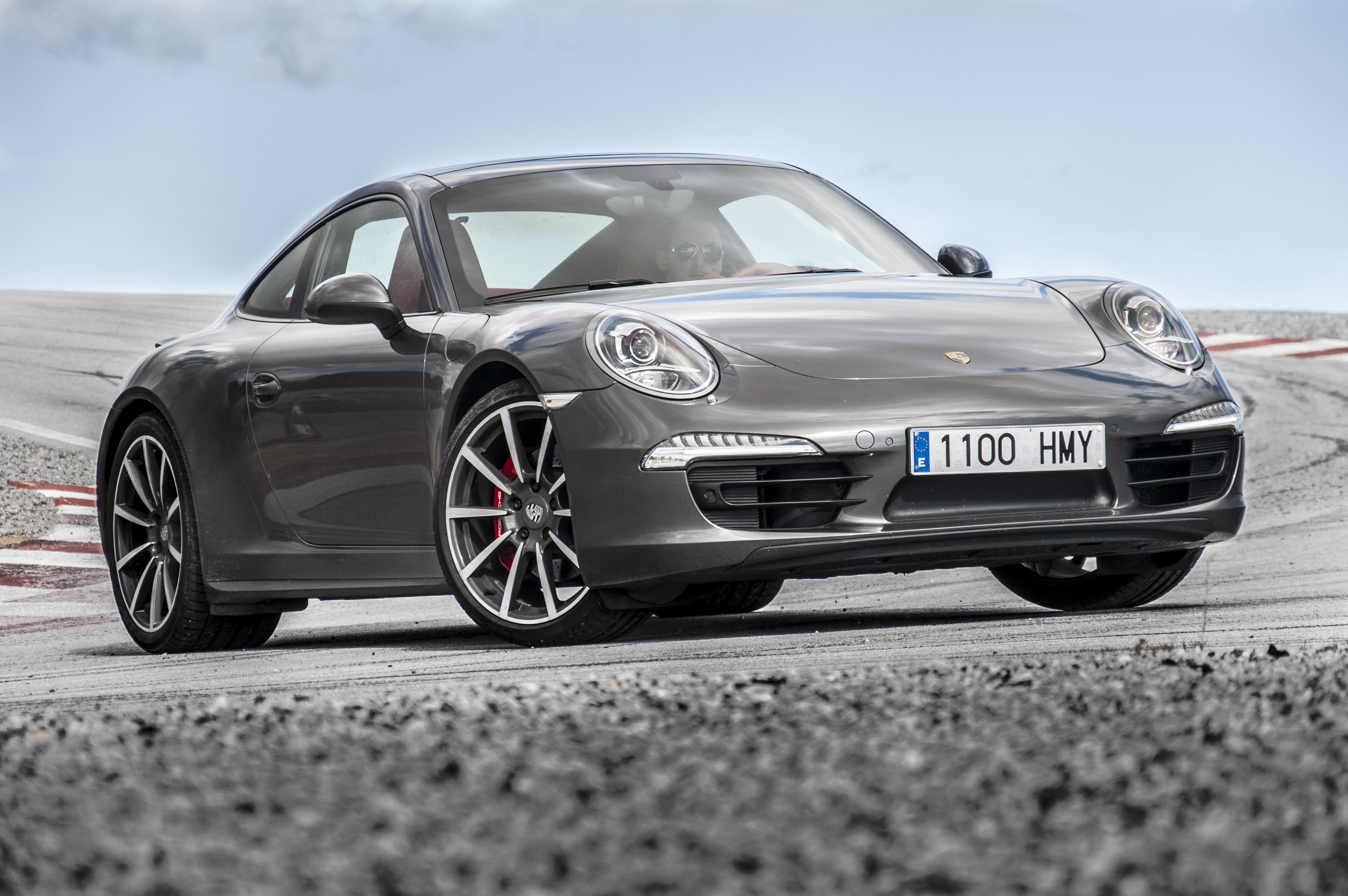
I don't hate it, but to me, it just looks like they took a 9-11 and stretched it out,
which is kind of a perversion of a beautiful thing.
So that's my quibble.
I would say, does it look better than a Tesla Model S?
Of course.
That's probably one of the least good-looking cars I've ever seen.
Wow.
I just agree with you on that, too.
Well, I'm not surprised.
I think the Model S is beautiful.
Oh, God.
It's elegant.
It's a beautiful toaster.
It's an appliance that was made by AI to be very efficient.
It's a device, not a machine.
Exactly.
There is no way that the Tesla Model S, or even the Taycan, would have come out of France or
Italy.
Let me put it this way.
The two centers of beauty in the world, the two countries most responsible for beauty in the
world, would never have created these cars.
Well, if it is a 9-11 stretched out, I don't have a problem with that,
because I love the 9-11.
I feel like it is.
I don't see that.
I don't think they stretched it out far enough, because one of the main problems I have with
this car is that the B-pillar is completely in the way of getting in and out of it.
I don't know why I have to slink around the B-pillar to get in.
And the car, by the way.
I want to see you slinking.
As soon as you approach it or open the door, it jumps up on its air suspension,
which is a really cool trick.
Yeah, I do admit that I like the gimmick.
But then the B-pillar is substantially in the way.
I think it's beautiful.
I think it looks just futuristic enough while still maintaining elegant lines and a classic look.
It's not too much.
It's not over-designed.
And then driving it is...
So, driving it's amazing, right?
It's so quick.
Nobody quibbles with it.
It's so easy to place it where you want it.
And for commuting, especially in New York,
it's so perfect because you need to jet in and out of these spots.
When a spot opens up and a lane next to you, you need to get in and then get out.
This is totally true.
I had, today, my record fastest commute from Scarsdale to Bloomberg.
I made it in 27 minutes, door to door.
At what time of day?
It was 537 when I left.
So it wasn't in the New York traffic that's not terribly early.
Sure.
Because it's already after the congestion charge started.
Yeah, so I love driving it as well.
My biggest problem with it is I'm sitting there and feeling very much like I'm in a Porsche.
A Porsche?
And then thinking, well, I could be in a 911, though.
Yes, for sure.
I could be hearing that flat six whale.
Yes.
And I will say, I don't think Porsche would have produced a vehicle that wasn't incredible to drive.
They just won't let it out of the factory.
And I do give them a lot of props for that.
And I remember this car debuted in 2019, which is 100 years ago in car years,
and was at Niagara Falls.
And then everyone agreed, drove amazing.
Um, very expensive.
I think the first models were maybe $185,000 for the Turbo S, $150 for the turbo, just the turbo.
That's very expensive.
And since then, the values have really dropped.
My problems with this car are not driving related is what I'm trying to say.
There are other problems with it.
Like, very chronicled and reported on recalls and reliability issues, to be honest.
Well, this thing feels solid as.
And failing aftermarket values too, which you can get one for pretty cheap on the aftermarket.
You know what?
That's interesting.
So it had me instantly thinking about and scouring the classified ads for a cheaper one,
because it is an amazing way to commute.
And if you're weaving in what is essentially bumper to bumper traffic,
there's nothing better than an electric propulsion, right?
Because you have instant torque.
But the thing is, the whole time I'm driving it, I'm thinking about Porsche,
because I'm in a Porsche.
And then I'm thinking about 911.
And obviously, that's better, you know?
Yes.
And also, why have we not talked about the Panamera?
The other thing with the Taycan is it kind of cannibalized the Panamera and made that disappear
from consciousness.
But the Panamera still at this point exists.
Yeah, but I'd rather have, I think I would rather have a Taycan than a Panamera.
Right.
And for me, I'd rather have a Taycan than a Boxster.
As well.
Because of my own personal issues with the lack of...
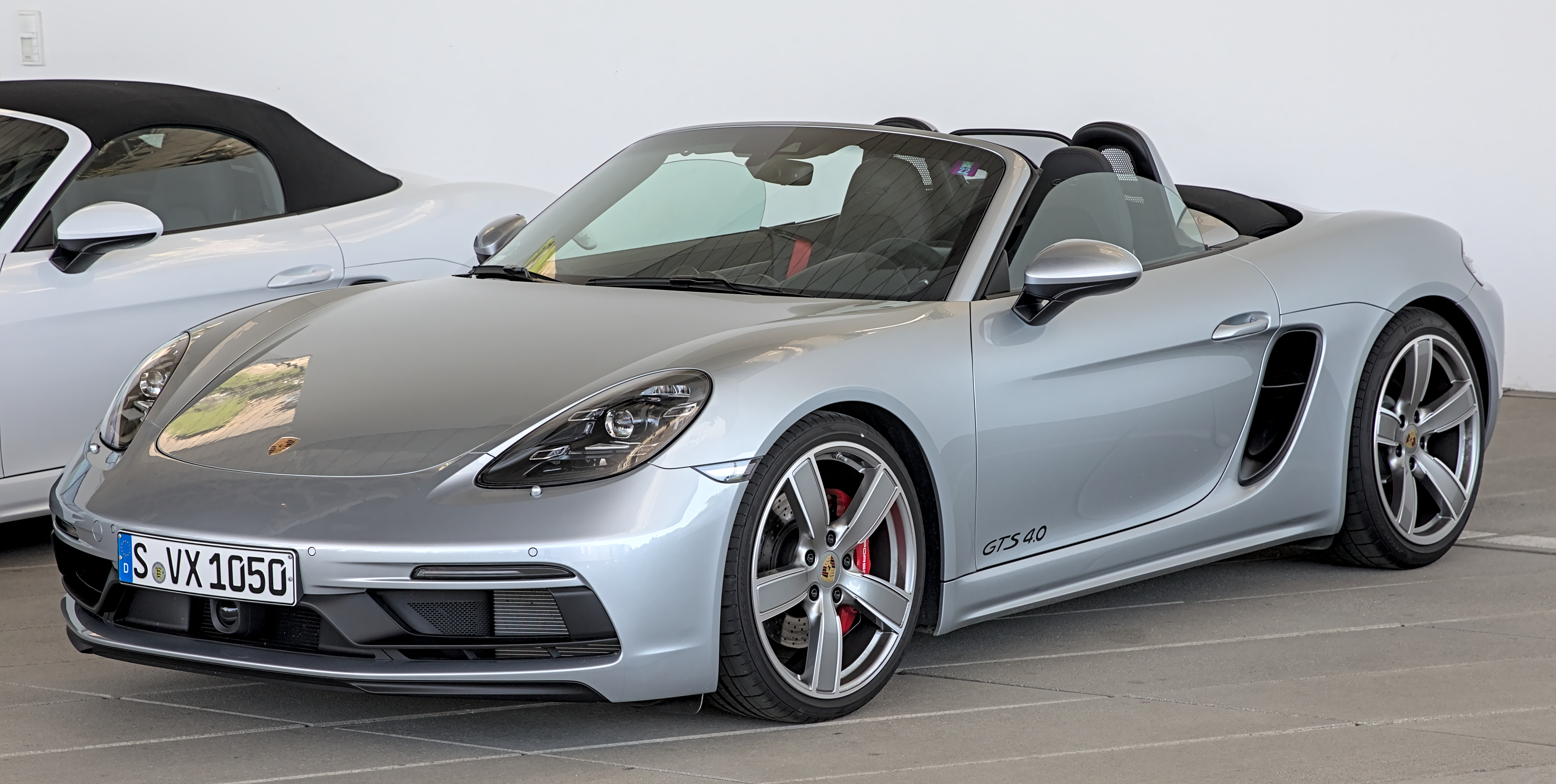
Like a 718.
Yeah, it just doesn't seem to have enough power to me.
It's more of a momentum car, as people say, right?
And I don't, I want, you know, the brute force.
Yes.
I just keep going back to the fact that I've talked to so many people who agree with us
and say the performance is incredible and they agree with you when they say they like how it looks,
but that they've had legitimate and recurring reliability issues on these cars.
And let's be honest, the whole electrification of Porsche has been a big challenge
and has caused the company a lot of failure financially and business-wise.
I mean, my thoughts when driving this are the same as when I drive any electric car that I really like,
especially if I really like the aesthetics and the interior, which are important to me.
My first thought is, could I keep this car forever?
Right?
Like I'm going to keep my Dodge Challenger forever because it meets every need that I have for that kind of tool.
And it's never going to be obsolete.
Like even if they come out with a 426 motor, I can still stroke and bore mine out to that.
So whenever I drive an electric car, I'm always thinking if I keep this forever
and battery technology improves by leaps and bounds, will I be able to swap out the battery?
And the answer inevitably for almost all electric cars is no.
You're always going to be stuck with, it's not like an ICE car where you can swap out a motor,
you're always going to be stuck with the battery that you have because it's part of the skateboard
or the way it's built into the car, it just can't be switched.
And that's, I think, a failing of electric cars.
Yeah, I agree.
We often talk about Chris Bryant in his columns and he wrote a column last year that
the headline with second-hand EVs are starting to look like a bargain,
which is kind of what you're alluding to, I think.
Yeah, for sure. No, we've talked about that before.
And we have talked about it.
Again, for me, I'm a little bit gun shy because I'm too used to how my phone battery has degraded
over the years and I still feel like that will happen to my car battery.
So even if you swap out the whole battery, which to me seems like it's an expensive proposition
to begin with, I just don't know if there's enough left for me to want in a used car.
Let's leave it with the famous quote that was attributed to Walter Rural.
The great driver.
The great rally driver whose name is so difficult for Americans to pronounce.
Now, I'm not sure if this is true, but back in 2019, when this came out,
he apparently had worked on this car and he said he'd never experienced
such immediate and impressive performance, even in his fastest rally cars.
He said the quietness of the Taycan was truly a unique experience.
And he said the weight steering and brakes all made it feel distinctly like a Porsche.
And yet he would never buy one.
Yeah, that's what a legend.
What a legend.
Oh, I've got a Taycan joke, actually.
The Germans wanted to name it something else, but all the good names were Taycan.
I think that my five-year-old would appreciate that joke.
All right, so coming up, General Motors shelved its RoboTaxi unit less than a year ago,
but now the company is ready to get back into the self-driving market,
and they're hoping to continue knocking it out of the park with their high-priced,
high-margin trucks and SUVs.
More on that after this break.
Support for the show comes from Public.
On Public, you can build a multi-asset portfolio of stocks, bonds, options, crypto,
and now generated assets, which allow you to turn any idea into an investable index with AI.
It all starts with your prompt.
From renewable energy companies with high-free cash flow
to semiconductor suppliers growing revenue over 20% year-over-year,
you can literally type any prompt and put the AI to work.
It screens thousands of stocks, builds a one-of-a-kind index,
and lets you back test it against the S&P 500.
Then you can invest in a few clicks.
Generated assets are completely customizable and based on your thesis, not someone else's.
Go to public.com slash market and earn an uncapped 1% bonus when you transfer your portfolio.
That's public.com slash market.
Paid for by Public Investing.
Brokered services by Open to the Public Investing Inc.
Member FINRA and SIPC.
Advisory services by Public Advisors LLC.
SEC Registered Advisor.
Generated assets is an interactive analysis tool.
Output is for informational purposes only and is not an investment recommendation or advice.
Complete disclosures available at public.com slash disclosures.
This is Hot Pursuit.
I'm Matt Miller along with Hannah Elliott.
General Motors held a big press conference touting
new targets as it continues to sell high-margin, high-priced trucks and said it's going to get
back to self-driving vehicles with a 2028 Escalade IQ.
All right, we are lucky enough to have our Detroit bureau chief in the house.
David Welch joins us.
I guess, David, you're in town for this General Motors presentation.
I saw you there yesterday with Mary Barra as the CEO as well as President Mark Royce and then
a couple of like their super tech execs, Sterling Anderson and Dave Richardson.
General Motors has the stock went on a tear this week and it's because what?
They raised their forecast in terms of the ultra high-end luxury trucks they're selling.
Is that right?
So, well, they raised their earnings forecast period based on truck sales doing well.
I mean, GMC, which is all expensive pickup trucks and SUVs, on pace for record year.
And also, they gave a lot of clarity on a couple of things investors were worried about.
One is tariffs, so they're managing those costs.
And the other one is, clearly, they've got enough investment in electric vehicles.
They don't need to put any more into that.
And investors have always been uncertain on how much money that stuff is really going to make
in the next few years.
So, if you're looking at a stock like GM and you're worried about where their earnings are
going to go, you know the truck business prints money.
And if that goes into an EV business that loses money, it's not a great investment.
And so, look, based on where the market is, based on Trump's policies,
they got a dozen EVs on the market.
They got a couple of battery plants, a third one planned.
They don't need to put any more money into that.
And investors are kind of like, great.
So, you're just going to print money on pickup trucks and SUVs going forward.
And we like that.
So, the stock went on a tear, because all of that uncertainty was basically cleared off the decks.
David, tell us about how much the self-driving announcement had to do with people feeling
good about GM, or did it, I mean, how related were those two things?
I saw, I read your piece, you know, GM announced that they're getting back into self-driving cars.
How interrelated are those topics?
There's some connection there.
I think when, so go back to when GM had cruise, which is a fully self-driving vehicle,
and a robotexie business like Waymo is running now.
We've been talking a lot about Waymo.
Yeah, look, Waymo is doing some interesting stuff, but GM investors hated it.
Every time GM put money into cruise, or I should say conversely, if GM laid people off
with cruise or cut back, shares went up.
So, by the time GM killed cruise off, and the stock had gone up, significant percentage
because of that, and because earnings did better, because it wasn't a drag of recorder.
What that essentially meant was that investors assigned a negative value to cruise.
They didn't want to see money going into that, because they think it's going to take forever.
Now, if you're Google and you have all kinds of cash and much better cash flow,
it's not inconsequential.
It's not cheap to fund Waymo, but for a company the size of alphabet ink,
it's like money in the couch cushions.
It's pocket change.
But for GM, it was real money.
With what they announced yesterday, it says GM is getting back into self-driving vehicles by
continually developing the super cruise business they have now, which already makes money.
And it doesn't require a lot of investment to keep doing that.
It's, yeah, you're investing in the people, you're hiring people with software, but
the investment goes up and down the elevator every day, or in the front door,
as opposed to building more plants and scaling up in cities to run a robot taxi business.
Also, frankly, I think it's unclear to a lot of investors how robot taxi businesses
are going to make money, because the fleets are very expensive to maintain.
But GM's not doing that.
They're selling a service that already has very nice margins.
And GM gave some clarity on that, 70% margins, to people who are already buying their cars.
So if you look at that, a number of people driving GM vehicles that could end up with
super cruise or this advanced version of what they're doing in 2028, and maybe they
licensed it to another company, they're partnered with Hyundai in a lot of ways,
you know, I think that's all good.
Now, how much investors choose to believe that GM's going to hit a home run with that?
That's the open question, because the car companies are never going to doing business
to consumer kind of stuff.
They're good at manufacturing stuff and handing it off to a dealer who faces off with the customer.
But, hey, it's sort of all icing on the cake.
It's all potential upside here for GM, as opposed to spending billions to develop a
big robot taxi business like they were doing.
We should clarify.
So the self-driving, I know a lot of people like to pick nits when you talk about autonomous driving.
The idea is now, with super cruise, you can have hands-off driving.
And eyes-off.
I thought eyes-off is what they're coming out with in 2028.
Yeah, yeah, that's what I mean.
Yeah, okay, so now the deal is for people who don't drive GM vehicles or haven't tried this,
because it's also an expensive option.
That's why the margins are high, right?
If you get it on a luxury GM, you know, GMC, Xavier Cadillac V4 Hummer, exactly,
you can, it completely takes over for you.
And David, they said that they'd done 700,000 million miles.
So 700 billion miles of hands-off driving with super cruise,
without an accident that's attributed to the system.
Have you used the system?
What do you think about it?
I've used super cruise.
I haven't used, obviously, the new one they're going to put out.
No, I mean the current.
Yeah, I've used the current when in the Hummer.
And it is really good.
You're on the highway, you signal that you want to change lanes,
it'll change lanes for you, it'll pass cars.
It is very good, it's hands-free.
I'm not a big fan of these hands-free systems, because eventually,
you have to get your hands back on the wheel, right?
Like, you can't do that, like, interminably.
Can you take your hands all the way off the wheel,
or do you have to, like, rest your fingers on the wheel?
You can take it all the way off the wheel,
but you have to put it back on after a certain amount of time.
It's also critical, you said, on the highway,
because these don't work on surface streets.
That's right.
At the moment, the only highway driving.
So you have this hands-free system,
but you do have to keep your eyes engaged,
and if you take your eyes off the road with super cruise currently,
it will warn you to put them back on,
and then if you don't, it'll slow the vehicle down and stop it.
Have you used it, Hannah?
I have, both in the Hummer and in the Escalade.
It's a little bit terrifying.
I agree with David.
It's, to me, it's like, you still have to be engaged driving.
You can't just fall asleep and take a nap.
You still, like David said,
you still have to be paying attention
and looking at the road,
even if your hands aren't on the steering wheel.
So it allows for a little bit more of a relaxed state, but...
I mean, it's like an advanced cruise control.
Exactly.
That's what it feels like.
And also, it's not great about exiting.
It will exit, but you kind of have to,
you have to pay paying attention,
is what I would say.
You still have to be engaged.
It's not like taking nap.
Yeah, so, Matt, I don't know if you noticed this yesterday,
if you crawled around that Escalade IQ,
that's the electric Cadillac Escalade,
but they had a video screen
that was showing episodes of white lotus.
Yes.
With the implication being that you can really kind of zone out here
and watch a movie or TV.
This is for the 2028 version.
Yeah, yeah, that's right.
That would be an update.
Yeah, so presumably you can go to sleep.
Now, what you can't do, crucially,
you can't sit in the back seat,
which you can with the RoboTaxi systems.
You have to be in the front seat.
Reason being is, well, look, what Waymo does,
what Zooks does, now that's the other RoboTaxi company,
and main mobility for that matter,
is they are tightly geofenced.
They can only pick people up and offer
rides to fares in certain areas.
That's sort of similar with current supercruise
and the future addition.
It's on the highway, and then once you get off
the highway onto surface streets,
which is probably why Hannah was having a tough time
with the off-ramp, you have to reengage.
Now, Sterling Anderson told me that eventually
they want to get to the point where they're doing this
on surface streets in urban areas as well,
and they want to add more models beyond the Escalade IQ.
So look, Sterling Anderson's had a product development
at General Motors.
His background is obviously he came from Aurora Innovation,
which is AV trucking right now,
but before that he worked on autopilot for Tesla,
and he did his PhD paper in mechanical engineering
on autonomous technology.
So what he told me, the quote I had in my story was,
I'm going to paraphrase, but he said basically,
I'd be a curious choice to be CEO
if the company didn't believe in autonomy.
So they're really going to push this thing.
And honestly, if you look at what else is out there
on the market, Tesla's full self-driving is not
a totally hands-free system.
You must put your hands back on the wheel at a certain point.
Mercedes and BMW have some nice systems,
but Hannah, you've probably driven those more than I have,
but don't they top out around 40 miles per hour?
Yes. Mercedes has a level three system
that is not legal in all states that similarly,
it will do some highway and some street driving.
But everybody's got some limited version of this.
And it's not legal everywhere.
That's the other thing, you know.
They'll have to deal with the regulations around it.
I'm curious, David, you seem to,
this quote from Sterling Anderson, which you pointed out,
does indicate that this is a real commitment.
This isn't just GM sort of trying to stay relevant
and act like they are going to be moving in the future,
but they're leaving themselves and out
in case they don't want to pursue this.
Is that your sense that this is a real, this is real?
Yeah, it is.
And I think hiring Sterling says that because,
and look also, this is a story I broke a while back.
One of his first meetings with the new staff,
the software people at GM,
is he said that he was hiring people,
some of the former cruise people back,
and he also brought in people from elsewhere.
And he confirmed all of that from yesterday, too.
They've hired autonomous talent from other places as well.
So yeah, they're really pushing this.
And look, to me, this was a surprise,
because when cruise was shut down,
GM said, yeah, we're going to develop
a personally owned autonomous vehicle.
But this is a company whose shareholders
were awarded it for getting out of autonomy,
whose general counsel's office and lobbyist went through,
I'd say, some very, very tough months after the car dragged
somebody in the California and federal regulators,
leaned all over them.
This was a nightmare for them.
And I just thought, knowing how GM responds
to shareholders and regulators,
which is to say, very accommodatingly,
we're never going to see this car from GM.
So now Sterling comes back and we're going to see,
it's not the autonomous robotaxi,
but it really is moving pretty far along the spectrum
from hands off driving or level two
toward actual level four autonomy.
Wait, can I just ask about general motors
seems to have done very well in certain areas?
For example, the EVs have massive range.
I remember the first time I drove an Audi EV,
the e-tron, I don't know, six, seven years ago,
and I was impressed, but I couldn't get a lot of range.
This week, as Hannah and I were talking about,
I'm in a Porsche Taycan, which is amazing,
but it's 200 miles or so of real range,
maybe less if you're really gunning it.
Whereas GM has managed 400 plus miles
on these big, giant trucks.
They've also had, I think, a technological advantage
in that their infotainment systems,
now a lot of times are dropping Apple CarPlay,
but you don't need it because they're so useful
and effective as they are.
And they had this broad product offering,
if you want an EV from them,
and I know it's not currently on Vogue,
but you can get everything from an Equinox or a Bolt,
lower prices through to the higher end trucks
and the massively expensive Cadillacs.
So why does GM seem to be doing so well compared to others
with these higher tech projects?
And am I reading that wrong, David?
No, I think you're reading it pretty well.
Funny debate I had a few years ago on another automotive TV show
where the host said, he was making fun of Cadillac
because Cadillacs had its troubles over the years.
He said, GM basically said GM sucks at luxury.
And I said, that's not really true.
I said, Cadillac has sucked at bringing in luxury buyers.
I said, but if you look at GMC,
they sell 400 to 600,000 vehicles a year.
And I think about half of them are the Denali brand,
which is, these are basically Cadillacs
with kind of more trucky trims inside,
but they're luxury vehicles and they're really expensive.
So GM brings in a lot of very well-heeled consumers.
Cadillacs gotten better through the EVs,
but between some very expensive Chevy pickups, Corvettes,
now some Hummers and the GMC line,
they have customers pay a lot of money for their vehicles
and they like technology, most luxury buyers do.
So I think GM in a way that Jeep has been unable to do
is identify that there are people who like big vehicles,
obviously, and they like them to be luxurious,
but they don't necessarily want the conspicuous consumption
of an ostentatious brand.
I was just going to say, sorry.
Yeah, go ahead.
I'm just going to say that it's a very interesting juxtaposition
and I was in Texas last week driving around.
The juxtaposition between how much money something costs
and whether or not it's considered a luxury item.
And this goes back to the six-figure trucks,
which somehow are not considered flashy and luxury items,
but they're, they cost so much money.
And I used to look at them, they call them cowboy Cadillacs.
There you go.
Perfect example where it is a weird mind trick
that the automakers play where they sort of sneak
in all the luxury things and that price point,
but it's not considered too flashy for the neighborhood.
It's also part of the selling point.
I mean, I remember when I first moved to Bronxville,
which is kind of a she-she suburb of New York,
and noticed that all the moms were driving Yukon Denali's.
That's on the right side of the tracks.
Because they didn't want to be driving
the sort of Kardashian-esque Escalades,
but they wanted all the same rooms and room and functionality.
And so I guess they went with the Denali thinking
it was kind of more under the radar or kind of like,
you know, if you know, you know.
Yes, acceptable.
Yeah.
Yeah, and it's just less of an obnoxious thing.
And but it's big and it's kind of,
if an Escalade is kind of brash in its styling,
and I think it probably, I think it probably is,
you know, GMC Denali, GMC Yukon Denali is,
it would be much more understated,
but you sit inside those things and they are very much
luxed out and they're very expensive.
I've said for a long time, I thought Tesla was a luxury brand.
Now, I think they've given that away by stripping down
and discounting their cars, but for the longest time,
back when they were selling Model Ys and Model 3s for $65,000,
other automotive journalists would get angry at me,
like, it's not luxury.
If you sat inside and I'm like,
look, I know it's very spartan inside,
but if you're, you know, you're paying that much for,
you know, a four passenger small vehicle,
like a Model 3 or Model Y, that's a luxury, good.
If you're paying $65,000.
I was saying, I was probably one of the people
disagreeing with you because I was like,
this is not luxury.
This is an age old discussion to Hannah and I have.
But no, but Hannah's right too,
because it doesn't have luxury appointments
because the interiors are frankly, you know,
very spartan and just not posh at all.
However, I'm with my degrees in economics.
I look at a luxury good from an economist definition,
which is you're paying a hell of a lot more for it.
For something that does the same thing as a $22,000 Chevy Trax.
But it was a different kind of luxury in the sense that
if you look at an eye watch or an iPhone,
you're paying more for those products
than you do for other things.
And the luxury is actually in the functionality
and technology and the HMI,
even though it's a really simple design.
Now these days I wouldn't say Tesla, even a Model S.
I'm not sure I'd call luxury anymore
because they just, they haven't done anything with the interiors.
I mean, like I always thought with Tesla
that the missed opportunity with Cybertruck
was not just that the styling is strange to many people,
but I sort of understand the styling
in a weird sci-fi kind of way.
If the interior was expensive
and matched it in a weird sci-fi kind of way,
I think they would have kind of had a hit with that.
And it would have had a sort of a weird cool factor to it.
But they took a pass like they always do on interiors.
And therefore it's not a luxurious product,
but it's a luxury good if I can kind of split it that way.
That's a good end note.
David, thank you so much for joining us.
We are out of time with you,
but we love having you come on and please come on more.
And we love reading your stories
and you're doing a great job running that bureau in Detroit.
Thank you.
Handle up your stuff.
Mad love being with you on the air all the time,
so let's do it.
Thanks.
Coming up, I've got a new column on old Rolls Royces
and why they may need a little bit of defending
that's coming up right after this.
Support for the show comes from Public.
On Public, you can build a multi-asset portfolio
of stocks, bonds, options, crypto, and now generated assets,
which allow you to turn any idea into an investable index with AI.
It all starts with your prompt.
From renewable energy companies with high free cash flow
to semiconductor suppliers growing revenue
over 20% year over year,
you can literally type any prompt
and put the AI to work.
It screens thousands of stocks, builds a one-of-a-kind index,
and lets you back test it against the S&P 500.
Then you can invest in a few clicks.
Generated assets are completely customizable
and based on your thesis, not someone else's.
Go to public.com slash market
and earn an uncapped 1% bonus when you transfer your portfolio.
That's public.com slash market.
Paid for by Public Investing.
Brokerage services by Open to the Public Investing Inc.
Member FINRA and SIPC.
Advisory services by Public Advisors LLC.
SEC registered advisor.
Generated assets is an interactive analysis tool.
Output is for informational purposes only
and is not an investment recommendation or advice.
Complete disclosures available at public.com slash disclosures.
You're listening to Bloomberg's Hot Pursuit.
I'm Matt Miller along with Hannah Elliott.
Hannah, I want to talk about your latest column.
It's something that we talk about all the time.
A fair amount.
Honestly, this is not going to be anything new
to anyone who's listened to this.
It is new to some people.
It's still an important discussion.
And I think it centers around one of the smartest pieces of advice
that you give to people, which is when you're looking for something
in the market new that's overpriced or that doesn't exist,
why not just look at something in the second hand market?
I mean, we don't all need to buy products that no one else has had before.
That's exactly right.
And we've talked about how the price of new vehicles is kind of astronomical
and we get very desensitized to it in our job and the things that we do to report
because we talk about them all the time.
But really, even the most basic 9-11 is more than $130,000.
Just to even get a 9-11, Ferrari's, if you want to talk Ferrari,
are averaging $457,000 for a new one.
And that's not including the wait time.
And that's not including if you want a special edition version,
which tax on another 40% to 80% of that price.
So new cars are crazy expensive.
I think we both can relate to the feeling that we want to have something
that feels unique, that feels like it reflects our personality,
but it can feel like an arms race and it can be depressing really to find that.
And it's not even just luxury, right?
I think a couple weeks ago, Cox Automotive came out with a figure
that for the first time, the average new car price,
that's the average purchase in America.
Not just luxury cars, of any car.
Is more than $50,000.
Yeah, that's wild.
So, and I always talk about the fact that I'm shopping a suburban.
I really want to get a big suburban for my family.
I have to have the 6.2 liter V8.
Obviously, I'm not going to go with the 5.3 when there's a bigger one out there.
But every time I put one together, it costs $89,000 or $92,000.
And that's for what is considered, at least when I was a kid,
the ultimate family vehicle, right?
Sure, that's not going to give you rock star status.
But I'll tell you something that will, an old Rolls Royce.
I laugh because you have heard me go through it with complaining about,
you know, a breakdown every now and then.
This is true, but I have to say the upside of owning something vintage
so far outweighs any minor discomfort or setback.
I mean, but does it outweigh like the repair bills?
Because this is what I always wonder.
You see Rolls Royces on VAT or, you know, maybe Craigslist.
I always look for these Bentley Turbo R's.
I love them.
Yes, that is so you.
They apparently are great to drive as well.
I never have, but I listen to Matt Farah talk about the one he bought.
Only a matter of time.
And you can get, they can be had for, you know, $25, $35, $40,000
in what looks like pretty good shape.
But then I fear taking, taking it to Charlie Agapoo
and paying like $10,000 repair bills.
I know.
And look, the truth is sometimes the cost of the repair and maintenance
may exceed the price and value of the car.
That is true.
And that is because to your point, a Rolls Royce Silver Shadow is a 20 grand car.
Now, over the years, in the used market, yes, from 1970s, call it.
I have not spent 20 grand on repairs and maintenance for that car,
and I don't anticipate that I will.
I've spent a couple grand here and there to do electrical work
and to replace cracked hoses and that sort of thing, but nothing major knock on wood.
But yeah, the cars are pretty inexpensive, which means that yes,
the repairs in proportion to the cost of the car are high.
But again, it's still less than buying an 80 grand suburban.
And the amount of joy and pleasure and delight that I get from the car far outweighs
the cost.
And as that famous saying goes, the quality will remain long after the price is forgotten.
And that is true.
Well, and you can also probably easily fit two rear facing car seats in the back.
For sure.
And a lot of stuff in the boot.
So I guess, you know, it would make sense.
I think part of it depends on the generation that you buy.
So I'm always looking at the SZ series, which is the 80s.
And 90s Rolls Royces and Bentley's that had a lot more, I guess,
high tech things going on in the motor that need, I don't know if it's always engine out,
but expensive repairs.
So in the silver shadow that you're interested in is the SY series.
That was the previous, so 1965 to 1980.
And just seems like maybe they come with a lower bill.
Probably.
I think that's true.
And I want you to have a Bentley from the 90s.
Like this feels very you, I want this for you.
And to that end, I have looked at prices and you're right, it's all just more expensive.
Like the closer to modern day you get, it all gets more and more expensive,
which is a little bit out of my price point, which is why mine are in the 70s.
Although I do have one from the mid 80s, a spur that is actually the one that's
running the best right now.
So that's the one I drive to work.
Again, I don't think it's for everyone.
Like everyone can find their sweet spot, but I really recommend old cars.
All right.
Well, that does it for this week's show.
Remember to follow and subscribe to Hot Pursuit on Apple Spotify.
And anywhere else you listen to podcasts, you'll have to search Bloomberg Hot Pursuit.
You can also send us your comments.
Email us at hotpursuit at bloomberg.net.
And you can check out my columns and stories on bloomberg.com and the Bloomberg Business app.
You can go there for car reviews, events and stories that you won't find anywhere else.
Find it all at bloomberg.com slash pursuits slash autos.
I'm Hannah Elliott.
And I'm Matt Miller.
We'll be back with a fresh episode in your podcast feed next week.
This podcast is brought to you by FedEx, the new power move.
Hey, you know those people in your office who are always pulling old school corporate power moves?
Like the guy who weaponizes eye contact.
He's confident.
He's engaged.
He's often creepy.
It's an old school power move.
But this alpha dog laser gaze won't keep your supply chain moving across borders.
The real power move?
Having a smart platform that keeps up with the changing trade landscape.
That's why smart businesses partner with FedEx and use the power of digital intelligence
to navigate around supply chain issues before they happen.
Set your sights on something that will actually improve your business.
FedEx, the new power move.
About this episode
A deep dive into the Porsche Taycan EV reveals mixed feelings about its performance and aesthetics, with hosts discussing its impressive speed and design while pondering its practicality compared to traditional Porsches. The episode also covers General Motors' renewed focus on self-driving technology, highlighting their plans for the Escalade IQ and the profitability of their truck and SUV lineup. Additionally, a discussion on the value of used Rolls-Royce cars emphasizes the charm of vintage vehicles amidst rising new car prices, advocating for the joy of owning classic models over modern luxury.
Bloomberg Detroit Bureau Chief David Welch joins the show to talk about General Motors, which is getting back into self-driving. Plus Matt drives the Porsche Taycan EV and Hannah once again defends her classic Rolls-Royce obsession.