An expert who knows almost everything about Ferrari cars. He helps wealthy collectors find and buy rare models, and he owns an impressive collection of his own.
A type of gearbox that lets the driver change gears using paddles behind the steering wheel instead of a gear stick and clutch pedal. It was high-tech in the 1990s but can feel jerky compared to modern automatic transmissions.
Widely considered one of the greatest supercars ever built. It has a twin-turbo engine, no driver aids like traction control, and was designed to be a raw, street-legal race car.
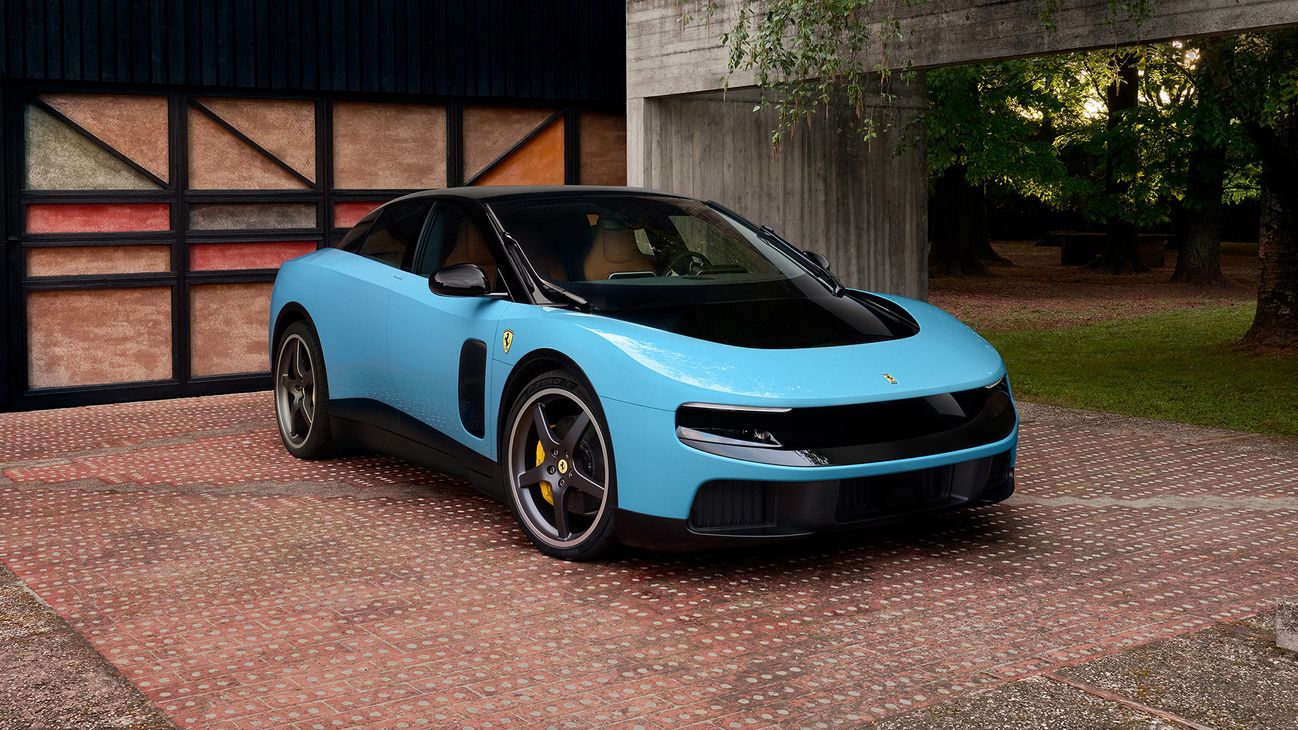
The Luce is an upcoming, high-end electric car concept from Ferrari, designed to run entirely on battery power while maintaining the speed and luxury the brand is known for.
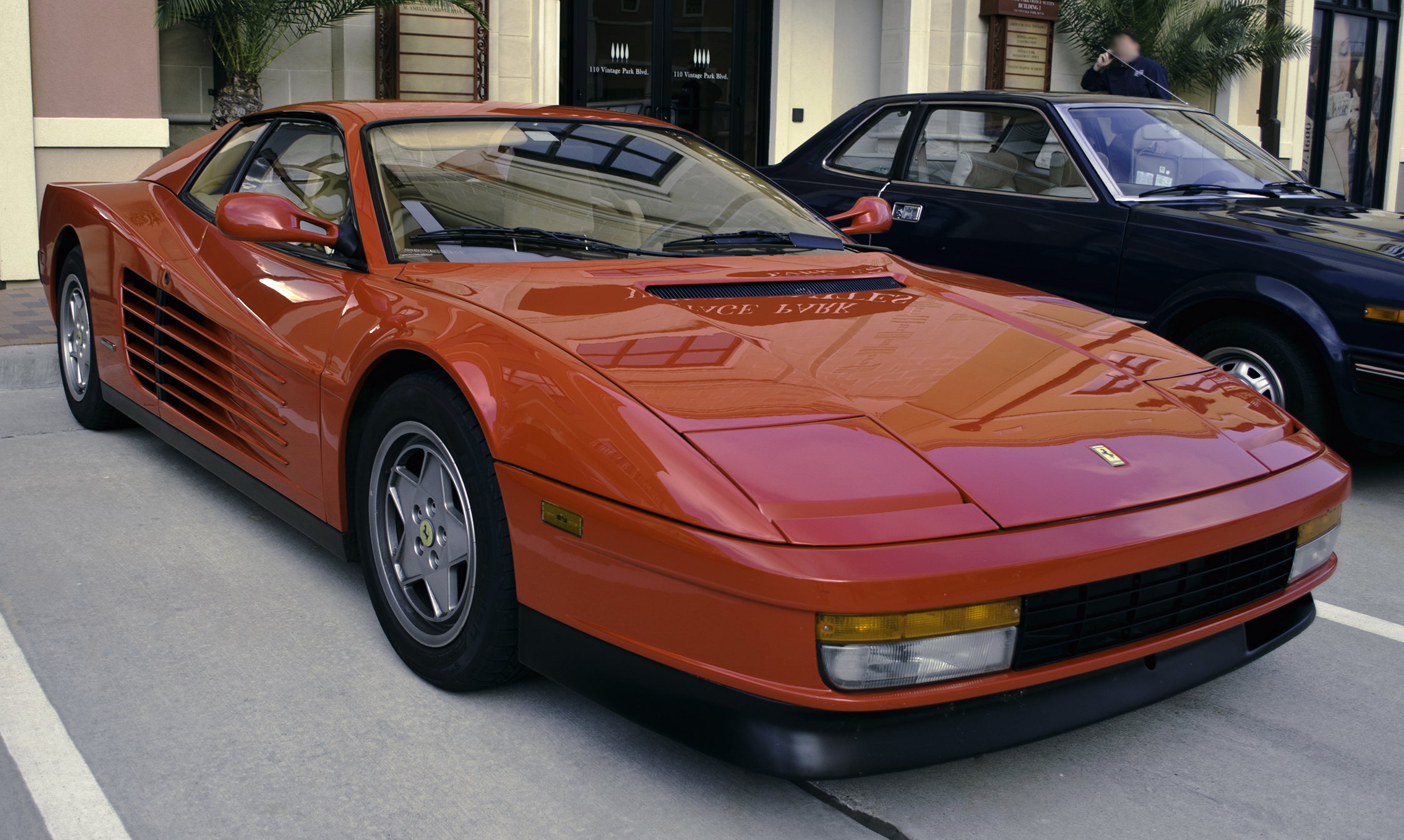
An incredibly rare, twin-turbocharged Ferrari from the 1980s that was built so the company could qualify for a racing series that was ultimately canceled.
The F50 is a very rare, high-performance Italian sports car built in the 1990s. It was designed to bring the technology and sound of a Formula One race car to public roads.
The 959 is a rare, high-tech Porsche sports car from the 1980s. It was built to showcase the absolute limit of what technology could do at the time, featuring an advanced four-wheel-drive system and twin turbochargers.
The Countach is a classic Italian sports car famous for its extremely flat, angular shape and doors that open upward instead of outward. It was one of the most famous poster cars of the 1980s.
The 335 is a sporty, mid-sized luxury sedan or coupe made by BMW. It is popular because it looks like a normal luxury car but has a powerful turbocharged engine that makes it very fast.
The 164 is a mid-sized luxury sedan made by the Italian company Alfa Romeo in the late 1980s and 1990s. It was designed to be a stylish and sporty family car.
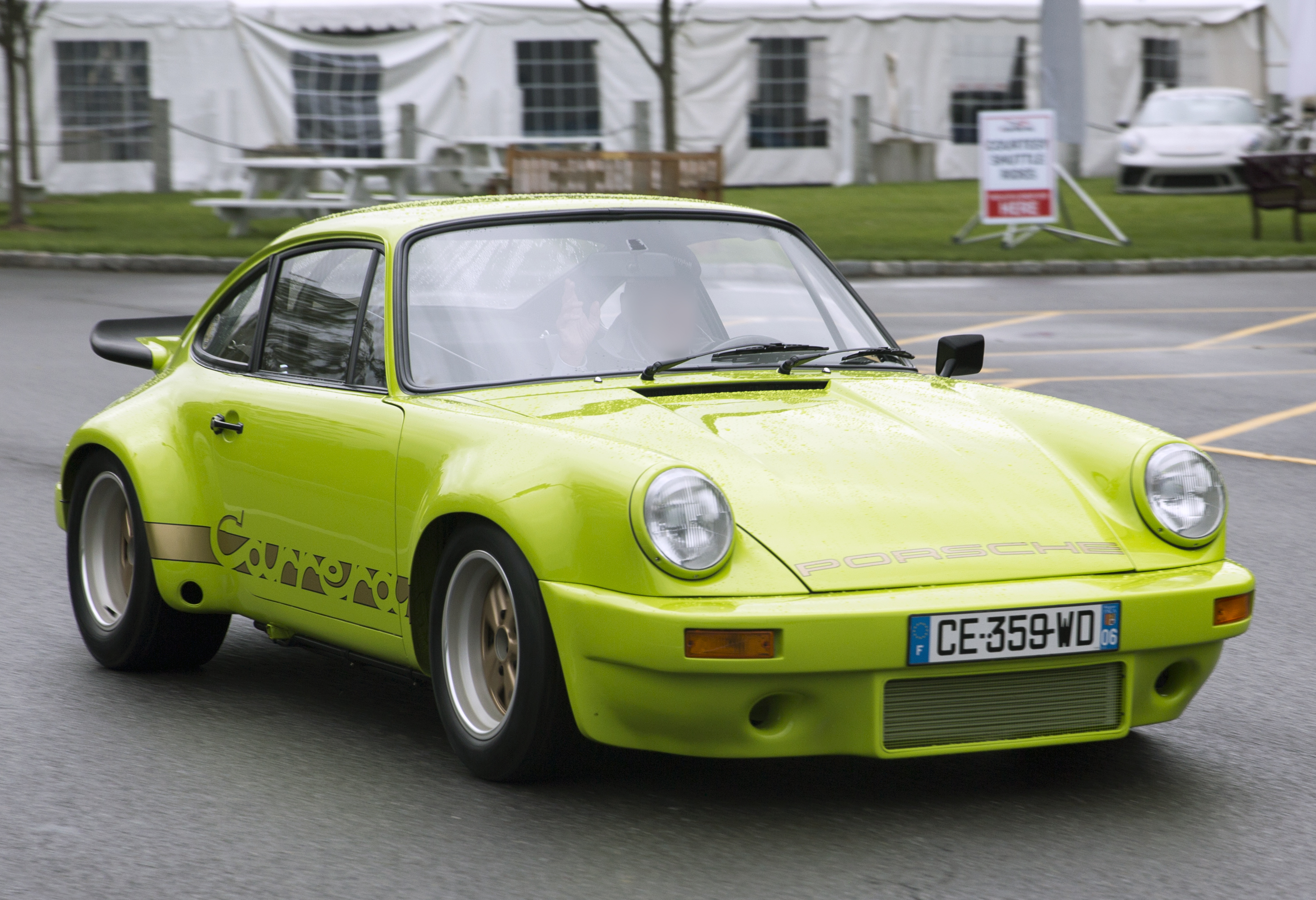
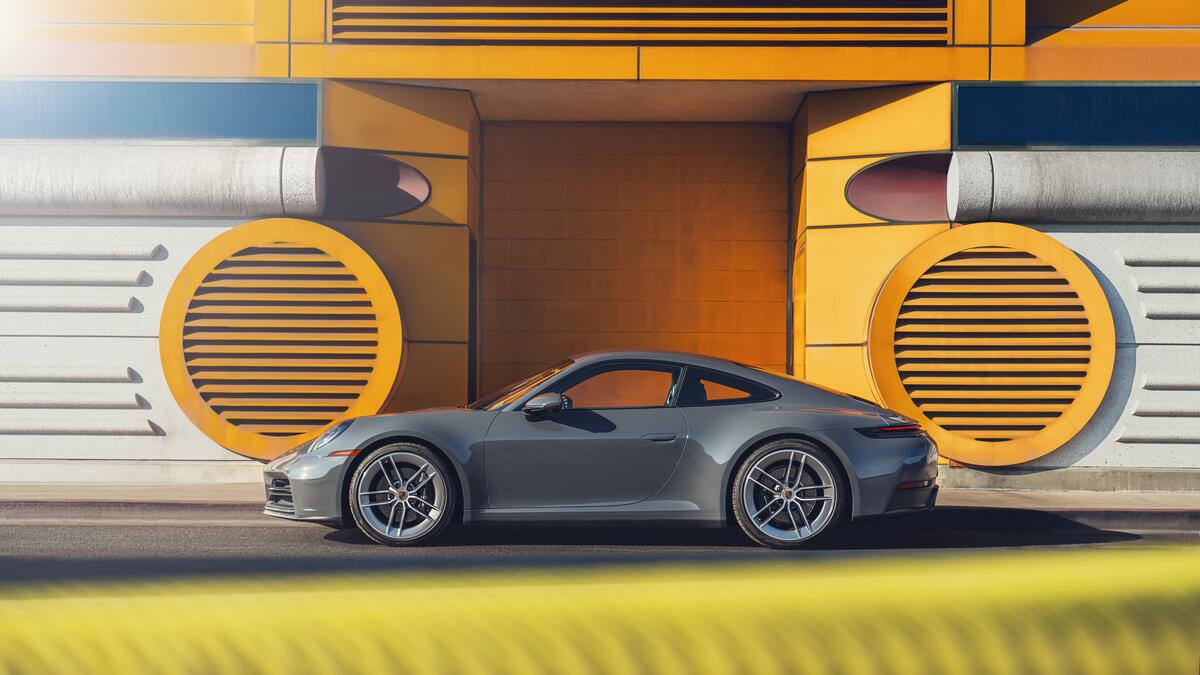
The Porsche 911 is a famous German sports car known for its distinctive rounded shape and for having its engine located in the very back of the vehicle. It is designed to be both incredibly fast on a racetrack and comfortable enough to drive to the grocery store.
The Carrera GT is an extremely rare and expensive high-performance sports car made by Porsche in the mid-2000s. It is famous for its incredibly loud, high-pitched engine sound and for being very difficult to drive because it lacks modern computer driving aids.
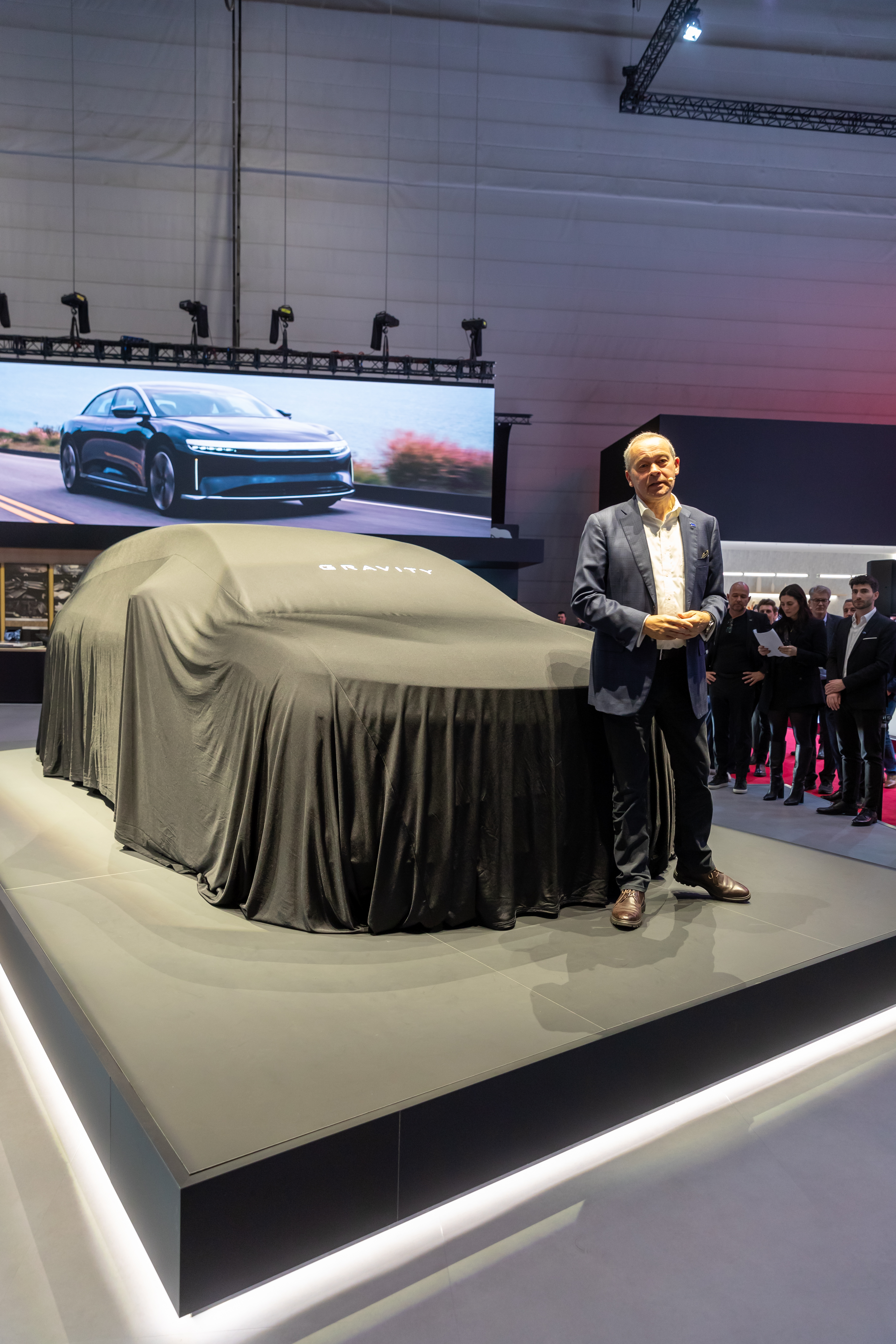
The Gravity is a large, luxury electric SUV made by a company called Lucid. It runs entirely on battery power, has three rows of seats for families, and is designed to travel long distances on a single charge.
The F-150 Lightning is an all-electric pickup truck made by Ford. It looks very similar to a standard gas-powered truck but runs entirely on batteries and has a large storage space under the hood where the engine used to be.
The PT Cruiser is a small, affordable family car from the 2000s designed to look like an old-fashioned vehicle from the 1930s. It has a tall roof and a hatchback design for extra cargo space.
LIVE
And a man as time went on. Oh my gosh, I'm gonna get in so much
trouble. Today on that car show, it's that Ferrari show with our
buddy, the Ferrari whisperer himself, Ryan Sabka. We learn why
Ferrari values just keep going up and up and up. Why Ferrari
owners tend to be a little different than you and me. And
it's not just bank accounts. What Ryan would do if he became
Ferrari CEO tomorrow. Why it might be time to reconsider the F
one transmission cars, at least on cars like the 355. And why
yes, the F 40 isn't just the best Ferrari ever made. It's
quite possibly the best car ever made. It's Ryan Sabka talking
Ferrari, and it's that car show.
Hey, it's that car show. Dan is still away. We miss him and hope
to have him back again very soon. So it's me and Lindsay
tonight. And we are joined by our pal Ryan Sabka back to talk
Ferrari. Ryan was on a few months ago, of course, and it's
actually hard to believe that it's been a few months ago now.
But I guess what we had a phenomenal response to that
episode, despite the fact that it was recorded on my iPhone. And
it was all very last minute. We figured Ryan deserves a proper
episode. So here we are. And I'm guessing many of you listening
know Ryan or at least know of him because he really is one of
the most influential and respected experts in the Ferrari
community. He's a regular part of events like the Colorado Grand,
which is where I first met him. And he helps guide the
acquisitions of many of the participants of the grand and
other similar events. We've since become good friends and
regular breakfast companions. And it's always very cool to see
Ryan's own world class collection of Ferraris, which
includes a mic drop F 40 and several other cars of note. But
the world moves quickly these days. And in the past few months,
since Ryan was first on the Ferrari world has gotten even
crazier. The luce EV was announced. Ferrari values across
the board have skyrocketed, pushing some of what were the
more affordable Ferrari models into unaffordability for many
in Ferrari competitors like Porsche have made clear their
intent to more closely mimic Ferrari's way of doing business
and their result in profitability. So we've got a
ton to talk about tonight. Welcome back to the show. Ryan
Sopka. Thanks for having me. I'm honored to be back. It
honored to hear that our last minute episode in my garage
ended up being such a hit for you. Yeah. Fantastic. I mean,
they say sometimes spontaneous spontaneous stuff works the
best. And that was true for the episode with the two of you.
Yeah, I think so. That was a fun one. And like I alluded to in
the intro, it's only been three or four months. And yet, you
know, the market has continued to just, you know, explode. So how
is it that Ferrari values just keep going up, Ryan?
Well,
I believe when I was on last, I told you that I think my thoughts
on this are a little different than everybody else's. And I
feel it's essentially new money coming in. A lot of wealth was
created. I think a lot of generational wealth also was
transferred. And people have sort of accepted that cars are just
so you know, like as somebody who like, doesn't sell his cars,
like, the reason I have so many Ferraris is because I don't sell
one to buy one. It's like, the hoard just keeps getting bigger.
I think we can all relate to that problem in one way.
Yeah, it's like people are like, Oh, you're a collector. I'm
like, I'm really worried about hoarder. But that's okay. And
so I don't, don't write, I don't pay attention to
the value so much because to me, like, all I care about is the
money that I spend. I'd like to spend as little as possible
because I'm never going to see it again. Right? I'm never going
to sell the car if the car is worth 10 times as much. Okay,
well, my kids problem, most likely. And so tracking values
isn't really so much my thing. But by nature, I'm somewhat
exposed to it. And so what I think is happening is, as I
said, new wealth has been created, general generational
wealth has been transferred, cars are really cool. And some of
these guys like, I have so much money, and I would like to buy
one of these cool cars. And I'll give you a couple examples
why I think that. So I think last time I think one of the
examples I use was like a 288 GTL. Somebody now has just a
ridiculous amount of money. I mean, let's let's say they cash
out with the SpaceX IPO, you know, and do they care that a
288 GTL was $3 million. Not that long ago. And now it's $8
million. They're like, whatever, maybe $8 million. Now, I'm not
going to miss it. I really love this car. And they buy it. And
there's enough people who have that for a very finite number
of cars. And so it's coming in. I also think people are coming
in from other collecting hobbies like art, where it's not
unusual to spend $40 million on a piece of art. Also, and look,
I don't view cars as investments, okay, but but they are assets.
Okay, they are definitely assets. I don't see them as yeah, I
don't I don't view them as investments, at least for me
personally, right? But I think it's important to be smart
because they are assets. And this is not a trivial amount of
money. So my feeling with that is, as these guys come in,
chasing a finite number of objects, you know, and they
have lots more money than there are cars, like that's what
ratchets this up. And then here's the other aspect of it, too. I
do feel and the report card on this will probably come back in
like 10 or 15 years. But I do feel that people are starting to
appreciate certain Ferraris as maybe like the great
impressionist paintings, right? Like there's a lot of great
paintings of that impressionist era. But then there's like
Monet and Renoir and Degas and those are valued much higher
than the others. And I think, you know, there's amazing other
cars, like, you know, Lamborghini's got some awesome
cars and things like that. But I think Ferraris of a certain
era, are going to appreciate a different level because they are
regarded and a little bit of a different aspect, kind of like
those painters are, even there's other amazing painters of that
era. Now, I'll give you the other reason why I think that. So
one of the cars that's near and dear to my heart that I own is
my 512 BBI. I have one of the last basically 100 512 BBI's
it is an amazing car. I looked at many, many of them. I think
mine is without a doubt one of the best ones in the world. And
when I was buying it. So by the way, this is also a good story
of like, if you listen to think that like, I really know what
I'm doing, here's here's a good story. That's the counterpoint
to that I really don't know what I'm doing. When I went to buy
that car, like I really love that flat 12 architecture. And I
was torn is like too strong of a word. But I was deciding
between a 512 BBI and a 512 TR, both black, which is my
favorite color for Ferraris, both Cavalino winners. So they
were both really good cars. Right. And I think the 512 BBI
might cost that time. Like, I can't remember like $100,000
more than the 512 TR. And I remember thinking, you know, they
made 1000 512 BBI's. They've made 10,000 Testarosa's and all
and there's I think 2,500 512 TR's and one of your listeners
will correct me because it's up to my head when they will. But
and I and it's really hard to find a good 512 BBI like it is
almost impossible. And I just remember thinking like, you know
what, I should buy the 512 BBI because that car is going to
appreciate much faster than the 512 TR. And if I still want a
512 TR, there'll be many to choose from. There'll be still
relatively inexpensive. But the boxers gonna like shoot up in
value. Okay, well, here we are six years later. That same black
512 TR is probably worth four times what I could have bought it
for. And while my 512 BBI has gone up in value, it's probably
only gone up like 50%. Yeah, interesting. And and so what that
tells me is that there is an era of Ferrari that these going
back to like who's buying all the stuff is like the forgotten
era. And by the way, it is a sin 512 BBI should be a million
dollar car relative to all these other things. But it's a sin
that that they're, you know, 400,000 for like a pretty good
one and half a million for an exceptional one. That's ridiculous.
But what that tells me is the people who are coming in are new
collectors. And they're going after the cars that really
spoke to them. And that's why you see the cars going up.
F40, F50 Enzo, F12 TDFs going up. I mean, even things like
458s are going up a ridiculous amount. And and then and then
some cars are forgotten Daytona's relatively forgotten 512
BBI is all of all the boxers at 365 512 BBI and the BBI, you
know, and it just kind of like kind of speaks more to that. So
again, maybe in 10 or 15 years, I'll get the report card back on
that theory. But that that's my theory on what might be
happening.
So do you see and I think you kind of touched on this. I know
obviously when Enzo passed away, that impacted the values of the
cars that had been built up to that point. Are you seeing that
kind of inflection point matter as much today?
Well, okay, so just I was like, not even quite a teenager when
that whole thing happened. But of course, I've heard all the
stories, you know, as I, I grew up, and it was
like people paying ridiculous amounts of money for cars
because Enzo passed away, it was like Ferrari was going to be
done. And then there was a huge crash, and the cars were worth,
I mean, very low dollars, relatively speaking to what
people paid for them. And I mean, we're talking about I heard
stories of a dentist buying a warehouse and buying Daytona after
Daytona, and just stacking them in there because he thought he's
making so much money. And I mean, they all went to like 10% of
what he paid for them like overnight, virtually. Um,
he didn't unload them quickly enough.
Yeah, well, I mean, and look, you know, all things are overcome
with endurance, right? So we just wait long enough to be right
again. But, but I don't think we're in something like that.
But sort of the FOMO that I see, and the frenzy does does make
me squint a little bit. But again, don't underestimate the
amount of ultra high net worth individuals there are out there,
and how much money they have. Now, I will tell you this, for my
professional life, though, so you know, my professional life has
nothing to do with cars. But I am an expert in authentication
businesses and collectibles. And I have seen this happen other
collectible circles, where once people sort of figure out the
formula for understanding it, cracking the code, and they, and
they rush in, again, lots of buyers for relatively few items,
the value goes up. And then some people come in because they're
highly passionate about it. There's always a level of people
who are highly passionate, so they will always support the
hobby. So even if all the speculators, people who earn
in for money leave, there's always a base of passionate fans to
support it. But the question is, that passionate fans, are they
here? Because here's what's going to happen with first guys
who are coming in, buying these relatively new cars for quick
flips and quick turns. Once that kind of comes and goes,
they're probably gone from the hobby. And if there's not as
many buyers, I mean, it's supply and demand and price
equilibrium. Once there's not as many buyers, then the prices
will naturally depress, right? But how many passionate people
are there to support those prices with enough money? I think
there's enough people to support this at a pretty decent level.
Now, how high is this going to go? I don't know how low is it
going to go with these people leave? I also don't know. I'm
not particularly good at any of this stuff. But I've seen it in
my in my job. And that's what's going to happen. Again, I think
the true barometer is how many people are true Ferrari fans, how
many people want to have certain Ferraris that are out there.
And this is this is part of that. So do I think we see a massive
crash like Lindsay's your point, like the post Enzo death crash? I
don't think so. But I also don't know how high this is going to
go. And then I also don't know, you know, when the tide goes out
with what this looks like. But I will say that that there are so
many people who are passionate about Ferrari cars and who
appreciate Ferrari cars. And just so you know, all these great
events that we do that we're part of fuel that passion. Okay,
they give people places to sorry, the dog love dogs here too.
Unexpected guests.
That's right. They fuel the passion. And they allow people to
really understand, really understand the cars. And that
will form sort of like the basis for support for prices. And how
high and how low? Who knows.
Anybody guess that's that's what I think. It's not going to be
there's so many people who are true Ferrari fans and passion
about for us and for such an aspirational company, you know,
some people aspire to have a Ferrari one day, a 308, a
Testarosa, a 430, a 458, you know, like, like there will always
be those people.
Yeah. Yeah. Yeah. How are Ferrari people different? And I
know, you know, there are lots of different types of Ferrari
people. But you're typical Ferrari fan. How are they different
from like a Lamborghini person?
Oh, I'm the worst person to ask that.
I have some ideas.
Well, I so listen, when I was growing up, the guy who owned a
Ferrari was this somewhat eccentric, somewhat quirky guy
who knew what oil he used, how much oil was in the car that
time, how to change belts. And he carried tools and you had to
use them. Okay. And not saying he could do all the heavy
lifting, but you could do light stuff and kind of understand
and, and was willing to put up with the inconvenience of a
somewhat sometimes unreliable car in exchange for the joy of
driving something exceptional. And I mean, not to do too much
stereotyping, but they were generally more entrepreneurial
than doctors or lawyers who grabbed who who gravitated more
toward German cars like Porsche. And, and then as time went
on. Oh, my gosh, I'm gonna get in so much trouble.
This is what we got to get some night. I was, was
also a regional director for the Ferrari Club and president for
the chapter for a number of years, both of those span, span a
number of years. And so I saw some of these changes happen in
real time. And it sort of changed from that to people who were
super excited about placing their order for what stitching did
you pick and what options and what special colors and things
like that. And it sort of became it went from being if you want
to call the show of anything, it was like a show of your taste
and your passion to becoming more of a show of wealth. Like I
like to say like four real Gucci handbags. And it's an
accessory. And let me tell you, Ferrari latched on to it and
they went from being a very hardcore sports car manufacturer
making a very few number of cars a year to a luxury good
manufacturer, tapping into the we are a luxury brand and
building the brand as a luxury brand, which is not the same as
being a hardcore sports car manufacturer. And by the way, they
use the sports car heritage to build the brand a luxury, but
they went after a different set of buyers and going public, just
turn the dial to 11 on that. And I'm probably gonna get in a
lot of trouble for that. But that is my opinion.
Yeah, yeah. When you see a car like the luce, like where is
your head?
Speaking of getting in trouble. Yeah, is it did it explode? I
mean, were you?
I process that as someone who's I was not surprised. Okay,
really? Okay, I was not surprised. I won't tell you all the
reasons why I wasn't surprised. But I felt that they were going
to take essentially the Apple electric car project and make it
a Ferrari project. Now, I think the part that I was surprised
at, and I knew it was coming, but yet I was still surprised is
how unfurrari they made it. I mean, honestly, if you stuck,
you were expecting an Apple but you were surprised by you
figured it would be like with a lot of Ferrari flavor. And that
turned out to not be the case.
Yeah, I mean, here's a company that's known for its elegant
design and all this great stuff. And they made this thing. I
mean, look, if it had a Nissan badge on it, nobody would bat
night. Yeah, right? Right? Yeah. Okay. And but no, but for
Ferrari do that. And look, I will tell you this, Ferrari is
certainly going after a different buyer. They're probably
going after the ultra rich person who wants to drive an
electric car. And they want to drive the most expensive electric
car they can buy that makes a statement about their wealth. And
Ryan, you asked me like, how do I feel as a died in the wall?
Yeah, yeah. Ferrari fan. I think the problem is what the
company signals to people like me is you are no longer our
target market. I don't think I trust me, I don't think you're
losing any sleep over not having me. But but it tells me
that and I think it's actually unfortunate because I think the
company and again, this is so far above my pay grade and
expertise. But as somebody who builds brands, especially like
in the collectibles industry, I feel like the company has such
a fantastic ability to make something that fuels so much
passion. It's not for today or tomorrow or even next year. But
for two generations ahead, that could basically I want to say
like provide cash flow, but provide relevance to for such a
long reach. And they are overlooking that in favor of
what they've done. And people will say, Oh, it's because they
part of the way is with pinnifrena and all that. Look,
pinnifrena is amazing. And that could be it. But I don't think
it's a simple one simple answer. But but the message is seems
fairly clear to me. And look, this is just my opinion. I don't
know anything anybody else doesn't know.
I think it's not a coincidence that I think the newest for our
you own is a 575.
575. Okay, yeah. Yeah. Is that kind of where you check out?
It kind of is. But I'll tell you why. I love the Maranello
platform. I just happened to have like one of the last
Maranello was made because it has all the the updates that I
really like the very late furan handling package has things
like a different steering ECU different chalk package. Amazing
things that I really like. But the Maranello campaigned at
Le Mans in both 575 and 550 forms. You had amazing drivers
like Colin McCrae ran a pro drive 550 at Le Mans. That car
performed spectacularly. It has like real racing heritage. And
the reason that that car did so well Le Mans is because the
streetcar was such a great starting platform. By the way,
boxers also ran at Le Mans. And they started with streetcars
and they converted them. And like, I mean, not as fantastic
finishes as the Maranello's. But I think it was more
reliability issues not because of performance. And that stuff is
like so cool. That's the stuff that like speaks to me. And so
that's kind of why I have that. I mean, you kind of go after
that. And it's like, this stuff kind of like drops off from
there, you know,
not a lot of racing heritage in the lucha.
Well, I don't know, you know, if Ferraris had to enter Formula
E, and they build the cars having all the lucha technology,
they might be able to part a little bit in there. But you
know, kind of kind of hard to see.
Yeah, so, you know, with all what's happening with Ferrari and
sort of its current, you know, state and all this, are we going
to revisit cars like, you know, the 355 and the 360? Are those
going to continue to go up? And even the F1 transmission cars?
I mean, are we going to start paying attention to those now
that, you know, we've written all the written all those cars
off, right? F1 transmission, terrible, whatever. But they
could be had for half the price of a of a good gated car, right
for the same model these days.
Well, well, well, that's a that's a different kind of
conversation. And I'll tell you a couple of things. Are those
cars going to continue to go up and use that in 355 and 360?
And I will say this. And I wouldn't watch it one of each of
those. Okay, so so full transparency. I don't want people
to be like, Oh, I'm talking my own book here. Okay, but I don't
sell my cars. So take it for you.
Relative to what other cars are and how much they cost and what
you get cars like the 360 are criminally underpriced, especially
manual cars. Now, the 355 you mentioned 355 F1 versus manual.
Now let's have a very frank discussion about that car in
particular, because I believe that is an exception. If I owned
an F1 355, I would never convert it to a manual car.
Interesting.
Go on.
Never. It is the one. So several things. First of all, that was
the first F1 car. It is a fully mechanical F1 system. There's
no fly by wire throttle. It is a hydraulic hydraulic actuated
clutch. And the paddles are what they are. And it is a very
analog system. You have to rev match just like you would in a
that system was not built in the Ferrari factory. They built
those across the street at the Formula One factory. At least the
first batch and then car to them across the street to the
Ferrari factory to install them in those cars. Like it is really
cool. And here's the other thing. People may criticize it for
its you know, quote unquote performance. But you know, you're
neglecting a couple of things. One is its relevance at the time
like this was like the coolest piece of technology at the
time. It still feels it's not it doesn't isolate you from the
car. You're still very integrated with the driving
experience. You have to as I said, match the revs, you have a
fly by you don't have a fly by our throttle, you have a cable
throttle. It's hydraulically actuated. It's not all these
computers and really taking you out of the process. Now, I
prefer a manual transmission. But again, if I had an F1 355, I
would never convert it. And by the way, this is going back to
supply and demand and price equilibrium. F1 cars are
substantially cheaper than manual cars. And so is it worth it
to you to spend that extra whatever percentage it is to
have that manual experience? Or are you happy saving that
money and really enjoying that F1 experience for what it is? And
I and I believe that probably too many people don't have that
that hard conversation with themselves. Now, once you get to
the 360, F1 is a little different. Now you have a fly by
wires throttle, a few other things. But then when you get to
the 430, the 430 is the first V8 car with it brand new engine
architecture. It so breaks away from the same engine
architecture started with the Dino is a V6 that carried all
the way through the 360. And the 430 was basically built
around that F1 transmission to make the shifts faster. The
inertia from the from the flywheel and the engine really
worked with it. And it's functional. Now manual 430s are
also really, really cool. But it's a little bit different. The
360 I think is the one that's kind of like the odd duck and I
will tell you this, as somebody owns a manual 360. It is one of
the best manual transmissions of any Ferrari, everything is
weighted correctly. It feels exactly right. It suits the car
just right. It really it really goes well with it. I feel like
with the F430, the factory manuals that I've driven, I've
driven a bunch of them. It's almost a little anachronistic
in that you feel like here's this car with all this
technology and and the manual sort of takes away from a little
bit. Now, to be fair, when the 360 came out, all of that
technology in the car was already like 10 years old. When the
430 came out, it was state of the art for its time. Yeah. So you
like kind of leap to have 20 years in technology. Right. And
so it's just something to think about. And again, I'm not like
I'm right. Now the people are wrong. Or I mean, this is just
my opinion. But I think everybody should have a
conversation with themselves when they're looking for remember
last time I said don't buy the wrong Ferrari for you. Yeah, have
that conversation. And by the way, these F1 cars are awesome
cars. Yeah, it is like I think we get to it's like, you know,
like I my friends and I joke it's like, yep, not not that
supermodel her her elbows are too pointy. You know, I mean,
let's let's let's be a little these are all amazing cars and
they are really and it's a privilege to own any one of them.
And the nice thing is is they've been they've been around long
enough that any lack of robustness in the technology has
all been kind of figured out. Like for example, if you have a
355 and the F1 pump is a weak part, well, guess what you can
put a 360 F1 pump in there, which is much more robust. There's
different workarounds for all this stuff, you know, and look,
this is all these are all amazing cars. And I don't think
anybody should rule them out or overlook them, particularly if
you are on a budget of any sort. Yeah. And again, just my
opinion.
Well, let's revisit that conversation if we could about,
you know, making sure you get the right Ferrari for you. What
was the gist of that? It was basically that you think you
know what you want, but there's a car that's probably the better
car for you. Yeah, well, it's like I compared it to 9 11s,
which and by the way, I'm a I have a big fan of air cooled 9
11s. I think that those are really amazing cars. But it's
it's, it's like each time Porsche made a new air cooled 9
11, it was a little bit better than the one before. Right.
Where I feel that Ferrari made different cars to solve
different problems. And I think last and the example I gave
was, you know, the 512 BBI was when it came out, it was largely
pan by journalists. There's like, there's no room for, you
know, luggage and it's kind of twitchy and says, now listen,
512 BBI was the fastest production car in the world at the
time. And that's what Ferrari made it do. And it kicked butt
with that. And then they complained, the cabin was hot
and all that test source comes out. They move the they move the
radiators to the sides and to the back cabin is much cooler. It
by that car could also carry plenty of luggage. But it was
also more of a touring car, because that's what they were
responding to that criticism that you can't take this car on
a weekend. It's, it's, it's a little twitchy,
more challenging to drive it where the Testerosa is like, I
mean, it is, I'm not people say truck like, I would never say
anything like that. But they are a little less drama, right?
And so if you're looking for, hey, I want my V12 Ferrari to be
exciting and drama, like that's probably not the car. They're
cool. They're amazingly cool. I don't take anything away from
it. But they're, they're not as drama filled as some of the
other ones. And by the way, that was by design. So my point is,
if you're looking for that, by the car that delivers that don't
buy the car that delivered the opposite of that. And that's where
people need to educate themselves on which Ferrari is right
for them. And just so you know, I also feel like if people
really did that, you'd see cars that are maybe relatively
underlooked, become more in favor. But again, people have to be
honest with themselves about what it is that they want. And, you
know, the nice thing is, is there's so many great resources
out there, so many great books. And, you know, you can, you can
learn a lot all on your own.
I love that that it's like, do your research, you know, like
really learn what each car delivers and what the experience
would be. But also, yeah, like you said, like be very frank
with yourself, like, what do I want? Do I want something I can
cruise in for the weekend? Do I want something that I'm going to
take to cars and coffee or like a quick zip up the coast in the
morning, and it's got some drama and, you know, make me feel
alive for a brief period? Like what am I looking for? Because
there is one that will give you but you have to do your
research so you know you're choosing the right thing.
That's right. And listen, the drama gets old after a while. So
like, is that really what you want? You know, or do you want
more? You know, like, oh, I like this nice and reliable. So
look, it's, it's just one of those things. Yeah.
So we've talked a bit about we're sort of in this post
performance era, right? We're everything's fast, you know,
led by EVs and all this. And it's just a bit time to revisit
cars like the 308 or the Mondale or I mean, are these cars now
good again, because we're not looking at them to, you know,
beat the guy in the, you know, the Porsche next to you at the
stoplight. I mean, well, here's that. So here's a relevant
story. Recently, I participated in a rally put on by a really
good friend of mine. Rally is not a good term. It's really a
tour. Yeah, he brought together some of his really good friends
from the world of athletics and business and born together for
this really great trip that combined cars and great food and
architecture. And it was really mind blowing. That sounds
amazing. He, he handpicked everybody. And I will just tell
you, front to back, everybody was an amazing driver and a couple
of guys I would say were truly exceptional drivers. That makes
it a lot more fun to. Oh, yeah. And a lot of them had real race
experience, you know, and every, I think for the most part,
almost everybody had real track experience. But the cars were
mixed. It was everything from like a new McLaren. I, they're
all the same to me. So I don't know. But I think the first
one was a seven. Yeah, yeah. Yeah, first over the seven. And
there was I'll name a couple of the cars. They're 959 a couple
career GTs. There were a couple guys with Vipers. One was a
gen two Viper very well modified. He's modified. And then the
other was a Viper ACR, which was the fifth gen. Yeah. Yeah. Yeah.
what undervalued that whole Viper line, right? I mean, you
know, tremendous, you know, values to be had there.
Oh, oh yeah. Yeah. Yeah. And at 40. Great cars front to back.
Well, I drove shout out to my, my best friend, Anand. I drove
1973 Porsche Carrera RS 210 horsepower. I think I may have had
half as much horsepower as next closest car, really, but
realistically a third or more. Sure. And credit credit to my
friend who set up this tour, he picked some of the greatest
driving roads that I've ever been on. And Pete Stout from
triple zero actually led one of the days. Yeah. Yep. He's like,
this is where we test all the cars. And and I will just tell
you that my little 210 bone stock car breaks, breaks were
slightly modified, but other than the brakes, bone stock car.
I was near the front of the group. First four cars, most of
the time. I got waved by a couple much faster cars at a couple
places. We were driving very spirited. And at one point, the
guys and the vipers were behind me and their cars are fast and
they're, they're exceptional drivers. They're really good
drivers. And I got on the radio, like you guys want to pass me
and they're like, we're having so much fun watching this little
50 year old car dance around all the turns and put the pressure
on these much faster cars. And they're like, this is like the
most amazing thing to see. And and it's just, it's just a good
example of the cars, you know, you said all the horsepower
wars and cars getting so fast. The cars may have gotten faster,
but the roads are still the same. The traffic is still the same.
And I will tell you this. I know I was driving much, much harder
than anybody else was because, you know, I have again, a third
the worst power I have to, but I will also tell you, I was
probably having five times as much fun as anybody else, you
know, right? And it was, it was really amazing. And it just puts
in perspectives, like for all of the in fact, Pete said this at
the end of the day, Pete said, you know, he goes watching you in
that square RS, it just shows you that for all the stat sheets,
and all the numbers that all you need is a good old fashioned
driver's car, and you don't lose a step to anybody. And I think
that is important. So you asked about 308s and things like
that. Look, I'm a big fan of those cars. I have had, I think
every version of a 308 and 320 GTB that there is with the
exception of the two liter turbo cars. And I have, I don't have
one now. And I love those cars. I had, I had a 308 GTB for seven
years. And I only sold it because I had to sell it to be able
to afford my F40. When I had a chance to buy my F40, I
literally sold everything that wasn't tied down to be able to
pull out one off.
Because I didn't know if I'd ever have enough money. And so I
had this only reason I sold it, but I had so much fun in that
car. And I remember going on a drive, a very twisty mountain
drive on your favorite road, Ryan. Yeah. When 430s were new.
Yeah. And there are only two guys at the front, we left the
whole group behind. It was the famous Dan Hurd and his brand
new 430 and me in my 328 GTB. And again, it's like, if you know
how to drive these older cars, there's no limit to the fun that
you can have. And, you know, being being respectful of your
surroundings and bicyclists and all that other stuff. But but
again, the roads are the same. I look, the horsepower is cool.
And there is nothing as cool as like, you know, getting on the
track and like a 296 and seeing like, this is like
spaceship fast, right? But but for daily driving, like, I don't
know, I, I like redlining it in second gear and still being
under the speed limit. Yeah, yeah. Yeah, that's a pretty good,
it's like I'm, I'm actualizing, I mean, and that's the first
Ferrari that I got to drive was a 308 with a gated manual. Thank
you to our friend of the show, Mark Foster, who runs the Lion
Air Museum here in Orange County, very generously tossed me his
keys after I was telling him how much I loved Magnum PI as a
babe in arms. It was like you said, Ryan, it was like fun
distilled. I like my daughter and I were just smiling ear to
ear. And I was like, this is fantastic. It was just like pure
fun. And I think the good part about it and you just touched on
this is it's so usable in everyday life in the sense of
like, you could take it out like on a quick weekend drive, it's
not something that you have to have access to attract a truly
enjoy because most of us don't have that in our daily lives
regularly. So if you can use it every weekend or every week,
even better.
Yeah, yeah. Yeah, absolutely. And that and that was a truly
engaging car. I mean, I think the 308 is a true, I mean, in
true, I always modify everything I have to make it a slightly
better driver's car. But a couple of small things, bigger
sway bars, and a little bit stiffer suspension, which not
too hard to get. And then that car really comes alive and you
take a little bit of weight out. That car really becomes alive.
And guess what? You're having the time of your life and you're
not going three times the speed limit. You know, you get pulled
over. Okay, you might get a ticket and a slap on the wrist,
but you're not going getting hauled off to jail. Good luck with
that. And, you know, an F8 or a 296 or you know what I mean?
Yeah, it's
Yes, yes. Yeah, we got to talk about the F40. Because Ryan, I
think we're about the same age. The F40 was the car right
growing up. I think you and I in the last show that you were on.
I think you you you anointed it the best Ferrari ever made. Am
I wrong? I think I said it's the best car ever made. Best car
even better. I feel like if if God made a car and said, Hey,
are you are you real drivers out there? Yeah, this is this is the
car. I made it for you. This is for you. And I will tell you, I
mean, there's so much. There's so much F40 stuff. I'm shocked.
Neil, Neil, you made this beautiful. Yeah. Yeah.
Neil at this common if he watches this. I have I mean, I
have all of the parts manuals and service manuals, all the
stuff there. I have millions of F40 books like probably every
book ever written. F40 is a crazy car. And I'll just I mean, I
was 12 years old when it came out. And my favorite car before
that was the Countach. Actually. And the F40 was amazing
because Ferrari was like, we'll put air conditioning in this
thing. But nothing else that doesn't involve making it
faster. It doesn't even have a dome light doesn't have anything
like that. And it is they're tried and true tube chassis
construction with like a carbon box put around it for for the
tub to reinforce it. They weren't super good at carbon fiber
at the time. So it's really a fiberglass body with a carbon
kevlar layer at the bottom. So it has strength from the carbon
kevlar bottom but stiffness from fiberglass. I didn't know
why you're not released. Yeah, everything's carbon. But if you
look at the bottom, you see the carbon kevlar. Okay, if you
that you're not truly supposed to see the weave in an F40. If you
see the weave, it's because that polyester resin in the
fiberglass is failing and the paint's sinking down a little
bit, which happens over time, like, like no big thing. But an
F50 you are supposed to see the weave as a carbon fiber
construction. And it's a whole different thing. And so just to
fell a little bit of the urban legend there. For your viewers,
there's no traction control. So Ferrari was like, what are the
biggest tires we can put three 335s in the back. That is
traction control. It has two IHI turbochargers that are so I
think so perfectly tuned that when you shift the red line on
one gear and you come into the next, you come in just off of
the boost and then the boost immediately starts building.
Because if you came off of one gear and you went in the next
and your RPM was higher, and the boost came right back, you
would overwhelm those 335 tires. Right, right. Um, and they
stopped making that car in 1992, but they campaigned it all the
way to 1998. And so they kept developing parts for that car
all the way through. And if you know what you're doing, and
you know who to talk to, and you know what you're looking at,
you can get some really great, period correct parts for that
car that they developed three or four years after they stopped
producing that car. And look, I mean, you got this is not, I
mean, you've got amazing guys like Franco Miners in Italy and
these other guys who really, you know, Julian Smith at Simpson
and, you know, all these like super smart people who like
really know how to campaign these things, you know, and knew
what went into it, you know, Cristiano Michelotto, like these
guys made amazing things for these cars. But the point is, if
you're a driver, and you have enough money, like that is the
car for you. And I will and I will say this, for a long time,
okay, so when I bought my F40, people poo pooed it, they're like,
oh my gosh, I can't believe you sent all of your money on an
F40, F430 as fast as this. I'm like, I'm like, you know, I
really don't care. I bought the car. I always wanted my dream
car. How amazing is that? Yeah. And and then people would say,
oh, they made too many of them. I'm like, too many of them for
what? Not too many of them for me to be able to get parts.
Right. Like, that's amazing, right? Right. Like this 1300
11 made 212 US cars. I have a US car. Okay. There's some key
differences between the two that I for one truly appreciate.
Right. And parts are not hard to get. And the cool thing about
Ferrari is because they made so few cars at the time, they
didn't make a lot of their own stuff. So if you want certain
things like rubber gaskets for your fuel pump, well, they
happen to be the same as Alfa Romeo 164. You don't hear that
from me. You know,
also a cool car, not enough for a car. And you know, so instead
of paying hundreds of dollars to Ferrari, you can spend 16
dollars for me. And you get the same part. Right. It doesn't
look to that literally the same part. Right. Right. Right. So
Ryan, let me put me in your pilates, right? You you you pick
up this car or you had it delivered or whatever this car
that, you know, you grew up your teenage years lusting after I
mean, this is this is the car. This And now you've
got one. You get in that car for the first time and take it out
for a drive. What I mean, what is that feeling? I don't know
that I've ever had a feeling if you're sort of my wedding day
or the birth of my daughter or something, right? I mean, that's
got to be like up there.
Yes. I mean, it's it's everything that you would
imagine. But also, I will tell you as I'm a lot of an
introvert. And I will tell you, the car deserves a lot of
attention. But I do not like the attention. And just because I
have the car doesn't make me special. I'm not really better
than anybody else because I have this car. And and that part is
really hard for me. So the one thing that I learned, Ryan, is
that is a car to drive at five a.m.
Otherwise, you're going to be expected to interact with
everybody because it's so
You get the looks in the stairs and I don't like that. That's
actually one of the things that I why I gravitated to Ducati's
so much, you know, with motorbikes, because two things
one is you can have the most amazing and rare and special
Ducati and the guy in the toilet or cell next to you has no idea
what it is. Also, you have a helmet with a visor. And you
don't have to interact with anybody. People don't see you
and they don't know who you are. And I will just tell you like
the f 40, the biggest, the biggest thing I learned from the
f 40 is that they brought that experience. Straight over. I'll
also tell you this story. I was invited to a track day by
somebody who who we both know and love. Yeah, a PPR. Yeah. And
he said, I'd love it if you bring your 40 and give some of
my, my people's rides around track, make no problem. I took
it. I ripped out some really good laps I had. I did the first
couple laps with a track instructor. And he was kind of
speechless that not that I was like actually driving it, I
think, you know, yeah. And, and so, like, that was really cool.
But the one thing I realized real fast is, well, everybody
wants to race you. I'm like, I'm here in my old, my, I mean,
it was still an old Ferrari at the time. I mean, that time it
was yeah, it was 20, 20 something years old. And and I just
want to go and have a good time and share this passion with
other people. But yet everybody in their brand new Porsche 911
turbos, once stick their nose underneath me, going into the
corner. And I'm like, I didn't come for that, you know. So
again, like, more unwanted attention. Yeah. Now look, I
don't want to make it sound like, Oh, my gosh, what a horrible
experience to own this amazing car. It's amazing. But, but, but
to your point about like here, you have this great experience
you like, it puts things like really front and center in your
face that you are like, they're like, wow, I didn't know I was
signing up for all this. And by the way, like, good, good, good
lessons for me. Yeah, because honestly, you know, I learned a
lot of like interesting things, like, first of all, like, well,
what other people may think of me is none of my business. Like,
I'm just carrying on doing my own thing. Kind of like live your
life your way. And also, there's a lot of noise out there. And
you separate the noise from the signal, you know, when you have
somebody's over the top cars, people will attribute certain
qualities to you that really, like, you think you're so great
at this or so great at that. And I'm like, and, and maybe I am,
but, but maybe I'm not. And the car's nothing to do with it, but
the people will will make that. And so you have to start becoming
very comfortable with who you are very, very quickly. Yeah,
yeah. Yeah, that's weird. And you could spend your entire life
trying to correct people's assumptions or go like, Yeah,
yeah, but I'm not that guy or I'm not, you know, whatever. Like
it, I think it highlights, like you said, it highlights what
other people that would the definitions they have in their
heads. And I think I've had that for myself too, where you're
like, Oh, wow, I fill in the story this way. And maybe that's
not true.
On the other, it's just one of those things, you know, and, and
I will tell you, I've never buying that car was the best
decision I ever made my entire life. And it's just, you know,
it wasn't all like happiness and roses. I mean, I remember I
started a company shortly thereafter. And I mean, we were
not cash for positive for a long time. And I had to sell a
couple of cars to pay tuition for my kids schools. I regret
selling the cars. I do not regret that decision at all. Like
my kids come first. Luckily, selling the F40 was never part of
my consideration. And, you know, it's just it's just one of
those things like you're still a normal person, you live a real
life, you just maybe make some irrational choices to fuel your
passion, which by the way, what's the point of life if not to
have irrational exuberance for the things that we really care
about, right?
That's really living. And I think something else unique about a
handful of cars, that being one of them that you truly have the
power to like change lives with that thing, like just seeing
that car for a young person can I truly think change the
trajectory of their life. I remember seeing my first
coontosh as a kid. Have my dad chase it down in our Chrysler
minivan to see where it went, you know, or whatever the in my
first roof, my first career GT. I mean, this is that car. It has
a it has a gravity.
Oh, yeah, I look, I think it's really important for kids who are
passionate about the stuff to see these things to a get an
appreciation for it, but be know this stuff is possible. Yeah,
like, if you want to have one of these, like you, it is all
there for you to figure out how to get it, you know, and, and I
feel like if people don't see this stuff, or don't see people
using them, like that that doesn't ever take a hold, you
know, and not to make this like all serious or whatever, but I
really, I really feel like, you know, the sharing and the
giving back and all stuff is like a is a pretty important
thing. And I have a lot of friends who take that part very
seriously, you know, I mean, we're all really privileged to to
own these cars. No matter how hard we worked or whatever
hardships we've had to go through to to attain them. We're all
highly privileged.
Yeah, absolutely. And I think all of us were lucky to have that
experience as a kid, you know, probably more than once where
someone was generous and said like, Hey, do you want to sit in
this incredibly special car, or you got to see something on the
road. And it sort of opens up like you said, Ryan, where you're
like, wait a minute, like, these things exist in the world,
people are using them. Maybe that's something for me. I mean,
there's a like, my parents are heavily involved in the Cobra
owners club. And there's a car show that they do every year. And
there was this little boy that happened to be at the show right
when a lot of the cars were leaving this year. And it was the
cutest thing I mean, his eyes were as big as saucers. And, you
know, my family takes that approach to like my parents and
my husband and I, and it's like, do you want to come sit in the
car? And he was too shy to sit in any of the cars, but he got to
stand there and watch them drive away. And it was like, you
could see his brain exploding, like in the best way possible. And
it's like, it's just, I think it adds to the experience of
having these cars, being able to share them with anybody really,
but especially, like the next generation and young kids where
they're just like, wait a minute, and a lot of them have grown up
on the cars movies. And so there's some equivalent. They're
like, this is lightning in real life.
Right, you're a superhero. Yeah, right. Yeah, I mean, you're
getting to meet your heroes and it's a positive.
Yeah. Well, and I'm sure that kid will never forget that. But
then, you know, and at the same time, I think about the
um, the Angeles Highway AI video. Yeah, yeah, where it's like
the old guys like, yeah, let me show you my old car kids. This
is really cool. Yeah, definitely. We were like, Oh, were we that
guy for a minute? Like, I try not to be that guy. But I'm sure
that I'm a little bit of all of those guys in those videos at
one point or another. You know, I'm not to be, you know, there's
a reason because they're so honest. Because we all connect
Yeah. Well, so Brian, I want to quickly ask you, and I say this,
not knowing what color your f 40 is. So I may be really
stepping in it here. But in 2022, there was an f 40 that was
auctioned off by RM Sotheby's. And it got a lot of attention
because it had been redone in a very unique controversial way
the Grigio Nardo Nardo, Nardo Gray. We started to twitch.
Right. I know he's like, Yeah, so are you looking in my garage
right now? You know, for those who haven't seen it, I would
describe it as kind of a primer gray, but it was very, you
know, there were like Ferrari head thoughts. Yeah. I'm curious
what your thoughts were. Yeah. Well, it was a Nardo Gray car.
Yeah. And which is actually an Audi color. Yeah. And it was
converted to an LM. And you know, here's my feeling with
that. There is no one right way to enjoy any of this stuff.
Like, who am I to say the way I enjoy my cars is the way we
should like, I mean, friends who are passionate about having
cars with no miles on them. And they, and they get so much
enjoyment of rubbing in the diaper. And for them to leave
their garage is like terrifying to them. And you know, there's
some people who can't leave cars alone, they have to modify
them endlessly. And that's the fun for them. And you know, so,
you know, that car is to somebody's taste. Now, I will
tell you this. I believe they had a hard time selling that car.
So maybe it's not to as many people's taste as they may have
thought. But again, it only needs one person. Right. But again,
going back to my earlier point, there's price equilibrium,
there's supply and demand. And then the price equilibrium is
where those two lines meet. And you know, it is what it is,
like, I'm not a big I mean, again, who I mean, who am I to
to judge? I have my own way. And I live my life my way, my
cars look a certain way. And other people can do what they
want with their cars, you know, and you know, if their cars are
ugly, well, they have to bear the consequences not me.
Yeah. Well, on that note, if you were the CEO of Ferrari, right?
If say, Oh, Bendetto were to have an unfortunate accident or
something, and they gave you a call Ryan Sopka, what are you
going to do differently day one? Like what weird? How do you
want to steer this Ferrari ship moving into the future? manuals
coming back? What are you doing?
Okay, well, you didn't. I didn't know you're gonna ask this
question. Let me let think for a second. I'll tell
you what I would do. Yeah, I would actually. Okay, so it's a
publicly traded company. So you so you have to have a roadmap
of ever expanding demand, right? Because you have to beat the
previous quarter quarter after quarter or else, your stock
takes a big dump. However, I would not leave the passionate
Ferrari Stas behind. I would without a doubt. Look, we have
all this technology. I would not use the technology to be making
1000 horsepower cars. I would be using the technology to make
2000 pound cars that would pass all of the safety standards.
They would I would probably make a line that is 500 horsepower
500 600 horsepower. Truly analog cars. I mean, I would go back
to minimal power steering, manual transmission, a little bit
attraction control, ABS, and a line of lightweight cars like
that, I would make a line of luxurious grand touring cars that
that kind of like meet all the needs. I would also make a line
of, you know, latest and greatest horsepower work cars, but
not tons of them. And also, I don't want to make 13,000 cars
a year. I would go back to making 9,000 cars a year. You
sell every single one, the prices can get a little bit higher.
And you can actually bring all these other things to generate
money, both top line and bottom line, without having to
increase the number of cars. I mean, Ferrari is an amazing
brand. Use the brand to your advantage. You know, it doesn't
have to just be about pumping out cars like Honda. Right. And
again, like this is so far above my pay grade, and I have no
business discussing this, but but here we are, you know, I
would just like that. But there would be
definitely a line of real sports cars, again, where the
technology would be used for lightweight. And they'd be for
real drivers, as well as some of the other things. And I would
also sort of tap into history. And and make instead of having it
be like there's a V eight line, well, I guess now it's a V six
line. Instead of there being like a V six line and a V 12 line,
this had but I'd be like, there's a real drivers line. There is a
grand touring line. There is a technology line that has all of
the latest technology. And there is a and line, a
high luxury line where this is the car we both want the most
luxurious experience possible with the Ferrari badge on it. And
I would actually cater to each of those user groups. And I would
use the brand. I would use the brand in different ways to add
necessarily income to keep the public market happy. And then I
would also use those cars to and by the way, there would be
halo cars in there too. But I would use cars to propel the
brand and keep the brand relevant. Again, for multiple
generations going forward. Yeah, yeah. And again, I have no
business answering that question. But that's all I
think it was a pretty great answer. Well, answered. I'm
on board. What about you, Lindsey? I was gonna say you heard
it here. All right, well, I have to brush up on my Italian.
That's right. Well, I know we're at like an hour. I do have one
final question to end on for you. What's the best time you've
ever had behind the wheel of a Ferrari? Like if you could go
back and do it again, when was it just dialed in for you?
Okay. In 2016, maybe. I used to put on a really amazing event
called the Aspen Snowmass Motor and Classic. And it was not
always Ferraris. It had brought different clubs together. And
we would do a combination of road rallies, awesome meals. We
would do a fun party to support Morgan Adams Club. And a track
day, I would organize time with the track for us. One of the
days, I would do a drive down from Aspen to Peonia for lunch
and back on on good old Highway 133. Well, just so happened
that that was the same day the grand was wrapped up and they
were coming back. And oh my gosh, our good friend Tom is going
to get so mad at me for this story. Tom, I'm sorry, but I
want to tell a story.
Apologize in advance.
T.G. Mittler was in and I'm going to get it wrong. But I think
he was in a 200 SI Maserati. And I was in my Ferrari 348
challenge. And he and I had the best time duking it out on
Highway 133 from Peonia up to Carbondale on Clure Pass and
all the twisties and all that stuff. And it was truly epic for
me. And I just remember, and of course, like sometimes you have
traffic and you have to be real careful and never cross on a
double yellow ever, ever, ever is a hard and fast rule that I
have. Never cross on a double yellow. I mean, I was very
respectful. So had to wait and then like make up the gaps while
I could. And I just remember I will never forget it. I just
remember thinking like this is the best time I've ever had in a
Ferrari. And of course, if you give me more time, I might think
of some other things, but that is the one that's good my mind
that stands out. And I've had lots of great times, but that was
definitely one of them. And it was and it was awesome.
Yeah, yeah, that's fantastic. That is, yeah, that's the right
recipe right there. Even die Tom's side story. Yeah, when I was
gonna say good friends and like partners in crime with our
friend Trent Abbott, who was on with us. Yes. Well, yeah. Yeah.
Yeah, he's an active member of the PT Cruiser Spotters
anonymous group that I'm a part of. So we love to hear stories
outside of that. Well, I would say TG is a world class guy,
like, like, like every time I see him, he is just whether it's
him on the grand or an auction or whatever. And, and you know,
like that group him Trent Abe, like everybody is
just, they're amazing people. Yeah, part of the great one of the
great side benefits of being in this hobby.
Exactly. I was gonna say, like, you meet, you meet the best
people and then you just have these totally random friendships
and amazing experiences. And it's just so much fun.
Yeah. Yeah, we got to pinch ourselves sometimes, don't we?
Yeah, pretty great. Well, Ryan Sapka, appreciate you coming on
again. You know, we could go on all night, but we need to have
you back again in a few months. As the Ferrari landscape shifts,
is it no doubt? Once again, I'm sure it will change more.
But always enjoy talking to you, buddy. So thanks for coming on.
Yeah, well, thank you.
Till next time, Lindsay.
Thank you to everybody for joining us this week. And thank
you, of course, to Ryan. It was great to meet you officially.
And we appreciate our audience being here listening, liking,
subscribing and sharing with their enthusiast friends. Until
next time, remember always be driving, wear that car show and
we'll see you next week.
About this episode
Ferrari expert and collector Ryan Sabka joins the show to demystify the skyrocketing values in the Ferrari market. Sabka shares his unique perspective on why new wealth is driving prices to unprecedented heights, comparing certain eras of Ferrari to fine art. The discussion dives into the psychology of modern collectors, the surprising value disparity between models like the 512 BBI and 512 TR, and why the legendary F40 remains the ultimate benchmark. It is an insider's look at the passion, speculation, and market dynamics shaping the Ferrari world today.
Today on That Car Show, it’s all Ferrari with collector and market expert Ryan Sabga. We discuss why Ferrari values keep rising, what makes Ferrari owners different, whether early Ferrari F1 transmission cars deserve another look, and why the Ferrari F40 may be the greatest car ever built. It’s Ryan Sabga, talking Ferrari. And it’s That Car Show.