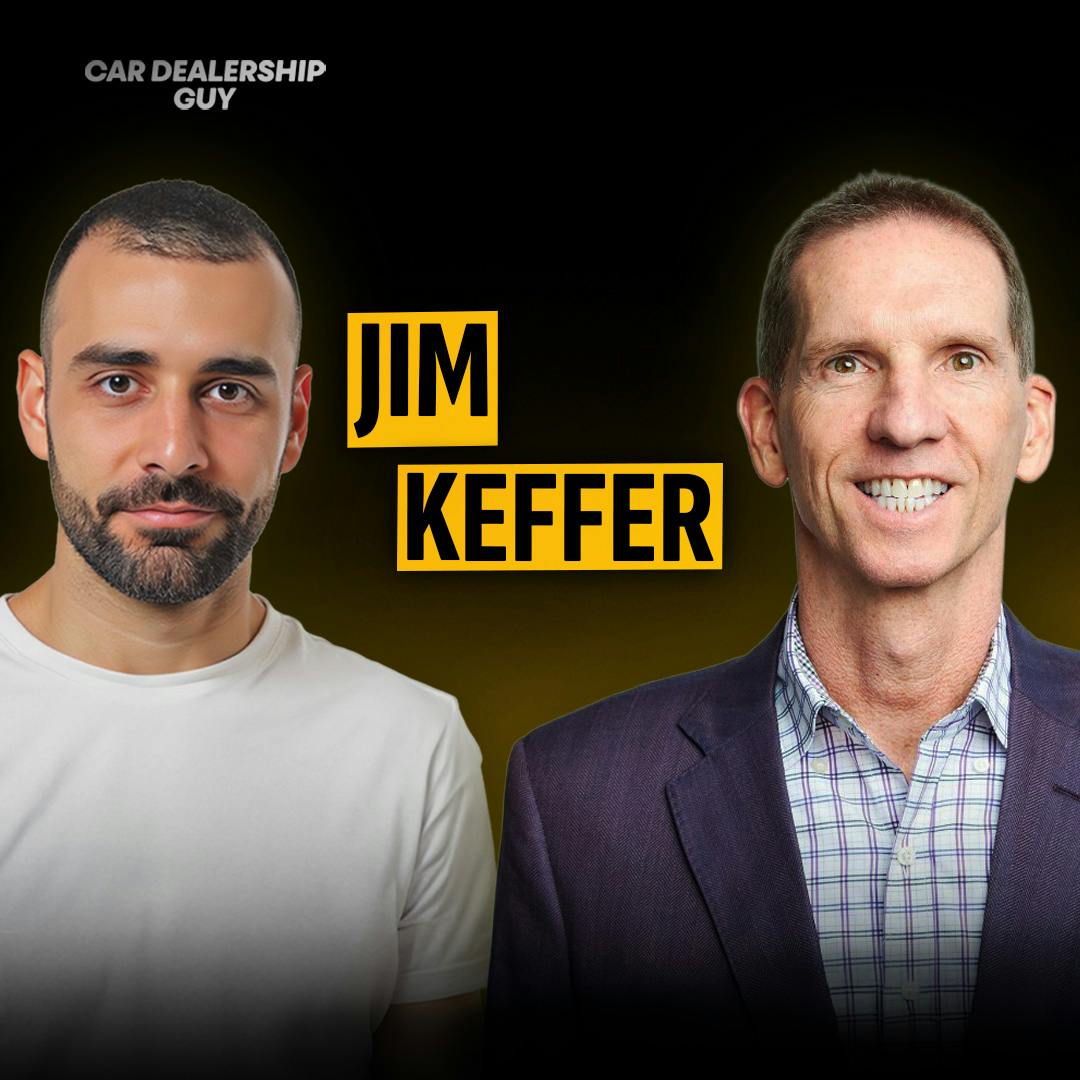
The 10-Year Buyout Playbook – Inside the Unicorn-Driven Dealership Model That’s Disrupting Auto Retail | Jim Keffer, CEO of Keffer Auto Group
Car Dealership Guy Podcast
The 10-Year Buyout Playbook – Inside the Unicorn-Driven Dealership Model That’s Disrupting Auto Retail | Jim Keffer, CEO of Keffer Auto GroupCar Dealership Guy Podcast · Nov 20, 2025
Used cars are cars that have been owned by someone else before. They usually cost less than brand new cars and can be a good option for buyers on a budget.
Subaru is a car company from Japan that makes vehicles, especially known for their all-wheel drive, which helps in tough weather and off-road conditions.
CarMax is a store where you can buy used cars without having to negotiate prices. They have a set price for each car, making it easier for buyers.
LIVE
Dealers, last chance to join our dealer chat groups.
Initial groups are forming now.
Registration closes on November 25th, and we won't open new groups again until April.
If you want real operator-to-operator insight heading into the new year,
join hundreds of top dealers at cdgcircles.com.
I'll see you inside.
Today, I'm joined by Jim Keffer, CEO of Keffer Auto Group.
Jim runs one of the rarest models in auto retail.
Decentralized stores run by unicorn operators
who can buy 100% of the dealership over 10 years.
He breaks down how the model works, why it outperforms traditional structures,
what he looks for in elite GMs, and how he finds underperforming stores
that can be doubled or tripled with the right leadership.
A big thank you to our sponsors for making this episode possible.
Lotlinks, Cox Automotive, and cdgcircles.
And now let's get into the show.
Jim Keffer on the CDG Podcast.
Jim, welcome.
Thank you for having me back.
Thanks for coming back on.
How's life been for you, Jim?
Well, life in general has been very good, because I think that's a choice.
Business wasn't as exciting in October as I would have liked.
A lot of people, I'm sure you get on the show, they'll always tell you it's wonderful,
and I think the term is always, we're rocking or something similar to that,
and if the baby's ugly, we just call it ugly.
And it was kind of ugly last month.
I think some of that was brands and environment, and some of it is us.
So always stuff to work on in the car business.
What do you think, if you divide that, what do you think is on the brand side,
and what do you think is more internal right now in terms of challenges?
Yeah, well, we'll probably talk a little bit about our model.
But a function of our model is we try to buy the brands
that are associated with lower multiples.
And there's a reason for that, right?
You probably get less natural traffic at a Stellantis location than a Toyota store.
And so, they're making some headway at Dutch Chrysler and Jeep,
and I think doing some positive things,
but it's not putting them on the same plan field as Toyota just said.
But the other component of it, and the thing that is always my hot button, is used cars.
And when you hire people and give them a high degree of autonomy,
maybe more than they had where they were before,
you sometimes find out that, well, somebody else handled maybe the marketing,
or maybe somebody else handled used car acquisitions or other areas like that.
So, I think some of that is the growing pains of people getting their arms around
some of those positions, if maybe someone else had been doing it where they were before.
Yeah, you definitely, the more decentralized you are,
the more you need a unicorn in a way to be proficient in every single department.
I think that is the exact perfect analogy, and that would make me a unicorn hunter,
which may not make me always very popular in some areas.
But I think, yeah, that's sort of what you're looking for is the total package,
the person who can do inventory advertising and people.
And if you look at the publics or even the bigger dealer groups, by design,
they box in the artsy parts, which would be the inventory component.
And the marketing, those use different parts of the brain.
And if you just go find and you buy a Toyota store, all you really need is a good leader
who can put a good team together, and it's not as hard to hire a good team at the Toyota
stores, it might be at the Mazda store, let's say.
So, yeah, you need that person that is really a special individual.
And often though, when you find that person, they thrive in an environment where they can be
entrepreneurial. But it is not without its pitfalls, because you know that the highs and lows can be
higher and lower if you are missing one of those components that maybe a corporate structure would
fill in. It's actually incredible the model you've deployed here when you're a dealer group,
and we'll talk all about it for those that aren't familiar, but you run a decentralized model,
and you provide GMs a path to full 100% ownership in the group within a decade.
Right, that's correct.
And we'll talk in more depth about it shortly, but I think one of the most incredible things
that I thought a lot about this model since you first told me about it,
and one of the most incredible things is that in the corporate world, we're sort of taught to
centralize to economies of scale to, and I don't come from the corporate world, but let's just say
we for sake of conversation here, you're taught to compartmentalize different roles
in order to not have to find unicorns, to simplify, to grow the talent pool.
And you have sort of, when they zig, you zag, you've kind of taken the complete other direction,
and you have product market fit based on your scale and success where, like you said,
you're a unicorn hunter, and I think it'll be a pretty fascinating conversation to dig into that.
It takes a little intestinal fortitude, and I have been accused of doing it the hard way
for many years, which I would say is probably a fit, but I think a lot of times the best things
in life come from the hard way, not necessarily following the rest of the crowd.
So I'm still comfortable with that model as I shared. It's not without its pitfalls,
but it feels good to me if that makes sense.
Let's not keep the audience on a cliffhanger. I wanted to start a little further back on what
inspired you, but let's just talk, what is the model? Give us the spark notes version of this
model. Yeah, so the very short model is my dad got put into business in 1974 by a guy who put
him on a 10-year buyout, and so you buy one-tenth each year out of the bonus that comes from
a year-end kind of bonus. So in order to make that work, even in a brand that has lower blue sky,
it's a very aggressive compensation package. So you have the regular GM comp, and then you have a
year-end component that goes towards buying stock, and that if it's operated right and we've done
the math correctly to size up the potential for the store, then the GM has the ability to buy
that deal out from me 100% over 10 years, and then at the end of the 10 years, they buy the real
estate at a praised value and send me a Christmas card or something fun like that. And that's a
real oversimplification, but it really requires looking generally for deals that have a pretty
big upside. And I think most people when they're in the buy mode are either looking,
I want to go blue chip, and I want to buy this this store that has a great team in place and has
great cash flow, and I'm going to pay a premium for that, but I don't think I have much to fix
here. And so that gives you sort of like buying a stock that is paying a four or five
percent dividend. You might not get the upside that you would get buying some AI startup,
but it's a stable return. We are really going in the other direction and saying, hey, we want to
bet on the person, the guy or the girl that we think can operate at double the output of the
average. So even if you're giving up a lot more of the pie and more and more of it over time,
it allows you to attract those unicorns, as you mentioned. And if you did your due diligence and
you guessed right within the interviewing process, then unicorns don't do 10 or 30 percent better.
They do double or three times better. So it creates a good return. And it's not for everybody
because there are a lot of really good gigs out there right now that you kind of get it on the
rails and you have this brand that's going to get traffic. It's going to get great trades
and all of those things. So all you have to do at that point is keep the wheels on and you
can become a good golfer. I stink at golf, by the way. I would love to get better, but
probably starting at 60 is not the smartest thing to do. But anyway, that's kind of it.
It's for the people who really have that entrepreneurial spirit and they don't want
to be the guy who comes 10, 15 years from now and they get the, oh, you did. You sold out and
who's taking over now? And am I still going to be here in 60 days? So the only way to
really control your destiny is kind of to own that. And we've provided that
opportunity. And as I said, my dad got that opportunity and, you know, he devoted the rest
of his career to doing the same thing. Me, I got introduced to janitorial services at a very
young age. And so I didn't have a whole lot of excitement around this whole car dealership
thing as a kid. In fact, that was the one thing I was never, ever, ever going to do.
But, you know, I'd never had any kind of epiphany. You know, I never, it's like,
wow, this guy parted and this is the thing I'm going to do, my purpose in life.
But, you know, I kind of looked at closer at what my dad did and it was really life changing for our
family. And so I think, well, that's a pretty cool deal. You know, let's continue that on and
give other people that same opportunity. And, you know, yes, you can make a reasonable return
doing it. You're not going to build the same kind of empire as if you kept all those billions
of dollars of revenue for yourself. This episode is brought to you by Lotlinks. Chat GPT can write
emails, plan trips, even tell jokes, but it can't tell you which vins are at risk of sitting too
long, how your dealership performs against your competition, or how to improve your VDPs.
That's where Lot GPT comes in. It's the only chatbot built exclusively for car dealers. It knows
your market, dealership and inventory. Fueled by Lotlinks' decades of vin and shopper data
plus your live inventory, Google Analytics and CRM, it delivers relevant answers and
guidance to help you sell cars faster and more profitably. Lot GPT is free for dealers,
but invite only. Join the waitlist now at Lotlinks.com slash Lot GPT, or click the
link in the show notes below. Wow. That's an incredible story. How many of these have you
done of these buyouts? 33 completed. The first one started in 1979, and I was still very young,
but my dad, once he got his legs under him, decided early on with his backers support,
like five years in, let's go do this some more. So it has been a great ride for us.
It is a very evolving landscape, though. It's much harder than what it used to be,
right? Because one of the difference between the haves and the have-nots, the Toyota franchise,
the Lexus franchise that's worth 100 million bucks, isn't very approachable for a guy who wants to
do a 10-year buyout, right? It won't pencil. Yeah, it's going to take him 50 years.
No. And I still remember when my dad passed on the Toyota store in Charlotte many years ago,
because he thought $2 million was way too much goodwill. And so there are lots of those funny
stories. I missed Subaru that I could have bought for half a million bucks a bunch of years ago,
but it's all about how much cash and people you have at the time the opportunities come along.
You know? It's like there's this meme online where it shows a baby in a crib in the 90s,
and it's like point of view, me in the 90s sleeping in my crib instead of buying a house for $30,000.
Yeah. Well, again, I think it just goes back to me maybe being destined to do it the hard way.
But if the hard way helps a lot of other people get the same opportunity that I've been
afforded, then I'm pretty cool with that. Have you never considered keeping 10% minority
stake, no control in any of these deals? Is that like a non-starter for you?
No. I haven't really thought of it. It's just not the way that we have done it,
which doesn't make anything a good idea. But it's like, okay, I can keep an annuity
but you're sort of advertising an all-in opportunity to have your own thing.
And even if I'm just there in a little piece, I'm still there and that's not just completely you.
So I'm not the one making it a great operation. I'm always going to give
experience and opinions, but it's up to them to turn it into something great. And if they
do, then that should be theirs. And I get it, you have a certain ethos and a brand and even 10th
of a percent, it just breaches that. That's the difference. So I can understand where you're coming
from based on what you're describing. Yeah, you never know what the way that deals have to
get done in the future to afford people this opportunity will change. And you always
have to be willing to adapt. But I don't foresee that right now as something that
would be in the cards. Now, in terms of the blue sky, so you do a deal, let's break this down a
little bit. You do a deal. What is the cap that you've identified as like, hey, if a deal is above
X dollars, it will never function within a 10-year buyout. Or are you thinking like, hey,
you know, the government wants to do 50 or mortgages, maybe I move to 12-year buyouts so I
can afford some more expensive deals over here. I mean, how are you? 12 years isn't going to change
the math much. So if you take a deal and you break this thing down, let's say we're buying a deal
that we think can do two million bucks if we operate it well and do a really good job
and use cars. So if we pay ideally two million dollars in goodwill, because right now the store's
losing 50,000 dollars a month, and we have an exceptional operator who can turn chicken,
you know what, into chicken salad, then okay. So let's say it makes two million bucks and maybe
they go in. But first you would look at the deal and you say, okay, it's going to have,
say, you know, we're going to probably put in a million dollars for two months worth of expenses.
Let's say it's a 500,000 expense store and we're going to have 300,000 dollars worth of assets,
that'd be a low number. But for ease of math and then another 200,000 in, you know, parts and
then maybe another 500 grand for owned used cars. So that then maybe you borrow a million,
now you got a $3 million deal, you borrowed a million and now the total upfront money that
you're putting into it is two million dollars. So that means that if the net book value didn't
change at all, you'd end up having to pay back $200,000 per year, right, to buy the stock.
Now the reality is the net book value is probably going to change because as you grow dealerships
eat cash. You sell more cars and now I have more contracts in transit, now I have more receivables,
maybe I have to buy more parts, maybe I have to fix the roof and any of those things are
going to eat cash. So usually the first three years we're not taking much in the way of
distributions, not because I don't want to because I would like to take the money out
and then rinse and repeat and do it again. However, you know, you have to maintain your
working capital standard, right, along with other bank covenants that even though they may not impose
those, we put them in as a good discipline because we're trying to teach people to be
good business people along with good car people so that when we're not in the equation,
you know, they don't make money and go broke at the same time because it's very possible,
right. So in that model, you know, somebody's got to have after tax dollars of 200 grand,
you know, but if you're in the deal and let's say you're you're making 10 grand 15% of the net
and you're getting another 15% at the end of the year, you know, you've got plenty of money
to both live on and, you know, buy it by stock, right. And that's the way that it has to work.
So what's the right amount to pay? I think the right amount to pay is whatever you think
it can make within three years, you know, because the first couple of years, maybe you're
you're bumping around, you know, getting your legs, figuring out what the market is on used cars
and the right equation for marketing to get people in the store. And of course, you know,
you're not going to be perfect, whoever the GM is in terms of building their team, right.
So usually you have some, you know, some ups and downs associated with that,
but it really makes the number, you know, not much more at the max of two times what you think
the store can make to be able to get it get it paid back. Does that make sense?
It does. I'm trying to what I'm trying to understand now is if it's two times more
than what the store makes, so you basically have to find broken deals.
Well, yeah, I don't want to be disrespectful to anybody I ever bought a deal from,
but certainly underperforming based on what you think you could do. And that could be in the fixed
ops. It could be maybe it's over-expensed and, you know, you have a legacy dealer who had a
lot of people, right. And, you know, so it could be over-expensed or, you know, there could be
a fixed ops deal that, you know, you see bigger upside in. So you're just looking for,
you know, the way to sort of unlock the potential because you got to remember that
the gross that you do, the additional gross over what the current guy is doing,
that's going to fall to the bottom line. If your numbers are lined up at say 35% for comp,
then it's going to drop to the bottom line at 65 cents on the dollar, right. So every
additional dollar of gross is going to add a lot more net than if it was the first dollar
of gross during the month. And to understand that you have to kind of understand the idea of
what's the marginal cost to sell a car. And we do a lot of looking at that, right. If we're on the
last day of the month and we're going to sell one more car, you know, what are the expenses
going to go up? Well, they're only going to go up by what we had to pay the sales guy,
the FNI guy and the sales manager, maybe some benefits or something like that.
So if on average, that adds up to 35, 38%, you know, there's a lot more
gross dropping to the bottom line and net at the end of the month. And the same is true
when you go into something that has a lot of upside. So if you can add to that and at least
it's not losing major money currently, the increase in performance is going to have a
disproportionate or exponential impact. It makes sense. You know, you at that point,
you have leverage and you've covered your overhead. So like you said, it's it's
rolling to the bottom line. Tell me about, tell me about finding these stores like what's
a tougher pipeline for you finding underperform or severely underperforming stores or
finding these unicorns that can run these stores and do a good job at it.
Yes, both just as tough. I think my, my, you know, my favorite statement to all the people
that I work with, because I think you learn over the years that it's really not about you, you know,
you might have started with this S on your chest thinking I can leap tall buildings and all that
stuff. But you know, I've gotten my teeth kicked in enough times to know that it's not
about me, it's about who you can find, right? So I think you should only recruit on days that
end in Y, which, and I can tell you that I've had lots of conversations at my house on a Sunday,
which my wife just understands because that's, by the way, Sunday is the recruiting day. Sunday
is the recruiting day. Yeah, well, I try for Sunday to be the pottery day, but it doesn't
always work out that way. You know, if you, if you have the right kind of person that you
have an opportunity to talk to, you take that meeting 100 times out of 100, right? Because the,
the unicorns aren't one in 10, they're one in 700 to 7,000. That comes from a guy named Elliott
Jax who wrote a book called span of control. Really cool guy is a trainer called Tom Foster
that you can find on YouTube if you want to understand a little bit more about that.
Mm-hmm. It's so true. I mean, you need to, it just feels like in this business, you know,
where a majority of the industry is Monday through Saturday, not everyone. It's a Sunday's
estate. It's like, you know, that's the feeling I always just, I always, when I associate with
Sunday, it's the day where you have that two hour phone call with someone you've been wanting
to speak with and you guys really get to know each other. Yeah, and we may have talked about
this the last time. I think one of the challenges that kind of everybody faces at some level or
another is the invisible finish line, right? And life people have these two, you know, opposing,
you know, opportunities and one involves time and the other involves money, right? But once you
get enough of one, you want more of the other. And there is definitely a dichotomy there in
that, you know, it often requires sacrificing one to get the other. But, you know, if you're in a
very attractive compensation, you know, mode, you can all of a sudden, you know, find yourself
not really applying as hard as maybe you did when you started because, you know, it's time to
reward myself. Now, that's not a conversation you have out loud, but it is a conversation
that happens nonetheless. And it shows up with what kind of vehicles are in your driveway and,
you know, are you willing to take that call on a Sunday or, you know, do you have other
more pressing engagements on the golf course? And I'm not throwing stones at anybody for
any of those choices. But, you know, sometimes people will find their finish line before I was
finished. And I think there's still more upside there to really improve the most
lives and provide the highest potential for all the people in the store to have their their best
outcomes. And so always a balancing act, right? You mentioned a book. So there's an author named
Morgan Housel. And, you know, little brag, he's a follower of Cardio some guy on X.
Cool. And so he H O U S E L. And he has a couple of great books. He has one called
A Psychology of Money, and he has one that he just released called The Art of Spending Money.
And this is this is an interesting one because he just talks about, you know, our psychology,
our biases, why we spend on certain things, how to spend, when to spend, again, it's
different for everyone, but he shares many different scenarios different. It's similar
to what you just said, right? There's different seasons in life where you're
optimizing for a different thing. And so it was I found I find all his books very interesting
because he's a very clear thinker and, you know, a great writer. But I highly I think
based on what you just described, I think you'll really enjoy, especially the art of
spending money added to my list. I think in, I think close close analogy that I
just got finished with Dion Sanders book, one of the people in our leaders group recommended
it was called Elevate and Dominate. And I was more of a Barry Sanders guy, you know, score the
score the touchdown, put the ball down and or give it to the to the ref, not not all the stuff.
You know, Dion was, you know, the prime time flashy guy, but but it's really kind of a unique
story. And, you know, the I guess the Cliff Notes version would be that he was amazing as
a dual sport athlete and did things that nobody else had ever done. But he ultimately ended
up in his life in sort of a dark place where he didn't feel fulfillment, right? So it's kind of
that whole notion of what what you chase that helps you get there may not ultimately be
what provides fulfillment or fulfills purpose or whatever, whatever you want to call that.
And that's really where this coaching thing that he's doing came in because it was this
this way of building other people up training others. Yeah. Yeah. So I think it's it's also
a great book if I listened to it on audible because I as soon as I read on like 10 pages
in a sleep, so I have to do it in the car. This episode is brought to you by V auto. Do you
know what's quietly killing your margins inventory aging? The average car sits 45 days
before getting shipped to another store hoping it'll sell faster somewhere else.
But guess what? Once it lands there, it usually sits another 30 days on paper. That looks fine.
In reality, that car has been tying up capital for 75 days, bleeding margin the whole time,
the fix, get the car to the right store on day one or move it before the clock runs out because
every day you wait, you're losing gross. You'll never get back. Check out V auto's new guide
on centralized inventory management by clicking the link in the show notes below. That's great.
And it's it's sort of what I it's sort of one of the most exciting parts for me just to say like
about what we do. It's you know, we're a ton of work to do or you know, we're still we're
I just we have a lot to grow and more impact to make. But I feel like we, you know, we have an
opportunity to democratize knowledge, right and bring it to the industry in a way that
hasn't existed. And that's what drives me. I think that's just a super cool rare and
unique opportunity where we can really impact so many different people and lives and organizations
in in a specific industry. It's like you said, it's there's different ways to achieve that in
different industries. But I think that's that's at least one of the big things that gets me excited
is being able to impact just like you. You're you're creating wealth for families. You're
you know, putting people through your providing opportunities. And again, they're earning
them. But you're you are providing that initial opportunity. And you're you know, you're helping
them really get, you know, change their lives, their families lives, their grandchildren's
lives. It is pretty incredible. Yeah, I mean, I think I'm not going to break my arm pat
myself on my back. I just kept doing something that my father got started that I probably never
otherwise would would have done. You know, I would have liked to think that I would have
chosen something that had some upside for someone other than me, regardless of what it was. But
you know, I have really enjoyed following what you guys are doing. I think it it does bring sort
of this unique perspective and some varying, I think one of our winning ways is embrace
diverse perspectives. So you know, you're not just going with one, you know, line,
you're introducing different things. But but I think it's very kind of raw or transparent
or whatever you want to call it. And I think that's why it's engaging so many people in the car
business. So yeah, my hat is totally off to you. I think conversations like this are fun for me.
But people really it seems to really resonate with them. Well, I appreciate that. And I also
want to thank you. I know you're you're a circles member, CDG circles, which is our
pure group. And you're an executive member. So there's your call. So I want to ask you
all right, let's get back into like the tactical. And that is when you day one, you structure these
deals. What is it? What do the economics look like? Right? You've okay, so you found a deal.
The deal is two million bucks, right? You've now you found the talent, which I assume you,
like you said, you're always having conversations got to always maintain the pipeline
understandable. What is what does day one look like? Are they putting up cash day one?
How much of it are they? What do they buy in for? What can you tell us?
People can go in with up to 25%. I will tell you historically, most of the deals are no money
down. Everybody gets a car dealership. It's just what they bring in. You have to think of
somebody else in their perspective, they've saved all their money, most of their life to have
this opportunity. Now we're going to go into this potentially broken store. Do I want to
stick all of my money? So we give them the opportunity to try before you buy. So you're
going in as a GM with a buy in opportunity or buy in agreement from the first day. And it makes
the most sense because of the way that taxes work because it gets a lot trickier if you're doing
mid-year buy-ins to have the first equity purchase that happens after a December statement.
So then the accounting folks are doing their review or making any adjustments because otherwise
you could be charging somebody for something that is getting written off or depreciated or
whatever. And so that's the cleanest way to do it. But then the rest of it is whatever
you start with. If you take the remainder and divide it up over 10 years, you can buy that much
per year. Or if you have a skinnier year or you need to pay for tuition for your kids to
have 12 kids in college or whatever it is, then you can buy whatever portion you want.
But it obviously works better if at the end of the rainbow, at the end of 10 years,
you have at least 50%. If you're performing, the store is doing well, at the end of 10 years,
even if you own 50% of the gig, you're going to be able to get hooked by a bank
and we'll make those relationships available. But also we start the people in the
survey contract component of it. So they're participating in that as well. And if they
perform well in that, then they can take that money out at the end or borrow against it
and use that to help buy real estate. So is the value that I'm paying predetermined to avoid me
creating value, improving the value of the business and then paying each month or each year a higher
price? Or how does that work? Here's the thing. If we were reevaluating the dealership and there
have been some structures like that, not in our group but in others that I've heard about
over the years where, okay, you go buy something broken and then you get this
rockstar to tune it up and make it worth a lot more money. And then you start saying, okay,
well, I'll sell you whatever percent that was the deal up front. But now we're going to value it
based on what you made it worth. So now we're adding a goodwill component to that.
That's the issue, yeah. Yeah, we don't do that. Right? But let's say in this deal that
we bought for 2 million goodwill and then we had all the working capital and
but we got a total of 2 million bucks in it. It makes 2 million dollars. Well, you know that
then you're going to pay a management fee at the end of the year because I'm not taking money out
and I don't have a certain amount of a pack per car that comes to any of that stuff. But after
you pay taxes and management fees, then what's left? Let's say, you know, it was a million
dollars. Now maybe because we started out selling the store was selling 70 cars and now
we're selling 150, I might need that whole million dollars just to keep the wheels on this thing because
we have a lot more contracts and transit than when we started. And we have a lot more
payoffs that we have to make on cars that are trade ins and the incentives that are there
that we're sometimes waiting as much as 90 days to get the money. All that takes cash, right?
So we have this notion in a lot of cases that cash and net profit are the same thing,
but they're not. You have depreciation on the goodwill, which is over 15 years,
but you also have the pay down of the loan. So that's where we want to avoid if possible having
giant loans because then that payback on the loan is not expensed. So it's not hitting your net,
but it is coming out of your cash, right? So it gets a little complicated, you know, when you
look at all the puts and takes, but at the end of the day, when you do your annual buyout,
you're doing it based on book value. And the book value, if it's higher was only because we needed
that cash to run the store. And that cash was someone was mine. And I don't want to sell a
dollar for 50 cents, you know, but it's not about adding more goodwill because you made
the store worth more money. Got it. So goodwill is not factored into the increased value,
but then what's necessary to run the business is correct. And in fact, the goodwill is getting
depreciated by, you know, I think a million dollars over 15 years is like $5555 per month.
So the actual goodwill that you're paying on is going down by 65 grand or so a year.
So you're making it worth more money, but paying less in terms of goodwill,
but more overall because the cash that's required to run the business.
What do you look for in talent? I know we talked about, you know, you're hunting for unicorns,
but what is your interview process look like? There's a really good book. We do this a lot,
referring back, but a book called who the top grading method for identifying a players.
And the old saying is very true that success leaves clues. You want proven winners, right?
And to the extent that you find people that are proven winners, then if you want to look for a bias,
the bias would be used cars, right? Because that's the controllable, especially if you're
going to go into a market that was a broken or underperforming store and you're going to try
to turn that up. Well, it takes some time to convince the people who went to other brands
to come back or that have never been in it. And so that means heavy marketing and a lot of trial
and error. And while that's happening, you need to be able to sell used cars, not used cars that
were trade-ins because you're not selling the new cars. So you have to be able to go out and
acquire cars, right? And so again, it goes back to was this the guy who was in a store where
somebody else was doing that? Or were they really personally responsible? Because that person that's
personally involved in that process is usually able to move the needle faster than anybody else.
Doesn't mean the other people can't, it just takes more time and they have to bring that talent
with them. There's definitely a level of creativity that and also just combining multiple disciplines
to be a strong used car retailer to your point. I equate it to day trading. There's a lot of
variables if you're going to step up and start spending money and buying the ups and downs
in the stock market. But you think about it like if you're at a Chevy store, how many
different configurations are there in a new car or truck times the total number of packages
and models and colors? That's a lot to figure out on the new car. And we have tools for that, right? You
can get conquest or whatever. But then you go to use cars and you're taking that same number of
variables which are multiplying at times every brand in the last 15 model years. That's a lot
to kind of get your arms around and really know the ins and outs of which vehicles have
which specific sorts of problems and which ones do you have to make sure you have the pano roof and
the adjustable seat or your screw. All of that comes into play. And I don't care, you know,
Dale Pollock, I know him as a super guy and a genius. But that's not giving you the leg up,
right? When everybody has something, it just allows you to reach parity, you know, not
really commoditized. Yeah. Yeah. So yeah, they sort of democratize to use your word,
use car information. But that doesn't give you an advantage. I think you really have to be in it.
And you have to do a lot of evaluation with conversations about what's working and what's
not working and have some spirited debates. And what I can tell you for sure is it
is not a one person affair, right? You can't go hire that person. And now all of a sudden,
you've got a great use car department. That that's not happening any more than any that you could
go hire a really good BDC person and, you know, throw 1000 or 1500 leads at that person and think
that, you know, it's just all going to be fantastic, right? So I think the evolution of
the car business requires us to become Internet dealerships and use car cultures, you know, those
things have to be embedded, not, you know, we go hire somebody for that because, you know, I want
to be good at that. You know, I did say it's not about me, but it takes a whole team of people
to be good at those aspects of the business. There's just way too many variables to think
that one person can handle it all. And what about other than other than their use car performance?
I mean, what else is important to you? Well, we look at their sales efficiency. I want to, you
know, I don't want the person who, you know, can sell use cars, but they're 60% sales efficient
because that doesn't put us in a position to, you know, maintain favor with the factories.
But I'm also going to look at what their CX is, you know, what is their gross per unit,
because there's a component there where, okay, I can do volume, but, you know, back to the marginal
expense, if it's costing us $1,400 just to pay the FNI guy, the salesperson and the manager,
and maybe that's okay. But if, you know, if on average the person makes $1,300, well,
there's no amount of cars you can ever sell that's going to make that turn into a good equation, right?
So people who can do volume and gross, you know, if you're getting picky, it makes them an even more
rare unicorn. But then I also want to look at what are their Google ratings, because the
customers will usually give you the best indicator of whether, you know, it's a great experience.
You're based in North Carolina, and you are putting stores in different areas, different states.
Have you had a situation where you set up a store far from home? And for whatever reason,
it did not work out with the operator. And now you're stuck. I mean, have you had this
type of situation? Because I know a lot of dealers where I speak would say, look,
I want to keep them close to me, you know, out of sight, out of mind. Also, I just want to be near
my store. Definitely a better play if you can do that. But you have to go back and look at the,
you know, the math. And, you know, turns out you can buy Chevrolet stores for less in Minnesota
than Florida. You know, a lot more people want to be in Florida. And I think the answer to
your question is, have we ever had a deal that didn't work out, you know, far, far away?
We've only recently begun to go that far away. And I don't foresee that happening,
that, you know, we won't be able to turn something around. You know, if you did, however,
you know, you'd take your lumps and go on. But, you know, also, there is usually a pretty good
list. If you're recruiting on days that end in Y of other people who would like to have
the opportunity. So, you know, you have a pipeline out on your thumbs and say, well,
gee, let's hope this works out. And, you know, if it doesn't, then, you know, we'll start thinking
about, you know, something else. But, you know, so you're, we talked to people all over the
country. And, you know, if nothing else, it's almost like listening to one of your podcasts,
you know, you, you meet a new person and get to hear their car story, which I always
start with, because I think it's really fun. Like, you know, most people didn't get into the car
business on purpose. They sort of backed into it or fell into it. And some of the coolest stories
ever, you know, and some of the best entrepreneurs I've ever met. So, you know, that makes it
worth the conversation in and of itself. But yeah, you've always got to have a backup plan
for your backup plans. But, you know, you, I think also should approach it with eyes
wide open. And if you do your math right, and it was based on sales efficiency and averages and
things like that, you know, you're not trying to take a moonshot, you know, just to make the deal
work. Jim, do you think someone can be taught to be an owner or is that something that is innate
in a leader, in an operator? And I know, and I know you, I don't mean like,
so matter of fact, like you clearly have put lots of aspiring partners in, in aspiring partners who
are presently GMs into these positions. But I'm, I'm, I'm coming from the perspective like, is it,
is there a personality trait that you look for? Like, can you really, you know, do you know,
when someone is like, okay, so they check my boxes, I've, you know, there's just, I've,
there's this base pattern matching that I've identified, they can be it or it's like,
they don't have what it takes from an ownership mentality or anything like that.
Can that really be taught? What's your take?
Yes and no, right? Because you can approach it from a lot of different angles. You can be,
you could be an introvert, you could be an extrovert, you know, how, how leadership shows up
isn't the same with each person, but it can still be effective. But, you know, you're,
you're going to start and, you know, do, do your homework to make sure that the person's
values line up, right? And, you know, you're not hiring an axe murderer. And then, you know, you've
got to also kind of figure out how they are with the business side, right? There are some
people who are very good at selling, but not great at math. And so you're, you try to
talk through that with, you know, their understanding. You don't necessarily have to
understand a financial statement inside and out. But, but, you know, the biggest thing is
sometimes the very best sellers are one step away from being manic. You know, they're like
10 feet tall and bulletproof until they're not. And people have this self-destruct mechanism
because, you know, the people who really push to the edge sometimes forget where the edge is.
And, and you, you've got to make sure that you have somebody who's willing to be honest
with themselves. And if they're not, usually that will show up, you know, sort of in background
checks or references, right? And I, I can, I sort of love, because you have to appreciate people
that are sort of the savant seller. But that isn't all it takes. You, you, it's not just about
making a dollar. You only get paid on the dollars you get to keep. So you have to try to have that
balance. But, you know, I would find in general that it is easier to take the super high performer
and teach them how to, you know, take the business factors into consideration
than, you know, take the really smart person who can't close their fist and teach them how to be
driven and dynamic because, you know, people in the car business are attracted to shiny objects.
And, you know, A, A players don't often want to go to work with somebody they don't perceive
as an A player. And since we are loaded with extroverts in this business, they, they
associate sometimes A player with, you know, somebody loud boisterous who acts like them,
right? And the best equations in most cases are not three or four exact duplicates, right? You,
you have to have the person who's the driver, you know, and that person sometimes ruffles
feathers, you have to have the person who keeps the wheels on and that person is good at
administration. And then you have to have what I technically called the fluffer upper because
that's the person who glues people back together after the administrative person, you know, told
them they couldn't do something a certain way or the driver pushed them a little harder than maybe
they should have, you know, sometimes you can find somebody who can play all of those roles
and you want people who can all be productive, you know, and make a contribution on the,
on the growth side when, when it's necessary. But everybody's going to have their own strength.
So putting a diverse team together where you have those different components
is where I've really seen it be, it turns into magic, you know, it and it's really fun to
watch those people because it's usually a lot of debate between that team. This episode is
brought to you by CDG circles. Running a dealership today takes more than it ever has
between new technology, regulations and constant change, but the hardest part is doing it alone.
I've been there. No one to call when things got tough, no place to ask what's actually working
for you right now. Is this vendor legit? How would you fix this problem in your service
department and much, much more? And that's why I built CDG circles, a new kind of peer group
for top performing dealers. With circles, you get a dealer group chat, structured sessions,
real-time conversations, all with the full confidentiality, antitrust compliance,
and a group of dealers who actually get it. Our goal is to end the isolation that costs
dealers time, money and clarity. We're not a 20 group. There's no travel. We're not retrospective,
and we don't group you by brand. Circles is for dealers who are looking for in-the-moment
insights, almost like having a personal sounding board of top-notch dealers who are playing on
your level. Over a thousand dealers joined our original wait list, and this month,
we've officially opened up sign-ups to additional founding members. So join us and be part of the
first wave taking the car business back into our own hands. Join us at cdgcircles.com or click
the link in the show notes below. When you say team, diverse team, are you referring to in-store
or at the corporate level? In-store, yeah. At the corporate level, I want to be reasonable,
prudent, predictable. You shouldn't be going in six different directions, and I'm sure some
of my guys would tell you that I've been guilty of it before in my life. But the intent is to try to
create a sandbox or a platform or whatever you want to call it, where somebody has a good understanding.
It's another one of our winning ways, is getting clear on the expectations. These are the results
we want. These are the way that we would measure it. These are the key metrics that
tell us where we are. This is the report they're going to show up on, and here's the
meeting on the calendar that we would expect you and your team to talk about it, but there's also
ones where we would like to show up to be able to at least hear the conversation.
You mentioned different talent, bringing different positives, some drawbacks,
and I'm curious, how do you complement the drawbacks in certain people? As you identify
them, where maybe there are stronger numbers guy, but weaker on, I don't know, in-store operations,
whatever it may be, do you have a method? How decentralized are you? Or maybe with accounting,
right? Do you have a method for complementing? Conversations, right? You have to separate
everything up into buckets of it. Is this a leadership issue or is it a management issue?
Because you manage processes and stuff, you got to leave the people, right? And sometimes
you have somebody who may have good processes, but they're not getting executed on. So that could
show up as a lack of perceived urgency or whatever. You just have those conversations, right? And I
just would tell somebody, this is what it looks like, and if it looks like that, it may look
like that to somebody else. It doesn't mean that's what it is, but I think that you're
either getting results or you're not getting results, and if you're not getting results,
and we did a good job of creating forecasts, then we're looking at the gaps. And sometimes
conversations about why lead us into excuses more than other things. And so you try to frame
it in the way of sort of funnels where it's either leads closing or gross, right? And so now
that doesn't become about personality. It's, if we're practicing blameless problem solving,
do we have the number of opportunities we needed? Did we convert them at the same level that we
should have? And we're measuring these things. And then did we get the margin that we were
planning to get? And is that margin somewhere in line with what the industry is doing? Or,
you know, again, is it less than we're paying out to sell the cars, right? So you try to
create a model that isn't like a moving target. It's, this is all the data. We did it
based on data. And then it's your job as the person who's the operator to work with your team
and collaborate with them to say, you know, how much of potential do we want to chase after?
You know, that's sort of how froggy do we feel, right? And you, you know, you hope that they
feel pretty froggy because if not, then we're really telling the team, maybe I don't have that
much confidence in you and I'm going for the layup. And if you don't stretch people, they
often won't stretch, but that is more usually, you know, sort of up to the people in the stores.
And our job is to play kind of point counterpoint and challenge assumptions and, you know,
but you play devil's advocate in some cases, but not not to challenge authority or ability.
It's really just to say, Hey, here's what the numbers say. How are you looking at that?
Because there's a lot of different ways to, to skin a cat, right? But again, there's no way
that selling cars for less than it costs you just to, to pay the people is ever going to turn,
you know, I don't care how much volume you do, all you're going to do is lose more money, right?
You know, I think one of the most incredible things about this conversation is that
if I'm a GM, I want to work for you because I think the, you're laughing, but I think the
upside, right? If I'm, if I'm truly driven and I want to be an owner, the upside is,
is limitless. And get this. And I'm sure you've thought about this, but as I think about your
business model, you're, you're sort of like a, you're sort of like a bar stool sports for
car dealers. Let me explain for a second and not in media. So, you know, these media companies,
what they do is they find talent, they sign, they put you on a contract. And the difference
is that you don't buy them out after, you know, X amount of years, rather you become so much more
valuable because you've grown together that you go on to another, you know, firm or maybe you
re-sign with them, but it's unlikely. And what you've done here is you've essentially, you're
doing that, right? You're, you could say this for any business, but I think it's especially
pertinent in this case, but you are an expert people picker who is just disguised as a
car dealer. You're a leadership, you're a, you're a leader factory. All right, so all that,
you know, kind of CDG pontification aside, I do have a question for you.
I deserve, you know, like if I was, if that was all that good, I wouldn't be holding
anything back from my guys to try to help them be better at use cars and, but that,
that again, it's a pitfall, right? When you give people the autonomy, then
they're going to take that. And even if I did give them advice, it doesn't mean that
they will always take it. And there are a lot of, I'm not saying this out of humility is just the
truth, right? Then I'm a numbers person and our numbers historically have been very good. Currently
they have room to improve, you know, so we're working on that in the same way that we always do,
you know, just by the same things. And I try to be the kind of person that would be
good to work with. But to some guys, I'm probably like Chinese water torture because
I'm at least going to keep showing up and having the conversation, you know, like,
I'm like the kid in the back seat, are we there yet? Are we there yet? You know,
but, but not because I want to be a pain in the neck, but because, you know, I am invested in
people succeeding at a high level, right? I'd like to make myself the smartest picker,
you know, that's, but hasn't always been the case. And, you know, nobody's perfect in that regard.
Well, well, Jim, success leaves clues. And I think I noticed a couple of things about you,
right? I mentioned a book right away, you write it down. We know we launch a high performing
peer group, you write away our first minds and say, Hey, I want to be part of this. You are,
those are, you know, the clue I see there is that you're a lifelong learner.
And you're always looking to improve yourself. At least that's on my based on two just quick
assumptions. Go ahead. I think anybody who's not hasn't been paying much attention. I mean,
if you look at the car business today, and you're not trying to learn, you must fall behind,
you know, some kind of big way. But no, I've always been sort of a thinker, you know,
when I was a kid, my friends in high school call me the philosopher. And I don't know,
that's just sort of how I was geared. But, you know, I'm not necessarily the smartest guy, but I
tend to learn well. So I learned slower. And as a function of that, I have to put in the work.
You know, I'm not the person that just shows up and hears it once and that then I know.
And I wish I was better at that. I would have a better golf game. But, you know, I'm still
trying to work hard because I think that that is a responsibility you have if you're going to
ask other people to follow. And even if I don't want them to be reliant on me, I'm asking them
to follow the model and become self sufficient and be very successful. I've still, you know,
asked them to subscribe to something that I'm leading and with that comes a responsibility to do
your part, you know, and not doing that is disingenuous, but also a recipe for a headache.
Jim, before we wrap up, have you ever, I'm still thinking about the price ranges of deals that
you go after. Have you ever considered creating like a, you know, alternate model where you
syndicate capital and you still let the primary GM eventually operate by you out,
but they keep like a third party in. I'm just thinking like, is there a path for you to be able
to to unlock bigger deals by. I have looked at that, right? And there's some some good
partners out there in the market that are doing that. And I think it's worth people looking at
because, you know, that's some guys I don't want to deal unless it's this big, right?
And, you know, like, if let's say you own a third of a store that does six million dollars,
okay, great. You know, now you own the equivalent of a store that does two million
dollars and you have other people involved. You know, so I'd rather be at least at this
stage of the game, you know, because if you're going to go pedal the bike,
you know, great. Growing for growth, say, doesn't do much for me. You know, if there was a person or
entity that was better than me and provided a better opportunity and would do the same
stuff I do, I'd hire them and get the hell out of the way so everybody could do better. But
most people don't want to follow that model because as I shared, you know, has peaks and valleys and
it seems almost dumb, right? To get something to the point where it's on the rails and now the
other guy owns it and you get nothing. I can't find a source that wants to do that. I've had,
because being a student of the game, that's what you have to do. You have to understand how
the other people are playing the game and who you're going to compete with for different
kinds of deals and growth and, you know, people capital and there's some good models and really
bright people out there. You know, I'm sure some of them will be at our meeting in
Colorado in June and I look forward to meeting them and I don't think that, you know, it's a one
size fits all kind of thing. I've been doing 20 groups since I was 13, right? And what I
learned is there's a lot of right ways and so I still have to stay open to, you know,
how do we do this in the future? I'd love to find somebody who I can figure out the math and long
term, you know, whenever I decide to hang up the cleats, then I'm selling to, you know, the
people that are the, you know, the operators in the long term stores, the other guys are
already on buyouts, right? But you have to have a path for the management company, all of that stuff.
So, you know, it's things that I work on all of the time and, you know, consider different ways
to do it. Super cool. Yeah. So hopefully I'll continue to be a student and but figure out a
good, good idea. Yeah. And I understand your perspective, like you're not getting a bigger
multiple on your exit or anything. So why do more work when, you know, at the end of the day,
a part of it is, like you said, just building for, like, what are you really building for?
What are you getting out of it? Are you bringing anything additional to the table?
But it is something interesting that came to my mind. It's like, can you unlock a new
tranche of, you know, deal sizes by syndicating some capital in certain cases?
Absolutely can. Guys like Larry Morgan and David Hudson are excellent at that.
Both super smart people, you know, that have great organizations. Different model, though.
Yep. Incredible stuff. We didn't even get to certain topics here, but I do want to ask you
one thing and it's, you're like, you're a student of the business. We spoke about this.
I did see you had some notes on, you know, Carvana's model getting into the industry,
into the new car side. And I would say more generally speaking, what's, what do you right
now observe in their industry as this like upcoming wake up call, call it the canary in the coal
mine? Like, what are you seeing? Right? What are you anticipating based on all these,
you know, breadcrumbs, all these little things that we're seeing happen in the industry
nowadays? There's a couple of things. And I think, you know, if we are a student, then you
always recall that history repeats itself. So you kind of look at what's going on in the
industry right now. And, you know, when CarMax first started, they lost a bunch of money
consistently. On the new side? Yeah, on the new and the used car side. And the used side?
Yeah, because, you know, they were starting with people that weren't car people and
figuring it out with a huge amount of inventory. And, you know, that that comes with a wake,
but they were able to sustain the losses. And that's one of the things back to this idea of
scale that, you know, you have ways of using other people's money and taking a shot at things
that take several iterations to get right. And, you know, eventually they got it very right,
you know, call it whatever you want. But there was a lot of people in the industry back
then that were saying, Well, this won't last. You know, it's just not, you know,
people want to negotiate all of those things, right? And back then it was somewhere around a third
of the people preferred not to negotiate. But I thought to myself, even then, what a brilliant
model, you know, if you can only get a third of the market, who would not like the third
who wants to pay sticker? I mean, I'd like that third if I could get them and they
they had a really cool model. And so it it hung around. Now you fast forward and
Carvano was losing boatloads of money. But now they've they've gotten over the hump.
And because now maybe there's up to 40% of the people who would prefer not to negotiate, you know,
and in this online experience. But the other thing that you know about that is companies
that don't have higher employment costs are going to trade at higher multiples,
right? Because the marginal cost to do business is lower. And that's why software companies have
huge multiples. And so you really have what's sort of a software company getting into the car business,
you know, at the same time that Amazon, but Amazon is doing it kind of still through the
dealers, you know, Carvano has has managed to now sell close to 500,000 cars, and they're
profitable, you know, so that doesn't mean that the entire world is going to go to that model.
But, you know, Carvano and Carmax are sucking up about, I forget what it was, maybe 3% or
13% of all the of the, you know, direct the purchases from off the street because of their
model. And so acquiring cars against them is a very challenging thing, right? And so I think that
the fact that they've become profitable now means that we have to pay closer attention and determine
long term, how do you compete with them? And the digital retailing that isn't really mainstream
even still with Roadster and all the other solutions that are out there, it's still a
very small percentage of the business has to be something that you continue to pay attention to.
Well said. Jim Kepher, Kepher Automotive Group, incredible conversation, Jim. One of my
favorites as of recent. This was really fun. Cool. Thank you so much for coming on.
Happy to be here. I appreciate the conversation. I appreciate you, Jim. Thank you.
About this episode
Jim Keffer, CEO of Keffer Auto Group, shares insights on a unique decentralized dealership model that allows general managers to buy 100% of their store over ten years. He discusses the challenges and advantages of this approach, including the importance of finding exceptional leaders or 'unicorns' who can drive performance. The conversation covers the intricacies of dealership economics, talent acquisition, and the evolving landscape of auto retail, including the impact of companies like Carvana. Jim emphasizes the need for a diverse team and the importance of continuous learning in the automotive industry.
Today I’m joined by Jim Keffer, CEO of Keffer Auto Group.
We break down his radical 10-year buyout model, why he hunts “unicorn” operators instead of centralizing, and how underperforming rooftops become high-ROI assets.
Jim also explains the math behind buying broken stores, the traits that separate true owner-operators, and the coming shakeups he sees from Carvana, CarMax, and digital retailing. It’s a candid, transparent look at a model most dealers never get to see up close.
This episode is brought to you by:
1. Lotlinx - What if ChatGPT actually spoke dealer? Meet LotGPT — the first AI chatbot built just for car dealers. Fluent in your market, your dealership, and your inventory, LotGPT delivers instant insights to help you merchandise smarter, move inventory faster, and maximize profit. It pulls from your live inventory, CRM, and Google Analytics to give VIN-specific recommendations, helping dealers price vehicles accurately, spot wasted spend, and uncover the hottest opportunities — all in seconds. LotGPT is free for dealers, but invite-only. Join the waitlist now @ Lotlinx.com/LotGPT
2. vAuto - The average car sits 45 days before getting shipped to another store — hoping it’ll sell faster somewhere else. But guess what? Once it lands there, it usually sits another 30 days. On paper, that looks fine. In reality, that car’s been tying up capital for 75 days — bleeding margin the whole time. The fix? Get the car to the right store on day one — or move it before the clock runs out. Because every day you wait, you’re losing gross you’ll never get back. Check out vAuto’s new guide on centralized inventory management @ https://www.vauto.com
3. CDG Circles - A modern peer group for auto dealers. Private dealer chats. Real insights — confidential, compliant, no travel required. Visit @ https://cdgcircles.com/ to learn more.
Check out Car Dealership Guy’s stuff:
For dealers:
CDG Circles ➤ https://cdgcircles.com/
Industry job board ➤ http://jobs.dealershipguy.com
Dealership recruiting ➤ http://www.cdgrecruiting.com
Fix your dealership’s social media ➤ http://www.trynomad.co
Request to be a podcast guest ➤ http://www.cdgguest.com
For industry vendors:
Advertise with Car Dealership Guy ➤ http://www.cdgpartner.com
Industry job board ➤ http://jobs.dealershipguy.com
Request to be a podcast guest ➤ http://www.cdgguest.com
Topics:
00:08 Biggest challenge in the car business?
00:52 How does the decentralized model work?
03:41 What is the buyout model?
07:08 How to find the right operators?
32:48 How does goodwill depreciation work?
33:15 How to identify and hire talent?
34:01 Biggest used car sales challenge?
37:45 Balancing sales efficiency with customer experience?
58:18 Future of car dealerships?
Car Dealership Guy Socials:
X ➤ x.com/GuyDealership
Instagram ➤ instagram.com/cardealershipguy/
TikTok ➤ tiktok.com/@guydealership
LinkedIn ➤ linkedin.com/company/cardealershipguy
Threads ➤ threads.net/@cardealershipguy
Facebook ➤ facebook.com/profile.php?id=100077402857683
Everything else ➤ dealershipguy.com