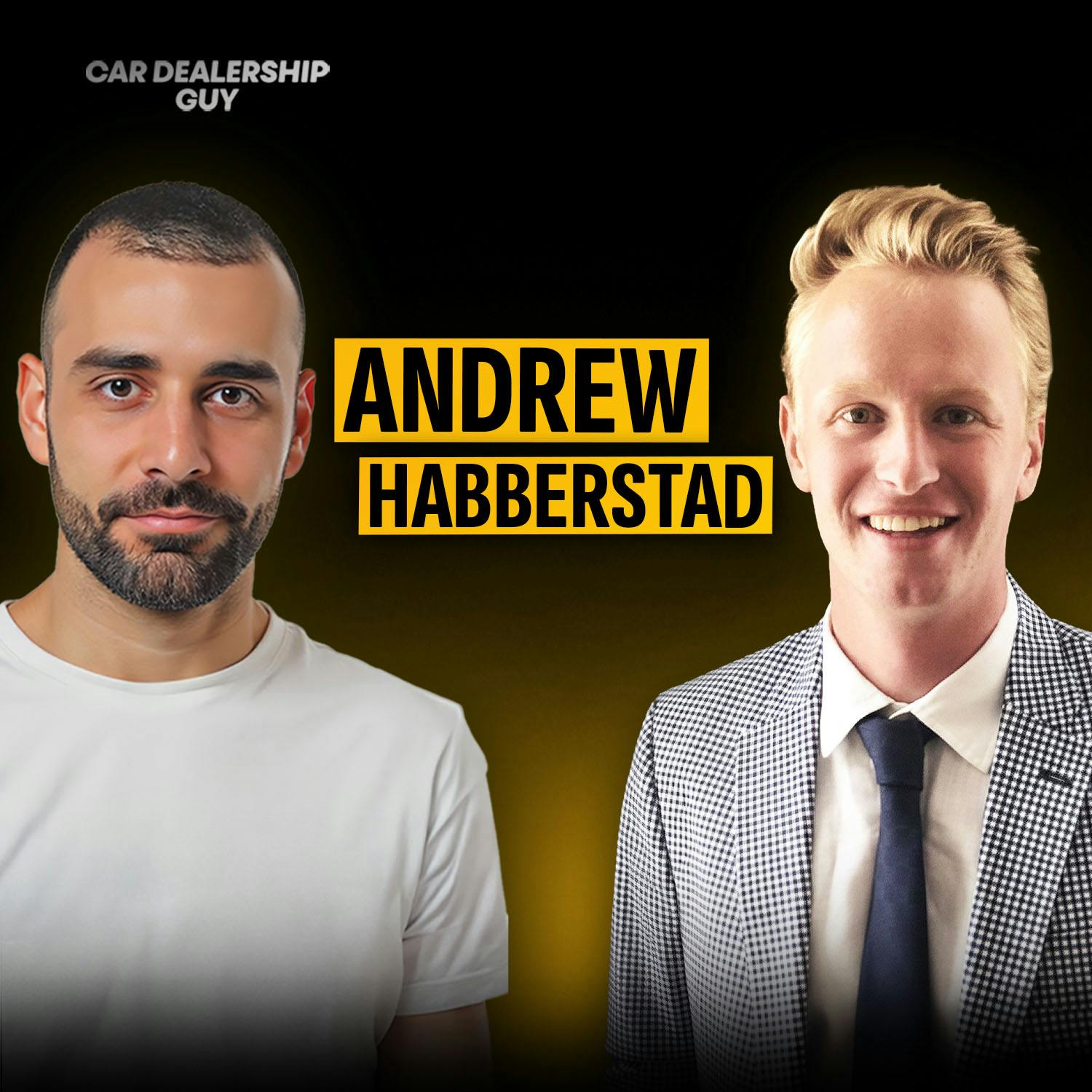
The $7K Store that Built a 55-Year Dealer Empire & Where It's Going Next | Andrew Habberstad, CEO at Habberstad Auto Group
Car Dealership Guy Podcast
The $7K Store that Built a 55-Year Dealer Empire & Where It's Going Next | Andrew Habberstad, CEO at Habberstad Auto GroupCar Dealership Guy Podcast · Jan 31, 2026
The Volkswagen Eos is a small car that can turn into a convertible, meaning you can drive it with the top down. It's a fun car for sunny days and has a nice design that many people like.
The Toyota Supra is a fast and sporty car that many people love because it looks cool and drives really well. It's popular among car fans who enjoy modifying their cars to make them even faster.
The BMW M Coupe is a special version of a BMW car that is designed for speed and great handling. It's a two-door car that looks unique and is loved by people who enjoy driving fast.
Negotiating means talking to someone to agree on a price or terms. In car sales, it’s about trying to pay less for the car.
LIVE
Today, I'm joined by Andrew Haberstad, CEO at Haberstad Auto Group.
Dealer franchise values have exploded, but it wasn't always that way.
And Andrew walks through a time when a BMW franchise costs less than a used car today.
We dig into how relationships, peer trust and postwar
entrepreneurship shaped a multi-generation dealer group where they are going next
and why those same principles still matter in today's high capital environment.
Let's get into the show.
Andrew Haberstad on the CDG podcast.
Andrew, welcome.
Thank you for having me.
Yo, see, it's a pleasure.
Pleasure to have you on.
We were in the midst of a health conversation.
I was like, we got it.
We got to kick it off with a little health and wellness.
You know, I think we should do at the rate that this podcast is evolving.
I feel like we should do like a health and wellness corner.
There's been a couple of these in the past and people like them.
People send you texts on the side.
Like, oh, thank you for speaking about that or talking about this or my wife.
It also doesn't whatever like, you know, want to use like the organic healthy
toothpaste, but it's the world is changing, man.
People are people are really, you know, it seems like just a waking up to, you know,
how so much stuff around us is so toxic.
So anyways, we got to this conversation because I was telling you that
coffee is like apparently a huge source of mold in people's bodies.
And I'm I'm a exhibit A of that.
So it seems based on this latest test that I did.
So I'm trying to, you know, cut it out just a little bit.
There's there's like mold free coffees and stuff you can get, especially tested.
But you just never know these days, man.
Yeah, you definitely don't.
I do like the route that we're taking so far with this podcast.
I think it usually starts off with like
dealer talking about their background, but getting into health, wellness,
malt, unconventional route, but I love it like that.
I actually changed that.
So I what I I started at some point, I started just pressing record
during a conversation.
And then yeah, recently I haven't done too much.
Like tell me about your background.
I feel like people and please for anyone listening, like, you know, shoot me a text,
like tell me if you disagree.
But I feel like people want to get into the meat and potatoes a bit faster.
So I mean, I do have a question teed up for you.
That's top of mind for me.
That's not about your background.
And then the background kind of, you know, gets brought up in conversation naturally,
you know, definitely.
Yeah, to be honest, I usually skip past the background part and I go right.
So that's the market research, baby.
That's right. There we go.
All right. Well, we skip past it today.
So let's talk a little bit about, I mean, you know, for your four points,
four franchises, seems like your dad also has a partner in a high end
used store in Palm Beach based on, you know, what I saw.
But I am curious, just starting about you and your role at the dealership.
You're today, you're the CEO of Haberstad Auto Group.
And you've been in leadership for about five years.
Tell me about this nickname that you have, the operating system guy.
What is this? Why did you get this nickname?
I almost wanted to tell you to launch a Twitter account and call it the operating
system guy and anonymously tweet about what you're doing because it was pretty catchy.
So what is this? Why did you get this nickname?
Yeah, so actually, nobody calls me the operating system guy, but I do like to think
that we are a dealership that kind of, you know, utilizes an operating system quite well.
So we subscribe to the EOS, which is the entrepreneurial operating system created
by Tino Wickman from the book Traction, which I'm sure you've read.
I think you've referenced it before.
And we have a leadership coach that comes in and he meets with us quarterly.
And then we have our weekly, what we call L10s and it breaks down a 90 minute
meeting into specific segments. So we start with our check-in.
We have our to-dos, we have our list of issues, we have our checkout.
And then we have what we call our rocks, which is our quarterly goals.
The one thing that's most important.
And so then from there, each department manager and each executive team member
has their own L10s that branch beyond that.
So it's kind of helped us to eliminate friction, eliminate silos.
And it really gets everybody to speak the same language.
Now we're talking about core values, rocks, action items.
And, you know, it's really just helped kind of unify the process
and what we do here at Haberstad.
What's an L10? What does that actually mean?
Like, how do you simplify that?
Yeah, so an L10 is a level 10.
It's the name for the meeting.
And so that, an L10 meeting follows the specific structure
of what I previously referenced.
It's meant to maximize the efficiency and it's meant to get to the heart
of issues and make the meeting more
goal-oriented and solution-oriented.
I forget who it was, but somebody who we work with said,
a meeting without data is just a conversation.
And with the L10s, it's all about data bringing it to the table
and how we can kind of resolve it together.
So who comes to these meetings in your group?
Again, four store group, so not one point, but also not 20 points, right?
So kind of mid-sized there.
What type of people do you bring around the table for these meetings?
Yeah, so the executive team is comprised of myself
as the CEO, my COO, Josh Barron, who actually came from the BMW corporate side.
He was the head of BMW M for the United States.
And then we have our CFO, service director, parts director,
and a finance director and three sales general sales managers.
Sorry.
So all the people attend these meetings.
All these people attend the meetings.
It's an hour and a half every Tuesday from 10 to 11.30.
And then each of those directors has their own,
what we call L10 meetings with their own departments.
So that enforces that the message gets all the way down the org chart.
And what kind of issues do you surface during these meetings?
It seems like 10 minutes on each
topic or each section you can describe this better.
But it doesn't seem like much time to problem solve.
So how do you actually come out accomplishing things to your team for these meetings?
Yeah, so what we do each week is
if there's anything that we can't resolve, we make it a to do and then we attach that person.
So, for instance, today we had we're going paper list in our five dealerships
and our count, our controller Marcy
was responsible for some of the items that make that happen and enable it.
And some of the things just didn't get done.
So we listed those three or four things.
And now next week when we come back, Marcy's name is going to be attached to that.
And she'll come and bring and bring the solutions.
Usually, though, we're all on the same page and we realize that each other's time is valuable.
So we try to just get right to the heart of it.
We have a compliance issue right now.
We had a fraud case a week ago.
And now we're getting on the phone with this
technology company called Gather in about an hour.
And they're backed by Clear that you see in the airports.
And it's just all about like, well, how do we get to the bottom of the funnel to resolve this?
So, yeah, it's it's it's pretty good.
We also rank it at the end, you see.
So at the end, we say, OK, everybody that was in the meeting,
what would you grade it and why?
And if it's great and we feel like we were really productive, OK,
we're going to get a lot of tens.
But if we felt like maybe somebody rambled on too long or maybe we talked too much
or maybe we didn't get to the core of the issues,
you're going to see people start to, you know, hold the room accountable and say,
well, it was a five or is a six because of this reason.
So that kind of helps keep us in check.
Did you walk into this type of management structure at Haberstad or did you
implement this yourself?
Yeah, no, we didn't.
So I think that was part of the reason for it was we were very much mom and pop
before we started to acquire the two stores that we did in the last couple of years,
which was PowerSports and Kia.
And I needed the same language for everybody.
Obviously, there's the same language with an automotive, but I needed a consistent
language amongst leadership principles and amongst management styles.
And we use a company called Vision Management Group for our F&I and actually
as part of their process, they bring in a leadership coach.
His name is Ryan Giles, and he helps to implement this in all of our stores.
So, for instance, when we acquired Kia a month ago, Ryan came in the first day
with me, with the COO.
We had a conversation with the entire staff.
We opened up the conversation about the EOS, what it is, why we do it, how it
empowers people and, you know, it was really well received by the staff.
So it's something that we feel is really scalable moving forward when we look
towards the next acquisitions.
So tell me more about, like, as you think about durability of your group,
been around for over 50 years or getting close to 50 years,
what are you, what are you going to do differently?
What are you going to do to the same, you know, improved?
Like, how do you just think about overall direction of the group?
You could talk about your brand mix and how much you believe in the future of
your respective brands, but I'm curious how you think big picture about your
current group and the future of it.
Yeah, so we actually discussed this a couple of weeks ago with our managers
and Elon. I know you did.
I asked him that, no, I think I didn't do research.
I didn't research that well.
I think Elon actually said it quite well, right?
It's like if he is a mantra with his organization where
if it's not getting us one step closer towards landing on Mars, then what we're
doing is not important. And for us, it's if it doesn't bring us
one step closer to landing on Palm Beach.
I had to. I'm sorry.
Listen, I'm in a I'm in a I'm in a silly mood right now.
So I got it. I'll take it. I'll take a step back.
That's our secondary mantra.
But yeah, the first mantra is if it doesn't bring us one step closer towards
buying a store that we need to rethink about what we're doing.
So that that's in relation to CSI.
That's in relation to profitability.
And I'll give you, for instance, we started an internet parts position
and we thought it was great, right?
Like, OK, so the sales was an additional 30 to $50,000 per month.
It was getting us one step closer to achieving our parts goals at the stores.
And then we broke it down into the net profit after commissions and after
expenses each month. And it turned out that online parts
position was actually losing four to five grand per month.
And we quickly said, OK, let's go back to the vision
that isn't getting us one step closer towards buying another store.
Maybe this is something that we should ask.
So I think now that the team sees that and everybody's rowing
in that same direction, it makes problem solving and the questioning of
should I do this, should I not do this that much simpler and easier?
So that's a that's a good that's a good example.
How is that running unprofitably?
Like, where was that all the expense creeping up from?
Is it just people?
I think it was I think it was a mixture between the cost of the seat industry
wide, it's a position that will likely pay between 70 to 100,000 at market rate.
And then also the slim margins that we're operating off of to sell these parts
online and also online software tools, our own websites,
the SEO behind it, all that stuff.
How do you draw the line, though, where like, you know, my last company,
which was venture backed, so we grew super quick, you know,
you could be growing growing top line anywhere from two to three X a year.
Obviously, unprofitably, because that's what you're raising venture capital to do
to grow quick.
It was always is always tricky, like with these having these,
you know, these like heuristics in the company, because I could argue that
well, if you do parts correctly, it will grow your bottom line
and you will be more profitable and that should be a good thing for the group.
And would that not get you towards another store?
So like, how do you how do you draw the line between what actually makes sense
to focus on versus what doesn't make sense at the end of the day?
This could have yielded a profit in theory to do or take time, focus and effort.
But like, how is the line drawn there?
Yeah, I think I think in that instance, we were really looking at net profitability
and cash flow.
So we run a pretty large wholesale pop parts operation out of our BMW stores,
roughly around a million dollars a month in sales.
And, you know, the revenue that that was generating
is kind of similar to having like one body shop or two bar body shops
worth of revenue for that month.
And we don't dedicate individual people to handle one or two body shops.
We dedicate individual people to handle dozens of body shops.
So when we broke it down and compared it like that, we're like, OK, well,
maybe we're maybe we're just not operating in the right vertical right now.
Or maybe we need to rethink this this venture outside
the upside, exactly.
And that's something we're like, we'll never look at that as a failure.
My my group, it's like, OK, we tried something and I'm happy we did it.
Now let's let's pivot and let's go on to the next.
So for us now, I mean, our focus is largely on growing on the part side
is growing the wholesale parts operation.
We also have a mobile service van, which I think has taken us a little bit long
to get going.
But all the customers who do utilize it, I mean, it's been incredible
for service retention.
It's been incredible for CSI.
And actually, the manufacturer puts a lot of money behind it.
They'll give you a subsidy per time that you go out per job.
And then they'll also give you a multiple on your warranty rate.
So I believe the last time I checked the going rate was about one point five
extra warranty rates.
So now New York labor rates start to look like Florida.
And if you can get the thing going, it really starts to pay itself back quickly.
Yeah, that is interesting.
I spoke with a fixed ops director this morning, Ford, and we were talking
about that, like the overrides for do mobile service.
And I mean, the OEMs are smartly pushing that.
I'm also, you know, in Ford's example, like they're mandating and video MPIs.
I don't know if that started yet or that's going to start.
But, you know, I think overall, like net positive for customers and dealers
and OEMs alike in the long term.
Um, tell me about, you were just telling me about the part.
Oh, and I was going to say one more thing about your parts example, which was.
I also liked to view things from a return on hassle lens, which is sort of
similar to what you said, but it's like, you know, is the juice worth the squeeze?
Like we only have so many hours in a day.
If you really think about it, like how many focused, you know, deep work hours
in a day do you have where you can really think critically and make decisions?
Um, you don't have that many between eating, using the restroom, commuting,
like whatever, doing everything you do.
And so yeah, return on hassle is a big thing, right?
Like where are we spending our time and energy?
Is that, you know, where is that going to yield the best return or should we
focus a bit more on service retention, where that lifetime value of that customer
increasing just a tiny bit, you know, is extremely meaningful return to the, to the
dealership.
I want to talk a little bit about your acquisition of Kia of Huntington.
Before we do that though, what are you focused on today?
You mentioned obviously getting you to the next acquisition, but like
tactically, what are the top, you know, three rocks or initiative in your
dealership today?
Um, yeah.
So I think one of the top initiatives for us is employee retention.
And when I look industry wide, actually, uh, you know, we see anywhere between 40
to 50% employee turnover per year.
And I think often operators, managers, we spend so much time investing time into
the bottom 10 to 20% of people that we hope to turn around.
Whereas we actually end up ignoring, you know, the top 10 to 20% of people who are
our strong performers who maybe don't get enough FaceTime with us.
So for me, and what we do, one of the ways that I think we can help support
those people a little bit more is we provide a leadership coach.
The guy who comes in and handles our EOS and our, um, quarterly meetings, we
provide a leadership coach to all employees and he's available to them whenever.
So not only are we communicating daily with top managers, but if you, if
you need help with how to have a difficult conversation, or if you need
help with onboarding properly, or if you need help with something that's going
on in your personal life that's carrying into the business life, you can get on
the phone with Brian and, um, have a half hour to an hour conversation with him
about that.
Um, so I think as part of like an employee retention tool, that's been great.
The other thing is we're looking to spruce up the benefits that we offer to
all of our employees.
So one of the things that we did a year ago was paid birthdays and, uh, that
was like unanimously one of the most reacted to emails ever with the confetti
flying in the air.
And, you know, it was as if we told everybody they're getting a $50,000 a
year race, um, but, but that's good.
And now we're looking into things like, like scheduling.
Okay.
How do you take a technician that's been on five days a week, eight hours a
day for the last 20 years and now give them the option of working four days a
week, uh, 10 hours a day and, and, and having them take an extra time, uh, an
extra day off with their family.
Um, so, so all of these things, right, um, we're, we're really looking deep into
and then the four tense thing isn't even on the tech side.
I've, I've seen stores and we're interested in doing it here too, where
we could do that in the finance office, or maybe we could do that on the sales
for, um, and, and I, and I think it's, um, you know, just kind of help
builds that loyalty to the dealership that the employee works at.
Um, so yeah, employee retention is definitely number one.
Um, I think two is, is building out service capacity.
So we've been building more bays, uh, in Huntington at our BMW store, we
added another six bays at Kia.
We've only been there a month, but we've already added another three bays.
We hope to add three more, um, at our Bayshore BMW store.
We added another two bays this year.
And, um, you know, one thing that irks me is, is coming in some days and seeing
the bottleneck at nine AM.
Well, how do we spread that workout?
Um, and how do we make sure that that's not the case?
So I think expanding our hours is one thing and then also increasing, um, our
Bay capacity is another, um, and then not only measuring our service satisfaction
by CSI, but what I think is a better metric in service retention.
Anybody can fill out a survey and say, okay, it was great.
Maybe there's some biases there.
Maybe it's part of it was untrue.
Maybe they're just hurried and say, okay, well, this is what I'm going to give
you guys a good score.
But if they actually come back with their car, that's, that to me is really
the best gauge on whether or not they like to do business with your service.
That's the result.
Yeah.
I love it.
As I always say in the podcast stated verse revealed preferences, people
tell you one thing, they do another.
So, or as we say at the infamous saying in the car business, buyers or liars.
So, so you gotta, you gotta, you gotta really see the action.
If, you know, if it adds up, how much of your date do you spend on just tech
selection, vendor collaboration, you know, off camera and on camera.
We spoke about like four to five different vendors in like 10 minutes.
Uh, as I was just asking you questions about how you run your dealership.
I mean, if you include EOS, that's probably six vendors.
How much, how much of your date do you spend on just like, you know, the tools
and service providers that are, uh, you know, integrated with the dealership?
Yeah.
I previously, it was a lot more, um, when I was coming up into management, I
think there was this dichotomy between how my generation came up and the
technology that we used, and then the technology that was already
implemented within the dealership.
It was really difficult for me to go out and attract other young talent and then
say, well, here's a blue screen.
Well, here's like dot matrix printer.
Right.
Right.
I love the dot matrix.
They sound of money, baby.
The guy's like, well, I use an iPhone.
So, uh, I don't know what this blue screen is, but yeah.
So that was my first priority.
Now we feel like we're with the right vendors and hopefully we have them for
the next couple of decades.
Um, I mean, AI is, is an interesting front.
Like it's something that we were on very early and honestly, a lot of it
didn't work out for us.
So now we're trying to identify, okay, well, what is the proper stop on the
train to get on at?
And, um, you know, we had one where, uh, it was an auto responder and a customer
replies to, uh, the AI at two o'clock in the morning, the AI says, oh, wow,
you're up early and the customer says, yeah, I am.
And then the AI replies, did you just get out of the shower?
And it was like, we, we, we relayed that to the company and said, okay, well,
can we just make sure it doesn't say some of this stuff?
And, um, they're like, oh no, the AI is still learning.
We can't do that.
So what, you know, what, what position are we left in?
Do we just allow the AI to be creepy at two AM?
No, of course not.
So we, we axed that company, um, but you know, even, even so, I think, I think
oftentimes myself included, I was very quick to just say, okay, well, AI is
going to be the solution.
AI is going to be the bandaid.
Um, we had a, we had a telephone AI as well where, um, you know, it would
bring you through the entire call tree and it would reply.
And then I thought it was the greatest thing, but then I called up a local
restaurant in our town, nice restaurant and I tried to make a reservation.
It had the same exact, uh, answering system.
And I didn't like the experience at all.
And, um, we actually ended up surveying our customers saying, Hey, well, what
do you think of the AI that we have implemented?
And 80% of them said, I wish I would just talk to a person.
And I think it'd be way easier.
Um, and, and look like we're monitoring AI right now.
We think that it's something inevitably that, that we will be on more.
Um, but I just haven't seen too many, um, solutions that are fully built out
and fully capable to the needs that we have right now.
Well, shameless plug.
Once you join circles after this call, um, you'll get all your answers right
there because all the dealers have been in circles.
You know, 500 plus have been discussing this exact issue.
So here's what I'll tell you.
I'll give you the, I'll give you the kind of TLDR here.
Um, yes, that does happen with some providers.
Um, at this point, there's like 10 plus providers and there's, you know,
probably a handful who have really excelled at the technology and made it so
good that you won't even know it's not a human.
Um, and those providers are simply doing very well.
Like what you mentioned from the, the, you know, the ATR providers, I'm not
hearing anything like that.
Uh, cause you know, I'm literally part of my job.
I just ask dealers all the time, like, Hey, you know, are you see, you know,
any big hiccups with X or Y and Z and it seems like that bridge has been crossed.
So I would tell you for your benefit, uh, it's probably, you know, probably
worth taking a look at, um, you know, what's the latest sentiment.
And yes, they, stuff like that is extremely detrimental.
Um, but I have just been hearing some good things.
Uh, okay.
So that's one thing.
Second thing is, uh, so you spoke about service.
You also mentioned, this is a bit less on the AI topic, but you, you were
telling me about, or I asked you, I said, uh, I saw some couple vendors named.
And I said, did you invest in these vendors?
And you mentioned you did.
So I'd love to kind of hear that story.
And you know, a lot of dealers have been, a lot of dealers, I would say in
general have been either investing in, you know, funds, uh, you know, you have
automotive ventures, FM capital, auto tech ventures.
And, and many other dealers have been going direct when they have the
relationship, like you did in, in, in a couple of cases here with investments,
looking to really participate in the upside that they're helping create.
So I am curious to know if like, you know, what was your rationale for making
some, you know, investments in your vendors?
Yeah, definitely.
So we made two investments in the last year directly into, uh, convertible
rounds for both UVI and for VINQ.
Um, and I guess one of the main rationales was I'm young, I'm 28 years old.
And we figured, okay, well, if we have the right software here and the
TAM, their total addressable market is really big.
Um, then why not be a part of that upside with them?
And also why not help them maximize their feedback loops?
So every, every single time we get on the phone call with either of those
companies, we're bettering their product.
And we also think we're bettering, um, the product, which they can then go out
and kind of use to acquire more dealers.
Um, so for me, that part of it's really exciting.
I think it keeps me on the cutting edge of what else is out there.
It's always my job to look out into the future and say, what else is coming our way?
And, um, I like to be able to backstop that with, okay, well, I like this company,
but I've never actually dealt with it one on one, but in both of the cases,
UVI and VINQ, we really fell in love with the product first.
And then we fell in love with the team behind it.
I think it's really easy to get on a demo with a company and their sales team
does incredibly well, um, and, and they get you on board.
But so frequently the retention part of it isn't there.
And then the customer service part of it kind of falls off.
But with both of these companies, the sales team was great.
And then the customer service got even better.
So we felt, okay, putting these two things together, these are companies that
we want to be behind on top of that.
I think the visionaries and the people at the top, um, with, um, you know,
Danny Zazofsky, Chris Hoke at VINQ, and then the, um, Heaver brothers over at UVI.
It's, um, the stories behind the, the companies are incredible.
The existing investors that they have are incredible.
Um, and, and so we just really believe in their long-term vision, um, and
great companies to work alongside.
Do you do lots of tech investing in general or only these two companies and
companies you work with?
Uh, yeah.
In terms of automotive tech, only these two companies, um, we have another
company that we're launching now, which is going to be a, uh, kind of a drive
through appraisal machine with UVI.
It's called tradeyourcar.com and the game plan with it is to be able to drive
your car through the machine and you'll have an appraised offer within 30 seconds
and hopefully a check in your hand within a couple of minutes.
Um, so that's more of like a bootstrap grassroots, um, project, but one
that we're excited for nonetheless.
And who's ideating all this?
Are you the one who's driving these, you know, kind of novel ideas or is there
someone else, are they coming to you?
Do they kind of know you as someone who's, you know, open minded or how
is this kind of coming to be?
Yeah, the, the, the UVI idea was really one that my COO Josh and I had
together and then we spoke with UVI about it.
UVI was actually interested in investing in it directly.
Um, so we're still working that out.
Um, but we felt that the acquisition timing and the appraisal timing when
you go to a store just took too long and how do we get that time down?
And if you have a machine that will tell you every single ding, dent,
blemish, the, uh, whether or not the brake pads are in good condition, what,
what the tire tread levels are, why not put that together?
Add the human element to it, to backstop the valuation.
And, you know, we, hopefully that's, uh, kind of like the Carvana of acquisition.
Um, so, uh, it's not fully off the ground yet.
It's just an idea that we have, um, and the town has taken six months to
give us the approvals and permits for it.
So we wish it could have started earlier, but, um, we're going to be
launching that in about a month or so.
Mm hmm.
So tell me about, we haven't touched on hospitality or just like your store's
experience.
I saw a couple of points on what you're striving to do in your stores, you
know, rits up the experience and your Kia store specifically.
What's your, what's your goals there?
Tell us a little bit about what you're aiming to do with customer experience in
store.
Yeah, definitely.
So, uh, the last couple of years we've actually hired the three people directly
out of the Ritz Carlton.
Um, one of them is a guest experience manager for the group.
One of them is the service lane manager and another one was a salesperson.
And so right now, if you go into my Kia store, the person sitting at the front
desk worked for the Ritz Carlton for five years.
And when you check in your car for service at our BMW of Huntington store,
the first person you'll meet in the service lane, the greeter still works at
the Ritz Carlton after he's done here and he's been with them for about 10 years.
Um, so what we found was their onboarding in their training was phenomenal, but
quite frankly, I don't think that they were compensated enough for their
abilities and we came to them and we said, Hey, you know, we really appreciate
what you, what you do.
We think you're a phenomenal worker.
We'd love to have you over at BMW.
What do you think?
All three of them raised their hand and said, yeah, absolutely.
We looked at it.
We looked to have some more.
Um, but, but it's been great.
I mean, I don't think there's another Kia dealership in the country that
could say that they have a Ritz Carlton concierge at the front desk.
Um, but we can, and then it kind of helps, uh, positively metastasize into the
rest of the organization.
So now all of the receptionists that come on board, they're trained by Alyssa
who's, who's from the Ritz Carlton and, uh, she kind of helps to spread, uh, all
that positivity and, um, everything that the Ritz offers.
How does that actually show up in day to day, right?
Like what is, uh, what impact does she, is she able to actually really make on
the customer experience, uh, in your opinion?
Yeah.
So, um, one of the small things that we did as an initiative was, okay, well,
how do we make every single customer feel so special?
So Alyssa has gift bags that are all Haberstad branded water bottles,
T shirts, vests, anything you could think of.
And you know, if it's a heat case customer in the service drive or a
person coming to pick up their first BMW four series, um, she'll go personally
meet them, give them a gift basket.
Hey, thank you so much for being a client of Haberstad.
Um, warm smile on her face.
She's always, always, always smiling from ear to ear.
Um, and we've seen it.
We've seen it in the reviews.
We've seen it in the surveys and we've seen it on our Google, my business pages.
My, my biggest issue right now is I have too few Alyssa's and I'm trying to scale her.
So how do we get her in every single store?
Um, and, and she does, she floats around, but, um, you know, so how did you remind
me, how did you find her specifically?
You mentioned she came from the Ritz, but how did you find her?
Yeah.
So, um, she actually worked in the same building that my dad lives at.
Um, so whenever I would be there, uh, I would communicate with them and, um,
love that if you go there, we probably have a most wanted picture on the wall
because we've stolen half of their staff in this building.
There's a house nearby and I saw a contractor there the other day and I
need a couple of small things done.
So I, before he left, I was like, Hey, my friend, can I have your number?
You know, might need a couple help with a couple, you know, small things.
And the guy was like, Oh, you're stealing my contractor.
I was like, come on, dude, just, you know, funny, but that's the best.
Yeah, that's good.
Um, so dad, dad is still creating shareholder value even when he's not
day to day in the store, huh?
That's right.
That's right.
It was his idea.
I got to give him all the credit.
He hired the first one I hired the two after that.
Um, so yeah.
Unbelievable.
Hopefully I'm free and shareholder value from the apartment building.
Yeah, that's great.
Um, do you, do you go down to Palm Beach much or?
I do.
Yeah.
I probably go down once a quarter.
Uh, he has four used car stores there, all actually on the same road between
Stewart and Palm Beach gardens and stores, really for used car stores.
Yeah.
They're called classic cars of insert town name here.
Um, he has a partner, John Giasulo.
He used to be the COO of off lease only, uh, before they got sold.
And, um, yeah, they have a phenomenal operation.
It's, it's really, um, I would say, uh, simplistic, but they get the result.
It's a bunch of, uh, small buildings on the property.
Um, they're all in towns too, where they put a restriction on the amount of car dealerships.
So for instance, they have a location in Jupiter.
Uh, they, uh, Jupiter only allowed three car dealerships.
One went out of business.
So now there's only two left.
Um, and I think with the growing population in those towns in Florida, that's,
it's just such a great tailwind for them to have, um, to be the only game in town.
So, um, yeah, that's, that's kind of what we're doing now.
Why did he go used only or is he pursuing franchise down here?
I know you oversee one franchise store down here, right?
Yeah.
So I oversee the five dealerships that we have on Long Island.
Uh, he oversees the four stores in Florida.
He tried to retire Yossi and he, and he swung a golf club for a couple of days
and then said, this isn't for me.
And now he's back in a dealership every single day.
Super boring.
Uh, Super boring.
So yeah, that, that's what he does now.
I'm not retired, but I can, I can imagine like I, it's on one, one day in the weekend.
I go nuts.
I can't imagine like that every single day.
Yeah.
So he's got a knack for the auctions too.
He's always running cars at Mannheim, um, buying cars.
That's just, that's his bread and butter.
Um, so yeah, your dad, did he call up the use car track?
See like gravitate towards use cars or he did.
Yeah.
He was a use car manager.
Um, he would go physically to Mannheim board in town and Mannheim skyline to run
our cars every single week himself.
I've probably seen him probably, I've probably seen him probably.
I inherited that job after he gave it up and it's fun.
I love being there.
Um, simulcast is definitely efficient and, and saves you a lot of time, but
there's something about being in the lane that is, uh, so exciting and energizing.
Yeah.
But I do find it interesting that you've sort of split up like you've taken over
the franchise as he's under used completely.
How, how does that work?
I know he's the chairman of the group.
You're the CEO, but like talk to us about separation of duties.
How do you guys actually like function?
Yeah.
So I have full autonomy over the stores in New York.
Um, he has full autonomy alongside his partner over the stores in Florida.
And, uh, we have a very good relationship.
If anything pops up, for instance, we hired a CFO last week.
Um, I'll get his opinion on it, introduce him to her.
Um, but in terms of day to day management, that's really all on me and, and my COO,
Josh, um, every time he comes to town, um, you know, you know, it's great to have
them there, like we have, we have a very young team.
I think that we have the youngest executive team in the country.
I haven't seen one group that has a younger team than us, but we're also
able to marry that with long tenured people.
For instance, our parts director who's been with us for 25 years and, and he's
been one of my dad's guys from the beginning and it's really age agnostic.
It's just we're looking for a certain mindset and young or old, these guys
all share this, all share the same thing.
So it's the same way my dad thinks it's the same way that I think.
And, um, you know, now through the EOS, through the leadership coaching, it's
a matter of how do we create as many of these people as possible.
How young is the team?
How, how, how young are we talking?
So I'm, I'm 28.
My COO is in his early thirties.
Um, my finance director is in her early thirties.
Um, three of our GSMs are around 30.
Um, the CFO that's coming on board is 40.
So I think that's what energizes all of us is, um, we have two, three, four
decades, that lease together.
Um, and you know, we've acquired two stores in the last two years.
Our goal is to continue to acquire more.
Hopefully we get a franchise store in Florida.
That's the next item on the bucket list, uh, granted a, uh, an expensive one,
given the multiples are all at a premium down there.
But, um, yeah, it's, it's, it's, it's, it's cool.
Like operating with us, I think you'll quickly see or anybody that's on board
quickly sees just the pace at which we operate.
And we believe, you know, we'd rather fail five, six, seven times and hone
in the process and get one step closer towards finding the solution than to
not have acted at all.
And I think quite frankly, a lot of older dealers, um, you know, are, are
kind of waiting for like a hundred percent clarity to make that decision.
And I think that's actually our competitive edge is, is being able to
say, we don't care about failure, just go out, do it.
If you fall on your face, get back up.
Um, and I think there's been countless examples of that over the last couple
of years where like it's allowed us to remain one step ahead.
Mm hmm.
What do you think going into 2026, what do you think the best dealers are
going to be doing, you know, differently?
Like what's the theme for the year in your opinion going to be?
I think one of the main things that we're trying to achieve here is, is employee
retention, um, the cost of onboarding and the cost of firing is obviously
really expensive.
So for us, it's, well, how do we, how do we keep the good people?
How do we continue to train them?
How do we continue to do what's right by them?
And, um, you know, kind of through these, through the leadership coach,
through the EOS system, through all the things that we've already discussed, we
think that that's a good way to do so.
The other thing that we're looking forward to doing more of in 2026 is
promotions from within.
And so obviously not a new topic, but one that we really believe strongly.
And so we have 11 finance managers throughout our group, 10 out of the 11
were promoted from within.
And I'm not talking about, oh, they were in the sales seat for a year and now
they're a finance manager.
I'm talking about, they were a lot porter.
They were an assistant and accounting receptionist.
And, um, you know, the effect that that has on the rest of the organization is
huge.
We tell everybody, if you want to put yourself in a position to be promoted,
you know, you need to be great for the culture and your performance needs to be
good.
So when they see somebody being put in that seat, um, they know what it takes to
get done.
They know what it takes to be there at the same time, for whatever reason, I
haven't had much, much success bringing in people from the outside.
Usually they'll be with us for two, three months.
And then, you know, we'll have to try to recalibrate their mindset on a certain
thing.
Maybe they came from a store, uh, or a group earlier.
And it's just a different mindset as to how we want to operate.
Now we're trying to reteach them, um, or there's no loyalties to your brand.
So they'll say, oh, I got a job offer and they're going to pay me an extra two
to 3% of the gross profit for, to make an extra couple hundred bucks a month.
Whereas when we take somebody that was a accounting assistant making $50,000 a
year and then goes to be a salesperson making a hundred and then goes to be a
finance manager making 200 grand, that loyalty is already built in.
Um, and, and so we don't have to worry about them job hopping.
They're already so allegiance to what we do and they believe in the vision.
Um, so that we, we hope to do more of that in 2026 for sure.
It's been great for the culture.
And when you say, uh, growing from within, like, what type of signals are you
looking for in your, in your team members specifically?
Yeah, we, we look to make sure that everybody who we promote or anybody that
we take in from the outside matches our core values.
So we actually came down to two final candidates for the CFO position a week
ago and we said, okay, well, let's just score them based off off of our core values.
So our first core value is extreme ownership.
Choco willing, not casting blame, but pointing the figure at yourself and
saying, what could I have done better?
So extreme ownership, you need to have drive.
You need to have passion.
You need to find a way if there's a hurdle in front of you, rather than
pointing out the hurdle and saying, wow, look at it.
How are you going to get over it?
Um, and then the fifth is do the right thing.
Always do the right thing by the customer.
And we have these core values blasted everywhere in any showroom that
you go into for Haberstad.
So then we, then we ranked them.
If, if they're a negative in that category, it's a zero.
If they're a plus minus, it's half a point.
And then if they're a plus, it's one point.
So we went down both CFOs and we ranked them and whoever had the most points,
that's the one that we gave the offer to.
And, um, you know, we do the same exact thing with the key acquisition.
We did it for every single employee, how we feel they've stacked up against our
core values and, um, anybody who's kind of in the green or, um, we look to, uh,
continue to promote.
Mm-hmm.
You have a good head on your shoulders, man.
I'd love to know a little bit about your, you said you're 28.
So it's, you're very impressive.
Tell me about your upbringing.
I get a lot of messages from people like, you know, here and there, but they're
asking about, you know, Hey, my son's in the business, you know, what do you
think from your opinion, from your perspective, I can do to make sure, you
know, they don't turn it off to put it, to put it bluntly.
No, but in all seriousness, like, you know, everyone wants their kids to excel.
What was your upbringing like?
Tell us about that.
Yeah.
My grandfather, Howard Haverstead, started the business.
He used to own a Myers-Manks, Dunebuggy dealership, uh, in the back of his office.
And then in the front was a paint shop.
He ended up going to war with a gentleman named Joe Bezetta, who owns the
competition auto group on Long Island.
And now his children, uh, own it.
He actually recently passed away, but you mean, you literally mean to war though.
You're not, you mean like to Vietnam, Vietnam.
Yeah.
And so when he got back, Joe at the time was a Porsche racecar driver.
He was getting into the car dealership space and he acquired a BMW franchise.
And he said, given how he, my grandfather was his best friend.
He said, Hey, there's a small company from Germany.
It's called BMW.
I think you ought to look at it, see if you could pick up a franchise.
So my grandpa didn't really think much of it.
One day he was reading the local newspaper and on the side in the
advertisement section, they said BMW dealership for sale dash $10,000.
So he called up the broker and like any car salesman would do, he negotiated
and he haggled and he was able to get the price down to around $7,000.
So that's what started the company.
And then 55 years later, three generations later from one store to five
in New York and foreign Florida, that's how we got our launch.
So always a cool seven thousand dollar franchise acquisition.
Yeah, those were the times, huh?
Yeah, amazing.
Yeah, so I started working in the dealerships when I was in middle school.
My father always told me, OK, you can be involved in the business,
but you have to see and do everything because nobody respects the next generation owner
if they just go right to the top seat.
He needs to work in every single department.
So I did exactly that.
I started, I started literally taking out trash.
I had a maintenance job where we were sweeping leaves off of the roof.
I was made this was fun, though.
Made this was a good job.
Yeah, I made this is fun.
I enjoy simple.
Definitely.
I was a PDI tech for a little bit.
Oil changes, tires was in the parts van,
represented cars at Mannheim at the wholesale auction.
I was a salesperson.
Then I was a used car salesperson.
And the only positions that I hadn't spent much time in were as a service
advisor and as an F and I manager.
But in both of those situations, my dad said, hey, just because, you know,
it didn't fit our timeline and our growth path for you to sit in those seats
doesn't mean that you shouldn't know about it.
So I went out and got external schooling on both of those through ethos.
The F and I provider and it was it was phenomenal.
So now I don't think that there's a challenge that comes up day to day
where I haven't been in the seat and seen it or I haven't been taught on how to handle it.
And the rest of the staff definitely respects that.
Did you NADA Academy or anything like that?
Yeah, I did do NADA Academy.
Loved it. I was in the COVID year, so we weren't able to have a physical graduation.
We did a remote one. Nice.
But yeah, it was great.
Down in Tyson's corner, the instructors were phenomenal.
Definitely learned a lot.
And a lot of our management team goes through NADA Academy now, too.
Other than Haberstadt Auto, how do you spend your time?
What else do you do?
I love to ski.
I love to work out to our conversation
earlier about health, avid, cold plunger, sauna.
I wear a whoop, so I track everything, try to keep down on the alcohol.
But easier said than done, especially with NADA next week.
So. Oh, yeah, I was going to ask your question.
Oh, sauna, sauna life. I love saunas.
So you do you did you buy like an at home sauna or do you go to the gym or you bought it out?
Yeah, I bought it at home one.
It's a combination, so it's infrared and the rock heater.
And the rock heater is definitely like having nitrous in your car
rather than waiting for it to heat up the hour.
Just 180 degrees in five, ten minutes. It's easy.
So I had in my previous home, the Harvia,
you know, the the Swedish oven's Harvia.
They up. I mean, it gets like 210 degrees easy in there.
So that's great. Yeah, I love it, man.
Um, all right, so you'll be an NADA.
So, you know, we'd love to link up there
and we'll send you an invite to our party as well.
So it's a I mean, it's not that CDG life.com.
So I don't even need to say anything, but it's it's right down in there.
And it's going to be going to be a blast.
We have, I mean, it's crazy and, you know, flattered by the by the interest.
And so it should be we're investing a lot into it.
We have great partners, um, impale and call review
who are both, you know, supporting the event.
So it's just it should be a really, really great evening with incredible people,
incredible dealers, incredible, uh, just, you know, professionals
from the industry, vendor partners.
And so really looking forward to it.
Um, Andrew Haberstadt, Haberstadt Auto.
That's all I got for you.
Thanks for coming on the pod. This was super fun.
Yeah, thank you, Yossi. Appreciate it.
And look forward to seeing you in Vegas. Likewise.
All right. Hope you enjoyed that episode.
Please give the podcast a rating, consider subscribing to the show
and check the show notes for links to what we talked about.
Thanks for tuning in. I'll see you guys next time.
About this episode
Andrew Habberstad, CEO of Habberstad Auto Group, shares insights on the evolution of car dealerships and the importance of relationships in building a successful multi-generational dealer group. He discusses the transition from low-cost franchises to today's high-value landscape, the implementation of the Entrepreneurial Operating System (EOS) for streamlined operations, and innovative employee retention strategies. The conversation also touches on the group's future plans, including acquisitions and enhancing customer experience through hospitality practices inspired by the Ritz Carlton.
Today I’m joined by Andrew Habberstad, CEO at Habberstad Auto Group.
We unpack how a single relationship led to a $7,000 BMW franchise. Andrew breaks down generational continuity, smart expansion, and why listening to peers can quietly reshape a dealer’s entire future.
Check out Car Dealership Guy’s stuff:
For dealers:
CDG Circles ➤ https://cdgcircles.com/
Industry job board ➤ http://jobs.dealershipguy.com
Dealership recruiting ➤ http://www.cdgrecruiting.com
Fix your dealership’s social media ➤ http://www.trynomad.co
Request to be a podcast guest ➤ http://cdgguest.com
For industry vendors:
Advertise with Car Dealership Guy ➤ http://cdgpartner.com
Industry job board ➤ http://jobs.dealershipguy.com
Request to be a podcast guest ➤ http://cdgguest.com
Topics:
02:09 What defines the dealership business?
05:00 What are key leadership strategies?
15:22 How does a dealership retain employees?
25:22 What defines customer service excellence?
26:07 Which technology investments are innovative?
27:57 How can the in-store experience be elevated?
31:56 How do family dynamics affect the business?
37:05 What are Andrew's future goals?
Car Dealership Guy Socials:
X ➤ https://www.x.com/GuyDealership
Instagram ➤ https://www.instagram.com/cardealershipguy/
TikTok ➤ https://www.tiktok.com/@guydealership
LinkedIn ➤ https://www.linkedin.com/company/cardealershipguy
Threads ➤ https://www.threads.net/@cardealershipguy
Facebook ➤ https://www.facebook.com/profile.php?id=100077402857683
Everything else ➤ https://www.dealershipguy.com