The 987.1 Porsche Cayman Drives Like a 993 — For 1/5 the Price
About this episode
Jeff Lehmann’s 987.1 Cayman/Boxster expertise sets the tone as the hosts tackle durability worries, then pivot to why these base cars feel so alive. They compare the 987.1’s rev-happy character and mid-engine sound to a 993, quantify drivetrain loss on a 997.1, and debate IMS/bore-scoring fears versus real-world risk. Practical used-buying advice follows—VIN/spec checks, PPI findings, and maintenance-first mod strategy—before closing with a 987.1 survival guide.
In this episode of ElevenAfterNine, Derek sits down with Jeff Lehman, author of
"A Porsche Enthusiast's Guide to the 987.1 2.7 Boxster and Cayman" and the
guy people actually trust on first-generation base Boxsters and Caymans.
Jeff recently drove a 993, his own 987.1 Cayman, and a 997.1 back-to-back —
and his takeaway flips conventional wisdom on its head. We get into why the
base 2.7 motor is more fun than people give it credit for, why the IMS and
bore scoring panic on 2007-2008 cars is overblown, and why the .1 cars
might be the last honest value play left in the Porsche lineup.
If you've ever talked yourself out of a Boxster or Cayman because it wasn't
an S — this one's for you.
📖 Grab Jeff's book on Amazon (proceeds go to car-related charities):
A Porsche Enthusiast's Guide to the 987.1 2.7 Boxster and Cayman
GIVEAWAY: Drop a comment and STAR rating for the podcast and we'll pick one listener to receive
a signed copy of Jeff's book, courtesy of Jeff himself.
━━━━━━━━━━━━━━━━━━━━━━━━━━━━
⏱️ TIMESTAMPS
00:00 — Hook & Intro: Meet Jeff Lehman, the 987.1 savant
02:25 — Why focus on just one generation? The case for the 2.7
04:36 — Jeff's first Porsche: the 1976 912E
06:03 — Porsche history nugget: the original 356 was mid-engine
08:04 — Confessions of a reformed "S" guy
10:29 — Why base cars sound better (engine, induction, exhaust)
13:30 — IMS bearing & bore scoring on 2007-2008 cars: the real data
16:36 — The Blackstone Labs 3% figure & forum misinformation
18:36 — DIY-friendly? What you can (and shouldn't) tackle yourself
24:17 — Why these cars are still actually affordable
26:00 — 981 vs 987.1: hydraulic vs electric steering
28:30 — The big test: 993 vs 987.1 Cayman vs 997.1 back-to-back
32:06 — Power-to-weight: why the Cayman feels closer to the 993
35:00 — Do you really need more than 325hp?
39:50 — Why the .1 beats the .2: aesthetics, scarcity, and DFI concerns
43:01 — The perfect second Porsche
45:09 — Buying advice: spec, options, and the rear wiper
47:30 — PPI red flags and the importance of receipts
50:00 — Importing a Cayman from Canada (and the TPMS gotcha)
52:43 — Carrera GT design DNA in the 987.1 headlights
53:38 — Mods worth doing (and the Carniwal exhaust trick)
57:04 — Final verdict & the signed book giveaway
━━━━━━━━━━━━━━━━━━━━━━━━━━━━
🎙️ ABOUT ELEVENAFTERNINE
ElevenAfterNine is a Porsche podcast for people who actually drive their
cars.
Website: www.ElevenNine.com
YouTube: @ElevenAfterNine
Instagram: @TheElevenAfterNine
Listen on Apple Podcasts, Spotify, and everywhere podcasts live.
━━━━━━━━━━━━━━━━━━━━━━━━━━━━
#Porsche #987Cayman #987Boxster #PorscheCayman #PorscheBoxster #993Porsche
#997Porsche #PorschePodcast #ElevenAfterNine #JeffLehman #PorscheBuyersGuide
#AirCooledPorsche #PorscheEnthusiast #IMSBearing #BoreScoring
Hosted on Acast. See acast.com/privacy for more information.
drivetrain durability
"They have a little bit of a mixed reputation based on some of the hoopla about the motors and the survivability or the durability of the drivetrains..."
They’re talking about whether the important mechanical parts that move the car around tend to last a long time. The episode says some people worry about how well these cars hold up.
“Drivetrain durability” is about how long the car’s power-delivery components (like the engine, transmission, and related driveline parts) last under real use. The hosts mention the Cayman/Boxster 987.1-era cars have a “mixed reputation” tied to concerns about drivetrain survivability and durability.
2.7-liter motor
"but the base model of that generation with a 2.7-liter motor. Can I ask why that is?"
“2.7-liter” describes the engine size. Bigger displacement often changes how the car accelerates and drives, and here they’re using it to talk about a specific engine option on the Porsche Cayman.
A 2.7-liter motor refers to an engine with a displacement of 2.7 liters, which is a key spec that strongly influences how the car makes power and how it feels in daily driving. In this episode, the “2.7 arena” is shorthand for the Cayman’s engine choice being discussed.
brass tax
"but when it comes down to brass tax and you're actually going to purchase a car, you need a whole different set of information."
“Brass tax” just means the practical, real-life point. Here they’re saying that reading about Porsche history is fun, but buying a car requires different, more practical information.
“Brass tax” is an idiom meaning the practical, real-world point rather than theory or background information. In the segment, the host contrasts history books with the decision-making information needed when you’re actually shopping for a car.

Porsche 912E
"Did you own any Porsches before you kind of jumped into the 2.7 arena? I did, so my first experience is closer to your 72-911T maybe. I had a 76-912E. That was my first Porsche."
The Porsche 912E is an older Porsche from the 911 family that was positioned as the more affordable option. The speaker mentions it as their first Porsche and connects it to the idea that simpler, less powerful Porsches can still be fun.
The Porsche 912E is an early-1970s-era 911-family model known for being a lower-cost, more fuel-economy-focused alternative to the 911. In the segment, it’s used as the speaker’s first Porsche experience, highlighting how “base” models can still be engaging to drive.
Porsche 911T
"Did you own any Porsches before you kind of jumped into the 2.7 arena? I did, so my first experience is closer to your 72-911T maybe. I had a 76-912E."
The Porsche 911T is a version of the classic 911 model line. The hosts use it as a reference to talk about how their early Porsche experiences shaped what they enjoy about the cars.
The Porsche 911T is a trim/variant of the 911 line that’s typically associated with a more performance-oriented but still “entry” position within the 911 lineup. Here, it’s referenced as a comparison point to the speaker’s earlier Porsche ownership, reinforcing the theme that less-expensive Porsches can still be rewarding.

Porsche 912
"the 912 was the four-cylinder version of the 911... But the car that Jeff was referring to a minute ago is a Porsche brought back the 912 in 1976 for one year only. Only in the US and only about 2100 cars."
The Porsche 912 is a cheaper, four-cylinder version of the 911. The episode also talks about a rare 1976 re-release that was made in small numbers, which is why collectors chase it today.
The Porsche 912 is the 911’s four-cylinder “entry” model, built to be cheaper and more approachable than the six-cylinder 911. In this segment, the hosts also discuss the 912’s later revival in 1976, which is notable because it was produced in very small numbers and has become highly sought after.

Porsche 356
"It had the 356 four-cylinder motor in it... But I will say that the 356, the first one ever registered... was a mid-engine car... they had to put a rear seat in it, so they had to switch the engine around"
The Porsche 356 is one of Porsche’s earliest classic models. The episode says the 912 used a 356-style four-cylinder engine, and it also claims the very first 356 was originally mid-engine before Porsche changed the layout for the car’s final rear-engine setup.
The Porsche 356 is Porsche’s early sports car that helped establish the brand’s identity. This segment highlights two key points: the 912 used a 356 four-cylinder engine, and the earliest 356 is described as having started as a mid-engine layout before marketing and packaging led to the later rear-engine configuration.
mid-engine
"the 356... was a mid-engine car... they had to put a rear seat in it, so they had to switch the engine around the other way"
“Mid-engine” means the engine sits closer to the middle of the car rather than at the front or back. Putting the engine in the middle can help the car feel more balanced and easier to handle.
A mid-engine layout places the engine near the center of the car, typically between the front and rear axles. That positioning can improve balance and handling, which is why the hosts emphasize the (claimed) mid-engine origin of the earliest Porsche 356 and how it differs from later rear-engine setups.
rear-engine
"and that's why the 356 is after that ended up as rear-engine cars."
“Rear-engine” means the engine is in the back of the car. That changes how the car’s weight sits, which can affect how it drives and grips the road.
A rear-engine layout places the engine at the back of the car, which strongly affects weight distribution and traction. In this segment, the hosts say the early Porsche 356 was changed to accommodate a rear seat, and that’s why later 356s became rear-engine cars.
red-headed stepchild
"Every 10 or 15 years, there's a red-headed stepchild of the generation, and everyone says, don't buy that car."
This is an expression for something people unfairly treat as the “least important” or “not worth it.” The hosts are saying some Porsche models get criticized at first, then later become more respected and collectible.
“Red-headed stepchild” is an idiom meaning something (or someone) that’s treated as the unwanted or lesser one within a group. The hosts use it to describe how certain Porsche models get dismissed by enthusiasts for a period, then later become appreciated and valuable.
torque
"Or why [501.6s] wouldn't you get an S over a base? Or why [506.9s] wouldn't you get a GTS over an S? I mean, better, it's faster, it's more powerful, there's more [510.8s] torque."
Torque is the engine’s “twisting pull.” It’s what helps the car feel strong when you accelerate, especially without needing to rev extremely high.
Torque is the twisting force an engine produces, and it strongly affects how quickly a car accelerates, especially at lower engine speeds. In the transcript, the host contrasts torque-rich “S” or “GTS” models against base cars to explain why people choose the higher trims.
revving the engine out
"And the base cars give you [540.1s] a little bit of a window into being able to really rev the motor out and a lot of fun with the car [545.2s] without crashing into a tree, if the corner's too tight."
“Revving the engine out” means letting the engine spin faster and using the higher RPM range. The idea here is that lower-power cars are more fun when you drive them actively instead of just cruising on power.
“Revving the engine out” means using higher RPM to access the engine’s strongest power and most interesting sound/response. The host argues that base cars require this style of driving—working through the gears—to deliver the fun that higher-power trims can provide with less effort.
plenum
"hear the engines rev, hear [579.5s] the plenum open up between 4 and 4,500 RPM and really drive them, have the driving experience [588.1s] as opposed to just having so much power that you're not going to use it."
The plenum is part of the engine’s air intake system that helps manage how air gets to the cylinders. As the engine revs up, the intake behavior changes, and that can make the engine sound and respond differently.
The plenum is an intake-air chamber in the engine that helps distribute air to the cylinders. When the host says the “plenum open up,” they’re describing how intake airflow changes as engine speed rises, which can affect sound and throttle feel.
RPM
"hear the engines rev, hear [579.5s] the plenum open up between 4 and 4,500 RPM and really drive them, have the driving experience [588.1s] as opposed to just having so much power that you're not going to use it."
RPM tells you how fast the engine is spinning. Higher RPM usually means the engine is working harder and can feel more exciting, especially in certain parts of the rev range.
RPM (revolutions per minute) is how fast the engine spins. The transcript emphasizes that the “base” Cayman experience lives in a specific rev band—above 5,000 RPM—where the engine feels most alive and usable.
throttle response
"And by the very nature of being that high in the rev range, [623.1s] your throttle response is lightning quick."
Throttle response is how quickly the car reacts when you press the gas pedal. Faster throttle response usually makes the car feel more immediate and “connected” to your inputs.
Throttle response describes how quickly the car reacts when you press the accelerator—how fast engine output changes as the throttle opens. The host claims the base Cayman feels especially sharp in the high-rev range, making it more engaging to drive.
induction
"So you're hearing the mechanics of the engine. [649.6s] You're also hearing the induction and you're hearing the exhaust."
“Induction” here refers to the engine’s air intake—how it pulls air in. The intake can make a distinct sound, and on some cars you can hear it more clearly than you’d expect.
In this context, “induction” means the intake system’s airflow and the sound it makes as the engine draws air in. On a mid-engine Porsche, that intake noise is especially noticeable because it’s physically close to the driver.
exhaust
"You're also hearing the induction and you're hearing the exhaust. And if you're driving [654.2s] a Boxster, you're hearing a lot more of it because that sound is coming right at the tops down."
“Exhaust” is the path where the engine’s burned gases go after combustion. As those gases move through the exhaust system, they create a recognizable sound.
“Exhaust” refers to the gases leaving the engine through the exhaust system, including the characteristic sound produced by the exhaust pulses. The speaker contrasts exhaust note with muffler-focused listening, emphasizing that the engine’s proximity changes what you hear.

Porsche Boxster
"You're also hearing the induction and you're hearing the exhaust. And if you're driving [654.2s] a Boxster, you're hearing a lot more of it because that sound is coming right at the tops down."
The Porsche Boxster is a roadster with the engine placed close to you. Because it’s a convertible, the engine sounds can reach you more directly, so it feels more “alive” without changing anything.
The Porsche Boxster is a mid-engine roadster where the engine sits close to the driver, so you hear more of the mechanical sounds and induction/exhaust notes. In a convertible, the sound can come directly toward you through the open top, making the experience feel more immediate.
dead spot
"…if I kind [750.7s] of short shift in my revs around 2,500, 3,000, there is a little dead spot that I have to kind [756.9s] of work out of before it starts to get on cam…"
A “dead spot” is when the car feels like it’s not responding for a moment. The engine is basically not in its best power range yet, so you feel a brief pause before it pulls.
A “dead spot” is a noticeable hesitation or lack of response in the power delivery, often caused by the engine being below the range where it produces strong torque. In this case, it happens when the speaker short-shifts around 2,500–3,000 rpm before the engine comes on cam.
on cam
"…there is a little dead spot that I have to kind [756.9s] of work out of before it starts to get on cam, as it were, and really pull."
“On cam” means the engine finally gets into the rev range where it starts pulling strongly. Before that point, it can feel a bit lazy after you shift.
“On cam” describes when an engine reaches the part of its camshaft timing (and associated airflow/combustion conditions) where it starts producing its stronger power. Below that range, the engine can feel flat or delayed after a shift until it “catches up.”
six-speeds
"so the 987s, unless you have one of the really rare six-speeds that was attached to the 2.7. You know, that's a really good question."
“Six-speeds” means the car has six forward gears. That can change how often you shift and how the engine feels during acceleration.
“Six-speeds” here means a six-speed manual transmission option, which changes the car’s shift pattern and how the engine stays in its power/torque band. Different transmission choices can also affect gearing feel—especially when comparing base versus S models.
rev range
"They feel quick to me. They feel plenty quick. You know, taking it through the rev range, accelerating up, shifting up, they all, they feel great."
The rev range is the range of engine speeds (RPM). If the car feels good through the rev range, it means it accelerates smoothly across a lot of those speeds.
The rev range is the span of engine RPM where the engine operates. When someone says a car feels good “through the rev range,” they mean it pulls strongly and smoothly across a wide RPM band rather than only at one narrow point.
gear ratio
"We're talking about gear ratio. So I'm going to back this up, because this is the problem."
Gear ratio is how the transmission multiplies the engine’s motion. It affects how fast the engine revs up and how the car feels when you accelerate.
Gear ratio is the relationship between the transmission’s gear sizes and how that translates into engine speed (RPM) versus vehicle speed. Shorter (numerically higher) ratios typically make the car feel more responsive, while longer ratios can reduce RPM at cruise but may feel less eager.
IMS bearing issues
"You, I want to talk about IMS bearing issues. I want to talk about bore scoring issues. Give me your take on this."
IMS bearing issues are a known Porsche engine problem related to a bearing inside the motor. If it fails, it can cause serious (and costly) engine damage, so buyers often check whether it’s been addressed.
IMS bearing issues refer to problems with the Intermediate Shaft (IMS) bearing found in certain Porsche flat-six engines. When the bearing wears or fails, it can lead to expensive engine damage, which is why it’s a major used-car concern for affected years.
bore scoring
"So I would say for the 2.7 cars and even the Boxster 3.2 from 2005 and 2006, bore scoring and IMS are really not an issue."
Bore scoring means the inside walls of the engine cylinders get scratched or worn. If it gets bad, the engine can start using more oil and lose efficiency.
Bore scoring is wear/scuffing inside an engine’s cylinder bores, which can lead to oil consumption and reduced compression. In Porsche flat-six discussions, it’s often cited as a potential failure mode that affects how worried buyers should be.
Blackstone
"And that is backed up. I did a podcast not too long ago with Joe Adams from Blackstone who echoed that, that, you know, the percentage of issues was in the 3% range."
Blackstone is mentioned as a source that backs up the host’s claim with real-world data. The point is that the problem people worry about isn’t happening as often as the internet suggests.
Blackstone is referenced as a data source via Joe Adams, who “echoed” the claim that reported issue rates are low. In this context, it’s being used to support the argument that forum fears are overstated.
DIYing
"Do you do any of your own work on them? Do you do any DIYing on your cars? Yes. Do you think they're friendly?"
“DIYing” just means working on your own car instead of taking it to a mechanic. Some jobs are easy to do at home, and others are harder or need special tools.
“DIYing” means doing maintenance or repairs yourself rather than paying a shop. In enthusiast circles, it often comes down to how accessible the service points are and whether the job requires special tools or procedures.
cabin filter
"So there's the stuff that we can all do, the air filter, cabin filter, cleaning out the drain plugs, wherever they are."
The cabin filter cleans the air inside the car. If it gets dirty, the airflow can feel weaker and the air can smell unpleasant.
The cabin filter cleans the air that flows into the passenger compartment through the HVAC system. A clogged cabin filter can reduce airflow and make the cabin smell stale.
air filter
"So there's the stuff that we can all do, the air filter, cabin filter, cleaning out the drain plugs, wherever they are."
The air filter keeps dirt out of the air going into the engine. Swapping it is typically one of the easier maintenance jobs you can do yourself.
The air filter cleans the air entering the engine so dust and debris don’t get into the combustion process. Replacing it is usually a straightforward DIY task because it’s designed to be serviceable.
drain plugs
"So there's the stuff that we can all do, the air filter, cabin filter, cleaning out the drain plugs, wherever they are. There's four of them in the front and in the Boxster."
Drain plugs are small openings used to let water or old fluid out during maintenance. Cleaning them helps prevent water from getting trapped in the wrong places.
Drain plugs are service points used to remove accumulated water or old fluids from specific areas. Cleaning them is often part of keeping drainage paths clear so water doesn’t pool where it shouldn’t.
brakes
"I've done my own breaks on them. They're not particularly difficult to do."
Brake work is anything that keeps your stopping system in good shape, like replacing worn parts. They’re saying brake jobs are relatively manageable to do yourself on this Porsche.
Brake service includes work like replacing pads and/or rotors and ensuring the braking system is properly bled and adjusted. The hosts say brake work on these cars is not particularly difficult compared with deeper jobs.
AOS
"When you get into doing an AOS or a serpentine belt, that's where the cursing and screaming could start for some people."
AOS is a part that helps keep oil mist from getting into places it shouldn’t. It can be a harder job to reach and work on, which is why the host says it’s where the frustration starts.
AOS stands for “Air Oil Separator,” a Porsche component that separates oil mist from crankcase gases before they’re routed back into the intake system. On some Porsche engines, it’s a known DIY pain point because access can be tight and the job can involve hoses and fittings that are easy to damage.
serpentine belt
"When you get into doing an AOS or a serpentine belt, that's where the cursing and screaming could start for some people."
The serpentine belt is the belt that powers several engine accessories at once. Changing it can be tricky because you have to route it correctly and deal with belt tension.
The serpentine belt is the long, single belt that drives multiple accessories (like the alternator and power steering pump, depending on the car). Replacing it often requires routing the belt correctly and using the tensioner mechanism.
shocks
"I would never do shocks or suspension parts or that kind of stuff."
Shocks are parts that help the car ride smoothly over bumps. They’re saying suspension work like shocks is harder and not something they’d attempt without the right setup.
Shocks are the dampers in the suspension system that control how the car absorbs bumps and settles after hitting them. The host says they wouldn’t do shocks themselves, likely because suspension work can require proper tools, alignment considerations, and safety precautions.
suspension parts
"I would never do shocks or suspension parts or that kind of stuff."
Suspension parts are what connect the wheels to the car and control how it handles bumps. The host is saying this kind of work is more complicated than simple maintenance.
Suspension parts include components like control arms, bushings, springs, and dampers that determine ride quality and handling. Replacing them can be more involved than basic service because it may affect alignment and requires careful torque and fitment.
tire swaps
"but I can do tire swaps. I can do radio swaps."
Tire swaps means switching to a different set of tires. It’s usually one of the easier jobs to do yourself or have done quickly.
Tire swaps are changing tires between sets (often summer vs. winter) or rotating/replacing tires as needed. It’s typically a DIY-friendly job if you have the right tools or access to a tire shop.
steering wheel swaps
"I can do radio swaps. I can do steering wheel swaps even are pretty easy to do in those cars."
Steering wheel swaps mean changing the steering wheel. On cars with airbags and controls, it’s important to do it carefully so everything stays safe and functional.
Steering wheel swaps mean replacing the steering wheel with another wheel, often to change controls, appearance, or feel. On modern cars, it can be more than just bolts because of airbag and wiring integration.
radio swaps
"I can do tire swaps. I can do radio swaps. I can do steering wheel swaps even are pretty easy to do in those cars."
Radio swaps means replacing the car’s stereo. It can require some wiring and making sure everything still works after the change.
Radio swaps are replacing the factory head unit with another audio system. This can involve wiring adapters and ensuring the car’s electronics (like steering-wheel controls) still work correctly.
non-serviceable bearing
"In general, that 05 to 06 range, they went to a non-serviceable bearing. It's a permanent bearing and it's a larger bearing, I understand."
It’s a bearing that the manufacturer doesn’t expect you to replace during routine repairs. To change it, you usually have to take the engine apart a lot.
A non-serviceable bearing is designed so it isn’t meant to be replaced as a normal maintenance job. On some Porsche engines, that means the bearing is only accessible if you do major disassembly (like splitting the case).
split the case
"The chances of that are pretty impossible. You have to split the case to do that. Correct."
To “split the case” you have to take the engine apart down to the main housing. It’s a big job, not something you do for a quick repair.
“Split the case” means separating the engine’s crankcase halves to access internal components. It’s a major repair step that usually requires extensive labor and time, which is why “non-serviceable” parts become expensive to address.
clutch
"I had this experience with my first Boxster 2005 and I was redoing the clutch. I had it in the shop, they were doing the clutch..."
The clutch lets you smoothly connect and disconnect the engine from the gearbox. If you’re replacing it, you often have to take a lot of the drivetrain apart.
The clutch is the friction device that connects and disconnects the engine from the transmission. Replacing it typically requires removing parts of the drivetrain, which is why it can be a good time to address other nearby issues if you’re already doing the work.
service panel
"Between the seats, there is a service panel that you can access the belts."
A service panel is a removable cover that gives you access to parts for maintenance. Here it’s mentioned because you can reach belt-related items without major teardown.
A service panel is an access cover designed to let you reach specific components without fully disassembling the car. In this context, it’s used to access belts between the seats on the Cayman.
body panel
"But for some reason, there's like a mental block to removing a body panel to get something..."
A body panel is part of the car’s outer shell, like the bumper cover. They’re saying some people hesitate to remove it because it’s easy to scratch or feels intimidating, even if it’s just held on with fasteners.
A body panel is an exterior sheet-metal or composite piece (like a bumper cover) that’s attached to the car’s structure. The hosts mention a “mental block” to removing a body panel because it’s visible and can be easy to scratch, even when the job is straightforward.
oil change
"And for the 987.1 cars, it's one hour of labor to do an oil change. And for the 987.2 cars, it's an hour and a half of labor."
An oil change is when a shop replaces the engine’s oil. It’s done regularly to keep the engine protected, and here they’re using the time it takes as a cost/effort comparison between two Cayman revisions.
An oil change is routine maintenance where the engine oil is drained and replaced to keep lubrication and internal wear protection at proper levels. In this segment, the hosts use oil-change labor time as a practical way to compare how easy the 987.1 vs 987.2 is to service.
GT car
"So to me, the 981 starts to get a little bit closer to a GT car... And then you compare it to what I think you can very rightly call a bit of a GT car,"
A “GT car” is built for longer drives—more relaxed and smooth rather than purely aggressive. The hosts are saying the 981 feels more like that kind of car than the 987.1.
A “GT car” (grand touring) is typically tuned and packaged for long-distance comfort and steady high-speed cruising, often with a more relaxed driving character than a pure sports car. In this segment, the hosts suggest the Porsche 981 feels more GT-like than the 987.1.
electronic steering
"But that's when we got into the electronic steering, electric steering, whatever it is and went away from the hydraulic steering and all that."
Electronic steering means the car’s steering assist is controlled by electronics instead of relying on a traditional hydraulic system. The hosts say that this can change the feel of the steering when you drive.
Electronic steering refers to steering systems where the assist and/or control is managed electronically rather than purely through a hydraulic setup. In this segment, the hosts argue that switching from hydraulic to electronic steering is one of the “nuances” that changes how the car feels.
hydraulic steering
"But that's when we got into the electronic steering... and went away from the hydraulic steering and all that."
Hydraulic steering uses fluid pressure to help you turn the wheel. In the episode, they’re contrasting it with electronic steering to explain why the driving feel can be different.
Hydraulic steering uses a hydraulic system (often hydraulic power assist) to help turn the wheels. The hosts contrast it with electronic steering, implying that the hydraulic setup contributes to a more traditional steering feel.
Porsche 993
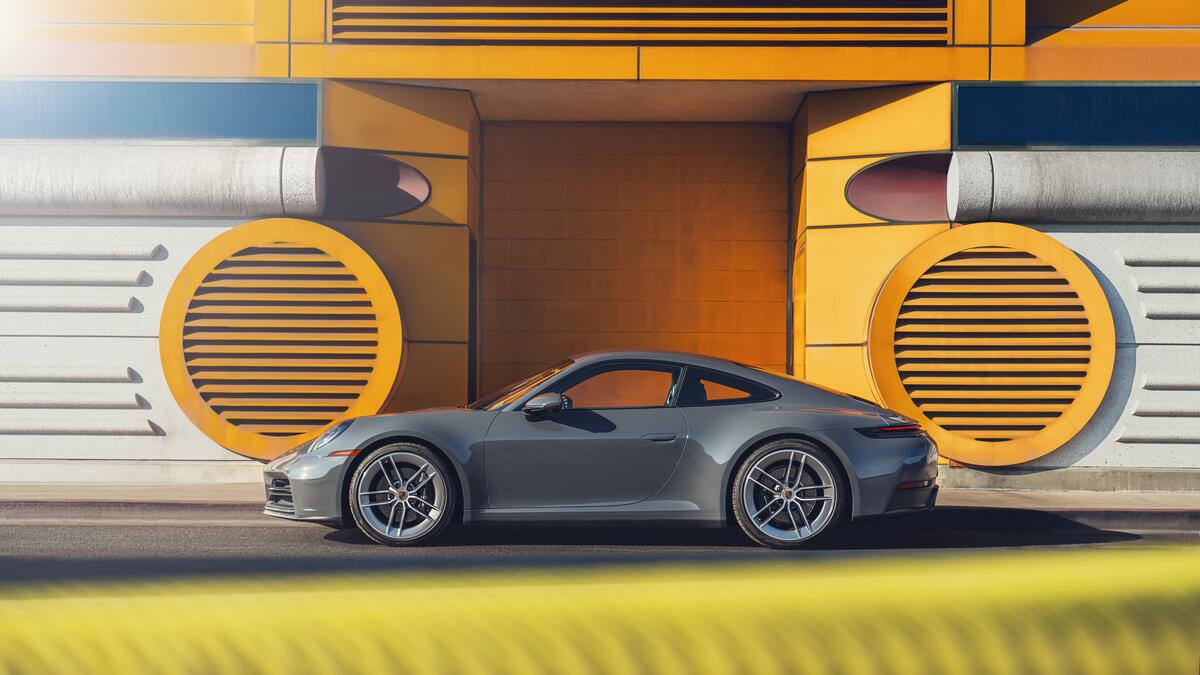
"you were also able to drive the last of the air-cooled cars, a 993, from the late 90s... Now, understandably, Jeff, from a price point of view, a 993 is in far excess to what we're talking about."
The Porsche 993 is the final generation of the air-cooled 911. The hosts are using it as a reference point for what “classic” Porsche driving feels like, and comparing that feel to the Cayman 987.1.
The Porsche 993 is the last generation of the air-cooled 911, and it’s often treated as the end of the classic “air-cooled era.” Here, the hosts use the 993 as a benchmark for what the Cayman 987.1 is said to feel like—“bookending” the Cayman experience between earlier and later 911 eras.
air-cooled
"you were also able to drive the last of the air-cooled cars, a 993, from the late 90s."
Air-cooled means the engine is cooled mainly by air flowing around it, not by liquid coolant. The hosts are pointing out that the 993 was the last Porsche to use that classic cooling approach.
Air-cooled describes an engine cooling design where heat is removed primarily by airflow over the engine rather than relying on liquid coolant. The hosts call the 993 “the last of the air-cooled cars,” using it as a marker of the classic Porsche era.

Porsche Cayman 987.1
"which would be the 997.1, which I have. And so let's talk about that first... So tell me, so you get out of your Cayman... So this 987 felt closer to the 993 because of the handling, the exhaust sound, and just the lightness of being as you're driving the car."
The Porsche Cayman 987.1 is a mid-engine Porsche that’s known for feeling very “connected” and fun to drive. Here, the host says it can feel surprisingly similar to a much more expensive 911 (the 993).
The Porsche Cayman 987.1 is a mid-engine sports car whose driving feel is often compared to the classic 911 era. In this segment, the host argues it delivers a “993-like” experience—especially in handling balance and how it feels mechanically connected.
coil overs
"it was stock except for coil overs that kind of lowered it to European ride height. And it felt, I just felt like, okay, this is really indicative of what everybody thinks of when they think of an air-cooled 911."
Coilovers are suspension parts that let you set the car’s ride height and how firm the suspension feels. Lowering the car can make it handle more tightly, but it can also affect ride comfort.
Coilovers are adjustable suspension units that combine a coil spring and shock absorber. Lowering the car to a “European ride height” changes ride stiffness and steering response, which can make the car feel more precise and connected.
European ride height
"it was stock except for coil overs that kind of lowered it to European ride height. And it felt, I just felt like, okay..."
“European ride height” usually means the car sits lower than a typical comfort setup. The goal is often sharper handling and a more sporty stance.
“European ride height” is a shorthand enthusiasts use for a lower, sportier stance that prioritizes handling and reduced body motion. It typically means the suspension is set closer to the ground than a more comfort-oriented setup.
power to weight ratio
"The 993 and the 987.1 cars have a very similar power to weight ratio. They're only off by about a pound per horsepower."
Power-to-weight ratio is basically “how much shove the car has for how heavy it is.” If two cars are close on this number, they can feel similarly quick even if they’re different models.
Power-to-weight ratio is a performance metric that compares engine output (power) to the car’s mass (weight). A higher ratio generally means stronger acceleration potential, which is why the hosts use it to explain why the 993 and 987.1 feel similar.
drivetrain loss
"I watched a video the other day. I was on a plane and someone did some dyno work. They took an exhaust off the car to see if it would change the dyno. But when they did the stock 997.1 on the dyno, the drivetrain loss was only a few horsepower."
Drivetrain loss is power that gets “used up” inside the car’s mechanical parts before it reaches the wheels. The hosts are saying that on the 997.1, the difference between engine power and wheel power is relatively small.
Drivetrain loss is the reduction in measured engine power as it passes through components like the transmission and final drive before reaching the wheels. In this segment, the hosts cite dyno testing where removing an exhaust showed only a small change, and they quantify that the loss to the hubs/wheels is only a few horsepower.
dyno
"I watched a video the other day. I was on a plane and someone did some dyno work. They took an exhaust off the car to see if it would change the dyno."
A dyno is a machine that tests a car’s power by running it under controlled conditions. The hosts are using it to talk about how much power actually makes it to the wheels.
A dyno (dynamometer) is a test device that measures how much power and torque a car produces under controlled conditions. Here, the hosts reference dyno testing to compare baseline results versus changes after removing the exhaust on a 997.1.
engine in the front / driving wheels in the back
"Anyone who drives a 911, they all say, wow, this feels a lot more powerful than you would think because when the engine's in the front and the driving wheels are in the back, you have a lot of drivetrain"
This describes the classic 911 layout: the engine sits at the front of the car, but the drive wheels are at the rear. That packaging creates a long mechanical path from engine to wheels, which can influence how power delivery feels and how much “drivetrain” work happens before the tires get torque.
rear end when it hunkers down
"…you can feel the rear end when it hunkers down. It steps out just a little bit before it catches."
As you accelerate and turn, the car’s weight shifts—often more toward the rear. That can make the back tires lose grip briefly, so the car can slide a little before it hooks back up.
When the rear end “hunkers down,” it’s describing weight transfer under acceleration and cornering. That shift can change traction at the rear tires, which is why the car may step out slightly before it regains grip.
PSM off
"And then the 987, I mean, you would have to turn the PSM off, right? The stability management off to get the car to slide like that."
PSM is a computer safety system that helps keep the car from spinning out. If you turn it off, the car is more likely to slide when you drive aggressively.
PSM (Porsche Stability Management) is the car’s electronic stability system that helps prevent loss of control. Turning PSM off reduces the amount of intervention, making it easier for the car to slide when you push it hard.
stability management
"The stability management off to get the car to slide like that. Now, some people do. That's great."
Stability management refers to electronic controls that detect when the car is not following the driver’s intended path. It can apply brakes and adjust engine output to help the car regain grip and stay stable.
diminished value case
"want to have that feeling that if something happens to the car that all of a sudden I'm not dealing with a diminished value case and a bad car fax report or something like that..."
“Diminished value” means your car can be worth less after an accident, even if it’s fixed. The guest is saying that risk feels smaller when the car costs less in the first place.
A diminished value case is a claim that a car is worth less after damage or an accident, even after repairs. The hosts connect it to risk: if something happens, the financial hit can be much larger on a higher-priced Porsche than on a cheaper one.
car fax report
"want to have that feeling that if something happens to the car that all of a sudden I'm not dealing with a diminished value case and a bad car fax report or something like that..."
A Carfax report is a document that summarizes a used car’s history. It can include accident or title information, which can change how much people are willing to pay.
A Carfax report is a vehicle history document that compiles records like title events, reported accidents, and service history. In used-car shopping, it can strongly affect buyer confidence and resale value.
scarcity
"So they didn't make a lot of them. That's part of the reason why the price has been driven up so high is that there's scarcity on those."
Scarcity just means there aren’t many of that car available. When fewer cars exist, prices often rise because more people want the same limited supply.
In the collector-car context, scarcity means there are relatively few examples available. Scarcity can push prices up because buyers compete for limited supply, which is the mechanism the host attributes to higher values for certain cars.
DFI engines
"So I just think for a little bit different guy, and they're finding out now that those DFI engines, maybe those weren't the best."
DFI means the engine sprays fuel directly where it burns inside the cylinders. The host is saying that, in their experience or research, these direct-injection engines may not have been as trouble-free or ideal as expected.
DFI stands for direct fuel injection, a fuel-delivery system where fuel is sprayed directly into the combustion chamber. The host suggests that the DFI engines in this era “maybe…weren’t the best,” implying there were concerns or drawbacks compared with earlier approaches.
sports seats
"The Cayman I got really lucky on. It's almost like an S spec but with a 2.7 motor in it. So it's got the sports seats, sports steering wheel, bows."
Sports seats are seats shaped to keep you in place when the car turns hard. They usually have extra side support so you don’t slide around as much.
“Sports seats” are performance-oriented seats designed to hold you more firmly during cornering. They typically add stronger side bolsters and more supportive shaping than standard seats, improving driver control and comfort under spirited driving.
sports steering wheel
"It's almost like an S spec but with a 2.7 motor in it. So it's got the sports seats, sports steering wheel, bows."
A sports steering wheel is a steering wheel designed to feel more “driver” oriented. It often has a thicker grip and a sportier shape so it feels better in your hands.
A “sports steering wheel” usually refers to a steering wheel package with a thicker rim, sportier shape, and sometimes different materials or controls. The goal is more tactile feedback and a more driver-focused feel than a base steering wheel.
factory fire extinguisher
"So it's got the sports seats, sports steering wheel, bows. They even had a factory fire extinguisher in it."
A factory fire extinguisher is a safety device that came with the car from the manufacturer. It’s meant to help you put out a fire faster if something goes wrong.
A “factory fire extinguisher” means the car was equipped with a fire suppression unit installed by Porsche (not added later). It’s a safety feature intended to help respond quickly if a fire starts, especially in the engine bay or cabin area.
rear wiper
"It has a rear wiper. A rear wiper is super rare... For those of you out there, the rear wiper is like this weird thing that Porsche people, like you'd think no one would want a rear wiper."
A rear wiper is a wiper that clears the back window. It helps you see better when it’s raining or dirty, and the host is saying this Cayman had it when most don’t.
A “rear wiper” is a windshield wiper mounted to clear the rear glass, improving visibility in rain, snow, or road grime. On many cars it’s optional or rare, so when the host says it’s “super rare,” they’re pointing out a distinctive equipment difference on this specific Cayman.
VIN number
"And then, I always think if you can get a hold of the VIN number and see what the build was, you can kind of see what was going on."
A VIN number is like a car’s unique ID. You can use it to find out how the car was originally built and what options it came with.
A VIN (Vehicle Identification Number) is a unique 17-character code that can be used to look up a car’s build information. Here, the host says you can use the VIN to understand the car’s original specification and what options/features it left the factory with.
PPI
"And I would say, it's the usual stuff. Get a PPI done or have a checklist. Do a pre-PPI."
A PPI is an inspection by a mechanic before you buy a used car. It helps catch issues you might not notice during a quick look or test drive.
PPI (pre-purchase inspection) is a mechanic’s inspection done before buying a used car to uncover hidden problems. The host recommends getting one and using a checklist approach so you’re not relying only on the seller’s description.
checklist
"Get a PPI done or have a checklist. Do a pre-PPI. Like walk around the car. Just see what's wrong with it."
A checklist is a structured set of inspection items used to systematically evaluate a used car’s condition. In this context, it supports the PPI/pre-PPI idea by ensuring the buyer checks common problem areas and doesn’t miss obvious red flags.
receipts
"And I said, well, do you have any receipts? And he goes, no, I don't have any receipts. And I'm like, what do you mean you don't have any receipts?"
Receipts are documents that show what repairs or maintenance were done. If a seller doesn’t have them, it’s harder to know whether the car was cared for properly.
Receipts are proof of maintenance and repairs, showing what work was actually done and when. The host treats missing receipts as a buyer risk because it makes it harder to verify the car’s true maintenance history and condition.
rust
"I saw rust, corrosion, coolant pipes failing, oil leaks, all this stuff. I'm like, okay, the dealer said, yeah, it's about $10,000 to fix it."
Rust is when metal starts to corrode and weaken over time. It can turn a small issue into a bigger, more expensive repair—especially if it’s found during an inspection.
Rust is corrosion of metal, and on cars it can spread from small surface damage into structural or expensive-to-repair areas. In this segment, the PPI video reportedly showed rust and corrosion, along with leaks and failing coolant pipes.
coolant pipes
"I saw rust, corrosion, coolant pipes failing, oil leaks, all this stuff. I'm like, okay, the dealer said, yeah, it's about $10,000 to fix it."
Coolant pipes move the liquid that keeps the engine from overheating. If they’re failing, the car may run too hot and you’ll likely need repairs soon.
Coolant pipes are part of the car’s cooling system, carrying engine coolant to regulate temperature. If they fail, the engine can overheat, and repairs can be costly depending on what else is affected.
oil leaks
"I saw rust, corrosion, coolant pipes failing, oil leaks, all this stuff. I'm like, okay, the dealer said, yeah, it's about $10,000 to fix it."
An oil leak is when engine oil escapes from the car. It can be dangerous because the engine needs oil to lubricate properly.
Oil leaks mean engine oil is escaping from seals, gaskets, or other connections. Beyond mess and low oil levels, leaks can accelerate wear and may indicate deeper issues.
tire pressure monitoring systems
"Certain cars, if they have tire pressure monitoring systems, this is in this range of cars that I'm writing about, but if they have tire pressure monitoring systems, they're basically a North America car as opposed to a Canadian car or US car."
Tire pressure monitoring systems (TPMS) alert the driver when a tire’s pressure is too low or otherwise out of spec. This segment ties TPMS to regional differences—North America vs. Canada/US—when shopping for used cars.
TPMS
"Certain cars, if they have tire pressure monitoring systems... But the only hitching point is if it doesn't have TPMS, which they were starting to put on around 2006, 2007,"
TPMS is the tire pressure warning system. It helps you catch low tire pressure before it becomes a bigger problem.
TPMS is the acronym for tire pressure monitoring system. It’s the system that monitors tire pressure and triggers warnings when pressure is low or abnormal.
dealer add-ons / dealer-installed Porsche parts
"a lot of the cars got it in both countries. But if it doesn't have it, it has to be dealer installed using Porsche parts in Canada and then imported to the US."
The hosts discuss situations where a car doesn’t have certain required items for a market, so it must be dealer-installed using Porsche parts. This matters because dealer-installed changes can affect cost, documentation, and how “original” the car remains.
importing a car (customs forms, taxes, state/local taxes)
"But as far as bringing it over the border, you just build a relationship with the customs people. You'll tell them when you're bringing it in. You fill out some forms. The taxes are minimal to bring it in."
They’re talking about what it takes to bring a car in from another country. You deal with customs paperwork and pay taxes—then you still pay the normal state/local taxes like you would for a local car.
The segment describes the process of importing a car across the border, including dealing with customs, completing paperwork, and paying taxes. The key point is that import taxes can be relatively small compared with the ongoing state/local taxes you’d pay after purchase.

Porsche Carrera GT
"A lot of the design cues from the 987.1 cars come from the Carrera GT. And a lot of people don't get that. You look at them face to face and you're like, oh, I see why the headlights are like that."
The Porsche Carrera GT (often written “Carrera GT”) is a supercar known for its distinctive styling and engineering. Here, the hosts say the Cayman 987.1’s design cues—like the headlight shape—are influenced by the Carrera GT.
Porsche 550 Spyder
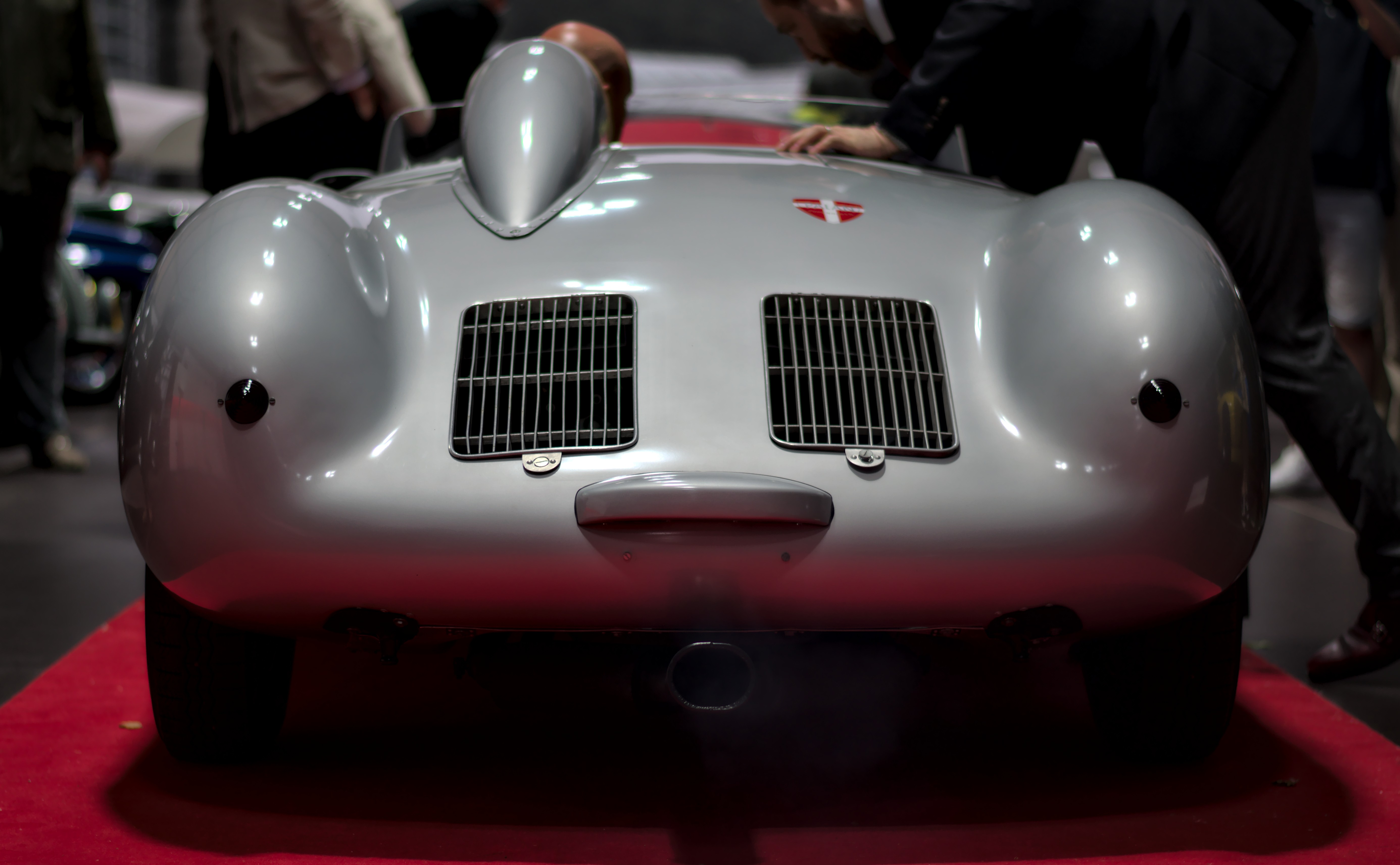
"And also, I mean, it's harking back to the beautiful lines of the 550 Spyder. And that was... Especially the back end, for sure."
The Porsche 550 Spyder is an old Porsche race-inspired roadster with a very distinctive shape. They’re saying the early Boxster/Cayman styling reminds them of that classic rear-end look.
The Porsche 550 Spyder is a lightweight mid-engine roadster from Porsche’s early racing era, celebrated for its classic proportions and design. The hosts say the early 986’s styling “harks back” to the 550 Spyder—especially the rear look.
deferred maintenance
"The two most important mods on that car are, one, get the deferred maintenance up to date. That, to me, is a mod."
Deferred maintenance is when you don’t fix things on schedule. If you catch up on it, the car is less likely to develop bigger, more costly problems later.
Deferred maintenance means postponing scheduled upkeep until later. On a used Porsche, catching up on deferred maintenance first can prevent small problems from turning into expensive repairs and helps the car feel “solid.”
Cantrell Motorsports
"out here, we have a company called Cantrell Motorsports, and they are the US representative of Carnival."
Cantrell Motorsports is a shop/company the host mentions for doing exhaust work. They help people get a louder, sportier sound by modifying the mufflers.
Cantrell Motorsports is mentioned as the US representative that helps source and install exhaust modifications for a specific muffler setup. In this episode, they’re tied to getting a “sports exhaust” sound without fully replacing the exhaust system.
Carnival
"And Cantrell Motorsports, and they are the US representative of Carnival. And Carnival, I think they're Austria, and they modify the factory mufflers to make it sound like the sports exhaust."
Carnival is a company that changes the inside of factory mufflers to make the exhaust sound more sporty. The outside can stay stock, but the sound changes because of what’s inside.
Carnival is described as a company (the host says they’re Austria-based) that modifies factory mufflers to change the exhaust sound. The key idea is that it’s still based on the stock exhaust, but with internal changes to the baffling.
baffling
"they modify the factory mufflers to make it sound like the sports exhaust. So they rearrange some baffling and some stuff like that."
Baffling is the internal “pieces” inside a muffler that guide the exhaust gases. By changing it, you can change the exhaust sound without necessarily replacing the whole system.
Baffling refers to internal structures inside a muffler that redirect and shape exhaust gas flow. Changing baffling can alter how loud the exhaust is and how the sound resonates, even if the muffler is otherwise “stock.”
Porsche Carrera RS
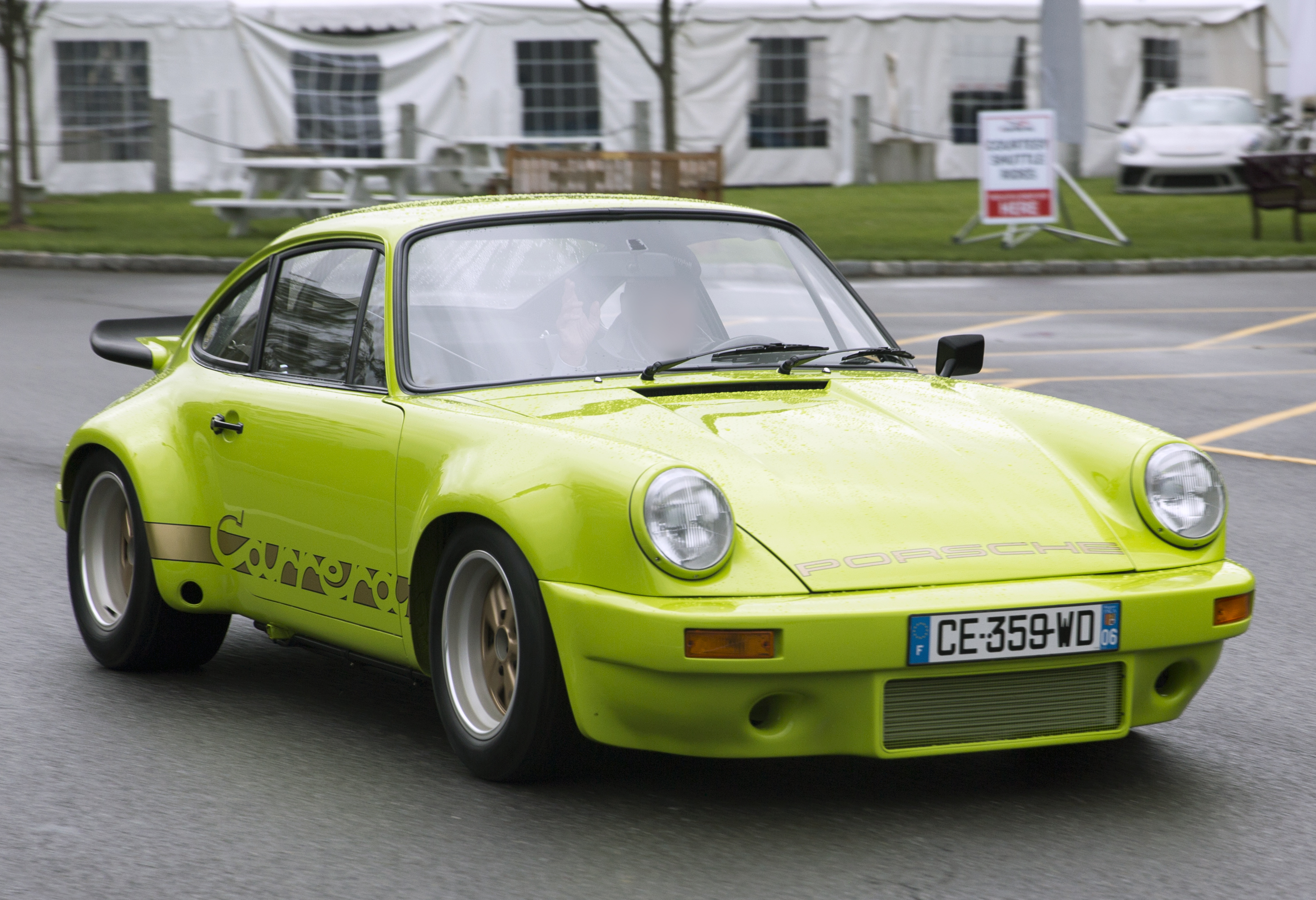
"...wbacks to make me feel more connected to that 2.7 Carrera RS, right? I got a wood shift knob. I got Coco mats...."
The Porsche Carrera RS is a special, performance-oriented version of the 911. It’s known for being built to feel more focused on driving rather than comfort. People often talk about it because it represents a classic style of Porsche performance.
The Porsche Carrera RS is a performance-focused 911 variant that’s remembered for its lightweight, driver-oriented approach and its strong connection to classic 911 heritage. In the context you provided, it’s referenced through personal touches like a wood shift knob and “Coco mats,” which signals how owners try to recreate the feel and atmosphere of the RS era. It’s discussed because it represents a specific philosophy of making the car feel more connected and purposeful.
PASM
"my Cayman is lowered because of the PASM. So if you lower it 10 to 20 millimeters, great."
PASM is Porsche’s system for electronically adjusting the suspension. It helps the car feel more controlled, and it can make lowering the car easier to do without ruining the ride.
PASM (Porsche Active Suspension Management) is an electronically controlled suspension system that adjusts damping to change ride and handling. The host connects PASM to how their Cayman can be lowered while still maintaining good behavior.
short shifter kits
"And I also understand why people get short shifter kits for the 993s because that's"
A short shifter kit makes the gear lever move less distance to reach each gear. That can make shifting feel faster and more accurate.
Short shifter kits reduce the lever travel between gears, making shifts feel quicker and more precise. The host mentions them as a common modification for the Porsche 993 to improve the manual-shifting experience.
shifter cable issues
"you're not going to have the shifter cable issues anywhere near like you do in the sixth speed. It's just the way the cable's routed that causes them to sometimes break in the sixth speed."
This is about the cable that connects your gear shifter to the gearbox. If it breaks or fails, you can have trouble selecting gears, and the hosts say some 6-speed layouts are more prone because of the routing.
A shifter cable is the linkage that transmits your gear-selection movement from the cabin to the transmission. The episode claims that certain 911 six-speed setups can have shifter cable failures due to how the cable is routed, while five-speed cars are less affected.
sixth speed
"you're not going to have the shifter cable issues anywhere near like you do in the sixth speed. It's just the way the cable's routed that causes them to sometimes break in the sixth speed."
This means the car’s sixth gear in a manual transmission. The speaker is saying the shifter-cable problem shows up more in the six-speed configuration than in the five-speed one.
“Sixth speed” refers to the sixth gear in a six-speed manual transmission. In this segment, the hosts specifically connect sixth-gear shifter-cable behavior to a known failure pattern, implying the cable routing/packaging differs versus five-speed cars.
faux-fuchs
"I mean, it took me a year to put the faux-fuchs on. It took me a couple of years to do the wood shift knobs."
“Faux-Fuchs” are wheels that look like the famous Porsche Fuchs wheels, but aren’t the original factory pieces. They’re an aesthetic upgrade you can change back later.
“Faux-Fuchs” refers to aftermarket wheels styled to resemble the classic Fuchs alloy wheels associated with older Porsche 911s. The speaker mentions taking about a year to install them, framing it as a reversible, owner-driven modification.
wood shift knobs
"It took me a couple of years to do the wood shift knobs. I mean, it's just something that morphs over time, but all these things are reversible."
These are replacement gear-shifter tops made of wood. They’re mostly for style and feel, and you can swap them back if you ever sell the car.
Wood shift knobs are aftermarket interior pieces that replace the gear shifter’s top. They’re a common personalization mod on manual Porsches because they change the feel and look of the shifter while remaining reversible.
Sony CarPlay Dexon
"And that's the key because when you ever go to sell it, I also put Sony CarPlay Dexon, but I kept the original radios."
This is an upgraded stereo system that supports Apple CarPlay. The key point is the speaker kept the original radio too, so the car can go back to factory if needed.
This refers to an aftermarket infotainment/head-unit setup that adds Apple CarPlay functionality, branded by Sony. The speaker says they installed it but kept the original radio so the car can be returned to stock when selling.
base version vs more powerful variant
"people just dismiss the base version of these cars out of hand because there are more powerful versions out there... And I was one of them."
Sometimes people ignore the “base” version of a car because they think it won’t be as good as the faster ones. This host says the base car can actually feel more natural and engaging when you drive it.
The segment argues that people often dismiss the base trim of a model because they focus on higher-output variants. The host’s point is that driving feel and chassis balance can be “masked” by sheer speed, so the base car may deliver a more direct, connected experience.
Request an Explanation
Heard something you'd like explained? We'll add it to this episode.
Sign in to request explanations for terms you heard.
Want to learn more?
Browse our glossary for plain-English explanations of automotive terms, jargon, and concepts.
Help improve this episode
See something that's not quite right? Our annotations are AI-generated and can sometimes miss the mark. Click the flag icon on any annotation to suggest a correction.