The Pacific Northwest has been hit hard by heavy rains and flooding.
If water is finding its way into your basement or crawl space, TerraFerma has the solution.
Proven waterproofing systems protect your home from water intrusion
and the costly damage associated, giving you peace of mind through every storm.
Call TerraFerma or visit GoteraFerma.com to schedule your free evaluation
to keep your home safe, dry and stable.
That's GoteraFerma.com
Design your signature space for less with the custom order sale at Dania Furniture.
For a limited time, save 15% on your custom order
and choose from an assortment of leathers, fabrics and features made to suit your style.
Just visit a local showroom to get started.
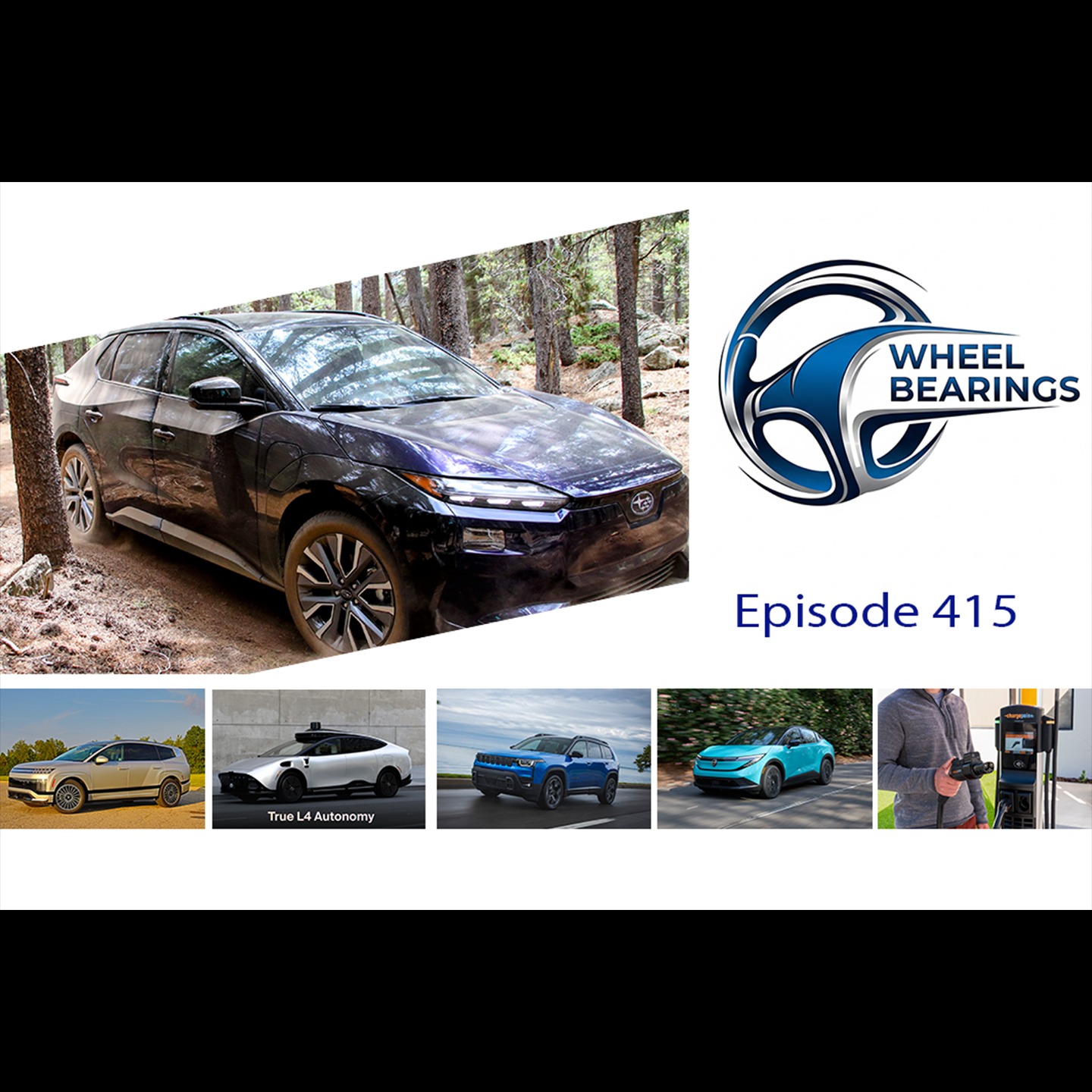
Coming up on episode 415 of Wheel Bearings, we got the Hyundai Ioniq 9, the Acura ADX, the Subaru Saltera,
the Jeep 2026 Jeep Cherokee. Mavericks are getting more expensive and cheaper.
Nissan prices out the new leaf. Charge points, Omniport conversion kits are now available.
Infiniti's bringing back the Q50. Tensor wants to sell AVs to customers. All that and more coming up next.
And this is episode 415 of Wheel Bearings. I am Sam Abrual-Sammet from Telemetry
and I am Roberto Baldwin from SAE International
and Nicole is traveling somewhere today. I can't remember exactly where.
The sky.
Well, she may or may not be in the sky right at the moment as we're recording. I'm not sure where.
I mean to be fair, we're all in the sky.
That's true, yeah. But just in various different levels of the sky. It's all sky.
Anything above the ground is technically sky.
Everything's sky.
But she will be joining us briefly, joining us later in a segment that she and I recorded
earlier this week to talk about the 2026 Subaru Saltera.
But before we get to that, Robbie, did you drive anything this week?
I didn't have anything at home, but I did go somewhere and drive something.
Oh, what did you drive?
I drove the 2026 Kia Sportage Hybrid.
So I accrued all the way to Louisville, Kentucky, which I'd never been to as far as I know.
There's been a lot of drive programs in Louisville. I'm surprised you have to at least one.
I don't think I've been to one. I'm 80% sure I've never been to Louisville, Kentucky.
I don't know. I'm pretty sure I've probably been to Kentucky, but driven through it.
I don't think I've ever just hung out in Kentucky.
It doesn't really matter, to be honest.
Do you wave at all the horses?
Uh, no.
It doesn't really matter, because most of the time, I didn't leave the hotel to do anything
other than drive a car down the Bourbon Road, Bourbon Trail, Whiskey Trail, Whiskey Road.
Some road by the Ohio River. It was very pretty. There was a lot of corn, I think maybe also
potatoes. And it was a nice drive. It wasn't too hot. It wasn't too cold.
And that's the Kia Sportage. No, I'm just kidding.
No, no. So the 2026 Kia Sportage. This is the hybrid version. I drove it. And
for what it is, starting at $30,000, I found it to be actually quite nice.
I will say that the seats felt a little bit stiff after a few hours behind the wheel.
Again, seats are very relative. You should, you know, drive a car, see if you like it.
Before you, you know, buy it. Just sit in it. Even if you just sit it, sit it, drive around.
Like, you know, you're thinking about the dynamics of the car and stuff.
But also, like, where's your butt? Where's your back? Where's your shoulders?
Where's your legs? Like, like, is it pinching anything that it shouldn't be?
Because everyone's body is slightly different from everyone else.
So that said, you know, the seats felt just a little, just a scooch, a scooch stiff, but,
you know, fine for, you know, if I had to do a road trip, I wouldn't be like, oh no.
Again, much better than the worst seats that I've ever sat in for me, which is the
Mini with the John Cougar Mellencamp package. I got like two blocks before.
I was like, I hate this car. And I shouldn't because I really love Minis,
but I hate this car because I cannot get comfortable. I don't know what I,
there's nothing I can or can't do with this vehicle. I'm going to die being upset.
That is always the worst feeling when you, when, when this, when you get in and after a few,
within a few minutes, you realize the seats just don't work or they don't work for your
body. Yeah, they just, they just, they just didn't work for my body in that, in that,
in that Mini Cooper. And again, I really like Mini Coopers because they're like,
everyone likes to say this, you know, they're like, what are you, go-karts?
It's small, it's nimble, it's quick, it's a fun drive, manual transmission, nope.
So anyway, so yeah, so the Kia Sportage Hybrid,
I was surprised, the suspension was nice. It corners well for, for, for a little, you know,
a little small SUV. But you are sitting pretty high, like the seat itself is high,
because people want to feel like they're, they're sitting up. I am not those people.
I like to sit low because I have a very tall body. And so when I'm sitting high,
it just makes me feel like I'm, well, yeah, it makes me feel weird.
The X-Type that we have, it sits high, it's a sedan, and it sits high. So I don't, I don't like
that. That's another thing I don't like about that car. So you know, if you're, if you are tall
or if you're not a fan of sitting high, it feels a little weird, a little awkward.
The motor and engine pair really well. It has the 8-speed automatic transmission,
not a CVT, it's a high-five to Kia for that. And if you, if you're just doing regular driving, it's
fine. But if you're pushing it, it has paddle shifters, and you're going to want to use those
paddle shifters, because the, the, the gear shifting feels a little on the slow side. It
shifts a little, you know, a few seconds later than I think it should. It doesn't sound
shift as much as it should. But again, aggressive driving, how many people are
going to be doing that? Depends where you live. Depends on where you live. Yeah. So if you live
somewhere with a lot of, with a lot of twisties, which they were not, you know, Kia was nice enough
to put us on roads, you know, nice roads with twisties on it, you're going to want to use the,
the paddle shifters as eco and sport. There's no normal mode. You know, they have an eco,
normal sport mode on, on most cars. It's just eco or sport, which to be honest, that's fine.
If you can, there's also my, you know, your own personal driving dynamics.
SETI, we can go everywhere and you can tell, you know, how much you want. So that could be
your normal eco and sport. Initially, I was like, well, this is kind of weird. And after a while,
like, no, not really. So yeah, eco and sport, the paddle shifters are good.
Oh, oh, here's, here's, remember back in the day when the EV9 and then the IONIQ 5
had that little panel for HVAC and for climate controls and to control the, like,
physical buttons. You could talk, like, you could talk between, between the
audio and climate controls. Yeah. Yeah. It's back in the Kia Sport.
I don't know. Kia, unfortunately, put that on a whole bunch of vehicles.
Yeah. Yeah. And hopefully in the next generation, when they do the next complete redesigns,
that will go away like it has on, you know, like similar things have gone away on the Hyundai side.
It feels like they bought a bunch of them and they're like, ah, no.
Gotta use them up. Gotta use them up. So that's there.
I remember initially being like, ah, this is fine. But then you're like, oh, wait,
let me do this. Let me do this. Let me do this. Let me change that. And in our Hyundai,
I have like that, there's a little star, like you hit your favorite. I use it all the time.
And then while we were driving, we were toggling between Kia's stuff and our stuff.
And we kept having like, oh, if we had the HVAC on, because it was like 80 degrees and humid
and overcast. And so, you know, you're doing a lot of climate control adjustments.
So you don't sweat through your clothes. But so that's back. Fortunately, they have,
you know, it's a $30,000 car. So it has a little, you know, you can just grab the
vents and move them around the way God intended. Yes.
With the way I Lord and Savior Dolly Parton intended, you just grab them and move them
around. Yeah. The rear seats, six foot three. If I'm just sitting like I normally sit,
I can stick my hand between, you know, my head and the roof.
If I try to sit up like a proper gentleman, I don't know, like a Mediterranean times,
like my head will like sort of hit the roof. So again, six, three doesn't mean that it's
going to be bad for you. It depends on your torsos. I mean, some people are shorter than
me, but they have longer torsos. So, you know, give that if, if you plan on, if you have tall
children, return on rolling around town with tall children, it's, you know, give that a look.
Leg room wasn't too bad behind some folks who were shorter than me.
What's cool is the in the seats themselves, they have USB-C ports in the back seat.
They also have a little hook for like your purse or your bag or your fanny pack or
whatever. And then they have another thing in the headrest for your jacket.
So you could put your jacket there. You could hang it on there or you shove your, your, your,
I stuck my iPhone in there. I mean, it cuts off half the screen, but I'm like, hey, look at this.
And when I told Kia that I guess not for that.
And it has like a little bit of rubber in there to keep your, your jacket from falling.
Just like this little, it's like these weird little touches that like,
get you excited about a car where it's like, oh, it's just a little bit of rubber.
So my, my, my jacket, we had a bump and won't slide off or whatever.
That rubber is not enough to keep your iPhone from flying out whenever someone goes around a corner.
Does the, does the Sportage also have the, the USB ports that are on the
inboard side of the front seats? So like along, along the side of the seat?
Yeah. That's where the USB ports. Yeah. Yeah. They're, they're part of the,
the, that's, that's a cool feature to have, you know, to, because, you know, a lot of
times, you know, you'll find manufacturers will put the ports like at the, at the back end of the,
the center console and they're like right down by the floor. And you're, you're trying to,
trying to plug it in, you know, it's way down below your eye level and you're trying to,
trying to get it in there. It's a pain, you know, having it right there on the seat back,
you know, is, is very convenient. Because you're, you're, you're already problem,
if you're sitting in the back seat, if you're an adult and you're, unless you're in a large
sedan or a large SUV, it's already weird to sort of try to move and do things.
It's like being on a plane and they're like, okay, now try to find the thing way down here.
Exactly. It's the same, where you can't see it, it's dark. You're like, you get your phone out,
you get the light on. With this, you can just like, oh, it's right here. You just plug it in,
you can watch your, or ignore, or do whatever you do with your phone or just charge it really.
Yeah. So yeah, so the, it comes with a 1.6 liter engine. It has 268 horsepower, six-speed automatic,
2,000 pounds of towing. I don't know, that's, that's
It's better than 1,000 pounds or nothing. Yeah, yeah, more cycles, jet skis,
sea-dews. What else could you put back? Fun stuff. It's really a fun stuff for towing. It's not really
like, oh, we're going to haul a bunch of, you know, some horses. I mean, you could, but it would not
be a, you would not have a good time. There's a little bit more power, a couple more horsepower,
power from the, from the front motor. They've improved it. They got a couple more kilowatts
out of that. It has, for the front-wheel drive versions, 42 miles per gallon combined,
all-wheel drive, 35 miles per gallon combined. Again, it's a hybrid. They have a plug-in hybrid
that's coming out later this year. The hybrid and the gas versions should both be on sale
relatively soon. They're probably showing up in dealerships now. It has the same batteries last
year. The Kia Connect, you know, they're sort of, it's five years. I always forget to mention that
Kia will give you free access to their sort of mapping and all, you know, their online stuff
with your car for five years. After that, there's apparently a list of plans. What's really
interesting is they, I didn't realize, I don't know anything about sports. I'm just going to put
that out there. Kia is like an official sponsor of the NBA. I didn't know that. I'm sure some,
I'm sure I've seen it. I just, it doesn't register in my brain, but you can get NBA skins for your,
for your, of your favorite team for your infotainment system. So yeah, you'll be able to
buy like, if you like the Lakers or the other teams, Nicks. Pistons. Pistons. There you go. Like,
the Lakers or the Pistons are the, I'm pretty sure the Nicks are a team still as far as I know
they are. Yeah. I believe they are still a team. Yeah. Yeah. You can get, you can like,
do that to your car and asked about like, football, MLB and hockey. They said, and then they,
they, they, they informed me that yes, they are the official, they're an NBA partnership. So
you know, they'll still see how it goes. I'm like, oh, okay. Cause sports people like their
sports and I, you know, good for you to have something that you love and it'd be great if
you were like a huge Raiders fans. And that's what I know. Raiders fans are insane. If they
had a Kia Sportage and they ever, they had the option to get a Raiders scan, they would totally
make their car into a Raiders vehicle. So yeah. Starts at $30,290. We were driving the $40,000
prestige. Apparently, they sell, I believe it's more than 50%. They're like, of that, yeah,
the SX has teased top selling trim with over 50% of sales. Wow. That's, that's unusual. I mean,
usually the, the top trim. Yeah. It's like mid trim. That's like, that's most of the sales.
Usually it's, yeah, like, you know, 15, maybe 20% go for the top trim, 10 or 15, 10 to 15%
take the entry trim and then everything else is in the middle. Yeah. Yeah. No, it's,
I know the interior is really nice. They, they replaced it. There's like a little,
a scoosh, a teeny, tiny bit of piano black, but the rest, like all the other things has this like
sort of, it's like a gray silver and it has like a, this nice little lying texture to it.
So it's, it's a matte. And so it feels that the quality of the materials feels
again, Kia Hyundai better than what you would expect for, you know,
a Kia Hyundai at this price. I'm, I'm very, yeah, 40 people are like, you know,
I just want the $40,000 Kia. So good on them because those, those, you know,
the higher trends means more, more profits for them, to be honest.
And I think that is it. Yeah. 2000. Oh, I'm sorry. The, the increase is five horsepower.
So they got a little bit more. So the power train increase. Yeah. Yeah. So 232 horsepower estimate.
Yeah. No, it's a, it's a good little car. It handled better than I anticipated.
Acceleration isn't great. It's, you know, 1.6 liter, even, you know, we have the all-wheel drive
version. I mean, it's not going to, but it, but it's more than adequate to get on the freeway.
Yeah. In sport or in eco mode, even eco mode, it was like, oh yeah, this, this is fine.
That's, and that's the thing is that most cars, I drove a car in the 90s, they had like 80-something
horsepower and I was more in, I could get to 65 miles an hour, no problem, get on the freeway.
So you should be fine. Yeah. I mean, my, my car's got 116 horsepower or that did when it was new
35 years ago. Yeah. So yeah. So yeah. So these, these, you know, we, I think for,
especially car automotive journalists, we get sort of, we get used to sort of EVs or we
get used to like super, super quick cars. And then we get in a regular car and we're like,
oh, I don't know. I'm like, no, no, you do though. It's fine. Yeah. It's fine. Well, this, and,
you know, this is, this is why, you know, when we bought our EV6, you know, we, we bought one
with rear wheel drive, you know, which is 215 horsepower, but that is way more than enough.
You know, even, even that, you know, we'll get to 60 in, I think about six and a half
seconds, which is as fast as anybody needs. Yeah. You're, you're, you're fine. I think the,
the horsepower race of, you know, especially with EVs is a little out of control. I think it
creates situations where people who are getting into cars who don't have experience going that
quick are going to hurt themselves or others. So if you do get a car that goes really quickly,
please do, I don't, I don't ever just get into a car and just take off.
Like you can put me any car, super car, whatever, EV, I, I adjust my mirrors, I do the thing, and I
drive it very, you know, sort of cautiously for the first few miles and, and work my way up to
understanding the dynamics of the vehicle and how quick it is and, and this is, you know,
Sam and I and Nicole, we've been, we're in cars all the time. So we have a lot of experience
driving, just driving to be honest and, and understanding like what the dynamics are of
these vehicles and what happens when something goes a little sideways and how to correct its,
you know, because we're in cars so often and all the time that we, we know how to like fix,
you know, something that's going sideways in a vehicle. The average person, you know, you,
you have your car, maybe you drive a rental car every once in a while, just ease into it.
Well, I mean, even, even for us, you know, because we, we get in and out of
such radically different cars all the time, you know, it's, it's a lesson that we have to learn,
you know, early on is, you know, easing into it helps, you know, while you figure out, okay,
how does this car differ from the one that I just handed back to the fleet guy 15 minutes
ago? You know, and, you know, the two vehicles I've got to talk about, you know,
kind of fit into the hat, you know, that they are quite radically different in their
performance capabilities. So, yeah, it's, yeah, it's, and you know, it's, there's, there's,
this is how you end up with things, the cars and coffee, you know, something, they get them,
they get a Mustang, anything before like 2015, you know, they had the live axle on the back,
which is, that car is just made to do burnouts, really. And they, they, you know,
the wheels are cold. They don't think our tires are cold. They don't think about that. They don't
think about the fact that, you know, the most, most roads in, you know, suburban or wherever
are a little off camber. So because water has to go somewhere. So there's probably some oil
that's been dripped from trucks and cars, you know, that makes them make some slicker than
normal. So yeah, they don't think about the fact that, yeah, there's oil in the middle
of the road. You know, that's the other thing. And you've got a bunch of cars that
probably older going the cars and coffee. And they, you know, they, they pull out and they think
they're being cool. And they stomp on the accelerator and they go sideways and go,
you know, barreling into another car or into a ditch or God knows what, wrapped around a tree or
wrapped around a tree. And it's, it's, it's not worth it. You're not impressed
in anyone. Anyone, anyone can make a car do a burnout. Yeah. If you, if you,
if your right foot can stomp down quickly, boom, guess what? You have all the qualifications
to do in a burnout. It's everything that comes after that. Yeah. So, so be, be careful out there
people. Be careful. Be careful. All right. Anything else on the Sportage Hybrid for 2026?
I don't think so.
They sell a lot of cars. They have the, yeah, the PS coming out. Blah, blah, blah, blah.
12.3, dual 12.3 inch screens. Same thing. Wireless carplay, wireless Android auto
over the air updates. Yeah, there you go. So the thing that people want to be able to plug
their phone in without having to plug their phone in is there. Excellent. All right.
Running a business is hard enough. So why make it harder with a dozen different apps that don't
talk to each other? One for sales, another for inventory, a separate one for accounting. Before
you know it, you're drowning in software instead of growing your business. This is where Odoo comes
in. Odoo is the only business software you'll ever need. It's an all in one, fully integrated
platform that handles everything. CRM, accounting, inventory, e-commerce, HR, and more. No more
app overload. No more juggling logins. Just one seamless system that makes work easier.
And the best part, Odoo replaces multiple expensive platforms for a fraction of the cost. It's built
to grow with your business, whether you are just starting out or already scaling up. Plus,
it's easy to use, customizable, and designed to streamline every process. So you can focus on
what really matters, running your business. Thousands of businesses have made the switch.
So why not you? Try Odoo for free at odoo.com. That's odoo.com.
free. No schedules except for earned income tax credit, child tax credit, student loan interest,
and schedule 1A. Did you know you can support wheel bearings directly?
Head to patreon.com slash wheel bearings media, and you can become a patron today.
Your contributions will help fund the platforms and tools we use to bring the podcast to you.
And exclusives and improvements are already on the way thanks to your generosity.
So if you want to be part of an automotive podcast like no other,
head to patreon.com slash wheel bearings media. We've updated the wheel bearings merch store,
and now there's a whole bunch of new choices, new colors, new styles of t shirts, sweatshirts,
hoodies, hats, mugs, travel mugs, stickers, aprons, tote bags, you name it, you can get your
wheel bearings merch at shop.wheelbearings.media. Go check it out. That's shop.wheelbearings.media.
Well, I had a couple of different vehicles to drive. I've had, I've been double booked a couple
times and so I'm getting some stuff out of the queue here. So first up was a crossover that
in terms of, in terms of its acceleration is, is actually on the, it's a little,
little more marginal, you know, still adequate, but, but you know, it's getting to the point
where it's barely adequate by modern standards. And particularly for a brand that, you know,
that likes to tag itself as, you know, precision performance, the Acura ADX is
totally underwhelming. It is the entry level model into the, into the Acura lineup.
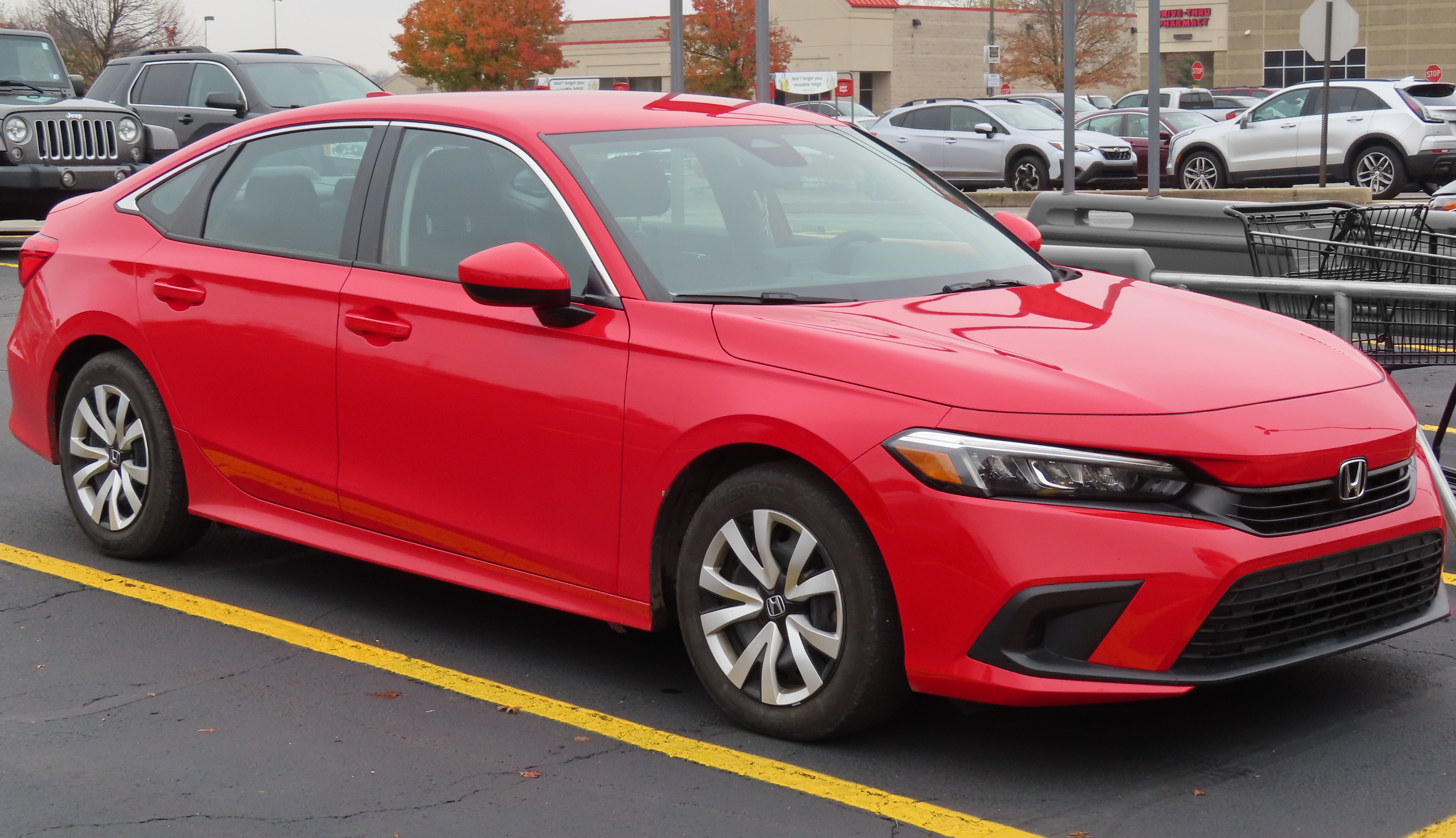
It is based on the Honda HRV and, which means it's also based on the, the Civic and the Acura
Integra. And frankly, my recommendation would be, if you're looking for an entry point into the
Acura lineup, buy an Integra instead. Yeah. You know, the ADX is, you know, it's got
some Acura styling cues applied to what is overall kind of a relatively bland looking design.
It's not, not terribly exciting to look at. And that's, that's unfortunate.
It's not bad. It's just, it's a little meh, a little meh. And then on top of that, it's got
the same, you know, the 1.5 liter turbo four cylinder that Acura and Honda have been using
in a bunch of vehicles for better part of the decade now, which is a really good engine.
I mean, we had it, we had that same engine in our Civic for, you know, a long time.
But the Civic weighed, you know, a little over 2,900 pounds. The ADX does not.
The ADX compared to an Integra, here, let me find the numbers again here.
Let's see. Compared to a front, so the front wheel drive ADX is 300 pounds heavier than an Integra.
And then adding all wheel drive to that adds another 250 pounds. So you're talking a 550
pound weight deficit compared to an Integra. But for reasons that are unknown, the ADX has
10 fewer horsepower and 190 horsepower and 13 fewer pounds feet of torque at 179.
And all this is paired with a CVT, which all these things combined do wonders to sap all the
joy out of driving an ADX. Integra just a better car all the way around, like even just the numbers
of it. Yeah, you get a little, a little more power and torque, a lot less weight,
about the same amount of interior volume, you know, because the Integra is a hatchback.
So it has most of the practicality you have of something like an ADX, you know,
a small crossover. And it's so much more fun to drive, you know, civic or, you know, either a civic
or an Integra. You know, the interiors of the Integra and the ADX are quite similar.
But they, you know, when you take 550 pounds out of something, it makes a big difference.
Or when you add 550 pounds, it makes a big difference in a bad way.
And the Integra is cheaper. Yeah, and the Integra is cheaper.
So, you know, I, you know, I went out and, you know, did a couple of zero to 60 runs with the
ADX and, you know, in sport mode, it did zero to 60 in about nine and a half seconds, which,
which again, Acura, this is supposed to be the performance brand for Honda.
Yeah. So it is decidedly underwhelming from a performance standpoint.
And the one that the one that they sent me was as so many accuracy in the most
accuracy in the press fleet these days was this urban gray pearl color, which, you know,
if you look really closely, you can, you know, under certain lighting conditions,
you can see the pearlescent effect barely. But I mean, this is just such a boring, boring color,
which is unfortunate because they actually sell, you know, I mean, if you're, if you're going to
get an ADX, they have this wonderful Adriatic blue color, which looks great. And there's
the Milano red, which looks great. And then there's urban gray pearl, which is boring.
So I did not like the color, wasn't was unimpressed by the performance.
It other than that, you know, it generally drives quite well. You know, it's got the same,
it's the same platform, the same suspension, you know, obviously tuned a little bit differently
to handle that extra nearly 600 pounds. But, you know, the steering feels good.
You know, the ride quality is good. So the driving dynamics are good. No, no issue there.
But just, you know, if I was going to spend my money, I would take a pass on the ADX and get
an Integra. You know, because it's just you're just going to have so much more fun with it. And
frankly, it looks better, looks a lot better. So I was concerned because it's a small crossover.
Everyone loves a small crossover. I was like, regardless of what we say, people have been,
I was like, oh, I wonder if this is outselling the Integra, because there's a potential for it to out
to the Integra because blah, blah, blah. No one buys sedans, blah, blah, blah. Which key is like,
nah, our sedan sales are up like something percent 20 or I don't know. The Integra like
really does it more than double your month to date. And yeah, the Integra's winning over the ADX. So
I'm like, whew, good job. You're making the right choice. And I understand Acura is like what they're
doing because they're like everyone wants, everyone has this car and they're like, you know, everyone
has a segment in their lineup. We got to put this segment in our lineup and we're like,
we're not going to build something new. So we're going to build it off the tiny little Honda and
the Civic platform. But yeah, the Integra's still winning. So I mean, it's not meeting the MDX or
the RDX, which I really like the RDX. Yeah, I was just going to say, if you want a
modestly sized Acura crossover, get the RDX. Yeah, that's a good car.
Yeah. Yeah, I think we got to do something. We got to have something in that segment. So
I don't know. Yeah, I mean, I'm not sure. I don't understand where Acura put all this extra weight
in this thing. Yeah, it's just, I mean, yeah, the all-wheel drive. Okay, I get that. That's a
couple hundred pounds. But where's all the other weight coming from? I don't know.
Every ADX comes with a case of the Bloons. You just have to find them. Oh, okay.
Like, oh, you bought this. Wow. Okay. You don't know much about our brand,
but you really want an Acura. Here's some of the Bloons.
There are some nice interior color combinations for the ADX as well.
Like they've got, you can get it in this red. They call the combination red with silver metal
film trim. But, you know, and this is the one that I had, which is, you know, it's a kind of a
sort of a burgundy, lighter, not as dark as a burgundy, but a really nice red, you know,
and the combination of the red and black and some silver on the interior of this thing
works really well together. There's also what they, the package they call Orchid, which is mostly off
white, but with some blue accents in there on the seats and the door panels, which also looks
really good. When I did the first drive with the ADX back in the spring, that's what I drove then.
And that's also a really nice color combination, but I'm always a little wary about, you know,
white leather seats, you know, it's over time, you know, it just, it doesn't feel like something
that's going to hold up very well. But, but the red that I had on this one looked really good.
You know, overall packaging, you know, it's typical Honda, you know, the packaging's
good. There's plenty of interior space, plenty of cargo space, you know, no, no real complaints
about the package, you know, the design, like I said, is not as interesting as other Accuras.
And the powertrain is just not, not up to snuff for what I would expect in an Accura,
especially, you know, for an A-spec. I would, I would expect, you know, I would hope for,
you know, if it's, if it's going to be as heavy as it is, I would, I would hope for a
little more, a little more power or, you know, put a regular automatic transmission instead of the CVT
in there. I understand why they did it for, for cost reasons, you know, they already had
this, this engine and the CVT combination certified for a bunch of other applications, fine, but,
you know, then just, just get the Integra. And if you opt for the Integra, you know what
else you can get? A six-speed manual transmission. Yeah. So even better.
Yeah. Yeah. You can get the CVT, or yeah, like the six-speed manual transmission,
just get the Integra. I felt like they're like, oh, someone's like, we really got to do this,
let's go, we need this for, we need this, we got to be part of this segment. And we're like,
fine. We're putting it together on the week, you know. Yeah. Right after lunch on a Friday,
like, let's put this car together. How many are you going to sell? I don't know. Everyone said
to sell. And look at the market. We've got a bit, dad, dad, dad, dad, dad. Yeah. The,
just looking at the Minroni, that Urban Gray Pearl, which is such an incredibly boring color,
that's a $600 option. Wow. So just, just get the blue or the red. Yeah. You'll be,
you'll be much happier. I hope so. So what we're telling everybody is, get the Acura,
and get the Integra and get blue or red. The red is really nice. Yeah. And the blue and red,
they don't cost extra. The platinum white pearl and the Urban Gray Pearl,
they're 600 bucks extra and they're boring. Yeah. Just get the cool colors and don't pay extra.
So all in the one that I drove, which was an 80X all-wheel drive A-Spec with the advanced package,
45,950 bucks. You want to take a guess at the destination charge? 1500? 1350.
Wow. That's not too bad. Yeah. Oh, the destination charge for that Kia was... Hold on, I can tell you.
It's like 1495 or something. They're very upfront. They're 1445. That's what it is.
That's not bad. They tell you like right up the, right at the top of the thing, they don't hide it
or anything. It's like 1445, which is still, everything over a thousand dollars still feels
like I'm getting ripped off. Yeah. To be honest. All right. Let's move on to the other one that I had,
which was the Ionic 9. Also drove the Ionic 9 back in the spring. The first drive in Georgia near
the plant in Savannah was very impressed with it. And so I had a week with it. And the one I had
was the top end all wheel drive performance calligraphy design. And so this thing,
you know, it is the three row crossover. It has 311 miles of rated range. I, on my driving loop,
I averaged 3.4 miles per kilowatt hour, which is pretty good for a big electric SUV like this.
3.4? Yeah. Wow, that's pretty good. It is good.
And, you know, so this is the, this is the top end model. It's really nice inside.
You know, the exterior design is a little controversial. There's, you know, some people
not, not totally crazy about it. I don't mind it. You know, I kind of like the,
you know, the Volvo-esque look of the tail lights, you know, the old V70. I think it was the V70 that
had, you know, this kind of tail light shape. The, you know, all three rows, it's fairly roomy,
including in the third row. I, you know, I set the seats for, you know, for so I could be
comfortable and have some plenty of excess leg room in the first and second rows and got into
the third row and it was more than comfortable back there. Hyundai, excuse me, you know, is now
putting J3400 slash Nax charging ports on all their, almost all their EVs. I think by the
end of the year, they'll probably all be switched over, but the Ionic Nines definitely
have those and they are shipping two adapters with with all the EVs that have the Nax port on
there, including the Ionic 5, the 6, the 9. They, so you get an AC adapter for charging at home.
If you have a J1772 charger and then there's a DC adapter for charging at CCS
charging facilities, when, when you charge on CCS, it will charge at about 225 or so,
230 kilowatts on a 350 kilowatt charger. If you are using a supercharger, it'll charge about half
that speed because the, you know, 800 volt architecture and Tesla supercharger is only
being limited to 500 volts. So they don't charge as fast, but Hyundai, all the Hyundai, Kia, Genesis,
EVs have really amazing thermal management on their batteries. So they're able to hold that
close to their peak charging rate all the way up to like 65, 70% state of charge, whereas
most EVs start tapering off when you get to about 25 to 30% state of charge.
And so this is, this is an impressive vehicle. The, the one that I had was in the Gravity Gold
matte exterior with a gray interior. It has all the goodies on it. It's dual motor, all-wheel drive,
440 ish, or the spec page go, 400, sorry, 422 horsepower, 516 foot pounds of torque.
It will do zero to 60 in under five seconds. So it is plenty quick. It's 110 kilowatt hours of battery.
One of the things that, one of the few details that I'm not thrilled about is they're on this,
they're using the same stock that they're using on some of the Kia EVs now. And I think the Ioniq 5
might have got this this year, which is, so there's a third stock on the steering column. So
you have, on the, on the left hand side, you have the turn signal stock on the right,
you have the windshield wiper controls, and then down below that, there's a stock that is
fixed in place, and you twist the end one direction or the other to go into drive or reverse,
press the button on the end to go and put it in park. And then it has the start stop button
towards the inboard end of that near the steering column, which is a little awkward to get at.
The, the way the steering wheel is designed designed in this one, it's a little bit easier to see
than it was when they first did this on the EV9. But it's still, you know,
Kia, or Hyundai should, and Kia should probably consider just dispensing with the, the start
stop button altogether. Just move, you know, do do. I, I like to start, I like being able
to turn the car off or on, especially like, okay. So in the ID buzz, if you get out of the car,
it just turns off. If you're not in the front seat, if you don't have the seat belt on,
it just turns off. It's, it's, it's annoying. I want to be able to just be able to leave my car,
like to, to manually control turning my car and car off. I like to, I have, I have the stock,
I, but I don't, the power button for mine for the Ioniq 5 is in the dash,
but I like the little stock at the bottom where I just turn it forward and turn it back.
It's pretty easy to remember. I like that better than having to reach to the center console.
Yeah. I mean, the shift, you know, for, for shifting is, I'm fine with it. Just the
position of where the start, stop button is, is kind of awkward.
A little weird.
Yeah. So you got to kind of reach under the steering wheel and hit it with your, hit it with your
thumb. And I mean, you get used to it over time. On our EV6, the start, stop button is on the
leading edge of the, the center console. It's very easy to get at.
Yeah. Yeah. But other than that, the rest of the ergonomics in this thing are really good.
It's, you know, Hyundai is going with lots of buttons and knobs for all the climate control
stuff for volume and tuning. It's got a capacitor panel for some of the other climate
controls, things like your heated and cooled seats, the defoggers and the fan speed. But,
you know, it's got, it's a good balance of physical and touch controls.
The, the finish on the dashboard is a little unusual. And on one part of the dashboard on
the passenger side, it's got this sort of metallic, it's almost like a, you know, like a metallic ore
kind of look to it. It's, it's hard to describe. You know, I kind of like it, you know, it's,
it's something a little different. The granite sort of weird.
Yeah. Sort of like a metallic granite. You know, so if you can imagine a cross between
metallic and granite, that's kind of what it looks like. But, you know, they have done
the proper thing. Got manual vent controls everywhere. So that is good.
It, you know, this thing, this thing drives really well for, you know, for such a big vehicle.
You know, this is about a 54, 5500 pound vehicle drives well. It's quick.
It, as with a lot of the other Hyundai Motor Group products this year, it does have
driver monitor system on there. So there's a little camera module on the steering column,
infrared camera module on the steering column that will alert you if you are getting distracted
or appear to be drowsy or anything like that. It does not yet have hands-free driving capability,
but it's got Hyundai's highway drive assist to capability. And, you know, during,
during my driving with this and, you know, bring up something, a conversation that
popped up in our Discord the other day with, I think it was at the, was it the Sportage?
Was it the Tucson? Or Tucson, yes. You know, apparently some Tucson drivers
have been having some issues with phantom braking with the automatic emergency braking
system, where it's randomly slamming on the brakes for, for no readily apparent reason.
I, I have not experienced this either in a Tucson or in any of the other Hyundai,
Kia or Genesis vehicles that I've driven, including our EV6.
Have you, have you noticed it in any of these vehicles at all?
I haven't. The only car I've ever had phantom braking in was a Model 3 and a Model X.
Okay. But again, we only have those cars for a little while, and this person's had it had,
has it happened three times, which is kind of terrifying.
Yeah. Yeah, it's not good if that's happening. You know, I mean, we've had our, we've had the
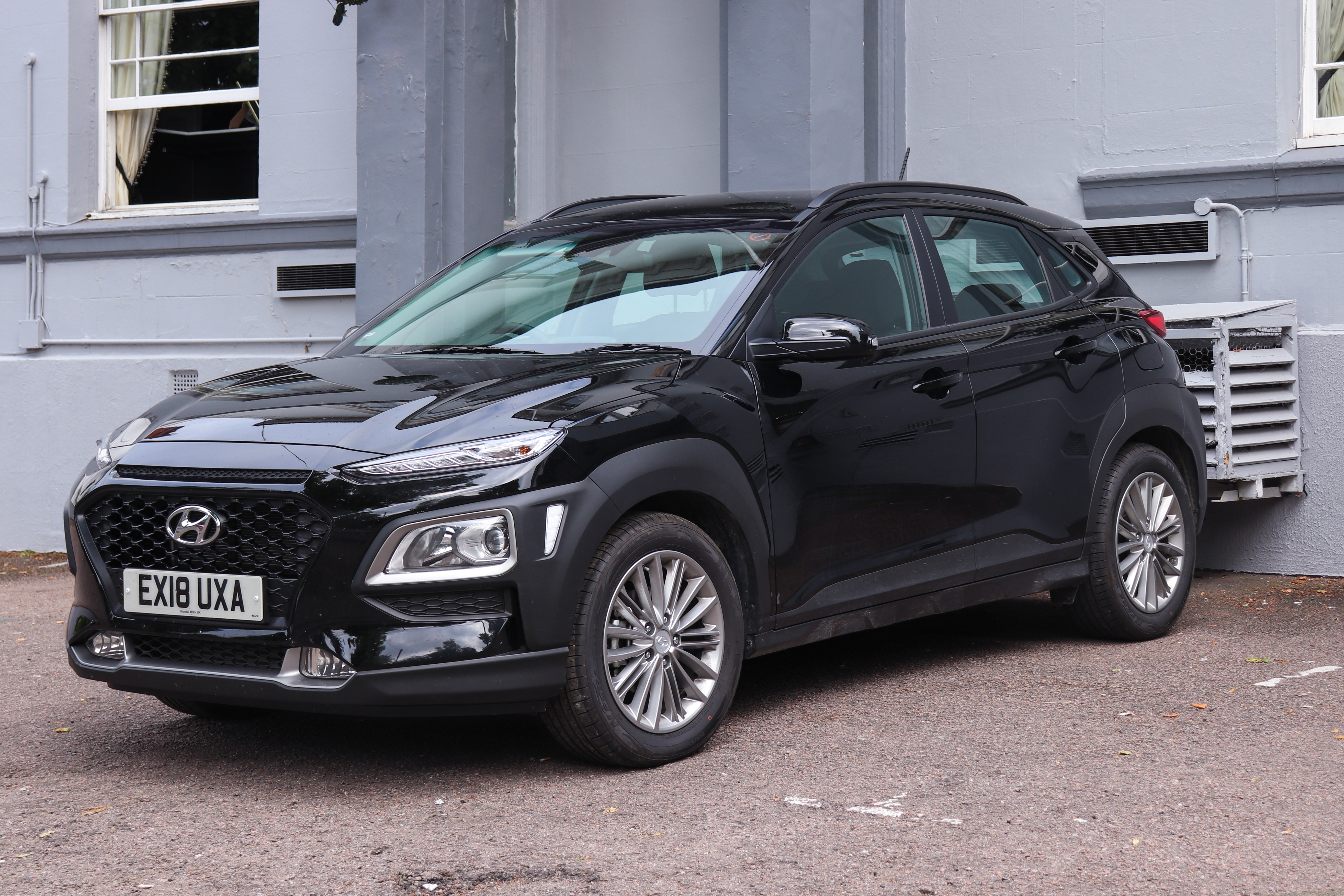
EV6 for just over a month now. I mean, you've had, you've had the Kona and then now the Ionic 5
for a few years now. And so hopefully this is something that is unique to the Tucson and
hopefully they'll get it fixed soon. I mean, it's something that should be updateable with software,
although I don't think they can do an, I don't think they can do an OTA update for that.
But if it does turn out to be a real problem and then they, hopefully they'll do a recall and,
and update that software. Yeah. If you, if it's happening, you can go to Knitsa site and
say, Hey, this thing is happening. So the more people to do it, the quicker they'll
hopefully move. Knitsa is not great as an organization, but they do, you know, recalls are
important and this is a, you know, this is a safety critical part. So hopefully they'll
move pretty quickly on it. And, you know, hassle underneath your, your, the Kia people,
hassle in the Kia dealers maybe will have something will happen, but
Probably not.
Just hit up Kia directly. Yeah.
Just got to just jump over the dealer. The dealer's not going to do much because
they don't have control over that, to be honest.
Um, so yeah, if you have experienced that problem, uh, on your vehicle, uh, go to the
Knitsa office of defects investigation site and you can submit your issues there.
There's a button. I'll put a link to it in the show notes.
There's a button at the top right corner of the page to report a safety problem.
And so you can, you can submit that there if it has happened. And if there,
if there are enough reports, um, Knitsa can require Hyundai to, uh, to do a recall and fix that problem.
Um, all right. Uh, and then the, uh, price, uh, that, that is really the only
downside of this vehicle. Uh, it is a little expensive.
Um, the Ionic nine starts at about, uh, about $55,000, but the one that I had,
the all wheel drive performance calligraphy design, uh, $79,540.
That's a lot. Yeah. I mean, you know, if you compare it to some, you know,
some other three row electric SUVs, um, you know, like a Rivian R1S, you know, that's,
that's the loaded trim. Uh, you know, that's, that's about where an R1S starts.
Um, or, uh, what else is out there? The, uh, lucid and lucid. Yeah.
Yeah. Assuming you can even get a lucid gravity. Uh, EV nine. Yeah. EV nine.
It's, it's a little, it's a, it's about the same price as an EV nine, pretty close to the same
price as an EV nine. Um, but, uh, so this is, this is the top of the line model. Um, and
I do, what you probably want to get, you know, if you're, if you're considering one of these
is get the mid level, the SEL trim. Uh, I think that is the mid level one currently. Uh, and you
can get that, you know, in the nicely equipped in the mid sixties. Um, so you want to guess at the
destination charge? Uh, 1400. Uh, 16. Oh, yeah. And, and the, the ionic nine is, uh, is built
in Georgia. It's built, uh, in Elabel, Georgia near Savannah at the new Hyundai Motor America meta
meta plant meta plant. Cool. All right. So that is, uh, what we drove. Um, I will drop in here,
the segment that I recorded with Nicole, uh, earlier this week, uh, about the 2026 Subaru
Salterra, um, short, uh, the TLDR. Um, it is way, way, way better. And, uh, we talked a little bit
about the, the difference in the, um, experience of the type of drive programs that Subaru and Toyota
do with essentially the same vehicle, because, you know, this is the same vehicle as a Toyota
BZ. And, um, we had a lot of fun with this thing. And some people on the drive even got to
see a moose. Oh, I saw a moose once. It bit my sister. Oh, really? Moose bit your sister?
No, it's a joke for money, Piper. Oh, okay. I missed that one. I forgot about that one.
I did see a moose though. I did in Colorado. Maybe Utah. Yeah. Colorado, right?
It was a Polestar event though. Okay. Yeah. Uh, yeah. Harvey and I didn't see the moose.
Harvey breaks together, but, uh, but some other folks did see it and it was just
wandering around, just stand by the side of the road. Um, all right, uh, so I will drop that
in here and we'll be right back. All right. And, uh, Nicole is absent this week, but
she's here, uh, because we recorded this earlier ahead of, uh, ahead of the recording of the
regular show and the Ibarrio and everything. Um, yeah, because, uh, last week you and I were both
in Denver, Colorado to drive, what? To drive the new Subaru Saltera. Yeah. And, um, you know,
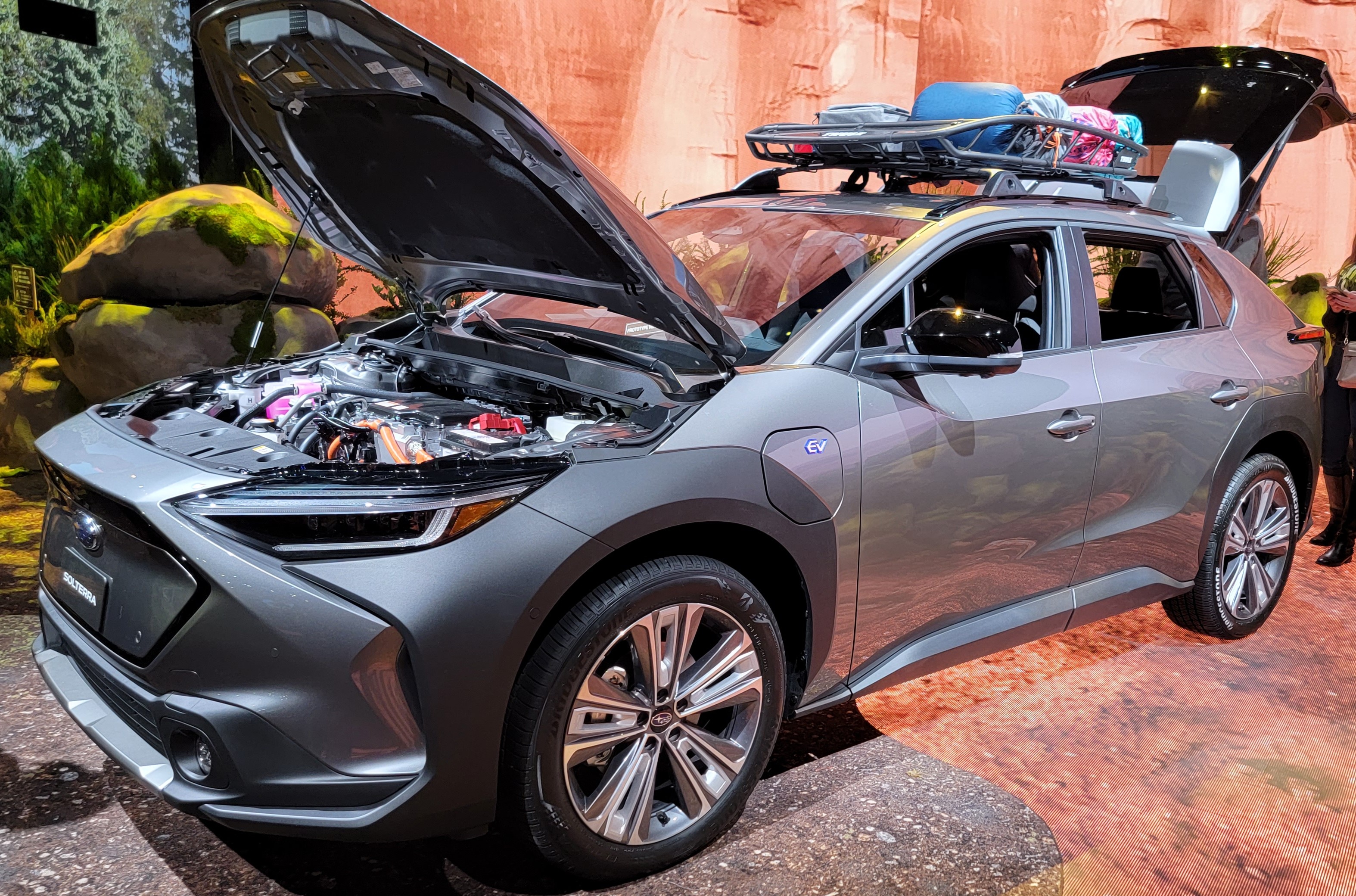
we, we saw the, the 2026 Saltera at the New York Auto Show back in April. Yes. Got some,
some details on it then. And Subaru referred to it then and, and also last week as all new,
even though when you look at it, it's not really all new, but.
You know, and it was one of those things, everyone kind of asked them and said,
what do you mean it's all new? It's not all new. It's like, this is, it's, it's new bits,
but their, their argument is that if there is so much that has changed,
the enough has changed that it is essentially all new. Yeah. I mean, apart from the most of the
outer sheet metal, you know, and some of the supporting structure, almost everything else
has changed on this thing. Yes. It is pretty fundamentally a different car than it was three
years ago. It really is. And what did you think, a thumbs up or thumbs down overall impressions?
Absolutely thumbs up. You know, I mean, we've talked, excuse me, numerous times over the last
three years about how underwhelming the BZ4X and the Saltera were. And I think Subaru and Toyota
have addressed almost everything with this revamp. I think they have. They've, they fixed all the,
like one of the things that always drove me nuts and they kind of fixed part of it already
and they finished fixing it in this for this year is originally the steering wheel is round.
It was a circle. And the infotainment, I mean, excuse me, the instrument cluster was down this
sort of like tunneling kind of thing. It sort of had wings. And it was hard to view. It was
just awkwardly placed. Well, I think it was last year they flattened the top of the bottom
of the steering wheel, which made it better. And this year they removed the little wing
things. So it makes the dash. And it's also actually mounted up a little bit higher
than it was before. Yeah. Oh, okay. So all in all, it is greatly improved from where, like,
you can actually, you can actually see it now. You don't have to crouch to look under or lift
your head up to see over the steering wheel because it wasn't just adjust your seat or just
the wheel position. I could never find, in the original, I could not find a way to sit
that something wasn't locked and it would be crazy. Yeah. And, you know, everybody I've
talked to had the same problem with that. And I can only imagine that the only person that
ever actually evaluated that within Toyota or Subaru had like an extraordinarily long neck,
you know, so that their shoulder point was down low, you know, so they have the steering
wheel low, but their head was up really high. It's such a weird thing because, like, you know,
when these guys do, when they design a vehicle, when they do testing, they test everything.
Everything is looked at not once, not twice, multiple times. Is this right?
Ergonomically right? Safety right? You know, ease of use right? Is this all right? And how
many people looked at that and went, yep, this is good. I don't know how it got as far as it did,
but yeah. So it made me very happy that they had changed that. I, because I thought that, and
there's a lot of things that made the Solterra really lackluster before,
or frustrating, that was one of the frustrating things. They fixed that.
So I like that. And then they did some, they did some interior stuff to make it better too,
like you now have dual wireless charging pads. Yeah, they rearranged the whole center console.
So it's way better than it was. It's, and they have, because there's now radiant heat available,
sort of, it's sort of like where the, where the glove box would be, essentially,
on the front. I don't think it's every trim. I think it's select trims and I
forgot which trims. I think it might just be the top, but it's radiant heat there,
which is great because it helps warm you up and it gets the car warm a little bit faster,
but that means there's no glove box. So instead of the glove box, that rework center console now has
the usual storage bin that you lift up. Actually it lifts like left, right. It like doesn't actually
lift straight back, but there's also space underneath that center console that has a fairly
deep edge to it. So you could put your wallet, something small keys, and they're not going
to like slosh out and end up underneath your feet. So that was, so you know, they made
a big change there by doing the radiant heat, but then they decided, okay, we got to give them back
storage somewhere. I was talking to Garrett Goh, who's their car line planning manager, and he said
that if you look at the amount of space that they had before for a little storage,
and you look at what they have now, there's actually a little bit more now than there was
with the old glove box. Awesome. And you know, I mean, those things are nice convenience
features, but you know, there were also some pretty fundamental functional flaws with the car
too before. There were. The range was short, you know, relative to the competition.
The charging times were extraordinarily slow. It was awful. Yeah, it originally, and they did
subsequently make some changes to the charging curves that made it better, but originally,
in its original form, it would take an hour, almost an hour to get from 10 to 80 percent
charge, which is an insane amount of time where you've got cars that will do it in like
28 minutes, 22 minutes, whatever you're like. 18 minutes. 18 minutes, like 18 minutes or an hour,
and it baffled me that they, when they, and I don't know what the sales have been on this,
I don't know if sales have been good or bad. Yeah, so so. Okay, so so. Not great.
It makes sense given that it wasn't so much that it was bad before, it just had so many
things that were not as good as they should have been to be competitive, and now they fix that. It has,
it charges in 30 minutes now, I believe, 30 to 35 minutes. Yeah, 10 to 80 percent in 30 minutes.
In 30 minutes. And they added preconditioning. They basically, they completely revamped the
thermal management system. Yeah. For cooling and heating the battery, so that now, you know,
they say that it'll go from 10 to 80 percent in 30 minutes anywhere from 14 degrees Fahrenheit
to 70 degrees Fahrenheit ambient temperature. Yeah. So even in cold weather, it will still charge
just as fast. They were, when I was talking to Gary, he was saying one of the things that they
really focus on is so most OEMs, like the sweet spot is 70 degrees, that's what those batteries
like. They like that 70, just nice, happy, like humans, they want that temperature. When it gets
too hot, when it gets too cold, they get cranky and they don't charge as well.
They charge more slowly. So there's issues. So they wanted to focus, instead of that
number that everybody gives, you know, the performance numbers, when you're at the perfect
temperature, they wanted it to perform perfectly when it was colder, when it was hotter. Because
they said, you know, people buy Subarus, not because they're going to hide it in their garage
when the blizzard hits. They're going to go out to the grocery store, go skiing,
or go hiking, or whatever. So they need to know that their customers are going to have the
right experience. So they worked really hard to get that preconditioning. So if you're
using it, he even said, you know, I said, what if you forget? I said, I was just kind of
curious, what if you're forgetting like, oh my gosh, I didn't think precondition the battery.
And you haven't had it in nav, because if you have it in the native navigation, it will automatically
precondition before you get to your charging point. But if you just stop on your own, and he said,
even just turning it on, like doing the preconditioning that you can activate
manually, just doing that even will help reduce that charging time, not as much as if you
done it fully before you got to the charger, but at least improve it. So that was a big thing
that they focused on, which I think is important. Nobody wants to sit around in charge forever.
Nobody. Yeah. And, you know, so they, you know, as part of that, part of the changes around the
battery, they also reconfigured the battery a little bit, so they managed to squeeze in a few
more cells. They bumped the capacity up from 72.4 to 74.7 kilowatt hours, I think now. Yeah,
so they've got, and the thing is, they, you know, that's all, they only increased the battery
capacity by about 2.5%, but they got 26% more range because it's gone from about 222 for the,
or 228, I think, for the, with the 18-inch wheels to 288 miles. So they got 26% more range,
and then 278 if you get the limited with the, or touring with the 20-inch wheels.
Mm-hmm. So that is, you know, right in the ballpark with most of the other all-wheel drive
crossovers now, you know, with Ionic 5, 86, the ID4, you know, all of these, if you get them with
all-wheel drive, those are the kind of range numbers you're going to get with those as well.
So it has suddenly gone from also ran to being very competitive, at least on paper.
And it did, it also, in terms of horsepower, it was originally a whopping 215 horsepower,
which now it's, it's up to 338 horsepower. That's this, because there's two different options
for the power, so you have 338 or 233 on the base, but even the base 233, you're still getting
extra horsepower. So they fixed the, how the battery charges, they fixed your range,
they fixed the horsepower, they fixed some interior gripes. They really did, they checked
off all the things that I think somebody who owned it might have complained about,
and that journalists would have complained about because it just wasn't up to snuff.
Yeah, and I sat down and recorded a conversation with Garrick, which I'll run after this,
and we talk about some of the, some more of the details of what they changed, like the
magnets, they redesigned the motors, putting the gears in the oil of the motor so that there's
less friction, polishing the gears. Oh, there's a whole bunch of cool stuff that they did,
a whole bunch of little things that all add up to that 26% improvement in range just to get
more efficiency out of it. And I think what you said there, it kind of sums up the Salterra.
It's a whole bunch of little things. They've done little things all throughout through the
design, through the comfort, the convenience, how it handles, how it drives, it's much smoother and
quieter. They just touched every single part of that vehicle and improved it a little bit.
So overall, it's a huge change. Yeah, so one thing that was fascinating was
looking at the difference in the, when a manufacturer brings the people out to drive
their vehicle between different manufacturers, and particularly in this case, because you have
effectively the same car, the 2026 Toyota BZ and the Subaru Salterra, aside from some slight
differences in the styling of the lights at the front, they are the same vehicle.
Right. But the experience that we got, our first opportunity to drive them,
was so totally different. Back in 22 when they launched, Toyota did their drive program
in Encinitas, California, and we drove around just on roads around Encinitas and Carlsbad and a
little bit up into the hills. The closest we got to going off-road was if we happened to stop by
the beach to take some pictures. Exactly. There was no off-roading at all. Right.
And when Subaru did their original one, they did a two-part drive in Santa Barbara and then
they took people over to Catalina Island to go off-roading. This one for this drive,
we went to Denver and we drove out into the mountains and I would say close to half of the
drive route was on dirt roads. Yeah. And not just dirt roads, but winding dirt roads
through the mountains, we climbed from about 5,280 feet elevation in Denver,
up to over 9,500 feet and then back down and back up a couple of times. And one of the roads in
particular actually turned out to be quite rocky. And you see the reason why the benefit of the
8.3 inches of ground clearance that the Saltera has compared to on the Ionic 5,
the standard Ionic 5s are only six inches. And on the XRT, which is their off-road version,
it's seven inches. This has another 1.3 inches on top of that. And even the Maki rally, which is
supposed to be their off-road one, it only has 5.8 inches of ground clearance. Oh Lord.
Yeah. This one, it was interesting because they had us on this, for this off-road,
the drive, for like you said, half of the time we drove, we were driving in the dirt.
And some of it was very easy dirt road stuff, but there was some of it that there was enough
bumpy rocks. You had to sort of slow down and you weren't going to take that at 30 miles an hour.
Like you had to slow down and make sure you were paying attention a bit to where you were
placing your wheels. And it was fine. It performed beautifully. And they had a section
where they took us where they had some spotters, like one real more aggressive,
I guess off-road section. We went very steeply down and back up and you're trying
everything and it performed beautifully. They had a little course set up, there were moguls,
so you can have the one wheel in the air thing. And I always feel like one of the things that
lets you know that it's doing it well is when you look at it from outside the vehicle and you
think, holy cow, because you see what the car is doing and inside, it's like, you don't feel it.
You don't really feel just how much is moving. And that was a little bit what this was. You
don't feel it in a good way. You don't feel it. You feel very secure and you feel very confident
driving off road. Yeah. And again, one of the interesting differences in how Subaru sees their
customer base for their cars, they feel their customers, they're going to take their cars
everywhere. They're going to drive them around town. They're going to take them
out to the trailhead to go hiking and camping. And they're going to go all these different
places with the same vehicle. Yeah. And so many other times, like earlier this year,
when we drove the Ionic 5 update, we drove around the on-road driving portion was with the
limited trim, the high-end trim with street tires. And then we did off-road with the XRT on all
terrain tires. This, we arrived at the quote-unquote off-road course at this ranch. And instead
of having us park those cars and get into something else, it was prepped for that with some off-road
tires or anything. They said, okay, go there. And we just keep on driving. Literally, yeah.
Which is your point. That's huge because normally when they, the number of times that
they have you get out of the car, you've been driving all day, take these. There's five
of this one that we've done just tricked out for off-road. You guys are going to take turns
and you're all going to drive it. It was like, no, just hop right back in there. Get a bottle
of water from the cooler. Hop right back in and go. I mean, I'm not sure which one you were driving,
but we had a Touring XT, which was on the 20-inch wheels with Bridgestone Taranza all-season tires.
So these are like the most street tire of street tires. Right? Yeah, they're not.
This is the kind of stuff anybody's going to buy and put on their car.
It's actually perfect for the Subaru customer because it's not like
you're a hardcore off-roader who needs this gnarly stuff to do what you need to do,
but you're going to get out there and adventure a little bit. You're going to go a little bit
further. You like the outdoorsy thing, so you want to be able to take the car that rides just fine on
the highway, just fine on the pavement. It's nice to drive around that and just drive it right off
the road and have an adventure. You can do it. You don't have to suddenly like, oh, I don't
have the right tires. I don't have the right this. I don't have the right that. It was very,
very easy. I liked it. It was sort of because I was not a big Solterra fan before. I really
wasn't because of all the little things that weren't quite right and I also didn't think it
rode especially well. I think it's incredibly quiet now. It's much quieter, much more relaxing,
more comfortable car to ride in, and they fixed all the problems. Now, the one thing we don't know,
and by the time this airs, we might, is we don't have pricing. We did not have exact pricing,
and they've said in their presentation that it was not going to be significantly different.
They were talking like double digit numbers, like under $100 per trim.
Less than $100 difference, either plus or minus. Plus or minus. It's going to be priced pretty close
to what it is for the 2025. You, Sam, you might have that by the time this airs and you can
tell people, but yeah, as of recording this, they said they don't have it yet. They were
still going back and forth a little bit. That makes it not an inexpensive vehicle,
but it makes it, let's assume the price is for 25 close enough. It makes it a much better deal
than it was before. Before you looked at what it was, you looked at how much it costs, and you kind
of thought, I get a lot of other cars that are in this range that are way better. Now, this has
things recommended, especially that 8.3 inches of ground clearance. That's not a small thing.
Yeah. I mean, look, right now for the 2025 Salterra Premium, which is their base model,
which is always strange to see the base model dash as a premium, starts at $38,495.
And the Touring Onyx Edition, which is the top end, is $45,495. So they've hinted that it's
going to be within $100 on all those. And Subaru only sells the Salterra as a dual
motor all-wheel drive. They don't do a front-wheel drive version like Toyota does.
But going back to what you were saying about the ride quality, I think one of the things that really
impressed me the most, yeah, it is very quiet. But on some of the dirt road sections,
we were on some washboard road that was really knocking around. And it was amazing how well
it did, just soaking it up. I wouldn't call it plush, but it did such a great job with
wheel and body control. So you weren't getting that head toss that you often get in these kind of
off-road scenarios. The body felt very smooth and minimized the body motion while allowing the wheels
to do their work. And again, that was one of these, Garrick explained, they made a bunch of changes
to reinforce the structure so they could retune the suspension, the springs and the dampers
and allow it to do that better. So you have a much smoother ride on these really uneven
surfaces. And on some of the rocky sections there, it did, even with these 20-inch all-season
wheels and tires, it did really well on that. And it was comfortable. The only thing,
because of the low profile of the tires, you had to be very careful of where you placed
the wheels to try and avoid sharp edges and cutting a tire, which can happen when you're
off-roading. Yeah. I truly was impressed with this. I thought, I think it's a nice way,
you're looking for an EV and you want it to still be Subaru. It is. It's an EV, but at its heart,
first and foremost, it's Subaru. And I think that's brilliant. And I think they did a really
good job. I think Subaru deserves a lot of credit for looking at what was not working well
and looking where it was lacking and saying, we got to step up our game in these areas. And
they did. They really did. They listened and they addressed the problems. It's a good thing. I feel
like it's, and it's not like this car's been out for seven years or something. Like this would
normally be just a little mid-cycle refresh at this point in the car's life cycle. Nope,
they're like, we're going to do the whole thing all new. It's all new, guys. We're
going to fix it all for you. Yeah. At least all the important parts. All the important parts.
Yeah. All right. Well, thanks, Nicole. And I will let you get back to wherever it is you're
going to be on Sunday. Okay. I'll talk to you later. Bye. Bye.
All right. So, Gary, you are Carline Product Planning Manager at Subaru, right?
Close enough, yeah. For the Salterra. Yep. So, today we talked a lot about
what's changed on this Salterra presentation this morning, but I'd like to go over some of that again
for the listeners of Wheel Marings. You're at the point where it would traditionally just be
a mid-cycle refresh for our product, a new product like this. But you made some pretty
fundamental changes. Can you talk about some of those changes? Let's go over some of the
highlights of what has changed and we'll get into a few of the more interesting details.
Sure. Yeah, we looked at what was holding people back from not only Salterra but from
electric cars in general. And a lot of you probably know what that is, right? It's
driving range, charting speed, cars too expensive. So, by addressing those and also
improving a lot more aspects of the car in general, we think we'll be in a pretty good
place. Turn the knob the wrong way. Sorry. Hopefully your
music cancellation technology is good. But yeah, hopefully we'll be in a very good
spot with this new generation of Salterra. So, since the car launched in 2022,
you've already addressed pricing. Pricing come down from the original launch price.
But what are some of the biggest changes that have been made for the 2026 model?
Probably enhancing efficiency and performance. So, it's easy to like the thing that sticks out to a
lot of people is the range is now up by 26-ish percent. So, it goes 288 miles on the full
charge now as opposed to the 227 from last year's car. And on the way there, we made a
lot of improvements to get there because the aerodynamics is more, it's better than the
last year's car. Even the drag from the wheel bearings is down by 18 percent.
The motors have been redone significantly. They're smaller. They're lighter. They're more
powerful. They're more efficient. The battery pack has more capacity, but we didn't just
go in with the sledgehammer approach and just fill it with like 90 kilowatt hours worth of
batteries. We wanted to improve efficiency and use that electricity capacity that we have,
electric capacity that we have more efficiently. So, along the way there, we have an all new
dashboard. We have a new structure. The way the subframe is welded together is different. It's
been reinforced. The roof structure is improved. What else? We also have Andrew Strong here.
He also works on the carline planning team here for Solterra. Feel free to jump in with anything
that I'm missing here. Like you were saying, Sam, this is about the time where we do the
mid-cycle refresh, and that's when the wheels change a little bit. The grille changes a little
bit. There's a new color. Price goes up a little bit, but in this case, we changed the
battery, the motors, the interior, the exterior colors, interior colors. There's a leather option now.
Styling, you name it, like bigger screen, better infotainment.
Yeah, so we saw the styling in New York, the New York Auto Show. You announced it there,
and that's a nice improvement. It looks sleeker. The new lighting signature for
Subaru going forward with the six-element lights corresponding to the six stars of the logo
is a nice update. It was interesting to hear about some of the detail
mechanical improvements. One of the things you talked about was the gears. Every EV,
while they typically don't have a traditional transmission, they still have a set of reduction
gears to go from the speed of the motor down to the speed of the wheels. Talk about what
was changed with the gears on this car. Yeah, sure. The Japanese have a word for it,
Kaizen, so continuous improvement, and I think that was the mentality in going into
updating the motors. Yeah, we wanted to make them more efficient, so big changes to the inverter.
It uses a silicon carbide now, so it's able to use electricity much more efficiently
and handle heat so much better. But even like the gears that you talk about, the final drive
output is basically the same as last year's car, but the shape and location of the gears,
that transmit power from the motor to the differential, they've all changed. And that's
because we found that it was more efficient to make the gears all along the same plane,
along the bottom, so that they sit in essentially the oil pan for lubrication,
so we don't have to work the new electrical oil pump so hard to keep them lubricated.
And even down to the surface of the gear teeth, we're polishing that to
more of a mirror finish than it was last year. So even little things like that
add up to a big change in range and efficiency. Yeah, and when you have a whole stack of these
things that you've done, that's where you get that 26% from. It's not one thing. Yeah, so
a bunch of things. And the motors were another one you mentioned, changing the position of the
magnets and the motors. And the motors are actually physically smaller than before, right?
That's right, even though it makes more power. Yep, so the stator in the rotor
got a little bit smaller. We were more efficient with the windings, where we found that
relocating the magnet position on the rotor, like separating them a little bit,
allowed us to not only have a higher output, but also made it more efficient.
And even the inner diameter of the rotor got bigger, so there's less rotating mass,
it's more efficient, it's lighter. And integrating the inverter, which is also smaller,
into the motor case itself helped shrink that whole package of the motor,
which actually helps with handling quite a bit because these,
you bring everything closer to the center of the bus on the vehicle and it makes it more
willing to rotate because you don't have a larger motor that's hanging out over the front axle,
or a larger rear motor that's hanging out over the back axle of the car.
And you now have slightly more battery capacity than before. It's not a huge jump.
It's a lot less, a lot smaller increase than the increase in range that you got.
Where did that extra capacity come from? Was that a change in the chemistry?
And the change in the configuration of the battery itself?
Yeah, we are adding a couple more cells. We found a way to squeeze a couple more cells into the pack.
So the pack itself is slightly larger. So the frame of the car had to change
around it to make that work, but it's pretty similar in kilowatt hours to last year's car.
Okay. And yeah, one of the big complaints with the original version of this car
was the charging speed. It was, shall we say, leisurely compared to a lot of the competition.
And it's a lot more competitive now. It's not top of the segment, but it's a lot more
competitive now. You can get 10 to 80% in 30 minutes. And what had to change to achieve that?
We improved the way the cooling works for the cells. Each individual cell is heated and
cooled more efficiently than they were before. There's also additional insulation to keep those
cells separated in case one gets warm. It doesn't affect the other one nearby.
And something that we really paid attention to was not just getting that
overall charge time rating down, which we did by five minutes. But since a lot of super
customers like your endeavor, especially like they don't stay home when it snows, right?
Like they go skiing, they go hiking, they're still out and about, and they bought these cars to be
able to use and all kinds of weather. So they are saying like, hey, okay, like the 30 minute
rating and 70 degree weather is one thing, but what happens when it's freezing like below 32?
So we focused on really improving the battery preconditioning system, such that
charging even at like 14 degrees Fahrenheit, it's still 30 minutes. Yeah, which is
a big change from not only last year's Salterra, but compared to a lot of our competitors as well.
Yeah, I mean, I was certainly last, I can't remember, last winter, I think it was last winter.
We were seeing news reports of when there was a polar vortex that hit the Midwest
of people in Chicago with EVs not being able to charge them because it was so cold.
And now you can, at even at 14 degrees, it'll charge just as fast as it does at
more temperate temp. Yeah, with the preconditioning activated. Yeah. Okay.
So propulsion system for an EV is obviously a key component. It makes it a lot more usable. You've
got much more range now than you did before. But you've also changed a lot of other things in
the car, in the structure of the car and the suspension and everything. Let's talk a little
bit about that. What changed with the suspension in terms of what you did to improve the ride and
handling, improve the capability off-road? And even this particular vehicle, the Salterra,
is not necessarily the most off-road capable EV that you're going to have in the lineup,
as we were discussing earlier. But it's still surprisingly good. Yeah. It still has to
be a Subaru. Like when we were finding this car a long time ago, like we considered, should we make
it like everybody else in the segment and have like five inches, six inches of ground clearance?
Do we need all-wheel drive? Like we could probably squeeze out like five more miles of range if we
made compromises there. But like I was sharing you earlier, Sam, in the presentation, that
if you look at purchase reasons for Salterra, for I want to drive this car off-road and compare
it to literally every other car in the segment, Salterra is all the way at the top. Because
if you're looking for a Subaru EV, you want something that can do Subaru things, right?
And so because of that, we improved. We wanted to improve the all-wheel drive system even beyond
what we had last year. So it reacts more quickly than it did last year. It's more predictable.
You might have noticed us today if you were sliding it around on gravel roads,
like there's less course correction needed. And even if you don't drive like that, even
if you're, because you can drive like that, none of us would ever drive like that.
Hey, well, hypothetically, if you were to drive because you can drive Salterra like that,
it makes driving to the market in a snowstorm like a breeze because the car just handled it that much
more smoothly. And speaking smoothly, we did make a lot of
reinforcements to the structure. We changed the suspension completely. The front strings,
shocks, bushings, they've all been stiffened up. And same with the rear, they've been
softened a little bit. So we found that by doing that, the car turns in quicker. It handles better,
but it also gives you a better ride, which is what a lot of the feedback has been so far,
that if you drove it back to back with the last Salterra, not only is it more fun and
playful to drive, but it's more comfortable. And it's a lot quieter too. Like even the door glass
is different. The way we attach the window glass is different. There's a lot more sound
insulation all over the cabin. So that's probably one of the first things people say when they come
back from driving this car. Is it how much more comfortable the bite it is? Yeah. And that was
something that was particularly impressive. And especially on, you know, we had a lot of dirt
roads on the drive route today, including quite a bit of washboard road. And, you know, the
car that my driving partner and I were in was the Touring XT that has the 20 inch wheels,
fairly large wheels. And even on very rough, unpaved roads, we weren't having a lot of head
toss. It was very comfortable. And it was more that we were kind of hearing rather than feeling
what was going on below, that the body was very stable. But you could tell that the
suspension was working and doing this job, even with the relatively low profile tires.
It's funny that you mentioned head toss because that actually is a metric that we have at Subaru.
Like we have a camera and we compare cars and we measure how much, literally how much head toss
there is. And that's because we focus on details like that, like I think it's not something that
somebody goes when they test drive the car and they're like, oh yeah, my head doesn't move around
a lot. But what they will say is, man, this car is really nice to drive. And that's what it
translates into. Yeah, it was very impressive. And then the interior environment was another thing
that got a very thorough makeover this year. Again, for what would, at a point in time that would
normally be some mild updates, did a pretty major tear up and changed the entire dashboard,
entire center console. And addressed a lot of the complaints that most of us had about the
previous generation. Yeah, it really, lowering the center console really opened up the cabin.
Like it feels a lot more airy. And having the dual wireless phone chargers that are sitting there,
like that's something a lot of our customers actually have been asking for.
I guess they don't like flooding over who gets to charge their phone with the front passenger.
And since it is an electric car, we might as well use some of that electricity for other
fun things too. So like the USB-C ports on the back, they now are up to 60 watts. So you can run
your Nintendo Switch or your laptop. And on some of the trims, they even have a 1500 watt
power outlet in the back. A lot of our customers like to go car camping. You can run your
Andrew, you could run your coffee maker. You could run a skillet or small fridge tailgating.
Yeah. Yeah, I think, you know, the big thing, you know, looking at the going from 2022,
23, 25 to this 2026 model is the attention to all the little details.
As you said, it's the Kaizen, you know, continuous improvement of not just one thing,
but literally everything. I mean, you know, the basic body shell is the same,
but almost everything else has changed. Even the charging port. He adopted
the J3400 Nax charging port. But you didn't just swap out the CCF port that was there
before. You actually moved it to the other side of the car.
Yeah. And that's because a lot of those charging stations are set up,
intended to be backed in with the driver side of the car. But we're talking to our customers.
A lot of them don't like backing into parking spaces. They'd rather go nose and
so in order to be able to charge more easily, we moved it to that side of the vehicle.
And while we were at it, we know that Nax is not the only charging standard out there at
the moment. So we're throwing in J1772, Level 2, and CCS, Level 3 adapters with every Salterra,
and also upgrading the included charger that Salterra has from Level 1 to Level 2 this year.
Okay. That's there. You can't charge anywhere. Yeah. And I know we're not ready to talk
about pricing yet, but from what you hinted at, sounds like it's going to be a very positive
message there. Yeah. It'd be right about the same. So all right. Well, fantastic.
Is there anything else about the changes to the 2026 Salterra that we haven't talked about that
like listeners should be aware of? There is just so many little things like
things that we didn't mention today. Like even they all come standard with headlight
washers because super customers drive in the salt on the snow and a lot or an off road
a lot. So you can just wash that off. Just all those little items add up to a very big change
in the overall feel of the car. And I think that's what you noticed today. Yeah. Makes it
much more usable. Makes it from what was, I'll say, and also ran before to something that
is very much fully competitive in the segment. Yeah. And it should be on people's list for
consideration now. We're thinking about an EV in this size. Yeah, we're looking forward to it.
All right. Well, thank you so much. Thank you. Appreciate it. Thanks for having us. Please, sir.
All right. We're back. And let's talk about the 2026 Jeep Cherokee.
Cherokee. Did you watch the backgrounder?
I did not. I think I was somewhere. Okay. Probably. Well, I went to it in person.
They Jeep did a background briefing on it a couple of weeks ago, and then they finally
released all the details on Thursday this past week. So the Jeep has been out of the sort of
compact-ish, mid-size crossover segment for a couple of years now since they discontinued the
last Cherokee. And they're back with a brand new Cherokee. They've been promising this for a little
while. And it's interesting. You know, they've gone in a different direction with the design
this time. Last time when they launched the last generation Cherokee, the design was kind of
controversial. You know, it was a very different kind of design direction for Jeep.
And they did not carry that over to any other Jeep products after the response they got.
And this one is, you know, more, in a lot of ways, more traditional Jeep looking. You know,
it's a lot boxier. You know, it's got a few things that kind of slightly hint back at the,
back to the 1984 XJ Cherokee with, you know, so the XJ Cherokee had square headlights or
rectangular headlights. And this one doesn't have rectangular headlights, but the LED running lamps
that go around the headlamps, you know, are done in sort of a rectangular shape.
You know, give you a little bit of a cue back to that. You know, you got the seven-slot grille
and sort of other things. What do you think of the design?
I like it. You know, I think it's closer to a Jeep, to be honest, than the last version.
The, let's see, I'm trying to look at the, the back looks like a Honda Passport a little bit.
But, you know, the lights are, what's going on with these lights? Yeah, they're fine.
The headlights are the tail lamps. The tail lamps. Yeah, the tail lamps, you know,
they kind of incorporated sort of an X shape in there that's supposed to kind of give you the
cue of the molding on a jerrycan. Okay. All right, sure. Okay. It, what's it,
it reminds me of something and I cannot, it's, it's not a jerrycan. It's definitely not
actually something that it reminds me of, but it feels just, and you know what the problem is?
I think here's the issue, is that the top lamps are closer to the, the sort of middle light that's
not turned on versus the side LEDs. So there's like a little bit of a, so it feels a little
uneven, unbalanced. Yeah, it feels unbalanced. There you go. Because
either you go for it and you move them out further or you just line them up. Yeah. Like you
can't like do halfway. This is why I learned in design school. Like don't kind of like make something
off. Like if you're going to go off, you have to go all the way off because if you don't, it's going
to create this weird tension that people don't understand and it's going to make them feel weird
and they don't know why. That's what's going on with these rear, with these rear tail lights.
Okay. That's fair enough. That's, that's, that's a reasonable explanation. I can love
with that. There you go. So it's funny you mentioned the passport because this thing is quite a bit
larger. It is almost six inches longer than the old Cherokee. It's almost the same size as a passport
now. It's like just under an inch shorter than a passport. So this makes it several inches longer
than, you know, vehicles like the RAV4 and the CRV. It, and it's actually almost the same size
as the previous generation Grand Cherokee. So the Grand Cherokee when it was redesigned
grew bigger. And now this one has grown bigger and is basically taking the size of the old Grand
Cherokee. Which means it's got a lot more room inside than the old Cherokee. Although
strangely enough, when you go through the spec sheet, it's not really much roomier than a,
than a RAV4. There's something, something about the packaging where it's got
almost the same dimensions inside as a RAV4, but it's bigger on the outside. So it's kind of
the opposite of a TARDIS. Oh, hmm. It's, it's, it's interesting because I've been asked,
we're going to start doing reviews on SAE, on the media side. And people are asking, people are
saying, well, you know, could you, we see, well, these cars are bigger, but they're not bigger
inside. So one of the things people are asking about is like, give us like the real dimensions
of the interior versus the outside of the car. Because yeah, like this, this vehicle versus
like the RAV4 is a perfect example of that where yes, it's bigger on the outside, but
it doesn't mean you have more passenger space on the inside. Yeah. So one of the,
the interesting things about this, this vehicle, so it's built on the Stella large platform,
which is the same platform that they're using for the Wagoneer S and the Dodge Charger and
also the upcoming Jeep Recon, which are, you know, three quite different vehicles from this.
You know, through the first of all, all three of those are battery electric vehicles, although
the Charger is now being offered with an internal combustion engine as well.
This one, the Cherokee is not going to be an EV. It is actually going to be launching as a hybrid
only. And unlike the Charger with the hurricane six cylinder, which is longitudinally mounted,
this is a transverse mounted powertrain. And then it's got different front suspension from those
vehicles, which have a multi link setup. Although we actually, we don't actually know what the
suspension is on the Recon. But the Wagoneer S and the Charger have a multi link front
suspension. This has a strut front suspension. And at launch, there'll be four trim levels.
And the only available powertrain is going to be the Stalantis is new hybrid. So it's a
1.6 liter turbo with a hybrid drive unit, two motor hybrid that's similar in architecture to what you
get from Honda and Toyota and Ford. So it's an ECVT and 210 horsepower, 230 foot pounds of torque.
It's a mechanical all wheel drive. So it's not using an E axle. So there's a driveshaft
running to the rear axle. And it's all wheel drive is standard. So there's no front wheel drive version
of this. And they're projecting 37 miles per gallon combined, which is about the same as the
combined for all wheel drive RAV4 and the CRV. Cool. I mean, 37 miles per gallon.
In a Stalantis vehicle. That's pretty impressive for Stalantis. Good for them.
And right now, the trim levels range from the base to the overland. There's no real
hardcore off road version of this. But they did say that there will be a Trailhawk version
coming next year. And there will be other powertrain options. So we're guessing that
the Trailhawk will use the two liter turbo that's in a whole bunch of other Stalantis products. So
it'll probably be around 270, 275, maybe 280 horsepower. The versions they have now have
eight inches of ground clearance. Trailhawk will probably have a little bit more, probably have a
two speed transfer case like the old Jeep Trailhawk hat or the old Cherokee Trailhawk hat.
And yeah, I mean, I think it's some interesting decisions they've made with this vehicle.
That's, you know, I think we'll see how it sells. We'll see how it drives.
I think Stalantis needed a win. Oh, and pricing is actually surprisingly good.
It starts at $36,995, including the $19,995 destination charge. Oh, cool.
And then the overland tops out at $45,995, including destination. Alrighty, not too bad.
Yeah, it's competitively priced. It's not significantly more expensive than anything
else. I mean, it's in the same ballpark as a RAV4 or a CR-V hybrid. And my guess is that
even in the forms that it is right now, you know, which is, you know, we don't have the Trailhawk yet,
that it will, it'll probably do better off-road than either the RAV4 or the CR-V.
I would hope so. Yeah. We're going to call this a Jeep. How's the Google floor? You know what,
don't ask. It's okay, you know. Yeah. It'll handle dirt. No, no, I'm sure it'll be fine.
It'll be fine. So yeah, it's, you know, and it's supposed to launch this fall.
So in the next, sometime between now and November should be going on. So we'll see how it does.
It's going to be, you know, it's going right up against, you know, an all-new RAV4
that is also launching this fall around the same timeframe and will also be hybrid only.
At the, at the background, or I asked Mickey Bly, who's the senior vice president for propulsion
systems at Stellantis, whether, you know, because they're talking about, you know,
other potential for other powertrain options. So I asked him, you know, since this is a
transverse mounted engine, will a hurricane fit sideways in this thing? He just smiled and laughed.
Didn't say no. He didn't say no, but I'm pretty sure it won't fit.
I'm going to say that it looks, I like it better design-wise than the RAV4,
but it also still just looks like a passport with a Jeep, with the front of a Jeep slammed on front,
which, which I guess means I like the passport more than I like the way the passport works
more than the RAV4. Yeah. I mean, you know, this, at least from the front, you know,
this has got a Jeep look to it. And, you know, from the back, you know,
apart from the slightly unbalanced tail lights, you know, it looks enough like a Jeep. I think
people will be happier with this one than they were with the last generation Cherokee.
Oh yeah, I'm sure they will be. Yeah. The RAV4 looks too much like the,
the Prius, which I like the way the Prius looks, but it's sometimes,
some designs just shouldn't get bigger. Does that make sense? Yeah.
The Lucid going to the, the air to the gravity, I'm like, oh, that looks, that looks really nice.
Like that design language, it like works really well to me. I think the Prius to the RAV4, less so?
Okay. Yeah, there you go. That's my hot take on the RAV4. All right. It's going to last you
a thousand years, but you might want, you know. You might get tired of looking at it.
Yeah. Yeah. You might like it. Who knows? Yeah. No one, no one bought a Prius in the
early days because it was cool looking. Yeah. That's true. All right. So we mentioned
price, you know, some price, did we mention prices going up? Or I don't know, I can't remember.
Anyway, Ford Maverick has gotten a lot more expensive since we, since it first arrived.
Since my neighbors bought their XL Hybrid in 2022. So three and a half years ago.
They paid $20,000, $19.95 and 21, 21.5, including the destination charge is what they paid.
The, the TFL guys just sold their Maverick. They bought, they bought a Maverick in December.
They got the new 2025 model. They got the hybrid with all wheel drive that launched this year.
And when they bought it, you know, they bought an XLT with some options on there. They paid $37,000
for that. It has since gone up by about $2,000. And the Maverick now, at least for 2025 models,
the starting price for the Maverick is $28,145 for the XL Hybrid front wheel drive.
That is a 37% increase over three years. And adding to that, the increase is actually more than that.
It's actually now probably closer to 40% because sometime in the last three or four months,
they also increased the destination charge for the Maverick from $14.95 to $16.95.
So it's now $1,700 for delivery on this thing. So you're going to be paying,
you know, if you're buying a 2025 Maverick, you're going to be paying basically $30,000
at a minimum for this thing.
Yeah, it's such a, this is where I get, when people are like, oh, Ford's going to kill Slate.
I'm like, are they though? Because how long is that $30,000, you know, Maverick size
electric pickup going to be $30,000 a week? Two weeks? This is a company that's taken some
pages out of Tesla's playbook and said, hey, let's just raise prices and lower prices willy-nilly
until people just don't know what they're, you know, like, how much was this again?
It was, if you tell somebody who's buying a Maverick, if you walked into a Ford dealership
and said, you know, these used to be $20,000, you're not going to be super angry.
Well, for what it's worth, on Friday, I did get an email from Ford with pricing for the 2026
Model Year Mavericks, which basically stays unchanged, fortunately, because they just
raised the prices a few months ago. With one exception, when they brought out the 2025s,
they did a refresh for the 2025 models. When they brought out those 25s, they dropped the XL
EcoBoost front-wheel drive version. So you used to be able to get it with the two-liter EcoBoost
250 horsepower and front-wheel drive in the base XL. And they dropped that for the Model Year 2025.
Well, it's back for 2026, and it is $1,000 cheaper than the hybrid. Of course, you will make
up that $1,000 pretty quickly in your fuel costs, because the front-wheel drive hybrid
gets about 42 miles per gallon. The EcoBoost, maybe about 26.
Yeah, yeah. I mean, still, every day, what are we doing? What are we just, don't do that.
Yeah. So you can pay a little bit less upfront. You'll have a little more power,
maybe a little more towing, I'm not sure. But you will pay a lot more in fuel.
Over the life of your vehicle, that extra $1,000 isn't going to be that big of a deal over the
life of your... It still doesn't excuse them for, again, 30-something, 37, almost 40% price
increase. Imagine if the F-150 had a 40% price increase over the course of three years.
Just like if... That's insane. Yeah.
The F-150 now starts at $80,000. What?
Let me see. Let me do a quick comparison here. So I'm pulling up the 2024 Maverick,
and which had that front-wheel drive EcoBoost combination.
Let's see. Maverick, where's Maverick? Maverick, front-wheel drive. There we go.
We're doing maths. According to FuelEconomy.gov, they've got a calculator on there.
Yeah. The Maverick was officially rated by the EPA at 37 combined with the hybrid and front-wheel drive,
and the two-liter EcoBoost front-wheel drive was rated at 26.
And so your annual fuel costs for that $1,300 for the hybrid, $1,850 for the EcoBoost.
So over a five-year period, you're going to pay about $1,250 more in fuel for the EcoBoost,
at least, because most people are actually getting better than that 37 MPG with the hybrid Maverick.
So you will make up that $1,000 difference in fuel costs pretty quickly.
And depending where you live, if you live in California or somewhere where fuel's significantly
more expensive, then you'll make it up a lot faster. Yeah.
All right. Speaking of $30,000 EVs, there's another one that's coming shortly.
The 2026 Nissan Leaf. I was really surprised when I saw this release the other day.
The new Leaf, which they're offering, they're going to offer it with two different battery
sizes, but at launch, it's only going to have the larger battery, which will give you 303 miles
of range. It's I think a 72 or 73 kilowatt hour battery. That'll give you 303 miles of range.
And in the Leaf S Plus trim, which is the base trim with the big battery,
that is going to be priced from $29,990.
Yeah. They just threw this sword down hammer, something. I don't know what the, I can't remember
with it. Anyway, take that forward and slate. I guess I don't.
Well, actually, the first one has got to take that as GM. So that kind of sets the bar for the
new Chevy Bolt. I think when this news came out, everyone at GM was like an hour before,
they're like, all right, we're going to probably, there's much for the Bolt. And then the Leaf came
out. They're like, oh, man. Oh, man. Oh, this is going to look bad if we cannot do Nissan. Oh,
man. We're just making the exact same car with different underpinning. Yeah.
Yeah. So 75 kilowatt hours. There is going to be a 52 kilowatt hour version coming
next year, sometime next year. And that one will probably get somewhere around 220, 230 miles of
range. And it'll be cheaper. Yeah. And that'll probably be around 25,000. And keep in mind that,
you know, this is, you know, this car is not going to be eligible for tax credits because by the
time it, the time it goes on sale, the tax credits will be gone. Plus it's built in Japan
anyway. It's no longer being built in Tennessee. So that's one of the things that really surprised
me was that they were able to get that pricing, even though they're bringing it in from Japan
and they're dealing with tariffs and everything. Yeah. No, it's a bold move by Nissan. I've
driven it a little bit, a teeny tiny bit on a track in Japan. It does not feel like the previous
generations of Nissan LEAF were fine, but boring. There's nothing, there was nothing exciting about
the previous generation Nissan LEAF. This one feels like, oh, this is nice. I like this.
It's like a mini Aria. Yeah. A few rounds, a few laps around a track
with some curves and some bumpy bits and straight. It is not the quickest vehicle out there
for EVs, but it is more than, it's still an EV, which means you're still going to get from zero
to 30. The thing you really care about quickly. It handles well. It felt comfortable.
They did, everything felt nice. What they did do is they set the suspension and everything
for this vehicle for America, for global. So you're not going to get that weird sort of
squishing issue we get if you got a vehicle from another country or more rigid if it's in Europe.
So yeah, no, I think Nissan has a winner here if people are interested in it.
And good for that. Again, good for them for seeing what needs to be done in this segment,
having a relatively inexpensive EV and just being like, yeah, all right, sure.
No matter what, they were not going to get any sort of deal.
Tariffs are probably going to kick them in the teeth. But the thing is you're trying to
react to those things because they change every week. At some point, I think they just
had to say, this is where we're going to charge it. Hopefully things work out. Who knows?
Of course, what they haven't told us is that the destination charge will be $5,000.
I know, it's $50,000 destination charge. I'm going to watch I can see if I see destination
charge. I think it is in here somewhere. Oh, it's $1,500.
Yeah. So it's still, by current standards, not unreasonable.
All right. So, yeah, we're going to be doing a longer drive in a couple of weeks
down in San Diego. Are you going on that drive program?
I will be on that drive program. It's an important car, especially if it's an
important car because of the price point. It's a really important car for Nissan.
And it's a very interesting car because of everything that's going on. Because again,
it's still built in Japan. There are no more EV credits by the time it comes out.
Who knows what the tariff is going to be? There's a lot going on around this vehicle.
And it's actually nice. The pictures don't, I don't feel like the pictures do adjust.
I saw it a couple of years ago in Japan when we went to the Japan Mobility Show.
I was there with Nissan and they took us to the design studio and showed us
all the stuff they were working on. So we saw it a couple of years ago.
And it's a sharp-looking little car. It is, yeah.
It's about the same size as the old leaf. Yeah, it's about the same size,
but it's, yeah, it's actually quite, I like the way it looks. I like the design of it.
I think, again, I still think the photos don't, it's one of those cars where the photos don't
quite tell you the full story. But yeah, it's because it does look a little weird to squire,
which it's cool because the lights in the back are, there's two horizontal lights
followed by and then three vertical lights. And there was supposed to, and now this Nissan
is the name, but they're like, oh, knee is like two and son is three. So they're like, huh,
knee, son, Nissan, get it? And I was like, oh, that's clever.
Yeah, it's a fun little touch, you know, that, but, you know, and it also, you know, is,
at the same time, is a little bit of a callback to the, to the Z as well.
Because the Z's got those two horizontal lights, you know, which goes back to the,
the 90s 300 Z or 300 ZX. So yeah, it's, it's, it's an attractive, attractive little car.
And it'll be the cheapest EV in America with 300 miles of range.
Yeah, which is a big deal.
Yeah, 300, 300 and three miles of range starting at under 30 grand.
And so I think, I think this could actually be more successful than the last generation leaf was.
Yeah, yeah, fingers crossed for Nissan. They need, they need some wins like Stalantis,
but maybe more so than Stalantis. They need some wins.
Yeah. All right. Next up, ChargePoint. We talked a few months back, maybe it was even last year,
when ChargePoint first announced their Omniport, which is kind of the opposite of Tesla's Magic
Dock. You know, so the, the Magic Dock allows you basically builds in an adapter into the charger.
So depending on what car you're charging, if you're charging a vehicle with,
with a Nax port on it, you just pull out the cable, plug it into the car. If you're charging
anything with a CCS port on it, with a Magic Dock, then it comes out with the,
with the adapter already connected and you plug that into your CCS port on the car.
Omniport is the opposite because ChargePoint has had CCS cables on their chargers. And so this provides
an adapter to plug into a car with an export on it. And they now have the conversion kit available
to retrofit existing chargers. Cool. So hopefully this means that we will see the operators,
because ChargePoint has got kind of a different business model for most of the other charging
networks. They don't, they sell the chargers, they run the back end, they build, they manufacture
the chargers and they run the back end software platform that handles payments and authentication
and everything, but they don't actually own and operate the chargers out in the field. That is
whoever the site owner is. That's why you often find these things at like stores and parking
lots, things like that. You know, people buy them from ChargePoint, install them and then
ChargePoint provides all the back end service for it. So the site owners will have to make the
investment to do this upgrade. They don't say how much it's going to cost, but they have the
kits available now to upgrade most of their existing chargers. Yeah, it's, I went down,
I tried these out. They're pretty great. I think it's, I do wish ChargePoint was like EA or EVGo,
where they did actually, but yeah, because every once in a while there's a ChargePoint near my house
that's in front of like a school or a library and like the initial cost to just plug in is like
five bucks. I was like, what? What is happening? Because there's an EV, there's an EA station
like two blocks away, but I just needed video of an AC charging station. So I'm like, oh,
and then I look at my bill. I'm like, whoa, I should have looked at this before I started to bill me.
Yeah. Well, that's, that's part of the problem with having the site owners running the thing,
running these things is they get to set their own pricing. So ChargePoint doesn't set the pricing.
So a lot of stores and stuff, they do it as a convenience for their customers. And they,
you know, there's no, no charge for it. You can charge for free. And like here,
Washtenaw Community College in the parking garage there, they have some ChargePoint
level two chargers and it's just free of charge. I used to use those from time to time.
And across the street from the college, there's a fitness center there. They just installed some
ChargePoint chargers. There are a couple of AC chargers and also a DC charger and they do charge.
I'm not sure what the pricing is. I'll have to go and look. But so the pricing is kind of all
over the map with ChargePoint because of that. Yeah. The EA, sorry, SAE, we have ChargePoint
in front of the building in Warrandale. But it's only for SAE employees. So you have to,
someone has to unlock it for you. Essentially, they have to set up your account.
You know, they have to unlock your account so you could use them. So,
which is great because then it's free. Yeah. But I mean, I'm charging rental cars,
so it doesn't really, I thought, yeah, whatever. But yeah. So it's nice.
You know, I think people try to get there early just like,
all right. Oh, let's go back to Nissan for a minute, speaking of wins. Apparently,
Nissan or Infiniti has told their dealers that they're bringing back the Q50
on the sedan, which they recently discontinued. And they're going to offer it with a twin
turbo V6, 400 horsepower, and a six-speed manual transmission.
What? Yeah. All right. Okay. That's two bits of good news out of Nissan.
Yeah. I'm feeling good about that trip I took to Japan where they were like,
yeah, in a very nice way. We kind of messed up. We're figuring it out. We're going to, you know,
we're going to do this right. Yeah. No, that's pretty cool.
Well, I mean, their new CEO was formerly their head of product planning.
You know, and so I think, you know, he knows the thing or two about what to do.
So. I mean, it's a niche car. It's going to be like a niche little halo.
Yeah. I mean, right now, Infiniti is a pretty niche brand anyway. So.
That's true. I have not been excited about Infiniti until now for like the last 10 years.
It's like 10 years of me like, okay, you're making cars. Good for you.
This is the only car I'm like, yeah. So I look forward to driving the Q50 twin turbo V6 with a
manual gearbox in the hopefully not too distant future. Yeah. Fingers crossed.
So this week, the US and the European Union announced a framework trade agreement, which will
lower the tariffs on imports from the EU and eliminate tariffs on imports from the US into the
EU. So EU will set their tariff rate at 0%. US is still going to charge 15%, which doesn't really
seem fair. But as part of, you know, one of the complaints has been so-called non-tariff barriers,
which, you know, in some cases, it's legit. But, you know, sometimes, you know, when you have
different regulations, different standards, you know, that adds costs for companies that are
bringing products in. And that's, you know, generally considered a non-tariff barrier.
And one of the complaints about from the administration has been non-tariff barriers in
the EU. And so reading that when I read through the agreement, the framework agreement, there was
an interesting statement in there to the effect of the United States and the European Union commit
to work together to reduce or eliminate non-tariff barriers. With respect to automobiles, the
United States and the European Union intend to accept and provide mutual recognition of
each other's standards. Okay. So, I mean, that's all it says right now. It's very vague. Yeah,
it remains to be seen exactly how that's going to work out. But in principle, that should mean
that if a European vehicle has been certified to European regulations, that the US will accept
that and manufacturers could bring that vehicle here and sell it here without modifying things
like the lights or, you know, other, you know, the crash structure and things like that.
And the same goes through the in the opposite direction. Anything that is certified to US
standards should be able to be sold in Europe, which makes for potentially some
interesting opportunities. All right. Here's what I'm thinking. This sentence is essentially to
placate the administration. That's it. There's no, there's so, we were talking about multiple
countries, multiple, they're all going to stop this. They're all going to fight this for the
next couple years. So they're like, let's just put it in there. Nothing's going to happen.
We just put it in there. We'll placate the man. And then, you know, when he's gone, hopefully,
they, you know, the next administration will figure it out from there. I don't,
I don't see people, I don't see European countries allowing an F-150 that doesn't have to do any
sort of passenger, you know, or I'm sorry, pedestrian safety tests into their countries.
Well, you know, and I actually, you know, I wrote a blog post for the telemetry blog about this.
And I don't actually think that that is going to be a problem anyway, you know, because nobody,
almost nobody in Europe is going to buy a full-size pickup truck or SUV.
Are you going to drive that thing? Exactly.
On the, on the Autobahn and that's it. So technically they could, Ford could, you know,
or GM or Stellantis could sell those big trucks and SUVs in Europe, but they're not going to
because nobody's going to buy them. The market is, is pretty fundamentally different. However,
I think where there's an interesting opportunity is with EVs, because, you know,
Ford could potentially, you know, could take their new $30,000 electric pickup truck,
send those to Europe and let Ford of Europe dealers sell those things.
You know, Cadillac, you know, has talked a lot recently about, you know, wanting to expand their
global presence, particularly because sales in China, you know, for anything that's not a Chinese
brand has been tapering off. And, you know, Cadillac is investing heavily in, in Formula
1. They've got a launching Formula 1 team next year. They're in the World Endurance Championship.
You know, they're spending a lot of money. And this is, you know, this is not money that
is probably going to have much impact on Cadillac sales in the United States.
It's the rest of the world. And, you know, they, you know, they are selling, you know,
a bunch of EVs here. And, you know, they could offer vehicles like the OPTIQ
and the Lyric. This will make it easier for them to sell those vehicles in Europe
without having to do a lot of re-engineering.
I still think it's mostly the play case.
You're right. No, I think it is, it is mostly, you know, playing politics.
But I think it provides some interesting opportunities.
I think it'd be great if we could get some cool, like, you know, vehicles from Europe
over here. I don't know how that works with our 25-year... I guess that just goes away.
We don't have to worry about, which is cool. I'll be like, oh, cool.
We can get all these cool cars that are in Europe over here.
But I think, especially going over there, it feels, I don't, it's just so many,
there's so much red tape that isn't, that has to be like gone through.
There's so many, there's so many countries that you're dealing with in Europe
and so many organizations that you're dealing with where they're going to be like, whoa, whoa,
whoa. Even though there is potential for, you know, Lyric or, which makes sense in,
or at OPTIQ, which makes sense in Europe, they're going to look at the worst case
scenario and try to block this. And so we're going to, it's going to be years before,
if this even does happen, yeah. And again, one line, one line, it's so vague.
Yeah. No, I just, I just want to get a Honda e over here, like on the used market
with like, you know, with its tiny little battery and it's, it's, it's like, it's driving around.
Can park it anywhere. Park it anywhere.
All right. This is a bad deal. I'm like, I don't care. I want the Honda e.
So I want this to be true is what I'm saying. Yeah.
All right. One last one, which is Tenser. This company, I first became aware of them
about two or three weeks ago when I got a note from Andy Hawkins at the Verge.
He asked me if I knew any about these guys. I'd never heard of them.
They had a website up that had no information. And then this week, this past week,
they announced what they're doing, which is kind of bonkers. They,
they plan to sell a level four Robo card to consumers.
You know, so this, this is a car that is in many ways much more akin to a Waymo than,
say, a Model 3 with FSD and full self-driving. This thing has some, they say over 100 sensors on it.
It's got five light ours, all rotating light ours. It's got six high definition radars,
seven or what? No, more, I think more than 20 cameras. There are 17 megapixel cameras.
It's got microphones on the outside. If you're, if you were going to do a Robo taxi, you know,
this is kind of the way you do it. But you know, we have no idea where this company came from.
Although Andy did some digging and he found the, in the US patent trademark database,
he found the trademark application for Tensor, which seems to indicate a relationship to AutoX,
which is a Chinese automated vehicle company. And because of the ban on Chinese
software and hardware for connected and automated vehicles, you know, perhaps this is a spinoff of
what, what AutoX was doing. And the car itself, which is a four-door sedan,
is going to be built by VinFast in Vietnam. What do you think of this?
I, I don't know.
I mean, we don't, I mean, we don't know, again, we know very little about this. Automaker
building one test car that drives around autonomously on a track, you know, on a predetermined,
that people were, people were shoving me in cars for the last 10 years, especially like
eight years ago. I was in a car like every week that was an autonomous level four car
that was, you know, here we're going to go on this drive and you go on the drive
and you know that it's a, you know, it's a, it's, it's a planned route. The car knows where it's
going. The car does its thing. It has all the things attached to it. And you're like,
okay, I guess, I don't, I mean, it's, it's a slot car. It's a, I'm riding around the slot car
that knows that other things exist. Like a Roomba. It's a Roomba. Yeah, I'm riding around
slot car Roomba that knows that my cat's coming near. Yeah. So, you know, so, you know, this
company seems like, you know, they have all the bits on there that you would want on a vehicle.
That means it's going to be very expensive. Building one car, building one car is impossible.
Building at scale is, I don't know, try to jump from your house to the moon. That's
what's building at scale is like. I mean, every startup, it doesn't matter, you know, Slate,
Rivian, I mean, I wouldn't even cover Rivian. I made someone else that in gadget cover Rivian,
because like, I don't know if they're going to make it, because like, you don't know. That's
the thing is like, you know, for every Rivian, for every Lucid, there's like 10 other companies
that whose names you don't even remember, because they just fell apart. There's so much
they have to do to make this work. And it's at all that it, we still don't know how much
it's going to be. What's this $300,000 car? I'm guessing at least $250,000 to $300,000
for this thing. And for the computer in this thing is using eight NVIDIA Thor chips, which,
I mean, this is their high-end chip for automated driving. You know, this has
a thousand teraps of performance, each chip. So they've got eight of them.
Aurora, which is doing self-driving trucks, they use one. This thing is so,
it seems to be so over-engineered. It's just, you know.
Well, here's the thing. It's like, the A, they had to sell the car, but B, now they have to
you don't have to pay either. There's going to be subscription or they're just going to be losing money
because you need someone who is watching these vehicles. You need someone to fix those issues
where the car gets confused. And none of these cars understand a turn signal. None of these cars
understand police officers standing in the road waving you forward or telling you to stop.
None of these cars understand a lot of, they just know object, object, object, object, object.
It doesn't understand the context of what that object may be doing or might be telling
the car to do or the driver to do versus, you know, thing. Thing in the road, stop. Now what?
If you're a human, thing in the road, that's telling me to just go around. Oh, all right,
yeah, yeah, I'll just go around. That's fine. I understand that's telling you, look,
all right, there's no one coming. The person's telling me to like waving me forward,
cool, whatever, versus, you know, a lot of, you know, we've seen this a lot in
San Francisco where they just all get trapped somewhere. Yeah. They all get confused. I
watched two, I watched a cruise and a Waymo, both trying to get like, what was on the left
lane? What was on the right lane on Van S in San Francisco? They both wanted to be in the other
lane and they both kept slowing down, trying to let the other one pass. And it was the funniest
thing they both had their blinkers on, but they didn't understand the other one had its
blinker on. So they just kept, it was just like, oh, but, you know, you think, oh,
well, I'm just driving from here to here. That's, that's pretty easy. But the reality is
the human brain understands so much about what's going on that we don't even think about,
that we don't think that we don't think about it when it comes to these, these, these vehicles.
And I'm saying all this as someone who, you know, when there are autonomous vehicles that
make sense that are safe, that's going to be amazing because there's so many people who
just don't want to drive. Yeah. Or just can't drive or so if people can't drive and maybe
public transportation doesn't serve them in a way that it does everyone else.
Yeah. The, you know, the specs for this thing are just so insane compared to everything else
that's out there. I don't know who's going to be making all this stuff. Others in VinFast,
apparently building the car. Yeah, I don't know where. That hasn't worked out to be honest.
Yeah. Yeah. VinFast not doing great. So yeah, it's, it does have sensor cleaning
systems though. So it does, it does have the capability to keep its sensors clean. So that's
good. I mean, I applaud them for doing all the things that it looks like you should be doing.
That said, this is going to be a very expensive vehicle to build. It's going to be a very
expensive vehicle to own. It's going to be a very expensive vehicle on there and to operate.
So it'll, yeah, I mean, if they, if everything works out, you know, in five years, it's
going to be awesome. So, so who gets to 20 customer deliveries first?
Tenser or Faraday Future with the FF 91? Oh my gosh. So real customers, not, not employees.
That's, that's a huge, because I think there's been like 13 like Faraday Futures delivered
to customers. But I think those are the 12 mules that they were using before.
Just like to finish them. Oh, I'm going to say Faraday, which is bonkers.
Again, they might only deliver 20. I'm not saying that Faraday is ever going to go to scale.
And given the way this thing looks, you know, with all the sensors sticking out of it and
everything, you know, if you had two, $300,000 to spend, would you choose this?
Yeah. Well, you're talking about Silicon Valley. So that's true.
There will be some, some billionaires that'll, that'll buy this.
Oh yeah. They'll buy it. They're, they're fine. Again, I think
kudos to them for doing the correct thing and shoving as many things on there as possible.
But this is, this is a very, very difficult problem to crack.
I'm always amazed whenever like GM's like, Hey, we're going to start doing it again.
Is that really where you want to put your money? Could you just, I just feel like there's,
unless you have a team that this is their entire life, let those people do it and then just
license it later. I actually did see one of the cruise bolts on I-94 not far from here a
couple of weeks ago, but a week and a half ago. Oh, they spun that back up.
They're, they're using, they're using the, the car, the, the former cruise car, some,
using some of them for testing purposes and mapping and things like that.
Oh, okay.
So,
Well, it was going the opposite direction, but yeah, I saw someone on the road for the first
time in a while. I wish we could pick one up real cheap.
Probably not.
I don't think so.
They're very expensive.
All right. That is it. Oh, wait, sorry. I forgot. I got one email from John W.
and I already replied to John by email, but I wanted to talk about it here.
So, right, right in, but so despite Nicole's recent horror stories with her wagon-ear S,
I went ahead and leased one anyway. Feared I'd beat the clock before the EV tax credit
vanished. My local dealership apparently called in a favor from the dark arts department
and somehow got me out of my Rubicon four by E lease eight months early, ended up with the 2024
launch edition in white. And I've got to say the ride comfort and tech are pretty impressive
so far. That said, my very first charging experience was less magical. Oh no.
The freedom move app showed two stalls in use, even though the cars had pulled out 10 minutes
earlier. Long story short, I had to pony up with Apple Pay instead of tapping into the
$600 charging credit Stalantis gave me. Naturally, I went down the dark rabbit hole online,
looking for an adapter that would let me use Tesla's network. Only to learn those adapters
are stuck at level two charging. I specifically asked my dealer if I could plug into the Tesla
Supercharging Network and they swore I could. So, is this actually coming down the pipeline
or do I need to order some secret part that isn't being talked about yet? Love the show
and really appreciate any help. So, what I told John, I gave him an explanation. We've
talked about it here before, but with the adapters for CCS and J1772 and Nax, there are,
there's two different types of adapters. The first adapters that came out, the CCS, the Nax to CCS
adapters, those only handle DC charging. So, if you've got one that's got the full CCS
port on there, it will not pass through the AC lines. And there's a bunch of reasons for that
that we don't need to go into right at the moment. And then there are also separate adapters
for AC charging. So, if you want to do Nax to just for AC charging, so if you've got a,
you know, if you go somewhere and there's a Tesla destination charger, which is a level
two charger, and you want to charge your CCS or 1772 equipped car, which is what the wagon
your S is, then you need this different adapter that uses the pins, the AC charging pins.
And I think what John was found when he was looking was the Nax to J1772 adapters. And so,
I sent him a couple of links and I will include a link for the Electron Vortex adapter that I've
been using, which is the DC charger. But Electron also makes an AC adapter. And then there's, there's
also other brands that are selling AC adapters. There's more of the AC adapters out there right
now than the DC adapters. A to Z EV is probably the other best known brand, third party brand
for the CCS, Nax to CCS adapters. Both of those have been tested by a variety of people,
including Tom O'Lagney on his state of charge YouTube channel. They both, that and the Electron,
both work well. They're both pretty reliable. And, you know, I haven't had any issues with Electron.
And so you can, you know, what you might want to do is get one of each of those,
like get, get one AC and one DC adapter and keep it in your car.
That I will say that you might, like, so how many supposed to, but they said this
summer, summer is not quite over yet, right? No. Yeah. September.
The area a few more weeks. Hyundai is supposed to have their, their, their adapter for the
CCS enabled vehicles. I'm still waiting for mine. That said, you might want to be
some automakers, including Hyundai will void your warranty if you're using a third party
adapter and something weird happens. So just, just throwing that out there. So we have not,
so I'm waiting for my free Hyundai one for my IONIQ five. I think it's free. I can't remember.
It's been so long since they told us about it. I think they, I think Hyundai, I think Hyundai
is shipping them free of charge to customers. Yeah. So just, you know, check with your, your
automaker just in case if you're like, you know, you're concerned about, you know,
warranties and whatnot. Well, I mean, for, I mean the Electron, the Electron, I mean,
Tom O'Lagney, you, you know, anything he says, I'm like, all right. Yeah. Best
things right. Yeah. Tom does his stuff. And both Ford and GM and also Honda are now
shipping Electron adapters for their vehicles. So I think, you know, if at least at least those
three OEMs are using Electron as their vendor for their adapters, it'd probably be fine with that one.
Yeah. Hyundai said that they're building their own. Yeah. I talked to them. So we'll,
that's probably what's taken them so long, I guess. I don't know. Maybe they, there's
also, you know, 1772 is still not 100% finalized. And I think most of what you need to build an
adapter is done. So they should be fine with that. But there's still, there's some really
cool stuff coming for 1772 that I need to finish writing a story and editing a video. Sorry.
So, yeah. So I haven't had a chance. Oh, wait. Did I try to remember if I, I did,
I did use the Electron with the charger at, at the supercharger station here. So I used,
used the Electron adapter with the Dodge Charger Daytona and it worked. So you should be fine
with that one. Cool. Yeah. Because working on that should work for, I wouldn't see why they would
have different, I don't know, Stellantis though. The only thing is, you know, if you are,
you know, if you're, if you're using a supercharger with a non-Tesla vehicle and it doesn't yet
have the plug and charge capability built into the vehicle yet, if you haven't gotten enough,
the software update for plug and charge, then you will need to use the Tesla app to
initiate the charging and do the payment and all that stuff. But it's, it's pretty easy to do.
Yeah. It's like, every time for Tesla, the only, the biggest issue I had with their charging station
was I am, I hadn't updated my credit card from the last time I had reviewed a Tesla, which at
that point had been a very, very, very long time ago, back before, back when they had people
there and the CEO wasn't yelling at me over the phone. On that note, thanks for listening
and we'll talk to you next time. Bye.
If you're a podcast host, listen up this once for you. My name is Ali Jackson. I'm the host
of Finding Mr. Height, a dating and relationship podcast that I've been doing for four years now,
sharing my positive and practical approach to dating that's built on my own life experience.
And I wanted to share another experience that I've had, my secret behind monetizing my show.
It's called Red Circle. And I was just telling my colleague about how much I love their platform
with Red Circle. Not only am I getting a seamless hosting experience, but I also love the support
I receive in ad sales. It's not just typical ad sales either. It's targeted opportunities
based on my show and my life. And the platform is super simple. You just set your
preferences and Red Circle matches you with sponsors that align with your show.
You can vet every opportunity and their platform gives you great analytics.
More recently too, my Red Circle team has brought me opportunities outside of my podcast on social
media to really augment the podcast partnerships, bring them full circle. I just can't recommend
them enough. If you want to give it a try, go to RedCircle.com to get your free trial.
That's RedCircle.com for a free trial.
About this episode
Episode 415 dives into the latest automotive news, featuring discussions on the Hyundai Ioniq 9, Acura ADX, Subaru Salterra, and the upcoming Jeep Cherokee. The hosts share their driving experiences, including a detailed review of the Kia Sportage Hybrid, highlighting its comfort and performance. They also explore the implications of recent trade agreements on EV imports and the potential for new adapters to enhance charging options. With insights on pricing trends and the challenges of the automotive market, this episode offers a comprehensive look at the current landscape of the industry.
This week, Robbie drives the new Kia Sportage Hybrid and Sam has the Acura ADX and Hyundai Ioniq 9.
Nicole is traveling but she and Sam got together to discuss the 2026 Subaru Solterra and Sam has a conversation with Subaru carline planning manager Garrick Goh. We also have the low down on the 2026 Jeep Cherokee which is launching as a hybrid only and Ford Maverick prices continue to creep upward. The new Nissan Leaf will be the first EV in America with 300 miles of range for under $30,000 and Chargepoint now has Omniport retrofit kits available for its chargers. The US and EU will recognize each others automotive standards and Infiniti is bringing back the Q50 sedan with a manual gearbox and twin-turbo V6.Tensor Auto has come out of stealth with plans to sell a robocar to consumers but it's going to be real expensive and we answer a question about charging adapters for a reader.