‘The CSI Illusion’ : The Death of the Survey and Why Speed is the Real Driver of Dealer Profit | Industry Spotlight
Car Dealership Guy Podcast
‘The CSI Illusion’ : The Death of the Survey and Why Speed is the Real Driver of Dealer Profit | Industry SpotlightCar Dealership Guy Podcast · Jan 3, 2026
The Audi 100 is a comfortable and stylish car that was made by Audi, a well-known car company from Germany. It was popular for its smooth ride and good looks, and it helped Audi become a respected name in the car industry.
LIVE
Hey everybody, welcome back to another episode
of the Card dealership guy industry spotlight.
I'm your host, Sam Dhar.
Coming up today, the real customer experience,
the one that determines loyalty, reviews, referrals,
and profit is decided in a different place entirely,
the first 10 minutes after a customer reaches out
in the first 30 minutes after something goes wrong.
Learn the key metric that will replace CSI one day,
says Bill Kamastro, dealer operator,
Gold Coast Cadillac and Derek Simons,
executive vice president, automotive, NUMA.
Today's show is brought to you by NUMA.
Thanks for supporting today's content now.
Let's get into it.
So Bill Kamastro, welcome back to the industry spotlight.
You're a repeat guest, you've been here before.
Yes, I had, yes I had.
Last time I was very casual, this time I got dressed up
because I realized I'm around true professionals,
so I had to bring my game up.
That's awesome.
Well, Gold Coast Cadillac, many of our viewers
and audience will remember you.
You give every single customer your phone number
through a QR code on the letter.
You still do that, I assume, and what drives that desire?
Well, what drives a desire is to make sure that
in the event any one of my 70 employees
has anything that they missed or a concerned customer,
there was a miscommunication,
or people just didn't see out of eye
or they were like vinegar and water.
The customer always has the outlet
to get to me in the end.
And candidly, we have the QR code,
but we also have my phone number printed right
in the center of the letter in bold letters.
And the salespeople actually read that letter
to the customer at point of sale.
When they sell the car, they take the deposit
or they get ready to spot deliver the vehicle.
The next thing they do is they read the letter,
which goes over all of the tasks,
pre-delivery activities, sales person's gonna do,
personalize their vehicle, set their radio,
set their seat memory, and also given the VIP card,
which we give to every customer
with some of the specials that we do.
Every thing that customer touches has that same QR code
on it, because it all brings them to the same place,
which is our appointment scheduler for service.
In a nutshell, I wanted to make sure,
and that my deal with my salespeople is this,
if you read the letter to the customer,
the customer, we screw up everything.
And the customer calls me and I have an opportunity to resolve.
I never, ever, ever give you a hard time
and you'll never hear me speak badly about the event.
The only time I get upset is if you don't read in the letter
and I find out later on that something went wrong.
All the process, I'll reward you for following a process.
I won't chastise you for the customer being upset
because you've given me the opportunity
to be on your team and solve the problem.
And inherent in that strategy is the knowledge
and the truth that the more eyes you have on a customer
and an interaction, the less likely a bad actor
is gonna take one of your customers
and give them a bad experience.
You want to be able to have as many eyes on it
to help ensure a great experience as possible.
We've all been in dealerships where you got this guy or gal
that you start keeping secrets,
you start trying to hide things
and it hides problems until they grow so large
that it's like an atomic bomb went off, right?
And we wanna serve our customers best, right, Bill?
You must be having total recall in our last conversation
because it has a very,
and this is gonna feed very nicely
into the rest of this conversation.
It's got a self-policing mechanism built into it,
which is basically what you just described, right?
If they know the customer's gonna get to me
and it's okay for them to get to me,
they're gonna give their best effort,
but they're gonna know that the customer's gonna explain
to me what wasn't best about the effort, which is fine.
As long as they ever give them a hard time,
they'll always be okay with it,
but inherently it makes the employee do a better job.
So it does raise the bar a little bit
in terms of performance
and it has that self-policing mechanism built into it
where if the employee doesn't do everything,
complete every task, we get a second shot
to take care of the customer.
And you mentioned CSI and man, I hate that term.
I like customer satisfaction.
I don't like CSI.
If your customers are satisfied, truly satisfied,
we'll ensure great CSI index, okay?
So throw the index out.
You want your customers to come back
because we're in the business of making money, okay?
We don't wanna take everybody's head off.
We wanna make a little bit of money on every customer
and we wanna make them all happy
so they think it was worth the value.
And we want them to back and bring family members
and friends.
What we don't wanna create is a bunch of silent assassins
telling the rest of the world to stay away from us.
Yeah, yeah.
With today's day and age, so many dealers out there,
because there's so much back in money from the OEMs,
they work harder on the index
than they do on the customer satisfaction.
Wow.
Very dimensional view.
You know, as long as I get my money,
you know, it's like robbing a bank, okay?
As long as I get my money, I'm good.
But that's not true because you'll be forever
chasing that index.
Yeah.
Why is, so you mentioned,
hey, I don't like the term CSI.
You like customer satisfaction.
You like focusing on doing the right thing.
How in automotive have we got to the point
where CSI is such a crazy metric?
It's the one thing everybody looks at.
And yet it doesn't really tell the story.
I can't tell you how many times
that we'll get employees come back and they're like,
yeah, but, yeah, but,
and I don't have a great response to the but.
How is CSI come so far off the rails, Bill?
I'll tell you how.
Okay, the same guys and gals
that are your general managers,
GSMs and sales managers today.
Yeah.
The same people that were selling cars 10 or 15 years ago
when their bosses were telling them,
make sure you get a good survey,
call and ask them for a survey,
tell them we'll give them $10 survey,
give them touch of paint for a survey, right?
So those people came from selling cars that way.
They were rewarded by being made managers.
They're realizing the thinking
and basically they're creatures of habit.
This is how I became a manager.
This is what I'm going to teach my people.
You know, at the end of the day,
if the customer isn't happy,
if they're truly happy,
it really doesn't matter
because you're slowly going out of business
and conquest sales is the only way
you can stay in business.
We all know to conquest sales,
if the only metric they have to measure you against
is your price,
you're going to make less money and have less customers.
If they can measure your service,
you know, and I'll make this quick,
the Motel 6,
it's a great place if that's where you want to stay,
but they always tell you we'll leave the lights on, right?
They'll leave the lights on because the place isn't packed.
However, you go to Four Seasons or the Ritz Carlton,
which costs infinitely more money to stay at,
they're always packed,
but they always make sure
that they make this day worth the money you pay.
And that's what I want to make sure in my environment.
So I participate in the solution,
but I have to tell you,
you know, and I think, you know,
Derek will probably speak well to this,
the softwares in AI
that enhance the customer experience
through enhancing the employee or worker's ability
to deliver a better experience at greater capacity.
Real time is really where the world I think is going ahead.
What's going to happen is we're going to realize
AI, what AI can do is it can leave the human experience,
the site, the body language, the intonations,
in the equation, the integrity in the equation,
but give the individual 2050, 70% more capacity
by delivering real time information and intuitive logic
to the individual that is usable and actionable
at that moment.
All right, so this is interesting.
So the old metric, CSI,
manufacturer driven ton of money tied to it.
It's the old deal that you and I,
back in the nineties, early 2000s,
like, hey, offer to fill up the customer's gas tank
if they give you a perfect survey,
offer to give them a free oil change
in exchange for that perfect survey.
Like there were all sorts of things that were done.
And then manufacturers kind of in the evolution got smart
and they're like, all right,
we're going to ask a question on the survey
to try to figure out if there's an enticement, right?
And then they would discount the survey response
based on whether or not there was an enticement, right?
And then there was some technology that was used
to try to figure out if you're doing any sort of enticement.
And it's kind of a tailwags the dog.
Like you're chasing the money, you're chasing the metric,
but it's not necessarily driving customer satisfaction
to your point.
You've got great safeguards in your own business
to help ensure that.
So if you have a customer that's frustrated,
you've got as good as anybody, a direct beeline to you.
But it is astounding to me, Bill,
after all the technology that's out there,
after all the AI, after everything,
how are we still driving the CSI with our OEM partners?
It's like, what are those things where you look
across the desk and you want to grab the person
by the throat and go, don't you understand?
Look, it looks pretty, you want great CSI?
Here's how you do it.
Yeah.
Make the customer happy.
Don't ask for a survey until they tell you they're happy.
Well, listen, as far as the survey is concerned,
it's how I, this is how I grow my business.
If you'd be so kind to reflect how you really feel
on that, but you got to make sure before you say that,
that you've got them to that point.
Have I exceeded your expectations?
Because if I've exceeded your expectations,
I would hope that you'd be able to reflect that
on a survey or a social media post if you're so inclined.
If they're happy, we want to know it.
If they're not, we want to know it so we can modify.
We don't want to just push them towards a perfect survey
that we get OEM money for, right, Bill?
Two things in what you just said.
The customer will show up, they'll take the touch of paint,
they'll take the free detail, and they'll nod their head,
yes, shake their hand, and when they get back in their car,
they'll tell their wife, I still hate that guy.
They'll still, that's what, yeah, I still hate that guy.
And the second thing is, when it comes to, you know,
the old fashioned way of thinking,
unfortunately people in the car business,
as a lot of us have, we've earned the reputation
of BS money games and wasting the customer's time.
We earned that over years.
So we see, eliminate that, but the problem is,
so many of the people that are in charge in management
and so on, their thinking, which could be changed,
is still that old fashioned thinking where,
okay, so it didn't work for me,
I just got to find a smarter, more slick way of doing it.
And now that they added this question,
I've got to move a little bit to the left
and then move back to the right.
By the way, if the manufacturer asks you,
if I gave you anything to give me 100% survey,
make sure you don't answer that, yes,
and I'll give you another bottle of touchup.
It's a progressive thinking in the wrong direction,
because their boss is gonna say,
how come you've got four zeros and only two 100s?
That's not the way to go about it.
There is a better way.
Yeah. So you've got a great process.
You've been forward thinking,
you've come up with a process
that serves you and your customer, single point.
But Derek, you brought Bill,
you saw his commitment to customer service to the client,
to weeding out problems early,
and you said, hey, we at Newman,
we think there's a better way.
Tell us, what's the better way using technology?
Yeah, I'll be glad to,
but I wanna hit on something that you said.
You said, why are the OEMs still measuring CSI?
Yeah, why are they?
Think about it, it's a lagging indicator, right?
Who fills out the survey and returns it?
What do your employees tell you, Sam?
They told me the same thing.
They told me, it's only the pissed off customers
that turn it in.
It's the ones that are holding a sausage that turn it in.
It's not fair because,
and then there's a good answer.
It's not fair because.
What's the actual percentage of people
that return a survey, right?
We're looking at ridiculously small percentages
that have a major impact on our business
and our way to do it.
And they're doing that, the OEMs are doing it
because they don't have any other way to do it.
They have no real time look
into what is actually happening
as far as satisfaction with a customer.
To Bill's point, man, when we chase an index,
when we are trying to solve a problem that's not a problem,
we're not helping the customer.
We're not paying attention to the customer.
So what we did, when we looked at how Bill
was approaching his business,
one of the things that stood out in front of us
was that Bill took action.
We want a pledge from our partners
that there will be no heat cases in their dealership.
Like if there's an upset customer,
that becomes party number one for the whole entire team, right?
And that's the way Bill's team acted.
And the reason why is because they had faith
in their leadership that they were not gonna get destroyed
if there was a problem and he was aware of it.
They would work together to solve it.
Like that is huge, right?
If CSI and heat cases, upset customers
become a whipping post for your.
That's a problem.
You're gonna lose, you're gonna lose this battle
because you're gonna have dissatisfied employees,
which ends up being dissatisfied customers.
So when we started looking at this and our,
we call it our AI powered smart inbox,
but because our AI is listening to every phone call,
it is reading every text message.
It's looking at the DMS records.
It's looking at the CRM records.
It's context aware,
even when there's not a phone call going on,
we're actually able to predict
where the customer needs attention
so that they don't become a heat case.
And if we detect that they're a heat case,
that's instantly pushed forward to Bill
and to his service director
so that they are instantaneously aware
of a customer that's potentially upset.
And when you have instant notification
to your powers that be on situations that require attention,
it's a game changer.
Because then you can go in and say,
hey, look, not only can you make this commitment,
no heat cases, right?
Or all hands on deck for a heat case,
you can actually act on it.
Okay, it sounds fine, it sounds fine,
but how proactively does that work?
Like, how does that work?
It's so simple.
The manager, the general manager,
can tell us which one of the ways he wants to be notified.
He can get a text message, an email,
an alert in the actual application,
or a push notification to his phone.
So if there's a heat case that comes over,
we have dealers that tell us, I want all four of them.
Because I don't-
How do you know Derek it's a heat case?
Because we're doing sentiment analysis
on every single conversation.
Not-
What does that mean?
So our AI is actually, so Sam, here's the number,
you ready?
We're gonna handle 20 million phone calls
for dealerships this year.
20 million.
Automotive specific phone calls.
We're gonna handle over 200 million text messages.
Our AI has been trained on the most data
that any AI in automotive has ever seen
for service customers, right?
And so we have been developing
the sentiment analysis for the last three years.
We brought it to market about six months ago.
It has been a game changer, literally a game changer
because it is predicting with 90% confidence
that this customer is actually a heat case
and it is pushing it forward for immediate action.
Not only is it doing that,
we're actually tracking customer gold
and we push that to the dealers as well.
Because look, the reality is we want the dealers
to know when their people are doing good as well.
And what we're seeing today, mind blowing,
we see about three to one customer goals to heat cases.
I want you to think about that number.
That's not something that people talk about.
But we literally are seeing about three times
as many customer goals as we do heat case.
If we see a dealership that's closer to one to one,
we know this is a store that needs work, right?
That's a store that we're missing opportunities
to satisfy customers.
I hate to use that term,
but to really satisfy customers
and we're not resolving the heat cases.
Look, the reality is Bill and I've been talking about this.
We wanna take people that are heat cases.
Those are adversaries at that moment in time.
We wanna take them, resolve their issue in a timely fashion
and guess what we're gonna turn them into?
Advocates, right?
We wanna take them from an adversary to an advocate.
How do you do that?
You solve their issue real time.
You know the same from looking at lead response times.
You have a hundred times more likely chance
of talking to somebody within five minutes
of their phone call than if you wait a half an hour.
And so what we're doing is we're pushing these heat cases
that nobody would ever know about
to the management team instantaneously
so they can act on it.
And it's been changing.
So Bill, this is interesting.
You've got your phone number on the card,
you've got the QR code and the customer,
if they decide after they buy the car
they wanna reach out and they wanna call you,
they can do that.
That's a proactive outreach by the customer.
By the time they do that, they're probably pretty upset.
You implemented this, this AI tool with Numo
that analyzes sentiment.
Talk to us about specific instances
where the AI has raised its hand and said,
hey, you've got a heat case, you got to address it.
How did it go and did it help?
Well, it definitely helps because the notifications
that Derek's talking about, to me from where I sit,
that's the most valuable tool for me
because of the way I approach the business anyway.
Yeah, you wanna know that, yeah.
Well, yeah, I mean, it does a few things for me.
It becomes, A, it's a coachable moment
because if I see a trend of higher instances
from one advisor or another or one receptionist or another,
I notice zero in on that.
Otherwise I wouldn't, let's say here from the customer.
The second thing is, what Derek is referring to,
the intuitive logic analyzes phrases, keywords,
sentiment, responses and statements
that after over a period of time,
intuitively recognize the conversation as positive,
negative and what the temperature is.
Is it 80 degrees, is it 120 degrees?
And when I get the alerts, I usually get them by text
but I also get them by email.
I can see the text of the conversation,
transcription of the conversation.
In more than 10 minutes, I get an alert that tells me
this customer has not been responded to
inside of 10 minutes.
And listen, I want it to be instantaneous
but if the employee has to take the first shot
of getting back to the customer,
they got the same alert I did.
For two, if I see it instantly
and you can click to call as well.
So I use the click to call function.
I dial, as soon as I see that,
I dial right into the customer right away.
And in the beginning, many more than not
but over time, the employee starts to realize,
wait a second, he's getting to the customer before I do.
That's competition, which is good.
That's free market of ideas.
I love this Bill.
So Derek and Bill, what did that first few customers
when you're calling them back
because you've sensed the frustration?
What's been the response?
Hi, I'm Bill Kamastro.
I own this place.
I'm here to help you.
Like that's got to be surprising
and it's got to show an increased level of dedication
to that customer, Bill.
Absolutely.
Listen, very simple.
If you have a PC Richard standing here
and you have a Best Buy standing there,
yeah, or Circuit City, whatever you have,
and you want, you need to buy a TV
and they both have the same TV,
but you know the owner to Best Buy
and you don't know the owner to Circuit City,
you're going to go into Best Buy.
It's that simple.
If you have his phone number, you're going to go in there.
The same thing, now it's even more potent
because now I can reach out to them.
Now I know in advance,
I don't have to wait for them to call me.
I can reach out to them and say, hey, listen,
I just, you know, all of our conversations
with servers are transcribed.
So just for the purpose of me being able to deliver
the best experience possible for you,
I see it's not the best experience at this point.
What can I do to get it on track?
Sam, when the AI sends this notification to Bill,
it's actually sending him the transcript
of the conversation that just happened that flagged the AI
and it sends a summary of the last 24 hours
of DMS, CRM, text message, and phone calls.
And so it provides that in the summary
and the notification that it sends him.
The other thing that's industry leading about this
is what Bill just said, he doesn't have to do anything.
When he gets that alert, he can click one button
and it will actually dial the customer for him.
He doesn't have to go find the customer.
He doesn't have to go do anything.
We're trying to eliminate those repetitive steps
that we have to take.
And like in the old days, if we heard there was an upset,
if we heard there was an upset customer,
what do we have to do?
We had this been 15, 20 minutes,
feeling like we were doing detective work
to figure out, figure it out.
I'm not gonna say when I call this guy
because this is where I'm at.
CRM and the DMS and look at the sales guys notes here.
We literally lied all that up right there in front of them
and just deliver it.
And so it changes the ability to communicate.
We talk about, if we get away from measuring CSI,
quote unquote, as an OEM and we look at speed to response
and we look at heat cases,
if we look at those two things live inside of a dealership,
you have a true indication of what's happening.
We all know that the silent defector is the guy that called
was upset, left a voicemail, never got a callback.
He didn't even give you a survey.
He just never comes back to your dealership.
We see more lost business due to lack of communication
than anything else.
And if we don't fix that as an industry,
especially with the EV challenges
that we are going to be having in service, we're in trouble.
We cannot afford to not have those people back in our shops.
Like this is critical for us.
And so we call that that silent defection.
You as a manager never knew about it.
Never knew about it.
Your advisor is a good person.
They're busy.
They get that voicemail and they're like,
oh crap, I forgot to call Bill back.
He is hot.
I hit seven, deleted.
I'm prepared to call Bill,
but then I turned around and my tech stand in there going,
hey man, did you sell that job?
I got the car torn apart.
It's in my bag.
I'm not getting paid waiting on you.
Are you going to get this job sold?
And what do you have to do?
You're like, oh crap.
And so you forget Bill for a second.
You pivot.
I'll come back to that.
But you don't because you then get interrupted again.
It's fascinating.
One of the thoughts that came into my mind is
so many in automotive are concerned
AI is going to displace workers from doing jobs.
And I'm of this belief that AI and technology
actually is just going to increase the ability
for us to deliver to our customers.
And it's actually, it creates more work
because as quickly as you know that problem's there,
now you get to go fix it.
You get to go work on gaining that customer back.
And it is interesting and automotive.
Negative emotion isn't always bad, right?
If you're there to meet it and deal with it,
you can actually create a loyal lifelong customer
at the footstool of anger, frustration, you know, whatever.
What you don't want is apathy.
Somebody that says, I couldn't care less about that
dealership because they've ignored me
for the past two weeks, right?
And never coming back.
Never talking to them.
It's been a long standing principle in this business.
And everybody knows it, but people just don't live by it,
which is what it comes down to.
The people who are your greatest assassins
and biggest mouthpieces.
When you turn them around,
they don't stop becoming mouthpieces
because that's just who they are.
The thing is they're singing your song.
That's the key.
And when you turn those people around
and you get the other direction,
they are galvanized and they become the greatest mouthpieces
for in a positive way for your business.
That very same apathetic customer
who has a great experience who doesn't tell anybody
because well, that's just what I expected
when I bought a new car.
It's what I expected when I buy a luxury vehicle.
You know, it's the same person
that will never fill out a survey.
They won't post social media.
And candidly, if we have a 20% return rate on surveys,
that's a good number.
That's a good number.
It means 80% of people doesn't respond.
Some of them are upset.
Some of them are not, but they don't respond.
The people that don't respond that are mad at you
or unhappy with you, they're gathering the hurt
in another pasture, swearing to the hurt
that the hay tastes like shit
in your portion of the world.
Yeah.
I don't know what we have to be careful of
because we don't get to hear that.
We just never see the hurt, you know?
And listen, everything Derek said,
I subscribe to like it's the Bible,
the biggest problem we have in our industry.
We can create all the best softwares in the world,
all the best AI in the world.
And I believe this is one of them.
If the person that makes it actionable
doesn't have the desire, it doesn't matter
whether they have the AI or they don't have the AI.
You have to have the right people.
Otherwise, the information is not actionable.
But if you have the, and that's delivered to you,
it's like data mining.
This is like the data mining of the angry customer
and nobody can build your business faster
than turning around an angry customer.
They'll tell the whole world, the whole world.
What's the net impact to CSI, to customer retention,
to, you know, repeat, resell?
Like are you able to tie back
a jacking sentiment to a positive impact
to your bottom line?
Well, look, and I don't want this to sound like
we're boasting, I'm just gonna tell you the facts.
You know, we're in the top, I'm gonna say,
one or 2% of customer satisfaction for Cadillac dealers.
We are, actually, you know, we don't leave wiggle room
and it's not negotiable for our people.
It's made my job a lot easier to be that.
Our customer retention is 80% of all, listen to this,
80% of every customer who bought a vehicle 13 months ago
to 96 months out, 80% of them come back to us.
Wow, that's how.
Now, environment where EV has created some choppy waters,
that's really important to me.
Yeah.
You know, in an environment where fixed operations,
I'm adding four bays to my service department,
spending a seven-digit number to do that.
That's important to me because I need to fill those bays.
So, NUMA has become a catalyst for me to, you know,
for really, I'd like to tell you my gross profit
and retention numbers in terms of margin,
knock you off your chair.
We are officially, I'll just give you one metric.
We have tripled, tripled our fixed operations gross
in four years, tripled.
So, we went from absorption of under 30%
going back six years to absorption over 70% four years later.
Now, when I say absorption, I mean absorption
of all my expenses, not just my fixed expenses.
So, this is a really valuable tool,
but again, again, the last thing I was saying,
I'm sorry to take up so much time,
if you don't apply yourself and you don't make it actionable,
you could have the Starship Enterprise,
it's not gonna matter.
Yeah.
It's not, you're gonna crash it, stutter.
So, Derek, what Bill is saying is 100% dead on.
The biggest risk of having a technology
that helps you see sentiment
is to ignoring the sentiment and not responding.
Like, from a human standpoint,
you've got a view that few dealer groups, dealerships have.
Now you gotta go do something about it.
How many dealer groups do you think have it
and don't do anything?
Or is this a fairly new tool?
So, we've been live for over six months with this.
And I would say that the vast majority of the dealerships
are using it as actual intelligence.
They really are.
And part of the reason that that happens is that
we have a really good performance architect team
and they set KPIs with the dealership.
And their job is to find, what's your goal, Mr. Dealer?
Are you trying to increase CSI?
Are you trying to get more appointments?
Are you trying to optimize what's going on
in your service lane in regards to your hours?
Are you trying to get more dollars per RO?
And so, we look at those different goals
that the dealership have set real hard KPIs with the team.
And then the performance architects
helped them get there using NUMA.
And so, as CSI is measured by the OEMs,
this is one of those things that is just mind boggling to me.
We had two meetings with two different OEMs,
one a luxury brand and one an import in one week.
Both of them, we have over a hundred clients.
We gave them the data on the clients.
We gave them when they started on NUMA.
They said, we've never seen this.
Every single one of your clients had a measurable increase
in CSI or retention since they went on to NUMA.
Wow.
They said, we've never seen it before.
Never seen it.
And if you think about that from the context of me
as a dealer, right?
Getting a higher CSI score, great,
because that gets me a little breath in room with the OEM.
But ultimately, what we're trying to do
is make sure you're communicating with customers
so we don't have that silent defection.
I wanna see long term,
I wanna see your service retention go up.
That's what I wanna see.
Like CSI to me is a measurability as a stick.
I don't know, man.
Do you think that some of the surveys are too long?
Do you think that there's some irrelevant questions
on some of those surveys?
If there's some stuff they're asking, that's insane.
And yet we're gonna go and beat our people over this stick
and tie their pay plans to something
that doesn't necessarily have any rightful impact
on their ability to produce, right?
I would rather look at it.
We actually have dealer groups doing the same.
We believe that responsiveness is the number one key
to satisfaction and dollars per RO.
We actually have dealer groups that are tying
their pay plans to their advisors
based upon their median response time
and then how many status update phone calls they get.
Because they've never been able to track it
and we track it now.
It's all live, they get a report every Monday
that stack ranks or status update calls their sentiment,
it stack ranks their median response time
and they're actually paying commissions based upon
how they're performing in customer responsiveness.
And if you don't think that that has a real impact,
what do we all know?
Your pay plan is your job description, right?
Yeah.
For every employee that we got at the dealership,
your pay plan is your job description.
That's what we're focusing on.
So I just think that there's so many blind spots
in the way that CSI measured today.
Do you think there's a day where CSI goes away as a metric
and it is more sentiment?
I mean, as this technology, the capabilities that AI delivers
that you guys are implementing into dealerships,
like at some point it's not gonna be necessary
to have a bubble survey that customers do
or don't fill out.
It's not.
This does seem a better way to react to customers
and then the risk is just not doing anything with it, right?
Right.
And this goes back to your point earlier, right?
So if we have a dealer group that we're working with
and we see that they're not responding to their heat cases,
what is gonna happen?
Are performance architects gonna bring it up?
And right, it's either education or it's effort.
And so we're gonna say, hey man,
what part of this is it?
Are you having a problem with what you're saying?
We've got some word tracks that we know work.
Are you having a problem with actually getting people
to do it?
Are you trying to tie it back to pay plans?
Like how are you approaching this to resolve this issue?
So as a technology leader in the industry, Derek,
do you at NUMA, like is this something you're taking
to OEMs and suggesting they use in place of it?
I mean, it would give an interesting amount of insight
from an OEM perspective into dealer operations
and know which ones are better to lean into.
Today, we're really focused on this at the dealer level
as far as how can you use this data today
to do a better job with your people and to make more money?
Do you think Bill having access to insights like this
and then being proactive, it like it gives you,
it seems to me like early adopters like yourself
are gonna have a little bit of an advantage
in the marketplace.
You're gonna be able to scoop up some of that retention
and then everyone will ultimately come on
to something like this, it seems to me just logically.
How much of an early adopter advantage
do you think you have you and your team?
I mean, I think it's paid a lot of dividends
in terms of our retention is,
we have an advantage retention-wise, obviously.
Our retention has grown our repair account
by almost 400 repairs a month.
So I mean, that's a distinct advantage without question.
Obviously, like that at our gross profit,
our people are happier, which kind of has a 360 degree effect
because they bring it back to the customer.
And I think what gives us the real advantage is we,
at least at some level, we're perpetually thinking
about growth, where times like this,
the average dealer is thinking about,
hey, listen, if this EB thing goes the way it's going
for six months or a year, should I sell my store?
Should I cut people?
Should I-
The multiplier is better on your side
if you're proactive on it.
Yeah, I'm still forward.
I'm not ignorant, I mean, I see what the environment is,
but if I can increase my fixed operations more so,
which I believe I can, with tools like Newman,
with the good people and the processes we have,
I mean, it just ensures my shelf life
through choppy waters on the variable side,
which is exactly what the way I'm looking.
Now, obviously, I'm not gonna walk out to my sales,
it's gonna be a terrible year,
but don't worry, we're gonna service a lot of cars.
I'm not gonna do that, but what I am gonna do
is make sure that, look, if my business is in solvent
and we're not profitable, it makes it very difficult
for me to make exceptions to the environment,
if you will, for the employees
or put a little pan underneath the employees.
If I don't have that to work with,
so I have to be responsible to myself
and then ultimately responsible to them
by making sure that I can create a backbone strong enough
to weather that storm so I can keep in place.
We're blessed with long-term employees here,
we're very, very blessed
because we can create a culture with long-term employees.
I think really that's what comes from the advantages
of using software and having that first right capability
to avert or to resolve a negative circumstance.
It really does hit home with me,
just looking through some of the stats discussed.
If we're so bad to respond in automotive,
hours and hours and hours and hours
making people wait for us to respond,
and then the stat, 100 time increase
in contact probability,
if you respond within five minutes to 30 minutes,
it's the old, it's the outage,
silence creates that anger, speed creates the trust
and you Bill and your organization
have created speed unlike many other organizations
and you're reaping the benefits of that so far,
using technology, using old school letters
sent to customers with your phone number,
like every lever you can get,
you're absolutely focused on running towards that customer
in a way that only technology allows.
So Derek, you guys are looking at sentiment,
what's next?
Like what else are you guys playing with
as we wrap up today?
Let me tell you one last thought about sentiment.
Please, I think you nailed something earlier.
I wanna think about this from an owner
or a general manager perspective, right?
At an owner level or a general manager level,
you have a longer what I call an event horizon
than a service advisor.
What's a service advisor's big concern?
What's my paycheck gonna be in two weeks, right?
When I get paid, what's my paycheck
at the end of the month, right?
And unfortunately, that creates short-term thinking
and short-term behavior.
And when you are scheduling two weeks out for heavy jobs
because you don't have enough technicians
to support where they're at,
they don't care that they got an upset customer, right?
They're just like, I hope he doesn't get to my boss.
And it's not because they're apathetic,
it's because they're overworked
and they're already struggling.
So when we talk about this as far as sentiment
and the behavior that's associated with it,
we wanna talk at the highest level.
We wanna talk at that service director,
at that general manager, at that dealer level
because they're the ones that are actually looking
at this to Bill's point and saying,
I want to be dominating my market
and have 80% service retention.
And when you do that,
that protects your profitability for years to come.
Like we know beyond a shadow of a doubt,
if you service two times a year
over a 36 month period of time,
you have an 80% chance that you're gonna sell
that guy a car again, 80% chance.
You service zero in that same 36 months,
you got a less than a 15% chance.
It's like 12 or 13%.
So I'm willing to play the odds
if I can retain the customer,
but it has to start with us looking at this going,
okay, responsiveness is the metric.
Heat cases are the impetus and we have to act on them.
And we have to let our employees know
that that's where we're at.
So I think that that's really important
because I loved how you phrased that earlier
in how do we get this moving forward?
And I think that's the way that we have to do it.
We have to look at it as operators
and say, that's not what I want.
I want to retain that customer
because I want to sell them another car in three years.
So what else are we working on?
My friend, I hope you're coming to NADA because-
I'll be there, absolutely.
We are launching five different new
literal game changing type things at NADA.
I'm gonna tease it and I'm gonna say that's where we're at,
but if you're a dealer group and you want to get in,
we're doing a private exhibition of a couple of things
that might be related to what we're talking about here.
And also we've got four other huge product launches
that are coming that are just mind blowing.
And I cannot overemphasize that now
that we have built out the AI to the level
that we have with the context
to where AI-powered inbox that takes all of the communication,
all the DMS, all the CRM, all the phone calls,
all the text messaging, all the appointments,
all the repair orders, everything into one spot,
you don't have to go looking.
And the AI is actually predicting
what the customer needs next
and it's allowing the people at the dealership level
to get ahead of it.
So-
All of which saves a lot of time
as you're trying to figure out what on earth went down
at the footstool of a frustrated customer.
So Derek Simons, executive vice president,
automotive NUMA, thanks for bringing insights.
And Bill, awesome to have you back
as you guys continue to crush it
and delivering your best to customers
from a handwritten note to a QR code
and now to like understanding consumer sentiment
direct by email, direct by text
and then being able to reach back out to them.
I know it would be a game changer for me
if the owner reached out to me
if I was a little bit frustrated of any organization.
So Bill Camostro, Derek Simons,
thanks for being on the show.
Appreciate it.
Thanks, Jeff.
About this episode
Exploring the evolving landscape of customer satisfaction in automotive dealerships, this episode features Bill Kamastro and Derek Simons discussing the shortcomings of traditional CSI metrics. They emphasize the importance of immediate customer engagement, especially during critical moments of dissatisfaction. With the integration of AI technology, they highlight how real-time sentiment analysis can help dealerships proactively address issues, turning frustrated customers into loyal advocates. The conversation also touches on the need for a cultural shift within dealerships to prioritize genuine customer satisfaction over mere metrics.
This year, auto retail crossed a real inflection point with AI — not just experimentation, but actual adoption inside dealerships. With that shift came a flood of questions from operators trying to separate signal from noise. AI is everywhere right now. Claims are loud. Results are uneven. And it’s not always clear what’s actually working.
So we’re launching an seven-part series, Pre-NADA AI Spotlight — conversations with the most forward-leaning AI companies in auto retail, focused on what they’re building, what’s delivering real results in dealerships today, what isn’t, and what dealers should realistically be paying attention to heading into NADA.
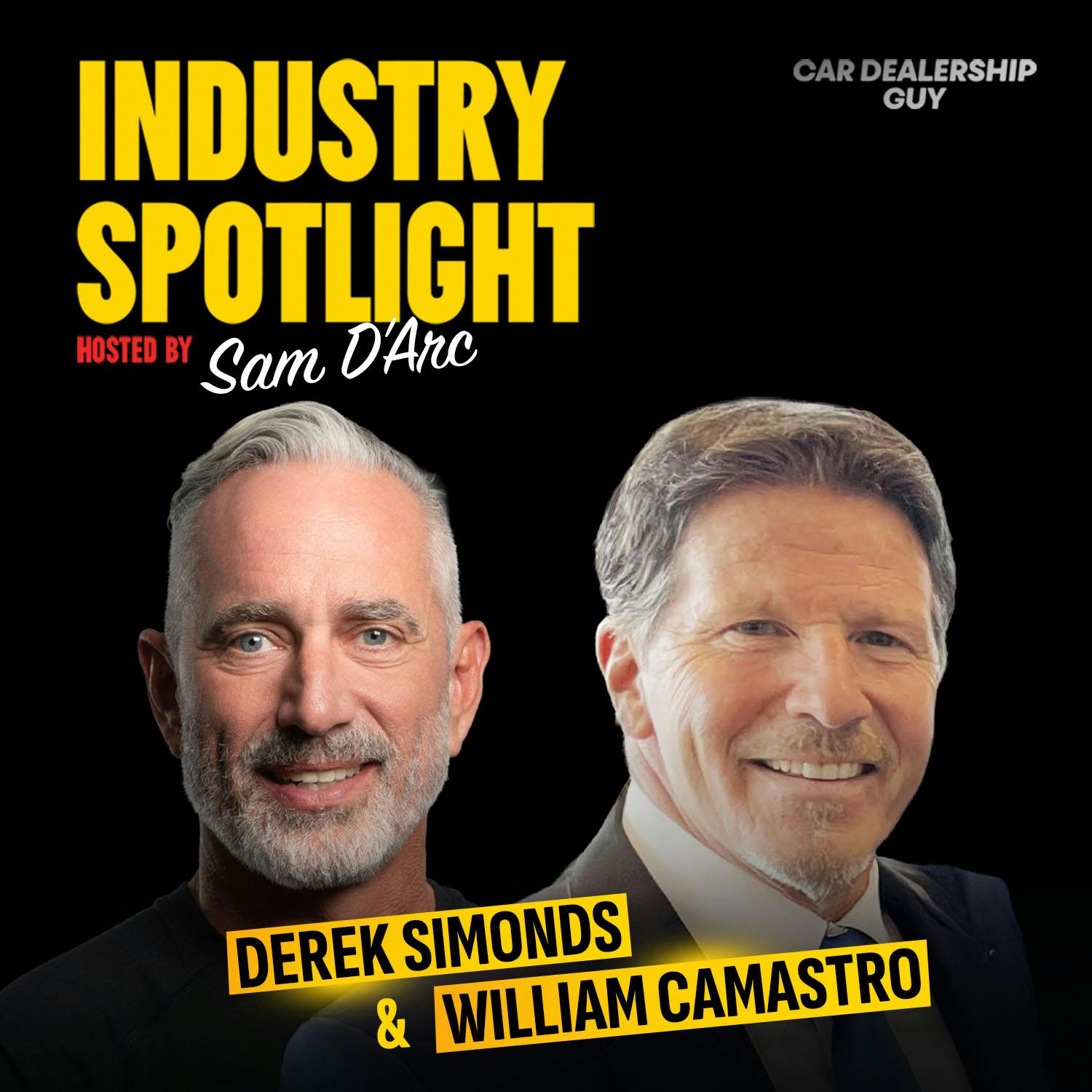
Today, Sam sits down with William Camastro, Dealer/Operator, Gold Coast Cadillac, and Derek Simonds, Executive VP Automotive at Numa.
This episode of the Car Dealership Guy Podcast is brought to you by Numa:
Numa - Numa is the first AI agent platform for auto dealerships. Address communication breakdowns with customers and get full visibility into all service interactions. Numa answers every call, rescues and books service appointments and lets service teams see all customer communications in one place. Increase Repair Order revenue, expand your customer base and increase CSI. Visit @ https://www.numa.com/
Check out Car Dealership Guy’s stuff:
For dealers:
CDG Circles ➤ https://cdgcircles.com/
Industry job board ➤ http://jobs.dealershipguy.com
Dealership recruiting ➤ http://www.cdgrecruiting.com
Fix your dealership’s social media ➤ http://www.trynomad.co
Request to be a podcast guest ➤ http://www.cdgguest.com
For industry vendors:
Advertise with Car Dealership Guy ➤ http://www.cdgpartner.com
Industry job board ➤ http://jobs.dealershipguy.com
Request to be a podcast guest ➤ http://www.cdgguest.com
Topics:
00:36 What is Bill Camastro's customer service philosophy?04:13 Why is satisfaction more important than CSI?05:19 What is the main challenge with CSI metrics?07:58 How can AI track satisfaction in real time?19:15 How is AI revolutionizing customer outreach?19:39 How can AI streamline communication?20:40 Why is speed crucial in customer service?21:55 How can AI improve retention and satisfaction?34:31 What future innovations are you most excited about?
Car Dealership Guy Socials:
X ➤ x.com/GuyDealership
Instagram ➤ instagram.com/cardealershipguy/
TikTok ➤ tiktok.com/@guydealership
LinkedIn ➤ linkedin.com/company/cardealershipguy
Threads ➤ threads.net/@cardealershipguy
Facebook ➤ facebook.com/profile.php?id=100077402857683
Everything else ➤ dealershipguy.com