
Annotations will appear as you listen
0:00
70:57


Car
Dodge Challenger

Car
Hyundai Elantra

Car
Toyota RAV4

Car
Nissan Leaf

Car
BMW E46

Car
Hyundai Ionic 5

Car
Tata Motors Aria
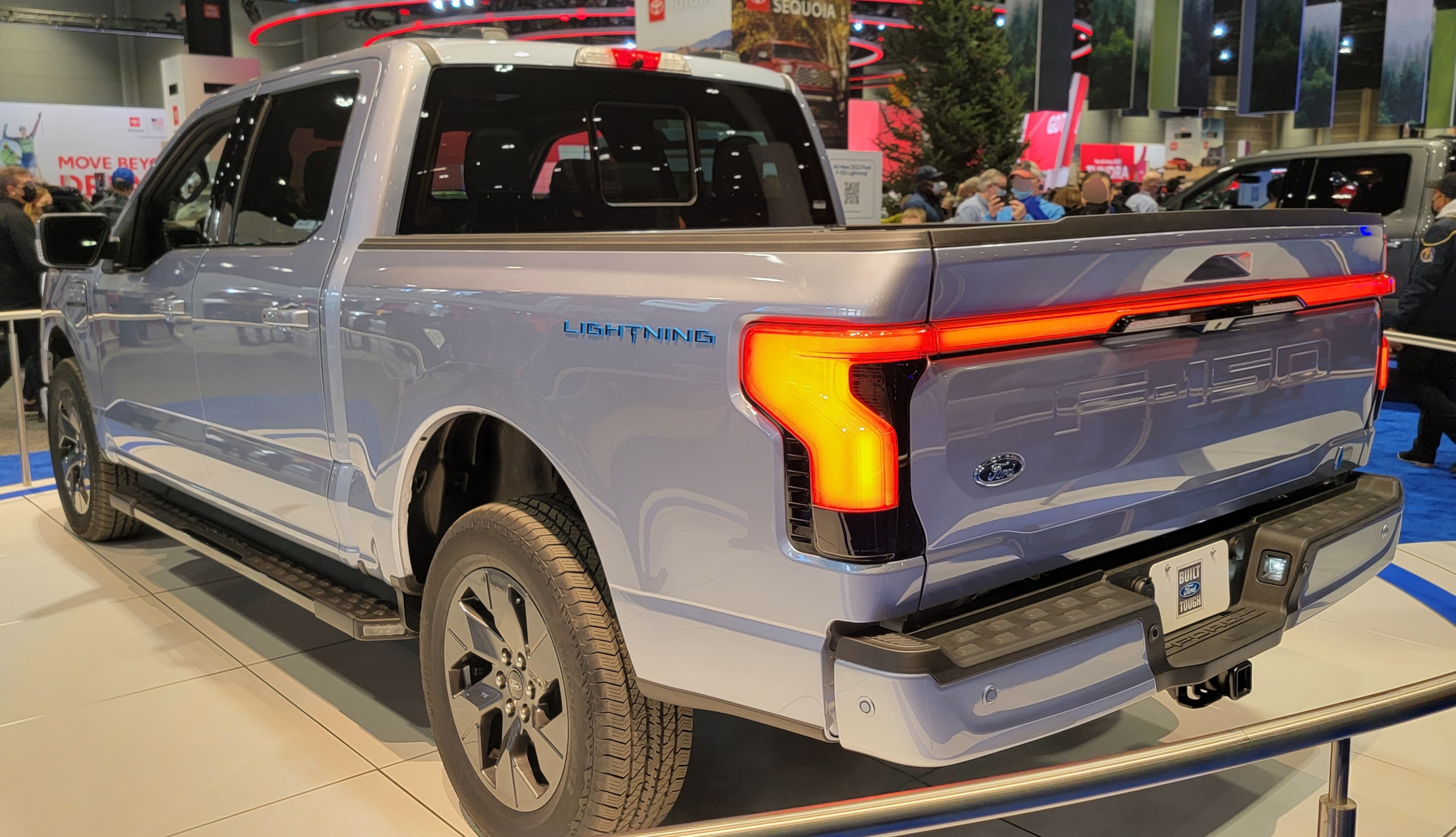

Car
Ford Mustang

Car
Ford Model T


Car
Porsche Cayenne
LIVE
Hello, and welcome to this week's Truth About Cars podcast. I am Tim Healy, the managing editor,
and this week we are talking about the state of the automotive industry with Kyle Choromka
from the drive. We also discussed NASCAR in New Hampshire and eBay's guaranteed fit
program with T-Tech contributor Matthew Guy. But first, buying a car should feel secure,
start to finish. That's why you should buy your next ride on eBay. See, eBay has got everything
from classics to trucks and imports. Now with secure purchase, sellers and titles are verified,
and financing, delivery, and insurance options are built right in. Plus, eligible vehicle
purchases are backed by up to $100,000 in protection. So, buy your next car on eBay.
eBay, things people love. Secure purchase is powered by Carmel Dealer Services,
LLC, and eBay subsidiary. If you like what you hear on the T-Tech podcast,
please go ahead and give us a review and also check us out online at t-tech.com that is
ttac.com or the Truth About Cars, allspulledout.com. We are your home for car reviews, opinions, car
news, and so, so much more. Here on the Truth About Cars podcast, we're always talking about
the stuff that we use in our homes, on our cars, in our homes. Just as an example, I had to use
some WD-40 repair or may have to use some WD-40 on our pair that's coming up in my house. So,
that's something we always talk about. We usually have T-Tech contributor,
Matthew Gaye with us to do that. And Matthew, we're talking about eBay's Will It Fit program today,
right? That's right, yeah. And eBay's are a really good spot to go for new parts and
things of that nature. And you can also find some things that might be hard to find. But
eBay's guaranteed fit program is pretty cool because once you go to their website and you
search by vehicle, it kicks back a whole bunch of different parts that they have. If they've
got a little green check mark next to them, they're guaranteed to fit your car. And that's,
I know that might seem very basic, but in the age where we're buying a lot of parts online and
not buying them in the store, not opening the box before we get them,
you know, you can get the wrong thing sent to you. And it's good that, you know,
that this guaranteed fit program exists over on eBay because all these different eligible parts
and accessories, they just, they're supposed to fit when they arrive. And I've had really good
luck with this program. So just over the weekend, it was the most recent time that I've used this
program that was just, I was doing a set of front brakes on a little Mitsubishi Mirage, you know?
And real quick, you know, you just, I just searched for the parts. Pretty affordable,
you know, I know that eBay doesn't set the prices, the individual retailers do, but
far less than a hundred bucks American, those options popped up and you had your two discs,
you had your four brake pads, all the clips that were needed that came with it. And
it's just, I find the guaranteed fit program is a really good way to make sure that you got
the parts you need because nothing worse than when you get something half taken apart
to the point where you're replacing something and the thing that you're replacing doesn't fit.
So you can't... Of course, yeah. Well, going back and forth to the parts store is the worst, man.
Yeah. And I think it's parts stores. They paid my bills as a child, but,
but yeah, it's cool. It's, it's, you only want to make one trip if you can. Absolutely. And,
and you know, especially if you're wrenching on your, on your daily, right? I mean,
you can't jump into it then and go somewhere to, to back to the parts store,
you know, because then your daily is in pieces because you just took it apart to replace the brakes.
So that's why I really like these guaranteed fit programs. Like the one...
Yeah, it's called guaranteed fit. I spoke, I misspoke earlier. I called it Willow fit.
It's guaranteed fit. Yeah, guaranteed.
Sure. It's correct.
And if it doesn't, if by some chance it doesn't fit, I mean, return it for free and get a full
refund. I know that's part and parcel of some other parts of buying things online as well,
but at least that hassle is out of there, is out of, out of your mind. And you know, the program
covers most parts. I've been having a hard time finding something that's not covered by it actually.
You know, and they're going to add more to the future. And it's not just cars,
I mean, it's trucks, SUVs, motorcycles, even. I don't wrench on bikes,
but I know a few people who do when they've used this program,
they've had good success with it as well in the past.
Yeah, yeah. So have you, outside of this repair, you were just working this week,
have you run into this problem before or the solution from eBay Guarantee Fifth?
Yeah, and absolutely. Sometimes, let's see, so Ford is working on a challenger and
depending on what a break option you have on that challenger, the pads are quite different
actually on the front at least in terms of how they're mounted and how they are,
and in terms of how you install them. And there's no way to make one or the other fit.
So I did, you know, buy from an online source one time and when the pads showed up,
no, not even close right there for a 2018 challenger, but not with the break option.
And I went back and looked through the email to make sure I had specified that particular
break option, because the option was there in the drop down menu for the site that I was on.
But I guess the wrong ones got shipped. So I have run into it in the past, you know, you run into it
sometimes buying parts, you know, from from a local place here, I was trying to replace the
two front knuckles on a Hyundai Elantra. And I ended up getting two driver side ones instead
of a driver and passenger, you know, and when you go to try to install them and kind of
I was looking at it and I thought, but this doesn't quite look right. But you know,
maybe there's some efficiencies here during initial assembly that they're using the same one
on the left and right. And of course it wasn't like, you know, they're going to be different
on both sides. So having, you know, no guests, no stress, you know, those types of things.
That's why I think it's pretty cool. Sometimes we might avoid, you know,
quote unquote, signing up for something or logging into a site.
But it does help, you know, for this eBay perfect, I'm sorry, guaranteed fit program.
If you keep the car that you're working on to keep your daily, whatever it is,
just in this quote unquote garage that they have, save your model. And then pretty quick,
when you're browsing for parts, that little green check mark will show up if the part
will fit your car or not. There you go. Anything else you want to add on this
and your base guaranteed fit? Not that I can think of off the top of my head,
other than it does seem, I mean, the stuff that I've ordered so far has mostly been brakes.
I haven't ordered any suspension parts. I've got all that stuff locally, but it says it covers
suspension parts. That's probably some of the biggest headaches that you could come across
for stuff not fitting. Starters, alternators, that type of stuff is also in there,
depending on your make and model, same thing with engine cooling components too. So
I think I'd definitely recommend it for sure. If you're just getting started wrenching on your
own vehicle, whether it's your daily or your project, this type of stuff makes the work go a lot easier.
Yeah, absolutely. So with that, we will go ahead and wrap our
usual stuff we use segment here and through to our first podcast. Thank you, Matthew.
Hey, thank you, Tim.
EBay has reinvented vehicle buying from click to curb. Everything's covered.
It's all thanks to their new secure purchase. Ever try to buy a car and end up in a parking
lot with a stranger and some blind trust? Or spend half the day at a dealership talking
to pushy salespeople and signing paperwork? Or maybe worst of all, wait for hours at the DMV
just to transfer the title. That air is over. For years, EBay has been the go-to for gear heads,
collectors, and DIYers. Because whatever you're into, from classics to SUVs and trucks to imports,
EBay's got it. And now with secure purchase, EBay isn't just where you find your next ride.
It's where you can buy it start to finish. Sellers and titles are verified,
paperwork is handled by experts, and payments are traceable and digital.
So you know exactly who you're dealing with and exactly what you're getting.
Plus you can finance, insure, and register your vehicle all in one place.
No more hours at the dealership. No more trips to the DMV. Get your vehicle, plates, and paperwork
shipped to your door, ready to drive. And it's all part of one seamless process designed
to feel as easy as buying anything else online. And eligible vehicles purchased on EBay are backed
up by up to $100,000 in purchase protection. Thinking about selling your ride, secure
purchase makes that simple too, because you know your buyer and their funds are verified.
If you're still all on your car, the financing payoff is fully integrated,
so you're not chasing paperwork or waiting intros to clear. And with secure purchase,
you get paid fast. And you're not going to be stuck chasing no shows or answering the fifth
still available message. This is what modern car buying looks like. Skip the DMV,
skip the sketchy meetups, buy it on EBay. EBay. Things people love.
Secure purchase is powered by Carmo Dealer Services LLC in EBay subsidiary.
Here on this week's Truth About Cars podcast, we have Kyle Cheramka with us from The Drive. Kyle,
you're the editor-in-chief of The Drive. That's correct. Yeah, so Kyle, thank you for joining us.
You are here to talk to us about the overall automotive market and the shifting,
the ever-shifting sands as it were in terms of whether it's the EV tax credit going away,
which will happen in a few weeks or actually sooner than that, or the rise in average transaction
prices, tariffs, a whole bunch of other things. So let's kind of start with the big picture.
How are you seeing it over at The Drive? Every automotive journalist, every automotive analyst
sees it a little bit different. How are you seeing it?
Just when you think things are settling down or getting into some sort of rhythm again,
it feels like five other things pop up in this industry to add chaos to the mix.
It's a big transitional time, I would say. That's the best way to describe it.
We've got a lot of stuff converging this fall. The EV tax credit ending at the end of September,
that's going to make a huge difference not only the way people shop, but the way
automakers price their cars. You've got the tariff impact, which has really yet to be felt
by consumers because of the stock that dealers keep and the way that companies have tried to
initially at least absorb those costs, maybe hoping that a deal would be struck to lower them and
some have, but they're still fixed at higher rates or far higher rates than they were before.
So that is also coinciding with the 2026 model year cars coming onto lots later this fall
at the same time that dealers are trying to clear out the 2025 and older stock that they have.
And then, of course, you have the federal interest rate cut that was just announced earlier this month
that we should see an impact on lending rates at least for financing new cars.
So all of that stuff is converging at a point where people are still feeling squeezed by inflation,
buying power is still down. New car sales are still down broadly speaking. Some automakers
have had a good quarter, but there was such a rush to buy new cars when the tariffs were first
announced this spring that there are fewer buyers looking for their next car right now than there
would be at a normal time in a normal year. So all these factors are feeding into this mess
where it is really hard to separate the signal from the noise and understand what exactly
the impact is going to be on prices. But broadly speaking, you can expect prices will
continue to go up. They did inch up again in August. I think it was right around $49,000
for the average new car or price out the door at least. And yeah, at the same time that
it just feels like the products that automakers are coming out with,
they're really trying to figure out what people want. They're not used to
having to read the tea leaves like this. They're used to a reliable mass of buyers just
wanting a new car every two to three years and being there to make that cycle happen.
And I think more and more people are weighing that against their own financial realities and
saying, hey, do I really need to go in on a new car? Or I hear all these issues with
build quality. I mean, that's a huge, huge concern for a lot of folks who I talk to
who are in the market. And it's making buyers skittish. And automakers aren't used to that.
They're still trying to adapt from three years ago when you could charge $10,000 over
for a RAV4 because people were just that desperate for it. And now that is not the case.
Yeah, the world definitely changed a lot. And I mean, I haven't been car shopping
by myself in quite some time. I've never actually bought a new car. But
Congratulations.
Yeah, I had used cars before doing this for a living and now I'm impressed cars enough
that I don't need to get a new car. But I have noticed with everything else I buy
just about there's been a few exceptions. But the like going to get the grocery store
is just insane range. Oh, it's like my bill is $50 to $100 more for the basically the same stuff.
Tell me about it. Yeah, I mean, I mean, I'm out here in Los Angeles where it is
incredibly expensive to live regardless. But if you look at what we were paying for basic
staples two years ago versus now, it is significantly higher. And it's not like
gone up across the board. So something's got to give.
Right. It's the same year in Chicago, for sure. I mean,
almost everything I buy, like I said, has gone up. But there's been a few exceptions.
I just had to buy a new TV and pricing on that has gone down because the TV I got
was a newer model for less money than the one I had previous. So there are some
exceptions. But generally speaking, you know, it's inflation is tough. So
obviously that really affects the average buyer, especially when you're coming to talking about
car buying, which is obviously the second biggest purchase most people make. Let's talk a little
bit. What's that? I always say when people ask, you know what? I guess when I'm trying to justify
what I do for a living and give give it stakes to people, it is that you know,
what we do is when we review cars, we are advising people on the second biggest or honestly
the biggest purchase that they'll ever make in their lifetime. Yeah, if you're a lifelong
renter car might be. Yeah. Yeah, yeah. So let's talk a little bit about the EV credit, which
this podcast will barring some crazy breaking news go live just before the credit expires. So
how is that going to change the market? So at this point, we've talked to some analysts
about this too. It's not a new topic on this podcast. But we've seen on our end of TTAC and
what I've seen in and heard in conversations with folks is it's kind of a weird time because
the EV market is actually growing a little bit. It's not, you know, rocket ship growth,
but it's growing a bit and it's the market's getting better and automakers are getting better with
range and charging times and getting just some better quality products in general and starting
to kind of starting to see a few more affordable EVs as well, the lower end of the price
point and Nissan just just relaunched the leaf or launched the second generation,
sorry, third generation of the leaf. So that's an affordable EV as well. So you're starting to see
EV growth at the same time that the credit may go away. Now that being said, we've also noticed
as we've had these conversations that some analysts have suggested that the credit is really
more just for people who are pretty well off anyway. And it's not really incentivizing buyers
who are in the fence. So I want to see if you've seen that and what you might expect
for the EV buyer and the EV shopper as that credit disappears.
Well, it really depends on if we're talking about leasing or buying because for buying, obviously,
it is still a bigger upfront commitment, bigger upfront cost. And people by definition who are in
the market for a new car to take on a big car payment and that kind of debt ostensibly have
the ability to do so. Whereas leasing, the way that credit has played out, it really just
makes it a lot more accessible for a lot more people who might not have even considered it.
I mean, I'm actually a perfect example of that because I earlier this year, I used to have an
old E46 three series wagon that was completely falling apart. And I got sick of maintaining
it and just it was kind of past the point of no return. And so I got rid of it and got
in Hyundai Ionic 5 on a really cheap lease. And this was admittedly before the tariff
announcement, this was March. But those deals are still active this month, even Hyundai is still
really trying to keep the price down. And it shows in their sales. I mean, August, I don't
have the percentage in front of me, but they were up double digits. And EV sales were a big
part of that on the end Kia. And so the lease, it really, I mean, for my payment is $240 a month
with not much money down at all. That's something that a lot more people can swing
than even a $500 car payment with, you know, some down payment up front.
So the the tax credit has really given people a reason to try an EV who might not want one
otherwise or who might not have even considered it as an option. But there are, as you said,
automakers, the thing to keep in mind here is that the way product cycles work, these bets
that are coming to the market this year next year were placed between three and five years ago.
And there's a certain amount of adjustments that automakers can do. But there was not,
you know, it wasn't until like the last year or two that there was a huge, huge concern
and realization that automakers had really abandoned the lower end of the pricing
spectrum and that those buyers instead of just sprinting and saving and trying to put down more
on a more expensive car, they're just going to keep their car or they're going to buy a used car.
That's also why you see used car prices continue to inch up. And so the idea that the tax credit
was going to be this thing that goes away and then the market completely changes is true to
some degree. At the same time, automakers having seen this are trying to pivot as quickly
as they can to make the pricing make more sense in today's market. The leaf is a great example
because not only are they launching it, but Nissan just announced they're going to discontinue production
of the Aria, their first electric SUV that had a higher price points, because it just
doesn't make sense now to push that as their main electrification, you know,
halo vehicle, if you will, and realize that the market for a $50,000 crossover,
especially post tax credit is not there the way it used to be. And it's not going to sustain
and deliver the money that they need to continue these kinds of investments.
And I think another great example here is I talked, this was going back four years. So in 2021,
I had the chance to interview Jim Farley at Ford during Pebble Beach car week. And at that point,
it was just on like the eve of the F-150 Lightning launch. They had already launched
the Mustang Mach-E, the F-150 Lightning was next. They were all in on both of those vehicles.
This is what's going to define the next five to 10 years of Ford. It's the most important launch
since the Model T, blah, blah, blah. And if you recall, or if anyone recalls, when they announced
their new low priced EV initiative earlier, I think it was last year, and then this summer
added a lot more details to that, they use the same comparison that it's the most important
thing since the Model T. Yeah, they did. I remember that.
Yes, exactly. And so that is what you see there. And four years ago, when I was talking to Jim,
that was not anywhere. I'm sure it may have been talked about internally by that point in some
very, very general way, but they were not even close to having that as something of a priority
or something that would really be important in four years time. Four years later, here we
are, and all of a sudden, it's, oh, we need an EV that costs less than $30,000. That feels like a
non-negotiable. And Ford is the first one to really say that out loud. Nissan is trying to bring
the leaf down. And even though it will be a little harder without the tax credit helping it
out, they really intend to get sticker prices as close to $30,000 as possible.
The reaction is slow. It takes time for these companies to adjust when the economic
conditions shift quicker than they can anticipate. But the, yeah, the tax credit is a significant
thing that is going away. And I don't think anyone can say for certain what it's going to do because
different companies, every automaker is a global business, right? And so there are so many
factors that go into the pressures that they face in this country and how they're going to
respond to them. And so some will, you know, try to spin up a new effort like Ford Skunkworks
Division. Some will just narrow down their model lineup so they can save costs elsewhere. Some will
just try to raise prices on everything else and hope that they have one or two models that can
bring people in the door. And with electrification, I think we're at a point now where the average
consumer isn't distrustful of it. They have concerns about range, about battery degradation,
about charging abilities, but I don't know many people at all who have gotten an electric vehicle
and regretted it. Apart from ones that are just like, you know, full of bugs and quality issues,
the actual EV versus ICE powertrain conversation, like most people are totally fine with that.
And most people who buy cars, they don't really care what is powering it. They just
want it to work, right? And so, you know, now we're at a point where there are more EVs
on the road. There are more used EVs on the road. People are starting to get acclimated to the idea
that, hey, electric cars are a thing. Like, this is something I should consider. And so,
automakers are going to have to mess with prices somehow to keep, you know, to prevent
that just across the board, $7500 increase on these sticker prices for EVs. But you're
going to see a range of responses and approaches to dealing with that. And, you know,
really just have to see in the next three to six months as these next model year cars hit,
who's doing what with them? Yeah, I think we've already seen a few automakers pull back or delay
some plans. And I'm glad you mentioned the three to five year planning period. I forgot to mention
that during my question because most of our listeners probably already know that automakers
do need three to five years, generally speaking, to plan a new model or the next major
generation of an existing model. So I'm glad you reminded us of that point. But I also think
Nissan's like you said, decent is a great example with the new leaf. And then the Aria just probably
wasn't a strong seller. And the leaf comes in. I just drove it on the launch a week or two ago.
And the top trim, I don't have the numbers in front of me, but the top trim is a little under
$40,000, I think. But you can get a base, the base model. I don't remember up top in my
head now if the base model that's coming is a little under because they've got a smaller battery
version that's going to be a late availability. I think it was the base of the current larger battery,
that's just a little under $30,000, just a few bucks under that magic number. So
and of course, if I have that correct, then the smaller battery will be even a little bit
less money. So Nissan has the the leaf coming in as an affordable vehicle. I think that is
going to be huge to have a mainstream brand offering an affordable EV because there's just
not that many in the market right now. And I also think too, your point about the
challenges of charging I think is still a thing, at least for where I live. I know it's difficult
for me to charge the EV test cars that I get. My building, I'm in a condo, they don't allow EV
charging. Our board has disallowed it for reasons I've never been able to quite figure out.
I've asked and not gotten a good answer. For me, the charging EV requires me to drive about five
blocks, which is not not a very long walk at all. But I have to park the vehicle at a retail
establishment that has a couple of charge point stations, plug it in lock it and walk away and
come back later when it's charged. Now it's not so bad and the the the fee for the charging
is pretty reasonable. And it's only a couple blocks walk. So it's not unless it's freezing
cold outside, it's not terribly inconvenient, but it is still a pain. So I think that is
one issue too with EVs. But can I just go on a rant about that real quick? Because that's
one of my personal favorites. So I really believe that the biggest blocker to electric vehicle
adoption in the US is the charging situation. I agree with you. Price has a lot to do with it,
but automakers have ways to mess with that and to adapt and and incentivize. They can't
incentivize new charging stations being built. And, you know, I live in, like I said, Los Angeles,
supposed to be the best place to own an EV, right? The incentives are great, state and federal
for now. And we, you know, there was a we had a head start on building out public charging
compared to a lot of the rest of the country. But that's really slowed down. And I've noticed
it's especially slowed down since automakers have decided to switch over to Tesla's
NACS standard. Which, exactly, yes. And that was that. And when I went to the leaf preview event
in June, they Nissan said that that was actually a late decision in the process to switch over to
that because they had already started development of the car, like these cycles. And it was only in
the last like year and a half prior to launching it that they were like, oh, wrap, we need to,
we need to have this kind of charging because otherwise people aren't going to be able to
use it like we want them to. And, you know, if you draw a five mile radius circle around my house,
there's over a million people who live in that circle because it's a very densely populated city.
Yeah, I think, yeah, there and there are, I think, three different Tesla supercharger
stations depots in that circle. And because one of the reasons why I got the Ionic five was
that it could use the NACS port. It had an export from the factory was the first
non Tesla to have that from the factory. And so I can just go to those, which is great.
In comparison, there are three electrify America stations with the 350 kilowatt charging speed.
Those only have three plugs each. And they there is a line for those plugs from morning to
midnight every single day. Oh, it's in large, it's in large part because of all the rideshare
drivers who are using or driving, you know, I sevens, EQSs, EQEs, and they don't live in a place
where they can charge at home. So of course, they're going to use that. And I think that
as automakers have struggled to figure out how to sell EVs to people and convince people
they're worth trying, they're used to using specs. Like that's how we all have been trained
to judge cars numbers. Of course, power torque. Yeah. Yes. And charging speed is a very
easy number to point to and say, look, you can go, you know, when I was I
test drove the new Porsche Cayenne electric prototype in June, and Porsche is very proud
of the fact that it's going to have 400 kilowatt charging speed. It is and they're
and because they're developing in Europe, you know, they have those chargers over there.
There are literally only a handful of chargers in the entire US right now that can hit that
charging speed. But as long as automakers point to this and say, look, you can go from 10 to 85%
in 12 minutes. Isn't that great? That's what people are going to want. They're not going to,
you know, read past that look at the fine print and say, oh, well, fast charging should only
be used when I'm on the road and I can't charge at home because it stresses the battery
and blah, blah, blah, blah. It's like we have convinced a lot of people that the
thing that will make EV adoption work for them is being able to use a charger like
a gas station. And we're at now we're coming up against the reality that we don't have the
infrastructure to do that. And building it is a huge, huge process. And so again, I started
to sidetrack the conversation, but no, I think it's actually a big part of it. We've had the
conversation before, but it's I think it's worth reiterating. Yeah, absolutely. It's just it
again, price price has a lot to do with it. But people see that it's not going to be easy
to fit into their lives. They're not going to bother again, like used cars are a thing,
you know, people in this business, the people who make these cars sell these cars,
like they are used to taking for granted the fact that they're always going to be people
who don't want a used car and just want a new car every two to three years. And more and more,
they're going to realize that people are making that choice because they don't want to deal
with the headaches and the hassles of new technology and changing their lifestyle and
all that stuff. Like it is just a different game now.
Yeah, you're a little rant there, I think is perfectly said. We we've had that conversation
before with other guests on this podcast, and I've definitely experienced it in my own
life as someone who tests cars or living. And then also, I've been working on a story that
been kind of working in it for the background for like a couple of years. It's been sort of
sitting in the back burner simmering a story about why there's a bunch of reasons why
gas stations don't just have a bunch of fast chargers costs cost. I love it. I love it.
The infrastructure are the are the main, eventually I'll get it written.
It's one of those things that's kind of been sitting in the in the old to do list. But
costing the spoiler alert there is that cost and infrastructure play a part a big part. It's
you know, a lot of gas stations don't have the land they sit on doesn't really necessarily
have the capacity to develop a lot of fast chargers necessarily. They'd have to either buy
more land, expand their station, maybe have things re renovated redone. So there's that's
a big problem. It's one reason why you don't see fast chargers like gas stations for the most part.
And I think to like you said, when the average driver and most drivers even even young folks
have been conditioned to get gas in their car, and it takes less than five minutes,
there's gas stations everywhere, except for maybe places like New York City,
and even in Manhattan, there's a few gas stations, not a ton, but they're they are there.
So people are conditioned to do it that way. And it's a little bit trickier to get your
mind set around. Okay, it's gonna take 30 minutes to go from 10% to 80%. And I have to search for
a charger that's going to be in probably a strip mall parking lot somewhere. I mean,
or a Walgreens lot, you know, you are starting to see here in Chicago, a lot of new
construction, a lot of new new condos. I'm not sure if they're required by law
or not, but they a lot of them have chargers, usually four or five chargers for for a large
high rise. A lot of Walgreens parking lots have chargers near me, there's a whole foods with two
electrified America chargers. There's a charge point that I mentioned that a few blocks away
that has I think, I was just there charging EV last week, I want to say it's four, it's at
least three, if not four charging stations. I know O'Hare Airport has a few. And obviously
Tesla's Nax is all over the super charging network is all over the place in the country.
So we are seeing more chargers, but we're not quite seeing enough to make it as convenient as
getting gas. So I'm totally with you on the idea that until until EVs, even with EVs getting lower
prices, lower sticker prices in higher range now, 300 mile range is not unheard of anymore.
But until we have the infrastructure, obviously people can charge at home if they have a
single family home, that's great for them. Those who have the money to do that. But
until we see charging become as easy as getting gas for those people who can't charge at home for
whatever reason, maybe they park on the street, maybe the apartment building doesn't offer charging
because it's too old of a building or whatever. I think that will really be what speeds up EV
adoption. I hammered that point home in this podcast more than a few times. And before we
ran out of time, I wanted to switch over to tariffs. That'd be kind of the other big
topic that we were talking about in our pre-show setup. So as you said at the outset,
we're not really feeling the effects of tariffs just yet. So with the administration changing
the plans, it seems like every few weeks, so it's kind of hard to predict. But where do you
see it sort of going with tariffs, assuming the administration sort of locks something down?
I think the most likely outcome is that automakers, I think most will have to raise
prices to some degree, whether or not that's on specific trims where they can do that and make
a higher margin on the features and the options that are built into that car, the different parts
that are used perhaps. And that's another thing is that it's not just vehicles, it's the car
parts themselves that have tariffs applied to them now. And so I do see prices continuing to go up,
especially once we see the 2026 model year cars come. And possibly even in the middle of
that, I think some automakers will likely try to launch these cars with the same sorts of price
increases we're used to seeing. Others will try to slip in an extra $1,000 that people might not
pick up on as being directly because of the tariffs, but just gives them that much more pad.
I mean, a similar thing happened during the height of the pandemic disruptions where
automakers saw dealers charging markups for their cars based on the limited supply and they thought,
well, let's just get a piece of that too. And they started to raise prices by a much higher
factor than they were on a year-to-year basis prior to that, even though the cars themselves
were not that much different or not a revolutionary new generation. So you're going to see
automakers try to take advantage of that and raise prices sort of under the cover of the
new model year changeover. But I also think that you're going to see used car prices continue to go
up and not just in an annualized normal year over your basis, but as the prices go up on the new
side, so do they go up on the new side? And we've kind of had a bit of a reprieve from that this
year because the increases have slowed. But the second that they tick back up in any significant
way, that will flow down into the used car market. And you will see, especially cars that
are between, say, three and seven years old, which will have a lot of the features that people want
still. Apple CarPlay to name an obvious one, ventilated seats, automatic cruise control,
things like that. Those cars will go up in a noticeable way. I really do believe that.
It's going to be a challenging market for the buyer, especially given that right now it feels
kind of the opposite. It feels like there are deals out there to be had. There are especially
automakers trying to clear out or dealers trying to clear out the stock ahead of the 2026 model year
and trying to incentivize people to buy all these EVs before the tax credit runs out.
That's going to change and the prices will go up. And it's just a matter of,
can they do it in a way that the market can bear and people's pocketbooks can bear?
Or are they going to outpace it again? And we're going to have this whiplash thing where prices go
up, sales drop precipitously, prices come back down, but they're not quite offering the same
things that they used to because of the tariffs. It's going to be this vacillation where I really
don't see, even with trade deals being locked in, I don't think we're going to have predictability
or consistency on pricing. It's going to be really tough.
Yeah. And I think too, one thing we have to keep in mind is that when it comes to automotive,
even if the car is built in the States, the tariffs on parts that come in from overseas will
play a part. And I read somewhere and I forget the exact, I forget why I read it and I forget
exactly which car it was in which part, but there was one part that's used across just about
every automaker that is only sourced overseas. And I forget what it was. I can't
remember what it was, but it was something that was basically a small part, but it will still
drive the cost of a car up a little bit. And that kind of can add up over time,
even if a car is built, you know, 95% of it, or if a car is built in the States,
95% of the parts come from the States, even 5% can add up. So we'll have to see how tariffs
can really affect things. I think my personal approach right now is both someone who has to
cover the issue as an editor and writer, and also someone who just follows the market
as a car person, just wait and see and just kind of see what happens. But
with that, we only have about 10 minutes left and not quite 10 minutes. I wanted to
see if you had anything else. Obviously, the big three topics today were inflation,
tariffs, and what's going to change as the EV tax credit goes away just in just a short time
here. But is there anything else that you kind of have seen in your work that you wanted
to talk about today, something that maybe we have broached or that hasn't really been
covered a lot by other outlets? Obviously, you're sort of our friendly competitor. So
maybe it's something that you've seen at the drive that ourselves and Jalopnik and the
Utopian haven't covered as much or something like that.
You know, I wouldn't say it's something we've covered extensively ourselves, but I think
something that is going under discussed right now is the growing market of used EVs especially,
which is where I think there's going to be a lot of deals to be had in the coming months.
And whether or not you're in the market for an EV and this is just a great way to get in there,
or if it's something you need to be sort of convinced of or talked into,
the fact is that automakers, I mean, battery degradation and absolutely a concern,
but they've gotten better at it. These batteries are warrantied generally,
for the normal powertrain warranty that you get on an ICE car. And something that isn't really
talked about that much is that California and therefore a lot of Carb states have an additional
warranty protection in place for the battery and the traction power system on hybrids, plug-in
hybrids specifically, but they're about to expand that to EV starting next year in the 2026 model
year. So in 2026, starting in 2026, vehicles, electric vehicles will need to maintain at least
80% of their batteries range and capacity for 10 years or 150,000 miles. That is,
sorry, wait, hold on, I got that wrong. It is going to be, by 2030, it's going to need to
maintain 80%, but that will be 70% from 2026 through 2029. So starting next year,
a used EV that you buy maybe after six months, someone trades it in or maybe the following year,
that's going to be cheap because so many of these are coming off lease. Automakers have pushed leases
because and dealers have pushed leases because they know that people are skeptical about owning
a new piece of technology like this. And so the market for a used EV is really friendly to buyers
right now because there doesn't seem to be that much demand. And what demand there is isn't
being really met by the supply yet because the trickle down effect hasn't quite happened yet,
given that a lot of these cars just hit the road two, three years ago. It will start to happen
in the next year. And so if you look at the protections California and other car states are
putting in place, the issue of battery degradation is kind of taken care by that. And then you're just
left with, can this work with my lifestyle? As we just discussed, that's a bigger problem,
if not the biggest problem. But still, you're going to, it's going to be very possible to get
a functional, perfectly normal EV that does what you need it to at a pretty significant
discounts. If you are willing to go used and just understand that it's like any used car,
things can go wrong, things probably will go wrong at some point. But you are not going to be stuck
with the cost of a brand new battery, $10,000 or whatever it is, just because you happen to buy
a used EV. It's not the ticking time bomb that people think it is. Some build quality issues
accepted. But I think that's something that a lot of people don't realize because it's not
publicized. Like you have to just know the car rules. If you go to their website, you can read
about it. But it's not something that dealers are telling you to sell these cars. It's not
something automakers talk about, but it's there. It's the law. Yeah, yeah. So that that's a great
way to wrap this segment here on this week's podcast. So again, we've been with Kyle.
Let me make sure I get this right. Kyle Karamcha.
Taramka. Taramka. Sorry, I was close. I apologize.
It's closer than most. Yeah, from the drive editor in chief of the drive,
which is the drive.com. So once again, Kyle, thank you for your time. And we've been talking
inflation, EV tax credit tariffs, and a little bit more. So with that, we'll go ahead and end
this segment here on the People with Cars podcast. Thanks, Kyle. Thank you.
I've ever tried to buy a car in line and end up in a parking lot with a stranger,
a paper, title and some blind trust. With Secure Purchase and eBay, you don't have to.
Secure Purchase means sellers and titles are verified. Financing, covered. Registration,
handled. Delivery, get your ride, plates and paperwork shipped to you so you can skip the
DMV and sketchy meetups. Buy your next car on eBay. eBay, things people love.
Secure Purchase is a part by Car Mile Dealer Services, LLC in the eBay subsidiary.
Here on the People with Cars podcast, we always are talking NASCAR just about every week and
we're getting deeper into the playoffs now. We always have T-Tech contributor Matthew Guy with
us to discuss NASCAR, what's going on in the Cup Series playoffs and on and off the track.
Matthew, how are you doing today? Hey, pretty good. How about you?
I'm doing well. So we just had a race in New Hampshire, the northernmost
track on the NASCAR Cup circuit and Ryan Blaney punched his ticket to the next round of the
playoffs by winning. So holding off Josh Berry after Berry had a spin. So let's kind of delve
into what happened in Loudoun and also if we have time preview a little bit of next week's race.
Sure, absolutely. And it is neat to see the 21 car with wood brothers up there so high
on the finishing order. And just after being punted out of the playoffs,
that team has certainly had a really good rebound. And like you said, there was a spin earlier
in the race by that car. They were battling with the 88 for position and both of them were
inside the top five when the 88 made a bit of contact with the 21 and that sent them spinning.
But you know, damage to the car, you know, it was minimal at the time, but the loss of track
position was almost no damage. Yeah. Yeah, right. But the loss of track position,
that's really tough to overcome. And they did, you know, between, you know, some good work on
pit road. But he did take the entire second stage and most of the final stage to get track
position back that was lost from the spin. So, you know, but as you know, the final
green flag pit stop cycle went around, that 21 was back up in the mix sitting in the top five.
So it's, you know, the performance showed up too late to make it to the next round of the playoffs. But
you know, this is a good example of how being out of the playoffs, I guess doesn't mean that teams
just give up, you know, for the for the other remaining seven, whatever it is races that are
coming up on the NASCAR schedule. Yeah, yeah. And also, of course, with the conversation we
had last week about the cut line, it did change, of course, like we said, it would last week.
So with Blaney winning, he punches his ticket, we have one more race
in this round. And then if that is correct, I believe that we have just the one more race.
And a Kansas before we move into I take that back, we have two more races in this round. So
we've got Kansas and the Charlotte Roval, which I should have known we've been talking about
that for a few weeks now. So the cut line does change big time. Now, instead of being
drivers who were one, one or two points back, we have drivers Chastain is 12,
Cintrick 19, Tyler Redick 23 points back and bubble Wallace 27 points back. And like I said
last week, I think the cut line terminology is confusing. Just say the first four out
how many points back they are the first, the first four drivers who
who are not going to make the not going to make the top in this case top eight.
But yeah. So with that in mind, you also as we did our pre show prep,
I before we get into the next topic on what happened in New Hampshire, I definitely want to
agree with you that Josh Perry coming back from a spin or he didn't lose anything but
track position, he was pretty much barely touched, but he did lose track position
badly. So that's that's impressive for him to come back even though
he ended up not winning. And he is not in the top 12 or definitely not in top eight. So win
is what he would need to move on to the next round. But yeah, very impressive there. But
you and I Matthew had talked about kind of Denny Hamlin as well in our pre show prep,
Denny Hamlin. Now I actually happened to miss this. I think I either changed the channel
or got a piece of the restroom or something or both or not both, but I did something
where I couldn't rewind my DVR. Hamlin was I came, I came back in and Hamlin was,
I think I surfed away because I thought it was commercial break and then I just came back
a little too late, but I'm not quite sure. But anyway, Hamlin was was complaining to the radio
about Ty Gibbs. And I guess he had sort of dumped him in a way, hit him to use your words
Matthew. So kind of walk us through what happened there. All I know is that Hamlin
was very upset and his crew chief had to kind of refocus him on the race.
Definitely. And and leading up just to for anyone who didn't didn't see the race, this was
the the cars, the the 54 was ahead of the 11 and they were battling for 11th and 12th. So it
wasn't, you know, for a top five or podium or anything like that. But the point that was
being made by Denny Hamlin was that Ty Gibbs, who is the grandson of Joe Gibbs and we've had
that legendary NFL coach and that's exactly right.
That Ty was giving him a hard time to let him pass basically, right? I don't know if
Denny felt he had a better car and he might have been. But if you listen to the radio,
there were certainly a lot of chatter by Denny Hamlin saying, you know, I can't get
around this guy. Like, why is he racing me so hard? I'm fighting for a championship
and he's not. Okay. That's, you know, that was that was the that was the
those were the words that were coming out of the 11 car. And then, you know, just within
not too long after that, I mean, they were they were they were clashing for a few laps.
And then all of a sudden the 54 goes for a ride gets gets tapped by the 11th and goes
for a ride into the wall. So that's, you know, you can always see, okay, so this is a
more experienced driver with Denny Hamlin school and the young guy, hey, you know,
if I want you to get out of my way, you better get out of my way, especially if I'm running for a
championship. And what I thought was rather hilarious was that you had them just after
that, right, between we had that clash between those drivers, but JGR's competition director,
Chris Gabehart, right, is the competition director there. And he said that, you know,
there's no, that wasn't intentional, etc, etc. Right. I mean, the conversation was happening,
right. And Gabehart, you know, said that it was just a misjudgment on Denny Hamlin's part,
thought he was going to have more space than he had and ruled out deliberate contact. Now,
I call all kinds of nonsense on that. I do think there was deliberate contact there. I'm
on the part of Denny Hamlin, and I can see his point as well. I can see Denny Hamlin's
point of wanting to move up in the running order because he is running for a championship. And
it just makes one, it's another aspect of NASCAR in which you have non-playoff teams
competing with playoff teams for the championship. And that's just its own unique kettle of fish
we've talked about it a million times. And we talked about it during the Winston Cup era,
back, you know, back in those days as well, you might have someone who's
500 points out and then someone who needs those couple of extra points for the championship
and they're in the way. So they're still out there, right? So that argument could be moot,
could be a moot point. But, you know, I do think that there is a bit of
etiquette out there, you know, there is racing etiquette. Absolutely. Right. And that, you
know, if I see that shit, you know, I'm a shooter, I'm just a slower car. And someone
is coming up behind me and they're either Jonesing for the win or they're only a few points out
of the championship. I can and have moved over. Does it feel good? No. I want every position I can,
you know, in the final running order. But sometimes that's just the order of the day.
Yeah. And I also was getting a good laugh at it. So like I said, I missed the initial
incident. I think I just channel surfed away for a minute, maybe, maybe because I was curious
what was going on in a football game or just thought it was commercial. I'm not sure why I
would have switched away, but it doesn't really matter. But I came back in time to see the race
was under caution. And as they're, I believe it was under caution, as they're doing the
caution laps, Hamlin comes on the radio and says, and this is what made me laugh. I don't
think he swore if he did, I forgot it, but he said something like, do they not talk to
him? Do they not tell him anything? And I thought that was absolutely hilarious.
I'm paraphrasing. I don't remember the words he said verbatim, but it was a couple sentences,
like along the lines of, do they not tell him? Do they not teach him? It gets very young,
of course. I think he's like 22, 23, something like that. So, you know, it was just,
it had me kind of cracking up a little bit. I always, I almost always laugh when,
unless there's a really serious reason not to laugh, I almost always laugh when these drivers
are on the radio during a broadcast, particularly during the caution. They're complaining about
something else, someone else's behavior. I really laugh when they're doing 200 miles an hour and
they're ranting about it. It's like, man, I wouldn't be able to concentrate enough to talk
to the radio 200 miles an hour. I just so focused on my driving. And these guys are
out here doing soliloquies. And they're speaking in whole sentences with whole words.
The amount of nonchalance they have to that is crazy. They can talk on the radio. Most of us
can't talk on a cell phone and drive. And they can, even with Bluetooth, and they can talk on
the radio 200 miles an hour. So that always cracks me up. But yeah, when these guys get
on each other's nerves, and I'm not trying to do like, wrestle me, you know, heels and
faces and personalities clashing, I don't want, I don't like that. I don't want to see guys
throwing a fist of cuffs in the pits after the race or anything. But there is,
there is some entertainment value in being led in behind the scenes a little bit
to hear drivers complaining about the other guys' actions on the track. And,
and, you know, a lot of it's a lot of it's watered out of the bridge when the race is
over. So these guys are friends and they go back to being friends. Some of these guys
might not be friends, it doesn't necessarily mean they don't like each other. You know,
it's all over the place. But it is always to me entertaining. It's one reason why I enjoy
watching NASCAR is more so than the stick and ball sports. You can get in a sense in real
time during the race, what's happening or why one driver might be upset because you can listen
to the radio. We can't do that when you watch a football game. Unless it's XFL, they let you
hear some play calls in real time or whatever that minor league. Now it's the USFL or I don't know
the league is called. But for the most part, we don't get to hear what's happening in a football
game on the headsets. We don't get to hear players and coaches talking. The only time we
ever do is if they by accident get too close to a live mic, a field mic, which once in a while
you do, you do have, you do have happen, excuse me. And then,
you know, sometimes players are miced up and you'll get that later in the game,
but it's usually edited to avoid breaking broadcast rules with cuss words, that sort of thing.
Whereas NASCAR, I assume there's a bit of a delay because they do manage to bleep
swear words, but so there's probably a few seconds to lay. But I think they have to
on an FCC, a FoxMBC just to keep the FCC up their back. Although now they're racing,
I believe, on TNT. I think yesterday's race was on, I know I watched it on my cable.
So the rules might be a little different. I think it's on TNT now. But
it's NBC productions and Lee Diffie. So I get confused. I just find it in my guide and watch it.
But anyway, the entertainment value of Denny Hamlin yelling at Ty Gibbs was pretty funny.
And then his crew chief basically saying, without saying it, his verbatim response was sort of
like, Oh, I don't know about that. Let's just focus on getting a win today or whatever.
And he basically was subtly telling Hamlin, knock it off. Don't worry about it.
You can complain about it after the race is over. Just focus on finishing this race and
winning. And I thought it was really well done. And, you know, those people, like you said, just the
amount of focus and the amount of brain bandwidth you could have, right, to carry on like that,
whilst doing 200 miles an hour on some of the super speedways, you're right.
You're right. That's not something I possess either. And I just, I wonder if there's any
internal beef, any internal friction there between the 11 and 11.
Yeah, we've become a glossing over the fact they're teammates.
They're teammates, right? And also the fact that, you know, Ty is the grandson of Joe Gibbs.
And he in the, in the, in the, in the Bush, in the Xfinity series, excuse me,
you know, he definitely had a personality that rubbed some people the wrong way.
And I wonder how long it's going to take for that to come out in cop, right?
If it comes out at all. And I wonder, because at the end, when he was spun out and hit the wall,
they broke a toe link had to go behind the garage verbatim, the words were game on from,
you know, from, from, from Ty Gibbs directed towards Denny Hamlin. So he came out and Joe
Gibbs came out afterwards, you know, and he said, this is a quote here. It's always the
drivers have to handle that. They were the ones that got the wheel. And so I think that's
always the case. So that's what we'll do. Doesn't sound like there's going to be any
reparations or any punishments or anything inside the team. They're going to let them,
let them do what they do. Is that because Gibbs is Gibbs's grandson? And that's where I think the,
are they afraid to talk to him, what Denny Hamlin said? I think that's where that came from,
right? You, you're all afraid you're going to anger coach Gibbs here by talking to his
grandson, telling them to tell them to get out of the way. So that sort of dynamic is
fascinating for me to watch because you have that sort of, you know, an ineptism or whatever
you want to call it, right? Um, fortunate son, whatever, uh, you want to call it there, you
know, for one driver on the team. And then, you know, you've got the other drivers, uh,
on that team as well. We see that over at, um, Richard Childress as well, right? You know,
with, with, with someone who was very, very closely related to the team owner.
But so this is nothing new in NASCAR. And this is stuff that we'll be talking about for a very long
time. Oh yeah. Especially as more and more, um, drivers, children become drivers themselves.
Obviously Chase Elliott being the prime, not that he has any nepotism. I'm just, he's obviously
down to Amazon. He's just probably the most well known son of a driver from a previous era
racing right now. Uh, he's not the only one, but he's probably the, the first one that
comes to mind. And, you know, it's, it's, I also wanted to say, um, the topic too of that incident.
It was also just humorous. Uh, just kind of take some of the seriousness out of racing for a second,
just watching, um, Gibbs trying to tell the tow truck driver, he didn't want to be towed.
I think there's a reason for that. I think if you're towed to the garage,
um, that's different than if you can get there under your own power. So I think there's,
it's more than, it's not just a convenience thing. There's actual, actual rules and, um,
I forget the rule top of my head, but I believe there's more of an advantage to
being able to get to the garage under your own power. So yeah, I think you can
with the DVP, with the damage vehicle policy, something in there, you're exactly right, Tim.
Yeah. I think you, I think it's, I think it has something to do with that. I think the
DVP is more forgiving if you can get back to your, and I should look this up, I just blanked on it, but
I think the DVP, excuse me, is more forgiving if you get to the garage under your own power,
as opposed to being towed. So just watching his hand gestures was the in-car camera was, was
more entertaining than it had any right to be. Um, but that's also partly his personal
preference. I always love it, whether it's NASCAR or football or baseball, I'm always entertained
by something that's not normally part of the sport, or that we, or that maybe is part of the sport,
but we don't normally see it on camera. Maybe it's something that usually the cameras don't catch
some of these minor, minor nuances and, and little language of the sport type things,
behind the scenes type things that don't mean a ton in the long run in terms of winning
or losing, but just really humanize the sport a little bit. And, uh, maybe,
maybe you're different from what we see every time you watch, so that you get a little bit
extra entertainment. And I was, little things like that tend to crack me up.
Agreed. And, you know, I don't think they should, you know, tires should be fighting
for that position, especially, you know, whether it's for the, for 11th, for the win,
top five, you know, that's a completely different story. And I get it, racers are
racers. They don't want to let anyone pass them. And it's often in a different
way. They sure are. They sure are, man. So, but, you know, this, this type of conversation
we'll be having these, we'll be having these forever, but I am, you know, interested to see
it's Kansas next week, right? Yeah. So, yeah. So I'm looking forward to Kansas. Another
intermediate, uh, I'd say with a slight sigh, because I think we get a little tired of
the intermediates once in a while, but they are the bread and butter tracks. So
another intermediate mile and a half. Um, yeah, it was mile and a half. Uh, yes it is
mile and a half. So that's speedway I've never been to. I've seen it from the public roads. It
very much reminds me of Chicago land in terms of the way it looks. Um, yeah,
mile and a half paved oval. So kind of NASCAR's sort of main track in a sense.
We have, for some reason, we're going half a mile over 400 this week. I don't,
I don't know why it's not just an even 400, but it's half an extra, an extra half mile.
So this will be on Sunday at two o'clock central time, three o'clock Eastern.
You know, and in this race is the second of this round of these three races in this round
of the playoffs. So, uh, setting up for the oval the week after, and that would be, you know,
that's going to be the big one, the kind of the road course deal. And then, um,
uh, then we kind of really get down to the big gritty with, we're back in kind of all speedway
from here on out with Vegas intermediate, Talladega, super speedway, Martinsville,
short track. So get a variety of old school NASCAR action in the round of eight and then
playoffs at the championship just down to one track on November 2nd. So, um, we're getting,
it's crunch time. It's still a month away, over a month away before the championship race.
But we, we are starting to release kind of, we're at that point in the playoffs where the,
the first found contenders are starting to fall off and we'll have obviously
a much better indication of who's going to go on to the round of eight
after Kansas, even with Charlotte keeping some things up in the air. So just looking at the
cut line, again, Chastain, Cintrick, Redick and Wallace, obviously anyone else can get a win and
secure, um, secure a spot in the, uh, the next round. So this will be a really interesting race
in Kansas because it's going to, you know, really sort of set things up for the Roval. If, um,
obviously it depends on who wins, but if it's one of the, one of the top eight drivers now,
that's going to be really interesting because it'll be a lot of guys fighting on points.
Absolutely. Because, um, the Roval is going to throw a dark horse in there, you know,
as the winner. So let's say, yeah, watch, watch, watch SVG win, even though he can't move on.
Exactly. Right. And so that will make the points that are, uh, people are fighting for,
like you said, those playoff points. Yeah. Just to correct something or just to make
sure we're on the same page. If you're eliminated from the playoffs, you can still
win a race, but you can't, you can't get back in with a win, right?
That's right. Yeah. So once you're out, you're out.
So the only, so the drivers who, who can, so the only drivers who can win. So if, um,
if Barry had won yesterday, he wouldn't have advanced anyway. I think I'm,
I think I was incorrect about that.
Bingo. So yeah. So even if he had won yesterday, he would have gotten the win and been,
you know, celebrated.
See this is a way more confusing format than it needs to be.
You're right. But yeah. So if a non-playoff driver wins, um, you know, they get the win,
they get the trophy, they get, the trophy, by the way, is a lobster at New Hampshire.
Yeah, I saw that.
Actual lobster. Um, they get it from wherever this is off the topic, but I just want to say this,
because this is so good. They get a lobster from wherever from some sort of supplier.
They have it in Victory Lane. They send it back to a restaurant to be cooked
and, and then sent to the winning team. And then they taxidermy the lobster as the trophy
and send it to you. So that, I love that. I think that's so New England.
Very, very much is.
So New England. But, you know, coming back to, um, Kansas next week,
you know, statistically speaking, Christopher Bell was really good there.
So was Ryan Blaney. I know he just won. So he is also on a hot streak right now.
So, you know, either of those two cars, the 12 or the 20 and maybe a bit of a,
you know, a bit of an outside pick here, maybe the 23 Bubba Wallace, right?
He also has historically done, um, well here and Denny Hamlin was good, but not great.
So I don't know if, if he'll have a win and get in type of situation there,
but if the 54 and 11 are anywhere close to each other, um, at Kansas, I'll be watching very closely.
Yeah. And then back to the Robo thing, which I just, which I did by not understanding how the
format works. So having a dark horse winner like SVG could really mess things up. So let's just say
that one of our top eight wins, uh, Kansas. So that we just for the listeners who don't
have it in front of them to be Ryan Blaney, William Byron, Kyle Larson, Christopher Bell,
Denny Hamlin, Joey Logano, Chase Elliott or Chase Briscoe. So one of those guys wins. So we don't
have one of the cut line winners. Um, or already when else who's still active, uh, which I believe
would just be just, if I understand this correctly, only Chastain, Cedric, Redick and Wallace
are still active. So it's the top 12. And then there's the eight who are in prime position
to move on and they're the four, the first four out. So if Chastain, Cedric, Redick,
or Wallace, they can also win in advance. No one else can win in advance. So imagine one of their top
eight wins, uh, Kansas keeps the, keeps the playoff cut line where it is. And then all of a sudden
Shane Van Gisburg wins the Roval. That's really going to mess up some people on points. So that
will be very, very interesting to see what happens. Uh, and keeping, keeping an eye on that
going forward. And I will keep working on getting this playoff format right. We've
messed it up more than a few times in the year and a half we've been doing this
and you would think we'd have it down, but it's, excuse me, it's more confused,
more confusing than, than you would think. It seems simple, but somehow maybe my brain just
doesn't do math, but it just doesn't, um, doesn't compute as well as it should. So
with that, Matthew, we're running just about out of time. So if you have anything else you
want to add, uh, on playoffs, make it quick. Otherwise we'll go ahead and wrap this segment
for today. No other. Thank you for having me here again this week. Absolutely. Thank you,
Matthew, for being with us. It's T tech contributor Matthew guy here on today's
NASCAR segment for the truth about cars podcast. Thank you, Matthew. Thank you.
That's all for this week's T tech podcast. I'm Tim Healy, the managing editor,
and you can find us wherever your podcasts. You can also find us online at ttac.com
or the truth about cars all spelled out.com. We thank Kyle Karamcha and Matthew guy for
their time and Matt Poskey for editing. Most of all, we thank you for listening. We'll see you next time.
About this episode
The episode dives into the automotive industry's current state, focusing on the impending end of the EV tax credit and its potential impact on car buying. Tim Healy and guest Kyle Choromka discuss how this change could affect pricing and consumer behavior, alongside the challenges posed by tariffs and inflation. The conversation also touches on NASCAR events, including a recent race in New Hampshire, highlighting driver dynamics and the implications of playoff standings. Insights into eBay's guaranteed fit program for car parts add a practical angle to the discussion.
Original notes
This week on the TTAC podcast we discuss the state of the auto industry, demise of EV tax credits and rising transaction prices.
We go over these topics and more with The Drive's Kyle Cheromcha.
Then we make a pit stop in NASCAR with a look back at New Hampshire. Our Stuff We Use segment features eBay's Guaranteed Fit.
We thank Kyle for his time and Matt Posky for editing.
Most of all, we thank you for listening!

The Truth About Cars
TheTruthAboutCars.com
0:00
70:57