This is the official podcast of American Cars and Racing.com.
That's why we're here.
Later in the show, we're going to be talking about American trucks.
Ford totally revamping its upcoming lineup.
Big changes there.
Some models getting discontinued, others getting added.
They're spending $19.5 billion to make this big change.
Huge changes here in the U.S. automotive industry.
But first, I want to step back into the past of Ford trucks.
15 years to be exact, to 2010.
And the Ford F-150 Raptor was launched.
You remember that?
I do remember.
Game changing truck, really the first factory high performance off-roader.
The lead engineer on that was a fellow named Jamal Hamidi, who you might know.
And a couple years later, he went on to something very different at Ford, where he's
the lead engineer for the Ford GT Supercar, another game changer for Ford.
Now, Alex, I got to ask you, imagine combining the Ford GT Supercar and the Ford
F-150 Raptor.
That's a pretty crazy idea, right?
I think that is a solid idea for this day and age.
Sort of thing you might see in a Vision Gran Turismo car or maybe on a late night rant
on a forum, but someone is actually going to be doing something like that.
And that someone happens to be Jamal Hamidi himself, who joins us now to talk about
his new automaker, Hamidi Venturo.
Jamal, it's good to see you.
Hey, Gary.
Hey, Alex.
How are you guys?
So, you're getting into the supercar business yourself, super truck business, super
something business.
I'm not really sure.
Give us the elevator pitch for this project you got to have in it.
Well, it's basically, it starts out with, you know, I've been doing these
modifications of off-road trucks for a while now and also done ground-up
supercars.
Some of our partners have done hypercars like the La Ferrari and the Aston Martin
Valhalla.
So basically the idea is hypercars have become very, very limited in scope.
They're becoming so powerful with so much downforce that really to start to explore
their dynamic envelope, you have to go to a track.
And not just any track, you have to go to a Formula One grade track with lots of
runoff and lots of corners.
And, you know, you can only drive them when the weather's good and then you
need a very special driver in order to drive them.
So the whole window is getting tinier and tinier and tinier and tinier.
And so what we thought is why, with technology today, it doesn't have to
be like this.
And why don't we combine some of the aspects of an all-terrain capability car
with the connectedness and engagement of a hypercar.
And that's what we're setting out to do.
And who are your partners in this venture?
My co-founder is Dr. Andreas Benziger.
And Andreas has been, he's lives in Switzerland.
He has a long history of selling hypercars.
He was involved in the early days of the Aston Martin Valkyrie.
Working with Adrian Newey.
And so he is basically a hypercar customer.
He is kind of our in-house marketing research study, if you will.
Because, you know, in his circle, people are getting very tired of hypercars
that you can't use.
And they are more or less not all the same, but they're all in the same genre.
And so you'll be very successful if you have a very established brand
that can drive resale values with that brand.
But as a new entrant, you know, it's tough to break into that realm.
And no surprise that you see these on the auction block
with 10, 20, 30 miles on them getting traded hands.
And people actually have never even driven them at all.
Yeah. I mean, that's quite common.
And you know, what we are, our goal is to, this sounds cliche,
but I'll say it anyway, we are not making a collector car.
We are making a car that you cannot stop driving.
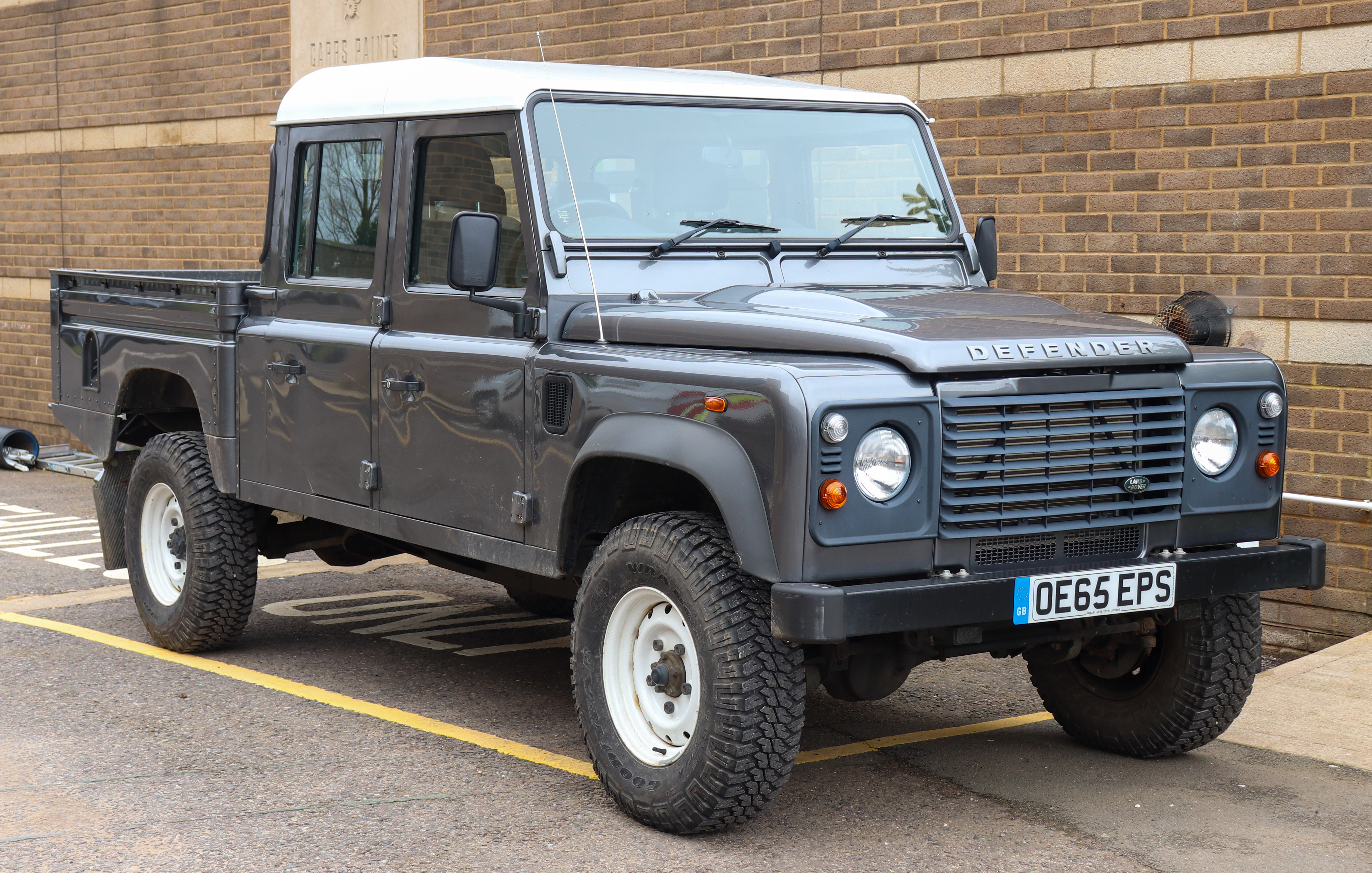
Should note, I recently tested the Land Rover Defender 110 Akta
between Ford and now you were over at Jaguar,
Land Rover heading up their special vehicle operations division that
developed that vehicle.
It's basically a Raptor on steroids, but also has some on track
supercar capabilities.
You've got the hydraulic anti-roll bar system,
kind of like what McLaren uses in their supercars.
It is, I called it an all-terrain vehicle, dirt to pavement.
And it pretty much could do it all.
And even though it's not an American car,
which is what we specialize in here,
the fact that I traced it back to you and the original Ford F-150 Raptor,
we gave it honorary American cars and racing citizenship.
But we've got the video of that on our YouTube channel
and on American cars and racing.com.
But that was, as you were saying, a modified existing vehicle.
You took the Defender and you turned it into this
amazing high-performance machine.
But what you're doing now is building something 100% from the ground up.
Yeah, and there's some clue in the Akta
that you can extrapolate into our future project.
And really, I think where an Akta changed the game on all-terrain vehicles
is it wasn't a dedicated off-road vehicle.
It was an all-terrain, meaning the car is still fun to drive on road.
And like with all cars where you take an existing car and modify it,
you are definitely boxed in in what you can do
and the technology you can deploy and the designs you can deploy.
So this time, we're taking all those constraints away
and doing everything from first principles, clean sheet.
So we've seen a couple off-road supercars last couple of years,
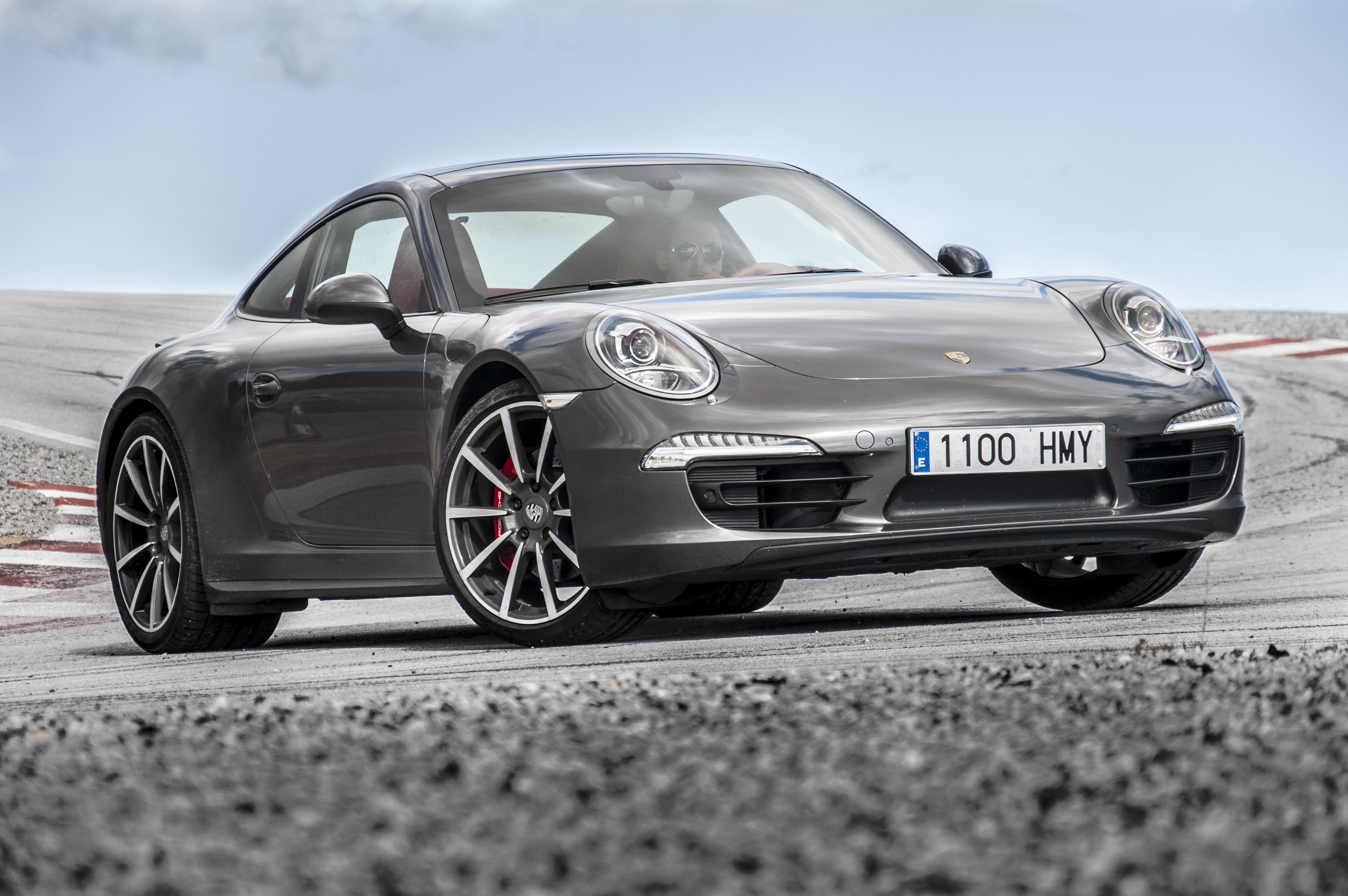
the Huracan Storato, the 911 Dakar.
But those were modified versions of those production cars.
Tell me how yours goes to the next level from that.
You know, one of the things that we don't want to do,
and we will not be doing, is we don't want to just take a hypercar,
put a little bit of ride height into it,
put an off-road all-terrain kind of tire in it and retune it.
That's interesting, but we think there's a whole lot more out there
and a lot more compelling product out there.
Because, you know, the interesting thing here is the second you raise the ride height,
you are compromising your connected feel in a sporty character on-road.
You know, we've seen like back in my focus days,
and the focus had a very high H point for the driver,
15 millimeters of right of changing where the driver's position is.
Has a massive impact on how sporty that car feels.
One of the things that Porsche does excellent,
they do an excellent job of, is putting the driver low in the vehicle.
Creating capability from a ride height change is a compromise.
We don't want to do compromise.
You haven't revealed any images of what this might look like yet,
but can you draw a word, a picture of what we can expect?
This is another thing.
We are breaking a lot of convention and the way things are done,
and the way cars and the story behind a car is told.
So we don't want to, you know, we're doing the design and the engineering concurrently.
We believe that there's a better way to tell the story of a car
than introducing and showing the outside of it first.
We believe in building the story of the car from the inside out.
You eventually do get to the beautiful aesthetic of the car.
But what we're trying to achieve is when you see that aesthetic,
it will be built on a foundation of technology that is already quite innovative.
And you can see how the aesthetic matches the technology.
And it's much more impactful and it's a deeper connection to the car.
If we do it that way.
You see it as this where all the visual elements for the aesthetic,
be it from the interior design to the exterior styling.
This is something that is truly complementary to what the engineering capabilities are.
Like you said, to use your word to building the aesthetic around the engineering.
I wouldn't call it complementary and it's not like we're developing
kind of a rolling chassis and then putting a skin over it.
We believe in you cannot separate form and function.
The two live hand in hand.
And what I've learned in 30 years, over 30 years of doing this,
is the second you start putting one of those above the other
or doing one first after the other
is when you don't create a truly lasting piece.
The really, this is more than cars too,
the really lasting products that are iconic.
They have this unbelievable connection between form and function.
And the function is driven by the form and the form is driven by the function.
And it's not separable.
It's not complementary.
You see a form, there's a function that goes along with it.
And that's where the beauty comes from.
That's our philosophy and why we want to tell the story
and the way that we're going to tell the story.
I assume this is not going to be an electric vehicle?
There will be internal combustion engine on board.
And you call it a hypercar.
Is that $500,000, millions of dollars?
What sort of price range are you looking at?
It's an ambitious project in that we're starting,
we're doing everything from scratch.
And so it's very expensive.
And so that we didn't set out to do a hypercar.
But where we've ended up, given the amount of engineering and technology
that we're going to deliver in this,
we are in the millions price point.
And the company you're basing it in,
Italy in the Motor Valley, is that correct?
We are.
We are going to be based out of Emilia Romagna
in Italy, basically the Motor Valley.
What's it like starting a new car company from scratch?
And I think it's a little easier in Europe.
I know we've got the tougher regulations here,
but really what kind of challenge is that?
Well, I mean, first and foremost, it's every 10-year-olds dream
to basically create a car from scratch on your own.
But there are, that's where my partner Andreas is really great
because I come from the corporate world.
He comes from a very entrepreneurial world.
And starting a company from scratch on your own,
you basically have to do everything.
You don't have teams to do anything.
And it's quite, you don't have to go to meetings.
You don't have to have meetings.
You have to get stuff done though.
And you have to do it nonstop.
And so it's a completely different way of working.
I love it.
We've always, even though the divisions that I've worked in,
whether it's Ford Performance or SVO at JLR,
we've always professed an entrepreneurial spirit
in those groups where we had small teams,
flat management, get things done, race day, motorsport mindset.
That was kind of always our mantra.
And it's amazing to be able to kind of live that out now in this project.
Is this something you're going to be able to make street legal for the U.S.?
I know that can be kind of tricky for these boutique vehicles.
Yeah, no, it will absolutely be legal, FMVSS compliant,
Europe EC compliant, United States compliant, Middle East compliant.
When will we start getting a peek at it?
And what's your projection for when it goes on sale?
We'll start telling our story.
I mean, we have already started telling the story with the first press release.
And we'll, you know, next month we will announce some partners,
some strategic partners that will be working with us.
And then we'll start telling that story of creating this car
and what it takes and the polarities that we need to break
on the way to deliver the end product.
But our target is to start deliveries in 2029.
Is this something you might go racing with?
Send it to Dakar or that sort of thing?
Or is this purely a fun vehicle?
We've talked about that.
It's not going to be a hardcore motorsports experience.
So it will be a very comfortable car.
It will be a very luxurious car.
That's not to say I'm pretty sure based on what we're going to do,
it would be more than competitive with a Dakar T1 plus vehicle.
Alex, you live in Connecticut where there's an interesting confluence
of expensive sports cars and classic cars,
but also a lot of snow, a lot of winter driving.
Do you see a big market for this sort of thing
up with the crowd you're familiar with up there?
Well, so there's a huge collector car community where,
you know, super high end, you know,
exotics and limited run stuff that if you go to shows
in the spring and summer here, you're going to see them.
I think that a car like this is attractive to that audience
that a, first of all, they're the target customer,
high net worth, ultra high net worth customer
that is going to be able to look at a car like this
and take it into consideration.
But getting to Jamal's original point,
the fact that this is being designed to be driven all the time,
that I think changes the calculus for a lot of people
because it's not, you know, you can go buy
your McLaren 720 or an Aventador or whatever,
and it's not great as a sort of daily driver.
But this sounds like the sort of thing
where, sure, some people are going to buy this car
and put it in the garage and they're going to baby it.
But if it's as enjoyable and, you know,
willing to be used all the time,
it could be the sort of exception to the rule, you know,
where it's like, you know, once upon a time
you might see somebody driving a Bugatti,
you know, in Greenwich or something like this.
Whereas this is something that could be someone's
routinely used vehicle in those communities
where you're going to find the customer.
So long story long, yeah, I think the audience
for something like this is there
because I think the usability is something that's really,
nobody has approached a car in this sort of strata
with that in mind so far.
So I think that that's going to resonate a lot.
And I assume, Jamal, you're pretty confident
that market exists?
Well, we're going to find out, aren't we?
I mean, and that's the, you know,
the crazy thing to me is with all these beautiful cars
that amazing companies around the world make,
they all get parked when the temperature drops
and you can't run summer tires anymore.
A handful of them, you know, you can put winter tires on.
But, you know, most people,
they go into their big, heavy SUVs for the winter
and long for spring when they can get
the really good stuff out of the garage again.
What if that wasn't the case?
What if the most fun, most durable,
most robust car in the garage was your hypercar?
How much customer interest have you gotten
preliminarily, you know, since the announcement?
Because I know this is a community
and your partners are sort of entrenched in there.
I'm sure that you've already started getting
feelers from prospective customers.
This is a red flag for me internally
that everyone we've talked to about this thinks
it's a great idea.
And usually, having done this,
like if I go back to my Raptor days,
everyone thought it was a horrible idea.
They couldn't picture why would you do this?
And a lot of, you know, all the great innovation stories,
most people question
because they can't get their head around it.
In this case, everyone kind of starts shaking,
nodding their head saying, yeah, I can see that.
There's a missing spot for something like that.
Jamal, before we let you go,
I do want to bring it back to Ford
because your friends over there
have said they're working on
a Ford Raptor supercar type vehicle
sort of inspired by their Dakar T1.
Are you worried at all about the competition
from Ford in this space?
It sounds like you're on the right track.
Well, I think we'll be at very different
volume and price points.
Not an issue for Amity Ventura.
For one thing, we have talked about this internally
and also other car companies doing stuff
in this area too.
And it just, it builds credibility
to this new segment that we're all working on,
like high-end, high-performance adventure vehicles.
Well, we can't wait to see it, hear more about it.
Jamal, it's been great catching up with you.
Best of luck.
I mean, this is, as you said,
the dream job for a car engineer, for a car fanatic.
And you got to just be loving it.
It's amazing.
It's going to be a fun ride.
You know, I can never afford something like that, Alex,
but even amongst regular sports,
because I didn't even like test driving sports cars anymore.
They're too fast, too powerful.
I don't have a track to go to.
I much prefer the off-roady, rugged stuff
that I can go find a dirt road with and have a little fun.
Plus, they are better every day,
and they're better than the regular street performance cars,
even the SUVs.
I'd rather drive one of the off-roading ones
here in New York where the roads are terrible.
It's funny because, you know, a lot of people,
you might roll your eyes when you hear,
oh, my God, it's going to be pressing millions.
But the reality is the audience is there for that,
just because, you know, it seems so unimaginable.
To regular people, for lack of a better term,
doesn't mean that the audience isn't there.
And this is such an interesting project
because everybody has a ton of really pertinent experience here.
Jamal is behind some of the best sort of all-terrain
high-performance vehicles ever.
Like he was saying, partners come from the hypercar side.
So, frankly, I'm dying to see what this looks like,
what it presents itself as.
Is it going to be like a long travel, like sort of swoopy GT?
Or is it going to be more, you know,
for lack of a better term, truck-ish in the silhouette?
Remember the local motors rally fighter?
Remember that?
I remember that, but it's a hypercar, maybe.
Yeah, and that thing, and that thing,
and I go to the grave saying that that thing was awesome.
Again, really cool ideas out of left field.
And, you know, he made, Jamal made a point,
you know, people thought that the Raptor was crazy.
Now you see Raptors are everywhere.
Like you see them, and people love them as daily drivers
because of how they're suspended and everything.
And this gets to the argument also that you just said,
when I saw the 911 Dakar and the Huracan Strato come out,
it's like, that's the best 911,
and that's the best Huracan, simply because you can use them.
And if not worry and have no worries,
but worry so much less about stuff that the rest of us
who drive normally suspended cars don't have to worry about.
So I think that this is a smart idea,
and it's a space that, well, I have a feeling
you could see this becoming potentially a catalyst
for others that want to sort of jump into that space.
You mentioned the Ford Raptor again.
Ford literally can't sell enough of those
because of the CAFE regulations.
That was the case.
They had to restrict their output.
But now that the CAFE regulations have been loosened,
I imagine they're going to be built a lot more of those.
Big change at Ford this week.
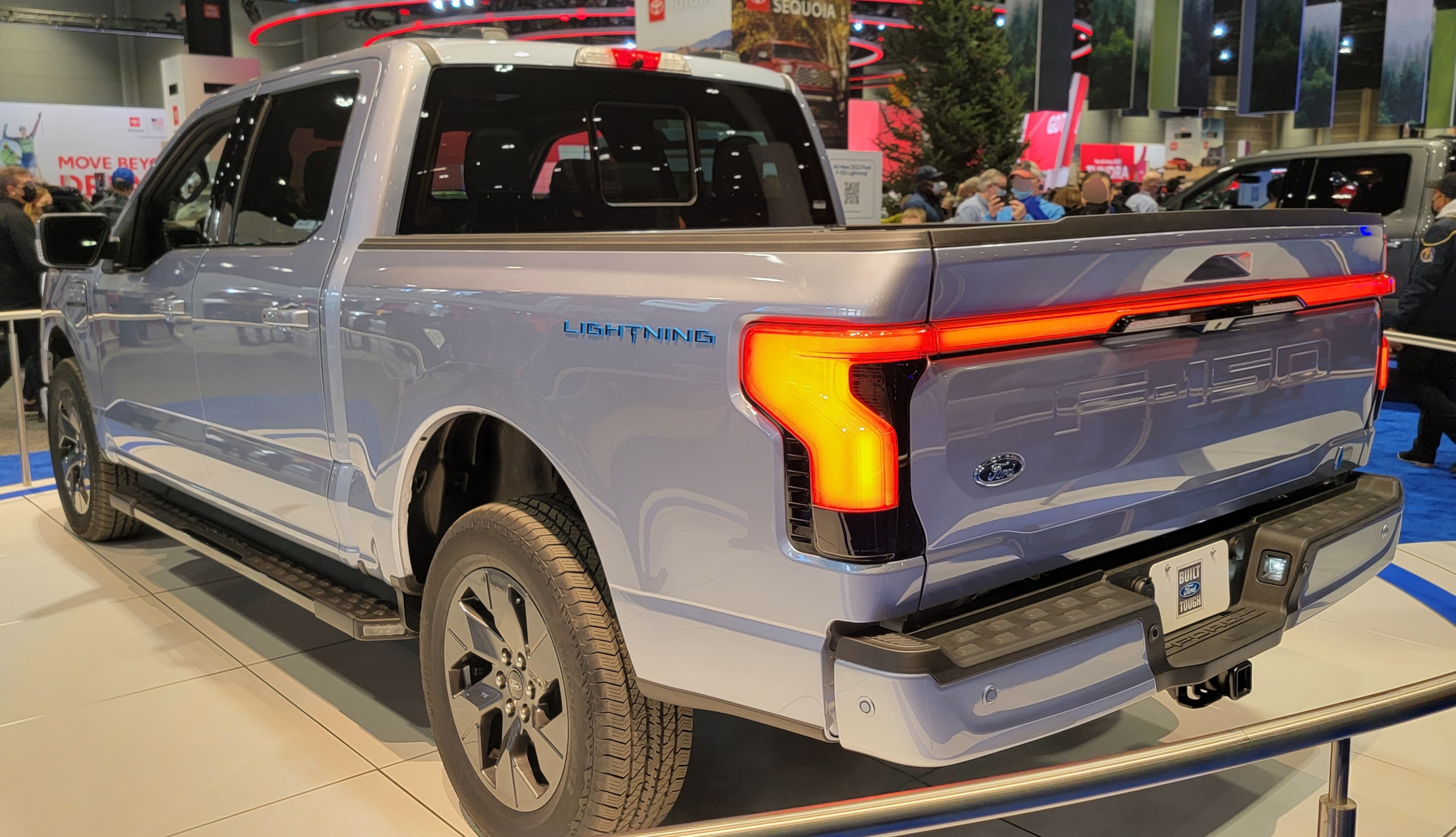
They killed the Ford F-150 Lightning electric pickup.
We'll eventually replace it with an extended range
electric pickup that's got a gas motor on board
for extended driving.
No details on that yet.
They've also killed their next generation electric full size truck.
And they're going to be coming out with a new line of trucks
that they haven't said anything about,
where it's going to fit in the lineup,
that's going to be built in Tennessee instead of that truck.
Really looks like the electric truck segment
has dissolved almost completely at this point.
General Motors is still holding out with factory zero,
but they canceled the second factory.
Without the government backing,
this segment's just not going to happen
the way people had hoped or spent a lot of money to do.
At Ford's taking a $19.5 billion right down on all this,
although it is going to continue with that new $30,000 electric pickup,
which is going to spawn a line of low cost electric vehicles,
hopefully that are going to be built in Kentucky.
Totally agree.
Listen, we're going to find out what the real market is for these vehicles,
and the OEMs will adjust accordingly.
And I'm guessing this is going to cause a lot of pain in the near term.
I mean, Ford's writing down however many billion is part of these changes.
But the reality is, everyone's going to get to a place
where they're selling vehicles that people want to buy.
That's what automakers want to sell to people.
Instead of something that is artificially propped up by subsidies and other things,
we're going to see them build more of the existing trucks that people want
and develop new things that are electrified
that take advantage of a lot of this research and development money
that they have sunk into the EVs, like the ER EVs that you're going to see from Ford and Ram.
I think everyone's going to still try to find that sort of secret sauce
in terms of where the intersection of desirability and affordability,
like Ford is doing with this Skunkworks small EV truck that they're developing.
Well, interestingly, those new gas powered trucks that they're going to be building in Tennessee
are coming in 2029, just like Jamal's supercar.
I hope by then you and I are both in a position where we're in the market
for that supercar as opposed to a new pickup truck.
Well, I will continue to buy that Powerball ticket and cut you in, Garrett.
It's a smart investment. There's no doubt about that.
I won $4 in the Powerball last week, the $1.25 billion dollar Powerball.
I got the Powerball. That's all.
Absolute bonanza. Free coffee.
No, no. I'm a smart investor. I'll reinvest the money in another Powerball ticket.
That's how you do that. That's how you buy supercars.
Anyway, thanks again to Jamal Hamidi.
Really can't wait to see what this thing looks like and we will be bringing you
that news because again, even though it's being made in Italy,
we've granted him honorary citizenship to cover Hamidi Ventura.
Alex, see you next week. Big show next week.
Not going to tell everybody what we've got going on,
but we've got some exciting stuff coming on the show next week for Christmas.
It could set a new standard.
It's possible. We'll see. Thanks for listening, everyone. We'll see you next time.
The gas is a production of ACAR media and American cars and Ricin.com.
About this episode
Jamal Hamidi, the lead engineer behind the Ford F-150 Raptor and Ford GT, discusses his new venture, Hamidi Venturo, which aims to create the first off-road hypercar. The conversation dives into the challenges of designing a vehicle that combines the performance of a hypercar with off-road capabilities, emphasizing usability and driving enjoyment. The episode also covers Ford's significant changes in its truck lineup, including the discontinuation of certain electric models, and the evolving landscape of the automotive industry.
Jamal Hameedi, the engineer behind the Ford F-150 Raptor and 2017 Ford GT, joins Gary and Alex to talk about Hameedi Venturo, the new off-road hypercar company he's launching to build a car "that you can not stop driving."