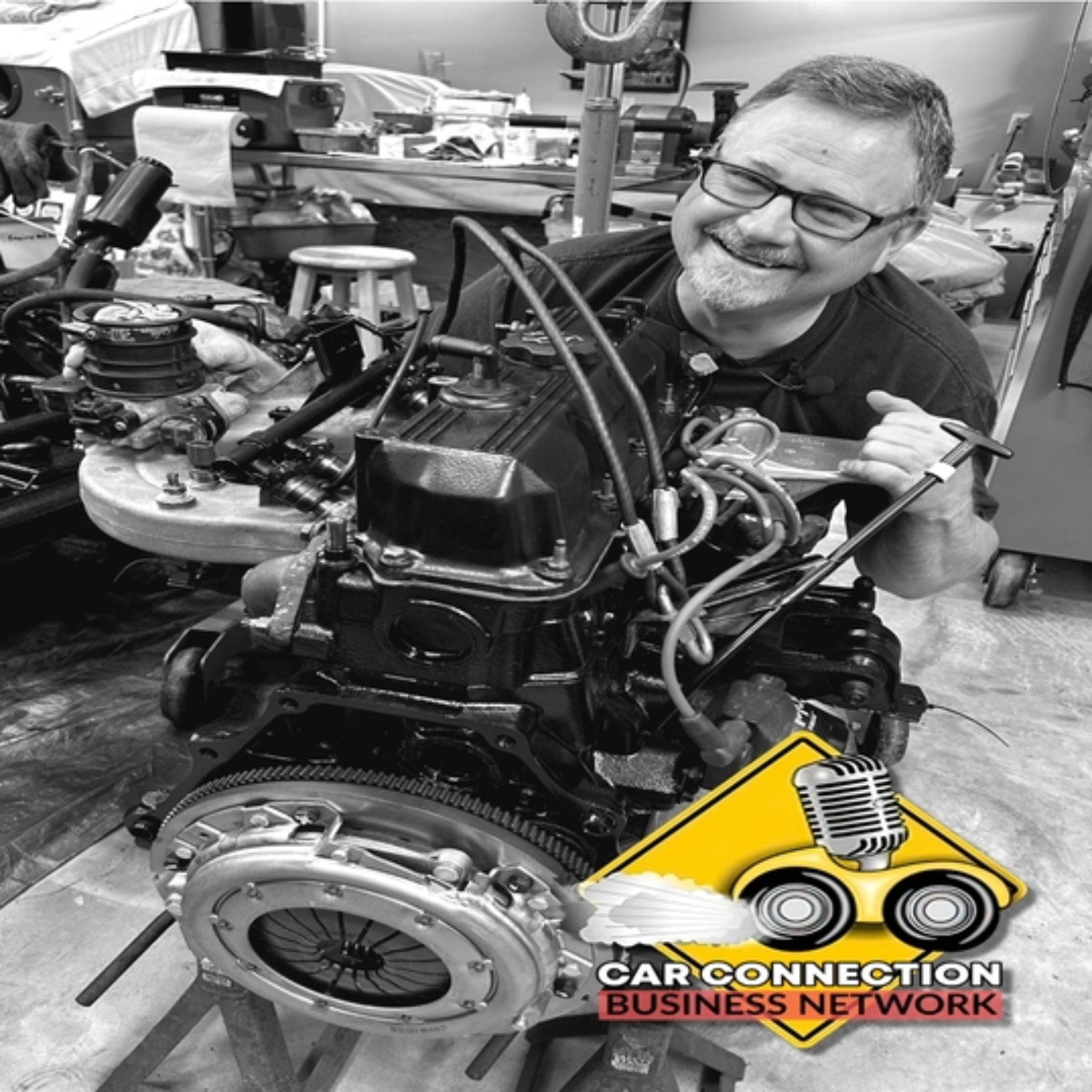
“Under the hood” means the important parts of the car you can’t see while you’re driving. The show is basically saying it’ll help you understand what those parts do.
The episode emphasizes that small issues can escalate into much larger, more expensive repairs if they’re ignored. This is a key ownership concept: catching problems early reduces total cost and downtime.
The speaker’s “five things” framework is about learning vehicle components—where they are, what they do, how they work, and how they fail. This is a practical knowledge concept that helps owners communicate with shops and recognize warning signs.
The speaker frames learning fundamentals as prevention—staying out of “hot water” and avoiding exploitation. This is an ownership concept: proactive understanding and early action can reduce both mechanical and financial risk.
Repair orders are the paperwork a shop uses to document the customer’s complaint, the diagnosis, the parts used, and the labor performed. Understanding repair orders helps you verify what was actually done and prevents misunderstandings or unnecessary work.
Service repair times are how long the shop says your car will be in the shop. Knowing what’s reasonable helps you spot problems like delays or vague explanations.
The speaker stresses that repair paperwork should be completed correctly. Properly filled-out forms reduce ambiguity about diagnosis, authorization, and what work was performed.
At a dealership, the service advisor is the person you talk to about your car’s problem. They write the paperwork that the shop and warranty people use to decide what gets covered.
A work order is the form the dealership creates when you bring your car in. It records what you said was wrong and what the shop did, and it’s the paperwork warranty decisions rely on.
Sometimes warranty paperwork comes back from the manufacturer because it wasn’t filled out well enough. The shop may get one chance to fix it, but if it’s rejected again, you may have to pay yourself.
Term
dealer visit day
This is when the car company’s representative comes to the dealership. The dealer needs to have your paperwork ready so the rep can review your case.
A manufacturer’s representative is the automaker’s liaison who may review cases with the dealer, especially for warranty discussions. The speaker describes how reps rely on the dealer’s file folders and the repair order details to evaluate coverage.
“No fault found” is a common service outcome meaning the technician couldn’t reproduce the issue or identify a fault at that time. The episode highlights that even when no fault is found, the repair order should still be detailed so later developments can be traced back.
A road test is when the technician drives the vehicle to reproduce the customer’s concern under real driving conditions. The speaker’s key point is that road-test documentation (including mileage) can strengthen later warranty arguments.
“In mileage” and “out mileage” refer to the odometer readings recorded before and after a road test. Recording both helps establish when the issue was observed and supports consistency in the repair order if the problem later worsens or returns.
The speaker’s central theme is that accurate, complete repair-order documentation is critical for warranty outcomes and future claims. If the initial RO is incomplete, later attempts to connect the dots can become “inconclusive” and harder to get approved.
Sometimes a warranty claim gets turned down because the proof isn’t strong enough. To improve your chances, you need clear records showing what failed and why it should be covered.
They’re pointing out that older cars are more likely to run into expensive transmission problems. With age, it can be harder to tell exactly what’s wrong, so you want to be careful about repair recommendations.
The Dodge Grand Caravan is a popular minivan used as a common donor vehicle in salvage yards. In this segment, it’s referenced as the vehicle the hosts were harvesting parts for, highlighting how minivans often provide lots of interchangeable components.
They’re making the point that people often forget about the transmission until it’s already having problems. The fix is to stay on top of maintenance like fluid changes.
Brand
Kicking Horse Coffee
They mention a coffee brand they like. It doesn’t affect the car topic, but it’s part of the show’s intro conversation.
CVT means “continuously variable transmission.” Instead of shifting through fixed gears, it uses a belt and pulleys to smoothly change ratio. It also needs the right fluid service on schedule.
In a CVT, power is transferred via a belt (or chain in many designs) running between variable-diameter pulleys. Belt-driven designs can be sensitive to fluid condition and service intervals because the fluid helps with belt/pulley lubrication and hydraulic control.
Term
straight axle splined
Splines are like interlocking ridges that help transfer power to the wheel. Even with that design, a small locking part can still fail and cause big problems.
A parts car is a car you keep mostly to take parts off of it. They’re saying their car was going to be used for parts, but they decided to fix it and keep it.
Concept
"electron theory" / charges repel
They’re trying to explain why the rust-proofing product spreads and sticks. Different products use different chemistry, but the goal is the same: get protection into all the tiny spots.
Servos are parts inside the automatic transmission that help apply and release gear components. They rely on the transmission’s fluid and control system to work properly.
“Prosumer” blends “professional” and “consumer,” implying the owner takes an active, informed role in maintenance decisions. In this context, it means learning enough to avoid misleading advice and follow a service plan.
Synthetic oil is engineered to resist breakdown and provide better performance than conventional fluids. The speaker’s point is that “synthetic” doesn’t mean the fluid never degrades or becomes contaminated, so transmission service still matters.
The alternator charges your battery while the engine is running. If it starts making noise or fails, the battery can run down and the car may not start.
A muffler is part of the exhaust system that reduces noise by using internal chambers and flow paths. It can also be affected by corrosion and exhaust leaks, which may lead to louder operation and sometimes reduced backpressure.
The speaker describes the modern auto-parts market as a “jungle,” implying quality varies widely between brands and listings. For owners, this highlights the importance of sourcing correct, reputable parts to avoid repeat labor and premature failures.
They’re talking about failures that happen over and over in the same way. If you know the pattern, you can be more prepared and avoid the same expensive issue.
LIVE
Good morning folks! You're tuned into Car Connection where the coffee's hot, tools are ready, and the talk is always tuned up.
I'm your host, Niall Motormouth Jenkins, coming to you straight from the Car Connection Workshop, where we mix a little humor, a little know-how, and a whole lot of horsepower.
Here it's not just about fixing cars, it's about keeping you rolling, saving you money, giving you the confidence to understand what's under that hood.
From the classics to the commuters, the weird noises, and the what the heck moments, we've got you covered.
So grab your coffee, sit back, join the crew, because this is Car Connection, your Monday through Saturday morning, 8am Motormouth pit stop for stories, smarts, a few good laughs, and I'm Niall Motormouth Jenkins.
We are shifting into drive this morning. Well, good, good morning to all of you. If you're back on your commute this morning and heading into work for those who are still wrapped up in their nice warm little comforter,
Yeah, it's time to get up. It's time to put the coffee on and join Motormouth and the crew here in the Car Connection Workshop this morning. We got a lot to get through in a short time to get there.
Many of you, perhaps today's the day, gathering with family and friends and fellow sojourners and enjoying a meal, some friendship, some fellowship, some great dessert, Velcro shoes, and stretchy pants, the whole package.
You are ready to become an internationally known eating machine. And remember, stake your claim on the couch. Do that in advance. I'm just saying.
So if you're just pulling through the drive through and grabbing your morning bevy, make sure you double check the order. It has been a long weekend. Things happen. They do. The switch kind of goes off.
So cut everybody some slack, at least until tomorrow. Double check your order. Lock it down in your cup holder. Keep an eye on your co-pilot if you have one. Shoot over the package of 16 crayola crayons and a folded up leaf bag and say take some notes with you. Thank you very much.
Very much appreciated. Well, we're going to jump right in this morning. We got lots to get through. This morning is a follow up from last week as I was talking about the forgotten entity. How many of you listen to that podcast?
Yeah, we're heading for season three. Like lightning speeds. Yeah. Where have I heard that before? Lightning speeds. Well, we are moving at lightning speeds. So thanks for joining us this morning now.
Car connection now with more ways to watch, listen and engage. And I am always in your corner. I'm not in the corner of car manufacturers, parts manufacturers, the repair shops, only the good ones. I know where the good guys are and I can steer you that direction as I continue to.
I wasn't going to rebuild the car connection business network, but because of those who have been listening to us on different networks over the past 31 years, now moving completely into the digital.
People want to connect. So I put together all new marketing package, the whole nine yards to go back and collect a number of recommended businesses that were with us for over 31 years, you know, the big COVID campaign blew a lot of them out.
And I'm hoping that we can go back as a team and bring a bunch of those businesses back on board with our car connection business network.com. That is our website. That is the biggest drawer we have in our toolbox available to you to connect with us and our program partners.
All their logos are on the program page, the homepage, I should say, click, open, meet and connect and thank you. Thank you. Thank you. Thank you to all of you who are giving them your business, not the bizness, but your business. Thank you so much.
So we will build that back better.
Where did I hear that before? Anyhow, we just keep, we move on. So we're going to build back the car connection business network. And now that we're on the digitals, we can reach so many more people.
So thank you to all of you who are clicking, sharing, following, commenting on our videos, joining up and being part of our online community at Facebook, Instagram, Stevensvilleontheweb.ca is one of the local townships here.
My pops have lived there almost 40 years and I have a lot of friends on that in that area, as well as Skippy, our very own Skippy, our videographer is from Stevensville families there as well.
So she built that website to bring the local businesses in the community together to create a communal website and we are featured over there as a professional. My goodness, I'm delighted. Absolutely.
I don't like to pat myself on the back whatsoever. I'm not a big shot, just a little shot that just keeps shooting. So you'll find us on Stevensvilleontheweb by clicking the Businesses tab and our Skippy has put us there as one of the professionals on that site.
So visit it often. There's like over 7000 people involved. It's crazy. It's a crazy good website to bring community together. So thank you to all of you who have also been shopping in our online store.
Way to go because when you do that, you help Skippy and I join in the battle to support those who are ready to deal with their addiction and we want to support the total freedom addiction campuses because that is where they'll get all the help, all the support, everything they need to get a new life.
There is a new life waiting for them there. So thank you to each and every one of you who have been shopping in our online store. The links again are all on the top right hand corner of our homepage, including YouTube's.
So if you haven't joined our YouTube's, we have almost 200 videos there. Some new ones going up this week as well. We do two for Tuesday, two for on Tuesday and another new video on Fridays. So what are you going to learn there?
Well, excuses are useless. That's the first thing I'm going to say. If you own and operate an automobile, you're on your own, you're a widow, you're a single mom, single dad, whatever it is, you're not mechanically inclined.
Then our website, our YouTube channel is just for you because that's where you'll learn all the fundamentals and basics. Nothing too deep. We don't dive. I don't dive super deep, super technical.
I keep it super simple so that you'll come away learning five things about components on your vehicle, where it is, what it is, how it works, how it breaks. And if you had known a few more basic fundamentals, you could have saved yourself thousands of dollars in repairs.
Because quite often a $200 repair, when it goes into the neglect mode, where you just kind of forget about it, can turn it quickly into a $5,000 repair. I've seen that for my 44 years in the biz.
That's what happens and generally that's where the conversation kind of goes like this. Well, what caused that? What happened? What happened? What happening? Well, if you had to come in sooner, we could have saved you a lot of money.
But yet in. And here we are. So now we got to move forward. So that is how I designed the YouTube channel. I used to teach women's service clinics at night in hosted shops.
And we put them all in in coveralls. And no, you didn't just walk around go, uh-huh. What the heck is that? And what? What did you say? We put on 12 pairs of coveralls. That's 12 ladies. That's all we could deal with in the shop and not make it too tight.
We had technicians at different service bays teaching different parts of the vehicle and then the ladies got to work on them. It was so, so cool. And I'll tell you, my hats off to those ladies. They loved it. Absolutely loved it. Getting in there and doing something on a car.
And so maybe we'll get back to that at some point and we'll host them here at the car connection workshop. I think that would be such a great deal. And then, um, we saw that we had raffle tickets and goodie bags and a lot of our program partners and recommended businesses gave us stuff to, you know, door prizes and food was provided by, uh,
fundamentals. We sold 12 spots. You had to get a ticket to get in for the evening and we didn't keep you all night, but you were busy. The ladies were busy and every 22 minutes, the whistle would sound and they would move to another elective.
So whatever Bay they're in, they go over from Bay one to Bay two and we had four stations to each teaching and hands on. And at the end of the night, the proceeds from the ticket sales would go to the host shops.
Um, favorite nonprofit faith based organization that's reaching out in the community and making a difference. So it was a win, win, win situation. So yes, you can learn the basic fundamentals that will keep you out of hot water and prevent you from being taken advantage of.
Because I was actually, that's where I was dealing, dealing with getting back to Saturday's Q and A because one of the questions was came in from Jennifer. If you haven't listened to that program, it's up already and I'll be loading it, loading in some more, uh,
podcasts into our YouTube channel and making them go public. So I can only do 10 every two days is the safest way to do it so that I don't lock up the YouTube channel because there's a whole season of podcasts available on our YouTube channel.
And now they're populating as this broadcast gets scheduled and it goes live. It also pops up on our YouTube channel. I just have to figure out why it's not making them public instantly because I checked the box that said make them public always something, always something.
So a question that came in on Saturday, I always pick three questions. So, uh, a general reminder, if you have a question, then you need to send it to motormouth.jankins at gmail.com.
And if you couldn't write that down, I always make sure I put contacting information, a reference to our, our website, our homepage so you can find everything there in one place.
And that way you can connect, send your question because by the end of the day, Thursday, I'm selecting the top three questions out of everything that comes in for Saturday mornings program.
Um, motormouth's morning drive, Saturday morning drive, Q and A questions and answers. So this question came in and that's why I kind of went down that rabbit hole that you need to learn stuff.
How can Jennifer writes, how can I prevent myself from getting taken advantage of when I take my vehicle to the repair shop?
A simple, easy question. And I did unpack a lot of that and I'm not going to do it right now because the podcast is up. Just go and take a listen how I unpack that and I will do a show on repair orders, service repair times and repair orders.
How they need to be properly filled out. I did go over some of the details on that on Saturday morning, but that is a, that is a great question and that's why I picked it is over the years being on radio and 44 years as a service tech and yes, my licenses are right up to date.
I am fresh like a freshly baked. Yeah, I'm not going there because I am hungry. Yeah, loaf of bread. Let's just say that turkey sandwich anyone. Yes. Yes, please.
Mayo or mustard. What would you do? Yeah, let me know in the comments. Turkey sandwiches. What's what's the general rule of thumb? Is it plain with with black pepper and maybe a little bit of sea salt, natural salt or mayonnaise or mustard?
What are you thinking? Yes, send me an email. Let me know what your thoughts are on that. What do you tend to do with a turkey sandwich leftovers?
So I unpack that as far as I wanted to go on Saturday because there's a whole program in that in making sure that you check in on your service advisor because I did make mention there are a lot of lazy service advisors.
They do not fill out the work order properly and I'll tell you this. I spent a whole week. When I worked for a major European car manufacturer, learning about filling out the details on repair orders, ROs.
And when it comes to putting warranty work together for a customer, if there's any single box, any single detail missing that warranty claim to the manufacturer gets kicked back. What does that mean?
You usually get one more kick at the cat to no cats were hurt during the taping of this program, by the way. You get one more shot at getting that claim put together properly and filling in the missing areas that they're concerned with not enough information.
And then if it gets kicked back a second time, it's done. So if it's a $10,000 job that warranties covering, you're getting a zip on that a zero zilch, not a buff kiss, nothing. Absolutely not.
So we're going to talk about that in further detail because you're in the driver's seat. When you go to that service desk, ladies and gentlemen, what is that? Oh, I see. That's interesting.
Anyhow, when you get up to that counter, it's your responsibility to make sure they fill that paperwork out properly and push them to do so. Because yes, service advisors can be a lazy lump of something and not fill in the boxes.
Because the paperwork counts. If your vehicle is still covered under warranty and you go in for service and repair and the items that are not covered by service and repair, that means it's customer pay, CP.
Those work orders in your home file and filed in your file at the dealership will save your bacon should something else go wrong that is covered on warranty.
I'll tell you this behind the curtain thing at a dealership. My job as a service mangler is to make sure that your files are completely detailed and up to date that every single RO repair order is filled in properly.
Because that's the first place the manufacturers rep goes to when they come to the dealership to visit with clients that have requested to meet with the manufacturers representative on their dealer visit day.
So ahead of time, I would know when my reps coming. That's when I'm not on the counter. I pass the baton to someone else to sit in for me because my job is to make sure I have all the file folders out for each customer, each client's vehicle, and they better be up to date.
Because if they're not, he's not going to do anything for you. That reps not going to do anything for you, even if it's customer pay work order.
That means you came in for service. You had a concern about something and here's where I would make sure the text right on it. No fault found at this particular time and mileage.
Fast forward 10 months later, something now is rearing its ugly head and that's where that repair order where you came in and you said something's going on, there's some kind of noise there.
It comes and goes in the morning or when the car has been sitting and it's loud and then it's gone and something major develops. Now I can go back to that work order, even though you're now out of warranty, way out of warranty.
I can pull that work order, fire that over to my manufacturer's rep and say it was reported at this time on this work order and he wants a copy of that RO, that repair order to see the in mileage and out mileage that it was the vehicles road tested.
And it's really good if it's road tested more than once. So in and out mileage if it's road tested twice in and out mileage a second time. So now fast forward now something is developing that work order is going to get you that problem covered by warranty.
See how that works? I just gave you the biggest gold nugget that no one else is going to give you. That's how the repair order needs to be filled out correctly. So tune in for that Q&A this past Saturday.
I'll tell you what the title was on that. It's called Saturday Q&A with the date. So that is Saturday April 4 Season 2 Episode 129. You're going to want to listen to that because I gave a fair amount of nuggets on the repair orders because that's going to save you.
That will save you. Well, let's jump into today's program. We're rattling on here, but that was out of all the questions that one was like the question that I have been asked for so many years, decades, and it never changes.
If repair orders are incomplete, then that means the information is incomplete. It means coming to a conclusion is inconclusive. That's what we would see.
The warranty claim is rejected because of it being inconclusive. That means you better start hunting and looking to see what you missed and see if you can come up with the information that's missing and have more documentation to back that up.
Ding, ding, ding. That's how you win, my friends. You got to know how to play the car game. You sure do.
Well, Car Connection Workshop is brought to you by City Auto Sales and Leasing, low mileage quality vehicles at fair prices. They're greater Toronto areas pre-owned, pre-owned, premier, pre-owned auto store rather.
Earl and Louise Grant, husband and wife team for over 25 years now, they have the resources to find those low mileage top quality vehicles and they do not sell any junk. They have in-house financing, and it's sales and leasing, and you can buy with confidence and be treated with nothing less than honesty and integrity.
That's City Auto Sales and Leasing. Thank you to our certified financial planners being with us and helping to bring us to the program today. Tony Miele, Larry Tietro, my brothers from other brothers, 50 years experience as fiduciaries.
These guys are two of the most decorated CFPs in all of Canada, but they are the most humblest as well. They'll help you with an investment portfolio. They'll review it for you for free.
Put together a debt retirement plan, estate planning, so you have your beneficiaries, powers of attorneys, and health proxies all set up for those kids in your home that are over 18 years of old.
We'll take that.
They don't need more clients. They absolutely do not. They'll tell you that straight up, but for our car connection listeners, they're willing to come to the table and let you sift their years of knowledge, so leave your wallet, leave your purse at home.
That discovery meeting, they're not going to be asking you for any money. There's no sales. That's your discovery meeting to see how you're going to proceed. Thank you to the Grimo Family, Dave and Kathy Grimo at Niagara Block, 5000 Montrose Road.
Don't forget about his brother. I think his name is Dan. Yeah, we'll check that out. I'm visiting there next Saturday. Saturday coming. I will be swinging around, have coffee with David, and do a tour, and I'll have lots to talk about when I come back.
Niagara Block is located at 5000 Montrose Road, Niagara Falls, Canada, building Canada since 1931 with building supplies and products, hardscape, landscaping materials.
And David tells me that Kathy does have a list of referral contractors that you can count on to get the job estimated, started, and finished, and you will be happy, very happy.
So be sure to ask them about that. If you're looking to build your backyard space, that special oasis that you've always wanted, get them involved right from the get go. They have the products to make your project absolutely stunning.
Thank you to Total Freedom, Addiction Campuses, Darien Center, New York, and Sydney Manitoba. They are there and ready to receive those who are ready to take on their addiction and beat it.
They come out the other side with a brand new life. It's not a program. It is a life change. They know what they're doing and the success rate. Well, check them out. Just click on their logo on our homepage and check them out.
So if you, someone you know, someone you work with is struggling with an addiction and they're ready to deal with it, get them into the website.
Total Freedom Canada, Total Freedom USA and let them look at those people whose lives have been changed through the addiction campus. Thank you to our nonprofit, faith based organization, Crystal Ridge Dream Center, serving men, women, widows, orphans, single moms.
They have a fabulous program running for single moms. I just got to put a plug in that, in for that. It's absolutely outstanding. Children after school programs, helping them with their, their homework, loving on them.
They even feed them, moms and dads, love and hope. That's changing lives one at a time in the Niagara region. They're feeding between 260 and 300 hot meals out the door on Tuesdays and Fridays.
So if you can help out, they'd be blessed. They don't get any outside funding from anywhere. They have tried in order to get some more funding to run some other programs.
Think of ESL. English is a second language. So if you can help out with meal cards, grocery cards, maybe a one time give or a weekly giving or an annual, whatever your heart says you can do, they would really appreciate it.
Because I'll tell you, they work hard there. The volunteers, 60 plus volunteers, they work very hard, helping those to, it's tough out there. It's in times when community support is crucial. Crystal Ridge Dream Center is there to shine as a beacon of compassion and transformation.
And that's what they do. Transform lives and especially the little kids. They have a really good after school program. So let's jump in the forgotten entity. I almost forgot to follow up with that because it is very important.
In fact, transmissions. I started talking about it last week. Got sideline with a couple other things I wanted to cover off before the Easter weekend came in. And that's an area where if it's an older vehicle, and the transmission goes down and somebody's telling you it's going to be between five and $13,000 to replace it.
What does most people say? I'm just going to get another car and it gets hauled off to the you pull it. And that's why we're not seeing vehicles in the you pull it yards that are all rotted out.
They're in sheet metal and interiors are in really good shape. You can actually I could grab one there. Select one and haul it back here. And probably within about six months have that thing snap back together and a decent ride put out on the street for somebody.
I know I could. And if you want to watch that video, Skippy and I went out harvesting parts for her grand caravan to bring and try and bring it back to life and we were successful. Those videos are all up on our YouTube channel from last July. That's right.
I should remember that because we thought we were going to die out there. I took. I think we had six or eight bottles of water. We were out in that yard and I'll tell you it was like 93 degrees that day. In fact, they sent somebody out to check on those who were out in the yard harvesting parts because there's no shade.
We were in the in the wide open. We had a ticket when we told them we were looking for some electronic parts. I was needing some electronics to get this thing going. And they gave us like almost a cash register tape of 57 grand caravans.
We're in there. 57. And I'll tell you, Skippy's eyes were like, Hey, can we get a couple of hubcaps that'll help make Vanna White look pretty good.
He said, go and grab it. I'm fine here. I was pulling out computers and and control modules and stuff. And we were on our way in a couple hours, but I'll tell you it was so hot out there, but it was overwhelming going row by row by row by row by row of grand caravans and you see
transmissions partly pulled pulled open engines pulled open taking stuff off trying to keep their own going, but I'll tell you there was lots of pickings.
And the reason I say that is there were lots of transmissions ripped open taking valve bodies out and stuff like that to fix what they have going wrong.
So there's a message in this, the forgotten entity part two, the automatic transmission. Well, let's quickly get our beverage swiggy done.
So if you're with us for the first time, little long winded this morning, I think it might have been too much coffee yesterday. Yeah, it was really good.
Yeah, kicking horse coffee is one of my favorite brands of coffee. 454 horsepower and three sisters. Check it out sometime. Gourmet coffee, perked coffee. I think I had too much yesterday.
Can you really have too much for coffee? I don't think so. So on three to one, whatever your morning beverage is, let's get it done together. We have a swiggy, and then we'll have the I'll give you the morning weather.
Yeah. Yeah, we'll do that. Why don't we do that? So on three, two, one, ready? Let's do it.
It's a little warm. Instead of hot, but it's still good.
The morning elixir gets me ready for the day. Well, here's what we can expect today. So if you're on the road today traveling, remember your stretchy pants, your Velcro shoes and get some geography on the couch wherever it is you're going to be visiting.
Be prepared for that. And the extra slice of pie. Then have a rest. What are we dealing with yesterday? Believe it or not, we actually hit a high of 50 degrees. And I only talk in Fahrenheit, just so for all of you know, I prefer the English version of measuring.
Yeah. And temperatures metric system is a tool of the devil. So yesterday we had a low of 35 a high of 50. I don't know if we reached it or not, it seemed pretty cold out there along the the lake.
Today we can expect a high of 41 and overnight low of 32. And do we have any moisture coming in? We won't talk about that just yet. Feels like and conveys how warm or cold it feels can be different from the actual temperature. That's what feels means.
Are you kidding me? All right, 32 degrees right now, mostly clear. When does making it feel colder about 23 degrees cloudy conditions from 7am to 8am this morning with partly cloudy conditions expected around 8am. So today's temperature range. Here it is.
32 degrees to 41 degrees. That's a freezing temperature. Oops. And feels more like 22 to 37. And yes, there is a possibility of one to two inches of snow. You suck with an extra K and a T on the end. Suck. Yeah. Really, really? Oh man. I just put the snow shovels away.
This makes me nervous having him hang around. So I put him away. Anyhow, it is what it is. And it is what it isn't. So getting back to the conversation on transmissions. Folks, I can't stress this enough.
And in fact, we're going to videotape me, your motor mouth, doing a automatic transmission service on the car connection 2008 Nissan Ragu. I mean Rogue. You might nickname for its Ragu. I don't know why it came out that way. It just does. So I go in your name. Your name is Ragu.
So we're bringing in the 08 Ragu and doing a CVT continuous velocity transmission. It's belt driven. I want you to know that it is the weirdest freaking transmission I have ever learned about ever, ever in my entire career.
I don't know it. It is a new animal to me, but I did a lot of research. They are not popular in a good way. So if you have an Nissan with a CVT transmission, you listen up. Listen up, babies. Every 50K, you get that transmission fluid changed.
Yeah, it's going to cost you, but you know what? That transmission is about $13,000. Just saying. So it cost me $158 in CVT oil. I got it right from Nissan. And even my good friend Dennis, who has a shop here in town, he goes, Nile, he did the safety inspection. He goes, you make sure you baby that CVT transmission.
He goes, we got one sitting right over there. The lady is not happy. They smoked the transmission. He goes, and she is madder than a wet hornet. We have to tell her it's done. They cooked it. You don't want to be that person.
He says, I don't know what she's going to do with it. She's just kind of bailed on it. It's been sitting here about a week. We had to give her the bad news. So he says, I'm telling you, you go right to the dealer, you get the transmission oil that it calls for, factory oil, nothing else.
And you start changing that transmission oil. Don't haul anything with it. No trailering. And you baby that transmission. And he said, I know you'll treat it well. He says, others, they're not getting it. And it's failing. So I'm giving you a big heads up on that. If you have any sand with a CVT transmission, you're going to want to watch the video.
That's coming up. We'll be doing that, shooting that on Monday, Monday coming, not today. We got the day off today, except for me. So Skippy, I said, you know what? We're ahead. Take the day off. We'll shoot next week.
I'll take it from here. There's just editing and uploading to do. I'll take care of that today. And it's turkey day for us. My pops is coming over. He's 89. Yeah, and still drives crazy.
But he drives 100%. And he's a fast driver. Kid you not. I look over and I got, I got to turn my head the other way. I'm like, I don't want to know. I don't want to know. But anyways, he's a good driver. And he's going to be here today. We're going to have some eats together and enjoy some time together today.
But I'll be shooting that video next Monday. And then we'll get that loaded up right away so that you can take a look at it. But again, transmissions that will take you out of the car game. It will. And here's what I have to say about that.
Is if you end up burning up the transmission because of lack of maintenance, I don't care who tells you. And I'm sticking my head right out on the block for you. You don't listen. That's the noise. They're going to tell you you don't need to maintain this, that and the other thing.
You know what? That mean to me, that's the signal I need to maintain it. And right now, there is so many problems out there with the domestics and especially with pickup trucks right now. The F 150 has got super challenges. And so does the Silver Rattle.
It's got a lot of problems engines blowing up. Axle shaft snapping. Actually, it's not the actual axle shaft on the F series trucks snapping. It's the it's the lockdown mechanism because they're using a straight shaft with splines. And here's the deal.
There's trucks. And that now it's a knits up problem. National Highway Traffic Safety Act, because the axle breaks, you can lose control of the vehicle. It goes into neutral. The new design of the axles, the fastener that holds the hub to the axle snaps, and then the engines running.
It's in drive, but it's in neutral. Because the axles aren't turning. Well, Ford needs new axles and new fasteners for them updating six to 12 months.
So now NITSA has grounded a lot of those trucks, both 70,000 is what the last number I looked at online, both 70,000 trucks brand new and used sitting that have to have those axles before they can go out on the road six to 12 months before they get them.
So here's the deal. The one particular video I watched was a service tech and he was showing you the problem and I could I knew what the problem was going to be before even mentioned it because that's a that's the same design they use on big trucks.
It's a straight axle splined at either end then has a fastener that locks it to the hub. So they don't break the axle, they just break the fastener. So anyhow, this particular 2021 is now going to sit for six to 12 months because it needs the updated axles and they're not available yet.
How about them apples? And then you're on the other side, you got the 5.3 in the 6.2 engines coming apart anywhere, anywhere between 350 miles, not 1000 350 miles, so say 400 miles to 1000 to 1800 miles.
The motors are exploding and the replacement motors are exploding so some serious issues going on out there and that's where you know maintenance maintenance maintenance is so huge.
But if it's a defective part, you really can't be prepared for that. You just you can't. But if you have a vehicle that you know has pattern failures, you need to learn quickly what they are and how do I how do I had had that problem off at the curve, just like the 2008 Ragu where I'm on the transmission like axle on a donut.
Let me tell you, that's not pretty. But she gets it done. Yeah, baby's never not got a chance. Her favorite is the what do they call it the honey glazed or the old fashioned plane. Yeah, the old fashioned plane gets a really second look and a sniffy lick and it's gone.
You've got to be on this thing when it comes to maintenance. So the CVT that's in that 08 Rogue is going to be serviced probably twice this year. That's what I'm thinking.
Because it, you know, put the effort in, you can watch the videos and brought that thing back from it was going to head to the, it's going to be a parts car for somebody. That's what it was going to be. It was going to be a parts car.
And I decided, you know, hey, the interior's good. The exterior looks pretty decent, very decent. And with a little bit of TLC and some, some blood guts and gore, we can bring this thing back and then take care of it rust proof it.
And when all is said and done, so I'm going to do the transmission service coming this Monday and we'll videotape that and show you how that's done. And then it will go for its first application of rust proofing and then I'll get it touched up in the fall again.
So let it go through the summer with rust proofing on because then the product will creep into every nook and cranny through the heat and also the electronic, what do we call it? I call it the, the, the, the electron theory, which is like charges repel unlike charges attract.
So the little fellas are chasing little girls around your car with the rust proofing and that's how that product moves into all the nooks and crannies. And you can see what product I've been using for the last 12, 13 years on our homepage or a website.
They don't pay me. I keep that there for you so that I can say here, go here, click here, and then you can see and get a better understanding why I've selected that product for my own self. And I would recommend it to you. It's one of the best on the market that I have seen so far, so far.
There's other products out there. I don't touch them anymore. They've been so bastardized that it doesn't work like it used to. And I used a lot, a couple of products for a long time. And then all of a sudden it's dripping and I'm like, why is it dripping?
So here's how I sell that out to you. What's a good rust protection product? If it drips, it's junk. Period. So transmissions are a huge deal. You cannot just jump in and take for advantage of not servicing it.
It's going to bite you. And when it happens, you'll know and you'll come right back to this conversation. I don't want to see any of you going down that road. I have automatic transmissions. I have manual transmissions and I'll tell you what, they get serviced.
Whether it's a stick or whether it's an automatic, they both get serviced the same way. Dump the oil. If it has an internal filter and we can get it out and wash it out and clean it and service it and put it back in, it gets that service.
On the automatic, same thing. If it has an internal filter and I can get to that filter, I'm either going to A, if it's changeable, it's getting a new one along with a gasket and then I'll do a service on it.
That is your best form of maintenance and insurance to keep that transmission going because I'll tell you, they got a lot of servos and electronics inside wiring. They got a TCM transmission control module has a brain of its own.
A computer of its own runs the transmission and vehicle speed sensors on all the wheels so the transmission knows what you're doing with the automobile, where your foot is on the gas pedal and what gear you're in.
There's a lot of stuff going on in that automatic transmission. If anybody's telling you it's not a serviceable item, that's a load of crap with a K.
That is, they're sending you down a rabbit hole that you're not going to come out of without having to spend a ton of cash and why are they telling you that?
Well, this is where I'm going to leave you with the big coup de gras, the Grand Fermatio. They don't want you to service it, they want it to puke. That's what they want. They want your transmission to barf and then it's done.
They know you're not going to fix it, you're going to go shopping. They know that because it's a big expensive item under there.
So if you fall into that false sense of security, they're setting you up for failure and I don't like that, can you tell? I don't like that kind of dirty things going on, fooling the customer.
That's why you've got to learn to become a prosumer, not a consumer. The reason I developed and redesigned our car connection fleet maintenance system is to prevent you from getting sucked in to the abyss of not servicing anything.
That is a game changer when you follow that maintenance plan because that puts you in the driver's seat and then stop listening to the white noise.
That's a sealed unit, you don't need to service that. No, they don't want you to service it. They don't want you to take care of the engine. They want you to stretch the oil changes.
Oh no, that's synthetic oil. I could give a rep about the synthetic oil thing. They have drilled that in and spread that so thin it's like, really, is that the only thread you have that has synthetic oil?
Does the synthetic oil get dirty? Does it get built up with carbon and particles? Little tiny metal particles? Does the oil send you an email to tell you it's breaking down from thermal degradation?
The heating and cooling? Does it do that for you? Is it the miracle oil? No, it's not.
That's another false sense of security. Oh, well, you're automatic transmission of synthetic oil. Oh, really?
So that's why I shouldn't service it? Are you out of your freaking mind, dude? That's what I would say. Show me. Don't tell me, show me. They're only repeating what they're regurgitating from another bird. Exactly.
So I'm here for you, not for them. I want you to win. I want you to put money back in your pocket like I do. You know, I make sure I'm buying the same parts for your vehicle that I would put on my own.
I look for stuff where it is actually lifetime warranty, not 612, what do we call 6120. Six months or 120 days warranty. No, I look for the lifetime stuff.
In fact, I have two vehicles right now that have components on that are failing, and I'm doing a spring maintenance right now on the fleet.
And after everybody else's stuff gets done, the videos and everything, so I'm sharing some of that. And I've got two items on two different vehicles, those lifetime items.
I'm going to enjoy picking up the phone tomorrow and saying, yeah, I need one of these for that, and I need this for the other. One is a muffler, one is an alternator.
The alternator on the old seven FJ just started squealing yesterday, and it usually lasts about three years, and then it's gone.
But the factory alternator lasted 280,000, somewhere around there, 270, and I've had two alternators since, and I'm heading for 400K.
So this is the thing, right? So you got to know what you're buying, you got to know how to maintain something, and you got to know what you're buying these days when it comes to auto parts because it is a jungle out there.
It absolutely is. I spent a lot of time, and some of my fellows, the same thing in the shops, they spent a lot of time hunting parts, hunting down good parts because you find the crappy ones in a heartbeat and you're going to be doing the job.
You're going to pay in the tech to do the job a second time in no time. So folks, your transmission is an entity.
It is going to cost you huge money as compared to the service. Stop listening to all those heads that are telling you, oh, that's a sealed unit, that's maintenance free.
Oh, that lasts 225,000K. Oh, you don't need to tune it up anymore because, you know, the computers are so good. That is the game.
That is the game. That's the verbiage. That's the word salad. That's the trick. That's the con. And you keep tuning in to yours truly motor mouth in the car connection workshop and you watch the videos and make sure, you know, I know many of you are enjoying the videos,
but double check to make sure you're subscribed because my analytics are still way too high on the subscription. We need to get the numbers up so that we can get that channel monetized so we can actually buy parts and do the labor and shoot the video for people.
And that's huge. And it could be you that's on the giving end of that. It could be you getting a blessing. So help us out with that. Be part of our community.
Get into our online store. Make a purchase and know that you're helping those that are struggling with addiction to get to a total freedom addiction campus where a new life waits for them there.
Have a great, happy Monday. If you're gathering with family, make sure you know what? No drinking and driving, okay? It's all right to have everything in moderation, but if you're going to be having a few bevies, make sure you have that planned out that we don't have anyone getting behind the wheel that is under the influence of anything that they shouldn't be driving, period.
So we'll see you tomorrow morning for more of the car connection workshop. Now with more ways for you to watch, listen and engage. And this is the lane I've been carving out and being carving out for over 40 years is to help you get a better understanding of owning and operating an automobile.
And you can put I can teach you guaranteed how to put more money back in your pocket by keeping an older vehicle. And in today's world, I'm hearing that from other technicians over and over and over again, older is better and more reliable.
In fact, last comment was a tech show that I just came across by accident on YouTube. I don't even know the name of it. The guy puts out some great statistics on what's going on out there with pattern failures.
And he stated guy had a fella has a Chevy pick them up truck that's like 1520 years old, that is still running without issue. But his newer one, not so much. Motors gone second or third time.
My goodness, you got to learn to be a prosumer, not a consumer. We'll see you tomorrow morning at 8am for another motor mouth. Morning drive, happy, healthy motoring, peace, patience and kindness always. And we'll see you in the next one. Bye for now.
About this episode
Niall Motormouth Jenkins follows up on “The Forgotten Entity” with a deep rant on automatic transmissions—especially Nissan CVTs—arguing that “sealed unit/maintenance-free” claims are a con that can cost thousands. He explains how incomplete repair orders can get warranty claims rejected and urges owners to push service advisors to document everything correctly. He also shares real-world shop stories, upcoming CVT service video plans, and broader maintenance advice for preventing pattern failures and avoiding overpriced parts mistakes.
Most drivers are being told their transmission is "sealed for ;life". That's not maintenance-that's marketing.
In Part 2 The Forgotten Entity, we break down why automatic and manual transmission fluid MUST be serviced, how heat and contamination destroy lubrication over time, and why skipping this crucial service leads to catastrophic failure.
When the fluid breaks down, the damage begins-and by the time you feel it, it's already too late.
We also dig into why manufacturers and sales departments quietly steer you away from servicing it...because when it fails, it often means the end of the vehicle.
If you want your vehicle to last - and avoid a $5'000 to $13,000 replacement - this is one service you cannot afford to ignore.
Motormouth & Skippy, we would like to Thank Y'all who have made a merch purchase in our online Motormouth/Car Connection store @ccbusnet.com joining our crew in the fight against addiction, proceeds to support those ready to deal with their addiction get to a Total Freedom Addiction Campus Canada & USA where a New Life awaits them there! Thank You So Much Friends.
More Episodes and ...Project Details & Links Available at Car Connection Business Network (ccbusnet.com) you'll find everything on our homepage if you'd like to follow the build & Repair work we do, connect with our program partners click on their logo to meet them, Thank You for giving them you business! Nile Motormouth Jenkins.
Thank You Friends for helping us to grow & build all that we do on all platforms,
Like, Share, Follow, Subscribe, Your Comments matter, Get Notified Ring the Bell, Join our online community, these little things mean a lot to keeping our ignition on, engine running smoothly! Skippy & Motormouth See you in the next one!