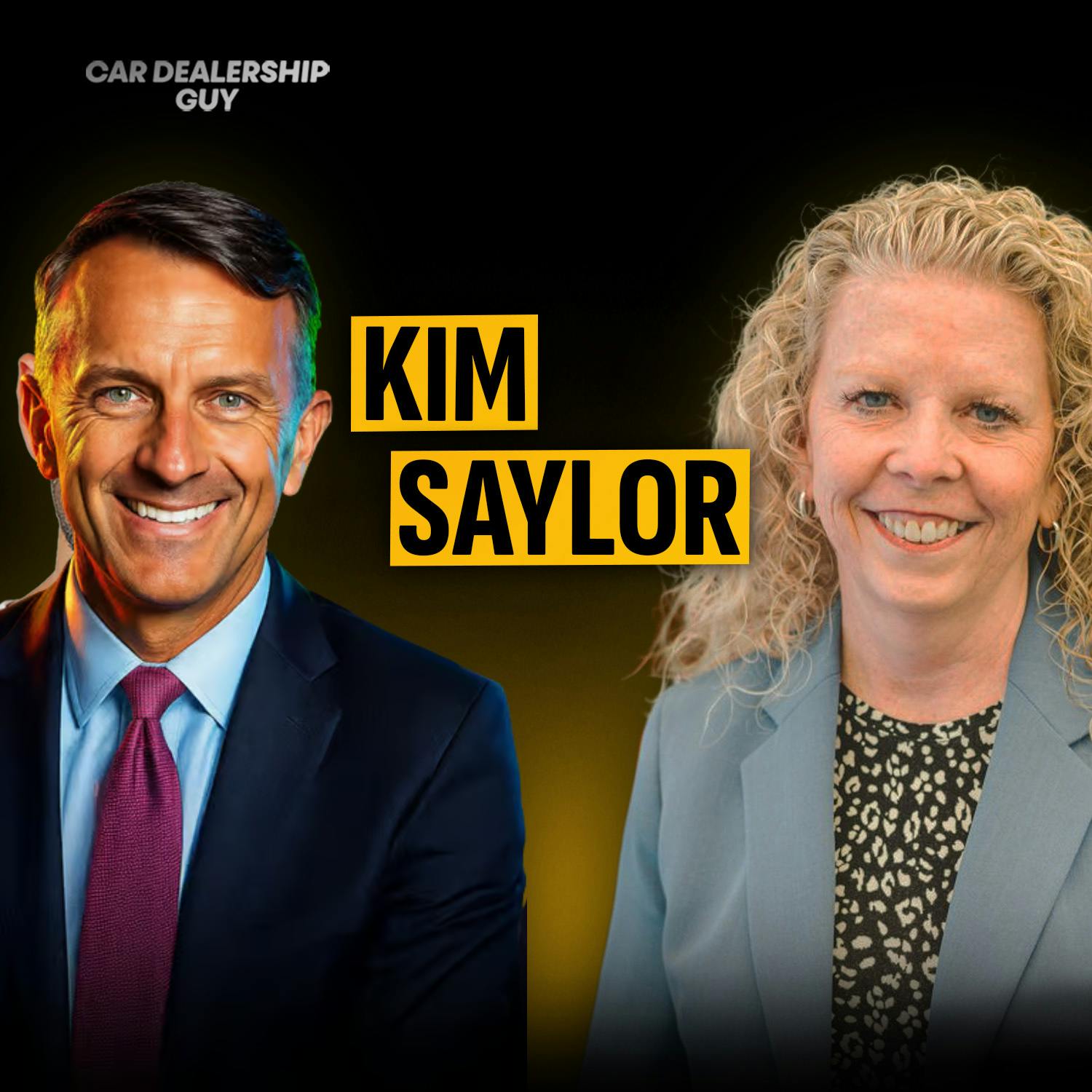
Kim Saylor from CDK Global discusses how online reviews and mobile service options are transforming dealership success, particularly among younger generations like Gen Z. With a significant percentage of Gen Z returning for service, Saylor emphasizes the importance of creating a seamless customer experience that meets their expectations. The conversation also highlights the growing trend of mobile service, its potential profitability, and the necessity for dealerships to adapt their communication strategies to retain younger customers. The episode provides valuable insights into the evolving landscape of automotive service.
Today I’m joined by Kim Saylor, Senior Director of Product Marketing at CDK Global.
We break down why younger customers choose service providers based on online reviews, how AI is reducing wait times in service, and why mobile service is becoming a premium convenience buyers will pay for.
Kim also explains how recalls create real service opportunities and how dealers can better educate customers. This conversation is full of actionable strategies for adapting to Gen Z expectations.
This episode is brought to you by:
1. OPENLANE - The world’s best online dealer marketplace for used cars, bringing you exclusive inventory, simple transactions, and better outcomes. Learn more @ http://openlane.com/cdg
2. vAuto - As the industry’s premier provider of end-to-end inventory management solutions, vAuto gives every dealer—from a single point store to the largest groups—the data, insights and tools they need to maximize returns from the new and used vehicle inventory investments. Known for its game-changing inventory management innovations, vAuto provides AI-powered predictive data science to help dealers see their future and consistently make the right, ROI-minded decisions with every vehicle they appraise, acquire, price and retail. Visit @ https://www.vauto.com for more details.
3. CDK Global - Dealers—big news. CDK just leveled up their CRM in a massive way. We’re talking next-gen AI baked right into your daily workflow: Automatically following up with internet leads, surfacing buyer insights, and giving you instant AI-generated summaries of every customer interaction—no more digging through notes. And CRM Video is here. Record, send, and track personalized videos to customers—all inside the CRM. Check out the AI enhanced CDK CRM: Visit @ https://www2.cdkglobal.com/l/146251/2025-11-24/3fy2v4
Check out Car Dealership Guy’s stuff:
For dealers:
CDG Circles ➤ https://cdgcircles.com/
Industry job board ➤ http://jobs.dealershipguy.com
Dealership recruiting ➤ http://www.cdgrecruiting.com
Fix your dealership’s social media ➤ http://www.trynomad.co
Request to be a podcast guest ➤ http://www.cdgguest.com
For industry vendors:
Advertise with Car Dealership Guy ➤ http://www.cdgpartner.com
Industry job board ➤ http://jobs.dealershipguy.com
Request to be a podcast guest ➤ http://www.cdgguest.com
Topics:
00:49 The Importance of Fixed Operations
02:37 Service Shopper Study Insights
03:53 Gen Z Loyalty and Communication Preferences
06:48 Mobile Service Trends and Dealer Recommendations
15:28 The Role of AI in Service Departments
25:14 The Impact of Recalls on Dealerships
29:46 Conclusion and Final Thoughts
Car Dealership Guy Socials:
X ➤ x.com/GuyDealership
Instagram ➤ instagram.com/cardealershipguy/
TikTok ➤ tiktok.com/@guydealership
LinkedIn ➤ linkedin.com/company/cardealershipguy
Threads ➤ threads.net/@cardealershipguy
Facebook ➤ facebook.com/profile.php?id=100077402857683
Everything else ➤ dealershipguy.com
"So when sales drop and the pipeline coming into the dealership, into the service department gets lower, right? The mobile service really allows them to expand that pipeline again..."
Mobile service means that car dealerships can come to you to fix or maintain your car instead of you having to drive to them. It's a convenient way to get your car serviced.
Mobile service refers to the ability of a dealership to provide vehicle maintenance and repair services at a location convenient for the customer, rather than requiring them to visit the dealership. This can help increase customer satisfaction and retention by making service more accessible.
"...whether it's fleet customers or I look at my mom and dad, you know..."
Fleet customers are companies that buy many cars at once for their business needs, like delivery services or taxis. Dealerships often work closely with these customers to provide special deals and services.
Fleet customers are businesses or organizations that purchase or lease multiple vehicles for their operations. Dealerships often cater to these customers with special services and pricing due to the volume of vehicles they manage.
"...Four is one I think of. There are some others, Mercedes-Benz and whatnot."
Mercedes-Benz is a well-known car brand that makes luxury cars and trucks. They are famous for their quality and advanced technology.
Mercedes-Benz is a German automotive brand known for luxury vehicles, buses, and trucks. The brand is recognized for its engineering excellence and innovative technology.
"...40% of customers who complete a recall work bought additional services. What do you make of this stat?"
Additional services are extra things you can get done to your car, like oil changes or tire rotations, when you take it to the dealership.
Additional services refer to extra maintenance or repair work that customers may choose to have done while their vehicle is in the shop for a recall or other service.
"...in general recalls are a big opportunity for dealers, right? To get the customers coming into the dealership..."
A recall happens when a car company asks owners to bring their cars back to fix a problem that could be dangerous or illegal.
A recall is a request to return a vehicle to the manufacturer for repair due to safety or compliance issues. It represents a significant concern for manufacturers and can impact customer trust.
The Importance of Fixed Operations
Service Shopper Study Insights
Gen Z Loyalty and Communication Preferences
Mobile Service Trends and Dealer Recommendations
The Role of AI in Service Departments
The Impact of Recalls on Dealerships
Conclusion and Final Thoughts
Select text to request an explanation
I think it's the world they live in.
The reading reviews on everything.
The reading Reddit, so they are looking at it.
It's the way that they find where, I'll say in my day,
I've found out about something from a friend
or a family member, they're finding it out online.
Hey, everybody, I'm Sam Darkin.
Today, I'm joined by Kim Saylor, Senior Director
of Product Marketing at CDK Global.
Online reviews now decide where your younger customers
can take their cars, and mobile services quickly
becoming a must-have offering.
Kim breaks down the changing service drive landscape
and how dealers are winning by modernizing their operations
to fit the expectations of a new generation of car owners.
A big thank you to our sponsors
for making this episode possible.
Open Lane, Cox Automotive, and of course, CDK Global.
And now, let's get into the show.
So Kim, welcome to the Cardinalship Guy podcast.
Tell us a little bit about yourself
and what you do at CDK.
First thanks for having me on.
So I've been with CDK for over 30 years.
I've been in fixed stops for probably 80 to 90% of that.
I'm currently leading our product marketing
for fixed operations, but I've done everything.
I've been in more dealerships than I can count.
Wow.
And where are you based?
Are you in the Chicagoland then with CDK?
No, I actually live in Kentucky in the Cincinnati area, so.
Okay.
But you've been all across your experience with CDKs,
taking you all over the United States.
Everywhere.
Various.
There's a dealership in every small town.
Yeah.
Yeah, that's one of the great things
about Automotive from coast to coast.
Every franchise dealership, I think almost without exception,
has that service department.
So today you bring us a service study from CDK.
Tell us a little bit about that.
Sure.
So every year, well, for five years now,
we do a service shopper study too.
So really to find out from the dealer customers
what they think about, why they're taking their car
for service, where they're taking their car and why,
and just to get their experience
and their feedback from that.
That's great.
So it's interesting in our daily dealer live,
which we do three times a week,
Monday, Wednesday, Friday, 1 p.m. Eastern.
One of the hottest topics is the service department.
In fact, we've dedicated fixed ops Friday towards it.
We had Don Hall from the Virginia Auto Dealers
Association on recently, and he made the comment.
He said, look, fixed operations is the most important,
often overlooked profit center in the entire dealership.
Do you agree, Kim, based on your experience
with fixed ops with CDK,
and why is it so often overlooked if it is?
Absolutely.
It's the most important, you know, as far as I'm concerned.
And anytime there's a downturn in sales, right,
then the focus goes on the fixed operations.
You know, what's your absorption rate?
You know, so really it's the fixed ops department
that's keeping the lights on a lot of times at the dealership.
So, and I think the reason that it gets overlooked a lot
is because I think a lot of dealers came up through sales.
So that's their experience, that's their comfort,
that's where they know.
But as soon as sales starts taking a dip or leveling out,
then again, the focus turns right back to fixed operations.
Which, by the way, is why this survey this year
is so timely and this data that CDK is providing
our audience is so timely because right now,
many dealers are turning back towards that fixed operation
as a way of finding better retention,
better profitability and seeking the best employees.
So, let's dive right into it.
So, you found that loyalty is strong.
In particular, among Gen Z,
you said 76% of customers returned to the store
where they bought the vehicle,
which is crazy and a massive 90% of Gen Z
comes back for service.
Tell us a little bit about that,
why that stat is important from your research.
Right, I think it's crazy.
I think that if you weren't seeing this from our survey,
a lot of people would assume that Gen Z's
warrant is loyal, right, they're quick to change,
but we're showing and proving that that's not the case.
So, it's incredibly important for the dealer,
not just to bring those customers back,
I bought my car, I'm bringing it back to the dealership,
but to continue to give those customers
the experience that they deserve
because it also, the survey also shows that
the likelihood, if they have good service,
they're over 80% more likely to buy their next car
with you, where if they're not happy with service,
they're only, it's in the 30s, low 30s,
coming back to your dealership to buy a car.
So, it really is the full life cycle of the customer
and keeping them coming back to your dealership.
So, it's interesting, less prior generations
weren't as loyal.
Gen Z, it appears, is becoming more loyal.
What describes that at your own opinion?
Why are we seeing Gen Z becoming more loyal
and why is this opportunity so great right now
to keep them retained in the dealership
and the dealer group?
So, I think part of it, and this is,
part of this is just my opinion,
they're not as likely to fix it themselves.
So, the value of what the dealership brings
is more important to them.
They want that excellent service.
They want to be communicated the way
that the dealership can communicate.
They want to be able, if they're waiting for their car,
to be able to work while they're waiting.
So, the dealer provides them options
that a chain or an independent shop is not going to provide.
Yeah, so as a takeaway,
what's your recommendation to dealerships?
It's to better lean into that experience
when a customer comes into the service department,
probably create an excellent elite experience
for every customer, but certainly focused on Gen Z.
Is that part of the takeaway?
Absolutely, for sure, focus on how the Gen Z wants,
how they want to communicate with your dealership.
I have two Gen Zs at home,
they're never gonna call me,
so I need to make sure that I'm texting them,
communicating with them through a mobile channel,
giving them the ability to approve
and to pay mobile while they're at home,
if they're not in my dealership.
But if they are in my dealership,
providing them a place where they can work,
where they can continue to not be in convenience
while their car's getting serviced.
Yeah, but that communication channel is fascinating to me
because to your point, my kids,
I've got some in that Gen as well.
Like they're less likely to pick up the phone,
they're a little more likely to respond to text,
and you go to some of the social media platforms
like Snapchat and others, and it's a quick instant response.
Do you foresee a day where the phone, the texting
and all that is gone and it's these alternate forms
of communication like Snapchat, FaceTime maybe,
or some of these others become the primary way
that a dealership needs to communicate with customers?
I mean, I think it certainly can.
It's not, I don't think you're there yet right now.
We still need dealers to actually communicate,
automatically with these, with Gen Z,
with all their customers, right?
Increase the transparency, the mobile approvals
we talked about, but doing that technician video
and showing all your customers
that the knowledge that your dealership brings
and why giving that technician video to the customer
will get them to continue to come back.
So in that case, not just Gen Z,
but for all of your customers.
Yeah, so fascinating shift into our next topic.
We go from retention, which is surprisingly high,
to satisfaction, dealer satisfaction,
which dipped according to your results,
and yet you also show mobile service served.
So dealership NPS dropped from 59 to 47.
That's a significant drop
while mobile mechanics jumped to 64, plus 64,
nearly matching independent shops.
What do you make of the drop in NPS and the rise in mobile?
Well, so there was no clear definitive reason why the drop,
but the one thing I would say is that
it's still higher than it was in 23.
So yes, it dropped,
but it's still higher than it was it was
and what it was in 23.
When it comes to mobile service,
I think that's just, you know,
the place where dealers can really start taking advantage.
You know, it's coming to the customer.
There's really no reason why that NPS
wouldn't continue to rise.
There's, you know, and if you go back to, you know,
building the pipeline for the customer or for the dealership,
mobile service allows a dealer to do that, right?
So when sales drop and the pipeline
coming into the dealership,
into the service department gets lower, right?
I don't have as many new customers.
The mobile service really allows them
to expand that pipeline again, you know,
whether it's fleet customers
or I look at my mom and dad, you know,
I said I live in the Cincinnati area.
You know, they drove to a Toyota store
on the north side of Cincinnati to buy their car.
They're willing to drive that to buy their car,
but they're not willing to drive it
to continue servicing it
when there's four other Toyota stores closer.
But with mobile service,
you can go to those customers
that drove the distance to buy the car.
So it really helps you continue
to build that pipeline into your service department.
And then when you look at that,
the NPS is much higher than what it is when they come in.
You know, it just, it's a win-win.
So some manufacturers,
some OEMs are supporting mobile service with dollars.
They're investing in it.
Four is one I think of.
There are some others, Mercedes-Benz and whatnot.
Do you recommend that dealers,
whether or not they get support from the OEM,
engage in mobile service
as a way to increase that satisfaction and retention?
I mean, I think they need to look into it, right?
I think, you know,
I think there's a lot of things that go into
whether or not a dealer is ready to do mobile service.
You know, they may be out of physical space
in their dealership to grow.
So this is a way for them to grow
without building onto their dealership.
There is an expense involved, of course,
you know, for the van or vans, you know,
and, you know, and the personnel to go do this service.
But again, it opens up such a, you know,
a wide area of customers that you can't,
you can't provide service to today
that I think every dealer should be looking at it,
whether their OEM is, you know,
gonna give them, you know,
incentive or, you know, a financial reason to do it.
This episode is brought to you by Open Lane,
recently voted the most preferred
digital wholesale marketplace by dealers.
They've been busy using the power of people and AI
to build a more confident wholesale experience.
Open Lane Condition Reports now feature AI powered
and inspector confirmed exterior damage detection,
high quality engine audio recordings
and OBD two codes decoded into plain English.
If you've never used Open Lane before
or it's been a while since you have,
you're eligible to earn up to $2,500
in buy or sale fee credits.
Learn more at openlane.com slash cdg
or click the link in the show notes below.
And one of the tough things right now,
I think dealers are working to figure out,
but the number of support doing the tough thing
to figure it out is who do you hire to drive
and to be the technician in these mobile service units
because it does take a different type of technician
to drive to somebody's house,
perform the repair there and drive back
or even be farther afield.
So it'll be interesting to see how that evolves
over the years.
Your data probably doesn't show anything
on the hiring and recruiting side,
but it is a challenge for dealers today, right Kim?
For sure.
And yes, the data we didn't do,
because it's a service shopper study
versus the dealer's study,
but there's more focus on the technician
when it comes to mobile service, right?
They are doing the advisor,
they're talking to the customers.
And we're getting a little bit of that with a video,
the technician's videos
where they're talking to the customer and describing
and texts are doing a really good job at that.
Now it's another step with mobile service
where they are actually greeting the customer
and basically doing the advisor and the technician role.
So Kim, another component in the survey
is the online reviews matter a lot to younger buyers.
You found that overall only 35% said reviews
influence service choice,
but over 75% of Gen Z and millennials rely on them
when choosing a provider.
What do you make of this?
I think it's the world they live in.
They're reading the reading reviews on everything.
They're reading Reddit, so they are looking.
It's the way that they find where,
and I'll say in my day,
I've found out about something from a friend
or a family member, they're finding it out online.
So it's critical for dealers to look at their online reviews
to make sure that they are hitting the Gen Zs
and the younger shoppers
that they want coming into their dealership.
I believe that the older generations
probably already have their mind set up.
I mean, you can not to say that you can't win any over,
but they're probably again,
finding out about your dealership in a different way
versus the reviews.
They may not be as important to them.
So as a takeaway for that Gen Z to attract them,
they will be loyal you found,
but you've got to clean up those online reviews.
So as affordability increases,
we just reported with CDG that price of new car,
I think surpassed was at $50,000
for the first time ever.
Vehicles are getting more expensive,
repairs are getting more expensive.
It's no surprise that your research has shown
that customers are more focused on stretching vehicle life
to be detailed, a record 31% said they're quote,
doing everything they can to keep the car running,
close quote, reflecting economic uncertainty,
interest rates and tariffs.
What is the data show about
customers stretching vehicle life, Kim?
I think the average age of a vehicle
is over 12 years on the road.
So that's average.
So there's a lot older vehicles.
So really it's just customers trying to make sure
that they have a reliable vehicle
and they are doing what they need to do
to keep that vehicle reliable so that they can,
and then maybe when it comes time to buy the new car,
then they also can get the best trade-in value
for that vehicle as well.
Yeah, one takeaway for me as a dealer hearing this data,
it really gives me a ton of motivation
to go all into service, right?
Because if customers are redoubling their efforts
in service to make that car last longer,
we need to get better at having technicians
that are well trained to work on older vehicles.
We need to focus on attracting maybe even off brand.
And then to your point about trade-ins,
we need to do a better job than we've ever done
at taking care of that customer in the service department,
but also giving them opportunities to trade out of it.
This is actually one of the most interesting
and exciting data points that you're providing
that customers truly are doing
what we sort of thought they were doing,
which is they are wanting to make that vehicle
last as long as they can.
And hopefully dealerships are the best source for that.
So next up, interesting,
phones are still the number one booking method,
but also a major friction point.
You point out 61% booked service by phone,
but 29% hit issues, hold times transfer, no answers,
average hold time, this is astonishing.
Average hold time increased to 9.3 minutes, Kim.
Nobody waits for 9.3 minutes
to get somebody on the other end.
What is going on?
Why are we so terrible at answering phones in service?
Well, I was hoping that was a fluke.
So last year it was over eight minutes
and now it's for nine minutes.
So I don't think it's a fluke,
but you said, why are you so terrible?
People are doing many things, right?
The advisors standing there trying to help the customer
that's standing in front of them, the BDC,
maybe not just answering phone calls
to schedule appointments, but whereas my vehicle.
So there's a lot of things that dealers can do
to make it better.
One, it's the perfect place for an AI solution, right?
Yeah, yeah.
I know there are dealers that are afraid
that my customers don't want to use AI.
They don't want a virtual assistant,
but they also don't want to wait nine minutes.
So you're already giving them a bad experience
by making them wait nine minutes
and AI has come so far.
We have a product called Ava
that's an AI virtual assistant
to help schedule appointments and it's conversational.
No one is going to get stuck in a loop
where you're just trying to get off,
let me just talk to someone.
So that's been taken care of.
So there's really a great opportunity
for dealers to use AI in this way
to help with that specific issue.
The other thing that's great about it
is if someone does hang up,
you know who it is that hung up.
And I always look at this like a lead and sales.
There's no dealer that's gonna let a lead go away in sales.
They wanna know about every lead.
Well, these customers calling into the service department
are your leads for the service department.
So don't you wanna know about everyone that's calling in
and, you know, if they hang up
still having that information about them.
Yeah, you know, it reminds me of a conversation
we had on the industry spotlight.
We had the head of Longo Toad
of the service director for Longo Toad
the number one Toyota dealership in the world.
They sell more and they service more presumably
than anyone else.
And he said this, Kim.
He said, if a customer has to even call us,
we failed at our job.
And to your point, it is interesting.
AI has capacity right now to be a lead
at picking up answering the phone and resolving issues.
Kim, what would you say to a dealer that says,
you know what, I get that,
but I think a real human voice
is gonna be better than AI.
And I don't trust what AI might say
or how they're going to route that customer.
And so until I see better,
I'm uncomfortable actually completely turning it over.
What would you say to them?
Well, I would say to them,
you have customers that are on hold for nine minutes.
Yes, that's exactly right.
They're hanging up on you.
And if they're hanging up on you,
they're calling somebody else who, guess what?
They may have an AI tool to answer that phone call
and get that open scheduled.
Yeah, yeah.
I don't know why it's so hard
to route correctly in service,
why it's so hard to pick up and respond.
But I think you're right.
Service riders, service managers,
they get overwhelmed because they're firefighting all day.
And, you know, it's human nature, unfortunately,
to say, hey, I'm not gonna pick up
that fault call just yet
because I don't have an update.
AI is not gonna discriminate against that.
It's gonna just very quickly respond to it.
So, and the AI tool you have is pretty cool.
It's interesting.
I've heard one of the benchmarks of great AI
is it elicits human emotion in response.
So it gets someone on the other end to laugh.
It gets them to apologize.
It gets them to say, hey, are you okay?
And it's interesting.
I've heard that your AI tech does a nice job
of eliciting human emotion on the other side,
which I think has gotta be the goalpost.
So it'll be interesting.
And you know what's fascinating?
So let me say this too, 9.3 minutes.
There are AI tools that are in use all over the country.
So despite the quick responses of AI,
it seems to me those that aren't doing it
are getting even worse
because AI is gonna pull the average less
and those that aren't is gonna pull it worse.
Any thoughts on that, Kim?
That's terrifying to me.
Yeah, that's exactly right.
And you know, out of the people that we surveyed,
we don't know who were calling dealerships
with an AI tool, who weren't.
The ones that were calling a dealership with an AI tool,
they had no hold time.
So, you know, so if there are some, you know,
you have to take that into consideration.
Another thing about utilizing like our AVA, our AI tool,
14% of the appointments that it's scheduling
are happening after hours.
So when there's no one there to take that phone call,
but it's when the customer's thinking about
they need to call and schedule an appointment.
So it's there for the dealership,
for the customer, you know, at any time.
So not just when it's a busy day
and no one can get to the call,
when the customer's actually wanting to call
the dealership and get that appointment scheduled.
This episode is brought to you by Vauto.
How much time do you spend merchandising
new and used vehicles?
It's probably much more time than you think,
especially if you build descriptions, photos, carousels,
videos and listing information for each vehicle
one at a time.
That's partly why many dealers merchandising
doesn't connect with consumers the way it should.
Today, consumers expect to explore a vehicle's features,
fit and value the way they do anywhere else online.
That's where Vauto's advanced merchandising suite helps.
Cut the time it takes to merchandise each vehicle
and provide the experiences consumers expect.
Want to learn more?
Visit vauto.com today
or click the link in the show notes below.
Interesting, do you have a stat that shows
what percent of customers schedule after hours?
I only know that with our tool,
14% of all of the appointments
that are getting scheduled by the tool
is happening after hours.
Yeah, that's high volume.
Yeah, it's interesting and that'll probably increase
as people understand and realize they can go after hours.
So that's fascinating.
61% are still booked by phone,
but a third of that 61% hit issues, a fascinating stat.
So I know we talked mobile technicians,
but let's go back to mobile service.
Your data shows that it's gaining real traction
and customers are willing to pay for it
even more than regular brick and mortar.
You found that 40% would pay more for mobile service
and 48% are willing to pay up to 10% more.
Right.
And NPS mobile is climbing fast and beating dealerships.
What do you make of 40% willing to pay more for mobile
and 48 are willing to pay up to 10% more?
I think it's the world we live in.
We door dash food all the time
and we know we're paying more
to have the food brought to us.
It's the same type of thing.
It's the experience that I want.
It might be the experience I need
because I can't get to your dealership.
I'm at home working and so I'm willing to pay more.
I want to take care of my car.
I want to service my car
and this is the best way for me to do it
and I'm willing to pay a little bit more
in order to make that happen.
Yeah.
Do you think the data will bear out
as customers are asked to pay more for mobile service
with OEM support going away
as dealer operations get that mobile service
up and running?
I mean, 10% it's not a huge amount,
but it's significant.
Right.
When I think about it,
if I pay 10% more, I guess not to have to go in
to have somebody come to me.
Yeah.
What's your take on that?
Do you think it'll hold out
once the experience gets there?
I think it will probably average out.
Will it average out at 10%?
I'm not sure.
I think it all also depends on
how far is that dealership willing to go
to do that mobile service?
There's dealers that have 30 plus vans
that are going significantly far
away from their dealership.
And so in that case, it might be
it's either worth it for the dealer not to charge more,
but it could also be worth it for the customer to pay more
depending on the location.
Am I in an urban area or am I in a very rural area
and they're coming to me?
So I think it will really depend on the location
and where it averages out,
how much are you gonna actually charge me more?
Yeah.
You probably don't have data that looks at this either way,
but as dealer operations expand
and as there's more mobile service units out there,
the dealership of old used to be worried
about a market area, right?
And there was a geographic area,
you drew a line around it.
You succeeded when you outpunted your market area
a little bit and drew customers in from other markets,
but you never went too crazy far.
Now in our world with mobile service,
an auto group could have a national footprint
even though they're focused in a small geography.
Any thoughts on what that means to the future of automotive
and who wins in that case?
That's a good question.
I mean, I think the future of automotive
is it has to include mobile service.
So will the OEMs come in and put in some kind of guidelines
that a certain area that you can go,
I don't even know if that's possible.
So it will be interesting to see.
I mean, the dealers that are jumping on mobile now
or that have already jumped on mobile,
they are getting more customers.
They are expanding to areas that they were not able to
from within their dealership fleets a perfect example.
They are doing things like diagnostics out
at the customer's home and then bringing the car back
into the dealership to fix it.
So there's lots of value for both the dealer
and the customer with mobile service.
Yeah, yeah.
You know, it seems to me the customer ultimately wins,
which is what we want in automotive.
In that case, the competition for that customer
becomes better, greater,
and the customer has multiple options to get service.
It's not just the brick and mortar
to your point about your parents around the corner
where they go out of convenience.
Now maybe in the future state,
I'll have three or four different mobile dealerships
that are willing to come to my residence or place of work
and ultimately in that competition, I win.
And automotive will win too
because we'll get better executing on that.
It's interesting, Kim.
You've seen over your career an enormous change
in not only the way dealerships are operated,
but also consumer preference and mobile
is probably one of the biggest.
Does this make us better in automotive
at having to compete in this arena
and ultimately does the customer win?
I mean, what are your thoughts?
You've seen this big change over your career.
I mean, I think it absolutely makes us better.
Anytime there's competition, it makes you better.
And because of that, then yes,
the consumer is the winner there.
And in this case, the dealership can be the winner too.
So topic we talk a lot about on the show are recalls.
It's a significant revenue opportunity for dealerships
and it's a consistent aggravation point for customers
whether you're for the number one most recalled brand
or even to it in Honda that have significant recalls.
And your data's interesting, 40% of customers
who complete a recall work bought additional services.
What do you make of this stat?
Well, I think in general recalls
are a big opportunity for dealers, right?
To get the customers coming into the dealership,
I bought a car in 24 the first time I took it
to the dealership was for a recall
before I even needed maintenance.
So it's in some cases the first opportunity
for the dealer to make an impression on the customer.
So if they make a great impression,
that's the best chance to get them coming in again.
But what you're seeing is 40% of the customers
also had additional work done.
So either that recall happened later than like in my case.
So maybe they needed maintenance.
Maybe there was another repair
that was found during the technician inspection
but they're getting more work done.
Another thing though that came up in our survey
was that a lot of the Gen Zs
did not get their recalls done
because they were afraid
that it was gonna cost them money.
So the reason I bring that up
is I think that's an opportunity
for dealers to do some education
when I'm buying my car,
when I'm coming in for service for the first time,
I educate these buyers that when they get a recall,
bring it in, it's not gonna cost them money.
And we're gonna, you know,
a lot of times it's a safety reason,
it may be another reason,
but we want to, you know,
educating them that it's the best way
to keep their car at the most pristine condition.
You know, that's a great point.
I think some dealerships will shy away from recalls
because maybe the pay's a little bit less,
maybe the potential is that aggravates the customer.
You don't wanna focus on it at time of sale,
but having a word track that describes the value
and the benefit of a recall,
whether it's physical in person
or whether it's over the air,
that actually makes a ton of sense
to set that up during the delivery process.
And I think back through my own experience here
at the Ziggler Auto Group and elsewhere,
have a word track to describe the benefit
to the customer, the process for bringing it back,
and then the fact that these recalls
don't cost the consumer money.
We all do a parts and service walk,
typically sometime after the customer says yes,
and before they drive off,
what a cool script or word track to add
and just address it, deal with it right up front.
I'm gonna take that as a takeaway from today
and put that into practice in our business.
Thank you.
Yeah, I just assumed that everyone knew a recall
they weren't gonna pay for,
but the study shows differently,
so I think it's a big opportunity for dealers.
It's interesting,
as Gen Z came up over and over and over and over again
in this report, and it's interesting,
I was doing a presentation,
I was part of a presentation at a university recently,
brought up AI at that university, Gen Z, certainly.
And a lot of people in those classrooms said,
you know what, AI is not gonna threaten my job,
it's not gonna threaten what I do.
And I instantly saw that in Gen Z
and your support,
the data kind of shows this as well.
When I was a kid, we could work on a vehicle
at a very low level,
we could fix a taper quarter
for anybody that remembers what that was.
We could bang a cassette,
we could bang at the side of a CD player
and it would start working again.
This younger generation with the complexity
of technology and computers and cars,
they don't take things apart at that same rate,
they don't put them back together.
And so the assumptions my generation may make
about them having knowledge about technology and AI
and cars and like we have to be more proactive
and automotive about educating
and bringing along Gen Z
and making them feel comfortable
to partake in the services.
And your research shows that if we do that,
they will very quickly, so.
And they will be loyal.
Yeah, and they'll be loyal doing it,
which who to thunk that, right?
So, but they also don't wanna pay a ton of extra money
as the research showed to do that.
So Kim Saylor, any other thoughts from CDK
as part of the fixed ops or service buyer preference survey?
I'll just say what I said at the beginning.
Fixed ops is important and everyone should be,
every dealer should be looking at their fixed ops
even when sales are good
to make sure that you are maximizing
your fixed operations department.
Kim Saylor, CDK, we appreciate you being on the show.
Thanks for sharing your insights and the data
that CDK's collected as part of this buyer preference survey.
I'm sure a link will be in the notes.
If you wanna get a copy of the survey yourself,
research it, share it with your teams.
I'm gonna go back and put in a word track for recalls
as part of our walk around.
So thanks for that, Kim.
Have a great day.
Thank you.
Thanks.
All right, hope you enjoyed that episode.
Please give the podcast a rating,
consider subscribing to the show
and check the show notes for links
to what we talked about.
Thanks for tuning in.
I'll see you guys next time.
Request an explanation for:
Request an Explanation
Heard something you'd like explained? We'll add it to this episode.
Sign in to request explanations for terms you heard.
Want to learn more?
Browse our glossary for plain-English explanations of automotive terms, jargon, and concepts.
See something that's not quite right? Our annotations are AI-generated and can sometimes miss the mark.
Click the flag icon on any annotation to suggest a correction.