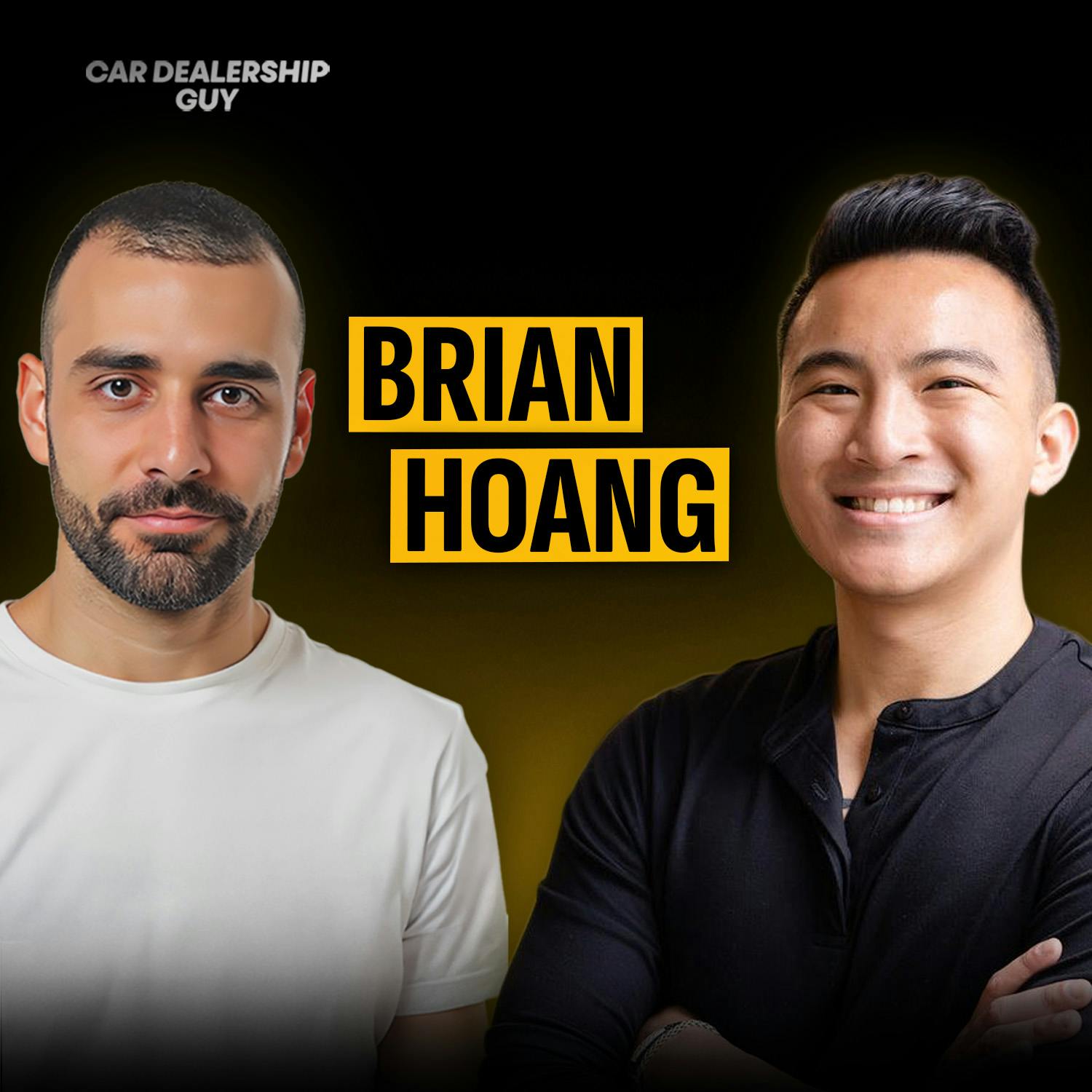
The Great Dealer Tech Collapse – The AI Vendors Surviving 2026 & Who To Bet On | Pre-NADA AI #6 Brian Hoang, CEO of Mia
Car Dealership Guy Podcast
The Great Dealer Tech Collapse – The AI Vendors Surviving 2026 & Who To Bet On | Pre-NADA AI #6 Brian Hoang, CEO of MiaCar Dealership Guy Podcast · Feb 3, 2026
Stick shift means driving a car with a manual transmission, where you have to change gears yourself. It's different from automatic cars that do this for you.
Things are being done with software today that weren't possible yesterday, and that includes the pace of development.
And even later this year, we're going to start seeing a lot of meaningful software consolidation for automotive dealers.
In part six of our pre-NADA AI spotlight series, I'm joined by Brian Hong, CEO of MIA.
Dealers are buried under bloated tech stacks, missed calls, and software that promises efficiency but delivers more friction.
But 2026 might be the year where a winner finally emerges.
Brian breaks down why meaningful software consolidation is coming faster than most dealers expect and how to protect your dealership from betting on the wrong horse.
If you want to understand which vendors survive the next shakeout, this is a must listen.
A big thank you to our sponsors for making this episode possible.
Uber for Business, CNA National, and of course, MIA.
And now, let's get into the show.
Brian Hong on the CDG podcast. Brian, welcome.
Hey, Yossi. Thanks for having me. It's been a while.
And it has been a while. Great to have you on.
Fresh off a $20 million fundraise to fund the next generation of super agents in automotive.
So exciting times on auto, lots of money going into the space.
Last time I remember this much capital being deployed in auto tech so quickly.
It was not that long ago, but it was in the digital retailing era.
And now here we are in the AI era. So excited to talk about that.
I think as I've, Brian, we've, we got to know each other over the past year.
And as I got to know you, I think one of the, one of the things I found interesting.
And one of the first questions I asked you was, Brian, there's, there's many companies today in automotive trying to solve the AI problem,
or, you know, bring an AI solution to dealerships and, you know, make them better, faster, more efficient.
What are you going to do differently?
So I'm excited to talk about that in this conversation.
You're clearly positioning something correctly and have some traction because otherwise you wouldn't be in the position you're at today.
So this is going to be a fun one.
Brian, just, just before we even talk about the nitty-gritty, like congrats.
I mean, $20 million, that's, that's, that's serious.
I mean, you're, that's, that's a serious number.
I mean, I can only imagine you have big plans for that.
I mean, what, what can you tell us about this fundraise and how this went about?
Yeah, appreciate it, Yossi, and full disclosure.
So we, we announced to the series A this morning.
So I am kind of, yeah, it's, it's been a good morning.
So we are officially pre-games for CDG.
But yeah, like, you know, it's the, the fundraising journey for Mia has been really interesting.
I mean, the series A is our third round in 12 months.
And so, you know, and then that's, that's reflective of, of just the sheer pace and quantity of opportunity that we've seen.
And just the last 12 months alone is just, we've just grown so much faster and more than we anticipated.
And, you know, we're, we're very grateful to, to be at this, this place right now.
And we found, you know, new institutional partners to, to partner with.
And, you know, as we grow the company and think about how do we build, you know, this, this next generation of, of AI agents for car dealerships
and really build a generational company.
And so, so yeah, we, all three rounds we have raised were oversubscribed.
The series A is, is the same.
And, and thank you for being part of it as well.
Like, like this is, this is not my first startup.
I started by selling to police departments and like that is all, you know, an experience of its, its own.
And, and, you know, we, we come from a place of admiration and respect for, for the industry.
And, you know, as like personal, like car enthusiasts, like I started a car community before starting Mia.
What did you, what did you start Brian?
What did you do before that?
What is this car community?
Tell us about that.
Yeah.
Okay.
So all right.
We need, we need the backstory here.
We have that.
Yeah.
Yeah.
So I, I started my first company back in 2016.
I did it with Marwan.
Actually, he was my co-founder CTO.
He's now again, co-founder and chief product officer.
And the, the short story is though, that's the one we, we sold training software to law enforcement agencies and military, you know, helping, you know, improve public safety training.
We got acquired in 2021.
And, you know, me just coming from a family of Vietnamese refugees, like I, I just didn't really see much money growing up.
I've had to work, you know, really hard for everything I've ever had.
And, and so it wasn't until we sold our first company that my family and I saw meaningful money.
And beyond the obvious things like taking care of my, my family, buying my grandparents a house investments, that sort of thing.
I kind of didn't know what to do with my, with the rest.
And so my, my VP of sales at my prior company had this brilliant idea of, well, you could buy a Porsche.
And like, you know, I, I grew up poor.
I didn't have like posters of cars on my wall.
I didn't have that perspective.
And I was like, huh, that's, that's interesting.
I'd never considered this.
So, you know, like four Porsches later.
And I'm like, I fell down this really slippery slope with the automotive.
So you bought the Porsche.
Oh, yeah.
Yeah.
They're all, all six, six speeds.
I learned how to drive stick into Porsche.
So you have a collection.
That's kind of a mistake.
I, I wish I learned it on like a Miata or something.
That took forever.
But yeah.
And then I, I noticed I was just texting with a bunch of friends.
We were kind of just like making fun of each other's cars.
And I was, I was, you know, but, and I was like, you know, this, this sucks.
How about we just make a discord?
And it just like people just kept adding people.
We were talking every single day about cars.
We, we had a channel per, per OEM and then we started hosting our, our car cruises about every month or two.
We still do to this, this date.
And that's what really got me hooked on, on automotive, not just as, as a hobby, but as just an industry, like a pillar of the American economy and culture.
And, and, you know, Mia came pretty soon after that.
So tell me, Brian, tell me a little bit about what's your plan, right?
Every dealer listening, whether they are working with you today or whether they are on the sidelines still, whether they're with a competitor.
They all want to know, right? Okay, how are you going to make my life better, more efficient?
How are you going to make me more money?
How are you going to deliver a better experience?
Right? Save me headache.
How are you going to use this capital to create value?
What are you going to do?
Yeah, there are many exciting high level themes going on, and especially from a product standpoint.
So, you know, some of the, the common themes that I've heard from, from dealers is, you know, everybody wants to simplify.
There's this stack where we're finally starting to, to graduate beyond this, having to use this very antiquated, fragmented tech stack with tons of different point solutions, tons of different dashboards.
And so to have a simplification of, of not just like the number of tools that you have to worry about and pay for, but also just simplification of user experience for, for you as, as a dealer operators and for, for the customers.
And, and simplification like normalization of your, your data as, as well, which is currently probably super fragment and broken up just across this whole, whole stack.
And so being able to help dealers make sense of what is actually going on in the store and what specific levers can I pull to affect change and how do I actually and predictably measure and forecast that.
So, so simplifying the stack is, is one major theme.
And two, another one is like, you know, just, just dealers want, if anything, they want to send fewer messages to, to the end consumers.
And, and this is part of the, the issue with having a broken stack.
I want to get one second. So before we talk about the messages, that's a good, that's an important one. I want to, I want to talk, continue talking about what you mentioned when you say the word stack.
So dealers complain that there's too many things in a dealership, right? Too many tools I need to use nowadays. It's, it's too much too many logins. You are another tool, right?
Yet you mentioned that you're working to simplify the stack. So can you reconcile that for us? How are you helping dealers actually use fewer tools? What's your strategy there?
Yeah. And, you know, with, with every software company, regardless of the industry, you know, you have, it's important to form a thesis around, you know, where you start your, your wedge in your, your beach head, you know, whatever, where you want to use for that.
And, and, you know, what makes most sense for an immediate pain point to address for the customer and then a sensible roadmap from there. So, but, you know, we're, we're living in a really unique time now, especially for, for tech.
And what's possible to, to build with AI in terms of like, not just the pace of development, but also just the sheer ROI and capabilities of AS as compared to traditional SAS is, is unprecedented.
And so we're, you know, we're really making aggressive progress on, on rethinking like, what should dealership software look like in an AI native world. And, you know, when we started the company, we focused on being the most realistic comprehensive voice agents.
That was really our, our wedge in like dealers drop 30 to 40% of calls and in this handle 43% of leads on that on average. And so, but we're already quickly expanding beyond that you'll be as texting as well we're doing not just inbound but outbound communications.
So, like, basically becoming this, the central communications engine, the one stop shop for all digital communications going in and out to the dealership. But one of the things that we're starting to see this this year and a big driver for the series a to tie it back is that we're, we're now beginning to shift from automating dealership communications to automating the dealership itself.
Like, there's so many, you know, kind of broken and disjointed workflows across a dealership and within each department, beyond just just communications. But the short answer is, you know, things are being done with software today that weren't possible yesterday. And that includes the the pace of development.
And even later this year, we're going to start seeing a lot of meaningful software consolidation for automotive dealers.
This episode is brought to you by Uber for business. It doesn't matter how good your coffee is, your customers don't want to spend their day waiting on your shuttle. That's one of the ways Uber for business can help your dealership deliver the five star service that builds lasting relationships.
Decrease wait times by offering your customers rides to and from your dealership boost CSI scores improve retention and turn convenience into loyalty, all while keeping every trip organized in one easy dashboard.
If you're heading to NADA visit Uber for business at booth number 7944 and and learn more about how Uber for business helps dealers keep customers moving and coming back at businesses dot Uber dot com slash CDG or click the link in the show notes below.
So when you say things are being done differently as a dealer, should I expect that I will have fewer logins within 12 months? Am I going to be using, you know, less or fewer tools, more of the one under one umbrella and just less kind of going back and forth with different things?
Is that what you're saying?
That's right. Yeah, fewer, fewer logins, fewer tools, fewer dashboards. And it's also part of it. Part of the art is also thinking about how do we streamline the actual workflow and the way that you engage with the tool and the UI as well.
So, you know, what can be done in your current systems and your current email inbox without even having to to log in and we're making a lot of exciting progress there as well. And so, you know, we don't we don't try right now to like really, you know, force the dealership to rewire all of their processes.
This is like, we're happy to, you know, to suggest, you know, if, if we're asked, but, but part of how we thought about designing Mia when we first started and very much what drives the design philosophy today is that Mia is meant to be the super employee who molds into the dealership as intimately as possible.
We did not want to design Mia as a really just simple surface level out of the box solution, because it's like, you know, can we launch Mia out of the box? Technically, yes, it'll be really quick.
And she'll she'll still get the work done. But, but you know, there's a reason why we like to to have a very collaborative onboarding process with our dealers. It's there's a reason why we ask for a lot of feedback on your specific processes and preferences.
We have quite literally over 150 possible configurations for Mia. And, and we do that intentionally because, you know, every dealership is different. You have your own leadership, culture, preferences, values, workflows.
And, and we don't sit here and pretend that that every dealer should operate the same way. And so Mia is designed to be your specific super employee.
You mentioned our dealers. Who are your dealers or like what, you know, what are some examples of groups you work with? I'm trying to understand what is the, you know, what is the best fit for a solution like this as a dealer?
Like who is it for rural dealers, urban dealers, you know, large dealers, small dealers, like where's your sweet spot in the market?
Yeah, I would say our sweet spot would be more medium to high volume dealers. And so part of the the beauty of AI and how it's it's possible to to deliver like near instant ROI for for clients is that it's the one of the easiest
first things to take off of your plate and your team's plate is the mundane and the repetitive. And that usually translates really well when you're seeing a large volume of anything, particularly over in service, like you look at like the the record
slash like really more importantly, like the each the people the customers in in the DMS as opposed to what you might see in your CRM. It's like you you have an exponential lift there.
So, Brian, talk talk to me about like, what's the next 90 days looking like you just raised capital, your dealers are, you know, great, cool, you raise capital, I'm your client, what does that mean for me?
Yeah, well, we we've had a lot of exciting product updates recently and more to show at NADA. So, you know, to get the full picture, you're gonna have to show it by the way we are at booth 6568 North North
Plug the early plug. I love it. We'll put in the show notes too. We'll put in a show on us. Perfect. So where are you? What's your booth out? Good. Oh, yeah, 6568 North. Okay, why, why should I be there as a dealer? Why do I care?
First of all, we have a badass team and you'll love us and we have over 100 years of auto experience across a team. We and and you know, that's a big part of our philosophy to what's the goal, right? Yeah.
Now that you're well funded, yeah, what's next? Yeah, yeah. Okay, all right, I'll give you some sneak peeks, but you have to stop by the booth. All right, so
Yeah, like, you know, part some of the the high level themes here, like, you know, especially in the near future here, like we have a lot of really exciting work going on right now with with outbound communications to where, like, you know, we started
with with inbound, like, you know, any, any cracks that you have in your store and missing 30 to 40% of calls on average and leaving that money on the table. Now it's, it's, it's about not just being that first line of defense but being the first line of offense and there are
different campaigns with existing customers, use cases like, like recalls, for example, special order parts pickup, you know, surveys and, you know, responding to all incoming CRM leads within a certain amount of time.
So, you know, again, a lot of the stuff is just like the, the mundane and repetitive like you, you know, it has to be done.
You know, the most important thing as the operators, you're recognizing that, but it's, it's not really the, the best use of your team's time to go and manually like, you know, figure out all the the consumer data to then like track all these that mainly send out the
campaigns and track them accordingly. You know, and so Mia is the companion who handles that for you. And so, you know, becoming not just the inbound engine but the effectively like the go to market and retention engine for for our dealerships as well.
And that's been something that lots of dealers have asked us for like forever. So we have a lot of meaningful updates coming there.
We Brian, what do you what happens? How does my dealership change right in six to 12 months, assuming I leverage this technology and I do believe that the dealers that leverage, you know, the cutting edge technology will win.
How does that actually change the way I operate? What do I, what does my dealership look like like fewer people, like significantly fewer people? Is it just a more efficient process? I write people just like, you know, super employees, like what, what do you think is more likely to happen here over
this next six to 12 months from a workforce standpoint, you know, we're, we're effectively seeing another industrial revolution happen in that sense. And automotive as a vertical is is one of the verticals that's had a more challenging time adapting to to technological
revolutions. And, and so that that's partially why you still have, you know, teams at the dealership that are focused on chasing leads and doing mass following like it's mathematically impossible for for an in person team there to use to scale and touch all of your
consumers meaningfully and manage conversions and all that but but they are they're missing, you know, up to 40% of calls coming in and even if you are let's say buying leads or you are getting organic leads coming in well about 40 cent on average are being
mishandled like either they're never touched just period or maybe you touch them once but you've you fail and you forget to follow up it's it's not it's not really meaningful, you know, engagement for for the consumer and so part of what's going to happen with the
volume and let the the human staff focus on higher order priorities that perhaps they just haven't had the bandwidth to to focus on yet like greeting customers who show up on on the floor or on on this at the service drive, you know, bumping the customers
in person working on the vehicles, you know, servicing the vehicles instead of having to juggle the phone. And so, so it's this meaningful up leveling of the workforce that we're going to see and also like to be clear as a company we have a real policy that we will not go up to a dealership
and explicitly advocate that hey you could totally like lay off a bunch of stuff like that just, you know, there's we view me as as you're an augmentation to like turn like she as a super employee will help elevate your staff and make them super employees
to because there's a lot of this just volume and mundane stuff that just doesn't make sense for internal and nor do they they really have fun doing it anyway. And so so yeah, like we we won't walk up to a GM and be like hey, like that BDC over there you could just chop it in half right
we don't advocate for that. So how does it actually look like in practice then, if that's not, if that's not the strategy like in practice. How does it actually look like, because I also want to ask you, you know, from the dealers who you're seeing who are failing with AI, like what are they doing wrong.
That's a good question. I would say one pattern that we've seen and and not necessarily just with our customers that we kind of made this this general observation as well is that, you know, AI, you know, for AI to really thrive and intimately understand like you and your business and and your processes your preferences.
Where I see dealers fail is is if they if they assume that AI is just going to work out of the box, essentially, whereas I would encourage customers to think about AI and and what makes it special. It should be a collaborative process and we'll use the analogy all time that like, you know, let's say you were, you know, you hire just any new person on, you know, to your team at the dealership you
aren't going to assume that this new person on day one is going to understand everything about, you know, how the dealership works like there is a training process and if we if we view Mia as another your next super employee, instead of another like software platform or dashboard then there needs to be that that same commitment in terms of
you know, understanding how do we properly onboard Mia, how do we train her on new show preferences and and you know that's why we have a pretty hands on onboarding process and and our team is gets really excited and and ask the dealers questions we let them test Mia back and forth before launching like we take our time there and
because that that's what it takes. So, so the dealers that that really care about engaging with us during that process and setting up Mia to be just right specifically for their dealership tend to to succeed and it's it's a pretty like what we've seen like
data wise and performance is especially for those dealers is that not only does this Mia, you know, answer and rescue more, more calls than than prior human staff did but our conversion rates are actually higher, like we're capturing and what then the human staff.
Okay, I could see that making sense I mean if you've dialed in your process right so yeah clearly adding value otherwise you wouldn't, you know, you wouldn't have retention with dealers.
Yeah, you just don't want to assume that like you okay let's just like we want this this, you know, AI thing and then let's just like roll it out and all my problems are going to be solved like that's not how it works or at least you're not going to get an optimal outcome by doing that.
Tell me about just general questions right like what are dealers asking you nowadays what is on dealers minds because a year ago it was like what is this, you know, voice text AI stuff like how does it work.
It was new, and it was starting to get integrated look what what's the quite what what questions are you getting today January 2026 right assuming dealers have some knowledge of how the products work and they've probably tested some at this point, especially those who listen to this
podcast and are more progressive side. What are they asking you. Yeah, we get a lot of questions about, can Mia be set up for, you know, XYZ workflow. For example, and that's that's where Mia really shines because again like we built Mia to be incredibly configurable to the dealership so
it's like hey can can Mia answer as the receptionist and give like give my BDC writer first refusal for to ring and if someone doesn't pick up then then you know Mia Mia will take the call and from there like, you know, can we we can handle it by via voicemail or just book the employment
directly there are a lot of different ways this this can go right and so so you know again every every dealership has has its own preferences and so we got a lot of questions up front on like hey, this is how I envision, you know, the workflow for calls going in or text going out
you know whatever the example may be is Mia able to to handle that can we set up Mia accordingly. But then at a high level I'd say the biggest thing and we already touched on this earlier is like okay, how can Mia simplify my stack like my team is juggling so many different point solutions.
I don't want to keep buying software. How does the future of Mia look to so that I can use fewer tools and focus on just one, you know, to rule them all.
And Brian look what gets eliminated first. How does my dealership consolidate here. Right. How do I plan forward.
Yeah, yeah, so I like a high level I can give you some some examples here and of course like I, you know, don't want to name like other like vendors or competitors, you know, I want to be be respect.
Oh really, I thought we were going to name every single one.
Yeah, yeah, you know what I'm on the chopping block. Let's go.
You know, so so some some thematic examples here. One and perhaps most obvious one is around communication. So instead of having like different vendors for each communication channel, whether it be a voice text web chat, email and what not.
Okay, that's how exciting, you know, platform slash agent that that, you know, unifies all this data context. So you can you can text a consumer today and call them tomorrow or or vice versa.
They call into your store and and both times that we know like who is this person with vehicles today on what is the real sales and service history, whatever they talk to us about in the past.
That would be relevant to to reference now. So communications and consulting guys is, you know, a pretty clear focus of ours. Another area that we were really excited about is is unifying workflows and automations across departments.
So like, you know, a big example is automating the parts counter, for example, and really streamlining the the processes between, you know, the service drive and and the parts department automating parts management, for example.
And then that can like, you know, there are a lot of really interesting ways I can go to and when you think about, you know, providing the most dynamic appointment booking experience, for example, like, if if there's a recall for your the
2023 Cambry or something and we have X number of parts and inventory, you know, then Mia is not going to go in and blast and book like 10,000 appointments.
And if we only have 100 parts, you know, for example, like, so there's there's a lot of really interesting thoughts that can be put into this this process and and you know, it's going to be much quicker to like the amount of time it's going to take someone to look up inventory of any kind, whether it's it's like
is this car still on the line or is it in transit or or you know, when do we expect in our shipping of these parts like it's just going to be much faster and more seamless for the end consumer.
This episode is brought to you by CNA National. Are you tired of FNI provider mergers and acquisitions disrupting your profitability? Do you get a different rep every time you call your provider is hassling with multiple provider systems causing you grief?
And what about claims handling? If you're not with CNA National, it's time to ask yourself why CNA National has been helping dealerships drive profits and FNI since 1982.
Their management team servicing dealers has an average tenure of just over 10 years and their senior leadership has been in place for 12 years.
Their US based claims team holds over 200 ASE certifications and will pick up the phone in less than a minute on average.
Let CNA National help you reach your goals, register for your commitment free FNI profitability analysis by visiting CNA national dot com slash NADA or click the link in the show notes below.
Alright, well, you're keeping me on a cliffhanger with the releases so we'll have to see what you have up your sleeve for NADA. That's going to be interesting how that's going to impact dealerships.
Brian, any any specific dealers you're working with today that have just I would say are your you know your evangelists any dealers who where you're you feel like your experience just has really molded well to the dealership that you can share.
I always like to, you know, Google and just test things out and mystery shop. I mean, I think I did this with who was the last who's the last dealer I did this with.
It was from Hollywood Kia, maybe, but from Florida. Anyways, Raul, Raul Gomila. I mean, we were talking about as a guy, let's call your, let's call your sales department and it worked.
He was talking about his, you know, BDC functioning so well and it did. So I am curious, like, where have you really molded the experience of me out to leverage, you know, all the different parts or as many different parts of your system as possible to, you know, to improve that dealership experience.
What can you share with us?
I'll give you one of my favorite examples with the Earnhardt CDJR and, you know, like Josh and how you said, I think you're about to say Earnhardt CDG. I was like, I mean, I'll take the dealership.
You buying dealerships?
Earnhardt CDG, baby. Let's go.
Wait, is that in the future? Are we swirling anything?
No, no. We're not, we're not, we're, we are not buying dealerships. We'll stick to what we're doing here, which is, you know, arming the rebels as they say at Shopify. So helping, helping dealers thrive in an industry. That's what, that's what we're here to do.
All right. I won't spoil your roadmap either.
I'll happily plug, you know, what we have a lot of, we have a data play coming up. So that's, that's my plug, you know, and more specifically getting, you know, taking all the insights from our community.
We've already generated over, I think like as of this conversation, maybe 1400 different vendor reviews. So those are going to be live and accessible in the near future.
Yes, you know, they're all being moderated. Yes, there'll be like response options and other, other cool stuff, but that's, that's been very exciting.
Because, you know, we have, you know, incredible community that's honest and trust us and shares real experiences in a confidential platform. So that's something that we're extremely popped about and we've been quietly testing it with, you know, select dealers in our community.
So that, you know, that's on our roadmap.
Sick.
Yep.
So I'll stop by your party and learn more, huh?
Yeah, we have, we have what I call a floating booth, a floating booth that is a, it's not stationary. We're in different places at different times. So, sick.
So Brian Hong, what else can you tell me to answer your question for us? Cause we got way D round, but you know, Josh and Luke at Earnhardt CDGR have been great.
I mean, they are a prime example of, of what's possible with, with AI when you're really engaged with our team and really, you know, customizing Mia to, to your dealership anyway, we, we saw like, you know, the amount of calls that we're taking increased by 60%, the book deployments increased by 80%.
And, and Mia is taking this load off the, off the BDC as well. Cause like, even like the containment rate, the resolution and booking rate all increased as well. So anyway, just to quickly and actually answer that, that last question, they've been amazing partners.
Like you mentioned towards the beginning, there's, there's a lot of noise in, in the market right now. And, and I think also like for, for good reason, it's, it's a really exciting opportunity that industry clearly needs it.
We're at a really unique time right now in tech and it's, it's a huge market. It's, it's such an attractive and frankly, like just a fun opportunity. So I don't blame others for, for getting into this.
But with this, this year, I believe we're going to see more signs of the, the category winners emerging.
Not to say that the story will, will, you know, be fully written by the end of this year, but, but I think it's going to be more apparent.
You know,
Wow, do you think this is the year, huh?
Yeah, I think it's good. It's going to be clear. Again, I don't, I don't know that's the, the final like category leaders will be decided at the end of this year.
But I think it's, it's going to be less difficult to think about. Yeah. And, and you know, from like a, you know, talk about the macro and it's like from a capital standpoint too, like not everyone's going to, you know, raise the rounds that we're raising.
And so, you know, we're, we're in a pretty strong position, you know, from a capitalization standpoint too, which, which I'm excited about.
I've imagined this like several times now, but, but, you know, how do we meaningfully consolidate the dealer stack as much as possible for, for our dealers?
And how do we change what it means to earn consumer loyalty at a dealership? It's like, you know, two out of three people don't return to a dealership after buying a car from them.
And, and, you know, it's, it's like, you know, we have such like an industry that powers the daily lives and transportation for everybody, unless perhaps you live in New York, I guess.
But that, you know, part of the reason we started the company is like, as, as founders, like we, we had negative experiences buying and selling cars and, you know, friends and family as well.
And it's like, you know, we, we want to imagine like what, what does a dealership look like in an AI native world? What does that mean for the, the software and the efficiency of the operations and allowing, you know, your team to do much more and
if we reimagine how software and, and dealership operations work, how does that translate to the end consumer experience and understand how to scale a delightful friendly and genuinely helpful consumer experience.
And a lot of that, you know, and from our perspective starts with, with, you know, simplifying this, this stack fewer dashboards, fewer logins and more capability, you know, then, then a traditional SaaS platform is, is able to provide.
All right, well said. So Brian closing thoughts before we wrap up here. What message do you want to leave dealers with as they listen to this?
Yeah, you know, we're, we're grateful to be here. We're excited, you know, by at the privilege of being able to help this industry and working with all the dealers and we've grown so quickly since last year, we're at over 350 dealers.
Today, we're easily going to exceed 1000 by end of year. You know, we, we had a pretty small team at the beginning of last year. Now we're over 50 employees. We've taken over a million calls.
We've booked over like 45 million in revenue for our dealers through to our automated appointments. And, you know, this is the start of something so exciting for not just our dealers, but the industry at large and what that means for, for consumers to rethink, what does it mean
and what, how does it feel like to to buy and service my car? And, you know, with, with the new series A and our new institutional partners on board, you know, I want to make it really clear that, you know, we're, we're so proud of our team that accomplishes
what we made and Mia is here to stay amazing. Brian hung Mia. Brian, thanks so much for coming on. I will see you at NADA. Thanks, Brian.
I booth 6568 North.
I love it.
Well done.
All right. Hope you enjoyed that episode. Please give the podcast a rating, consider subscribing to the show and check the show notes for links to what we talked about. Thanks for tuning in. I'll see you guys next time.
You
About this episode
Brian Hoang, CEO of MIA, discusses the impending software consolidation in the automotive industry and how dealerships can navigate the evolving tech landscape. With a recent $20 million fundraise, MIA aims to simplify the tech stack for dealers, reducing the number of tools and logins they need. Brian shares insights on the challenges dealers face with current software solutions and how MIA plans to create a more efficient communication engine, ultimately automating dealership operations. This conversation highlights the future of AI in automotive tech and the strategies dealers should consider.
Today I’m joined by Brian Hoang, CEO of Mia. We dive into why dealerships are moving beyond fragmented SaaS tools toward AI-native platforms that automate real work, not just conversations.
Brian explains why consolidation is inevitable, and how dealers are already driving real revenue by offloading high-volume service tasks.
We also get into where most dealers go wrong with AI adoption—and what separates winners from noise heading into 2026.
This episode is brought to you by:
1. Uber for Business - If you’re headed to NADA, you already know that dealership operations are complex. Uber for Business helps make them simple by streamlining operations, improving CSI scores and keeping parts moving—all while delivering a better customer experience. Visit Uber for Business at NADA at Booth #7944N and get started @ https://businesses.uber.com/CDG.
2. CNA National - CNA National is the premier F&I provider for dealerships nationwide. With more than four decades in the industry, we’ve earned a reputation for service excellence. Plus, we are backed by one of the largest insurers in the U.S. If you are looking for stability, consistency and experience, look no further than CNA National. Register for your commitment-free F&I profitability analysis by visiting @ https://www.cnanational.com/NADA.
3. Mia - Your 24/7 AI receptionist who speaks like a human, not a robot. No more "press 1" - just natural conversations for sales, service, and support. She handles everything from car shopping to appointment scheduling in multiple languages, while integrating with your systems. Never miss another lead. Learn more @ https://www.mia.inc
Check out Car Dealership Guy’s stuff:
For dealers:
CDG Circles ➤ https://cdgcircles.com/
Industry job board ➤ http://jobs.dealershipguy.com
Dealership recruiting ➤ http://www.cdgrecruiting.com
Fix your dealership’s social media ➤ http://www.trynomad.co
Request to be a podcast guest ➤ http://www.cdgguest.com
For industry vendors:
Advertise with Car Dealership Guy ➤ http://www.cdgpartner.com
Industry job board ➤ http://jobs.dealershipguy.com
Request to be a podcast guest ➤ http://www.cdgguest.com
Topics:
03:19 Why was "Mia" created?
05:35 How can dealership tech be simpler?
08:26 How does AI help dealerships?
13:33 What are "Mia's" plans?
27:01 What are some success stories?
33:27 What is the future for "Mia"?
Car Dealership Guy Socials:
X ➤ x.com/GuyDealership
Instagram ➤ instagram.com/cardealershipguy/
TikTok ➤ tiktok.com/@guydealership
LinkedIn ➤ linkedin.com/company/cardealershipguy
Threads ➤ threads.net/@cardealershipguy
Facebook ➤ facebook.com/profile.php?id=100077402857683
Everything else ➤ dealershipguy.com