Berkeley One Classics offers insurance specifically for classic and collector cars, which can be more valuable and require special coverage compared to regular cars.
Road Ready Wheels sells replica wheels that look like the original ones made by car manufacturers, but at a lower price, making it easier for car owners to replace damaged wheels.
Car Dash Part sells used car parts, which can be a cheaper option for fixing cars compared to buying new parts, and they have a lot of parts available.
The Land Rover Series II is an older model of a vehicle designed for off-road driving. It was made by Land Rover and is known for being tough and able to handle rough roads and trails.
Lifter tick is a noise you might hear from the engine when the parts that help the engine move are not working properly. It can mean there’s a problem that needs fixing.
The Land Rover Discovery is a type of SUV that is great for off-roading and has a lot of space inside. The 2001 version is from a series that was made from 1998 to 2004.
A mechanical oil pressure gauge tells you how much pressure the oil has in your engine. It's important because good oil pressure means your engine is getting the lubrication it needs to run smoothly.
15W-40 oil is a type of engine oil that works well in both hot and cold temperatures. The numbers tell you how thick the oil is, which affects how well it protects your engine.
Lifters are parts in the engine that help the valves open and close. If they aren't working right, they can make a ticking sound and affect how the engine runs.
Shell is a well-known company that makes oil and other energy products. They produce a type of motor oil called Rotella, which is popular for certain vehicles.
ZDDP is a chemical added to some engine oils to help protect the engine from wear. It's especially important for older engines to keep them running smoothly.
A converter is a part in cars that helps the engine work better with the transmission. It makes sure the car can move smoothly, especially when starting from a stop.
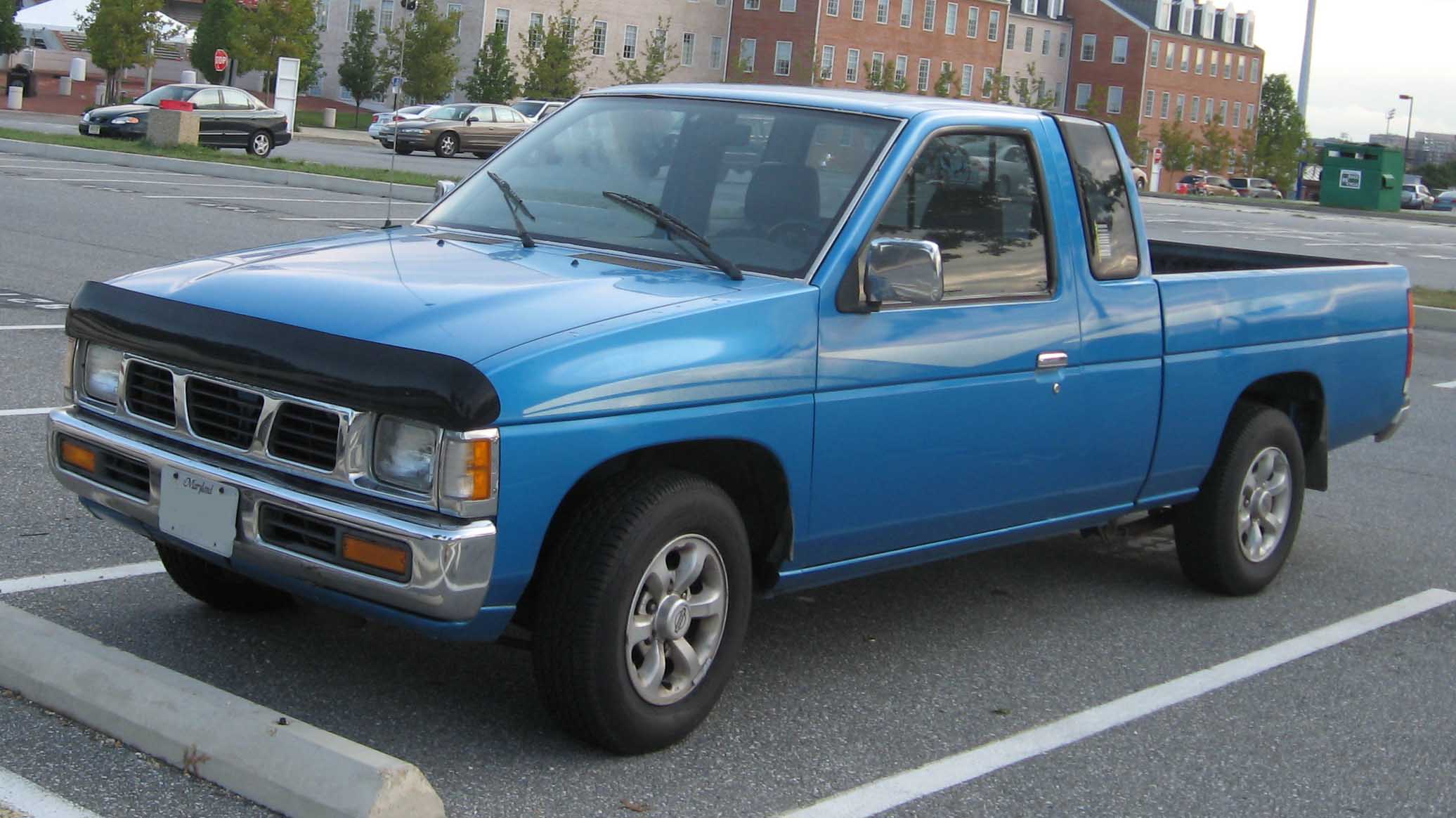
The Nissan Hardbody is a tough little truck that was made in the late '80s and early '90s. It's known for being reliable and has a classic look that many people like.
Car
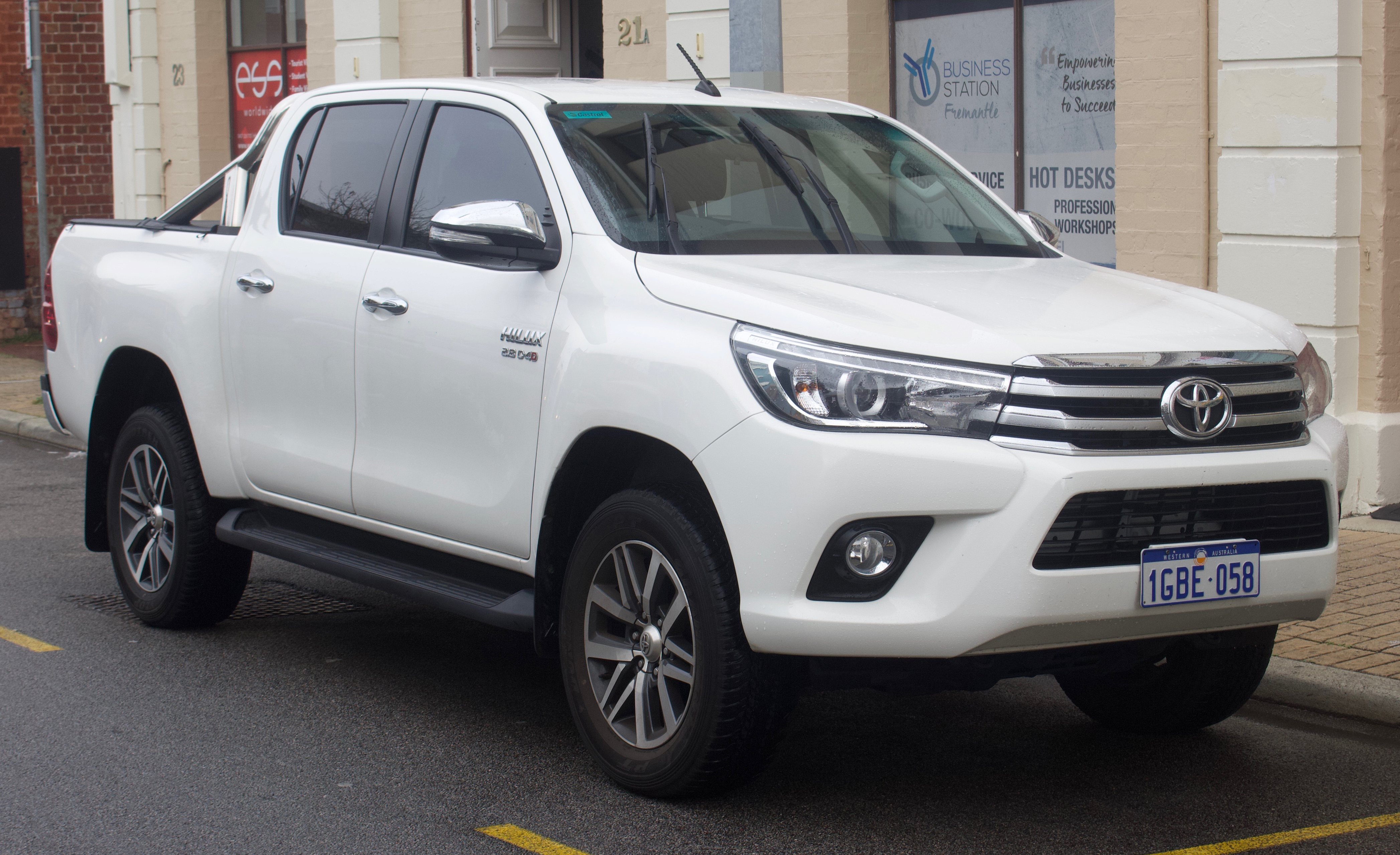
Toyota SR5
The Toyota SR5 is a version of Toyota's pickup trucks that was popular in the 1980s. The 1985 model is well-known because it appeared in the movie 'Back to the Future'.
The Ford Mustang is a popular sports car that many people love for its speed and design. It's been around for a long time and has many different versions.
The Range Rover Sport is a fancy SUV that can handle rough terrains while still being comfortable inside. The 2006 version is one of the earlier models and has some powerful engines and nice tech features.
A car battery is what starts the engine and powers the car's electrical systems. If it's not working well, the car might not start or could have electrical problems.
The alternator is a part of the car that helps keep the battery charged while the engine is running. If it doesn't work, the battery can die and the car may not start.
A supercharged motor is an engine that has a special device called a supercharger, which helps it get more air and fuel, making it more powerful. This means the car can go faster and perform better.
A service manual is like a handbook for your car that tells you how to fix and take care of it. It has all the important information you need to keep your car running well.
The Dodge Ram 1500 is a large truck that can carry heavy loads and is often used for work or towing. The 1998 version is known for being tough and reliable.
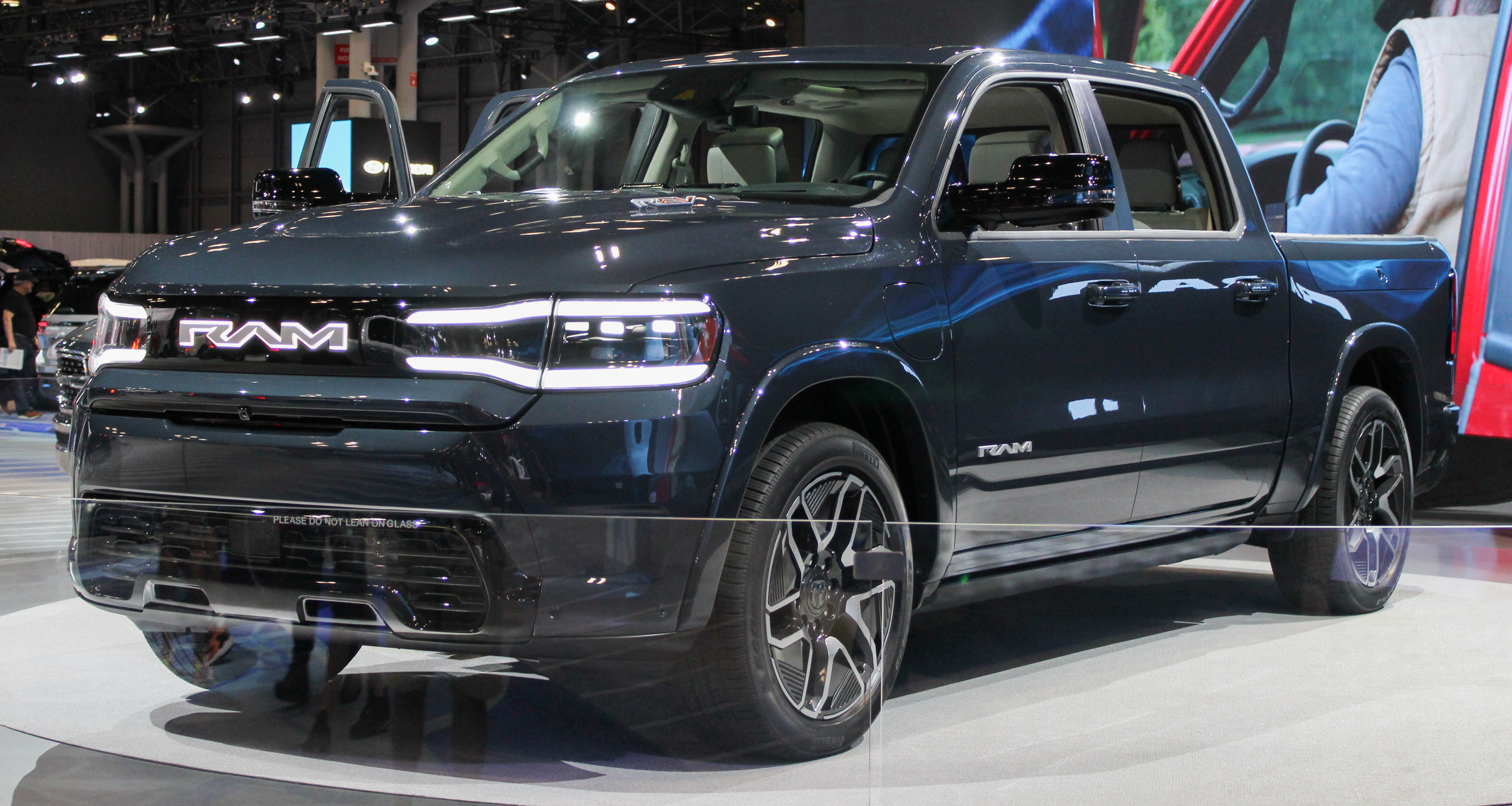
The Ram 1500 is a big truck that people use for carrying heavy loads or towing things. It's popular because it's comfortable to drive and can handle tough jobs.
The Chevrolet Silverado is another large truck that people use for work and everyday driving. It's known for being tough and can be customized in many ways to suit different needs.
A CAN bus network is like a shared conversation line for car parts, allowing them to talk to each other. This helps different systems in the car work together smoothly.
The cam is a part of the engine that helps control when the valves open and close. This is important for making sure the engine gets the right amount of air and fuel.
An agreed value policy means you and your insurance company decide how much your car is worth when you buy the policy. If your car is damaged beyond repair, they will pay you that amount, so you don't have to argue about it later.
TPMS sensors are little devices in your car's tires that check if the air pressure is okay. If the pressure is too low, they let you know so you can fix it before it causes problems.
The Dodge Grand Caravan is a family minivan that has been popular for many years. The 30th Anniversary Edition means it's a special version made to celebrate its long history.
The Ford F-150 is a very popular truck that many people use for work and personal use. It's strong and can carry or tow heavy things, which is why so many people like it.
The Ford F-350 is a larger and stronger version of the F-150, meant for really heavy jobs like towing big trailers. It's built tough to handle more weight and is often used by businesses.
The Renault Wind is a small car that can turn into a convertible, meaning the top can open up to let the wind in. It's designed for fun driving, especially on nice days.
LIVE
Welcome to the Under the Hood Show podcast.
If you haven't checked us out on our YouTube channel or seen our Facebook live videos, we'd
love for you to go check us out there.
Who brings us the Under the Hood Show podcast?
Like Berkeley One Classics, your key to collector car insurance.
And road ready wheels, replica OEM wheels at huge savings.
Use the offer code hoodie for even more.
And by car dash part, over 200 million used parts ready to ship to you fast.
Thanks for listening to the Under the Hood Show podcast and subscribing to the podcast and
downloading the podcast and disseminating the podcast amongst your loved ones and your
not-so-loved ones, your brother, you know, your in-laws.
Thanks for all of you that have, uh, helped them to, yeah, but you know, they're fine.
And don't forget, yeah, YouTube and Facebook.
Thanks for subscribing to that.
The numbers keep going up.
I love it.
Here is the Under the Hood Show podcast.
This is Under the Hood.
Welcome to the Under the Hood Show.
We are glad to have you with us.
Russ Evans is here to answer your automotive questions.
Thanks for joining us under the hood.
Shannon Nordstrom is here to do the same.
Welcome, hoodies.
Thanks for tuning in so we can help you tune up.
I'm Chris Carter here to answer your calls at 866-594-4150.
Got some calls coming in.
Let's get right to them.
We're going to go to Colorado and talk to Chad.
You're on the Under the Hood Show, Chad.
What can we do for you?
Hi guys, thanks for taking my call.
You bet.
I've honestly, long time listener and first time caller, I've been scared to call in,
but now that I know that Shannon purchased the Land Rover, I have some confidence here.
Well, I don't know that you should give you a lot of confidence, but Russ has helped
me figure out my old Land Rover, the 68 Series II that I bought.
The newer ones, they were always interesting.
Do you want to know where he takes it?
All right, so what kind of 01 Land Rover do you have?
So this one's an 01 Discovery, and I'm getting a lifter tick, and I'm going to give you
some background.
You know, this is the aluminum V8 that Buick made in the early 60s, and I rebuilt this
engine before I put it in 30,000 miles later, you know, new cam, new lifters, name brand,
American company cam and lifters, developed a little lifter tick 30,000 miles in.
So I went ahead and did a full oil system flush and changed the lifter out, worked great
for about 10,000 miles, and now I've got a lifter tick again.
So over the Christmas break, I did another oil flush, ordered a second new lifter, and
when I went in there, there were a couple questionable lifters, not real tight.
I did change the one that's ticking, and now probably 1,000 miles later, I have a tick
that's developed again.
So to give you some background, I put in a mechanical oil pressure gauge, and oil pressure is good.
I mean, even at 100-degree days air conditioning on in-traffic, the oil pressure will drop
to the lowest, the 18 psi, and just off idle, it's up to 25 plus, and typically is, you know,
38, 40 psi.
I run 1540 weight oil in it, and I have been since I rebuilt it, but I'm just, I'm kind
of at a loss.
I seem to have good oil pressure and I keep losing lifters, so I wanted to get your guys'
opinion, if you would, do you think I got a bad batch of lifters?
Well, you're very ambitious, I'll add that right now, you're extremely ambitious, good
for you.
Not good for you that you're having to tear this thing apart all the time.
Can I ask, I don't think with this frequency this is it, but what kind of oil are you putting
in there?
I use Rotella, Shell Rotella.
Okay.
And that's still got the, that's a solid cam and lifters in there, correct?
It is.
It is.
And I've been, I change the oil every 3,000 miles, and it's been Shell Rotella ever since
the rebuild.
Yeah, because I know we've run into some of the older engines that if you don't use
an oil with extra ZDDP in it, it can tear up.
That's required in that engine.
It can tear up the cams and the lifters pretty quick.
Yeah, that hat, you have to put a ZDDPAT additive in that engine every single time
you change the oil, or it will ruin the lifters in cam.
That's something that we're just going to say.
And you can absorb that and think about it, what your oil is and what the contents of that
oil is.
But I will say that in the industry of engine machining from the factory to the aftermarket
post COVID, there has been a chunk of time where the metal material that was used was
substandard because of many reasons.
And there has been a lot of failed lifters by just a lot of certain manufacturers, the
aftermarket.
We could pick up a couple of them, but definitely a thing.
So I don't know where they're getting these lifters from or what it is, but if they don't
get a good, pure quality steel that they start with to manufacture these parts,
it will show itself in the ability to last.
And the inconsistencies that are in the material will happen.
Now I don't want everybody to scare the death, but I'm just telling you this has happened.
And because a lot of material didn't get used, it got set aside, it got set outside,
it had to be reprocessed again.
There's just a lot of recycling and a lot of choices that were made when things were
in short supply and being made.
And it's kind of all shaken out eventually in the last couple of years.
Somewhere.
And unfortunately, it's in the last couple of years we've been seeing this kind of sort
itself out.
And we talked about this on the show, and not trying to say we told you so, but during
the COVID era, when everything was scrambling, you couldn't get parts, people were using
different manufacturers than they normally did.
There's a lot of things that didn't have the people there all the time because they
were in and out of their plants.
How can you keep a quality control in those environments?
Not going to say impossible, but you would have to have such resolve and such standard
in your manufacturing process, ISO this, ISO that, but you'd really have to have some resolve to say,
okay, I know this is the best product to use, but I can't get it.
Are we going to do nothing, or are we going to use this other product?
Yeah, and we run into, in any type of manufacturing, you run into things where
they're like, oh, this was a problem we found out seven years ago, and now it's coming to light
in whatever.
So we're in one of those where you don't necessarily connect those dots.
So those two things could be true at the same time.
And as you know, we've had this thing apart four times now.
There's not a wrong way to put that together that would cause the where.
I mean, there's nothing you could be doing wrong.
No, no.
If you did, if you would have done it wrong, you would have done it wrong once, not twice.
It usually happens.
The cam has very, very little wear, you know, you can just kind of see the wear pattern,
the lifters, you're not cupped at all.
They come out good.
It's just, they're not pumping up.
It's kind of embarrassing when I drop my boys off at school to pull up with a carpet ticket.
Tell them it's got Rhodes performance lifters.
I'm pretty sure everybody's looking at me.
There we go.
Back in the 80s, you know, we'd run those and you couldn't tell if it's like,
oh, you got a monster engine in that?
Yep.
That's why it's going.
Just need a converter in there and we're good to go.
He didn't know if it was supposed to be lifting like that.
You remember those Shannon?
Oh, yeah.
With those variable lifters, they would bleed down,
so they would change the duration and everything.
I tell you what, that, well, that's not helpful though.
I know, but I'm just trying to tell him the thing.
He asked for some things to look for.
Might be that the metal is bad.
That doesn't sound great.
Have they been warranting the lifters?
They have not been, but I haven't asked.
Yeah, you might ask them if they've been having some...
That's a good idea.
I mean, the manufacturer, they may or may not tell you the truth,
but the parts vendors know how many returns they've had.
They can, you know, the wholesaler, if they ask the wholesaler,
can look and see.
Looks like there's been a lot of returns on this.
Because you get a couple returns, people are doing something stupid.
But when there's a bunch of returns on something
and they all start having the same reason code.
Like when you're on Amazon and it says,
I don't think you're a large Chris.
AI, we see your camera.
Yeah.
So, I mean, that's something that I would definitely be asking.
And I don't know enough about if there's something else.
If there's a Land Rover expert out there about this engine
that sounds like he knows more than you, call us in
if there's something we're missing here.
But this is a pretty mechanical operation.
It shouldn't be doing that.
That's the old Buick engine.
Yeah, it shouldn't be doing that.
Those old Buick engines, they did tick a lot.
This is my, this is number seven Land Rover for me.
And I've got up to nine in the garage right now.
Oh my goodness.
Oh, you're the guy.
It's a problem.
And if you have that many, you also know who to ask.
Because you don't have that many of something
and not know who the other people are that are online.
Is that all that's in the garage?
Or are there other ones in there too
that aren't Land Rovers that are older?
No, I'm scared to say everything in the garage
is a Land Rover.
I've got an intake from a 72 up to a 16.
Well, he's definitely got some Berkley classics in there.
Either they call that a collector or a problem.
Yeah, but you've definitely got some Berkley 1 classics.
I don't know if the 01 Discovery is a Berkley 1 classic.
Do you drive that like every day when you get a chance
or is it seldom driven?
That one's my daily driver.
Okay, that's not a Berkley classic.
But the rest of that collection could fall into Berkley 1
classics for sure, which is a huge price savings.
Chad, thanks very much for the call.
We're going to put you back on.
Get your number.
So if someone else calls with the Land Rover question,
we can call you 866-594-4150.
That's the number to reach us here at the end of the hood show.
If you're obsessed with a car,
if you really like a make of car
and you want to get a bunch of them, Land Rovers are.
You don't want to do that.
There's a number of people that have done it.
They're definitely a cult following for the off road
prowess of them.
Everybody can plan what they want to plan.
You never know how long you're going to live.
We've recently had several friends, employees,
and things that have had major medical things
that you never would have expected come in early age.
But if I make it long enough to get where I want to be,
I'm not collecting cars now.
I've got just a couple.
But I'm not collecting them now because my plan
is save all these years and collect later.
It's not going to be more than one of any car.
There's different things I've had or that I'd like to grab
that aren't really expensive.
They're not Ferraris and crazy stuff.
It's like, hey, I want that.
I'd like to have an 87 Nissan hard-body truck,
a nice one.
I'd like to have one of those Toyota SR5s
like they had in Back to the Future, that nice.
You know, the 85.
Things like that.
Remember the Back to the Future truck at the Toyota Museum
that they redid to look like it?
Yes.
Yeah.
I want to hold on a second.
Russ, I'm going to put you in the isolation booth.
I'm going to shut off your mic and headphones for a second.
Sounds like a guy who hasn't started collecting cars yet.
Right?
I mean, that's what...
I take him at face value.
Oh, I think if he starts, that's how it happens, right?
I mean, you don't ever think I'll own a bunch of the same.
He's a guy that's like super frugal, though,
and he has been very conscientious to make sure
that he can save for what he wants to do later.
That's what I mean.
You're in the silent booth.
What's the button?
Once he starts, I don't think...
I think what happened...
He's going to get like the Mustang likes he wants.
He's got a little bit of an addictive personality
once he gets going.
And then he's going to find one that's more like the one he had.
Yeah.
Yeah, for sure.
Yeah, okay.
All right, you can come back now.
Yeah, you just never know.
Yep, you're right.
I will tell Chad that I spent way too much time
over New Year's and Christmas break fixing something
that I didn't want to take to the install shop
to have Russ and the guys do.
And our 06 Rover Sport that we've had for a long time
that I fixed up that had electrical problems from water
and I'm getting in through the sun roof.
My son-in-law jumped in it and with my daughter
to take it back up north to his family.
He had already driven there once with it.
It's a two and a half hour drive.
They got just down the block and it started flashing
all kinds of lights and problems.
And it just about didn't start.
And so I'm like, oh my gosh, what's going on here?
So they jumped in her sister's car and they went
because they had to get there for Christmas.
And so I started looking at it.
I thought for sure the battery just went to Pahoots
and it was low power and I'm measuring everything
with the battery.
I had the battery out and I think it did kill the battery,
but I got a new battery and I put it in
and I started it again and started doing
some of the same stuff.
And then the clue that made me figure out
was the smoke coming from the alternator
after I put the new battery in.
And so it's a 4.2 liter supercharged motor
and the alternator is on the bottom.
And so I looked on YouTube because I read,
I read the service stuff online.
I'm like, this looks like something I don't want to do.
But there was a gentleman of Eastern European descent
on YouTube that had a viewed like 20,000 viewed video
of how to get the alternator out
without tearing the whole front end apart.
And I followed that plan and I got it done.
Barely.
I got it done.
It just barely fits in there.
Got a few of them like that.
Yeah.
And but that was a case where if you followed
the service manual,
they wanted you to tear in the whole front
of the vehicle apart,
taking the coolers out.
It's got a fan with a reverse clutch nut on.
I didn't want to mess with any of that stuff,
but he showed how to get the wrenches in the right place
and how to reach the tensioner.
And I proudly got it done and it's being,
it's on two test drives now
and it's still holding together.
I'm worried about one bolt.
I'm not sure if I got it quite tight now
because I couldn't get a ding rich on it.
Find out.
Yeah.
You just gotta follow the smoke.
That's what they said.
But that was, that was my professional diagnosis
when it started to smoke with the new battery.
That was it.
That was it.
866-594-4150.
Let's talk to Dennis.
You're on the end of the hood show.
Dennis, what can we do for you?
Well, I accidentally hooked up my battery backwards
on my 98 Dodge 1500 Ram Laramy series.
And so I straightened them out and the truck starts
and it runs all right, but the dash is just going crazy.
And the ding is going off as I'm driving down the road.
But like I said, you know, the car,
the truck is running all right, but I got no gauges.
Well, you got, you could have one of a couple of things
happening if you're lucky, the gauges are just fried
and you don't have to get a new instrument cluster.
That's if he's lucky.
If he's lucky, the other thing could be that it has a
a short on one of the electronic modules because of the battery being hooked.
You're lucky it's a 98.
If that thing was like an old one or newer,
you'd be in real trouble because you could have fried
every module in the vehicle.
This happens a lot.
It's not uncommon, especially when you get a vehicle
that has two black battery cables.
And the only thing that identifies it is that one has a little
pigtail bolted to the fender and the other one doesn't
because you go, well, where are they?
Oh, whoops.
Or if you have what's even more common,
battery's dead.
You get the jump pack or jumper cables.
You go to hook them up and you clamp them
onto the wrong ones so they're backwards.
If the battery is already almost 100% dead,
let's say two or three volts,
if you put a battery with a running car at 14 volts
on there the correct, you know, the wrong direction
when the cars hooked to other ones were correct.
Yeah, it will try to charge that battery in reverse
and you can actually take a battery, drain it to zero,
charge it in reverse and reverse charge it
where it's positive negative negative is positive.
That that can happen too.
It's not a good battery anymore,
but yeah, it's it can happen.
It confused me because I hooked the battery up backwards
and I hit the key and the world over,
but it wouldn't start.
Right, it'll spend the starter in reverse.
The cables were wrong.
Yep.
Yeah, you'll hear the starter spin in reverse.
It just won't, the solenoid won't kick out.
And well, it can kick out,
but not turn the engine over because it's still a,
it's just a magnet.
It's a coil of wire that no matter which way
you put power to it, it's going to pull that thing out.
That's no good.
I would, I would hope that it's the dash
and that maybe you could pick up a dash assembly
in a self-service, you pull it, type yard,
complete.
It's a 98.
It's old enough that they're out there,
but it's not too old that you can't find it.
And that's not a problem that they've all been pulled out.
Right?
No, no, they don't think it was a,
if it was a Silverado truck, they might be gone,
but not in a RAM.
Yeah, the Rams, I don't know if we've ever put one in.
Is there any other,
there isn't any other online,
inline module on that that he could have fried
that would have been, no, because
down in a RAM.
Dennis, thanks very much for the call.
Good luck.
That's a bummer.
Yeah.
And like Russ said, if that was a newer vehicle
that was a full CAN bus network,
you know, where it was using low voltage,
going to the components,
and it's like a little computer network,
that kind of a shock on those systems
just goes all the way through.
Like lightning through them a lot of times.
Doesn't always, but it can really do some damage.
We've seen some vehicles that need a lot of parts.
Eight, six, five, nine, four,
four, one, five, oh, let's talk to Allen.
Do you have some help for us there, Allen?
Well, no, I have a question.
The guy was putting new lifters
on what I'm going to call a used cam,
the cam already in the engine.
No, he put a cam and lifters in it.
Brand new cam and lifters.
Yeah, he did put new cam and lifters in the first time.
Yeah.
Yeah, but then the second time
he was just putting lifters in
because he thought the cam still looked new
in a sense is how we took it.
But because I know what you're going to say,
if you don't keep those matched up.
Yeah, there's going to be a problem.
There's going to be a problem.
Yep.
Yeah, yeah.
Okay, well, see, that's what I heard too.
Yeah, and you know what?
And now that you said that, Allen,
now that you said that, he did say that first time
it went 30,000 miles.
And he made a point to mention
that he had carefully inspected the cam
that the cam looked new yet or looked good.
If there's no wear, it'd be fine.
It should be fine.
Typically what we've been trained is the same thing
you got told the old school is that,
well, I remember being down at Jerry Ross's machine shop
and they were taking that stuff out
when I was a kid watching it
and they were putting the lifters and the cam
and everything was lined up in trays
to keep it all lined up.
So it went back in the same place
and the towers went back on the same place
on any of the heads or the main bearings.
And you kept all those wear parts wearing
in the same place if you weren't going to replace it all new.
And so you're right on the money on the suggestion,
but I don't think that was the case here.
Alan, thanks very much for the call.
The Under the Hood Show podcast is brought to you
by exclusive sponsors like Berkeley One Classics,
celebrating 50 years, your key to collector car insurance.
And by car-part.com with over 200 million parts,
find them online at car-part.com.
And by Road Ready Wheels,
OEM replica wheels at a huge savings, roadreadywheels.com.
Thanks for listening to the Under the Hood Show podcast.
When I got my first specialty car,
I called up my agent
and had him put it under my regular auto policy
and had very minimal coverage,
even dropping coverage in the storage months
to keep the cost down.
That was before I met the professionals
at Berkeley One Classics.
I'm Shannon Nordstrom, host of the Under the Hood Show
with Russ Evans and Chris Carter.
Berkeley One Classics ensured me
with an agreed value policy.
That means if you suffer a loss,
there's no haggle over the value of your vehicle.
They also show me that I could ensure my vehicle
for what it was really worth
and keep my coverage year-round and still save money.
I did not know that my homeowner's policy
did not cover my car
when it was stored in my garage for the winter.
For 50 years, Berkeley One Classics
has ensured a wide range of vehicles
from sports cars and rare exotic cars
to antique vehicles including cars, trucks,
tractors, and motorcycles.
Berkeley One Classics makes it easy to get a quote.
Just visit them on the web at BerkeleyClassics.com
and use their online quote tool
or give them a call.
1-800-603-3330.
That's 1-800-603-3330.
When you need parts for your car,
finding them is half the battle
and we have a great source for you
to find those parts you need at great prices.
If you need parts,
whether it be for a brand new car
or going back about 20 years,
it doesn't matter,
check out car-part.com.
It's fast and it's easy.
Over 200 million parts strong all across North America.
Over 4,000 recyclers to choose from,
giving you the largest selection available.
Whether it's an engine, transmission,
doors, seats, or wheels,
you can find them on car-part.com.
We even let you know what parts
from other models and years fit your car.
Many recyclers supply pictures of their parts too.
We even have a mobile app.
Search US and Canada
or buy from your local independent recycler.
Whichever you choose,
buying recycled is good for the environment
and good for your wallet.
If you're a repair shop,
there is a professional version available for you
at no charge.
That's car-part.com.
car-part.com.
Check it out today.
We want to tell you about our partner
at Road Ready Wheels.
Road Ready Wheels has the very best
aftermarket OEM replica wheels available
with a direct fit of the factory center caps
and TPMS sensors.
So you don't need special caps and sensors.
Simply transfer yours over when you replace the wheel.
With near perfect ratings on Google,
Amazon and eBay,
consumers like you are extremely satisfied
when it comes to Road Ready Wheels.
Maybe your wheels leak air
or maybe you want to upgrade
from an old rusty steel wheel.
Road Ready Wheels has both aluminum alloy
and new steel wheels
to fit many cars on the road today.
They stock thousands of wheels ready to ship
and have free returns and shipping.
Plus, save 10% more
when you use the code HOODY at checkout.
Aftermarket wheels can be very expensive
and it's so hard to choose what you want.
With Road Ready Wheels,
you get an OEM looking wheel that fits like it should
but costs much less.
Save money today
and get yours at RoadReadyWheels.com.
Special discounts apply for large quantities
and dealers
and they have a special electronic data feed
and online portal waiting for you.
Find out more by going to RoadReadyWheels.com
where you can use their online vehicle selection tool
to find your Road Ready Wheels today.
That's RoadReadyWheels.com.
Welcome back everybody.
It's time to get back under the hood
with a motor medics.
866-594-4150.
That's the number to reach us here
at the Under the Hood Show.
You can catch it anywhere you get your podcast
if you miss an episode
and you can watch the show on our YouTube channel.
If you subscribe there
and join the Hoodie Fan Club
at Underthehoodshow.com,
you could win a hoodie.
Like Brandon Davis,
congratulations for everybody here under the hood
and our friends over at Berkeley One Classic
celebrating 50 years of collector car coverage
and Universal Technical Institute.
UTI.edu.
866-594-4150.
Let's go to Pennsylvania and talk to Art.
You're on the Under the Hood Show.
Art, what can we do for you?
I have questions regarding a 2014 Dodge Grand Caravan 30th
anniversary edition.
The selector knob, I guess I want to say,
for the heat is no longer changing
from windshield, face, feet.
Are those electronic or vacuum?
It's all electronic.
100% electronic on that one.
Got a motor behind the dash
and the control in the dash
and wiring in between and that's it.
Okay, at times I think
when you shut off the vehicle and you sit in it,
I think I hear like, you know,
motors shutting down.
I don't know what they're for
if it's for that or not.
You will.
You'll hear like a creaking, you know,
creak, creak.
Weird noises when you shut it off.
That's your doors moving into position in there.
A lot of times it'll move to,
some cars move to outside air
so that when you close the doors,
it has a path for the air to go
for pressure-wise.
Other ones will go to the recirculation mode
when you shut it off,
just dependent on a lot of different things.
A lot of them default to defrost
in case it breaks while it's turned off.
It'll break in the defrost position
to clear the window for safety reasons.
But you'll hear creaks and clanks and crunks.
So if he's hearing what could be
the actuator noise when he shuts it off,
but his four of them,
so he's going to hear at least one of them.
Yeah, but if he's hearing noises.
At least two I know, but okay.
And it doesn't work.
That makes me nervous.
Right.
That's, I'm wondering,
can I get to that the kind of probe things?
You could get to it.
Yeah, put the dash still in it.
You should be able to access the front.
That motor's got a shaft going all the way through it.
And where the shaft goes through,
you can see the end of it
and see if it's turning when you move it.
And YouTube will show you which one's which.
And if it doesn't move
when you turn the dial on the dash,
you know that motor is 98%
it's the motor that usually fails on those,
the little electric actuator.
And our partner over at Dorman Products
carries that little item.
It's electric.
Yeah, that motor on the back side.
It's behind the dash.
Firewall.
Yeah, it's under the dash above the throttle.
Above the throttle pedals.
Well, it depends.
If you've got a dual zone,
you've got one on each side.
If you've got a single zone,
they're usually just on the driver's side.
Yeah, then you've got one on each side.
The mode is on the driver's side
that goes face foot floor and windshield.
And the heat for the driver's side
is on the driver's side.
The passenger side is where you'll find the
blend door for the temp.
And some vehicles have both the temp blend doors
on the passenger side.
But the mode door is almost always
on just the driver's side.
Both blends are working, thank goodness.
So I'm chasing something more
on the driver's side most likely.
Right.
You know, some vehicles,
they'll call us like with an F-150
and they'll say,
hey, my mode door doesn't work.
I'm like, great.
That's like $300 job or whatever.
It's not horrible.
A few hours we've got to take care of.
But they'll say, oh, my left temp motor doesn't work.
Oh, well, too bad it's not the other one
because one of them is two hours.
The other one is 12 hours
because you got to pull the seats,
the console, the dash, everything to get that one out.
Because they just short you by a half inch.
If they made the carpet and the floor a half inch lower
or the dash a half inch higher, which they could.
There's plenty of room.
I've had the cases apart.
They could have molded it shorter
so you could get it apart.
But that's not what they do.
They don't dig into that deep
to think about serviceability later.
Yeah, the first person who had to work on it said,
hey, engineers, you missed it here.
Oh, sorry, we're going to be using this stamping
for the next 10 years.
Will it last?
Will it make it out of warranty
and not cost us a bunch of money?
Yes, then don't change it.
All right, thanks very much for the call.
Good luck.
Well, those heater boxes nowadays,
they come to the assembly line pre-constructed
and they get set in by a robot arm
that guides them into the vehicle
and then humans finish attaching them
and doing that work.
Most vehicles, they have a design for repair,
but I just know there's parts
that they've not thought of that.
They're only thinking about whether it's going to make it.
Well, this is on the backside of that.
Well, that's the best place we could put it.
And they make this giant box
to go in most of these cars.
Big H-back box.
Huge.
But vintage air and others like them
can make a box a third of the size
with all the same features to work better.
It cools better.
It has more BTU.
It heats better.
More BTU there.
Never thought of that, right?
But it's a third of the size.
You know, they were this big.
Yeah.
With multi-zone.
I'm like, what are they thinking?
Whatever.
866-594-4150.
I got a couple of questions on chat here.
One of these I thought was a very good question.
And we talked about it recently, I believe.
I don't remember the answer though,
but I think we asked this question on the chat.
Why does it seem that the newer cars
go through rear brakes faster now?
I've had two cars that I replaced the rear twice
before the front.
And so have my parents.
Two cars, same thing.
We just talked about this.
Did we not?
That should not be happening.
Was it the opposite?
Did we talk about it?
It's the opposite,
because a car does most of its stopping on the front
because the weight transfers to the front
as you hit those brakes puts pressure on the front wheels.
If you had more pressure on the rear,
even by a few percentage,
when the weight transferred to the front,
you would slide those back wheels.
And if you've ever had rear wheels slide,
that's because that's the problem.
Your front brakes are worn out.
Your back ones are dragging.
If you were to drive in reverse,
it would be opposite.
So yes, you should be wearing out the front,
typically almost twice as fast.
As the rear brakes.
Because...
And they're doing the opposite.
Yeah.
And so something is not right.
And certain cars have issues with rear brakes,
caliper sticking, hardware that gets rusty.
They just need to be serviced more often.
They can be every couple years,
they might need to come apart,
be clean and adjusted, things like that.
Did the comments say if they were the same kind of vehicle
Yeah, we see a lot of things like that happen in the shop.
We've had a lot of smaller stuff lately.
The guys have been really proud of them.
They cranked out stuff through the holidays like I've never seen.
Like no other.
Man, we did.
Could it be as dad drives weird
and he learned how to drive weird from his dad?
So it's a generational thing.
Possibly.
Yeah, but even riding a brake pedal.
Braking around the corners.
I think it's going to do that.
Yeah, no, it wouldn't so.
Something's dragging.
Got to be a little bit.
Here's another one.
I have a 99 Dodge Durango and I'm having problems with the AC heat controls.
This is what we just kind of talked about.
And it's the same make.
It only goes to the defrost.
I replace the whole switch with a,
I won't say the word, with a recycled part.
Did he say junkyard?
He did.
Oh, he did.
Moment of silence.
I'll get over it.
All right.
It, you know, he replaced the control,
but the controls are usually the least likely culprit.
It's usually the motor behind the dash.
So if he put a control in it, it's not going to fix it.
So make sure.
This is a Durango, you said?
99.
Find the issue and then come back and say, oh, those J yards are so great.
You know, it wasn't the problem.
It turned out to be the motor behind it.
I was wrong yet.
No, they're never going to do that.
But it's more than likely it's the electric motor behind the dash.
I have to say this is going to sound like a weird softball,
but walking through here, last time I was here, I heard
one of your people on the phone with someone about a part.
And they were at, they were trying to get more about the problem
so they could get them the right part because you could tell they were,
they wanted a part and the problem wasn't necessarily the part.
So your person was going, okay, so you want this,
but what what's actually going on?
Let's see if we can narrow this down a little more.
And I just tires go on flat every morning.
Then why do you need a carburetor?
It's one of the things I mean,
I've trained our staff over the years out to me to like, oh,
he's, he's not just selling a part.
He's trying to make sure that we can't diagnose cars
over the over the parts counter.
But, but I do encourage people to ask them.
We just do it on the radio.
We encourage them to ask them why they bought,
why they want this part.
What's your problem?
Because so many times they'll have some street knowledge that says
they need to buy somebody said they need to buy this part.
And then they'll say, well, we need it because of this.
Well, if you need it for that reason,
this is going to work just fine and it'll take care of your problem.
You know, because you there's just different thoughts that go through your mind.
If somebody called us and here's a here's a good example,
I think it's just to give a high level example.
Somebody calls for door glass for their vehicle.
Okay, seems obvious.
Why would you need a door glass broke?
It's broken.
It's shattered.
Okay.
Well, if you had a customer calling you and they needed a door glass
because they had a small scratch on theirs
because their window regulator came out of out of touch
and it scratched the glass.
And then we got them another one
and it happened to have a small scratch in it.
That customer is not going to be happy.
Right.
If the person called and they hit the glass with the lawn mower
and they shattered the glass out and it was raining
and they needed a piece of glass
and the one we delivered happened to have a little scratch in it.
They don't care.
They need a piece of glass.
But if the reason why that person needs the glass
makes a difference whether we're going to be able
to satisfy that customer or not.
Right.
That's a case with the same part.
And then you get into other reasons like Russ said,
you got a flat tire, what do you need a carburetor for?
At our shop we put in lots of engines and transmissions.
I mean people call, we save them a ton of money,
we get an engine and transmission with a at least a year warranty
if not a three year hundred thousand.
That's our primary thing.
But we'll we'll do a lot of other stuff too.
Like right now take for grant or instance,
we're taking a we're putting intake manifold on an 01 Chevy truck.
Well, I ordered it and I ordered it off our teams,
the old Skype through one of our sales people.
But I specifically said I need a number
so they had the exact number.
Don't have to look it up for an 01 Silverado
because mine is corroded in the corner and leaking.
So I need a good one and it had to be ordered in from another yard.
So the first thing they do is they look and make sure
that the other yard's got a picture and it looks good
because they could order another one in just like mine thinking,
well, they'll just have it machined and cleaned up.
Mine was beyond machining.
It was had a chunk broken out of it.
So in case you'll none of that is going to fix it.
But they said, oh great, thanks.
So even we tell them why we're replacing the part in most cases.
866-594-4150.
That's the number to reach us here at the end of the hood show.
Here's a, this, since I asked a question about the business,
here's a question that's kind of like that.
Hey guys, with your expertise in the salvage business,
it does say Shannon, but I got offered an amount of money
for my 03 Mercedes with 178,000 miles on it,
some loose components on the front due to a mild front-end collision.
Everything else works and is intact.
Does that sound right?
Do you have the name of a preferred company?
What, how do you, what are we doing?
How do we know that?
How do we find out?
Here's, I can take this question, I think.
You mean to sell the car?
That's what I think, yeah.
Yes, that's what I'm getting at.
I think that's what the question was.
Because we obviously see a lot of this.
And the vehicle that he has, you said 03 Mercedes.
03 Mercedes C32 AMG.
All right.
It is a very unique car in a very coltish small demand circle.
And so for someone-
Like collecting landrovers?
Yes.
For someone to step out and pay a bunch of extra money for that
because of what it is, they would have to be a very niche,
niche recycler that may be really specialized in putting things online.
They were really niche in the European-
They have a market for the part.
They have a European customer base of European car buyers, part car owners.
It's going to be a very unique.
Having said that, if you don't talk to that kind of person,
it becomes a car that I would instruct my buyer
and he'd come to ask me about it.
I'm like, oh gosh, that's interesting.
But here's how this goes.
Pay them more than scrap because there's some unique items on there,
but I don't know what they are and I don't know if we're going to sell them.
Right.
Now that doesn't match up to the fact that that maybe has a $400
alternator on it.
I don't know.
I'm just picking something.
It might, but we might not have anybody that wants it.
Right.
So it doesn't do us any good.
And a lot of recycling facilities, including Nordstrom's ours,
we have a system that tells us what cars to look for.
Hey, you've had a thousand requests for the alternator on that car in the last six months.
You better go buy one.
But when we put that car in the system and it says,
what are the top 10 parts we sell off this car?
And it says zero.
You're like, oh, you mean we haven't sold any in 12 months?
No.
We haven't had any requests.
That's like when we go to an
auction to bid.
This might be interesting to people.
Our buyer, Chad Shetler, has been with us for a number of years.
I trained him on the auction buying and then we've migrated into electronic buying
because that's where everything is right now.
You can't go to a sale.
It's all electronic.
And we have a program that's actually made by a company out of Colorado
that is specific to our industry and it's called BidBuddy.
And what it allows us to do is if we've got
seven auctions for salvage vehicles around us,
it will take the API feed from those auctions
with the VIN numbers and the makes and the models,
put it into this computer software,
which is also mated with all of our demand data from our system
that we have here to say what people are asking about.
So every time we're looking up parts, it's log and data in stock, out of stock,
success, sell rate, all this thing, no different than a grocery store.
And so that when we get, let's say there's 500 cars for sale in Omaha on the sale,
it's going to tell our buyer, okay, these 47 vehicles have a score that matches your profile.
And the score is scored based on the number of demand parts that we could possibly sell off
that vehicle. It's called a QCI score. And so that score, the higher it is,
the more we're going to chase that vehicle. But guess what?
It's probably the same score as our competitors too.
So it comes down to who can manage that car the best.
I will tell you that his 03 Mercedes is not hitting that scoring mechanism.
Right.
Because there's only a few unique parts that people may have asked us about.
Now, if I wanted to go deep in the weeds and say, all right, that car is unique,
we're going to spend a bunch of time inventorying it, we're going to dismantle it,
we're going to put the parts on the shelf, and we're going to sell everything on eBay.
And we're going to wait two years to sell everything.
There's a market.
Right.
We don't do that.
We got to turn this stuff in, our fast moving inventory that we buy,
that we're repeating all the time, it needs to score out its break even in 60 to 90 days.
And gross profits got to be completed by 180, 300 days.
And there's certain cars we'll buy for the long tail, because you're going to hold on no longer,
but it's not that car.
So at our facility, you're only going to get a certain amount over the scrap price,
because it's old enough and it's fallen out of the general market.
And so just to finish the thought on those vehicles that get that score,
then Chad's job is to look at the electronic images and see, all right, here's 18 parts,
we're going to quickly inventory on it.
Oh, it's burned up.
There's nothing left of it.
Yeah.
Oh, pass, move on.
It doesn't have the left front door and the right rear tail light and the things that
we're making the score go up.
This car doesn't have it.
Done, move on.
So now he can narrow that list of 47 down to 20 vehicles that he's going to get real
aggressive on, and it'll also tell him what he should bid on the car
based on our overhead projections and what the potential gross parts sales are.
And so then you start bidding your number and you find out how you get,
and you're doing this at probably seven different sales in a perfect world
to be able to start gleaning the vehicles you need.
So we are cherry picking for stuff that will be the best performing vehicles
to put into our system.
That is on the full service part side of thing.
Then you get into the middle grade cars and the self-service cars.
The middle grade cars are, you know what?
We need about four or five parts off it, and I'll just be true about it.
We picked those parts off.
What's left of that vehicle after we take those parts off might go to the
self-service yard to help bring the cost down on it and pay for some of the processing.
People don't always like that, but I could never put that vehicle out there
for the prices we sell to use parts for it.
Self-service, if I didn't do that, if I pay $2,000 for something,
I can't stick it in the self-service yard and sell parts for $23.
So that, but that's a few of those cars that go there.
And then we have the cars that we buy just for the bottom end,
and they're affordable, not as popular for us anymore.
They go straight to the self-service.
Some of them go straight to crush, and you start triaging all your cars as they come in,
but the majority of the vehicles that we're buying that we want for the full service business,
they are particularly purchased by demand.
And that's something that nobody would understand that if they didn't know our business.
And that's why I saw it was interesting to you, Chris.
Yeah, and that's too why we talk about sometimes why you'll see a car in Texas.
We talked about recently the Tacoma frames.
In the South, they last longer and everybody needs them up here.
So you might see a car that's not worth as much in Texas get wrecked that comes up here.
Almost definitely.
You can buy and parts sell into different regions because of different issues too.
But now our demand ad is hitting from all over the country,
but it's gotten harder for us to do all this because when people buy electronically,
it's like fish biting on a hook.
We don't get activity first.
We just get a bite in a sale.
Right.
And so you don't have the ticklers of activity all the time.
So you've got to be a lot more in tune because you're getting all these sales from it.
Could be our own website.
It could be from Cardash part.
It could be from eBay.
It could be and you don't always get the demand out of how many places they tickled
around before they actually bought it.
You just get out.
They bit the hook and bought it.
Yeah.
And so it's really harder to forecast.
And so I know that there's AI coming into some of this for us in our industry,
just like any other it'll help gather the data.
But it's definitely a, it has evolved so much from when my dad and I started doing this
and we got an opportunity to buy insurance salvage,
you would get a postcard in the mail and it would tell us where there was a salvage vehicle
setting.
We would drive to here on South Dakota to look at said salvage vehicle
and then we'd come back and we'd get them a bid and they would,
they would open the bids in seven days later to figure out who could buy the piece of salvage.
This process took two to three weeks.
Nowadays, storage of a wrecked vehicle sitting at a tow lot is $75 to $100 a day in some places.
They don't do that anymore.
Sure.
It's all done electronically.
It gets picked up by an auction company.
They tow it away as quick as they can.
They get it into their lot.
It's put up on an international auction.
Even the stuff that comes out of here on South Dakota now,
it could end up in a big auction south of Sioux Falls.
There's another one in Omaha, depends on what insurance company it is.
We never get a chance to buy that vehicle that started in here on because it's going to Uzbagistan.
That all became even more of a critical issue back
during the cash for clunkers and all that.
I mean, that when prices of used cars started going up, this changed the whole.
Any time supply and demand starts moving in the automotive business,
it trickles right along.
At the beginning of COVID, the vehicles were available and everybody was scared,
and the auctions still were processing what they had from before COVID.
For a period of about two and a half months, there were some amazing buys on salvage.
If you had the cash flow to go put them in the corner.
And then once people started realizing that we weren't going to just collapse as a nation
and that things needed to keep moving,
the demand started going through the roof because production was all off.
And then all of a sudden, salvage went through the roof on what stuff was costing after that.
So we started paying so much more for what we had to get.
And it was a super competitive, it drove all the prices of the parts up.
Now we're starting to see that normalized a little bit over the last, it's taken six years.
It's a crazy market, just like any market.
And people, from personal experience, I can say,
when cars were super expensive and my cars were worth X amount of money,
that stays in your mind longer too.
And I thought like when I sold my car two years ago, I was like,
oh, it's going to be worth this much because a year before it was,
and I was like, oh, oh wait, yeah, that was a year ago.
It's not relevant now.
Well, and then you'll see spikes in the scrap market where all of a sudden,
scrap metal goes up to $300 a ton.
And you got all the guys that come out of the woodwork to pick up scrap.
And it drives the price up.
And so people who got an old car that has no parts value really,
and all of a sudden, they're getting huge scrap dollars for it.
They'll remember that.
And they're like, well, last time I sold a piece of scrap, I got $600 for it.
It's not now.
Yeah, that was three weeks ago.
Yeah, it's all market driven.
And then of course, you're trying to make a profit.
So you got to cut that in there too.
All right, this is the after show.
It's going to be short today.
We have some.
Yeah, the end of that show got a little junkyard specific there.
I have a softball for you, Russ.
It came in on the chat.
So it's a perfect reason to keep going here.
And I think it is a softball.
And it'll sound, this one will sound even more like I'm teeing it up for a sponsorship here.
Where is it?
Russ mentioned a few weeks ago about additive for fuel in a 2013 F350.
Is that BG?
He said EG.
Is that BG or something like that?
Also, how often?
But 2013 F350.
We were talking about a diesel truck.
And it was hot shot secret EDT.
That's everyday diesel treatment.
And it is, it's used every, I mean, you use it every day daily.
Whatever you fill up, basically, it's not daily.
You just keep putting more in daily.
But you put the hot shot secret EDT in every tank full.
I like to say every day.
That's not, but it's because when you fill it up, you've got to put it in every time.
Every day, every time, whatever you want to call it, you've got to put it in
every tank because it provides lubrication for the injectors and it cleans them.
It makes everything run like it's supposed to.
If you just run plain old dry diesel fuel in an engine, you're going to burn it up.
How do you, if I'm putting it in the tank and it's not, if I buy a gallon bottle,
how do I put it in my tank?
I have to have a, do I keep the funnel in the back?
Where do I, how do I put it in?
And I'm not kidding.
Because I used to add an additive in my Pontiac and it was in the bottle that had a spout, you know.
But if there were bigger bottles I could buy.
Well, the diesel stuff has the bigger bung in the diesel fuel tank
for being able to accept the larger nozzles.
Yeah.
And you can use the additive bottles.
And so the additive bottles typically are designed to be able to still pour into there.
Even the big gallon ones that,
Well, if you buy it in bulk, then you probably are keeping a small funnel in
your back of your truck or something.
You'll most commonly use.
I got funnels all over my garage now that I do.
And I, I have different ones, you know, because I don't want to use one for this and one for that.
Russ, you had a funnel in your truck?
I have a bottle specifically for that measures how much treatment to put in there.
So I fill up the bottle and then I pour it in.
And you keep the bottle and if you're going to use a bulk,
you just keep that bottle.
Right.
So it's got its own built on little funnel to the top of it.
Yeah.
So I want an honest answer.
Because I don't want to keep a dirty funnel rolling around unless I can put it somewhere.
Right.
Well, that, so that diesel treatment along with everyone else, anybody on the market that has
a anti-gel or a diesel treatment, it collects dirt and dust when it's open to the air.
So it's got to be sealed.
The container has to be sealed.
Put it in a secondary container.
If you're going to have it rolling around in the back of your truck,
because they will leak is just what they do.
And in my funnels, I put a rag in them after I'm done with them, you know,
and then I put a rag in them.
Here's my issue though.
I don't know the difference.
Like, I mean, I can't remember and I can't look at a funnel and smell it and look at it and
figure out what it was.
So I think that might be why I have so many funnels.
Because every time I need a funnel, I'm like, oh, I don't remember what I used.
It doesn't matter if there's a little extras.
Just don't make sure it's not dirty.
And that's got to be clean.
That EDT from Hot Shut Secret is also going to boost C-Tain,
which is going to help with the miles per gallon.
I have a question and I want an honest answer.
From both of you.
Well, you don't use every...
Do you use an additive every time you fill up?
Every day diesel treatment.
No.
Okay.
I don't have a diesel if I had a diesel I would.
You do.
How often don't you use it?
Never.
Come on.
There must be...
When you're on the road?
Never.
And you're filling the truck five times?
And you're doing it every time?
I have a gallon container in the back of my truck.
Every time?
Every time.
You never just stop on the way to work?
You got a quarter tank left.
Do you fill it up and you're like, ah, get it next time?
Nope.
I stick the diesel nozzle in my tank.
I turn it on wide open.
I grab my little container in the back and I watch.
And when that pump clicks off, I go, okay, 2.6 ounces times.
Pour it in and I'm done.
It literally takes me less than 30 seconds to get that added.
And I do it every single time.
It's winter and the wind's blowing 30 miles an hour.
That's the choice you got to live with.
Every time?
If you got a diesel, put it in there if you want it to last.
That's a lot cheaper than the wind blowing 30 miles an hour
and my truck sitting on the side of the road.
That's true.
With an injector out or a $6,000 bill to replace some injectors.
That's true.
And doing that in the wind is not fun either, I bet.
Trying to figure it out.
All right.
Anything else?
What else we got?
That's about it, huh?
Happy New Year, everyone.
Yeah, it was good to be back together.
That's for sure.
It was weird.
When the holiday falls over our days, it does feel weird.
It feels like we've been gone for once every four or five years.
Yeah, it was just like the longest holiday season it felt like.
Which was a good thing.
Well, it wasn't.
It was fine.
It was fine.
Yes.
I kind of feel bad how that all went at the beginning of the hour one.
It made me feel bad too.
I forgot about it.
I think it's going to do it again next year.
I think Christmas Eve and New Year's Eve is on Thursday.
Yeah, it was on Thursday.
So yeah, we won't be here next year in those two days.
Oh, we save content like the after show extra stuff.
This hilarious.
I was listening to it and going,
I haven't heard any of this that I can remember.
I couldn't remember when it came from.
I did not listen to myself.
I heard some of it.
I was like, I don't remember any of this.
When did we record this?
I don't remember it.
So it's been if it's new for us, it's new for you.
Yeah, for sure.
But it was it was great.
I was playing it for other people and they're like,
well, that's cool.
These guys sound good.
Who are these guys?
I'm like, this is me.
It's me.
Oh, and you didn't ask me for a hoodie.
I had no idea we did the show.
They were like, you did the show?
You aren't as hard to find as that.
I was exactly.
I've been doing this for 30 years.
Even though nobody's figured that out.
I was wearing my hoodie at the store the other day
and the girl working goes,
oh, hey, my dad has one of those sweatshirts.
I'm like, oh, cool.
She finishes and she goes, what is it?
Is it?
What is it?
She didn't know.
I'm like, oh, it's a radio show.
It's America's favorite car talk show.
Read the logo.
Read the logo.
I said, oh, it's real popular.
People really like it.
She goes, oh, what's it about?
I said cars.
She goes, ah, all right.
And so then I, you know what I didn't say?
I'm on the shot.
I was just like, yeah, a lot of people don't like it too.
Okay, bye.
I felt like, oh, all right.
See you later.
All right.
There you go.
Thanks, everybody.
Anything else?
I think that's it.
We're good.
Not for me.
All right.
Peace.
With Russ Evans, this is Shannon Orts from thanking you
for tuning into the Nordstrom's Under the Hood show.
Have a great day and remember PTLA.
The opinions heard on this program
based on the many years of experience of Russ and Shannon
are offered for entertainment value only
and as a guide to your repair needs.
No claim to repair or cause is given or implied.
Always consult with your own certified technician
and follow all safety procedures before attempting any repair.
To be a part of the show, call 866-594-4150.
Find out more by visiting undertheshow.com.
Under the Hood is produced by Prairie House Productions.
All content is the property of Nordstrom's
Automotive Incorporated
and may not be used without our permission.
Copyright Nordstrom's Automotive, Inc.
www.nordstrom.co.uk
About this episode
Listeners are treated to a lively discussion on automotive issues, featuring a call from a Land Rover owner dealing with persistent lifter ticks. The hosts, Russ and Shannon, share insights on engine maintenance, the importance of using quality parts, and the challenges of sourcing reliable components post-COVID. They also touch on the quirks of collecting cars and the nuances of brake wear patterns in newer vehicles. The episode is packed with practical advice and engaging anecdotes, making it a valuable listen for anyone interested in car care.