The average transaction price is how much people usually pay for a new car, including extra costs like taxes and fees. It gives you an idea of what to expect when shopping for a car.
A sub $20,000 vehicle is a car that costs less than $20,000. These cars are usually more affordable and aimed at people looking for budget-friendly options.
Technology in cars means all the new features and gadgets that make driving easier and safer. While these are great, they can also make cars more expensive.
Apple CarPlay lets you use your iPhone in your car. You can see your apps, get directions, and listen to music on your car's screen, making it easier to use your phone safely while driving.
An infotainment system is the computer in your car that plays music, gives you directions, and connects to your phone. It's like a mini entertainment center for your vehicle.
The one-price philosophy means that car dealerships set a single price for their cars, and customers can't negotiate for a lower price. It's meant to make buying a car easier and clearer.
An addendum sticker is a second sticker that shows extra costs or features added to a car. You should check it to see if you're being charged more than you should be.
Paint sealant is a product that helps protect your car's paint from damage. It acts like a shield against dirt, sun, and other things that can make the paint look bad.
Fabric guard is a spray that helps keep your car's seats and carpets clean by making it harder for stains to stick. It makes cleaning up spills easier.
Scotchgard is a product that helps protect your car's fabric seats and carpets from stains. It makes it easier to clean up messes and keep things looking nice.
Marketing margin is an extra fee that dealers sometimes add to the price of a car. It can make it seem like you're getting a discount when you're really just paying more.
A trade-in is when you give your old car to a dealer to help pay for a new car. The dealer gives you a value for your old car, which reduces the price of the new one.
The out-the-door price is how much you actually pay for a car after adding everything up, like taxes and fees. It's the final amount you need to pay to take the car home.
The Ford Expedition is a large vehicle that can carry many people and their stuff. It's strong and good for towing trailers, making it a popular choice for families and outdoor activities.
The Toyota Highlander is a medium-sized car that can fit a lot of people and their belongings. It's known for being safe and dependable, which makes it a great option for families.
The Toyota RAV4 is a smaller SUV that is easy to drive and saves on gas. It's a good choice for people who want a car that's not too big but still has enough space for everyday use.
Gas mileage is how far a car can go on a certain amount of gas. If a car has good gas mileage, it means it doesn't use too much fuel, which saves money.
LIVE
Hey folks, welcome to another edition of my car guru.
I have recently been made aware of a disturbing fact.
Well, maybe it shouldn't be disturbing to me.
Maybe I should be grateful, but I have found out from several podcast listeners that they
listen to my podcast at bedtime.
Why?
Because my voice puts them to sleep.
I don't know, maybe I need to growl more, raise my voice, you know, do something.
I want them to pay attention.
I want them to learn how to maximize the dollar when it comes to buying, selling, trading,
servicing, all that stuff.
My goal isn't to give them sweet dreams.
But if that's a side benefit, okay, I can deal with it.
Let's talk about the cost of cars.
That's disturbing.
Let's see, the average transaction price for new vehicles now exceeds $50,000.
I calculated the monthly payment at 60 months, and it was about $840 a month.
Now I'm saying that to say this.
If you're watching TV this evening, and you see a commercial, maybe you're watching the
evening news, it's about the only time, well, around a football game, it's possible.
But if you're watching the TV commercial for a car dealer, and they say that the monthly
payments are going to be $299 a month, or $349 a month, don't believe it.
Read the fine print.
That's not even possible on the 84 months.
I did a little research, don't you appreciate it when I do that?
Ten years ago, you could buy a Nissan Versa, that was our cheapest selling car.
It was the cheapest priced vehicle MSRP was in the United States.
You know what the MSRP was?
$11,000.
Nissan just discontinued the Versa.
Its price had climbed to a little over $21,000, $10,000 more since ten years ago.
And so I was just looking at what the cheapest cars are, or, yeah, as far as price today.
I'll give you the list.
The cheapest car, 2026 model, is a Hyundai Venue SE.
That's Hyundai.
I know, that's the way you're supposed to say it, $22,150.
The 2026 Chevrolet Trax LS, that's $23,495.
Number three is the 2026 Kia K4LX 23535.
And then at number four, 2026 Nissan Sentra S at $23,845.
You know, I can see why Nissan went ahead and canceled the Versa because the Sentra
is a better car, prettier car, and it's not much more.
So, what happened to the sub $20,000 vehicle?
Well, tariffs didn't help.
Another thing is the cost of raw materials.
But I'll tell you one big thing that has happened, and I mentioned this a few episodes ago.
It's technology, folks.
Why do you want all this stuff in your car?
You know what caused all of this?
You know who we can blame?
I do.
His name is Steven Jobs.
You ever heard of that name?
He was the founder of Apple.
Well, he and a guy named, I think, Steve Wozniak.
He is the cause of technology being pushed into vehicles at such a rapid pace.
The iPhone, that's what did it.
That's why we are where we are right now, with expensive stuff, expensive habits,
like every two years spending $1,000 on another phone and paying $225 a month for the privilege of using it.
But now we expect it to work in our cars to be able to use Apple CarPlay and Google whatever it's called on our screens while we're going down the road.
We can't be away from our phones, can we?
It's sad.
You know, I just love you people that still use flip phones.
How simple your life is.
You don't text.
You don't send pictures or look at pictures.
You don't look at Fox News or CNN on your phone.
You could care less.
You're still watching the evening news, and you don't mind all those drug commercials during the news because you need them.
Plus, you're probably wondering what happened to the newspaper.
I mean, our newspaper now, I think it used to be like, I don't know, 30 pages, you know, front and back.
Now it's about 10, and half of that is national news that gets printed someplace else.
I mean, the newspaper has gone bye-bye.
Our local newspaper, The Greenville Sun, 30 years ago, it had about, I think, a printed subscription of like 15,000,
and they printed a total of 20,000 papers, something like that.
They came to me and wanted me to advertise in the paper, and I said, well, how many subscribers do you have?
And they said, I have to check.
I think it was under 4,000.
People just don't read the paper.
I guess they maybe read the digital version, and who knows, maybe someday they'll be able to push that to your dashboard
so you can read the paper or have Alexa read it to you.
OK, I'll be back in just a minute.
Yeah, in my mind, technology has gone haywire, and I'm just kind of tired of it.
I know I use it.
I'm using it right now.
I'm recording this broadcast on my Apple computer, and then after I finish, I'll push it to my music app on my Apple computer,
and then I'll push it to the, what is that called, Dropbox, which is some kind of a thing up in the cloud,
and I'll push it to that, and then I'll send somebody an email, Bill Meade, at the radio station,
and he'll download it from the cloud, and then he'll play it.
That's how it works.
I used to do this show live.
It was different.
I would drive to the radio station on Monday, and then I would record a live broadcast,
and then I would sit there after the live broadcast and do four more, back to back.
When I left that radio station, I was done.
I could barely talk, and so I did that for about 20 years and just got tired of it.
When Tim Cable, my buddy passed away who was doing the radio show with me,
I just lost all interest in going up there.
It was just depressing and sad, so I started doing it from my office here at Gateway Ford,
and I think it's worked pretty well, and now I've pushed it to the podcast,
and the acceptance of that has been very good and all over the globe.
So I guess a lot of these issues about car ownership, maintaining your vehicles,
buying them in the first place, not getting ripped off by the people in the finance office
or the salesperson, maybe these things are universal.
You know, maybe this happens in South Africa.
You know, a lot of stores, a lot of dealerships, tried to convert to a one-price type of philosophy,
and on the surface, you'd think that that would be warmly welcomed by the general public,
but they had been so conditioned to negotiating when they go into a car dealership
that they just didn't believe the prices, and so they continued to shop.
They would go to a Chevy store, it's a one-price store.
They'd ask what the price is on this particular Chevy Traverse or whatever,
and the salesperson said, well, you're in luck, this is a one-price dealership.
What's that mean? Well, we have discounted all of our vehicles,
and so that, you know, you don't have to worry about negotiating,
and we've already got it at a fair price. Who says that's a fair price?
Well, I guess my dealer said it was a fair price.
Well, I don't think it's fair, I'll give you a thousand dollars less.
Well, we're not allowed to discount them.
Okay, I'm leaving. Then they would go to another dealership,
probably the past, the one-price store that's trying to be really good to everybody,
printed out what they would sell the car for, they take it to another Chevrolet dealership,
and they beat it, about a thousand dollars, and they're just laughing all the way to the bank.
And the customer buys the car, and so a couple days later, the other dealership
calls them to follow up, say, well, we're just wondering what happened to you,
are you going to come in and buy this car? No, I bought one over in Johnson City.
And would you do that? Well, they cut the price of a thousand dollars,
and the salespeople go nuts at the one-price store. So we can't sell any cars everybody
wants to negotiate anyway. And they really don't, do you? You don't want to negotiate,
but you do because you've been trained. That's what you do in order to get a good deal. Now,
there's a lot of you out there saying, I hate to negotiate, I'm not doing it.
You know, whatever they say they're going to sell it for, that ought to be the price. Well,
that's just, okay, pay too much then. I mean, that's the way it is, especially in this market.
And if you're paying full MSRP for anything, you're paying way too much.
All you have to do is make them an offer and make sure it's low, and then watch them,
watch what happens. Now, if you're going to a dealership like some of my competitors that have
these jacked up window stickers, these addendums, now let me remind you what that is. That's the
sticker beside the sticker. So you've got the factory window sticker. You can tell what it
looks like. It looks like it was printed, you know, in Detroit or wherever, where the car was
made. It's stuck to the wind. Well, there's this other little addendum sticker over there,
and it has a bunch of add-ons. And like I say, when you see that, you should question yourself,
should we really be here? If that's the way they're doing business, should we be here? What does it
say on that sticker? Does it say a luggage rack installed? Well, okay, $2.99. I can understand
that. Maybe wind deflectors or mud flaps. Now, if it says paint sealant, I'm going to question
that one. I'm not paying for that. I mean, they probably put, just got a little squirt bottle
and sprayed that all over the vehicle and called it paint sealant. Or if it says like fabric guard,
nope, I'm not paying for that. That's some guy in the cleanup shop and he has another squirt bottle
and he's squirting that in there while the guy's squirting the other stuff on the outside of the
vehicle and rubbing it in and he's not doing it. He just spraying it right over dirt and everything.
No, you're not paying for fabric shield or paint sealant. Now, if you pay for that in the finance
office and it says something like scotch guard or something like that, yeah, maybe you should
think about that. But no, not if it's already on the window sticker because more than likely,
it's going to be highly inflated. And then if it says something like, oh, market value adjustment
or like a marketing margin, there's a dealer that has one that says marketing margin,
you know, that's just a terrible sign because they've just added that extra markup so that
they can make you feel like you're getting a bigger discount. Do you see what I'm saying?
Also, if you have a trade in, well, they'll just add that little extra difference for that
marketing margin onto your trade in and it makes them look like they've beat everybody because
the last dealer you were at was only giving you, well, was giving you $7,000 for your car and this
dealer because he has that extra margin is giving you $9,500 for your vehicle. And you
go home to think about it, that other dealer gives you a call and said, well, you know,
we just wondering if we could earn your business. No, you ain't earning my business.
That other dealer is giving me $9,500 for my car and that dealer is sitting there honestly saying,
how are they doing that? That's impossible. I mean, their car was worth six and we're giving
them $7,000. How can they give them $95,000 and they're going to their manager and your manager
is telling, listen, don't you know about the addendums that they put on their cars? Well,
I don't care. I'm losing customers. And then the next thing you know, that salesperson's
quitting and he wants to go work at that dealership where they're willing to rip people off and say,
now I'm all agitated and people that are trying to go to sleep right now, I need to apologize.
I'll bring it down a little bit. Okay, here we go. Okay, is this better? So here's a good thing,
members of Congress, you don't expect something good to be said after I say that, do you?
But they are pushing competing bills to either kill or accelerate a 2021 mandate
requiring drunken driving prevention technology. See, here's more tech that's going to be in your
car. Now it has to smell your breath before it will start. Now I wish they would take a lot of
things off from a technology standpoint like cars don't need to drive themselves.
You know, do we really need air conditioned seats? Well, some of you may may say that we do. I like
heated seats and a heated steering wheel. So don't take that away. But all this infotainment stuff,
I don't need to listen to podcasts and have Apple on my infotainment screen. You don't need it either.
You live without it forever. There I go, raising my voice again. But yeah, this is something that
I think would be good. And it would keep drunk drivers off the road. So I don't know if they're
going to pass it. But they had a rule out that it was supposed to be coming and they extended the
deadline to November of 2027. So there's actually people in Congress that are trying to eliminate
this requirement. Do you think it has anything to do with their drinking habits?
I would have to wonder, okay, interest rates, all the Fed, you know, they're expected to
leave the interest rates unchanged. And so at least they're not going up, but they haven't
gone down far enough to really stimulate demand. What they're afraid of is the impact on inflation.
They're afraid that that will keep going up. And that's a problem. I mean, their
powers are significant when it comes to supply and demand. Because it's just like with me,
if I have really high interest rates, I can't afford to keep a really big inventory of cars.
I mean, I need to turn them, like new cars, we need to turn them no later than every 90 days
and use cars every 60 days. And, you know, if the interest rates are too high, then that pushes down
on demand. Interest rates go really low. We can turn them really quickly and we have lower
floor planning costs. And so it helps the customer and it helps the dealers.
What about the 0%? Well, that's a subsidized rate. And it's genuine, but you have to give up
the rebate to get it. So you may have a $2,000 rebate on a car or 0% for 60, 1.9 for 72 and 2.9 for 84.
So which works out the best? Well, you have to do the math. We won't get into that. We'll do that
in a later episode, but the rates aren't going to go down. And that includes for mortgages.
And as high as houses are, something needs to give there. I saw something the other day
where there is a trend of unrelated couples, like two couples buying a house together in both names
and two of them, I guess, live in one half of it and the other two live in the other half.
Maybe they share the kitchen. I wouldn't want to do that. You know, they better be good friends or
at least agreeable people. I mean, it's like sharing an apartment or whatever with somebody,
but that is what they're having to do in certain markets to address this affordability issue for
homes. Hey, maybe we could do it with cars. You know, if you could find you a good friend to
come in, maybe your next door neighbor, could you share a car with a next door neighbor if you
didn't drive all that much? You know, it's possible and you both own the car. There again, though,
people have different timetables and agendas and all that, and that could be an issue.
But so basically you can live in the same house with other people
and they could both sign on the same car note. You're sharing a car, you're sharing a house and
life is good. Is that where we're going to? I guess if that mayor of New York had his way,
that's probably the way it would be. Okay, I'll be back here in just one minute.
Okay, I am back. So how long would you be willing to keep a car? I mean, if you really had to,
I mean, if you're looking at automotive new car prices and even used car prices are really high
and you're looking at the car in your garage and it's paid for or close to being paid for and,
you know, do you really need to get a new one? I mean, I want you to because I'm a new car dealer
with a twist. I do tell it like it is, but you know, it is my business is selling vehicles and
servicing those vehicles new and used. And I want interest rates to be low. So, you know, when you
see that you've made your last payment on that car that you've had for 10 years or five years,
whatever, that you're ready to trade it in for a new one. But what's the motivation? Is it because
you just want to take advantage of the new technology, the new safety that or the safety
devices that they're putting on vehicles today? Or is it you're just tired of that car? Or because
you're worried about the excessive miles and maintenance issues? All of those are good reasons
to trade. But if you've got a good car, a modern vehicle that's, let's say, five to eight years
old, and it's got 150,000 miles on it, if you've maintained it properly, there is no financial
reason to trade. The best financial decision may be to keep it. But we don't always make decisions
based on finances, do we? Many times it's just an emotional thing. I want something new. I want
a different color. You know, I just want to look better going down the road. Now, sometimes it's
based on actual need. Your circumstances change. I got a call from a guy the other day.
He has a, like a Chevy Tahoe, I believe, and he's got aging parents that he has to haul around
all the time to the doctor grocery store. They can't get in and out of that thing.
They can't climb onto the running board and then climb up into the vehicle. They just can't do it
anymore. So he wants to buy still an SUV, still something that looks good, you know, that helps
him maintain his image, I guess. And, but he wants it easy for his, his parents to get in and out of.
So he's going to buy a large crossover SUV type vehicle, not something with a body on frame,
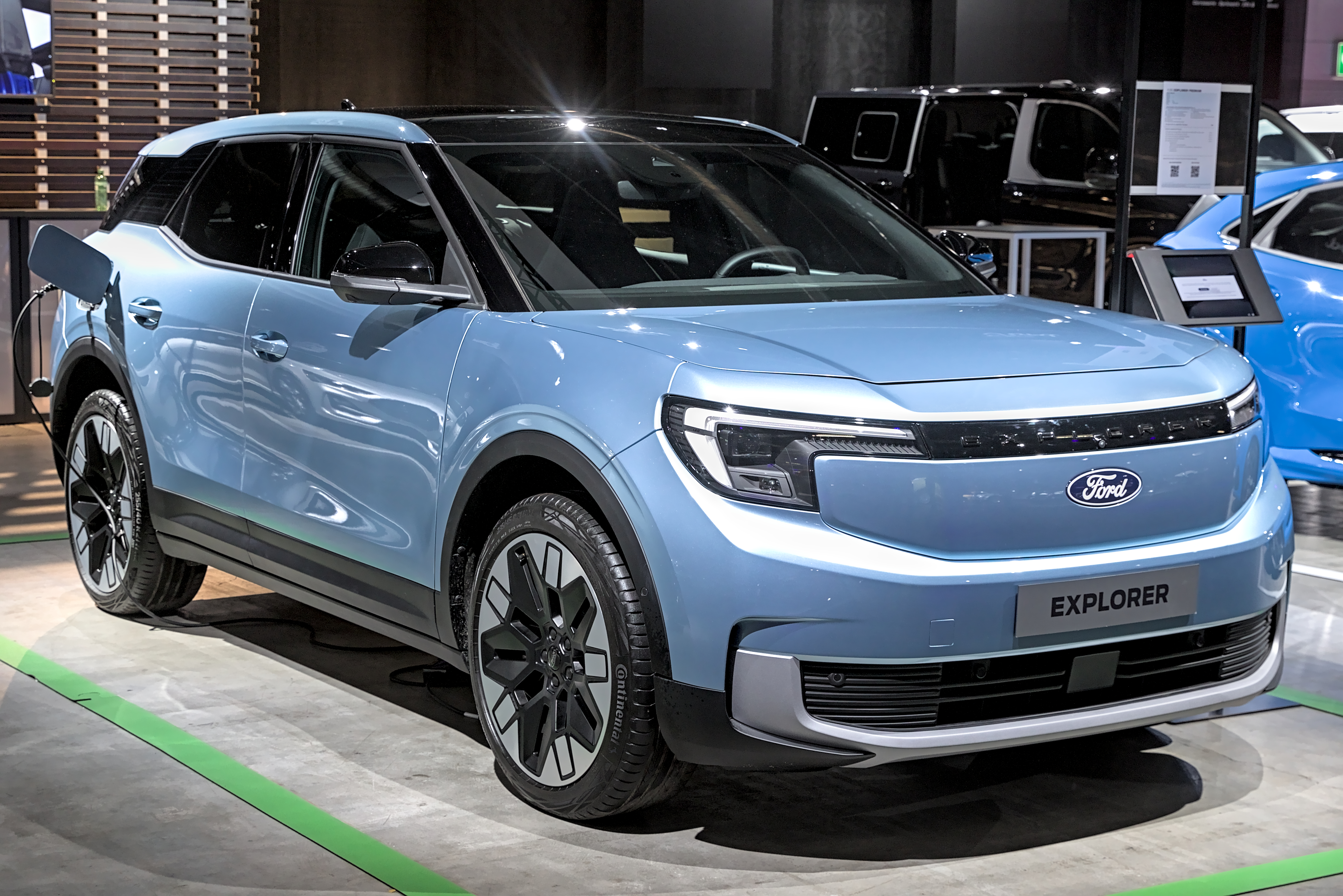
like a Tahoe or an Expedition or something like that. He wants an Explorer or a Traverse or a
Toyota Highlander or Honda Pilot, something that's lower, easier for his parents to get in and out
of. That's a good reason to trade, isn't it? You know, something changes. Your needs change.
Maybe you don't need to haul your kids around anymore and you'd like to drive something that's
smaller. You know, people go from a Toyota Highlander to a RAV4 because it gets better gas mileage
and they just don't need anything that big. They're tired of having to park it.
That's a good reason to trade. But just because your vehicle is paid for, that's not a reason to
trade. Maybe you want to try to lower your monthly payments. That's a good reason to trade. You know,
if you're paying $600 a month and you can get into something, maybe lease something and get a $350
month payment, you know, that's logical on a certain level. But you got to look at what the
true financial ramifications are of that decision in three years after that lease expires because
then you'll own nothing. You know, you'll just hand them the keys and walk away and then you got
to go out and either lease again or you've got to, you know, go into another vehicle purchase
and start making monthly payments again. And at that point, they'll be a lot higher. See,
these are all kinds of considerations that people, they don't project themselves out into the future.
They just look at today and look at just focusing on today is great as a, when it comes to living
your life, but not when it comes to planning your finances because I've seen too many people
just think about today and go and buy a bass tracker boat to go fishing in at Douglas Lake.
And then a year later, it's just sitting under the carport and soaking up money. So if I can help,
I'm here, 423-552-2020. That's my cell phone number. The only one I have. My email address
is LennyLawson2020atgmail.com. And I'll see you on the next edition of My Car Do Roof.
About this episode
Exploring the rising costs of new vehicles, the average transaction price now exceeds $50,000, leading to monthly payments around $840. The episode highlights the disappearance of sub-$20,000 cars, attributing price hikes to tariffs, raw material costs, and the influx of technology in vehicles. The host also discusses consumer habits regarding negotiation at dealerships and the impact of interest rates on car purchases. Additionally, there's a humorous take on the podcast's unintended role as a sleep aid for listeners.