Hello, welcome to the Hoopticast, and today we're talking about something I know nothing about.
Like, I don't even know how it works, really, honestly.
The Angry Dorito, the rotary engine that Elliot has owned one.
I have owned one.
And it was a terrifying experience.
Yeah, we'll get into it, but yeah, it was a stressful experience,
but I didn't actually have any problems.
It was just the idea.
Yeah, once you learn about these cars, you're like, oh.
Yes. Well, Rob, you never owned a rotary.
Never. I had one that never ran.
I bought it at auction in RX-7, and it never worked.
So I sold it as a project, but it was very nice.
So I'll be fidgeting a lot because I turned 39.
And for the fourth time in six weeks, I spasmed about my back doing random things.
So yeah, that's what's new with you then.
The most recent one, I was golfing with April and twisted too far, back spasm,
dropped my club, fell to the ground, was like waiting for the spasm to stop.
The one before that was grabbing a key for a jet ski at the lake
and reached too far for the key of the jet ski, spasmed, fell to the ground.
These are two great first world ways to spasm your back.
Yeah, I was going to say.
You know, it's like everybody else is like,
I was driving in my last railroad tie of the day.
If you're looking for pity, you're not going to get it here.
I mean, the one before that or the first one I was reaching for my laptop
while eating breakfast and twisted the wrong way
because the laptop was in front of like the bowl of cereal or whatever.
Now, that's I know you're old on that one.
You just reach for something funny while watching something that that was it.
I was like, you're 39. Yeah, I was birthday soon.
Well, yeah, I just turned 30. Yeah, it was recent.
I was going to say soon. I was like, I was like, I got to wish him a happy birthday.
I did text him. No response. Same. Do you respond to everybody?
Oh, yeah, absolutely.
It's something every time. OK, I'm sorry.
Thank you for the birthday wishes for the people that reached out.
What are we doing for your 40th?
I don't know. We're doing something huge.
I'm probably back surgery.
Well, that'll be before 40 if you're just reaching and hurting yourself.
I don't know.
The problem is this is my flexibility.
And here we go.
When it was messed up for the ladies as far as I could go.
Right. Now I can get down to here.
OK, most people can touch their toes.
No, we did this after the cast the other day.
I really can't get you.
I think you can get further the mirror.
I was better than you did.
You were at your knees when we did this.
Yeah, I'm working on.
I'm stretching every day trying to fix it.
So I'm one of those guys that won't know, at least you're wearing pants.
I'm one of those guys like, you know, like I feel like if I'm going to be dying
and like if I had was overweight and had risk of diabetes or something
that I needed to make a big lifestyle change to live, I would do it.
I feel like I'm not someone that would just let myself like.
So basically, we're either way and die for the most part.
Yeah, where I have landed. So you're fine.
Well, I'm 49. So I'm almost 50.
So I had a kidney stone for me.
I had a kidney stone a year ago and I remember you talking about everything
but water ever since because I'm just too scared.
Great. I know you and I used to crush ice tees together.
Yeah. And then no longer.
My colonoscopy is next month.
Hey, that's what we're talking about.
Hey, guys, can we live stream that?
If you want to, I'm all for it.
Welcome to this.
Whatever people want to see, they don't want to see that.
I've already been told how that's going to be just so great.
Yeah. So that is the for me,
the sign that you're really getting old when that it is when it's actually required.
Yeah. Yeah.
And Elliot, you're doing the syphilis or chlamydia treatment, whatever it is.
No, I'm all clean.
Just grayed out.
Oh, OK. Yeah.
I have a male yeast and it is possible.
Not that I know.
Wait a minute. I just looked it up.
Well, why would you look it up?
Because like I heard it was a joke somewhere and I was like, it's not possible.
It always starts with it was a joke.
Like I was just it was just joking when I wanted to find out about this.
Well, I was peeing.
It started to smell like bread.
Oh, boy. Oh, boy.
Anyway, the history of the rotary engine.
What's new with Rob, because I do want to say in the end of the last
the second half of the last podcast,
we had his wife up there in the balcony.
Oh, and it was the greatest.
I am so sorry.
It was the greatest and nobody on camera
because like it's just going to be me looking up there and looking at her face
every time something happened because I dropped a bomb that made her turn around.
You did. Tyler dropped a huge one.
Rob, I'm really sorry.
I didn't know that you hadn't told her that you sold her poor show.
It's not your fault.
I mean, I didn't I didn't really I kind of explained it to her.
But I didn't, you know, in my in my usual way of like, hey, here's an idea.
You don't drive this much.
Why don't you go and why don't we look at something that is a little more reliable?
You know, something you can just get in and drive and not worry about.
And she's like, yeah, you know, maybe give me some ideas.
You know, that was my key to just sell it.
Now, what I didn't do was tell her I sold it, which is a mistake.
And then I proceeded to not tell either one of you that I didn't tell her
that I woke up with your testicles sliced off, didn't you?
It was she was OK after about three hours in the car.
I was going to say, let's preface this.
The only reason they were here,
your wife and daughter, is because you were leaving straight from here
to go on a car journey.
Yes. You're stuck with her for four or five hours, five hours.
Five hours stuck with her.
The first couple hours were not great.
It was it was really, really tough to kind of break the mood.
You know, I kept trying to like you can't drive
and search for cars on Facebook.
How much do you want to?
Oh, yeah, nothing was landing.
Well, I've been seeing the comments and thank you all so much
for commenting and your feedback and everything else.
I do need to be nicer to Rob.
And I will be. I'll be nicer to you.
But that wasn't that.
I don't want to come off as an arrogant jerk
like some other people in their podcast with their with their co-host.
But you're being fine to me.
I didn't see anything in the comments that was that.
I'm sorry.
It's heated disagreement.
There were just as many that said that it looks like we hate each other.
And I don't think we have we have nothing but amazing respect
for each other, except for when it comes to me selling a car.
Then it all goes to complete crap.
But that's fair.
And that's fair. Other than that, I mean, yeah,
I mean, we've been friends for how many years now?
Many too long.
Yeah, thanks.
He's good. He's all checked off.
That's what's going on with me, Elliott.
How about the history of the
I also want to rotary props to us for all wearing black shirts.
This is going to be great.
I wear the same thing every day I do.
You are starting to dress like a cartoon character.
Yeah.
What are you just like?
What does your shirt say?
No, I mean, just it's from the righteous gemstones.
It's just it's a middle-aged man playing a teenage Jesus.
OK.
Tinges. Very cool.
Just the Simon Cowell black t-shirt thing, I guess.
That is very much.
Yeah, very British of you.
Yeah, I suppose.
How about that? Well, it makes when you shoot a YouTube video
over the course of several days, that helps.
I always just own the wardrobe changes.
Although I am noticing and I probably do feel like I need to follow suit
in the thumbnails, I need to wear a bright shirt for the thumbnail
because Matt Armstrong wears a bright hoodie
every single time, gets millions of views every time.
That's what it is.
And I've noticed like legit street cars has been having a lot of views lately.
He's been making a lot of great content,
but his thumbnails very much kind of being Matt Armstrong,
where every time every episode he's wearing a different brightly colored
t-shirt and that way that little splash of color,
it just draws the eye a little bit more to the thumbnail, which makes sense.
That's a good idea.
And I thought of that, too, when I did my Bucky's shirt
and my Stearman Hawaiian shirt, except for the comments were immediately
like, who is this douche in these Hawaiian shirts?
I liked the white shirt era, like literally, can he just die?
And I'm like, that's all right.
That didn't work.
No, so it'll work for you.
Tyler needs to have his construction.
Yes. My one, the one video where my
thumbnail was me in a red shirt is the XLRV, which was strong content.
But I was wearing a bright red shirt and the click through rate was stronger.
So I'd love that.
I would love to see the A B test on the same video, black shirt, red shirt.
Right. Just out of curiosity.
The exact same thumbnail just with a different blouse.
That's what I'm saying.
Just well, I think people with bright
shirts, it amplifies their personality a little bit.
I mean, honestly, it does when you see someone with a bright, loud shirt.
I mean, if they're not like a craft beer guy,
you usually think it's something, you know, like, these guys have personality.
There's going to be something coming out.
Bright nipples.
No, if you cut the hole out just perfectly, I think that would be the South Park
thing for the cable company.
Oh, my God. There you go.
All right. Get started, Leah.
So this is going to be a lot of the history of the engine.
But once it's developed, we kind of go all over the place,
talking about people who used it.
And it's it's quite fascinating.
This is something I knew I had an idea of how they worked.
I knew a little bit of it.
But as always on these, I learned so much when taking a deep dive
into the history of everything.
So he likes to, he likes to deep dive, at least I can deep dive.
You know what?
Well, we can't deep dive in a shallow dive, as I'm saying.
What will host shallow diving?
I don't know.
Not to start.
I mean, anyway, anyway, how, how did Winkle like to deep dive?
Well, as far as I know, yeah.
So yes, our tale begins with Felix Winkle.
He was born in 1902.
Well, there he is.
This is old Felix Winkle, obviously, with his creation.
And even as a teenager, he had a dream basically that he wanted
to build this engine that he called half turbine, half reciprocating.
And of course, back in the 20s, everyone's like, what are you talking about?
Because neither of those engines really, well, I mean, I guess tractors
and stuff had reciprocating engines.
But it was just this thing that he just got fixated in on forever.
He never even completed school.
He had no formal engineering degree.
He just went for it.
In fact, I learned during my research, he never even had a driver's license
up until he died.
He this guy invented the rotary engine and never, never drove a car.
Wow. So it never worked.
I think he must have been as, you know, a savant of some sort.
Obviously, they didn't document that sort of thing.
But it's just one of those interesting things.
You know, he didn't like the shakiness of engines of the time.
And we've all driven old cars.
They are. They're not exactly smooth.
No.
So yeah, he was self-taught, all that jazz.
And, you know, he was in the 20s, he was tinkering with things.
And by 1929 is actually when he filed his patent for the rotary.
So I did not know it was that early.
So he's 27 years old.
Yeah.
Self-taught, came up with a completely revolutionary idea.
God, he looks old for 27.
And well, things are going OK at this point.
And at the time, like we were barely, was there a few overhead valve engines?
I mean, they're exposed ones.
But I mean, as far as what kind of technology that was in comparison,
there was nothing.
Exactly.
So it's very revolutionary.
Of course, nobody had heard about it yet.
And it's, you know, it's the 20s.
I mean, one quote that he said that something he likened
the reciprocating piston engine as a lame horse in need of replacement.
Now, that is very ambitious because we know how this.
Well, right.
But that's how passionately he felt about this design.
But anyway, things went on and, you know, around his neck of the woods
in the 1930s stuff got kind of gross.
He joined the Nazi party because now listen.
All right. Now listen, hang on.
They all had to, right?
The Briggs, in all honesty, that was the deal.
It's like, you're a man of this age.
This is.
You were drafted, right?
No matter what.
It was like, are you doing a tire?
Do you want to be killed or imprisoned?
Or do you want to be a Nazi?
Exactly.
You're going door to door.
You're like, you're with us.
And you're like, guys with guns at my door, sure thing.
And of course, even though he had no professional degree,
he still had skills.
He was an engineer by training.
So he went on to join the Nazi party.
And he was developing, ironically, seals and rotary valves
for aircraft engine, like rotor, radial engines and stuff like that.
So he still worked as an engineer for the Nazis.
But, you know, that's just the way it was.
So obviously he still hasn't made his engine yet.
Now he's dealing with World War Two and the long form of it
because he was in Germany and in 1945, Germany fell.
And unfortunately for him, the French occupation forces
imprisoned him for several months and shut down where he was working.
So that didn't help development of his of his rotary engine there.
But once he got out in 1951, he got a second chance
with a German company who had partnered with a car
that we never got here called NSU motor and work.
I don't know what NSU stands for.
But they basically gave him the funding and the things
for the first Winkle rotary engine, which was named the DKM-54.
So he ended up in Western Germany, right?
Basically.
There's no way that East Germany were making a rotary engine.
No, but he was Western Germany.
So this is his very first Winkle rotary engine.
That's what he was standing in front of.
It's not a very high-res picture.
And if for those listening at home, it kind of looks like a lawnmower engine.
A little bit with a cutaway.
But what's interesting about this one compared to every other rotary.
And we know, you know, the angry Dorito and we'll get to that.
This very first one, both the housing and the rotor spun opposite of each other.
So it was a very complicated motor.
Very fascinating.
I'd love to see a video of the cutaway operating
because that just sounds really, really cool.
But obviously it only made 21 horsepower.
And it was just like it proved that the concept worked
because obviously this sounds great on paper, but yeah.
Anyway, by 1960, they made a better stationery housing version
called the KKM 250, which Jake will show you.
And this looks more like your traditional rotary.
This is it with its accessories and stuff.
Oh, OK.
Now, Jake, if you want to pull up just the the diagram of of a rotary
just so we can get the bare legit bones out of the way.
So here we go.
Yes, it is essentially spinning Dorito.
The interesting thing is as it spins, it has, you know,
basically instead of a piston engine, which has, you know,
it has to do four cycles in most of them.
This kind of does it all at the same time, all of the time.
It's that's not a really great way to do it.
But you basically have this rotor that's spinning around.
And as it gets to this side, it's compressing, you know,
you give the child is going to love this, the normal piston thing.
It's your suck, squeeze, bang, blow.
That's how they work.
He got an eyebrow.
See, I was expecting a comment.
I didn't get one.
And now he's completely tripped.
Anyway, sorry.
Yeah, I'm not.
Anyway. Yes.
So the point is it has like it makes its own little combustion
chambers, essentially, and it's always moving in the same direction.
So this is why they work on paper, because a piston,
it gets forced down.
Please do.
Please do both.
Both hands get forced down.
But obviously it has to come right back up.
So all this energy is undone, essentially.
And it's vertical force transitioned into, you know,
rotating the crankshaft, which is rotational inertia.
This is rotating the entire time.
It never has to stop and change direction.
Do you think Kelly like demonstrates the different engines to women with,
you know, like, here's how I go.
I do this for boxer.
Yeah.
I didn't notice that as his excitement level went much higher
when he started doing the whole hands, like an Italian guy.
I'm opening my hand this wash.
You're like an Italian guy with all the,
but you have like with a mini boner.
It's like, it's right.
And then, you know, here, honey, here's how the rotary works.
No, I'd need her to show me how the rotary works.
I'd show her the gift of this and I'd be like, now do that.
Did you just backspat yourself?
But anyway, OK.
Anyway, I know I'm not outlining it very well,
but the point is each one of these things is sealed from itself
by at the triangle point of each of the rotor.
These are called apex seals.
Yes.
Which are going to become a theme and an issue.
It's the one thing I do know about this.
Engineering explained, you guys have the same kind of gray
silver fox hair, but yeah.
You want to really learn how they work.
He gets into it.
He probably gets into it, but.
I'm going to go on more for the history.
I mean, this is sort of, yeah, it's very interesting.
So there's three spark plugs, right?
Depending on the one, but yes.
So towards the, I think by the time they got later on,
I don't know the initial one, I think two, you know,
just for as a bare bones, like understanding of how they work.
It really depends on all.
So the race cars had four, you know, it's like, it just kind of depends.
Because is it three combustion chambers or two when it rotates?
It's three.
So it's like, it's for each one and because, you know,
the intake side is kind of opening as well as the exhaust side.
I'll get into that too.
That's kind of part of their inefficiency,
because some stuff kind of just naturally leaks out
when it's spinning around.
Right.
But like I said, on paper, having something not
changed direction, constantly going the same direction,
it starts out as rotating mass instead of converting,
you know, vertical energy into rotating mass.
It makes great engineering sense.
Now, obviously, I'm going to go back to the history here.
So what ends up happening is he events this thing with NSU
and they unveil it at the the Deutsche Museum Museum in Munich.
And basically, everyone was like, holy crap,
you know, because you see it on paper and like,
obviously, this is the future.
And so everyone wanted it, including GM, everybody.
I mean, like I'll go into that later too.
But yeah, Curtis Wright, they were making airplanes,
GM, Adam, General Motors, Toyota, Ford, everybody put money down
and licensed this thing pretty much right away.
So I wasn't able to find out too much about what this did
for Wanko personally, but his name has retained on the motor.
Like they didn't just go, oh, it's NSU's rotary.
It's it's called the Wanko rotary.
So props to him for maintaining his attachment to that for better or for worse.
Right. So, you know, basically going into what ended up happening is
the company that he worked for NSU ended up
producing their first the first rotary powered car
called the NSU Wanko Spider.
So you even got his name in in the first car.
This isn't it. It's OK.
This is the name.
There it is.
And it's got some ladies in it because they do like these.
You know, it's how you advertise a car.
And it's just this cute little thing.
And this is the very first rotary powered car in 1964.
It's got a single rotor, four hundred ninety eight
CC engine and made about 50 horsepower.
But it was dinky.
So, you know, it actually got out of its own way.
I mean, it wasn't like super fast.
But well, the Beatles weren't making much.
Then all those light cars were underpowered, you know,
and it was fun when they debuted the Frankfurt Motor Show in 1963.
Everyone was like, there's a cute car that doesn't have pistons.
I mean, what's not to love?
And because of that whole thing that I was talking about
with the reciprocating motion,
because it's always going in the same direction,
it's way smoother.
So cars, even in the 60s, you know,
sat there idling, it's kind of bouncing around.
Nobody had ever experienced a car that didn't do that.
So that was a huge selling point was the Rotary's smoothness
because even as you rev it, it doesn't get more ribrated.
It sounds funny, kind of fuzzy, but they're very, very smooth.
So as far as this went, it was people were interested,
but it wasn't a sales phenomenon.
It was more of a public beta test.
Is it cheap?
I actually don't have a pricing on this one,
but I don't think it was very, I think it was fairly cheap.
It would have to be.
NSU was a fairly like, they weren't a luxury car company.
Right. Let's just say.
But even on this very first one, the reliability was.
So, you know, they didn't sell too many,
so it doesn't really matter.
But anyway, in 1967, they launched the car
that Jake kept showing the R080.
Now, this one did sell pretty well, and this was a twin rotor car.
This is obviously a much more like for the masses car.
Instead of a two seat spider, it's a four door sedan.
And it had a lot of advancements, not just the rotary engine.
I thought this was really cool.
It had a standard four wheel disc brakes,
which was actually pretty special in 67.
It made about 115 horsepower,
which is definitely fine for sedan in the 60s.
I mean, if you think about, you know, four bangers
and definitely even slant sixes here in the States,
that was just kind of how much they were making.
But the fascinating thing about this thing
is it had a semi-automatic transmission in 67.
So you still had to shift everything,
but it's kind of like an F1, but instead of paddles,
you still run through an H pattern.
So is there, Jake's bobbing, but is there a robot
controlling the clutch?
You press a button on the shifter.
I wasn't able to find a video.
It's either you pull something, but basically you actuate
the clutch on the shifter and shift the gear.
And then let it go.
Okay.
So there's, it's still, it's, but it's kind of cool.
It's actually pretty cool.
I would love to drive.
I would love to experience that.
I think it would be really reliable, right?
That was not, it was the rotary.
That was the problem in my car.
That was good.
Yeah.
And also because, yeah, it was the H pattern,
you were doing it yourself, you know, versus.
Well, they had something like that in Volkswagen Beetles,
the weird automatics they had that was similar.
You know, and the Tucker for that sake,
not that anybody got to drive those.
But when you're in charge of how fast the gear changes
and how long you hold the clutch in,
you know, if you're manually like actuating it,
I think you could probably garner a little bit more life out of it.
Portious, sportmatic, I think is what they had.
Sport-o-matic.
Oh yeah, they had semi-automatic.
Yeah.
Cause they didn't, they make that in vehicles.
They were 9-12s.
Yeah.
Mm-hmm, mm-hmm.
Sobs and sonic.
Sobs on it.
The Sonnet had that too.
Jake mentioned that too.
Yes.
Very nice.
Jacob did not have a mic today.
Sorry everybody.
Oh, anyway, so the reliability was shaky,
but everyone did like that it could rev up to 7,000 RPM.
So get that.
This, yeah, again, with the ladies.
The women love it.
That looks very like Renault Pujo-ish.
It does, but I mean, remember, it's a German car from...
Which is interesting, that would be, you know.
Kind of style off of that.
I think one of these would be really cool to import.
Oh, today they find one.
Today those would look great.
Really cool.
Obviously the cars were what they called
disasterly, disastrously fragile.
So early Apex seals, which again are the,
you know, the critical tips on the road
are to seal the combustion chambers.
They wore out at an alarming rate
some before 10,000 miles.
Now cars didn't last long back then,
but they should have lasted longer than that.
People didn't drive as much or as far maybe.
Right.
And just one of those things where it's like,
so these guys were overrun, the NSU dealerships
and the mechanics were just overrun with blown engines.
This wasn't like, oh, they're a little worn out.
It was like, these are inoperable
within 10, 20, 30,000 miles.
And it became the joke of the auto industry locally
as the only car that came
with a free engine rebuild every 12,000 miles.
Because, you know, you're like, well, that's terrible.
Tell the you go made it 30,000.
Hey, till the timing belt.
Yeah.
Crap.
Now another thing people were finding out,
not only were these horrendously unreliable,
but the fuel economy was really bad.
Even back then, which I mean, this wasn't as bad,
but it was 15 miles to the gallon estimated in the 60s.
Now a lot of stuff was getting
that kind of mileage back then,
but the point is it's like,
it's this little dinky motor
and you're kind of, everyone was kind of on paper.
It looks like it should be super efficient.
You gotta be revving that thing out, right?
That's what's killing the gas mileage.
Wouldn't have to rev out just to go anywhere.
It's inherent in the design.
And I know rotary fans out there will do this.
And this comes later too with emissions issues.
Part of the deal, because it's always rotating
is a lot of times in between blasts,
there is unburnt air and fuel
that is just getting pushed out of the exhaust,
like straight away.
So the noxious fumes are very high
with early non-catalytic converter rotaries.
Because I mean, it's just part of the deal.
It's a little bit, it's not all of it,
but there's every rotation,
there's a little bit of unused fuel
and a little bit of unused air
getting pushed out of the exhaust port.
Whereas in the sealed piston design,
it's not going back up to push it back out
until all of that's burned.
There's also a little bit of inherent uneven burning
because of the shape of the triochialness of the rotor.
I know, see, I get assigned with the nerdy.
Is triochialness a word?
I don't know.
Just imagine you're trying to go
with a little cavity in the middle.
The point is, it doesn't create
the most even burn in the world.
So if burn efficiency helps with fuel efficiency.
I mean, I'm learning a lot,
because I knew like you did.
I mean, I know Apex seals,
other than that.
I'm trying not to be like an eighth grade
learning algebra and just looking off in the seal.
I'm trying to get past this part
so we can get to the fun.
I mean, I got it off the picture
when we showed the actual diagram of it.
I mean, that made a little bit of sense
and now I'm way out in the field,
so hopefully it'll bring me back.
I would be doing the rotary fans a disservice
if I didn't dive into this history
before we get into that guy.
Let's go.
So anyway, NSU guys were like,
okay, obviously they heard the memo.
Like we got to figure out what's going on
with the apex seal, which was the main thing.
And Wankl's got to be like, oh, damn it.
Well, yeah, Wankl's like this works on paper
and then they start mass producing it.
And it's like, yeah.
So yes, you can see it.
I mean, it's metal on metal, you know.
So they tried to improve the design
by introducing apex seals made out of titanium carbide,
which sounded very fancy.
Geez.
And those lasted longer,
but they were a little bit later
towards the end of the production of that car,
the RO80.
Okay, so dumb question from the gallery here.
Where is the apex seal on this picture?
So in this thing, it's at any point
where the rotor actually contacts the chamber.
So at every exact like vertex.
That helps, thank you.
So that's the part that is actually sealing it in.
It's dragging along the tips of the triangle.
It's dragging along the chamber.
Perfect, thank you.
So yeah, they made them a little bit more reliable,
but they already had the reputation.
And this is the first one.
I didn't know this.
I knew this is an RX-7 feature,
but they did add a little buzzer to worn drivers
when they were revving the engine too high
because you couldn't tell.
Because this was again, these engines just smooth
and then you just kind of go,
and you don't ever really,
they don't hit like a piston engine,
but you could kind of hear when it's,
all right, I should probably shift.
These never really sound like it's time.
Just keep going.
So they added a little buzzer, which was nice.
This helped a lot of the rotor wear problems,
but it was a little too late.
That obviously had a bunch of problems.
And this design essentially killed the company NSU,
which is why we've never heard of it.
That would explain it.
But in 1969, Audi pretty much absorbed them.
They bought them and just were like,
this is ours now.
And you'd think, well, now Audi's gonna start
making some rotary stuff.
That's interesting,
because that car kind of looked Audi-ish.
Yeah.
I think Audi took the design out.
Yeah, I guess it was Audi too.
I think they did.
I don't have anything on that,
but I definitely think they liked the styling.
The styling and the technology was never the problem.
It was the motor.
So...
Did Audi make the Fox or did VW make the Fox?
Who made the Fox?
The VW Fox?
But answer your question.
Yeah, I guess it was the VW that made that.
I thought Audi made a Fox, but maybe they didn't.
I remember a Ford or Audi that was like that,
but I don't remember what the actual...
Right.
So anyway, that was going on.
But while NSU was figuring this stuff out,
Japan got word of all of this.
So there was a company known as Toyo
Did Winkle go visit Japan or something like that?
No, the design was such a big deal
that even Japan was like,
I will license this thing and...
The Axis powers got together again to create some more...
She mayhem.
Look at that logo.
Well, actually, it's funny you mentioned.
So this is Mazda before they were Mazda.
And it's interesting, I didn't...
Toyo, what did you call it?
Toyo Kugoyo.
That's what it is, Toyo Kugoyo.
Yeah.
There is a space on my thing,
but yeah, that's their thing.
So basically the CEO at the time,
and I'm going to butcher this one,
Sunji Matsuda.
Woof, yeah.
It wasn't too bad.
I know, hey, it's not bad.
Doing my best with what we got here.
All the Matsudas are going to come in on you.
Anyway, he was working for a way
for his small Hiroshima-based car company
to stand out on a global stage.
So it has not been a fun time.
This is the Hiroshima's going to get their revenge.
Yes, that's what I'm saying.
And I was like, oh, yikes, they had...
So anyway, in 1961,
which was about the same time
when their spider came out,
Mazda licensed the Blanko engine, like I said.
Well, okay.
So they were one of the first people to do so.
And the Matsuda pretty much bet everything on it.
Everybody at Mazda,
which I'm not going to call them Toyo Kugoyo anymore.
It's Mazda from your own out.
Not everybody was really thrilled at first.
When he showed this to the engineers,
they apparently begged him not to do it
and that this would behave waste of resources.
But the guy who was not an engineer was like,
nope, we're doing this, make it happen.
And he hired a man who kind of became,
even though he's not the father of the Blanko,
the guy who fixed it, a man named Kenichi Yamamoto.
So like Admiral Yamamoto, the Japanese, yeah.
So there's young Yamamoto there.
And obviously when he gets this engine, he's like,
these run hot, they drink oil and the apex seals fail.
What do you want me to do with this?
Good question.
You know, let's take this.
Why are we betting the farm on this?
But they did, they built hundreds of test engines.
And of course, like I said, they're just licensing it
and trying to build it themselves.
What these guys were getting were chatter marks
on the actual blocks.
So the apex seals were like scoring the blocks.
And they were like, all right, this sucks.
But this guy hired essentially a team of 47 engineers,
which is a weird number, to just fix it.
And fix it, they did.
They basically found out that the apex seals
were resonating at certain RPMs
and causing the destructive marks.
So they altered materials and they tested a bunch of stuff.
They even tested, I mean, a whole bunch of materials.
And this is a rumor, but I like to think it's true.
They tested cow bones and horse bones as apex seals,
which I thought was kind of interesting.
Okay.
So if you're tested everything, you're like,
well, I mean, at this point, you got 47 engineers.
And I was like, one of them was like,
sir, I guess I'm going to try cow bones today.
I don't know.
Throw it all.
Well, I just wonder why piston rings can hold together
for hundreds of thousands of miles
and do a lot of friction up against cylinder walls.
Is it because the wanker's like thrown around?
Well, maybe it was talking about the resonation.
I mean, it was resonating.
And like different parts of the chamber
are hot at different times,
like I mean, which I guess is the same as a piston.
I really don't know the inherent problem
with why they don't work, but it just, they just don't.
Maybe it's just getting fuel washed all the time
because that can happen where it ruins cylinder walls too.
We like if a car's running too rich and it soaks it.
Because a regular motor uses oil to lubricate its parts.
The rotaries, which I mean,
I was kind of going to get into later,
but they run kind of like a two cycle.
They inject oil into every cycle
to keep the apex seals lubricating.
That makes a lot of sense.
So that's why they burn oil.
It's not because they're running badly.
It's because it's part of the way that the engine runs.
The design, yeah.
So yeah, frying piston rings,
you're doing that with apex seals.
So they inject oil to the other.
But it's, yeah, you can't have an oiling system
for the apex seals when they are going across the, you know.
Anyway.
So these 47 guys, they dubbed themselves the 47 Ronin.
Obviously the Japanese and they are big on the samurai thing.
Toiled and toiled and they got it going.
Basically, they improved the cooling passages
to address overheating.
They redesigned seal lubrication to cut oil burning
and they refined the carburetion to smooth out the idle.
Because fueling these things is very funny.
You got to time it way differently
than you would a traditional engine.
Anyway, so by 1965 Mazda was like,
all right, we're pretty good.
We could probably develop a car of our own to put this in.
Not to mention that it's been a bunch of money to do it.
So they basically announced the Cosmo.
There's their first rotary that goes in a car
that's actually really good looking and sought out.
I love the Cosmo.
My collector's now is the Cosmo Sport 110S
and it's just a cool car.
Look at that.
That's beautiful.
Yeah.
So this was a heck of a debut for-
And these have to be valuable.
I mean, there's no where.
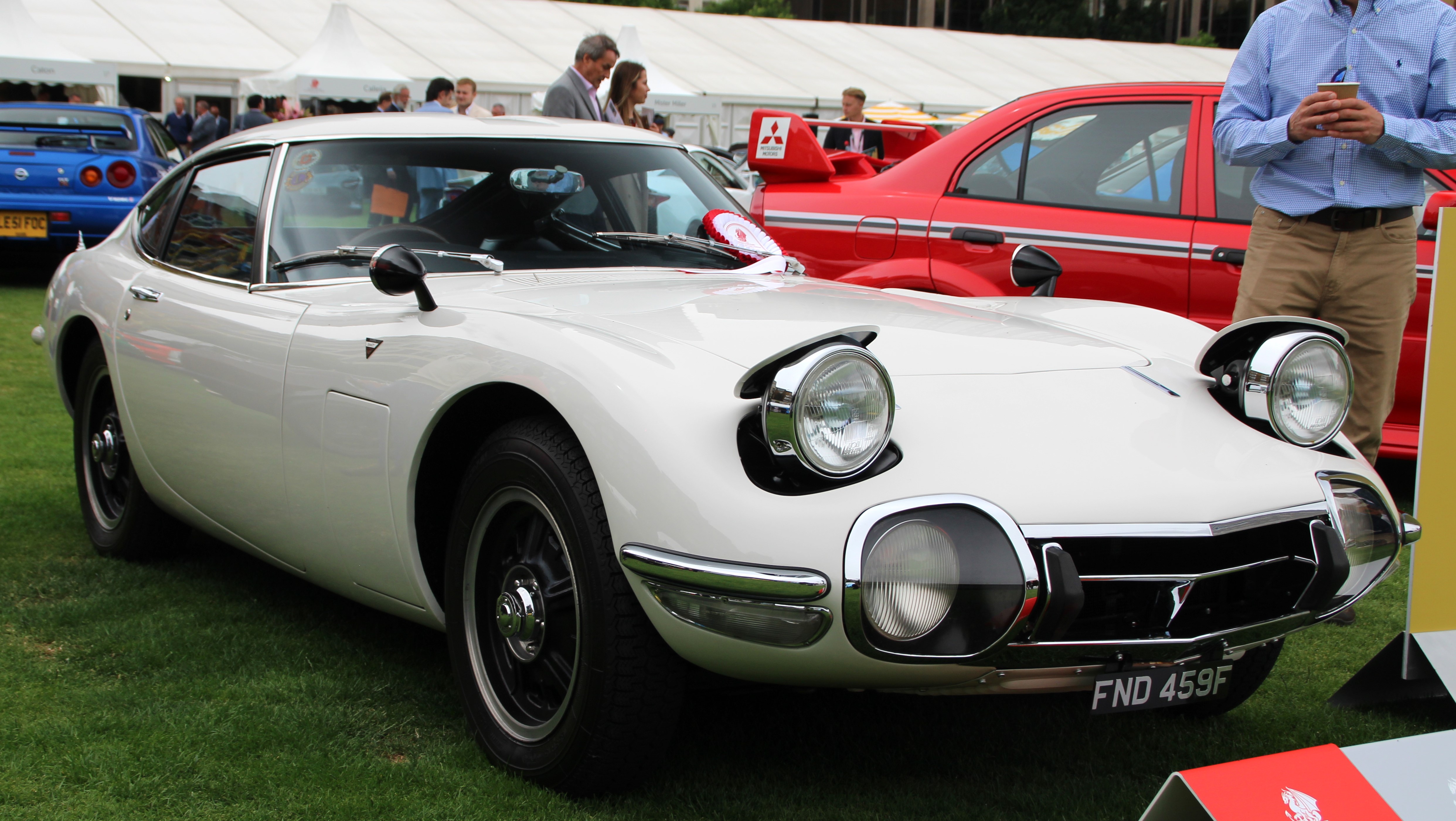
I mean, they're not like the Toyota 2000 GT, you know.
They're a six-figure carburetor.
But they're expensive.
I don't, yeah, exactly.
I haven't been to an auction that had one.
I've never physically seen one.
But yeah, so it's very cool.
You know, and like I said, this was a,
this was an auto show piece, you know,
this kind of a new manufacturer.
They're not very big and they come out with this thing
and it has a revolutionary motor.
You know, so it's crazy.
You know, it's a two-rotor engine, 110 horsepower,
but you know, again, doesn't weigh much.
Yeah, it's just a great looking car.
And they actually beat the NSU's twin rotor,
the Wankle's own company to market,
but they like kind of like held it down
because they were like, hey, we don't want to,
we don't want to overshadow the guys
who helped us give us this motor.
But yeah, again, very cool car, futuristic.
They obviously named it the Cosmo
to invoke the, you know, the space age era,
which all the US manufacturers were doing.
And you know, it was hand-built too.
So that's actually another interesting thing.
But another thing that makes them valuable
is they only made 1,176 units from 1967 to 72.
So they were not cranking these out.
Wow. And how many are in the States?
I mean, they all have to be imported.
I don't think they were ever sold here.
No, I'm not sure.
I'll say how many were imported over here.
Yeah, I don't know.
Probably barely any.
Interestingly though,
because they had done all this work to the rotary,
they entered the car, a race version of it in,
well, it's something I didn't even know they had.
It's called the Marathon Daily Root,
an 84-hour endurance race at the Nurburgring,
which was the best place to show
that your engines were reliable.
Yeah, you fixed your problems.
So they entered two of them.
One of them dropped out of the race,
not because of its engine,
but because of a rear-end failure.
Okay.
So rotary still proven.
The other one finished fourth overall.
So let's say this is a W for Mazda as far as they're concerned.
And because of this,
which I know like 1,000 units doesn't sound like success,
Mazda went all in.
They were like, this is the future.
This worked for us.
Let's make everything a rotary.
And this is what I didn't know
because we didn't get any of these here.
Like I knew that they made some stuff.
And I'm not gonna go into detail about all these,
but this is how much they went in.
They started to go through it.
All right, we're gonna make an economy car
called the Familia of Rotary.
And they made a Familia Rotary.
And then they made something called, yeah, it's this,
just normal Japanese car.
They made something called the Loose or Lucy.
I'm not gonna go into details about all these.
And then they made a Capella Rotary,
which kind of looked like-
None of these I've ever seen.
Which is kind of cool.
Savannah, which is called the RX-3.
But that last one was called the RX-2.
And then the RX-3, which is the Savannah.
They made a Grand Familia,
which you can imagine is just a Lord or sedan.
And they did make, which I think Jake will love,
the Mazda Rotary Pickup,
which I think is really cool.
That's wicked.
So now that-
That's the only one we got here.
Yeah, so that is cool.
And I do love how this one has like tow mirrors.
Like-
Yeah, it looks like a baby-
It's like a Dotson thing.
But I think that thing's pretty cool.
You know, it's a 1.3 liter,
13B, you know, 7000 RPM thing.
It was really cool.
And what they had done is made themselves
the largest producer of rotary engines in the world.
Mostly because nobody else was doing it.
Right.
The only, basically.
But yeah, so basically they claimed,
and this, that by the end of 1973,
these things could last over 100,000 kilometers,
which is not that far.
Right, what is that?
But way further than, you know, what they used to last.
Right.
So this was good.
Here's the problem.
So by 1973, one of Tyler's favorite areas,
the oil crisis comes into play and,
well, everything sucks.
And now you can't have these inefficient little buzzy things
that are literally spraying on gas out of them.
People are like, no, we don't want this.
Like worldwide, it was a problem.
And again, every time this is gonna come up,
it hurt every manufacturer.
It did.
But it hurt rotary development probably the most
because they were just inherently inefficient.
So the problem is Mazda had dumped so much money into it
that it kind of screwed the company.
They could no longer sell a lot of their lineup.
And this is essentially what led them
to be needing to be acquired by Ford,
like in the late seventies,
which is a lot earlier than I thought it happened.
I thought it happened like way later.
But anyway, that's the kind of thing on that.
I'll go into the other thing,
all the other manufacturers,
which I'm going to go into now,
canceled all of their rotary developments.
Everybody had a rotary development.
Everyone stopped basically in 1970s.
Well, because Mercedes had the C111.
And I do have that in here because I have pictures of the one.
Yeah.
I remember I brought that in there.
So I do want to talk about,
when I said everybody spent money on this, they did.
So I already talked about the NSU stuff.
Citroen had one, which was kind of cool.
It's called the Commator, or that was their concept car.
But that thing looked kind of cool.
Yeah.
And that makes sense, you know, that these guys had one.
It had a, they basically had the by rotors,
what it ended up being.
But it was a commercial disaster.
It was 70% more expensive
than the conventional engine version of that car.
They only sold 847 units between, I think, let's see here.
Like it basically over years, it was really, really bad.
And they tried to, this is when you know you screwed up.
They tried to buy back as many of them as they could
and crush them so that there wouldn't be any around.
Good Lord.
That is a, that is a-
I tried to hide your mistake.
GM did that with EV1.
It's not a corporate like,
we don't even want people to have these in the future.
Like we can make them not exist.
So I was very fascinated with that.
And then they had the Mercedes C111.
Tyler, you can talk a little bit more about this.
They use this as a test bed for a lot of stuff,
but they made their own rotary as well.
I never got to drive the rotary version of it.
I only drove-
No, this is the one you drove.
I drove, yeah, I drove the V8 they stuffed in there,
but they had the 617 Mercedes diesel
that you would have had in a 300D in the 80s.
They used this as a development for it.
So all kinds of engines were in the C111
that never made production.
They just figured it just wasn't high-quality enough
for Mercedes as far as the fiberglass body
and the way everything was.
Like there's no way to do this as well
to make it worthy of the Mercedes name.
So it just turned into a kind of a design exercise
in a test car that they made,
I don't know, a few dozen of them.
And I think they still have them all.
And I remember,
cause this was during car track in Monterey
because the Mercedes Classic Center let you drive this
and all that stuff.
Right, you know, if I had gone last year,
they would have let me drive the rotary version
because they actually got their rotary one running
and they brought it.
That's what I thought they maintain them.
And I remember we were asking the guy,
who's what's his name?
Michael.
Cause we were talking to him
and it was just kind of one of those spitball things,
which, you know, I didn't know much about this car.
I mean, I'd seen it, but I was like, I didn't really know.
And it was kind of like somebody said,
Hey man, what's one of these worth?
And I think you were there for that.
He's like, he's like, pretty much priceless.
We've turned down offers for 29 million
or something like that.
It was like, oh my God.
So these are very, very special cars.
They've never sold one.
They never cut it loose.
Cause it was just, they just like, it's just not.
There they are.
There's Tyler and Michael right there.
They don't want people to own it.
And then, oh, this thing, like the windshields glued in
and kind of plexi and all that stuff.
It was just, it just wasn't.
Yeah, it was home built.
It wasn't quality enough for them.
So, but it's interesting.
But it is a cool design exercise.
And it is really cool.
You got to drive one,
even if it wasn't the rotary one.
I mean, it's just something like the actual cool car.
Now here's where I love it
because GM spent some coin to get this thing.
There's just a press photo of this.
GM, this is crazy.
They spent, I don't know,
I don't have record of what the other guys spent to license it.
They spent 50 million to,
I don't know if it was license it
or in development of the rotary.
But that was in like, in the early 70s.
That was a lot of money.
Geez. GM bet big on the rotary
because they had plans for a rotary Vega
and they were supplying the engines for the AMC Pacer.
So they were like, this is perfect.
It's a little engine, way is nothing.
We can put this in our economy cars.
It makes good sense on paper.
They bought them.
They basically, for those two cars,
they were like, no.
And they had to go put a conventional engine in the Pacer.
But it's funny, I didn't know this.
The AMG Pacer was actually designed
with the rotary in mind,
which is why it's so wide.
Cause they were thinking it was going to be this wider
lower motor that was put in there.
But instead they ended up putting a regular ass motor
in it and it was not that exciting,
but they did make a couple of mid-engine Corvettes
with rotary engines, which I thought was really cool.
So they started out with the XP-882.
And I think I did send Jake a picture of this.
So yeah.
That's cool.
It is really cool.
And they did, they made a mid-engine rotary powered Corvette.
And this thing was insane.
They made a four rotor at the time,
which nobody had done yet.
Not even, you know, Mazda or anything like that.
So this thing was actually able to make some horsepower.
It had going doors.
It was neat.
The four rotor reportedly had 420 horsepower,
it was still in a ton back then.
You know, it was totally smooth.
Reportedly could go I think a hundred and,
you know, almost 160 miles an hour.
But of course they developed this in 72, 73.
So right as the fuel crisis,
they're like, this will never work.
Then they kind of made it,
they made a two rotor concept called the XP-89,
no, the XP-897 is the one.
And it's this, it was just a smaller one
with a smaller motor.
They were like, we could make two Corvettes
with two motors and different power levels,
you know, name your rotor.
It was actually interestingly on a 914 chassis.
And then the pin for you to design the body.
Like I said, I don't know why these things
aren't like talked about more.
It's kind of a weird car.
It's like a Corvette rotary on a Porsche chassis
with an Italian body.
Totally weird.
Okey dokey.
Yeah, no idea.
So that happened.
They eventually put a conventional V8
into that first one I showed you
and they debuted it as the AeroVet.
And they were like, ah, we've already spent the money.
You know, just keep creating this thing around.
And the other one, the red one
that I showed you, they, GM sold that one.
So they no longer retain that and just a guy bought it
and he put a 13B in it and still, it still runs and drives.
So that's cool.
That's pretty cool.
Yeah.
Then this is obviously not gonna be that relatable to us,
but interestingly, the Soviets also
did not license their rotary.
Of course, shockingly.
Why not?
They, there's a lot of hearsay on this
of whether they, you know, they reverse engineered one.
There's things that the KGB got in on this.
Basically, it doesn't matter if the Russians
were being Russians, they figured out roughly
how the rotary worked.
And they decided, let's put them in our Lada
because the Lada is like kind of boring
and it already doesn't have any power.
If we put a rotary in it by comparison,
it's gonna be a monster.
So I didn't have a lot of pictures of this
because it's like I said, we don't have this,
but it was actually way more powerful
than the engine they had.
And like I said, they made them for,
they built a couple of hundred of them
from the KGB and, you know, other stuff.
And it was like, they, you know, whatever.
And then they made a two-rotor version
and it made a little bit more power,
but you know, it's just one of those things where-
Well, probably from a production standpoint,
it's a little easier to make, I would imagine.
I think as far as the size, they're a little more compact.
Yeah, they're doing less parts.
Yeah. Yeah.
And reportedly the KGB loved how quiet they were
because you know, it's not,
I'm sure the regular Lada
is probably a loud little banger.
Right.
But a loud little banger.
A loud little banger.
I'm staying away from this tonight.
I'm being good.
And here's the thing that Jake would like
if he had a microphone,
but they also, I think this is a good application
for these motorcycles.
So they made a few rotary motorcycles,
which makes- And that's where I feel like it would work.
Yeah, high revving, lightweight.
You know, we're right down.
So they made the Suzuki RE5, which is really cool.
I didn't really, like I said, these are all,
I'm not like in the motorcycle world that much,
but here it is.
And you can see, it does look so cool.
Different.
So this was in like 74 through 76.
They didn't make that money of them,
but it made 62 horsepower and especially back then,
that's a lot for a bike.
And this thing had like a cool little futuristic gauge pod
with like a cover.
But yeah, it even had,
was cited for poor fuel economy,
even on a bike, which is pretty impressive.
But that's just the way they are.
Another company that I wasn't familiar with,
but think it looks cool,
they made the Hercules W2000.
And this was actually, this one beat the Suzuki.
But I think it has this really cool turbine intake type thing.
That thing looks, yeah.
I think that thing looks awesome.
It's a menacing.
But yeah, so this thing made nothing.
It made like 27 horsepower.
So like I said, it was like,
everyone was trying their weight at it.
It's like, it was like, again, on paper,
this made so much sense.
Yeah, it's cool to see all these different makes
throwing their hat and the ring on this,
because they all obviously saw something with this
that they thought, okay, this is the future.
They were still clinging to it,
even though it was so unreliable
in every application.
But nobody really knew,
because it was like, everybody saw it on paper.
They're like, I'll license it and they get to trying it.
And then it's like,
but the writing was kind of on the wall
in the early ones.
They broke so early,
but we didn't know, these guys didn't get them.
It wasn't all out yet.
So, you know, Winkle's kind of,
yeah, you wanna license this engineer,
you can go, okay, fine as I.
You go.
I totally get it.
Like I said, if I had only seen the drawings
and that it did work, I'd be like,
that makes a lot of sense.
If we just, if we do American things,
we just make it bigger,
it'll make more power.
Everything makes sense.
Is he still alive at this?
Like in my 1960 something or what it was?
He died in 988.
Okay.
So he did, he's seeing this.
Okay.
And GM, $50 million,
and they got none of that back.
None of it.
That is it, just, I mean,
we just burned 50 milk.
Literally just lit it on fire.
Yeah, the last one, which is really cool,
the Norton, which is a motorcycle company
we all know, they built a rotary bike too.
So this is their race bike,
which makes a lot of sense for racing,
because it's just higher PMs
and they can stay there all day.
They made a couple of street versions
of this bike as well.
I think the street bike's called the F1.
It looks pretty much like this
with slightly less stress.
Like the John Player Special,
don't know what that JPS is?
It looks like a John Player Special bike,
which I mean was Lotus.
I mean, it was famous with Lotus.
No, this was a cool deal.
And Norton's a serious company.
Yeah, I also have in here
that if that there's a couple of like home,
like people build like kit planes
would use Rotaries too,
which I think is a horrible idea.
Terrifying.
Yeah.
Can you imagine that?
So let's go to the one time where it was a success.
And we've kind of touched on it.
Now Mazda made all these other cars
and then it was like,
oh crap, we got to stop making everything
because the fuel crisis hit.
Well, they decided again,
let's give it one more whirl.
People don't like them.
And this is good logic.
People don't like them in their family cars.
They just don't work.
They need to be by nature.
They need to be revved up
and family cars kind of put around,
which doesn't help these engines.
They flood, they foul out, whatever else.
Let's just make the only rotary car
we make a sports car
and sell it as that.
So they obviously in 1978,
they came out with the RX-7,
which we all know that's a household name
as far as enthusiasts.
Of course.
Timeless design.
Very cool.
You know, like I said,
it was pretty much an instant hit.
You know, we all know about it.
It's a three-wheel drive sports car,
you know, pop-up headlights.
It's rotary made 105 horsepower.
It doesn't seem like a lot.
But again, we're going with that lightweight thing.
And like I said, these were a massive success.
And I didn't know this at one point.
They were selling 4,000 RX-7s per month in the U.S.
Wow.
So I knew they were a success,
but I didn't know, but we took to them.
Well, they were affordable.
If I remember, they came out
with a very reasonable price point.
Right.
So yeah, basically they showed a thing
that the reliability of a rotary could be,
could be a thing in the hands of enthusiasts.
You can sell it to enthusiasts a little bit better.
This is the generation that I had sitting on my lot
for like four months
where the grass kind of grew up around it.
And I bought it at the auction.
It was running, but not running well.
I was like, okay, well, maybe it can be saved.
Like maybe it'll, maybe we just change the plugs
and it'll come back and it got delivered
and it never ran again.
Somehow it was still running at the auction.
And then I never got it to run, unfortunately.
Did you get any buyer, did you get any bites on it at all?
Because I'm curious as to what the buyer was for that.
There was a thousand bucks is what I paid for it.
And then I just, I was hoping that it would get fixed.
And then I feel like when I didn't,
I just sold it to the first person
that offered what I paid for it.
I think I just listed it and it was gone instantly.
Now I'd like to hear.
It was clean.
It was like 60,000 miles and really clean, yeah.
There's something about it.
And I wish I'd looked more intubate.
It's not about the fixes for them.
It's just about the history.
There's something about it.
There's a guy or guys that go around the country
buying these, cause there's a lot of them.
There's like, oh, it hasn't run in years
and blah, blah, blah.
And they come in and they pour transmission fluid
like into the intake and they let it sit for a day
and they'll come back.
And something about that magic makes these fire back up.
And I'd love to hear what that is,
but there's a lot of people out there.
I'm sure it might be more than that,
but that's what I've heard is like, these guys go,
oh sure, I'll buy it.
Are we talking about an urban legend here?
No, it's like, guys go around buying non-running RX-7s,
pour some transmission fluid in it,
let it sit and do whatever it's doing
and they start a new life.
And it's like, there's some magic there.
And I'd love for the furry guys out there
to enlighten me of what that is.
I mean, they also had flooding issues and stuff like that,
which I'll go into with my ownership,
but anyway, the point is this was a huge hit.
So the other ones were like, oh, this is a neat idea,
but we obviously didn't saw none of them here.
This is the US's first real taste, you know,
because none of those other things.
Was it a 280Z in 79?
Where were we at with that?
Probably at the 280 at that point.
That was the huge hit.
That was the Hall and Oates version.
And this is clearly going after that.
For sure, yeah.
But so again, when I said it was a huge hit
by the end of 1985,
which was the first, this body style, the FB,
they had sold 474,000 worldwide, which is a ton.
It's obviously the biggest, you know, rotary thing ever,
but this is what's interesting.
377,000 of those were in the US alone.
So the US bought an overwhelming majority of these.
So crazy.
I know I do.
Japan did not, they were not sold on them.
Yeah.
So obviously they kept making them.
So the next year in 1986, they came out with the FC
and this obviously improved on all of the designs.
So for the first time in a production car,
you could get a turbo rotary.
Yes.
So this is really when people are like,
oh, these are fun toss around autocross type cars
where these are like, okay, you know, the turbo's made up
for a lot of the low end lack of power that rotaries have.
So if clean ones of these got their day yet,
have they had their day yet?
Cause I mean, I feel like if they haven't,
they're going to.
I look at that.
They're really cool.
I love the way these look.
There's some really cool modded ones of these.
I've always enjoyed the way they look,
but it's still one of those cars
where you have to be a rotary guy.
You can't go, I think I'll get one of these.
You're going to be in over your head immediately.
But yeah, this is what I like.
You could get it in a convertible for the first time.
I know Jake probably hates that.
Yeah, he's cringing at it.
But he's a wank, so we're happy.
It was cool at the time.
So yeah, these did well.
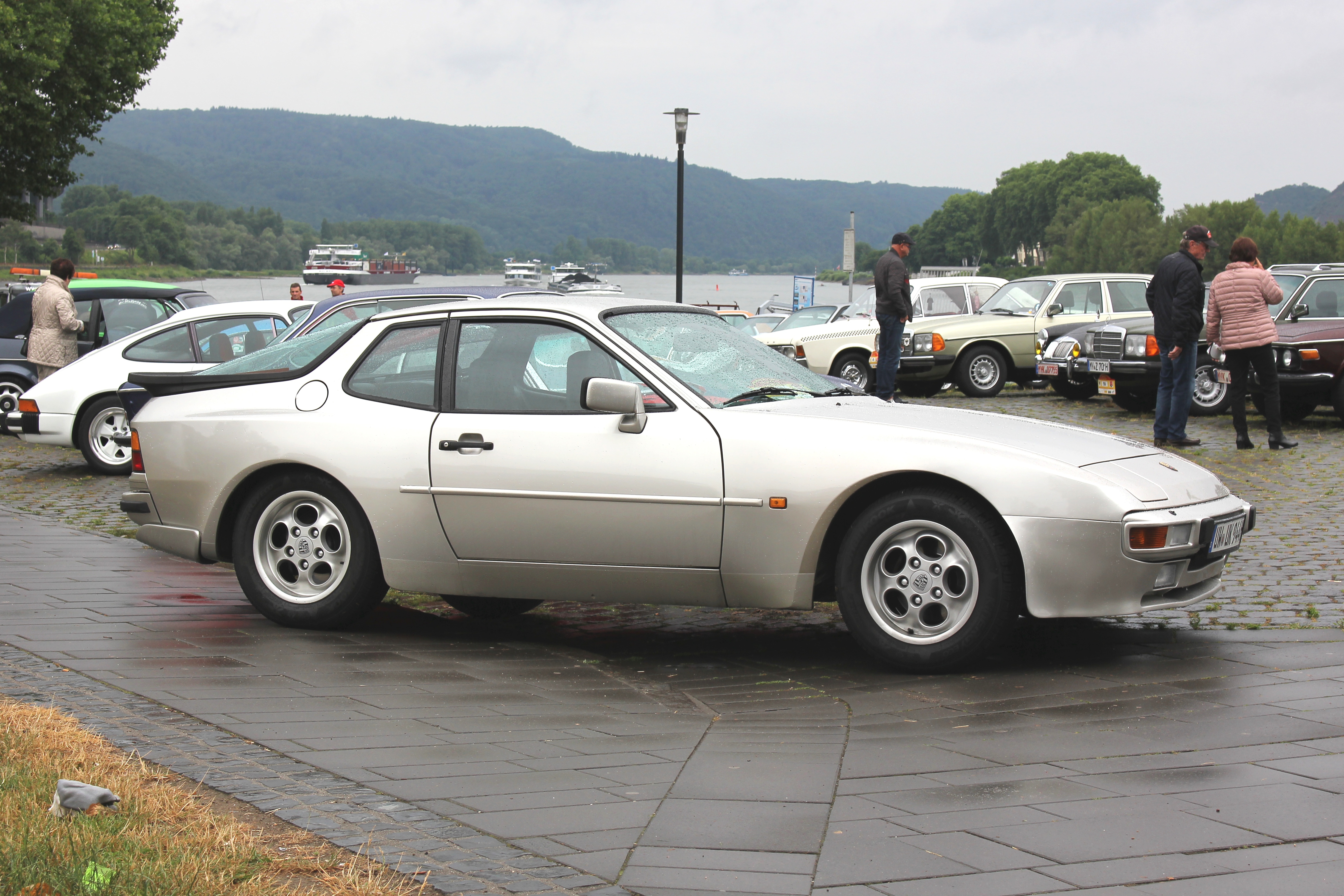
For some reason, they were actually compared to the 944,
which I guess would have been the closest comparison.
Oh well, it's out there, 86.
So zero to 60 in the low six second range,
which I know is not good, but, you know.
Actually back then, the low six is not bad.
But if we go to the one that is more in our wheelhouse,
it is really the cover car.
It's the need for speed car and all this other stuff.
The one that was actually going after Porsche and Corvette.
In 1992, they came out the FD.
So this is the RX7 that when you say RX7,
this is what people think of.
Of course.
But they didn't really sell these in the US, right?
They did.
But why are they so rare in the US?
Because they didn't sell well in the US
because it was very expensive.
And it was like, am I gonna buy a Porsche,
a Corvette or a Supra or this?
And this had a weird engine that had been proven over time
to be, you know, it was still pre-internet.
But I think it's one of those things where you're like,
you know, you buy a Corvette and you're like,
oh, that sounds great.
And you drive a Porsche and you're like,
that sounds great.
And you drive this buzzy thing.
And you're like, eh.
It's like a more, I see more Japanese specs.
You know, like Freddie had his, yeah.
So they did way better in Japan.
I don't, like I said, I think they were just too expensive.
Okay.
But it was a much better car.
It's the best one of all of them.
Oh, for sure.
And this is that one though, 3000 GT,
you had it in the Supra.
Yeah, so you had the Supra, the 3000 GT,
the Dodge Stealth, which I know is the same thing.
Corvette and pretty much Porsche,
you're like, you're just generally not gonna go
with this one.
I know that there's gonna be people in the comments
who are like, oh, I'd rather have an RX-7
over any of those any day.
I honestly would.
Well, Mazda had the Miata too,
that was just a game changer, I feel like that was.
Exactly.
And you go to the dealership
and it was one of those for 10 grand or this for 40.
Yeah.
It was just a high sticker.
Yeah.
And again, even though they made good power
and everything like that, it was still a power,
you know, it's a numbers game, almost like the modern Supra.
So, you know, there's the engine.
And it just was one of those things,
this is the first era,
and I remember this when my dad was buying cars.
It's one of those things where a guy would look at that
and go, I'll never be able to work on that.
Uh-huh.
It's just like, that's a mystery.
You know, this helped
because it had sequential turbos like the Supra.
So it had a little one to help down low
and then a bigger one that came online and higher RPM.
So these really did perform well, you know,
car and driver, everybody liked the car.
It's just, it had so much good competition
that was undeniable that, yeah.
It was tough, you were scratching a big check
for something like that.
You wanted it to be something you were familiar with.
But the thing is, you never saw these.
I didn't, I thought they weren't sold in the US
and that's why they weren't for a while
if there was some reason why.
But then the RX-8 is a huge success, right?
Because it sells a lot more.
You saw them everywhere.
Yes.
And I think a lot of that was a marketing,
the internet was there and everything else.
I don't, like I said, there's a lot of different reasons
why this didn't sell well,
but it's the price competition.
Okay.
And I could be wrong.
I would think the RX-8 was cheaper, wasn't it?
The RX-7 was comparatively much cheaper,
but the performance was also much lower.
Yeah.
So one of the things that's happening here,
and this is the true of all the cars during this time
is remember, this is an inherently inefficient car
that is wasting gas and doing all this stuff,
has now has to deal with catalytic converters
and figuring out this, you know, all this,
it's basically, they were really fighting uphill
against ever-changing emission standards.
And that's kind of what ended up happening with the RX-8.
So, you know, they came out with that
and they're like, well, actually,
I need to talk about the race.
Well, for the RX-8, I would say, yeah,
the one thing that hasn't been brought up yet
that I think you were just going to get into,
the 787B, which is the best rotary Mazda ever made.
Yes.
It's so cool.
That's a poster car.
You all know what a 787B is.
Right.
I mean, that is, I mean-
You will when you see it.
Yes.
Oh yeah.
No, you'll know it when you see it.
Like the Vin Diesel in the opening scene of Fast and Furious
was he driving that, right?
You probably saw one of these running around the goodness.
This is the first Fast and Furious.
Yeah, they had a Veil side, one of these.
No, but the 787B was not a race car.
It went to Le Mans and it won Le Mans.
Oh.
In 91.
So it won.
I did not know this.
It was the first time and won.
So this is it.
Oh, and these things sound so, so good.
Oh, it's nuts.
I really do wish we had audio of it.
I want to say one of these was at Monterey Car Week
at Laguna Seca running around the track.
There was only like two.
Yeah, I think it was one of the years
where they featured, either they featured Mazda,
I can't remember, but I remember that,
I don't know if it actually raced on the track,
but it was definitely in the paddock.
No, we heard it because I think I was with you and Neil
and you could hear it like howling around.
Oh, absolutely, front, way out of the track.
Yeah, because you were like, I couldn't see it
because of the different, you know,
they have the banners and stuff in different places,
but yeah, I do remember that.
Yeah, that's my plug for Monterey Car Week too.
It's just to go for Laguna Seca
to watch all these things running around the track.
So first time, that's a big thank you to you, Tyler,
because you're the one that we went together
on that first trip.
And you're like, you're not gonna believe
what you're gonna see here.
And I'm sitting there going, no, like, you know.
And we're missing two years in a row now.
I know, and I'm hard, I'm hard broken about that.
I'm going for 10 years straight now,
I'm just two and a half.
Can we all just say, agree that we're gonna go next year?
I'm going for a lot of years straight, not 10,
but a lot of years straight and I've missed two.
Yeah, can we agree that we're gonna go next year?
I mean, you can.
We should do it, get figured out.
We need to go.
Two years, we can live cast from there.
There you go.
On what's Ocean Boulevard.
But I mean, if you're gonna do it,
you have to go to Laguna Seca and you have to like,
just to go on Thursday, Friday, Saturday
to watch all of these different classes
of legendary cars run.
It is the best experience and the feeling you get.
And I am heartbroken that this year I don't get to go
because my idol, Bill Elliott,
which you could redneck me all you want,
they're running all the old IROC cars.
When they did the IROC series
where they had like everybody from like Formula One
and Mario and Dreddy and all these guys
were running Camaros and Firebirds.
They've got all those cars out there
and they got all those guys running those cars out there
and I could not, my wife saw me just get depressed
one night in bed.
She's like, what's wrong with you?
And I was just sad and she's like, what?
And I was like, Bill Elliott's gonna be at Monterey
for car week and we're not going.
And I was just heartbroken because it's so damn cool.
I know, and that's when you sold
the Titus seller Porsche and you're like,
I'm gonna get her.
I'm gonna get her.
I'll show you, she had to take us booked
and everything's probably canceled at all the day.
Taylor Swift concert cost me all that money.
I need more of my baseball.
Yeah.
I was gonna say it was like top nib too, Rob.
It's baseball bourbon.
Yeah, we need to talk about that
because I'm sorry.
People do ask about this.
So this is Cooperstown Distilleries.
This is double day, eight Abner double day
who people used to think he was one
that invented baseball
but that's a big urban legend.
It's not true.
This is just a really neat little specialty baseball bottle.
It's a collector's one.
You put it on your shelf or whatever.
It's like 45 bucks.
It's not expensive.
And what you're doing.
Yeah, it's a great little, you know,
it's not easy to pour when you got this microphone.
We're gonna make it work.
I like that the guy talked about this before thing.
I like that his name is Abner.
I feel like that's a strong name.
We got this in a golf club.
We got it in a foot or in a basketball.
They got all kinds of stuff.
Oh, so they have, do they have a Nesmith?
I don't know.
Oh yeah, sorry, sorry, sorry.
Yeah, no, it's a great little bottle.
It's really fun and it's pretty much sold everywhere.
You can get it everywhere.
No, the flies.
Nope, you had a spider on you.
What?
I didn't want to tell you while you're pouring.
Thank you.
That's a new one.
Will you get Adrian out of here?
It's a little brown recluse.
You're fine.
Yeah, it's just a little one.
Adrian Bugninja, please.
Now.
Okay, so anyway, this car is really cool.
The specs are nuts.
Four rotors.
Rob, what was it?
Seven.
700 horsepower in qualifying,
or 700 on the racetrack, 900 in qualifying.
Nuts.
Just insane.
And a 10,000 RPM red line with this,
which is just, we're talking about the sound.
And a lot of people probably,
I think these are in Forza and maybe Gran Turismo.
I'm sure they are.
And I mean, they're ridiculous there too,
but they're just, I mean that,
I think I actually had a model RC car of this
that was literally to that spec.
Talk about a front lip getting broken.
Oh, immediately.
Yeah, immediately.
You break all those road cars.
So I don't know the reason,
and again, commenters can help me with this.
So they won them all overall.
It was like, okay, this is crazy.
It's got a weird motor.
It won overall.
Like, that's nuts.
And so Le Mans was like, no more of these.
So actually no.
So they were banned.
They were banned, but it wasn't,
the banning of the,
it was already in the works before they won.
So it just says after this,
yeah, that they wills were changed.
So actually right after this.
If I remember right, it was,
they were already like a lot of growls
and complaints coming from,
and they had seen that it was going to be
an unfair advantage.
So they were already in the process
of banning it before even one.
I love this though.
It's griping and growling from all the manufacturers
who abandoned their own rotary causes.
No, absolutely.
And they get mad at the one company
who's like, that will stick with it.
Well, they got their ass kicked by that thing.
It's just so funny.
Every one of the companies that griped
had a rotary at some point.
Oh.
And also it's interesting I read about this,
which, because I talked about the road cars.
So inefficient.
One of the things that helped it win
is because the relatively small size
and the nature of it,
this was getting better gas mileage at the race.
So it had fewer fuel stops than the other cars.
And over the span of 24 hours,
fewer fuel stops makes a big advantage.
So you have this little motor
that's not burning very much in the same size gas tank.
Anyway, point is that was a cool car.
Never happened to Ken.
Yeah.
That was the end of that.
One done.
One thing I didn't know about
because I don't follow them that much closer.
So we stopped getting the last dark seven,
I think at 95 here.
It was like 92, 95, very short.
They were like, these aren't selling, let's stop.
They made them in Japan until 2002.
So that more to your credit,
that's why there's a lot more
of the right hand drive ones.
And of course now with the import laws,
we're seeing a lot of the right hand drive ones.
Well, yeah.
And that was Freddie's hentai version
and car track was just unbelievable
and never wanted to restart hot or anything.
Yeah, it was.
They're finicky.
So that's what I'm getting into with this.
So then a few years go by
and Mazda comes back in 2003 as a 2004 model with the RX8.
Now this was a fun car.
This was the high day of marketing.
They had cool commercials.
They had a new rotary engine
that they dubbed the Renesis.
It's a 1.3 liter twin rotor.
No turbos this time
because they just couldn't make it work.
By this point by 04 emissions were nuts.
I mean, we're lucky we even saw this car
but this was a marketing success.
They sold it in automatic
that they had the cool doors that open
and look like it's giving you a hug.
You know, it had like the half of the doors
like a GM truck.
Still on the fence on that.
Now what made you want this?
Yeah, I'm both.
So at the time, I mean,
I don't remember what year I got mine
but it was one of those,
I always thought they were good looking.
There's me with a pick the sun behind me.
So it's not a great picture.
See and back in the mid 2000s,
shorts went lower.
They sure did.
Shorts went to your knees
and that made a lot more sense.
And now the style is for shorts to be further up
which I don't like because I have very long legs.
And obviously our audience didn't like
because in an L.A. wears the shorts.
Guys.
Like the balls are out.
Okay, what I'm saying is you probably had a couple
of my shorts are just above the knee
but it's when I sit, you're obviously right up.
And then this camera is just right down the chute.
But I love like cargo shorts.
We're great.
And the length was perfect.
I don't like having to wear cargo shorts
are gone now.
They're out now.
I never wear shorts.
I never because the length of shorts
I'm definitely warm when I'm doing a show
or like YouTube or anything.
I had a pair on like a week ago
and I walk into my office and my boss is like,
do me a favor.
I'm like, what's up?
He goes, don't ever wear those again.
And not in like a rude way, but like a what is wrong with you?
I can't wait for them to come back
because they, I really love cargo shorts.
What is Janky Jakes?
Jakes and the short shorts here.
Could you imagine L.A. with the three?
That's me and the boys on the weekend.
Can you imagine you wearing a pair of those at this?
I suppose.
Yeah.
There's an amazing photo of my dad
in short shorts like that.
With his trans am or whatever.
But I just don't have the legs for it.
I don't either, Tyler.
No, you certainly don't.
I've got bigger legs.
I have less viewers than you, so I get to hear it less.
But what I was gonna say is that cargo shorts,
my last story with them is I was still rocking them.
I think past meeting Kenzie, which is my ex-wife.
And one day I came over and she threw them all away.
And I was like, oh, wait, literally just
without telling you?
She's like, we're done with these.
And I'm like, the utility.
April has a retired drawer for me.
It wasn't me to throw them away, but I'm like,
where's that shirt going to look in the retired drawer?
Oh.
But that means they're still around.
So as a retire, it's like, she's so nice.
Is that her nice way of being like,
don't ever wear this again?
Yeah, she don't want me to wear it anymore.
That's so much kinder.
That's way better.
To like, this is an off-limits drawer.
And my wife is just, she's nice about it,
but she will like, I'll walk out of the bathroom.
And we're like, get ready to go.
And she'll just kind of be like,
I mean, are you sure you want to wear that shirt?
Like, she's nice about it.
And I'm just like, God.
Imagine if we said that to women, you're like,
Oh, I did.
Oh, that's an outfit.
Oh, I did.
Yeah.
And I did not get the, my response when she said it to me was,
is it that bad?
And she's like, it's just doesn't flatter you.
And I said, okay, I'll go change.
And I did the same thing.
Oh, I thought you said that to her.
It is nice.
No, that's what she said to me.
I was gonna say, I was like, oh my God.
But that was also,
but then I went ahead and did the same thing to her
thinking that she'd be fine with it.
When she came out with the shirt and I was like,
and she's like, what?
And immediately, you know, different,
a different tone.
So I was just like, oh, okay.
And at that point,
you can't make up something fast enough.
So you're like, and I'm like, well, it's just that color.
Color, safe.
Didn't matter.
Nope, done already.
We didn't even go to eat.
I remember it was just pretty much, we're done here.
I shut down, Brooklyn and I had the option to go eat.
Well, we couldn't, because if I left her at home.
That's bad news.
Yeah, you can't do that.
So I, none of us ate until like dinner.
Anyways, go ahead.
Anyway, so this is mine.
I have a couple more pictures that I've included for Jake,
We didn't talk about what was the allure of this.
I mean, I just, I really did like the styling.
And I was like, my thought was,
I know enough about cars.
I can learn about one of these and deal with it.
And that I did.
Did you get it new?
I didn't get it new, but it was,
it had to hardly amaze me.
And what did you switch from?
What'd you go from?
This, you're gonna love this.
Well, I had a, I had a Quadrasteer Denali.
Oh.
I know.
And now, even I love those.
I know.
Wow.
I know.
Was it your dad's hand me down there?
No.
I got it on my own.
I was like, I was like, yeah, I love these.
And I was like, man, I'm killed.
And the reason why I'm stupid.
I know guys.
Well, I still always have my Corvette,
but this was my college year.
So it was all I was driving.
And I learned very quickly after summer,
I was the only friend who had a truck.
And when you're that age,
everyone's moving apartments every freaking other month.
And it was like,
I had one friend destroy my bed cover thing.
I was like, okay, fine.
I'm helping, I was helping people move nonstop.
And I was like, I don't care what it is.
This truck's got to go.
I loved it.
I did drive it.
I had it for a while.
It wasn't like I had it for, you know, I loved it.
But I was like, okay.
And then the local, whatever, Mockin's had one of these.
And I was like, you know,
I've always liked the way they looked.
I've heard of them.
You traded straight up?
Oh, I bet he did.
No, I think I did at the time.
Cause the quadruesters weren't worth anything.
At the time.
At the time.
Listen, guys.
Even then, there was both you.
Oh, I know.
Is that what you had?
Yes.
I had one of those.
I had one of those.
Did it have the lights on top?
Yeah, they all have to.
Cause they're so wide.
So wide.
I would love to have this truck back.
I loved it very, very much.
Yeah, but I mean, what did you see in the RX-8
that you go, I'm going to get rid of them.
Besides people wanting your truck.
Well, no, so it was,
I was just annoyed with helping moving all the time.
And it was like, I'm really just at,
I did the thing which I disagree with
with everybody around here.
Cause we live in the Midwest.
People drive trucks to just haul themselves.
I'm like, I really am just kind of driving
to campus and back.
I guess it's stupid.
And you saw the new sporty red shiny thing.
I knew about them.
And I was like, this is, this will work.
And I was like, okay.
The point is it was like one of those,
it was a curiosity.
It was available.
It was in the correct color stick, you know, everything.
I was like, I'm really done with the truck.
This deal at the time.
And the truck wasn't getting girls.
And this could get girls.
I traded a 2004 Wrangler Rubicon with axles,
locking axles and all that stuff.
Infinity sound system, 10,000 miles.
This was a nine or 10 for a E 500 wagon.
Yeah, but the E 500 wagon's better driving.
But those were cool now.
I don't know if they were cool then.
That's what I'm saying.
Like I'm trying to think of a trade
that was really stupid back then.
This is probably my top.
This is really, this was a really bad trade.
That's on par with my M5 for the Flex.
Yeah.
That's the worst one for you.
That's the worst.
I'm trying to think of something where I,
like the car, the car wizard's famous for this.
Like, I've got him a Jaguar one time at auction
for 600 bucks or whatever.
And he spent thousands of parts.
Those are cool now.
That green E, was it an E 63 that you had the wagon?
Yeah, yeah.
It was similar.
It was the same body style.
But he bought this Jag for me
and then it didn't count as labor.
It spent thousands of parts,
made it a beautiful, servable, so amazing car.
And he traded it for a Mark Twain boat
with like a crappy 18 foot outboard thing
from the 60s that he used once
and the motor had problems with Jake Nosell.
Isn't that what got him into boating?
Yeah, was this pre-wizard yacht?
Like, yeah.
Yeah, pre-wizard yacht.
Cause I was like, yeah.
He traded it for a boat that he basically jumped.
Yachting wizard was my favorite wizard.
Was that the yachting era?
The yachting era wizard was my favorite wizard ever.
By far.
He'd send me pictures of him yachting
with the boat on the lake
and he was the happiest.
Well, what a happy time.
I mean, okay.
My demonstrate has to be the Eldorod, right?
You didn't know.
The Eldorod from the Escalade.
We're gonna be talking about that next week.
We're gonna be talking about that next week.
Anyway, now you guys have this in the bank
against me that I traded a Quadrasteer Denali
for frickin' R&T.
That's amazing.
I did not know that.
It was black.
Okay.
They were all, yeah.
They were all, so there's my R&T.
I need to get a Quadasteer Denali.
No, this is just my first home to Wichita
and I hadn't had it up on a lift yet.
So I was like, I just kinda wanna see.
You know, like, I'm curious.
Is that the same building you have now?
Yeah, it's facing the other direction.
My studio is behind it.
And again, I was in college,
so my studio didn't exist yet.
But I thought it was a good-looking car.
What'd your dad think?
He again thought it was a good-looking car.
And I think once I started to tell him
more about my experiences,
I was like, because I read it.
And at this time, you know,
they'd been out for a few years,
so forms existed and there was a known knowledge base.
And like I said, I was jumping into
rotary ownership with the RX-8.
So you had all this money that you made
from ribbit computers and being in the commercials
and all that stuff.
The commercials, yeah.
So you were able to buy that Denali
and get this RX-8.
Parents helped a little bit or?
They helped a little bit,
but also like at the time,
like I had been working at Ribbit for years
and had no expenses.
See, it's my time.
It's my dad.
So I thought that's what,
I also wanna tell you
that's a life lesson I learned.
I thought I would always have this much disposable income
because I'm like, this is great.
What's everybody bitching about when they get older?
You just have money, you get a paycheck
and then it stays at that level until you spend it.
I did not have that.
And then I learned I was like,
oh, and then rent started happening
and then utilities started happening
and then girlfriends.
And then it was like, oh,
you don't have any money anymore.
It all goes away.
Dad knew I'd be impulsive in switching cars
all the time.
So when he got me cars,
like the few that he bought for me,
they were titled in his name
and I was just a driver on it.
So like he was the gatekeeper on the tiles
because you could have traded in all the way.
Oh, you would have done it, right?
Yeah, I would have been.
Because I mean, you were probably like us back then,
you were probably looking at every car.
Yeah, exactly.
And that's what it is.
It was one of those, I was curious,
I knew about them, I liked the way they looked.
I heard that they could be a thing,
but I was like, I like cars
and I'm willing to learn about this one.
Let me give it a whirl.
How many of those were in town when you got it?
I imagine not many.
So that's the other thing.
I mean, you know, that's the allure of stuff
that I buy.
And like I said, these were really cool.
I think even for the time,
it's another, not quite as much as the XLR,
but these, the styling of this still holds up.
It was a little kind of wild for the time period,
but right now still kind of holds up.
Did you sleep with more women in the Denali or the RX-8?
Good question.
I wager to say the Denali because I was more single.
I think I started dating my long-term girlfriend
by the time I had this one.
Did you sleep with somebody in the RX-8?
No, due to, it has rear bucket seats and front buckets.
It would have been a logistical nightmare.
How many of the Denali?
At least one.
Okay.
Okay.
One to zero.
Yeah, sorry, mom.
Score one for the Denali.
Mom who listens to this.
Not one for your context.
Oh yeah.
Every single one.
What does she think about
is talking about how horrible your relationships are.
She has it like on while she's outside watering plants.
Oh, okay.
So she hears it, but every once in a while,
she'll, you know, cause remember
when we released these a little bit later,
she'll be like, Elliot, I can't believe you said that.
And I'm like, oh God, what?
I have to think back like three weeks
of whatever it is that I'm like, what was it?
And my mother listens to this as well.
She also, I have to send her the link,
but she doesn't, she can't hear.
So she, she watches it and she doesn't understand much
cause she'll, who's Hoopie?
And I'm like, that's Tyler's mom.
That's Tyler.
Who is this Hoopie guy you keep talking to?
A kid today recognized me, or it was yesterday.
And he said, oh, I used to watch your videos
all the time.
I used to.
I used to, you're already,
he's moved on.
He said it's so enthusiastically.
I used to.
I used to get mature and like grow out of my,
my, my stick or something, my humor.
And he realized what he had said and then like,
but it's like frozen in silence.
That's the watch totally.
Yeah.
They didn't even try and save it.
He tries to, he tries to say he's like,
yeah, you just got that white Testerosa,
didn't you?
And you're like, no, that's a lot.
That's like, that's like that my cousin
who reached out to me.
She's like, you know Tyler Hoover?
I said, of course I do.
Really? Yeah.
She's like, can you, do you think he,
do you think he could get a hold
of Tanner Brongart for me?
And I was like, oh, I do get that.
I've gotten a few of those reach out
because everyone assumes who doesn't live here,
which is such a, it's a 16 person town as far as I'm concerned.
So they're like, do you know Tyler Hoover?
And it's literally, it's like, I just happened to,
but you're assuming because I live in Wichita that I do.
And that's usually what it is.
And they'll say is like,
I figured because you guys lived in the same town
that you know each other.
And I'm like, no, it's not the way it works.
400,000 people here.
But there's so many people that just go,
well, you live in Kansas,
therefore you must know so-and-so.
And you're like, that's an East coast,
West coast mentality.
And it's understandable.
Like if we went through your track record
and how many degrees of separation ends up
with a woman that Elliot slept with in town, you know?
I mean, there's some on my Facebook friends
between you and me.
We've all got some, ones I didn't even know.
Oh, me and my friends are asking my bro
is a few times over.
That's good.
Anyway.
Still fun to hear.
He gave me that Roman helmet,
the logistics of the Arcade.
I liked it.
It still had a really cool interior.
Did not work for it.
No.
I mean, even the handbrake,
had a little brush guard for it.
In case you hit your hand on something.
I don't know.
Yeah, cool design.
I did like the seats.
The stick, the shifter itself was a little rotary.
Like it was a triangle shape.
But like a, you know, the oblong triangle, like-
Angry to read.
Very cool.
You're doing that again.
You had to lose your butt on this thing.
Oh yeah.
It was still worth enough at the time.
I traded it.
This was not a bad trade.
I traded it for an older Roushmustang.
You had a Roushmustang last year?
Yeah.
O2.
Stage what?
Stage two.
That's okay.
It's better than stage one.
Straight up, straight up.
Oh, that's okay.
So that was fine.
Yes.
Good call, good call.
But so anyway, it was one of those things.
And back to the subject of, yeah,
I thought I could learn about it.
And I did learn about it.
And it was like, all right, treat it like a normal car.
And the surface level tips are,
put some oil in it at every fuel fill up.
What?
Red line it once a day.
Put oil in the gas or oil in the engine.
Put oil in the oil.
You used to fill with oil every, you top it off.
Why?
Because of, remember, part of the-
Right, I know, but it injects that much oil
into the engine.
By manufacturer?
It is in there that they said they recommend you check it.
And so what ended up happening is I have this big
gallon Ziploc bag with a funnel, a rag,
and a quart of oil that just was constantly
in the trunk of this thing.
You know-
It just seems like a lot of work to own it.
Well, it's not that bad.
So it's almost not much worse than doing
my treat right now. Every fill up?
It's recommended to check.
Realistically, you only needed to top it off
every fill up or every other fill up.
But this is what ended up killing these cars.
I mean, I have a lot more info on it,
but the reason these were such a success
compared to the RX-7 that preceded it,
which everybody of course now goes,
oh, it's so cool, whoa, whoa, whoa.
First of all, the outgoing FD made 252 horsepower,
which I didn't know how close these were.
So this is now naturally aspirated, 238 horsepower.
So they got pretty close.
But heavier?
Heavier, safer, but like I said,
the marketing was better.
They had these in manual.
And what the downfall of these cars was is that,
you know, and this is around the time
when you were working in car dealerships.
And correct me if I'm wrong,
it was everyone saw the commercials.
It's a good looking car.
It's pretty cheap for what it is.
Rear-wheel drive, of course,
Top Gear had a great segment on it.
You know, there's all these things going for it
before they started to get some miles on.
And this is not being sexed,
but a lot of girls thought they were cute.
I knew a girl in high school
who had one that was an automatic.
And they made different versions of these.
They had like, so the sticks both had twin oil coolers
and the red line was a little higher
and everything like that.
They lowered the red line
and had one less oil cooler on the automatics.
And like I said,
the thing was it was dealership education,
selling them new, a lot like F1 Ferraris and stuff like that.
They didn't tell people, you know, like an F1 Ferrari,
you're supposed to be like, pretend it's a stick shift,
drive it like it's a stick shift and it will be fine.
They didn't do that.
They told everybody, it's an automatic, have fun.
They burned up clutches.
This is the same deal.
Nobody said, remember, check the oil.
That's part of the way it works.
And you need to red line it at least once every other day
or else carbon is gonna build up like you wouldn't believe
and that, you know, all this stuff.
They just said, here you go.
It's just like every other car.
And it's not.
You have to think about things in these cars.
So it is, and I almost challenge you to find one, Rob,
a running automatic one of these.
They didn't work.
Everybody just put it around at 1300, maybe 3000 RPM
all the time, completely fouled up the engine
and never worked.
Well, challenge accepted.
You know, you give me a challenge
to find something like that.
I'll do it.
It's gotta be running.
I tried to challenge you two earlier
to a thousand dollar car challenge.
Nobody wants to do it.
I wanna do it, but we gotta grow the channel.
No, we don't.
It's a thousand bucks.
Come on.
Then you have to film it.
Then you have to edit it.
Fine, I'll film it and edit it myself.
I don't care.
I can pick a better thousand dollar car
than both of you.
I guarantee it.
One thing I'm good at, I'm not good at much.
We're all aware of this, okay?
Everyone's aware of this.
But one thing I am good at,
I will find a thousand dollar car.
Have you ever played with Imovira final cut before?
Brooklyn can edit it.
My daughter can edit it.
She does those.
She does.
She edits cats and dogs.
She's really good at it.
We're probably running good at it.
We're halfway there, guys.
But nobody wants to challenge me.
A thousand bucks.
I'm ready to do it.
I will find a better thousand dollar car.
We'll do whatever you wanna do with it.
I would love to take it to the dealership
for inspection.
Nobody wants to do this.
Someday, Rob.
Someday.
Someday, let's do this.
Anyway, what I wanted to talk about,
so it's not that I seriously never had
a single problem with mine,
but it was, you know, it's about
getting it up to temperature.
This thing's very funny about temperature.
You can't cut them off cold,
especially RX-8s for some reason,
beyond all, all rotors have this problem.
But if you don't,
if you cut them off cold
because of the way they're fueled
and everything like that,
they flood immediately.
Like you have to get it up to temperature
before cutting it off.
And so like,
that was something I had in my mind all the time
because it is everybody being like,
I had to get my RX-8 towed so many times
within the first month of ownership
because they just didn't know.
And, you know, it's like,
it's crazy to think of a modern car
that you're like, also don't cut it off cold
and you need to top off oil.
It's too much for this era.
Well, for just the masses,
that's too much.
I don't know how to do that.
And then like I said,
nobody got educated on that.
They just go, here you go.
It's remember, it's like I said,
it's a girl buying
between a Mitsubishi Eclipse and this.
And they're not educated any differently.
They go, yep, here's the keys.
Congratulations on your new car.
And of course, you just drive it
like a normal car
and a normal person isn't gonna go,
should I check my brand new car's oil?
Every other fuel Phillip?
It's brand new.
Why would it burn oil?
There was no education there.
So while these did sell well,
it still had all the old problems.
I, for one, I showed Jake this
if he, I think he might have nodded off.
No, he's meddling with something.
No, he's chatting with somebody.
He's going.
The other thing that I had,
so this was when I was going,
oh no, this phone's dead.
Anyway, this was the other thing I experienced with it,
in addition to just being stressed out about it
because I remember getting annoyed with my roommate.
Done.
Jake's just, I'm sorry.
Jake's had a week.
Jake's had a week.
He doesn't, didn't want a mic.
He didn't want anything.
Jake just wants a nap.
And the face he's making is this face of like,
will you three just shut the,
get over it and explain to him.
Let me go home and sleep.
Yeah, so I did, I did put that
for a funny license plate tag on it.
That's where that.
Oh, my other car's a Corvette.
Because it doesn't make any sense to your like,
then why the heck are you driving this?
I like the EZU.
I know, right?
Yeah.
By the way, I'm not worried about showing my license plate.
There's so many people that like,
won't show Facebook marketplace of this.
I hate that.
I don't give a shit.
Look, that was my license plate back in the day.
934 EZU.
Look me up.
So the RX-8 was it?
As far as the rotaries went.
The rotaries were done from the US.
Or anywhere?
Anywhere else?
No.
No, they stopped.
So basically, and then it was again,
an emissions thing they moved on.
Even at the time, they were still getting bad MPGs.
And this was what they were rated at.
This is not what I experienced.
16 city, 22 highway.
No.
I think it was 14 city, 15 highway.
I took a picture of Jake where I just took,
cause I was like the first time I drove it
from Columbia, Missouri, back to Wichita.
And I'm going 85 at 4,500 RPM.
So I'm just like, and it's in sixth.
And I'm just like, I know it's a high-revving motor,
but it's a long drive.
And this thing's going, yeah.
You just be asking for it.
I'm just sitting there going,
it just seems awful high.
Where's my Denali?
I'm just like, I am like, it seems awful high.
I did miss the Denali at like 1100 RPM.
Yeah, literally just loping along.
Comfortable.
Yeah.
As you know, we're Denali, man, I know.
But it's just, it was one of those.
I'm like, now I have this buzzy little thing.
And it-
How long did you keep it?
A, maybe a year.
Not long.
Okay.
So anyway, it just, I didn't have any problems,
but I just kept reading and worrying and worrying
and stressing about the car all the time.
So I was like, I gotta just have it, something else.
So the RX died when?
Like 2012?
RX died 2012.
Okay.
Yeah, so tightening emission standards,
no immediate next-gen rotary.
They were like, all right, we're kind of done.
But, you know, Mazda made over 2 million rotary engines
at that time, in the lifespan of its time.
So that's a lot, you know, considering.
But haven't since, but there have been talks, right?
There have been talks.
So here's what happened.
I'm gonna show you, Joe, or Jake pulled the vision concept.
The, yeah, the RX vision concept.
So this, we got everybody really stoked back in 2015.
Mm-hmm.
Vision to see that.
Yeah, I know, sorry.
You could probably Google a better one than this.
Mercedes AMG-esque.
Yeah, it's an AMG GT-ish looking thing.
There's a lot of design cues from RXs over the time.
And, you know, maybe you guys remember this better than me.
It's almost like Mazda brought this out
and was like, our next rotary powered sports car,
what do you guys think?
And everyone was like, great.
I mean, technology can only have gotten better, right?
Mm-hmm.
And just nothing became of it.
Because you could do it with like electric turbos.
Yeah, now you could.
And that would probably be a practical way to do it.
And again, that 238 power,
also remember driving the car.
That's better.
It was my first rotary that I'd ever driven.
They really, really are gutless below like 5,000 RPM.
It takes forever.
It's like nothing, nothing, nothing, nothing, nothing.
And it's still not much.
So it's not like a turbo lag where you're like,
here it comes, it's like.
It seems like there's no reason
because everyone's pushing for electric sports cars
and things like they would have to be a hybrid rotary
or something like that.
So I'd have to.
That's crazy.
So then they did officially bring them back.
Unfortunately, we don't get them here.
But Mazda does currently produce a rotary motor
and it's in a production car.
It's called the Mazda MX-30E Skyactive R-EV,
which is too long of a name.
It looks like our CX-30, kind of.
But this is basically like a Volt.
So it's an electric car
that uses a single rotary engine as a range extender.
So it has kind of an abysmal,
electric only range, 50 miles.
Good Lord.
And then it kicks on,
it's actually a good application for these.
So a lot of the problems with rotaries
were how people drove them.
If you basically aren't driving the shit out of them
all the time, they foul out, they clog up,
they do, there's all this stuff.
So they're just not happy at puttering around,
which is what you do when you're driving a car.
But this, because it's a range extender
and it's being a generator,
when it's time for it to come on,
it powers up and just immediately goes to peak,
you know, optimal RPM and stays there.
So it's actually a really good in that form
because it's small, it's compact.
You know, like I showed it here,
it leaves a lot more room for battery and stuff like that.
It's a really cool.
So it's just powering the electric motors.
There's nothing about this rotary
that's connected to the wheels at all.
There's nothing, it's a generator only.
So this is, I think if you look at it,
hope for the rotary, if you're just a design fan,
still exists.
I don't know why we don't get it in the US,
but you know, it does exist.
And it has, yeah, like I said,
it's somehow out of the single rotor,
it makes it 73 horsepower, you know,
they've got thicker apex seals
and they just said special coating to extend life,
which I know we've ordered that before.
So we'll see how that goes.
And like I said, it cuts off and it's not needed.
And I mean, it's really cool,
but that's about it.
The only other thing we have as far as Mazda,
because they were the only ones
who ever really, really did anything with it.
There's a new company in the USA called Liquid Piston,
which is an interesting name.
And they're innovating a new rotary design.
And I wish this was for a thing.
It's funny, you can still tell they're the infesting phase
because it's a PowerPoint thing.
It's reasons to invest number 10.
Their thing is the design works if you flip stuff
instead of having the triangle on the outside
and the peanut on the outside
and the triangle on the inside,
they went triangle housing peanut rotor.
And they say this makes it better
because you're not working with these like,
so where's the apex seals on a peanut?
They're still at the finer points,
but basically it's, hold on,
what I've got it in here somewhere.
They just say it solves the sealing issues
and helps improve efficiency.
It does solve their Ponzi scheme.
They do claim it's 30% more efficient than a Wanko,
which is not hard to do.
But as far as it being the same basic idea
of something always rotating in the same direction,
that's still promising.
And the other thing about this
is it can run on diesel or like JP eight fuel.
I mean, I can just say it,
but if it hasn't worked by now,
I don't know that that's gonna work.
It's jet fuel.
So there was also a thing I forgot to mention,
Mazda did experiment with a hydrogen rotary,
which sounds nuts.
Wow, that's...
Which I didn't include a picture of that,
but they did make a few RX-8s
that were powered by hydrogen and still rotary,
but obviously as we're seeing with the Toyota Mirai,
it was ever only rolled out in California
with hydrogen stations.
And even then they're like never in service.
So it just unfortunately didn't work,
but that's all it's emissions problems.
So anyway, as far as the rotary goes,
it still sort of lives on,
but not in the way that Mr. Wanko wanted it to maybe.
I guess he wanted it.
He wanted it to live as an engine.
He didn't really care about the cars that much.
Clearly not.
You know, basically everyone liked it.
It's always a good idea on paper.
Everyone tried to make one.
Mazda was the only one who really did.
And then they finally narrowed it down
to one really good car.
And then even then it just took too much specialization
to keep them on the road and...
Good for them sticking around though,
because they wouldn't have the RX-7 if they didn't.
And yeah, as much as a lame horse
that the internal combustion was,
compared to Felix, you know, we still left this.
And you know what?
Because they didn't sell well,
it's just like everything else.
Now they're sold after, I mean now these are 50 grand.
Not the RX-8 though.
Not the RX-8.
The RX-8s are still worthless.
The RX-7 is extremely desirable.
Mazda Cosmo extremely desirable.
But otherwise, everything else bad.
If you can find a running RX-7 or RX-8,
I think they're still sub 10 grand.
No, easily.
Yeah, six to seven.
If, and like I said, even then it's doesn't start,
hasn't ran for the next time.
These are now becoming cars and bids
that bring a trailer to regulars.
And obviously the other thing,
it's not an original swap,
but very popular LS swap platform.
Because it is a good platform.
And yeah, so people kind of, it's the C5 of Mazda's.
Well, nice work, Elliot.
Now I'm gonna go look for GMC Sierra Quadrasteers.
Thank you, welcome.
Yeah, and remind me of how good it was.
And then be like, I can't believe you sold one of these.
Yeah, that would be wonderful to toot around in.
For sure.
And Rob, next week is gonna do a real wonderful one
where he's gonna rub all my mistakes in my face
and talk about the cars that I never should have sold.
I am gonna do that.
Which is, there's a lot.
I got a lot to go through.
You've bought a lot of cars.
You've sold a lot of cars.
They're gonna be for reasons,
judging from ones that I personally thought
you should have held on to,
to ones that you probably took a bath on,
to ones that I really believe you miss.
Well, there's plenty,
because I've been doing this for almost 10 years,
that there's a lot of appreciation in the time
since I've sold them on some of the cars
where it was like, oh crap, but.
But there's some ones that I know
you wanna have back.
We're looking into another Rob and Tyler
bicker at each other episode.
I'm trying to be nice to Rob now,
but it's very nice work, Elliot.
I learned a lot.
Me too.
Sorry if it was boring, everybody.
No, it was not boring.
It was info.
It was not boring.
His fidgeting and not as attentive or whatever,
it's just because my back hurts.
Yeah, your back hurts.
I know, it's because I've heard in your senior years now.
So, it really sucks and I hate it,
but you all wanna help out.
There's a Patreon to join below
that we really appreciate it.
So subscribe if you haven't already,
leave a comment encouraging Elliot,
telling him, thanks for wearing pants
and researching the rotary engine.
And we'll catch you next time with Rob.
About this episode
Exploring the fascinating yet tumultuous history of the rotary engine, this episode dives deep into its origins, notable applications, and the challenges it faced over the years. From Felix Wankel's revolutionary design to Mazda's RX-7 and RX-8, the hosts share personal anecdotes and insights about their experiences with these unique engines. They discuss the rotary's performance, reliability issues, and its eventual decline in the automotive market, while also touching on modern innovations and potential future applications. A mix of humor and technical detail makes this a compelling listen for anyone interested in automotive history.