The Toyota 2000 GT is a very special and old sports car from Japan. It looks really cool and was made in small numbers, making it very rare and valuable.
Car
Mazda Cosmo
The Mazda Cosmo is a special sports car from Japan that uses a different kind of engine called a rotary engine. It's rare and famous because not many were made and it was one of the first to have this engine.
The Toyota Sports 800 is a small sports car made by Toyota a long time ago. It was the first sports car Toyota made and helped lead to the creation of more famous cars like the 2000GT.
The Rust Belt is an area in the U.S. where many factories and car plants closed down, causing jobs and businesses to disappear. This made it harder for people who worked with cars and factories.
The Toyota Century is a fancy car made by Toyota mostly for important people in Japan. It is very well built and comfortable, kind of like a limousine.
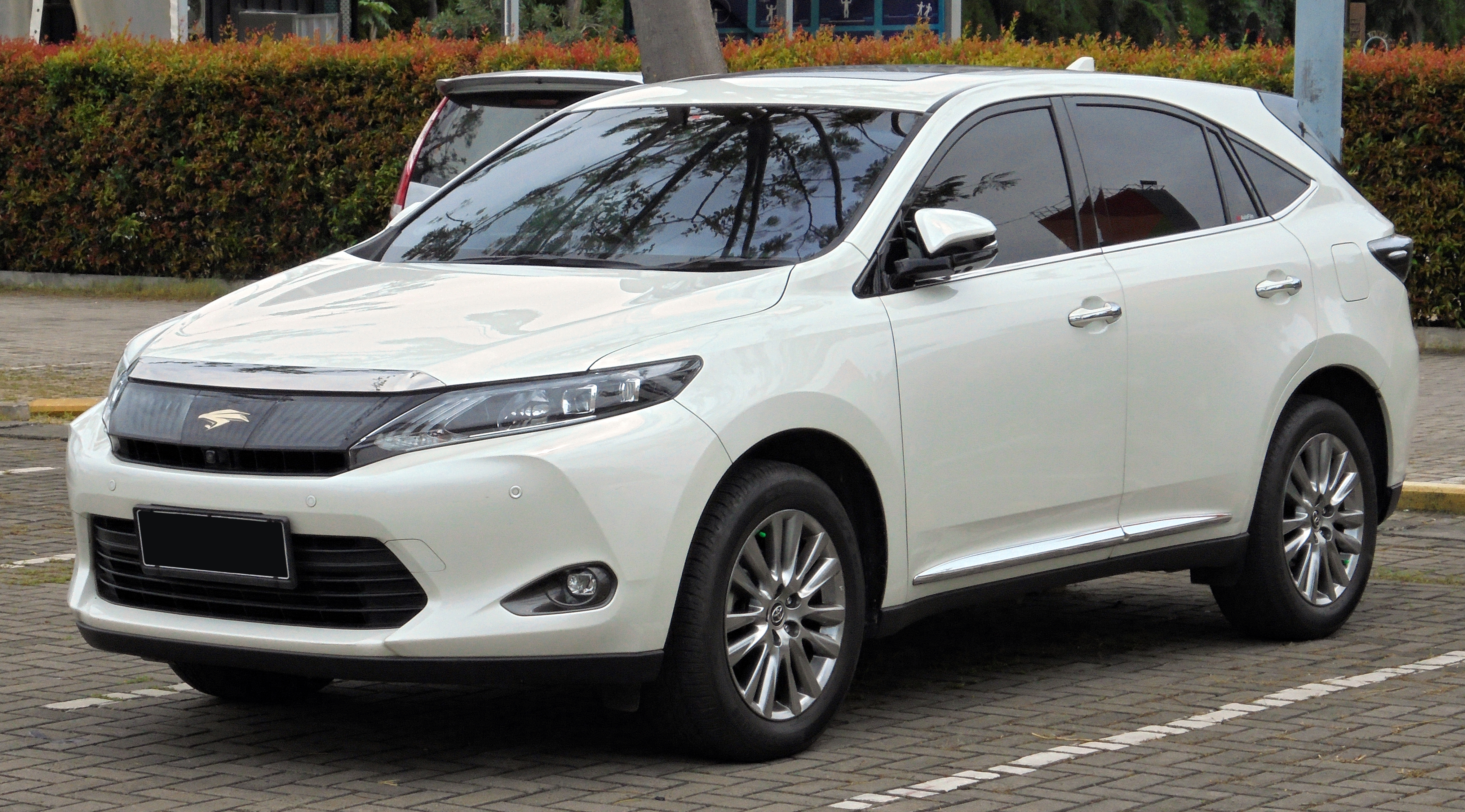
The Toyota Harrier is a kind of SUV that was sold in Japan. In the US, a very similar car was sold as the Lexus RX 300. It was one of the first cars to mix SUV and car features.
Collector car insurance is a special kind of insurance for people who own old or special cars. It helps protect these cars and usually costs less than regular insurance because these cars are not driven all the time.
Haggerty is a company that helps people who own special or old cars get insurance made just for those cars. They understand how to protect these cars better than regular insurance companies.
Chubb is a big insurance company that helps people protect their special or old cars. They make sure these cars are covered well and help owners when something happens.
When a car is badly damaged, sometimes fixing it costs more than the car is worth. Then, the insurance company calls it 'totaled' and pays you instead of fixing it.
Air suspension is a system in some cars that uses air-filled bags instead of regular springs to make the ride smoother and let you change how high or low the car sits.
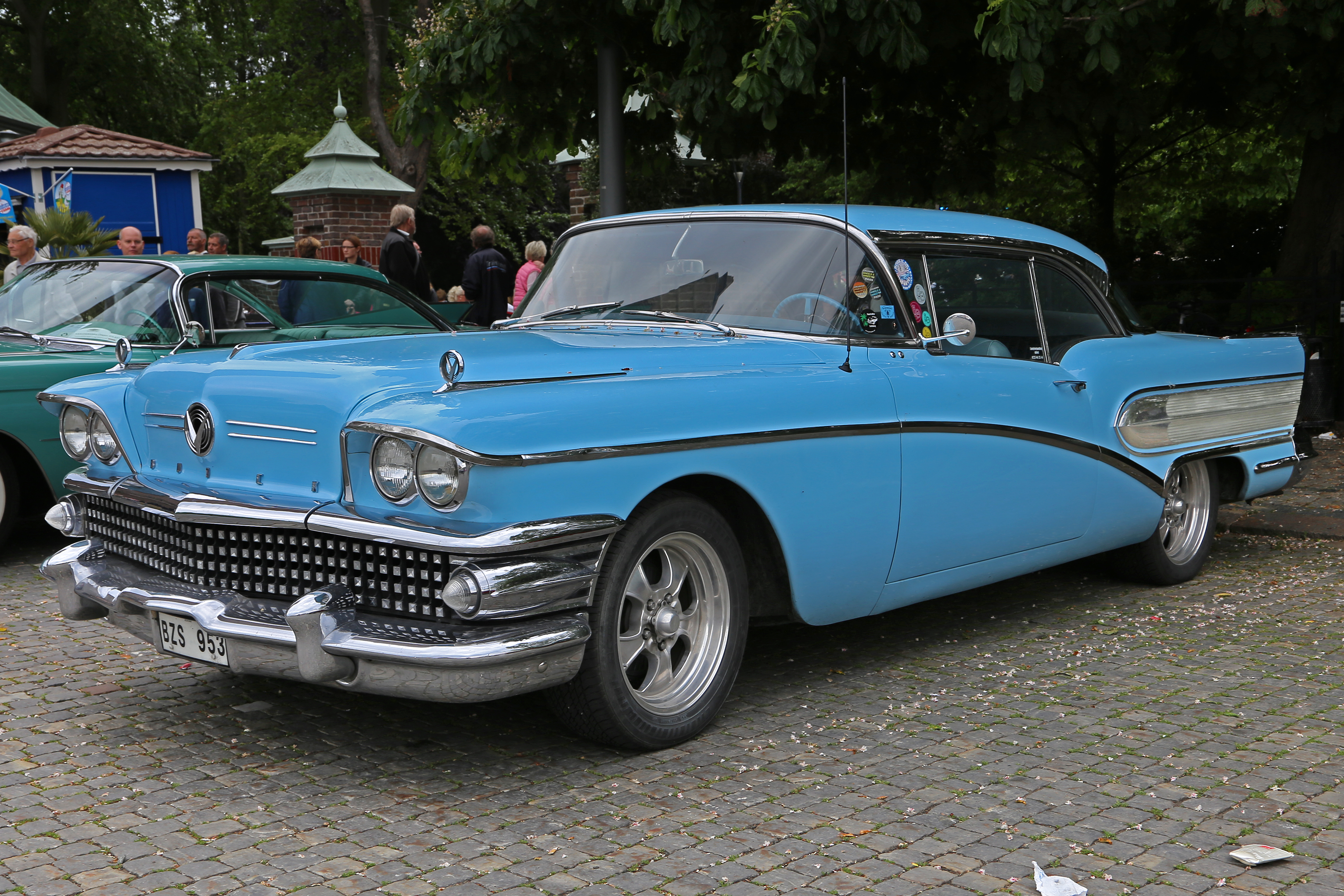
The 1958 Corvette is an old American sports car that many people love because it looks cool and is a classic. Some people customize these cars to make them even more unique.
LIVE
Myron, is there anything in your collection
that is objectively terrible to drive?
Oh yeah, yeah, no doubt.
Tonight on that car show, it's our pal Myron Vernice.
There are car collections and then there are car collections.
And if you are into the rare, the unusual, the eclectic
and the sublime, you're going to want to keep listening
because chances are Myron's owned it.
It's a great storyteller too and his knowledge runs deep.
This is a good one with a guy who's got the coolest stuff
and coolest friends in the car world.
It's Myron Vernice author, collector,
and one hell of a nice guy.
And it's that car show.
Myron Vernice is one of the world's great car collectors,
but the cars in his collection aren't just your typical
Ferraris and Porsches, they're even more incredible.
He's got unobtainium like a Mazda Cosmo,
Toyota 2000 GT, Gia 450 SS in an Autech,
Zagato, Stelvio, EZ1, and it just gets more rare
and interesting from there.
He shares his cars too as a frequent exhibitor
and occasional judge at events like Pebble Beach,
Amelia Island, and Radwood, and I love that we can now
say those three names in the same sentence.
He's also the co-author of, along with Mark Brinker,
the book A Quiet Greatness, Japan's most astonishing
automobiles, and of course, being Myron,
it's actually much more than a book.
It's probably the definitive work,
and it's actually four books plus a supplement.
So, and we've wanted to have Myron on that car show
for a long time because we know this conversation
is going to be wonderful.
Myron, my friend, we're so glad to have you on the show.
Hey, thanks for having me.
It's my pleasure.
Just one slight correction.
I don't have a Toyota 2000 GT.
I've got a sports 800, which is the predecessor,
and I've got about 10 other Toyotas, but no 2000 GT.
I went to Pebble Beach once with Mark,
actually, before we wrote the book,
with the intention to buy in 2000 GT
and neither one of us fit.
So, I ended up saving a lot of money that weekend.
Well, there is a website out there that says,
Myron Vernice's 15 Most Unusual Cars,
and that's in the list, so I'll have to send you
the link later, but I'm glad to hear that
I'm not the only one who can't fit into some of these things,
and I suppose that factors into your greater collection
as well, but...
So Myron, I imagine that a man who appreciates
the interesting cars that you do
has an equally interesting origin story of your own.
You know, I don't know, it's an immigrant story.
We lived in Greece until I was five years old,
and I grew up in a family that didn't like cars,
or maybe thought that they were the worst
of the necessary evils,
but we moved back to Akron when I was five years old,
and Akron was kind of a blessing
for a budding car enthusiast.
My mom said, when we lived in Greece,
we lived in an apartment, I used to sit on the balcony,
and just watch the cars go by all day long,
so I was an easy kid to babysit.
But when we got here, Akron was the rubber capital, right?
We supplied all the trailer, all the tires for Detroit.
So the car enthusiasm was a very high level.
Actually, up until the 1970s or early 70s,
the Akron Cleveland area had more cars per capita
than any place in the world.
And then, yeah, then the rust belt kicked in,
and things kind of went south,
but it was a great place to grow up
for a budding car enthusiast.
Yeah, yeah, but I'll tell you a funny story real quick.
As a kid, we never had cable,
and so my little sister and I grew up watching,
as sort of a goof, there was a televangelist
from Akron named Ernest Angelie.
I don't know if he's still alive or not,
but he was one of these guys
that would smack you on the forehead,
and we just, that was our association with Akron, Ohio,
for years and years on, and it was more to Akron than Ernest.
His church is still around.
It's about two miles from where I'm sitting right now.
Okay, okay, okay, okay.
Yeah, it's Akron, that's another thing
that Akron was on the map for,
between Rex Humbart and Ernest Angelie,
the televangelist, man, we were the capital.
You're killing it, yeah, yeah.
So your collection, is there a singular word you use
for the kind of cars that you own,
because I think the word offbeat does it a disservice?
Yeah, I don't think they're all,
I don't think they're offbeat, but they're different.
It's, eclectic gets used a whole heck of a lot these days.
I'd say, if you look at the real definition,
I think my cars are more eclectic,
because I just collect what I like,
and I try to drive everything that I have,
and that's kind of the most fun, right?
You can be promiscuous with cars,
but they can't be with your wife, right?
Kim and I have been married 43 years,
and I can have all kinds of variety with my cars,
and that's kind of where the root of my collection is.
Well, we're all aligned on that as far as like,
we all think that they should be driven,
and I like the approach of variety with the cars,
solidarity with the wife.
That's right.
How many cars do you have these days?
Last I read was about 75?
Yeah, you know, I promised Kim that we get down
to about 55 by the end of this year.
So right now we're in the mid-60s somewhere.
55, I think is a good manageable number,
as you get older.
Yeah, yeah.
For people that don't have multiple cars,
or have a smaller number of multiple cars,
how do you manage even 55 cars?
Because that is still a, it's a great number.
Yeah, it's not easy.
I've been blessed to have a good friend in my shop
who kind of takes care of everything there.
It's kind of a mechanical genius.
Grew up with Flathead Fords and small block Chevy's,
but loves the challenge of a Citroën
or even more unique things like that.
So that's the easy way to do it.
Living where I live in Akron,
real estate values are really cheap,
so it's easier to have a big building
to kind of keep your stuff in.
So just the one, one of the few benefits
of living in Northeast Ohio.
Where do you find these cars?
And I guess more importantly,
how do you even know that they exist
because you've got some exceedingly obscure stuff?
Yeah, you know, for a long time it was me pursuing cars,
kind of chasing things.
Now the stuff kind of falls in my lap.
I mean, I've got a Honda Coupe 9,
Honda 1300 Coupe 9 coming in the next couple of days.
And that one actually came to me.
And it's because I had a couple others and they were gone.
So, and that's pretty obscure car.
That's the last car, it's the last model
that Dr. Honda actually engineered for the company.
It's an air cooled slash air cooled car they made.
It's a pretty cool little car.
So a lot of that stuff comes to me now.
Basically I'm the only person kind of goofy enough
to buy some of this stuff.
You find a lot of stuff that ends up on these websites
and on the internet like Angel OPTIQ and things like that.
And people kind of go crazy on it,
but nobody really wants to step up and buy them.
So, I'm kind of like the last resort a lot of times,
I think for these people.
You're the guy.
Well, I like that some people are rescuing cats and dogs
and you're rescuing cars.
Yeah, right.
Is there anything you have that might surprise us?
You know, I think, no, there really shouldn't be.
I have a 12 cylinder Toyota Century,
which is kind of a sedate kind of sedan.
Oh yeah.
Yeah, maybe that, that's kind of boring and mundane.
So maybe that might.
No, that's so cool.
There's a guy on YouTube out of LA
who goes by the name F-Spot
and he has one that he has straight piped.
And it sounds pretty impressive.
So.
You know, it sounds like an amazing one car solution.
Yeah, it's, it's, you know, I don't know.
I, you know, to me, I love the stock.
The great thing about the Century
is what went into it and engineering
and construction standpoint.
I don't think that's a car.
Unless you have like a real wreck of a thing
that you want to, you know, build something.
I think that stock is the highest
and best solution for a Century.
Yeah, yeah.
For those who don't know the Toyota Century
is a pretty cool car.
It's a car that was at least not, you know,
sold in the US and the same guys, right?
So what is the Century?
I know it was in the news recently
because they announced is an SUV version,
which I guess I want to know your thoughts on too,
but how does that fit in with the JDM market in, you know,
in Japan?
Well, it's, you know, it's a Japanese Rolls Royce.
I mean, to put it bluntly, great car.
You know, you had to apply to buy that car.
It's a handmade car.
Even to work in the Century plant,
if you had to be like a 10-year veteran of Toyota
and go through another six-month retraining process.
So it's just that the engineering
and the quality that went into that car was unbelievable.
Still the only production V12 Japanese car ever made
and really kind of reserved for diplomats
and people in high levels of government in Japan.
You know, the fact that they're making as an SUV right now,
I think it's terrific.
You know, I've got a car called a Toyota Harrier Zagato,
which was sold as the Lexus RX 300 in this country.
Sold as Toyota Harrier in Japan.
So really regarded as the first crossover.
And when they started selling them in Japan,
they did has a got to do 250 special editions.
So we did one of those.
So, you know, I'm all about crossovers and SUVs.
So do those cars have the Zagato signatures
like the bubbles on the roof and?
No, the roof, no, but it's got all kinds of body stuff
all around it, special wheels.
It's got the Zagato logo on them.
So there's not a Toyota logo anywhere on the car,
but the roof panel is a straight Toyota Harrier.
Now my Autex Zagato that Ryan mentioned earlier,
that's a body that was fully done by Zagato
on a leopard, Nissan leopard chassis,
and that has a stylized double bubble.
So what is it like to drive a century?
Because you've said you drive all your cars.
What's it like for you to drive?
And when you drive it around,
do you feel like people know how special it is?
You know, I love driving it because you feel really special.
It's like super smooth and super quiet,
unlike most of my cars.
My wife loves sitting in the back seat.
One of the cool things about the century
is on the passenger side,
there's a pass through so that the rear passenger side,
passenger can put their feet through
and kind of stretch out, we close the lace curtains.
You know, they have their own HVAC system back there.
They've got their own stereo system.
They have two telephones.
So, you know, I get, the great pleasure
is driving people around in that car.
I said, you know, I'd love to be like an Uber driver
if I could pick to make sure
that there are like no jerks that ever got in the car.
Right, right, right.
I wouldn't even have to get paid.
I was just, you know, have nice people.
Right, so we talk a lot on this show
about what luxury means, right?
And the Crown was a car that really,
I think was the epitome of luxury,
at least in Japan for many decades, right?
And yet you look at a newer one
and it looks a hell of a lot like an older one, right?
At least to the eye, they didn't change too much.
How did that car change throughout the years?
Yeah, the Century, because the Crown
was kind of a cut below.
Yeah, the Century basically the same car for 50 years.
Introduced in 67, first 30 years was very much unchanged.
Then in 1997, it went from a V8 to a V12.
That's when they did more integrated bumpers,
but still basically the same structure
and just an update.
So really the same car in two series for 50 years.
Then they took a couple years off
and they reintroduced it as basically the SUV.
And now they're talking out for what I've heard
about spinning it off as their own division,
kind of like a Bentley or a Rolls Royce.
Really?
Yeah, yeah, yeah, we did talk about that, didn't we guys?
Yeah, I've heard that.
Like a superior brand to the Lexus, right?
It's one up from the Lexus.
Right, right.
That's right, we did.
Well, and we're seeing manufacturers do that more
and more like luxury or not, like they did with Ram,
like they did with Genesis.
So it'll be interesting to see that one.
So rare is, I guess, a common theme in your collection.
Rare probably doesn't always equal valuable.
Sometimes it does, right?
Post your child in that statement.
Yeah, you know, I guess, is there a correlation
for you between rarity and the enjoyment you get out of it?
Yeah, I think rarity kind of ties into it,
only because a lot of times the spec and,
or it was like a lost dead-end road for some kind
of technology that didn't work out.
So the story was really good.
So maybe not buying it for the rarity,
but the rarity being a result of what interested me.
I'm curious when you call up your insurance agent
and you bought a new car.
Like how much time do you have to explain exactly
what that car is to them?
So when we moved back to Akron 30 some years ago,
I had maybe a dozen cars.
It wasn't a lack of lots.
So called back my old agent, put the house on,
the everyday cars, and he said,
yeah, I can do collector cars.
And then as the collection started to grow,
and I was calling him on a fairly regular basis
to add or subtract every once in a while,
he finally said, you know,
there's this thing called collector car insurance.
And, you know, I'm happy to give up this portion
of the stuff.
So, you know, listen,
there are really good collector car services out there.
You know, Haggerty's is the 800 pound gorilla.
I'm with Chubb, which I think is fantastic.
You know, there are three or four others that,
you know, they're used to, you know,
people like me and collectors, right?
It's collector car insurance is like the easiest thing
in the world and the greatest thing in the world.
It's a relative bargain compared to the other stuff.
And I think the people that are in that,
that are agents, kind of understand the hobbyists,
at least the successful ones.
So, yeah, it's an easy thing for me.
And, you know, my agent with Chubb is terrific.
She never questions me.
I've only had one claim, and it was in a car
that I only had for like two weeks.
I actually had, I totaled it.
I totaled it two weeks after I bought it.
I didn't even put it on the policy.
You know, you get like a 30 day grace period.
And I totaled it, I put it in a ditch.
And they gave me, I said,
here's what I was gonna insure it for.
And it was no questions asked.
It happened.
Actually, we rebuilt the car.
I bought it back out of the copart.
And bought a body shell, and we rebuilt it.
And they have it insured again.
Wow.
Well, shout out to our new sponsors, Chubb Insurance.
Right.
Absolutely.
You can't write about your commercial, right?
Or at least endorsement.
Well, insurance payouts are one thing,
but how do you find parts for some of these cars?
Because we've listed a few of your cars,
but you've got, can you share some of the other cars,
I guess, too?
I mean, this is some obscure stuff.
Yeah, there is a lot of obscure stuff.
And again, thankfully, I have my friend
who is a great fabricator.
And again, one of the few benefits of living
in Akron, Ohio, there are a lot of machine shops,
a lot of support industries for automotive parts
and support of the rubber factories and stuff.
So there's a lot of that talent still here
to do these things.
Plus, I've been in the hobby long enough now
that you have connections all around.
And the world with the internet,
the world has really shrunk.
Before, I used to build big cars all around the United States.
Now I get them internationally, not an issue.
Like the Century, the Century has air suspension.
And one of the airbags went down,
I figured, oh, what the heck,
might as well replace them all while we're at it.
I found a source, Toyota still supports them,
but the prices are super, super crazy expensive.
But I found a source in the UAE
that supplies them at a fraction of that.
And I get them DHL three days.
So that's parts, if you're gonna put yourself out there,
parts are not that tough.
You just can't be afraid.
Interesting.
Yeah, interesting.
What a time to be alive, right?
Yeah, yeah.
So what are some other cars you've got?
Like what do we not know about?
Oh, that's a good question.
Yeah, do you have to consult a list?
Yeah, I can tell you if I'm gonna have to fill you.
You know, our youngest daughter is a lawyer
and she has the spreadsheet.
She's the one who knows where everything is.
You know, I was very much early on into Porsche 356,
as I know you guys have talked about from 356
is one of the things I have to have.
The first 356 I bought, I still have after 51 years.
Wow.
And which one is that, Myron?
63B coupe, nothing car.
You know, I should have kept the Carrera Speedsters
and you know, the Carrera coupes and stuff,
but I kept the Bondo-Laden 63Coupe, but it was $1,500
with a new paint job and a rebuilt engine,
which was a bargain, except for the fact
they only had 900 bucks to my name.
But I had, I've owned over 103, 56s.
Really?
Yeah, yeah.
But they were really cheap back then.
Sure, sure.
Right, I've owned over 30 Porsche tractors too.
I was importing them before.
Really?
Before they got to be a thing.
Remember the Porsche tractor race that happened at Rensport,
right?
Yeah, Rensport, yeah.
First and second place, first and second place
were sourced by me.
So, that's amazing.
So yeah, so I was in 356s a lot,
really wasn't into American stuff,
but lately in the last six or seven years,
I've really gotten into American customs.
Custom, basically California customs
from the 50s, for the most part.
Yeah.
I've gotten a half dozen of those.
I bought my first Corvette six years ago,
and I didn't even buy it.
I traded, and most of my friends were shocked by this.
I traded my Alpha Montreal for a 1958 Corvette
that was customized by George Barris.
Okay, well, you're gonna trade your Montreal for something.
That's a good one.
Yeah, you know, I traded a car that I didn't like to drive,
but I love to look at to a car that I don't necessarily
like to drive either, but I love to look at.
Yeah, yeah.
Yeah, so customs are a big thing for me now.
Can we come back to that Alpha Montreal for a minute,
because this is one of those cars,
I've heard that refrain from others too.
They're just beautiful, but they're very complicated.
They're not great to drive,
and that was your experience as well, huh?
Yeah, yeah, I lusted for one for a long time.
It took me a long time to source it.
I found one in Greece.
It was a two-owner car.
It had been shown a lot.
It had been done rallies, but not, you know,
not competitive rallies, like touring rallies.
So it was like best.
It was a car that was driven, loved, and maintained,
and it got here, and it was better than represented.
I was so happy to get it.
Really?
And, you know, that's one of those things
that it's so beautiful to look at.
I think it's Gandini's second greatest design.
It's comfortable, the steering wheel is just,
oh, just sensual, just holding it.
It's got the best transmission
of any car I've ever driven,
but the package just, I can't explain it, you know?
I just didn't love the driving experience,
and I ended up keeping it eight years
because I loved looking at it for so much,
and I kept trying to drive it and just didn't do it for me.
I'm gonna ask the million-dollar question then.
What was Gandini's best design?
Oh, the Mura.
The Mura, no doubt.
Yeah.
That's fair.
There you go.
That's the correct answer.
Are there still Myron-worthy cars being produced,
or are these all artifacts of an earlier time?
You mentioned earlier that some of the cars you have
are sort of technical dead ends or what have you.
I mean, are there newer cars
that will someday find a place in your collection or?
You know, I'm kind of an automotive omnivore.
Other than a Trebot, there isn't one car ever made
that I probably wouldn't want to have.
Yeah, I mean, I think we're kind of
in a golden era of cars right now.
I don't shop for new cars.
I've got maybe three cars with cup holders out of the 65,
so I'm not into modern cars,
but there's a lot of really, really great cars out there.
I would love to have a Ford Maverick.
I think a Maverick is like the coolest thing out there.
Yeah, they are neat.
They are neat.
I just saw one today and I thought,
that makes sense, right?
It's got everything you need, nothing you don't.
The car I total was a Dodge Rampage,
which was like an 80s version of a Maverick,
a two-door kind of thing.
And one of the last few cars I bought,
I've got a Lincoln Blackwood,
which I think is like, it just,
Oh my gosh.
Yeah, it's like the American version of the Century.
I just feel good driving it.
Well, and that was such an interesting concept
on their part and it just didn't find its footing,
but so it's interesting to hear,
that you have one and enjoy it.
Yeah, well, they were two or three years ahead of their time.
People weren't spending that kind of money
on luxury. Right.
So that's, I hope Lincoln gets back.
I like Lincoln's too.
I've got four or five Lincoln's.
I mentioned my dad hated cars,
but the only car he ever enjoyed,
he bought a new 49 Lincoln Cosmopolitan Townsendant,
which was a one-year only big bubble bathtub
with a fastback.
So he always talked about that.
So I found one and I've got that
and it takes up a huge amount of space in my garage,
but it's the only car I've ever bought
for sentimental reasons.
How many of your cars come with membership
to a car club of that manufacturer or model?
Are you subscribed to many car clubs?
You know, I, no, I used to be
and single-mark car clubs almost ruined the whole hobby for me.
Just wasn't, you know, the people,
you know, I was in the 356s when it was a great community
and you helped each other and, you know,
here you can use this Volkswagen part over here
because you don't have to pay three times as much
for Porsche stuff and, you know, you traded stuff
and you gave each other parts
and for everybody else needed it.
And then it got to about six or seven years ago,
I was chairing the 356 registry concord
at East Coast Holiday.
And all these guys that I used to trade parts with
and give stuff away with,
all they wanted to talk about was
how kids don't like cars anymore
and how much their 356s were worth.
And that was true of pretty much
every other single-mark car club.
So I quit pretty much all my single-mark clubs
and I only do events now that are just very open,
you know, kind of a wide variety kind of things.
And it's very freeing
and it gives you a whole heck of a lot more pleasure,
you know, to do those things.
Plus, you know, I find most of my car friends now
are half my age, which is, you know,
they have just as much enthusiasm now as I had
when I was their age, you know?
It's just the kids, the young people,
just there's as much enthusiasm now as ever, right?
It's just like growing up,
our folks were into Model T's and Model A's,
you know, people my generation
were into 50s and 60s, you know, American muscle,
you know, these kids today,
it's just like my generation, they're into cars,
they're just not into the cars that, you know,
we grew up with, which is totally logical,
which is one of the reasons we did the book
on Japanese cars, we really felt important
to legitimize that segment of the hobby.
Well, let's talk about that book, A Quiet Greatness.
I was gonna ask why Japanese cars,
but I think you just answered that.
So tell us about this book,
because it is, it's this massive undertaking,
I don't know where you would even start
with something like this,
I think it's got something like 2,200 photos.
So what is the process there?
And what was the, I guess, the timeline in completing it?
Well, we got into Japanese cars
really because of the Peterson Museum.
I was doing a rally in 2015 with a car
that was sponsored by Japanese Nostalgia Car,
it was Mazda R130, it did some time
at the Peterson Museum, Luce Koup,
only front wheel drive road range
and car that Mazda ever built.
And there was the Japanese car cruising at the Peterson.
And I went to it.
And I was like double the age of the average person there.
And it was just such a great grassroots crowd.
And just the vibe was just so good.
And really, it was about the time
I was getting disillusioned in the Porsche hobby
and all that stuff.
And I saw, man, these were my people 30 years ago.
And I told my friend Mark about it.
Mark is more into Italian coach built sports cars
from the 50s and 60s, but again, a real enthusiast.
And that's when we started looking at cars.
And a lot of these early Japanese cars
were, if not built by Italian designers,
they were designed by the Italians,
at least a lot of their hero cars.
So that's what got us into researching it a little bit.
And we talked about it for a few years
that we really should do something about it.
Mark had written a couple other books.
And I retired and he said, well, we should do it at this point.
And we were going to do a coffee table book, about 300 pages,
250 to 300 pages.
Just like your typical Ferrari, Porsche book,
make it nice, shiny, glossy kind of thing.
Then we started discovering cars.
And it just kind of grew and grew as we
found more and more cool cars.
We kind of joke that the Japanese were with their cars
like the French with their wine.
They kept the best stuff for themselves.
And we just kept discovering cars.
And that's how it grew into 1,400 pages and 2,200 images.
The most expensive part of that was
we kept discovering cars that we decided we needed to buy.
So by the time we finished the book between the two of us,
we bought 18 cars.
Before we started the project, we didn't even
know these cars existed.
So it was.
That's fantastic.
That's amazing.
That's the epitome of practice what you preach
as far as being an ambassador for Japanese cars.
Well, it was a six-year project from beginning to end.
We wanted a really high-end book.
Again, we wanted a Ferrari quality book.
We took it to all the high-end publishers.
They said, this is amazing, but no one
will ever spend a lot of money on the Japanese car books.
So we decided to self-publish because we
didn't want to cut any corners.
And we took a big risk there.
But it happened, you say, that we sold out.
It's sold out now.
So it was great.
Wow, congratulations.
Will there be a second edition?
Because I feel like JDM cars really are having a moment.
You see these cruisans at the Peterson young people
into the skylines and importing the 25-year stuff now.
I mean, it's just I got to think there's
another wave of customers for you.
Well, not for me.
There's not.
When we were promoting the book, a lot of people
were asking the question, aren't you
afraid that someone's going to go out there and copy you now
and start doing this?
Well, that's kind of our hope.
We want other people.
We want to start the trend.
Mark's actually finishing up a book now on the Pebble Beach
road races for the 70s.
It'll be released at Pebble Beach for the 75th anniversary.
So he's doing that on his own.
I'm proofreading it for him, but it's his book.
I think we have in the museum, we
have the Monza that was the reason that the races stopped.
Really?
Yeah, I think so.
It's on loan.
It's not a property of the museum.
But yeah, there was a significant crash,
and that's when the races stopped at Pebble Beach.
People don't realize that the Concord, the car show,
was basically a spin-off from the races.
The races were there before the car show.
It was just something else for people to do that weekend.
Things have changed.
Yeah.
Well, and it's interesting when you look back.
I mean, I feel like a lot of the significant races, obviously,
also had a significant crash.
I mean, you think about the crash at LaMau that didn't stop
the races entirely, but it impacted Mercedes participation,
stopped it for a long time.
Myron, I know that you've been a judge at Pebble and also
Radwood, which I love the contrast there.
And we haven't had the opportunity to be judges yet.
So I wondered if you could share what the judging experience is
like in general, and also those two events,
because they could not be more different from each other.
I've not judged at Pebble.
I've shown at Pebble several times.
I've judged at Amelia Island and all the other.
And I used to have my own Concord in Ohio
called the Glenmore Gathering.
You pick a low-income area to do a very high-end car event.
It's not a good economic decision,
but we had a heck of a lot of fun.
We did it for 18 years.
That's the important part.
We've judged high-end Concord events as well as Radwood.
And you know, Radwood's a hell of a heck of a lot more fun.
Actually, Concord of Lemons is the most fun to judge,
because the bribes are fantastic.
You really walk away with good booze and good food
and a good time.
That's the best of all.
The bribe economy is alive and well at Lemons.
Absolutely.
We live a good part of the year in Greece
where the bribe economy is part of everyday life.
So it's old hat to you.
So Concord of Lemons was an easy fit.
You know, it's just different criteria.
French judging is really kind of the way to go,
where you're just getting kind of a special car.
And there's a bit of a quid pro quo.
I don't care where you're judging,
but that's all part of the character of the event.
There are some people that do it and do it well
and, you know, more power to them.
Let's talk a little bit about your involvement with Radwood,
because we had Art Cervantes on a while back,
which was a fun conversation.
And my introduction to Radwood was at Amelia a few years ago,
maybe three years ago.
And I don't know why this stuck with me so much,
but I saw three Buocreatas in a row, right?
And there was a guy who was there
with all the Buocreata clothes.
Yeah, regalia.
And it was just, you know, between us four,
I think I enjoyed the Radwood part of Amelia
more than I did the actual Concord.
It was just so great.
It was just, because it's stuff that I could connect with
in a way that I couldn't connect
with a lot of the other stuff, you know?
And when you say, you know, the kids,
when you don't say this,
but when people say, you know,
the kids aren't into cars,
they're just going to a Radwood event.
It's got the most energy of anything out there these days,
you know, so.
Right, I beg to differ.
Yeah, yeah, yeah, yeah, yeah.
So you're pretty heavily involved.
What do you bring to Radwood?
You know, we've done all kinds of stuff.
One of the founders of Radwood,
one of Art's original partners,
Brad Brownells, my friend of mine,
we do cars and coffee every week together.
Oh, you do?
That's cool.
Yeah, yeah, yeah.
So, you know, that's exactly why I love Radwood,
is my kids, so I have two girls in their mid-30s
that grew up, you know, in the car scene,
but Radwood is their thing.
Actually, in 2019, I bought my Autex Segato
at the Bonham's auction at Pebble Beach, at the Quail.
Had it shipped home, Kim and I went back to Greece,
and my daughter called me, she said,
Dad, Radwood's coming up in Detroit,
they're doing a Radwood in Detroit,
and the Segato had been delivered to Akron.
She said, can Zoe and I take the car to Radwood?
So, before I even sat in the car,
my kids put 1,000 miles on it,
one Radiston show in Radwood, Detroit,
you know, they had two giant dogs sitting in the back,
the whole thing, and they were just so pumped.
Two years ago, Amelia Island had a class
for 80s, 90s Japanese performance cars.
So, my same daughter and her husband
drove it from Cleveland to Amelia Island
in the worst weather possible,
went down, showed it in Radwood on Saturday,
showed it on the Concor on Sunday,
won a prize, a class prize in the Concor,
and drove it back the next day.
So, put 2,500 miles on it,
and we're just like totally pumped and had a great time.
So, that's what I love about Radwood.
Yeah.
I think Japanese cars are really having a moment of the minute.
I mean, you look at this year,
I think both the Quayle and Laguna Seca
will be featuring Japanese cars as specific categories.
Only last week, cars and bids sold,
what was a pretty much a standard STI for over $100,000.
So, they seem to be coming into their own right now.
It's been a slow process.
You know, when the book was released,
we thought that would kind of pump things.
What we've noticed is a lot of the historic cars,
the cars of the 60s, the Italian,
either coach built or Italian designed cars,
low production cars, don't have the enthusiasm
that the Skyline GT-Rs and things like that have.
So, I don't know if the Subaru, the STIs,
and things like that, those cars are great to do that.
I don't know some of the vintage cars will ever catch on
because they were never sold here,
plus the generation that's into the Japanese cars
now hasn't been educated enough on the older stuff.
It seems like movies and motorsports
seem to be two things that really help
put Japanese cars on the map.
You know, you look at Falcon Furious,
and that was a big catalyst for various Skylines,
or you look at Colin McRae driving a Subaru
and Fred and winning a world championship.
And that sort of stuff,
I know that there were Datsun's raced earlier than that,
but that sort of stuff seems to really help
put those cars on the map.
Yeah, yeah, all the young John Morton
who raced for Pete Brock just got inducted
into the Motorsports Hall of Fame.
He was famous, he raced everything,
but he's famous for racing the Datsuns in SCCA.
Yeah, yeah.
And Pete Brock is gonna be the grand marshal
for Laguna Seca.
Is he really?
Oh, that's fantastic.
Good timing, yep.
I haven't just announced.
I have a car called the Hino Contessa.
And very few people know this,
but Pete Brock formed BRE with Hino's,
the first two years of Hino race,
of BRE race cars for Hino Contessus.
Hino was thinking about coming to the US market,
to Hino was gonna come to the US market,
and they wanted to set kind of level of expectation,
you know, win on Sunday, sell on Monday kind of thing.
And just as they were getting ready,
I was with a car designed by Giovanni Michelotti,
and just as they were getting ready
to come into the US market, Toyota bought Hino,
and decided, well, they didn't need a car
competing with their Corona,
so they stopped automotive production.
So Hino even today is Toyota's medium duty truck line,
but they just, they got pulled,
the whole thing got pulled out from Pete,
and Toyota came to him.
It's kind of an interesting story.
It's in the book, by the way,
with some previously unpublished pictures
that Pete provided for us.
Toyota came to him and said, listen,
we know that we pulled the rug out from under you,
we're gonna give you the 2000 GT race program.
We're gonna send these 2000 GTs,
you're gonna get the 2000 GT race program.
He said, great, that's fair.
Six months later, no 2000 GTs,
and one of his guys shows up at the shop and says,
hey, I was just at Shelby's place down the road,
he's got the 2000 GT race cars.
And Shelby found out that they're gonna give the program
to Pete Brock, he went to Japan.
He was a Toyota dealer
and the West Coast Goodyear distributor.
He went to Japan, talked to Mr. Toyota specifically,
and said, hey, you know, you owe this to me.
Toyota switched it to Shelby,
never told Pete Brock anything.
And that's how Pete ended up racing Dotsons.
And he was successful,
didn't Bondurant race some of those for a while?
Yeah, yeah, Bondurant was the East Coast guy,
and Pete was West Coast.
Do you have a favorite Japanese car of all time?
Yeah, you know, I do.
My Mazda Cosmo, only because,
and it's kind of a funky car,
it's painted the wrong color,
it's got slot mags on it,
it's got some rust bubbling here and there.
But so it's not the greatest Mazda Cosmo in the world,
but I say it's the most driven one.
Bought it, had it imported from Japan to Greece,
drove it in Greece as my only car for a couple of years,
and had it sent here.
And it's just such a special car to drive.
And I don't know if they're all that way,
but that particular one is probably my favorite one to drive.
So for those who don't know this car,
it's a rotary car, it's a sports car.
Back in the day, it would have competed with what?
You know, it was Mazda's Halo car,
and it was their first production rotary car.
So it was priced up there with close to like,
E-type Jaguars and things like that.
Really?
Yeah, really expensive, didn't sell much,
but it was a handmade car.
They made five a day for five years,
they won a day for five days a week for five years.
So it was a pretty special car.
And the Cosmo name has kind of stayed within Mazda off and on.
I just, right last fall, I bought the last Cosmo,
which is called the Yunos Cosmo,
triple rotor, twin sequential turbochargers.
So that was like their last kind of Halo car.
It sounds like a superhero.
Yeah, yeah, right?
And it does look a little bit like a Buick Ryota.
It's kind of that generation.
That's a great callback.
In fact, I'll probably take that to the next Radwood.
Right?
I always imagined that original Cosmo,
like just driving like very fluidly,
like it just, I don't know, just would dance,
but that's maybe that's me seeing it
and interpreting that as how it would drive.
Yeah, you know what, my friend of mine who drove it,
a friend of mine who drove it,
who's a designer and a real enthusiast,
he says it's like driving a very, very smooth Lotus,
which kind of makes sense.
Yeah, sounds kind of like perfection, you know?
So you have this vast, like, you know,
breadth of knowledge with rare and obscure cars.
And is there anything out there
that you think is functionally extinct in 2026?
Extinctly.
I've heard stories, they're just, there are no more.
Like, I've heard stories of some of the British cars,
like the British Leyland cars and things,
like they just didn't last and there are none registered.
Do you know of anything that's like
the passenger pigeon of cars?
Yeah, no, they're out there.
Even if you don't know, you know, I've got a few cars
that are like the only known surviving example,
but that doesn't mean there aren't more out there.
It's the only one that's like registered somewhere.
No, there's so much stuff.
I mean, we've sold, the United States alone,
you know, for years, we're selling 12, 15, 16 million cars,
you know, so there's so much stuff out there,
absolutely so much stuff out there.
Yeah, yeah, yeah.
But no, I'm curious, Myron, what do you have
that may or may not be the only examples extant?
You know, a few things like that.
One I recently sold called the Hoffman X8,
which is really kind of a car that was built in 1935
under all kinds of veiled secrecy,
mid-engine X configuration, eight cylinder,
kind of all kinds of international connections.
I just sold that to a friend.
We've got a car called the Paxton Phoenix.
You've heard of Paxton Superchargers.
They made one car.
Our car was made in the Los Angeles, actually,
where Paxton products used to be based in El Segundo.
In the early 50s, Rundtrek magazine cover car in 57,
that's one of one, still has less than 1,000 miles on it.
Wait, so it's been displayed at the Peterson before.
We should ask our fourth member of the group
what it was like new.
Michael, what's that says from El Segundo?
You can ask him what it was like
when it rolled off the factory floor.
So things like that, I probably have a few comments.
Yeah, yeah, it's so wild.
What do you daily drive, Myron?
I mean, you said you're not against new stuff,
but what do you daily?
Today, I'm driving in the snow,
a 1991 Infiniti M30 convertible that...
I love that.
Just plain and contrast.
During the height of COVID, I bought in Los Angeles.
Matt Farah picked it up for me, did some service on it,
and we flew out, drove route 66 home.
That's so cool, that's so cool.
Got accosted in Eric Oklahoma for voting for Joe Biden,
just because her car hit the top corner tags in it.
Oh, my gosh, yeah, it was, yeah.
So I bought that with the idea of driving it home
and flipping it, but it's just such a really, really good,
just everyday kind of beater car,
and you can put the top down
when you want to put it down too.
I only drive old cars,
that's probably one of my newer cars.
My wife has a modern Subaru outback,
that's kind of it.
Okay, okay, okay.
Oh, nice, well, you're in the right place
because I'm finishing up some time
with a Forester Wilderness,
and Ryan Hedlund as well, we're sick.
Yeah, yeah, yeah, yeah.
Yeah, I refer to it as a squonk in an article I wrote,
now I'm regretting it.
I don't know if you ever listened to Steely Dan,
but there's a line about a squonk,
which is a mythical forest creature in Pennsylvania,
which is kind of homely and ungainly,
and I'm afraid I may never get another
Subaru press car again, Myron,
but you know, I gotta speak the truth.
Well, listen, you know,
Subaru has made a fortune out of
not talking about their cars and their ads,
so I think there might be a real opportunity there for.
You know, that's a good point.
Yeah, it's about the experiences you'll have,
right, not the car itself.
Yeah, safety, dogs and kids, right?
You've got Mazda, which I think makes like
the greatest Japanese cars,
but can't market themselves out of a wet paper bag,
so it's a total opposite.
Yeah, I am loving the Forester,
and I'm very sorry to see it go,
but it's been really fun.
Well, Lindsay took this thing to Dirtfish,
the off-road school in the Pacific Northwest,
and yeah, you should see the videos.
I mean, she got air and everything.
Well, and it was heavy snow, right?
Yeah.
Yes, we had between a foot and two feet of snow
the day before we did,
it was a women's off-road event through Avance,
and we did the off-road course at Dirtfish,
and the car just chewed it up.
It was so much fun,
and last year I went,
and it was muddy because it had been pouring rain.
This year we had snow,
and like double the water we had last year,
the water was really deep,
but you know, put the car through its paces,
and it performed beautifully,
and we were comfortable the whole time,
and I just, I can't wait to go do it again.
That's awesome.
Just put on your calendar,
line up a Subaru press car for this time of year,
every year, and you're good.
That's right.
I mean, in two years in a row,
so I feel like I'm off to a good start.
I think Subaru already know.
They're like, ooh, it's coming up that time again, isn't it?
Well, I think it's gonna be cool in this next week.
That's when the off-road day's been booked, oh boy.
But there's sort of a paragon of like car as appliance
in the very best way, right?
Yeah, yeah.
And they've got some old school bits,
I mean, the ones that are worth keeping,
and then they've got some new bits
that are there for a reason as well.
But we talk about cars as appliance
and this kind of thing, and it's not necessarily a bad thing.
We also played this little game on the show,
like the best year for a certain mark, right?
And I will go to my grave saying 1990 was peak Honda
and peak Nissan, right?
You go into a Honda or a Nissan dealership in 1999.
Now, granted, I was born in 75, so I was 15.
This is when I was really starting
to pay attention to cars, but you could,
you go to a Nissan dealership, you get a 300ZX, a 240SX,
the four-door sports car, the Maxima,
you know, the hard-bodied truck, the Pathfinder.
Honda was very similar.
They had their brand new Accord, right?
The Prelude.
So when was peak JDM for you, Byron Verness?
Oh, you know, I think right around that time,
I mean, early 90s was like super, super stuff.
I mean, Nissan was just kind of wrapping up the R32s.
They had the Z32, you know,
there's early 70s tough to beat.
I mean, the GT, the 2000 GT was still,
now 2000 GT was early 70s.
But yeah, that's kind of super great time.
Well, I feel vindicated, to be honest,
because I think peak Honda is NSX.
So you're a few, maybe four years too early, Byron,
on that one.
And peak, like peak Subaru is like mid-2000s.
So can you explain why that's peak Subaru for you?
Yeah, like when the 22B came out, right?
That was the rally car of choice and the road version.
And yeah, so for me, that was why it was peak.
Yeah, but Byron's the expert here.
What do you think?
Yeah, no, listen, it depends on the car.
Like Mark, my friend, my co-author, has got a 22B.
And he just, he raves, absolutely raves about it.
But I'll tell you that he thinks he would rather drive,
he's got a Pulsar GT-IR Nismo edition, which is...
Oh, wow.
Every bit is good, but you know,
for a fraction of the cost and had nowhere near the success,
you know, in the rally circuit, as the Subaru had.
So, you know, you can pick out cars, I think, from any era.
Even like when cars are like really, really bad,
they're always some standouts, you know, in certain years.
So you learn to appreciate those things.
Yeah, yeah.
Well, talking about NSX is I think we can all remember
when you could get an NSX for 25 or 30 grand,
a pretty decent one.
Those days are obviously far behind us.
And I know that this is not a hobby about making investments
or money, you know, it's about the joy, the drive and all this.
But Myron, from where you sit,
what should we all be buying these days?
You know, again, that's, I've never bought a car
for investment, although my wife won't listen to this.
So, you know, I've lied to her about that.
That's the best.
It's like, it's like the infinity I'm driving,
six years later, that was going to be a quick question.
Unless she goes on vacation to Peru,
and then you're in trouble.
But we've been to Peru a couple of times.
My own were huge there.
I don't know if you know this.
We were number one for a long time.
Oh, really?
Yeah. Oh, yeah.
Go figure. You leave it.
We've since dropped to 14 since we, you know,
gave them a shout out.
So, you know, how that works.
But they're like, we didn't want anyone to know.
Oh, stop that.
Well, I'm a beauty pleasure for last year.
Much were probably number one in Crete, too,
because I listened to all your stuff while I was there.
Oh, fantastic.
Thank you. That's fantastic.
That explains the bump in Greece.
We appreciate it.
You get the bump in Greece.
Absolutely.
Yeah. So, yeah, I don't know.
Listen, I still think NSX is a good buy.
If you look at the enjoyment per dollar value,
the things, if they're treated halfway decently,
are Honda bulletproof.
I think, I can't,
I've never tried to judge a car based on monetary value
because the enjoyment value is the most important aspect
of it for me.
So, listen, there's some cars really expensive
that people can't afford, the cars I can't afford,
the cars that I'd like that I can't afford.
But I could still say they're good values
if you can afford them and enjoy them.
I mean, you look at Dr. Miro and his career GT, right?
I mean, that's an expensive car,
but he's driving the heck out of it and he enjoys it.
And that's kind of what it's all about.
And I think the great thing is with cars,
if you're into cars, you can find a car at any price range
that you can maximize your enjoyment
for the budget you have to spend.
You don't have to spend,
you don't have to spend 10 figures,
I mean, five figures to get a great car that you can enjoy.
Again, this infinity, I drove it across country
and I paid like five grand for it.
I mean, it's crazy.
The enjoyment is inverse sometimes
to the amount you have to put into it.
But I think you're hitting on something
that we hear from a lot of collectors,
especially those, I think, with bigger collections,
is they say, you know, you say like,
well, what's the theme of your collection?
And they say, I buy what I like.
And I think if you're in the car hobby to enjoy them,
and that drives you, pardon the pun,
then you do end up maximizing your own enjoyment.
Right, I mean, that's really what it's all about,
you know, it's getting the enjoyment.
Now, whether it's driving it or showing it off
or tinkering with it or, you know, cleaning it,
you know, there are all kinds of things
that can bring you joy out of this hobby.
Myron, is there anything in your collection
that is objectively terrible to drive?
Oh, yeah, yeah, no doubt.
I'll say currently.
Yeah.
Yeah, I bought a Subaru, and I'm not down on Subarus,
but I bought a Subaru 1974 Subaru GL
that was customized back in the,
it's got big continental spare,
it's got big grill, Lincoln grill, Cadillac head lights
and stuff on it, it's the front wheel drive,
the roof's been cut off on it, and it is,
it's a horrible car to drive, absolutely horrible car to drive.
But one could argue that the terrible driving experience
is down to the modifications
and not the fault of Subaru, perhaps?
Yeah, yeah, no, no, if they hadn't added like 200 pounds
of Bondo and stuff and spare tires and stuff,
it was probably a fine little car back in its day.
Yeah, the Lincoln, you said a Lincoln grill, right?
That alone would double the weight of the car,
it sounds like.
Yeah, yeah, yeah.
Probably the worst car I've ever had,
and I had two of them.
I posted a picture on Instagram today
because it came up in my history.
The car called Elita Caballero,
which was made in Post Falls, Idaho.
It was back in the old days of Jalopnik, one came up
and I bought it on eBay
and I got kind of famous on Jalopnik for buying it.
And I kind of named it as the finest,
the most beautiful car ever built in Post Falls, Idaho.
And this guy, he'd gotten really rich
and he invented this machine that fed chickens
and he wanted to set up a car business
so his kids could have a business going too.
So he struck a deal with GM
and he was buying stripped out, brand new Chevets
and he was adding a body of his own design.
Okay, is this a chicken farmer out of Post Falls, Idaho,
had designed this body and sculpted it out of Bondo
and Fireglass and stuff, put it on there.
And they made 97 of them.
And the only thing worse
than the way they looked was the way they drove.
I mean, it's just really, really horrible.
Yeah, yeah.
I mean, that one definitely wins for best story, I think.
Yeah.
What is it about?
What is it about cars and dreamers and all this, right?
I mean, it just sort of seems every once in a while,
you just get one of these perfect storms like that.
Yeah, I think, listen, we're seeing it now
with electric cars, you know?
I think we saw it around the world,
maybe about 100, 120 years ago,
the turn of the 20th century when people were,
you know, there were the United States at one point.
Well, over the course of the 20th century,
had over 2,200 manufacturers, you know,
people who tried to build cars.
And I think a similar thing has happened.
We've seen it recently with electric cars.
A lot of these companies have gone into the electric car business.
I see an opportunity either to build a better mousetrap
or to get famous doing it.
Or just to flat rip people off.
I mean, and all those are real reasons
to start one of these car companies, you know?
You take a thing like a Fisker Ocean
and you could say at any one of the above
could be applied to this car.
It's a beautiful little car.
I mean, it's a total piece of trash.
And I think an argument could be made
that people knew all along that it was a piece of trash,
but people walked out of there with cash.
So I think the allure is there.
I mean, a car is a flashy thing.
Still something, an object of desire.
Yep, that's it, that's it.
And poor Henrik Fisker can't catch a break from his cars, can he?
I mean, you go back, you know?
I think he's done OK.
He's done all right.
Yeah, OK.
He might be the most resilient man in automotive, yeah?
That's a better way to put it.
Yeah, and listen, you got to give him credit.
And he designs beautiful cars.
He really does design beautiful cars.
Myron, you mentioned Instagram.
And I think you are, like, definitely
noted for being as active on Instagram as you are.
And you mentioned a lot of your car
friends are younger generations than you.
You've been in the hobby before social media came along.
How have you seen it change your experience of the car world?
Yeah, you know, I stay involved, again, because of, again,
most of my car friends, my closest car friends
are younger people.
And they're involved in different forms of social media.
So I do that to help them along and stay in contact with them
and just stay relevant with them.
So that's the beauty of it.
I have a lot of friends, my generation, and I'm a boomer.
I'm a proud boomer.
I can't deny when I was born that I just
refused to get involved.
And I think it's, listen, they feed my life.
And if I can help them along, too, that's really
the motivation for me to stay in there.
And listen, and I see some of these influencers and stuff
that have made a lot of money in it.
Gosh, I wish I never could figure out
how to make money in the car business when I was younger.
So I'm not going to try to start now.
Right now, I just do it for a kind of symbiotic relationship.
And if people want to follow you, you're Junkman356.
Is that right?
I am, yeah, on Instagram.
And then either that or my name, like on Blue Sky or Twitter.
OK.
You have a reliant Robin?
You know, I have a Maveil Robin, which was so.
OK, OK, so you mentioned like the worst part of that.
OK, here's another one.
This is the simple.
I don't like to change his answer.
This is the scintillating combination
of British engineering and Greek manufacturing.
Oh, wow.
That's a combo.
Yeah, made under the one-two punch, zing zing.
Reliant Robin's made under license in Greece in the mid-70s.
I mean, there's certain things Greeks shouldn't be doing.
And that's one of them is building cars.
That's amazing.
Yeah, there was a famous Top Gear episode
from the newer Top Gears, where two of the hosts took them
and had a race.
And I think they managed to tip them both over.
So I'll tell you a funny story about three-wheeled cars.
I have another three-wheeled car made in Van
Nice, California, called the Davis.
The museum has one, 1948 Davis.
And we had a group of Davises at Amelia Island a few years ago.
And they're 16 were made, they're 15 left.
Almost all of them have four-cylinder engines.
Mine has a Nash 6, and Wayne Carini
has one with a small flathead Ford in it.
So for years, we argued about who had the fastest
Davis in the world.
So when they asked me to take the car,
I said, I'll bring it down if Wayne and I can have a drag
race and finally determine who has the world's fastest Davis.
So we were able to close one of the runways at the Amelia
Island Airport for two hours, for the princely sum
of two cases of beer.
And we drag-raised Davises.
And happy to say, I am the proud owner of the world's
fastest Davis.
Wow.
Wayne Carini listening.
We have the champion on our show, guys.
Well, the funny thing is, we were at Pebble Beach that year.
He taps me on the shoulder.
He says, hey, I realized there was something wrong with the ignition.
I'm ready for a rematch.
I mean, he took it.
Oh, he's got me a race car driver.
I love it.
I love it.
I love it.
Well, Myron, I think it's fair to say you have some of the coolest
cars in the world, and I think you have some of the coolest
friends as well.
And I'm really honored to have you join us tonight.
I know we could talk for two more hours, but I'd love to have
you back sometime if you're up for it.
And everyone listening needs to follow Myron on Instagram
because it truly is one of the best accounts out there.
And it's junkman356.
So Myron, can't thank you enough.
It's been a real pleasure.
You're a fascinating guy with some fascinating cars.
So thank you very much for joining us tonight.
It's been my pleasure and an honor to join you.
Love your show and wish you continued success.
Thanks so much.
Well, we appreciate the support so much.
And it's been really fun chatting with you and hearing about your super
unique collection.
Super.
Well, Myron, thank you again.
This is that car show.
And until next time.
Remember, always be driving.
And we'll see you next week.
About this episode
Myron Vernis shares insights from his extraordinary car collection, focusing on rare and eclectic vehicles, especially Japanese classics. He discusses his passion for driving all his cars, the challenges of maintaining such a large collection, and the stories behind unique models like the Toyota Century and Mazda Cosmo. Myron also reflects on the evolving car culture, the rise of Japanese cars in the collector scene, and his involvement with events like Radwood and Pebble Beach. The conversation blends personal anecdotes, automotive history, and practical advice for enthusiasts.
Tonight, on That Car Show, it’s our pal Myron Vernis. There are car collections—and then there are car collections—and if you are into the rare, the unusual, the eclectic. and the sublime, you’re going to want to keep listening. Because, chances are, Myron’s owned it. He’s a great storyteller, too, and his knowledge runs deep. This is a good one, with a guy who’s got the coolest stuff—and coolest friends—in the car world. It’s Myron Vernis: author, collector, and one hell of a nice guy. And it’s That Car Show.