A safety car is a car that comes onto the track to slow down the race when there's an accident or danger. It helps keep drivers safe and can change how teams plan their races.
A driver change is when one race driver switches places with another during a race. It's important for keeping the team competitive and can be tricky to do quickly.
Camber is how the wheels are tilted when you look at them from the front. If they lean in or out, it can change how the car drives and how quickly the tires wear out.
Aerodynamic force is the push or pull from the air when a car is moving. It can help keep the car on the ground, but if there's too much, it can slow the car down.
Straight line speed is how fast a car can go when it's driving straight ahead. It's important for racing and depends on how powerful the car is and how heavy it is.
Tyre delaminating means the layers of the tire start to come apart, which can make the tire unsafe to drive on. It usually happens when tires get too hot or worn out.
Strategies in racing are the plans teams make to do well in a race. This includes when to stop for fuel or tires and how to deal with other cars on the track.
Brake changes are when the parts that help a car stop are replaced. This is very important in racing to keep the car safe and performing well, and it takes a lot of practice to do it quickly.
Brake failure means that the brakes on a car stop working, which is very dangerous, especially in a race. It can cause the driver to lose control of the car.
LIVE
Welcome to the Motorsport Brief, a bath as preview ahead of one of the best races of
the season.
Everybody rusty with you from the mountain and what a week we have in store for you here.
It's the middle of a triple header off the back of the Singapore Grand Prix.
If you haven't already, check out the Oscar Piastri podcast.
Really candid discussion with him ahead of that race.
I know there's been a lot of conversation with it or about it and what happened on the
opening lap since then and I've also on the way to the mountain recorded our next feature
episode with a voice of the sport from the ABC days in John Smales.
You may remember him with Will Hagen back in the day and a very, very young Neil Crompton.
He's got some great memories of Formula One, some incredible bike races over time and a
whole lot more and some funny yarns too including a bit of elbowing with Kimmy Reichenan in
the pit lane one day trying to get an interview.
For this edition, I thought we'd do a preview of the great race and I'd like to point you
in the direction of an exclusive story you can find on the supercars website.
We won't take everything from that because its author has done a great job providing you
with some insights of what to expect from an engineering, a strategic perspective and more.
I'm with Scott Sinclair.
Hello mate, it is nice to catch up with you.
Hi Rusty, thanks for having me on and pumped to be here as always.
People will know you in their relatively recent past from a managerial position with
Kelly Racing but your experience in this pit lane goes well beyond that.
Just share for those that don't know a bit more about your CV.
Yeah, I started straight out of uni in 2006.
It was my first Bathurst actually the year Lowndes Eve won it so that was really cool as
a fan when I was a bit younger.
So yeah, race engineered for eight or nine years and then I was team manager at Nissan for six
years. I got a fair bit of experience, a few Bathursts under my belt but I won one unfortunately.
Yeah, but as you say in the very first paragraph, you know about stuff when it does go wrong and how
to I guess learn from that.
As you and I record here, we've got a slight break in the weather but there's cloud all around us,
it's rained here this morning.
That's going to factor number one.
What are we looking at from a forecast perspective?
Yeah, well I just checked the update before I came here and obviously a bit of rain today
which puts the brakes so to speak on everyone's plans in terms of their car setups and tuning
for the weekend.
So look, if you roll out of the truck with a really nice car and it's wet, you're probably
happy because everyone else doesn't get the chance to tune it on a dry track.
But conversely, if it's the opposite and you've got a bit of a dog on your hands and you're missing
out valuable practice time on the Thursday, that's bad news for the weekend.
When you look at it and I mean in a perfect sense, do you work backwards and go, you know,
these are the amount of stops that if it is dry, if it runs and I mean there's all sorts
of variables to throw into that.
But if it runs perfectly, what is it that you'd be basically looking for on Sunday?
Yeah, so the guiding principles I suppose of the race are that you want to have your
main driver in at the end and not just the last, did the last two stints.
So you've got the last two stints with what the main driver, the other guiding principle
is that you've got to have had your co-driver laps done by that point.
So it works out to be around lap 8283 that you want to be able to put your main driver in.
So your co-driver has to do 60 laps.
So you've really got to punch them out, you know, early before that.
There's been talk over the years and all sorts of debate about, you know, starting a co-driver
first, starting your main driver first and in a regulation sense we've played with that as well.
What about this year?
Yeah, well I mean they have opened up the option this year but you know if you stick
by those guiding principles you've really got to start your co-driver.
You know, any safety car sort of that means that the co-driver gets stuck in the car against
the main drivers later in the race really compromises you.
So it's risky, you might see one or two who qualify out of position to start their main
drivers to try and make up some track position but it is a risk and so the majority will start
their co-drivers.
On that basis then the value of a quality co-driver, someone that's perhaps recently
come out of a full-time role is worth a lot coming into this, isn't it?
Yeah, absolutely.
I mean the old saying like race pace, Trump's strategy, right?
So no matter how good your strategy is if you've got the fastest car, you know,
nine times out of ten you win.
So the co-drivers are a huge part of that at Bathurst.
Really important that they not only maintain your track position but can ideally gain a
bit of track position during their stints to give it to the main driver who therefore
has to do a bit less.
We saw that at the bend with Hazelwood and Kostecki, you know.
Hazelwood put Kostecki in a really good spot.
Kostecki just had to get it home.
Do you look at that over the weekend from practice and even as the race unfolds to sort
of say, right, we've got a number that we want our co-driver to kind of get to that is very
close to the main driver if you...
Yeah, yeah, they do.
One of the challenges is that the programs are quite different, you know.
You're setting your main driver up for qualifying, essentially a lot of the practice sessions.
You're setting your co-driver up for the race stints.
So they're doing a lot of the longer running.
It's hard to get a really direct comparison in terms of lap time.
But ideally, you know, they're within 0.4 of a second of lap.
You know, that you can get away with that.
Driver comfort.
That obviously takes place well before we get to the mountain here.
Sometimes you've got drivers of differing sizes.
You're much taller than me, for example, right?
Finding a compromise in that regard.
What things are you look...
I mean, you don't want stuff that, you know, makes your body feel sore or your leg feel...
So you need everything to be feeling nice, don't you?
Yeah, absolutely.
I think it's about 54% of the field have like a seat insert.
So to be fair, back 10 years ago, there's probably higher than that.
So a lot of the drivers these days are compromising a little bit in terms of their seating position
just to minimize the risk at the driver change,
having to get the big bulky insert out of the car and back in.
So that plays a big part, especially when a safety car comes and it's a driver change
and your driver change time is under the pump.
You can see often it'll go wrong there and you know,
your track position that you've fought so hard to earn, you've lost four or five spots
and, you know, that could cost you the chance of the win.
What about tyres this year?
We did something different in recent years.
What about, you know, strategically what they'll do there?
Yeah, so it is the first time we've been here on this new tyre.
This new tyre for this year has proven itself at all the events.
The degradation last year was really low.
It's better this year, so I don't think it's going to be a factor.
We won't see drivers saving tyres and because of the tweaks in the regulations,
we probably won't see much fuel saving either.
So I'd expect a really flat out race.
We did see that last year.
The pace was incredible, but with this tyre with a bit less degradation,
I think the pace will be even faster this year.
In a broad sense, what are you looking for from the car?
I mean, we've seen people get hungry around some settings
in terms of camber over the years and so on.
What are you trying to find more broadly for this car for a thousand cars?
Yeah, I mean, you need stability across the top of the mountain, right?
And that's especially important for the co-drivers.
They're just not as comfortable in the car so that they don't crash, essentially.
You need stability across the top.
To get that, you need a lot of aerodynamic force, I suppose,
so you have high wing settings, but that hurts you all the way down the bottom of the mountain.
So in terms of your car, you want to maximize your straight line speed,
but you also want to provide the co-drivers, especially stability across the top.
Things like cambers and that can help in that sense.
I don't think we'll see the issues that we have in the past with tyres delaminating
just because of the way this tyre compound is.
So the teams may well push those cambers a bit further than they have in the past.
I'm going to grab a quick break here.
Will you stick around for the second half and a little bit more of our preview here on
Rusty's Garage?
No problems at all.
Awesome, I've got him cornered.
You're listening to the Motorsport Brief coming to you from Mount Panorama,
Bathurst ahead of one of the best races of the year, the Bathurst 1000 with Scott Sinclair.
Looking at it from an inner team perspective, probably worth
sharing with people too, that you work very closely with the broadcast nowadays
and bringing that to the coverage behind the scenes.
Yeah, so my role now is to sit in the commentary box, look at all the strategies
as they play out and feed the information to the commentators.
It's been a bit of a challenge for me if I've got to say going from focusing on
two cars over the race to focusing on 24 and trying to sort of keep an eye on what everyone's doing.
But I'm getting a bit more used to it now.
But yeah, that's essentially my role and point out things that are happening
for the guys as they're focused on actually doing the commentating,
feeding them some of the information about what's actually happening with the strategy
and where someone might actually pop out where they might not otherwise be expected.
They're the numbers that you'll be crunching along the way.
When you've been in that team perspective, what about the psychology with the drivers?
Maybe coaching them a little bit over the radio, knowing when to calm them down,
to pump them up and so on.
Yeah, it's one of the great strengths of a good race engineer.
And to be fair, that's a big part or the majority part of their job,
especially during the race, is to coach and understand sort of the,
as you say, the psychology side of it, knowing when to tell the driver to go faster
and when not to tell them to go faster.
And we see it all the time now on NF1 drivers firing straight back,
basically telling the engineer to shut up.
So it's about managing that.
It's good round here.
There's a lot of straight line time where you can talk to the driver, not in a corner.
Some tracks, that's a bit harder.
So here, you can typically have a calm conversation down Conrod
or back up Mountain Straight and get your point across without the driver
feeling like they're getting attacked in the years as well as through the hands and feet.
What about when stuff goes wrong?
I mean, you talked about it being a flat out race this year.
When we've seen going back over the decades, Larry Perkins go from last to first,
recovering from something when that happens.
How difficult is that in the current climate?
Yeah, it's one of those ones.
Like after something happens, both the driver and the team, I suppose,
are in that sort of moment of like our day is done.
And it's up to the engineer really to drag the pit crew out of that
and drag the driver out of that and refocus.
And like you say, we've seen crazy things happen over the years.
A well-timed safety car can get you back into the race.
But it is, I've had plenty of those races where early on you're out of it
and it's a real grind for the whole day.
You brought up safety car.
That's timely, right?
Been a bit of discussion around that this year.
What about here at the mountains?
Yeah, statistically, it happens every year.
So we do see it every year.
If the weather plays into it, that obviously increases the chances of it happening.
But it's a great level, I suppose, during the race.
It resets the race.
It's great for the fans.
It's great for TV.
So obviously we hope that we see it.
From a team perspective, there's times where you really want one.
There's times where you really don't want one.
That's in the lap of the gods, so to speak.
Lap of the track, when you walk it earlier in the week.
Those that don't follow the sport might think, but you did that last year.
How valuable is that?
And just finding little nuances that may have changed year on year.
Yeah, it's 12 months, you know, and you've been to so many other race tracks during the year.
And you focus on every bump and crack in the road at all the other tracks.
You just don't remember.
Taking that time to walk it is so much more valuable than even just driving it slowly in a road car.
So one of the best things and first things to do on the weekend is walk the track.
It's also valuable time with your driver.
It's a bit over an hour here to walk it.
And that's an hour you get with the driver where they're not running between media commitments or
whatever. So that's a really valuable time to get both your heads in the game for the weekend.
What about when it comes to critical moments of the race and just keeping that level of calm
right across the team? We've talked about dealing with the drivers, but when you're in that team
management role and you've got various people coming to you with information and keeping
control of all that too, the factors that unfold in a pit stop, for example.
Yeah, it's really interesting. There's been cases I've had in the past where
corporate guests or whatever are yelling and screaming in the garage and it just sort of,
it's a bit unnerving. So a really important part and as I've touched on before, the race
engineers role, that's a really important part of the race engineers role at any time that they
open the the radio channel to the driver that it's in complete control and not, you know,
calm and measured. And so the driver is only feeling, you know, that that sense of calmness
as opposed to hearing all the carry on that might be happening in the garage.
Okay. Are there any other factors that you, you know, in the multitude of inputs that we've
talked about in this preview? Are there other things that are worth considering to?
Ah, good question. Look, it's one of those days it goes for so long. We don't get practice.
You know, the the the bend is 500km. It's only half the distance this track.
There are some down times coming down the mountain and going back up and then it's
hold your breath. So look, it's one of those things that just when you think that the race is
is sort of taking a rhythm, something will change or you'll see a car in the fence at the top and
you'll know that you're, you know, two corners before that. So you're scrambling to tell your
driver, you know, watch out for a car ahead in the wall. And so, you know, the moment that you
think that you've got the race or you can picture what's going on or going to happen,
yeah, you quickly, quickly brought back to earth when something does happen.
The work that goes into preparing the machines for this is immense and it starts months out.
How much does it ask of the car and its component?
Yeah, look, it does. But but I will say that these new generation cars are incredibly reliable.
And we've seen that statistically, the number of DNFs nowadays is so much less than we used to see.
I think every car finished last year for one of the first times in a long time, or every
car except one, I should say. But the cars and the guys prepping them are really experienced in that.
It's not so much a factor anymore, the reliability, which is a little bit of a shame,
but the teams would disagree with that. But it's important. It does take a serious amount of time,
like the brake changes alone, the practice to get the brake changes, all the componentry sorted,
you know, you can't afford to have a brake failure here. So the time that goes into that is just,
you know, I reckon it's over 100 hours of prep just to do a brake change. And they might only
do one over the weekend or, you know, in the race. So that alone is a huge load on the teams.
All right, final one. Worst question in journalism. Who wins in your mind come Sunday?
Yeah. Yeah. Look, I mean, the top six guys, Kostecki, Brown, Feeney, Payne, Waters and Mosta,
are really, yeah, it'll be one of them. I think it'll be Feeney and Wincub. I think they've got
a being there by now from not only from the Ben, but I think also the last few years. So I think
they'll be the ones to beat. Okay. Been awesome to catch up with you. Thank you very much for doing
that. I know they are as, because they're pro races, they're ultra competitive about this,
being a great coverage this weekend as well. Enjoy your time with Crompo, Skatheon, all of the crew
and hope it's a great race. Yeah, thanks for that. I'm looking forward to it. All right, that is it
for this edition of the Motorsport Brief. Don't forget, we'll be live with Triple M across the
top 10 shootout and the race proper and we'll have more updates over the weekend too. Bye for now.
About this episode
A detailed preview of the Bathurst 1000 with insights from Scott Sinclair, who shares his extensive experience in race engineering and team management. The discussion covers the impact of weather on car setups, the importance of co-drivers, and strategies for tire management. Sinclair emphasizes the psychological aspects of driver communication and the challenges teams face during critical moments. With a focus on the evolving dynamics of the race, listeners gain valuable knowledge about what to expect from this iconic event.
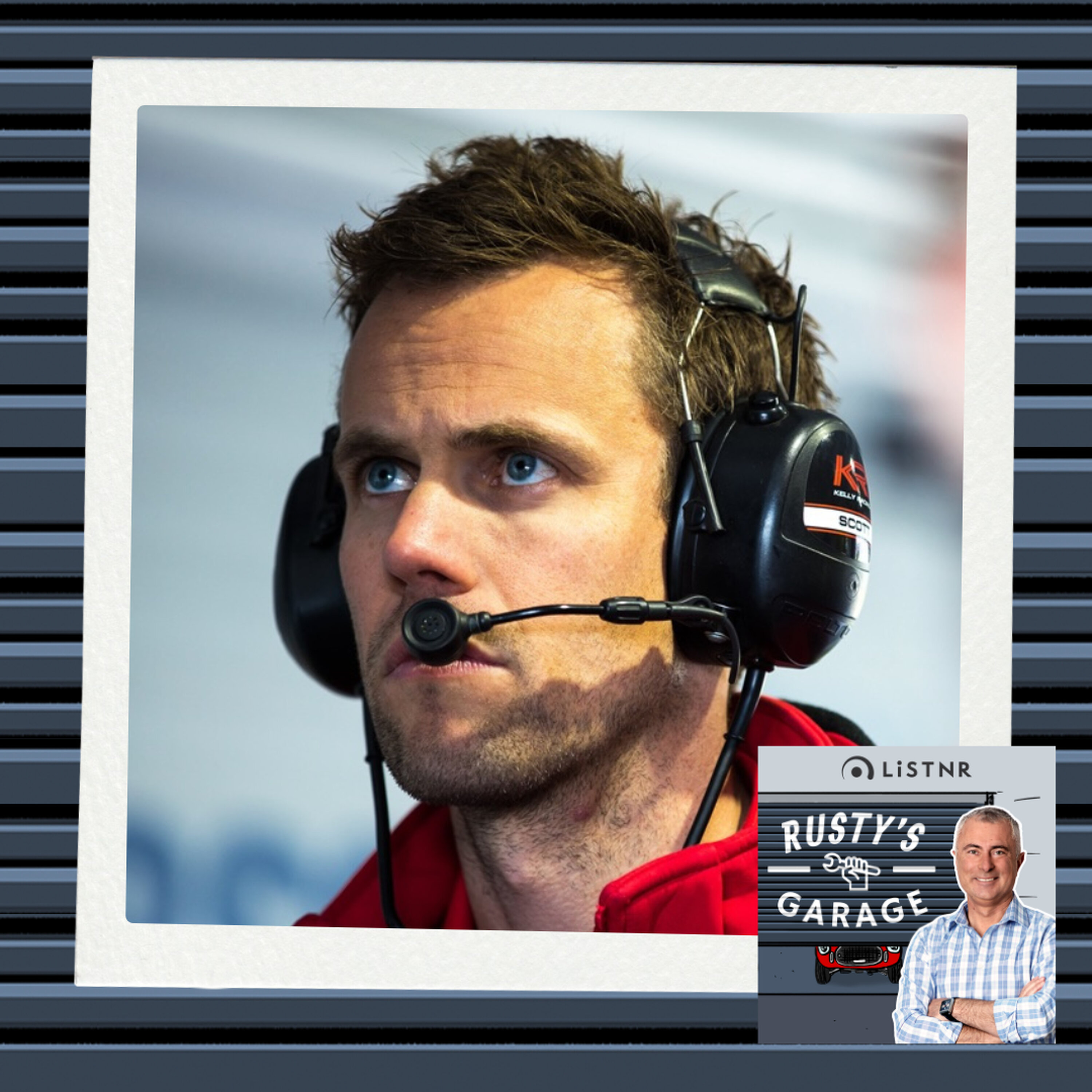
Respected Motorsport engineer and Data Analyst Scott Sinclair joins us at Bathurst to look at some of the key considerations for Sunday’s Great Race.
He worked with James Courtney back in 2010 when he won the title for Dick Johnson Racing and listner’s may also know him from stints with the Holden Racing Team and more recently with Kelly Racing’s Nissan program.
These days he lends his expertise to the Supercars TV team helping the commentators tell the strategic story of the races and he provides fans with excellent exclusive content for the sport’s official website.
Fittingly Rusty and Scott talked as it began to rain at Bathurst. From the impact of wet weather, the value of the pre-event track walk, tyres, safety cars, having a closely matched co-driver, pitstops for brakes and fuel, plus the benefit of a little motivational radio chat.
Enjoy some of the engineering considerations ahead of this weekend’s Bathurst 1000 which you can listen too on our sister network Triple M as Rusty joins Daniel Leach live from Mount Panorama for the top 10 shootout on Saturday and the big race on Sunday.
Head to Rusty's Facebook, Twitter or Instagram and give us your feedback and let us know who you want to hear from on Rusty's Garage