A Grand Prix is a big car race where the fastest cars and drivers compete on special tracks. It's one of the most famous types of car races in the world.
The clerk of the course is the person in charge of making sure a car race happens safely and without problems. They organize things and handle any issues that come up.
A track day license is like a special permission you get to drive your car on a race track during events called track days. It helps keep everyone safe and makes sure you know the rules.
MotoGP is a type of motorcycle racing where the fastest bikes compete on special race tracks. It's like the biggest and best motorcycle race in the world.
A track licence is like a special permission that lets you drive your car fast on a race track. You need to prove you can drive safely before you get one.
Volunteers are people who help out at racing events without getting paid. They do important jobs that keep the races running smoothly.
LIVE
Welcome to the Motorsport Brief with a new name in the driver's seat of the governing
body on the four-wheel side here in Australia.
Hi everybody, Rusty with you in the garage at Listener in Melbourne with another GP Week
Motorsport Brief, shortly to Josh Blanksby from Motorsport Australia.
Quick reminder to check out some of the other shortcuts that we've recorded this week.
One with Aussie F3 driver James Wharton on his Formula One ambitions, plus the chance
to meet the new commentators who'll share that play-by-play role for supercars in 2026.
Chat, Nail-On, Richard Krell and Matt Nolte all dropped by, great convo that one, and
I think you'll come to appreciate what they all bring to the table.
We get them in from time to time, but not often here on the garage, administrators, those
on the gamekeeping side, if you will.
There is a relatively new CEO at Motorsport Australia.
It's nice to chat with you today, Josh Gideon.
Gideon, Rusty, thanks so much for having me.
Welcome, share with people your background.
If I pardon the pun, there is another kind of horsepower involved here, isn't there?
Yeah, absolutely.
I think my ongoing gag is that I've upgraded in the horsepower area.
But yeah, no, so previously I was the CEO of the Melbourne Racing Club, which is a
horse racing club that operates three tracks across Caulfield, Mornington and Ironically
Sanddown, where we also ran the Motorsport side of things.
So yeah, I was there for 10 years and I'm a member based organisation, so very similar
to the Motorsport Australia aspect, but more on the venue side than where I've stepped
now on the regulator side.
Have you spent the past, I don't know how many weeks, months it is now, mate?
I mean, invariably, when you come into these things, you open eyes, take stuff in, talk
with constituents, just give us a sense of what the entree has been like to our side.
Yeah, well, it's been five weeks and I've found someone drinking out of a fire hydrant.
So look, it's been fantastic, very warm and welcoming community the Motorsport family
is and people do use that word family quite deliberately and look, it's been great.
The teams had me on the road.
So I've been at grass roots and club level events.
I was lucky enough to attend the first weekend of the supercars and obviously now right on
our doorstep is the biggest event we do in the Grand Prix.
So although it's been busy, it's been a really good time to start.
So I've been able to meet a lot of people.
What's GP Week look like for you?
Well, it'd be a lot of observing for me, to be honest, rusty, because it'll all be
a whirlwind, but look, something we're very proud of.
I mean, a thousand officials that we provide to that event, which is just unbelievable.
And someone from outside the sport, I was sort of blown away by that commitment and the
skill level those people bring and they're all doing on a volunteer basis.
So we'll be very much in assisting those people as they go about their roles.
Obviously, our team are sitting there in the stewards and the race control, making sure
the event is safe, obviously dealing with FIA and the F1 powers that be during the week
to make sure the event goes.
But very much there is a service provider to ensure this event occurs and working with
the Australian Grand Prix Corporation.
In peeling back a bit more of your story, your history, your CV, if you will, you've
got a long career in the sporting world, which you've given us a snapshot of, but in particular
around kind of nonprofit member organisations, don't you?
Yeah, I do.
And, you know, it's an interesting world, the nonprofit.
I mean, you know, there are people who are very passionate, you know, and the analogies
between horse racing and motorsport are very real in that that's very deep passion.
It's a generational people who support both of those types of sports and they become very
deep into it.
But, yeah, look, those roles as a nonprofit are important.
You know, I think the word nonprofit is a bit of a misnomer.
I think you're more not for loss because any money that you make, you reinvest into the
sport, whether that's facilities, services to our members.
So I'm very keen to sort of really understand our membership base.
You know, we have 550 affiliate clubs.
We also have close to 40,000 members, either competitors or through our volunteers and
officials.
So we've got a big job to do to service those people and make sure that they can continue
to enjoy their motorsport when and where they want.
That's great that you bring that up just around the whole kind of, let's call it, misconception
that people have sometimes around nonprofit organisations.
Are there other things like that as well?
Yeah, look, I think it's really important that we are, as well as being the regulator,
which is a very, very important role and obviously risk and safety is a non-negotiable and we
need to ensure that the motorsport events are safe.
We are a service.
We need to be customer centric and we need to provide those services because people have
a choice and I think member-based organisations need to always remember that.
And it's important that people see a value in their membership and the service that we're
providing and that also that we can find other ways to service those people so that they
can enjoy the motorsport, you know, whether at a local level, at their club level, which
they're doing very for social reasons, right up to the high level competitors that we'll
see this weekend.
What about transferable skills, things along the way that you bring to the table from your
history and does it apply?
Yeah, look, something that I'm sort of proud of and something that I really want to bring
is the stakeholder engagement, you know, that I think it's very important that we represent
our members both at a government level but also, you know, with the FIA at an international
level and then, you know, with our promoters that we utilise.
So I think that's very, very important.
I'm very keen, you know, the more revenues that we can generate through the activities
we do means the more we can invest back into the sport.
So I'm keen to examine, you know, our opportunity.
Yeah, our opportunity in our businesses and you have to earn the right, you know, to seek
those adjacent revenues and I think we have to make sure that the current service we're
providing is in absolute top shape and we're excitedly going through a bit of a data project
at the moment which is really focused on understanding those 40,000 members we have, what their likes
are, how many times they compete, what their preferences are to ensure that we can sort
of one-service them but then also provide, you know, different, you know, members' benefits
to those people.
So we need to get our own backyard in order as an organisation and then we need people
to sort of start reaching out to us to see us as a support maybe rather than have they
have in the past as a bit of a regulator that might get in the way.
Yeah, got you.
That makes it a little bit of a tightrope in some respects because maybe a bit like you
were talking about with horse racing, with the generational aspect, the history of the
games.
You've got people that are deeply rooted in it in one sense and we need to be very mindful
of that, their deep connection to the game but in the same breath you clearly want to
make it something that has longevity that will grow from a youth perspective and that's
a balance, isn't it?
Yeah, I think you've really summed that up well Rusty and it's something that we grappled
with a lot in my previous role in horse racing.
You have the enthusiasts or the, you know, pardon the pun, the rusted on people who will
always be there and support it and we have to make sure we're servicing those people
because they are putting their time, their money, committed to the sport but equally
what are the pathways we can find for people to connect to the sport and as someone who
doesn't come from that generational family, you know, I've got two kids, my son 12 who's
extremely interested in the sport and it's interesting, he's more interested in it from
the technical side of things.
Yeah, he really, you know, and obviously drives to survivors, driven a lot of that but he's
interested in that so the opportunity through engineering and mechanical and technology
that people can connect to the sport is really good whereas my daughter who's 10, she's more
interested in sort of the media side and, you know, and that sort of aspect and the
marketing thing so there are a lot of avenues you can get into this sport rather than just
only being a driver so, you know, I'm really keen to examine that and, you know, obviously
programs that we have such as Girls on Track and First Gear and these likes are pathways
but, you know, how can we invest more into those programs so people feel they can have
a connection because we'll be lucky enough here, we'll have more than 500,000 people
will attend this event this weekend.
Now, we want them to find another way to connect to motorsport for the other 364 days
of the year that they haven't been here so how do we do that, how do we work with organisations
such as Australian Grand Prix Corporation and Supercars, you know, great news that
KO have really invested into the sport and we want to be a facilitator that actually
allows those people to find a pathway into the sport.
Yeah, beyond just being a driver, being a licence holder and so on, that sort of naturally
extends into the most probably, I think you could share this across lots of sports organisations
and that is ensuring that we have a healthy volunteer base that continue to contribute
around all of the aspects that we need to keep, pardon the wheel's turning, yeah.
Completely Rusty, I mean, so 13,000 people are currently on our books as volunteers
and officials and I continually blown away by that number because it's, you know, people
who are dedicated, they're committing a lot of time to that.
So not only do we have to ensure we retain those people and provide them clear pathways
but also recruit new people so they see that, I mean, I'm amazed at this sport and I find
it unique that the amateur side of it really meets the professional side pretty seamlessly
and not many sports do that so you could start a club level volunteering as a flaggy and have
a pathway to be an F1 steward, that's remarkable and so we have to ensure those pathways are
clearly defined and people feel like, yes, if I commit to this in time, I will get educated
and I'll develop and I can progress if I choose to right up the pathway.
It's quite a unique selling point.
To give them that engine room, the skills, the tools, if you will, to aspire in that
regard.
Absolutely, it's, you know, we probably don't talk about those type of people but, you know,
we've got Matt Selly, you know, highly regarded steward and he'll be a steward this weekend
at the F1s, you know, it's remarkable, you know, we've got David Murray who's a clerk
of the course here at the Grand Prix so these people, I mean those pathways are there as
well as having Oscar Piastri so I think there's just, it's another demonstration of the different
ways you can connect to this sport and have a fantastic career in it.
Will you stick around just for a little bit longer, we're going to take a quick commercial
break on this edition of the Motorsport Brief with Josh Blanksby, the new CEO of Motorsport
Australia, more in a moment.
You're listening, watching the Motorsport Brief, hope you're enjoying it and we've got
an administrator in the studio with us today, a new face at Motorsport Australia, big reins
that he's taking over but he's coming in with a fresh set of eyes and taking an open-minded
approach I guess you could say to this new face.
Josh Blanksby is with us, you were talking just prior to the break there, just around
the officials, what things in the five or so weeks where you've been in the chair where
you've naturally consulted with different people, are there things that you're hearing
from them around, you know, stuff you'd like to do in the future and so on?
Yeah, look, I think so, I think what's loud and clear is people want a seamless relationship
with us, you know, they're there to, especially those at the grassroots club level, they're
there to enjoy their past time, so we have to make that as easy as possible.
So I'm really keen to, you know, there's no reason why we can't use data and technology
to provide solutions and I think that's an absolute non-negotiable that we need to provide.
I'm very interested in the infrastructure side of things, I think it's an interesting
model in motorsport, you know, have some privately owned racetracks, you have some government
sort of controlled, so access is a key component and making it as frictionless as possible,
especially at an entry point level. I think it's well known that motorsport is an expensive
sport to enjoy and, you know, how do we make that a little bit easier for those people trying?
So we've introduced, you know, track day licenses, you know, which is a one track day license where
you can just get that license for a pretty affordable price and enjoy the sport as an entry
point. I think more and more of those track days and sort of trying to, you know, get into the
schools, I think is a really, is a really sort of strong option. Make it experiential so that
we entice them to stay longer or further and then so on, yeah. Yeah, exactly. Just different ways
that people would connect. I think, I think motorsport, you know, you know, with the defensive
driving aspect and these type of things, I think it's a really good opportunity to sort of attack
that sort of 15 to 19 year old who's going through that sort of the path that we all go through
to learn how to drive a car and sort of providing them a different sort of opportunity to connect
with motorsport. So I'm very interested in, you know, understanding the network of the infrastructure
and how that works and hearing from our clubs. One of their issues is the cost of those track
highs and the things like that, which I understand they're very expensive, much like horse racing
tracks, very expensive to maintain and things like that. So you have to use them, you know,
you have to utilize them. And I had that experience at Sand Down, you know, it was a, it was an
expensive track to upkeep and upgrade and we wanted to utilize it as much as we could. So
how can I, how can motorsport Australia help facilitate that between the track owners and
the possible upgrades they might need, but allowing our grassroots club levels to have access?
I talked before about balance, right? How complicated is that balance between ensuring you
mentioned grassroots there a moment ago? Very important that we look after that. And then on
the flip side, the commercial, the big end of town success stories, finding that balance as an
organization and what you offer. Yeah, we have to wear many hats and, you know, we are dedicating a
lot of our resources to this weekend. You know, I think everybody in our staff will be on track
with the duty, with the role. And as I mentioned, there are a thousand officials. So, but we don't
apologize for that because this is our time to shine as a sport. This is when we'll be in the
limelight, not only the 500,000 people attending, but the global audience and those watching. So
we need to then utilize that though, to ensure that then we can support our clubs
actually to grow from these points. So it is a balance. And, you know, I think like all sports,
you need to use the top end as the front door of the store, you know, to sort of advertise
yourselves. And then you have to ensure that those ones who are all at a volunteer participation
level are getting the support they need. You covered the practicality before, right? Making
motor sport more accessible than what that perhaps might lead to. That's opportunity,
potentially. What about threats? What things are you sort of feeling already like that you need to
be perhaps across maybe tackle and so on? Yeah, look, I think we have to ensure the risk and safety
aspect is always upheld because of the social license that we currently have as a sport. So,
you know, at the moment, we, you know, at times, some of our participants, you know, get a little
bit frustrated with us because they feel that we are going a little bit over the top on those
requirements. But we have to do that because, and I witnessed this firsthand in horse racing,
you know, when there are issues on the track with the participant, then you are going to have a
social license issue as things change. So, you know, we have to really focus on that. I think
it's important. We need to tell our story a bit better, I think, as a sport. Governments want to
support those sports that can demonstrate the benefit they are providing to the wider community.
And, you know, motor sport undersells itself in my opinion. I think it's the nature of people
within it. I think they're quite understated. We all know the numbers from the Grand Prix and the
Supercars are excellent at promoting themselves. But I'm talking about that next levels down,
you know, some of the metrics and the economic impact that we're having as a sport. And I think
we need to tell our stories at all levels of government because motor sport takes up a lot
of land. It's noisy. It's a sport that takes up a lot of time. So, we need governments to actually
lean in. And there are plenty do. And you can see that. But, you know, if I take as an example
the community of Phillip Island and, you know, the recent news around the Moto GP, it's important
that, you know, that's, although that's a huge disappointment to that community from a motor
sport perspective, it's an opportunity. Because that is, that is renowned as a motor sport community.
So, how can we lean in and demonstrate to government that they should be looking to
invest in that area, whether it's events or through infrastructure upgrades to allow that
sport to continue to thrive? You've been meeting constituents, no doubt drivers,
all sorts, the full gamut. What about internally the staff that you've gotten,
getting to know them, not just at an office in Melbourne here, but even around the country,
I guess? Yeah, it's the, you know, it's the beauty of stepping into a new role, Rusty. And,
you know, I feel like I'm a people person, so I quite enjoy meeting the new people.
Look, we've got a dedicated, loyal workforce who really do put in and, you know, weekend work and,
you know, everywhere around the country. So, look, it's been great to do that and people are
very warm and welcoming. And, you know, all I can say to people listening is that, you know,
as an organisation, we want to be better. And there's been no pushback when I've asked questions
around, well, why aren't we doing this? It doesn't have this, oh, we've always done it that way
type of attitude, which is really refreshing. And, you know, we've got a board who are very,
very committed, you know, all volunteers that want to see Motorsport Australia be there and
really help the wider Motorsport family. So I think we're pushing against an open door
towards some change. And I think it's in a positive way.
Cool. What does good leadership in your mind look like in a sporting organisation? And maybe how
has that evolved in your time in these sorts of positions? Yeah, look, I think, you know,
it's been very visible, you know, and I really want, you know, I don't want people to ever sort
of say that I don't front up, you know, whether it's good or bad, you know, this weekend will be,
you know, it'll be good, you know, it's a great event to be at something very proud to be at.
But also, if things go wrong, you also need to front up. And I think that's really,
really important from a leadership perspective. I think leading by example, so I think that's
a really sort of keep hard and sort of, I'm very keen to have a culture within Motorsport
Australia that's sort of embracing, but very honest about where we need to improve.
Open door. Yeah. And then equally, as you know, as I sort of have met people and, you know,
it's been at events and things like that, I've been, I'm very open to say people need to reach
out to me because otherwise I'm just making assumptions or we're making assumptions in an
organisation of what the issues are. So look, I might be setting myself up here, but I'd rather
hear from people to understand the concerns and then try to find a way to work through it.
But, you know, likes all sports, plenty of opinions. And, you know, that's what makes the
sports tick. So tell me in say three to five years time, it's very early days for you right now,
I know, but what does in your mind success look like five years down the track? Yeah,
I think we need to be really transparent with our numbers and things like participation.
You know, I think that is key because, you know, that shows a healthy growth sport.
Now, participation can be unique, but people participating more in our sport. At the moment,
you can get a licence, a track licence and just race once. That's not true engagement.
You know, how do we get that person to race three or four times a year?
And so they've become more engaged. And then how do we get them to make the next step to then
join a club, you know, and then become a volunteer? So these are the different pathways that we really
need to look at. You know, you know, we're unashamedly, we want to grow as a business. Again, for the
reasons I mentioned before, any extra revenue we can find, we will reinvest back into the sport
and into the services we can provide our members. So I think in three to five years, you know,
we'd like to see some growth in that category. And then equally, I think around in three to five
years, success will be a pretty clear infrastructure venue sort of plan across all states that actually
is very, very clear. And then is providing those access because we'll always have our top end tracks
that provide that service. But then how do we have a sort of levels down, which may not cost as much
to operate, but allows people then to have a much more accessible entry point.
Flan, fantastic. This has been fabulous today. I just to get to meet you,
have a fantastic week at the Grand Prix. I know it's going to be absolutely huge and you'll be
taking in a massive amount as a result of that. But I hope you enjoy it and go well in the new
role. Good on you, Rusty. Thanks for your time. Great stuff. Josh Blanksby there. That is it for
today. Just a reminder too about a brand new feature app that's going to drop in the days ahead
with the Blanchard Racing teams, James Golding and Aaron Cameron. Keep an eye out for notifications
on that. That's it for today. Bye for now.
About this episode
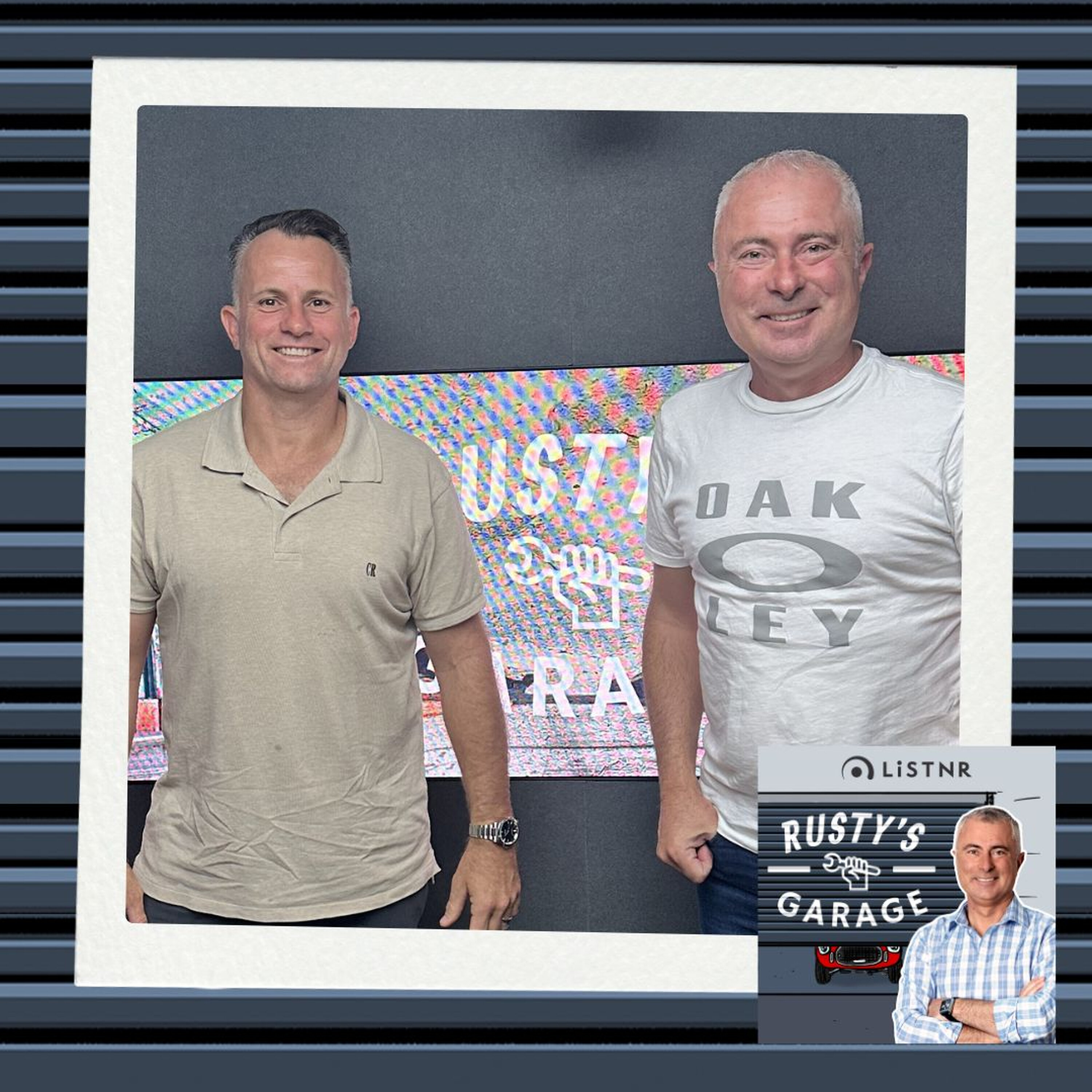
Josh Blanksby, the new CEO of Motorsport Australia, shares insights from his first weeks leading the organization. With a background in horse racing administration, he discusses the parallels between sports, the importance of serving a passionate membership base, and the nonprofit model focused on reinvestment. Josh highlights the vital role of volunteers, the need to modernize member services, and the challenge of balancing tradition with growth, especially in attracting youth through diverse pathways like engineering and media. He emphasizes collaboration with major events like the Australian Grand Prix and fostering a seamless amateur-to-professional progression within motorsport.
We don’t often get administrators on the pod but as he prepared for one of MA’s biggest weeks of the year Josh kindly swung by the studio.
Josh Blanksby has only been in the job for a few weeks but he brings over 20-years experience in the horse racing, wagering, media and hospitality sectors.
The former CEO of the Melbourne Racing Club talks about his observations from the first few weeks in the job and gearing up for the Australian Grand Prix at Albert Park.
Why he’s conscious of the balance between grassroots competition and the headline acts. Threats and opportunities; our passionate army of 12,000 volunteers and giving them the support and encouragement to grow their skillset.
You’ll get a sense of Josh’s leadership style that he brings to an organisation that is so community-focused and what is transferrable from his prior experience.
It’s an open and engaging chat with a leader who is acutely aware of the reigns he’s taken and his commitment to an open-door policy.
Head to Rusty's Facebook, Twitter or Instagram and give us your feedback and let us know who you want to hear from on Rusty's Garage