Western Sydney International Dragway is a race track where cars race in a straight line to see who is fastest. It's a popular place for drag racing in Australia.
Touring cars are regular cars changed a bit to race on tracks. People watch these races because the cars look like ones you can buy but go really fast.
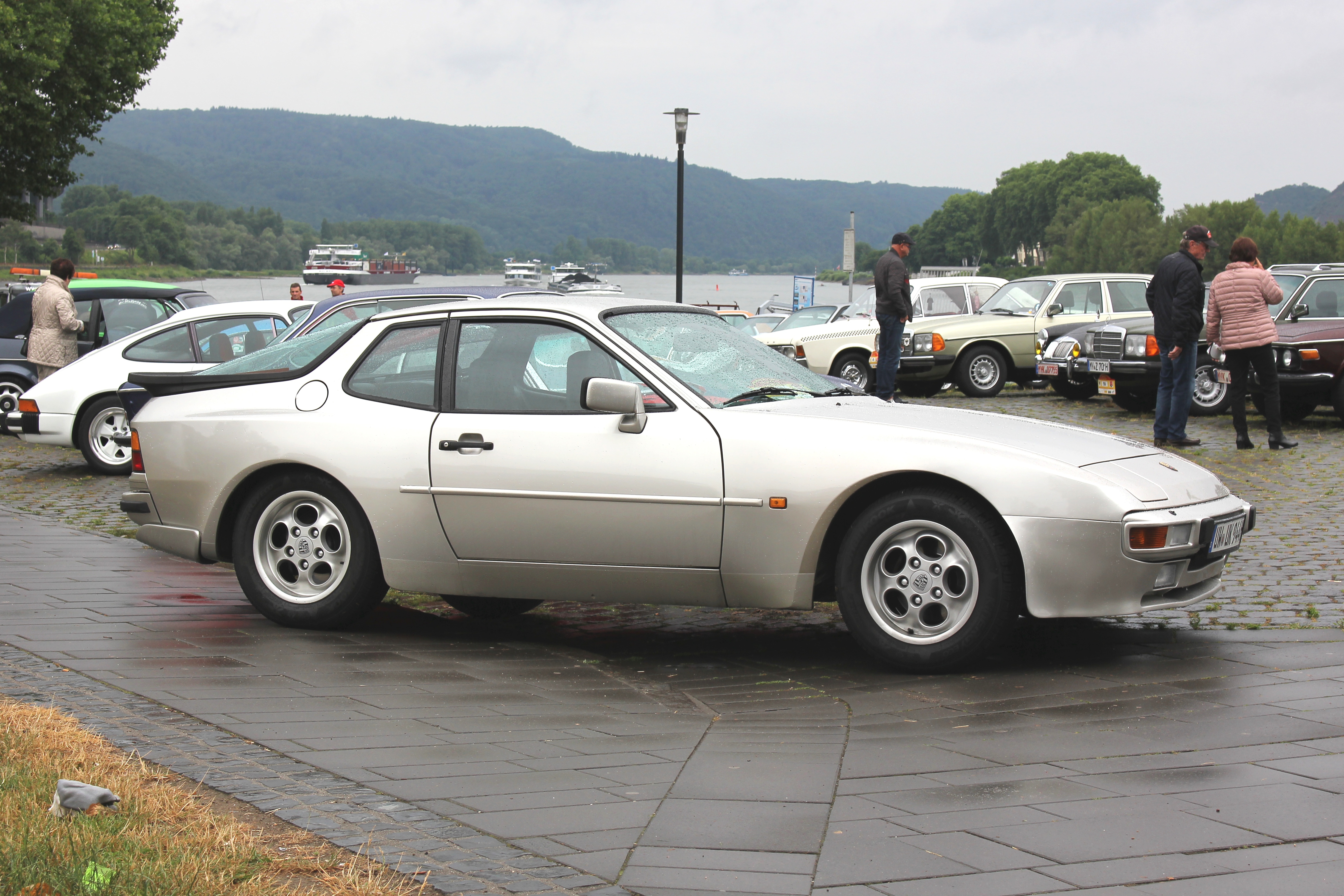
The Porsche 944 is a sporty car made in the 1980s that many people like because it handles well and is fun to drive. It has the engine in the front but sends power to the back wheels, which helps it corner nicely. People often talk about it when discussing cars that are good for racing or driving on tracks.
Concept
F3
F3 is a type of car race where drivers compete in smaller, fast cars to gain experience before moving to bigger races. It's like a training league for future top racers.
MotoGP is a top-level motorcycle race where the fastest bikes and best riders compete on special race tracks. It's like the Formula 1 of motorcycle racing.
A barn find is when someone discovers an old vehicle that has been left unused and hidden away for a long time, often in a barn. These vehicles can be special because they are original and rare.
The Holden Torana is a car made in Australia. The 1976 version is an older model that people liked because it was good for racing and everyday driving.
Drag racing is a race where two cars go straight down a track to see who is faster. It's all about how quickly the cars can speed up and reach the finish line first.
A drag strip is a straight track where two cars race each other to see who is faster. It's made just for drag racing, which is all about going straight and fast.
Carrera Cup is a professional racing competition where drivers race special Porsche cars made just for racing. It is more serious and competitive than club races.
Sprint Challenge is a type of car race where people who are not professional drivers can race Porsche cars. It is easier and less expensive than big professional races.
Formula 3 is a type of car racing where young drivers race smaller, fast cars to learn and prove themselves before moving up to bigger races like Formula 1.
Le Mans is a very long car race in France that lasts 24 hours. Drivers and cars try to go as far as possible without stopping, making it a big test of skill and endurance.
NASCAR is a type of car racing mostly done in America where drivers race special cars around oval tracks.
LIVE
Welcome to the Motorsport Brief, a gaggle, a flock of commentators.
Not sure what you call them, but I know we will not struggle for Convo in this ep, that
is for sure.
Hi everybody, Rusty with you in the garage at Listener in Melbourne with another GP Week
Motorsport Brief.
Now, supercars are a big part of the Albert Park offering and this year there are some
fresh voices who you'll know from the support categories, they've been taking turns and
are going to take turns in the main role, the play-by-play commentary role.
I have had the pleasure of knowing them for many years, we've all had the chance to work
together on occasion, I just thought it would be really nice to help you get to know them
a little bit better today.
They are proper, and I mean proper car and bike fans, deeply committed to their craft
and incredibly respectful of the history, the heritage in that baton that they get the
chance to run with in 2026.
I'll start this as professionally as I can.
Chad Nailon, Matt Nolte, Richard Krell, welcome to the studio, that is my poor attempt at
a Q&A hosting.
Welcome.
How are you Rusty?
I didn't realise this was a brief, I thought we were getting the whole thing.
You know what, he messaged me in the lead-up and goes, you know us right, like we're not
going to be able to cram this into half an hour.
This is a two hour spectacular, this one we're going to have to cram down into 30 minutes.
Welcome to part one.
Part two will come later this year.
You have all taken different paths to get here, but you've been friends, I want to say, for
basically the better part of 20 years or you've got more, haven't you?
Bang on 20 years for Nolte and I, we started working 2006, Western Sydney International
Dragway.
Was it the Nationals or the Nitrochamps or the East Coast Nationals?
East Coast Nationals I think it was, yeah.
We were on air 3am in the morning together, for some reason.
We wanted to dig that photo up of us, the special one that we've got on our socials.
This could be the thumbnail for this one.
It's the two of us, we've known each other for all of 12 hours and we're still on air
together for the entire 12 hours and we've decided at this point to break into the corporate
boxes and start stealing the beers at this point because we've been on air too long,
it's too late and so I think there's a couple of VBs in the background.
In telling your respective stories, what you've done in your youth creeps in here and there's
a lovely picture of you, Chad, Wannaroo as a youngster, kind of race-themed overalls,
maybe hanging with Dick Johnson, tell us a bit about that.
Yeah, well for me that was it growing up, going to Wannaroo, Clamont Speedway, Ravens
or Dragway.
There were the three and so getting to go with my mum and dad and my sister and whenever
the big show was in town, it was Group A Era so I was a big Dick Johnson fan, had the
little like, race suit onesie, sort of DJ onesie.
Have you kept that?
Yeah, yeah, I've probably still fit it.
It's still fit in there.
It's still fit in there.
This is sun wearing.
Yeah, I've fit my kids great.
That's awesome.
Totally fits my eldest Chase, which is pretty sweet, but yeah, I'll be getting a photo
with Brocky and with DJ and all these guys and there's the cool photo of me meeting Peter
Brock and it's the Channel 7 TV compound behind him and it was like, little did I know that
that was the pathway, but I remember Krause put up a post saying he was as you know, besotted
by the commentators when he was growing up and that was the same for me too.
I was excited about meeting Mike Raymond as I would be about meeting Dick Johnson.
Tell me about that, about being besotted.
Yeah, well it was and we, like Chad, I grew up going to Malalar and the seminal moment
of growing up in Adelaide and the Barossa especially, which is quite close to Malalar
where the touring cars were until 1998, Adelaide 500 started, the seminal memory of my youth
is being there and Peter Brock's fine around in 97 and it was somehow, he was there too.
We only learned this afterwards that Nolton and I were there at opposite each other on
the racetrack.
Crazy.
Because I was at the start finish line, I think you were directly over the other side,
weren't you?
Running into the final complex.
So the world's colliding there.
So that was it, but a fundamental childhood memory for me, but then was, Bathurst weekend
was that special rite of passage that I think all motorsport families have is that you
get up bright and early in the morning at 6.30.
Camp on the lounge.
Well if you guys over in the west, camp on the lounge, you know, Mum and the little brother
couldn't bother you all day because Bathurst was on and you'd sit there with Dad, watch
the great race.
I'd remember sitting there with the VHS and recording it and pausing it during the ad
breaks to take the ads out so you could try and fit it all on one for our VHS and you
get right into it.
But I was as fascinated in the broadcast and the talking heads of my youth on TV as I was
with my hero Peter Brock or Dickie Johnson or Larry Perkins.
So my name is Gary Wilkinson's Bobbler.
And you'll laugh, but even that early network 10 era, which was so fundamental to growing
supercars to where it is now when it got involved and it became commercialised.
So Lee Diffie, yourself, the great Barry Sheen, they were all key elements to me getting in
my brain.
You know, I really want to do that.
I want to tell the stories of our sport.
Love it.
Matt, for you, you've got vivid memories of Adelaide Grand Prix with your dad.
That made a huge impact on you, didn't it?
Yeah, well, see, I was actually not really into motorsport when I was a kid.
I was more cricket and footy, believe it or not.
I wouldn't check by the athlete to see if I could get these things.
Ditto.
A lot of time at first, Lee.
Exactly, yeah.
Dad took me out to the Speedway when I was younger and a car backfired and it freaked
me out and he said, all right, you're a bit too young to come to this.
And then he gave another chance and said, I'll take you out to the Speedway.
I was a sprint car master at Speedway Park now, shut sadly.
And dad used to deliver the beer for fosters.
I got a phone call about 730 on a Friday night.
I know this is where it all started.
And we had to go and take beers into the Grand Prix track.
And all of a sudden I'm looking at an F1 car in Pitland.
I think it was Ferrari McLaren when the first cars I saw there.
And there they were, revving away.
And I was instantly in love.
And for getting the other sport, I was going motor racing.
But I didn't think about the commentary.
The commentary wasn't really.
I wanted to race or be involved in it.
I couldn't drive, couldn't afford to drive.
And you were, you were for a time with Toll and the track.
Yeah, the Anthony track.
It might be Porsches to begin with.
Yeah, it was the Porsches with 95.
I was the gopher with the Toll team.
And it became pretty apparent after a couple of years
that I couldn't do that either.
And someone said, you should talk about it.
You know what you're looking at.
And there was an empty commentary box at Phillip Island
years ago on the state round.
And all I had was the local radios, you remember, Krausey.
And I went up, there's a sound engineer there.
And I said, I'm here to do the commentary.
And the guy goes, oh, good.
Well, no one else has done anything today.
So here I am calling a state round.
And I couldn't see turn one.
Like 944s or something.
Yeah, I think it was Island Magic.
I think the event was back then.
And then away we went.
I started doing Porsches and then Speedway a year later.
I talked a big game about, yeah, I can do Speedway.
I can do Speedway.
And then I got there the first night
and it was 10,000 people in front of the commentary box.
And I'm like, oh, I can't do this.
And then, yeah, as time went on, I picked Metchard.
I met Krausey.
In fact, Krausey and I got pitted against each other.
We were like rivals that didn't know each other in the early days.
Yeah, there was a rivalry that neither of us had any idea about.
We was going, oh, there's two blokes from South Australia,
young up and coming talent.
Oh, they're batting heads.
Yeah.
They're each taking each other's gigs and all that.
It's like, I had absolutely no idea of that.
You had absolutely no idea of that.
The first time we probably got together and hung out and had a beer,
it was got on like a house on fire.
And the rest is history.
But yeah, it was a rivalry that neither of us knew existed.
No, I remember it was 2004.
But I've been a pro car round.
It was.
He was doing F3 and I was there still learning.
So I'd go out and call the state series rounds at Malala.
And I said, oh, do you want to help out the pro car round?
I went, yeah.
Oh, hang on, Krausey's going to be there.
How's this going to go down?
And even now, my heart's beating.
And I remember he walked up in the commentary box and he has this stance
when he comes into a commentary box.
And when he walked in, I went, how's this going to go?
And I don't understand.
You do.
I'll search you one day.
If you have your sunnies on, the sunnies in your arms cross like this.
That can be very intimidating sometimes with the notebook.
Let me tell you, I've worked with him overseas the most.
He's not intimidating.
He's got a beautiful soul.
He was fine after that.
And we sat down and just nailed it.
Like we just barely looked at each other, but we'd talk
and I'd whack him on the arm.
He'd keep talking.
And from that moment, we clicked and away we went.
I love it. 20 years ago.
That's crazy.
I love some of the icebreaker moments here.
I can't remember whether it's a good buddy, Dean Neal or Cam Vanden Dangen.
But one of them told me that maybe a shared love of the Simpsons
broke the ice between you two.
Is that right?
I think that was that day.
It was.
Sydney Dragway.
We were in the MySpace era.
We were going back well.
Oh, man.
Yeah, pre-dates Facebook, all right.
So we're in MySpace and I think I had a couple of photos up
from a recent trip to the States.
And you'd seen a few of them and you were instantly,
I'd like put a Simpsons caption or whatever on.
And Noel's got it straight away.
And he's like, oh, hang on a minute.
Now, yeah.
You realize you're kindred spirits.
And I think that's why people like us click straight away.
Because growing up, we'd go to primary school
and you'd have mates who are into footy and cricket and soccer or whatever.
But you didn't have mates who liked motor racing.
Yes.
And so when you found your brethren in life, people who are like you,
it was like, why would you be rivals with them when you could be mates with them?
Like the people that were missing through your childhood?
Matt and I in much later life now just bombard each other with flying high means over time.
In fact, check your phone after this.
Is anyone on the left on the way out?
Love of that.
Chad, can I stick with you?
You've done some great work, mate, on the two-wheel side too with MotoGP.
You're late dad would have been so proud of what you did at Sydney Motor Sport Park.
He had some bikes too, didn't he?
Did you?
You still got them?
Yeah.
Tell me about that.
Maybe you want to stand out or something?
Yeah, yeah.
Well, dad was always a bike guy, which is why I became a bike guy.
And certainly that's, dad was happy taking to the racetrack.
And he could say that I like going to watching cars and bikes race.
But he was happy in the car park, looking at things being still.
How have they done that?
And how have they connected this thing up?
And all that's rare because of this and fascinating mind with that sort of stuff.
And so he started to build his own bikes a little bit as well.
And so he had a still has, sadly, not with us, but the bikes are the GSX 1100.
So Suzuki and he's for some reason done that up to be full street fighter mode for a guy that was like, you know,
have you ridden all those?
I've ridden all the bikes.
Yeah.
My favorite is the Kawasaki because of a bleed green.
Kawasaki, Eddie Lawson replica, which was a proper barn find for like a thousand bucks.
And they'd painted it, obviously Kawasaki's green.
This one was black.
And it was because the deal had brought it in and be like, who wants a green motorcycle?
This is the eighties.
And so they painted it black and then sold it.
And it's just been living in some dude's shed under a tarp.
And dad's, as he does, found it.
And then I'll give you a thousand bucks for it.
The bloke like had no idea what he had, so to speak.
And so dad's got a home and done a full Renault on it.
And the thing is resplendent bright green, Eddie Lawson replica.
I love it.
And then he's got a BMW S 1000 XR, I think it is.
And that's the sort of adventure style thousand CC bike, but it's got the full
thousand CC super bike engine in it.
So it holds.
It's got a quick shift to everything else.
I hear in the Barossa from time to time, there are swear words in a garage around your first car.
Maybe an old Porsche that you work on from time to time.
And tell me about this.
Well, I'm a very.
Do you cuss?
Do you?
Oh, yeah.
And I can genuinely ask scars on my hands for working on cars.
As a commentator, I'm a I'm a pretty good commentator.
As far as mechanic goes.
But you kept your first car.
You've kept your first car.
So my first car was a 1976 Holden Tirana.
Awesome.
And we found it.
I think it was in the trading post and for people at home.
That was a newspaper back in the day.
What was he asking for?
Well, it was owned by this painter in Adelaide's northern suburbs.
They're a working class area and he was asking 400 bucks for this 173 automatic Holden Tirana
with a vinyl roof.
It was blue.
There's a couple of different shades of blue, but it was blue and he was asking 400 bucks.
So for 350 bucks, we beat him down 50 bucks because that was all I had at the time at 15.
And we bought it.
And then we took it home and dad and with a little bit of assistance from myself.
And I remember my late grandfather coming in and waving the spray gun around it a little bit
when we were painting it.
We restored it.
And that was my first car.
So when I got my P-plates, that was the car I drove to high school in year 12.
It was the coolest car in the year 12 car park, which was awesome.
And I still have that.
I kept it to this day.
I will never sell it.
The red jade, it is at the moment, it's off the road.
It's due for a rebuild that I've been promising it for the last three or four years,
but haven't quite got there yet.
But I think it will happen this year.
I love that thing.
It is the last possession I will part with when I have to sell everything off inevitably.
And then as you reference Rusty, my cantankerous old 944,
which I bought for two grand from Mark Buick is a Porsche dealer and repairer in Adelaide.
And I've been involved with that brand for a long time.
So I felt like I needed to have one.
And I bought it because it's got pop up headlights.
And it was two grand.
I'm not joking.
That's the reason why I wanted a 944.
Exactly.
That's exactly why I wanted a 944.
Put an engine in it.
There's a great story that when we do our second episode this year for Rusty's garage,
because we're going to need the follow up part, part two about how Matt Campbell,
the Porsche factory racing car driver, bought the engine that's currently in my 944.
But that might be a story for another day.
Another day.
I own a rubbish 944 that is almost always broken, but I love it for that.
Can I come to your respective careers and how you've come to this point?
Yours is a true hard yards story, Matt.
We just happened to happen to have outside the door of Forklift.
Do you reckon you could run that for us?
Have you still current?
Technically, yeah.
We joke about midlife crisis, right?
But it was a significant change for you, wasn't it?
Yeah.
I grew up in a transport family.
So all I lived and breathed like Chad did, we were around trucks, we're around warehouses.
That's what we knew.
And I remember when a dad's mate said to me one day, I was 13 or 14, he goes,
you cannot be doing this.
You need to get out and do something with your life.
Anyway, 12 years later, I listened to him after working full time at a job.
Well, when I say working, I probably attended full time, but I didn't get much done.
If you looked at my parting resignation form, I love the social aspect of working,
but they said, you've got to go out and chase this dream.
I would often work four full days at work a week, jump in a car, drive to Melbourne,
or drive anywhere, go racing and drive back Sunday night.
And I thought that's what everyone did because I was chasing something, but I thought,
cool, go car racing.
It might come to saying it might not eventually wait to anything, but it was going out and just
picking up any race event you could just to learn because I was no good.
I had no formal training.
I didn't go to school properly to do that.
But I knew that driving forklifts, you could go back to one day.
It certainly wasn't something you want to do for your career.
But getting into this, this has exceeded any expectations I've had.
You've applied yourself though.
So look, you're really good around that you are the custodian of the stats for TransAm
and things like that in this country.
The craft might be hands on learn, but for all of you in many respects,
the PA-style commentary serves you immensely well, doesn't it?
I think the trackside commentary that we did for years and years,
I think we've done over 400 events, maybe more now since 2007.
We would work.
Me and Chad would work Wednesday nights every week at the Perth Motorplex.
And I tell anybody now and he'll back me up.
If you want to learn, go the Motorplex over in Perth and so many good ones have gone through
and come out of there because it was just the frequency of events.
Like I worked in Adelaide, I worked at both the Speedways,
spectacularly fell out with both of them in the end.
I thought, well, where do I go?
Do I go to Sydney or to go to Perth?
He just, Chad had just moved to Sydney at that point.
I went to Perth on a big gamble.
I mean, there was a handshake agreement to go across.
And my first year, I did 120 nights of racing there.
Like their calendar was on two A4 sheets of paper.
And it was grinding.
It was Wednesday nights.
It was Friday nights.
And there'd be three men and a dog at some of these events.
But you just learned how to call.
I mean, we did a boxing day.
Yeah, 12 hours.
I mean, we had the test match on the commentary box while we were calling.
But if you learn how to do drag racing over a 12 hour day,
you can call anything.
Absolutely.
And you get good at filling delays and figuring out where you're going to steer the ship.
If there's no action happening on track,
you get totally okay with the idea of not knowing where you're going.
I think there's an element that's missing currently with younger people
looking to come up through the ranks to try and do what we're doing now.
I don't think that element's there as much now as well in getting out
and actually putting in those hard yards.
And you might be sitting there.
My first live commentary was at a go kart track.
Dirt karts in the Riverland of South Australia up at Morgan.
Morgan.
Yeah, on the River.
Wonderful little kart club.
But on a smaller club show, there might be 50 competitors.
There'd be 25 races over the night.
But there was probably 15 people there.
You knew it was busy when the local coppers had rocked up and parked up at turn one
and spectate and get a hot dog and just enjoy for a couple of hours.
So, but if you can, I always thought the highest praise you could get out of that
was when some of the old people from the club,
so that they'd been there for a few years or come and went,
I really enjoyed that.
That was great.
And that was you left that going on.
Maybe I am actually contributing something to this.
And even if it's only 100 people listening to it,
you're always working at your craft and working and entertaining at them.
And like you guys said, with the drag racing,
if you can call and make interesting a really quiet day at a go kart club or a drag strip,
calling supercars or Formula One or whatever it might be,
it's really easy because there's so much stuff going on.
And there's all this information.
And when you grow up not having any of that,
when you walk into this world and you get gifted with the stuff that we get,
it's phenomenal.
It's such a different change.
But I think it's those core skills that we all developed in our own separate ways
that have helped get us all to this point now.
Yeah.
And it also gives you an appreciation for the production equipment
and the people and producers that you get to work with.
We've all had a decent spell on Speed Week and great shows like that,
when they were great spots to learn.
Because sometimes you might show up at a go kart track
and it might be a microphone that's pretty much two tin cans and a piece of string
that have been put together.
To your point, I called once at Fairband Park in Canberra with Diff.
We had this old boom box and two handheld mics.
So we go, OK, we're going to take a quick break up next, the 250s.
And you put the microphone down to Jimmy Barnes for 15 seconds.
Slide it up.
But it made you so good at your crafts.
Tisily.
And if anything, rarer than it does, does go wrong with a microphone
or your levels and your ears aren't what you want it to be.
You get around it because you're so used to things not working.
And what I think it also did is it makes you really aware
of how important going and talking to people in the paddock is.
Yes.
Go up to them and go, hey, Rusty, what happened to your go kart early on?
I saw you had a drama.
And just that.
Steering wheel fell off.
Steering wheel fell off.
Drip over a tree or something like that.
I think the little nuggets of information you pick up there.
And I think if we all do one thing well as a group,
is that we all make sure we're armed with as much of that kind of stuff
that makes it interesting to people.
And that, for me, comes out of wandering down
through the paddock between races in a go kart club 25 years ago.
An old boss at Channel 10, Michael Ortsent, who's now gone to God,
would always say, tell them what they can't see.
Tell them to tell them that stuff.
We need a quick commercial break here.
Chad is best dressed in house.
He's got to go to a function.
We're going to try and squeeze in a bit more.
Stick around.
This is the Motorsport Brief.
Good day, everybody.
Rusty with you for the latest edition of The Garage.
We have three guys ripping human beings
that are commentating on the supercars this year.
And I thought we'd take the chance
for you to get to know them a little bit better.
Joined by Richard Crow, Matt Nolte, and Chad Nailon.
Chad, can I come back to you?
You're proper trained whopper.
Can you tell people a little bit about that?
And there's been some good operators come out of that in the West.
So whopper stands for WA Academy of Performing Arts.
It's run by the Edith Cowan University in Western Australia.
And to be able to get into it, you have to first of all have a degree.
So you have to have already gone to university.
So it's a postgraduate course.
And then after that, you have to apply to get in, sit and audition.
And then they'll only take 20 people a year at best.
So I did it in 2011.
So it's gone back a bit.
And I'd already been working on the Andrew Drag Racing stuff on 1HD.
And I thought, we'll take a bit of a risk here.
I'm going to give up what is already my dream job.
And I want to go tool up a little bit more.
And the person running the course, people in WI, I know this name.
Legend by the name of Peter Holland, who was our ABC Newsreader.
He was the guy around the course.
And it's like, this guy's been on TV for 50 years,
hosting the news every night.
And so it was just a factory for pumping out really solid presenters.
So first six months, we're just learning radio.
And then the second six months was learning television.
And we had our own radio and TV studios,
like we're sitting in right now at our disposal.
And it was just a fantastic way to learn.
But a lot of it was learning how to use your voice better.
And I still don't have a voice nearly half as good
as the two of guys across from me, which is frustrating.
But we were trained by people who would do the voice training
for opera students on the other side of the campus.
And you'd get $5 tickets to a musical theatre show, ballet,
whatever it was.
You could just go and enjoy everything for a whole year.
And I just, I just ate it up.
He did a stint on Telethon too one night.
I added Telethon one night.
Yeah, mid-night till four or five.
Whatever it was, yeah.
And I'd been out, surprise, surprise, and got home.
And he was still going at three o'clock.
I'm going, the guy's a machine, but that's how they learn.
Hope he fleece you out of $100 bucks.
I mean, that's not easy done with Matthew Nolsey.
It's an extra zero one.
What's that about?
Someone rang up and they're like,
I'm going to donate $20 to the kids hospital
if I get to speak to Xavier from home and away.
And so this producer comes over and goes, just say you're Xavier.
Oh yeah, this is Xavier from Summer Bay.
That's what he bucks good on you, thanks.
You brought up one HD before.
That was a great chapter at the Ted Network
when they forged into an all sport channel, awesome period.
And there's a cool photo of you, like, spiky hair and our mate.
You've got to impersonate him.
Our mate, Dean.
Hello, mate.
He does a good job on the comms in there.
It's very good.
He was so good.
He was awesome.
Yeah, he should still be commentating now.
And we write him so much.
Go, mate, get out there and just call a session
because while I might have a deep voice and he has knowledge,
Dino has this voice that just you instantly know
it's motor racing when he calls.
Yeah, but he works with you now in the West,
like producing the Speedway, producing AFL and all.
He's doing amazing with channel 7 AFL coverage now.
Very, very talented guy.
So that, I'm not sure which photo it might be,
but I have the blue one HD shirt on.
And they gave me the shirt.
And I think I told you this the first time I ever met you.
I took it off and I looked on the tag.
Rusty.
I got your shirt for the Grand Prix.
I was like, this is the coolest thing ever.
I got a Rusty shirt for the city.
What second prize?
You are properly self-taught, if you will,
and you expanded your skill set to include the PR and Comside.
And you have been immersed in the Porsche framework
in this country for a long time now.
How long?
How long?
2008 when what was, well, what is now,
Sprint Challenge started and Carrera Cup went away
for a couple of years.
Sprint Challenge was started as a sort of
fill the void kind of category, more club level racing.
And then when Carrera Cup came back in 2011,
I was the guy already and ended up being the caller for that.
The PR and Com stuff is interesting
because it's quite a big chunk of what I do.
But for a lot of the early stages, especially,
it was a means to an end to commentate.
I've missed a chapter here,
because did that start in Formula 3 for you?
Yeah, Formula 3 racing was where I,
Formula 3 in Australia is usually significant to me
because it was sort of...
Carl Rundler and all these people.
Yeah, and Bronte Rundler and BRM at the time
took a chance on a young South Australian kid
and said, oh, do you want to help us write some pressure releases?
And then long story short,
went to Gold Coast India with him in 2004,
which was my first real trip away to go racing.
Did he hurt you there?
Did he?
Yeah, and then he was very complimentary.
Yeah, well, that's pretty special.
I didn't know that.
Yeah, see, that year or the year after,
I can't remember if he hurt you and he was like,
who is this guy?
And he asked me about you.
Yeah, right.
He was very complimentary.
And Formula 3, it would have been the year after
because Formula 3 doing the stuff with BRM
got me into Formula 3
and then a week before their opening round,
their PR guy disappeared and got a proper job.
And so I was got the PR gig,
which was it was like 500 bucks a weekend
and that was about it.
That was fine, by the way.
That was a riches at that time.
And I was calling it.
And then by the end of that year,
I started doing Speed Week.
So that period was hugely responsible
for me ending up doing TV.
But the PR, the comms, the writing, the pressure releases,
that paid the bills.
So I could go to the racetrack and commentate
because people it seemed were more willing to go,
yeah, we'll pay you to write a pressure release.
So we'll pay you to...
But one compliment to the other, obviously.
Like, it did.
I think it helped.
But it was a means to an end for me
to be able to actually commentate,
which is what I wanted to do.
The PR and writing stuff was just an aside.
Awesome. Some of the iconic moments.
I mean, I can't remember again
whether it's Dino or Cam that reminded me,
but you guys got to do Bathurst 2014 over the PA.
Oh, yeah.
I mean, what a memorable race.
I just remember sitting in Shell Shock at the end of that one.
And then you ring me being like,
are you coming to this press conference
because I used to host the press conference.
Yeah, yeah, that's right.
And I was like, oh, God, yeah.
And it was completely,
if I was just like,
zonked after eight hours
of just flat out warfare that day,
it's still the best race I've ever seen.
And I reckon that was the first one
you and I ever got to call together as well.
And I don't think we'll ever get a better one.
Like, that was just like absolutely crazy that day.
That was my audition for Supercars that weekend.
Really?
And I'd done the track commentary for seven years.
So 2008, Mike Drew or Penny Gordon
got me involved up in Hidden Valley
and after four or five years,
I thought, this is not making an impact.
It turned out that Supercars media
never heard any of the stuff I'd done
because it was a separate broadcast.
Anyway, I'd gone back into forklift driving.
So there's a bit of a pattern here.
Chad rings me one day and he goes,
hey, I reckon there might be a chance at Bathurst this year.
And I went, okay, we'll try it out, see what happens.
And 10 minutes later, he rings me up and he goes,
yeah, you're in, you've got to get yourself there.
And I went, all right, we're doing this.
Yeah.
So I went and called a,
I said I called a Super 2 race that day.
And we ended up calling that together
and they threw him in for the top 10 shootout
and for the race on Sunday.
At the end of it, like him,
I reckon I sat there for an hour
just looking out the window going,
what the hell just happened?
And I was actually going to stop that day.
I was actually going to say that's enough
because I've been trying for years.
I was never going to get anywhere.
And I thought, if you're going to stop,
stop at the best race in the world,
you'll never see anything like this.
And one of the guys from Supercars media was packing up
and he goes, I don't think you're going anywhere anytime soon.
I said, well, he goes, oh, they're pretty happy with you.
And by that night,
they were throwing ideas around for 2015.
He had the Gold Coast.
Yeah, we had the Gold Coast,
ended up doing Sydney Olympic Park.
And then this guy persisted with me
because I didn't want to move from Perth.
I was in tears.
In fact, he dragged me across the country.
I come across on a plane in 2015.
He actually had to give him a bedroom in my house.
Yeah.
And I still didn't want to go.
Like I got there, I'm like, I never really settled.
And, you know, it was a means to climb in the ladder.
And, you know, it was just amazing.
That moment.
So when we called together Darwin 2014,
I don't ever know that you knew it,
but I hit record on the phone and put it on the table
while we were calling the race together.
Excellent.
And then knowing that I was going to try and get him in the door.
And then Scott Young,
who was then head of the production for Supercars,
had a meeting with him about 2015.
And I said, oh, I reckon we're a voice short for Bathurst.
And he's sort of halfway walking out the door.
And I go, where are you going to this bloke?
Play.
And I go, oh, yeah, here we are at Darwin Hidden Valley,
blah, blah.
He goes, yep, he's in.
That was it.
I rang him.
Mate, you better get yourself to Bathurst.
You got the train there, I think.
Yeah, we had to do a drag race at Adelaide the weekend before.
So I managed to get a flight to Adelaide
and then got a flight to Sydney paid for to go
to call 30 minutes of HQ Holden Racing for Speed Week.
Speed Week, bless it.
I jumped on the XPT on Friday, went up to Bathurst,
walked from the train station at Bathurst to the track.
And I went, not doing that again.
Slept on the floor.
We called the race.
And I remember we left Monday morning
and had been 25, 26 all weekend.
And this almighty thunderstorm hit Monday morning.
The time I got back to Perth that night,
it was snowing in Bathurst.
Amazing.
And it was just an incredible weekend.
The big screen chapter with Peely, with Rob Peely,
was very special for you guys.
I know that a lot of good stuff came out of that for you.
Your individual work in support categories,
super important to where you are today from Toyota 86
to Porsche that we've covered, to Super Ute, Super 2 and more.
That has been an element of your story
that leads to where you are today.
So important that role that you've played
and you've garnered the support of the constituents
in the paddock around that stuff, haven't you?
And a lot of that has been for me
formed around junior motorsport.
So I had a bit of an involvement
with the Australian Car Championship.
I try and keep that going today.
Toyota 86 is Dunlop series.
So I've got to a point now where David Reynolds
and Chas Mostert are the only two drivers
in the supercars grid that I didn't commentate
in some kind of junior category.
That's awesome.
And that's hugely helpful for when you need to walk up
to Thomas Randall at the 12-hour.
Wokes in tears because he's had a faux pair
and he's stuffed the thing in the fence.
But I've known him since he was racing,
I don't know, whatever KF3 or whatever it was
when he was a kid in karting.
And you know, these guys for so long
that you have their trust about a walk-in
in a really tough situation.
And that has really served me well.
So even that I'm calling supercars now,
I want to try and keep the junior stuff up where I can
because it's hugely beneficial.
Can I, Tom is going to beat us here.
I want to just focus on some international highlights
for all of you because that's another thing
that I feel like you bring to the table here.
Firstly, you're about to go and do another,
We Are Not Worthy, Channel 10 Formula One
called this week.
Thanks for driving by the way.
Nice of me to be here.
Work with Mark Webber, with Damon Hill among others,
and you have made the bath as 12-hour
with John Hindoff and all of the team there.
You've made it your own.
Yeah, the 12-hour is if someone put a gun to my head
and said you can call one race a year,
it would be the 12-hour.
I love that race.
It's hugely fundamental to me being where I am today.
But in the same way as Chad said,
building those relationships with the young guys and girls,
and I've done the same and not just done the same,
what that race has enabled me to do as well
is build relationships with some of the international stars
and genuine friendships.
So when you went to Le Mans, you knew some of them?
Yeah, absolutely.
I could walk in the paddock and see Murrow and go,
oh, I can't, man, how are you?
Good to see you, Rara.
So yeah, in the same way as you building relationships
with the Toyota kids as they're coming through or Super 2,
that event has been fundamental for me as well
in forging some of those relationships.
And the Grand Prix is still one of those things
I can't believe I get to do.
That's great that you do the money.
And you do it brilliantly.
Robbie Gordon took a shine to you
and he got you to do stadium trucks,
not just in this country but in the US as well, mate.
Yeah, that was something I never saw coming.
I don't even know what a stadium Super Truck was in 2015
and Simon Fordham, it was our boss at the time, he goes,
I'm going to get you to call this stadium Super Truck stuff
because your speedway background will bring hype to it.
And I went, YouTube, oh, wow, these are cool.
Yep, no worries.
And anyway, called the event was one of the most,
still one of the most viewed crashes on YouTube history.
Sheldon Creed's roll over and Sheldon won a race last weekend,
too, which was awesome to see in NASCAR.
Robbie come up to at the end of the weekend and goes,
I want to take you to the States.
And I started laughing.
I'm going, why would you want to take an Aussie to the States?
He goes, because you're damn good.
Nice.
And Chad and I had done Pukka Kohi later that year,
never been on an A380 until I went to Pukka Kohi with him
and I was still buzzing about that.
Anyway, I get a phone call at four o'clock in the morning.
They wanted me to go to LA and call the race had been done in Las Vegas.
Because we went over and did it.
We had no agreement.
It was just like, call it, we're working out afterwards.
And then from 2016, Robbie would just be a handshake agreement at Adelaide
and I traveled 30 times over the next three or four years back and forth
to the US from Perth to do it.
The updates we'd get were just amazing.
He loves the stories.
He's a good storyteller, isn't he?
I'm on the plane.
I don't know where I am.
I'm in India.
I'm now back on the plane again.
Rocks up in the track.
Oh, I've just got back from the States again.
Oh, it's crazy.
And there were stories that can't be published.
It's a little bit different.
But it was, but I think if you looked at the jumpy trucks
and then if you knew Matt Nolte, there would be no one better
to commentate.
You sort of became indelibly linked to it, didn't you?
Totally.
Sort of like Darryl Eastlake doing it.
I can't imagine it.
Exactly.
So we come to this season.
The sports mixing it up a little bit,
taking almost a bit of a cricket approach,
maybe what they do in NRL, different commentators and so on,
which I think is ace and you'll all get a turn at it.
My overarching wish is that you all three hit it out of the park,
but you can stay friends too.
You've got clearly from this conversation,
we can tell the depth of your friendship.
You're all immensely proud of each other,
getting this chance too.
I think it's really special that the three of us get to do it
at the same time, because we genuinely are,
well, I think we are, all mates.
But I think the thing is, and you guys can disagree if you like,
but if we got the phone call at the start of the year
and Nathan Prendergast had a TV or James Warbert
and rang Nolte's and I and said,
Chad's the guy.
I think, I can't speak for you Nolte's,
but I would have gone, good call.
Yeah.
Great decision.
And I'd like to believe it would work the other way
with the three of us.
So we're genuinely all really good mates.
And I think we're all, we'll just sit there
and have a bit of a laugh that we've all been presented
with this opportunity at the same time.
And it's the, all these various pathways
have come together to this point,
and the three of us ended up doing it at the same time.
It's really special.
Yeah.
And it's up to us to get the most out of the two blokes
or one bloke next to us.
You know, Garth is such a natural at it
and moving seats between Frosty and JC,
we proved in the first event that we're willing
to try something different.
Three supercars, races had three different
commercial teams in three days.
Has that ever happened in the sport before?
So we were willing to mix it up.
We'll be doing that.
We'll be hot seating that extra spot
throughout the course of the year as well.
And then that may even change again in the enduro
depending on how Nathan and James
and the rest of the guys want to make that decision.
But I don't think however it changes,
we'll change the friendship and we can't go 20 years
working together and loving each other's company.
And then just be like, oh, now we're rivals.
And the experimentation with the three callers,
I mean, I love that IndyCar chapter with Diff
and what have you.
I mean, the three callers in NASCAR, it works, doesn't it?
I think it works really well.
I like it being conversational.
I think when it works that it's absolutely best
is when our role is just very much hop in
and oh, I'll hype moment, that's cool.
And then your two expert guys go at it, chatting away,
discussing it, debating it, disagreeing over it, whatever.
But it should be about them bouncing off each other.
We can sit there for a lap and not say anything.
Oh, that's fine.
If those two are talking, but also informing and educating
and letting people know what's going on.
They're the legends of the sport.
Absolutely.
King of storytelling, would you like a parting thought here
before we wrap up today's episode?
You can bring us all back down to earth.
You can...
What would you like to know?
What's this rated?
This is Rossi's garage after Dark Edition.
There's a pirate Indianapolis.
Right, yeah.
No, I say exactly what these guys said.
This is, as you know, Rossi, an industry that, you know,
is such a competitive little market.
And it's really hard to stay friends or make friends
in it because you're all ultimately going for the same thing.
We go back 20 years.
You and I go back 20 years.
You and I, Rossi, go back over 10 years.
We all know our lane and we all just want to do a good job.
There's no ego bashing here.
It's just we all know we've got our own strengths
and we work to them.
And Chad said, if we haven't had a blue in 20 years,
I don't think it's going to happen anytime soon.
It is the biggest opportunity that all three of us
are going to get in this country.
So it's a matter of just let's work together
and make the product even better than what it is.
I hope you all have a chance to stop, save at the moment,
be proud of the chance that you get from my side.
I meant it to sound wrong, but I'm proud for you guys.
So I reckon that that's a wrap.
Thank you.
Outside the door, Chad's people are saying,
we're out of time here, he's got to go.
He's got to go to a function in the city.
So that is it for this episode.
I just want to wrap up by saying,
I know in the bottom of their hearts,
these three are incredibly respectful of the opportunity
here, the responsibility that comes with it.
And I hope this enables you watching and listening
just to get to know them a little bit better
as they beam through your tele or your phone during the season.
They are there genuinely through sheer hard work
and on merit and most importantly,
as you would have heard in this conversation,
because they genuinely love the sport.
We'll catch you next time, everybody.
Bye for now.
About this episode
Rusty hosts a lively discussion with new Supercars commentators Chad Nailon, Matt Nolte, and Richard Krell, who share their deep passion for motorsport and personal journeys into commentary. They reflect on formative racing memories, early broadcasting experiences, and the camaraderie built over two decades. The conversation highlights their respect for the sport’s heritage and their excitement about carrying the torch in 2026. Anecdotes about iconic Australian racing moments, friendships forged through shared interests, and the blend of car and bike racing backgrounds add rich context to their roles as fresh voices in Supercars commentary.
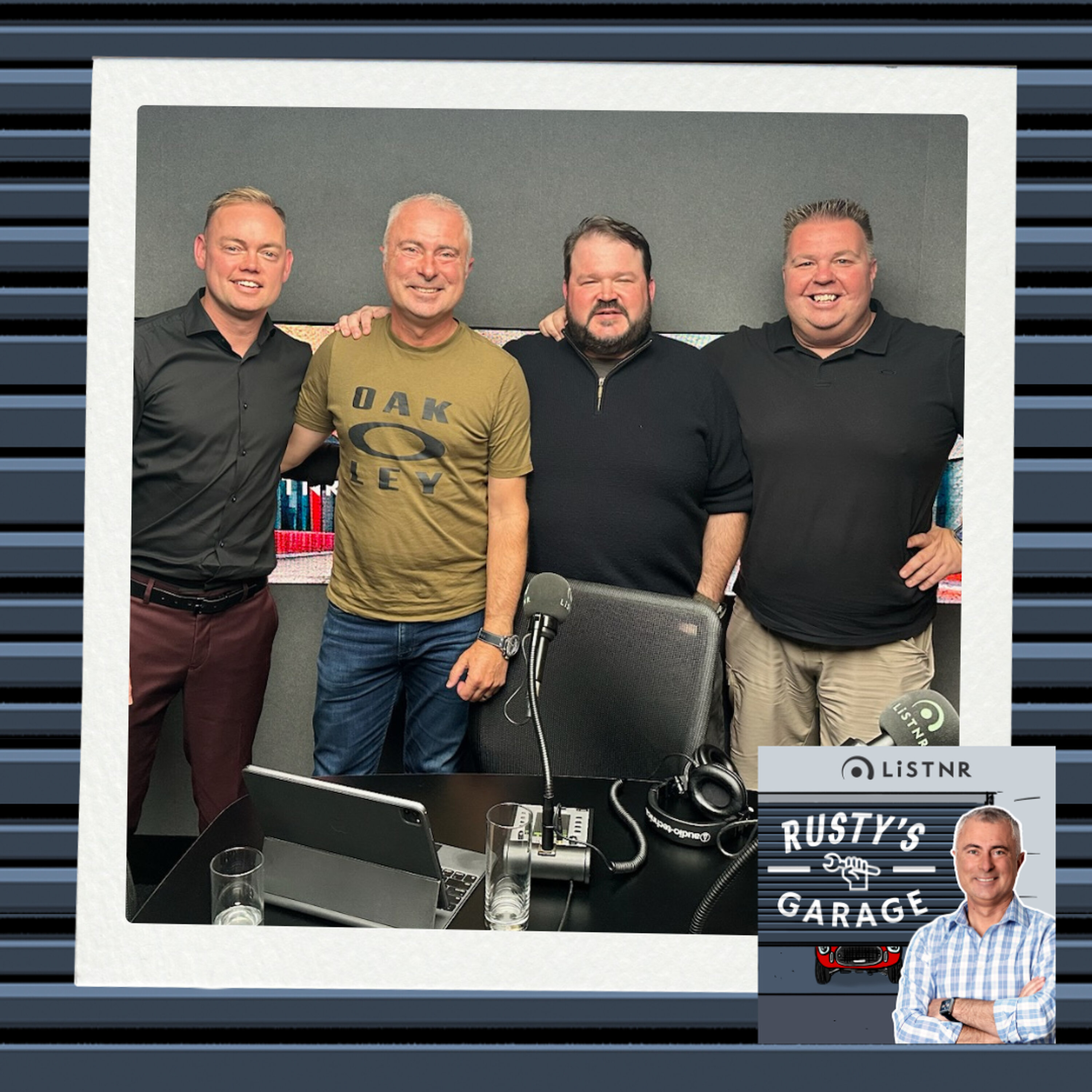
With Supercars gearing up for its second round alongside F1 at Albert Park we thought it was a good chance for you to get to know the sport’s new play-by-play commentators a little better.
Chad Neylon, Matt Naulty and Richard Craill have each walked different roads to get to this point and have become good friends along the way. They’ll share the lead calling role throughout the season. Why they are proper car (and bike) fans, the hard yards they’ve done across multiple forms of Motorsport, the grassroots and PA commentary that helped shape them and some of the impressive jobs they’ve done internationally too.
From a shared love of ‘The Simpsons’ to the classic bike in the Neylon family plus the scars on Craillsy’s hands from working on his first car (he still owns it and won’t part with it) as well as the King of Story telling - why Naulty also has a forklift driver’s license.
Much has been written and said about the sport’s big broadcast changes this year. This chat isn’t about reigniting that…..quite the opposite. The boys are all acutely aware of the magnitude of this job opportunity and very respectful of the legends who came before them.
Why Rusty thought a shortcast would be long enough for this one we’ll never know. This is a ripper pub style convo between four Motorsport mates. Enjoy…
Head to Rusty's Facebook, Twitter or Instagram and give us your feedback and let us know who you want to hear from on Rusty's Garage