The Nissan Leaf is a car that runs on electricity instead of gasoline, which means it produces no tailpipe emissions. It's popular because it's usually cheaper than other electric cars and is good for everyday driving. People talk about it because it's one of the first electric cars that many people could afford.
The Lexus LS 500 is a high-end luxury sedan that is known for being very comfortable and packed with features, making it a top choice for luxury car buyers.
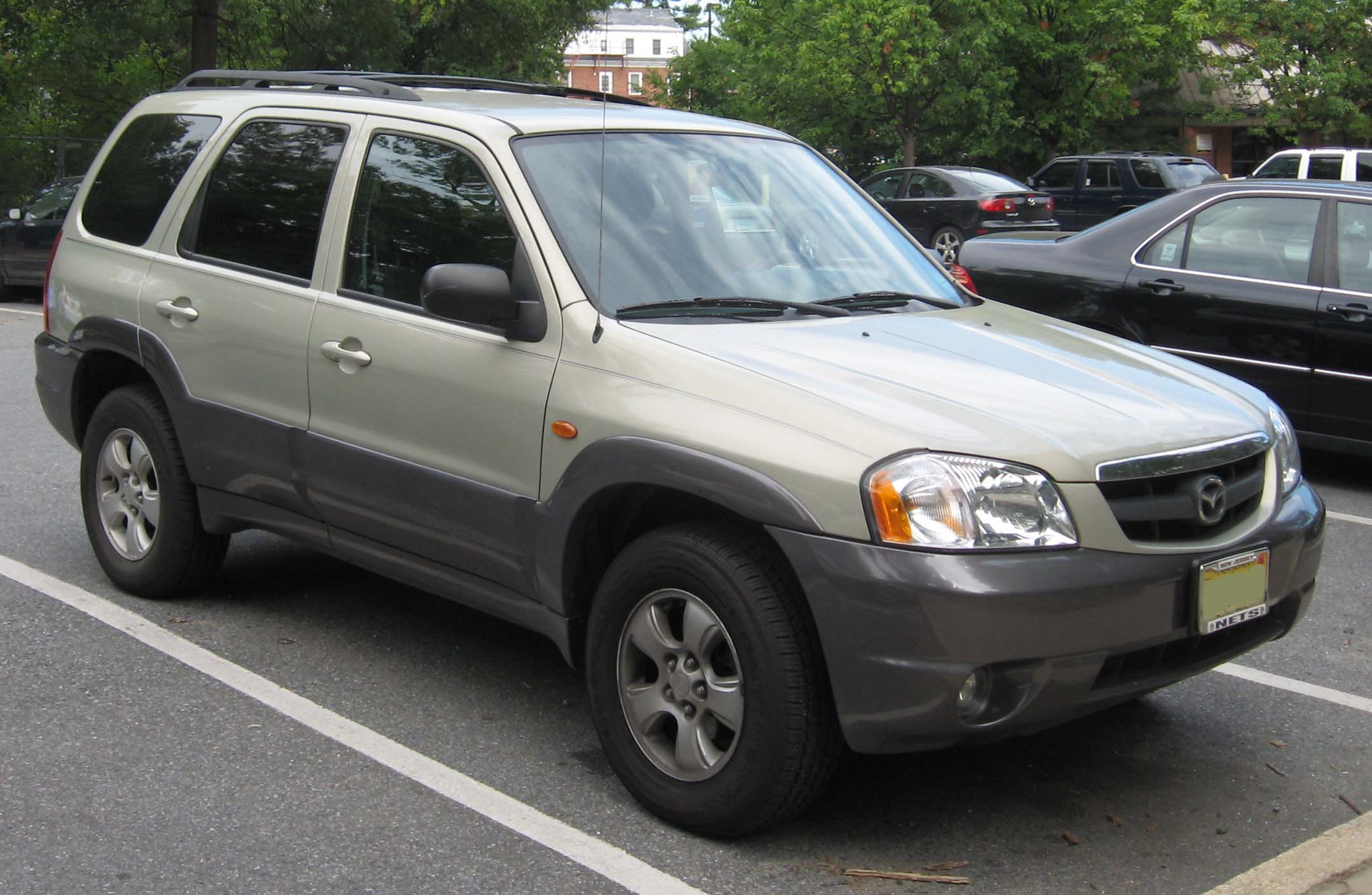
The Mazda Tribute is a small SUV that was made to be practical and comfortable for everyday use. It shares some parts with another car called the Ford Escape, which means it has similar features. People might talk about it because it's a good option for someone looking for a used SUV.
The luxury car market includes expensive and high-quality cars that offer more features and comfort than regular cars. Brands like Lexus and Mercedes-Benz are part of this group.
A twin turbo V6 engine has six cylinders and uses two turbochargers to make the car faster and more efficient. It's a popular choice for many modern cars.
The EV tax credit is a way for the government to help people buy electric cars by giving them money back on their taxes. This makes electric cars cheaper for buyers.
Full self-driving means a car can drive itself without anyone needing to take control. Tesla has a system that tries to do this, but there have been concerns about how well it works, especially in certain situations like crossing train tracks.
Tesla is a car company that makes electric vehicles, which are cars that run on batteries instead of gasoline. They are known for their advanced technology, especially in self-driving features.
The National Highway Traffic Safety Administration is a government agency that makes sure cars are safe to drive. They check if cars meet safety rules and look into accidents to find out what went wrong.
The Toyota Corolla Cross is a small SUV that is part of the Corolla family. It's designed to be practical and fuel-efficient, appealing to those looking for a versatile vehicle.
All-wheel drive means that power goes to all four wheels of the car, which helps it grip the road better, especially in bad weather or when driving on rough terrain.
Fuel economy tells you how far a car can go on a certain amount of gas. If a car has good fuel economy, it means you won't have to fill up the gas tank as often.
The Acura RDX is a fancy SUV that provides a comfortable ride and lots of tech features, making it a good choice for people who want a nice car without spending too much. It's smaller than some other SUVs, which makes it easier to drive in the city. People like to talk about it because it offers a lot of value for a luxury vehicle.
Front wheel drive means that the front wheels of the car are the ones that get the power from the engine. This can help with fuel economy and makes the car feel more spacious inside.
The Honda HR-V is a small SUV that is designed to be practical and efficient. It's a good choice if you want something easy to drive and park, but still roomy inside.
The Honda CR-V is a slightly larger SUV than the HR-V, making it a good option for families or those needing more space. It's known for being reliable and good on gas.
Bucket seats are specially designed car seats that fit one person and help keep you comfortable and secure while driving. They are often seen in sports cars and nicer vehicles.
The Genesis GV70 is a stylish and comfortable SUV that comes with lots of high-end features and technology. It's designed to compete with other luxury SUVs but often costs less, which makes it an interesting option for buyers. People talk about it because it offers a lot of luxury for the money.
An infotainment system is the technology in cars that provides music, navigation, and other information. It's like a car's entertainment and information center.
The Subaru Outback is a type of car that combines features of a station wagon and an SUV, which makes it great for both city driving and off-road adventures. It's known for being reliable and safe, and many people like it for family trips or outdoor activities. It's often talked about because it can handle different types of weather and terrain.
The Porsche 917 is a famous race car that was built to compete in long-distance races, like the 24 Hours of Le Mans. It's known for being super fast and has a unique design that helped it win many races. People talk about it because it's one of the most important cars in racing history.
The Ferrari 512 M is a historic race car that was built to compete in high-speed races in the 1970s. It has a powerful engine and a beautiful design, making it a favorite among car enthusiasts. People talk about it because it was part of exciting races against other famous cars like the Porsche 917.
LIVE
Imagine this, your house burns down or your partner passes away and you call your insurance company and the claim gets denied. No payout, no safety net, just loss. It sounds extreme, but it happens every day. Insurance policies are full of exclusions that leave people vulnerable. That's why my policy advocate exists. They review your coverage, uncover gaps and explain everything in plain English. They don't sell insurance. They help you understand what you already have. Visit mypolicyadvocate.com and protect what matters most.
This is America on the Road, named Best Radio Show by the International Automotive Media Conference and now in its 33rd year on the air. Thanks for being with us as we bring you the latest automotive information from around the world. I'm Jack Nierad with me as guest co-host Matt D. Lorenzo. Always great to have Matt on the program. I'll tell you Matt with the baseball playoffs, college and pro football going on. Are you buried in sports right now?
Are you about plenty of football and loving the baseball? Here should be fun. There's plenty of news to talk about this week. Alexis is sending its seminal sedan off into the sunset with one last hurrah. We'll tell you about that. Our electric vehicle sale is going to go off the cliff this month with the end of the federal tax credit. We'll tell you what general motors and Ford plan to do to keep that from happening. We'll offer our comments on their little gambit there. Jeep is recalling more than 100,000 vehicles for an unusual problem. We'll tell you what it is and what vehicle
vehicles are being affected coming up. Tesla is under fire from two U.S. senators and we'll have our take on that. What's your take on what's going on in the electric vehicle market, Matt?
Well, there's a lot. With the subsidies going away and a lot of changes going on in the industry right now. We haven't seen a flood of affordable vehicles, EVs yet. There are some like the leaf is just coming. I think that'll be the true test of whether or not this will be here.
The optimism is almost turned to pessimism overnight on EV. It's really remarkable to see the level of public discourse.
We'll talk about that. It links the coming up. America on the road is of course brought to you by drivingtoday.com, eamlancy.com. The publisher of my latest book, Only One Thing, stays the same and driving today, of course.
As your longtime listers to the show now, Matt and I are North American Car of the Year juries. We've been friends and colleagues for decades. What's your test vehicle this week, Matt?
This week I had the opportunity to drive the Toyota Corolla Cross, which is their small SUV in both natural hybrid, just plain of hybrid and gas versions.
Yeah, look forward to that. My test vehicle this week is the all-new 2026 Acura ADX. Our special guest this week will be Matt DeLorenzo.
We're going to talk about what's going on in an electric vehicle market and so much else. So we're so glad you're with us to stay with us because we have tons of show coming up on America on the road.
It's exciting to have you with us, Matt, and I think we've got a lot to talk about here. Stay with us everybody.
It's going to be an action-packed show as they say. Absolutely. We're all about action. We're men of action. That's for certain. So stay with us and we'll be right back.
Welcome back to America on the road with guest co-host Matt DeLorenzo, Jackney Redback with you. Chris is ill this week, so Matt fills in so capably. It's great to have Matt on the show.
Man, I want to talk about the Lexus LS 500. In this case, the Lexus LS was the seminal Lexus. I mean, you and I date back to when it was introduced. I certainly remember when it was introduced. I was editor of Motor Trend at the time.
I've got some stories about that I could tell you at another time, but Lexus is now sending off its flagship sedan with a tribute model.
The 2026 LS 500 All-Wheel Drive Heritage Edition, just 250 units. That might be enough. I'm not a spec luxury sedan. What's your overall take on the demise of the LS?
It really is a landmark, really. When they came into the market, they were going after the luxury car market and nobody expected the Japanese to succeed.
They did it. They did it through high-quality precision build, quiet, just really well-built automobiles. They did it at a price point that scared the bejesus out of their competitors.
I remember talking to people at Cadillac and even Mercedes in places like that. The Lexus came out and it was easily $10,000 less than the competition.
That's when $10,000 was real money, right?
It was amazing. They stuck with that sedan. One of the things that's really interesting is how the market itself has changed.
That full-size luxury sedan is no longer the market in the luxury market. It's an SUV now.
The fact that it stuck around for so long and did so well is a tremendous testament. The question is they're saying it's the final edition of this LS. Let's see what they have in the future.
Toyota could have something up there. Lexus could have something up there.
I think the Dan's are going to be around for a while. The Dan's are probably more popular in other markets in the United States.
One of the things that interested me about this is this heritage edition is going to have a 3.4-liter twin turbocharged V6 engine for 116 horsepower.
There's a lot of torque, but it's a V6 engine versus that V8 that was so strong and so capable in the original LS and kind of set it apart from so many. What'd you take on this?
Well, I think it's really a testament to how the market has changed. I mean, there still are V8 engines and people want those things.
But a twin turbo V6 has shown to be eminently capable. And when you get into a car like the LS, you're looking for quiet, quiet car with plenty of performance and just seamless operation and a V6 delivers that.
Yeah, I mean, 0 to 60 times, 4.6 seconds, I think, is pretty impressive. And it has a lot of tack in it, of course, and Mark Levinson audio system and head up display and color and all that kind of stuff, plenty of tack and safety tack as well.
But at the same time, as you mentioned, the luxury market is really an SUV market. I mean, the luxury market in the United States is all about SUVs. It's not about big sedans, so we're going to see this one go away for a while.
Jeep is recalling wagon ears and grand wagon ears, more than 123,000 Jeep wagon ear and grand wagon ear SUVs are being recalled over concerns that loose window trim could detach while driving.
I mean, that's not something that jumps out. It says, oh, this is going to happen. We have window trim fly off.
The National Highway Traffic Safety Administration said the recall effects model ears 2022 through 2024, so these are fairly recent vehicles. And these trim feces just fly away and they're a danger.
I think more so to other cars than other vehicles than they are to the vehicles that they're falling off of your thoughts on all this.
It's a real throwback to the 70s, because I remember driving cars that weren't particularly well built and fall off all the time.
Yeah, exactly. So I guess this is not the kind of throwback they don't build them like they used to. Well, I guess they're building them like they used to in this instance, but like they used to isn't all that swell.
So we'll see what happens with that kind of oddball thing. This is a story. I really want your comments on Matt because it's fascinating to me.
General Motors and Ford have a new EV incentive strategy. They want to soften the blow about the expiration of the federal EV tax credit, which just expired, expired at the end of September.
And a report is that the both of these automakers want to extend the subsidy. And this is kind of a tricky way that they've decided to do it.
Is they had their captive finance arms quote unquote buy these vehicles, thus making them eligible for the tax credit.
And then extending that tax credit to people who actually buy them consumers who actually buy them in or through leasing who lease them, I guess, is really the way to access this.
This apparently has been cleared by the internal revenue service, but it sounds pretty hinky to me. I mean, what are your thoughts on that?
The thing is I wonder if their competition is doing the same thing because there are a lot of foreign built EVs that weren't eligible for the tax credit, but this is one way they could get around it is by leasing them, turning them into leased vehicles.
I think it's genius because what it's doing is it's incentivizing all the vehicles that they built that are on the ground and are unsold and it's a big boost for the dealers.
I think it's a win-win as far as I'm concerned because it'll help clear out those stocks and it'll help soften the blow in the transition from the incentives to a non incentive market.
So I'm all for it. I think that this will allow a lot of people to at least try out EVs in a very affordable way.
And that's one of the things I've been recommending is that if you're going to get an EV right now, lease it, don't buy it.
Well, I guess I have a little bit of a different take on it. It just sounds like it maybe adheres to the letter of the law, but certainly doesn't appear to the spirit of the law.
But I kind of understand that a lot of dealers and a lot of car makers have a lot of EVs that they like to move and they thought they could move with some federal help and now it's not going to happen.
Well, there was a big spike in EV sales before because everybody knew of the looming deadline.
So this is a way to avoid having all those cars sit around on the lots for six months.
Yeah, which would undoubtedly happen. I think we've been warned about that more than one carmaker.
Let's talk about this thing with Tesla. Two US senators, Ed Markey of Massachusetts, Richard Blumenthal of Connecticut, have suddenly put out a letter, chiding Tesla for its self-driving technology, saying it fails to detect railroad crossings properly.
I think this is kind of bizarre in many ways. The National Highway Traffic Safety Administration got this letter from these two senators.
A couple of things I would ask about. Number one, where were these guys looking at this full self-driving problem two or three years ago when Elon Musk was donating money to their party and not to the opposite party?
They are looking for restrictions on full self-driving and forcing Tesla to change its system's name.
We have kind of criticized Tesla for this for a long time on this program, but I think these guys are a little bit late to the party. What's your take on that?
I agree. I think it's up to the NHTSA really to take the lead on a lot of this technology and the systems because they're the ones in charge of National Highway Traffic Safety. It's in their mandate.
It's just political posturing on their part. I don't think anything news is going to come out of their investigations. I don't have any confidence that Congress has the technical ability to sniff this one out.
It's politics. That's what I've got to believe it is, too. When we come back, we will be road testing a couple cool vehicles. Remind us of the vehicle you'll be road testing, Matt.
I'll be driving the Toyota Corolla Cross, which is a really nifty, small SUV.
I'll be driving the 2026 Accura ADX. Stay with us for that and we'll be right back.
Welcome back to America on the road with Matt DeLorenzo. This is Japanese Grayback. With you, we're so glad you're with us.
It is road test time and Matt, you just came from an event I think in Northern California, the wine country where you were driving the all-new or heavily revised Toyota Corolla Cross.
Tell us about it.
The 2026 Toyota Corolla Cross is a small SUV and it's only three years old but they did sort of a mid-cycle refresh on it.
One of the things that they were wanting to do is to differentiate the hybrid from the gas version. The gas version is cheaper.
It starts under $25,000. You can get it in front-wheel drive or all-wheel drive. It's a terrific little vehicle.
It's got right size for small families, empty nesters. It's very affordable. It gets decent gas mileage.
The thing about the hybrid version, they differentiated the looks of them. The hybrid version has more of a high-tech kind of road look to it whereas the gas version looks a little bit more rugged, a little bit more off-roadish.
Both of them, when they allowed us to drive off-road with them, with the all-wheel drive system performed quite well.
We drove up actually a pretty steep hill. It got to the top and it was surprising how well these two performed.
Because a lot of these SUV, crossover SUVs, they call them almost fake SUVs because they're not really heavy-duty off-roaders.
But if you want to camp and get back on a trail, perfectly capable in doing that.
The hybrid, I was particularly impressed with, it starts at under $30,000 and that includes all-wheel drive. It gets an amazing 42 miles per gallon.
So if you're looking, if fuel economy is a big concern, the extra of four grand that you have to pay for the hybrid system is well worth the money. You'll get it back in gas savings with it.
Very quiet, very competent on-road. I just think it's a terrific little vehicle.
When I first, I think we both drove it when it came out about three years ago.
It came across to me as nice, but not great. It was hard plastic, stuff like that.
There seems to be more soft touch materials, much better soundproofing.
I was really impressed with the level of fit and finish and build quality.
Interesting. Yeah, I did like this vehicle. It's a vehicle I think that is really done well in the marketplace.
It's not necessarily a favorite of vehicle testers or enthusiasts like you and me.
But I always thought this is a winner. This makes so much sense to have a small SUV like this in the Toyota lineup. It just jumped out at me as being a really good idea.
You know, there are capacity constrained on it, so they can get maybe about $100,000 out of this plant that they share with Mazda and Alabama.
During the press strip, they were saying, well, they're working on trying to make the line a little bit more efficient.
They want to boost it by at least 10 or 20% of the output.
But they're selling every one of these that they can build. So obviously, they found a niche in the marketplace.
They can build about $100,000 or so a year.
And it's a terrific vehicle for somebody wanting to get into an SUV.
You know, the next step up, you're going to be paying at least 10 grand more like to go up into a rap decently equipped rap four.
So it really fits well in the line and carries the Corolla entry-level vehicle name quite well.
Yeah, I think as the rap four has gotten to be a little pricier and I think it's still one heck of a value.
In fact, two of my daughters drive rap fours. So that's how much we like it in the near-end family.
But this fits right under the rap four and provides a lot of the same kind of value, I think, reliability and all of that.
And a reasonable fun to drive. It's not a ton of fun to drive, frankly.
The thing about these vehicles is they make it easy to drive.
And the people who buy these cars want a vehicle that's easy, comfortable to drive, good steering feedback.
So they hit all their marks on there. Now, you know, the gas powered one only puts out maybe 170 horsepower.
So it's no road burner by any means. You get into the hybrid and you're pushing 200 plus horsepower or well over 200 horsepower, almost 300.
And it's really a nice, it's a great vehicle for all around driving and plus you get the all-wheel drive.
So if you're in, you know, the snow belt, you get that confidence of having the all-wheel drive as part of the package.
And you can load it up, you know, you can get a panoramic sunroof and you can get a larger, you know, 10.5 inch center screen and there are a lot of bells and whistles available on it.
But even the base ones come fairly well equipped with a lot of the safety, you know, blind spot warnings and those types of things.
That's where I think the ton of value is toward the bottom of the line up there because you can, I'm sure you could load this up and it'll be $45,000 or something like that, which is an awful lot for a vehicle of that size.
But I think toward the lower end, as you say, tons of safety equipment and you get good powertrain, it just works really, really well.
Yeah, it's a terrific vehicle and I think that they're going to have continued success with it.
The question is, you know, how many more will they be able to get out of that Alabama factory?
Right, you know, kind of whip those people into building more vehicles there.
Well, I want to talk about the 2026 Accura ADX, which is the compact premium crossover.
It's below the RDX and the Accura lineup and it's also a contender in our North American car of the year that both you and I are jurors of.
This is built on a front wheel drive based architecture as you might guess coming out of Honda, optional all wheel drive.
Designed to attract buyers who are looking for premium features in a smaller, more affordable package.
A lot of people who wait into the market after four years go, hey, wow, the vehicle I bought before is really expensive.
Can I get something that's about the same cost or same monthly payment and they're having to step down a little bit?
The vehicle I had was in ASPEC with advanced package form.
So basically the top of the line, tons of technology, comfort and driver assistance features.
The base price of this vehicle is about $42,000 and the as tested price was $46, almost $47,000.
So not inconsiderable sum for a vehicle of this size.
It has the Accura Signature design elements, including the Pentagon grill and the LED headlights.
ASPEC treatment gives gloss black accents and dark finish 19 inch wheels, which are pretty cool looking LED fog lights.
Panoramic moon roof is standard on this trim, so it's a good looking vehicle.
I think they've done a nice job with that.
I mean, what's your off the cuff take on ADX?
You know, I really like it a lot. I drove it a couple of weeks ago.
And it's based on the Honda HRV, which is the smallest one, but it looks bigger.
I mean, I was like looking at this thing and I'm like, well, the HRV is pretty big.
But the CRV has grown, the RDX has grown in size, so that, you know, I think if somebody comes out of an old RDX,
they're not necessarily going to feel particularly cheated with the ADX because it is a substantial looking vehicle.
I love the styling. One of the things that really just kind of impressed me was when you're sitting behind the wheels,
you can see these character lines on the top of the fenders.
So you really get a sense that there's a nicely styled front end out in front of you.
As opposed to a lot of these cars you get into and it's just like, you know, you're looking out over a flat hood and there's nothing there.
So it has a tremendous amount of style, great features.
I love the bucket seats in that thing. They were so comfortable.
And, you know, it just had everything that you would want and buttons.
I love buttons and I love buttons.
Well, and I want to talk about that too, but first I want to talk about the powertrain because I think this is where it's lacking, Matt.
It's one and a half liter four cylinder turbocharged engine, 190 horsepower, 179 pound feet of torque.
I'll tell you, there's other vehicles in this class for the same money that have 50 more horsepower that have a lot more torque.
So I think that's a little unusual. I'm kind of surprised at that out of Acura, especially in A-Spec trim.
It has a continuously variable transmission, not exactly our favorite, typically as enthusiasts.
So it works fine, but, you know, it's not, it has faux shifts.
You could use paddles to make fake shifts, so it has that going on with it.
I guess, to the ADX's detriment, I guess, I was just coming out of a Genesis GV70 that is about the same money and has a lot more horsepower and has a much more luxurious interior.
I was also, let's talk about the infotainment system here too.
I mean, the good news with the infotainment system is they've gotten rid of that track pad interface that Acura's have had.
At the same time, it only has a nine-inch touchscreen, which I think in this day and age is kind of small.
What's your overall take on the infotainment system?
Yeah, I, you know, they've gotten better.
I mean, at least you have a volume knob, which, yes, you know, small victories.
Yes, small victories.
You know, in terms of the overall package, I found the drivetrain unobtrusive.
And I felt like this thing was more like a luxury vehicle, rather than a, you know, a spirited.
I didn't want to go out there and charge into corners or things like that.
Now, maybe with the RDX you will.
And maybe the expectations should be with the A-spec, that it should have a little bit more edge to it.
I, I, I grant you that.
I just found a very pleasant to drive.
Yeah, I think you're half full on this, and I'm half empty, and I think it's a good vehicle.
I think there's a lot to look at here.
RDX, and I applaud Acura for doing this, but I would also recommend that people look at the competitor when they're in this market,
because there's a lot of choices there.
So look at that.
And when we come back, we'll have a special guest whose name is Matthew Lorenzo.
So stay with us for that, and we'll be right back.
Hi, I'm Jack Arnie Redd, and I'd like to tell you about my newest crime novel, Only One Thing Stays the Same.
In a style reminiscent of James M. Kane and Jim Thompson, two of my writing idols,
the book Chronicles of Blue Collar workers up and down love affairs with two modern Southern California women
who continue to surprise, shock, and ultimately confound him.
As the story unfolds an unemployed aeronautics worker named Bill McCurdy becomes disillusioned with his wife
and slips into an illicit affair with a teenager from down the street.
Before long he begins to think of doing the unthinkable, but despite his desperate attempts to make things work,
almost nothing goes as planned.
His misguided quest for simple love doesn't turn out to be simple at all.
And before the roller coaster ride stops, he learns quite personally and very finally that Only One Thing Stays the Same.
Only One Thing Stays the Same is available in Kindle eBook and Paperback form exclusively at Amazon.com.
I'd appreciate it if you'd look for it today.
Welcome back everybody to America on the Rote Jackie Redback with you with our special guest and co-host, Matthew Lorenzo.
Matt of course is the author of a great book on EVs called How to Buy an Affordable Electric Vehicle,
a tightwads guide to EV ownership.
I think I got that title right, Matt.
And a terrific book.
Certainly we have come to what I think is a watershed moment in the industry, right?
We've passed the point where the tax credits for EV purchase have gone essentially away now.
I guess we reported in the show maybe some moves by some manufacturers to retain them for a while.
We'll see what happens with that.
Once you're overall take here, I mean there's a lot of predictions that EV sales are going to go off a cliff and maybe I'm on that team.
Well there are a lot of dire predictions and just as dire as those predictions are, I'll be a little more counterintuitive.
I didn't believe the predictions when they said we're going to go all EV either.
So you know this is the moment of truth.
I mean EVs are going to sink or swim on their own merit.
The costs have to be in line to where consumers are willing to buy these things.
And that's been the elephant in the room with the whole debate.
You know you have with policymakers putting their thumbs on the scale,
of course the manufacturers are really going to push EVs.
Now that the thumb has been removed, it's up to consumers.
Now the manufacturers have invested a lot of money in these.
And they're like Ford has gone through an abort of a temp where they spent five billion and now they're doubling down on that.
And now they've understood that, yeah we can't be building $90,000 electric pickup trucks which are kind of not relevant.
And we need to build affordable EVs.
Well that's if you're going to build a market, that's where you have to put all your time and resources.
So we'll see, we got a lot of affordable EVs coming out.
You know that we have the leaf just rolling out.
People are going crazy over that slate truck which is going to supposedly start at about $27,000.
GM is promising to bring back the bolt.
The proof will be in the pudding.
What is the acceptance rates of these vehicles?
What is their role in the transportation fleet?
And their success will be on their ability to compete against gas powered vehicles on a level playing field.
And their own better technology win.
We'll find out.
Yeah and I'm absolutely 100% for that.
Made the best technology win.
I think the better technology won 100 years ago when we went to gasoline vehicles versus electric vehicles around 1910, 1915.
And largely, and I'm being a bit facetious there, but largely the issues for battery electric vehicles haven't changed since then.
I mean range and the cost of the batteries and the charging of the batteries.
Those are three major issues that really haven't been solved in the last 110 years or so.
And we always hear that somewhere off in the future that will be solved.
We'll get solid state batteries, batteries will be much less expensive.
And it just hasn't happened.
You're an absolutely close observer of this.
Where do you think this is going?
You know, it will just hinge on consumers finding a place for EVs in their fleet.
They're not going to have all, some people may have all EVs, but they may have a home with a home charger.
That's the ideal situation.
There's still a lot of people living apartments.
A lot of people living condos don't have access to home charging.
They will be more candidates for hybrids.
So we'll see how it all shakes up, but it's not going to be 100% one way or the other.
It's going to be a blend from ice vehicles, pure ice on one end of the spectrum.
Hybrid, plug in hybrid through pure EVs.
And I think EVs could conceivably in a free market situation account for maybe 25%, 30% of the market.
Well, I think they're going to account for 5% of the market in 2026.
Well, right now I agree, but I think we don't have a lot of affordable ones out there.
There are applications for people to want to own them.
And I just think that if they're able to drive a little bit more costs out of them, yeah, some people will.
I mean, I think the leaf at $30,000 with a 300 mile range is going to be of seminal vehicle in terms of EV acceptance.
If that thing flies and if they've never been able to sell a lot of, you know, I think the highest sales was somewhere between 15 and 20,000 units a year.
If they can crack that level with the leaf, then I would say, yeah, maybe they have a shot at it.
Well, I'm kind of hard prepped.
I like the leaf and I think the new leaf is going to be just fine and more range is good, I guess.
But at the same time, it doesn't really answer the major problem.
One of the major problems, of course, is cost.
And the reason we don't have very many affordable EVs is you can't make an affordable EV that does what a gasoline.
Powered card does.
It doesn't have the utility.
It's not as easy to use.
It requires more lifestyle flip flops and changes than most people are willing to put up with.
I think which is why we see hybrids gaining prominence.
I also think we're seeing hybrids gaining prominence because a lot of very popular vehicles are hybrid only these days.
It makes sense to add that technology that isn't very expensive to get that added fuel economy added benefits.
Which is taken on that.
On the hybrids?
On anything.
Anything I said there, because I said a lot there.
You know, I just think that when I own an electric vehicle, it meets all my needs.
And it's not costing me an arm and a leg.
But I'm rare.
I don't, you know, I don't, it's a hatchback.
It gets 150 mile range.
I have a plug-in hybrid as a second car.
So I'm perfectly satisfied.
And if I got another electric, I would like maybe 100 miles more range.
But again, it's the battery cost when you do an apples to apples comparison of like ice versus EVs.
EVs are going to be at best for $5,000 more.
And there are a lot of rational people who won't spend that money because just they want to have an electric vehicle.
Now some people might spend that money because A, I don't want to pay $5 a gallon for gas in California.
I charge at home and I don't drive very far.
So, you know, people own golf carts for the same reason out here in California.
So, I, you know, I don't, I don't, I don't see that.
Now another thought that just occurred to me too, you know, there are a lot of these pro EV people saying,
well, you know, some people wanted to hang onto their horses and buggies and they didn't want to make the transition to, you know, gas cars.
And it's the same thing with EVs.
Well, no, because back in the day we weren't making horses that ate less and polluted less with each year.
Horses didn't get better. Horses didn't change.
ICE technology continues to evolve.
And that's going to be the tell on EVs is that yes, EVs will get better, but so will ICE cars.
You know, you see now a lot of them can get over 30 miles per gallon without a hybrid system.
And with hybrid it pushes that up, you know, and they're 50 miles per gallon.
Right. And the range from these vehicles, and of course they typically have unlimited range, but a hybrid vehicle.
Many of them have 600 miles of range or something like that before you have to fill up.
And then of course you can fill up in five minutes as opposed to charging.
And if you're lucky, charging time of, you know, 30 minutes to heaven knows how long.
When you are using a public charger, how long does it typically take you to get a charge that you want?
With my car, it has such a small battery. It'll take less than an hour to get a 90 percent charge.
But the other thing is I charged, I had like, I had an EV nine or something like that.
And I went to public charging. I was paying 73 cents a kilowatt hour.
I paid 26 cents at my home. So do the math.
I mean, it was a $60 fill up of this 300 mile range EV.
So people say, well, electricity is cheaper. It just depends on where you get it and how you use it.
And it's not demonstrably cheaper.
The beauty of ICE technology is that you can get by with just one vehicle.
The thing with an EV is that its role is better, is better spent as part of a fleet in a family's home.
Yeah, as a second car or more. And then it would work wonderfully well.
And I think that's the situation you're in.
And, you know, I could see my wife who goes to Costco and trade her jows and those kind of things and target.
I mean, that's kind of her trio of places to go all within just a few miles of us.
Electric vehicle that we plug in at home would pencil for us maybe.
But then you have to consider that it would probably cost us $5,000 to rewire our home to have a home charger.
I don't know how long it's going to take to get that to work out again.
That's another expense. Sure. Sure. That's another expense.
So, you know, and we'll see how this happens.
You know, I think the problem we've been whipsawed back and forth so much.
Just over the last five years about internal combustion engine bands.
And everybody's going to go all electric. And this is going to happen by 2025.
And this is going to happen by 2030 and by 2035. This is going to happen.
And it takes much longer to evolve these technologies and these changes.
And I think that we're going to end up.
We're going to end up with all of the above.
And I think we're going to see a lot more hybridization than we have in the past.
But again, the manufacturer is going to build the cars at the public once.
And I'd like that to happen.
I'd like the government to keep its thumb off the scales in any way, shape, or form that it's doing.
And one of the unintended consequences of electric vehicles here,
or the electric vehicle mandate in California, the state in which you and I both live,
is $5 a gallon gas. And largely that is coming because we're not building refineries in here.
Who would invest in an oil refinery in California, or even improve a current oil refinery,
given the government stance of we're going to get rid of all gasoline powered car sales in ten years' time,
or something like that. I mean, comment on that because I think there are unintended consequences
to all these stances that people are taking.
You know what? I think there are intended consequences until it costs somebody political power.
And I think one of the reasons they have such high taxes here in California
and have jacked up the rates, and you know, there are two things happening.
And one, yes, we do have unique conditions out here that need to be addressed
from a pollution point of view, and I understand the fuel standards and all that.
But the hostility to fossil fuels on the part of the government has driven up the prices,
and that's intentional to try and drive people into EVs.
Well, and it turns out to be hostile to the people who live in the state,
and because there is no way that lower income people are going to find an electric vehicle useful to them.
Many of them live in multiple family housing. There's no way for them to plug them in.
They'd have to use public charging. They're much more expensive than the typical car.
It's just a bad idea all the way around.
Right, right. The other thing is that we've moved beyond California trying to solve its own pollution problems.
And I think the place where they overstepped and created the situation we have now
is that they try to impose these standards and getting rid of cars and going all electric on the rest of the country.
Right. And now they're feeling to push back from that.
And they only have themselves to blame. So we'll see what happens.
We will, and when we come back, we will have a listener question.
So stay with us and we'll be right back right here on America on the road.
Welcome back to America on the road with Getsopro.
Thank you.
Thank you.
With you, it is listener question time on the show.
And we'd love to get your questions and comments.
We want to hear from you. Send them to editor at drivingtoday.com.
That's editor at drivingtoday.com.
And I have a question for you, Matt.
Kind of an interesting one from William in Stovermont.
This is what William has to say.
I have an older Subaru outback that's coming up on 100,000 miles.
And I'm wondering, should I get my timing belt replaced preventatively?
If it ain't broke, don't fix it.
Because if you do have a timing chain problem, it's going to cost the same.
Whether you replace it now, or when you have the problem.
So, no, I wouldn't.
Would you?
The first thing to look at is whether you have a timing belt or a timing chain.
Because they're different.
And I think you'd have to go to a much older outback than maybe William is driving
and give us a modelier to find one with a timing belt.
Those need to be replaced about 100,000 miles or something like that.
And probably worth replacing because you might lunch your motor if they give way.
Timing chain much less likely, but should be inspected, would be my recommendation here.
Check out that timing chain if that's what you have in your outback.
You can also go on forums too.
I think that their great owner forums are a great source of information.
Absolutely true.
That wraps up our show for this week.
Matt, remind us of the name of your book and how folks can get it.
It's how to buy an affordable electric car.
A tightwads guy, the EV ownership.
It's available on Amazon, Barnes & Noble websites.
And then through my website, tightwadgarage.com.
Look for that book.
It's terrific.
And I know you have a new book coming out fairly soon.
And we'll talk about that in an upcoming show.
My new crime novel, Only One Things Days.
The same is now available in both ebook and paperback format.
Amazon.
We have links in the show notes to that.
So check that out.
If you like our show, please pass it on.
Listen on this radio station each week and let your friends know where you hear America on the road.
And of course, America on the road is available as a podcast on all the top podcast outlets.
So we have YouTube and Rumble channels.
So check those out.
You're going to be able to see what Matt DeLorenzo looks like and what I look like.
He looks better than me.
That's for sure.
We have shorts on our YouTube channel these days.
And thanks Matt for being our guest host.
You always are so capable of doing that.
We appreciate it.
I appreciate you having me on, Jack.
It's always a pleasure.
Thanks to Mercury Insurance for sponsoring the show.
And thanks to you for listening.
We do appreciate it.
We know you have a lot of choices.
So thanks for listening to America on the road and join us again next time
for another edition of America on the road.
I'd like to tell you about the most exciting and authentic racing novel I've ever read.
It's called Closing Speed, written by a award-winning author Ted West.
In 1970, the Indy 500 pole speed was 170 miles an hour.
But at Le Mans, Vic Elford's Porsche 917 raged down the mullsons straight at 248 miles per hour.
The racing pitted the Porsche 917 versus the Ferrari 512.
The fastest road racing ever.
And road and track sent a promising new rider, 27-year-old Ted West, to cover it.
He traveled from Brands Hatch to Monza, the Targa Florio Spa, the Nurburgring, and Le Mans.
He got to know the races personally, and the women who loved them.
The racing was blindingly fast.
Driving horrifically fragile cars at those speeds took unheard of courage.
That was around every corner, and the drama tensely real every moment.
Closing speed is the most realistic, intimate racing novel ever written.
It's a look into the very heart of the sport, an incomparable racing read.
It's available now at Amazon. That's Closing Speed by Ted West.
Look for it.
About this episode
The episode dives into the latest automotive news, focusing on the new Acura ADX and Toyota Corolla Cross SUVs. Hosts Jack Nierad and Matt DeLorenzo discuss the end of the federal EV tax credit, the implications for electric vehicle sales, and a recent Jeep recall. They also share insights from their test drives of the Corolla Cross and the Acura ADX, highlighting their features, performance, and market positioning. The conversation touches on the evolving landscape of the luxury sedan market and the challenges facing electric vehicles as they strive for consumer acceptance.
On this week’s episode of America on the Road, Jack Nerad is joined by guest co-host and auto industry veteran Matt DeLorenzo to test two new compact SUVs from opposite sides of the market. Matt gets behind the wheel of the 2026 Toyota Corolla Cross, a value-packed crossover assembled in Alabama with gas and hybrid options, updated tech, and standout safety features. Jack takes a closer look at the 2026 Acura ADX A-Spec with Advance Package, Acura’s new entry-level premium SUV designed to bring top-shelf features to a more affordable segment.
🚙 Road Test: 2025 Acura ADX A-Spec with Advance Package
Positioned below the RDX, the all-new ADX brings Acura styling and premium features into the compact crossover segment. Powered by a 1.5-liter turbocharged engine making 190 horsepower and paired with a CVT, the AWD-equipped A-Spec test vehicle topped out at $46,890. It includes sharp exterior touches like gloss black accents and 19-inch wheels, plus a premium interior with suede-like upholstery, ventilated front seats, and a heated steering wheel. The infotainment setup features a 9-inch touchscreen with Google Built-In, wireless Apple CarPlay®Android Auto, and a 15-speaker Bang & Olufsen sound system. But with all this goodness, is there an area where the ADX doesn’t measure up to its competitors? Matt and Jack will explore that question.
🚗 Road Test: 2026 Toyota Corolla Cross
Matt just returned from the Corolla Cross driving event in Northern California. He learned the refreshed Corolla Cross continues to offer a compelling blend of affordability, utility, and fuel economy. Gas models start at $24,635 and deliver up to 32 MPG, while the hybrid lineup starts at $28,995 and offers a robust 196 horsepower with standard all-wheel drive and 42 MPG combined. A redesigned center console, available 10.5-inch touchscreen, and new 12.3-inch digital gauge cluster modernize the interior. Toyota Safety Sense 3.0, wireless Apple CarPlay/Android Auto, and options like a power liftgate, JBL audio, and heated seats add further appeal. New styling, including redesigned alloy wheels, give the likeable small SUV a new lilt. See what Matt and Jack have to add in this episode.
🎧 Special Guest Interview
Matt DeLorenzo, author of How to Buy an Affordable Electric Car: A Tightwad’s Guide to EV Ownership, not only guest hosts but he alsoi joins Jack to unpack what’s really happening with EV tax credits now that federal incentives have disappeared. Can automakers like GM and Ford keep the momentum going or will sales stall?
🗞️ In the News
• Lexus sends off the LS with the ultra-limited 2026 LS 500 Heritage Edition
• Jeep recalls over 123,000 Wagoneers for loose window trim
• Ford and GM offer creative leasing programs to extend EV incentives
• Tesla faces new scrutiny over its Full Self-Driving system
📬 Listener Question
William from Stowe, VT asks: “My Subaru Outback is nearing 100,000 miles. Should I replace the timing belt preventatively?” Jack and Matt offer real-world advice.
🎙️ Hosts: Jack Nerad & guest co-host Matt DeLorenzo