LIVE
Hey, everybody, welcome to another episode
of the Car Dealership Guy Industry Spotlight
coming up today on Cover With Me,
the irony of robots delivering parts and service.
Check out a prior episode.
But the general manager generating a paper expense trail
after buying the team lunch on Saturday,
then AP actually having to print out that approval email
as validation of the entire expense chain.
Learn how the Ewing Auto Group CFO
got frustrated with this entire manual mess
and found a better way.
Digitizing AP systems and saving time and money
in the process.
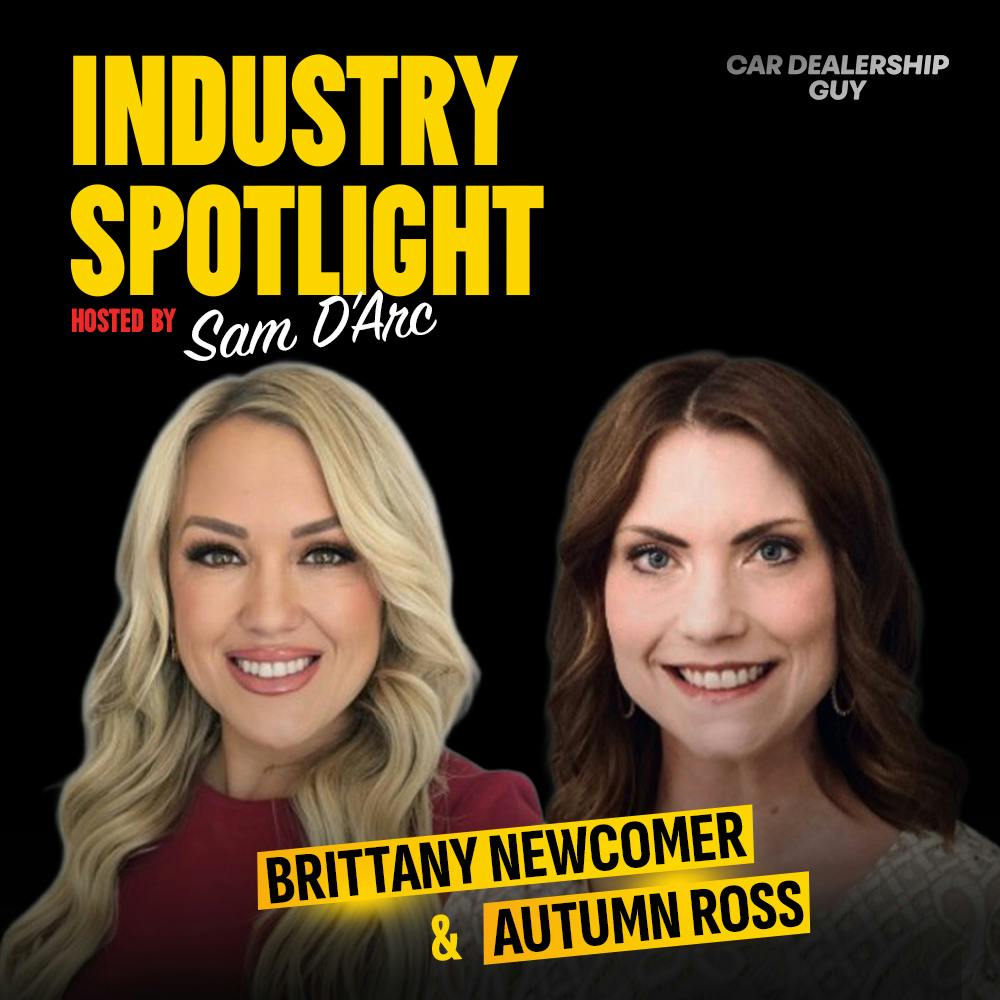
Joining me today, Autumn Ross, Ewing CFO
and Brittany Newcomer, VP Automotive for Corpey.
Today's episode is brought to you by Corpey.
Thanks for supporting the show.
Let's get into it.
So Autumn, we've had Finley Ewing the fourth on.
In fact, he was on several months ago
talking about robots in service.
I think Rich Tech Robots was the guest on the show.
How are the robots?
They're wonderful.
They're multiplying.
Are they?
How many?
They are, they are.
And yeah, they're wonderful.
They show up to work every day.
They don't complain.
And we love them.
They're probably one of the best additions
that we've had at Ewing over the past few years.
Wow, so you say they're growing.
Do you have a number count
on how many are sitting in the stores?
You have four stores, right?
We have four stores.
They're currently in three of our locations.
And we have two per location now.
That is incredible.
And they continue to deliver an ROI
as we talked on the last podcast.
That is very cool.
You know what's interesting to me?
It strikes me that Ewing Auto Group,
you are very forward thinking
when it comes to all things technology
and kind of what are the next things
that you're trying to solve in automotive
and props to you and the entire Auto Group
for doing that.
So Autumn, before we get too deep,
tell us a little bit about yourself
and what you do at the Ewing Auto Group.
So I am the chief financial officer at Ewing Auto Group.
We are a four roof top dealer group in Plano, Texas.
We house Mercedes-Benz, GMC Buick, Subaru and VinFast.
Very good.
Okay, VinFast, so all EVs as well.
So you say that the robot's pencil,
the ROI is there,
which by the way like leadership
and management and sales can go out and buy stuff,
but that says a lot that a CFO can validate the impact.
So they make sense from an ROI standpoint.
They do.
The technicians actually are concerned
if they don't see the robots.
And for me, if we can have the technicians in the bay
working, generating hours
and we have robots rolling all over the place,
that is definitely, definitely win.
Do customers like it?
Like, do customers have an opinion on it
or they probably don't see it a lot?
They don't see them very often,
but we're very proud of our robot.
So every opportunity that our staff gets,
we definitely bring up the robots to customers,
vendors, anyone that's here on our campus,
they definitely get an introduction
to the robot if available.
I wanna come out and see the operation.
I think one of the things that sets you apart,
I saw Finley Ewing at the fourth at NADA in New Orleans
earlier this year.
And it reminds me of what he said on the show.
He said that Ewing Auto Group,
we're really one of our main goals
is to get ahead of everyone in the digital age.
It's to own kind of that advancement out there
unlike any other auto group.
Talk to me about that from a CFO perspective.
What does that mean to you
and how you do your role and job?
So to piggyback off of what Finley said,
all of that is derived down
to making a better customer experience.
So the internal processes, the digital age,
all of that we're leaning into
because we want our customers to have a better experience.
So from my seat, obviously that drives revenue,
that drives just growth in the business
and our industry and our area.
So the more efficient that we can be internally,
the better our customer experience is going to be
and that's our ultimate goal.
So that makes you and the auto group stand out
because you know in automotive,
the way things were oftentimes drives
the way things will be and change is not easy,
but you've dealt with that and adopted it.
So as you've evolved,
you and your role have done a lot of things
to lean into the technology and the digitization.
What are some things that have frustrated you
about automotive that you've sought to change?
So the age, old issue of who bought this,
who approved it and why did we buy it?
The payables piece, the spend management,
expense management, cash flow management
is such a huge bottleneck in my opinion still
in automotive and it falls back to the mounds of paper
that have to come across,
well they don't have to actually, let me correct myself,
they come across post a purchase
and we've always done it that way
and that is one of the hardest ones to break in my opinion
because it's on the door.
And in fact, as we talked,
you recently changed to Techian as an auto group
and that kind of even exposed it more, right?
Because now you've got this new DMS platform.
Who are you with prior to Techian if you're okay saying?
I was not here previously.
So Reynolds and Reynolds was the legacy DMS.
Okay, okay.
And Techian prides themselves in being more digitized, right?
And so you had a lot of your processes
that moved to digital as a result of that transition
and then those mounds of paper that you're talking about
they stood out probably even more.
Was there anything that you did internally
to try to address that challenge
of all the pieces of paper
that despite the digital processes,
your DMS provider afforded you still lingered?
We did.
I feel like there's always more than one way to skin a cap
but we tried every which way to do so.
Whether it was internally staining,
whether it was, we have a set day,
we have a set time creating those tighter deadlines.
It, the multiple ways that we tried
and it wasn't just a let's try this, that didn't work.
We're gonna find something different.
We put a lot of effort into trying
to find a solution internally
and just by trying to change process
but unfortunately that was not,
that was not enough to do the trick.
Yeah, and so you're ending up with a bunch
of credit card papers and email approvals.
What, in all of that, what struck you
as the most ludicrous?
Can you give us an example, one or two examples?
So food is always an issue.
Yeah.
Food is rampant in the card world.
So food was difficult to manage
based on the quantity of cards that we had.
We have multiple departments
that are needing Saturday lunch.
I was gonna say Sunday.
Saturday lunch.
We unfortunately had to utilize one card
for multiple purchases.
So compounding on the already existing issue,
it's harder and harder and harder to chase down food
because it's almost like when you go out to eat personally
anything back on, well, where did we eat the other night?
Well, what are we gonna eat?
I don't know.
So just compounding that issue from a dealer group
and providing food to our employees,
which we are all about,
but from the accounting standpoint
it is very difficult to manage.
And also from a tax perspective,
was this a restaurant purchase?
Was this food brought in house?
So diving down into the meat and potatoes
of the in-depth understanding that accounting needed
to know about that purchase, super difficult.
Cause your sales guys and your GMs are like,
hey, I'm buying pizza for the store.
It's a sales lunch.
I'm not a professional like expense report generator
to turn in all the paperwork, right?
Like we're here to sell cars.
We're here to move metal.
We just want lunch.
Quit bothering us.
Now, Autumn, I know you're the CFO
so you're not the one bothering them
but you've got controllers
and you've got staff that has to keep track of this.
It's a substantial time drain
not being able to automate or digitize that.
And it was paper.
And you said limited credit cards.
Tell us what that meant.
So for our previous credit card program
we only had five credit cards.
So from all four stores?
Yes, exactly.
So we had a huge limitation of
if one person was using said card,
another person needed emergency purchase.
It was this compounding issue
not only from the accounting side
but from the end user standpoint.
So you went from manual to digital through Tech Yon
this sort of exposed this problem
piles of paperwork, poor processes.
Do you have any sense of how much it cost
to have to process through all the paperwork
and try to recreate all this stuff
around lunches and other things?
Like what was the cost to the organization?
Well, I can tell you from a labor hour standpoint
our overtime was through the roof
especially after Tech Yon.
So you have three to four employees
that is just accounting now spending
four to five hours extra a week
at a time and a half labor hour plus you're fully burden.
Quick math in my head
I can't give you a dollar figure right off the cuff
but it's compounding in that area
but also the intangible piece of where
accounting is unable to do the higher level accounting
that we need the accounts payable department to do
is help with that expense analysis.
Not just the making sure someone approved a purchase
that has already been spent
but that we're actually looking at our plethora of vendors
where they approved, is this an abnormal spend?
Is this higher than normal?
The time that was taken
was that of approval data entry payment.
So it's a tangible and an intangible expense unfortunately.
So was there a moment in this frustration
where you're dealing with all this paperwork
and the poor process chasing things for lunch
and whatnot where you're like,
hey, I'm done, this is ridiculous?
Yes, and it came after some time on Tech Yon
because I was seeing the other departments
where they were scaling much quicker
and digitizing their departments
and obviously the cards are spanning our entire group.
So seeing that that one burden just was a repetitive burden
regardless of how hard we tried internally to fix it,
you know, we're digitizing,
we are working towards a paperless process,
we're putting robots in our service and parts departments.
There came a time where we just had to wake up and say,
what are we doing?
Why are we still doing this?
And it just came down to understanding that
with our business scaling and the lack of labor
that we had to continue putting towards over time
and burning out our employees
that we had to find a different solution.
You have robots in service,
but you're still dealing with paper receipts,
emails, approval process and whatnot.
So that brings Brittany in, Brittany, welcome with Corpay.
Yeah.
So did you call Brittany and her team on them
and just say, hey, look,
there's gotta be a better way to help us with this?
Yeah, I was like, white flag, help.
Yeah, yeah.
So Brittany, tell us,
what are the top three gaps you saw at Ewing
and the first couple of processes
that you helped them automate taking the paper away
so they can go play with robots?
Right.
So the first thing really was the lack of transparency,
right, being able to nail down into those expenses,
getting the visibility across all of the locations
was huge for Ottoman team
and being able to analyze that spend.
Second would be all of the manual processes
that we do see at a lot of dealerships,
just like autumn, right?
Where you're chasing down those receipts
and trying to be able to have an easy way
to streamline those,
as well as just the personal reminders
and such to the teams, right?
The man hours, like she was mentioning
in the overtime and such,
whether it is a team that has to remind everybody
to be able to collect those type of things, right?
Whether it's through email
or trying to go chase them down to as well.
You automate them.
How much does another get?
Yes.
So I'm a GM, I buy pizza lunch on a Saturday.
How does this process digitize or automate it?
So I'm not becoming a professional expense report doer
in automotive, I can sell cars and buy more robots.
So it's so easy.
Your GM usually has their cell phone,
near buyer in their pocket.
They buy pizza, they grab their receipt,
they pull out their phone,
they take a picture of it and that's it, right?
So the receipt will upload,
they can go ahead and code it right then in there
and save it or they can do it on their desktop later on.
But it's that easy.
By the way, that sounds so simple and easy,
but why nobody has been doing that prior is crazy autumn.
It simplifies the process
and it saves you money in having to chase that receipt
and then also late fees autumn.
Were you getting late fees in the old world?
Yeah, the chasing is,
I can't even say the dislike I have for chasing things.
And I'm glad you use the GM buying pizza as point
because you, again, it is so easy, right?
But when AP reaches out and says,
you bought pizza last Saturday,
okay, where did I put that receipt?
Now you have not only the AP department,
but now you have a general manager
that is pulling away from his time,
that not even from an employment expense perspective,
but you're pulling them away from customers,
pulling them away from growth opportunities.
So it's just the chasing is such a compounding
issue in so many ways I can't even express.
And then you think about the time you did the calculation
that it saves in money, that's big.
So thinking about integrations, Brittany,
Techian, what different DMS providers
does your technology integrate with?
Yes, so we're integrated with all the major DMS providers.
We have over 11 integrations.
So it really just depends on what DMS our dealers have.
But for instance, with Autumn,
we are integrated into Techian, which is great.
And that would be for the full AP side of the house.
So a little bit different from the virtual card side
of the house or plastic side of the house,
but we are still able to get like those CSV files
and such to be able to get back into the DMS.
Okay, so full integration that way, which is awesome.
What does it look like?
Walk us through in the perfect scenario,
what is the digitization and the automation
of these processes in the AP world look like, Brittany?
How extensive and expansive is it at most dealers
and including you?
It's so easy just like buying that pizza
and attaching the receipt, right?
So let's use a different DMS for an example
with CDK, right?
Most of the dealers are getting an invoice in
through EIV or AP invoice.
Those are automatically gonna flow over
to what's called AP Assist.
So we are actually the only payments provider
integrated within CDK, where they're actually able
to click the button inside of the DMS
and never have to leave.
All of the invoices flow over there,
you still have control to be able to select
which invoices need to be paid and when.
And then it's digitally gonna move over
to an approval process, which is great.
No more driving those invoices to other locations, right?
Or walking them down to somebody's desk.
They're gonna be able to approve it,
the snap of a button on their phone or on the computer.
And then CorePay takes it from there.
We decide what type of payments
are gonna be paid out there.
Rather it's a virtual card, right?
Which is the most safest
because we know fraud is on our eyes.
But then if not, ACH and check.
And then for like the plastic side of the house,
I know the approval process flow was super important
for Autumn and her team as well.
But just getting that visibility into once,
you do have their receipt once it's coded
to be able to actually be able
to review those expenses, right?
Make sure they're not personal expenses
and such too as well, super important.
So not at Ewing but other groups.
Do you run into situations
where people accidentally make personal expenses
on company cards and you've gotta kind of deal
with that?
How often does that happen?
And how does your technology catch that
in a way that doesn't, you know,
a mistake's a mistake, right?
If it's intentional, it'll help understand that.
But if it's unintended,
does it help understand that as well?
Is it, or is it even an issue?
Maybe it's not an issue.
Well, it's not usually an issue.
And I'll let, I don't want to steal Autumn's thunder
on what she put in place for her team,
which was really smart that a lot of dealers
should do for their card programs.
But we do have a lot of, we call it MCC codes
where you can actually lock down the card.
So for instance, if they only need to purchase fuel, right?
But it's a card program for their T&E and travel
and maybe some vendors spend like for advertising,
which is really big for the dealers to use for ghost cards.
You can actually have let's say a hundred cards
but lock down the 10 cards
to only be able to purchase fuel, which is really great.
So we do have a lot of customizable restrictions
that we can place on the cards as well
as limits and such too as well.
How did you approach the restrictions, Autumn?
So I love restrictions, they're wonderful.
So one thing that I did in this rolls into the restrictions
is we rolled out a card user acknowledgement form
along with a process.
So under this card agreement,
the end user card user understands and acknowledges
that if there are transactions that come through
that they were unauthorized to make,
they are acknowledging at that point in time
that that spend will be reduced from their next peril cycle
in the event that we have come to determine
that it was an accident and it has not been corrected
or intentional, obviously that would advance
to tighter consequences.
But the restrictions help with that
because to Brittany's point,
you can dial down very deep into that user's profile
as the dollar amount daily, weekly, monthly,
what categories they can spend on, et cetera.
So yeah, the restrictions combinations are endless
and the alerts that are received post anything
that is outside of those restrictions,
still alert us to let us know that things are happening
that we need to be aware of,
even though that they did not progress
through to a clear transaction,
which is what we wanna prevent.
So the restrictions, they probably limit
even the attempt of, let's not say fraud to be kind,
but the attempt of mistakes,
and are you able to quantify back the time savings
for the dollars that save it in fraud
or potential misspending?
Not from a fraud standpoint necessarily.
I do have a fun factually quick on fraud.
The ability that we have for the multiple options of cards,
we are not siloed into a five card program
where if the one card that our dealership
is dependent on is compromised,
it doesn't take the whole ship down.
So we have the ability to be specific and intentional
with what we are spending on our cards
based on the profiles.
Yeah.
From a dollar limit of incidents, if you will,
I can recall one month where $13,000 was declined
and that was mainly because of an internal process.
So not only, and it was no wrong doing from the card user,
do not let me get that.
Just out of policy though, for whatever reason, right?
So they're just out of the banks, yeah.
So, but that gave an opportunity
when looking at decline transactions
that we were able to dig deeper, ask questions,
understand and what that ended up doing
was resulting in a better internal process
for that specific department,
which personally, that was not my intent
when we started with Corpay.
But because of that visibility, transparency,
the restrictions that layered on security and controls,
that was one of the many wins that we have had
since being on the program.
Yeah, that is interesting.
So going back to your old company, five cards,
what's the thought process behind limiting you to that?
If you're a customer and you need to have better control
over the way you spend and how you spend,
why limit to five cards on them?
I don't get that.
I think that was also a progression of coming of age,
if you will, and moving into just a new operating path.
In theory, the fewer the cards you have,
the tighter your spin control and management
will be over the cards, but that's not always the case.
Okay, so before we go into Brittany
and she'll share with us a little bit about her company.
So Autumn, when you think about the shift
or the change you made from very manual to digitized,
what are some of the things you would recommend dealers
look for when making this change or think about?
What are the things that kept you up at night
as you made that transition?
Well, it kept me up at night was the spend
that we didn't know was happening
and the time that was truly being wasted
on just getting visibility and what was spent.
So everything that was falling through the cracks,
which is always terrifying for anyone in my seat.
So looking out for, I would say,
not necessarily to look out for,
but to be intentional about is to have deep communication
with your teams, I guess look out for the employees
that do not have buy-in, make them understand,
give them examples, but then also identifying
who the card holders are going to be.
So initially you will have your first set of card users
just based on your assumption of the spend, right?
The GMs had a huge part and Finley had a huge part
in approving the initial set of card holders.
So that is definitely a huge component
because you don't wanna put a card,
especially a ghost card and the hands per se
of a card holder that is not approved
by all of the higher parties involved.
So that definitely is something to look out for,
strategize on even prior to going live.
Because going live, if you have all of that set up,
you have your card agreements,
you have your process laid out for everyone involved,
it is a much quicker jump into the point
of making the change rather than starting that
at the implementation time.
Very good.
So Brittany, we're in 2025, there's robots in service.
Why is this payment processing such a challenge?
Why are there so many companies
that are still so manual and not digital?
Well, like Autumn mentioned earlier,
I think some are still stuck, right?
And like the order ways, maybe some don't know, right?
Like about these different solutions
that they have with Corpe and other companies, right?
So it's like getting like,
how do we get to the dealers to show them
there's a better way?
I think the combination of those two things.
So Brittany, what are the top three things
you would tell dealers like Autumn
pre the conversion over to you,
that they should be looking for in their own business
and their own dealership to help see,
do I have a problem here?
I mean, obviously such a manual process
as Autumn talked about is a huge problem, right?
It's a time socket, it costs money,
it leaves open fraud.
What are some of the other things
you tell dealers to look for?
So the first thing would be definitely to evaluate
how much manual processes they're doing.
So that would be with the checks, right?
How much paper are you pushing?
Do you have a lot of checks?
What does that process look like?
Who's signing it?
Is there delays in getting the checks signed, right?
Which means delays to your vendors
and that's super important to make sure
you maintain that vendor relationship.
Also would be understanding the receipts
that Autumn had mentioned, right, too.
So looking for paper, some of our dealers,
they have a mailbox I've heard, right?
Where everybody just drops the receipts down
into the mailbox and like, do you guys have them?
It still has to be cleaned out
whether it happens or not, that's crazy, right?
Right, and then that's time again
that somebody in Autumn or another dealer's team
is having to go get those things out of the mailbox, right?
And if they're centralized, are we driving to all,
like, are we driving all four mailboxes
at all locations or we have some dealers
that are driving invoices into the corporate office
and checks to get signed and approved?
So that would be the first thing, right?
Like how much paper do we have here
that we're printing out or pushing across?
The next thing would be fraud.
Fraud is on the rise.
It's very serious, of course.
80% of businesses who reported actual or attempted fraud
were with vendors impersonating like a quick change, right?
Like, hey, I need to get this ACH information
or I need this information, right?
So like what type of processes do you guys have in place?
And 57% of them pretend to be like the executive
and such too as well.
So have you had checks compromised, right?
Have you had cards compromised?
You know, were you able to recover that?
That's super important.
In the full AP side of the house, we helped mitigate that
because when we pull the funds from our dealers,
we actually put it into an FBO account
which is amazing for the dealer, right?
Their bank's not-
What does an FBO mean?
For benefit of, so let's say Autumn, for instance,
went ahead in Tech Yon and chose to pay 20 invoices
that equal $10,000.
We are going to debit the $10,000 out of their bank account
and then we are going to move it over
into an FBO account for benefit of
and then we are going to pay those vendors there
if that makes sense.
So Autumn is, after she approves those, you know,
her team is done, we're going to process them
and decide the best modality,
but then our information is exposed if that makes sense.
And the FBO protects against fraud
or anybody trying to draw down the account
farther than what the amount is?
Correct, because your bank's not exposed anymore, right?
When those checks go out, we are cutting the checks for,
you know, and that's going to be our third modality, right?
Always our last option is to send the checks.
We're going to try to push a virtual card,
which is safer, especially since we're PCI compliant,
which is super important.
It's a single use card and it can't be ran
for a penny more or a penny less.
What does PCI mean?
PCI means payment card industry,
which is very important when you are looking
to move to a payment provider.
There is a lot of different requirements
to become PCI compliant.
They have 78 base requirements,
over 400 test procedures
and then 12 key requirements to go through.
So very important when Autumn gave you
all those other good tips in looking,
make sure you add that to your list.
So, Brittany, Autumn mentioned that
in the transitional late fees were eliminated,
discounts capture, talk to us,
how does digitizing this way eliminate late fees
and create discounts?
Yeah, so I don't know if I'd call it discounts.
We would call it rebates.
So turning the Payable Center into a Profit Center
is very tough for a lot of people to be able to say,
but what we do is we are the number one issuer,
a MasterCard in North America for B2B.
So any payments that would be placed on such MasterCard
would earn a rebate.
Okay, and what does that look like?
Is it like a 1%, 2%, there's just a percent fee
based on volume or something to that extent?
That's correct.
We have various different percentages
based off of different products,
but we usually start off at about 1%,
or we call it basis points in our world,
at 100 basis points,
but it just, it depends.
We have various different card programs, right?
For the dealers that travel a lot,
we have a world elite card,
we have our multi-card for the dealers
that have a lot of different fueling requirements
with prompting and pin pulls and such,
and we also have a multi-card plus,
which is really great for like that vendor,
spender, ghost card for that advertising and such.
And then with our full AP side of the house,
which is our integrations with all the DMS
as we had mentioned,
we run at a different percent there too,
but yes, based off of volume,
the more card volume we get,
because for credit cards, it's free,
we don't charge any annual fee,
we don't charge a card fee,
so you can't be free, 30 free.
You know, we do try to give a better rebate
based upon the card volume that goes through our program.
So, Autumn, you talk about techion,
you guys way back made the switch from Reynolds to techion,
like any type of a vendor change in our world is substantial,
and I'm always curious and wanting to pressure test,
what does that transition look like?
Is it painful? Is it easy? Like what are the steps?
So at the point you said,
hey, we need a better way on this AP process,
what were the steps to that actual transition?
How long did it take?
You gave us some things to look out for,
but what did it look like?
So for the card program, it was,
it felt like overnight and truly wasn't,
but in the grand scheme of things, it was very quick.
It was, I need a solution, I need cards,
I need a lot of cards quick.
And it, Brittany, 10 days?
Yep, we get straight to configuration,
we have all of everything filled out,
we can get them up and running in 10 business days.
For the plastics five, five days for those cards,
so pretty fast.
Okay.
So overnight.
Okay.
And were there any learnings for other dealers
that made that transition, Autumn,
that you might throw out to the world,
things to watch out for,
things to be aware of as you go.
You talked about making sure you understand
everybody's spend and what they spend
and where they spend.
That's important to make sure you give
your employees the right cards.
Anything else from a takeaway standpoint?
From a different angle,
what we learned post card implementation
was optimizing Brittany's point of the rebate
in reviewing vendors that we had not previously paid
with credit card that offered that payment opportunity.
So quicker payment on a traditional vendor
that would optimize on our credit card rebate
was honestly something that was an extra, if you will.
It wasn't necessarily a pain point,
it was just a lift up from what we were already improving.
So that was something that if I would have,
or if I were to do this program again,
I would do that sooner in the implementation rollout
than later just due to speed of payment.
It's money, speed of payment, rebate,
one less check walking out the door
and having to hunt down people to sign a piece of paper.
Yeah, thoughts on that, Brittany?
Yes, I love our vendor network.
So Corp has a four million vendors in our network,
600,000 or more except electronic payments,
which is important to know if we're moving digitally.
But what's more exciting is in the dealer world,
there's a higher card acceptance, which is great, right?
Like the cherry on top, like Autumn mentioned,
getting to earn that rebate,
but quicker payments for your vendors,
it gets to them much quicker than the snail mail
these days, right?
And it's safer.
Love it.
What are some KPI dashboards that you look at weekly,
percent E and voices, auto matrate, exception queue,
virtual credit card penetration and whatnot, Autumn?
What are some of those KPIs you look at?
So mine starts without a number involved per se.
I look at what the card spend is by category,
which with Corp it gives you a 30 day look back.
And even though we have the restriction ability,
that doesn't mean that everyone is gonna get
that limited restriction.
So that still gives us the KPIs that we need to understand
from our spend based on the categories.
So you pull up your spend from the last 30 days,
you'll see automotive because that's obviously a category.
You're gonna see your advertising marketing, et cetera.
But when you get back into the food categories
and hypothetically say that you see a tavern,
that is definitely going to cause some concern
to dive deeper into that, right?
So outside of just a number category,
the places that the cards are being used
is obviously per se KPI that I look at.
Also the decline transactions.
Diving back into the restrictions,
those declines are more than likely going to be a decline
in Brittany Pleas by all means.
Share some more examples for that.
But for me, those declines are happening
because that card user is restricted
on category or amount.
So then those are obviously issues
that we need to look into to ensure
that the spend is intentional.
And that restriction is just labeled incorrectly,
if you will, for the end user or there's a spin
that a manager should have been using
versus the specific card holder.
And then imagine from a technology standpoint,
it's pretty easy to update those categories
of those limits, right?
So if somebody raises their hand and says,
hey, I used to only need to buy gas,
but now I've been promoted.
I need to buy all these other things.
They can easily do that.
And in the old world, how would you track that?
It would be manually, right?
Which would be tougher or you couldn't.
I mean, you really couldn't do such a thing.
At least from the level that we are able to now,
it would have taken a lot of labor hours
to dig to find those exceptions
that are literally at your fingertip.
Yeah, interesting.
Well, Brittany, what's one feature that's most underused,
not necessarily by Ewing or Ottoman and her team,
but by dealers generally when they think about AP processing?
I think it's the full AP side of the house.
I think a lot of dealers just don't know about it.
They don't know that the integration is there.
And they don't know the Corpey name
to be able to understand that we do all payments, right?
So it's like a one-stop,
who doesn't love a one-stop shop
where you can get everything done, right?
Where you can have your fuel cards,
you can have your teeny cards,
you can have a ghost card like an Autumn's instance.
I'm just mind blown, like five cards, one goes down.
What do you do?
Wait, not with Corpey.
She can go in really quick and create a ghost card
within minutes and it's available
to get her team back up and running.
So I just think it's these different features
and just knowing that these programs exist out there.
You know, it's interesting.
The CFO position in any dealer group,
I think is such an unsung group of heroes, right?
So without, like, you have your teams
that are customer facing in sales,
you have your teams that are customer facing in service,
a ton of celebration.
The accounting and the CFO, the controller roles,
they hold the entire organization together.
If that function didn't exist, you couldn't spend money
because you couldn't account for it.
You couldn't figure out who should spend what.
And having the transparency that we're talking about
here today, Autumn,
that you've put in place with your teams
actually helps you to have more trust, not less,
spend better, not less.
It's very cool.
The Ewing Auto Group, we started with robots.
We go to digitizing accounts payable
and it's gonna be fun to hear and see
what else you have coming up next.
You guys are definitely very, very forward-thinking.
And you know, to Brittany,
so as we wrap up thinking about all the checks
that have been in the car business,
we seem super fixated and automotive on a piece of paper
that can be so easily fraud-driven, right?
And it seems like in this transition,
you've transitioned and focused on more of the digital,
credit cards, ghost credit cards, all that.
Plus there's the benefit of the rebates
that you get as a result of the credit card spend.
If I'm a dealer listening today wanting a best practice,
how do I look at shifting from the checks
into the card spend, which qualifies me for rebates?
Right, well, the first thing is identification, right?
Understanding which vendors accept the card method today,
rather it's a virtual card or through their portal
or it's a card on file.
It's not everybody does.
Yeah, not everybody does.
And a supplier can change from one week to the next, of course.
So one thing that Corpay does to help dealers
to see if the ROI is worth it for you
is we can get your vendor file,
we can match it up against our Corpay network
that I mentioned a little bit earlier
and see what percentage,
because it's about 98% usually on check today
at the dealers when we meet with them,
what percentage can we shift over,
digitally through our 600K vendors
that accept card or ACH, right?
And then what is that ROI looking like?
And we do the heavy lift for you guys.
So do you have some leverage with some of these providers?
I've noticed some vendors and others,
they have refused to start using credit cards
because there's a fee for them on their side, right?
We want it because we get either miles
or we get a rebate.
They don't necessarily wanna allow us to pay that way,
especially the bigger ones,
because they have to pay on their side, right?
And so that ends up being a tug of war.
Do you have leverage in that?
I believe we do with our MasterCard network,
right there, higher accepting issuer
than other issuers out there,
as well as our vendor relationships
that we do have as well.
And then we always let the dealer know
like it's always good to champion, right?
Especially if they're very card focused
is to find your champion within your AP department
to really help guide us through those conversations
when we're onboarding the dealer
and reaching out to them during vendor enablement.
Okay, very good.
Well, Brittany and Autumn,
we appreciate you both being on the show.
Autumn, from robots to digitizing your payment system,
we're excited to see what comes up next
and excited to have you on the show next time
or somebody from the Ewing Auto Group.
You guys are just fully forward-thinking
and always ideating on what the next big thing will be.
So thanks for sharing this with us as well,
Autumn and Brittany.
Absolutely.
It was great to talk with you, Sam.
Thank you, Sam.

0:00
43:11