The Targa Florio is a historic car race that took place in Sicily, Italy. It was known for being very difficult and scenic, making it a significant event in car racing history.
Auto racing is when cars race against each other to see which one is the fastest. It has been around for a long time and includes different types of races.
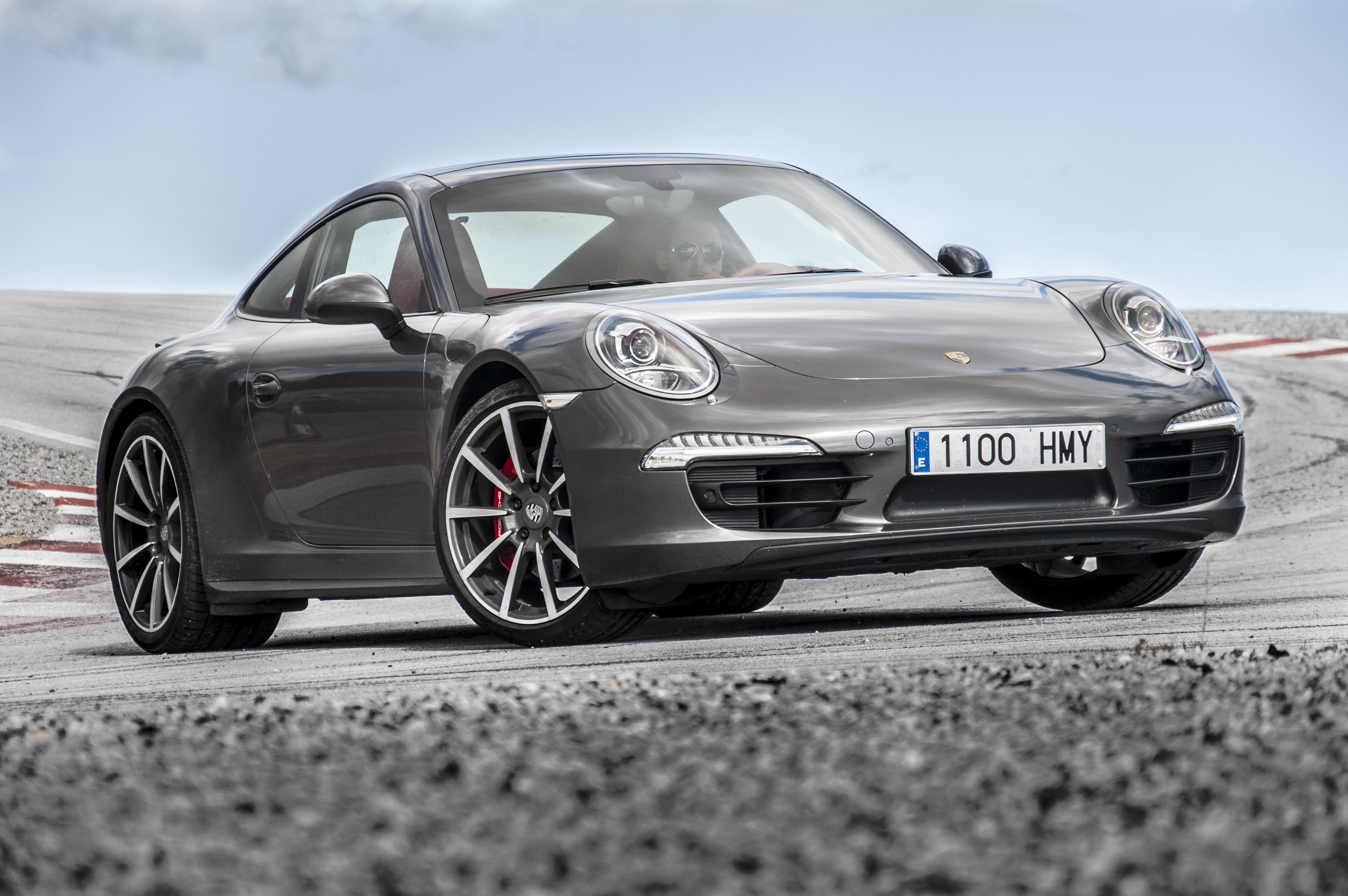
The Porsche 911 is a famous sports car that has been around for a long time, starting in 1964. The Targa version has a special roof that you can take off, making it feel like a convertible. People talk about it because it's fast, stylish, and has a rich history.
Car
de Dion-Bouton tricycle
The de Dion-Bouton tricycle was one of the first motorized vehicles made in France. It was a small, three-wheeled vehicle that helped introduce cars to the public in the late 1800s.
Ferdinand Porsche was a key figure in the automotive world, known for creating the Porsche brand and designing famous cars like the Volkswagen Beetle. His work has had a lasting impact on car design and performance.
A Grand Prix is a big car race that attracts many fans and features fast cars. It's part of a series of races that determine the best drivers and teams.
Homologation rules are like rules that say a car company must make a certain number of cars before they can race them. This makes sure that the cars racing are similar to the ones you can buy in a store.
The Ferrari Enzo is a super-fast sports car made by Ferrari. It has a powerful engine and is famous for its speed and design, making it a dream car for many enthusiasts.
The Bugatti Type 35 is a famous race car from the 1920s that is known for being very well-designed and winning a lot of races. It's considered one of the best racing cars of its time, and people talk about it because of its amazing engineering and history in racing.
Torsion bar suspension is a type of car suspension that uses a metal bar that twists to help the car handle bumps and turns better.
Car
Alfa 166S
The Alfa Romeo 166 is a fancy car made between 1998 and 2007 that is known for looking good and being fun to drive. It's a mix of luxury and sportiness, which makes it special for people who like stylish cars. People mention it because of its unique Italian design and how it drives.
The Ferrari 195 S is a classic sports car from the early 1950s that is famous for being fast and stylish. It helped Ferrari become well-known in racing and is loved for its beautiful look. People talk about it because of its importance in car history and its elegant design.
The Porsche 904 is a race car from the 1960s that was made to be very light and fast. It is known for its unique shape and has won many races, helping Porsche become famous in the racing world. People mention it because of its importance in car racing history.
The Renault Alpine A610 is a sporty car made in the early 1990s that is known for being light and easy to handle. It shows Renault's focus on making fast cars and has fans who really love it. People mention it because of its cool design and history in racing.
The Mazda Miata is a small sports car that seats two people and first came out in 1989. It's known for being light and fun to drive, which makes it very popular with people who love cars. People talk about it because it brings back the joy of driving a classic roadster.
LIVE
Limo game and...
Doug, here we have the Limu, IMOH in its natural habitat, helping people customize their car insurance
and save hundreds with Liberty Mutual.
Fascinating. It's accompanied by his natural ally, Doug.
Uh, Limu. Is that guy with the binoculars watching us?
Cut the camera. They see us.
Only pay for what you need. At libertymutual.com.
Liberty! Liberty! Liberty! Liberty!
Savings Ferry, underwritten by Liberty Mutual Insurance Company and affiliates, excludes Massachusetts.
The holidays mean more travel, more shopping, more time online, and more personal info and more places that could expose you more to identity theft.
But Lifelock monitors millions of data points per second.
If your identity is stolen, our U.S.-based restoration specialists will fix it, guarantee it, or your money back.
Don't face drained accounts, fraudulent loans, or financial losses alone.
Get more holiday fun and less holiday worry with Lifelock.
Save up to 40% your first year.
Visit lifelock.com slash podcast.
Terms apply.
Hey, welcome to PASCAS, everybody.
This week we're talking about the Targa Florio.
How did a rich guy from Sicily make one of the most iconic races of all time?
A lot of Italian in this episode, and it makes me want to go visit Sicily.
And isn't that what podcasting is all about?
Making you want to go visit other places you've never been before.
Let's go to Sicily.
It's the Targa Florio right now.
Let's go.
On an island in the Mediterranean Sea lies an unimaginable racetrack with 6,000 corners and 9,000 feet in elevation change.
It winds through mountains dotted with ruins of forgone empires,
traces cliff sides with drops that promise certain death and twists through ancient cities.
This isn't a fantasy or a game.
These are the roads of Sicily.
And beginning in 1906, they became a global destination for a new kind of adventure, auto racing.
Born from the dreams of an aristocrat,
the island's death-defying course would attract the most famous names in 20th century sports car competition.
Sicily became a proving ground for racers and constructors alike
and the final resting place for a number of drivers and fans.
It's where Porsche first took on Ferrari and fell so in love with the event that he even named a 911 after it.
The Targa.
How did the streets around Palermo become home to one of the most revered road racing courses in motorsport?
How did it help spawn some of the most well-known names in sports cars today?
And was it really as deadly of a race as officials claimed?
Grab some olives and a glass of wine and settle in for today's episode of Past Gas
on the history of the Targa Florio.
Music
Welcome back to Past Gas, everybody. My name is Nolan Sykes.
This week, I mean, as always, not just this week, but across from me, Bart Bidlinger.
Thanks for having me. Happy to be here.
And Joe Weber.
Hey, bison! We're talking about my homeland in this one.
Yeah, I'm excited.
I keep forgetting you're Italian.
I'm Sicilian.
Sicilian, specifically.
You're more Italian than Italian. You're Sicilian.
No, we don't.
Come on.
We don't like the mainlanders.
Well, we're Sicilian.
So it's like in Greece, we went to Crete.
When you look at Joe, you think Sicily.
No, I look like the most British mother f***er in the world.
Well, you get those red-haired Italians because there was...
Like Yannick Sinner.
Yeah.
So it's because you had the British that came over as they were kind of exploring ages ago.
The Saxons came into the Mediterranean.
I think the Romans got up to England before the Saxons got down.
I don't think so.
You want to bet?
I didn't do it. They're talking about Vikings.
There's like Viking ruins stuff up in Canada.
They were all over the place.
Why don't you guys both tell a story at the same time?
Let's all tell stories right at the same time.
It's great for audio.
Do you think it was...
So you're saying you think that the British influence that came into the Mediterranean
was a result of the Roman Empire expanding into the Saxon territory?
I would bet $100 on it.
Because it was like...
I think it was the Romans up there.
All right.
You know what I'm going to do?
I'm going to bet $100 the other way and we'll let you know next time.
Sounds good.
I'll take it alone.
Okay.
Was that offensive to say olives and wine in the intro like that?
I mean it's pretty basic.
If you're...
Like you could say capers and tuna.
If you really want to get...
My great grandpa was a tuna fisherman off the west coast of Sicily.
Can I get like a tuna recipe?
It's a Sicilian tuna recipe.
Dude, you just get some fresh tuna and it's actually counterintuitive
because it's better to freeze it.
Counterintuitive.
Nice.
People think I don't want to buy frozen tuna steaks
if I'm doing like sashimi or poke or whatever or seared tuna.
It's actually all of the raw tuna that you eat has been flash frozen
because that's the quickest way to kill any bacteria in it.
So buy some frozen tuna and let it thaw out
and sear it with some nice cracked pepper crust
and then do an arugula lemon parmesan salad.
There you go.
I'm getting so hungry right now.
Get some capers too.
Hard boiled eggs.
Hard boiled eggs.
Some sliced up.
Sure.
So we're talking about the Targa Florio today.
Yes.
We mentioned Porsche, we mentioned Ferrari
but this has been going on since like 1905 or some.
Like very long time.
Oh, six.
I liked in the intro it said it's unimaginable
because it wasn't imagined and created.
You know what I mean?
It just became.
Yeah.
Like it existed and then they just drove on.
The Targa Florio itself has shown up in at least 100
past gas episodes at this point.
We mentioned it all the time.
That's chat GPT.
Yeah, sure.
Hey man.
I'm sure you've got some accurate information to give me
when I ask this question.
Yeah.
Do you know where chat GPT gets most of its knowledge?
Like starting from?
No, I don't.
Silver or Silverman.
The top sources are Reddit number one.
Oh, great.
YouTube number two.
Oh, good.
Good.
Wait.
Whoop.
Is that true?
Yes.
We know that.
Yeah.
That's nuts.
All right.
Let's get into this Targa Florio.
For millennia, Sicily was a place to conquer.
At one time, at one time or another, the Sicilians were ruled.
I know.
It's a hell of a way to start.
It's a place to conquer.
Yeah.
At one time or another, Sicilians were ruled by the Greeks,
Romans, Spanish, Arabs, and Normans.
But in the early 1800s.
Just some guy named Norm.
A bunch of Normans.
Norm MacDonald.
Hey.
That ties with thick glasses.
You are now ruled by the Normans.
Get out your computers and calculators.
That's like a far-side comic.
Yeah.
Oh, yeah.
Gary Larson would have cooked with that.
But in the early 1800s, some 50 years before Italy officially
gained control of the state, a new dynasty took root.
One born from within.
Now would build up the culture, the arts, and the economy
of the idyllic island.
Meet the Florio family.
In 1807, eight-year-old Vincenzo Florio inherited
his father's spice shop.
With an uncle's help, he grew it into a prominent business
in the heart of Sicily's capital, Palermo.
Vincenzo expanded into wine and took leaps into
shipping, mining, fishing, and canning.
The burgeoning empire eventually fell into the
shoulders of his son, Ignacio, who grew it
successfully before leaving it to his sons,
Ignacio Jr. and another Vincenzo Florio.
It's not confusing at all.
Okay, so born in Palermo on March 18th, 1883,
Vincenzo II is the young aristocrat who sits
at the heart of our tale.
Like the lava in Mount Etna.
Oh.
I don't know.
That's corny.
Well, you know, a little local.
I'm trying to paint the picture.
Yeah, please do.
While brother Ignacio strived to keep the family
businesses afloat, Vincenzo seemed more keen
on floating on the family's yachts.
Through his lavish travels, he discovered a
new fangled contraption that was taking Europe
by storm in the late 1890s.
Vincenzo discovered cars.
A fateful trip to Paris led him to a shop
selling de Leon motor tricycles.
Intrigued, he bought one of these and had
it shipped to Sicily.
Someone else did a motor trike that we've
talked about, remember?
That was also another car person's
introduction to racing.
I think it might have been Porsche?
Ferdinand Porsche?
Ferdinand?
It might have been.
Oh, I think you're right.
Yeah.
All right.
De Leon was one of the early pioneers,
and I think a lot of start-ups used
their motors, especially the Italian ones.
Unfortunately, though, there was no
gasoline to power the machine on the
entire island.
Vincenzo sent out cables seeking
fuel, so he's like just sending out.
Yeah.
Pretty much.
Anyone know?
Listen.
And before long, a shipment of gasoline
arrived, allowing him to take in the
full joy.
That's just how it worked.
You just send out a cable and
something shows up.
Yeah.
That's pre-Amazon.
That's how they did it.
All right.
We got to let Nolan get one
sentence out.
I'm sorry.
And before long, a shipment arrived,
allowing him to take in the full
joy of his purchase.
But the thrill of puttering around the
island on his own soon wore off.
And so Vincenzo decided to organize
a race.
There is just one problem.
He owned the only motorized vehicle
on Sicily.
When racing bicyclists and horses
didn't pan out, he looked elsewhere
to get a fix for his new-found need
for speed.
He established an automobile racing
team with pioneering driver Felice
Nazzaro.
Starting in 1900, he helped fund
one of Italy's first official races,
the Brassia Motor Week in northern
Italy.
After a third place finish there in
1904, Vincenzo put up the entire
50,000-liter prize and the trophy
for the next year's race, which
led it to being renamed the
Copa Florio or Florio Cup.
I think we talked about Nazzaro
in a different one too.
At least a couple of different ones.
But I'm sure we're going to
hear a bunch of names that we
have heard a million times.
Thanks to these races, the Florio
name now carried some cachet in
early motorsport, and Vincenzo
decided it was time to bring a race
home to his beloved Sicily.
Starting in 1905, Vincenzo began
to plot a course along public
roads and through the hills around
Palermo. During this time, a
consolidation of auto races around
the globe was occurring, leading
to the formation of the first
official Grand Prix season for 1906.
Vincenzo, determined to have his
best race for entries for what was
sure to be the best race
in Europe. With the help of his
friend Henri de Grange, the director
of the Parisian newspaper Le Auto,
words spread around the
continent. To prepare,
Vincenzo financed updates for
the roads and constructed stands
for onlookers, and even developed
new restaurants, hired bands for
additional entertainment, and set up
aid stations manned by the Red Cross.
Ever the promoter, he also added
to sending international telegraphs.
What if you're accidentally
saying something to realize?
For the
grand prize, he commissioned
a gold targa, Italian
for shield, to be awarded
to the winner of his new race.
This led to the race's name,
the Targa Florio. That's awesome.
Very cool. The race did become
an official Grand Prix event
with the first scheduled for May
16th, 1906.
Isn't it kind of crazy how
nowadays we think of Porsche
as the ultimate road car?
All their naming came
from the Targa,
the Carrera,
Panamericana, all these
off-road races. I guess the Carrera
Panamericana wasn't totally off-road.
But also in the early
days of racing, it was
all off-road.
True.
Unfortunately, out of the 22 cars
slated to compete at this
first event, only 10 of them
reached the starting line thanks to
a dark strike in Genoa that
stranded a dozen competitors.
Genoa, right? Genoa, Maine.
Genoa, Maine.
New Genoa.
Sorry.
So the strike
stranded a dozen competitors before
they could make the journey to Sicily. Still,
for Vincenzo Florio, the show had to
start at 6 a.m.
The first car left the seaside starting
line, roared down the
Buon Fonello Strait
and raced into the mountains.
Another driver left the line every 15
seconds until all 10 cars, including
five Atalias, two Clamont Bayards,
one Fiat, one Hotchkiss, and one
Belieu, roared
onto the treacherous course ahead.
The car screamed around the 92.5
mile circuit for three laps
covering just over 277 miles.
That's like a good
length race. It's a good distance.
You know, it's like a NASCAR race.
Like a smaller NASCAR race.
Can you imagine if we had 92
mile
ovals?
It's like crazy.
It's like a super collider.
Yeah.
The race was just as much of a test of
endurance as it was nerve. The open
cockpit race cars subjected the drivers
to dirt, wind, and debris while
navigating a course that clung to sheer
cliffs at speeds well over
15 miles an hour.
Each lap was more
mentally and physically punishing than
the last with each lap
testing skill and will through
2000 corners and 3000 feet
in elevation change skill
will thrill
maybe spill
after a grueling nine hours
32 minutes and 22 seconds
the bang of a cannon greeted
Italian driver Alessandro Gagno
as he crossed the finish line in an
atalia 3540 with an average
speed of about 29 miles per hour
he took home the gold plate.
Vincenzo had
made his dream
of a Sicilian race a reality
and it was only just the beginning.
If you look at 9 11
sorry to keep going back to 9 11
I thought you meant the towers.
No, yeah. Sorry to keep going
back to 9 11.
I thought it was an inside job.
Did you look at the dock?
The plate
that goes on 9 11
like it's like almost like a shield on
the back of it. Yeah, well when
I was going to wait till he talked about
Porsche, but I'm curious because
is it documented that they named it
after this course
or did they call it a target
top because it's a shield
for your brain
probably because
it's a shield for your brain.
Anyways, like target means shield
right?
We'll be right back after these
messages.
Now back to the show.
The very next year the grid
exploded from 10 drivers to 45.
In this
era the primary classification for
vehicles had to do with price, weight
and production numbers.
Homologation rules were in effect with
at least 10 copies of a vehicle
needed to be produced for a car to be
eligible. This was no small
feat in the early days of racing
and by 1909 the rules were scrapped
altogether. Instead,
Florio and organizers opted for
a quote unquote free formula
which placed vehicles of any weight
or engine size in a single
class. That year
Vincenzo Florio had his best finish
in the line in second.
But the classless experiment lasted
only two years and following
it's just funny
it's classless.
His experiments
classless.
You're letting the beast of Turin in?
That's classless.
And following the 1911 race
another concern erupted on the island.
Critics thought the race involved
too much around Palermo.
What about the rest of Sicily?
Start your own race.
Idiots.
The answer to that question
was bold. In 1912
Vincenzo unveiled a new circuit
the Giro di Sicilia
or tour of Sicily.
The race consisted of a single
608 mile lap
around the entire island
and was won for the first time by a non-Italian
driver, an Englishman
named Cyril Snipe.
Alongside his co-driver, remembered only
as Padrini, Snipe guided
his SCAT 3540
to victory over 26
other cars in 24 hours
37 minutes and 39 seconds.
I have no context.
Is that fast?
Well, 608 miles
in 24 hours.
What is the range on that?
I don't know. They probably just stop a lot.
Where are you getting gas?
I don't know.
Maybe you have a support vehicle?
Even that, 600 miles
It must have been like gas stations around.
They would have thought of that.
I hope so.
It's a weird concept to wrap my head around
the way we have pits and whatnot now.
I bet they had, you know, like stations.
You go so far and everybody stops.
Yeah, and they'll time you
from stop to stop like rally style.
But it's one 600-something mile lap.
Yeah.
That's crazy.
The early years of the Targa Florio
were an occasional mishap,
but they were mostly tame
until the first major catastrophe
struck in 1914.
Just nine miles after the start of the race,
French driver Damanade lost control
of his Caesar and struck
one eight-year-old Giuseppe Cordova.
Oh.
The tragic death of the young fan marked
the first loss of life at the Targa,
and sadly, it wouldn't be the last.
That sucks.
In this era, the Copa Florio ran on the island
and the Copa that immediately followed
the 1914 Targa,
residents angered by the young boy's death
hurled rocks at drivers
and screamed at them to leave.
The uproar likely could have ended racing on the island forever,
but instead, it was the outbreak
of World War I, just months later
that put a halt on racing.
Ever the patriot, Vincenzo himself
signed up to be a volunteer driver
in the Great War.
He even funded at least one tracked truck
for munitions transport throughout
the Netherlands.
Peace finally returned to Europe in November of 1918
and the Targa followed a year later
with a new 67-mile circuit.
Among the entrance was a young man
just starting his racing career
one Enzo Ferrari.
Ah.
I know I heard of that name
before.
Are you a vampire?
No, I'm doing Italian.
I'm doing Italian.
Italian.
Buster.
Buster.
However, the outcome of the race
did not foreshadow his later success
as Enzo retired with a fuel leak.
When he returned...
A draculini.
Draculini, my favorite.
Buster.
Bluh.
When Enzo returned in 1920...
Do you like the spaghetti with a blood sauce?
When Enzo returned...
When Enzo returned in 1920,
he ripped to a second place finish
in his Alfa Romeo,
launching a 20-year affiliation
with the brand.
Enzo competed in the Targa
as a driver just once more
in 1921, finishing in fifth place.
Yet his connection to Sicily
was just beginning.
Like so many others, he understood
that the island was the ultimate proving ground.
For drivers, racing managers,
designers and engineers,
the Targa Florio was the race to win
if you wanted to prove your worth.
Do you guys know that they used to be
like the mainland Italy and Sicily
used to be connected?
A land bridge.
And then the seas rose enough to
wash it out.
But I think it was like
five or six thousand years ago
it was a land bridge.
There's also a pocket, a village
of people who have incredibly high cholesterol
that
it's like a genetic
trait.
And when cholesterol became
like a test, doctors were like
how is this village not dead?
And it's lent into
a new understanding of
human genetics and what
HDLs and LDLs mean
in relationship to health.
This is in Sicily?
I believe.
There's a lot of Mediterranean islands.
But also sometimes it's like
do the Mediterranean diet.
It's like, well is it the diet?
Or is it pockets of genetics?
I don't think it's the diet, dude.
When we took our cooking class
on Crete,
the woman who was teaching us how to
make
tomatoes.
Tomatoes.
Tomatoes.
But it was literally like a cup.
Yeah, it's a bunch of...
Two cups, three cups of olive oil
and I just
didn't understand.
It was delicious though.
It ends up being really good.
Yeah.
A year after taking over as the head of the
design office at Domner Motor
Gesellschaft, engineer Ferdinand
Porsche debuted a new Mercedes
racing car, the 126
horsepower supercharged
2-liter compressor.
German racing driver Christian Werner
drove the nimble potent machine
in the 1924 race
with the model taking second
and third as well. A one, two, three
finish, nice. Just for the
second time, a non-Italian won
the race and the Germans had done so
in a massive display of power and
skill. The sensationalism
continued into 1925 when
Atari Bugatti brought a type
35 to Sicily for an ultimate
test of endurance and the result
was peer dominance.
We saw a couple of these up at
the time.
Really? Yeah, the type 35.
Is that the little one?
Yeah, it's a little bit.
But I think it had a pretty big engine.
Because they got the big one
and then they had the little one.
Oh, you do like cars.
I think it was big
for the time, but it's little now.
Little now, I see.
Oh, yeah there is.
Oh, it is a little one. Yeah.
Yeah, yeah.
It's a little guy.
Looks tiny actually.
I look ridiculous in that.
Okay.
Bugatti's Meo Constantini
crossed the finish line more than 5
minutes ahead of second place.
A commanding victory on Sicily's
winding course. The following year
Bugatti arrived with a purpose built
machine, the type 35T.
The T for
Tagliatelli.
For
Targa, Joe.
Targa Florio.
Constantini repeated his win,
this time with Bugatti teammates
rounding out the podium behind him.
Unfortunately though, the victory was
overshadowed by Sorrow when Giulio
Tio Massetti became the first
driver to die in the competition
after wrecking on the mountainous roads.
Yeah, still got a record.
Two on a...
I'm sorry.
Bugatti returned in
1927 when Emilio
Matarasi snagged another
win for the team, but the bigger story
was on the starting grid. For the first
time, a woman joined the field.
What?
Alishka Junkova, a Czech driver
who had already earned the nickname
Queen of the Steering Wheel.
That's sick.
That's sick for her performances across Europe.
At a time when women weren't even allowed
in some parts of Europe, she was battling
the best men in the sport, and she often won.
Junkova was known for
her dedicated study of every twist and
turn of a course prior to her run.
What a concept.
And she took the same approach to Sicily.
I don't want to say this the wrong way.
And I want to say it in a way that says
men are stupid.
So careful.
There's a lot of men listening.
The fact that it's like,
she what?
Made the course?
Of course, man.
That's like what you do.
Her run at the 1927
target in a private Bugatti was cut short
by a broken steering gear,
but she returned the next year in 28
to an eager crowd excited to see her
drive again.
The crowd is all going like,
Alishka!
Queen of the Steering Wheel, not Queen
of the Steering Gear.
That was her fatal flaw.
After spending days running the course
in advance of the event,
she's pre-running it basically.
Which is like...
Of course, yeah.
All the other guys are like, that's stupid.
And then they're like, maybe we should go.
So she took delivery
of a brand new black and yellow Bugatti
just ahead of race day.
From early on in the race,
her chance of victory was apparent
to the fans, other drivers,
and Vincenzo Florio himself.
She matched the pace of Bugatti
works drivers Louis Chiron
and Albert Devo
on the brutal Sicilian roads,
proving that her presence was no sideshow.
Both of those guys have Bugattis
named after them.
So, where's the Yunkova?
Sexism.
So, she's proving her presence was
no sideshow, it was the show.
Despite suffering a puncture
on the final lap, she finished
in a respectable P5.
The eyes of the crowd.
I'm assuming the puncture was to a tire?
Not a stab.
But in the eyes of the crowd, she had won the day.
Vincenzo even hailed her as the moral
winner of the race.
She didn't sexually assault anyone.
And recognized the mastery
she had shown on the course.
Bugatti continued to conquer the race
with Devo earning the gold shield
in 1928 and 29.
This gave Bugatti 5 straight wins.
The first brand to achieve such a feat
at the race.
But as the decade turned,
their reign would come to a close
and a familiar name would rise again.
Who could it be?
Someone we've already talked about in this story
with a familiar name.
Mario Andretti.
Dale Jr.
Dale Jr.
We'll be right back after these messages.
Looking for a simple way
to thank your clients
or recognize employees for a job well done?
A Starbucks card is more than a gift.
It's a pick me up, a break in their day
and a reminder that you appreciate them.
Whether you're shopping for digital
or physical cards in bulk,
Starbucks cards are the perfect gift
to brighten anyone's day.
Share the joy of coffee and connection
when you give the gift of Starbucks.
Shop Starbucks cards in bulk now
at StarbucksCardB2B.com.
This episode is brought to you by eBay.
Buying parts for your car?
You'll know that, will it work?
Feeling.
But on eBay, buying parts is different.
eBay's free returns means if it doesn't fit
or if it isn't what you expected,
you just print a label,
drop it off and get your refund fast.
No haggling, no stress
and at least 30 days to return any eligible item.
Millions of parts, free returns.
eBay.
Things people love.
Eligible items only.
Exclusion supply.
Now back to the show.
In November of 1929,
Enzo Ferrari formed his racing team
Scuderia Ferrari.
Ultimately, he prepped and provided
Alfa Romeo race cars
and offered consulting and support
for gentlemen drivers. It went well.
So well, in fact, that by
the 1930 Targa Florio
he was entering cars on behalf
of Alfa Romeo's works team
Alfa Corse. That year
at Chilivarsi drove the Alfa
Romeo P2 to victory,
besting Louis Chiron by two minutes
and preventing Bugatti from taking another win.
It was the first victory
of an impressive six-year streak for Alfa
who contracted Scuderia Ferrari
to become their official works team in 1933.
But the era
of Italian dominance was far from over.
Enter Maserati.
In 1935, engineer
Ernesto Maserati unveiled
the Tipo 6CM.
At first glance, the Tipo
looked like any other single-seater
at the time, but under its skin
it was a revolution.
Its one-and-a-half liter, supercharged
straight six delivered up
to 175 horsepower.
The chassis carried torsion bar
front suspension with adjustable tension
which was a technological breakthrough
that let teams fine-tune the car
for different circuits. Add in
aerodynamic bodywork and Maserati
outclassed its rivals in nearly every way.
The results
spoke for themselves. At the Targa
Floreo in 1937 and
1938, the 6CM swept
the podium. In 1939
it won again, and in 1940
Luigi Villarese drove Maserati's
next creation, the 4C
to a fourth consecutive
victory. That's sick.
Now it's starting to look like
a car.
Also, Nolan's like,
can we just get to the second
war so I can stop saying
these names?
Well, with that
the bombs began to fall.
With the outbreak of World War II
the Targa Floreo and international
racing itself was brought to a
sudden halt.
As soldiers became veterans after World
War II, auto racing
skyrocketed in popularity.
This led to a number of new organizations
in shape, many of which we've talked
about on the show, including NASCAR
for American stock car racing, Formula
1 for open-wheel racing, and the
NHRA to regulate drag racing.
In Sicily, the Targa Floreo
roared back to life. At the
first post-war Targa in 1948
a one-year-old car company
with a familiar name showed up on
the starting line. A one-year-old
baby showed up.
I thought that's where it was going.
That company was called Ferrari.
Sporting a prancing horse badge.
The Model 166S
driven by Clemente
Biondetti and
Igor Trubetzkoi
attacked
the revived island
tour circuit for 12 hours
and 10 minutes, leading to Ferrari's
first victory in the Sicilian race.
It was no fluke.
Biondetti and new co-driver
Aldo Benedetti repeated
in 1949 in a Ferrari
166S
C.
Here's what the Ferrari looks like.
That is a way grainier photo than I was anticipating.
The dominance of the Modena
sports car company only grew.
By the end of 1953, Ferrari
was standing at the very top of
global endurance racing with an overall
win in the inaugural season of the
FIA World Sports Car Championship.
At first, the Targa Floreo wasn't
included on the championship calendar,
but in 1955 that changed
and the Sicilian race became the deciding
battle for the year.
Sterling Moss is having a career year with
Mercedes in 1955, taking
the checkers at the Mila Miglia
and the British Grand Prix. Have we talked about the Mila Miglia before?
I know we've mentioned it many times.
I don't know if we've done a full episode.
We went into depth on
the Ferrari episode, but
not really as its own
character. Gotcha.
But the tragedy of the 24 hours of Le Mans
halted their points run,
forcing the team into a three-way fight for
the constructor title with Ferrari and Jaguar.
And it all came down to the Targa
Floreo. That year's entry list was
stacked with figures who would shape the future
of motorsport, including Carol Shelby
driving a Ferrari. Wow.
Sterling Moss shared a Mercedes 300
SLR with fellow Brit Peter Collins
and lined up against other
legendary drivers, including Juan Manuel
Fangio, Maria Teresa de Filippi
and John Fitch
who we've talked about recently.
Yeah. And actually
when you said Peter Collins, I think
during the great
train heist,
the main character in that story had stolen
a car from Peter Collins, like a Jaguar
or something like that. That's right.
Because Peter Collins was an F1
driver or tried to be.
Yeah, great episode. Check it out.
Episode 300. Despite the heavy competition
when the dust from the mountain roads settled,
Britain's best stood at the top
of the podium. Mercedes had won
the championship with Ferrari falling into
second. The battle between the prancing
horse and the Germans was heating up.
But it wasn't Mercedes that posed
the biggest threat in the Italian race.
When Ferdinand Porsche passed away
in 1951, his son, Ferry,
carried the torch, which you can hear
all about in our three-part series on Porsche,
very intriguing stuff. And actually, they are
a horse too. They're a prancing horse.
Isn't there a horse on their badge? There is a horse.
But it's not prancing. And then there's like antlers
and stuff on the other side. The horse
antlers. Now I've seen everything.
That's a deer.
That's a deer.
That's a deer, man. To build a family business,
Ferry returned to racing, and the
Targa Florio became a primary
point of interest. In 1956,
Porsche sent their first official
entry, the 550A RS
Spider, driven by Italian
ace Umberto
Maggioli. By then, the
Targa had shifted to the Piccolo
circuit, which was relatively short
at just 45 miles
per lap, and only had
a meager 900 corners.
What?
To put that in perspective,
three laps of Germany's legendary
Nürburgring Nordschleife
puts a driver through just over
500 turns. The Piccolo
was shorter, yes, but the Targa Florio
was just as brutal
with 10 to 14 lap races.
I bet it's a setup for
the queen of the steering wheel,
basically.
Porsche arrived as the new kid
on the block with everything to prove,
and Sicily provided the perfect stage.
Maggioli drove the little spider
to its absolute limits,
attacking the course through the mountains
and villages. That'd be a really fun car
to do that in. I'm just imagining,
with all this elevation change and stuff,
this is like if there was a race that went down
PCH and up lost floors
to the top of Stuntrip, very local references,
sorry, but I drove up
at yesterday in my
truck, which is kind of...
I didn't mean to, I didn't mean to do that, but
we're...
Oh no!
Well, no, because my wife was in the car
and she doesn't
like driving fast
on the side of a mountain
like I do.
So we took it pretty slow, but I was like,
dude, it'd be a perfect rally stage,
but if you were like really hauling ass
through there, like that, you know,
make one mistake, you're kind of dead.
You know, and I'm just imagining that.
And
no guard rails. You made one mistake in your burnt bread, buddy.
Your burnt bread.
And, yeah,
I don't want to be burnt bread.
No, you want to live a long life.
I do. I want to have a long shelf life.
Lots of preservatives in me.
Give me a shelf life of like a Twinkie or something.
You know, that's how in the Vietnam war
they were able to identify
dead American soldiers
because of how much preservatives
they had eaten and their bodies
would last longer in the forest.
Really? Yeah.
Isn't that morbid? I think that
deserves some scrutiny.
I looked it up on Reddit.
It's true. I looked it up.
I asked chat GPT. Don't trust
Reddit or YouTube. Trust chat
GPT.
Maglioli
drove the little spider to its absolute limits
attacking the course through the mountains
and villages.
Against 50 other cars, he triumphed
earning a solo victory in 7 hours
and 54 minutes.
Back to back, German wins.
I really wanted to do a bunch of
like new kids on the block
lines there. Yeah.
And I realized I couldn't f***ing think of any
and the one that came to my mind
was, and then they said,
bye, bye, bye.
And I was like, that's not f***ing them.
No one reads these facts.
Portia, you know it's true.
Portia became the
backstreet boys
at the entrance of...
Oh, okay, now I can do some.
Now I understand.
Back to back, German wins left the Italians
fuming.
This was their race and they aimed to take it
back. Fiat struck first,
winning the shield the next year
and Ferrari followed in 1958.
And for race founder Vincenzo Florio,
this was the perfect farewell
before he passed away in early
1959 at the age of 75.
Oh, that's a good life.
That's pretty deice. Between 1956
and 73,
I don't know how old I want to get.
I don't know if you have a choice.
I know. You do kind of have a choice.
You just got done talking about
how long you want to be preserved.
That's different.
That's very different.
Put me in a jar with some formaldehyde.
Put me on a wall in a high school science class.
Good lord.
Imagine walking in your high school
and I'm just there just seeing
a floating Nolan body.
Like, yeah.
You're someone who's going to thrive
after 55.
Oh, I believe that.
I've been 56 for 30 years.
That should be the next donut shirt.
Thrive after 55.
I can thrive.
55.
Like past a speed limit 55.
Yeah, yeah.
He's going way above the hammer limit right now.
There's a new ham comic
that dropped today
where he's driving an EV.
It's a ham EV.
And that's it?
Yeah.
I gotta say,
those Heathcliff comics
do bring joy to me.
I know. It's the dumbest thing in the world.
It really like,
it clears your mind.
I feel like my head and my face are perfectly suited
to becoming a grandpa.
To wear the ham helmet that Heathcliff wears?
It's the same ham limit too.
Yeah.
The EV ham barely makes a sound.
Ham limit 25.
Caption.
What Bart just said.
The electric ham?
It's car humor.
It's for car guys.
You wouldn't know.
It's too strike zone.
It's too cerebral for you.
Between 1956 and 1973,
Ferrari and Porsche
traded wins with only two of those years
being won by their manufacturers.
Wow.
This fierce rivalry spurred tons of innovations
and saw numerous incredible
iconic race cars including
Porsche's 718, 904,
907, 908,
910 and Ferrari's
250 Testerosa, 246
SP and of course
the 312 PB.
Peanut butter guts.
PB don't mean Pottstown Barbarian.
What the f*** is that?
It's from an old commercial
for a short lived candy bar
called PB Max.
It was kind of had a rice crispy
outside. I do remember the PB Max.
PB don't mean
pot belly pig.
PB means peanut butter.
PB don't mean
penguin's bowling.
Throughout this 18 year run
Porsche snagged first place
11 times and Ferrari took 5.
Porsche's run earned them the most
constructor titles at the race in its entire history.
The success of the event even
spawned the Porsche 911
Targa, which first
debuted in 1965
and to this day provides the general public
with a not so subtle reminder of
Porsche's dominance over the Sicilian
roads. I wonder how many guys wearing
polos driving these cars
to their office know that.
Well you know they eat
tuna.
Seared.
If you
remember from our Porsche episode the
Targa was made because
there was going to be a
ban on convertibles in the US
which was their biggest market.
So they're like, well it's kind
of a fake convertible, you know
where you take two tops off.
It's the shield for your head.
Unfortunately the last years
of Porsche's reign were marred
by one disaster after another.
The 1971 running saw the death
of Alpine Renault driver Fulvio
Tandois and a number
of other major accidents. On lap
1, Brian Redmond's works
Porsche crashed and caught fire
leaving him badly burned. Later in the race
Alain de Cadenay was
seriously injured in a crash and
Nino Todaro injured a
spectator when his alpha flew into a ravine.
In 1973 the
Targa's safety issues reached a boiling
point. Prior to the race even starting
Britain, Charles Blythe
died after he crashed his Lancia
or Lancia into a Fiat 110
pulling a trailer loaded with another
racers Porsche 911S
while on public roads. That's a lot of cars.
So the
the British guy Charles
was driving his Lancia
into a Fiat 110
and the Fiat was towing
a 911S.
Interesting. A Fiat was towing
a 911. I think that's probably a truck or something.
Was he going the hand limit?
Then during the race
an Alpine Renault struck a group
of spectators killing
one Giuseppe Bono.
During the race separate crashes led
to serious injury of two or more
drivers and five additional spectators.
It's getting out of hand. Well, it's getting faster.
Following the disaster
filled running the FIA dropped
the Targa Florio from its world championship
schedule over safety concerns.
It remained a national race until
the 1977 event at which
another two spectators lost their lives.
A series of additional
accidents during that year's running led
to local police intervening and stopping
the race before the checkered flag
ever flew. Wow. Wow.
Was it truly as deadly as it was made out to
be? All told between 1906
and 1977 a total
of nine people died during the island
race including five drivers and four
spectators who were coincidentally
all named Giuseppe. What?
All the spectators. That's Italian
for Joseph.
F***. Joe
is short for Joseph.
Just don't go
around this track. Yeah.
That's my advice to you Joe.
But kayak.com
has deals for Sicily
going on right now. Despite being
a relatively low toll
compared to similar events, for example
more than 50 died in the 30-year
history of the Milia Miglia, Sicilian
officials had seen enough. After 71
years it appeared that the Targa Florio
was finished. I mean
to your point Joe, like the cars are getting faster and faster
and faster and it sounds like maybe the roads
too weren't like they're not
I'm not imagining a lot of guard rails
and like run off area. Literal or figurative.
It is great like for an event
to be canceled in the 70s
means that it was getting out of hand I think.
This is a little off topic but
there's old footage of
Groupie that I had never seen before
of a race in Portugal
and you know how like
the crowds are just cinching
on the track. People try
to touch the car and at one
one of the rally stops
someone opened up the rear
hood and there were two fingers
in there. So someone
had grabbed the car
the boot and
it just ripped their fingers off. I mean
look at this. So this is footage from the 76
running right here and like these are
like full on. Yeah those are
fast cars. Those are late 70s
when things were starting to explode. So it's like that's like a
can-am car right there basically
going on a road that
you would try to
drive your rental on during vacation
right. Like this is crazy. There's that
Rothmans not to say it's not
beautiful. It's so cool
but also yeah I could see why they
canceled it. That's a can-am car. Yeah
yeah. And it's
you see it bouncing up and down too is this is not
like a level road. That's so cool
look at that thing dude. Wow
scary little
slide now. The
race didn't end but it was a new beginning
in 1978 the event
returned as a race on the Italian
Rally Championship calendar. The format had
changed but the name lived on.
To this day it runs as an official
continuation of the Targa Florio
and follows many of the same roads as the
original race. Okay so it's still doing it
they're still doing it. It's not part
of the bigger
rally calendar though. But it's part of the Italian
Rally Challenge. It's not like WRC
but Italian Rally
Championship. If I remember correctly
the Italian Rally Overland Championship
for Iraq
is still
trying to do another
pun
IRC. Further tribute is paid
with a time-speed distance
regularity rally staged annually
for four vehicle classes. You have
pre-77 cars
those built between 78 and 2000
you have GT cars built from
2000 to current day and
a Ferrari tribute class
reserved for Ferrari cars produced from
2001 onwards. That's cool. That's like
at Laguna. Yeah.
A pre-77 class in particular
presents a fantastic opportunity
to witness the Targa Florio
as it may have looked during its glory days.
So get out to Sicily
check that out. That should be
that'd be cool. As a stage for
rains and rivalries, thrill and heartbreak
the Targa Florio drew the biggest
names in motorsport across its
71 year run. Though
Vincenzo Florio himself called it the quote
slowest race in the world
after all, average speeds
never exceeded 80 miles per hour
it was never just about speed
it was a test of resilience, skill
and heart. For Vincenzo
it was his love letter to Sicily
and about pushing the limits of what was possible
today the race lives on in multiple formats
honoring his request to quote
continue my work because I created it
to challenge time.
Okay, cool. That's a cool quote.
That is a cool quote. It's like
you getting older. Yeah
which I think about. Alright
gun to your head Bart. What car are you taking
on the Targa Florio?
Maserati
A 2007
Gran Turismo?
I don't know. What are you taking on it?
I think I would
I'd do a Porsche
911 Targa. It's a great pick.
I would do the heritage
there too to Targa. Yeah.
I'd do the 70s generation though. I'm looking
at the Miata picture
Miata is a good one.
Because it's not a fast course.
I'm driving the Lancia
037. Oh that's
sick. That's really cool.
That's my pick. Those are all great
picks.
Alright, that is a story
of the Targa Florio and I'm glad we covered
it. It's cool that's still
running sort of in different
forms these days. Go ahead
and check out some vintage Targa Florio
footage. It's pretty fascinating.
It looks really cool. Go to Sicily.
Go to Sicily. They've got deals on Kayak.com.
Go to
Santalia. See where my grandpa
was born. And
eat some seafood and capers
and whatever you want to eat.
And check out
Joe's family's Sicilian
restaurant in Milwaukee. Yeah, Sala.
Sala. Some of the best food I've ever had in my life.
No joke. Alright, so thank you so much
for listening. Follow
Bids Bardo on social
media. Follow Joe at Joji Weber. Follow
me at Nolan J. Sykes if you'd like.
Big thank you to our writer this week, Brian
Corey. And big thanks to our crew
as always, Audrey and Marc behind
the camera there. We will see you
next week. Goodbye.
Arrivederci. Ciao.
About this episode
Exploring the thrilling history of the Targa Florio, this episode dives into how a Sicilian aristocrat, Vincenzo Florio, created one of the most iconic and dangerous races in motorsport. With its winding roads, steep elevation changes, and a legacy of both triumph and tragedy, the Targa Florio attracted legendary drivers and manufacturers like Porsche and Ferrari. The hosts discuss the race's evolution, its impact on automotive culture, and the safety concerns that ultimately led to its decline. Rich with stories and insights, this episode captures the essence of a race that was as much about skill and resilience as it was about speed.
Thanks to Hankook for sponsoring today's video! Click here [https://bit.ly/3Tif5OF] to learn more about Dynapro tires!
Thanks to Allstate for sponsoring today’s episode! Click here [https://bit.ly/4jROVOr] to check Allstate first and see how much you could save on car insurance.
This week, we’re headed to Sicily for the Targa Florio—a road race with 6,000 corners, zero guardrails, and drivers doing triple digits past goat farms. Launched in 1906 by one rich guy flexing his new car, it became a death-defying playground for Ferrari, Bugatti, Maserati, and Porsche—and the reason Porsche named the 911 Targa. This is the wild story of the race so insane, Italy finally said “enough.”
Learn more about your ad choices. Visit podcastchoices.com/adchoices