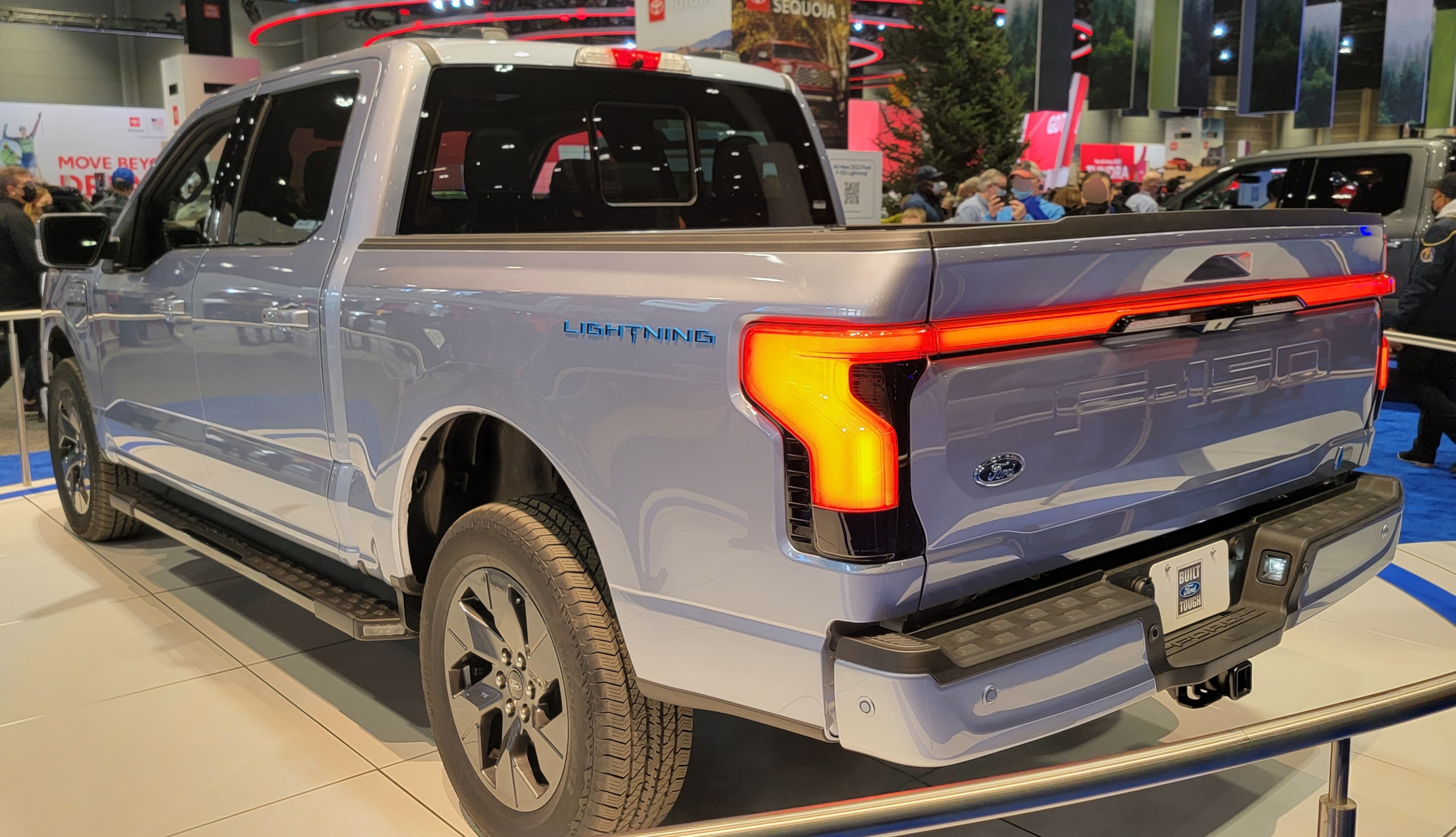
The Ford Mustang is a famous sports car that many people love for its speed and cool design. It's been around for a long time and is often seen as a symbol of American car culture. When people talk about a new electric SUV being called a Mustang, it raises questions about what a Mustang really should be.
The Ford Edge is a type of SUV that's larger than a regular car but smaller than a full-size SUV. The 2022 version has a lot of room inside and comes with modern features to keep you safe and entertained while driving.
Electronics in cars refer to all the electronic parts that help the car run better, like the radio, navigation system, and safety features. They need power to work.
The Honda Ridgeline is a type of pickup truck that drives more like a car. It has unique features that make it practical for carrying things and is designed for comfort.
Programming the key means setting up a new car key so that it can unlock and start the car. It's like teaching the key how to work with the car's systems.
A heated steering wheel is a part of some cars that gets warm to keep your hands comfortable when it's cold outside. You can usually turn it on with a button.
The clock spring is a part inside the steering wheel that helps connect buttons and controls to the car's electrical system. It allows you to turn the steering wheel while still using those controls without any wires getting tangled.
An extended service contract is like an extra warranty for your car that helps pay for repairs after the original warranty expires. It's useful for older cars that might have more problems.
Extended service protection is like an extra warranty that helps pay for repairs on your car after the regular warranty runs out. It can save you money if something goes wrong later on.
A manufacturer's warranty is a promise from the car maker that they'll fix certain problems with your car for free for a certain time or distance. It's like a safety net for new cars.
The King Ranch is a fancy version of the Ford F-150 that has more luxury features and a special look. It's designed for people who want both a tough truck and a comfortable ride.
An extended warranty is like insurance for your car that kicks in after the regular warranty ends. It helps pay for repairs, but you need to check what kinds of repairs it covers.
An exclusionary warranty tells you what isn't covered instead of what is. This way, you can see exactly what repairs you might have to pay for yourself.
Toyota is a big car company from Japan that makes many reliable cars and SUVs. They are well-known for models like the Toyota Camry and Corolla.
LIVE
Hey folks, it's me, it's me, it's Leonard B. There's a lot of people call me that.
Leonard, Leonard B, LBL, Lubel, some people call me Lanny, a lot of people call me Lanny.
That happened a lot when I moved in here.
Lanny must have been a popular name, Lanny, is not real popular in East Tennessee.
I bet I'm one of only two or three.
And then the way I spell it is an issue, L-E-N-N-I-E, that's the way my mom spelled it.
She could have stuck a while on there and just made my life easier.
Or she could have just called me Leonard and just eschewed the nickname.
But I really shouldn't complain.
You know, there's a lot of people that their name is like Bob, but people say, is that B-O-B?
So my advice, I guess, on the naming situation is to name your kids what you're going to call them.
The first name is what you're going to call them and spell it normally.
I mean, there was a girl in here the other day, her name was Katie.
How do you spell Katie?
It's K-A-T-Y, right?
No, C-A-Y-D-E.
It's kind of like calling an electric SUV a Mustang.
That didn't go over real good either.
Okay, let's get down to the car business.
I've got an angry customer coming in here and they should be here in about 30, 40 minutes.
Hope I'm done with this before he gets here.
But he's got a problem.
So for the first 30, let's see how many miles, 31,644 miles, his 2022 Ford Edge was pretty much perfect.
All he had to do was change the oil, rotate the tires, put gas in it.
That's the way cars should be.
But all of a sudden, the battery started going dead.
Now, would a battery last in a modern vehicle more than three years or 30, some thousand miles?
Well, in many cases it will.
But I tell you what, we ask our batteries to do a lot these days.
There's a lot of electronics on vehicles.
And if we have a key fob in our pocket, we don't put a key in the ignition anymore and turn it.
No, we push a button to start the vehicle.
So what has to happen for that to happen?
Well, signals have to be sent and received.
And so when you approach your vehicle, many times the doors will unlock, correct?
Or we have to touch the door handle like I have to do on my F-150.
I think I could program it to where it would automatically unlock when I get close to it.
There's signals being sent and received and these systems have to be activated.
Well, where does that power come from?
It comes from the battery because the car is not running.
How many modules have to be activated to start a car?
A bunch.
I don't know the exact number, but what is a module?
Well, it's a set of, it's a computer, basically.
It's a bundle of circuit boards and printed circuits and things that activate and are required to make things work on your car.
I was sitting in my truck the other day and I need to roll the window down.
And so I push the button to switch to make the window go down.
Does it start going down the instant that I put my finger on it and push?
No, because it used to, there used to be a motor there and a switch and it was connected directly to the fuse panel.
And, you know, those signals passed at the speed of light.
But now I push that down.
A signal has to go to the body control module and it says, hold on a second, I think Lindy wants the window to go down.
And then it approves it, sends a signal back and say, okay, go down the window and then the window starts to go down.
And then if I change my mind and decide to pull it up, then, well, wait a minute, when he's changed his mind
and the signals have to be sent and received and then sent back.
And then it starts to go up. There is a delay that is noticeable.
And that's because of the way these systems work now.
It's all controlled by computers. It's not controlled by AI yet, but it will be.
Now, let me get back to this situation. So this guy's battery is running down.
And so how do we fix that?
Well, we have to basically drive the vehicle, pull it into a shop, put a voltmeter on the battery and let it sit there.
And when it goes to sleep and the system, all these different modules have to go night and night after a certain period of time,
we have to make sure that the key is nowhere near it because it won't go night and night if the key is near.
So we have to take the key to another room outside of the shop and then we just wait.
And we look at that voltmeter and see if anything is drawing juice from the battery.
If we notice that it is, then we have to find where that module is that's drawing that power, causing that battery to run down when it sits.
That's how long should it take a battery to run down?
If it's a strong battery and it's, you know, brand new and it tests really strong,
you know, you could leave your car parking for a month or two and it still just fires right up.
But if there's a draw, even if it's a very small one over time, it's going to drain all the energy out of that battery.
And when you turn the ignition or push the button, it's not going to start.
And, you know, just like this customer, he's getting frustrated.
And I'll admit it, this will be the third time that he has had his vehicle into our service department to solve this problem.
And it's not because we're not smart because this is one of my best texts.
I sat down with him probably for 15 minutes, about 30 minutes ago and got him to give me a tutorial on what's going on on this vehicle
and just how hard it is to find the culprit because of all the different places that it can occur and how you have to run it down.
And unfortunately, when you have electrical problems in your vehicle, it is not simple.
And if you are out of warranty, it gets really expensive because there's a lot of diagnostic time and you're going to have to pay straight time,
the amount of hours that they're working on it and trying to find the problem, not just fixing the problem.
You know, fixing the problem could take two minutes and you are charged for 20 hours because that's how long it took to find that problem.
And there's just no way to get around it. Now this guy's going to get around it because he's out of warranty,
but he's not that far out of warranty and he had the problem before he ran out of warranty.
And so we're going to take care of it, but you still have that inconvenience issue.
And that's what he's concerned about. He never knows when he goes out into his driveway whether his vehicle is going to start or not.
And if it doesn't start, he has to jump it off. It's a pain. And we totally understand that.
But I just want you to understand as a car owner that you've got to work with the service department people to diagnose these kinds of problems.
They have to know what you're experiencing, what's happening with the keys.
You know, I was talking to him about these keyless entry and other key fobs.
Many of you leave your keys in your vehicle in your garage with the key fob in it.
Now, hopefully, you know, unless you live in the country like I do, sometimes I leave my keys in my vehicle.
Don't come and steal it. But I do. And he said, Lenny, you should never do that because the vehicle never goes totally to sleep.
The body control module is still is activated. It stays activated and it and there's a draw.
Now, the reason that it doesn't drain completely drain my battery is because I'm driving it every day.
But if it were to stay there for even a week with the key in it, it could completely drain my battery.
And it's not the vehicle's fault. It's your fault.
But it won't be anymore because now you know, OK, I'll take my first break. I'll be back in just a minute.
OK, I am back. I sold a what was it?
2022 Honda Ridgeline a couple of weeks ago and I didn't have a spare key for the customer.
And he said, do you have a spare key? I said, no, apparently not.
He said, will you get me one? You know, if somebody says that and you just sold him a vehicle, you pretty much got to get him a spare key.
A lot of people lose their keys. Sometimes the battery runs dead and so they grab the other key and then they end up losing it.
But anyway, this was a vehicle that we purchased, I believe, and didn't have a spare key.
So I had to make arrangements with a Honda dealer to get a key made, get it ordered and get it made.
And so I called the Honda dealership in Kingsport and spoke to the parts department first.
That's how I normally do it. And I said, listen, I need a key for this vehicle.
And of course, I knew that he needed the VIN number. Anytime you call a dealership about anything about a vehicle, always have your 17-digit VIN number handy.
And you can look on your insurance card, your registration or go out there and look at it on the vehicle.
It's at the base of the windshield on the driver's side or it's on the door jam.
You know, if you open your door, your driver's door, you'll see it on a sticker in the door jam.
So I gave him the VIN number and he said, is it driver one or driver two?
And I said, I don't know. Are they actually marked that way? He said yes.
So he needs to know if it's driver one or driver two key. So I called the customer.
I said, what key do you have? And he said, I have driver two.
I said, thank you very much. So I called the dealership back and I said, I need driver one key.
And so he ordered it, called me when it came in. I made arrangements with the service department.
This is all for my customer. And he drove to the dealership, met with a service advisor.
It takes about an hour to program the key to operate that vehicle because the key doesn't know what it's supposed to operate.
It's not programmed yet. So they have to be joined together. It's kind of like hooking up a Bluetooth cell phone to your vehicle.
So the key has to be able to match or a garage door open or same thing.
So we got it all programmed and I talked to him and he said, it's working. It's working fine.
Now, there was another problem. His heated steering wheel wasn't working.
And so he called me, he said, Lenny, I like it when my heated steering wheel works.
And I was wondering, I was hoping that it had a heated steering wheel.
He said, well, there's a button here for heated steering wheel. So I said, well, it must have it.
So I called the dealership, same Honda dealership. And I said, I got a heated steering wheel that's not working.
I need you to look at it, diagnose it and let me know because I'm going to be paying for it.
He said, well, that's nice of you. So the customer took it in.
They found out that it was a clock spring issue, which is a wire inside the steering wheel that allows you to turn the steering wheel
and still all of the features that are on the steering wheel itself, like cruise control, volume controls for the radio.
I think the heated steering wheel control was there. So there was a problem with the clock spring.
They disassembled the steering wheel. They put a new clock spring in 600 and some odd dollars later, it's fixed.
This was all after the sale. We sold the vehicle as is with no warranty.
But this is what I'm not bragging here. This is just what my philosophy is.
And if a used car is sold and immediately something happens, I don't care if they did buy it as is and did buy any kind of extended warranty,
I'm going to take care of it because more than likely if we had taken it on a test drive or something and we noticed that it wasn't working,
we were going to have to pay for it anyway.
Now, there's a limit to that. I mean, there's a there's a time limit.
I mean, if somebody, if the heated steering wheel was working and then a year later, it stops working and he calls me,
he wants me to pay for it. I'm probably not going to because that's just kind of the risk that you take things break.
They're the mechanical issues or electrical issues. And some of you will say, well, that's not fair.
Well, that's just the way it is. It is fair. We can't warranty everything.
There's not enough profit in it for us to do that. I'm not complaining.
I'm just stating the facts. If we were to warrant every used vehicle that we sell, we would be broke because sometimes the engine goes bad.
That's why we sell extended service contracts and why you should think about buying one when you buy a used car.
Especially now with all the electronics that are on these things, my goodness.
I had told you, I think I mentioned that my wife's Nissan Armada, the screen was acting up. It's not acting up now.
It's weird. It was just real. It was flashing and and it would just act like it had a glitch whenever I hooked up to it.
We're going down the road and all of a sudden if we had to map up, it would just be flashing on and off and glitching.
I don't know how to describe it, but you know what I'm saying, like a bad signal.
And so I brought it into the service department. They checked it out.
If they did have to replace that screen, it involved replacing another module and the total cost was $3,500.
Now it's under warranty, but what if it wasn't?
What if that screen went blank and all of a sudden you can't control a lot of the functions on your vehicle?
I mean, what's it going to be? What's going to cost like four years from now as labor rates go up and parts prices go up?
But you can buy an extended warranty when you buy the vehicle and it costs you, let's say $2,000, $2,500 somewhere in that neighborhood.
At some dealerships, they'll charge you $5,000 for it because they bury it in the monthly payment and you don't even know you're buying it.
We've talked about that. We won't beat that dead horse on this episode.
But yeah, I mean, right now, folks, you really need to think about buying extended service protection while you're buying the used vehicle or even a new vehicle.
And get it as far out there as you can, 10 years, 150,000 miles, whatever it takes.
If you plan on keeping that car for that period of time, then buy it.
If you don't, if you're going to trade every three years, it doesn't matter because you're going to be covered by the manufacturer's warranty.
It's just crazy how complexity is getting so expensive.
Do you remember when computers first came out?
You know, they were pretty, pretty expensive.
I mean, my first laptop computer was about $6,000.
It was so expensive, I had to lease it.
I remember my payments were like $2.65 a month for 36 months.
And then at the end of that time, I had to, there was a buyout or I could turn it back into Texas or no, who was it?
Dell, I think.
But every year, computers got less expensive.
And it was just a fact of life as time went on.
Technology got cheaper.
And I guess that's partially true with cars as well.
I mean, the technology itself has gotten cheaper.
But the complexity, all the different systems that we demand now, everything from heated steering wheels and heated seats to automatic climate control to collision avoidance, you know, all the safety stuff.
It has just escalated and caused vehicles to become a lot more expensive.
And then you've got the fact that since they are so expensive, there has to be a place to get them worked on and fixed when they break.
Because we can't, it's just not like a consumer product that you can pitch in the dumpster.
It's too expensive for that.
It costs more than houses in some cases.
Definitely houses that we used to be able to buy.
My first house was $39,900.
I assumed a six and three quarter percent mortgage.
Yeah, you could assume mortgages back then.
Can't do that now.
I'd like to have a dollar for every time somebody says, comes into dealership said, well, that costs more than my first house.
That's not surprising.
So we ordered an F-150 the other day.
It was every single option you could get on a King Ranch F-150, including the trimmer package, which that alone is like $7,500.
It was $90,000 for a F-150.
Now you can buy an F-150 for in the forties, maybe even the high thirties.
And if you look at that truck, the XL F-150, it has more equipment, way more equipment than the most loaded up custom deluxe trucks that we used to sell many years ago.
You couldn't get power windows on a pickup truck.
They're all roll up windows.
About the only things you could get was an AMF from radio power steering, power brakes and air conditioning.
They didn't even have cruise control back in the early seventies.
And now we have to have Wi-Fi connectivity.
If I get on an airplane and fly to Atlanta, I can pull out my phone and lock the doors on my vehicle that I left at the airport at the Tri-Cities Airport.
Because I have that app on my phone.
Is that really essential?
Is that kind of stuff really that important?
Because we as the general public keep demanding these advances in technology.
It's either that or a bunch of engineers in Detroit just don't have anything better to do than just complicate our lives.
Okay, I'll be back in just one minute.
Okay, I am back.
So how much should you pay for extended warranty protection or a service contract?
The same thing.
You know, they cover repairs for covered items after the factory warranty runs out.
And you really have to be aware of what's not covered.
You need to buy a warranty that is an exclusionary warranty, something that states everything that is not covered.
You know, if you look at a list of covered items, how can you tell what's missing?
As many parts as there are on cars, as many switches and modules and wires and things that can go wrong.
I mean, if they give you a long list, you say, well, that looks like everything.
Well, it's not everything.
And so make sure that you buy a warranty that says what's not covered.
And then you just know that everything else is as long as you maintain the vehicle properly.
What should you pay for a warranty?
About 4% of the MSRP is approximately what you should pay for a service contract.
It could vary a little bit, maybe 4.2% or 3.8, but on average 4%.
So if it's a $100,000 car, the service contract should cost $4,000 around there.
If it's a $50,000 car, $2,000, that's a really good guide.
If you're buying a $50,000 car and they're charging you $4,000, you know you're paying too much.
They're charging too much.
Don't pay it.
Shop around.
But just make sure what's covered and what's not covered.
And who's backing it up?
Is it a factory backed warranty?
Is it backed by Chevrolet?
Is it backed by Toyota?
Or is it backed by a third party?
If it's a third party covered warranty, then how strong is that third party?
Is it a company like Assurant?
I mean, they're very strong.
Is it one of these that people call you after you buy a vehicle and they somehow get your cell phone number
and they harass you to death to buy this warranty over the phone?
It's not worth even discussing.
The stuff that you get in the mail, I get phone calls all the time from people saying,
I just got something in the mail that says I have to buy this warranty and time is running out.
I say, take that piece of paper and throw it in the garbage.
If you want to talk about buying an extended warranty slash service contract,
come see me or go see the dealer where you bought your vehicle and buy something through them
because then you can rest assured that it's going to be backed by a solid company.
Some cases they are even at new car dealers.
So if you ever have any doubt about their alternative warranty source,
then just buy one from Ford or from Toyota.
Buy the factory backed warranty and then you don't have to worry about it.
Okay, well, thanks for listening to this edition of My Car Guru.
Again, if you have any questions, you can text me to 423-552-2020
or you can send me an email to LennyLawson2020 at gmail.com
and I'll see you on the next edition of My Car Guru.
About this episode
Leonard B dives into the importance of extended warranties for modern vehicles, highlighting the complexity of today's automotive electronics. He shares a customer's frustrating experience with a battery issue in a 2022 Ford Edge, emphasizing how electrical problems can lead to costly diagnostics. The episode also covers the significance of understanding warranty coverage, the rising costs of repairs, and the necessity of purchasing warranties from reputable sources. Leonard's anecdotes and practical advice make a compelling case for considering extended service contracts when buying a car.