The Mercedes-Benz SL is a high-end sports car that looks really nice and drives fast. People are talking about it because it's been harder to sell luxury cars lately.
An SUV is a type of vehicle that is bigger than a regular car and can carry more people and stuff. It's often used for family trips and can go off-road.
The Ford Mustang is a famous sports car that many people love for its speed and cool looks. The Dark Horse version is a special model that focuses on being even faster and more exciting to drive.
Safety regulations are rules that cars must follow to keep people safe. They make sure cars have things like seat belts and airbags to protect passengers in case of an accident.
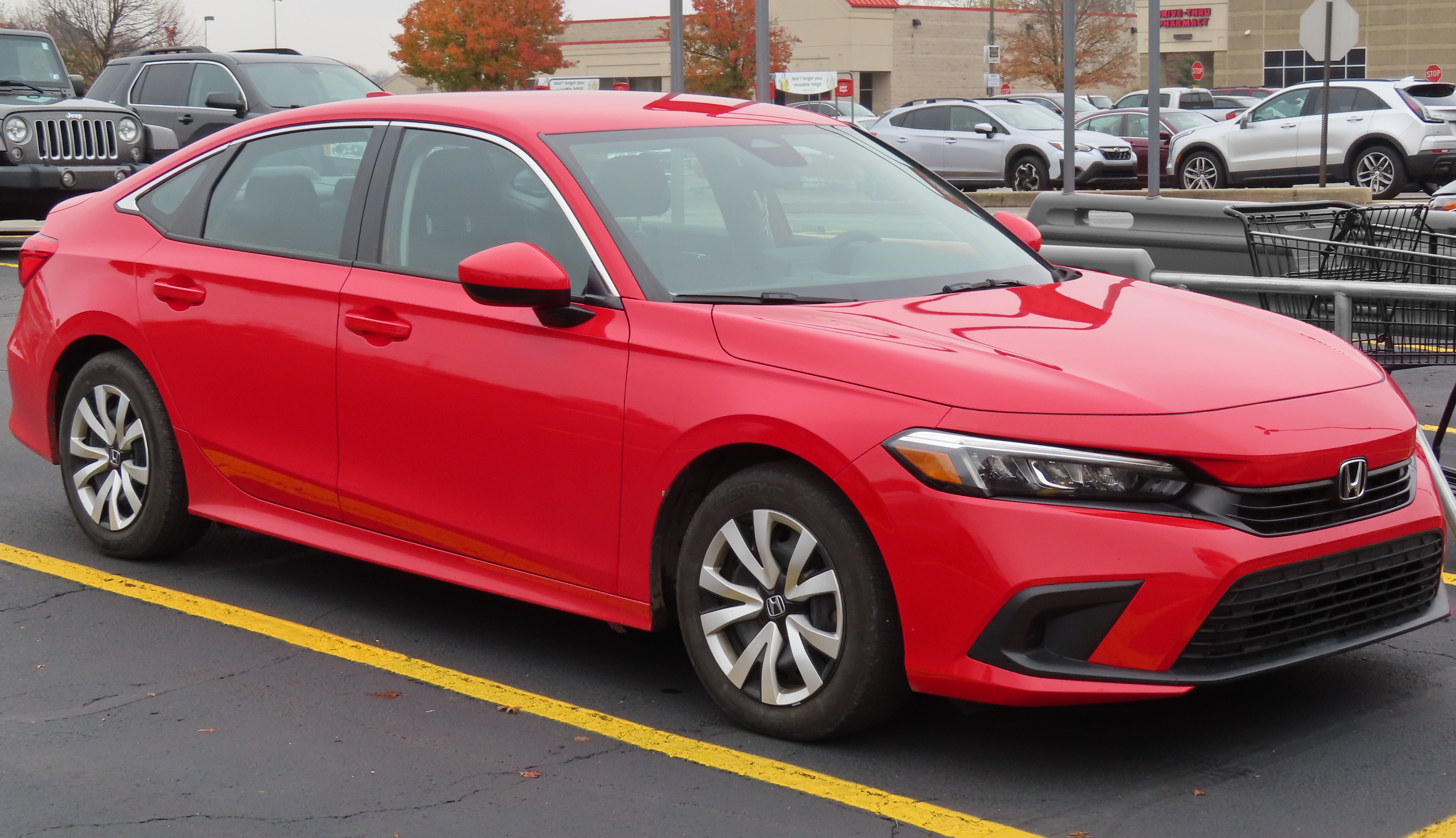
The Honda Civic is a small car that many people trust because it lasts a long time and saves gas. The hybrid version uses both gas and electricity to help the environment and save even more on fuel.
A hybrid system uses both a gas engine and an electric motor to help save fuel and reduce pollution. It can run on electricity for short trips and switch to gas for longer drives.
The Acura RDX is a fancy SUV that offers a nice ride and lots of tech features. The new version will have a special hybrid system that uses both gas and electricity to be more efficient.
The Volvo EX30 is a small electric SUV that shows Volvo's focus on making cars that are better for the environment. It's part of their effort to offer more electric options to buyers.
A lithium battery system is a special kind of battery that can be charged and used to power things like electric cars and trailers, making them more efficient and longer-lasting.
Mobile power solutions are ways to get electricity when you're not at home, like using batteries or solar panels to power devices while camping or during emergencies.
The suspension is the part of a car that helps it ride smoothly over bumps and holes in the road. It makes driving more comfortable and helps the car stay stable.
The Honda Pilot is a family-friendly SUV with three rows of seats, which means it can hold a lot of people. It is known for being reliable and has a strong engine for good performance.
The Kia Telluride is a large SUV that has a lot of space inside for families. It has a powerful engine and comes with many safety features to keep everyone safe.
The Hyundai Palisade is a family SUV that has three rows of seats, making it roomy for everyone. It also has a strong engine and many features to keep passengers comfortable and safe.
The Toyota Grand Highlander is a big SUV that has lots of room for families and is comfortable to drive. The Nightshade Hybrid version looks stylish and helps save gas by using both gas and electricity.
The Toyota Corolla is a very popular car that people like because it is dependable and doesn't cost too much to drive. The new hybrid version will help save even more gas and is better for the environment.
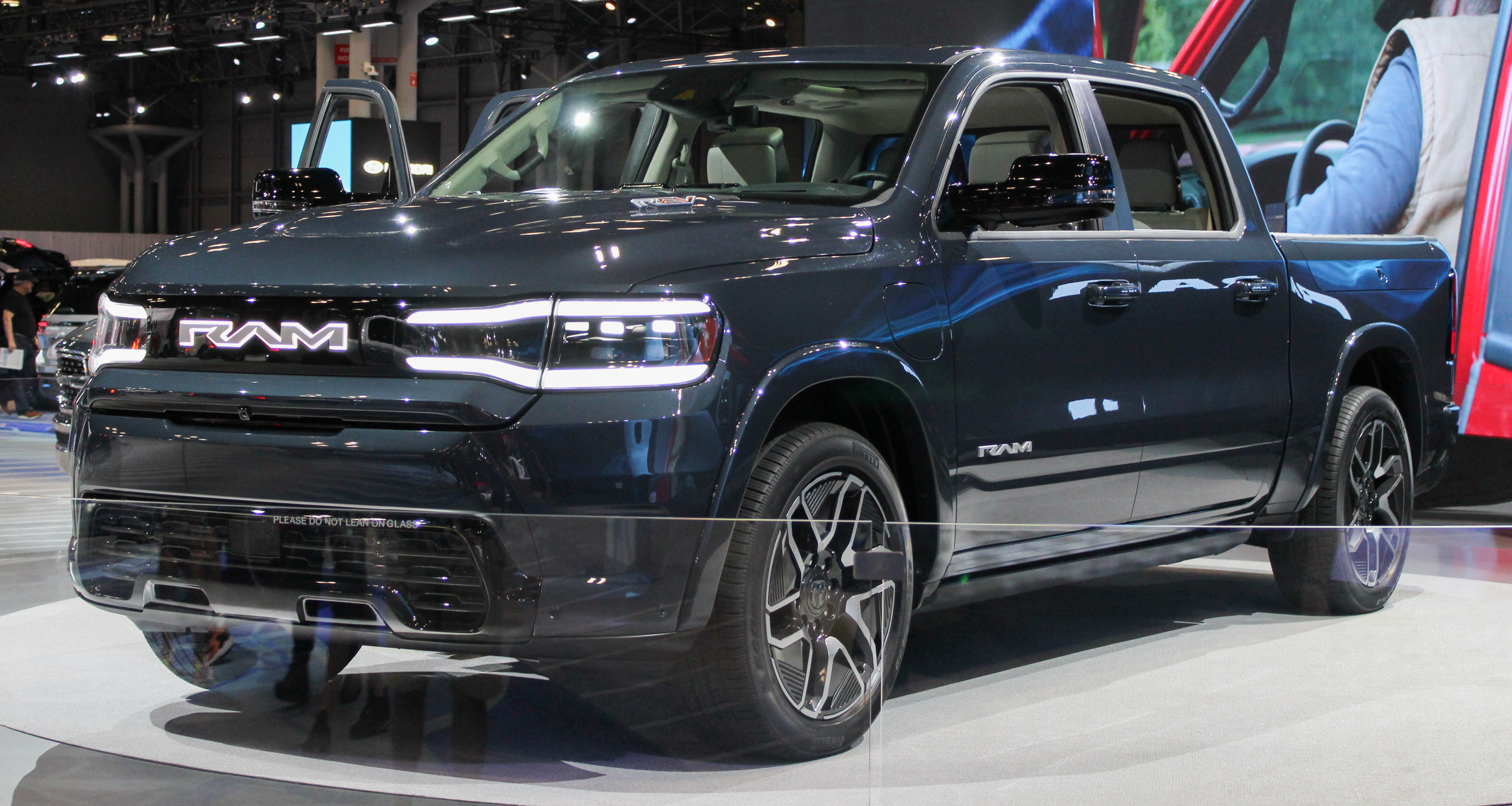
The Ram 1500 is a big truck that can carry heavy loads and is great for work or fun. The Big Horn version is a special trim that offers extra features and comfort.
LIVE
This week, we're talking about some major shifts.
Ford is reportedly talking batteries with China, luxury buyers are changing brands, and automakers
think they know what people actually want in 2026.
We'll dig into the latest OEM press room stories with real numbers and real strategy, and then
I'll answer one simple question.
Is the Toyota Grand Highlander Hybrid actually worth the money?
This is Weekly Wheelhouse.
Let's get into it.
We're starting with the story that's getting a lot of attention because it combines Ford,
China, and the future of electrified vehicles in the US.
Ford is reportedly in talks with Chinese battery giant BYD about supplying batteries,
not for full electric vehicles, but for hybrid models.
This is happening because Ford is reacting to real buyer behavior.
EV sales growth slowed sharply in 2025, while hybrids continue to sell quickly.
Ford believes hybrids give customers better fuel economy without changing how they live,
charge, or travel.
These discussions reportedly involve importing battery cells for future hybrid vehicles,
which would allow Ford to control costs and scale production faster than relying on
domestic suppliers.
This affects Ford's buyers first, especially anyone considering future hybrids.
It also affects US battery suppliers and policy makers because sourcing battery from China raises
questions about supply security, political scrutiny, and eligibility for future incentives.
Looking ahead, this signals that Ford is prioritizing profitability and near term demand
over aggressive EV expansion, expect more hybrid investment, more debate around battery sourcing,
and continued pressure on automakers to balance politics with pricing.
One of the clearest signals of where the market is headed came straight from the Detroit
Auto Show.
This year EVs were no longer the main attraction.
Instead, automakers emphasized hybrids, gas vehicles, and affordability.
The shift is happening because the US EV sales only grew about 1% in 2025, and at the same time,
the federal $7,500 EV tax credit expired, interest rates stayed high, and many buyers
simply decided EVs were too expensive or inconvenient.
Automakers are responding to what people are actually buying, not what they hoped buyers
would adopt later.
This affects shoppers who expected an all EV future by now.
It also affects dealers who've had a harder time moving higher priced EV inventory compared
to hybrids and gas models.
Going forward expect fewer premium EV launches, more hybrid trims on existing models, and
a stronger focus on vehicles priced under $45,000.
This wasn't an EV rejection, it was a market reality check.
This next story gives us a clear look at what luxury buyers are actually doing with their
money.
According to new US sales data for 2025, Lexus once again finished as the best selling luxury
brand in America.
BMW followed closely while Mercedes-Benz saw softer results as pricing climbed and buyers
pushed back.
Lexus benefited from strong SUV and hybrid demand, especially from buyers who wanted luxury
without complicated ownership.
BMW continues to succeed by offering gas, hybrid, and EV options instead of forcing buyers
into one direction.
Meanwhile, brands like Audi and Volvo struggled with aging lineups and heavy reliance
on incentives, and Tesla's growth slowed as competition increased and tax credits disappeared.
This shift is happening because luxury buyers are becoming more practical.
Higher prices, insurance costs, and interest rates are pushing people towards brands that
offer flexibility and value, not just technology.
This affects anyone shopping in the luxury space, especially buyers cross shopping, Lexus,
BMW, Acura, Mercedes, and Tesla.
Going forward, brands that offer multiple powertrain choices, gas, hybrid, and EV,
are best positioned.
Every buyer wants options, not mandates.
This next story is a reminder that not every buyer is chasing EVs or hybrids, and Ford
knows it.
At the Detroit Auto Show, Ford highlighted the Mustang Dark Horse.
If you don't know much about the Dark Horse, it is a track-focused V8 powered Mustang
sitting at the top of the Mustang lineup.
It uses a naturally aspirated 5.0-liter Coyote V8, making 500 horsepower paired with either
a 6-speed manual or a 10-speed automatic.
It also gets upgraded cooling, special internal components, and track-focused suspension tuning.
Now, they didn't just focus on the Mustang Dark Horse for no reason.
They actually have two more variants of the Mustang Dark Horse coming.
The RTR and the one they displayed at the Detroit Auto Show, the SC.
Yes, the Supercharged Mustang Dark Horse.
It's going to have a Supercharged Coyote V8 under there.
We don't know any details, any numbers about it, but it is going to be a powerhouse.
I would expect it to have somewhere in the range of 650 to 700 horsepower.
They did redesign the outside also, so it has a bigger front on it, getting more air flow
underneath there, and they also did a little bit to the back and the spoiler.
So check that out if you haven't seen that yet.
Now, Ford didn't just showcase this quietly.
They put it front and center.
This is happening because Ford understands that performance cars drive brand loyalty, show
room traffic, and emotional connection, even if they aren't high-volume sellers.
This affects performance enthusiasts, collectors, and buyers who want a more modern V8 before
regulations tighten further.
Looking ahead, expect automakers to continue offering halo performance vehicles even as
their mainstream lineups electrify.
These cars matter far more for a brand image than sales volume.
Michigan Governor Gretchen Whitmer issued a warning this week about trade policy and
auto manufacturing.
She said new tariffs or changes to the U.S.-Mexico-Canada agreement could disrupt North American
supply chains and hurt U.S. auto jobs.
This matters because modern vehicles aren't built in one place.
Parts cross borders multiple times before the vehicle is finished and automakers believe breaking
that flow would raise costs and slow production.
This affects U.S. factory workers, suppliers, and consumers.
When supply chains are disrupted, those costs almost always show up on the sticker price.
Looking ahead, increased trade restrictions could delay launches, reduce trim availability,
and raise vehicle prices.
Trade policy isn't abstract.
It directly affects affordability.
General Motors announced a recall affecting more than 80,000 Chevy Equinox EVs from the
2025 and 2026 model years.
The issue involves the pedestrian alert sound system not meeting federal volume requirements
at low speeds.
GM says the fix will be handled through software update either over the air or at the dealership.
This happens because EVs rely heavily on software to meet safety regulations and even small compliance
issues can trigger recalls.
This affects current Equinox EV owners and anyone considering newer GM EVs.
Even software recalls can impact resale value and ownership confidence.
Looking forward, this highlights how EV ownership increasingly involves digital fixes rather than
mechanical repairs.
Automakers are quietly changing their EV strategies.
Instead of premium priced EVs, many brands are now focusing on vehicles priced between
$25,000 and $45,000.
This is happening because the average new vehicle price remains above $50,000 and buyers
are hitting affordability limits, especially without incentives.
This affects mainstream buyers who are priced out of early EVs.
Looking ahead, EV adoption will depend far more on pricing and charging convenience than
on technology alone.
This next story we talked about a few weeks ago, we've got a little bit of an update
so the US Senate hearing focused on raising vehicle prices was postponed this week after
automaker pushback.
Lawmakers want to understand how safety regulations, emission standards and technology mandates
have driven vehicle prices higher over the past two decades.
This affects every buyer because affordability is now the industry's biggest challenge
and political pressure around pricing isn't going away.
Before we jump into the press room, hit subscribe so you don't miss any more
simplified auto news.
Now we'll move into the OEM press room roundup.
Honda released guidance projecting $1.5 million US vehicle sales in 2026, an increase of roughly
4%.
Honda expects a cautious market, with growth driven primarily by hybrids and light trucks.
Models like the CRV hybrid, Accord hybrid and Civic hybrid continue to see strong
demand.
Honda believes hybrid strike the best balance between fuel savings and everyday usability.
Buyers want efficiency without charging complexity and Honda is building around that reality.
This affects mainstream buyers and dealers who benefit from faster moving hybrid inventory.
Going forward expect Honda to expand hybrid availability across trims while keeping EV
launches measured and price focused.
Honda confirmed that the next generation RDX will launch with a two motor hybrid system.
This matters because the RDX is Accura's best selling vehicle and Accura believes luxury
buyers want better fuel economy without sacrificing performance or dealing with charging.
This affects buyers cross shopping with Lexus, BMW and Audi.
Going ahead, this signals more hybrid offerings across Accura's lineup and fewer short range
EV experiments.
Volvo reported 121,607 US sales in 2025, down about 2.9%.
Electrified vehicles make up more than 27% of sales, driven by strong EV growth from
models like the EX30 and the EX90.
However, incentives played a major role in driving that demand.
This affects buyers considering Volvo's EVs because pricing and incentives may not stay this
aggressive long term.
Volvo remains committed to electrification, but even they are adjusting expectation as
buyers prove price sensitive.
Honda revealed a base station towable trailer prototype designed for off grid use.
It uses a lithium battery system, solar capability and modular layouts for camping, events and
This affects outdoor focused buyers and EV owners who need mobile power solutions.
Even if this trailer never reaches production, it signals automakers are expanding into
lifestyle and energy ecosystems.
Now we'll talk about a recently posted video on off the shelf rides, our main channel.
And in the video what we wanted to answer was is the Toyota Grand Highlander actually worth
it?
Is it actually worth the money?
After driving it and living with it for a week, the short answer is yes.
If what you want is space, comfort and fuel economy in one package, then yes, definitely
this is what you want.
This thing drives way smaller than it looks and the suspension soaks up the Midwest roads
easily.
The hybrid system is so smooth that you can hardly tell when it switches back and forth
between electric and gas.
It's not a performance SUV, but where it really shines is being a true three row family
vehicle that can still get around 34 miles per gallon, which is something its main
rivals like the Telluride, the Palisade and the Pilot simply can't do with their V6 engines.
Now the Palisade for 2026 does have an hybrid option and I have not tested that.
That is going to be coming in in about a month or month and a half.
I will get to try that out, but I believe the mile per gallon on it are still below
the 34 that the Grand Highlander offers.
And inside it's comfortable, it's easy to live with and practical and Toyota loads it
up with tons of safety tech like the Toyota Safety Sense 3.0 and a 360 degree camera.
If you want real three row space because you have a big family and you want to save money
at the pump without giving up all that comfort, the Grand Highlander Nightshade Hybrid is
one of the strongest values in the segment right now.
If you missed last week's weekly wheelhouse, we covered Ford's eyes off autonomous driving,
Rivian recalls and the 2025 vehicle sales number along with my review of the 2026 Toyota
Corolla Hybrid.
So go get caught up, both videos are linked down in the description.
Now a quick update on our press vehicles before we wrap up.
There are no press vehicles this week or next week, but I have the 2026 Ram 1500 Big Horn
with the Hemi V8 scheduled for the last week of January.
If this helps you understand what's really happening in the auto world, hit the like
button and subscribe to weekly wheelhouse.
Thanks for listening and have a blessed day.
About this episode
Major shifts in the automotive landscape are discussed, focusing on Ford's strategic pivot towards hybrid vehicles as EV sales stagnate. The episode highlights Ford's talks with Chinese battery supplier BYD and the growing demand for hybrids among luxury buyers, particularly with brands like Lexus and BMW. The conversation also touches on the implications of trade policies on supply chains, GM's recall of Chevy Equinox EVs, and Honda's hybrid-focused future. A review of the Toyota Grand Highlander Hybrid concludes that it offers excellent value for families seeking space and fuel efficiency.
This week on Weekly Wheelhouse, we break down some major shifts in the U.S. auto market. Ford is reportedly talking batteries with China, EV momentum is cooling, and luxury buyers are quietly changing brands. We dig into what automakers are really prioritizing for 2026, cover the latest OEM pressroom updates from Honda, Acura, and Volvo, and then answer one simple buying question — is the Toyota Grand Highlander Hybrid actually worth the money? Auto news, simplified. Grand Highlander Worth It? - https://youtu.be/ufyYqRuIKow?si=uRX9QZxQpCVW6ogI Last week's Weekly Wheelhouse - https://youtu.be/i-am9ACK240?si=Ib6EnXqwPVeMcDfq