The Chevrolet Trax is a small SUV that is easy to drive and park, making it great for city living. It has a roomy inside and gets good gas mileage, which means you can save money on fuel. People talk about the Trax because it's a good option for anyone needing a practical and affordable vehicle.
The air conditioning compressor helps make your car's AC work by pushing the refrigerant around the system. Without it, your car wouldn't be able to cool down on hot days.
The AC compressor is the part that helps your car's air conditioning work. It pushes the refrigerant around the system to keep the air cool inside the car.
A cooling system service is when a mechanic checks and fixes parts that keep your engine from getting too hot. This includes things like the radiator and the fluid that cools the engine down.
The thermostat is a part that helps keep your engine at the right temperature. It opens and closes to let coolant flow when the engine gets too hot or too cold.
Automobile ease is the specific language used by people in the car industry. It includes all the special words and phrases that help them talk about cars and their parts easily.
The wet valley intake is a part of the engine that helps mix air and fuel before it goes into the engine. If it leaks, it can cause problems with how the engine runs.
The water pump is a part of the car that helps keep the engine cool by moving coolant around. If it stops working, the engine can get too hot and cause problems.
Preventative maintenance means taking care of your car regularly to stop bigger problems from happening later. It's like getting check-ups to stay healthy.
A CAN job is a type of estimate that mechanics use to figure out how much a repair will cost. It includes prices for parts and labor, making it easier to give customers an accurate quote.
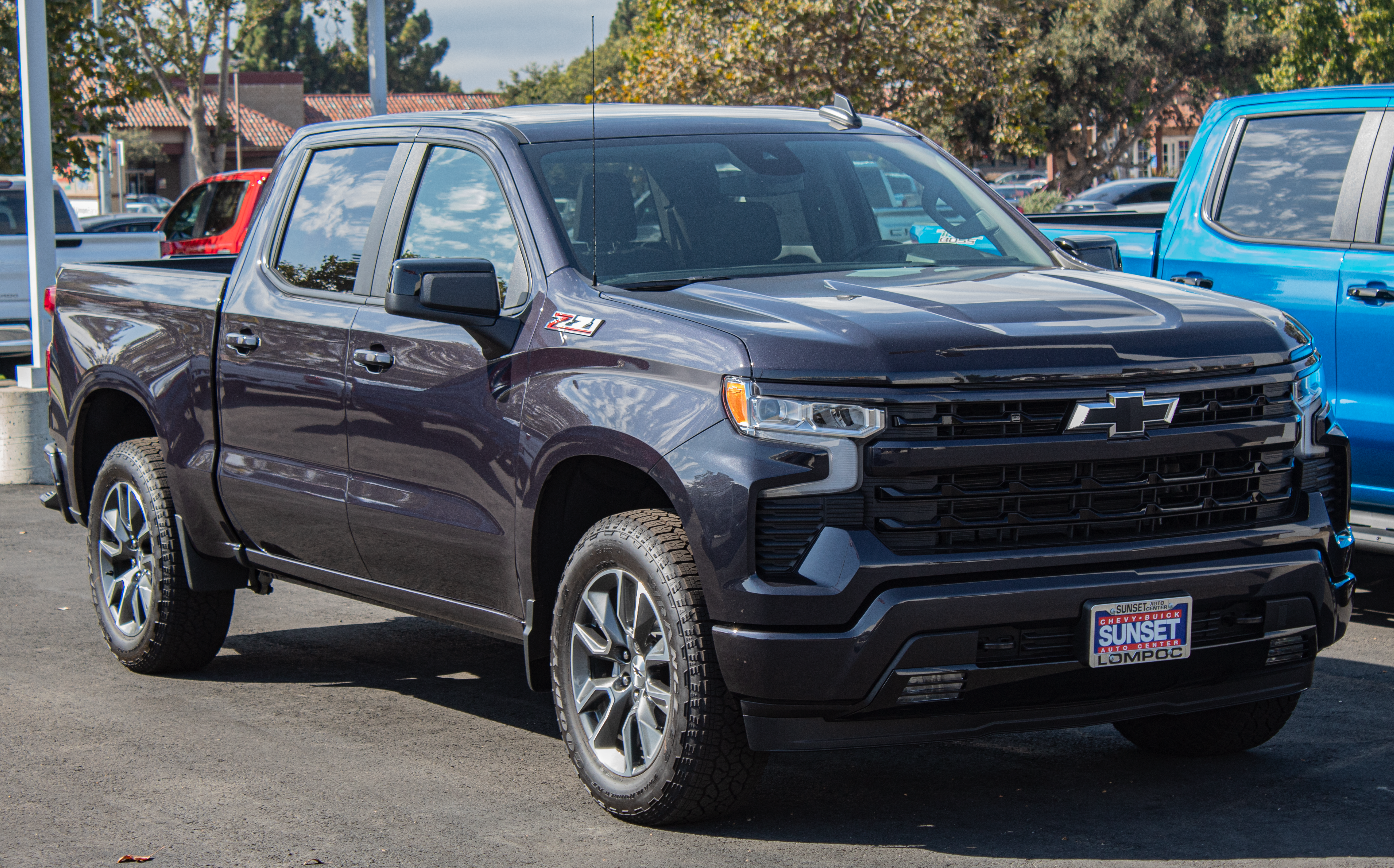
'Chevy half ton' is a nickname for the Chevrolet Silverado pickup truck. It's called 'half ton' because it can carry about 1,000 pounds of weight in its bed.
'5.7 liter' means the size of the engine in the truck. A bigger engine usually means more power, which helps the truck carry heavy loads or tow things.
The check engine light is a warning light on your car's dashboard that tells you something might be wrong with the engine. It can mean anything from a loose gas cap to a serious engine problem.
An EGR widget is a part of the car that helps make it cleaner by sending some of the exhaust back into the engine. This helps the car use fuel better and pollute less.
LIVE
This is the Automotive Repair Podcast Network.
Hey, everybody, Karm Capriotto Town Hall Academy.
Hey, look at, we're going to vision it in March 2026.
We hope to see you there.
It's the full throttle vision, the high tech training and expo.
I'll be doing some training.
So we'll Tracy and we'll have the podcast studio there and also see you at TST March
28th, 2026 in Tarleton, New York.
The big event, Andrew Fisher, Ken Zanders, Adam Roberts will be there.
Keynote from Tracy Capriotto.
And if you're on our YouTube channel, watching us, please give us a like.
And thank you all so much.
Look, we want to thank so much to our great sponsors of the podcast for all these great years.
Hey, for over 30 years, NapaTrax has made selecting the right shop management system
easy by offering the best, most comprehensive SMS in the industry.
We'll prove to you that Trax is the single best shop management system
in the business.
Find NapaTrax on the web at NAPATRACS.com.
Hey, how well does your team know their stuff?
Test their automotive skills with the today's class of basic advanced or service advisor quizzes.
It's a quick, effective way to spot gaps and grow stronger teams.
Take the quizzes now at today's class.com forward slash TC quiz.
They deliver four times better website conversions, automated follow-up,
and real-time ROI tracking.
Get industry-leading customer support with Kukui.
That's K-U-K-U-I dot com.
You're probably tired of chasing new customers who never return.
We understand.
Pit Crew Loyalty ends the one and done cycle turning first visits
into lasting reliable revenue on the web at pitcrewloyalty.com.
Hey, welcome back.
Listen, we're going to talk about a couple of really important underutilized assets
in your point of sale system.
And I'm assuming that most point of sale systems have these kinds of features.
The canned packages and categories.
And Dave, I know you're really passionate about this.
Dave Shadeen, CEO and master coach, former shop owner and a master tech.
Dave, I didn't know you ever, ever picked up a wrench.
God bless you, man.
Yeah, I started out in 1979 in Arizona Automotive Institute
and graduated fourth in my class and thought I was all that.
And I got my first job and my first tune-up took me four and a half hours.
In 79, Dave, did you own platform shoes?
Oh, yeah.
You went out and danced and everything?
I'm just checking.
I had clogs and downtown Seattle was the faces disco and oh, yeah.
I used to joke around in high school.
I go to the dance and I never really danced.
I just stood up close to the big speakers and vibrated across the floor.
Ben, look what I started.
I'm sorry, everyone.
I'm sorry.
Oh my God.
Copy and track automotive solutions, Dave Shadeen.
Ben Dexter's with us, the national training manager for NapaTracks.
Ben, how are you?
Doing well.
Doing well, Carl.
Thank you for having me.
Yeah, I'm glad you're here, man.
I mean, you talk about a company that trains ad nauseam.
And I don't mean that in a negative way.
They've got training going on every day.
And I know that you're so willing to work with all the teams in the shop
to help them learn and understand their area of responsibility for their software.
Well, look, Dave, you brought me this because you're consumed
with the value of canned service packages.
But let's start.
Ben, you guys have a great discussion.
Hopefully at the end of the show, people will have a brand new appreciation of found
level of knowledge on how to use these features.
Thank you, Carmen.
And it is something that's near and dear to my heart.
It was something I discovered actually not in the dealership.
I discovered it in owning my own shop when I went into an aftermarket software and I saw
what it could do.
And so before I get into the mechanism, the how to, you know, there's a book Brian
Clemmer has of how to's were enough we'd all be skinny rich and happy.
So I want to set the context of this.
Well, this isn't really a training.
This is bringing awareness, understanding, mindsets, what I call of abundance.
And your canned jobs and your categories can get you there by tracking it.
It's a how to, but really set the context of understanding that these are your business
scan data that these are critical data that most shops never go look at.
And if you told the tech to go diagnose a check engine life, but didn't get my scanner,
there there are hours, pinpoint testing, voltage drops and all the rest before they go get it.
The can jobs do at so many different levels take a lot of the fires away inside of a
shop's business.
The categories help us do a couple of things.
One is, and there's a new understanding that I got, you know, 30 years ago when I was doing
my shop, that there's really three labors in your business.
Diag PM and repair.
So diagnostic preventative maintenance and repair.
PM labors, not the stuff you do in the afternoon and AM labors in the morning.
So preventative maintenance labor.
By the way, you may or may not get some dad jokes in this description.
So those three labors all have a different and all have a different efficiency.
Well, that's great understanding.
And if you really slice and dice it and go to that new model mindset,
you're now building your system to get 150% efficiency versus relying on your team to
remember to build an efficiency.
And the way we do that is like, and I'm going to go to categories first and then talk about the
power of cancerous packages beyond the high level of communication with the technician in that.
But the categories, and so when you understand that, okay, well, how much diagnostics am I
doing?
It's more than that.
How much AC diagnostics, break diagnostics, body control, ECM.
And let me pull the last 50 repairters that have that in there.
Well, how do I do that?
I'd have to go manually do that.
But if I use my categories, if I have an AC and heating
diet, AC and heating repair, AC and heating preventative maintenance,
now I can accurately track exactly what it is where I need to go because it's like my GPs are
off.
Okay, well, where is that?
It happened at a repair order level.
But what on the repair order?
I got six lines on there, three of them are at goal, three or not.
Well, why is that?
Oh, crud, we got, we're off on our matrix or we got the wrong labor to attach to it and
there's a whole bunch of mechanisms to conversation with that.
So really, it's organizing your business to get away from all the fires that we put out.
And it's almost like the number one compass a shop owner can use or manager,
where do I go today to go create abundance?
What category needs to be short up?
What categories need to be rewarded?
You know, one of the things that we're fixicized, we go look for things that are broken.
You want to use this category stuff to go, hey, where can I reward?
Hey, we get our categories to this level.
We get our blend to go.
And now we can manage that per advisor or for the shop overall.
The categories beyond understanding diet, payment repair, there's a fourth labor category,
none of us like, but we all have it.
It's called the warranty category.
And so now you create a warranty category and it could look like this.
And I'm very cautious to use this name.
So you have a warranty parts dash world pack warranty dash parts car quest.
Notice I'm not mentioning Napa because they don't have any issues, right?
But we have that.
Thank you very much, Coach Dave.
Right now you can go to that vendor and say, hey, listen,
you know what?
In the last six months, we've had an increase of this kind of a warranty issue with these parts.
You have real data to have real conversations that are speculative.
Like when you get your second one in a row, man, these are all failing.
No, you had two.
Let's look at real data and for that.
Then you also have data this way.
You have warranty dash tech Dave warranty dash car warranty tech dash tech Ben.
And now I can see a volume of where who's got warranty comebacks.
It's not the discipline or get rid of them.
It's to go, where do I need to apply training?
Your categories will reveal at a high level where you need to go put training.
You know what?
We have a category of say engine mechanical repair, not a replacement, but repair.
And we have low efficiency on these jobs for this tech.
And now you get a chance to analyze your business at high level.
Entry level shops to wrap themselves around what I just described is like, oh my gosh,
that's so deep out there.
You know what?
Set your basic categories up and then familiarize yourself.
Do one category at a time.
Don't look at them all in one month, but slowly build to that.
For me, when I got a grip on my categories, my categories alone,
I had almost an instant half an hour to 0.7 more hours per repair order than I did before.
My GP percents shot up anywhere from 3 to 5% almost overnight because I knew where to go
to make adjustments.
So that's the category.
I could talk another four or five hours on categories and the power of it.
I had one shop owner and I'm still learning categories, the power of it.
I had one shop in Washington state and the owner, her husband on it,
and she kind of runs and manages it.
She said, I said, why do you have this category of smoke machine?
Because when I do a can job for diagnostics and the smoke machine, I want a separate one on there
because I just spent $1,500, $2,000 on a piece of equipment.
How do I justify it?
How do I know how many times I've used it?
So she uses categories based on some equipment so she knows to justify.
And I love ROI conversations.
So now I can see the ROI usage of that.
When did I gain it back?
And there's a whole bunch more that goes into that.
Lots of creativity, Ben.
Is he talking normal stuff here?
Good stuff?
I agree completely.
There's so much of what you just said, Dave, that I can agree with.
The reality for most shops that I experience is exactly what you talked about is,
how do I eat the elephant in one bite?
I've never truly, if I put myself in a lot of business owner's positions,
they've never really worked on the business.
They've worked in the business.
So then we're going to transition towards garbage and garbage out and say,
hey, look, I can ask service writers all day long, or I can even ask myself the responsibility
of manually categorizing these items, or I can put together a plan and I can set up my software
where it does the heavy lifting automatically, where I'm not having to make any manual adjustments.
But I'm a big fan of test and measure.
If you can't measure it, it's pretty hard to tell whether or not you're making any
positive impact or you're struggling.
I agree on the labor side, on the part side as well.
Being able to see the business in the perspective of profitability
is one of the biggest challenges I face as a trainer and as somebody who's
trying to shake the lights on and an owner and say, look, it's okay to make money.
That's what we're here to do.
And it doesn't have to be painful to make the money.
And we're going to make mistakes.
We're going to break a bunch of eggs making this omelet.
But without the metrics that go along with the decisions, we're just winging it.
And winging it probably works for shop owners that manage the business by the bank account.
They don't really grow to their potential.
And that's what I see in this whole category discussion, especially in reporting as an
overall, that the lost potential and the opportunity to let the team know,
especially if you've grown your shop to a level where you do have more hands in the cookie jar,
that reporting is accountability.
And that's exactly what you said when you brought the technician example up with warranty.
I was obsessive about tracking everything.
If we bought a piece of equipment, I even ran all of the metrics by vehicle year make model
and engine to say, if we decided all of a sudden we want to do European cars,
let's see if we're going to get the return on our investment.
I see far too many shops that think categories are extra.
They're not necessary.
They're so focused on sales and tax and GP.
They don't see the value in the categories.
But I think they've always been there, frankly.
I don't know of a software that doesn't offer the categories.
I couldn't agree with you more.
This is a subject that I think a lot of owners, if they could think about putting the wrench down
and picking up the keyboard and saying, what can I do to invest in my shop management system?
The tool that I probably use more than anything aside from the telephone
to make some money with the shop and really steer the ship when I need to make adjustments,
I'll know where to make them.
Thank you for that.
I really like that.
You came close to a phrase that we say, if you don't track it, you can't manage it.
You just can't.
You're lost.
You're shooting from the hip and winging it.
I can't tell you how many times I winged it in my business before I got systemized.
How much I clip my wings.
The reason chickens don't really fly.
They don't soar up with eagles.
There's a reason to that.
Plus a little bit of barbecue sauce and the wings are pretty good anyway.
Hey, let's face it.
Your shop management system is the single most important tool in your shop, period.
NapaTrax has made selecting the right shop management system easy by offering the industry's
best, most comprehensive SMS.
Now it all starts when a local representative meets with you to learn about your business
and how you need to run it.
After all, it's your shop.
So it's your choice and having local representation is a huge plus.
Customizing tracks to your business, whether you're a one person shop or a large multi-bay
or multi-location company, a representative consults with you to help optimize your shop's
workflow, efficiency and profitability.
Trax always has the flexibility to do business how you need to do it,
which means it can also grow as your business grows.
And unlike the other guys, we'll be there for you after installation
with the best training and support in the business.
Yes, a learning management system tailored to each role in your company.
Simply put, Trax was designed and built for shop owners just like you.
Visit us on the web at NAPPATRAX, that's N-A-P-A-T-R-A-C-S dot com.
Hey, want to test your team's knowledge?
Well, today's class quizzes show how much your techs and advisors really know,
so you can train smarter and build a stronger, more efficient team.
Whether it's the basic quiz perfect for all techs to test their foundational knowledge,
the advanced quiz built for experienced technicians ready to dive into complex topics
or the service advisor quiz focused on communication and customer service.
Now, each one gives your team a clearer view of what they know
and where they can grow.
Take the quizzes now at today's class dot com forward slash T C quiz.
Shop owners, we know you are overwhelmed with a flood of missed calls,
empty bays and disconnected marketing tools.
Kukui has spent over a decade building one integrated platform for auto repair shops.
One login, one dashboard and mobile-first websites that convert four times industry average.
Smart, innovative CRM with automated follow-up, 24-7 online booking and real-time ROI tracking.
With 900 plus years of combined team experience,
we fuel the growth of 2,200 plus shops and have influenced $3 billion in revenue.
Stop working harder, start working smarter.
Get industry-leading customer support and book a demo with Kukui,
that's K-U-K-U-I dot com.
You know, most shop owners feel trapped spending on ads while half their first-time customers
never come back.
It's frustrating.
It's exhausting.
And it's not your fault.
The industry average is 54 percent, one and done.
We understand how discouraging that can be.
Well, pit crew loyalty changes the story.
Our clients cut that rate by up to 38 percent, raising lifetime value by more than 50 percent.
Loyalty members visit nearly three times more often,
creating predictable revenue without extra ad spend.
Pit crew loyalty where customers stay and shops thrive.
On the web at pitcrewloyalty.com.
One of the most powerful things that I do at Can Jobs was purely
out of service advisor efficiency of two things.
Number one is professionalism.
When you have high value words and reasonings, descriptions,
not like R and R wet valley intake, you know, $800, get rid of that.
There's no value in that to the customer.
So I learned early on in a hand-write environment,
back before computers were a predominant thing, even in the dealership,
we were hand writes, which means our stories had to be penmanship was great.
And pretty much every pen I've ever picked up has mechanic font and no spell check.
So it was brutal.
Sometimes it would take for one labor line, a professional story,
could take me three to five minutes if I didn't have to rewrite it.
And so in my shop, it was grounds for dismissal.
If you use like the labor time guide from the point of sale,
it was no longer R and R, you know, at, you know,
remove AC compressor in the way, add point three, get rid of all of that.
I wanted a professional and it had to be customer driven,
customer okayed, authorized to replace the air conditioning compressor
and service and flush system as needed.
Or I have a whole lot more by which reasons than our can job packages that we have.
And then it gave a, you know, not a step by step repair procedure,
but it removed the need to cover brackets and braces and evacuated.
And a good long story that was a high level professional.
Well, how many times do I need to see compressor?
You know, you're doing, you know, a dozen or more a month.
Every time one of those stories is three to five minutes.
So I got tired of writing the same story.
So I'm just going to build a generic can job of a compressor R and R.
So that sped up my time, but then I got to think, well,
some jobs need this part, some jobs need this part, some jobs need this part.
So then I went into my can jobs and I put parts holders.
When you do an AC compressor, make sure you do this, make sure you do this,
make sure you do this, you know, and there was a brand of AC compressors.
If you didn't put the inlet screen in there, it avoided the warranty.
So I put a line in inlet screen and I did all the level 10.
If I wanted to do that and have a hundred percent assurance that I've
done everything possible, that that job's not coming back.
I'd not cutting corners.
I put the full job in that now I have built in triggers and I, you know what it got rid of?
Whoops, I forgot to order that part.
And the whoops, I forgot to order that part.
It's the number one intrusive part related inefficiencies and productivity in a shop.
But now my system triggers us and its advisors aren't forgetful.
I mean, advisors are forgetful, techs are forgetful, not from a bad personality or bandwidth.
Like being a technician is like a 32-sided Rubik's Cube.
Writing service is like a 132-sided Rubik's Cube.
All the different things, plus you got emotional intelligence,
you got all the other stuff, the need for donuts.
I mean, you got all those things going on.
And so as you look at all of that, help your people's memory out,
one of the number one constraints is memory, let your system trigger that.
And now if you ever get a job that like, oh my gosh, you know, with this particular one,
we need to make sure we order this part.
Now I go update my can job.
So whoever pulls that can job up there, my C-level advisor, my A-level advisor,
I've got a complete list of parts that 99% of the time I'm going to need.
And if the tech didn't request it, the advisor's going to go,
okay, well, I guess we don't need it.
Well, the tech's not seeing that.
So now I go, okay, there's these other parts in the can job trigger.
Do you need that one?
Oh, that's right.
Yeah, I need that one.
And now I'm not got the job in a part, the parts a day and a half away.
And now I've got a stuck bay because my can jobs could have prevented stuck bay in this.
I made a couple words all the time, by the way.
Ben, coach Dave said a ton there, when it comes to NAPA tracks training,
are you concentrating a lot of value and investment of time in can jobs?
Do you have special courses on that?
We do.
We have custom training that's targeted specific to can jobs.
And we have two different capacities for that.
But if I could say, going back to what you said, Dave,
about the language that we could put on our air order and present that to a customer,
boy, I tell you what, there's been times where I've seen a copy of something and I said,
we please tell me this doesn't get handed to the customer.
We did not present this aside from a lack of description, but like the language,
you know, I understand that.
So I agree with Dave wholeheartedly.
The training that we do most often with tracks is a little bit to do with standardizing the
messaging to the customer, which I agree with you, Dave.
Anything that can be professionally cookie cut so that the message is delivered the same way,
no matter who's delivering it, whether it's one service riser or three service riders.
But the way that we do our can jobs and a lot of shops do this,
a lot of shop softwares do this, we have two levels.
We have the cookie cutter, generic type and group parts and labor together,
all the pieces and parts.
If you ever done headlight refinishing, you got all the grinding disc and all the polish and all
that stuff, I save all kind of time and I don't have to worry about the inventory troubles.
And that's a major part of can jobs is inventory management.
That's like internal bleeding when we're not tracking that.
Now, the second level of can jobs we do in tracks is pro jobs,
which you alluded to perfectly, Dave.
It tracks the needed additional components that are related to a job and it's vehicle specific.
So a pro job essentially when it first came out, my 10 year old son could write service.
I'd say Brody type in water space pump and he could find his way through all of the needed
additional parts through all the electronic vendors.
Not only did that standardize the delivery and the accuracy of what we ordered,
because I could tell you how many times we give a new service rider an intake manifold gasket
estimate, it's more than just the intake manifold gasket and the labor.
We got all the other things we got to do with that.
But when the pricing came down to it, that's one of the other benefits.
We have three service riders at a shop.
A customer gets in touch with two of the three, maybe even three,
and gets three different prices for the same car for the same service.
That's the kind of customer report building that I don't want to do.
I don't want to tear down years of good customer report over,
hey, why did Ben give me a price?
Carm gave me a price and Dave gave me a price and the same thing and they're all wrong.
Can dobs are a huge top and I think to wrap it up,
the biggest hurdle that I see with users is that we don't want to take the time initially
to get them done.
We don't see the value in the long term use of those.
We see, oh, I got to think about all the additional things and I've got to add all
these pieces and put them together and construct them.
I can't convince enough people that's time well spent.
We literally have a calculator.
I'll show them how much, like you said, three to five minutes.
I'd say, hey, aside from the inventory inaccuracies, aside from the egg on our face
with the customer with the pricing problems, let's look at how much time a service writer
is sitting there, like you said, at Rubik's Cube back and forth.
I think they'd rather eat their lunch than have to grind through 30 inefficient work orders a day.
I think that's where a lot of service writers get stressed out.
Dave, before you have a comment on this, I got to ask pro jobs.
Are they already filled in or is it a feature that someone has to create their own pro jobs, Ben?
So, pro jobs, we give you 43 default jobs.
We had those created from shops, feedback across the country, everything from air conditioning
repairs to starters, timing belts.
And tweak them at your own, how you want to make that work,
but at least you've got a great structure and a great outline to start with.
One of the things, the other power of the canned jobs is that, like, say I have a generic
wet valley intake, all the typical trigger of parts, but then I'm also going to trigger,
I'm not going to give away the farm, I'm going to trigger, hey, add an oil change
and delete this line note, because otherwise the advisor just puts in oil and filter,
and now it's more than just oil and filter.
You got to check all the fluids.
You're doing a regular professional lube oil and filter service
that's not going to be due for three to six months based on their usage.
Then I'm going to put on a cooling system service, adjust labor appropriately if there's overlap,
and delete this line.
You know, the same with, like, the thermostat.
Or, and if you have to disconnect the battery for anything,
anytime you disconnect the battery on late model vehicles,
make sure you do what's called an ECM relearn.
Go back in there and learn before you disconnect the battery.
Did you, were there any pending codes?
Because if there were pending codes, you do the intake ask it, it drives away,
comes back, you know, two days later with a check and let, what'd you guys do?
Well, there were there was a pending code for that code.
Remember, we went over that and now it's back on with that code.
So it's got a hard failure right now.
Or you sell the diagnostics after you do the intake.
The built-in additional triggers are huge.
Here's what the power of our can job that we sold as a package,
and we've got like 800 and 350 comma complaints and 25 diagnostic inspection sheets
that are strategy-based, theory-based, that keeps the team on target.
But when you have, let's say you, you're looking to train a brand new advisor,
how do you get them to speak?
And they're not from the automotive industry.
How do you get them to speak automobile ease in a short amount of time?
Well, our can jobs, which I'm actually going through and revancing them now
to even shore up the language even more, plus a matter and a feature.
So the wet valley intake was leaking.
But what's a wet valley intake?
If I don't even know what a valley is, you know?
And so the language helps bring an advisor who doesn't speak that language up to speed
and they sound professional from day one.
The other element that I'm just now adding to all our can jobs is,
okay, so we just did the wet valley intake, the water pump or the whatever.
There's, I'm adding a tag in there.
Hey, Mr. Jones, by the way, here's the preventative maintenance
that partners with it that either eliminates this or reduces it or extends the life,
you know, twice as much, whatever.
If you do this preventative maintenance, this won't happen again.
And now the advisor who doesn't know what related services would have prevented that,
they get now to chance to explain to the customer the preventative maintenance there.
And you're now you're in a culture of preventative maintenance,
you're educating your database how important preventative maintenance is.
So we have a wet valley intake of two to three grand.
But yet this service here, this $190 service,
is what helps prevent that from ever happening.
It's amazing when you really understand can jobs, can jobs is like this.
In my shop, I got to the point where if I had nine to 10 or 11 items in an RO needed,
before my can jobs were at a high level, it would take me 45 minutes to an hour to build that estimate.
Once I got my can jobs down, then you know how long it took me to do nine to 10 or 11
on average, two to three minutes.
Because what I would do is I would take a wet valley generic,
doesn't know what vehicle it's on, it's got all the parts triggers in there.
I loaded on the repairter for this say this, you know,
2008 Chevy half ton 5.7 liter or whatever.
I don't even know the leaders anymore.
But whatever that job is now, I've got that can job in a real live situation with current pricing.
Now I copy that, I save that job as a can job per manufacturer.
And then in my system, when we save it, we put the date, the note on it,
because the system I use didn't date your can jobs.
I would put a date on there.
And now the next time somebody gets one, they go to GM INT 5.7.
And then the year, and it pulls it up and it loads with all the parts we used last time.
And it has the date, hey, we used this six months ago.
Okay, well, I'm just going to add 5%, 10%, pick up the phone and call the customer because I got my
number already.
I don't have to do all of that.
Only the only difference now is we're still experiencing some COVID parts delays.
So we got to know promise time to the customer.
We might have to source what those are at.
But now I've got a vehicle specific.
I had 3,200 or 3,300 can jobs at Dave's Auto Repair that I had made my generic ones,
high triggers, and then I would go build the manufacturer one, save it.
And now I coded them in such a way it was really easy.
And the part of our can job training, we show you how to load on specific to your system.
Okay, Ben, do you think this is like off the charts, off the wall?
What are you saying?
I mean, who would be the person building 3,000 different can jobs?
Or is there that much value in paying attention like that?
I can imagine, Dave, that it didn't all happen all at once over time.
You come up with a system and then you expand on the system.
And GM intake manifold gaskets were a big deal for us.
We'd go get the pieces and parts and the coolant and we had them almost packaged.
And for a while there, it was easy enough to say, hey, in this model range,
this year range, we could just slam them on there.
But you brought up a good point about additional items that have an impact.
If I could tell you how many times I'd have an argument with a customer
over a Toyota Camry timing belt, the dealership will quote them for the belt and the labor only
to get that low dollar price to get them in there, tear the vehicle down.
Then they tell them about all the additional pieces and parts.
And I have to explain to a customer, we're three times as much as that initial quote
from the Toyota dealer, but ours includes all of the pieces and components that will
prevent you from having to come back without another 100,000 miles on that.
So the reality of the canned jobs that I see with your system are not bad.
Now there's that overwhelming for a shop owner that is just getting started.
I think knowing that right out of the gate,
there is that certain overwhelming feeling of, oh my God, I have to have that many.
But that was accumulated over a great deal of time.
And the closer we get to dialing into the bullseye,
the more we're going to have results that look like that.
Now at some level, I think some of those codes probably end up being antiquated.
They're not as popularly used, but we can run reports on them.
We could do the same thing in our system and look to see how many times did we sell
a canned job. If we haven't sold one in five years, I'll inactivate.
It's not in front of our view and it doesn't cause any conflict.
But your description of the storytelling, we sell the invisible all day long.
So if I could take a new service writer or somebody who's talking to a customer
and make it make sense, read a script without sounding high.
My name is Ben. I am reading a script.
But be able to talk intelligently about the car.
Absolutely. Customers want to feel that little bit of storytelling.
You brought it up the best way possible.
So no, these two things right here, I think when Carm reached out and said,
hey, what do you think about doing a show like this?
I was excited because these are the kind of things that I think they're not the super sexy
things. They're not the fireworks that go off at 4th of July.
They're just the little things that add up to some big numbers in the long run.
So the big numbers are this. And so the value of canned jobs is this.
When somebody buys a concrete set of canned jobs and it takes about
between depending on how nuanced you want to do them in your shop,
it takes 35 to 45 hours to load those all in your job. It's earned in Excel.
So wait a minute. You sell a sheet of paper that shows all these canned jobs?
Yeah, I have Excel workbooks and we go through training.
We show the category, we show the labor type you're supposed to have,
the labor rate. We actually do a labor rate calculator training with them
so they know which labor rate they should be using for DAG, payment repair.
But once they get that in there, here's the power of it.
When they fully implement the canned jobs, they'll sell another 15 to 20 percent
than they've ever sold before. The job and their comebacks go way down
because of all the built-in triggers to do the level 10 job.
Think about this. 15 percent of a million dollars is how much? $150,000.
Yeah, 150 grand, yeah.
And you got 60 to 65 percent of that is GP dollars. That increase is so big.
So I liken the canned jobs to this. Does it take time? Yes, I'm not going to take away from that.
But you want it to take time. Why is that? Well, let's think about it.
How long does it take for the people who build a freeway to build one mile of road
that you can travel 60 miles an hour on so you can do one mile in a minute?
How long does it take them to do that road?
That's a great analogy. It probably takes two years.
So here's the funny part of it. It takes two to three years to build one mile of section of road.
But guess what? If they have to repave it, why does it always take five to seven years to repave it?
I'm not sure what the difference is there.
But your canned jobs are your super highway to estimating. Think about this.
If you have every labor line, you just saved per line of typing time for the advisor
five minutes and you got five lines on an RO average. That's how much time is that?
That's 25 minutes times how many ROs? Six to eight, they close the day.
They just freed up an hour to hour and a half a time.
Now you take the estimating time, you get your canned jobs dialed in in such a way.
Now you're estimating a nine to 11 item RO in three to five minutes.
How much more versus 45 minutes and you do that six to eight times?
How much time? The advisors always complain. I don't have enough time.
When you build your canned jobs, your canned jobs are part of the advisor time management.
And it's a high level of communication because we haven't even talked about what's called,
there's a certain software uses this language, Common Complaints.
So Mr. Jodes comes in for a check engine light. It's not just check engine light on and it goes
out to the tech. Well, does it do it cold? Does it do it warm? Is it any work? When does it do it?
And so a check engine light on hard, intermittent flashing, or it was on the other day and now
it's not on. There are certain questions A-level techs want every advisor to ask for every condition
on the vehicle. Our Common Complaints have majority of the questions I asked. And these
Common Complaints, I'm adding to them all the time because we have a new left-handed EGR widget on a
left-handed EGR driven Subaru. There are specific questions. You got an overheat on a diesel.
You might have different questions than you would on an overheat on a Subaru or a Mercedes.
So your Common Complaints now, you have a generic set, but then now you build them.
We have a Mercedes this year because they're so intricate and there's so many underlying problems.
We want to make sure we want to ask these questions. Anytime your technician comes up to you and says,
hey, does it do this? Does it do that? Does it do this? You know what they just told you?
What to go add to your CanJob Common Complaints for that particular vehicle?
And now the next time it comes in, the tech hasn't interrupted. The advisor hasn't interrupted.
If you take away that miscommunication interruption time, now you've freed up even more time
for your advisors and your technicians. Efficiency goes up. Everybody's happy and you get to eat
more donuts. I mean, it's just a blissful world. Oh yeah, donuts. Yeah, exactly. Listen, this was
fabulous. I learned a few things here, Ben. The super highway to estimating. I mean, we
put that up somewhere. I love the concept of bringing on a new client advocate and putting
stronger, better, smarter words in front of them to speak to the customer. Maybe the uptime goes
from three to four months to who knows, 60 days, just because they have a level of confidence that
these CanJobs are going to help them be more complete and have a smarter level of speak back
to the customer. This is great stuff. No kidding. Dave is passionate about this. Oh my God.
If someone in the audience says, I want Dave's 800 things,
computrack.com, is that where they're going to go? Yeah, computracksystems.com.
Computracksystems.com. All right, Dave, thank you so much. And Ben, you work every day on training
for tracks, right? Yes, we do. Damn. How do you not know how your systems run if you train, train,
continuous education? That's what I'm all about. Dave Shedin, CEO, master coach, former shop owner,
and former tech at Computrack Automotive Solutions. Ben Dexter, the national training manager,
Napa Tracks. You may all want to listen to this episode a couple of times to pick up everything
everyone said. And why don't you forward it and share it with people in your network and inside
of your business? You just may turn some excitement going on and doing this stuff. Thanks, guys,
for being here. Thanks, Carm. Great to be here. Thanks for being on board to listen and learn from
the Premier Automotive Repair Business Podcast, Remarkable Results Radio. Get your episodic
education on the ARPN listening app at automotiverepairpodcastnetwork.com. Also, enjoy the podcast
on our Carm Capriato YouTube channel. Carm is all for advancing the professional automotive
service industry. Until next time.
About this episode
Exploring the often-overlooked features of point-of-sale systems, this episode emphasizes the importance of canned service packages and categories for enhancing shop efficiency. Guests Dave Shadeen and Ben Dexter discuss how these tools can help shop owners track diagnostics, preventative maintenance, and repairs more effectively. They share insights on organizing business data to improve efficiency and profitability, as well as the significance of measuring performance to identify areas for growth. The conversation is filled with practical advice and real-world examples that can transform how shops operate.
Thanks to our Partners, NAPA TRACS, Today's Class, KUKUI, and Pit Crew LoyaltyWatch Full Video Episode
Host Carm Capriotto dives into the untapped power of Shop Management Systems (SMS) with business coach Dave Schedin and Ben Dexter, National Training Manager at NAPA TRACS. Together, they reveal how two often-overlooked tools, categories and canned jobs, can dramatically improve shop efficiency, consistency, and profitability.
The conversation highlights how a smarter system setup leads to faster workflows, clearer data, and stronger decision-making.
Key Topics Discussed
Unlocking the Power of Categories: Dave Schedin explains the importance of tracking three core labor types: Diagnostic, Preventative Maintenance, and Repair. When categorized correctly, shop owners can pinpoint exactly where time and money are gained—or lost.
Building the “Superhighway” to Faster Estimates: Schedin compares developing Canned Jobs to constructing a freeway: it takes an upfront investment of time, but once built, it enables rapid, efficient estimating.
Professional Communication: Canned jobs help replace vague descriptions with clear, value-focused explanations. This allows newer advisors to communicate like seasoned professionals while ensuring consistent pricing, messaging, and storytelling across the shop.
Turning Data into Profit: Ben Dexter reinforces the principle of “garbage in, garbage out”: without clean, organized data, shop owners are simply guessing.
By mastering categories and canned jobs, shop owners can turn their management system into a powerful engine for clarity, consistency, and long-term profitability.
Timestamps
00:00:00 – Introduction
00:03:15 – The Three Labor Categories (Diagnostic, PM, Repair)
00:05:45 – Creating Smart Warranty Categories
00:08:20 – Data Integrity: “Garbage In, Garbage Out”
00:14:15 – Canned Jobs & Professional Storytelling
00:16:30 – “Level 10” Jobs & Built-In Parts Triggers
00:18:00 – Reducing Advisor Cognitive Load
00:19:45 – Generic Jobs vs. Vehicle-Specific “Pro Jobs”
00:22:30 – Helping New Advisors Sound Like Pros
00:25:00 – Writing Complex Estimates in 2–3 Minutes
Ben Dexter, National Training Manager, NAPA TRACS. Find Ben’s other episodes HERE
Thanks to our Partner, NAPA TRACS
NAPA TRACS will move your shop into the SMS fast lane with onsite training and six days a week of support and local representation. Find NAPA TRACS on the...