When a car model gets a major update or redesign, it's called a generation change. This usually means the car looks different and has new features or technology.
A classic car is usually a car that is at least 20 years old and is considered special or valuable because of its age and history. Many people love to collect them.
A car show is a gathering where people show off their cars. You can see different types of cars, from old classics to new models, and sometimes there are contests to see which car is the best.
The Jacob Javits Center is a big building in New York City where many events happen, including car shows. It's a popular place for people to see new cars and learn about them.
The Geo Storm is a small car made by a brand called Geo, which was part of General Motors. It was made in the early 1990s and is known for its sporty look.
Driver and passenger airbags are safety bags in cars that fill with air if there's a crash. They help protect the people inside the car from getting hurt.
Fuel injection is a technology that helps engines get the right amount of fuel to run smoothly. It's better than older systems that used carburetors, which needed more maintenance.
A carburetor is an older part of an engine that mixes fuel and air to make the car run. It needs to be cleaned and maintained more often than newer systems that use fuel injection.
ABS is a safety feature in cars that helps prevent the wheels from stopping completely when you brake hard. This helps you keep control of the car and steer while braking.
Alfa Romeo is a car brand from Italy that makes stylish and sporty cars. They have been around for over a hundred years and are known for their unique designs.
K car designs were a type of car made by Chrysler in the 1980s. They were known for their square shapes and were popular because they were cheap and easy to drive.
The Ford Fox is a type of car platform that Ford used for several models, like the Mustang, from the late 1970s to the early 2000s. It allowed for different styles of cars to be built on the same basic design.
The Mazda RX-7 is a sports car famous for its small size and unique engine type called a rotary engine. It was popular in the 1990s for being fun to drive.
The LS1 is a type of engine made by General Motors. It's known for being powerful and efficient, making it popular in cars like the Chevrolet Corvette.
The Chevrolet Corvette C5 is a sports car made by Chevrolet from 1997 to 2004. It is known for being fast and having a powerful engine, which made it very popular among car enthusiasts.
The LS V8 is a powerful engine made by GM that many car enthusiasts like to use when they want to upgrade or replace an engine in their car. It's known for being reliable and strong.
A turbo is a part that helps an engine get more power by pushing in extra air, which lets it burn more fuel. This makes the car faster and more powerful.
You are listening to the Analog and Grit podcast. I'm your host, Victor Troyer.
Who do we have today on our episode? Dylan, happy to be back. Me and Dylan again.
It's not the wrong with that, right? Yeah, it's like the song by Cassie. You
know that one? It's me and you. Yeah, apparently she's in all the headlines with
the Diddy Netflix documentary. Oh, really? Oh, I haven't seen it yet. Oh, it's good.
You gotta watch it. Yeah, I'll check it out. Yeah, I've seen it on my home page.
Just watching. I'm caught up right now in Better Call Saul again for the fifth
time. That's right. Damn, you're watching it for the fifth time. Watching it through
again for probably the fifth or sixth time. Wow. Yeah. You know, I started it. I
never finished it. It's so good. I finished Breaking Bad. Yeah. But I'm watching
Pluribus. I just finished the season finale a couple days ago and that is
the same executive producer Vince Gilligan. Oh, yeah, yeah. Because it
takes place in Albuquerque as well. Okay. Yeah, but I gotta check that out. I'm
sure it's good. It's on Apple. Yeah, it's completely different like like story. It's
pretty much end of the world type of story. Okay. Alien takeover. Oh, that sounds
fun. Apocalyptic. But not like zombies and people like, you know, not like that.
It's a little different. I see. Yeah, it's pretty good. So today's episode, we're
gonna talk about the sweet spot generation. So we've talked about this on
previous podcast and I wanted to kind of elaborate more on it simply because I'm
pretty proud of the sweet spot generation. I came up with this term a long
time ago. I actually wrote an article back four years ago now on hot cars
about it. And I feel like you are also an advocate for the cars from this
generation. Yeah, absolutely. So 1995, I say, I just say mid 90s, right? Could be
1994, could be 96, whatever it is, regardless, it's mid 90s to about the
mid 2000s. I would say up until like 06, maybe 05. I'd say, yeah, probably 06
because that's what a lot of cars changed generations became a lot more modern.
Yeah, 06 probably be the first year where you see a lot of different body styles,
things like that. The S class, the Audi A4, lots of cars changed that year. Yeah,
so I wanted to talk about this generation in particular because I feel like
it's important like because we're getting to a point right now where these
cars are becoming classics, right? They're now upwards to 30 years old, right?
If it's a 95, you know, if anything's at 05, you don't think of an 05 as a
classic, but those are already over 20 years old. Yeah, yeah. So wanted to talk
about that. But before we do, how was Christmas? I was good, good. Yeah, just
hung out, stayed in San Diego. I don't have too much family here anymore. So just
kind of kept it low key with my mom and went over to my aunt and uncle's house.
And that's pretty much it. Here, they did like a Toys for Tots at
Hamilton. Yeah, yeah. I stopped by for that too. Yeah. One of our members hosted
that one here. Yeah. And then Sunday Grit was this past Sunday, the last of the
year. Yep. So you know what that means, right? End of the year or the beginning
of the new year in San Diego. What does that mean? The car show comes to the
convention. Oh, that's right. Yeah, yeah. I'm definitely going to go. So I've
been to it two or three times. Yeah. And I've been to the Jacob Javits Center,
one in New York, I've been to the one at the convention center in LA, and it
doesn't even come close to compete in with those. It's like a really heavily
dumbed down version of those. And it's good for someone that like is looking
to buy a new car and just wants to see and want like one stop shop where you
can see all the new makes and models. And you see a lot of like you don't see
car enthusiasts there. You'll see like people that are just in the market car
shop. Yeah, yeah. You know, they're trying to check out the new tech and things
like that. People are signing you up for like Toyota, but you know, subscription
or newsletters and things like that. So I wouldn't say I wouldn't recommend it for
a car enthusiast because you're not going to see like any cool reveals even like
like the main picture for it when they were advertising it was a Honda Prelude.
And I saw Honda Prelude already at Trader Joe's like some old lady was driving
one like bright blue one, too. Wow. So like, like, why is a pre like I don't
I'm the prelude was last year's, you know, cool car to see or two years ago.
Yeah. When they revealed that I think at the LA Auto Show. Anyway, I see what
you're saying about it maybe not being the best for enthusiasts, but I think
it's definitely valuable to go, you know, for enthusiasts, especially for
automotive journalists, because like it's an easy way to just like keep up with
like what's new and like it's an easy way to go in all these different cars and
press the buttons and see the features with your own eyes. So I think there's
some value there. But yes, generally speaking, you'll just see like families
there who are going because they want to check out the new Chevy Bolt or whatever.
You know, yeah, exactly. It's don't get me wrong. Enthusiasts can definitely take
value from it simply because you just like all cars of all types, right?
And to familiarize yourself, right? You know, and like we did with the last
podcast right before Christmas with the, you know, top selling cars of 2025, it
just helps you realize like, oh, damn, like that's top seller. You know, I
think the Chevy tracks would be on this list. Don't mention the Chevy tracks.
Yeah. So. But anyway, let's get into this sweet spot generation. So I want to
talk about it with you because, like I said, you're an advocate for the cars in
that generation. You only, you know, a handful of cars in that generation.
What year is your GeoStorm? 93. 93. So it misses. It just barely misses.
Yeah. It's still, though, I would put it in line with some of the cars that
we're probably going to talk about, though, because it still has a lot of
those advancements that cars got later in the 90s, you know, port fuel injection,
driver and passenger airbag and all that good stuff. So it still is kind of
fits. And these are cars that they could have gone beyond 05, 06, right?
But they started. Generation started in the generation started in that time.
Right. So what is your take? What do you, how do you feel about the sweet
spot generation? I think there's so many things I could say with that.
But for starters, I think one thing that's really important to know is that
cars from 1995 to 05 compared to cars now have changed a lot less than cars from
like, let's say 1970 to 1995. Cars have just changed a lot less.
The biggest thing I think to note from the 95 through 05 era is first of all,
exterior design. It got a lot more modern and it still stands the test of time
better than a lot of earlier 90s and 80s cars do today. And then the other
thing that's huge is safety tech. 95 through 05 cars across the board got
a lot safer by modern standards. You say seven, like, OK, so cars from the
70s to 95, obviously is a larger gap, right? It's you were talking about a
much, a much larger evolution. Like they they evolved cars evolved a lot more,
I would say from 1970 to 95 than they have from 05 to 2025. Oh, I see what
you're saying. Yeah. Yeah. OK. Yeah. And I think that's a good point.
Just longevity. A car is like dependability, let's say, you know,
100,000 miles back then, the car was done. Like once you hit 100,000 miles,
that was like a critical mileage point that you couldn't just like tune the car
and, you know, maybe do like a rebuild of the engine and transmission and
then it's back on the road. Like, no, you just like you junked it, right?
That was the mentality when you hit 100,000 miles from cars back then,
which is not the case anymore after 1995. Not at all. Right? You mentioned
like safety and tech. Yeah. So like, let's just go down the list.
You know, once you get to the mid 90s, you know, you mentioned a little
bit more reliable with fuel injection. Yeah. Poor fuel injection is a good,
you know, big, big advancement for efficiency, power, reliability.
And the car starts, right? You know, almost every time. Another thing,
like I was thinking with fuel injection cars, like back then when cars
were carbureted, like you had to actually take care, you had to like clean
the carburetor, right? Like, yeah, you can rebuild the car and all that.
But my point is, is that wasn't the thing you had to worry about after
once cars went fuel injected, right? And then safety tech, like with air bags,
ABS, we talked about things like that, that were more reliable.
I think ABS, yeah, I think ABS was mandatory by 2001, but a lot of cars
received it earlier. So that was a big safety advancement.
By the late 90s, all cars had airbags.
They didn't have to do the loophole with, you know, the weird seat belts or
whatever. Or like they forced you to have the seatbelt.
It was on track and came up over you.
Because basically they had to do that or they had to put airbags in cars.
Those were their two options in the late 80s, early 90s.
But by the late 90s, every car just had regular seat belts and airbags.
So that was a big thing.
Mechanical fuel injection was like this, I would say, came after carbureted.
So there was like a fuel system that was kind of pre, you know,
electronic. Yeah. Yeah.
And there was like this mechanical, I know like Alfa Romeo has had the
speaker system, right? And Bosch, Kjet, Djet, all those.
Yeah. And they just were not reliable.
And they were hard to like, like to rebuild if there was a problem.
It was complicated. Exactly. No doubt.
So you see a lot of GTVs from the 70s that have they went back to
Web of Carburetors. Yeah. Right. Because like why am I and OK,
it's this like giant like aluminum canister on the side of the engine,
like where the carburetors would normally be.
And now you just see them delete them and put carburetors in them, right?
Because it's just, you know, more reliable and it's you're going backward.
Yeah. Yeah.
Yeah. I mean, that's the case on a lot of older Datsun's, too, like 280ZXs
and or not ZXs so much, but 280Zs like 7576 because they have EFI,
but it's not remotely tunable and it's over complex.
Lots of areas where you can have vacuum leaks and this and that and ECU failure,
you know, so a lot of people will switch it back on cars
that have that more primitive fuel injection.
Primitive is a good word for it. Yeah. Yeah.
You mentioned design, so let's get into that, too.
Because, you know, I rarely talk about design, you know,
because to me it's more of like the reliability aspect that's the tech,
like I think of and I think of like a lot of features that were,
you know, created during this time period that we still use today.
Like like there was no successor that came out afterward.
That was better than what we already with the auto industry created in the 90s,
you know, like speak of fuel injection for Alfa Romeo's was clearly a mistake.
Like they they ended up regressing back to the carburetors
because, you know, the people felt like those were better.
But was there better ABS systems?
Yeah. Obviously, things have gotten improved, but it's still ABS, right?
Is there is there more airbags?
Yeah, like there's side curtain now, there's overhead and so on.
But it's still becoming it's still a thing.
It's not like now we have this new technology that aren't airbags.
Right. Right. You know, that's that's even safe.
That's a good way to put it.
That's a really good way to put it is like, yeah, that I would say
the technology has improved a lot since that time period.
But we haven't seen an evolution as much huge major innovation in safety tech.
Right. So what design?
Right. Malae's era, 70s, right 80s.
You start to see the boxy K car designs, right?
You know, like there are cars that were, you know, from the 80s that you look at today
and you you can just look at it in the 80s, 100 percent.
Yeah. Right.
Same thing with like 70s cars with like the sloping back.
Well, I would say it bled into the 80s, too, where you had the fast back design,
you know, like on the Celicas, on the Fox, you know, so like design
ended up becoming a little bit more, what's the word?
Like it's contemporary in the mid 90s.
But yet it it's not like, you know, like, for example,
Cadillac in the 2000s went with the what is it?
The art and science design, oh, it's like sharp edges and things like that.
And now, you know, because you look at design from from like, you know,
throughout time, you know, you had the space age, right?
Look at the cars with the fins and the, you know, it was literally
taking design cues from like the space program.
Yeah. Right.
Like it looks like a rocket ship on the back of the car, you know,
like the tornado and things like fair lanes and cars like that
that have the thruster looking tail lights. Exactly. Exactly.
So now you fast forward into like the 90s and cars were like a little bit more,
maybe bulbous, a little bit more round edges, but they still kind of were like
whatever, you know, nothing special.
Yeah. But you can see that progress and get better and better.
And then with Cadillac, they went sharp edges.
They wanted to be like completely different, right?
And maybe it worked for some.
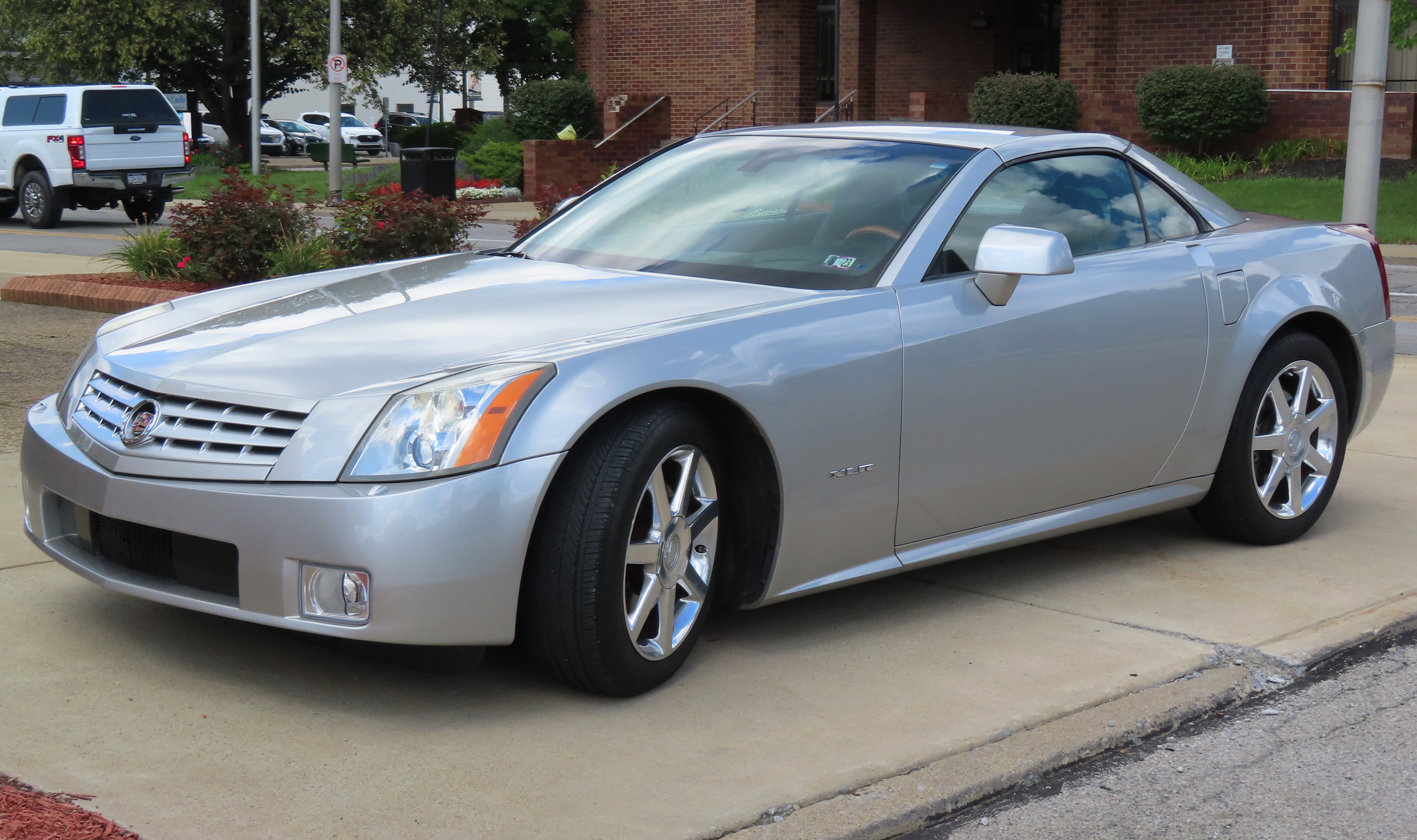
You look at old CTS's and even like the Cadillac XLR
from the early 2000s, really sharp like tail lights, like literally comes to a point.
Yeah. You know, so you started to see more like, oh, wow, like
distinctive characteristics that these cars had in their design.
Yeah. Yeah. Any other cars you could think of that like kind of like, oh, yeah,
like you can see that car and be like, oh, wow, like
that's definitely mid 90s, early 2000s.
I would say like the first one that comes to mind is like a Ford Taurus, actually.
It's not an exciting car, but you see a bubble Taurus and you know, like you can
you can guess, you could say like, oh, that's a 95 or 96 and chances are
you're going to be right. Yeah. Your guess. Yeah.
And I think bulbous design would probably be like the it embodies.
The reason why I'm saying that car is because that's a car
that embodies that change in styling. Yeah.
It's a car that just captures that 90s design.
Did you see my buddy sent me the back of a RX seven, right?
And then it was also the back of a Ford Taurus, right?
And it was like it was like how the girl looks at, you know,
eleven o'clock at night after you just left the club, right?
And it's our next morning morning.
It's the back of the Taurus.
I was like, like, how can how who's thinking of this shit, man?
But yeah, like you can see, like, OK, take like NSX, the rear end of NSX.
And then you look at the Honda Accord Coupe of the early 2000s.
Yeah. Yeah. And it has that light bar kind of has a very similar design to it.
You know, the Oldsmobile Aurora.
Yeah. The tail lights on the Oldsmobile Aurora.
You know, like a crazy round light bar like this goes all.
But it's not the whole thing's illuminated.
It's me. Yeah. It's just reflected. Exactly.
You know. So yeah, any other design like like cues or, you know.
Oh, man, from the 90s, I mean,
that's when like Crown Vicks changed and got more rounded.
I don't know why, but right now I'm thinking of a lot of American cars.
I'm thinking of a lot of American cars for whatever reason.
But I guess the changes that I'm describing on the tourists really happened
across the board, like a lot of popular models went round.
Yeah, like I'm thinking Ford Contour SVT, right?
Very round. Yeah, it looked a little different
because it had more like cladding and like, I guess, rocker panels
with side skirts and things like that to make it look like the SVT version.
But it was still very round.
It didn't look like a sports car really.
They just took like, you know, just because it had two doors doesn't mean
it's a sports car, right?
And you saw a lot of that, a lot of coupes from the 90s and into the 2000s
that were there were coupes, but they weren't sports cars.
Ford Probe. Yeah, you know, Mazda Mx3 or even like,
didn't they make a midsize Mazda two door, I think?
I don't know if it was Mx6 or what, but yeah.
My point, like today you make a coupe.
That coupe is going to be a sports car, you know what I mean?
Like they got rid of the civic coupes and all the the the coupe versions
of economy cars because like no one was buying them.
Yeah, unless you're going to use it for as a sports car.
So I want to read a quick little excerpt or paragraph here that I wrote back in the day.
So as a historian, I quoted Francis Fukuyama's book,
The End of History and the Last Man.
So I said, well, I compared this to the sweet spot.
So history ended after the Cold War
and liberal democracy was the final form of government.
So he said that in that book, pretty much saying like after the Cold War,
like democracy won and history ended.
Like you don't need to talk about history anymore
because for so long it was always like his communism better than democracy is
like all these versions of government like we don't know what the best government is yet.
And then after the Cold War,
it proved that democracy is the best form of government.
So I was pretty much tying how like steam engines ruled in the 19th century.
In the 19th century, it paved the way for combustion engines in the 20th century.
And then obviously now we're transitioning to like hybrid and electric power.
But that the best time was 95 to 05.
That's like when we got it right, when we reached the pinnacle.
Now, I'm reading this back today and I'm thinking, well,
there's some cars that have like this power trains that are being created today
that are super efficient, have over a thousand horsepower.
You know what I mean?
Like it is still getting better when it comes to like power to like fuel
economy ratio and things like that.
But we don't know yet if the longevity and the durability is going to be there.
Yeah, yeah, no doubt.
We know cars from 95 to 05.
The history, you know, that's another thing, since you're bringing it up,
we can also talk about power because that's a time when cars started to get real power.
That is like power that you would still consider substantial today
in a lot of cars from the early 2000s, because the technology was there
to do what you just described to make them powerful and still make them efficient and reliable.
Yeah, perfect example is the LS1.
What year would that come out?
98, 99, 2000, probably 2000.
It was in the C5.
Yes. Got the LS1.
So 99.
Yeah, so late to it was a sweet spot generation.
Yeah, yeah, but that's the perfect example
because that's a turnkey, reliable 300 horsepower plus motor
that was a huge step forward for GM.
I mean, it's the most swapped engine ever, probably, right?
It's got to be up there.
I talked about some other engines that came out around this time in the article,
like the LS 400, the 1UZ, the V8, right?
Like, obviously, Lexus made luxury sedan to compete with the S class.
And the thing that sets that car apart more than anything, right?
Still to this day is that 1UZ.
It's known for going a million miles, right?
We're an S class, like from the same generation, those cars are worth nothing today.
You know, I'm not saying LS 400s are worth a million dollars.
They're worth probably depending on condition, somewhere from,
let's just say, 10 grand to 20 grand, right?
Not even that much less.
The LS 400s, yeah, you can get one for I'm saying like a really clean,
like I've looked at data points on that on LS 400s.
Yeah, for those kinds of cars, like if you found a really low mileage one,
something like the whole point is people can see even with like 100,000 miles,
an LS 400 with a 1UZ, they know that thing has another 200,000 miles of life left
easily, which is basic maintenance, right?
An S class of the same generation, you see what 100,000 miles,
you're not even going to touch it with a 10 foot pole, right?
Even if it was meticulously maintained, you just know, like, I don't want to deal
with that, not to say that the S class, the cars weren't better back then.
Because like, again, you could even speak on Mercedes,
like they were they were built different back then as well.
They had the they had the power and or they had the reliable.
They had the reliability in the drivetrain, like in the engine and transmission,
but cars from that same period, if we were to compare a Lexus LS 400 to an S class,
it's everything else around the powertrain that goes wrong on the S class.
Exactly, exactly.
Yep. So it's not necessarily the engine.
It's the fact that that car was super innovative and, you know, highly advanced,
a tech on the S class.
Like, I mean, wasn't it using adaptive cruise?
Yeah, they had DISTRONIC cruise in 2001 on the S class.
Exactly. So it was super innovative.
It pioneered so much tech.
So yeah, it's the tech that's failing, right?
Where the LS 400 didn't have as much tech, you know?
Maybe it had, by the by the time the 430 came out,
it had oscillating air vents for your air condition, right?
How cool is that?
Yeah, yeah.
Big deal.
But my point is, is the powertrains, like you were saying, evolved, right?
Not only to be reliable, but also that they they were powerful.
They weren't like choked or strained, you know, how they were before.
They figured out how to make them pass smog without completely neutering them.
Exactly. That's a great way to put it.
That's an excellent way to put it.
Another another engine I was talking about in this article
was just a straight six from BMW, right?
No forced induction, you know, they were making straight sixes.
Back then, I would say up until, you know, mid 2000s,
you look at like the E46 even, right?
That was built with the straight six.
Then they went turbo and nothing against turbos.
You know, I mentioned in the article, like forced induction
could create issues on engines, you know, because it puts more power
that it can maybe handle on the car.
And I think after the mid 2000s, cars were so focused on being
fuel like like fuel efficient that they started to lower displacements
and then add turbos to compensate as a trade off to gain that power back.
And, you know, a four cylinder now with turbo
might not be able to handle all that power, right?
So you get cracked manifolds and things like that.
Yeah. And also engines that are built for economy
are not always the most long lasting engines.
Like if you look at Priuses, for example,
they need rings once you start to get past 200,000 miles.
And it's because they're it's an economy engine.
It's built for economy and those rings, you know,
rather than produce a lot of compression,
they're just supposed to make the engine run more efficiently.
Right. And, you know, we've talked about straight sixes.
They're the most balanced engine you can make, right?
So, you know, and another straight six was the four liter and the AMC four liter,
which this engine started more of the best mid 90s, right?
But once it came into the it was the YJ in the early 90s
and then even stayed with the Jeep into the TJ,
which was late 90s into the 2000s up until 06
with with one standard up going to the JK.
And they went to the 3.6 liter, no, 3.8 liter and then the 3.6.
But that four that straight four was indestructible.
Yeah, for the four liter straight six.
Yeah, bulletproof, the straight four liter straight six.
Yeah, yeah. So and that was an AMC engine that Jeep continued to produce
because they were like, if it ain't broke, why fix it?
Yeah, I wish more companies operated like that.
I think I still notice that sort of thing in modern dirt bikes,
particularly Suzuki, as they keep a lot of the old technology.
Yamaha uses older technology with suspension just because it works and riders like it.
You know, but companies don't really think like that anymore.
They they're like, it's almost like they they feel like they're forced to innovate.
Yeah. And maybe needlessly sometimes.
Yeah. And and I think companies, they have to make money, right?
Automakers, all they care about is they need to make they need to make money.
They need revenue to obviously innovate and do things like that and without
volume cars and without things where you have to eventually be forced to cut
corners to make that money, right? No doubt.
So there's a there's a there's always a push and pull there with, you know,
where could we put all this effort into without costing the company too much money?
So that kind of leads to my next point is and I want to highlight a particular
car that came out in the 80s.
And that was the Cadillac Simeron. Oh, man. All right.
So this car came out in the, I believe, early 80s.
84, I believe.
Yeah. Let's just say sometime, you know, before a sweet spot generation.
And I want to read a quote from a video that I watched about the Simeron earlier today.
And the guy in the video said, you cannot dress up a volume car
and expect the world to accept it as bespoke.
Yeah. And the Simeron is perfect example of that.
Right. You dressed up a Chevy Cavalier, right?
The car that was designed to be an economy Chevrolet,
which Chevrolet was GM's economy brand.
And then you made Cadillac, which is their highest, they even skipped Buick.
They went straight to Chevy and said, hey, we're going to take a Cavalier.
We're going to put some nice little, you know, interior wood paneling
and things to make it look like a Cadillac.
And it's going to sell because it's a Cadillac.
And it didn't sell. It was a failure.
It was also a terrible case of bad timing,
because let's just say it came out in 1984.
I believe I'm correct on that, but we'd have to look.
That was a time when people were starting to switch away from American cars
and go to, you know, Japanese cars for economy
and fuel efficiency and general reliability.
People were starting to adopt those cars and Cadillac had to rush
the Simeron to market in order to compete with those cars.
So they didn't really have a good chance to make that car more refined.
Right. Even if they did use the Cavalier,
I mean, imagine if they insulated it better, used quality leather.
They changed the exterior design a little bit.
Then they maybe could have sold it, but they just didn't have time.
Yeah. It was a bad time to sell a small Cadillac, too.
Right. Because Cadillac buyers still wanted their big bodysadans.
Right. They weren't quite ready to go to the dealership and trade in their
twenty two foot El Dorado for a front wheel drive four cylinder.
Yeah, that's a good point.
Fast forward to now the nineties, right?
Sweet spot generation.
I believe it was like 97 when the Cadillac Katerra came out.
So the Cadillac Katerra, here's a photo of it
just to make you remember. Oh, man.
So similar in the sense that it was your compact sedan
right that apparently was also an Opel.
It was also Vauxhall, you know, because back then GM owned these European brands.
Yeah. I think still they still do.
Yeah. Buick uses Opel. Right.
So this was another platform sharing like parts been sharing,
you know, cost cutting model that Cadillac came out with.
And it's kind of like GM wasn't the only ones doing this.
It's the most what I would how I would say it
is the most heinous example of badge engineering.
Yeah. And that's the term, right?
Badge engineering.
So you think back to like, you know, when cars were great,
you can't necessarily parts been shared and expect just because you put
a badge on it that it's going to automatically sell.
Right. Because just because you say it's a Cadillac
doesn't mean it's going to drive like a Cadillac.
Yeah. Right. So I think it kind of like dilutes the brand, right?
You know, Ford did this with Jaguar in the early 2000s as well.
Right. I believe they acquired Jaguar in the late 90s
and they took XJs and just kind of, you know, they weren't they weren't Jaguar anymore.
They were Ford. And I get why they did that because they thought, OK,
we can now use the Jaguar name Jaguar badge and name plates
and sell them just like how they've been selling to people who buy Jaguar
and think like no one's going to realize that this isn't what it used to be.
Yeah. Right.
This is clearly not a Jaguar.
Another example to more recently is Mercedes
starting with when they released the CLA.
That was Mercedes first front wheel drive car
and it was priced right next to a Civic.
Another example is the GLA.
It uses an Infinity Q X 30.
Yeah. Q X 30 platform.
And it's the other way around.
Infinity used the CLA, the GLA platform, but with an Infinity body.
Got it. I owned one and it was all Mercedes on the inside.
Got it. Got it. Mercedes badging all over the engine.
OK, well, then let's just say the CLA.
The CLA was was an example of a transformative time
where they were cost cutting to try to bring in customers.
Yeah. Yeah.
And it's an entry level car that they needed to do
in order to attract new buyers to their brand, right?
And then hook them with this, you know, entry level price.
So that way, eventually they outgrow that A class or CLA
and then buy a C class and then the B class and so on.
So I get that, right?
In the sense that they want to bring in more buyers.
But dilutes the brand, like you said. Exactly.
It dilutes the brand.
And here's another thing like I mentioned planned obsolescence in this article
about like cars being were essentially rolling iPhones today, right?
There's so much tech that they become
more problematic with the more tech that you that the car has.
You know, how many new cars today, whether it's a Toyota or a Hyundai,
all these cars that I'll, you know, drive and get some seat time in 2025,
2024 is a low miles where all these sensors start just coming up,
pull over front collision warning system failure.
Why would I need to pull over for that?
Like just because the sensors not working for the frontal collision
warning system, I need to now go see my dealer, right?
These are things that are happening on modern day cars
because of all these tech, all the technology that's fed into this computer
and to the car, right?
There's so many sensors that a car has today that they're kind of almost
designed to fail after a certain amount of years.
So you take your typical lease buyer and you're like, well, why would I ever want
to commit to more than three years in a payment?
If I'm going to one end up probably with problems
because typically after three years, the manufacturers warranty expires, right?
So now if I have a problem, I have to come out of pocket for it.
Hell, no, I rather just be in a three year lease.
And then as a byproduct of all that, I don't have to worry about like
not having the latest technology because I'll just buy another car
after three years that has the newest and greatest, right?
So it kind of conditions modern day buyers to lose brand loyalty, right?
Because you could technically buy another Mercedes or buy another Hyundai or Toyota.
Or you can say, you know what, I want to lease this other car instead.
Pay your disposition fee and there's just no commitment, right?
Which is another thing with the current generation is less commitment, the better, right?
Kind of have you have your subscriptions, but everything is no commitment, right?
Pick up and go whenever you need to.
So I think the mentality plans, the three two or three year contracts
are starting to go away in place of prepaid plans.
So I think you're right about that.
Yeah. And you see it with car buyers is look, there was a time
where people only bought Cadillac.
People wouldn't GM when people would never buy a Ford.
I feel like we talked about this.
So true with pickups.
There's still there's still an allegiance
when I think pickup truck buyers on 100 percent, I can agree to that.
But for the most part, like are Mercedes buyers only buying Mercedes?
I don't know, regardless, is there they're going to move on to another car?
They're not keeping their car for 10 years.
Mm hmm. Yeah. Yeah.
No, that's true.
Yeah, I mean, I think that, yeah, for a lot of reasons,
brand loyalty has dissipated over the years.
Another reason, too, is cars that people might have never thought twice about
have become exceptional.
So I think that's kind of been changing people.
Like, let's say, for instance, you had an S class
and you saw a new Genesis GV 70 and you loved it.
You might switch because if you actually did more than just look at it
from the outside, you'd be shocked by the tech and everything.
If you were like a loyalist to a different brand.
Yeah. So, yeah, I think cars that are that used to be no name brands
are becoming exceptional.
And I think that's kind of shaking brand loyalty.
Yeah. Yeah, exactly.
So and look, brand loyalty can only go so like, can you blame the automakers?
Can you blame the people, the generation that are growing up
in this era of instant gratification?
I don't know, right?
But all I can tell you is you have to evolve as a brand, right?
So you have to cater to the what people want.
But look, we're car enthusiasts.
We're going to be gravitating towards analog cars, right?
We understand that there's some kind of character to an old vintage car
that is irreplaceable.
You know, you remember a couple podcasts ago, you know, you said,
like when you park your car and you look back at it or when you get in
and behind the wheel and you just smell, you know, the the car is old,
you know, plastic and leather.
It just it does something to you that a new car can't replicate.
Yeah. Yeah. It reminds you of why you're an enthusiast.
Yeah, exactly. Every time you drive.
So I closed the article by saying that automobiles during the sweet spot
generation were built to a mechanical standard that is still unmatched today.
They were created with longevity in mind, not only were they easier to work on,
but the engine bay was not hiding behind a plastic cover.
Parts were more mechanical, which meant they rarely broke.
And when they did, they were easier to fix.
Best of all, they are affordable so you can have unlimited fun,
even if you're limited on funds.
So kind of, you know, in a nutshell, just kind of closed off the article by saying
yeah, that says it is it's not just, you know, the fact that now
OBD two is now standard and you can see what your car, you know, problems are.
Yeah, it's more than just that.
It goes beyond that, just from a mechanical standpoint.
You know what I mean?
So any other cars that you could think of, I know we mentioned GMT 800
like as a generation that the cars that I can think of like really
transitional cars from that period.
Yeah, but like think of it like this.
The successor of that generation was never better.
It actually was worse.
S class. OK, perfect example.
And when when do you think it got worse?
W two twenty two year two thousand when the two twenty came out.
So you think after two thousand as classes whenever the same.
Yes. OK, absolutely.
That kind of goes in line with some BMWs as well.
You know, you think of like the the E thirty nine five series.
They say that that's the best five series of all time.
Yeah, right.
Yeah, as classes were never the same after the really the one forty.
But I want to give the two twenty a little bit of credit to.
But yeah, they've declined.
Like the one forty is like the peak S class.
That's the S class that people think that at least
enthusiasts think of when they think of an S class for its exceptional quality.
And the next generation.
I mean, if we put two cars side by side, a W one forty S class versus a two twenty
same conditions, same miles, the one forty is going to be worth
a whole lot more with way less technology and way less modern looks.
And that's simply because of the reliability.
Yeah, and quality.
I don't want to say reliability because build quality, build quality. Exactly.
OK, yeah, that's a good point.
You know, I'm thinking E thirty eight BMW as well
because of the fact that that car, you know, no one.
They don't talk about the seven series back then as much as they talk about
the five series and the three series.
But, you know, there was less that could go wrong, maybe, right?
Less tech.
But design, people love like late nineties, early two thousands design
of BMW, right, like just the simplicity of it.
Yeah, right.
E thirty six M three people are starting to love them at now, right?
That for a long time was the generation that got skipped
because they thought they were underpowered and all that.
But but yeah, another one I'm thinking of that the successor was never better.
And I've mentioned this before was the Ford Explorer, right?
Yeah. So mid to mid nineties,
Ford came out with the second gen Explorer, right?
Which was a big, big deal, right?
That car is one of those cars that, you know, revolutionized the SUV.
Let's face it, right?
The first gen is the first gen Explorer, you know, was the first time
people realized like, wow, like an SUV could be for a family, right?
It's the car that signaled like the big paradigm shift in SUV buyers.
Yeah, right?
Women were buying them more.
They were used for grocery getting rather than like truck use.
Yeah. You know, it is what SUVs used to be popular for, throwing
some fishing rods in the back and going out.
Yeah, it was like maybe a more practical pickup, right?
But now you're starting to see unibody SUVs coming out little by little.
But regardless, the Ford Explorer, I don't think the second gen was
forget if it was unibody, regardless of what it was.
A lot of them were like you mentioned with the XJ Cherokee,
kind of like a mishmash or a hybrid of the two.
But my point is the 96 when the when the second gen for an Explorer came out,
that car essentially became like the refined version of a modern day SUV, right?
So that paradigm shift shifted with the early 90s version, the first gen,
as well as like S10 Blazer was the Chevy competitor.
But when I look at an Explorer, you know, being that I've owned them,
I've owned both the second gen and the third gen night and day differences,
right, just simply because of how light it felt like like the second,
the third gen got a third row and it got bigger.
There was a little bit more tech.
The transmissions were not as good.
I don't, I can't say it was as robust as the second gen.
Yeah.
You know, I look at second gen explorers, I see them on the road all the time.
And I'm not saying that because I've owned one.
I've owned a third gen Explorer too.
I never see third gen explorers on the road.
And third gen was like oh two to like oh seven or something.
Yeah, the one that has they always get the crack in the rear hatch.
That exactly, mine had that exactly, right, right in the middle.
A little bit old center.
It happens to all of them.
And don't get me wrong, those were built, you know, early 2000s too, right?
But I'm just saying that like they just it wasn't the same car.
No, right.
It wasn't as robust.
And then I think about like Land Cruisers and I think about like Monteros,
all these cars that were had such a high standard for high quality, build quality,
right, they were built to be robust vehicles that could take so much abuse, right?
And then they kind of started to get SUV started to get a little bit more,
you know, what's the word?
Not weak, but like.
Yeah, watered down.
Yeah, just not as robust, you know, a little bit more.
You like to use the word.
Yeah, fragile, fragile.
They're more fragile.
There you go.
A perfect example of how the tailgate would crack every time you closed it, you know.
And and, you know, I'm thinking Land Cruisers of the early 2000s were still great,
right, 100 series was still a great, you know, Land Cruisers will will will stand a test of time.
But the Montero, right?
Car I've owned the second gen and third gen in the after 01.
Same time, just like the Ford Explorer, they went unibody, right?
Because I feel like back then SUVs needed to appeal more to everyday use for drivability.
Yeah, they needed to feel like no one
wanted to see feel body roll in their SUV, right, right?
They wanted to be able to take it to get groceries and still like feel like they're driving a car.
Like they felt higher up, better seat in position.
And it made sense because look at SUVs today.
They that that I think created a paradigm shift for where it took a while.
But today, SUVs have passed cars in total sales.
Oh, yeah, absolutely.
Because of the drivability, right?
The fact that they're all unibody now and crossovers exist, right?
But that still takes away from that body on frame, robust, rugged SUV
that I feel like was still still existed in the mid to late 90s.
Yeah, yeah, yeah, exactly.
Now there's much fewer examples of like what the SUV used to be, right?
I mean, you have the Land Cruiser and I mean, what else?
Like like boxy SUV?
What else is quite like the Land Cruiser in that it's like a like a true off-roader that's built to last?
There's not much, right?
Obviously, the Jeep has been around forever.
Ford came out with the Bronco, right, body on frame, independent front suspension,
but still body on frame meant for off-road use.
The GX has still continued its run with Lexus, right, which is body on frame.
Those are like four good examples.
Yeah, and the Land Cruiser went away for this new Land Cruiser,
which is simply the same like Prado platform as the Land Cruiser we didn't get in the US, right?
It's like the Mini, the 2.5 Land Cruiser, not the 300 or the 250 is what they call it, I think.
So yeah, they exist, but here's what the automakers are doing.
Like the GX for the longest time was was a grocery getter.
Even though it was body on frame, it still wasn't like you didn't look at a GX,
you're like, oh, that's an off-roader.
You look at it now like that because after COVID, people started to buy up GXs,
older GXs from the early 2000s because they realized, holy shit, these are capable.
And there's aftermarket support.
So now the new GX that just came out last year, two years ago, you see them everywhere now.
That's an expensive car, that's an $80,000 plus car.
It comes with the six-cylinder, not this four-cylinder hybrid, like the new Land Cruiser,
and it's boxy.
I love the way they look.
Yeah, I think they look phenomenal.
The over-trail trim is meant for the it's the off-road version comes with like the
flockers and all that, and it's in a luxury package.
So they I think automakers are going back because they're realizing like for so long,
we played out this crossover game, right, that we want we want to appeal to both
because there's a lot of women that drive forerunners, right, like, well, the forerunner
I forgot to mention, that's another off-road for this boxy car.
They're all Toyotas, literally, I'll mention an all Toyotas right now.
This G-Wagon, this Land Rover Defender, obviously, there's still cars that other
automakers make that are more, you know, capable, off-road focused.
But I'm just saying that there was a time right around the end of the sweet spot generation,
where SUVs became unibody and became more crossover.
It's pretty much the beginning of the crossover, you know, Nissan Juke.
When that car came out, you know, we knew we were all fucked.
So true. Yeah, and now look, I mean, today, like every manufacturer has five crossovers.
Yeah, more. I mean, it's they have one for every, like if the wheelbase extends by three inches,
let's just name it another car, right? Yeah, like look, it's the same like platform.
It's just they have to make one for every single size, right? And it gets overwhelming.
Like if we go to a car show this upcoming week in San Diego, you'll see.
It's like, did they really need to hunt the passport? They have the pilot.
Why do you need a passport? Right? Oh, I know why, because you want to make it off-road focused
and make it the like capable like four by four version, because the pilot is more of like a
family car to unibody, you know, but no, the passport is unibody. The passport has a third row.
The passport has everything a pilot has in just a different look, right? It's like, what are we
doing? Yeah, you know, like it didn't make sense. They're not the first to do it either. I mean,
they're really not. They're not. Even like, even like RAV, there's like the RAV four,
there's the Corolla Cross, there's the Highlander, there's the Grand Highlander,
there's all these different SUVs. Every single one of those cars that you just mentioned for
Toyota's lineup has a purpose. That's true. Right? So the RAV four is their compact SUV.
That's the one that's the Holy Grail SUV, because that segment is so popular, because it's got big
enough for it to hold a family, right? But it's not too big for people that don't want,
they don't need a third row, like in a Highlander. Yeah. The Corolla Cross is like, there's a new
segment that now everyone's getting into. It's like even smaller than the RAV. It's the size of the
RAV four before the RAV four got bigger in like the, let's say 2010s. It's essentially an economy
car crossover. Right. Like that's what that is. You want better MPGs, you want a hybrid version.
Cheap. Get the Corolla Cross. Yeah, cheap. But then you have the Highlander with the third row.
So those are your like crossover SUVs that appeal to families. Then you have the four runner, which
is going to be obviously their off-road focused car. Then the Land Cruiser, which is even, you know,
Sequoia. Yeah. And then the Sequoia is the full-size one. So they all have a purpose. So I get why
they have all those cars. It's just, I'm talking about like, I'm thinking, they're a car company,
they're car companies today that are just making cars just to make them. They don't have a use case.
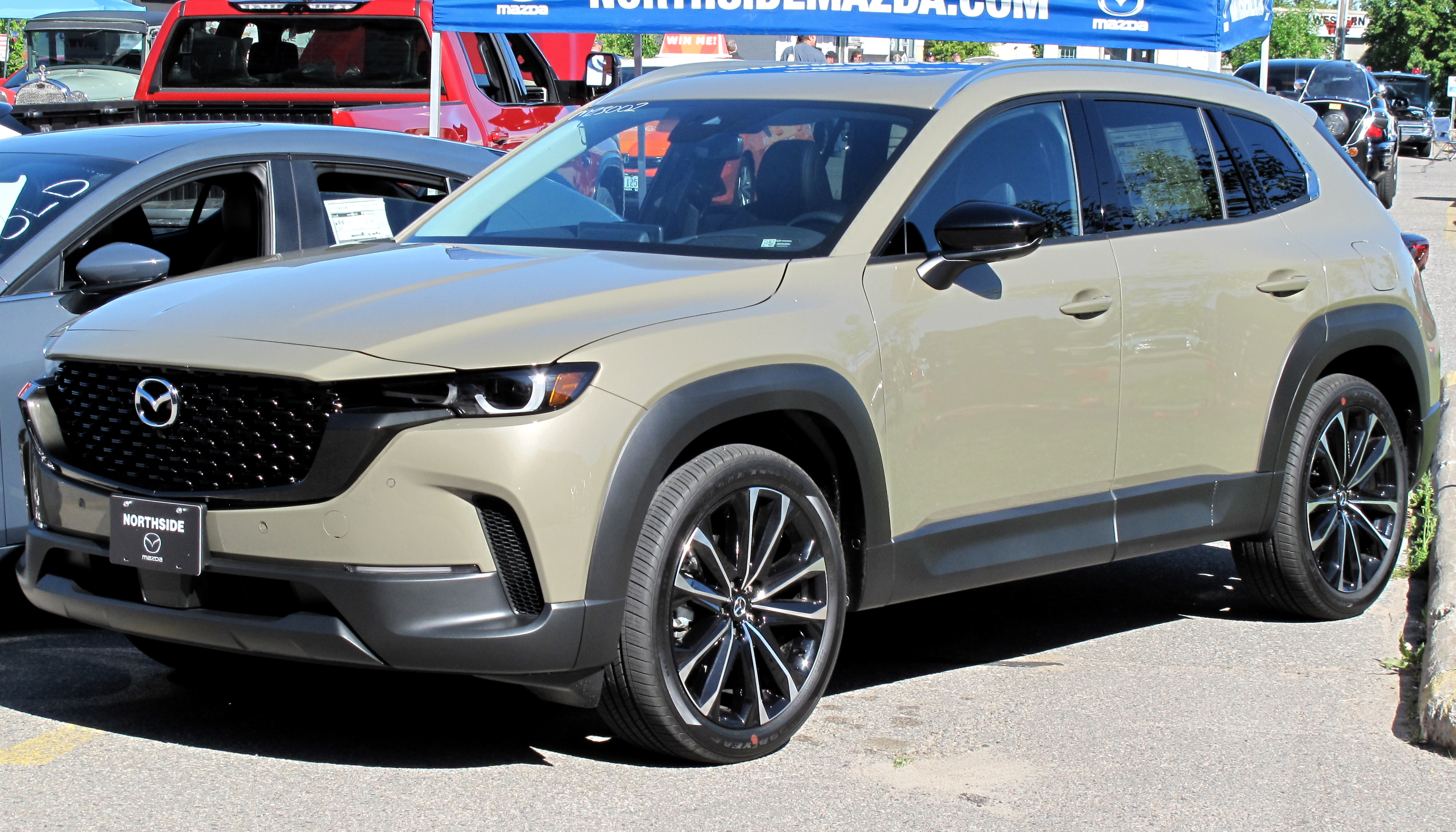
Right. Like the Passport is the one I think of off hand. You know, Mazda now has CX-30, CX-50,
CX-70. It's like, don't you already have a CX-5, a CX-7, and a CX-9?
Right. They just lifted and put fender flares on it and call it something else.
Yeah. Exactly. So it's just, it's different. The auto industry is different today.
So that's all I could say. The sweet spot generation to me was the best generation in cars.
So if you're looking for an older, reliable, but fun car with character that's still analog,
I would look between 95 and 05. Yeah. I'd have to agree.
Yeah. Simply because of the fact that it's going to be built to a great mechanical standard.
It was built with durability in mind so that there's longevity.
Not too old. Not too old, still contemporary. It's going to have your, the features you expect
a car to have, right? Like we talked about, OBS, OBD2, it's going to have airbags, seat belts,
that aren't just lap belts, right? You know, there's so many things that cars,
air conditioning, another one, we didn't talk about this, air conditioning in the mid 90s
changed to the current air conditioning system. Oh, yeah, 134. Exactly, 134. So that's like
a big deal. Like if you have a car from the early 90s and that wasn't modified to modern day,
like air conditioning with the refrigerant, you're not going to find free on to put into it.
It's like, it's technically like legal, right? You can't even dispose any of that stuff.
Mm-hmm. Even refrigerant, you can't dispose any of that stuff. So yeah, like it's, there's so
many different things about cars right around that time period that still makes sense today.
Yeah. So it's not going to be like, what's the word, like a culture shock, but like in the car
version of it, you're not going to get into and be like, what the hell is this? Like I feel lost
in this, like I do my Alfa Romeo, my Spyder, like I get in that car and I'm like, this thing is so
analog. Like I'm lucky, I'm, I'm worried that my headlights won't even go on because when I turn
this switch, I'm worried like it just will blow a fuse, you know, because it's so old. You can feel
that old scent, but obviously I love that. But like I'm talking about for someone looking for a daily,
you can daily a 95 to 05 easy today. Yeah. And not only today, years down the road,
you know, big deal, doesn't have rear view camera, lane departure warning, blind spot monitor,
like, why don't you just turn your head? Yeah, exactly.
Like just turn your head around. Yeah. You know, like the old, that's too much for some people,
apparently, you know, the old panhand behind the passenger headrest. You give one, you give one
of these just like they teach you in driving school. Yeah. Like whatever happened to that. Yeah.
That was, you know, that was the thing back then it should still be because like you shouldn't
rely on your, on your cameras, you know, okay, rely on your mirrors, but still don't even rely on
your mirrors. You have blind spots for a reason. Yeah. You know, so it's just, I don't know,
maybe I'm, maybe I'm getting old. Oh, I'm young and I agree. So yeah, exactly. That's why I have
you on the show because it makes it kind of grounds me. It makes me think I'm not the only,
you know, I'm just only speaking to millennials and and boomers and Gen X. No, no, speaking to
everybody. Yeah. So I think that's it. So like awesome. Yeah. So any, any updates with analog
and grit, any vehicles that are for sale? Yeah. The FJ 40 Land Cruiser we have just went live on
cars and vids yesterday. Nice. Yeah. So people can check that out and bid on that. We have photos
of the full restoration, everything from the body being torn off the frame to the engine being
stripped down and completely rebuilt. Yeah. So it's a really unique, cool, old off-roader.
I think everybody resonates with an FJ 40 Land Cruiser. At least everybody who knows what it is
thinks it's cool. Yeah. So this one was restored in 2019 and it's turnkey. Yeah. Yeah. It's a
beautiful looking Land Cruiser for sure. Okay. So that's live on cars and bids. That's live on
cars and bids now. Okay. Justin, our old friend, Mr. GM Guru bought a GM product recently,
a Yukon Denali XL. So the same exact car that I had owned earlier this year. And we did a bunch
episodes, I believe with Wheelie Dan because he's owned one as well. Right. Not a GMT 80. I don't
know if he's owned the GMT 80. This was the newer hybrid. He had the hybrid. Yeah, he had a Tahoe
hybrid. Yeah, which is funny because Hoovie just bought one. He showed that on his YouTube channel
that he bought a hybrid GM product, but that was early hybrid technology. Yeah. Yeah. It was bad to
the reverse. He uses the hybrid electric motor. So if you're trying to back a trailer up a driveway,
you'll get stuck. Oh, yeah. Okay. Yeah. So he bought an O5. So the one that he bought is actually
a little bit newer than the one I had. I had the O2. So it had the previous interior with the dials
is a little bit more analog looking, where his climate control is digital and things like that.
Steering wheel has buttons on it. It's not that round concave looking steering wheel. Yeah. But
one thing I want to say about the GMT 800, especially the Nali's and Escalades, I can't
really speak for Escalades because I haven't looked at the data points on them, but just looking at
comps on those cars, like since I've sold mine, similar miles, I had like about 63,000 miles on
mine. They have gone up. Wow. Like I'm looking at, like when I told Justin how much I sold mine for,
he's like, why was it so low? Because mine was clean. You saw it, right? I got a detailed,
you know, paint corrected. It was black. So it obviously, you know, had a lot of, you know,
like little scratches and things you can see on the surface. But yeah, similar mile ones now,
if you look at a Denali on Bringer trailer with around 60,000 miles, it's getting 20,
like 20 and up. It's pretty, pretty like interesting how, and it's funny because
Huvie, speaking of Huvie, he's the one that I first like saw someone that took appreciation
into these GMT 800 SUVs. And then I started to see it on like the TFL YouTube channel that I follow.
Huvie mentioned like even, you know, Buick's and Panther platform, like the old body on frame
sedans of the early 90s and mid 90s that never took off. Those are still cheap as hell.
I think the draw of the GMT 800 is you can buy one and you just know that you're just getting a
damn good car. That's just going to be reliable and just keep going. And it's not going to cost
you a lot of money. People are willing to pay extra for that. You save your money on a car
or make your money rather when you buy, right? So they have a good, not only do they have a
good use case, they're like you said, they're in that sweet spot generation where they're not too
over complicated. Everything you can do with a brand new Tahoe you can do with the GMT 800.
Yeah. I mean, this is pre-20s on, on, you know, chrome wheels. Like it had, I think, I think it
has 18s or 17s. The Denali did this, the pretty much second gen Denali, right? Because the first
gen Denali and the first gen Escalade were short, you know, runs 99, I think 2000 maybe. But after
01, you know, you look at these SUVs and the biggest reason why I think they're going up in
value today, right? Obviously, Hoovey made videos on it and the other influencers. But it's the
generation that grew up, my generation that grew up were in high school when these cars came out.
So from 01 to 04, I was in high school. That was the car on MTV Cribs that all the celebrities
showed. They, they, you know, obviously had in music videos, rap videos that you watched. So you
grew up with this idea of like, that's the car to aspire to own. And then now you look back and
you're like, damn, they're only worth 10 grand. I can buy one for 10 grand and relive the nostalgia
of my high school days. You can buy an average one for two grand. Yeah. I'm specifically Denali
and Escalade, right? Because there's a big difference between like an SLE Yukon or SLT Yukon,
you know, and a Denali Yukon with similar miles. Yeah. And it's not much of a difference as far as,
you know, you go from a 53 to a 60 engine wise. Okay. And an interior, it's more of like chrome
and wood and stuff like that. Yeah. Whatever. Okay. It's, it's cool, but it's really not that cool
anymore because it's all faux, faux wood and stuff anyway. Yeah. But it's the fact that it's a Denali
because I can tell you this Denali, that name is notorious with like,
like the name Escalade, it's even though it's a Yukon Denali, people didn't even know was called
the Yukon. They just said, Oh, I wanted Denali. Yeah. Right. Yeah. Like the Denali was the model
when it was just a trim. That's how synonymous it is with like luxury, right? And, and a status.
So that's why I think there's a big gap because it is an actual, it's a trim, but it's actually
like almost a model of some people. Yeah. That's a good point. You know, and now Denali is on all
GMC products, you know, from the, the terrain to the freaking, the, the envoy get a Denali even,
right? Like they just gave Denali everything. Yeah. You know what I mean? Sierra obviously too.
Lost a little bit of its identity. Yeah. Where Escalade is the model, right? It's not a trim.
You know, yeah. Granted, an Escalade is a nice, you know, Tahoe at the same time. It's, it's
definitely different enough to warrant that extra money. Yes. You know? So that's why I think the
Denali and Escalades of GMT 800 are, are valuable because my generation is growing up now and we
want to relive that generation. So, and then it's reliable. It still looks good, right? I think
it's comfortable. Way more comfortable than cars today, right? So there's so many things about it
where the successor wasn't better than the predecessor. Absolutely. Yeah. I don't even think
anybody would argue that. Everybody knows what's happened with the newer ones, with cylinder
deactivation and this and that. Yeah. And, and they also kind of didn't look as simple, you know?
They kind of got a look to them that, you know, became a little bit too ostentatious, right?
You know, it's a little bit too bold. Yeah, exactly. So, yeah, we'll see. You know, he's
obviously excited to have it. He's wanted one for a long time. You know, whenever I bought mine,
he's like, I always wanted to just drive a GMT 800 like XL so I can take my, you know,
my friends in it and go on road trips, push it in the back enough to worry about it because
there's a substantial amount of space between the third row and the lift gate. Wow. Because
it's an XL. It's pretty much a suburban, you know? But it's a suburban with, you know,
chrome wheels and it's obviously the highest trim level. So that's why I think it's the coolest
one to have is the XL. Yeah. People usually want shorter wheelbase, but, you know, the EXT,
it's the EXT Escalade and then the XL Denali. They both made, and then there's the EXT,
no. EXT is the pickup truck. That's the Escalade one. Yeah, that's correct. ESV is the Escalade.
That's right. ESV is the Escalade with the bigger wheelbase and more trunk space. So anyway, I'm
getting on my soapbox about GMT 800. But yeah, sweet spot generation. Go out and buy a car from
then. Do it. From that generation. Let me actually add one thing. My favorite sweet spot generation
car. Oh, okay. What is it? It is. And then I'll ask you the same. It is, and I gotta think about it
before we wrap up, because yeah, we're still in there an hour. Yeah, we're good.
First gen Toyota Tacoma. Okay. I mean, speaking of, I was mentioning about the Ford Explorer,
right? 96 to 01. You see so many Ford Explorers still in there today. I see them because obviously
I owned one. So it's easy. When you own something, your eyes gravitate towards them more.
Just pay attention to second gen Ford Explorers. You don't see any first gen. They're all
clash for clunkers. Yeah. Yeah. To care of them. Second gen Explorers and first gen Tacomas.
These cars are as old as 30 years now, right? And they're everywhere. 95 is the first year of the
of the both the second gen Explorer, I believe was like 95 for the 96 model year. And same with the
Tacoma, I believe. I mean, everywhere in Southern California, you'll see just as many of these as
you will Honda, like 2013 Honda Civics and Toyota Camrys. It's insane. These cars are 30 years old
and they are everywhere. As long as rusted and get to these Tacomas, that was the only Achilles
heel. Yeah. Right. And and Toyota even acknowledged that they like had a whole like huge billion
dollar recall on the frames. But my point is, is that's my favorite one because of the fact that
people still today want one. They look at a first gen Tacoma, right? Because their friend or the
neighbor has one and now they want one. And it's like, what the hell? Like it's like a Nike, Nike
dunks. It's a Nike dunks of pickup trucks. Yeah. Right. Like all of a sudden now dunks are popular
again. Now you want one because your friend has one. That's the first gen Tacoma. So many kids
I know around your age want a first gen Tacoma because of the fact that they're like it's cool
to own one. Yeah. You know, and you could probably argue the same for third gen four owners. Same
platform. Yeah. Oh man. So what about mine then? Shoot. Well, what's the first one that comes to
mind? I would say the first one that comes to mind is I don't know why none are really coming
to mind, except you planted GMT 800 in my head. And you've owned one. So that comes to mind and
I've owned one. That's definitely up there. Another one from that time period that I'm trying to think
that was good was well, obviously the LS 400, another one we talked about, but I'm not particularly
in love with the LS 400. Well, keep it in mind. You asked me what my favorite was. 400 was early
90s. Yeah. Like 89, 90 was the first 400. So technically it's pre, you would LS 430 would be
your argument. But yeah, what do you got? Also E-Class from E-Class from 95 to like 2000 is
one of my favorites. 124, the last of the 124. Okay. That's a good one. Yeah. Okay. So E-Class,
of course, it goes from Mercedes-Benz. All right. Well, that wraps up our episode on the
analog and grid podcast. Dylan, mainstay Dylan. That's what we call him here. Thanks for joining me.
All right, guys, we'll see you next week on the podcast.
About this episode
Exploring the 'sweet spot generation' of cars from the mid-90s to mid-2000s, Victor and Dylan discuss what makes these vehicles special. They highlight advancements in reliability, safety, and design that set this era apart from both earlier and modern cars. The conversation touches on notable models, the evolution of automotive technology, and the nostalgic appeal of these vehicles as they transition into classic status. The duo also reflects on the changing landscape of brand loyalty and the impact of modern technology on car ownership.
Mainstay Dylan @mostlystreetparked joins the podcast to give a Gen Z take on cars from the 90’s and 2000’s. Were they actually better or am I just biased. Which generation of vehicles outlasted their successor? What Sweet Spot Generation vehicle is our favorite?